
Business
Shoppers feel crunch as price of produce climbs



The selling in financials during the later part of March accounted for 43% of ₹67,081 crore pulled out across 21 sectors – their highest fortnightly selling since the second half of October 2024, when they dumped shares worth ₹71,502 crore. “Foreign holding is typically higher in banking stocks, and global investors could have pulled out money due to some valuation concerns after the rally in 2025,” said Sonam Srivastava, founder and CEO, Wright Research.
 Agencies
Bank Nifty Plunges Nearly 17% in March War apart, corporate governance concerns at HDFC Bank too may have accounted for a portion of outflow
In March, Bank Nifty plunged nearly 17%, and benchmark Nifty dropped over 11% amid the global market sell-off sparked by the West Asia conflict.
HDFC Bank may have accounted for a portion of the outflow from financials.
“The governance concerns at HDFC Bank, following the unexpected resignation of chairman Atanu Chakraborty citing ethical differences, created a company-specific overhang on the entire banking pack,” said Bhavik Joshi, business head at INVasset PMS.

When the country’s largest private-sector lender is under a governance cloud, it gives foreign investors one more reason to head for the exit, he said.
Automobiles and construction witnessed foreign outflows worth ₹7,691 crore and ₹6,179 crore, respectively, in the second half of March. In February, both sectors had seen inflows worth ₹3,586 crore and ₹4,487 crore, respectively, but had seen outflows in the first half of the month. “Although sentiment is weak, the valuations are attractive; however, foreign investors have delayed allocation due to geopolitical uncertainty that sparked off a risk-off sentiment across emerging markets,” said Srivastava. “This wasn’t a sectoral rotation; it was a macro exit from India as a trade,” said Joshi. “Apart from the quantum of outflows, what stands out in H2 data is how broad-based the selling was – barely any sector was spared.”

Forbes Media chairman and editor-in-chief Steve Forbes and chief economist for the Heritage Foundation EJ Antoni discuss new data showing U.S. economic resilience, market volatility due to geopolitical events and Federal Reserve policy on ‘Kudlow.’
This story about the February 2026 PCE inflation is developing and will be updated with more details.
The Federal Reserve’s preferred inflation gauge remained stubbornly high in February as consumers continued to face elevated price growth.
The Commerce Department on Thursday reported that the personal consumption expenditures (PCE) index rose 0.4% on a monthly basis in February and is up 2.8% from a year ago. Both figures were in-line with the expectations of economists polled by LSEG.
Core PCE, which excludes volatile measurements of food and energy prices, was up 0.4% from a month ago and increased 3% year over year. Both figures were in line with economists’ expectations from the LSEG poll.
FED OFFICIAL SAYS INTEREST RATE HIKE POSSIBLE AS GAS PRICES, INFLATION REMAIN ELEVATED
Federal Reserve policymakers are focusing on the PCE headline figure as they try to bring inflation back to their long-run target of 2%, though they view core data as a better indicator of inflation. Compared with January’s readings, headline PCE inflation held steady at 2.8%, while core PCE decreased slightly from 3.1%.
Prices for goods were up 1.2% in February on an annual basis, down from 1.3% in January. Goods price growth had slowed over the course of 2025, declining from an annual reading of 4.2% in January 2025 to 0.1% in December.
Services prices were up 3% from a year ago in February, an increase from the 2.6% reading in January. The index was last this high in January 2025, when prices for services were up 2.9% on an annual basis.

The PCE inflation report showed the pace of price growth remained elevated in February. (Justin Sullivan/Getty Images)
IRAN WAR COULD PUSH INFLATION HIGHER THIS YEAR, GOLDMAN SACHS SAYS
The personal savings rate as a percentage of disposable income was 4% in February, a decline from the 4.5% reading in January that returned the figure closer to the 3.9% level reported in December.
Over the last year, the personal savings rate as a share of disposable income has declined from 5.2% last February and a peak of 5.5% in April 2025.
The February PCE report was delayed by the government shutdown and was originally scheduled for release late last month. The March edition of the PCE inflation report is scheduled for release on April 30.
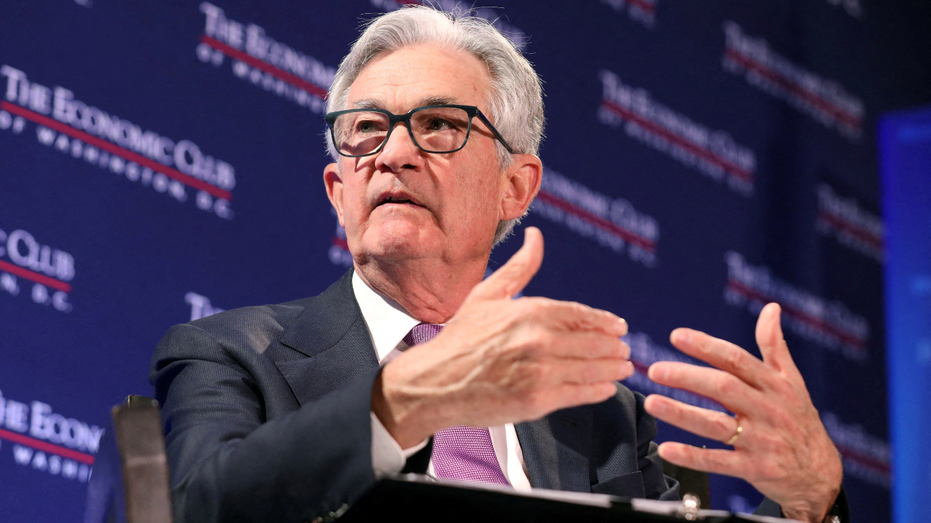
Federal Reserve Chair Jerome Powell and central bank policymakers are taking a cautious approach to interest rate moves based on economic data. (Amanda Andrade-Rhoades/Reuters / Reuters Photos)
POWELL WARNS OF NEW ENERGY SUPPLY SHOCK AS GAS PRICES SURGE: ‘NO ONE KNOWS HOW BIG IT WILL BE’
What experts are saying
Bret Kenwell, U.S. investment analyst at eToro, noted that the PCE report “doesn’t reflect the recent surge in energy prices, but tomorrow’s CPI update will begin to capture some of that impact. For that reason, both the Fed and investors will be paying close attention to the remaining inflation reports this month.”
“February’s PCE inflation report was in-line with expectations, and while core PCE cooled to its lowest level since November, it’s still hovering near a one-year high of about 3%. Headline PCE remains sticky as well, holding in the 2.8%, while goods inflation continues to act as a headwind – something the Fed has linked to tariffs,” Kenwell explained.
GET FOX BUSINESS ON THE GO BY CLICKING HERE
Raymond James chief economist Eugenio Aleman noted that the “strong 0.4% print for both the headline and core PCE price indices is not good news for the Federal Reserve and will definitely keep the Fed on the sidelines for almost the rest of the year.”

PPG Industries: Upside Can Be Volatile, Looking At 2026

Genco Shipping: Why I Don't Expect Further Bids And Why I Favor Cheaper Plays

The Grand National is a premier British horse racing event, arguably the premier British horse racing event. It’s worldwide famous for its intense 4-mile distance, and 34-horse field.
These numbers are huge and make it more of a cultural phenomenon than just a horse race, since there are no other meetings that feature a challenge that long or that crowded around. Since 1839, the Grand National held mainstream appeal, unpredictable outcomes – it often produced 100/1 winners – and a role as the prominent people’s race.
The Grand National in numbers
The history of the Grand National is etched in its numbers. This is an event that transcends sports and is watched by 600 million people across 140 countries. Some of these are obviously interested in the race but the majority of the others like to enjoy the atmosphere and blend in with an exquisite British event where it is quite easy to spot royals or celebrities. The horses involved used to be 40, but now the number fell to 34, due to security reasons.
The Grand National is the biggest betting event of the year in the UK and even people who never bet on horses like to place a small and casual bet (often referred to as an office sweepstake) on this race. Grand National odds serve as the most immediate barometer of bettors’ confidence in the various contenders: younger and lesser-known horses often start with higher odds, while established favorites command lower odds, but attract a much higher volume of bets. For those looking to compare the best offers and take advantage of event-specific bonuses, the Grand National offers at oddschecker can serve as a starting point for choosing not only the bookmaker that best aligns with each bettor’s criteria, but also for maximizing the value of the bets placed based on odds always updated in real time.
The parameters used by bookmakers are the ones usually taken into consideration while evaluating a given horse race. The bookies consider health, climate, age and past history on similar racecourses. It’s an esteem, of course, but precise enough to establish who the top contenders are, with a low margin for error.
Tendencies and data on betting habits in the UK
The Grand National serves as a major revenue driver for the betting industry. In 2022, one major bookmaker took 1.2 million bets on the race. This meeting is often seen as a rite of passage that brings people together, making it a crucial event for bringing new and casual customers into recreational sports betting.
According to Statista, the betting numbers in the UK are slowly but surely going back to where they were before the pandemic. Approximately 35% of the UK population has participated in sports betting in the last year, with a substantial 78% of these fans betting via online apps, the quicker way to do that today. Football is the most popular sport among bettors, closely followed by horse racing. This last discipline contributed to an industry that generated over £2.48 billion in gross gambling in 2023.
Reflecting on online betting’s future
Here on Business Matters we will follow the Grand National to bring you news, facts and curiosity about the meeting. However, we are always quite interested in how much meaning will the event have on the shaping of the UK betting landscape in the near future.
It is possible that it will remain the most important betting event on the islands, since it has the innate ability of breaking through the barriers that football, rugby and other sports have: you don’t need to be a connoisseur to bet on horses; it is not mandatory to be a racing expert. What really matters is the desire to have a good time and indulge in one of humanity’s most ancient pastimes: horse racing.
Nadia Budhihardjo speaks with Claire Tyrrell about what goes into making Perth a 24-hour city.
At the heart of the discussion is the Total Contract Value (TCV), often seen as a forward-looking barometer of demand in the IT services industry. Contrary to concerns that AI-led efficiencies might shrink deal sizes, the latest figure has come in strong.
Speaking with ET Now on TCS earnings, Sandip Agarwal from Sowilo Investment Managers said, “People were expecting a sharp decline in TCV because of AI, but at $12 billion it is robust and steady compared to the last two years. Exiting the fourth quarter at this level is a strong finish.” This indicates that while technology shifts are underway, client spending and deal momentum remain intact, providing near-term visibility for large IT firms.
The broader growth outlook, too, appears intact despite the evolving landscape. “You will still see 5–6% growth in largecaps in dollar terms, and in rupee terms, earnings CAGR of 16–17% over the next two years. If that happens, stocks could rerate at least 25%,” he said.
This suggests that even with modest growth in dollar revenues, currency movements and operational leverage could support healthy earnings expansion, keeping investor interest alive.
A key debate in the market is whether IT services companies can retain relevance as AI platforms become more advanced. However, the core positioning of these firms as system integrators remains a strong moat.
“IT services companies are basically integrators. AI is like any other technology—someone has to integrate it, make it usable, and deliver outcomes. That role is not going anywhere,” he added. That said, the economics of the business may evolve, with some benefits being shared with clients. “Some of the savings companies earlier retained will now have to be passed on to clients because of AI.”
On margins, expectations of immediate gains from currency depreciation may be misplaced. “People expect immediate margin gains from currency moves, but that is not how it works. Benefits take time to flow to the bottom line.” Over the longer term, however, currency remains a structural tailwind. “Every 1% rupee depreciation gives roughly 1% EPS accretion for large companies like TCS or Infosys.” Yet, historical trends serve as a reminder that such gains are often offset. “Despite rupee depreciation in the past, margins did not improve much due to wage hikes and ongoing investments,” he said.
Taken together, the outlook for the IT services sector appears balanced. AI may reshape cost structures and pricing dynamics, but it is unlikely to dismantle the core business model overnight. Instead, the transition is expected to be gradual, giving companies time to adapt. For investors, this means moderating expectations while recognising the sector’s resilience. If earnings compound as anticipated and valuations remain supportive, the case for a gradual rerating of IT stocks remains firmly on the table.

Illumina: Competitive Threats Priced In
Business
Messi vs Ronaldo: Marcelo Names Messi Toughest Opponent Over Ronaldo: Legend Praises Argentine’s Genius
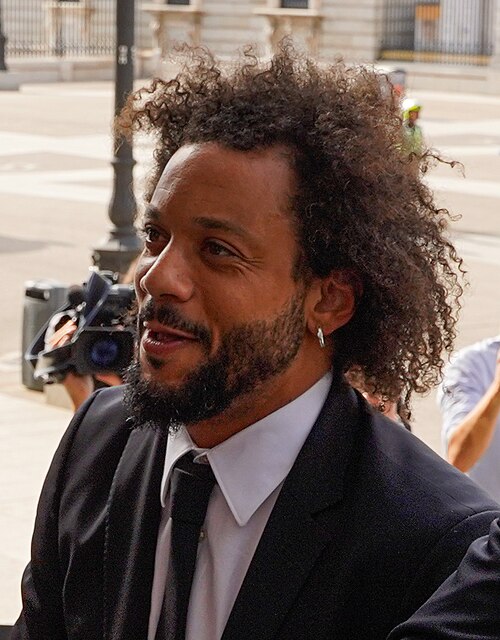
RIO DE JANEIRO — Former Real Madrid and Brazil left-back Marcelo Vieira has reignited the eternal Lionel Messi versus Cristiano Ronaldo debate by declaring the Argentine superstar his most difficult opponent, citing Messi’s extraordinary football intelligence and spatial awareness during a candid interview with Brazilian legend Romário.

In a relaxed conversation posted on Romário’s YouTube channel this week, the 37-year-old Marcelo, who won five Champions League titles and 25 trophies during 15 glittering seasons at the Bernabéu, was asked directly: “You faced Cristiano and Messi, but who was the toughest?”
Without hesitation, Marcelo replied, “Messi.” He elaborated with visible admiration and lingering frustration: “Messi was really formidable — I’m still looking for him to this day, damn. Man, he’s really formidable; Messi is really tough. He understands all the positions on the field very well. He knows when the guy is coming with the ball, he already knows where to go, where to get out, and so on. I think he is very extraordinary.”
The comments, which quickly went viral across social media and football outlets, carry particular weight coming from a player who shared the dressing room with Ronaldo for years and battled Messi more than 30 times in high-stakes Clásicos and other encounters.
Marcelo’s praise focused less on Messi’s dribbling or finishing — attributes both icons share at elite levels — and more on the Argentine’s almost supernatural reading of the game. As a left-back tasked with containing attackers, Marcelo described the mental challenge of marking a player who anticipates movements several steps ahead, making traditional defensive positioning feel inadequate.
The Brazilian icon stopped short of diminishing Ronaldo, his longtime teammate and friend. He has repeatedly called Ronaldo the best player he ever played with and the greatest he witnessed up close. Yet when pressed on direct opposition difficulty, Marcelo’s verdict favored Messi’s tactical genius over Ronaldo’s explosive athleticism and goal-scoring machine-like consistency.
The remarks arrive at a time when both Messi, 38, and Ronaldo, 41, continue defying age in Major League Soccer and the Saudi Pro League respectively. Messi stars for Inter Miami, dazzling fans with his vision and creativity, while Ronaldo remains a prolific scorer for Al-Nassr.
Marcelo’s career provided a unique vantage point. As Madrid’s starting left-back during the club’s dominant 2010s era, he locked horns with Messi in numerous El Clásicos, Copa del Rey finals and Champions League clashes. Those encounters often featured breathtaking individual duels, with Messi’s low center of gravity and quick changes of direction proving nightmares for defenders.
In contrast, Ronaldo spent nine seasons as Marcelo’s teammate from 2009 to 2018, forging one of football’s most successful partnerships on the left flank. Their on-pitch chemistry helped deliver multiple Champions League triumphs. Off the field, the pair developed a close bond, with Marcelo frequently expressing admiration for Ronaldo’s relentless work ethic and leadership.
The left-back’s latest comments echo sentiments he has shared in previous interviews, though this instance drew sharper attention because of the direct comparison and Romário’s probing style. Romário, a fellow Brazilian World Cup winner known for his straightforward questioning, pressed Marcelo on the topic after discussing other career highlights.
Football analysts and fans reacted swiftly. Many Messi supporters hailed the comments as validation from an insider who experienced both players at their peaks. Ronaldo fans countered that defending a teammate in training differs from match intensity and pointed to Ronaldo’s superior head-to-head goal tallies in some contexts or his physical dominance.
The debate, which has captivated global audiences for nearly two decades, shows no signs of fading even as both icons enter the twilight of their careers. Marcelo’s perspective adds a defender’s lens to a conversation usually dominated by attacking statistics, Ballon d’Or counts and team trophies.
Marcelo retired from professional football in 2024 after a final stint with Fluminense in Brazil, where he lifted the Copa Libertadores. Since hanging up his boots, he has stayed connected to the game through media appearances, youth coaching and nostalgic reflections on his decorated career.
His admiration for Messi aligns with views expressed by other elite defenders who faced the Argentine. Several former opponents have described Messi’s low, explosive movements and peripheral vision as uniquely difficult to predict and contain.
Ronaldo, meanwhile, has built a legacy on power, aerial ability and mental fortitude. Marcelo witnessed that drive daily in training sessions at Valdebebas, where Ronaldo’s relentless pursuit of perfection pushed teammates to higher standards.
The timing of Marcelo’s remarks coincides with heightened interest in the Messi-Ronaldo legacy as both players continue performing at high levels. Messi helped lead Argentina to the 2022 World Cup title and the 2024 Copa América, cementing his status for many as the greatest of all time. Ronaldo remains the all-time leading international scorer and continues chasing records in Saudi Arabia.
Marcelo’s comments are unlikely to settle the GOAT debate, which remains deeply personal and subjective. Yet they offer rare insight from a player who operated in the trenches against both icons — one as a rival, the other as a brother-in-arms.
In the interview, Marcelo also reflected on other tough opponents, naming players like Jesús Navas and Xabi Prieto from his earlier career, but reserved his strongest praise for Messi when the question narrowed to the two modern greats.
Social media platforms exploded with clips of the exchange, sparking fresh rounds of arguments, memes and statistical comparisons. Some users noted the irony of a Real Madrid legend elevating a Barcelona icon, while others appreciated the honesty and respect shown across club lines.
As football evolves with new generations of talent, moments like Marcelo’s interview serve as valuable oral history, preserving perspectives from those who lived through the Messi-Ronaldo era at its fiercest.
For Marcelo, choosing Messi as the toughest opponent appears rooted in genuine on-pitch experience rather than agenda. His words carried the tone of a defender still haunted by the challenge of marking one of football’s most elusive talents.
The full interview with Romário offered broader nostalgia, covering Marcelo’s journey from humble beginnings in Rio to global stardom, his love for the Brazilian national team and fond memories of Madrid’s golden generation.
While the Messi-Ronaldo question dominated headlines, Marcelo’s overall message celebrated the joy of competing against — and alongside — the game’s best.
As the football world digests the latest chapter in the never-ending rivalry discussion, Marcelo’s verdict stands as a notable data point from someone uniquely qualified to judge. Whether it sways opinions or simply fuels more debate, one thing remains clear: the brilliance of both Lionel Messi and Cristiano Ronaldo continues to inspire, divide and captivate fans long after their peak clashes.
Marcelo’s honest assessment reminds everyone that greatness can manifest differently — one through intuitive genius and spatial mastery, the other through sheer willpower and athletic excellence. In the eyes of one of football’s most decorated left-backs, Messi held the edge when the whistle blew and the battle began.

Mara Naaman is a New York–based independent scholar, writer, and editor whose work explores contemporary Arabic and American literature and culture. She has built a career shaped by deep study, global experience, and a clear commitment to thoughtful inquiry.
Naaman earned her PhD in Arabic Literature from Columbia University. Her dissertation on literary representations of downtown Cairo received high honours. She spent several years living in Cairo and travelling across the Middle East, developing both language fluency and cultural insight that continue to inform her work.
Her academic career includes serving as Assistant Professor of Comparative Literature and Arabic at Williams College from 2007 to 2014. She has also held teaching positions at Columbia University, New York University, Hostra University and Hunter College. Earlier in her career, she worked as Associate Director of Programs at the Modern Language Association in New York.
Naaman’s approach is grounded in the idea that process matters more than outcomes. She often describes herself as a “culture worker,” focused on how literature and lived experience intersect. Her work connects academic research with broader cultural conversations.
Currently, she is pursuing an MFA in Creative Writing at the City College of New York and is working on a novel. Through her teaching, writing, and research, Naaman continues to contribute to her field with an approach that values depth, reflection, and human connection.
Mara Naaman on Culture, Career, and Choosing Process
Q: You began your career in the arts as a dancer. How did that shape your path into literature and academia?
I started as a serious dancer and attended Interlochen Arts Academy while I was in high school. At the time, I thought I would go on to be a professional dancer. But writing was always there in the background; I found it clarifying to write, both creatively and academically. I won a creative writing award in high school, and began to think about writing more seriously. I don’t see it as a sharp transition. It felt more like one form of expression leading into another.
Q: What drew you specifically to Arabic literature?
I began studying the history of the Middle East at Wesleyan University and took my first Arabic language classes at The American University in Cairo as part of a study abroad program. I realized the language was really difficult and that mastering it would take many years. I made a commitment to keep working on learning the language and wrote my senior thesis on Magical Realism in Arabic literature. Researching that project opened a door for me. I realized there was a whole world of stories and perspectives that I wanted to understand more fully.
Q: You spent time living in Cairo as an undergraduate and during your PhD. How did that experience influence your work?
It changed everything. I felt the class divide in Cairo acutely and identified with writers committed to detailing the experiences of the working classes and the poor. And, of course, I was living in many of the spaces I was writing about, which was very inspiring. My dissertation focused on downtown Cairo as a symbolic space and the history of protest over the twentieth century. This gave me a deeper understanding of how urban spaces and the built environment have their own story to tell. It also gave me a sense of how literature not just reflects but also helps to shape a narrative for social justice movements. My years in Cairo grounded my work in lived experience.
Q: Your career includes roles at several universities and institutions. What stands out from those years?
Teaching at Williams College was a key part of my career. It gave me time to develop my ideas and connect with students. I’ve always valued the classroom as a space for conversation. Later, working at the Modern Language Association gave me a broader view of the important work professors in language and literature departments are doing, and how threatened many of these departments are by budget cuts to the humanities in higher education.
Q: You’ve described yourself as a “culture worker.” What does that mean to you?
It means I don’t separate my work from the world around me.I’m interested in how literature reflects everyday life and how it inspires us to want to work against injustice. I’m also interested in how people engage with ideas. For me, it’s about contributing to culture in a meaningful way and sharing inspiring work with others.
Q: You’ve spoken critically about the idea of a “success mindset.” Why is that important to you?
I think the language of success, efficiency, and outcomes can be limiting. It pushes people to focus on results and self-optimization rather than process. For me, the process is where learning happens. It’s where growth happens. If we lose that, we lose something important.
Q: How has that mindset shaped your career decisions?
It has allowed me to take a longer view. I haven’t always followed the most direct or conventional path and have made many mistakes along the way. But I’ve stayed connected to what interests me. That has led me to opportunities that feel meaningful rather than just strategic.
Q: What does your current work look like day to day?
I balance my days between taking care of my kids, writing, and taking classes as part of the MFA program at the City College of New York. I try to keep things simple. I write lists, manage my time carefully, and limit distractions. It’s about creating space to think and work.
Q: You’re currently working on a novel. How does that fit into your broader career?
It feels like a natural extension of my academic work. Novels require research, patience, and revision. They also require hours of sustained focus and an attention to detail. For me, working on this project has been another way of exploring certain intellectual ideas that interest me but also I’ve thought a lot about the human psyche and the complexities of human behavior. The work feels like a piece.
Q: What keeps you motivated through long-term projects?
I try to stay grounded. I run, practice yoga, try to read widely, and talk to friends. I also think about my mother a lot. She worked very hard to support us. That perspective helps me keep going, even when things feel difficult or uncertain.
Q: What do you think matters most in a career today?
For me, it’s not about job titles or recognition.

Bernie in danger in Coronation Street ITVX release as Mal remains at large | Soaps
Financial services bear maximum brunt of late-March FPI sell-off

Market Repricing of Risk as Gold Loses Safe-Haven Demand


-

 Fashion7 days ago
Weekend Open Thread: Spanx – Corporette.com
-

 Business4 days ago
Three Gulf funds agree to back Paramount’s $81 billion takeover of Warner, WSJ reports
-

 Sports5 days ago
India men’s 4x400m and mixed 4x100m relay teams register big progress | Other Sports News
-

 Business6 days ago
Expert Picks for Every Need
-

 Tech2 days ago
How Long Can You Drive With Expired Registration? What Florida Law Says
-

 Business5 days ago
No Jackpot Winner, Prize to Climb to $231 Million
-

 Fashion4 days ago
Massimo Dutti Offers Inspiration for Your Summer Mood Board
-

 Fashion3 days ago
Let’s Discuss: DEI in 2026
-
Politics7 days ago
Wings Over Scotland | The quality of mercy
-

 Crypto World2 days ago
Bitcoin recovers as US and Iran Agree a Ceasefire Deal
-

 Business5 days ago
Akebia Therapeutics, Inc. (AKBA) Discusses Pipeline Progress and Strategic Focus on Kidney Disease Treatments at R&D Day – Slideshow
-

 Crypto World20 hours ago
Canary Capital Files SEC Registration for PEPE ETF
-

 Fashion7 days ago
Frugal Friday’s Workwear Report: Hammered Metallic Button Sweater Vest
-

 Politics6 days ago
The UK should not pay a penny in slavery reparations
-

 Tech4 days ago
Haier is betting big that your next TV purchase will be one of these
-

 Fashion7 days ago
Tory Burch’s Spring 2026 Campaign Goes on a Getaway
-

 Fashion7 days ago
Weekly News Update, 4.3.26 – Corporette.com
-

 NewsBeat6 days ago
Kemi Badenoch talks ‘spring cleaning’ Reform defections
-

 Tech4 days ago
Samsung just gave up on its own Messages app
-
 Fashion7 days ago
Philip Jones Kids Jewellery collection – Genuine 925 sterling silver
You must be logged in to post a comment Login