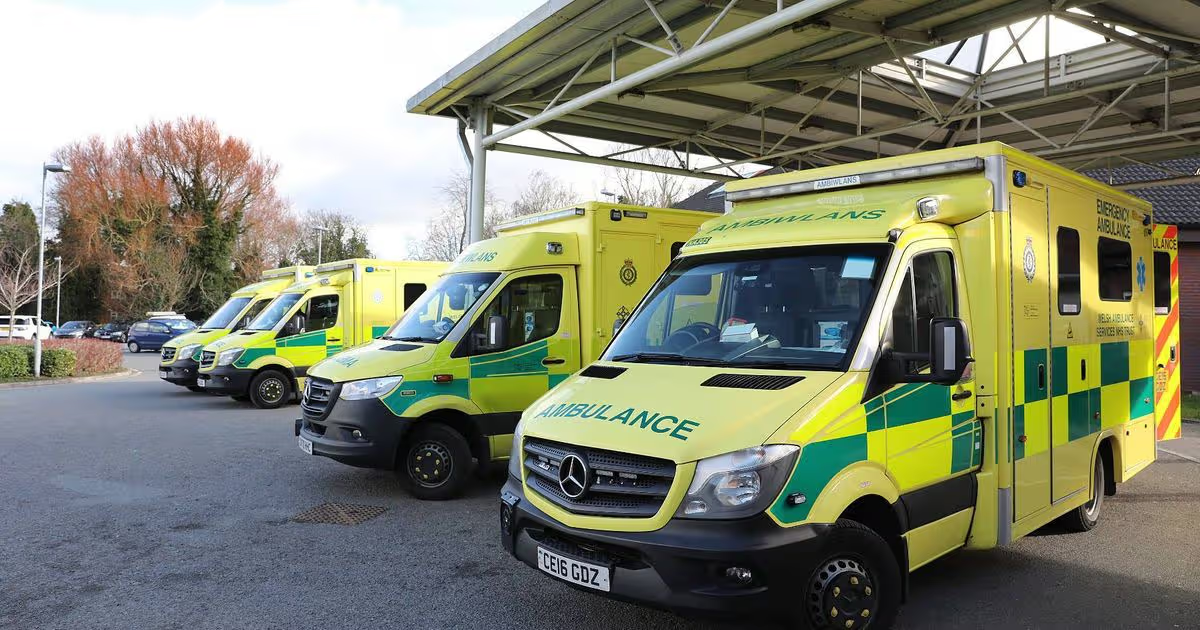
Heather Louise Parkhill, 39, died at her home in Garden City, Deeside, after waiting 14 hours for an ambulance – with a coroner ruling earlier help would probably have saved her
A woman tragically passed away at her residence after enduring a 14 hour wait for emergency medical assistance.
Advertisement
Heather Louise Parkhill, 39, became unwell at her Garden City property on Deeside due to a medical issue linked to chronic heavy drinking. An emergency call was placed at 8.41pm on April 7 2025. A subsequent call resulted in the “erroneous downgrading” of the priority classification.
Multiple additional calls requesting assistance were made during the morning of April 8, but no ambulances were available Only following a final emergency call at 10.41am was the case elevated to the most urgent category, with a first responder arriving at the scene seven minutes afterwards.
By this time, Ms Parkhill was in an extremely critical state, and revival attempts began and continued for approximately one hour.. These efforts proved futile and she was declared deceased at the property.
Advertisement
Coroner John Gittens launched an inquiry into her death on April 9, which reached its conclusion at the inquest’s end on January 29 this year ,reports North Wales Live
The cause of death was determined as Fatty Liver Disease, with neglect contributing due to the failure to provide prompt medical intervention. His narrative verdict concluded: “Her death was the result of a terminal event arising from a condition associated with the chronic excessive consumption of alcohol, but it is probable that the death would have been prevented by earlier medical intervention, although none was available. The deceased’s death was ultimately alcohol related but contributed to by neglect.”
He issued a Prevention of Future Deaths report to the Welsh Ambulance Services University NHS Trust. These reports are issued when a coroner believes action must be taken to prevent similar deaths occurring in future.
The coroner stated: “Evidence was given to the inquest indicating that an earlier response (even 20-30 minutes earlier) would probably have prevented this death.”
Advertisement
His report to the ambulance trust warned: “For many years, myself and other coroners have raised concerns regarding so called “ambulance delays” and I recognise that the challenges faced by WAST around the availability of resources are the result of multifactorial issues, however problems regarding the unavailability of resources persist. I have a mandatory statutory responsibility to raise concerns where they exist and it is clear that lives continue to be lost as a result of this problem.
“Despite all of the multi-agency efforts to improve the availability of resources and hence response times, nothing appears to change. I therefore remain concerned that lives continue to be at risk.”
In response, Liam Williams, Executive Director of Quality and Nursing at the Welsh Ambulance Service, said: “On behalf of everyone at the Welsh Ambulance Service, I want to express my sincere condolences to Mrs Parkhill’s family.
Advertisement
“While we cannot change the outcome, we are an organisation committed to learning and are grateful to the coroner for his examination of this case and accept his findings and the Prevention of Future Deaths report, which we take very seriously and will respond to in due course.
“Since Mrs Parkhill’s death, we have been working with Welsh Government to change the way 999 calls are categorised so that more people get life-saving help when they need it, however, it is critical that our crews are available to respond when they are needed.
“Improvement relies on a whole system collaboration, which is why we continue to work with health boards, including Betsi Cadwaladr University Health Board, to reduce hospital handover delays.
“Together, these improvements will free up additional ambulance capacity so we can respond more quickly to those who need us most. We are in direct contact with Mrs Parkhill’s family to listen to their concerns and answer their questions.”
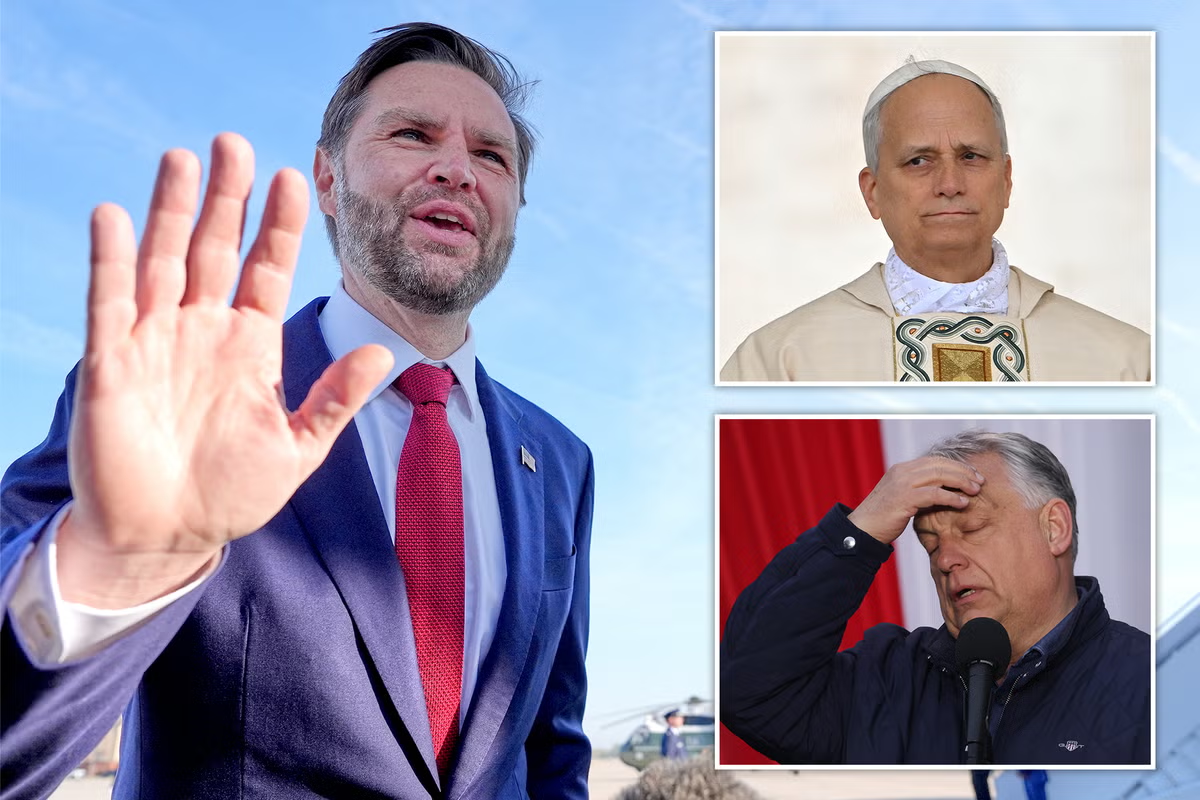
More than ever before, the winds seem to be shifting against the White House in which Vance serves as No. 2 at a time when his political star should be rising. Republicans are facing down a brutal midterm season, with a handful of Senate race ratings shifting in Democrats’ favor this week and the possibility of Republicans losing both chambers growing by the day.
His boss, Donald Trump, seems more erratic than ever as he tries to find a “mission accomplished” banner to drape over his war with Iran, although the U.S. is approaching the end of the second month of war without a means to forcibly secure its objectives, nor an agreement to achieve those means diplomatically.
Vance, the presumed successor to Trump, is already being eyed for his sturdiness as a presidential candidate. It’s a tough sell for a political consultant: Vance, a political novice, has still been in government for less than the duration of one U.S. Senate term, the office he was originally selected for before being plucked into the Trump campaign by the president and his son, Donald Trump Jr. Were it not for Trump, Vance’s political stardom may have never happened. The Hillbilly Elegy author was running in the relative minor leagues of the Ohio Republican Senate primary in 2022 before winning Trump’s endorsement that year.
Advertisement
Now, as vice president, Vance remains in Trump’s shadow (albeit to a lesser degree than Kamala Harris during her own time as Joe Biden’s veep). He emerged this past weekend to tackle a tough challenge for the president: Trump, the dealmaker, sent Vance in his place to Islamabad, Pakistan, to meet face to face with Iranian negotiators and find an end to a two-month-long conflict that is now tearing the younger part of the MAGA coalition apart at the seams.
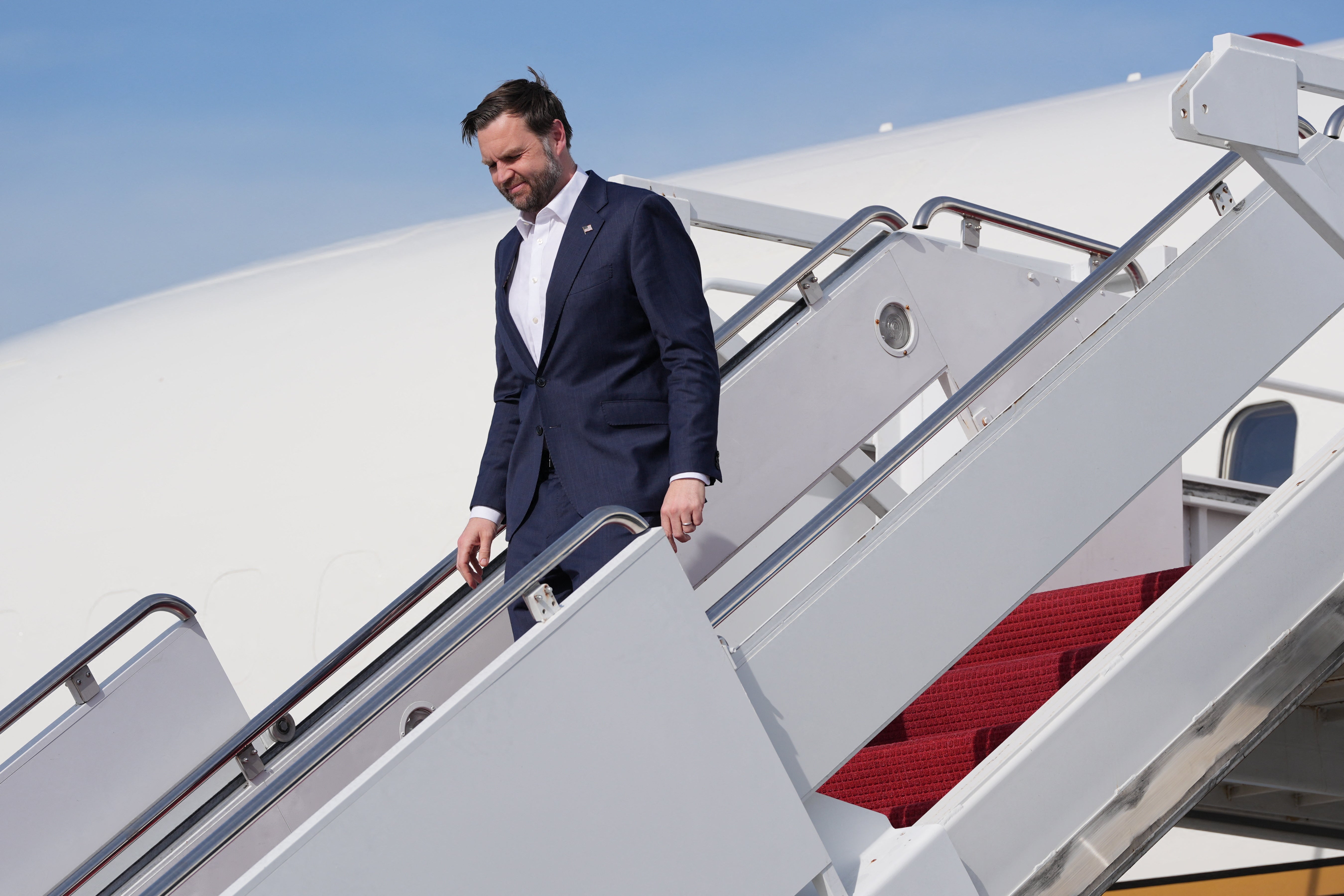
Vance returned from Pakistan without a deal to end the war in Iran on Sunday (AFP/Getty)
He failed. Vance, after a marathon negotiation session, could only point to the discussions themselves as a positive development as he slinked back to Washington without an agreement to either open the Strait of Hormuz, a crucial waterway, or deal with Iran’s nuclear program.
“The bad news is, we have not reached an agreement,” Vance told reporters. “They have chosen not to accept our terms. The simple fact is that we need to see an affirmative commitment that they will not seek a nuclear weapon and they will not seek the tools that would enable them to quickly achieve a nuclear weapon.”
Once again, in an administration that has repeatedly touted its peacemaking efforts, the White House has come up short of the biggest prize.
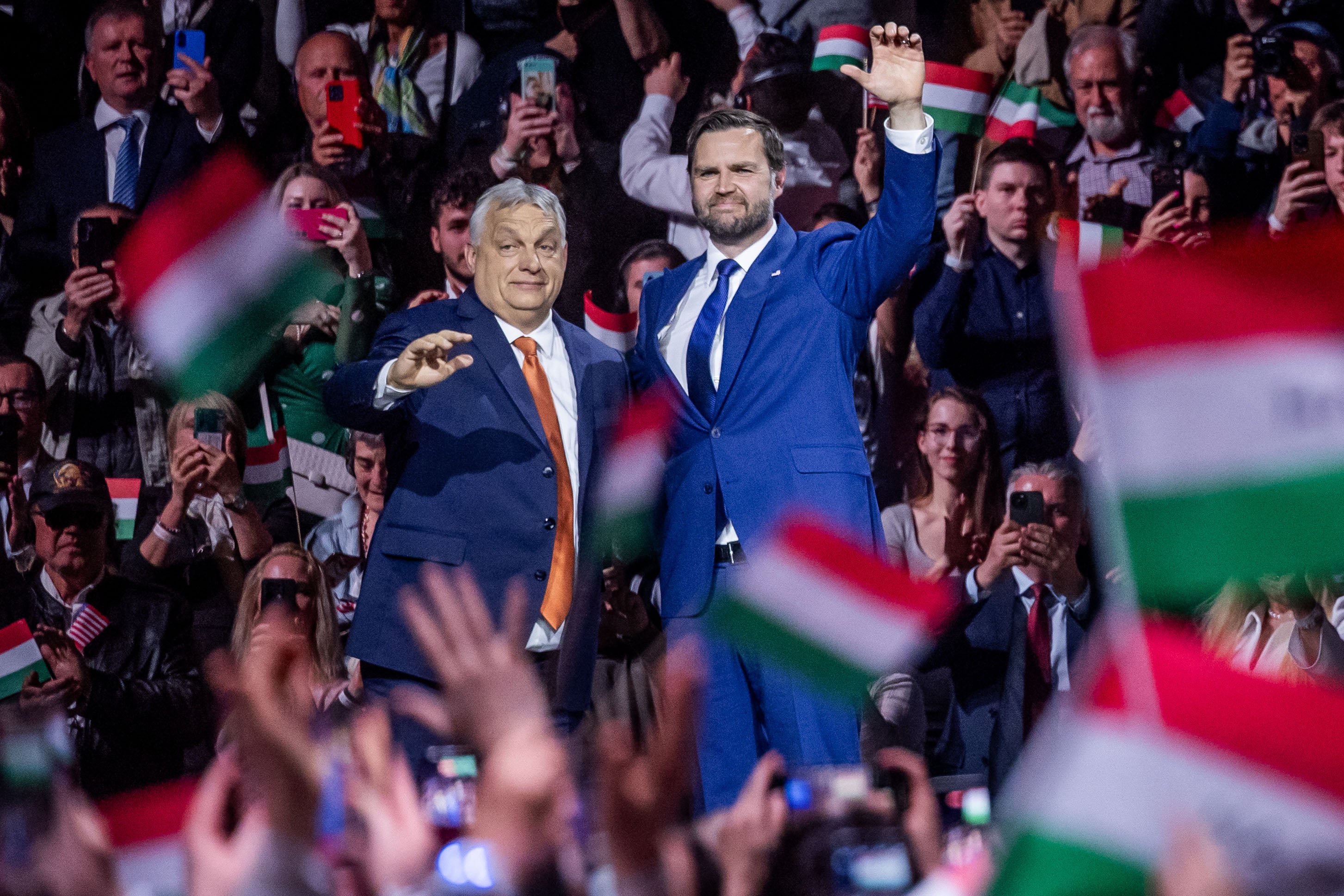
Vice President J.D. Vance and the now-outgoing Hungarian Prime Minister Viktor Orban at an election rally in Budapest last Tuesday (Getty)
That wasn’t the only body blow suffered by Vance’s presidential ambitions this weekend. On Sunday, the longtime White House ally Viktor Orban lost re-election in Hungary, dealing a casualty to the global far-right alliance envisioned by the likes of Steve Bannon and the MAGAworld culture-war obsessives who often find a champion in Vance, who is willing to genuinely espouse the Christian nationalist doctrine that Trump often finds hard to pass off as convincing rhetoric.
Orban’s defeat was particularly embarrassing for Vance, who traveled to Hungary late last week in a bid to save Orban’s campaign with some of that exact rhetoric: “Will you stand for sovereignty and democracy, for truth and for the God of our forefathers?”
Advertisement
His appeal to heaven unsuccessful and his bid to follow in Trump’s faux peacemaker footsteps in Iran also coming up short, the vice president returned home to D.C. on Sunday to face a different kind of holy war.
The nation’s second Catholic vice president woke up (jet-lagged, no doubt) on Monday morning to see Trump fire off a fresh round of attacks at the Pope on Monday, following rare criticism of the White House from the first American head of the Catholic Church.
Donald Trump deleted this image depicting him as Jesus after posting it on his Truth Social account (AFP/Getty)
Vance’s only contribution to this discourse so far was to seemingly dismiss a report that the administration summoned a Vatican ambassador to the Pentagon for a tense meeting after Pope Leo issued criticism of the war in Iran. The nation’s highest-ranking Catholic in the federal government seemed briefly unaware of who the Holy See’s chief diplomat to the U.S. was.
With the Trump 2.0 era less than half over and the post-midterms world presenting a whole new canvass for Trump’s vice president to shine in the spotlight, it’s hardly time to write the obituary of JD’s future political ambitions. But this weekend did not help matters at all, and Vance may have missed his best opportunity to get his boss publicly out of a jam — while simultaneously earning the praise of Americans who by and large do not support the White House resuming its war.
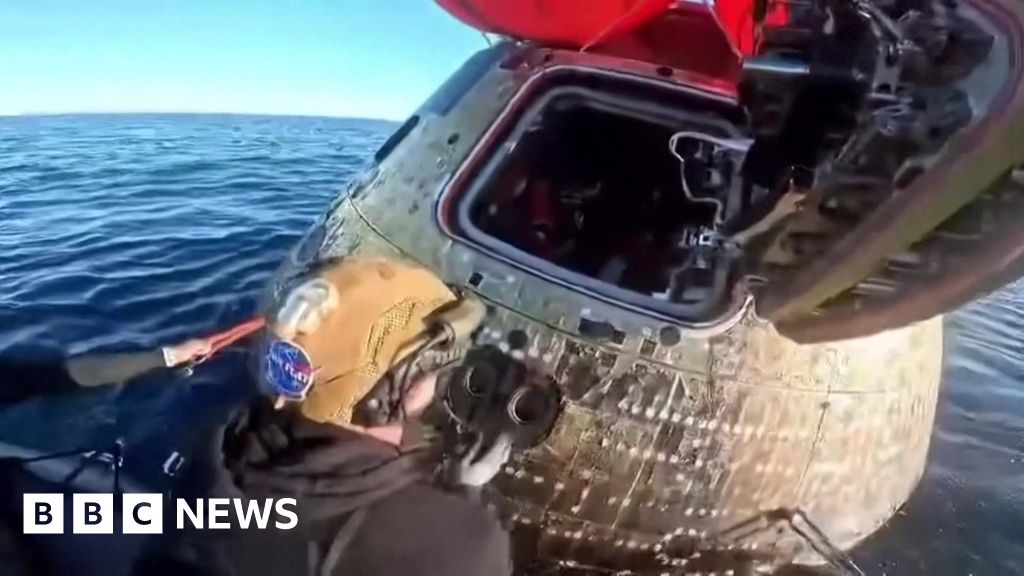
Newly released video shows the moment a recovery crew opens the hatch of Artemis II’s Orion capsule to a joyful reunion with the four astronauts inside.
Cheers broke out as the crew – Reid Wiseman, Victor Glover, Christina Koch and Jeremy Hansen – were all found to be safe and well after splashdown on Friday 10 April.
The historic mission saw the four astronauts travel further from Earth than any human has ever gone.
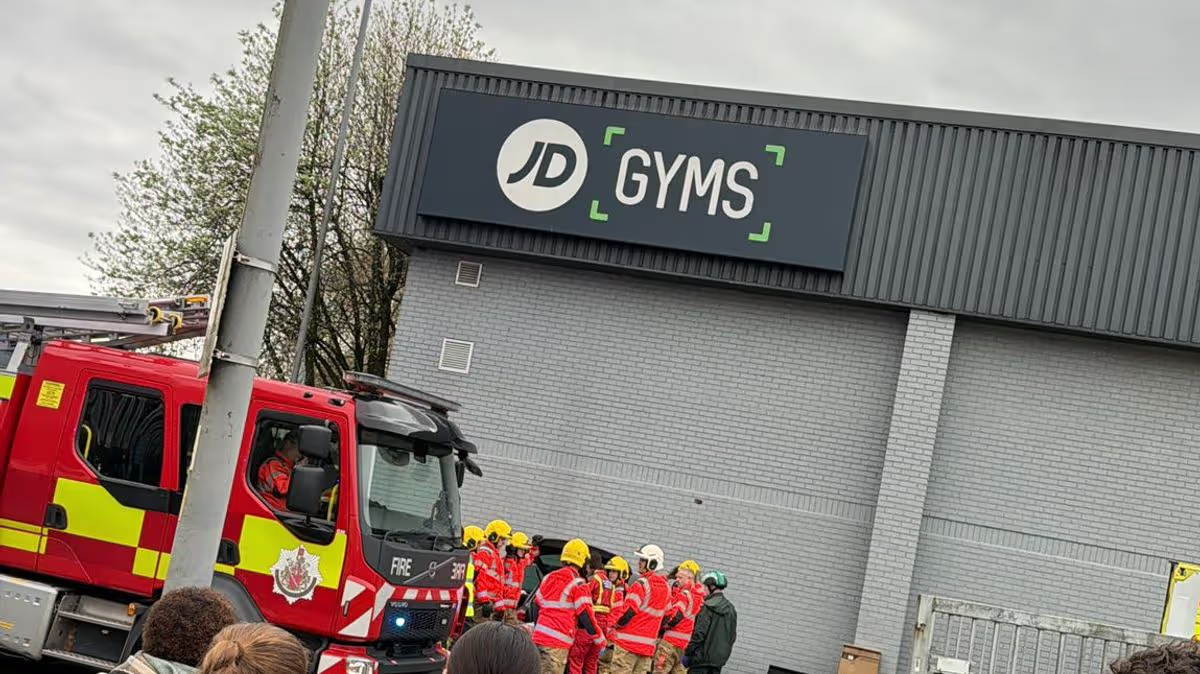
The JD Gym in Bury has closed this evening following the collision earlier today
The bosses of JD Gym in Bury have issued an urgent statement after a car ploughed through the wall of the building. Police have confirmed two people were injured in the crash, including a male gym-goer in his 60s and the driver of the car involved, a woman in her 40s.
Advertisement
The gym has closed this evening following the collision at 4.45pm on Tuesday (April 14). JD has said the incident has caused ‘damage to part of the gym’.
Click here to get the biggest stories straight to your inbox in our Daily Newsletter
A statement by the gym posted on social media read: “Earlier today an incident occurred at JD Gyms involving a vehicle making contact with the exterior of the building, which resulted in damage to part of the gym.
“As a precaution and in the interest of everyone’s safety, the gym will remain closed until further notice.
Advertisement
“Our team are on it straight away and building surveyors are due to attend in the morning. We will know more following their visit and will update here.
“If you are a member, you have automatically been granted multi-site access. Your JD Gyms app will now scan you in at a neighbouring JD Gyms location of your choice. We will be back open ASAP. Thank you for your patience!!”
Police have confirmed the driver was later arrested in connection with the incident.
A GMP spokesperson said: “Officers responded to an incident at 4.45pm today (14/04/2026) at JD Gym on George Street, Bury, with the assistance of NWAS and the Greater Manchester Fire Service.
Advertisement
“It was reported that a car had driven through the wall of JD Gym, resulting in structural damage of the building.
“In the incident a man in his 60’s has been struck by the car whilst inside the gym and has sustained non-life changing injuries.
“Woman in her 40s has been arrested on suspicion of causing injury by dangerous driving, she remains in hospital at this time.
“If you have any information, please contact officers on 101 or LiveChat quoting log 2424 of 14/04/2026.”
Advertisement
Chaotic videos from inside, shared widely on social media, showed dust and bricks falling into the busy gym as customers were using the facilities. It is not clear if anyone has been injured.
Multiple emergency services vehicles remain at the scene, which has closed Rochdale Road and George Street in the town centre. Bury Council has urged people to avoid the area.
This is a breaking news story. Follow live updates here.
Rebecca’s father said her death was the “hardest thing” he had “ever had to accept”
The partner of a woman killed by a crane told a court he is “not the person he once was” since the death of his “blue eyed beauty”. Rebecca Ableman, 30, was struck in the head by a crane, while walking her daughter along a road in Willingham on September 22, 2022.
He described Rebecca as a “strong” and “unique” woman, who loved “to travel and explore”. Recounting when he saw Rebecca in hospital after the incident, Mr Tuczemskyi said she was “unrecognisable” and that he will “never be the same” because of her death.
Speaking outside of the court, Mr Tuczemskyi he said the family wanted a prison sentence for Miller as it was “something that should have never happened”. He added: “As I mentioned during my statement, a £10 strap would have prevented this, and that’s heartbreaking and difficult to process.
Advertisement
“We would have liked a longer sentence but we are glad it’s not a suspended sentence.” Mr Tuczemskyi said it “sends a strong message out” that “safety should always be paramount with this kind of thing.” He added: “We are relieved it’s all finally coming to an end.”
Other victim impact statements were read out in court on behalf of Rebecca’s parents Russell and Susan Ableman, sisters Christina and Natalie, and longtime friend Amy. Russell said he feels he had “failed” as a father, as he said a father’s job is to “protect your children”. He said it was the “hardest thing” he had “ever had to accept”.
He added that her “life was cut short” due to “someone else’s carelessness”. Susan said her daughter “excelled” at being a mother to Autumn, and she “grieved for the life she could have had”.
Susan added that she now feels “vulnerable” walking along pavements when lorries are travelling nearby, following the death of her daughter. In a joint statement, sisters Christine and Natalie said there is a “permanent and profound void in our lives”.
Advertisement
They said Rebecca was the “light in our family and she was the friend that brought together everyone”. The sisters said losing Rebecca in “such a sudden and preventable way is a trauma” they couldn’t “fully put into words”. They also said her death was the “loss of a future”.
Longtime friend Amy said Rebecca was “so much more than a friend”, describing her as a “sister”. Amy said Rebecca “protected” her and that her life was now “lost and hollow” since her death. “Every happy moment now casts a dark shadow because she should be here,” Amy added.
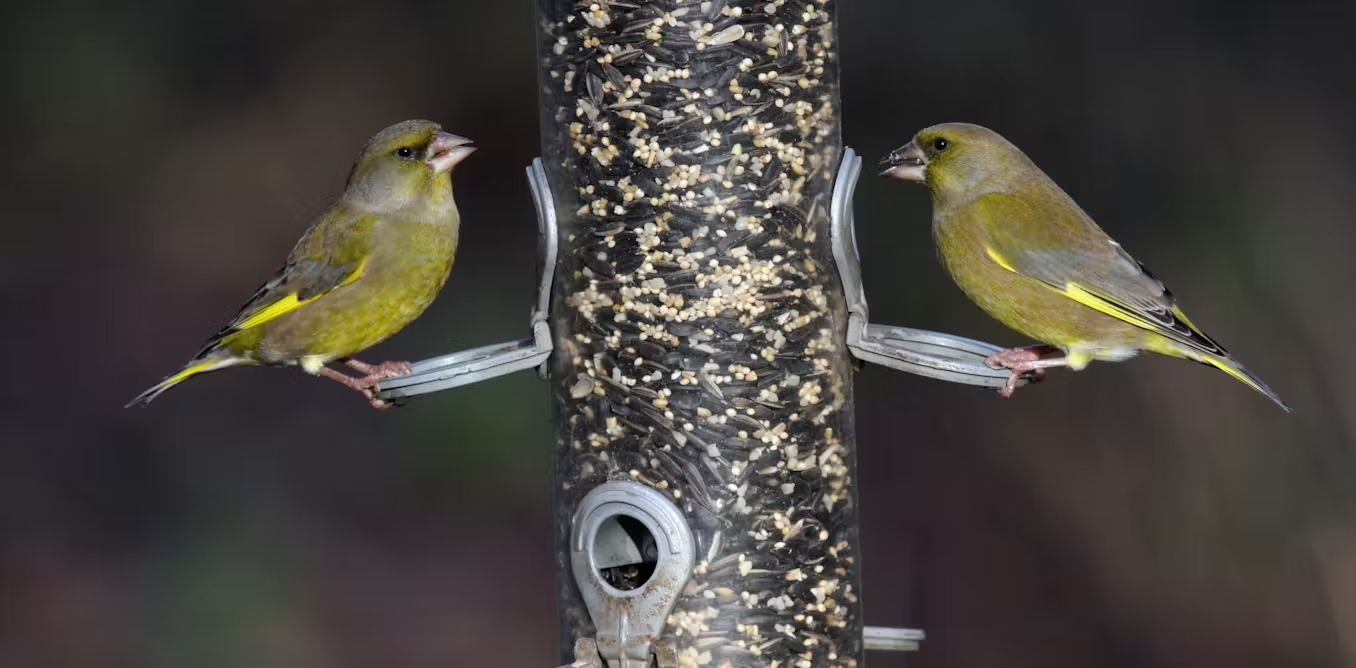
The outbreak of a mysterious and deadly disease in finches in British gardens in 2005 set alarms bells ringing for conservationists. A decade later, the extent of that disease in greenfinches and chaffinches was reported. And now, bird scientists are beginning to understand how feeding birds in our gardens might be linked to their health and survival.
Feeding birds in gardens is helpful, especially during winter when birds might be facing food shortages. But summer feeding should be paused because this is a time when natural food sources such as caterpillars, bugs and flies are much more abundant. In summer, the benefits of feeding the birds are less obvious. Limiting summer bird feeding also limits the spread of disease, which happens more prominently when birds gather in numbers to share food and water.
Scientists now know that the disease detected in finches in the 2000s is trichomonosis, caused by a microscopic parasite called Trichomonas gallinae. It typically infects the bird’s throat and has been known for many years to affect pigeons and doves, along with birds of prey. Birds can act as carriers or succumb to the disease. Quite how this parasite spilled over into finches is uncertain, but probably happened through the sharing of food or water.
The disease causes lesions in the bird’s throat that interfere with its ability to swallow. This causes the bird to regurgitate food and water, and eventually die. It can spread between birds when they feed one another during courtship, when feeding chicks or through regurgitation at food or water sources in gardens. Poorly birds appear fluffed up and lethargic. Some may have messy or wet feathers around their beak and often shake their heads as they try to swallow. It’s a sad sight.
Trichomonsis has had devastating consequences in bird populations across the UK and into mainland Europe. Greenfinches and chaffinches have been hit hardest. Greenfinch numbers are down by 65% and chaffinch down by 36% since 1995.
Bullfinches also catch this disease and die, and a range of other birds may contract the disease – some of which are already declining in numbers.
Advertisement
Without urgent action, the situation will probably get worse for these and other birds, especially when facing a myriad of other pressures. These include the loss of natural habitats, limited food availability, plus accelerating climate change.
The new guidance from the RSPB comes on the back of a detailed review of the effects of bird feeding that includes both bird survival from one year to the next and their breeding success. The review also considers the human benefits to bird feeding, and takes into account recent field studies of the disease and how to curb its spread. Most research has been conducted in natural settings such as woodlands, rather than residential, urban or suburban settings. But the key insights are clear.
The review found that feeding can boost bird populations. But there are two big concerns for conservation around garden bird feeding. First, increased disease transmission (as shown by trichomonosis and other diseases). Second, while many bird species have benefited from garden feeding, this may have come at the cost to others.
A 2009 study found that an estimated 12.6 million UK households (48%) provided supplementary food for birds of which 7.4 million used specially designed bird feeders. As demand increases, so too does the range of different bird food and feeders.
Advertisement
This popularity has upsides and downsides for different birds, but probably has strong benefits for our own connection to nature, wellbeing and health.
Birds that use feeders, such as greater spotted woodpeckers, wood pigeons, collared doves, great tits and blue tits have all increased their numbers dramaticallyin the long term. Yet, as their numbers have grown there is an increasing nervousness from conservationists that they might outcompete or predate more vulnerable species. Blue and great tits often take over and evict the endangered willow tit from their nest holes, and willow tits are preyed upon by great spotted woodpeckers. Further research will shed light on these complex interactions.
During summer and autumn, there’s a higher risk of disease spreading. It’s also when there are more natural foods available to birds, so pause feeding any seeds or peanuts between 1 May and 31 October. You can continue to offer small amounts of mealworms, fat balls or suet, as they pose less risk of transmitting disease. Also consider bird-friendly planting to provide natural food sources, such as sunflowers, teasels and ivy.
Advertisement
Between 1 November and 30 April, you can feed with a full range of bird foods, including seeds and peanuts, but feed in moderation so food doesn’t spoil and large flocks of birds are not attracted to one location. Little and often is good.
Other guidance encourages good hygiene to minimise the risk of disease. Ideally, clean bird feeders and water baths at least once a week. You can change the water in bird baths every day and move bird feeders to different spots every week. Instead of using bird feeders with flat surfaces, such as bird tables, window feeders and feeders with trays, opt for hanging bird feeders to reduce the risk of spreading infections.
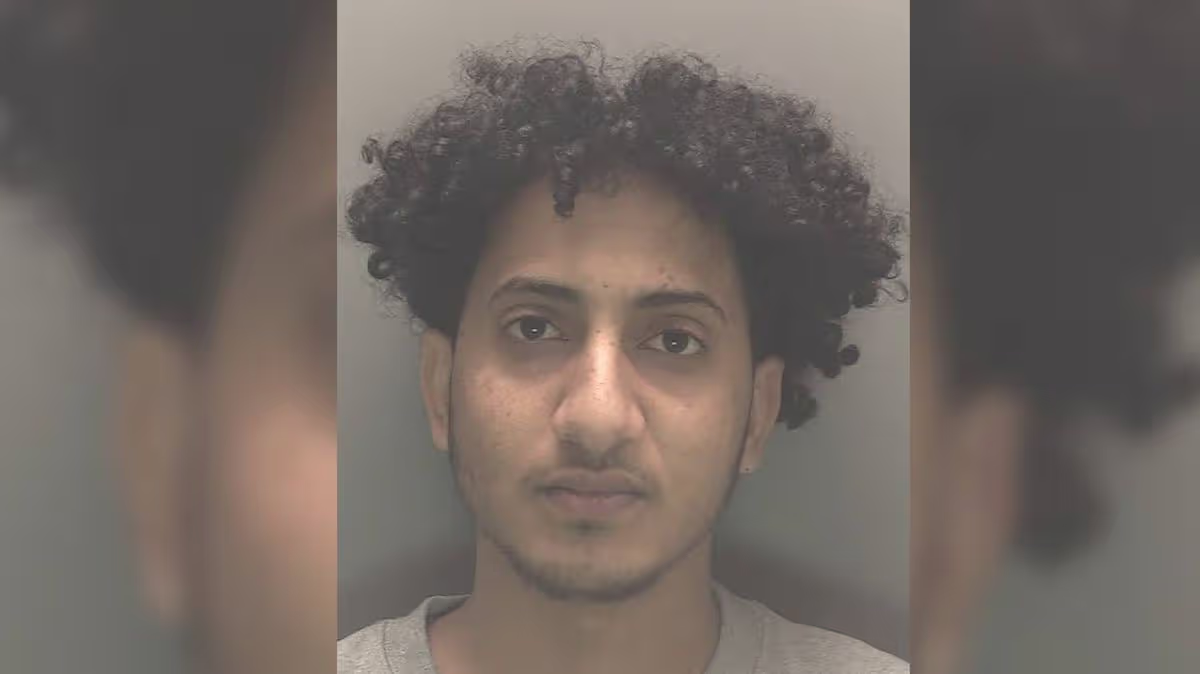
Yaaqob Saleh, 20, was sentenced to 12 months after sexually assaulting a customer who entered his Liverpool city centre shop seeking help to charge her phone
Adam Everett Crown Court Reporter and Kirstie McCrum Deputy Head of News, Live News Network
18:42, 14 Apr 2026
A retail employee has been imprisoned following his sexual assault on a customer who had taken shelter in his shop after becoming stranded in Liverpool city centre on a night out.
Yaaqob Saleh’s victim was left weeping and “curled up into a ball because she was so upset” following his relentless and predatory behaviour. While he had previously denied any wrongdoing, he now acknowledges he “let himself down” during the disturbing incident.
Advertisement
However, a judge informed him his “very, very late expression of remorse” carried “very marginal weight” as he was sent to prison for his failure to “take no for an answer”.
Liverpool Crown Court was told this afternoon (Tuesday) that the complainant had been enjoying an evening with friends in Liverpool city centre celebrating St Patrick’s Day last March before attempting to get a taxi home by herself. Yet, with her mobile having died, she entered Liverpool One Newsagents and Convenience Store on Whitechapel requesting help.
Helen Chenery, prosecuting, outlined how Saleh, of Wendell Street in Toxteth, was manning the counter and permitted her to charge her phone so she could arrange a taxi. The 20-year-old defendant asked her to sit close to a heater on steps next to the till and, following serving a customer, positioned himself beside her.
Saleh, who was 19 at the time, proceeded to place his hand on her thigh and requested a kiss, which she rejected. Despite her refusal, he managed to kiss her cheek and, after attending to another customer, returned to his seat and placed his hand beneath her skirt, touching her vagina through her clothing.
Advertisement
After Saleh rose to assist another shopper, the victim drew herself into a foetal position and wept. Once her mobile had charged sufficiently, she was able to ring a friend and departed the premises, reports the Liverpool Echo.
In her victim impact statement, she described: “Since this incident, I’ve experienced a wide and overwhelming range of emotions. Anxiety, depression and anger have been the most persistent.
“In the weeks and months following the assault, I began to struggle deeply with sleep. I still suffer from regular nightmares, which cause me frequently to wake throughout the night. These episodes have created a fear of sleep and a constant feeling of emotional exhaustion.
Advertisement
“One of the most significant effects has been the loss of my independence. Before the assault, I was confident and self assured.
“I felt safe travelling alone, making decisions for myself and simply existing in the world. That sense of security has been stripped away.
“I now rely on my parents to meet me or accompany me when going out. I constantly feel as though what happened once could happen again. This loss of independence brought with it an overwhelming sense of grief. I felt as though a vital part of my identity had been taken away without my consent.
“My self worth deteriorated. I began to feel as though my body was somehow wrong or repulsive, and I blamed myself. These thoughts have spiralled into regular suicidal ideation and a serious dependency on self harm as a coping mechanism.
Advertisement
“I became emotionally detached from reality and deeply distrustful of others. Even the people trying to help me felt suspicious.
“I also felt deep anger. I was angry at the perpetrator, but also angry at the world. I kept asking myself, why me? I never found a satisfying answer. That question stayed with me every day.
“In an attempt to cope, I began drinking excessively. I used alcohol to temporarily silence the pain and hatred I felt, but this only deepened my feelings of isolation and damaged many of my close relationships. I felt tired and unwell most days.
“Where I used to have energy and drive, I began to struggle to complete basic tasks or get out of bed. This incident has impacted almost every part of my life. It has changed the way I view the world and the way I view myself.”
Advertisement
Saleh has no prior criminal record.
Defence solicitor Katie Lord addressed the court, stating: “It is, of course, serious offending, an offence which has had a serious impact on the complainant. He has been advised of the fact that the court will be considering all options, including custody. He is realistic.
“It is a case where, I concede, that the custody threshold has been passed. I am going ask your honour to step away from imposing immediate custody. He presents, as the Probation Service helpfully outline, with identifiable rehabilitative needs.
“In my submission, they can be addressed in the community if he has the option to be under close supervision. His youth and immaturity are material features. It is clear that those are factors which have led to his offending.
Advertisement
“There is real work to be done in respect of the causative factors that have caused the defendant to act in the way he has. He tells me it is out of character and not in his nature. There is work to be done in understanding the reasoning. He has got family to support him. He seeks employment.
“A community based sentence, in my submission, would allow these necessary interventions. It is unlikely that he would have access to that level of rehabilitative intervention in prison. In my submission, society is best served by this defendant being subject to intensive supervision in the community, as opposed to a relatively short spell in custody.”
Saleh, who required an interpreter throughout the proceedings, was convicted of one count of sexual assault after a trial at the magistrates’ court. He subsequently attempted to challenge his conviction at crown court but later withdrew his appeal.
Standing in the dock dressed in a black Under Armour tracksuit, Saleh received a 12-month sentence at a young offenders’ institution. He was also ordered to register as a sex offender for 10 years and given a four-year restraining order.
Advertisement
During sentencing, Judge Dennis Watson KC stated: “She had been out celebrating St Patrick’s Day with friends, but, at the end of the evening, she came into a shop where you were working. She did that because her phone was dangerously short of charge and, indeed, ran out of charge.
“So it was that she came to you for assistance. She had been drinking and was on her own and vulnerable by reason of the circumstances in which she found herself. Very quickly, you decided to proposition her sexually.
“You tried to persuade her to come around the other side of the counter, where she would be warmer. You asked her for a kiss, touched her thigh. All the while, she was saying to you that she did not want to be kissed by you or touched by you.
“Even when a customer came in and you served the customer, you went back, because there is a real element of you not taking no for an answer. There is this other element of persistence by you. On this separate occasion, you touched her, as Ms Chenery put it, on her crotch, as the author of the pre-sentence report put it, on her vagina but over her clothing, which had the instant effect of causing her to curl up into a ball because she was so upset.
Advertisement
“However young or immature you are, you would know that your behaviour, in doing what you did, was wrong. There was a trial at the magistrates’ court. You gave evidence and denied the offence. Very belatedly, you have written a letter saying you understand that your offending has consequences, that you have let yourself down and you have expressed remorse.
“This is a case, I regret, where the very, very late expression of remorse means that it has very marginal weight, particularly when you have given evidence and completely denied the offending at the magistrates’ court. I regret to inform you that I have concluded that the circumstances of this offence and everything I know about you means this that is an offence where only immediate imprisonment is the appropriate punishment.”
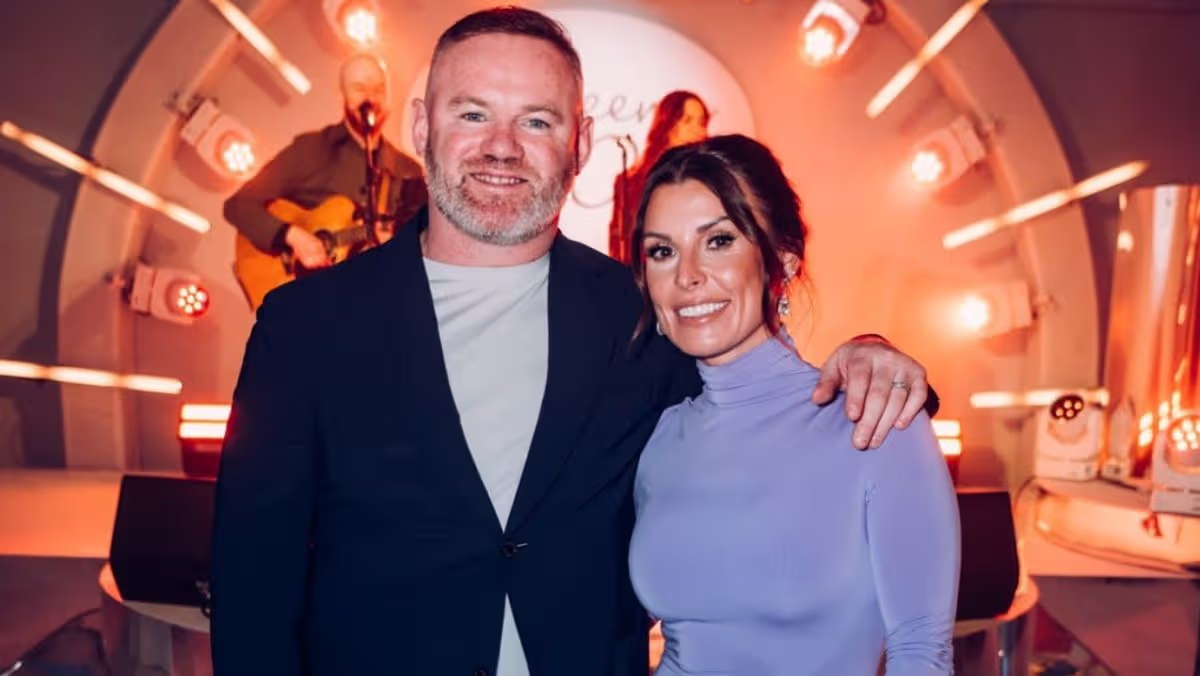
Photos show a beaming Coleen and Wayne in the special party set up at their Cheshire mansion
Coleen Rooney has shared the first photos from inside her lavish landmark 40th birthday party held earlier this month. The super-glam bash was held in the grounds of Coleen and her football legend husband Wayne Rooney’s sprawling Cheshire mansion in a specially-erected marquee.
Advertisement
Now, Coleen’s event organiser Julie Perry has jointly shared photos from inside the party, showing Coleen dressed in a stunning lilac gown as she celebrated with family and friends.
Coleen and Wayne were pictured arm in arm at the party, as they celebrated the special day with a host of their close friends and family.
Get MEN Premium now for just £1 HERE – or get involved in our WhatsApp group by clicking HERE. And don’t miss out on our brilliant selection of newsletters HERE.
They included a number of Wayne’s former Manchester United team-mates and their wives who became lifelong friends with the couple after his time with the Reds.
Advertisement
Former Reds players at the party included Darron Gibson with wife Danielle, Darren Fletcher with wife Hayley, Phil Bardsley with wife Tanya and Phil Jones with wife Kaya.
Current Man United boss Michael Carrick was also in attendance with wife Lisa who is close friends with Coleen.
It is understood that Coleen is being filmed for a new mega-budget Disney documentary, and that the birthday bash will also be featured in the new series.
Advertisement
Pictures shared from inside the bash included one that showed Coleen blowing the candles on a giant white birthday cake decorated with red cherries. In another she was beaming as she held a glass of her favourite pink fizz.
Julie Perry Events also organised Wayne and Coleen’s spectacular wedding on the Italian Riviera back in 2008 and has remained firm friends with the couple.
The events company erected a huge marquee on the lawn of the Rooneys’ Cheshire home, which was filled with glamorous pink floral displays as well as a light arch bearing the words “Coleen’s 40th” on a stage.
Advertisement
A giant 40 was also set up by a lake in the sprawling grounds of their £20million home, near Knutsford.
Later at the party guests were stunned with the surprise star guest on the night, Irish chart-topping star Dermot Kennedy.
He played an acoustic set of his biggest hits as well as choice covers of some of Coleen’s favourites, including the Bee Gees’ To Love Somebody.
Advertisement
Coleen was joined at the party by her and Wayne’s sons, their eldest Kai, 16, who is now signed to Manchester United, as well as Klay, 12, Kit, 10 and Cass, 8.
The party tent was decked out like a nightclub with plush pink chairs and sofas, while on the walls were a host of special artworks in Coleen’s honour.
Advertisement
They included portraits of what at first looked like Penguin classic novels, but closer inspection revealed quirky nods to Coleen like “Tales of Colly Mc from Crocky” – a nod to her maiden name of McLoughlin and home town of Croxteth in Liverpool.
Friends and fans of I’m a Celebrity star Coleen were quick to like the post filled with pictures, and hailed the event “classy and beautiful”.
The FCDO has updated its travel advice for several countries
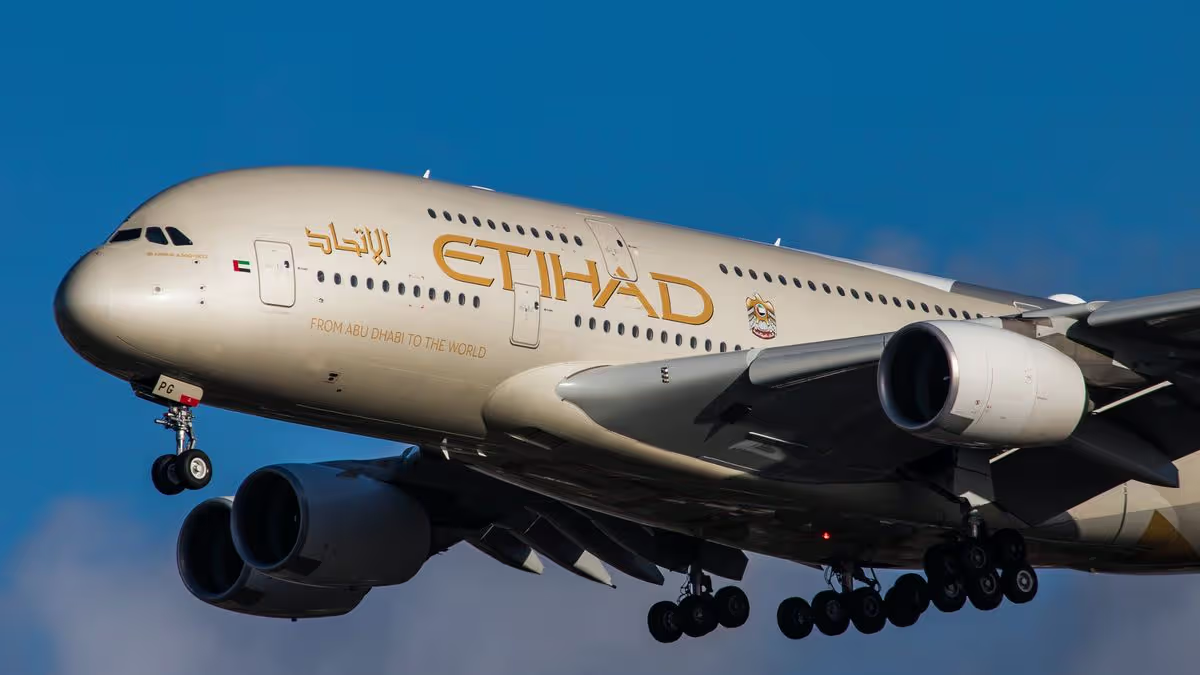
The UK Foreign Office has updated its travel advice for several countries in the Middle East including Qatar and the United Arab Emirates (UAE) amid a tentative US-Iran ceasefire.
Advertisement
While a ceasefire remains in place between Iran and the US, Donald Trump continues to blockade the Strait of Hormuz, a move the US president threatened after peace talks taking place in Pakistan collapsed last week.
Since the beginning of the conflict at the end of February, the UK Foreign Office has continued to update its travel advice for Brits visiting or living in the Middle East, including Qatar and Dubai.
Click here to get the biggest stories straight to your inbox in our Daily Newsletter
At the start of the war, Brits were encouraged to register their presence, and many airlines cancelled flights as areas were being hit with strikes. Now, the Foreign Office has updated issued new advice for several countries.
The update on the Foreign Office website reads: “Iranian strikes against civilian infrastructure across the region such as ports, hotels, roads, bridges, energy facilities, oil production sites, water systems, and airports, have decreased. However, the risk of renewed strikes remains, and further attacks could occur at short notice.”
On the UAE travel advice page, the Foreign Office has said that ‘regional escalation’ continues to pose ‘significant security risks’.
Advertisement
The full warning reads: “Regional escalation poses significant security risks and has led to travel disruption.
“The Iranian regime has publicly stated its intention to target locations associated with the United States and Israel. This includes US or Israeli-linked organisations, businesses, facilities and institutions.
“Stay away from areas around security or military facilities, and US or Israeli-linked locations.”
Get MEN Premium now for just £1 HERE – or get involved in our WhatsApp group by clicking HERE
Advertisement
A ceasefire was agreed between the US and Iran on the basis that Iran would reopen the Strait of Hormuz, which is a major transport route for oil. With the strait being blocked over the past two months, it has meant that effects have been felt across the globe.
In Greater Manchester owners of petrol cars are currently being charged 1.6p less than the national average of 158.1p. Diesel car drivers in Greater Manchester are paying 2.1p less than the national average.
Rebecca Ableman, 30, was walking her two-year-old daughter in a pram when she was struck by a crane, and suffered ‘catastrophic brain and head injuries’
18:07, 14 Apr 2026Updated 18:33, 14 Apr 2026
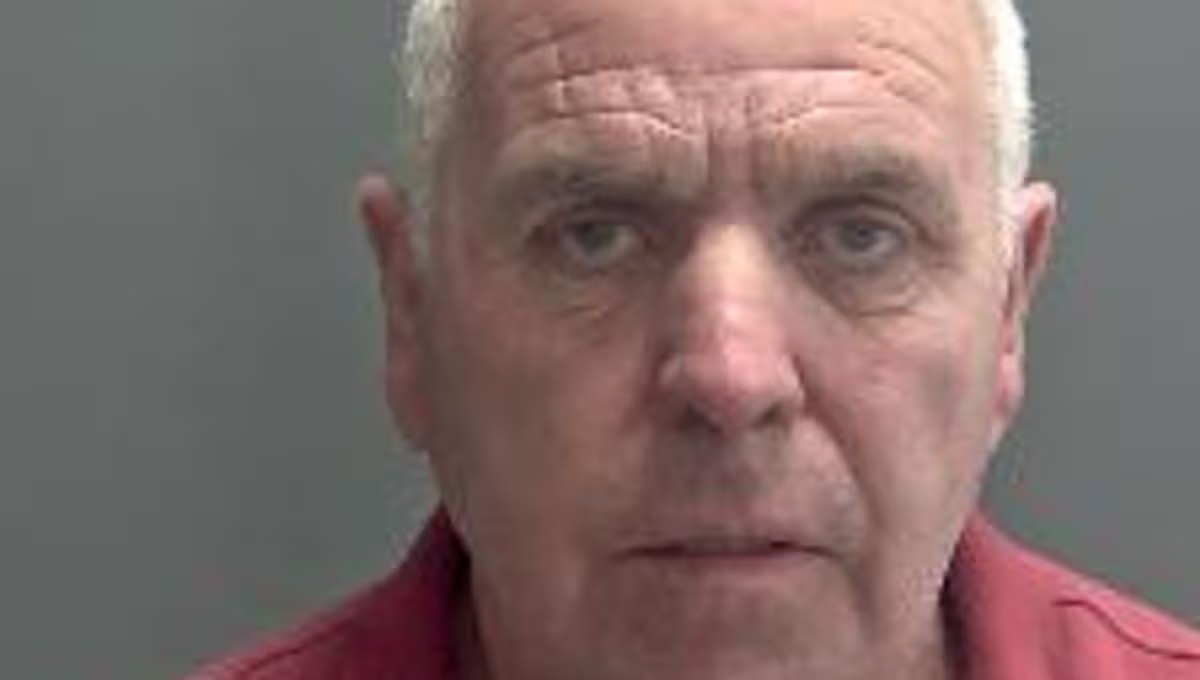
A lorry driver has been jailed after killing a woman in an incident which a court said could have been avoided with “common sense”. Rebecca Ableman, 30, tragically died on October 16, after she was struck in the head by a crane on September 22, 2022, while walking her two-year-old daughter, Autumn, in pram in Willingham.
Miller, then 67, was driving his vehicle down the B1050 towards Willingham on September 22. Rebecca, who had been out shopping at a local farm shop, was struck in the head by the unsecured boom of the crane, and died of “catastrophic brain and head injuries” three weeks later. The court heard that Miller had left King’s Lynn docks in Norfolk at around 3.40am on September 22, and travelled to a Network Rail yard in Leigh-on-Sea, Essex.
Advertisement
Prosecutor William Carter said he had collected “18 tonnes of scrap metal in the form of disused railway track”. While travelling down the B1050 towards Willingham on his way back to King’s Lynn, the “grabber then struck” Rebecca from behind. Mr Carter said the speed limit for the road was 30mph, and Miller’s tachograph indicated he had been travelling at about that speed.
The court heard that Miller was “unaware” of what had happened. He had stopped at a roadside a little while later and used the crane controls to move the crane back to the centre of the lorry. He only found out what had happened when police told him when he arrived back to King’s Lynn docks later that day just before 2pm.
The court heard from prosecutor William Carter that the crane grabber was strapped down “inadequately” to the vehicle. The loaded equipment on the vehicle was strapped down, but the crane was not, the court was told.
Advertisement
Miller told police that he had “never been told that the crane should be strapped down separately”. However, Mr Carter said it should have been “obvious” to Miller and that “common sense” should have shown that the crane was not properly secured.
The prosecution also spoke of a 2022 campaign, led by Allmi (Association of Lorry Loader Manufacturers and Importers). This campaign reiterated the importance of drivers securing a crane load to prevent “injury or fatality”.
Before mitigation, defence John Dye said this was an “inflammable tragedy” and that it was “hard to think of a more emotive case”. The court heard that since the trial, Miller had suffered with his physical and mental health, with Mr Dye describing him as a now “broken man”.
Mr Dye told the court Miller had lost “three stone in a matter of six weeks”, and that he was a “man who was devastated at the harm he caused”. Miller had also sought counselling following the incident, and that he showed “genuine remorse” to Rebecca’s family.
Advertisement
Mr Dye asked the judge to consider a suspended sentence for Miller. However, in sentencing, Judge Matthew Lowe said this was a “tragedy that could have easily been avoided”.
The judge added: “To have secured the crane unit would have been the work of moments.”
He considered that Miller had no previous convictions, and that he was “well liked” amongst his colleagues. Considering factors for a suspended sentence, the judge said it was a “rare case” that due to the “seriousness”, these would be “overturned”.
As well as his 13-month prison sentence, of which he will serve no more than half before being released, Miller received a two-year driving disqualification, with an extension of six and a half months, to cover his time in prison.
Advertisement
Speaking outside court, DC Craig Wheeler of Cambridgeshire Police shared his condolences to Rebecca’s family following the sentence. He said that he wanted the case to be a “stark reminder” to everyone working in the industry that the safety of their vehicles is “absolutely paramount”.
He added: “It’s really important. As Chris said, a £10 strap could have prevented this tragedy from happening.
“This is why as police we do our spot checks. We stop vehicles. It’s not to be a hindrances, it’s trying to stop these preventable tragedies from happening. I just want people to take away from this that this can be avoided.”
Pope Leo XIV has taken to social media to slam “wicked” and “arrogant” figures amid his ongoing feud with US President Donald Trump, who branded the pontiff “weak on crime” and “terrible for foreign policy”
Kirstie McCrum and Charlie Bradley
18:08, 14 Apr 2026Updated 18:11, 14 Apr 2026
Pope Leo XIV has lashed out at “wicked” and “arrogant” individuals amid his continuing clash with US President Donald Trump.
Writing on X, the pontiff declared: “God’s heart is torn apart by wars, violence, injustice and lies. But our Father’s heart is not with the wicked, the arrogant, or the proud.
Advertisement
“God’s heart is with the little ones and the humble, and with them He builds up His Kingdom of love and peace day by day. Wherever there is love and service, God is there.”
Plenty of people read this as a dig at US President Trump, reports the Express.
One user responded: “‘But our Father’s heart is not with the wicked, the arrogant, or the proud’… No names needed. we all know who they are. Pope Leo won’t be silenced by Trump.”
Someone else commented: “Trump has Pope Derangement syndrome. Please continue!”
Advertisement
Earlier in the week, Trump labelled Pope Leo “weak on crime” and ” terrible for Foreign Policy.”
He stated: “Pope Leo is WEAK on Crime, and terrible for Foreign Policy. I don’t want a Pope who thinks it’s OK for Iran to have a Nuclear Weapon.”
The pontiff hit back, saying: “I’m not afraid of the Trump administration or speaking out loudly of the message of the gospel, which is what I believe I am here to do, what the church is here to do.”
Advertisement
The US President also drew criticism after sharing an image of himself portrayed as Jesus Christ, which he subsequently removed.
Trump insisted he’d uploaded the image himself under the impression it showed him as a doctor.
At the Vatican, supporters rallied behind Leo while he’s currently on a 10-day visit to Africa. “It’s just ridiculous, because if the pope is not speaking about peace, and is not taking care of every person in the world, he’s not the pope,” said Joerg Soler, who was visiting the Vatican from Switzerland.
“It’s completely inappropriate,” said Mariella Acciaioli, a French tourist. “Things are getting too much. We need to mobilize everyone, especially our leaders, to deal with this behavior that is going beyond every limit.”











































You must be logged in to post a comment Login