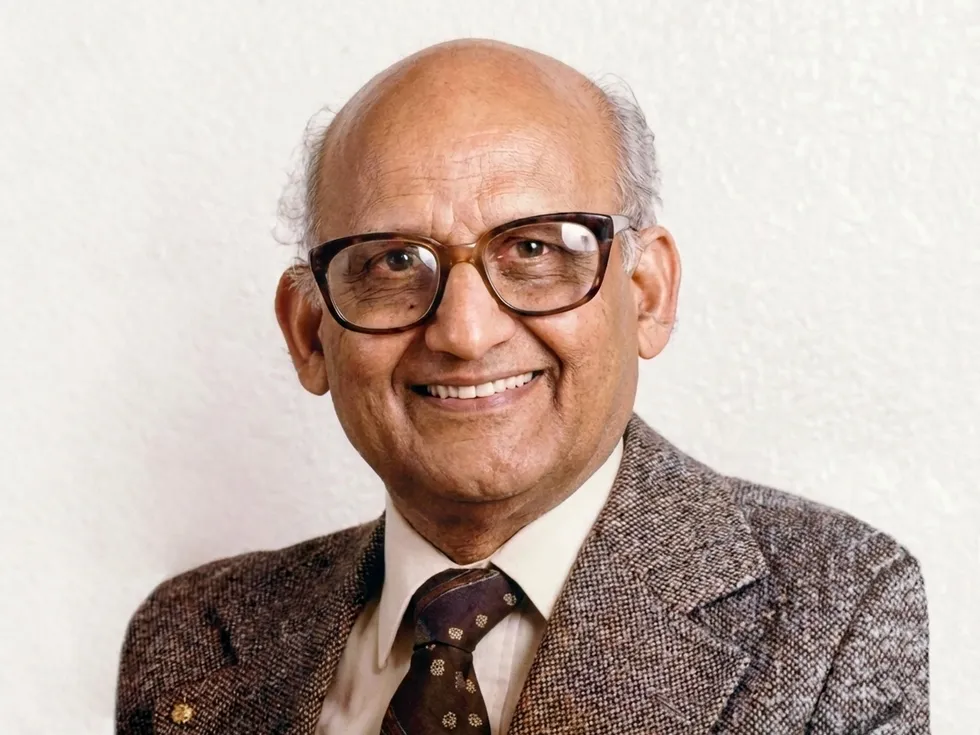
MVK Chari,a pioneer in finite element field computation, died on 3 December. The IEEE Life Fellow was 97.
Chari developed a finite element method (FEM) for analyzing nonlinear electromagnetic fields—which is crucial for the design of electric machines. The technique is used to obtain approximate solutions to complex engineering and mathematical problems. It involves dividing a complicated object or system into smaller, more manageable parts, known as finite elements, according to Fictiv.
As an engineer and technical leader at General Electric in Niskayuna, N.Y., Chari used the tool to analyze large turbogenerators for end region analysis, starting with 2D and expanding its use over time to quasi-2D and 3D.
During his 25 years at GE, he established a team that was developing finite element analysis (FEA) tools for a variety of applications across the company. They ranged from small motors to large MRI magnets.
Advertisement
Chari received the 1993 IEEE Nikola Tesla Award for “pioneering contributions to finite element computations of nonlinear electromagnetic fields for design and analysis of electric machinery.”
After Chari graduated in 1968, he joined Silvester at McGill as a doctoral student, applying FEM to solve electromagnetic field problems. Silvester applied the method to waveguides, while Chari applied it to saturated magnetic fields.
Chari joined GE in 1970 after earning his Ph.D. in electrical engineering. He climbed the leadership ladder and was a manager of the company’s electromagnetics division when he left in 1995. He joined Rensselaer Polytechnic Institute in Troy, N.Y., as a visiting research and adjunct professor in its electrical, computer, and systems engineering department. Chari taught graduate and undergraduate classes in electric power engineering and mentored many master’s and doctoral students. His strength was nurturing young engineers.
In 2008 Chari joined Magsoft Corp., in Clifton Park, N.Y., and conducted advanced work on specialized software for the U.S. Navy until his retirement in 2016.
Remembering a friend
Chari successfully nominated one of us (Hoole) to be elevated to IEEE Fellow at the age of 40. He helped launch Haran’s career when Chari sent his résumé to GE hiring managers for a position in its applied superconductivity lab.
Chari’s commitment to people came from his family background. His father—M.A. Ayyangar—was known throughout India as a freedom fighter, mathematician, and eventually the speaker of the Indian Parliament’s lower house under Prime Minister Nehru. Chari’s wife, Padma, was a physician in New York.
Advertisement
From Chari’s illustrious family, he was at the peak of South India (Tamil) society.
Chari would fondly and cheerfully tell us the story behind his name. Around the time of his birth, it was common in Tamil society not to have formal names. He went by the informal “house name” Kannah (a term of endearment for Krishna). When it was time for Chari to start school, an auspicious uncle enrolled him. But Chari had no formal name, so the uncle took it upon himself to give him one. He asked Chari if he would like a long or short name, to which he said long. So the uncle named him Madabushi Venkadamachari.
When Chari moved to North America, he shortened his name to Madabushi V.K.
He could also laugh at himself.
Advertisement
A stellar scientist, he also was a role model, guide, and friend to many of us. We thank God for him.
We spend hours testing every product or service we review, so you can be sure you’re buying the best. Find out more about how we test.
Centr: One minute review
Not many fitness apps have the name of a bona fide Hollywood star on them. Chris Hemsworth, the actor who plays Thor, puts his money where his muscles are with Centr, a holistic workout app that manages just about every aspect of your fitness journey. The app packs content on food to helping you plan rest days, and, of course, the exercise sessions themselves, and it does a pretty great job across all aspects.
There are daily workout classes accessible within the app, as well as self-guided workout plans that incorporate both strength training and cardio, with ratios based on your chosen goal. I was impressed with is the diversity of workouts on offer; while I’ve primarily used Fitbod over the last couple of years, that particular app essentially just keeps rotating exercises and workouts forever, with no real plan outside of the user setting a goal.
Advertisement
That made Centr’s way of working, with exercise plans spanning days and weeks, much easier for me to stick to, especially as it does a great job of layering in rest days or active recovery. Centr can work with the equipment you have, whether that’s bodyweight-only exercises, a full gym, or anywhere in between, and the whole app feels thoughtfully designed so that it’s easy to switch out exercises or substitute in different weight amounts.
Aside from workouts, there’s a really impressive recipe section that made me want to invest more in meal plans, and mindfulness tools for winding down after a hard day’s work. One of my favorite features is that your plan is viewable online via the Centr website, making it easier to plot your progress or prepare included recipes on your laptop.
The rub is that all of this comes at a high price, at least if you’re paying monthly. $30 a month will be a tough pill to swallow for many more casual users, but you can save a ton by going for the $139.99 / £114.99 / AU$360 annual plan. There is a free trial, but you can only enjoy that for a week, so be sure to make the most out of it.
Advertisement
For those looking for a holistic fitness and wellbeing tool, Centr will tick a lot of boxes. Not only is it packed with features, but the app is much easier to navigate than some rivals that do less.
(Image credit: Centr)
Centr: Price and availability
Monthly cost is high at $29.99 / £19.66 / $29.99 per month
Annual plan considerably lowers costs to $11.67 / £9.58 / AU$13.33 per month
iOS and Android
Centr is available worldwide on the App Store and Play Store, meaning it’s ideal for both iOS and Android users.
Sign up for breaking news, reviews, opinion, top tech deals, and more.
Advertisement
It works out to $29.99 / £19.66 / $29.99 per month, which is more than many of its rivals like Fitbod or PUSH, but paying for a year brings that down to $11.67 / £9.58 / AU$13.33 per month, a sizeable drop.
Centr: Scorecard
Swipe to scroll horizontally
Category
Comment
Advertisement
Score
Value
Pricey per month, meaning annual membership is the only real way to go.
4/5
Advertisement
Design
The initial quiz is handy for setting things up, and the app is easy to use.
5/5
Features
Advertisement
Wide variety of programs (including equipment-free options), mindfulness and even recipes.
5/5
Performance
No body scan workouts, but very detailed instructions and very easy to follow as a result.
Advertisement
4.5/5
Centr: Should I buy?
(Image credit: Future)
Buy it if…
Advertisement
Don’t buy it if…
Also consider
Swipe to scroll horizontally
Row 0 – Cell 0
Centr
Fitbod
Push
Advertisement
Platforms
iOS/Android
iOS/Android
iOS/Android
Advertisement
Price
$29.99 per month, $120 annually
$15.99 per month, $95.99 annually
$15.49 per month, $89.99 annually
Advertisement
Devices
iPhone, Android phone, Apple Watch
iPhone, Android phone
Advertisement
Guided Content
No
No
Yes
Advertisement
Video Content
Yes
Yes
Tes
Advertisement
How I tested
I took Centr to the gym over the course of three weeks, working out with the app installed on my iPhone 15 Pro Max and then an iPhone 17 Pro Max. I also used the web interface to more easily read the recipe guides.
Ring has revealed its new Search Party For Dogs program in its first-ever Super Bowl ad, aiming to help communities find lost dogs using security cameras. According to the Animal Humane Society, over 10 million pets go missing a year, but Ring’s new app feature can help owners reunite with their furry family members.
Distraught owners can use Search Party to share their pet’s name, description, and photo on the Ring app. This will let their neighbors utilize the AI capabilities of outdoor Ring cameras like the Ring Outdoor Cam Plus to scan any dogs that appear on camera. If there’s a match, camera owners will get a notification and the option to share the footage and location with the dog’s owners. The Super Bowl ad claims that Search Party has helped find at least one dog a day since it launched.
Advertisement
“Before Search Party, the best you could do was drive up and down the neighborhood, shouting your dog’s name in hopes of finding them,” said Jamie Siminoff, Ring’s Chief Inventor. “Now, pet owners can mobilize the whole community … to find lost pets more effectively than ever before.”
Advertisement
Ring’s first Super Bowl ad is meant to spread awareness
Since this is Ring’s first Super Bowl ad, the marketing team was really focused on how to tell the company’s story. Speaking to Forbes, Ring Chief Commercial Officer, Mimi Swain, said that its story is one of “community, connection, and helping people in real-life situations.”
Swain explained that almost everyone can understand how it feels when a dog goes missing. This allowed Super Bowl viewers to see the impact that Ring can have when neighbors are connected through technology. “It shows Ring as neighbors helping neighbors, not just cameras watching footage,” she stated to Forbes.
Ring is not necessarily hoping to scale the company financially from this large marketing investment. Instead, Swain claimed that it truly wants to help more missing dogs reunite with their families by raising awareness of the program. Either way, it’s an emotional take on the power of advertising that seems to be the trend in Super Bowl ads this year, with companies like Toyota also releasing ads designed to appeal to families and friends who may be tuning in to the game together.
CISA confirmed on Wednesday that ransomware gangs have begun exploiting a high-severity VMware ESXi sandbox escape vulnerability that was previously used in zero-day attacks.
Broadcom patched this ESXi arbitrary-write vulnerability (tracked as CVE-2025-22225) in March 2025 alongside a memory leak (CVE-2025-22226) and a TOCTOU flaw (CVE-2025-22224), and tagged them all as actively exploited zero-days.
“A malicious actor with privileges within the VMX process may trigger an arbitrary kernel write leading to an escape of the sandbox,” Broadcom said about the CVE-2025-22225 flaw.
At the time, the company said that the three vulnerabilities affect VMware ESX products, including VMware ESXi, Fusion, Cloud Foundation, vSphere, Workstation, and Telco Cloud Platform, and that attackers with privileged administrator or root access can chain them to escape the virtual machine’s sandbox.
According to a report published last month by cybersecurity company Huntress, Chinese-speaking threat actors have likely been chaining these flaws in sophisticated zero-day attacks since at least February 2024.
Advertisement
Flagged as exploited in ransomware attacks
In a Wednesday update to its list of vulnerabilities exploited in the wild, the U.S. Cybersecurity and Infrastructure Security Agency (CISA) said CVE-2025-22225 is now known to be used in ransomware campaigns but didn’t provide more details about these ongoing attacks.
CISA first added the flaw to its Known Exploited Vulnerabilities (KEV) catalog in March 2025 and ordered federal agencies to secure their systems by March 25, 2025, as mandated by Binding Operational Directive (BOD) 22-01.
“Apply mitigations per vendor instructions, follow applicable BOD 22-01 guidance for cloud services, or discontinue use of the product if mitigations are unavailable,” the cybersecurity agency says.
Ransomware gangs and state-sponsored hacking groups often target VMware vulnerabilities because VMware products are widely deployed on enterprise systems that commonly store sensitive corporate data.
Advertisement
For instance, in October, CISA ordered government agencies to patch a high-severity vulnerability (CVE-2025-41244) in Broadcom’s VMware Aria Operations and VMware Tools software, which Chinese hackers have exploited in zero-day attacks since October 2024.
In related news, this week, cybersecurity company GreyNoise reported that CISA has “silently” tagged 59 security flaws as known to be used in ransomware campaigns last year alone.
Modern IT infrastructure moves faster than manual workflows can handle.
In this new Tines guide, learn how your team can reduce hidden manual delays, improve reliability through automated response, and build and scale intelligent workflows on top of tools you already use.
The package, available for free until Thursday morning, includes Alone in the Dark 1, 2, and 3 – all emulated through DOSBox. Like most titles sold on GOG, the DRM-free downloads come with digital manuals, soundtracks, and other supplementary materials. Because the trilogy is part of GOG’s preservation program, the… Read Entire Article Source link
Lores, who served decades at HP, was also PayPal’s board chair since 2024.
HP was apparently caught off guard, according to reports, after PayPal snatched the company’s CEO Enrique Lores to replace Alex Chriss.
In a statement, PayPal said that the switch-up had to come because the “pace of change and execution [under Chriss] was not in line with the board’s expectations”. Lores is expected to overhaul the payments company and ensure it maintains its leading position in the industry in the long-run, the company said.
Chief financial and operating officer Jamie Miller will serve as interim CEO at the company until Lores assumes the role of president and CEO. Meanwhile, David Dorman has been appointed as independent board chair.
Advertisement
“We will further strengthen the culture of innovation necessary to deliver long-term transformation and balance this with near-term delivery”, commented Lores.
“The payments industry is changing faster than ever, driven by new technologies, evolving regulations, an increasingly competitive landscape and the rapid acceleration of AI that is reshaping commerce daily.”
Chriss was appointed as PayPal’s CEO and president in 2023, a challenging post-pandemic period when trading volumes were low, but large tech companies and newer fintech rivals were adding competitive pressure on PayPal’s core businesses.
At the time of his appointment, PayPal described him as a “next generation leader” capable of driving growth across the company, but less than three years later, that seems to not have worked out. Lores, meanwhile, is familiar to PayPal, serving on the company’s board for nearly five years, and as board chairperson since July 2024.
Advertisement
However, the executive switch-up did not sway investor confidence after the company missed revenue expectations in the quarter past. In its fourth quarter results for 2025, PayPal posted $8.68bn in revenue, lower than London Stock Exchange Group analysts’ average estimates, but marginally higher than this quarter last year.
The dim quarter and change of leadership sent share prices at PayPal plummeting by 20pc. Company shares have dropped more than 80pc over the last five years.
Lores had come into HP as an intern nearly four decades ago. He orchestrated the split from HP Enterprise and took on the role of CEO in 2019. Semafor reported that Lores’ sudden move sent HP executives scurrying for a replacement.
In a statement yesterday (3 February), HP said that Lores stepped down as both board president and CEO to “pursue another professional opportunity”.
Advertisement
Bruce Broussard, a HP board member since 2021, has been appointed as interim CEO until a search committee identifies a successor. Broussard most recently served as the president and CEO of healthcare company Humana.
Don’t miss out on the knowledge you need to succeed. Sign up for the Daily Brief, Silicon Republic’s digest of need-to-know sci-tech news.
Teaching is many things. It’s a profession and a passion, tedious and rewarding, infuriating and full of joy. For some, mental health issues like anxiety and depression become worse when teaching. This has led to many teachers and educators leaving the profession, with plenty of news and opinion coverage on the mental health crisis in education.
But my story is a bit different. Not only has teaching improved my mental health, but it quite literally saved my life.
Against a Sea of Troubles
In February of 2017, I was working in retail management, and had been doing so since graduating college back in 2002. I was OK at sales, a pretty good manager and especially great at training new sales associates. At the same time, I was also struggling with severe depression and anxiety. I didn’t really know why. I didn’t think I hated my job; I loved my wife and family. On paper, I had good friends and a pretty good life. But there were some days I just could not face. I felt alone, empty and frankly, lost. Was this all that my life would have to offer? Would this be all I was ever known for? Would anyone miss me when I’m gone?
Advertisement
This led to the evening of Feb. 24. I was driving home from another dull day of work when the desire to drive my car off an overpass became stark, real and terrifyingly close to reality. I simply had had enough and thought this would make people remember me, even for a little while. But I didn’t do it. The experience and its closeness shook me. When I got home, I broke down to my wife and we decided I needed help and I needed it now. She took me to a hospital where I spent the next few days reading, reflecting and most importantly, talking to mental health professionals.
Over the next few weeks, I learned two life-altering things. First, my brain needed medicine. Second, I wanted to become a teacher. That may sound a little strange, but in the course of my reflections and therapy on why I felt so empty, one thing became clear: I had an innate desire to make a positive impact on the world. When I started broaching the topic of what that might look like for me, friends and family all floated the same idea, “Maybe you should think about teaching?!”
Plan B
Growing up, I wanted to be one of two things: a professional wrestler or a rock star. By my mid-20s, after forgoing college norms and diving into both of these dreams, I realized that maybe those weren’t the most practical vocations. So, without much thought, I started working retail. I never stopped to think about what I wanted to do; I just did what I needed to do to get by.
But even in my long career in retail sales and management, a trend started to emerge. I liked teaching people. I took on training roles and attended classes to learn as much as I could about the product I was selling. My favorite accomplishments over the years were never the big sales I made, but the people I developed and guided to success. So when my family and friends started telling me to look into teaching, I thought, “Well, why not? It can’t be too different from teaching people to sell guitars and mattresses.”
Advertisement
I am also very much a kid at heart. I play video games, watch streamers on Twitch, love cartoons and comics and have always worn the title of “goofball” as a badge of honor. I could fit in with literal kids; they might relate to me more than my actual peers! I am also a self-described nerd who loves learning new things and researching anything and everything. Sharing my enthusiasm for learning made teaching seem like a strong fit.
More importantly to my mental health, the idea of being a teacher hit home in that missing part of my life. Would teaching the next generation make me feel like I’m leaving my mark? Will it help me feel fulfilled? Is it OK to place so much of my personal value on a career? Without much to lose and the hope that a change in vocation could bring what I felt was missing, I applied to an online university to begin my journey toward becoming an educator.
A New Hope
Fast forward through a few years with a lot of college work and a stint as a district substitute teacher in an urban school district. I got my first full-time job as a teacher, teaching fourth grade math, science and social studies at a wonderful little school that was walking distance from my home. In that first year, even though I was in my late 30s, I experienced all the anxiety, fatigue and headspinning experiences of any first-year teacher. I also began to see a change in myself. Even though I had never been so tired and so challenged, I also finally felt like I mattered. Like I was doing what I was supposed to do.
Before going into teaching, my belief was that the difference I would be able to make in a kid’s life would be impactful, but only insofar as education. I had no idea how much teaching actually revolved around two things I am particularly good at that really fill my emotional bucket: performing and building relationships.
Advertisement
I love being on stage and in the spotlight. It’s why I wanted to be a wrestler or a rock star. What I wish I had known all those years ago was that teaching is just a big performance every day that can elicit the same emotional highs (and lows) as a fun rock show. I’m not being hyperbolic when I say that I sometimes have the same sense of accomplishment and “high” when I feel like I gave a great lesson — or the students really get into the groove of a good debate — as I do when I step off stage after thrashing punk music with my band. The idea that I could do something positive for the world and still feel this way afterward cemented my belief that teaching is where I belong.
In my first year of teaching, I also began to see how this new vocation could help others besides the kids and me. One day, partway through my first year, a parent came in to request a conference. She felt overwhelmed and frustrated that her amazingly bright child just could not get into math and was actively pushing back against the very idea of it. As I sat with the mom and we brainstormed how we could work to present learning in a new and novel way for her child, I saw her relax, smile and realize that it would be OK. I had hard proof that what I’m doing made someone’s life better, even for just a few moments. By the end of the year, her child was doing much better in math and, more importantly, really enjoyed learning and working with her mom to build resilience and a growth mindset.
Solidarity
Mental health among teachers is a tough and very personal subject. My hope in sharing my story is not to say that teachers should all be happy all the time, or that the struggle with depression and anxiety amongst teachers isn’t a real problem that needs solving. I am simply reflecting on what it is that teaching gives me each day. The opportunity to perform. The opportunity to make connections with students, families and fellow teachers. The opportunity to teach skills and subjects that will make my students better learners. And crucially, the opportunity to make a real difference in the lives of my students and their families.
Today, I have the pleasure of teaching my favorite subject, history and social studies, to seventh and eighth grade students. One goal I have every day is to remember that being allowed to influence these students’ lives is an honor and a privilege. My words, no matter how much they try not to listen, have real power and influence on their growth and the decisions they will make.
Advertisement
By choosing to be a teacher, not only did I save my own life, but I am also improving the lives of my students, and they may just save the world.
If you or someone you know is in immediate distress or is thinking about hurting themselves, call the 988 Suicide & Crisis Lifeline. You also can text the Crisis Text Line (HELLO to 741741) or use the Lifeline Chat on the 988 Suicide & Crisis Lifeline website.
A company spokesperson told The Drive that BMW “remains fully committed” to ConnectedDrive as part of its global aftersales strategy. Features requiring data connectivity will likely carry recurring fees.
Apple will be using Google technologies to level up Apple Foundation Models, but the details of exactly how are still vague. While speculation is still wild, a true answer is emerging from the noise.
Apple Intelligence will get a boost after training with Google Gemini
There is one concrete fact that we have about the Apple and Google partnership on artificial intelligence development, and it is that we’re not going to be told more publicly. Apple CEO Tim Cook did say that Apple won’t change its privacy stance while working with Google and indicated that Apple Intelligence and Siri will work on-device and via Private Cloud Compute (PCC). That statement seems cut and dry on its own, but Google CEO Sundar Pichai and CBO Philipp Schindler shared seemingly contradictory statements during the Google earnings call. They both used the phrase “preferred cloud provider” when discussing Google’s relationship with Apple. Continue Reading on AppleInsider | Discuss on our Forums
Anthropic’s new plug-ins for Cowork announced on Friday are sparking jitters in the markets with software, professional services and analytics companies seeing the largest sell-offs.
Last month, Anthropic launched its Cowork model, a “simpler version of Claude Code” prompting concerns among those heavily invested in software companies. Friday’s (30 January) launch of new plug-ins seems to have accelerated the concerns.
This week has seen a strong sell-off in US and European software, professional services and data analytics companies, with the trend continuing yesterday (3 February) and contagion in Asian markets. Commentators are blaming the release of Anthropic’s plugins for Cowork which the AI player says will automate tasks across legal, sales, marketing and data analysis.
The legal space is where organisations like Thomson Reuters makes much of its revenue, so it was one of the players to see an 18pc slump in its share price yesterday, according to Reuters itself, which added that its shares are now down 33pc just this year, having dropped by 22pc in 2025, as fears rise around AI disruption in the legal sector.
Advertisement
Other providers of legal analytics also dropped with the UK’s RELX falling 14pc and Dutch company Wolters Kluwer seeing a drop of 13pc.
And the contagion spread to other software companies and the broader market as AI fuels concerns among investors who are struggling to figure out who the winners and losers will be in the current AI-fuelled economy. According to Bloomberg, a Goldman Sachs basket of US software stocks fell 6pc yesterday – its sharpest one-day drop since the sell-off that followed the initial US tariffs announcements in April.
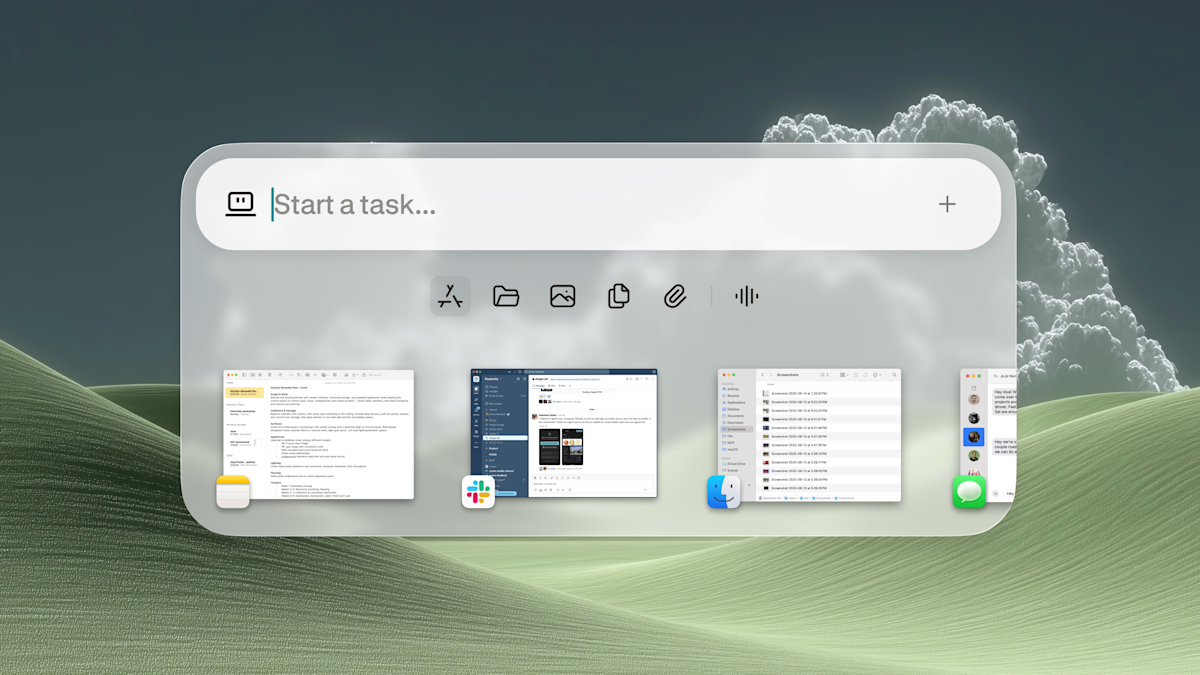
When Anthropic launched Cowork on 12 January, it described it as a simpler version of Claude Code for non-coding related tasks. It said this new model has more agency – it can read, edit and re-organise files, taking on many of same tasks Claude Code can, but in a more “approachable” form.
Cowork seems firmly targeted at the enterprise market with its promise to make using Claude “for work” easier. Now, the new sector-specific plugins are seen as a particular threat to existing analytics players.
Advertisement
Don’t miss out on the knowledge you need to succeed. Sign up for the Daily Brief, Silicon Republic’s digest of need-to-know sci-tech news.