



Mikel Arteta faces a mounting injury crisis with 12 Arsenal players now doubtful for their return to domestic action following the international break
Arsenal are in the midst of an injury crisis in the Premier League title race with Manchester City, with news emerging that the availability of 12 players is in doubt ahead of the club’s return to domestic action. It has been an international break to forget for Mikel Arteta and Arsenal as they prepare for a crucial run‑in rivalling City.
Nine points separate City from the Gunners, with Pep Guardiola’s side also holding a game in hand – against Crystal Palace. That match, scheduled for March 21st, was postponed due to City’s participation in the Carabao Cup final, where they beat Arsenal 2-0 at Wembley.
In terms of injuries, Guardiola has a healthier squad than their counterpart with only Ruben Dias and Josko Gvardiol sidelined. As for the north Londoners, Martin Zubimendi was the latest to withdraw from his national side in recent days, representing a significant worry.
A further injury setback emerged when Piero Hincapie pulled out of the Ecuador squad ahead of Tuesday evening’s fixture against the Netherlands.
He featured in La Tri’s draw with Morocco on Friday night, before being substituted by Pervis Estupinan with 15 minutes remaining.
Get MEN Premium now for just £1 HERE – or get involved in our City WhatsApp group by clicking HERE. You can also join our City Facebook page by clicking HERE and don’t miss out on our brilliant selection of newsletters HERE.
Noni Madueke, Declan Rice and Bukayo Saka all withdrew from the England squad and returned to Arsenal for medical attention, while Gabriel Magalhaes, William Saliba, Eberechi Eze, Leandro Trossard, and Jurrien Timber all stepped back from their respective international commitments.
Here, the Manchester Evening News runs through all of Arsenal’s currently sidelined players in their title race with City…
Martin Zubimendi
The worry surrounding Zubimendi marks the latest in a succession of devastating setbacks for Mikel Arteta’s team over the past 48 hours.
A statement from the Spanish FA, issued just hours after another injury setback, confirmed: “Martin Zubimendi has withdrawn from the Spanish national team camp due to discomfort in his right knee.
“To avoid any risk and to protect the player’s health, he has been removed from the squad. Arsenal FC’s medical staff have been informed of the situation.”
Piero Hincapie
Hincapie represents another injury concern for Arsenal and Arteta, withdrawing from Ecuador’s squad ahead of their clash with the Netherlands on Tuesday night. The defender has travelled back to the Gunners, though the full extent of his injury remains unclear at present.
Leandro Trossard
Trossard pulled out of the Belgium squad for their international fixtures against the USA and Mexico owing to a hip injury.
In a statement, the Belgian FA confirmed: “This decision will allow him to continue their rehabilitation under optimal conditions.”
Declan Rice and Bukayo Saka
Arteta faced another injury blow with both England internationals returning to Arsenal, leaving the Three Lions camp just a day after linking up with Thomas Tuchel’s squad. The seriousness of any possible injuries remains unclear at this stage.
An FA statement confirmed: “Declan Rice and Bukayo Saka will also return to Arsenal for medical assessment, having arrived on Friday along with nine other players.
“The rest of that group comprised of Dean Henderson, Nico O’Reilly, Ezri Konsa, Marc Guéhi, Dan Burn, Elliot Anderson, Morgan Rogers, Anthony Gordon and Harry Kane.”
Noni Madueke
Madueke appeared visibly distressed as he walked past Thomas Tuchel on the touchline on Friday evening, with subsequent footage raising serious concerns over the winger’s fitness.
The 24-year-old, who sat out 15 games for the Gunners earlier this campaign with a knee complaint, was spotted wearing a brace on his left leg as he was filmed departing the stadium. Consequently, Madueke has been released from Tuchel’s squad with what England described as a ‘knock.’
When quizzed about which players would be departing the England camp ahead of next week’s fixture, Tuchel replied: “It’s too early. Now we have some injuries and there’s also a medical update on the players who came.
“Not everyone is fully fit as I understood. We will take late decisions and maybe take the decision only tomorrow to have a squad against Japan to compete.”
England’s 2026 World Cup kits

England and Nike have launched the new home, away and goalkeeper kits to be worn at this summer’s FIFA World Cup. You can get free delivery on all orders with the code: ENGFREEDEL
Eberechi Eze
Eze was absent from the Carabao Cup final after picking up an injury during Arsenal’s Champions League victory over Bayer Leverkusen earlier this month. Eze withdrew from the England squad due to the calf problem, and will now undergo further evaluation. It is understood that the attacking midfielder could be sidelined for approximately four-to-six weeks, representing a significant setback for Arsenal during such a critical stage of the season.
The Gunners face five fixtures within 15 days following the international break, meaning squad rotation will be vital to avoid further injuries and player fatigue. Despite this, they will likely be compelled to navigate the heavily congested schedule without Eze at their disposal.
William Saliba
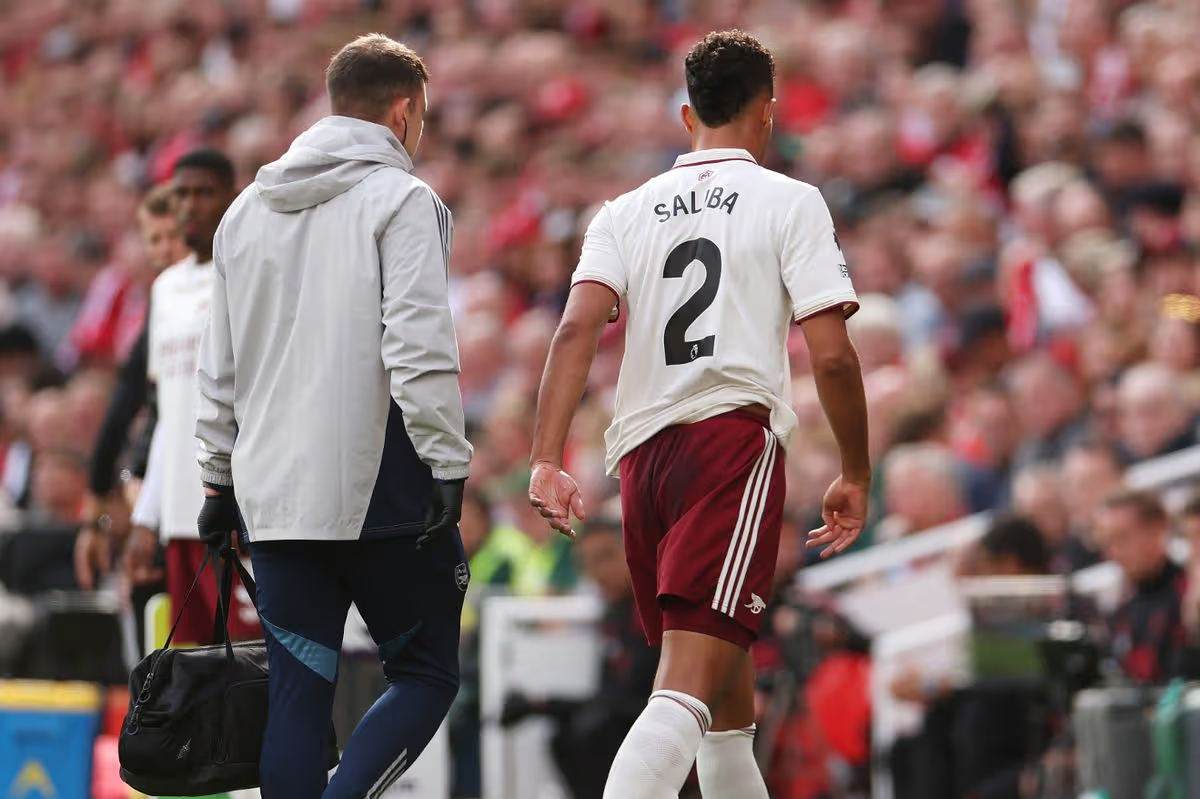
Much like Eze, Saliba pulled out of this month’s international fixtures, with France scheduled to face Brazil and Croatia. While the centre-back featured in Sunday’s Carabao Cup final, an ankle injury sustained during the match prompted his replacement by Maxence Lacroix for international duty.
The French Football Federation confirmed at the time: “William Saliba is unable to join the French national team’s training camp, which begins this Monday, March 23rd. The Arsenal centre-back is suffering from recurring pain in his left ankle, requiring treatment and a minimum rest period of ten days.”
Should France’s assessment prove correct, this suggests Saliba ought to be sufficiently recovered to feature against Southampton in the FA Cup next weekend.
Martin Odegaard
Odegaard was sidelined for last Sunday’s Carabao Cup final due to a knee problem. Having been unavailable for approximately a month, uncertainty remains over whether he will be ready for next weekend’s FA Cup fixture.
Gabriel Magalhaes
The Brazilian Football Federation issued a statement confirming that Gabriel would be absent from his country’s friendlies against France and Croatia due to “pain in his right knee.”
Scan results have also revealed an injury to the 28-year-old centre-half.
Jurrien Timber
Timber sustained an injury during Arsenal’s victory over Everton earlier this month and has not appeared since.
The full-back has also pulled out of Netherlands duty for their friendlies against Norway and Ecuador, with a statement from the Dutch FA confirming: “Sunderland defender Lutsharel Geertruida has been added to the Netherlands national team squad by national coach Ronald Koeman.
“This follows the withdrawal of Jurrien Timber (Arsenal), who has not yet sufficiently recovered from an injury and is therefore unavailable for this international break.” Speaking ahead of the international break, Arteta confirmed the defender would be assessed following the pause in club fixtures.
Mikel Merino
Although Merino is expected to have sufficiently recovered from his ankle injury in time to feature for Spain at this summer’s World Cup, it seems the adaptable midfielder’s contribution to Arsenal’s campaign this season has come to an end.
The club are taking a careful approach to Merino’s rehabilitation, and the player was pictured on crutches and in a protective boot at Wembley last weekend.
Get £250 to switch to Virgin Media’s sport packages

Virgin Media is paying new customers up to £250 as a bill credit when they switch to one of its TV and broadband packages, several which are packed with hundreds of channels including Sky Sports, Netflix and fibre broadband.
;)










































You must be logged in to post a comment Login