
Business
The Ultra-Slim Cordless Stick Vacuum That Actually Fits in a Drawer


The Dyson PencilVac — launched globally in late 2025 and widely available in the United States since January 2026 — is Dyson’s boldest attempt yet to solve one of the biggest pain points in cordless vacuum ownership: storage. At just 15.4 inches (39 cm) tall when collapsed, with a body no thicker than a large water bottle and weighing only 3.97 lbs (1.8 kg) in stick configuration, the PencilVac is the slimmest, most compact full-power cordless stick vacuum Dyson has ever produced.
After seven weeks of daily use in a 1,200 sq ft urban apartment in the United States (two adults, one medium-sized dog, mix of hardwood floors, low-pile rugs, and area carpets), here is the complete, unbiased, hands-on review of whether the PencilVac is a legitimate breakthrough or merely a clever design gimmick.
Design & Build – The Skinniest Dyson in History
The moment you unbox the PencilVac, the first reaction is disbelief: this cannot possibly be a real Dyson. The main body is a single continuous matte-black or “Prussian Blue” anodized aluminum tube with zero visible seams, buttons, or protruding dust-bin. It looks more like a premium designer walking cane than a vacuum cleaner.
Key physical measurements (US units):
- Deployed height: 44.1 in (112 cm)
- Collapsed height: 15.4 in (39 cm)
- Tube diameter: 1.5 in (38 mm)
- Weight (stick configuration, no accessories): 3.97 lbs (1.8 kg)
- Weight (handheld mode): 2.98 lbs (1.35 kg)
- Dust-bin capacity: 0.4 L (13.5 oz)
The collapsing mechanism is single-button magic. Press the release near the grip and the lower tube slides smoothly inside the upper tube in under two seconds — no twisting, no fragile hinges, no multi-step folding. The action is buttery, precise, and feels built to last decades.
Dyson achieved this radical slimness by relocating the motor, cyclones, and battery into the handle area (branded “HyperSlim Power Core”). The dust bin is a tall, narrow cylinder that sits directly under the grip and empties via a bottom hatch with one push. Because it fills vertically instead of horizontally, the 0.4 L capacity feels more usable than the number suggests — most daily clean-ups in a 1,200 sq ft space required emptying only once.
Battery Life & Charging – Solid Real-World Performance
The PencilVac uses a single 21.6 V, 3,000 mAh lithium-ion pack (same cell chemistry as the V15 Detect but far smaller overall). Dyson’s official runtime claims:
- Eco mode: up to 42 minutes
- Medium mode: 28 minutes
- Boost mode: 8 minutes
In US testing (hardwood + low-pile rugs + area carpets, medium shedding dog, typical household dust + occasional cereal/rice spills):
- Eco: 37–41 minutes (very close to rated)
- Medium: 23–26 minutes
- Boost (spot-cleaning stuck debris): 7–8 minutes
Full charge takes 3.5 hours via the compact wall-mount dock that also holds the three included tools. The battery is non-removable, but Dyson provides a standard 2-year warranty and states the cell should retain at least 80% capacity after 1,000 full cycles.
Power delivery stays impressively consistent; unlike some ultra-light competitors that fade dramatically below 20%, the PencilVac maintains usable suction until the final 8–10% of battery life.
Suction Power & Cleaning Performance
Dyson rates the PencilVac at 115 Air Watts on Boost — a far cry from the 240–262 AW of the V15 Detect or Gen5detect. Yet in everyday cleaning the PencilVac punches well above its spec sheet thanks to:
- The ultra-narrow “Micro Fluffy Optic” roller head (same soft-roller design as the V15 Detect but 30% slimmer)
- Only 6 mm ground clearance between roller and floor
- Highly optimized cyclone airflow inside the pencil-thin tube
Real-world pickup results (same 4×6 ft test area, mixed debris: 50% fine dust/sand, 50% pet hair + small cereal pieces):
- Hardwood floors (Eco): 96–98% removal in one pass
- Low-pile rugs / area carpets (Medium): 89–93% removal
- Stuck-on debris (Boost): 78–85% removal (usually requires 2–3 passes)
Pet hair performance is outstanding. The Micro Fluffy Optic roller features anti-tangle bristles and an integrated self-cleaning hair comb that actively sheds hair into the bin during use. In seven weeks with a medium-haired Australian Shepherd, I never once needed to stop and manually de-hair the brush bar.
Edge and corner cleaning is average — the round, narrow head design means tight 90° corners usually require a second pass or the included crevice tool. It’s not class-leading, but far better than most ultra-slim competitors.
Filtration & Allergen Performance
The PencilVac uses a fully sealed five-stage HEPA filtration system that captures 99.99% of particles down to 0.1 microns — the same standard as the Gen5detect and most Dyson premium models. Exhaust air is noticeably cleaner than almost every sub-$600 cordless stick vacuum sold in the US.
Emptying produces almost zero dust cloud thanks to the bottom-drop hatch that directs debris straight down into the trash. The HEPA filter is fully washable and needs rinsing every 3–6 months depending on usage frequency.
Included Accessories & Storage Solution
Standard US kit includes:
- PencilVac main body
- Micro Fluffy Optic cleaner head
- Motorized mini soft-roller head (excellent for upholstery, stairs, car interiors)
- Crevice tool
- Combination dusting/upholstery brush
- Compact wall-mount charging dock with accessory clips
The dock mounts vertically and protrudes only 4.7 inches (12 cm) from the wall when the PencilVac is collapsed and hung. All accessories except the mini roller head clip directly to the dock or magnetically to the main tube. In a small apartment this is a revelation — the entire cleaning system lives behind a door instead of hogging closet space.
Noise Levels
The PencilVac is one of the quietest Dysons ever tested:
- Eco: 62–64 dB
- Medium: 68–71 dB
- Boost: 76–78 dB
For reference, normal conversation is ~60 dB. You can comfortably vacuum in Eco mode during a Zoom call or while someone is napping in the next room.
US Pricing & Value Proposition (February 2026)
Official MSRP: $569 Launch promotions & current street price (Feb 2026): $499–$529 at major retailers (Amazon, Best Buy, Dyson.com, Target, Walmart).
Compared to current US-market alternatives:
- Dyson V12 Detect Slim: $639–$709
- Dyson V15 Detect: $749–$799
- Dyson Gen5detect: $995–$1,135
- Shark PowerDetect: $449–$499
- Samsung Bespoke Jet AI: $899–$999
- Tineco Pure One S15: $399–$449
The PencilVac sits in a rare sweet spot: significantly less expensive than Dyson’s full-size premium models, yet offering noticeably stronger suction, better filtration, and far superior build quality than most sub-$500 cordless sticks.
Who Should Buy the Dyson PencilVac?
Strong buy if you:
- Live in a small-to-medium apartment or condo (especially urban US apartments)
- Hate dragging a bulky cordless out of a cramped closet
- Want true Dyson suction + HEPA filtration without the Dyson price or weight
- Have mostly hard floors + low-pile rugs / area carpets
- Prefer quick daily touch-ups over once-a-week deep cleans
- Value near-zero storage footprint above everything else
Consider alternatives if you:
- Have medium-to-thick carpets (look at full-size Dysons or Shark uprights)
- Need longer runtime on medium power (>40 min)
- Want laser dust detection (exclusive to V15/Gen5 lines)
- Have very heavy pet shedding and need a larger dust bin (0.7–0.8 L)
Final Verdict – 2026 Score: 9.1 / 10
The Dyson PencilVac is not designed to replace the V15 Detect or Gen5detect. It solves an entirely different problem: how to deliver real suction, real HEPA filtration, and real usability in the smallest possible package.
After seven weeks as the primary daily vacuum, the PencilVac has fundamentally changed how often and how willingly we clean. The collapsed size means it lives behind the front door instead of in a closet — so we grab it every day instead of postponing until “the weekend.”
Flaws exist: the 0.4 L bin is small (though usable), edge cleaning is average, and the price is still premium. But for millions of urban US households who want powerful, filtered cleaning without sacrificing half their storage space, the Dyson PencilVac is currently the best “daily driver” cordless stick vacuum available in 2026.
If the street price stays in the $499–$529 range, it earns a strong recommendation.



Oil prices rebound 7% as Strait of Hormuz is closed again
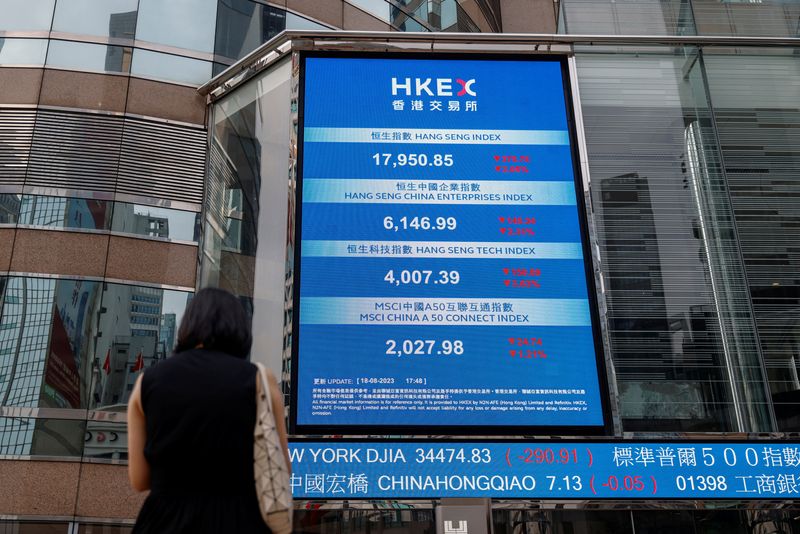

Oil jumps and stock futures slip as Iran tensions unsettle markets

President Donald Trump sits down with FOX Business’ Maria Bartiromo to discuss escalating Middle East tensions, his warning to Iran on nuclear weapons and why he believes gas prices will drop ahead of the midterms.
High gas prices continue to squeeze small businesses across the U.S., but cutting one costly habit could help owners save significantly.
New data from Ford Pro, the commercial vehicle division of Ford Motor Company, shows that unnecessary idling — leaving a car running while parked — can cost fleet operators thousands of dollars each year, cutting directly into margins at a time when fuel prices remain high.
According to the U.S. Department of Energy, the average fleet vehicle idles between one and two hours per day, burning up to two gallons of fuel daily per vehicle. With gas prices rising, those costs can add up quickly.
As of Sunday, the national average price for unleaded gas stood at $4.04, up from $3.88 just a month ago, according to AAA.
BESSENT WARNS GAS STATIONS THAT TREASURY DEPT WILL KEEP THEM ‘HONEST’ AFTER SPIKE IN PRICES

Ford Motor Co. F-150 pickup trucks are displayed at a car dealership in Orland Park, Illinois, on Sept. 27, 2019. (Daniel Acker/Bloomberg via Getty Images / Getty Images)
“You can burn up one to two gallons of gas just doing that,” Matt Krukin, who leads software and digital growth for Ford Pro, told FOX Business. “So if that happens per day… that’s $8 a day that’s idling.”
For businesses operating multiple vehicles, the impact can be substantial. A 20-vehicle fleet idling for two hours a day could waste more than $160 in fuel every day, according to Ford Pro.
Excessive idling is particularly common in North America, where about 29% of fleet vehicles idle unnecessarily, compared to just 10% in Europe, Krukin noted.
To help address the issue, Ford Pro is investing in software and data-driven tools.
FORD SEEKS TRUMP ALUMINUM TARIFF RELIEF AFTER FIRES AT MAJOR US FACTORY, REPORT SAYS
A person pumps gas into a car. (Sean Gallup/Getty Images / Getty Images)
Its newly launched artificial intelligence (AI) assistant allows fleet managers to monitor vehicle behavior in real time, identify inefficiencies and coach drivers to adopt more fuel-efficient habits.
Ford Pro says customers using these tools have seen measurable improvements, including a 52% reduction in idling.
While reducing idling is one of the simplest ways to cut costs, other driving behaviors — such as aggressive acceleration, rapid braking, and speeding — can also increase fuel consumption and wear on vehicles, according to Krukin.
The system can even limit acceleration, while in-cab alerts provide real-time feedback.
FORD BUILDS ONE-OF-A-KIND EXPLORER FOR POPE LEO XIV

Cars are seen driving on the highway. (Jonas Walzberg/picture alliance via Getty Images / Getty Images)
“It’s like the fleet manager’s right next to them to coach them along the way,” Krukin said.
Users have also seen a 25% drop in speeding, a 16% decrease in hard braking and an 11% reduction in harsh acceleration, according to Ford Pro.
GET FOX BUSINESS ON THE GO BY CLICKING HERE
“We’re not just recommending solutions for the heck of it,” Krukin said. “… At the end of the day, it’s really about bringing it all together, so that these fleets actually get a pleasurable experience with the tools and technology coming together.”


BOJ’s hawkish hints keep rate hike on the cards


Eli Lilly in advanced talks to acquire Kelonia Therapeutics for over $2 billion, WSJ says
Business
World Bank Highlights AI Boom as a Bright Spot Amid Slowing Growth in East Asia and the Pacific

Growth across East Asia and the Pacific is losing momentum this year, weighed down by an energy shock, rising trade barriers, and persistent domestic vulnerabilities, but a surge in artificial intelligence-related trade and investment is offering a rare point of optimism, according to the World Bank’s latest regional economic report.
Key takeaways
- AI-related exports and investment surged across East Asia and the Pacific in 2025, with Malaysia, Thailand, and Viet Nam leading the way.
- Regional growth is forecast to slow to 4.2% in 2026, pressured by the Middle East energy shock, trade barriers, and weak domestic demand.
- Closing gaps in connectivity and skills is essential for the region to fully capture the productivity benefits of AI.
Regional growth is projected to slow to 4.2% in 2026, down from 5.0% in 2025, as the energy shock stemming from the Middle East conflict compounds the adverse impact of elevated trade barriers, global policy uncertainty, and domestic economic difficulties.
China, the region’s largest economy, is expected to decelerate from 5.0% growth in 2025 to 4.2% in 2026 and 4.3% in 2027, as weak domestic demand and property sector challenges persist and the global slowdown weighs on exports. The rest of the region is forecast to slow to 4.1% in 2026 before rebounding to 5.0% in 2027 as geopolitical tensions ease.
Against that difficult backdrop, the World Bank’s East Asia and Pacific Economic Update: Industrial Policy in the Digital Age identifies AI as a meaningful bright spot. The report highlights surging AI-related exports and investment in 2025, particularly in Malaysia, Thailand, and Viet Nam, as a notable positive development for the region.
Yet the Bank cautions that the full benefits of AI remain out of reach for much of the region. Adoption is constrained by gaps in connectivity and skills, with only 13 to 17% of multinational subsidiaries in China and Thailand currently using AI, roughly one third of the proportion seen in industrialised countries.
The report also examines how rising energy costs could deepen hardship for ordinary households. A sustained 50% increase in fuel prices could result in a 3 to 4% loss in income for households across the region, with the poor and small and medium enterprises identified as the most vulnerable.
On a longer-term strategy, the update argues that industrial policy, if carefully designed, can help unlock productivity gains. Targeted support for specific industries in the Republic of Korea, Malaysia, and, more recently, Viet Nam proved effective in part because those countries had strengthened their economic foundations, including infrastructure, education, and regulatory institutions, and had liberalised trade and investment. The Bank warns that similar efforts elsewhere have delivered weaker results where those foundations remain fragile.
World Bank Vice President for East Asia and the Pacific Carlos Felipe Jaramillo noted that while the region continues to outperform much of the world, sustaining growth will require confronting structural challenges and seizing the opportunities of the digital age to increase productivity and create more jobs.
World Bank Group Director of Research Aaditya Mattoo cautioned that present difficulties could increase economic distress and inhibit productivity growth, adding that measured support for people and firms could preserve jobs today while reviving stalled structural reforms could unleash growth tomorrow.
Other People are Reading

Two US officials supporting local authorities die in car accident in Mexico

Sidus Space prices $58.5 million stock offering at $4.35/share


Andrew McElroy is Chief Analyst at Matrixtrade, author of the ebook ‘Fractal Market Mastery’ and producer of the ‘Daily Edge.’ The ‘Daily Edge’ is emailed before each US session and outlines actionable ideas, directional bias, and important levels in the S&P500. It also looks at ‘What’s Hot,’ on any particular day, whether it is commodities, stocks, crypto, or forex. Andrew has developed a top-down proprietary system that starts with his weekend Seeking Alpha article focusing on the higher timeframes. Fractals, Elliott Wave, and Demark exhaustion signals are all incorporated, as are macro drivers and analysis of the market narrative. It is much more than just a few lines on a chart – it is a system developed over 15 years and proven to deliver a consistent edge. An independent trader since 2009, Andrew manages a family portfolio of stocks and ETFs with his wife and fellow Seeking Alpha contributor Macrogirl.
Analyst’s Disclosure: I/we have a beneficial long position in the shares of VOO either through stock ownership, options, or other derivatives. I wrote this article myself, and it expresses my own opinions. I am not receiving compensation for it (other than from Seeking Alpha). I have no business relationship with any company whose stock is mentioned in this article.
Seeking Alpha’s Disclosure: Past performance is no guarantee of future results. No recommendation or advice is being given as to whether any investment is suitable for a particular investor. Any views or opinions expressed above may not reflect those of Seeking Alpha as a whole. Seeking Alpha is not a licensed securities dealer, broker or US investment adviser or investment bank. Our analysts are third party authors that include both professional investors and individual investors who may not be licensed or certified by any institute or regulatory body.


I aim to provide alpha-generating investment ideas. I am an independent investor managing my family’s portfolio, primarily via a Self Managed Super Fund. My articles deliver 5-Minute Pitches focused on the core fundamental and technical drivers of the security.I have a generalist approach as I explore, analyze and invest in any sector so long there is perceived alpha potential vs the S&P500. The typical holding period ranges between a few months to multiple years.I am very much focused on adding value via alpha generation. I always start with a Performance Assessment section for each follow-up article. I publish unusually detailed analytics on my long-only, zero-leverage global equity portfolio performance on my Hunting Alphas website every month. At Hunting Alphas, you can also access the models to all the tickers I publish on.A bit about how I approach research and coverage of a stock:I build and maintain spreadsheets showing historical data on the financials, key metric disclosures, data on the guidance and surprise trends vs consensus estimates, time-series values of the valuations vs peers, data on key coincident or leading indicators of performance and other monitorables. In addition to the company’s filings, I also keep tabs on relevant industry news and reports plus other people’s coverage of the stock. In some cases, such as during times of a CEO change, I will do a deep dive on a key leader’s background and his/her past performance record.I very rarely build DCFs and project financials many years out into the future as I don’t think it adds much value. Instead, I find it more useful to assess how a company has delivered and the broad outlook on the 5 key drivers of a DCF valuation: revenues, costs and margins, cash flow conversion, capex and investments and the interest rates (which affect the discount rate/opportunity cost of capital). In some cases, especially for companies trading at very high multiples on a TTM or 1-yr fwd basis, I do a reverse DCF to make sense of the implied growth CAGR implications.Note: Hunting Alphas is related to VishValue Research on Seeking Alpha.
Analyst’s Disclosure: I/we have no stock, option or similar derivative position in any of the companies mentioned, and no plans to initiate any such positions within the next 72 hours. I wrote this article myself, and it expresses my own opinions. I am not receiving compensation for it (other than from Seeking Alpha). I have no business relationship with any company whose stock is mentioned in this article.
Seeking Alpha’s Disclosure: Past performance is no guarantee of future results. No recommendation or advice is being given as to whether any investment is suitable for a particular investor. Any views or opinions expressed above may not reflect those of Seeking Alpha as a whole. Seeking Alpha is not a licensed securities dealer, broker or US investment adviser or investment bank. Our analysts are third party authors that include both professional investors and individual investors who may not be licensed or certified by any institute or regulatory body.
The 5 Main Draft Questions the Vikings Need to Answer

2026 Green Powered Challenge: The Eternal Headphones

Why are Tube strikes happening and how much disruption will there be?


-
 NewsBeat7 days ago
Pep Guardiola and Gary Neville agree over Arsenal title problem that benefits Man City
-

 Crypto World6 days ago
The SEC Conditionalises DeFi Platforms to Be Avoided for Broker Registration
-

 Fashion2 days ago
Weekend Open Thread: Theodora Dress
-

 Crypto World6 days ago
SEC Signals Exemption for Crypto Interfaces From Broker Registration
-

 News Videos5 days ago
Secure crypto trading starts with an FIU-registered
-

 Sports3 days ago
NWFL Suspends Two Players Over Post-Match Clash in Ado-Ekiti
-

 Crypto World6 days ago
SEC Proposes Certain Crypto Interfaces Don’t Need to Register as Brokers
-

 NewsBeat6 days ago
Trump and Pope Leo: Behind their disagreement over Iran war
-

 Business8 hours ago
Powerball Result April 18, 2026: No Jackpot Winner in Powerball Draw: $75 Million Rolls Over
-

 Politics2 days ago
Palestine barred from entering Canada for FIFA Congress
-

 Crypto World2 days ago
Russia Pushes Bill to Criminalize Unregistered Crypto Services
-

 Sports7 days ago
NWFL opens Pathway for new Clubs ahead of 2026 Season
-
 Business3 days ago
Creo Medical agree sale of its manufacturing operation
-
 Entertainment6 days ago
Brand New Day’ Footage Reveals the Devastating Impact of ‘Now Way Home’
-

 Politics13 hours ago
Zack Polanski demands ‘council homes not luxury flats for foreign investors’
-

 Crypto World7 days ago
Trump whales load up ahead of Mar-a-Lago luncheon.
-
Business7 days ago
Kering slides after Morgan Stanley downgrade, Gucci woes loom
-

 Tech7 days ago
Google adds E2E encryption to Gmail for iOS and Android enterprise users
-

 Tech7 days ago
Apple glasses won’t go brand shopping like Meta did with Ray-Ban and Oakley
-
Entertainment7 days ago
How Euphoria Season 3 Premiere Paid Tribute to Eric Dane After Death
You must be logged in to post a comment Login