The EU plans to take fingerprints and facial biometrics from British travellers to Europe are supposed to be complete – but there are many teething problems. The long-awaited “entry-exit system” (EES) was due to be rolled out over the course of 180 days from 12 October 2025 to 9 April 2026. It applies to all “third-country non-visa nationals” including UK passport holders.
The aims of the EES are:
To identify suspected criminals.
To combat identity fraud.
To police the limit on stays of 90 days in any 180 days that applies to UK and other nationalities.
The entry-exit system was initially developed while the UK was a member of the EU. After Brexit, Boris Johnson’s government negotiated for British travellers to become “third-country nationals”, and therefore subject to the EES.
The entry-exit system applies to the Schengen Area, comprising all EU nations except Ireland plus Iceland, Norway and Switzerland.
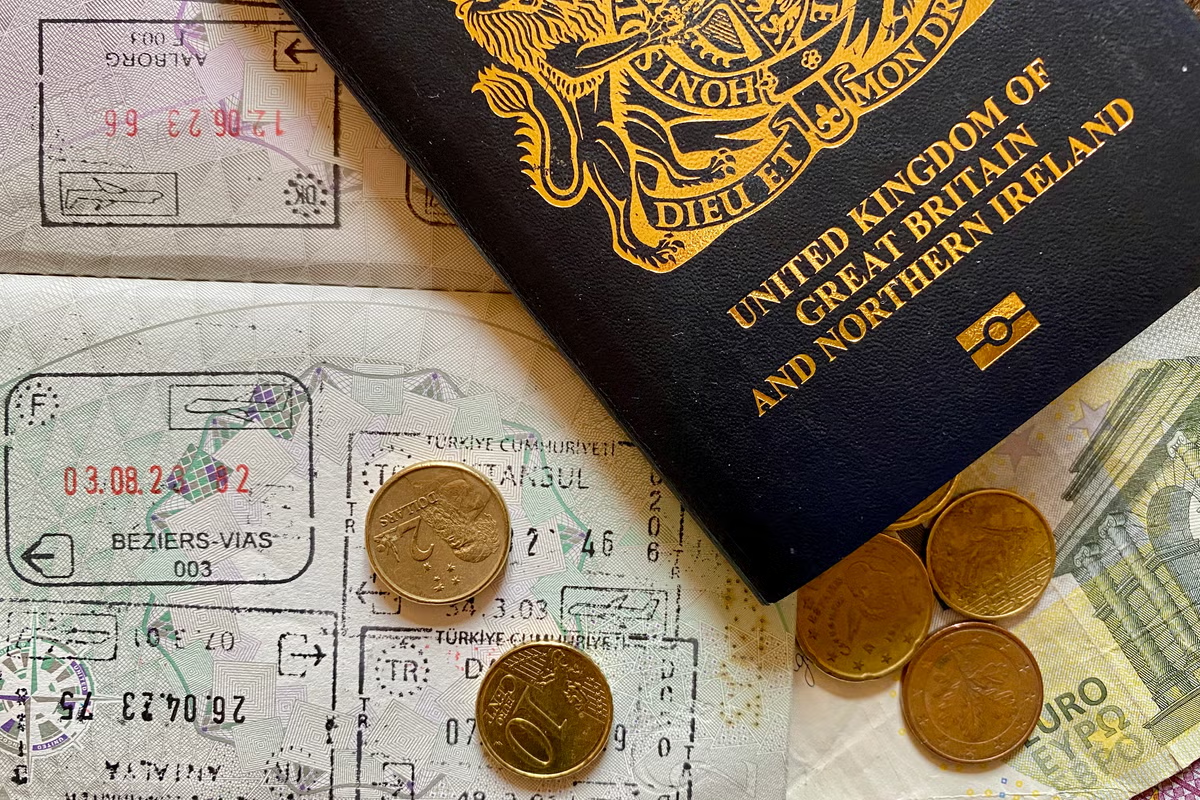
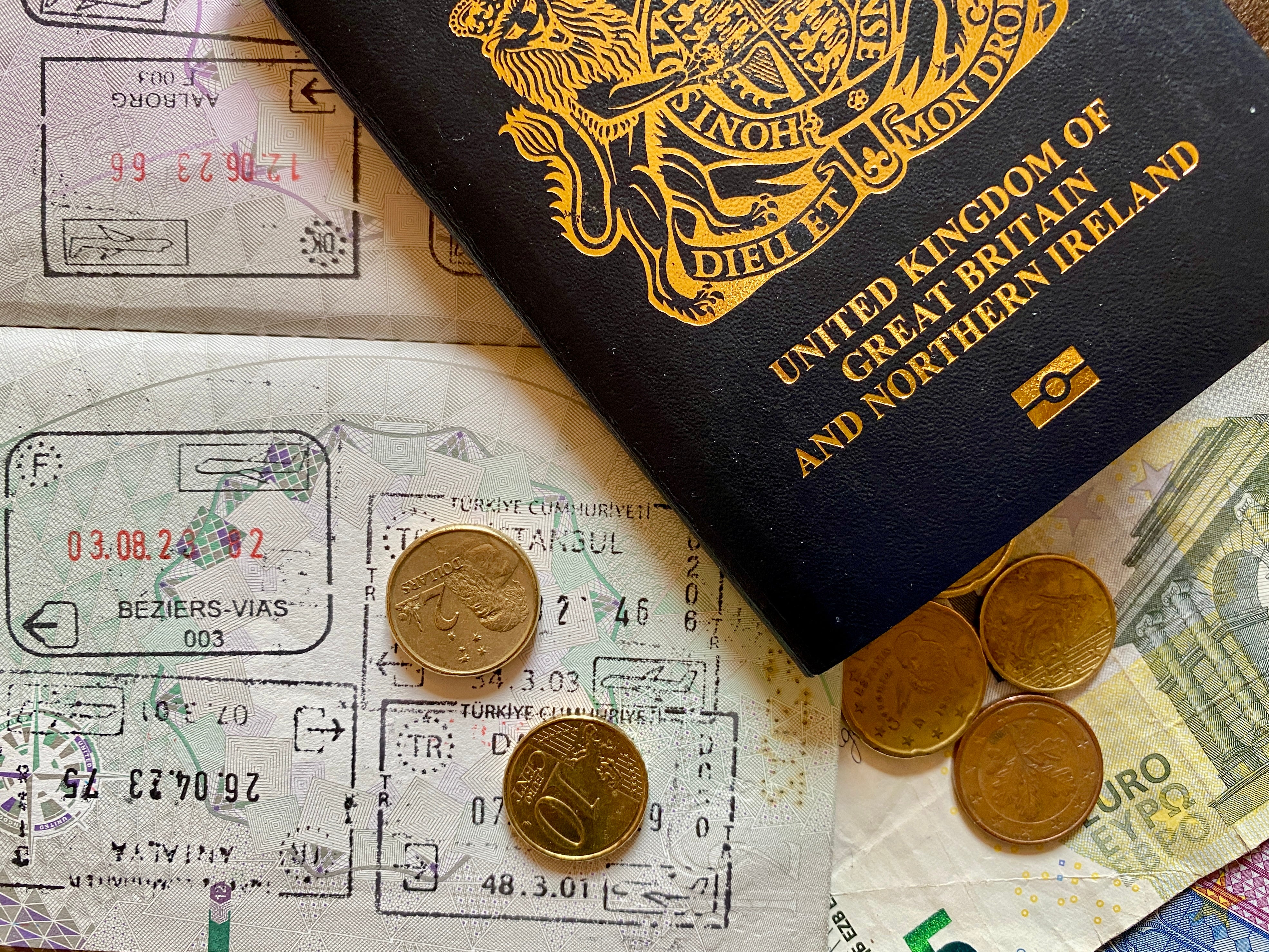
UK visitors to the Schengen area should see an end to entry and exit passport stamps (Charlotte Hindle)
British travellers, like other third-country nationals who enter without a visa, are restricted to 90 days’ stay in any 180 days within the Schengen area. But enforcement previously depended on checking passport stamps and is applied haphazardly.
The entry-exit system is supposed to connect every frontier in the Schengen area with a central database.
Advertisement
Any UK citizen with the good fortune to have an Irish (or other EU) passport can use that document: skip the queues, swerve the fingerprinting.
The procedure for Irish citizens has not changed. When entering or leaving the Schengen Area, they will simply be matched with their passport or passport card – no fingerprinting or facial biometric, and fast-track processing.
What is the “entry-exit system”?
“The most modern digital border management system in the world,” according to the European Commission. “An automated IT system for registering non-EU nationals who are travelling to the EU for a short stay.”
Advertisement
The system aims to capture data from all “third-country nationals” when they either enter or leave at an external Schengen border – such as flying from the UK to Spain or crossing by road from Greece to Turkey. It is not used at internal frontiers within the Schengen Area.
This procedure, says the European Union, replaces “the current system of manual stamping of passports, which is time-consuming, does not provide reliable data on border crossings, and does not allow a systematic detection of overstayers”.
How do the border checks work?
Advertisement
Inbound and outbound passengers go through the formalities at airports, land borders and ports in the Schengen area on arrival and departure.
Three locations in the UK have “juxtaposed” border controls, with French frontier police conducting checks on British soil: at the Port of Dover, Eurotunnel’s Folkestone terminal and the Eurostar hub at London St Pancras.
There is a supposed to be a difference between the first time you cross a Schengen area frontier where entry-exit system is in operation and subsequent entries and exits.
Initial crossing: Registration of your personal details, including fingerprints (not for under-12s) as well as a facial biometric.
Subsequent entries and exits: Facial biometric only.
But many British travellers report being asked for both face and fingerprints on multiple occasions.
How long does registration last?
Advertisement
Each new visit triggers another three years of validity of the initial registration. In other words, if you don’t cross a Schengen area frontier for three years, you will need to register again. It has been suggested that registration runs out when your passport does, but my reading of the legislation indicates that is not correct.
Unlike many border arrangements, the entry-exit system is concerned with the person, not the passport. The EES database has a record of Simon Peter Ritchie Calder, born in Crawley on Christmas Day 1955, with fingerprints and facial biometric ascribed to that person. The biographical information is extracted from whichever passport I happen to provide at the moment of registration.
On subsequent visits, the EES is agnostic about the passport I provide with name plus place and date of birth, so long as the biometric (overwhelmingly likely to be face rather than fingerprints) matches the record of that person.
This makes sense as it should end an illicit practice. At present people with two passports (whether both UK, or one British and one Australian, Canadian, etc) can stay more or less permanently – making judicious side-trips out of the Schengen area on one passport and back again on the other. Truck drivers in the Balkans have reportedly been caught using such techniques.
Advertisement
There are also reports of multiple registration being required in locations including Spain, Greece. Belgium and Switzerland.
Do I need to pay anything to use EES?
No, payment starts, in theory, later in 2026 with the Etias permit (see more below). Etias is dependent on the entry-exit system running smoothly.
When I get a new passport, must I register again?
Advertisement
Not according to the official Procedures for entering data in the EES. It says that if “the third-country national presents a valid travel document which differs from the one that was previously recorded” (ie a new passport), the individual’s online file will be updated with the fresh details.
I am only changing planes at an EU airport. Must I go through the entry-exit system?
It depends on your routing and final destination, and also on the way you have booked the travel.
You will not need to go through the entry-exit system if the answers to the following are both affirmative:
Advertisement
Flying from the UK into Amsterdam Schiphol, Frankfurt, Munich, Paris CDG or another hub, and connecting straight to a destination outside the Schengen area.
Travelling on a “through ticket”, eg Manchester-Munich-Mumbai on Lufthansa or Bristol-Paris-Dubai on Air France.
But you will need to go through EES if any of the following applies:
You are connecting to a final destination in the Schengen area, eg KLM from Newcastle via Amsterdam to Rome.
Your routing involves a segment wholly within the Schengen area, eg Edinburgh-Frankfurt-Munich-Seoul (where the Frankfurt-Munich leg triggers the entry-exit system).
You are “self-connecting”, eg flying London-Lisbon on easyJet and transferring onwards to the Cape Verde islands, also on easyJet. You must go through Portuguese immigration, including EES, before beginning the departure process again.
I am on a cruise from a British port. When do I register?
If you are returning on the vessel to the UK, probably never. The Home Office says: “Sailings that start and finish their journey outside of the Schengen area (for example, at a UK port) will generally be exempt from EES checks, including for any day trips into the Schengen area that are part of their itinerary.”
If you leave the ship in a Schengen area port, you will need to go through the entry-exit system at that location.
Is it all going according to plan?
No. The Port of Dover, Eurotunnel and Eurostar have invested heavily and now believe they can handle outbound passengers without undue delay. Eurotunnel expects the procedure to add two minutes per traveller using LeShuttle between Folkestone and Calais, and that it can process 700 cars per hour. But motorists and passengers at these departure points are being processed manually, rather than using the kiosks.
Advertisement
At London St Pancras International, three locations have been set up with EES kiosks for registration of passengers’ documents. But none of these facilities is currently being used.
Eleni Skarveli, the director of the Greek National Tourism Organisation in the UK, says this unilateral move, “is expected to significantly reduce waiting times and ease congestion at airports”.
Must I provide proof of travel insurance?
Advertisement
The standard Schengen area requirements are unaffected by the introduction of the entry-exit system. A third-country national must:
Justify the purpose of the intended stay (for example tourism, business or a family visit).
Demonstrate sufficient means of subsistence for their stay.
Provide evidence that they will return to their country of origin – or continue to a third country where they are sure to be admitted.
The European Travel Information and Authorisation System (Etias) is the next step in tightening frontier controls. It is an online permit, price €20 (£17), for third-country nationals who do not require visas. It is similar to the US Esta scheme, but valid for longer: three years. While those under 18 or over 70 will still need to apply for and hold an Etias, it will be free.
In order to work, Etias requires EES to be fully operational. Once the entry-exit system is completed and is running smoothly, Etias is set to follow six months later.
Advertisement
But initially a six-month grace period will be granted – so it will not be mandatory for prospective UK visitors to apply online for permission to enter the Schengen Area for at least a year after the complete introduction of EES, which may be some time in 2027.
Is Etias a visa?
Officially, no. Europe says that Etias is “a pre-travel authorisation system”. It is a similar concept to the US Esta, the Canadian eTA and the British ETA, which are not technically visas. They are issued to international travellers who do not require a full visa.
But as Etias requires visitors to apply in advance, provide lots of personal information, pay money and be issued with a permit to cross a border, it is not surprising that it is commonly termed a “euro-visa”.
Advertisement
How will I apply?
When finally the EU is ready, at the heart of the system is an Etias app and website.
You must provide all the usual personal details: name, date and place of birth, gender, home and email addresses, phone number(s), passport number and expiry date.
In addition you must give:
Advertisement
Your parents’ names.
Your level of education.
Your current occupation (including job title and employer, or educational establishment if you are a student).
The reason for the journey (holiday, business, visiting family, etc)
The country, and specific address, of your first night’s stay in the Schengen area.
(On the last point, the European Union helpfully points out that you are not bound to stick to that nominated location: “Once you have your travel authorisation in hand, you can change your plans.”)
You are required to reveal:
Any criminal convictions
Past travels to war or conflict zones
Whether you have recently been deported from the Schengen area.
I have a criminal conviction from long ago. Will I face problems?
Nothing will change with the entry-exit system. The EES is nothing more than the long-overdue digitisation of frontiers of the Schengen area, and personal background is not relevant. But in October 2026, if all goes according to plan, one’s history becomes of interest with the introduction of Etias.
It will be incumbent on the prospective visitor to answer truthfully on “details about any past criminal convictions”. But every indication is that only serious crimes (which I infer as those with a substantial prison sentence attached) and terrorist offences could result in an application for Etias being rejected. This is in marked contrast with the US Esta, for which convicted criminals cannot register.
What happens to the information I provide?
Advertisement
Every Etias application will be checked against EU and relevant Interpol databases, as well as “a dedicated Etias watch-list”.
The system will be tuned to pick out individuals suspected of being involved in terrorism, armed robbery, child pornography, fraud, money laundering, cybercrime, people smuggling, trafficking in endangered animal species, counterfeiting and industrial espionage.
Is Etias going to be the next online scam?
Yes, As with other online travel permits, commercial intermediaries are allowed – but according to Frontex, the EU organisation implementing Etias, there are many scam sites out there that are likely to apply fees way above the basic €20.
Advertisement
Any site other than europa.eu/etias is unofficial and should not be trusted.
One “imposter” site, based in California, claims “Etias will be operational from 2025”.
Another site offers a 40 per cent discount for early applications. Some use the EU logo, which is illegal.
Frontex, the EU border control agency, also warns about the risk of identity theft if you provide personal information to an imposter site.
Advertisement
How far in advance must I apply?
The European Union says: “We strongly advise you to obtain the Etias travel authorisation before you buy your tickets and book your hotels.”
The aim is for an Etias to be granted within minutes, though even a straightforward application could take up to four days.
If an application is flagged (ie there is a “hit” with one of the databases) the applicant may be asked to provide additional information. Alternatively, says the EU, the applicant may be asked “to participate in an interview with national authorities, which may take up to additional 30 days”.
Advertisement
Assuming yours is granted, there is no certificate issued, and nothing needs to be printed. The frontier guard will get the information he or she needs from the passport you used to apply.
In a case of mistaken identity, will I be able to appeal?
Yes. Details of how to appeal will be included with the notice of rejection.
Once I have an Etias, am I guaranteed admission to the Schengen Area?
Advertisement
No. “Mere possession of a travel authorisation does not confer an automatic right of entry,” says the EU. As with the US, travellers can be turned away for any reason.
There is likely to be a mechanism in place for an Etias to be rescinded.
Do I need to apply for an Etias every time I travel to Europe?
No. The permit will be valid for three years, or until your passport runs out, whichever is the earlier.
Advertisement
Will I need an Etias to travel to Ireland?
No. The Common Travel Area incorporating the UK, Ireland, the Isle of Man and the Channel Islands transcends European Union rules, and in any event, Ireland is not in the Schengen area.
If I have a long-stay permit from one of the EU nations, must I obtain an Etias?
No.
Advertisement
How are people without internet access supposed to apply?
They will be expected to get a friend, a family member or a travel agent to make the application for them, in the same way as the US Esta and similar schemes.
Just remind me about the 90/180 day rule?
This rule, to which the UK asked to be subject after leaving the European Union, means that British travellers cannot stay more than 90 days in any stretch of 180 days.
Advertisement
As an example of what it means: were you to spend the first three months of 2026 in the Schengen area, you would have to leave on 31 March and could not return until 90 days later, ie 30 June.
Is the UK being punished because of Brexit?
No. Work on strengthening the European Union’s external border began a decade ago. British officials participated in initial planning for the entry-exit system and online registration for third-country nationals.
The UK asked to be subject to all the extra red tape that everyone already knew was on the horizon. The EU agreed. So Brussels is delivering exactly what the British asked for.
Advertisement
Had we remained in the EU but outside Schengen, would we still be subject to all the new red tape?
No. Were the UK still in the EU, neither EES nor Etias would affect British passport holders.
Citizens of Ireland, which is in the EU but outside Schengen, need not go through the entry-exit rigmarole nor get an Etias. They simply have their passport/ID checked on arrival and departure, usually via a fast-track line.
That’s what the UK chose to give up.
Advertisement
What’s the back story behind the delays?
Originally the entry-exit system was due to start in 2021. But the body responsible for implementation – the European Union Agency for the Operational Management of Large-Scale IT Systems in the Area of Freedom, Security and Justice (EU-Lisa) – has repeatedly pushed back the date because the database was far from ready.
In August 2024, the EU’s Home Affairs commissioner, Ylva Johansson, said: “I have decided that the entry/exit system will enter into operations on 10 November. That will be a great day – entry-exit system day.” But a month before the big day, ministers decided to postpone the introduction.
Many airports, ports and railway stations have already installed expensive equipment, which has been lying unused. Officials in Brussels then kicked the can down the road to October 2025 – with a full roll out due to be completed by April 2026. But this latest deadliine has also been missed, with 7 September 2026 the new latest date for 100 per cent EES compatibility.
Advertisement
This piece was first published in August 2025 and is kept updated with the latest information
Mr Berwin told The Standard: “If next week’s planned strikes go ahead, Londoners should know there are other ways to get around, and that Forest will be ready to help them with their journeys. During last year’s strikes, we saw demand during peak times more than double, and we expect to see a similar trend next week.
The market brings together makers, bakers, and creatives of all stripes from across the UK to share their quirky, impressive, and often delicious wares.
The first Makers Market took place in October last year and has seen several events since, including one in March, and a particularly rainy affair in December.
But there wasn’t a drop of rain in sight this Sunday (April 19) as a busy Bolton public came out to explore all the sounds and smells the market had to offer.
One fine-looking cake stand caught my eye, piled high with burnt Basque cheesecakes, cookies, and brownies.
Advertisement
Persian cake and burnt Basque cheesecake (Image: Dan Dougherty)
“We are Nooshé,” said co-owner Ehson Sadeghian, “we do cakes and pastries but all with Persian twists.
“So things like saffron, pistachio, rosewater.”
The cakes looked luxurious, all crumbled with green pistachio dust and flower petals.
Ehson showed me something.
Advertisement
“This is the oldest type of cookie in the world – we’ve called it the ‘Persian Jewell’, but the real name is the Koloocheh Fooman.”
The cookie features a unique spiral pattern, with walnuts, cinnamon and, of course, saffron.
Persian jewel cookie, reputedly the oldest type of cookie in the world (Image: Dan Dougherty)
Over on the more savoury end of the food market we had Mr Murray’s Scotch Eggs.
Operated by Kerry Green, the stall sells scotch eggs of all different varieties, including standard pork eggs, fiery chilli cheese, chorizo, hickory smoked bbq, and even a black pudding egg.
Advertisement
“The black pudding egg is the most popular egg with men, I’d say,” said Kerry.
“My favourite is the Jamaican jerk scotch egg, but unfortunately we don’t have any of those today.”
Mr Murray’s Scotch Eggs with Kerry Green (Image: Dan Dougherty)
“It’s quite a unique product we offer – I don’t know anyone else who does so many varieties of scotch eggs.”
Another unique food stall was gourmet grilled cheese spot Absolute Meltdown, operated by Michelle Johnson and Kathy Buckley for about two and a half years.
Advertisement
Each sandwich consists of three varieties of cheese – cheddar, mozzarella, and red Leicester – on toasted sourdough, combined with a host of interesting toppings.
“Bacon is probably the most popular,” said Michelle, “but my favourite is tuna.”
Absolute Meltdown with Michelle Johnson and Kathy Buckley (Image: Dan Dougherty)
As with Murray’s scotch eggs, it’s quite a unique idea – to elevate something traditionally seen as a throwaway snack into a serious meal. I asked Michelle where she got the idea from.
“I just love food really!” she said.
Advertisement
Which is as noble a sentiment as any.
But food and drink is not all the market has to offer. As I browsed the stalls, something else caught my eye – a miniature dalek, trapped inside a small glass.
Little Glass Planet Terrariums and Kim Winter (Image: Dan Dougherty)
This was the work of Kim Winter, owner of Little Glass Planet terrariums.
A terrarium is a glass container containing plant life – mosses, flowers- which, when watered correctly, forms its own self-sustaining ecosystem.
Advertisement
“I did a masters degree in conservation biology,” said Kim, “so I’ve always been into plants.
“They’re all over the home, hanging from the ceiling, in the corners – the cats can’t even get on the windowsills!”
Purple passion flower with a small figurine decorating the inside of the terrarium (Image: Dan Dougherty)
Kim started making the terrariums as a hobby, but this quickly progressed, so now she sells them at various markets around the North West.
“At first, we say watch out for when the moss starts to dry out, then give it a water.
Advertisement
“But after that, they sustain themselves.”
Some of the colours are striking – especially the purple passion plant, with its deep colours and soft, velvety leaves, and the ‘fittonia’, also known as the ‘nerve plant’, which has multicoloured veins running through the outer leaf.
Fittonia or ‘nerve plant’ (Image: Dan Dougherty)
Each terrarium also contains a small figurine – a dalek, a Pokémon, two people embracing – which adds an extra dimension to the colourful flowers.
I headed back over to Nooshé for a slice of Basque cheesecake – every bit as delicious and tangy as it looked – and took my leave.
Advertisement
The next Bolton Makers Market will take place on May 10 at Newport Street in Bolton town centre.
ALL around the world, International Day for Monuments and Sites is observed today.
The aim is to ‘raise awareness of cultural heritage diversity, the vulnerability of sites and monuments, and the measures needed to maintain and conserve them’.
So let’s join in and pay tribute to our own monumental landmarks.
However, when you make a list for our region, you soon find the North East is lavishly littered with follies, forts, towers and columns. I’ve limited myself to compiling my top ten list to mark today.
If I’ve left one of yours out, please feel free to send me a strongly worded email…’’Oy..where’s Ludworth Tower!!!’’ Or …’Ey marra, why no Apollo Pavillion in Peterlee??’’
We’ll start up north and work our way down.
Advertisement
Bamburgh Castle, brooding magnificently over the North Sea, looking out for its siblings Lindisfarne and Dunstanburgh Castle, up and down the coast. No surprise at all it is a much sought after movie location – Transformers and recent Indiana Jones adventures have used this as their back drop.
We move a little further south to Alnwick Castle, another movie star of a monument (used in some series about a boy wizard apparently??) with spectacular grounds but make sure you don’t try eating a plant in the Poison Garden!
The Column of British Liberty towers over the tallest treetops in the National Trust grounds of Gibside. Like many a folly, when you stumble on it, you wonder, who on earth plonked this here?
If you’re a Toon fan, the city of Newcastle revolves around St. James’ Park. However, if you are meeting someone, there is only ONE place to convene and that is Grey’s Monument. It stands tall and striking, like a huge pin in a map, it is the city’s unofficial meeting point or place of protest.
Advertisement
Let’s move across to South Tyneside and enjoy the sight to behold that is the Herd Groyne, a Victorian lighthouse built on sturdy legs/stilts in 1882 and still used for navigational purposes today. Worth the trip to South Shields alone.
Down the coast to the dramatic Northern Spire Bridge over the River Wear in Sunderland. The crossing opened to pedestrians (I was one of them) on August 28, 2018, before opening to traffic the next day.
As tall as this bridge is, another monument looks down on it is the North East’s own Parthenon, Penshaw monument. When my two were toddlers I used to love taking them up here for a mighty hike and hot chocolate out of the flask as a reward when you got to the top. The views are cracking on a clear day!
Down the A19 to Teesside for our 8th Whey Aye Wonder as we enjoy the stunning grounds of Wynyard Hall. I was staying there for work recently (I’ve had worse gigs!) and went for a run.
Advertisement
As well as spotting plenty of deer and rabbits bouncing around the fields I was amazed to find the Wellington obelisk pop up from nowhere. Some 40 metres high, it proudly commemorates the visit of the Duke of Wellington to the estate in 1827.
And of course, NO list of North East monuments is complete without Durham Cathedral. It is not just a monument, but a masterpiece.
I remember my first trip to the top with my Uncle John who pointed down to the grounds of Durham prison where you could see the inmates like ants in the exercise yard.
Finally, back up the A1 for our last stop as we give a great big high five to the Angel of the North, which welcomes all visitors to the heart of our great land with open arms.
Advertisement
Ten monuments. Ten towering inanimate objects that bring history, heritage and memories to life.
Go on then…which ones did I leave out?
Facts and Footnotes:
The Herd Groyne Lighthouse has an operational fog bell.
The central tower of Durham Cathedral was built in two stages in the fifteenth century.
The Angel of the North stands at an impressive 20 meters (66 feet) tall and has a wingspan of 54 meters (177 feet).
You can email Alfie viawww.AlfieJoey.comand subscribe to his free newsletter there.
The Aurora Borealis is truly a sight to behold if you are lucky enough to catch it on a clear night.
According to reports from the Met Office, Scots may be lucky enough to see the Northern Lights sweep through the skies tonight (April 19). A dream event for stargazers, the space event will paint the sky in a variety of beautiful colours that you won’t want to miss.
Advertisement
Out of those living in the UK, Scots are generally the most likely to see the Aurora Borealis, which dazzles onlookers with bright greens, pinks, blue and violets. While the intensity of the solar event can vary, the brighter, more widespread displays occur during strong geomagnetic events.
The best time to usually see the Northern Lights in the UK is during the Equinox and Solstice, which fall in March/April and September/October. This means the likelihood of seeing an aurora in the coming weeks is higher than usual.
In order for the phenomenon to occur, solar activity needs to take place. The sun emits charged particles known as solar winds, which can interact with particles in the Earth’s magnetic field. If the solar wind’s polarity is opposite to Earth’s, the mixed particles are funneled towards magnetic poles.
As these energetic particles collide with gases in the upper atmosphere, they release energy to form light, which are the colours we are able to see in the sky. Oxygen is said to produce green auroras, and sometimes rare red at higher altitudes. Meanwhile, nitrogen creates blue and purple hues.
Advertisement
For those who are avid watchers of the Northern Lights or you haven’t had the chance to gaze upon the phenomenon yourself, tonight may be your lucky night.
The Met Office has released its aurora forecasts for today (April 19), which states that Scots may be able to see spells of aurora visibility this evening.
The national forecaster’s Northern Hemisphere forecast reads: “Ongoing fast solar winds are likely to bring spells of aurora visibility across northern parts of the UK overnight Sunday into Monday (UTC), and similar geomagnetic latitudes.
Advertisement
“This activity will ease through Monday and into Tuesday, with any viewing becoming more restricted to highest latitudes, and fading to background by Wednesday.”
It should be noted that while Saturday night (April 18) was the prime time to see the lights in action, there is still a chance Scots could see them tonight under the right circumstances.
Yesterday’s aurora forecast read: “The auroral oval is expected to remain at or near background levels until a fast wind arrives early 18 April UTC. This brings an increased chance of enhanced auroral activity Saturday night and to a lesser extent Sunday night.
“Aurora will be potentially visible across Scotland, perhaps northern England, and similar magnetic latitudes where skies are clear.”
Advertisement
How to view the Northern Lights
In the UK, the Northern Lights are the most visible in Scotland, northern England, north Wales, and Northern Ireland. However, during intense solar storms the lights can also be seen much further south.
The best chances of seeing the aurora are when there are dark, clear skies. Light pollution and cloud cover can obscure the view, so it is recommended that you find a remote area such as north-facing coasts or a rural spot that offers a good vantage point.
While the lights are most active around the Equinoxes, strong solar activity can occur throughout the year, bringing stargazers plenty of beautiful surprises.
Irita Marriott Auctioneers and Valuers will return to The Barlow on Sunday, April 19, offering expert advice and free auction estimates.
Running from 11am to 4pm, the event invites visitors to bring along their treasured items to discover their potential value.
Specialists will be on hand throughout the day to provide insight into the auction process and guidance on selling.
Advertisement
Irita Marriott Auctioneers and Valuers will return to offer auction estimates.
A spokesperson said: “This is a great opportunity to uncover the value of your items and learn more about the auction process.
“Whether you’re a first-time attendee or a long time enthusiast in Bolton.”
Organisers say it is designed to be both informative and accessible, whether you are attending for the first time or have a long-standing interest in antiques.
The actor has now shocked fans after appearing at a Comic Con event in France, where he showed up with bleached hair and scarred legs.
Anderson took to the stage at Comic Con France this month (Picture: Backgrid)
Anderson played Arthur Shelby on the show (Picture: BBC)
In pictures obtained by The Daily Mail, Anderson could be seen wearing a dark jacket over a white Casablanca brand t-shirt.
He also wore a pair of cropped trousers, which showed off a series of cuts and scars to his legs when he sat down to chat with the audience.
His hair had been bleached blond, in a stark change from his tightly trimmed Peaky Blinders look.
Advertisement
This is not the first time Anderson’s appearance has alarmed fans, after previously looking disheveled in London, weeks after he pleaded guilty to crack cocaine possession.
‘Back to business and back on set today’ he wrote in an Instagram story, adding: ‘Thank you for all your love and concern to everyone. I was and have been absolutely flattened by the flu. #nofilter.’
Anderson’s new look showed off a series of cuts to his legs (Picture: Backgrid)
In June 2024, he shared another update, telling his followers in a video that there is ‘no story without struggle.’
He continued: ‘Take it from me, I have struggled, and I struggle today, the same way you do, and we deal with it.
Advertisement
‘If I can help you deal with your struggles, then let’s do it together, let’s make this the first of many conversations, because you can’t do it on your own, you need help.
‘And I will say this one more thing to you, you can help others, in turn, it will help you. It’s called service.
‘So turnaround my friend, look for somebody else who also is suffering, and hard as you may find it, help them, because you’ll find it helps you more, believe it or not.
‘Remember this, we are amazing. You are unbelievable.’
Advertisement
The actor previously said that he’d been suffering from the flu (Picture: Instagram)
Speaking to LADBible, he said: ‘Well, what can you do, eh? It is how it is. I thought I’d just leave them to it.’
Still, he harbors no grudge toward the film, nor creator Steven Knight for writing him out.
Describing The Immortal Man as ‘great,’ Anderson said: It’s such a powerful thing to do. It’s something you don’t see on TV.’
When asked whether this was definitively the end for Arthur Shelby, he added: ‘I mean, yeah, I guess so… It’s not as straightforward as you think. But we’ll see.’
Advertisement
Got a story?
If you’ve got a celebrity story, video or pictures get in touch with the Metro.co.uk entertainment team by emailing us celebtips@metro.co.uk, calling 020 3615 2145 or by visiting our Submit Stuff page – we’d love to hear from you.
It’s where the best-loved, most re-bought, genuinely useful products are listed, and once you find it you’ll never go back.
It’s packed with smaller items that are perfect for getting you over the postage limit – if you’re a fiver short of that magic £50 free postage, it can be worth grabbing some staples to get you over the line.
It’s called “Lakeland Loves” – and it’s a secret page packed with star buys – those who’ve discovered it treat it like a shortcut to the good stuff.
This isn’t about trends or gimmicks. It’s about the items people rely on so much, they automatically add them to their basket without a second thought.
Advertisement
What are the best buys on Lakeland Loves?
Take the Daily Shower Spray. At £4.99, it’s one of those quietly transformative products: no scrubbing, no rinsing, no wiping.
Just spray after your shower and walk away while it gets to work preventing soap scum, water marks and mould. It’s the kind of low-effort habit that keeps bathrooms looking freshly cleaned for far longer.
Then there are the world’s best washing up gloves – a surprising favourite, perhaps. They’re extra tough, completely latex- and rubber-free, and lined for comfort, making them ideal for sensitive skin. Not the most glamorous purchase, but one people consistently come back for. I don’t buy any others since trying them.
Bakers, meanwhile, tend to stock up on Lakeland’s piping bags. Designed with a textured, non-slip exterior, they offer better grip and precision when icing — and they’re strong enough to handle more demanding kitchen tasks too. I first tried them on a baking workshop and never went back – it’s that rare mix of professional quality and everyday practicality. They’re £9.99, so the priciest thing on my list, but there’s 50 in a pack and they are worth every penny.
Advertisement
The Lakeland Loves products customers buy the most (Image: Lakeland)
Another staple hiding in plain sight is the Wrapmaster refill range. If you’ve ever battled cling film that refuses to cooperate, this is where things change. The cling film is strong and stays put, while the foil – around 30% thicker than most – is built to last. The foil is a must for jacket potatoes and the clingfilm wraps sandwiches like a dream.
For those with the dispenser, these refills are less of a luxury and more of a necessity, at £8.99 for cling film and £5.99 for foil you’ll never go back.
Cleaning essentials feature heavily on the page too, including the microfibre dual kitchen sponges, £4.99. With one soft side for non-stick pans and a tougher abrasive side for stubborn grime, they’re designed to tackle everything from delicate surfaces to heavy-duty scrubbing — and they can be machine washed and reused.
The Lakeland Loves products customers buy the most (Image: Lakeland)
Slightly under the radar, but no less useful, are the optical lens wipes, £3.99 – so popular they were brought back due to demand. Perfect for my glasses, they also cut through smudges on phone screens, camera lenses and more, making them a handbag essential for many shoppers.
Advertisement
The Lakeland Loves products customers buy the most (Image: Lakeland)
And for a quick bathroom refresh, the Vamoose cleaner, £4.99, has built a following of its own. Its deep-foaming formula clings to surfaces like sinks, showers and taps, breaking down soap scum with minimal effort – just spray and wipe. (Those in the know often pick up the kitchen version, also £4.99, at the same time.)
The appeal of the “Lakeland Loves” page is simple: it takes the guesswork out of shopping. These are the products people don’t just try – they stick with.
So next time you’re browsing Lakeland, it might be worth seeking it out.
Because once you find it, you’ll probably never shop there quite the same way again.
Pontyclun edged out Llangadog in a dramatic WRU Division 4 Cup final on Sunday, winning 27-21 at the Principality Stadium.
Two tries from openside Josh Clarke and 12 points from the boot of Nicky Theaker laid the platform for cup success for Pontyclun, with player of the match Joe Williams pulling the strings.
Mid Walians Llangadog were a worthy opponent, with victory slipping through their fingers right at the end.
Wales flanker Harri Deaves had been up early on Sunday morning, having helped the Ospreys to a vital URC win over the Sharks the previous night, to prepare the bacon rolls for Pontyclun’s trip to the Principality Stadium.
Advertisement
Even after ascending to Test rugby earlier this season, the 24-year-old has remained a constant at his local rugby club – coaching, doing the laundry and helping out however he can. Almost immediately after he had won his first Wales cap against the All Blacks this season, Deaves was back in Pontyclun’s clubhouse to celebrate.
Along with the 37 youth players he coaches, Deaves would have been delighted as his hometown club won a dramatic final at the home of Welsh rugby.
In particular, the efforts of openside Clarke would have caught his eye.
Advertisement
“It’s unbelievable,” admitted Clarke afterwards. The flanker has played for Neath at the stadium before, but doing it for his hometown club “hits a little bit different”.
“It’s a surreal experience, this is my boyhood club. We’ve got over 1,000 supporters here. They’re over the moon!
“I think one or two of them had flares on the way in! The coppers drove past, so they were a bit lucky not to get stopped! The other coaches have come down from Pontyclun, from the juniors to the old people. You can’t fault that.
“I’m supposed to me in college on an electrical course on Monday. I did hint they might not see me until the afternoon!”
Advertisement
After a nervy start to the final, Llangadog settled sooner – with scrum-half Tom Bailey opening the scoring.
The 31-year-old support worker danced his way over from the back of a scrum to touch down.
Having not had much of a sniff, Pontyclun ended the half in fine fashion.
Fittingly, given Deaves’ presence, it was openside Clarke who turned the game in their favour with two scores before the break.
Advertisement
The first saw him, in a similar vein to the Ospreys back-row, burst through a gap and evade the final man to stretch over.
Then, after the delightful hands of fly-half and captain Williams put centre Theaker through gaps twice in quick succession to get the Badgers within touching distance of the line, Clarke burrowed over the line to end the first-half with his second score.
Pontyclun remained on top after the break, with full-back Adam Lewis finishing off a fine move out wide.
Advertisement
After Llangadog had dared to run it from deep, Clarke got over the ball for a penalty – which Theaker knocked over to build their lead.
However, Llangadog weren’t finished, with full-back Rhodri Davies latching onto a kick-pass after some red-zone pressure to score their second try.
Then, with 25 minutes to go, Deian Thomas took down a high cross-field kick in one hand to race away.
Advertisement
That score reduced Pontyclun’s lead to just three points, with the momentum having firmly shifted once again.
Ceri Williams had a chance to level the scores, but his penalty clattered the uprights.
Theaker made no mistake with a penalty of his own to make it a six-point game heading into the final 10 minutes.
Llangadog had chances in the dying minutes, throwing everything at Pontyclun.
Advertisement
With the clock in the red, it looked as though Llangadog would snatch victory – hammering away at the Badgers’ line time and time again.
However, a huge effort saw Pontyclun win a scrum against the head to seal victory.
Llangadog
Tries: Tom Bailey, Rhodri Davies, Deian Thomas; Cons: Ceri Williams x3
Llangadog: Rhodri Davies; Iestyn Williams, Rhys Thomas, Kasper Anderson, Ben Morgan; Ceri Williams, Tom Bailey; Llyr Thomas, Daniel Morse, Telor Dyer, Rhys Evans, Owen Williams, Tom Davies, Ioan Hughes, Charles Handford.
Replacements: Ioan Lewis, Tom Llewellyn, Steff Thomas, Gruff Jones, Cian Thomas, Guto Price, Lewys Jones, Deian Thomas.
Advertisement
Pontyclun: Adam Lewis; Jacob Dennis, Luke Rose, Nicky Theaker, Morgan Stevens; Joe Williams, Morgan Lloyd; Henry Legg, Sam Barclay, Iestyn Herridge, Morgan Parsons, Morgan Rose, Evans Cooke, Josh Clarke, Dan Hemmens.
Replacements: Dan Ruggles, Simon Pilkington, Tom Fry, Jack Theaker, Gareth Hooke, Tom Harrison, Harri Deaves, Harri Stiff.
‘Acts of violence’ which escalated during demonstrations in Manchester will be investigated further by Greater Manchester Police. It comes after the force was criticised by the Northern Police Monitoring Project for what it described as ‘thuggish’ tactics used against counter-protesters who rallied against Britain First supporters on Saturday (April 18).
Hundreds of flag-waving Britain First supporters marched from Store Street to St Peter’s Square. Counter-protesters assembled in Piccadilly Gardens before heading to another part of St Peter’s Square, separated from Britain First by multiple fences and police lines, while officers blocked off multiple streets between the two demonstrations.
Click here to get the biggest stories straight to your inbox in our Daily Newsletter
Three people were arrested during the protests, which GMP said had attracted a smaller turnout than expected. One male counter-protester was arrested on suspicion of breaching a Section 60AA of the Criminal Justice and Public Order Act 1994, which allowed officers to require the removal of face coverings, while another male counter-protester was arrested on suspicion of assaulting a police officer.
Advertisement
A woman was also arrested on suspicion of breaching the peace, with GMP unsure if she was part of either demonstration. In an update issued today (Sunday), the force said all three people had since been bailed.
Since the demonstrations took place, video footage has emerged online showing flashpoints involving GMP officers and counter-protesters. The Northern Police Monitoring Project, which had observers at the demonstration, criticised the force’s actions towards counter-protesters.
In a statement, the group said: “Officers behaved thuggishly, with consistent and serious aggression and violence – overwhelmingly directed at antifascist counter-protesters, not at the far-right fascist marchers they were facilitating. This included numerous punches, kicks and violent attempts to remove masks, in some cases causing injuries, as well as repeated use of batons and PAVA spray, and the deployment of horses against protesters.”
Advertisement
The group claimed GMP used PAVA spray ‘repeatedly, in significant volume, without warning, and without lawful justification’, while it also claimed officers were on occasion ‘blocking medical assistance’. GMP says it will further investigate specific incidents from the protest in the coming days, as it did following the previous Britain First demonstration and counter-protests in February.
A force spokesperson said: “During what was a very busy day in Manchester city centre, officers responded to several incidents and intervened in altercations between groups. On some occasions this spilled over into acts of violence and disorder, and these will be fully investigated.
“We will utilise a range of criminal and civil powers to bring offenders to justice, ensuring that those who wish to protest peacefully can do so. We would also encourage anyone with mobile phone or CCTV footage from the protests to report it to us as it could assist our enquiries. Our priority is always to protect public safety while supporting people’s right to protest peacefully.”
Advertisement
In a statement issued on Saturday evening addressing the use of force and PAVA spray, GMP added: “The vast majority of both sides caused no issues for our officers. Force was required when counter-protesters had tried to break police lines and attempted to throw punches.
“PAVA spray was deployed as a tactic instead of using further additional force. A small breakaway group of protesters had made their way down the side of the Town Hall. Officers were later met with resistance as they moved them away from the nearby counter group and some force was required.”
Police horses, riot vans and specialist units from police forces across the country were all mobilised to police Saturday’s demonstrations. A Section 34 dispersal order remained in place until 8pm on Saturday night. The number of arrests was fewer than the 11 made during the February 21 demonstrations, which had multiple flashpoints across a larger route.
GMP says it has a ‘duty to support people’s right to protest peacefully’. While accepting the march had to be allowed due to freedom of expression, both council leader Bev Craig and mayor Andy Burnham issued statements ahead of the protests, insisting that ‘racism and hatred have no place’ in the city.
Officers arrested the man in his 30s moments before the bout began at Tottenham Hotspur’s stadium last weekend.
15:12, 19 Apr 2026Updated 15:14, 19 Apr 2026
A well-known celebrity was arrested on suspicion of rape while he was attending Tyson Fury’s fight against Arslanbek Makhmudov earlier this month. Moments before the bout began, police swooped on Tottenham Hotspur’s stadium.
The man in his 30s, who has not been named, was arrested on suspicion of the rape and sexual assault of a female victim at a home in North London earlier this year. The man has since been bailed.
A Met spokesperson told The Mirror: “A 30-year-old man was arrested on suspicion of rape, sexual assault and causing a person to engage in sexual activity without consent on Saturday, 11 April.
Advertisement
“This relates to sexual offences which reportedly occurred at an address in Golders Green in January. A female victim is being supported by specially trained officers. The man has been released on bail as enquiries continue.”
Tens of thousands of boxing fans were at the London venue to watch The Gypsy King’s bout against Makhmudov. Fury, 37, came out of retirement to beat the Russian, 36.
Heavyweight champion Tyson has tried to give up boxing for good on a number of occasions over recent years, but he made his much anticipated return against Arslanbek Makhmudov last weekend.
After defeating Dillian Whyte in April 2022, the Gypsy King first proclaimed he was ‘going out with a bang’, announcing: “I fulfilled everything I’ve ever wanted to fulfil. I will retire as only the second heavyweight in history, after Rocky Marciano, to retire undefeated. I was unbeatable at this game.”
However, his time away from the sport lasted mere months, and by December that year, the Manchester fighter was competing again, this time against Derek Chisora.
He then faced Francis Ngannou in October 2023 before suffering his first professional defeat in May 2024 after nine gruelling rounds with undisputed heavyweight champion Oleksandr Usyk.
Tyson’s Dad, John, has slammed his son’s plans to restart professional fighting, saying:“I think he’s past his best. I’m a no-filter kind of guy – I say it how I see it.
Advertisement
“I love him, but there are too many people patting him on the back and telling him things that aren’t true, building him up like he’s invincible. He’s not and he hasn’t been for a while.”
John added that “boxing destroyed” their relationship. Tyson took his dad’s comments on the chin, saying in response, “I just take his comments as those of a concerned parent. My dad wanted me to retire six years ago, after a while, he said even two years would have been enough.”
However, Tyson admitted it wasn’t money or something to “prove” that led him back to the ring, but simply love for the sport.
“It’s about the love of the game and the love of this fight business that I’m in,” he said, adding, “As for the naysayers who say, ‘Oh, he might be finished,’ then obviously I want to prove them wrong.
Advertisement
“But more than that, I just want to enjoy it, have fun in there, and do what I’ve always done – enjoy it and have fun.” He also said he is ready to “put on a show” for his fans, “as always”.
Get more Daily Record exclusives by signing up for free to Google’s preferred sources. Click HERE


















































You must be logged in to post a comment Login