The year that saw the release of monumental sci-fi movies such as Christopher Nolan‘s Interstellar and Tom Cruise‘s instant classic Edge of Tomorrow also witnessed the quiet success of a movie that has grown equally in stature in the decade since. The movie cost a fraction of the budgets of Interstellar and Edge of Tomorrow, both of which carried reported budgets of around $160 million, and it marked the beginning of a particularly exciting studio-filmmaker collaboration. Both the studio and the director continue to work together to this day, with their latest project having recently entered production in England. Their first movie — the one from 2014 – is currently streaming on HBO Max, but not for too long.
It remains startlingly relevant even today. In fact, with its potent themes of artificial intelligence and technocrats ruling the world, it is perhaps more relevant now than it was back in 2014. The movie follows a programmer who is invited by a reclusive CEO to test a humanoid robot powered by AI. The film starred Oscar Isaac as the CEO, Domhnall Gleeson as the audience surrogate programmer, and Alicia Vikander as the robot.
Advertisement
Advertisement
Collider Exclusive · Sci-Fi Survival Quiz Which Sci-Fi World Would You Survive? The Matrix · Mad Max · Blade Runner · Dune · Star Wars
Five universes. Five completely different ways the future went wrong — or sideways, or up in flames. Only one of them is the world your instincts were built for. Eight questions will figure out which dystopia, galaxy, or desert wasteland you’d actually make it out of alive.
💊The Matrix
🔥Mad Max
🌧️Blade Runner
Advertisement
🏜️Dune
🚀Star Wars
Advertisement
01
You sense something is deeply wrong with the world around you. What do you do? The first instinct is often the truest one.
Advertisement
02
In a world of scarcity, what resource do you guard most fiercely? What we protect reveals what we believe survival actually requires.
Advertisement
03
What kind of threat keeps you up at night? Fear is useful data — if you’re honest about what you’re actually afraid of.
Advertisement
04
How do you deal with authority you don’t trust? Every dystopia has a power structure. Your approach to it determines everything.
Advertisement
05
Which environment could you actually endure long-term? Survival isn’t just tactical — it’s physical, psychological, and very much about where you are.
Advertisement
06
Who do you want in your corner when things fall apart? The company you keep is the clearest signal of who you actually are.
Advertisement
07
Where do you draw the line — if you draw one at all? Every survivor eventually faces a moment that tests what they’re actually made of.
Advertisement
08
What would actually make survival worth it? Staying alive is one thing. Having a reason to is another.
Advertisement
Your Fate Has Been Calculated You’d Survive In…
Your answers point to the world your instincts were built for. This is the universe your temperament, your survival instincts, and your particular brand of stubbornness were made for.
Advertisement
The Resistance, Zion
The Matrix
You took the red pill a long time ago — probably before anyone offered it to you. You’re a systems thinker who can’t help but notice the seams in things.
Advertisement
You’re drawn to understanding how the system works before figuring out how to break it.
You’d find the Resistance, or it would find you — your instinct for spotting constructed realities is the machines’ worst nightmare.
You function best when you have access to information and the freedom to act on it.
The Matrix built an airtight prison. You’d be the one probing the walls for the door.
The Wasteland
Mad Max
The wasteland doesn’t reward the clever or the well-connected — it rewards those who are hard to kill and harder to break. That’s you.
Advertisement
You don’t need comfort, community, or a cause larger than the next horizon.
You need a vehicle, a clear threat, and enough fuel to outrun it — and you’re good at all three.
You are unsentimental enough to survive that world, and decent enough — just barely — to be something more than another raider.
In the wasteland, that distinction is everything.
Los Angeles, 2049
Blade Runner
You’d survive here because you know how to exist in moral grey areas without losing yourself completely.
Advertisement
You read people accurately, keep your circle small, and ask the questions others prefer not to answer.
In a city where humanity is a legal designation rather than a feeling, you hold onto something that keeps you functional.
You’re not a hero. But you’re not lost, either.
In Blade Runner’s world, that distinction is everything.
Arrakis
Dune
Arrakis is the most hostile environment in the known universe — and you are precisely the kind of person it rewards.
Advertisement
Patience, discipline, and political awareness are your core strengths — and on Arrakis, they’re survival tools.
You understand that the long game matters more than any single victory.
Others come to Dune and are consumed by it. You’d learn its logic and earn its respect.
In time, you wouldn’t just survive Arrakis — you’d begin to reshape it.
A Galaxy Far, Far Away
Star Wars
The galaxy far, far away is vast, loud, and in a constant state of violent political upheaval — and you wouldn’t have it any other way.
Advertisement
You find meaning in being part of something larger than yourself — a cause, a crew, a rebellion.
You’d gravitate toward the Rebellion, or the fringes, or whatever pocket of the galaxy still believes the Empire’s grip can be broken.
You fight — not because you have to, but because standing aside isn’t something you’re capable of.
In Star Wars, that willingness is what makes all the difference.
Advertisement
Here’s How Long You Have Left To Watch the Sci-Fi Gem on HBO Max
We’re talking, of course, about the sci-fi masterpiece Ex Machina, directed by Alex Garland. The filmmaker had previously made a name for himself as a writer on Danny Boyle‘s 28 Days Laterand Sunshine, as well as the underrated sci-fi movie Never Let Me Go. Ex Machina was his directorial debut and was distributed domestically by A24. It grossed $37 million worldwide against a reported budget of $15 million, and went on to receive an Oscar nomination in the Best Visual Effects category. The movie now holds a “Certified Fresh” 92% score on the aggregator website Rotten Tomatoes, where the critics’ consensus reads, “Ex Machina leans heavier on ideas than effects, but it’s still a visually polished piece of work — and an uncommonly engaging sci-fi feature.” Garland went on to direct a string of genre movies for A24 – the divisive horror film Men, the dystopian thriller Civil War, the anti-war thriller Warfare, and the upcoming video game adaptation of Elden Ring. Ex Machina will be removed from HBO Max domestically on May 1. Stay tuned to Collider for more updates.
After the death of John Wayne in the late ’70s, the Western genre was never the same. Clint Eastwoodwas moving away from the horse opera himself, only making Pale Rider in the ’80s, and with its popularity having waned after the failure of Heaven’s Gate, the Western was no longer in the saddle as Hollywood’s biggest moneymaker. Nevertheless, the genre persevered throughout the 1980s, and although they’ve been largely forgotten, there are several Western movies worth revisiting.
From biopics and adventure movies to Western tales from down under, these ’80s Westerns may not be Silverado or Young Guns, but they’re certainly worth their salt. If you’re looking for a night in as you travel back to the Old West, give these Westerns a try. Who knows, maybe you’ll find your next favorite?
Advertisement
5
‘Barbarosa’ (1982)
Gary Busey and Willie Nelson in ‘Barbarosa’ (1982)Image via Universal Pictures
Willie Nelson and Gary Busey are probably not a duo that you would come to expect to see on the screen together, but when you toss them into the Western genre, it somehow just makes sense. Barbarosa follows a young farm boy (Busey) as he finds himself paired with the title outlaw (Nelson) in an adventure that puts them both on the run. If you’ve never seen this picture before, here’s your sign to give it a shot. With a quick 90-minute runtime, Barbarosa makes for a great evening watch for those looking for some solid Western fare.
From Australian director Fred Schepisi, Barbarosa is a buddy comedy with great characters played by an unlikely pair with phenomenal on-screen chemistry. If not for the fact that it’s a bit unconventional at times, it’s the Nelson and Busey team-up that makes this horse opera special. As far as revenge Westerns go, it’s among the most entertaining, even if it is a bit outlandish at times.
Advertisement
4
‘Tom Horn’ (1980)
Steve McQueen as Tom HornImage via Warner Bros.
You’ve seen him as Josh Randall on Wanted: Dead or Alive and as part of an ensemble in The Magnificent Seven, but Steve McQueen once again reminds us he can command a Western all on his own with Tom Horn. Playing the famed mountain man of the same name, McQueen wrestles with his own mortality in high fashion as he wanders the American West. An older McQueen offers a more nuanced performance than we’re used to from the “King of Cool,” and as his penultimate film appearance it stands out as among his best.
As the sun was fading on McQueen’s own life and career, so too is the case of Tom Horn, and the parallels between them are staggering. Directed by William Wiard in his only feature film production, Tom Horn is an intimate portrayal of how the hardened career of a longtime cowboy ultimately plays out — and considering it was based on the real-life Horn’s own firsthand accounts, there’s a lot of great material to chew on. As McQueen’s swan song to the Western genre, Tom Horn is not a film to be forgotten or ignored.
Advertisement
3
‘The Man From Snowy River’ (1982)
Jim Craig (Tom Burlinson) rounds up some horses in the snow in ‘The Man from Snowy River’Image via 20th Century Studios
Moving from the Old West to a land Down Under, The Man From Snowy River is a familiar Western tale that trades the typical Rocky Mountains in America for the “Snowies” of Australia. Directed by George T. Miller (who is not to be confused with Mad Max director George Miller), the picture follows young Jim Craig (Tom Burlinson) as he fights to make a name for himself while coming of age in the wilderness. As one of the most underrated Western movies out there, don’t let the international setting fool you — this picture feels about as traditional as it gets.
Even better, Western legend Kirk Douglasplays dual roles as estranged brothers, Harrison and Spur, each of whom plays a direct part in Jim’s story. Based on the popular Australian poem of the same name, The Man From Snowy River is a brilliant coming-of-age style and the immaculate scenery on display in Australia’s High Country. It’s also full of fine romance and expert horsemanship that one cannot help but get swept away in as the drama unfolds. It’s a great story, one made even greater by Douglas’ fine performances.
Advertisement
2
‘Billy the Kid’ (1989)
Billy (Val Kilmer) walks down the street in ‘Billy the Kid’Image via TNT
Okay, Billy the Kid is technically a made-for-TV movie that some may consider more on the B-picture side of things, but considering it was Val Kilmer‘s first foray into the Western genre, it deserves a spot here. Several years before he would decide to tackle the story of Doc Holliday in Tombstone, Kilmer played the wide-eyed outlaw who took Lincoln County by storm. Covering the famed conflict between the Tunstall and Murphy-Dolan factions of the “Lincoln County War,” William H. Bonney (Kilmer) finds himself caught right in the middle.
Written by Gore Vidal and directed by William Graham, Billy the Kid had the unfortunate happenstance of airing on TNT only a year after Young Guns solidified Emilo Estevez as the care-free gunslinger. But even if Billy the Kid doesn’t quite live up to those high standards, Kilmer nails the role by perfectly embodying the youthful charm that “The Kid” was most famous for. If not simply to see Kilmer in another Western production, there’s no reason that you shouldn’t give Billy the Kid a go — it’s only 96 minutes.
Advertisement
1
‘Walker’ (1987)
Ed Harris as William Walker in ‘Walker’Image via Universal
Not to be confused with the Chuck Norris series Walker, Texas Ranger, this 1987 Western featured a young Ed Harris as the real-life William Walker, a man who in the 1850s fought to make himself the leader of Nicaragua. Harris is enrapturing as Walker, and the film’s interesting (if not somewhat unsettling) satirical take on the true story — not to mention American imperialism at large — is what sets Walker apart as quite unique compared to most Westerns at the time. But that’s not even the strangest part.
Walker could technically be considered a “Weird Western” for the surreal way that the picture ends. Director Alex Cox pushed every single boundary that one might construct for a typical historical biopic to turn Walker into a strange social commentary on United States foreign policy. Although Roger Ebert hated the final product, many consider Walker to be a fascinating feature that defies expectation and forces the audience to consider the past in light of our present. Whether you agree with those results, Harris is great.
Advertisement
Collider Exclusive · Action Hero Quiz Which Action Hero Would Be Your Perfect Partner? Rambo · James Bond · Indiana Jones · John McClane · Ethan Hunt
Advertisement
Five legends. Five completely different ways of getting out alive — with style, with muscle, with charm, with luck, or with a plan so intricate it probably shouldn’t work. Ten questions will reveal which action hero was built to have your back.
🎖️Rambo
🍸James Bond
🏺Indiana Jones
🔧John McClane
Advertisement
🎭Ethan Hunt
Advertisement
01
You’re dropped into a dangerous situation with no warning. What do you need most from a partner? The first few seconds tell you everything about who belongs beside you.
Advertisement
02
You have to get somewhere dangerous, fast. How do you travel? How you get there is half the mission.
Advertisement
03
You’re pinned down and outnumbered. What does your ideal partner do? This is when you find out what someone is really made of.
Advertisement
04
The mission is paused. You have one evening to decompress. What does your partner suggest? Who someone is when the pressure drops is who they actually are.
Advertisement
05
How do you prefer your partner to communicate mid-mission? Good communication is the difference between partners and a liability.
Advertisement
06
Your enemy is powerful, well-resourced, and has the upper hand. How should your partner approach them? The approach to the enemy defines the partnership.
Advertisement
07
Things go badly wrong and you’re captured. What do you trust your partner to do? Who someone is when you need them most is the only thing that matters.
Advertisement
08
What does your ideal partner bring to the table that you couldn’t replace? A great partner fills the gap you didn’t know you had.
Advertisement
09
Every partnership has a cost. Which of these can you live with? No one comes without baggage. The question is whether you can carry it together.
Advertisement
10
It’s the final moment. Everything is on the line. What do you need from your partner right now? The last question is the most honest one.
Advertisement
Your Partner Has Been Assigned Your Perfect Partner Is…
Your answers have pointed to one action hero above all others. This is the person built to have your back — for better or considerably, spectacularly worse.
Rambo
Advertisement
Your partner doesn’t talk much, doesn’t need to, and will have assessed every threat in your immediate environment before you’ve finished your first sentence. John Rambo is not a man of plans or politics — he is a force of nature shaped by survival, loyalty, and a capacity for endurance that goes beyond anything training can produce. He will not leave you behind. He has never left anyone behind who deserved to come home. What you get with Rambo is the most capable, most quietly ferocious partner imaginable — one who has been through things that would have broken anyone else, and who chose to keep going anyway. You’ll never need to ask if he has your back. You’ll just know.
James Bond
Your partner will arrive perfectly dressed, perfectly briefed, and with a cover story so convincing it’ll take you a moment to remember what’s actually true. James Bond is the most professionally dangerous person in any room he enters — and the most disarmingly charming, which is the point. He operates in a world of layers, where nothing is what it appears and every advantage is used without apology. You’ll never be bored. You’ll occasionally be furious. But when it matters — when the mission is genuinely on the line and the margin for error has collapsed to nothing — Bond is exactly the partner you want. He has survived things that have no business being survivable. He does it with style. That is not nothing.
Advertisement
Indiana Jones
Your partner will know the history, the language, the cultural context, and exactly why the thing everyone else is ignoring is actually the most important thing in the room. Indiana Jones is brilliant, reckless, and occasionally impossible — but he is also one of the most resourceful, most genuinely knowledgeable partners you could find yourself beside. He approaches every situation with a scholar’s eye and a brawler’s instinct, which is an unusual combination and a remarkably effective one. He hates snakes and gets personally attached to objects of historical significance, both of which will slow you down at least once. It doesn’t matter. What Indy brings is irreplaceable — and the adventures you’ll have together will be the kind people write books about. Assuming you survive them.
Advertisement
John McClane
Your partner was not supposed to be here. He does not have the right equipment, the right information, or anything approaching the right odds. He has a sarcastic remark and an absolute refusal to accept that the situation is as bad as it looks. John McClane is the greatest accidental hero in the history of action cinema — a man whose superpower is stubbornness, whose contingency plan is improvisation, and whose capacity to absorb punishment and keep moving would be alarming if it weren’t so useful. He will complain the entire time. He will make it significantly more chaotic than it needed to be. And he will absolutely, unconditionally, without question come through when it counts. Yippee-ki-yay.
Ethan Hunt
Advertisement
Your partner has already run seventeen scenarios by the time you’ve finished reading the briefing, and the plan he’s settled on involves at least two things that should be physically impossible. Ethan Hunt operates at the absolute edge of human capability — technically, physically, and intellectually — and he brings the same relentless precision to protecting his partners that he brings to dismantling organisations that shouldn’t exist. He is not easy to know and he will never fully tell you everything. But he will carry the weight of the mission so completely, so absolutely, that your job is simply to trust him — and the remarkable thing is that trusting him always turns out to be the right call. The mission will be impossible. He will complete it anyway.
Peter Jackson’s The Lord of the Rings trilogy was a seismic moment in Hollywood. It confirmed that fantasy films, too often relegated to the fringes, could be a draw for audiences and set the stage for interconnected storytelling that has influenced today’s world of cinematic universes. Filming a massive trilogy of films exceeding three hours in length was a major gamble for New Line Cinema, but Jackson pulled it off.
The Lord of the Rings also proved that quality didn’t have to be sacrificed in order to achieve box office success. Jackson’s adaptation of J.R.R. Tolkien’s beloved novels respected the books’ intricate storylines and character arcs, and seamlessly blended practical effects with digital technology. It was an exciting trilogy, made with life and care, and it set the stage for more stories to come, both in Jackson’s adaptation of The Hobbit and future films from Andy Serkis and screenwriter Stephen Colbert. Each film in the original trilogy was nominated for multiple Academy Awards, with The Return of the King sweeping the 2004 Oscars to take home 11 trophies, including Best Picture and Best Director.
It’s hard to think of a more important set of films in Hollywood – but it’s not impossible. While the number is low, three films have arguably made a larger impact, fusing quality, innovation, and creativity to deliver a set of films that not only captivated audiences but changed the landscape of film making for entire generations. Like The Lord of the Rings, the impact of these films is still being felt, and stories are still unfolding in several of these cinematic universes.
Advertisement
3
‘Toy Story’ 1-3 (the Andy trilogy)
Image via Buena Vista Pictures Distribution
Technically, there are five Toy Story movies, with the fifth slated to arrive in June 2026. But there’s a clear line between the first three films, all of which revolve around the toys’ relationship with their growing child, Andy, and the Bonnie-centric later films. While there’s no such thing as a bad Toy Story movie, there’s something special about that first trilogy, which set a high bar for family films.
On its own, Toy Story is one of the most important movies ever made. When it was released in November 1995, it was the first completely computer-animated feature. Coming at a time when most animated films were musical fairy tales, the buddy comedy’s wit and cast of A-list stars marked a change in what would define animated films decades to come. It was so good that while a sequel was inevitable, many believed there was no way a second adventure with Buzz, Woody and company could capture the magic of the first. And Toy Story 2had a rough production, it became one of the few sequels to surpass its predecessor, particularly by plucking at the heartstrings with Jessie’s “When Somebody Loved Me” ballad. Twelve years later, Toy Story 3 brought Andy’s story to a close with a goodbye that left few dry eyes among those who had grown up with the series.
Advertisement
The Toy Story films shaped the future of family movies. Computer-generated animation quickly replaced traditional hand-drawn films. Where a popular star might once have played a supporting role in an animated movie, such as Robin Williams in Aladdin, animated casts would soon become stacked with major stars, while Broadway-style songs gave way to rapid-fire jokes. Without Toy Story, there is no Shrek or the rest of Pixar’s library. And pre-Toy Story, animated films didn’t often do sequels; the success of the franchise proved audiences would return to see their favorite cartoon characters, and they could be spread out far enough to capture new generations.
But the trilogy also proved that animated films could do more than entertain children. With sly jokes and a healthy dose of toy-based nostalgia, the films catered just as much to adults as to younger audiences. And by constantly returning to themes of mortality, aging, friendship and parenting, they tapped into very adult emotions, paving the way for animation to take more storytelling and thematic risks. By spreading the story over more than 15 years, the trilogy also allowed audiences to grow up with Andy, priming them for the heartbreaking moment when he had to say goodbye to Woody and the Roundup Gang. Toy Story proved animation was not disposable; it could captivate audiences of all ages and be just as emotional and gripping as any live-action movie.
2
‘The Godfather’ Trilogy
Marlon Brando as Vito Corleone in The Godfather (1972)Image via Paramount Pictures
Advertisement
What is cinema without The Godfather? Had the adaptation of Mario Puzo’s best-seller not been so critically and commercially beloved, the landscape of movies could have forever changed. It gave Francis Ford Coppola andAl Pacino their first big successes, and resurrected the career of Marlon Brando. More importantly, it proved that art and entertainment weren’t mutually exclusive. Upon release, The Godfather was a smash hit that would become the highest-grossing film of all time. It was also critically adored, and took home the Oscar for Best Picture. It’s an iconic film from which nearly every crime movie of the last 50 years has drawn inspiration.
Sequels and franchises were far from sure things at the time of The Godfather’s release, so eyebrows were raised when Coppola agreed to direct The Godfather Part II. But rather than a rushed cash-in, as so many sequels were at the time, the follow-up was an artistic triumph that is, to many, an improvement even on the first film. It proved that sequels could bring depth to beloved stories, and its parallel narratives contrasting the early years of Don Corleone with the rise of his son, Michael, brought added complexity to the characters. The Godfather Part II took what audiences loved about the first film and made it richer and more challenging, proving that sequels could have artistic merit. The Godfather Part II also took home an Oscar for Best Picture and was a commercial success, creating one of the first modern franchises.
But The Godfather Part III is also important as one of the first examples of the legacy sequel, in which original characters return decades later to tie up loose ends and close out any remaining arcs. It closed Michael Corleone’s story and left no question that closing the door at the end of The Godfatherushered him into a world of damnation. While considered a critical and commercial disappointment, it still managed a Best Picture nomination and grossed more than double its budget at the box office. And it was one of the first major franchises to suggest that it was worth revisiting beloved characters years after their peak.
Advertisement
1
‘Star Wars,’ Episodes IV-VI
Image by Jefferson Chacon
Is there any question? Upon release in 1977, Star Wars changed the movie game. It married big thrills to innovative special effects, making sci-fi and fantasy reliable money-makers and, just after Jaws, confirming that we were living in the Age of the Blockbuster. George Lucas’ space opera introduced characters and storylines that are still being built on, and his savvy decision to hold onto merchandise rights opened studios’ eyes to a whole new way of making money. Star Wars could arguably be the most important movie ever made.
But Lucas’s approach to the sequels was similarly transformative. Rather than just launch Luke Skywalker on another adventure, he doubled-down on his love for the serials of his youth and created a three-part ongoing story. Instead of sending audiences out on a high note at the end of The Empire Strikes Back, he delivered a cliffhanger that dared them to ignore Return of the Jedi. He brought unexpected depth and redemption to Darth Vader, created one of the great blockbuster love stories between Princess Leia and Han Solo, and created exciting, colorful new worlds and creatures to wow audiences – and, of course, sell more toys. There is, simply, no Lord of the Rings, Dune, or Marvel Cinematic Universe without Star Wars.
Advertisement
And, for better or worse, it introduced the concept of unending franchises. Nearly 50 years after Star Wars, Lucas’ galaxy continues to expand. More than a decade after fans thought Star Wars had left the theaters, Lucas returned for the prequel series, which wove new tales connected to his original films. And under Disney’s leadership, the franchise has grown exponentially, with stories and television shows that push the story forward or re-examine what came before; this summer’s The Mandalorian and Grogu will explore a time set just after these original films.We are in a cinematic world dominated by sequels, trilogies, spin-offs, legacy-sequels, and special events, and they’re all following the lead set by those first three Star Wars films.
Collider Exclusive · Middle-earth Quiz Which Lord of the Rings Race Do You Belong To? Hobbit · Elf · Dwarf · Man · Orc
Middle-earth is home to many peoples — the courageous, the ancient, the stubborn, the ambitious, and the wretched. Ten questions will determine which race truly claims your soul. The answer may surprise you. Or it may confirm what you already suspected.
🌿Hobbit
Advertisement
🌟Elf
⚒️Dwarf
⚔️Man
💀Orc
Advertisement
01
Advertisement
What does your ideal day look like? How we rest reveals as much as how we fight.
02
How do you feel about the passing of time? Our relationship with mortality shapes everything we value.
Advertisement
03
Danger is approaching. Your first instinct is to: Fight, flight, or something in between — it’s more revealing than you’d think.
Advertisement
04
You stumble upon a great treasure. What do you feel? What we desire — and what we do about it — is the true test.
05
Advertisement
How important is community and belonging to you? No race of Middle-earth is truly alone — but some prefer it that way.
06
How ambitious are you, honestly? Ambition is neither virtue nor vice — it depends entirely on what you want.
Advertisement
07
Where do you feel most at home in the natural world? Middle-earth is vast — and every race has its place within it.
Advertisement
08
What kind of strength do you most respect? Every race defines strength differently — and they’re all at least a little right.
09
Advertisement
What do you want to leave behind when you’re gone? Legacy is the story we tell ourselves about why any of this matters.
10
Be honest — what do you actually want most out of life? The truest question always comes last.
Advertisement
Middle-earth Has Spoken You Belong To…
The race that claimed the most of your answers is your true kin. If two tied, both are shown — you walk between worlds.
Advertisement
◆ A TIE — YOU WALK BETWEEN TWO RACES ◆
🌿
Your Race
The Hobbits
Advertisement
You are, at your core, a creature of comfort, community, and quiet joy — and there is nothing small about that. Hobbits are proof that heroism does not require ambition, that the bravest heart can beat inside the most unassuming chest. You value good food, warm hearths, close friends, and a world that stays largely untroubled by dark lords and quests. When adventure does find you — and it will — you rise to it not because you sought it, but because the people you love needed you to. That is not ordinary. That is the rarest kind of courage in all of Middle-earth.
🌟
Your Race
Advertisement
The Elves
Ancient, graceful, and carrying a weight of memory most mortals cannot fathom, you are one of the Elves. You see the world in its fullness — its beauty, its impermanence, the unbearable ache of watching everything you love eventually fade. You pursue perfection not from pride, but because excellence is how you honour the time you have been given. Others may see you as remote or melancholy. They are not wrong, exactly. But they mistake depth for distance. You feel everything — which is precisely why you have learned to carry it so quietly.
⚒️
Advertisement
Your Race
The Dwarves
Stubborn, proud, fiercely loyal, and possessed of a work ethic that would exhaust most other races before breakfast — you are Dwarf-kind through and through. You do not ask for approval and you do not offer it cheaply. Your loyalty, once given, is given for life. Your grudges last longer. You love deeply and defend ferociously, and the things you build — with your hands, with your sweat, with generations of accumulated craft — are made to last. Not for glory. Because anything worth doing is worth doing properly, and you have never once done anything by half measures.
Advertisement
⚔️
Your Race
The Race of Men
Mortal, ambitious, flawed, and magnificent — you belong to the most complicated race in Middle-earth, and that complexity is your greatest strength. Men are capable of cowardice and extraordinary bravery, of cruelty and breathtaking sacrifice, sometimes within the same breath. You feel the urgency of your finite years, and it drives you. You want to matter. You want to leave something behind. You fall, and you rise, and the rising is what defines you. Tolkien called mortality the Gift of Men — not a curse, but a fire that burns bright precisely because it does not burn forever. That fire is you.
Advertisement
💀
Your Race
The Orcs
Advertisement
Brutal, survivalist, and contemptuous of anything that can’t defend itself — you answered with the instincts of an Orc, and there is a certain savage honesty in that. You do not dress up your desires in polite language or pretend you want things you don’t. You want power, survival, and to never be at the bottom of any hierarchy ever again. Orcs are not evil by nature — they were made from something that was once good, and broken into this shape by forces they did not choose. What remains is fierce, territorial, and deeply aware that the world is not kind. You’ve made your peace with that. The question is what you do with it.
Although Jerry Springer passed away in 2023 at the age of 79, his legacy continues through “The Jerry Springer Show.” His controversial tabloid talk show first aired in 1991 and ran until 2018. He had a brief stint as the host of “Judge Jerry,” a television courtroom show, from 2019 to 2022, but it was far from the talk show that made him a household name. The HBO show “Hollywood Demons” dedicated an episode to “The Jerry Springer Show,” exposing some of the secrets that went on behind-the-scenes.
The Segment That Made One Producer Quit ‘The Jerry Springer Show’
MEGA
“The Jerry Springer Show” had a segment called “Secrets Revealed” in which guests invited someone they knew on the show to reveal their secret in front of a live audience. It was one such segment that led former associate producer Houston Curtis to quit the show.
In 1994, the show aired an episode called “Surprise! I’m A Drag Queen.” In “Hollywood Demons,” Curtis recalled how an adult son “had a surprise” for his mother, who Curtis described as “the sweetest little old lady” from Alabama.
‘It Was Very Wrong And It Felt Horrible’
MEGA
“I told her, ‘You know, your son has a surprise for you, and he wants to share it with you on The Jerry Springer Show,” Curtis recalled, as per Entertainment Weekly. The show paid to fly her out to Chicago, put her in a nice hotel, and even ordered a limo to take her to the show.
During the show, her adult son, who was in his late 30s or early 40s, came out dressed “in full drag” and performed a song that he had written for her. “All the lyrics written bashing his mother, who, to my knowledge at that point, was probably the sweetest person I ever booked on the show. She sat there with so much class and integrity, and just took it,” Curtis recalled.
Advertisement
After the segment, Curtis was concerned for the woman’s well-being and went backstage to check on her. He said that she burst into tears in his arms. “I was only a kid in my 20s, but I just knew it was wrong. It was very wrong, and it felt horrible,” he recalled. “That night, I called Burt Dubrow [the show’s creator] and I said, ‘Burt, I quit.’”
Curtis Reveals How ‘The Jerry Springer Show’ Encouraged Fights
MEGA
Although the show started as a run-of-the-mill talk show, the fights quickly boosted ratings, making it one of the most-watched talk shows of all time. Curtis revealed that they used to employ sneaky tactics to encourage physical fights among guests to boost ratings.
“Let’s say that I have two brothers in a conflict. When you’re prepping the guests, you tell one of them, ‘If your brother says something you don’t like, you can yell at them, you can get up in his face, you can even spit on him. But whatever you do, don’t hit him,’” Curtis explained. “And you don’t tell the other person any of that.”
“Once you produce one person to get up and spit in someone’s face, and then you don’t give any instruction to the other one, the other one is going to haul off and knock the hell out of the one who did it, and boom, you got a fight,” he added.
Jerry Springer Passed Away From A Brief Battle With Pancreatic Cancer
MEGA
According to PEOPLE magazine, the talk-show host, who served as the mayor of Cincinnati in the 1970s, passed away in his Chicago home following a “brief illness.” Jene Galvin, a longtime friend and a spokesperson for the family, told NBC News that Springer died from pancreatic cancer.
Rabbi Sandford Kopnick of Cincinnati’s “The Valley Temple” told PEOPLE that Springer’s “illness was sudden,” adding, “He died of cancer, and he didn’t have cancer for very long.”
Advertisement
He remembered Springer as “a kind and generous person who was not really best pictured on his television show.” He called Springer “very, very smart,” adding, “He was a remarkable family man, and he was somebody who understood what it means to pay it forward.”
“Hollywood Demons” season 2 premieres on Monday, April 20, at 9 PM ET on ID and will be available to stream on HBO Max. New episodes air each Monday.
Joe Jonas has gone Instagram-official with girlfriend Tatiana Gabriela, dropping their first loved-up couple photo on his grid.
Taking to social media on Saturday, April 18, the singer, 36, shared a carousel of photos, including a black-and-white image of Gabriela cozying up to him and tenderly resting her hands around his neck and shoulder.
“If you’re seeing this it means my puerto rico YT vid is up now ꕤ。” Jonas captioned the post, as he promoted a new video dropped via the Jonas Brothers’ YouTube channel.
In the YouTube video, Jonas shared a rare glimpse into the couple’s relationship with footage from a trip to Puerto Rico.
Advertisement
The eight-minute video shows the pair joking around as the Puerto Rican model attempted to teach the boy band member how to speak Spanish. Other parts of the video detailed the couple being affectionate with one another, casually drinking coffee, going out for dinner and eating pizza as well as enjoying mojitos and local street food such as pinchos.
“She’s helping with my Spanish,” Jonas told the camera at one point. He later added, “Then we went to a waterfall, we jumped in, it was so nice.”
“They started seeing each other at the end of the summer,” a source exclusively told Us at the time, revealing that Gabriela even met Jonas’ friends, family and his two daughters with ex-wife Sophie Turner.
Both Jonas and Gabriela have kept tight-lipped about their romance in public, but the “Cake by the Ocean” musician previously hinted at the relationship via social media.
Joe Jonas‘ love life has made headlines over the years as he navigated dating in the public eye. Shortly after the musician started dating Taylor Swift in 2008, their messy split became a topic of conversation. Following three months together, the Pennsylvania native revealed that Jonas broke up with her in a 27-second phone call. […]
In January, fans were convinced Jonas was soft-launching his relationship with Gabriela when he uploaded a post via Instagram that featured one of his black studded loafers next to an mystery woman’s leg.
Advertisement
Thank You!
You have successfully subscribed.
Jonas was previously married to Turner, 30, from 2019 to 2023 before the pair called it quits. The pair are coparents to two daughters, Willa, who was born in 2020 and Delphine, who they welcomed in 2022.
After finalizing his divorce, Jonas was briefly romantically linked to model Stormi Bree for several months in 2024.
Advertisement
“I was seeing somebody at the time, and I was kind of having this idea of dating again. It was really scary and intimidating,” Jonas said during a TalkShopLive livestream in May 2025, discussing the inspiration for his album Music for People Who Believe in Love. “Love takes different shapes and forms, and I was rediscovering what that was.”
The cast is stronger than the movie’s original reception maybe gave it credit for. Without Remorse stars Jordan as John Kelly, alongside Jodie Turner-Smith, Jamie Bell, Guy Pearce, Luke Mitchell, Jack Kesy, Brett Gelman, Lauren London, and Colman Domingo. Directed by Stefano Sollima, the film follows Kelly as he uncovers a covert conspiracy while hunting the people responsible for his wife’s murder. That’s a pretty sturdy spine for a revenge-and-espionage thriller, even if it didn’t fully break through the first time around.
Advertisement
Collider Exclusive · Taylor Sheridan Universe Quiz Which Taylor Sheridan Show Do You Belong In? Yellowstone · Landman · Tulsa King · Mayor of Kingstown
Advertisement
Four worlds. All of them brutal, complicated, and built on power, loyalty, and the price of survival. Taylor Sheridan doesn’t write heroes — he writes people who do what they have to do and live with the cost. Ten questions will reveal which one of his worlds you were made for.
🤠Yellowstone
🛢️Landman
👑Tulsa King
⚖️Mayor of Kingstown
Advertisement
01
Advertisement
Where does your power come from? In Sheridan’s world, everyone has leverage. The question is what kind.
02
Advertisement
Who do you put first, no matter what? Loyalty in Sheridan’s universe is always absolute — and always costly.
03
Advertisement
Someone crosses a line. How do you respond? Every Sheridan protagonist has a line. What matters is what happens after it’s crossed.
04
Advertisement
Where do you feel most in your element? Sheridan’s worlds are as much about place as they are about people.
05
Advertisement
How do you feel about operating in the grey? Nobody in a Sheridan show has clean hands. The question is how they carry the dirt.
06
Advertisement
What are you actually fighting to hold onto? Every Sheridan character is fighting a war. The real question is what they’re defending.
07
Advertisement
How do you lead? Authority in Sheridan’s world is never given — it’s established, maintained, and constantly tested.
08
Advertisement
Someone new arrives and tries to change how things work. Your reaction? Every Sheridan show has an outsider disrupting an established order. Sometimes that outsider is you.
09
Advertisement
What has your position cost you? Nobody gets to where these characters are without paying for it. The bill is always personal.
10
Advertisement
When it’s over, what do you want people to say? Sheridan’s characters all know the ending is coming. The question is what they leave behind.
Sheridan Has Spoken You Belong In…
Advertisement
The show that claimed the most of your answers is the world you were built for. If two tied, both are shown — you’re complicated enough to straddle two Sheridan universes.
🤠 Yellowstone
Advertisement
🛢️ Landman
👑 Tulsa King
⚖️ Mayor of Kingstown
Advertisement
You are a Dutton — or you might as well be. You understand that some things are worth protecting at any cost, and that the modern world’s indifference to history, to land, to legacy, is not something you’re willing to accept quietly. You lead from the front, you carry your family’s weight without complaint, and when someone threatens what’s yours, you don’t escalate — you finish it. You’re not cruel. But you are absolute. In Yellowstone’s world, that combination of ferocity and loyalty doesn’t make you a villain. It makes you the only thing standing between everything that matters and everyone who wants to take it.
You thrive in the chaos of high-stakes negotiation, where the money is enormous, the margins are thin, and the wrong word in the wrong room can cost everyone everything. You’re a fixer — the person called when a situation is already on fire and needs someone with the nerve to walk into it. West Texas oil country rewards exactly what you are: sharp, adaptable, unsentimental, and absolutely clear-eyed about what people want and what they’ll do to get it. You’re not naive enough to think this world is fair. You’re smart enough to be the one deciding who it’s fair to.
Advertisement
You are a Dwight Manfredi — someone who has served their time, paid their dues, and arrived somewhere unexpected with nothing but their reputation and their wits. You adapt without losing yourself. You build loyalty through respect rather than fear, though you’re not above reminding people that the two aren’t mutually exclusive. Tulsa King is for people who are still standing when everyone assumed they’d be finished — who find, in an unfamiliar place, that they’re more capable than the world gave them credit for. You don’t need a throne. You build one, wherever you happen to land.
You carry the weight of a system that is broken by design, and you do it anyway — because someone has to, and because you’re the only one positioned to do it without the whole thing collapsing. Mike McLusky’s world is for people who are comfortable operating where there are no good options, only less catastrophic ones. You speak every language: law enforcement, criminal, political, human. That fluency makes you invaluable and it makes you a target. You’ve made your peace with both. Mayor of Kingstown belongs to people who understand that keeping the peace is not the same as being at peace — and who do the job regardless.
Advertisement
Advertisement
Is ‘Without Remorse’ Worth Watching?
Collider’s review stated thatTom Clancy’s Without Remorse is a straightforward military action thriller that largely sticks to the familiar formula of the author’s previous adaptations. While the film doesn’t reinvent the genre or fully explore the depth of its lead character, it still delivers enough tactical action and political intrigue to satisfy fans of Tom Clancy–style storytelling. For viewers primarily interested in watching tactical operations, shootouts, and high-stakes military missions, the film delivers exactly what it promises.
“The Clancy adaptations are typically a tightrope where you never want to be too jingoistic while also ultimately approving the supremacy of the U.S. military as a force for global order, and Without Remorse is of a piece with those stories. It may start from the place of a revenge-thriller, but its heart lies in the power of the U.S. military. That kind of story isn’t really for me, but I understand the appeal, and Without Remorse tells it fairly well. Considering that the Jack Ryan series is already headed towards its third season, there’s clearly an audience for what Clancy created, and I imagine those fans will be satisfied by Sollima’s adaptation and even happier at what gets teased during the mid-credits scene.”
At the most difficult of times, audiences crave nostalgia. That soothing feeling of being reminded of the happiness of yesteryear can prove the perfect antidote to the anxieties and fears of the modern world, and that is a specific feeling most are experiencing right now. Times are tough, and a comfort watch from cinema’s past is both the spoonful of sugar and the medicine going down.
Of all the great nostalgic movies, such as Spy Kids 3-D: Game Over for those craving a slice of the ’00s or the Ghostbusters franchise for some ’80s fun, one film stands out perhaps as the most nostalgic of all. The film in question is Space Jam, the 1996 classic that saw people of all generations flock to the theaters to witness NBA legend Michael Jordan and Hollywood favorite Bill Murray playing basketball alongside Bugs Bunny and the Looney Tunes. In total, the movie earned a strong $250 million worldwide, split between a domestic haul of $90 million and a further $160 million from overseas markets, against a production budget of $80 million.
Given these tough times we’re living in, it seems a slice of Space Jam nostalgia is proving particularly appealing to audiences. At the time of writing, Space Jam is one of the ten most-streamed movies on Peacock in the U.S., a list that also includes other big hits such as last year’s musical sequel Wicked: For Good, another strangely nostalgic movie in The Cat in the Hat, and Five Nights at Freddy’s 2, which is the current Peacock chart-topper.
Advertisement
Advertisement
Collider Exclusive · Oscar Best Picture Quiz Which Oscar Best Picture Is Your Perfect Movie? Parasite · Everything Everywhere · Oppenheimer · Birdman · No Country
Five Oscar Best Picture winners. Five completely different visions of what cinema can be — and what it can do to you. One of them is the film that was made for the way your mind works. Ten questions will figure out which one.
🪜Parasite
🌀Everything Everywhere
☢️Oppenheimer
Advertisement
🐦Birdman
🪙No Country for Old Men
Advertisement
01
What kind of film experience do you actually want? The best movies don’t just entertain — they leave something behind.
Advertisement
02
Which idea grabs you most in a film? Great films are driven by a central obsession. What’s yours?
Advertisement
03
How do you like your story told? Form is content. The way a story is shaped changes what it means.
Advertisement
04
What makes a truly great antagonist? The opposition defines the protagonist. What kind of opposition fascinates you?
Advertisement
05
What do you want from a film’s ending? The final note is the one that lingers. What do you want it to sound like?
Advertisement
06
Which setting pulls you in most? Where a film takes place shapes everything — mood, stakes, what’s even possible.
Advertisement
07
What cinematic craft impresses you most? Every great film has a signature — a technical or artistic element that makes it unmistakable.
Advertisement
08
What kind of main character do you root for? The protagonist is the lens. Who you choose to follow says something about you.
Advertisement
09
How do you feel about a film that takes its time? Pace is a choice. Some films sprint; others let tension accumulate slowly, deliberately.
Advertisement
10
What do you want to feel walking out of the cinema? The best films leave a mark. What kind of mark do you want?
Advertisement
The Academy Has Decided Your Perfect Film Is…
Your answers have pointed to one Oscar Best Picture winner above all others. This is the film that was made for the way your mind works.
Advertisement
Parasite
You are drawn to films that operate on multiple levels simultaneously — that begin in one genre and quietly, brilliantly migrate into another. Bong Joon-ho’s Parasite is a film about class, desire, and the architecture of inequality that manages to be darkly funny, deeply suspenseful, and genuinely shocking across a single extraordinary running time. Your instinct is for cinema that hides its true intentions until the moment it’s ready to reveal them. Parasite is exactly that — a film that rewards close attention and punishes assumptions, right up to its devastating final image.
Advertisement
Everything Everywhere All at Once
You want it all — and this film gives you all of it. The Daniels’ Everything Everywhere All at Once is one of the most maximalist films ever made: action comedy, multiverse sci-fi, family drama, existential crisis, and a genuinely earned emotional core that sneaks up on you amid the chaos. You are someone who responds to ambition, who doesn’t want cinema to choose between being entertaining and being meaningful. This film refuses that choice entirely. It is overwhelming by design, and its overwhelming nature is precisely the point — because the feeling of being crushed by infinite possibility is exactly what it’s about.
Advertisement
Oppenheimer
You are drawn to cinema on a grand scale — films that understand history not as a backdrop but as a force, and that place their characters inside that force and watch what happens. Christopher Nolan’s Oppenheimer is a film about the terrifying gap between what we can do and what we should do, told with the full weight of one of the most consequential moments in human history behind it. You want your films to feel important without feeling self-important — to earn their ambition through sheer craft and the gravity of their subject. Oppenheimer does exactly that. It is enormous, complicated, and refuses easy comfort.
Advertisement
Birdman
You are drawn to films that foreground their own construction — that make the how of the filmmaking part of the what it’s about. Alejandro González Iñárritu’s Birdman, shot to appear as a single continuous take, is cinema examining itself through the cracked mirror of a fading actor’s ego. You respond to formal daring, to the feeling that a film is doing something that probably shouldn’t be possible. Michael Keaton’s performance and Emmanuel Lubezki’s restless camera create something genuinely unlike anything else — a film that is simultaneously about creativity, relevance, self-destruction, and the impossibility of ever truly knowing if your work means anything at all.
Advertisement
No Country for Old Men
You are drawn to cinema that trusts silence, that refuses to explain itself, and that treats dread as a form of meaning. The Coen Brothers’ No Country for Old Men is a film about the arrival of a new kind of evil — implacable, arbitrary, and utterly indifferent to the moral frameworks we use to make sense of the world. It is one of the most formally controlled films ever made, and its controlled restraint is what makes it so terrifying. You want your films to haunt you, not comfort you. You are not interested in resolution if resolution would be dishonest. No Country for Old Men is honest in a way that most cinema never dares to be.
Advertisement
Advertisement
‘Space Jam’ Was Met With Mixed Reviews Upon Arrival
Bill Murray, Bugs Bunny, and Michael Jordan talk in a huddle on the basketball court in Space Jam.Image via Warner Bros.
Time has certainly helped the reputation of Space Jam. When it was first released, the film was actually met with plenty of negativity from critics, which can be seen on review aggregator Rotten Tomatoes. On the site, the movie earned just 44%, with the consensus reading, “While it’s no slam dunk, Space Jam‘s silly, Looney Toons-laden slapstick and vivid animation will leave younger viewers satisfied — though accompanying adults may be more annoyed than entertained.” A synopsis for the movie reads:
“Swackhammer, an evil alien theme park owner, needs a new attraction at Moron Mountain. When his gang, the Nerdlucks, heads to Earth to kidnap Bugs Bunny and the Looney Tunes, Bugs challenges them to a basketball game to determine their fate. The aliens agree, but they steal the powers of NBA basketball players, including Larry Bird and Charles Barkley — so Bugs gets some help from superstar Michael Jordan.”
Space Jam is streaming on Peacock. Stay tuned to Collider for more streaming stories.
Naomi Watts is recalling the moment one of her children stumbled across some lube in her bedroom.
During an interview with Peopleon Thursday, April 16, the actress, 57, spoke about trying to end the stigma around menopause when she was asked whether she encourages her kids to educate their friends about perimenopausal and menopausal health.
While Watts noted she doesn’t know “if it goes that far with the kids,” the topic prompted her to tell a personal anecdote involving one of her children.
“I mean, I do remember the first time one of my kids saw lube in the bedroom, and they were like, ‘What?’ And I said, ‘Yes, yes, you know, by the way, lube is sold at Urban Outfitters now.’ And they’re like, ‘No way, no way!’” she told the outlet.
Naomi Watts is in her feels as she celebrates her son’s milestone birthday. The actress, 56, shared a sweet message as well as photos of Sasha via Instagram on Friday, July 25, to ring in his 18th birthday. “Happy birthday sweet, darling @sashapeteschreiber,” her post began. “18 today-and ready for the world! Cannot believe it.😊😭 […]
The Mulholland Drive star continued, “And I said, ‘Yeah, it’s a real thing.’ So, yeah, the stigma is definitely reducing.”
Advertisement
Watts shares son Sasha, 18, and daughter Kai, 17, with her ex Liev Schreiber. Watts and Schreiber, 58, were together for 11 years before splitting in 2016.
“Over the past few months, we’ve come to the conclusion that the best way forward for us as a family is to separate as a couple,” they told Us Weekly in a joint statement at the time of their separation. “It is with great love, respect and friendship in our hearts that we look forward to raising our children together and exploring this new phase of our relationship.”
Courtesy of Naomi Watts/Instagram
After she and Schreiber went their separate ways, Watts moved on with Billy Crudup and they tied the knot in 2023.
Schreiber also began a new relationship and married Taylor Neisen in July 2023. They share daughter Hazel Bee, 2. For his part, Crudup, 57, also has a son, William Atticus Parker, 22, with ex Mary-Louise Parker.
Although Watts and Schreiber are no longer an item, they have repeatedly emphasized their commitment to coparenting amicably over the years.
Naomi Watts‘ son, Sasha, is all grown up and off to college! The actress, 56, admitted the milestone was quite emotional for her, writing via Instagram on Wednesday, August 20, that there were a few tears shed while sending Sasha off to start his new chapter. Watts, who shares Sasha, 18, with her ex Liev […]
“We’re doing things very differently. I’m pretty proud of us, corny as that may sound,” Watts told Net-a-Porter’s Porter magazine in 2019. “We’ve made it our absolute priority to be good and kind to each other and we’re absolutely committed to that.”
Schrieber has also addressed how they have tried hard to navigate their blended family respectfully despite the challenges that can come with that dynamic.
“It’s always hard, you know? You build a life with someone and things change. And I think the way that we’ve looked at it is that we’ll always be partners and that’s what kind of keeps us together and keeps us amicable,” Schreiber said on Sunday Today With Willie Geist in 2018. “But I think we’re more than that, I think we also genuinely really care about each other.”
Some of the best TV shows ever on television ended in a way that left viewers unsatisfied, which can sully a show’s entire reputation. Shows like Dexter, for example, angered viewers with its subpar ending, a situation that’s currently being rectified with several new spin-offs that are breathing new life into the franchise and righting the wrongs of how the original series ended.
There are other fantastic shows, however, that got it right, from start to finish. The way these shows went out wasn’t necessarily with a bang. In some cases, it was quiet, subtle, poetic, even. But they were worthy of ovations from viewers at home who could wrap up the multi-season stories with a red bow and slide the show into their mental banks of the best ever, right through to the end.
Advertisement
10
‘The Fresh Prince of Bel-Air’ (1990–1996)
Will with his hands on his hips looking sad in The Fresh Prince of Bel-Air.Image via NBC
The Fresh Prince of Bel-Air was a story all about how a young man’s life got turned upside down when he was sent to live with his aunt and uncle in Bel-Air. Worried that he would follow the wrong path on the streets of Philadelphia, his mother sent Will (Will Smith) there to have a better life. The fish-out-of-water story saw Will grow from a juvenile, troubled young man with little respect for rules and higher society grow into a confident, successful man. Of course, the hijinks between were what the show was all about.
The sitcom, one of the best sitcoms of the ’90s, ended in a bittersweet way as the Banks family decided to move out of the mansion they called home for so many decades. Everyone was moving on, Hilary (Karyn Parsons) to New York to continue her talk show, Ashley (Tatyana M. Ali) going with her, Carlton (Alfonso Ribeiro) to Princeton, Geoffrey (Joseph Marcell) deciding to go back to England, and Philip (James Avery), Vivian (Daphne Maxwell Reid), and Nicky (Ross Bagley) to the East Coast to be closer to extended family. The scene between Uncle Phil and Will saying goodbye was a testament to how far the two, who had often been at odds with one another, had come. Their bond grew into a father-son one that would likely continue even when they were apart. Of course, the show had to end with a laugh as Carlton walks down the stairs after Will says his final goodbyes to the house and turns the light off wondering where everyone went.
Advertisement
9
‘Succession’ (2018–2023)
tom and shiv in the car holding hands in successionImage via HBO
Rather than go for the shock factor and end Succession with the death of Logan Roy (Brian Cox), the series brilliantly but surprisingly killed him off early in the season. This shifted focus to his grown children who were, all along, supposed to be at the heart of the plot. Who would he leave his business to when he decides to retire? Now, with no dad to fight nor make a final decision, it was up to the children to finally step into the hot seat and make a decision on their own.
In the end, the kids’ own greed and poor decisions come back to bite them. Shiv (Sarah Snook) stabs Kendall (Jeremy Strong) in the back and votes against him, thinking this would increase her chances of getting back in eventually once the deal goes through. Tom (Matthew Macfadyen) ends up taking over, the only person with business savvy who knew how to play the long game and wait for everything else to implode. Kendall is left staring out at the harbor, unable to fathom what just happened. Rather than a feel-good ending, Succession achieved what it set out to do: prove that these kids were far too selfish, too rash, and not savvy enough to lead. In the end, none of them won.
Advertisement
8
‘The Sopranos’ (1999–2007)
Tony (James Gandolfini) looks up from a tabletop jukebox in the finale of ‘The Sopranos’.Image via HBO
The end of The Sopranos was polarizing when it first aired. But in the decades since and in hindsight, as well as with new confirmation from the creators, it was actually perfect. The crime drama tells the story of Tony Soprano (James Gandolfini), a Mafia boss who runs his organization like a well-oiled, violent machine from the outside. But on the inside, he suffers from panic attacks. This leads to him seeing a psychiatrist, where he opens up about the pressures of balancing family life with his criminal life.
In the final scene, Tony is seemingly in a good place, enjoying a meal in a diner with his family. He selects the song “Don’t Stop Believin’” by Journey to play on the jukebox, and all is well. But then, the diner door opens, Tony looks up, and the screen fades to black. Fans were frantic, thinking something was wrong with their TVs. But then, the credits rolled. Finally, in 2021, creator David Chase ended the ambiguity by confirming to The Hollywood Reporter that Tony did indeed perish. Not seeing his death was arguably more powerful than seeing it, fans witnessing only black just as he did at that very moment.
Advertisement
7
‘Friends’ (1994–2004)
The cast of Friends sharing a tender moment in the series finale as they welcome the babiesImage via NBC
After airing for 10 years and as many seasons and rising to become one of the greatest sitcoms of all time, it was a tall order to end Friends in a fitting way. The series accomplished that in spades. While the entire show centered around a group of young, single people living in New York and navigating their personal and professional lives, the finale demonstrated that they had all grown up and come into their own.
The scene when Rachel (Jennifer Aniston) gets off the plane and decides to stay with Ross (David Schwimmer) was 10 years in the making, finally solidifying that the two were meant to be together. As the friends gather in Monica’s (Courteney Cox) now bare apartment to bid their goodbyes, Chandler (Matthew Perry) gets the perfect final line that fits with the tone of the show. They decide to get one last coffee together, and Chandler jokes, “Where?” It’s a beautiful callback to Central Perk, the local café where the friends spent so much of their time together.
Advertisement
Collider Exclusive · TV Medicine Quiz Which Fictional Hospital Would You Work Best In? The Pitt · ER · Grey’s Anatomy · House · Scrubs
Advertisement
Five hospitals. Five completely different ways medicine goes sideways on television — brutal, chaotic, romantic, brilliant, and ridiculous. Only one of them is the ward your instincts were built for. Eight questions will figure out exactly where you belong.
🚨The Pitt
🏥ER
💉Grey’s
🔬House
Advertisement
🩺Scrubs
Advertisement
01
A critical patient comes through the door. What’s your first instinct? Medicine under pressure reveals who you actually are.
Advertisement
02
Why did you go into medicine in the first place? The honest answer says more about you than the one you’d give in an interview.
Advertisement
03
What do you actually want from the people you work with? Who you want beside you under pressure is who you are.
Advertisement
04
You lose a patient you fought hard to save. How do you carry it? Every doctor who’s worked a long shift has had to answer this question.
Advertisement
05
How would your colleagues describe the way you work? Your reputation on the floor is usually more accurate than your self-image.
Advertisement
06
How do you feel about hospital protocol and procedure? Every institution has rules. What you do with them is a choice.
Advertisement
07
What does this job cost you personally? Nobody works in medicine without paying a price. What’s yours?
Advertisement
08
At the end of a long shift, what keeps you coming back? The answer to this question is the most honest thing about you.
Advertisement
Your Assignment Has Been Made You Belong In…
Your answers have pointed to one fictional hospital above all others. This is the ward your instincts, your temperament, and your particular brand of dysfunction were built for.
Advertisement
Pittsburgh Trauma Medical Center
The Pitt
You are built for the most unsparing version of emergency medicine television has ever shown — one that puts you inside a single fifteen-hour shift and doesn’t let you look away.
You need your work to be real, not romanticised — meaning over drama, honesty over aesthetics.
You find purpose inside the work itself, not in the chaos surrounding it.
You’ve made peace with the fact that this job takes from you constantly, and gives back in ways that are harder to name.
Pittsburgh Trauma Medical Center demands exactly that kind of person — and you would not want to be anywhere else.
Advertisement
County General Hospital, Chicago
ER
You are the person who keeps the whole floor running — not the most brilliant in the room, but possibly the most essential.
You show up, do the work, absorb the losses, and come back the next day without needing the job to be anything other than what it is.
You care about patients as individual human beings, not as cases to solve or dramas to live through.
You believe in the system even when it fails you — and you understand that emergency medicine is about holding the line just long enough.
ER is television about endurance. You have it.
Advertisement
Grey Sloan Memorial Hospital, Seattle
Grey’s Anatomy
You came to medicine with your whole self — your ambition, your emotions, your relationships, your history — and you have never quite managed to leave any of it at the door.
You feel things fully and form deep attachments to the people you work with.
Your personal and professional lives are permanently, chaotically entangled — and that entanglement drives both your greatest disasters and your most remarkable saves.
You understand that extraordinary medicine often happens at the intersection of clinical skill and profound human connection.
It’s messy at Grey Sloan. You would not have it any other way.
Advertisement
Princeton-Plainsboro Teaching Hospital, NJ
House
You are drawn to the problem above everything else — the symptom that doesn’t fit, the diagnosis hiding underneath the obvious one.
You’re not primarily motivated by the patient as a person — though you are capable of caring, even if you’d deny it.
You work best when the stakes are highest and the standard answer is wrong.
Princeton-Plainsboro exists to house one extraordinary, impossible mind — and everyone around that mind is there because they’re smart enough to keep up.
The only way forward here is to think harder than everyone else in the room. That is exactly what you do.
Advertisement
Sacred Heart Hospital, California
Scrubs
You understand that medicine is tragic and absurd in almost equal measure — and that the only sane response is to hold both of those things at the same time.
You are warm, self-aware, and funnier than most people in your field.
You use humour to get through terrible moments — and at Sacred Heart, that’s not a flaw, it’s a survival strategy.
You lean on the people around you and let them lean back. The laughter and the grief are genuinely inseparable here.
Scrubs is a show about learning to become someone worthy of the job. You are still very much in the middle of that process — which is exactly right.
Advertisement
6
‘Cobra Kai’ (2021–2025)
William Zabka holding up a trophy as Johnny Lawrence in the Cobra Kai finale.Image via Netflix
Advertisement
Cobra Kai is admittedly corny, a fun martial arts comedy drama with sometimes bad acting, silly storylines, and frequent callbacks to The Karate Kid movies. But the series, which serves as a 30-year sequel to the original film, is set on a path that it wrapped up beautifully. The idea was to show a different side to the events of the film, making Johnny Lawrence (William Zabka) a more sympathetic character. It was also a vehicle to introduce a new generation of karate kids.
The final season of the show, which rose to become one of the Netflix greats, was the most emotional, heart-wrenching of them all. It wrapped up characters and storylines that needed fitting ends. It brought together two bitter rivals, provided a sense of hope, and ultimately proved that winning wasn’t everything. Plus, it featured a subtle callback to the original film that ensured Mr. Miyagi’s (Pat Morita) lessons would always live on, but in new ways. It’s the type of finale fans may have applauded from home because it was as satisfying as they come.
5
‘The Wire’ (2002–2008)
Dominic West as Jimmy McNulty staring blankly ahead in the finale of ‘The Wire’.Image via HBO
Advertisement
The Wire is widely considered to be one of the best drama shows ever on television, and the finale only solidified that. The crime drama follows different institutions within Baltimore and their relationship to law enforcement, including the illegal drug trade, the port system, the city government and bureaucracy, education and schools, and print news. There’s a level of authenticity thanks to the concept being loosely based on the experiences of a real-life former homicide detective and public-school teacher.
The end of The Wire was true to real life in that while there are resolutions, there are still a lot of questions left unanswered. And that’s how it really goes in each of these five areas of society and politics. No problem is ever really solved. New ones arise, old ones resurface, and the work keeps churning, again and again. It kept with the overall theme of realness that the show demonstrated at its heart throughout the entire run.
4
‘Six Feet Under’ (2001–2005)
An older Claire and David stand over Ruth’s hospital bed in Six Feet Under.Image via HBO
Advertisement
How fitting to end a drama about the journey of life and the finality of death through the eyes of a family running a funeral home than to end with a look-ahead to their own deaths. The multi-Emmy winning series Six Feet Under follows the Fisher family and their work to help grieving families while managing their own complicated personal lives.
Six Feet Under ends with a montage that shows when each of the family members reach their ends at varying points in the future. Some are shocking and surprising, others live long into the future, dying while surrounded by their loved ones. It’s deeply poetic and was absolutely brilliant.
3
‘M*A*S*H’ (1972–1983)
Hawkeye (Alan Alda) crying in the M*A*S*H series finale.Image via CBS
Advertisement
A war comedy drama, M*A*S*H was the type of show families gathered around the TV to watch every week when a new episode was on, eyes glued to the screens to watch the action unfold. Centering on surgeons and medical staff in an army surgical hospital, it’s a medical sitcom like no other.
The show’s finale remains, to this day, the most-watched finale of any show and the most-watched episode ever of any scripted series. By the end, the unit is being dismantled at the end of the war and everyone is saying their goodbyes. When Hawkeye (Alan Alda) leaves in a helicopter, he looks down to see a message left by B.J. (Mike Farrell) spelled in rocks on the ground. It reads one simple word: “goodbye.”
2
‘Mad Men’ (2007–2015)
Jon Hamm as Don Draper in the series finale of Mad Men.Image via AMC
Advertisement
Don Draper (Jon Hamm) from Mad Men was a troubled man, traumatized by his awful childhood and hiding the fact that he has taken on the identity of an old army buddy he watched die. But he was also a brilliant ad man, and that is what much of the focus of the period drama was on. Don marvelously pitching clients on ad campaigns that left them stunned was the soul of the show. One of the most memorable, for example, is his pitch to Kodak for the Kodak Carousel product.
It makes sense that, despite all of Don’s hardships, his work would culminate in one final, defining moment. And it did. While at a retreat in California to help clear his head, Don is meditating and a slight smile washes over his face. The scene cuts to the iconic “Hilltop” Coca-Cola commercial featuring the pop song “I’d Like to Teach the World to Sing (In Perfect Harmony),” suggesting that he’s the one who came up with the idea at that moment. The real-life commercial, known as “Buy the World a Coke” when it debuted in 1971, was about positive messages of hope, love, and inclusivity. It’s often considered to be one of the most influential ads in television history. So it was incredibly clever to suggest that Don created it, a wonderful way to end the show’s run, marking one of the greatest TV endings of the 21st century.
1
‘Breaking Bad’ (2008–2013)
Walter White with shaggy hair and a beard, standing in a room with a hand on a tank in the Breaking Bad finale.Image via AMC
Advertisement
Unlike popular shows that try to squeeze out as many seasons as they can to capitalize on the viewer interest, Breaking Bad went out when it was on a high after just five seasons. It was the right thing to do because it was inevitable that Walter White (Bryan Cranston) had to die. He had terminal cancer. The character was on the verge of experiencing the worst symptoms of the disease. It would not have been realistic to continue as if he was fine, and the way he went out was exactly the way the show should have ended.
Walter ties up loose ends, ensuring that his family is taken care of, and threatening his former friends who took everything from him, leaving them to live in fear. He kills Lydia (Laura Fraser). Then he sets up an elaborate plan, rigging a machine gun onto a remote trigger so he can kill his enemies before they get to him. He is shot in the process and begs Jesse (Aaron Paul) to put him out of his misery, but the damage has been done to their relationship and Jesse walks away, leaving Walter to die. Right before he perishes, Walter smiles, knowing that he accomplished what he set out to do and is leaving the world as the strong, confident man he always knew he could be. The episode was perfect.
One of the best parts of Netflix’s The Witcherwhen it first premiered in 2019 was all the different creatures roaming around The Continent and terrorizing its inhabitants. Although Geralt of Rivia (Henry Cavill) was roped into a larger conspiracy and adventure, there was an irresistible appeal to the loose monster-of-the-week format, as he fulfilled his dangerous role as a witcher. From the insect-like swamp creature called kikimora to the less intangible but still mesmerizing djinn, the creatures were as diverse as they were uniquely ominous. They fleshed out the magical universe and were one of the main reasons the show was so immersive.
But with the fifth and final season of The Witcher approaching, fantasy fans will undoubtedly need another fix of their love for creative, dangerous monsters. Luckily, Netflix has already announced the perfect replacement, the long-awaited series adaptation of thepopular tabletop card game,Magic: The Gathering. If you haven’t had the pleasure of playing the game, the animated show, which is in production, will still be the ideal must-watch for fantasy fans. It hosts a wide variety of creatures, characters, and magical objects, all necessary to build a vibrant world, and from there, potential storylines to get swept away in.
Advertisement
‘Magic: The Gathering’ Offers World-Building and Adventure at Its Finest
For those who are unfamiliar with Magic, it was first created by Richard Garfield in 1993 and is often recognized as the world’s first trading card game. Within it are different classes of creatures, enchantments, artifacts, equipment, sorceries, instant spells, tokens, and lands that are played in a turn-based fashion while operating on a mana system, where the amount of mana (essentially, a spiritual kind of currency) a player has will dictate the moves they can play. Already, you get a sense of the sheer variety of fantasy elements within the basic game, let alone when you incorporate characters like the powerful Planeswalkers or dice that completely alter the battlefield.
After sticking around for decades, Magic has an endless supply of ideas for the show’s creators and writers to draw from, making it brimming with potential for a riveting high fantasy series. The cards are often released in sets, with each one almost acting as a portal to another genre, so while the show’s foundation may remain in the realm of high fantasy, there is plenty of room for genre-bending and diversity. From huge dragons with impossible stats equipped with golden armor, steampunk artifacts that can decimate everything on the battleground, to horror creatures that can rise from the graveyard, the kinds of communities, threats, and visuals available for adaptation are vast. This is all threaded together with five distinct biomes (plains, forests, islands, swamps and mountains), each laying the foundation for effective and immersive world-building.
‘Magic: The Gathering’ Is Just One of Many Recent Hollywood Adaptations
Recently, video game adaptations like The Last of Us or Sonic the Hedgehog have been on the rise, and we even got a brilliant film adaptation of the role-playing game Dungeons and Dragons, but how do you adapt a tabletop card game? What we know so far is that the show will be focusing on Planeswalkers, who are arguably the most powerful characters in the game that depict figures with unique abilities and backstories that can — as the name suggests — traverse across dimensions. They will act as the fittingly dark and complex characters that drive the storylines, while the show will also be crossing different planes and drawing on the lore of their specific world within the Magic multiverse. The main concern is being able to execute a plot that is faithful to the extensive lore and diversity of the original, while connecting the markedly distinct worlds coherently and convincingly.
Advertisement
That being said, it’s a wonder that Magic hasn’t been adapted before, especially since now fans are being spoiled with a TV show and a film in the works. Hasbro has had the rights to Magic since 1999, and while they attempted to adapt the game, they haven’t had success until now. The last announcement of the game’s adaptation was in 2019, which was going to be a series helmed by the Russo brothers (Avengers: Endgame), but fell through due to creative differences.
Don’t let the end of the world stop you from watching these shows.
Advertisement
Now, Terry Matalas (Vision Quest) is on board as the showrunner and executive producer for the TV show, while Hasbro is collaborating with Legendary for the movie. With a plan to go down the animation route for the series, providing more freedom to showcase the breadth of magic, adapting the visual element of the game has hardly been an issue. Additionally, Magic has routinely done crossover sets by collaborating with the likes of Marvel or Lord of the Rings, so it’s surprising the script wasn’t flipped and no one decided to translate the card game to the screen until now.
Either way, Magic has been patiently waiting for its turn, and in that time, it has transformed from a basic tabletop game to a sprawling multiverse of unimaginable powers and creativity, or, as Matalas puts it, “the ultimate storytelling sandbox.” Whether you’re a longtime player or a fantasy fan, this potentially epic saga needs to be on your radar, and soon, you too will be batting alongside some of the most iconic characters of this world and shaking your head in admiration at a series that is egregiously overdue.


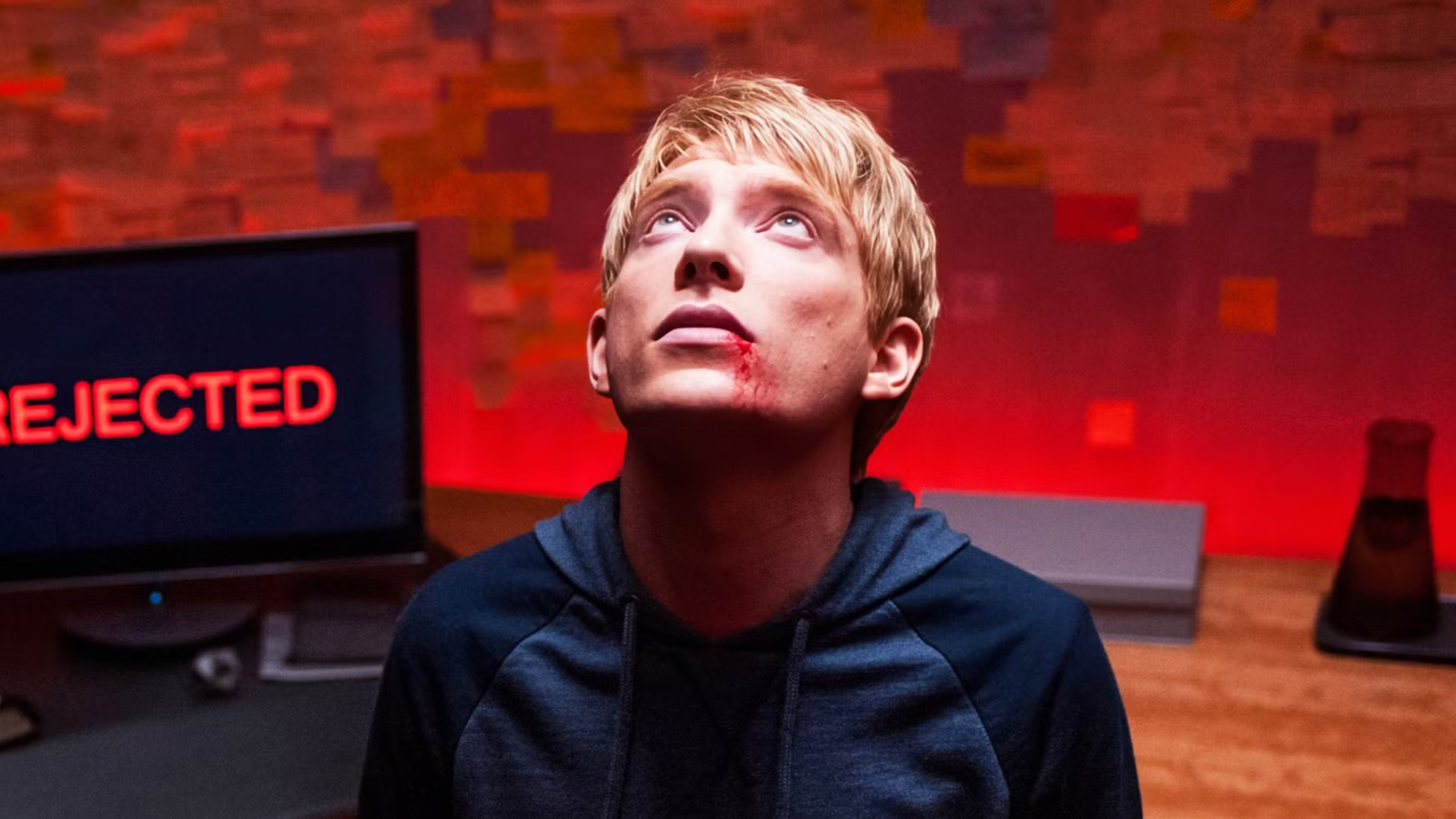



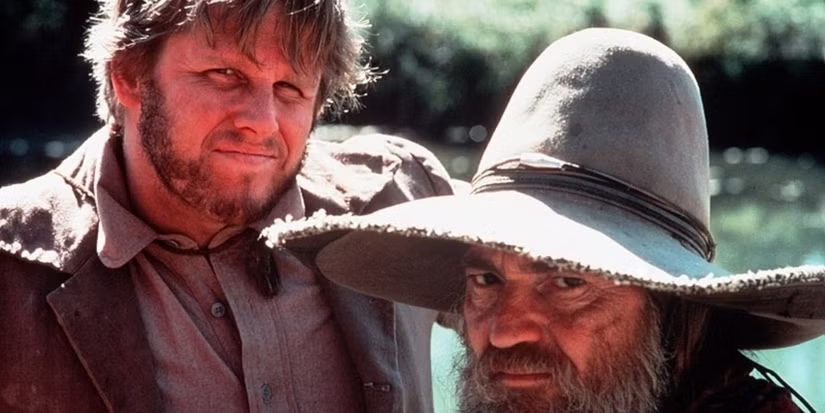


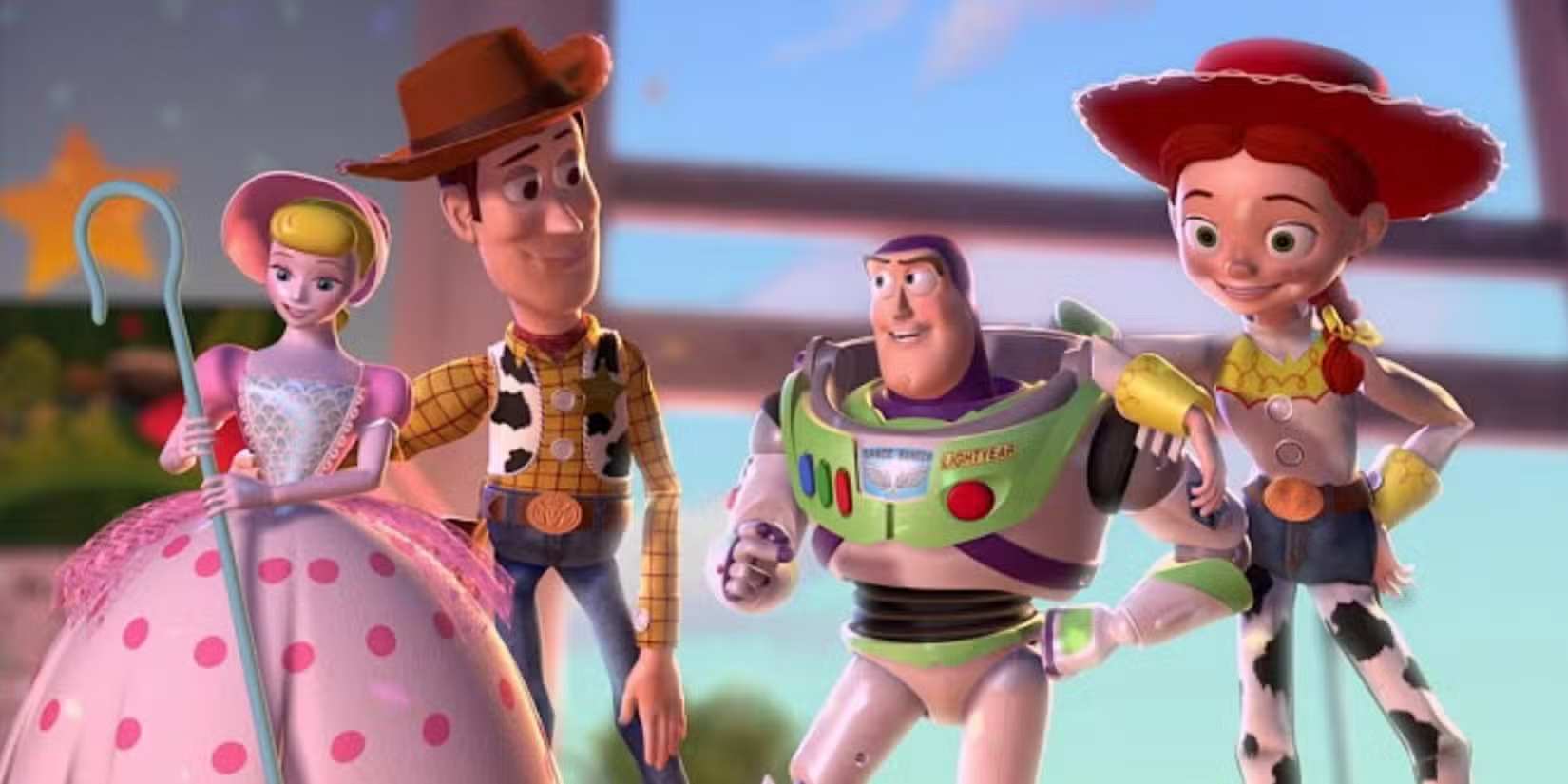


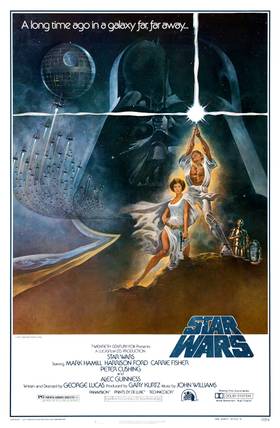
:max_bytes(150000):strip_icc():format(jpeg)/threes-audra-tout-d759b58cd2e54204ab49d10f9e2d00f2.jpg)







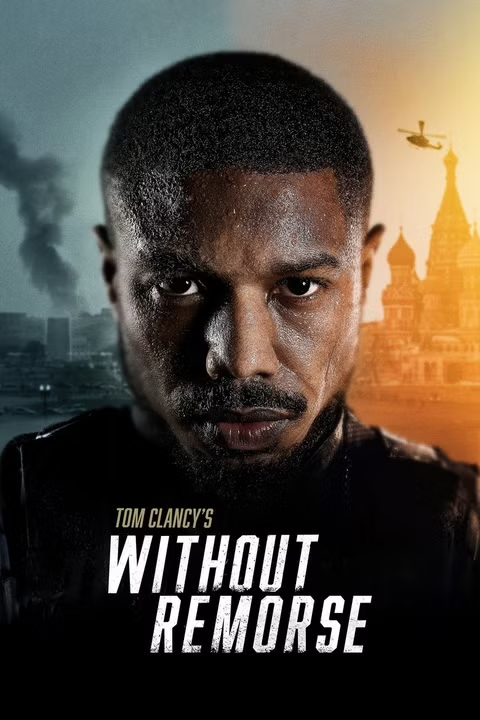

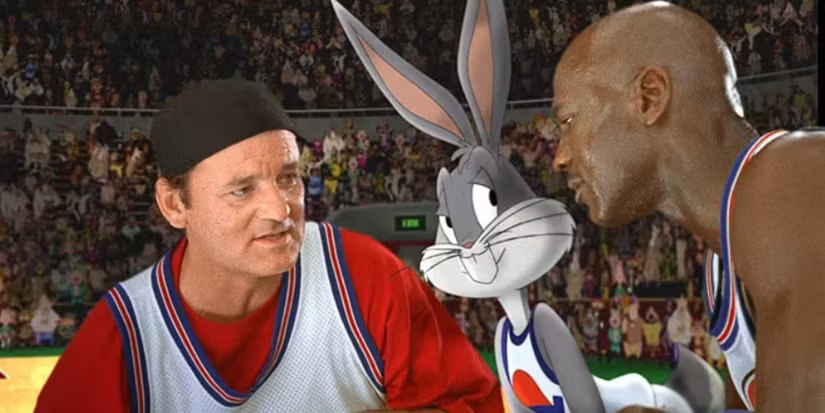







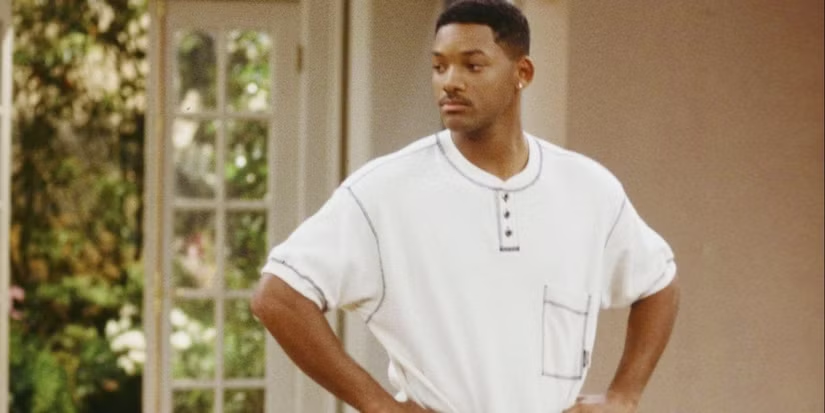


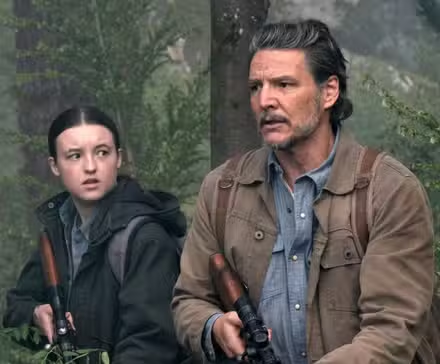





































You must be logged in to post a comment Login