It’s fourth period in the auto lab at Vel Phillips Memorial High School in Madison, Wisconsin, and a dozen students maneuver between nearly as many cars.
At one bay, a junior adjusts the valves of an oxygen-acetylene torch and holds the flame to a suspended Subaru’s front axle to loosen its rusty bolts. Steps away, two classmates tease each other in Spanish as they finish replacing the brakes on a red Saab. Teacher Miles Tokheim moves calmly through the shop, checking students’ work and offering pointers.
After extensive renovations, the lab reopened last year with more room and tools for young mechanics-in-training. What visitors can’t see is the class recently got an upgrade, too: college credit.
Through dual enrollment, high schoolers who pass the course now earn five credits for free at Madison College and skip the class if they later enroll. Classes like these are increasingly common in Wisconsin and across the country. They’ve allowed more high schoolers to earn college credit, reducing their education costs and giving them a head start on their career goals.
Advertisement
Wisconsin lawmakers and education officials want more high schoolers to have this opportunity. But these classes need teachers with the qualifications of college instructors, and those teachers are in short supply.
That leaves many students — disproportionately, those in less-affluent areas — without classes that make a college education more attainable.
“What’s at stake is access to opportunity, especially for high school students at Title I, lower-income high schools, rural high schools … It’s really been an on-ramp for so many students,” said John Fink, who studies dual enrollment at Columbia University’s Community College Research Center. “But we also know that many students are left behind.”
High school teacher Miles Tokheim earns an extra $50 a year teaching a college course. (Photo by Joe Timmerman, Wisconsin Watch)
To teach the auto class, Tokheim had to apply to become a Madison College instructor. As a certified auto service technician with a master’s degree, the veteran teacher met the college’s requirements for the course.
But for many teachers, teaching dual enrollment would require enrolling in graduate school, even if they already have a master’s degree. That, school leaders say, is a hard sell, despite the state offering to reimburse districts for the cost. Teachers in Wisconsin often don’t make much more money teaching advanced courses the way they do in some other states, and adding these courses doesn’t raise a school’s state rating.
Advertisement
“You’re asking people who are well educated to begin with to go back to school, which takes time and effort, and their reward for that is they get to teach a dual-credit class,” said Mark McQuade, Appleton Area School District’s assistant superintendent of assessment, curriculum and instruction.
High Standards, Short Supply
Nationwide, the number of high schoolers earning college credit has skyrocketed in recent years. In Wisconsin, the tally has more than doubled, with students notching experience in subjects ranging from manufacturing to business.
Most earn credit from their local technical college without leaving their high school campus. In the 2023-24 school year, one in three community college students in the state was a high schooler.
Education and state leaders have welcomed the trend, pointing to the potential benefits: Students who take dual-enrollment classes are more likely to enroll in college after high school. Theycan save hundreds or thousands of dollars on college tuition and fees. If they do enroll in college, they spend less time completing a degree.
Advertisement
“It also proves to the kids — to some of our kids that are first-generation — that they can do college work,” McQuade said.
Wisconsin Watch talked to leaders in five school districts. All said the shortage of qualified teachers was one of the biggest barriers to growing their dual-enrollment programs.
In 2015, the Higher Learning Commission, which oversees and evaluates the state’s technical colleges, released new guidelines about instructor qualifications. The new policy required many of Wisconsin’s dual-enrollment teachers to have a master’s degree and at least 18 graduate credits in the subject they teach, just like college instructors.
Advertisement
In 2023, the commission walked back the new policy.
By then, colleges across the state had already adopted the higher standard.
Meanwhile, Wisconsin high schools have struggled to hire and retain teachers, even without college credit involved. Four in 10 new teachers stop teaching or leave the state within six years, a 2024 Department of Public Instruction analysis shows.
The subject-specific prerequisite is much different from the graduate education K-12 teachers have historically sought: the kind that would help them become principals or administrators, said Eric Conn, Green Bay Area Public Schools’ director of curricular pathways and post-secondary partnerships.
Advertisement
“To advance in education, it wasn’t about getting a master’s in a subject area. It was getting a master’s in education to develop into educational administration or educational technology,” Conn said. For teachers who already have a master’s degree, he said, going back to school just to teach one or two new classes is “a large ask.”
Funding Tempts Few
When the Higher Learning Commission announced the heightened requirements in 2015, leaders of the Wisconsin Technical College System sounded the alarm. They warned that 85 percent of the instructors currently teaching these classes could be disqualified, whittling students’ college credit opportunities.
Wisconsin education leaders called on the Legislature to allocate millions of dollars to help teachers get the training they’d need — and they agreed. In 2017, lawmakers created a grant program to reimburse school districts for teachers’ graduate tuition. But of the $500,000 available every year, hundreds of thousands go unused.
“Nobody’s ever, ever requested this funding and been denied because of a funding shortage,” said Tammie DeVooght Blaney, executive secretary of the Higher Educational Aids Board, which manages the grant.
Advertisement
Tuition and fees for a single graduate credit at a Universities of Wisconsin school can cost over $800, putting the total cost of 18 graduate credits at around $15,000. For teachers who don’t already have a master’s degree, the cost is even steeper. The state grant requires teachers or districts to front the cost and apply for reimbursement yearly, with no guarantee they’ll get it.
A handful of Green Bay teachers have used the grant, Conn said, but many just aren’t interested in returning to school, even if it’s free.
The district offers 50 dual-enrollment courses, but he’d like to offer classes in more core subjects, which help students meet general college education requirements. There just aren’t enough teachers qualified to teach college sciences and math to offer the same options across the district’s four high schools.
Teachers are busy, and not just in the classroom, said Jon Shelton, president of AFT-Wisconsin, one of the state’s teachers unions. Many already spend extra hours coaching, grading or leading after-school activities. Those who do go back to school typically enroll in one class at a time, he said, meaning they could be studying for several years.
Advertisement
Pros and Cons
The financial perks for teachers returning to school for dual-enrollment credentials are dubious at best.
Some teachers get a salary bump for obtaining a master’s degree, and some earn modest bonuses for teaching dual enrollment. But many teachers make no more than they would have without the extra training.
“There’s no incentive,” said Tokheim, the Madison auto instructor, who receives a $50 yearly stipend for teaching the college course. In contrast to his standard classes, his dual-enrollment class required him to attend two kinds of training.
There’s little incentive for schools either. They receive no extra state funding to offer college-level courses. Plus, the classes don’t factor into their state report card score, which measures students’ standardized test performance and graduation preparation, among other things.
Advertisement
Leaders at Central High School in Sheboygan wish it did. At that school, where the majority of students are Latino and almost all are low-income, one in three students took dual-enrollment courses in the 2023-24 school year. Still, the state gave the school a failing grade.
“It’s an afterthought in our report card, and it’s always the thing that we can celebrate,” Principal Joshua Kestell said.
So why would a teacher take on the added schooling?
“It’s good for kids,” Tokheim said. “That’s why they get us teachers, because we care too much.”
Advertisement
Other potential draws: the challenge of teaching more rigorous courses and the opportunity to collaborate with college instructors.
Heather Fellner-Spetz retired two years ago from teaching English at Sevastopol High School in Sturgeon Bay. She taught college-level oral communication classes for 10 years before she retired. When the Higher Learning Commission set the heightened requirements, she was allowed to continue teaching dual enrollment while she studied for more graduate credits.
“There wasn’t much I didn’t enjoy about teaching it. It was just fabulous,” Fellner-Spetz said.
She especially liked having a college professor observe her class, and she said it was good for the students, too. “When they had other people come into the room and watch the lesson or watch them perform, it just ups the ante on pressure.”
Advertisement
Meanwhile, the jury is still out on whether it’s necessary for dual-enrollment teachers to have the same credentials as college professors.
“Folks running these programs generally would say that teaching a quality college course to a high school student requires a unique skill set that blends high school and college teaching, and that is not necessarily captured by the traditional (graduate coursework) standard,” Fink said.
Wisconsin educators are divided on that question. Fox Valley Technical College has kept the higher standard, limiting the number of Appleton teachers who qualify. McQuade, the Appleton leader, questions those “restrictions,” saying he believes his teachers are well qualified to teach college-level courses. A different standard tied to student performance, for example, could let his district offer more classes across each of its schools.
Schauna Rasmussen, dean of early college and workforce strategy at Madison College, said the answer isn’t to lower the standard, but to help more teachers reach it.
Advertisement
In October, a group of Republican Wisconsin lawmakers introduced a bill aimed at making it easier for students to find dual-enrollment opportunities. It would create a portal for families to view options and streamline application deadlines, among other changes.
It doesn’t address the shortage of qualified teachers.
“Separate legislation would likely have to be introduced addressing expanding the pool of teachers for those programs,” Chris Gonzalez, communications director for lead author State Sen. Rachael Cabral-Guevara, wrote in an email.
Computershack shares a report from NBC News: Leonid Radvinsky, the owner of adult-content platform OnlyFans, has died of cancer at the age of 43, the company said in a statement on Monday. “We are deeply saddened to announce the death of Leo Radvinsky. Leo passed away peacefully after a long battle with cancer,” an OnlyFans spokesperson said. “His family have requested privacy at this difficult time.”
Radvinsky, a Ukrainian-American entrepreneur, acquired Fenix International Limited, the parent company of OnlyFans, in 2018 and served as its director and majority shareholder. He also runs Leo, a venture capital fund he founded in 2009 that focuses primarily on investments in technology companies. According to Reuters, OnlyFans is valued at around $5.5 billion, including debt.
Walmart found that purchases made directly inside ChatGPT converted at only one-third the rate of traditional website checkouts, leading it to abandon OpenAI’s Instant Checkout in favor of routing users through its own platform. Search Engine Land reports: Starting in November, Walmart offered about 200,000 products through OpenAI’s Instant Checkout. Users could complete purchases inside ChatGPT without visiting Walmart’s site. Daniel Danker, Walmart’s EVP of product and design, said those in-chat purchases converted at one-third the rate of click-out transactions. He called the experience “unsatisfying” and confirmed Walmart is moving away from it.
Instant Checkout was designed to let users complete purchases directly inside ChatGPT without visiting a retailer’s website. However, earlier this month, OpenAI confirmed it was phasing out Instant Checkout in favor of app-based checkout handled by merchants. Walmart will embed its own chatbot, Sparky, inside ChatGPT. Users will log into Walmart, sync carts across platforms, and complete purchases within Walmart’s system. A similar integration is coming to Google Gemini next month. In other Walmart-related news, the retailer announced plans to roll out “digital price tags” to all U.S. stores by the end of the year.
A LinkedIn report shows that while the rate of people starting new jobs in Ireland is falling, the decline is softer than other European markets.
Workplace social media platform LinkedIn has released new data exploring Ireland’s current hiring market. What was discovered is that Irish hiring rates stalled during the month of January and recorded a “moderate” 7.2pc year-on-year decline.
In Ireland, the rate of decline was shown, however, to be less harsh than that of European counterparts, with the wider EMEA-LATAM grouping experiencing a year-on-year average decline of 12.2pc. Worse still, Italy and the Netherlands reported a decline of more than 16pc and France a decline of more than 17pc year-on-year.
Commenting on the data, LinkedIn Ireland’s country manager Cara O’Leary said: “Despite the stall in hiring, Ireland remains more resilient than many of our European peers. While some sectors might be seeing a lull in new hires, there are other industries that are on the front foot like financial services and healthcare, where opportunity abounds despite the broader cautious jobs market.”
Advertisement
Financial services (up 5.9pc), and hospitals and healthcare (up 5.4pc) are examples of what the report noted as numerous industries displaying ‘green shoots’ evident throughout Ireland.
Mobility and AI
The demand for flexible working opportunities was also shown to have increased, as Ireland saw the highest level of remote job postings offered (10.9pc), coming second in Europe for the proportion of hybrid positions advertised. The report said that despite accounting for 10.9pc of all job postings, applications for remote roles accounted for 18.5pc of all applications, highlighting the pulling power of flexibility for attracting talent.
O’Leary said: “Our latest data continues to show the magnetic power of flexible work to attract prospective talent. Ireland dominates the European ranks for remote job postings and coming a close second for hybrid roles. The volume of applications for remote positions underlines their desirability and sends a clear signal that flexibility is a key differentiator to hiring companies.”
LinkedIn’s data also highlighted a demand for specialised talent in a landscape where it found the ability to work with AI agents among the fastest growing AI engineering skills of 2025. This, the report stated, is reflective of a shift toward autonomous execution for certain tasks.
Advertisement
Similarly, a growth in AI strategy and large language model (LLM) operations was found by the platform to be underscoring organisations’ investments into specialised workflows, noting that the net result is that AI engineering talent now hold a mobility premium, and due to highly portable skills are eight times more likely to move across borders than the average LinkedIn member.
O’Leary said: “Employers are eying up specialist talent, particularly professionals with expertise in AI agents, AI strategy and LLM ops. Given that many of these roles did not exist five years ago, AI professionals are in a position to command a clear premium.
“For example, AI engineering professionals are significantly more mobile than the wider workforce, with our previous data showing Ireland to be a net beneficiary of AI migration.”
Don’t miss out on the knowledge you need to succeed. Sign up for the Daily Brief, Silicon Republic’s digest of need-to-know sci-tech news.
Hard coolers are easier to manage once you get where you’re going. It’s the getting there with those bulky, portable ice boxes that proves challenging.
If you’ve ever packed a car or camper for a camping trip, you know that space is precious. Tents, clothing, snacks and other outdoor essentials take up the bulk of the room inside your vehicle before you and your companions even jump in your seats. Now throw your bulky coolers into the mix, and you’re left with even less space.
Advertisement
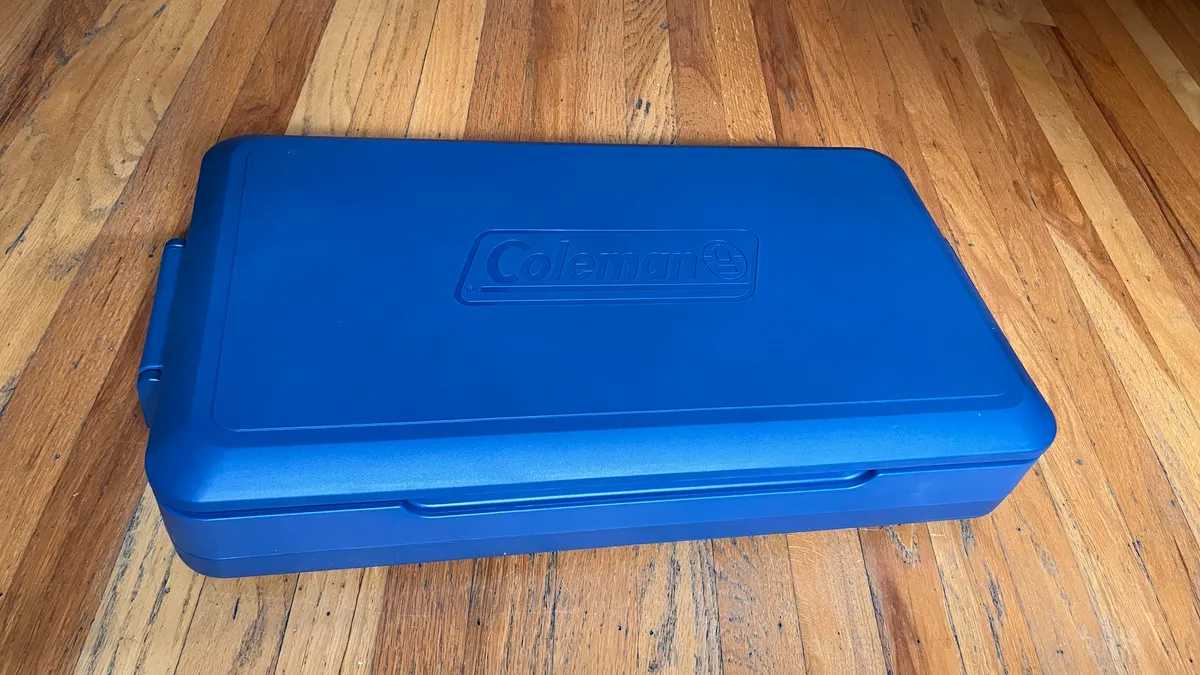
When it is folded down, the Coleman cooler is easy to slide in tight spaces.
Corin Cesaric-Epple/CNET
Soft coolers have always been better for keeping in your car since most can squish down to the size of a throw pillow, but that notion might be changing.
With the release of its first-ever collapsible hard-cover cooler, Coleman is looking to flip the script on hard versus soft coolers. I got my hands on a test unit to see if this foldable hard cooler does what it’s meant to.
How it works
I knew the Snap ‘N Go was a heavy-duty cooler when I picked up the package from my front porch. It wasn’t a large package, but it was decently heavy, as the cooler weighs 20 pounds when empty. While cooler bags have been around for some time, and they’re lighter and easy to fold into a small square, the Snap ‘N Go is the first ever hard-shell cooler that can collapse to a smaller size — up to one-third its size.
Advertisement
The 55-quart cooler can hold up to 93 cans.
Corin Cesaric-Epple/CNET
It is available in three colors (light blue, black and dark blue) and in sizes 35-quart, 45-quart and 55-quart, which can hold up to 93 cans without ice. The 55-quart version is less than 5 inches tall when collapsed, making it easy to fit in tight spaces or store away when not in use.
Advertisement
The waterproof liner folds down just as easily.
Corin Cesaric-Epple/CNET
Using the handles on the outside of the cooler, it takes about a second to pop the cooler into its upright position. When it’s in this position, it’s hard to tell it apart from other hard-shell coolers, and the 55-quart can keep the items inside cool for up to 64 hours, according to the company. The 35-quart keeps them cool for 48 hours, while the 45-quart keeps them cool for 55 hours.
To pop it back down to its more compact size, it takes only a couple of seconds to pull the strap up toward you, and it closes in on itself, accordion-style. The waterproof liner is also removable, making it easy to clean.
Advertisement
I filled the bottom with water and left it for 30 minutes to make sure there was no leaking.
Corin Cesaric/CNET
To ensure the cooler was leakproof, I filled the bottom with water and left it for 30 minutes. It aced the test with not a single drop of water escaping.
When is the Snap ‘N Go available for purchase?
The Coleman Snap ‘N Go is available for purchase now. It’s priced between $200 and $240, depending on the size, and comes with a three-year limited warranty.
Advertisement
It is available in three colors and three sizes.
Corin Cesaric-Epple/CNET
Final thoughts
Name-brand coolers don’t typically come cheap, so I’m not sticker-shocked by this one’s price, especially since it’s a hard-shell option. I was impressed by how quick and easy it is to pop up, and I especially like that it isn’t bulky to store. Although we haven’t put this brand-new Coleman cooler through our rigorous lab testing, my initial experience with the Snap ‘N Go was promising.
If you’re an avid outdoor enthusiast or camper, this quality cooler could be a great addition to your summertime activities.
The grand opening of Polymarket’s “Situation Room” bar—a three-day pop-up experience billed as the world’s first brick-and-mortar destination for monitoring global prediction markets—should have had its own betting market on whether or not it would be a disaster. Someone could have walked away with a decent chunk of change.
“Welcome to the Situation Room, everyone. We view this as our real coming-out party in DC,” Neil Kumar, Polymarket’s chief legal officer and former Commodity Futures Trading Commission counsel, said at the event. “We’ve proven that the concept of prediction markets exists, and we’ve proven that the concept is here to stay, and we want to be a part of the conversations in DC. And where best to have a conversation than in a bar?”
Despite Kumar’s vision, Polymarket’s coming-out party was delayed. The pop-up started late due to technical issues, and for an hour and a half, bartenders came outside to take drink orders from reporters and happy hour guests as they grumpily tried to stay dry. Joshua Tucker, who joined Polymarket as head of growth in November, built the event from the same playbook he used leading viral marketing for MrBeast, the YouTuber famous for orchestrating elaborate, and often dystopian stunts. This event was billed similarly: At the pop-up bar, geopolitical crises like the US war on Iran were now a spectator sport attendees could casually bet on in real time with their drinking buddies.
Eventually, Tucker announced that the event’s main attraction—dozens of TVs displaying Bloomberg terminals, X feeds, and cable news—would not be online that night.
Advertisement
Inside the pop-up, members of the media mixed with Hill staffers and curious onlookers who had never used Polymarket’s product. Hours into opening night, rumors spread that ex-members of Elon Musk’s so-called Department of Government Efficiency (DOGE) would arrive later in the evening. Nick O’Neill, a crypto-focused content creator who goes by @chooserich on X, flew in from Miami with his media company to cover the event. His plan was to shoot a video with a colleague, “competing against each other to see who ends up making more money,” he said, and placing bets based on the information that was supposed to be blasting from monitors behind the bars.
The TVs never came on, and O’Neill and his team had nothing to film. The dozens of monitors Polymarket put up for the event remained off, except for an interactive betting game that didn’t allow attendees to place real bets. An orb, fashioned like a miniature version of the Sphere in Las Vegas, spun with a world map and live bets Polymarket users were making on the platform, like “Russia x Ukraine ceasefire by end of April?” and “Will the US confirm that aliens exist before 2027?” O’Neill said he’d return the following day to try again.
Promptly at 9:00 pm, Tucker announced that the bar would be shutting down for the evening, hours earlier than anticipated, so event staff could work to fix the technical issues plaguing the venue. If they didn’t leave before doors opened, most guests stuck around for free drinks and to gawk at the chaos.
Most of the people WIRED talked to at the pop-up weren’t really Polymarket users. But the event wasn’t just about marketing: For three years, Polymarket was barred from operating in the US after the CFTC fined the company $1.4 million for “offering off-exchange event-based binary options and failure to obtain designation as a designated contract market (DCM) or registration as a swap execution facility (SEF).” US-based users were blocked from using the platform up until July of last year, when Polymarket acquired a holding company for an already regulated trading platform called QCEX. The event was meant to signal the company’s stature as one of the premiere prediction market services, in the nation’s capital, blocks away from the CFTC and other agencies, and with full government support. Other outlets, including The Washington Post, reported that administration officials were in attendance.
If you have spent some time in the World of Warcraft Classic: Season of Discovery, you already know how everything ties back to how much gold you have in your bags. Your entire experience-the ability to learn new skills, gear upgrades, and consumables, and keeping up with the rapidly ramping game economy- all depend on the amount of gold you have. The good news is, a few smart moves and simple practices can make earning gold a part of your gameplay, without making you choose between affording your next gear upgrade and actually enjoying the game.
Gold Matters More Than Ever in the Season of Discovery
The Season of Discovery has introduced new game mechanics and class changes to increase player engagement and content lifecycle through more experimentation and exploration. However, the importance of gold remains largely unchanged since Mount training, profession leveling, and preparing for endgame activities all require significant gold resources. Because of this, players are naturally seeking reliable strategies to earn gold parallel to their gameplay. We’ll help you cut through the noise to focus on simple, smart practices that can make earning gold a part of your gameplay while you are discovering everything this season has to offer.
The first step to having more gold isn’t farming more- it is to stop wasting it and understand where it disappears. The biggest drains are vendor gear upgrades, excessive auction house purchases, and poorly planned profession leveling. Focus on maximizing the benefits of quest rewards and drops. Donʼt squander your gold on random items when leveling. If you manage your gold properly at the beginning, it is much simpler when it comes to the necessities of the game.
Smart Ways to Save and Earn Gold
A smart way to save gold is by stopping the buying of gear too often. Quest rewards and dungeon drops can easily handle most of your needs while leveling. These rewards are usually enough to keep you going. Instead of spending gold on upgrades, save it for things that really matter, like mounts and abilities. Smart and experienced players spend their quest rewards and dungeon drops, saving up for their mount purchases. This simple habit can help you save more while still progressing well.
If you want a simple way to earn gold, start with the right professions. Herbalism, Mining, and Skinning allow you to collect items as you explore the world. These items are always in demand. You can then sell these materials in the market and make a steady amount of gold without extra effort. If you use the auction house well, you can get yourself some gold with little effort.
Furthermore, a smart way to earn more gold is by focusing on the timing. The value of many materials changes depending on what players are doing in the game. For example, when raids become popular or players prepare for group activities, demand increases, and prices go up. The same material that gathered dust after buying at the auction house will suddenly triple in price as you near the endgame activities- basic economics, good profits. If you keep an eye on these changes and sell when demand is high, you can earn more gold from the same items.
Advertisement
Another way of earning gold is by focusing on dungeons and valuable mobs. This is an easy way of earning gold. This strategy will work for you if you remain consistent. Collect all you can and sell all the extra things you collect. Focus on finding valuable things that you can sell for more. Some mobs also have good drops. This strategy may take some of your time, but it is good for earning gold.
Earning gold is not all about collecting things and selling them. The right time for selling also plays an important role. For example, some things may be more valuable before raids. Some things, especially those in demand, will always give you more value. If you keep an eye on these things, you will be able to earn more gold without doing more work.
Trading is another good way to get gold without farming all day long. Trading is all about prices. Buy items when they are low in price, then sell them later when their price increases. It takes a little time to get used to this, but when you do, it is another great way to get extra gold.
Final Thoughts
Despite Season of Discovery encouraging the users to experiment with new activities while balancing earning gold at the same time, not everyone wants to dedicate hours to farming resources when they could be exploring the game more. There are some player communities that discuss alternative ways, such as options related to sod gold. Platforms like Eldorado and similar platforms can help users purchase gold to be used in the gameplay when they feel stuck between limited playtime and the gold requirements.
Ultimately, the ones who understand smart gold-management habits can unlock the true potential that the season has to offer. Users must refine their strategies to adapt to the in-game economy and enjoy the gameplay without unnecessary limitations. Other than buying gear, consumables, mounts, and abilities, in this season, gold also enables something more valuable- the freedom to discover and experiment.
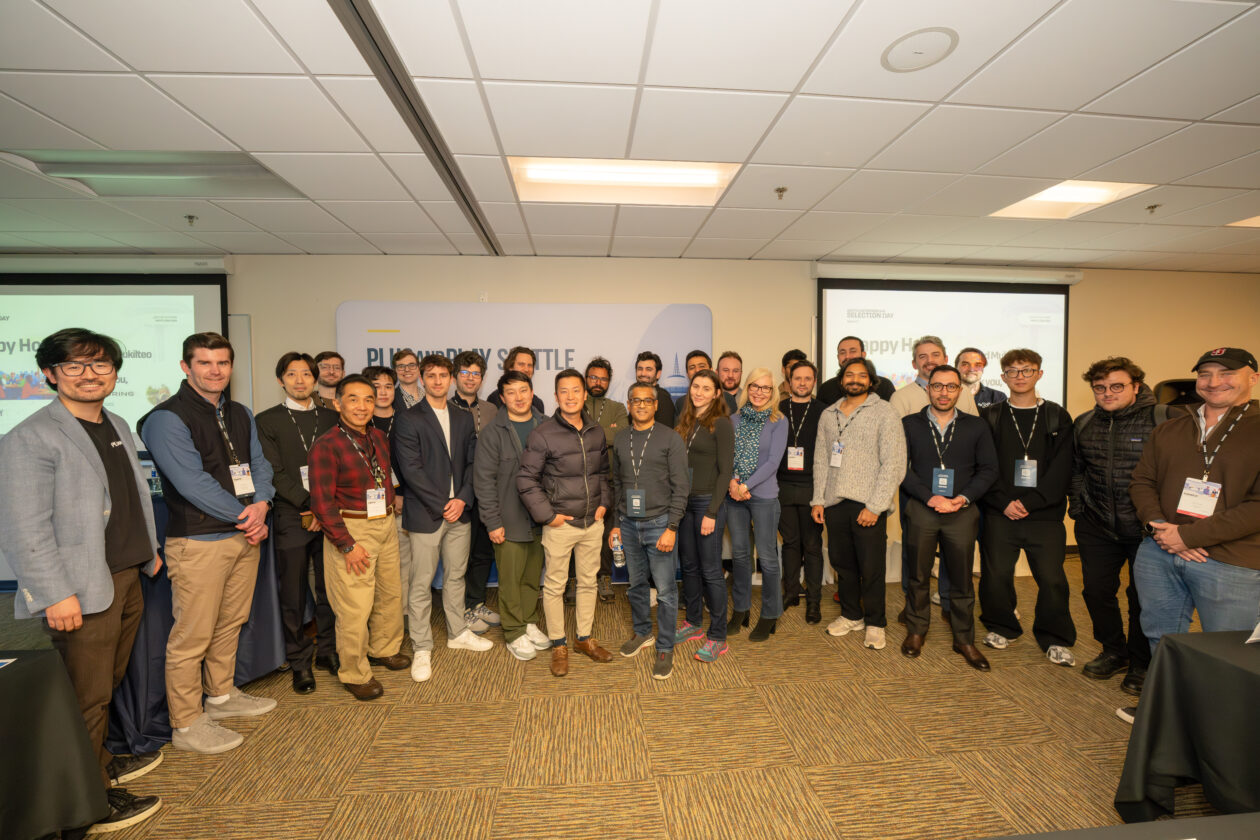
Startup founders who pitched for a chance to join the latest Plug and Play Cohort. (Photo courtesy of Plug and Play)
Plug and Play has selected the 10 startups that will take part in its third Seattle-area accelerator cohort as the program marks its one-year anniversary in the region.
The companies — nine of which are Seattle based — are participating in a 12-week program running through mid-June. Cohort participants are innovating across enterprise software, biotech, physical AI, robotics, and health tech.
“Seattle has one of the deepest pools of technical talent in the world, and this cohort reflects that,” said Jack Callaghan, director of Plug and Play Seattle, in a news release Monday.
Each startup receives one-on-one guidance to refine business models, strengthen go-to-market strategies, and build strategic partnerships. The program also supports the development of proof-of-concepts, pilot projects, and commercial relationships.
Here are the 10 startups, with descriptions of their work provided by Plug and Play:
Advertisement
Ally AI, Seattle. An AI-powered customer engagement platform built specifically for auto dealerships, offering 24/7 intelligent virtual agents across multiple communication channels.
Clockwork Bio, Seattle. Developing the data engine to power the AI revolution in drug discovery by leveraging AI at every step of the Experimental Biology Loop.
ElastixAI, Seattle. Developing a novel AI inference infrastructure that co-designs machine learning optimizations, the inference software stack, and the compute backend together in real time.
Glacis, Seattle. Building the trust infrastructure for production AI by providing a cryptographically verifiable layer that independently attests every AI decision in real time.
ImYoo Health, Sunnyvale, Calif. A direct-to-consumer single-cell transcriptomics company aiming to deliver personalized, biology-driven health insights by connecting people with similar immune profiles.
Reflection Robotics, Seattle. Building robot foundation models that make it dramatically faster and cheaper to automate physical tasks in manufacturing without requiring custom hardware or bespoke machines.
Sigma Genetics, Seattle. Building a non-invasive device that can deliver charged molecules, such as DNA, RNA, and proteins into patient cells to treat the most challenging diseases.
Strum AI, Seattle. Building an AI-first platform designed to lower the barrier for any enterprise to adopt algorithm-driven decision-making for supply chain excellence.
Tibbling Technologies, Seattle. A research-driven AI and scientific discovery company focused on developing advanced multimodal AI systems to solve complex problems in health tech and neuroscience.
Vicino AI, Seattle. A multi-agent GenAI platform for text/image-to-3D generation, enabling stepwise, personalized, and accurate asset generation for gaming, AR/VR product prototyping, and e-commerce.
A majority of the programming will take place virtually, but startups will have access to Plug and Play’s Seattle office inside the University of Washington’s CoMotion Labs. Plug and Play also has space at SNBL Global Gateway in Everett, Wash.
Plug and Play Seattle will host its Expo on June 5 at UW’s Kane Hall, where the cohort will showcase its progress.
Silicon Valley-based Plug and Play first announced it was coming to Seattle in November 2024, adding to its more than 60 locations worldwide.
In addition to startup accelerators, Plug and Play runs corporate innovation programs and has an in-house venture capital fund that has backed companies such as Dropbox, Gurdant Health, Honey, Lending Club, and PayPal.
The effort is being led by Windows chief Pavan Davuluri, who has publicly acknowledged the extent of user frustration with Windows 11. In a recent company blog post, he said the Windows team had spent months analyzing user feedback to identify what he described as “the voice of people who… Read Entire Article Source link
GrapheneOS, the privacy-focused Android fork, said in a post on X on Friday that it will not comply with emerging laws requiring operating systems to collect user age data at setup. “GrapheneOS will remain usable by anyone around the world without requiring personal information, identification or an account,” the project stated. “If GrapheneOS devices can’t be sold in a region due to their regulations, so be it.”
The statement came after Brazil’s Digital ECA (Law 15.211) took effect on March 17, imposing fines of up to R$50 million (roughly $9.5 million) per violation on operating system providers that fail to implement age verification…
Motorola and GrapheneOS announced a long-term partnership at MWC on March 2, to bring to bring the hardened OS to future Motorola hardware, ending GrapheneOS’s long-standing exclusivity to Google Pixel devices. A GrapheneOS-powered Motorola phone is expected in 2027. If Motorola sells devices with GrapheneOS pre-installed, those devices would need to comply with local regulations in every market where they ship, or Motorola may need to restrict sales geographically. Or, “People can buy the devices without GrapheneOS and install it themselves in any region where that’s an issue,” according to a post on the GrapheneOS BlueSky account. “Motorola devices with GrapheneOS preinstalled is something we want but it doesn’t have to happen right away and doesn’t need to happen everywhere for the partnership to be highly successful. Pixels are sold in 33 countries which doesn’t include many countries outside North America and Europe.”
Advertisement
Tom’s Hardwarealso notes that GrapheneOS “isn’t the first and won’t be the last company to outright refuse compliance with incoming age verification laws.”
“The developers of open-source calculator firmware DB48X issued a legal notice recently, stating that their software ‘does not, cannot and will not implement age verification,’ while MidnightBSD updated its license to ban users in Brazil.”
Samsung’s Music Studio 5 speaker supports a range of streaming services through Spotify Connect and similar platforms, but it does not include support for Spotify’s lossless audio tier, which affects its overall playback quality range.
The Music Studio 5 forms part of Samsung’s recent push into standalone wireless speakers, positioning it against competitors such as Sonos that already support higher-quality streaming options across multiple services and devices.
Reports from user discussions show that the lossless setting does not appear when adjusting Spotify streaming quality through Spotify Connect, meaning playback is limited to lower tiers even when higher-quality audio is available.
This absence stands out as Spotify continues expanding its lossless tier across supported hardware, with the feature delivering audio at up to 24-bit/44.1kHz for listeners seeking playback closer to original studio recordings.
Advertisement
Spotify’s lossless streaming option represents a shift toward higher-fidelity audio in mainstream services, as platforms move beyond compressed formats to appeal to users with more capable audio hardware and higher expectations.
Advertisement
The Music Studio 5 supports Spotify Connect, which allows direct streaming from Spotify servers rather than routing audio through a mobile device, a feature typically associated with improved stability and convenience in wireless listening setups.
However, the absence of a selectable lossless option suggests either a limitation in the speaker’s current software implementation or a restriction within its hardware processing capabilities, although Samsung has not confirmed the cause.
Advertisement
This places the device behind some competing speakers in the same price category, where support for higher-resolution formats has become a more common expectation rather than a niche feature.
The Music Studio 5 and Music Studio 7 mark Samsung’s move deeper into premium wireless audio, competing with the best Sonos speakers as the company expands beyond its traditional soundbar and TV-focused lineup.
As streaming services continue to prioritise audio quality improvements, compatibility with features such as lossless playback increasingly influences buying decisions, particularly for users investing in dedicated listening setups.
The current limitation may affect how the Music Studio 5 competes within the broader ecosystem, especially among users who prioritise audio fidelity alongside convenience and multi-platform streaming support.
Advertisement
Advertisement
Samsung has not provided further clarification on whether lossless support could arrive through a future update or remains unsupported on the device, leaving its long-term compatibility with Spotify’s highest-quality tier uncertain.

























































You must be logged in to post a comment Login