
Connect with us

NewsBeat

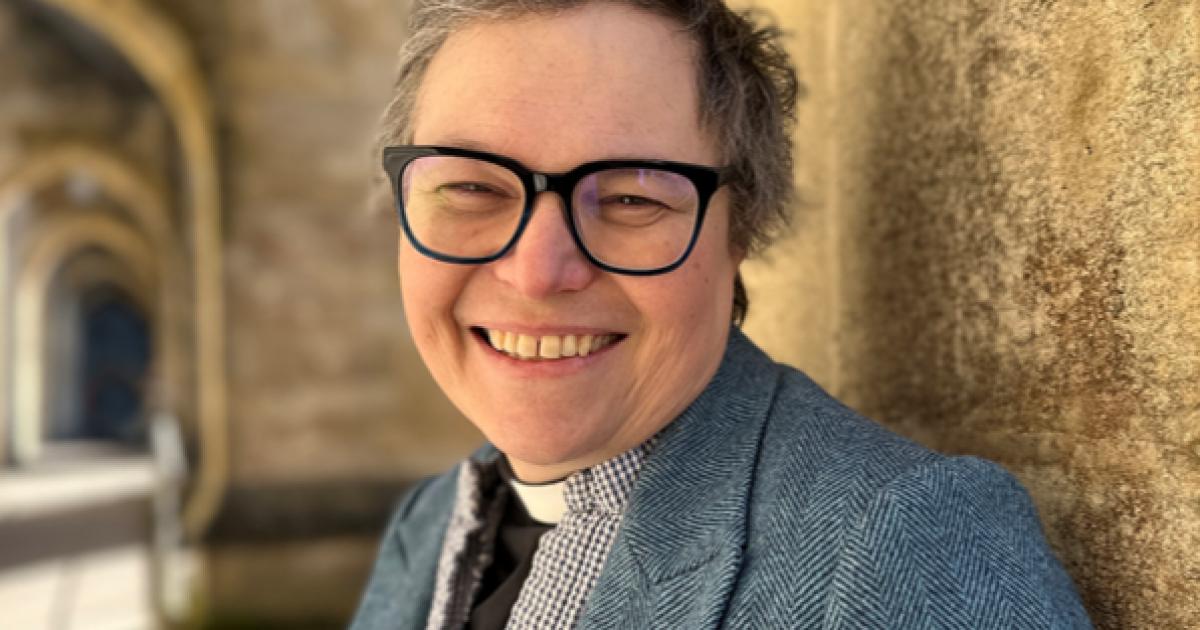
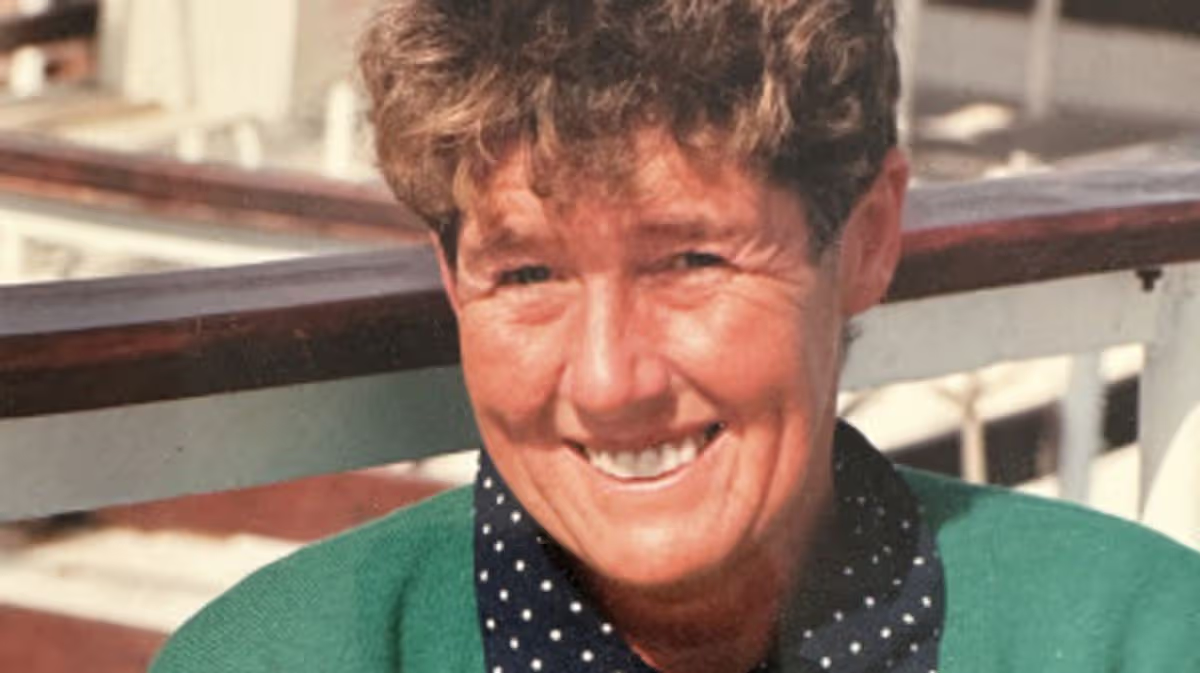
Archdeacon of Bolton to retire at end of July 2026

Published

on

Archdeacon of Bolton to retire at end of July 2026

Reverend Dr Rachel Mann will be taking a step back from her ministry at the end of July to focus instead on writing, speaking and taking opportunities with the media after a period of ill-health to do with ongoing Crohn’s disease.

Archdeacon Mann served her entire ordained ministry within the Diocese of Manchester, beginning her curacy at St Matthew’s, Stretford, in 2005, before becoming Priest‑in‑Charge and later Rector of St Nicholas, Burnage.

Archdeacon Mann said: “This is not the end, just an end… I would like to believe I have much still to contribute to this diocese, the Church more broadly, and indeed to wider public life and culture.

“It has been the privilege of my life to serve as a priest in this diocese.

Advertisement

“St John famously said, God is love, and those who abide in love abide in God, and God abides in them.

“In my ministry in Manchester, I have been blessed with that most awesome gift of grace: Love.

“Thank you. … Please pray for me as I shall pray for you, and may Manchester Diocese be ever more marked and transformed by the love of Jesus Christ who is the heart of all good and hopeful things.”

Christ Church Walmsley, Egerton

Archdeacon Mann has had five major and around twenty minor operations and procedures for Crohn’s disease since 1999.

Advertisement

She spent around two months of 2025 in hospital, part of which was recovery from major surgery, the rest was ‘coming to terms with the implications of living with a new diagnosis: organ failure’.

Archdeacon Mann says that the kind of organ failure she has – intestine failure – does not have a cure, and there is ‘no prospect’ of a transplant.

The Archdeacon said: “I have found full-time ministry very challenging.

“At worst, I do a pretty substandard job. I can still do one-off pieces of work to a high standard, but I struggle with consistency.

Advertisement

“The workload has become just too much for my flagging body – to quote Indiana Jones: ‘It’s not the years, it’s the mileage.’”

Source link

Advertisement
Continue Reading
Click to comment

Leave a Reply

Your email address will not be published. Required fields are marked *

NewsBeat

Hartlepool man carried out brutal attack after victim’s fall

Published

on

Hartlepool man carried out brutal attack after victim's fall

Geoffrey Vanes was among a group of people who gathered outside the victim’s home shouting threats before he was brutally attacked when he hit the ground.

One of the group scaled a drainpipe to get to the upstairs off the property shortly before the man fell to the ground, Teesside Crown Court heard.

The 40-year-old was seen to strike the man three times before another person started kicking and stamping on the prone victim outside the property on Derwent Street in Hartlepool.

Advertisement

Rachel Butt, prosecuting, said the defendant then struck the man again as he struggled to get back to his feet.

She said the victim managed to escape and take sanctuary in a shop until the police arrived and he was taken to hospital.

The court heard how the man suffered a dislocated right elbow and damage to his spine as a result of the incident.

Vanes, of Windermere Road, Hartlepool, pleaded guilty to affray and possession of an offensive weapon following the attack on August 1 last year.

Advertisement

Rachel Kelly, mitigating, said: “He said he felt ashamed when he viewed the evidence and had told the probation officer that he regretted the impact of the incident on the victim.


Read more:


“There is genuine remorse shown by the defendant in his pre-sentence report.”

Judge Nathan Adams sentenced Vanes to 22 months in custody for the attack on the man in his own home.

Advertisement

“The was quite clearly a targeted attack on him at his property,” he said.

“It is not clear exactly how he came to fall, he says he was pushed out of the window, but what we do know is that when he hits the ground, you repeatedly hit him with a weapon whilst he is on the ground.”

Source link

Advertisement
Continue Reading

NewsBeat

Everything we know as two people stabbed and huge police response

Published

on

Manchester Evening News
Everything we know as two people stabbed and huge police response – Manchester Evening News

Advertisement
reach logo

At Reach and across our entities we and our partners use information collected through cookies and other identifiers from your device to improve experience on our site, analyse how it is used and to show personalised advertising. You can opt out of the sale or sharing of your data, at any time clicking the “Do Not Sell or Share my Data” button at the bottom of the webpage. Please note that your preferences are browser specific. Use of our website and any of our services represents your acceptance of the use of cookies and consent to the practices described in our Privacy Notice and Terms and Conditions.

Source link

Continue Reading

NewsBeat

DWP warned that PIP reform plans ‘cannot become about making cuts’

Published

on

Cambridgeshire Live

Disabled people with lived experience will oversee the first ever comprehensive review of Personal Independence Payment, with findings expected by autumn 2026

Disabled individuals will have their perspectives placed front and centre in the first-ever thorough examination of Personal Independence Payment (PIP), following the selection of 12 members to its steering group. Those appointed bring first-hand knowledge of living with disabilities or chronic health conditions, as well as hands-on experience working within Disabled People’s Organisations (DPOs).

Their specialist knowledge spans welfare policy, accessibility, and advocacy, with members boasting credentials in co-production, governance and leadership. The group will chart the strategic course and help set priorities and a work plan for the Timms Review, working alongside the Review’s three co-chairs: Minister Sir Stephen Timms, Sharon Brennan, and Dr Clenton Farquharson CBE.

Advertisement

The group will scrutinise PIP’s function in empowering disabled people to achieve improved health outcomes and lead independent lives, the PIP assessment criteria for daily living and mobility, and how the assessment could facilitate access to appropriate support across the benefits system.

PIP claims have skyrocketed in recent years. In 2019, two million working-age people were receiving PIP, but that number has climbed to more than 3.9 million by the end of October 2025.

The DWP has projected that PIP claimant numbers will surpass four million by the decade’s end. The Timms Review has been established to ensure PIP remains equitable and fit for purpose going forward – taking into account people’s real-world conditions, their hopes and ambitions, whilst acknowledging how society has evolved since the benefit’s original conception and introduction, reports the Mirror.

According to the DWP, since PIP’s introduction in 2013, there have been shifting trends in long-term health conditions and disability. While more individuals are living with disabilities, the growth in disability benefit recipients is running at double the rate of rising prevalence amongst working-age adults across England and Wales.

Advertisement

The Timms Review is scheduled to present its conclusions to the Secretary of State for Work and Pensions by autumn 2026, with an interim progress report expected in advance. Minister for Social Security and Disability Sir Stephen Timms commented: “Disabled people deserve a system that truly supports them to live with independence and dignity, and that fairly reflects the reality of their lives today.

“That’s why we’re putting disabled people at the heart of this Review – ensuring their voices shape the changes that will help them achieve better health, greater independence, and access to the right support when they need it. We’re delighted to announce the appointment of the steering group members, who alongside myself and the Review’s co-chairs will report back to the Secretary of State in the autumn.”

Co-chair Sharon Brennan stated: “The group we have chosen shows our commitment to ensuring this review is co produced with people from a diversity of backgrounds including lived and living experience, protected characteristics, geographies and professions.

“But 15 people can’t represent everyone, which is why our work will be part of a wider engagement process to ensure we hear from many more voices throughout the review.”

Advertisement

Dr Clenton Farquharson CBE, also a co-chair, said: “Personal Independence Payment plays a vital role in enabling disabled people to live independent lives. This Review will listen closely to lived experience, test whether the system is fair, and ensure PIP reflects the realities of disability in the modern world.”

A coalition of charities has welcomed the inclusion of disabled people on the steering group, but warned “it cannot become about making cuts”.

The Disability Benefits Consortium (DBC) – a coalition of more than 100 charities, including the MS Society, Scope, Parkinson’s UK and Mencap – said the review offers a chance for “real change” to an assessment system which is “not only stressful, they fail to recognise the impact of fluctuating and progressive conditions like MS – often denying people the support they need to live independently”.

Charles Gillies, DBC policy co-chair and senior policy officer at the MS Society, described it as “undeniably positive that most members of the new steering group have lived experience of disability or claiming PIP”. He added: “This review must now engage meaningfully with the steering group and disabled people more generally, and remain laser-focused on improving the fairness of PIP assessments – or we risk this vital opportunity being wasted. And crucially, it cannot become about making cuts.”

Advertisement

What happens next

The steering group’s work has already commenced. Following an informal introductory call and induction session in January 2026, the forthcoming weeks will include:

  • The first formal steering group meetings;
  • The start of detailed co-production and policy work in February;
  • Preparations for a broader, fully accessible engagement programme beyond the steering group, launching in the spring.

Source link

Continue Reading

NewsBeat

France were ‘playing a different game to us’ admits Ireland head coach after sobering Six Nations defeat

Published

on

Belfast Live

Les Bleus sliced through Ireland at times and while Farrell’s charges showed plenty of heart in the second period to stay in the game, the damage was done

Ireland head coach Andy Farrell bemoaned a lack of ‘fight and intent’ in Ireland’s first-half display that saw them trail 22-0 to France at the break in Thursday night’s Six Nations opener.

Advertisement

Les Bleus sliced through Ireland at times and while Farrell’s charges showed plenty of heart in the second period to stay in the game, the damage was done long before the half-time whistle was even blown.

“France were playing a different game to us in the first-half. I suppose, you make your own luck in this game and rightly so with the way that they went about their business,” Farrell told Virgin Media after the game.

“They created a few chances off the back of scraps on the floor or high balls and stuff like that, but that’s the game. You’ve got to show a bit of fight and intent, and we lacked a bit of that in the first-half which is very disappointing.”

On Ireland’s missed tackle tally of 19 in the first-half, Farrell said “It is (disappointing) because it is the intention isn’t it? It was wet weather rugby, but getting through tackles and earning the right to offload. It weren’t risky play that they were doing, it was earning the right to offload because they were winning the contacts.

Advertisement

“But congratulations to France, as I said, they were on a different level at times there. A bit of a response – more than a bit of a response in the second-half, but worthy winners, that’s for sure.”

On his substitutions, Farrell said “They did (have an impact), but it wasn’t rocket science. It was just to have a bit of go-forward, a bit of grunt in the way that they went about their business, and we got a couple of tries off the back of that, and it’s a pity that we couldn’t get a few more in the end because every point matters in this competition as we know.”

As for the week ahead, Farrell is anticipating an interesting few days on the training field before next Saturday’s clash with Italy at the Aviva Stadium.

“Hell of a lot of work to do, and we need to be honest about this because you don’t get a result like this and not take the learnings from it, so it has to stand for something.”

Former Ireland star Conor Murray believes Ireland will stick to their kicking gameplan for the remainder of the Six Nations.

Farrell’s men opted for a box-kicking barrage on Thursday night at a soaking wet Stade de France, and while many of the kicks led to proper contests, Ireland failed to secure enough ball to put a dent in an awesome French performance, particularly in the first-half.

Speaking on Virgin Media after the game, ex Ireland star Shane Horgan referenced how Ireland were outfought and outscrapped for those loose balls, bemoaning Ireland’s inability to get the ball back from 50/50 contests.

Advertisement

“They didn’t do it, and they couldn’t win the game as a result,” said Horgan.

Taking up on Horgan’s point, Murray – the box-kick king for many years in a green shirt – agreed with his former teammate, but spoke about how luck plays a huge role in this tactic.

“There’s a certain element of luck to it as well. If you look at all the kicks, the majority of them were on the ball and accurate from Jamison/Sam, those contestable balls in the air, and you know the boys are working on it hard.

“It’s that scrap – when the ball breaks, who wins that? It’s a 50/50 lottery and some days it just goes against you.

Advertisement

“I find it hard to find the answer to that if the kicks are on the money.

“They’ll stick with it and hope they win scraps, you know, the winger contesting off the kicking and then it’s the boys in behind who are probably more important in winning possession back.”

Click here to sign up to our sport newsletter, bringing you the latest sports news, headlines and top stories

Source link

Advertisement
Continue Reading

NewsBeat

Project Vigilant targets potential sex, spiking and theft offenders

Published

on

Project Vigilant targets potential sex, spiking and theft offenders

Following its initial year in operation in the North East, Project Vigilant will continue with further deployments planned during 2026 to build on the good work already carried out in the partnership scheme.

The initiative is aimed at targeting perpetrator behaviours, which are often displayed before a sexual offence, or those of spiking and theft takes place.

It is a joint effort involving the North East Regional Organised Crime Unit (NEROCU), Cleveland, Durham and Northumbria police forces and all three regional Police and Crime Commissioners (PCCs).

Their combined aim is to ensure a safer environment for members of the public enjoying a night out.

Advertisement

Proactive policing in the night-time economy to target potential perpetrators of sexual, spiking or theft offences (Image: North Yorkshire Police)

Project Vigilant began in Thames Valley in 2019, and has spread nationwide, with its introduction in North Yorkshire in 2023, and in the three North East force areas, in December 2024.

Specially trained plain-clothed officers are deployed in and about night-scene venues, identifying individuals displaying predatory behaviour.

Plain-clothes officers helping to spot potential perpetrators of sexual, spiking or theft offences in the night-time economy (Image: North Yorkshire Police)

These include harassment, loitering without reason and stalking behaviour.

They are stopped by police, inquiries are carried out, dispersal orders given or, where necessary, arrests are made.

Advertisement

Both uniformed and plain-clothed officers patrol areas where busy night-time venues thrive looking for potential offence perpetrators (Image: North Yorkshire Police)

A total of 42-per cent of the individuals identified and stopped by officers during the most recent deployment had previous links to offences of violence against women and girls, including domestic abuse or sexual offending.

One man stopped and arrested was in breach of his Sexual Harm Prevention Order and another man was found to have quantities of controlled drugs on him, including two capped needles.

Detective Chief Inspector Max Leonard, of NEROCU, said: “We know women are taught from a young age to stay extra vigilant on a night out, but that responsibility shouldn’t be on them.

“We want to reassure all members of the public that these targeted police operations will continue to be carried out across the North East, with the aim of proactively preventing violence and sexual offences against women and girls and ensuring a safer environment for all.

Advertisement

“Our efforts alongside our partners will not slow down, and I want to state clearly to the public that we remain committed to support the regional mission to tackle this issue

“We also urge anyone with any concerns about someone’s behaviour to report it to police.”

Cleveland PCC Matt Storey said: “It is extremely important that women and girls feel they can socialise in the evening and fully take part in the night time economy without fear of abuse or harassment.”

His Durham counterpart, Joy Allen, said: “These results prove the value in tackling predatory behaviour early.

Advertisement

“Undoubtedly, the swift actions of officers have prevented harm and protected women or girls becoming victims of appalling offences, the emotional impact of which could last a lifetime.”

Northumbria PCC, Susan Dungworth: “This week it’s Sexual Abuse and Sexual Violence Awareness Week and I think it’s really important to be highlighting proactive policing efforts like Project Vigilant which involves officers working hard behind the scenes to help keep people safe on a night out.

Read next … more crime stories from The Northern Echo, by clicking here

“This activity sends a clear message that our police forces are working together, through the NEROCU, and are doing so much more than responding to crimes and supporting the vulnerable.”

Advertisement

Any victim of a sexual assault, whether recently or in the past, is encouraged to contact their local police force.

If anyone has information or concerns about someone’s behaviour they can report it to police or via the independent charity Crimestoppers, anonymously, on (0800) 555111.

Source link

Advertisement
Continue Reading

NewsBeat

France make title statement by obliterating Ireland in Six Nations opener

Published

on

France make title statement by obliterating Ireland in Six Nations opener

French rugby was rocked by the sudden retirement of tighthead prop Uini Atonio, who suffered a cardiac event recently. At fly-half, Bordeaux’s Matthieu Jalibert starts, with Toulouse fly-half Romain Ntamack out injured. Anthony Jelonch starts at number eight, with Gregory Alldritt not in the squad.

France starting XV: 15 Thomas Ramos; 14 Theo Attissogbe; 13 Nicolas Depoortere, 12 Yoram Moefana; 11 Louis Bielle-Biarrey; 10 Matthieu Jalibert, 9 Antoine Dupont (captain); 1 Jean-Baptiste Gros, 2 Julien Marchand, 3 Dorian Aldegheri; 4 Charles Ollivon, 5 Mickael Guillard; 6 Francois Cros, 7 Oscar Jegou, 8 Anthony Jelonch.

Replacements: 16 Peato Mauvaka, 17 Rodrigue Neti, 18 Regis Montagne, 19 Hugo Auradou, 20 Emmanual Meafou, 21 Lenni Nouchi, 22 Baptiste Serin, 23 Kalvin Gourgues.

Advertisement

The injuries have piled up for Ireland as there is no Tadhg Furlong, Andrew Porter, Mack Hansen or Robbie Henshaw available this week. With a number of props missing, Jeremy Loughman and Thomas Clarkson are given the chance to start. Jacob Stockdale has been given the nod to start on the wing ahead of James Lowe. Sam Prendergast has earned the nod to start at fly-half. Head coach Andy Farrell has opted for a six-two forwards-backs split on the bench.

Ireland starting XV: 15 Jamie Osborne; 14 Tommy O’Brien; 13 Garry Ringrose, 12 Stuart McCloskey; 11 Jacob Stockdale; 10 Sam Prendergast, 9 Jamison Gibson-Park; 1 Jeremy Loughman, 2 Dan Sheehan, 3 Thomas Clarkson; 4 Joe McCarthy, 5 Tadhg Beirne; 6 Cian Prendergast, 7 Josh van der Flier, 8 Caelan Doris (captain).

Replacements: 16 Ronan Kelleher, 17 Michael Milne, 18 Finlay Bealham, 19 James Ryan, 20 Jack Conan, 21 Nick Timoney, 22 Craig Casey, 23 Jack Crowley.

Source link

Advertisement
Continue Reading

NewsBeat

FDA relaxes rules for food labels that claim ‘no artificial colors’

Published

on

FDA relaxes rules for food labels that claim 'no artificial colors'

The U.S. Food and Drug Administration is relaxing rules that restrict when food companies can claim their products have no artificial colors.

The agency announced Thursday that food labels may claim to have “no artificial colors” when they are free of petroleum-based dyes, even when they contain dyes derived from natural sources such as plants. In the past, the FDA has allowed companies to make those claims only when products “had no added color whatsoever,” the agency said in a statement.

The move is another step toward the Trump administration’s aim to phase out synthetic dyes from the nation’s food supply.

In a joint statement, Health Secretary Robert F. Kennedy Jr. and FDA Commissioner Marty Makary said the move would encourage companies to switch to natural rather than synthetic colors if they can claim their products contain no artificial colors.

Advertisement

“We are taking away that hindrance and making it easier for companies to use these colors in the foods our families eat every day,” Makary said in a statement.

Kennedy and Makary have urged U.S. companies to voluntarily remove synthetic dyes from their products — and many food makers, such as PepsiCo and Nestle, have complied. In addition, some states have taken steps to ban artificial dyes from school meals.

The move drew praise from Consumer Brands, a trade group for packaged foods, which said “all natural ingredients should continue to follow a rigorous science and risk-based evaluation process.”

“This is a positive example of the FDA taking the lead on ingredient safety and transparency,” Sarah Gallo, the group’s senior vice president, said in a statement.

Advertisement

But the label change could mislead consumers, said Sarah Sorscher, director of regulatory affairs for the Center for Science in the Public Interest, an advocacy group. It would allow a claim of “no artificial colors” for any color additive that is not a petroleum-based certified color, including potentially harmful additives such as titanium dioxide.

Also on Thursday, the FDA said it had approved a new natural dye, beetroot red, and expanded the use of spirulina extract, a color derived from algae that provides a blue hue in foods. The FDA currently allows roughly three dozen natural dyes in food products. The agency banned a controversial dye known as Red No. 3 last year and has proposed banning a rarely-used hue, Orange B.

The agency also recently said it would review the six remaining petroleum-based dyes frequently used in the U.S. food supply: Green No. 3, Red No. 40, Yellow No. 5, Yellow No. 6, Blue No. 1 and Blue No. 2.

Health advocates have long called for the removal of artificial dyes from foods, citing inconclusive studies that found they could cause neurobehavioral problems, including hyperactivity and attention issues in some children. Other health experts have noted that bright synthetic colors are a key component of ultraprocessed foods marketed to children, increasing consumption of added sugar, fat and sodium that can lead to health problems.

Advertisement

Still, the FDA’s website on Thursday continued to acknowledge limited evidence for harms from artificial colors. “The totality of scientific evidence shows that most children have no adverse effects when consuming foods containing color additives, but some evidence suggests that certain children may be sensitive to them,” the site said.

___

The Associated Press Health and Science Department receives support from the Howard Hughes Medical Institute’s Department of Science Education and the Robert Wood Johnson Foundation. The AP is solely responsible for all content.

Advertisement

Source link

Continue Reading

NewsBeat

Family of woman who died after Cape Verde holiday issue warning – as spike in illnesses revealed | UK News

Published

on

Karen Pooley pictured with her brother, Keith. Pic: Family

The family of a British woman who died after a holiday in Cape Verde have urged travellers to take hygiene warnings seriously as UK health authorities examine a spike in serious illnesses.

Four British tourists died between October and December last year after falling ill, having visited the popular winter sun destination off the coast of West Africa.

Karen Pooley, 64, from Gloucestershire, was taken ill during a two-week break in Cape Verde last October.

Image:
Karen Pooley pictured with her brother, Keith. Pic: Family

During her illness, she slipped in her hotel room and broke her leg. After four days in a clinic she was flown to Tenerife for further treatment, where she died the following day.

Advertisement

Her sister-in-law, Kim Price, told Sky News Karen “lived the last few days on this Earth in agony”.

She added: “We are heartbroken. We still can’t get over it. I am angry and I want to make sure it doesn’t happen to anyone else.”

Karen’s older brother, Keith, said: “One person [dying] is too many, if it goes on the way it is going, how many more are going to suffer?

“I would urge people to think before you book. If you do think about going, do a lot of research and make sure you have adequate insurance.”

Advertisement

This week, 200 more tourists have come forward to say they also suffered serious illnesses after travelling to Cape Verde.

Keith Price, whose sister Karen died after falling ill in Cape Verde in October
Image:
Keith Price, whose sister Karen died after falling ill in Cape Verde in October


It means the number of people taking legal action against holiday firm TUI has risen to 1,700.

New data from the UK’s Health Security Agency (UKHSA) shows cases of the stomach bug shigella are now falling after an autumn spike, but incidents of salmonella continue to rise.

More than 150 cases

Advertisement

Lead epidemiologist at the UKHSA, Hannah Charles, said 158 cases have been linked to this outbreak since October 2025 “and we know at least 112 of these people have travelled to Cape Verde in the week before they became unwell”.

She said: “But it’s really good to see from the data that the number of new cases per week has been declining, which does indicate that the outbreak is slowing down.

“The latest figures, as well as showing updated figures on shigella, does highlight an increase in cases of salmonella that are also associated with travel to Cape Verde.”

UKHSA scientists have been examining the spike in cases. Pic: UKHSA
Image:
UKHSA scientists have been examining the spike in cases. Pic: UKHSA


‘Avoid salads and raw fruit’

Advertisement

She urged tourists to be aware of the risks and take steps to protect themselves.

“We’re not saying ‘don’t travel to Cape Verde,’” she said.

“But it’s our responsibility to make sure that people are aware of the risks and we provide information on how people can reduce their risk and ultimately stay well and enjoy their holiday.

“So, taking measures like choosing food that is freshly prepared and piping hot.

Advertisement

“Avoiding salads and raw fruits and vegetables that may have been washed with unsafe water, drinking bottled water, avoiding ice in drinks is also a good idea and always thoroughly washing hands.”

How to prevent tummy bugs on trips

The UKHSA advises holidaymakers to take simple precautions to prevent gastrointestinal infections like salmonella, shigella, giardia and cryptosporidium:

• Take care with food, water and employ basic hygiene by washing your hands regularly.

Advertisement

• Be aware of sources of infection, not just from food but also swimming pools, water supplies and sanitation.

• Choose food that is freshly prepared, fully cooked and served piping hot.

• In areas without a reliable clean water supply, drink only bottled or boiled water, including when brushing your teeth, and avoid ice in drinks.

• Eat only fruit you peel yourself and avoid salads that may not have been washed in safe water.

Advertisement

• If you develop diarrhoea, stay well hydrated and seek medical advice, especially if you have a fever or notice blood in your stool.

The UKHSA says there is more advice for holidaymakers on the Travel Health Pro website.

200 more people approach lawyers

Advertisement

Lawyers acting for holidaymakers confirmed 200 more people had come forward this week, taking the total number of TUI customers involved to 1,700.

Serious injury lawyer, Jatinder Paul, from Irwin Mitchell, said: “We continue to be contacted by more people who have reported being struck down by serious illnesses after travelling to Cape Verde.

“The first-hand accounts of their symptoms and how they say their holidays have been ruined are all too familiar and worrying.

“The effects of gastric illness should never be downplayed as symptoms can lead to life-long and debilitating complications and even death.

Advertisement

“Our focus remains on continuing to support those holidaymakers who have instructed us to investigate their illnesses and whether more should have been done to prevent them.

“We once again call on tour operators – who are responsible for ensuring the safety of those who have booked all-inclusive package holidays – and authorities to take meaningful action to get on top of the reported hygiene issues on the islands.”

TUI did not respond to a request for a comment, but has previously said it is fully investigating the claims and ensures any customers who fall ill while on holiday have access to appropriate care and assistance.

The Cape Verde government issued a statement earlier this week that said it is one of the safest countries in Africa in terms of health.

Advertisement

It said it welcomes a million visitors a year and that recent cases “represent, in statistical terms, a residual occurrence, not evidencing any sustained epidemiological pattern nor any alteration in the national health profile”.

It added: “These are legal proceedings directed at private entities.

Advertisement

“The Ministry of Health does not accept that individual allegations, presented in foreign forums, be generalised or used to undermine the national health system and the country’s good image.”

Source link

Advertisement
Continue Reading

NewsBeat

Man dies and girl missing amid heavy flooding in Spain and Portugal | World News

Published

on

Man dies and girl missing amid heavy flooding in Spain and Portugal | World News

A man has died and a girl is missing after heaving flooding hit Spain and Portugal. 

Storm Leonardo struck the Iberian Peninsula on Tuesday, with torrential rain and strong winds causing roads and towns to flood, damaging homes and forcing residents to flee.

A man, believed to be about 70, died in Portugal‘s southern Alentejo region on Wednesday after his car was swept away by flood water, local authorities said.

Meanwhile, rescuers have been searching for a girl who was washed away in the Turvilla river in southern Spain‘s Malaga province while trying to rescue her dog.

Advertisement

“We spent the whole afternoon and night yesterday searching in the river from ‌the place where the girl fell in until the very end of the river. We found the dog, but ​not her,” Malaga fire chief Manuel Marmolejo said on Spanish television.

Image:
A house flooded in Jimera de Libar in Spain. Pic: Reuters

The countries have been hit by a so-called “storm train” this winter, with Storm Marta expected to hit the region over the weekend, Spanish weather agency Aemet said.

In the Granada region in Spain, the streets of Huetor Tajar were flooded, along with nearby fields, after a river broke its banks, drone footage captured by the country’s Civil Guard shows.

The town of San Roque in Cádiz in Spain’s Andalusia region was also inundated by flood water.

Advertisement
Storm Leonardo inflicted damage in the town of Los Barrios in Andalusia. Pic: AP
Image:
Storm Leonardo inflicted damage in the town of Los Barrios in Andalusia. Pic: AP

The Guadalevin River swelled in Ronda, Spain. Pic: Reuters
Image:
The Guadalevin River swelled in Ronda, Spain. Pic: Reuters

Andalusia’s emergency services had attended to more than a million incidents by midnight on Wednesday, the agency said in a post on ​X.

Fourteen rivers and 10 dams were at “extreme” risk of overflowing, the regional government’s interior department’s head Antonio Sanz said.

Schools across Andalucia, except for in Almeria province, have been closed and some high-speed trains have been suspended in Andalucía due to the rain, according to Spain’s state-owned railway operator, Renfe.

A police car patrols an empty shopping area in Ronda. Pic: Reuters
Image:
A police car patrols an empty shopping area in Ronda. Pic: Reuters

Read more from Sky News:
Mozambique: Aid workers scramble to reach the starving after floods
Norwegian royal’s son cries and denies phone videos show rape

Meanwhile, people waded waist-deep through Alcacer do Sal in southern Portugal after ‌successive storms caused the river Sado to breach its banks. ⁠

👉 Tap here to follow The World with Richard Engel and Yalda Hakim wherever you get your podcasts 👈

Advertisement

Restaurant terraces were completely submerged, with sandbags stacked in ‌front of doors to protect homes and shops.

“I’ve never seen anything ‍like this. It’s surreal,” said resident Maria Cadacha.

“There are a lot of people here, very good people, many shopkeepers, homes with damage. I wouldn’t want to be in their shoes.”

The damage inflicted by Storm Kristin in Leiria, Portugal. Pic: Reuters
Image:
The damage inflicted by Storm Kristin in Leiria, Portugal. Pic: Reuters

Debris in the wake of of Storm Kristin in Praia da Vieira, Leiria, Portugal. Pic: Reuters
Image:
Debris in the wake of of Storm Kristin in Praia da Vieira, Leiria, Portugal. Pic: Reuters

Portugal’s National Civil Protection said it had registered at least 70 incidents by Thursday morning.

Advertisement

Reconstruction costs in Portugal after last week’s Storm Kristin alone could total over €4bn (£3.47bn), the country’s economy minister Manuel Castro Almeida said.

Storm Kristin left six people dead and thousands without power.

Advertisement

Source link

Continue Reading

NewsBeat

Mystery over abandoned lorry found blocking Cambridgeshire road

Published

on

Cambridgeshire Live

Police found the vehicle in the early hours of the morning, with no driver to be seen.

An abandoned lorry was found blocking both lanes on a Cambridgeshire road. Cambridgeshire Police were called to the abandoned vehicle on Toll Bar Way, Sawtry, at around 3.20am on January 26.

Advertisement

Officers found the lorry in an unsuitable condition. It had a flat tyre, split to the side of it and a mini digger in the back.

No driver was found for the vehicle. An investigation is being carried out to try and find the owner of the vehicle.

A police spokesperson said: “Officers were called to Toll Bar Way in Sawtry [on January 26]. This lorry had been left abandoned and was blocking both lanes.

“It had a split to the side of it, a flat tyre and a mini digger in the back, but no driver to be seen. Officers searched the area, but unfortunately there was no one found. The investigation continues.”

Advertisement

Do you want more of the latest Cambridgeshire news as it comes in from across the county? Sign up to our dedicated newsletter to make sure you never miss a big story from Cambridge or anywhere else in the county. You can also sign up to our dedicated Peterborough, Traffic and Crime newsletters for the latest updates on the topics you are most interested in .

Source link

Advertisement
Continue Reading

Trending

Copyright © 2025