
Business
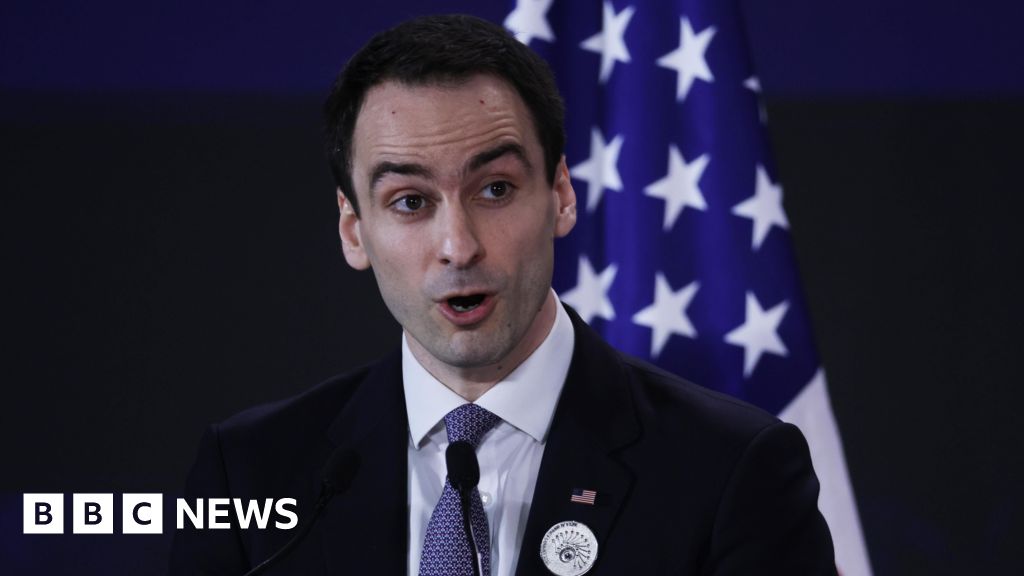
White House memo claims mass AI theft by Chinese firms



Operator
Good day, and welcome to the Enova International First Quarter 2026 Earnings Conference Call. [Operator Instructions] Please note, this event is being recorded.
I would now like to turn the conference over to Lindsay Savarese, Investor Relations for Enova. Please go ahead.
Lindsay Savarese
Investor Relations
Thank you, operator, and good afternoon, everyone. Enova released results for the first quarter 2026 ended March 31, 2026, this afternoon after market close. If you did not receive a copy of our earnings press release, you may obtain it from the Investor Relations section of our website at ir.enova.com.
With me on today’s call are Steve Cunningham, Chief Executive Officer; and Scott Cornelis, Chief Financial Officer. This call is being webcast and will be archived on the Investor Relations section of our website.
Before I turn the call over to Steve, I’d like to note that today’s discussion will contain forward-looking statements, and as such, is subject to risks and uncertainties. Actual results may differ materially as a result from various important risk factors, including those discussed in our earnings press release and in our annual report on Form 10-K, quarterly reports on Form 10-Q and current reports on Forms 8-K. Please note that any forward-looking statements that are made on this call are based on assumptions as of today, and we undertake no obligation to update these statements as a result of new information
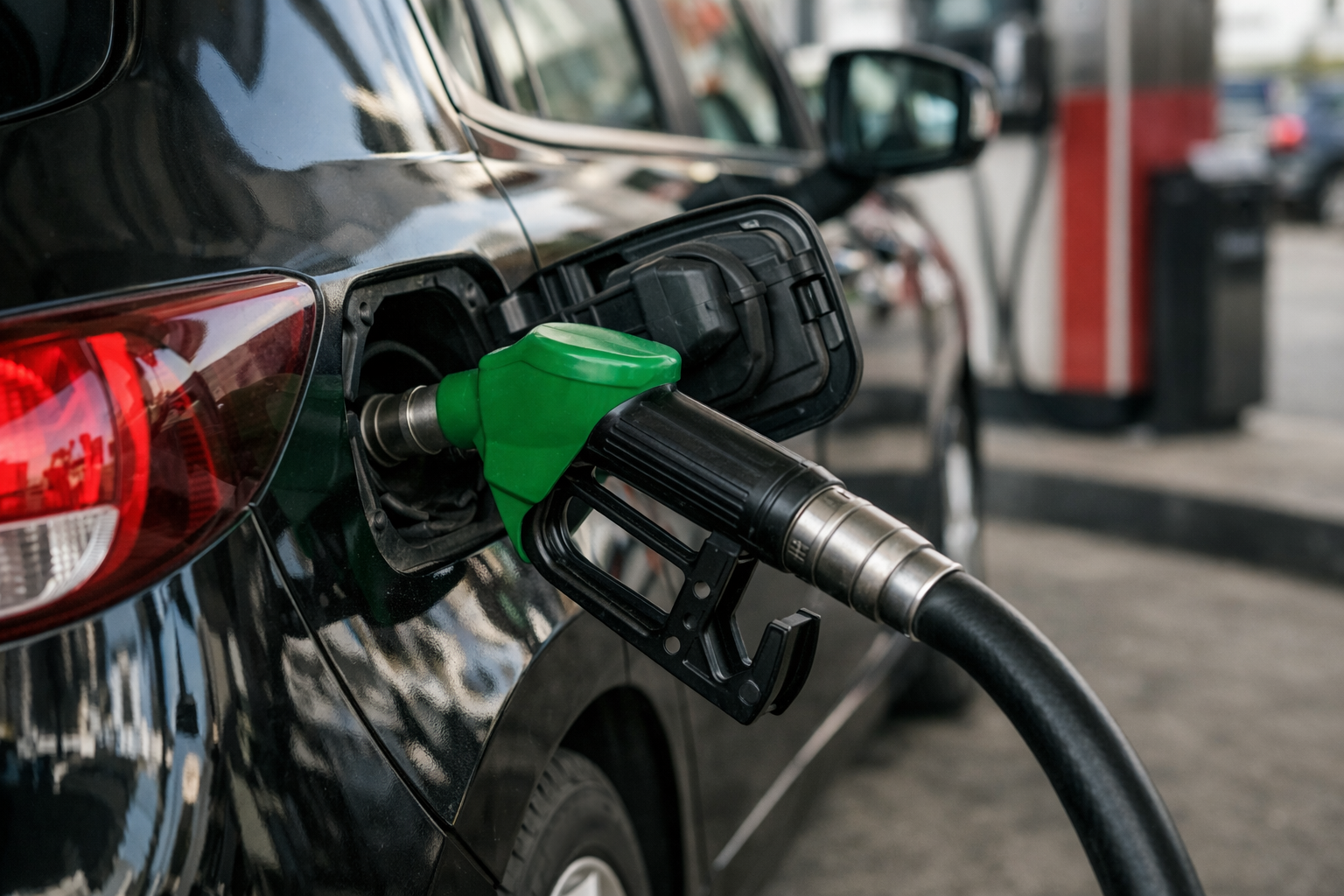
NEW YORK — World oil prices climbed sharply on Friday, with Brent crude topping $105 per barrel and WTI hovering near $97 as stalled U.S.-Iran ceasefire talks and persistent disruptions in the Strait of Hormuz kept markets on edge amid one of the most significant supply shocks in recent years.

As of late morning trading on April 24, 2026, Brent crude futures, the global benchmark, rose more than 1% to trade around $105.50-$106.14 per barrel. West Texas Intermediate crude gained similarly, settling near $96.50-$97.40. Both contracts have surged more than 50% year-over-year, reflecting heightened geopolitical risk premiums that have dominated trading for weeks.
The primary catalyst remains the effective closure or severe restriction of the Strait of Hormuz, through which roughly 20% of global oil supply normally flows. Ongoing military tensions, including threats to tanker movements and reported seizures, have dramatically reduced shipments. Analysts warn that even partial normalization could take weeks or months, keeping upward pressure on prices.
Standard Chartered and other banks now describe $95 per barrel as a potential new equilibrium level in the near term, with some forecasts calling for sustained highs even if flows resume partially. The price action has rippled through energy markets, lifting gasoline futures to multi-year highs and contributing to broader inflation concerns.
U.S. Energy Information Administration data and industry reports show global oil supply dropped sharply in March, with OPEC+ output falling dramatically due to infrastructure attacks and export constraints. Non-OPEC production also faced headwinds, amplifying the shortfall at a time when demand remains relatively resilient despite economic uncertainties.
The International Energy Agency revised its 2026 demand outlook downward in its April report, now projecting a slight contraction of 80,000 barrels per day on average. However, near-term tightness from the Hormuz disruptions overrides longer-term demand softness, supporting current elevated levels.
Traders monitored statements from U.S. officials indicating no immediate rush to finalize any Iran deal. President Trump’s comments that an agreement would come only “when it’s appropriate” added to uncertainty, preventing a meaningful pullback in risk premiums. Israel’s continued threats of further action in the region compounded the volatility.
On Wall Street, the energy sector outperformed as broader indices showed mixed results. Airline and consumer stocks faced pressure from higher fuel costs, while oil service companies and producers gained. The surge has also influenced currency markets, with the U.S. dollar strengthening against some emerging market currencies.
Refinery margins have expanded in key regions as product prices, particularly gasoline and diesel, climbed in tandem with crude. U.S. gasoline futures hit levels not seen in years, raising concerns about summer driving season costs for American consumers.
Longer-term forecasts vary widely. J.P. Morgan maintains a more bearish outlook for late 2026, projecting Brent averages near $60 if surpluses return after the current crisis eases. Others, including some IEA scenarios, see prices settling in the $75-$90 range by 2027 once supply chains normalize.
OPEC+ faces difficult decisions on production. The group has already seen significant output cuts forced by events rather than voluntary restraint. Any coordinated response could further influence prices, though internal dynamics and compliance issues complicate coordination.
U.S. shale producers have ramped up activity in response to higher prices, but regulatory and infrastructure constraints limit rapid response. Canadian and Brazilian output provides some offset, yet Middle East disruptions dominate the narrative.
Retail fuel prices in the United States have risen steadily, with national averages for regular gasoline approaching or exceeding $4 per gallon in many regions. Analysts warn that sustained high crude could add several cents weekly at the pump, potentially influencing consumer spending and Federal Reserve policy considerations.
Emerging markets, particularly those heavily dependent on imports like India and parts of Europe, face greater strain. Higher energy costs could exacerbate inflation and slow growth in vulnerable economies. China, the world’s largest importer, has shown mixed demand signals amid its own economic challenges.
Storage levels and tanker tracking data indicate inventory draws in key hubs, though official weekly U.S. EIA reports have shown occasional builds from strategic movements. Floating storage has increased as traders seek to capitalize on contango in futures curves.
Environmental groups and renewable advocates point to the crisis as underscoring the risks of oil dependence, calling for accelerated transition policies. Conversely, industry voices argue for increased domestic production and infrastructure investment to enhance energy security.
Technical analysts note Brent has broken key resistance levels, with momentum indicators suggesting potential for further upside if Hormuz tensions persist. Support sits around $100, with stronger floors near $90 if de-escalation news emerges. Options markets show elevated implied volatility, reflecting trader caution.
As markets digest the latest developments, attention turns to upcoming diplomatic efforts and weekly inventory data. Any credible progress toward reopening the strait could trigger a sharp reversal, while prolonged closure risks pushing prices toward $110-$120 territory seen earlier in the flare-up.
The current oil price environment serves as a stark reminder of geopolitics’ power over commodity markets. For consumers, businesses and policymakers worldwide, the coming weeks will test resilience as elevated energy costs filter through economies already navigating inflation, growth concerns and shifting alliances.
Whether this spike proves temporary or marks a new pricing regime depends heavily on resolution in the Persian Gulf. For now, the world’s most vital commodity trades at a significant premium, with ripple effects likely to influence everything from household budgets to global inflation trajectories in the months ahead.

ANALYSIS: WALGA’s status as an independent body from the public sector has been challenged in a recent ruling in the state’s highest court.


China’s Xpeng expects to start full-scale delivery of ’flying’ cars in 2027
NEW YORK — NYT Strands puzzle #782 on Friday, April 24, 2026, delivered a loud and lively challenge with the theme “Hullabaloo,” sending players on a hunt for noisy expressions that left many shouting in frustration or triumph as they uncovered the spangram “LETSGETLOUD.”

The New York Times’ word search-style game once again tested solvers’ vocabulary and pattern recognition with a grid full of boisterous terms. Players who cracked the theme early celebrated quick solves, while others needed multiple hints to wrangle the full set of loud vocal outbursts.
Today’s Theme: Hullabaloo The puzzle celebrated noisy commotion and vocal expressions, perfectly captured by the spangram “LETSGETLOUD.” This horizontal phrase invited players to think about raising their voices, whether at a concert, sports event or lively gathering.
Spangram: LETSGETLOUD The spangram, which uses every letter in the grid at least once, ran horizontally and served as the unifying thread. Finding it unlocked the theme and helped solvers spot the remaining words more easily. Many described the moment of discovery as satisfying after initial struggles with scattered letters.
Theme Words
- BELLOW
- CATERWAUL
- CLAMOR
- HOLLER
- SHOUT
- WHOOP
These six words all represent different ways to make loud noises, from the deep roar of a “bellow” to the shrill “caterwaul” often associated with cats in distress. “Clamor” suggests a chaotic outcry, while “holler,” “shout” and “whoop” capture enthusiastic or urgent vocalizations.
The puzzle’s design rewarded both strategic scanning and thematic thinking. Strong starters often looked for clusters of letters like “SHO” for SHOUT or “HOL” for HOLLER. The presence of less common words like CATERWAUL provided the right level of challenge for a Friday puzzle.
Strands, part of the growing NYT Games family alongside Wordle and Connections, continues gaining popularity for its unique blend of word search and category deduction. Players receive a grid of letters and must find themed words, with the spangram acting as a helpful anchor. Difficulty is calibrated daily, with weekends often featuring more accessible or cleverly punny themes.
Social media buzzed throughout the day as players shared their progress. On platforms like X and Reddit’s r/NYTStrands, users posted partial grids, celebrated rainbow solves, and commiserated over tricky letter placements. The “Hullabaloo” theme inspired plenty of playful reactions, with many joking about their own loud reactions to solving it.
For those who got stuck, gentle hints circulated widely. Early nudges pointed toward loud sounds or crowd reactions. More direct assistance revealed starting letters: BEL for BELLOW, CAT for CATERWAUL, and so on. The spangram hint about an invitation to increase volume proved especially useful.
Strategy experts recommend scanning the grid for common letter combinations first, then considering the theme once a few words emerge. On April 24, focusing on action-oriented verbs helped many break through. Avoiding random guessing preserved the three-mistake limit that keeps the game engaging without becoming punishing.
The puzzle’s educational appeal shines through in selections like CATERWAUL, which may have sent some players to the dictionary. Such words expand vocabularies while delivering that satisfying “aha” moment when connections click. Regular players note that daily practice improves both speed and intuition for letter patterns.
NYT Strands launched as part of the company’s effort to diversify its games portfolio. Like its siblings, it offers one puzzle per day with shareable results that spark friendly competition among friends and family. The absence of ads and straightforward interface contribute to its clean, addictive quality.
April 24’s edition fit neatly into a week of varied themes. Earlier puzzles had explored everything from textures to everyday objects, keeping the experience fresh. The loud and energetic “Hullabaloo” provided a fun contrast, especially as many solved it during morning commutes or coffee breaks.
Community forums offered post-solve discussions, alternative solving orders, and appreciation for the constructor’s clever grid arrangement. Some noted the satisfying density of vowels and consonants that allowed multiple overlapping words without excessive frustration.
For newcomers, Strands offers an accessible entry point to word games. The visual grid format feels familiar to traditional word searches, while the thematic requirement adds depth. Hints are available but using them reduces the sense of pure accomplishment for purists.
Looking ahead, tomorrow’s puzzle promises another intriguing challenge as the weekend approaches. Players can expect continued creativity from the NYT Games team, which carefully balances difficulty to maintain broad appeal across casual and hardcore solvers.
Whether you nailed #782 in record time or needed every hint, today’s Strands captured the spirit of joyful noise and collective excitement. The game continues to unite word lovers worldwide in a shared daily ritual that starts conversations, sharpens minds, and occasionally elicits actual whoops of victory.
As the letters fade for April 24, solvers can look forward to resetting the grid tomorrow. Until then, celebrate your solves, share your grids, and maybe even let out a triumphant shout — just like the theme encouraged. The hullabaloo around NYT Strands shows no signs of quieting down anytime soon.
Q1: 2026-04-23 Earnings Summary
EPS of $2.90 beats by $0.73
| Revenue of $7.31B (45.85% Y/Y) beats by $741.70M

Seeking Alpha’s transcripts team is responsible for the development of all of our transcript-related projects. We currently publish thousands of quarterly earnings calls per quarter on our site and are continuing to grow and expand our coverage. The purpose of this profile is to allow us to share with our readers new transcript-related developments. Thanks, SA Transcripts Team
Operator
Good day, and thank you for standing by. Welcome to the PLS March Quarterly Conference Call. [Operator Instructions] Please be advised that today’s conference is being recorded.
I would now like to hand the conference over to your first speaker today, Dale Henderson, Managing Director and CEO of PLS Group. Please go ahead.
Dale Henderson
MD, CEO & Executive Director
Good morning, and good evening. Thank you for joining us today. I’ll begin by acknowledging the traditional owners on the land on which PLS operates, the Whadjuk people of the Noongar Nation here in Perth, and the Nyamal and Kariyarra peoples in the Pilbara. We pay our respects to elders past and present.
I’m joined today by Flavio Garofalo, our Interim CFO; and Brett McFadgen, our Chief Operating Officer. Today, we are reporting a record quarter and a step change in financial performance. We will take you through the quarter and then allow time for questions.
Now before turning to the results, I’d like to frame what is happening in the lithium market. Lithium remains a young capital-intensive industry that is still scaling rapidly. Demand can move quickly, supply response more slowly and capital is cyclical. That combination means volatility

Dr Reddy’s Laboratories soared 9.4% – the highest single-day gains since September 2017. Piramal Pharma and Cipla jumped 6.5% and 5.6%, respectively.
The Nifty Pharma Index gained 2.4% while the benchmark Nifty declined 0.8% on Thursday. Out of the 20 stocks in the Nifty Pharma Index, 16 advanced and four declined.
“The target action date for Dr Reddy’s Semaglutide generic filing in Canada is around the corner (May), and positive expectation around a successful approval may have triggered a rally in the stock,” said Vishal Manchanda, Senior VP – Institutional Research, Systematix Group. The company has yet to make any official disclosure.
Two other companies in the Semaglutide value chain – OneSource Specialty Pharma and Shaily Engineering Plastics also surged, said Manchanda. OneSource jumped 10.8% while Shaily Engineering Plastics soared 14.1% on Thursday.

Pharma shares are gaining popularity because of their defensive positioning, as the broad market outlook remains uncertain. “Fund managers would have rebalanced their portfolios towards a more defensive stance, given that the geopolitical situation remains fragile as reflected in oil prices, a day after the ceasefire between the US and Iran ended,” said Gaurav Sharma, head of research, Globe Capital.

NEW YORK — The New York Times Connections puzzle for Friday, April 24, 2026, delivered a clever mix of everyday items and tricky wordplay as puzzle #1048 challenged solvers with categories ranging from pizza ingredients to surprising octopus associations, leaving many players debating the purple group well into the day.
The 16-word grid featured a satisfying blend of accessible and head-scratching connections. Players who nailed the yellow category early gained momentum, while the purple group’s clever wordplay on “cab” proved the toughest hurdle for many attempting a perfect solve.
**Yellow Category (Easiest): Pizza Ingredients**
**CHEESE, DOUGH, PEPPERONI, TOMATO SAUCE**
This straightforward food-themed group rewarded players who spotted the classic pizza toppings right away. Many solvers started here, using common culinary knowledge to secure an early win and build confidence for the remaining categories.
**Green Category: Associated With Octopuses**
**ARMS, INK, INTELLIGENCE, SUCTION CUPS**
The clever marine biology theme caught some off guard at first. Octopuses are famous for their eight arms, defensive ink clouds, high intelligence among invertebrates, and powerful suction cups on their tentacles. This group highlighted the NYT’s love for educational twists that blend science with wordplay.
**Blue Category: They Have Blades**
**GRASS, HELICOPTER, ICE SKATES, LAWN MOWER**
This category mixed literal and mechanical interpretations. Grass has blades, helicopters have rotor blades, ice skates feature sharp blades, and lawn mowers have cutting blades. The connection delighted solvers who appreciated the multi-meaning approach once the pattern clicked.
**Purple Category (Hardest): What “Cab” Might Refer To**
**CABIN, CALLOWAY, RED WINE, TAXI**
The trickiest group played on different meanings of “cab.” Cabin (as in cab of a truck), Cab Calloway (the legendary jazz singer), cab (as in Cabernet, a red wine), and taxi cab. This pun-heavy category generated the most social media discussion, with many praising its creativity while others admitted needing hints.
The puzzle’s balance — one very accessible group, two medium challenges, and one brain-teaser — earned solid reviews from the Connections community. Average solve times hovered around 4-5 guesses for experienced players, with the purple group often requiring the final revelation.
Connections, created by Josh Wardle (the same mind behind Wordle), has become a daily staple alongside the crossword and Wordle. The game presents 16 words that must be sorted into four groups of four, each sharing a common theme. Difficulty levels are color-coded: yellow (easiest), green, blue, and purple (most difficult).
Social media platforms lit up Friday morning with shared grids and reactions. On X and Reddit’s r/NYTConnections, users celebrated rainbow solves while others vented about overthinking the octopus category or missing the “cab” pun. Hashtags like #Connections and #NYTConnections trended as players compared strategies and starting words.
Strategy tips for this puzzle included scanning for obvious categories first, such as food-related words, then looking for scientific or mechanical themes. Strong openers often involved grouping high-frequency associations before tackling punny or obscure links. The pizza group served as an ideal entry point for many.
The April 24 puzzle continued a strong week for Connections, following several well-received entries that balanced fun and challenge. NYT editors carefully curate the word list to avoid overly obscure terms while maintaining replay value and educational appeal.
For those who missed today’s solution, the official New York Times Connections Companion page offers post-solve discussion and hints without spoiling future puzzles. The game resets daily at midnight, ensuring fresh challenges for millions of global players.
Connections’ popularity stems from its perfect mix of accessibility and depth. Casual solvers enjoy the dopamine hit of cracking categories, while competitive players track statistics like perfect solves and streak lengths. The shareable grid format turns individual victories into social conversations.
Educational benefits abound. Regular play expands vocabulary, sharpens pattern recognition, and encourages lateral thinking. Teachers have incorporated it into classrooms, and families report solving together as a morning or evening ritual.
Looking ahead, tomorrow’s puzzle promises another engaging round. While specific words remain secret until release, players can expect the usual mix of pop culture, science, wordplay, and everyday objects that has kept Connections thriving since its launch.
Whether you solved #1048 in three guesses or needed every attempt, today’s pizza-to-octopus journey exemplified why Connections remains a beloved daily habit. The satisfaction of linking seemingly random words into coherent themes keeps millions returning, one colorful category at a time.
For anyone still stuck or wanting to relive the solve, the categories above provide the complete April 24, 2026, solution. Share your grid, celebrate your rainbow, or commiserate with fellow players — the Connections community thrives on both triumphs and near-misses.
OutKick founder Clay Travis joins ‘Varney & Co.’ to comment on sports streaming and a report about the Justice Department probing the NFL over streaming deals.
Boxing’s future as both a sport and a business was front and center on Capitol Hill this week, where lawmakers and industry leaders discussed whether a fragmented system that has governed the sport for decades can still compete in today’s media landscape.
At issue is a proposed overhaul that would allow for the creation of a “new, centralized, alternative professional boxing system called Unified Boxing Organizations (UBO).”
The entities would be capable of controlling promotion, rankings and championships under one system.
Senate Commerce Committee Chairman Ted Cruz, R-Texas, framed the moment as a turning point for the sport’s business model.
DANA WHITE’S BOXING ORGANIZATION MAKES SPLASH CONOR BENN SIGNING IN LAS VEGAS AMID WRESTLEMANIA WEEK
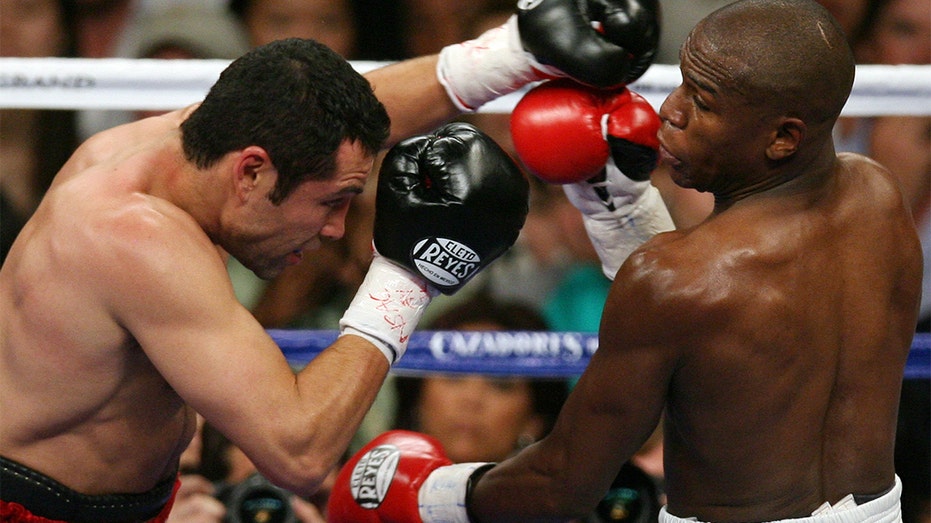
Oscar De La Hoya, left, fights Floyd Mayweather for the WBC super welterweight world championship in Las Vegas May 5, 2007. (Gabriel Bouys/AFP via Getty Images)
“Thirty, forty years ago, boxing was a dominant sport in America,” Cruz said in an interview with FOX Business. “Now there’s chaos and division: fractured belts, disputed titles.”
He added that the goal of the proposed reforms is “to make boxing great again” by increasing compensation, improving safety and rebuilding the sport’s pipeline of talent.
The legislation under consideration, the Muhammad Ali American Boxing Revival Act of 2026, and already passed by the House of Representatives, would not eliminate the current system outright.
TED CRUZ SLAMS TRUMP’S PROPOSED SPIRIT AIRLINES GOVERNMENT BAILOUT PLAN
Instead, it would create what Cruz described as “a second alternative path,” allowing fighters to choose between the existing system and the more centralized model designed to generate larger media deals and new revenue streams.
That dual-track approach has done little to resolve a deeper divide within the sport, however.
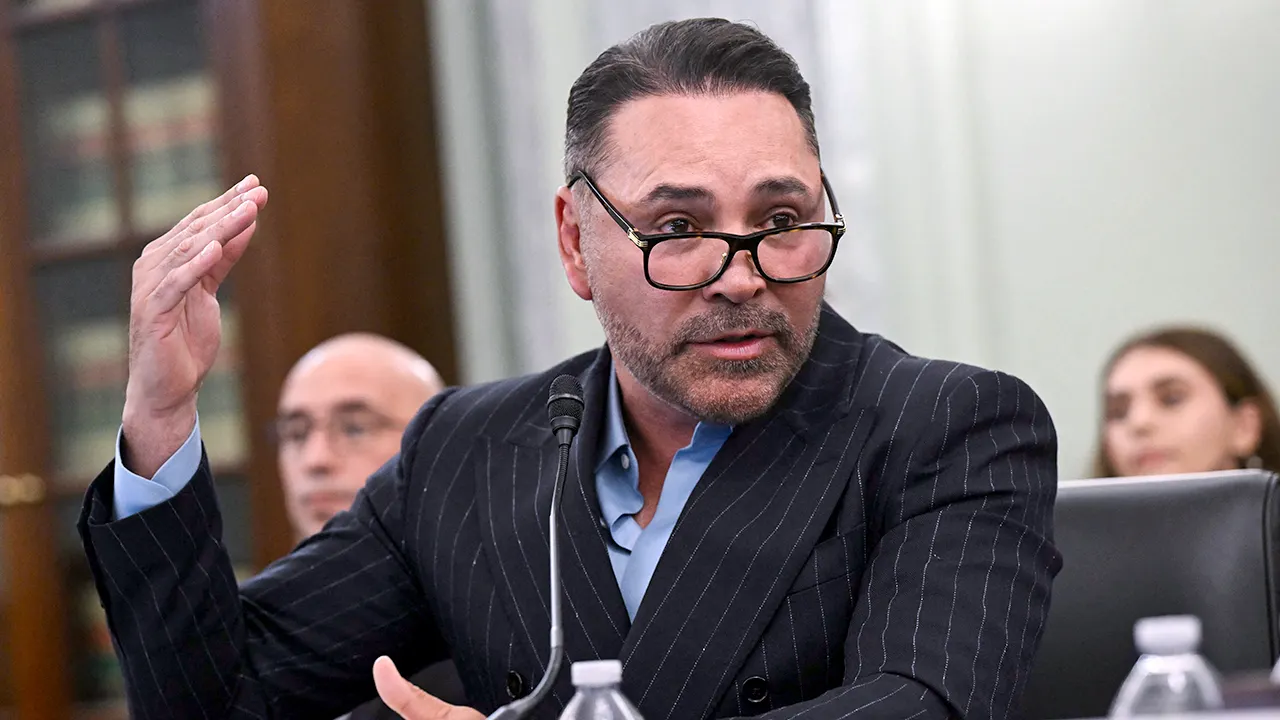
Former champion and Olympic gold medalist Oscar De La Hoya, who testified before the committee, argued the current framework remains essential to protecting fighters, particularly those early in their careers.
“We’re here to make sure we protect the fighters’ rights,” De La Hoya said in an interview with FOX Business after the hearing.

Oscar De La Hoya testified before a Senate committee this week. (Amy Sussman/Getty Images)
Drawing on his own experience, he pointed to a famous 1998 fight against Félix Trinidad, when he signed a lucrative deal with promoter Bob Arum but was unaware of the full financial windfall from the event.
At the time, De La Hoya said, fighters were not given clear disclosures about how much revenue their bouts generated, leaving them at a disadvantage in negotiations.
De La Hoya also argued that boxing’s decentralized system helps protect fighters by preventing too much power from being controlled by a single group.
“The fighters are making the majority of the money,” he added. “We don’t have to answer to corporate America. We don’t have to answer to shareholders. … We answer to the fighters.”
BOXER TYSON FURY’S DAD, JOHN FURY, REVEALS THEIR RELATIONSHIP ‘IS DESTROYED’
But proponents of reform argue that fragmentation has become boxing’s biggest commercial obstacle.
WWE President Nick Khan, who also testified at the hearing, said boxing lacks the centralized infrastructure that has helped leagues like the NFL and UFC grow into global media titans.
“Boxing — especially in the United States — is dying. … It’s a sport that needs to be revived,” Khan, who was representing TKO and Zuffa Boxing at the hearing, told FOX Business, pointing to limited media integration, weak merchandising and inconsistent event quality.
“When boxing is great, there might not be anything better,” he said. “The issue is it’s just not great often enough.”
Khan and other supporters envision a system that could standardize competition and deliver more consistent, marketable events that could potentially unlock larger broadcast deals and sponsorship opportunities.
NFL LAUNCHES LOBBYING BLITZ AT FCC TO DEFEND ITS MEDIA MODEL AS STREAMING SCRUTINY INTENSIFIES
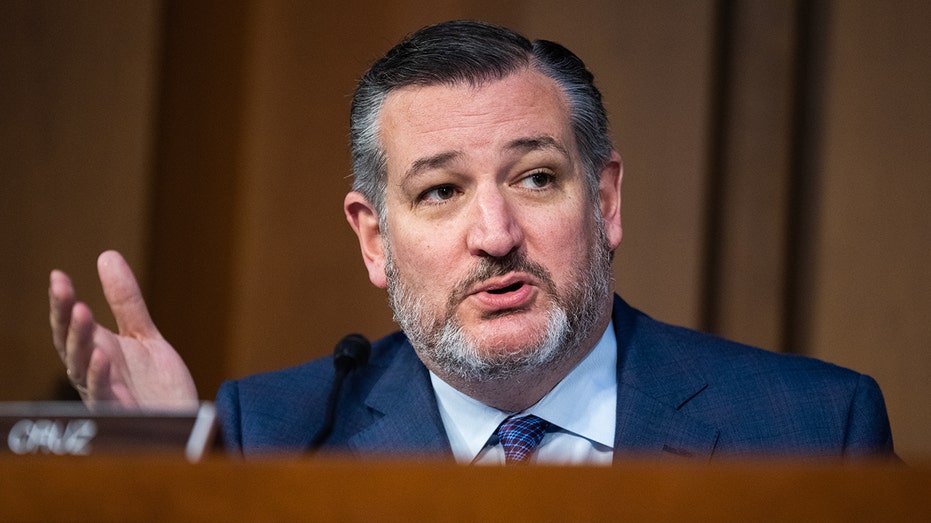
Sen. Ted Cruz, R-Texas, said the goal of the proposed reforms is “to make boxing great again” by increasing compensation, improving safety and rebuilding the sport’s pipeline of talent. (Tom Williams/CQ-Roll Call, Inc via Getty Images)
“There’s some central body” behind the growth of other major sports leagues, Khan said, suggesting boxing has struggled in part because it lacks that structure.
For now, Cruz emphasized flexibility, arguing that giving fighters a choice between systems could allow the market to decide what works.
“If they choose not to take the new option, that’s their choice,” he said.
“But if it results in higher compensation … I think that improves the outcome for everyone.”
CLICK HERE TO READ MORE ON FOX BUSINESS
Khan echoed that view, pointing to boxing’s decline in cultural and commercial relevance.
“In 1976, [boxing] was the most culturally dominant sport of (the) bicentennial year a mere 50 years ago. Now, if you look at the current state of boxing, not one major media conglomerate is in the boxing space outside [one] deal,” Khan said.
“Our hope and plan is to change all of that. That will benefit the fighter.”
MetaMask co-founder Dan Finlay leaves Consensys after 10 years
“Matlock” season 2 ending explained: Are we done with Wellbrexa yet?

Wendy’s Piggy Bank Adventure: Maddie and Eric Learn to Save Money

Manchester United reach agreement with Casemiro over contract clause amid transfer speculation

US brings back mandatory military draft registration

Steven Gerrard disagrees with Gary Neville over ‘shock’ Chelsea and Arsenal claim | Football


-

 Sports7 days ago
NWFL Suspends Two Players Over Post-Match Clash in Ado-Ekiti
-

 Fashion6 days ago
Weekend Open Thread: Theodora Dress
-

 Politics6 days ago
Palestine barred from entering Canada for FIFA Congress
-
Entertainment4 days ago
NBA Analyst Charles Barkley Chimes in on Ice Spice McDonald’s Fiasco
-

 Tech5 days ago
Auto Enthusiast Scores Running Tesla Model 3 for Two Grand and Turns It Into Bare-Bones Go-Kart
-

 Business5 days ago
Powerball Result April 18, 2026: No Jackpot Winner in Powerball Draw: $75 Million Rolls Over
-

 Politics5 days ago
Zack Polanski demands ‘council homes not luxury flats for foreign investors’
-

 Crypto World6 days ago
Russia Pushes Bill to Criminalize Unregistered Crypto Services
-

 Politics3 days ago
Gary Stevenson delivers timely reminder to register to vote as deadline TODAY
-

 Business2 days ago
Rolls-Royce Voted UK’s Most Iconic Trade Mark as IPO Register Hits 150
-

 Politics1 day ago
Disabled people challenge government SEND proposals over segregation concerns
-

 Politics1 day ago
Making troops accountable for war crimes threatens US alliance, ex-SAS colonel warns
-

 Crypto World6 days ago
Russia Introduces Bill To Criminalize Unregistered Crypto Services
-

 Politics1 day ago
Starmer handler McSweeney to be dragged from shadows by Foreign Affairs Committee
-
Politics1 day ago
Wings Over Scotland | How To Get Away With Crimes
-

 Politics1 day ago
Zack Polanski responds to home secretary’s taser threat
-
 Crypto World5 days ago
Kelp DAO rsETH Bridge Hack Drains $292M as DeFi Losses Top $600M in Two Weeks
-

 Politics1 day ago
‘Iran is still a nuclear threat’
-

 Crypto World2 days ago
New York sues Coinbase, Gemini over prediction market offerings
-
 Sports7 days ago
Kevin Kisner apologizes for Masters criticism: ‘I crossed the line’
You must be logged in to post a comment Login