Connect with us
DAPA Banner

Tech

Microsoft Gaming is dead, long live Xbox

Published

on

Microsoft just hit reset on its gaming identity, and in a way, it feels like going back to basics. Because “Microsoft Gaming” is out, and Xbox is officially back at the center of everything.

Why is Microsoft ditching “Microsoft Gaming” for Xbox again?

In a recent internal shift, Microsoft has rebranded its entire gaming division back to Xbox, effectively dropping the “Microsoft Gaming” label altogether.

This isn’t just a cosmetic change. The new CEO, Asha Sharma, has made it clear that “Xbox needs to be the identity”, signaling a move away from the broader, corporate-sounding branding toward something more focused and recognizable.

The “Microsoft Gaming” name originally came into play during the Activision Blizzard acquisition era under Phil Spencer, when the company was positioning gaming as a larger business unit. Now, the shift suggests a return to a more gamer-first identity, with Xbox once again leading the narrative.

What does “We Are Xbox” actually mean for the future?

Alongside the rebrand, Microsoft has outlined a new direction internally under the message “We Are Xbox.” The focus is shifting toward a few core pillars like hardware, content, services, and overall player experience. 

There is also a noticeable change in how success is being measured. Instead of just sales or subscriptions, the company is now prioritizing daily active players, which shows a stronger emphasis on engagement over raw numbers. 

At the same time, Xbox is reevaluating its strategy around exclusivity, cloud gaming, and even AI integration. The goal seems to be building a more flexible ecosystem that works across console, PC, mobile, and cloud rather than locking players into one platform. 

This may look like a simple rebrand, but it feels more like a reset. With next-gen hardware on the horizon, Microsoft is streamlining its identity around Xbox while doubling down on cloud, multiplatform play, and engagement. In the end, it is less about changing the name and more about returning to what already works.

Advertisement

Source link

Continue Reading
Click to comment

You must be logged in to post a comment Login

Leave a Reply

Tech

Ctrl-Alt-Speech: Celebrating 100 Episodes & Launching Our Patreon

Published

on

from the ctrl-alt-speech dept

Ctrl-Alt-Speech is a weekly podcast about the latest news in online speech, from Mike Masnick and Everything in Moderation‘s Ben Whitelaw.

Subscribe now on Apple Podcasts, Overcast, Spotify, Pocket Casts, YouTube, or your podcast app of choice — or go straight to the RSS feed.

In this special episode, Mike and Ben reflect on 100 episodes of the podcast, followed by an important announcement: we’re launching a Patreon and making some changes to Ctrl-Alt-Speech!

Advertisement

Starting on May 28th, Patreon members will get early access to extended weekly episodes with in-depth coverage of an extra major story. The free episodes will continue here on this feed, just slightly shorter and released one day later. 

You can become a member now at one of two levels: Supporters get early access to the extended episodes, and for a limited time Founders get that plus the opportunity to send us news stories that you think we should cover each week. After the new episodes begin at the end of May, the Founder tier will become the Insider tier with all the same benefits at a slightly higher price, so act now if you don’t want to miss out (you’ll also get bragging rights as a founding member!)

We’re immensely grateful to the incredible audience we’ve found over these past 100 episodes, and this is our way of helping make the podcast sustainable for the next 100!

Filed Under: content moderation, trust and safety

Companies: patreon

Advertisement

Source link

Continue Reading

Tech

Meta cuts 8,000 jobs and cancels 6,000 open roles as $135B AI spending reshapes the company from the inside

Published

on

Summary: Meta is cutting approximately 8,000 employees (10% of its workforce) beginning 20 May, cancelling 6,000 open roles, and planning additional cuts for H2 2026. The layoffs, announced via an internal memo from HR head Janelle Gale, are structural rather than performance-based, reorganising teams into AI-focused “pods” while Meta spends $115-135 billion on AI infrastructure this year. The cuts arrive alongside executive stock options worth up to $921 million each and a workplace surveillance programme capturing employee keystrokes to train AI agents.

Meta told employees on Wednesday that it will cut approximately 8,000 jobs, roughly 10% of its global workforce, beginning on 20 May. The company is also cancelling 6,000 open requisitions it had planned to fill, bringing the effective headcount reduction to 14,000 positions. Additional cuts are planned for the second half of the year, though their timing and scope have not been finalised. If the second wave matches the first, Meta will have eliminated roughly 20% of its pre-2026 workforce. The memo announcing the cuts was written by Janelle Gale, Meta’s head of human resources, who said the announcement came early because details had already leaked. “We’re doing this as part of our continued effort to run the company more efficiently and to allow us to offset the other investments we’re making,” Gale wrote. “This is not an easy tradeoff and it will mean letting go of people who have made meaningful contributions to Meta during their time here.

The investments she is referring to cost between $115 billion and $135 billion this year alone. That is Meta’s guided capital expenditure for 2026, a 73% increase over the $72.2 billion it spent in 2025, nearly all of it directed at AI infrastructure. The company is building Prometheus, a one-gigawatt AI supercluster in Ohio coming online this year, and Hyperion, a 2,250-acre, $10 billion facility in Louisiana capable of five gigawatts. It hired Alexandr Wang, the former Scale AI chief executive, as its first chief AI officer in June 2025 through a deal that included a $14.3 billion investment in Scale AI. It is poaching elite AI talent with packages worth up to $1.5 billion for a single engineer. The people being hired are not the same people being fired. That is the point.

The rolling layoffs

The May cuts are the third wave of 2026 layoffs at Meta. In January, the company eliminated more than 1,000 positions in Reality Labs, shutting down several VR game studios and cutting roughly 10% of the division. In March, it cut another 700 employees across at least five divisions, including Reality Labs, Facebook social, recruiting, sales, and global operations. The May round is company-wide and structural rather than performance-based, a distinction Gale’s memo made explicitly. Meta is reorganising teams into AI-focused “pods” and transferring engineers from across the company into the Applied AI organisation. New role categories are being created: “AI builder,” “AI pod lead,” and “AI org lead.” The company’s internal language describes the goal as driving “a step change in engineering productivity and product quality” through “fundamentally rewiring how we operate.

Advertisement

The cumulative toll since 2022 now exceeds 33,000 jobs. Meta cut 11,000 in November 2022, 10,000 in March 2023, 3,600 in January 2025 (framed as performance-based, though employees with positive reviews were caught in the sweep), and approximately 9,700 across the three 2026 waves. The company ended 2025 with 78,865 employees, up 6% year over year, having rehired aggressively through 2024 and 2025 after the original “year of efficiency” reductions. It is now cutting deeper than it rehired. US workers affected by the May round will receive 16 weeks of base pay plus two additional weeks per year of service, and 18 months of health coverage.

The 💜 of EU tech

The latest rumblings from the EU tech scene, a story from our wise ol’ founder Boris, and some questionable AI art. It’s free, every week, in your inbox. Sign up now!

The compensation contrast

Days before the March layoffs, Meta filed SEC disclosures revealing a new stock option programme tied to reaching a $9 trillion market capitalisation by 2031, roughly six times its current valuation. The potential payout: up to $921 million each for chief technology officer Andrew Bosworth, chief product officer Chris Cox, and chief operating officer Javier Olivan, and $787 million for chief financial officer Susan Li. Mark Zuckerberg is not included in the plan. The programme is modelled after Tesla’s Elon Musk compensation structure and is Meta’s first such award since going public in 2012.

Advertisement

The optics are difficult to defend. Stock-based compensation consumed approximately 96% of Meta’s $43.6 billion in free cash flow in 2025. Rank-and-file employees have seen reduced stock compensation in recent years while absorbing successive layoff rounds. The message, whether intended or not, is that the people who survive the cuts will work for less while the people who direct the cuts stand to make nearly a billion dollars each. The $9 trillion target requires Meta’s market capitalisation to grow at roughly 35% annually for five years. If the target is met, the stock appreciation that generates the executive payouts will have been funded in part by the labour cost reductions that the layoffs produce.

The surveillance question

The layoff announcement arrived days after a separate disclosure that sharpened employee anxiety. Meta is installing software on US employees’ work computers under a programme called the “Model Capability Initiative,” which captures keystrokes, mouse movements, and screenshots to train AI agents. Bosworth told employees that “there is no option to opt out of this on your work provided laptop.” The Register reported that employees protested the programme on internal forums. Cornell researchers raised consent and compensation questions about using employee behaviour as AI training data.

The juxtaposition is stark. Meta is asking its remaining employees to generate the training data that will teach AI systems to replicate computer-use patterns, while simultaneously laying off the employees whose patterns the AI will eventually replace. Zuckerberg is building a personal AI agent to handle executive information retrieval and coordination, the same kind of work that middle-management and operational roles traditionally perform. Internal tools called MyClaw and Second Brain are already reshaping how Meta employees interact with the company’s systems. The trajectory is clear: more AI, fewer people, and the people who remain will train the AI that makes the next round of people unnecessary.

The industry pattern

Meta’s cuts landed on the same day Microsoft announced its first voluntary retirement programme in 51 years, offering buyouts to roughly 7% of its US workforce. Oracle eliminated 20,000 to 30,000 employees in March. Atlassian cut 1,600 and replaced its CTO with two AI-focused executives. The tech sector has recorded more than 73,000 job cuts across 95 companies in the first four months of 2026, with projections that the full-year total will exceed the 124,201 eliminated in all of 2025. Every major company cites AI restructuring as the primary driver. The methods differ, Oracle’s was abrupt, Microsoft’s is voluntary, Meta’s is phased, but the direction is the same: traditional roles out, AI roles in, and the spending saved on the former redirected to the latter.

Advertisement

Meta’s Q4 2025 results, the most recent available, showed $59.89 billion in revenue (up 24%), $22.77 billion in net income, and earnings per share of $8.88, beating estimates by 8.4%. Full-year revenue crossed $200 billion for the first time. Q1 2026 results are due on 29 April, with revenue guidance of $53.5 billion to $56.5 billion. The company is not cutting because it is struggling. It is cutting because it has decided that the fastest path to a $9 trillion valuation runs through AI infrastructure, not through the 8,000 people it no longer needs. The question that Gale’s memo does not answer, and that no memo from any tech company this year has answered, is what those people are supposed to do next.

Source link

Advertisement
Continue Reading

Tech

Bitwarden CLI npm package compromised to steal developer credentials

Published

on

Bitwarden

Updated with further information from Bitwarden.

The Bitwarden CLI was briefly compromised after attackers uploaded a malicious @bitwarden/cli package to npm containing a credential-stealing payload capable of spreading to other projects.

According to reports by Socket, JFrog, and OX Security, the malicious package was distributed as version 2026.4.0 and remained available between 5:57 PM and 7:30 PM ET on April 22, 2026, before being removed.

image

Bitwarden confirmed the incident, stating that the breach affected only its npm distribution channel for the CLI npm package and only those who downloaded the malicious version. 

“The investigation found no evidence that end user vault data was accessed or at risk, or that production data or production systems were compromised. Once the issue was detected, compromised access was revoked, the malicious npm release was deprecated, and remediation steps were initiated immediately,” Bitwarden shared in a statement.

Advertisement

“The issue affected the npm distribution mechanism for the CLI during that limited window, not the integrity of the legitimate Bitwarden CLI codebase or stored vault data.”

Bitwarden says it revoked the compromised access and deprecated the affected CLI npm release.

The Bitwarden supply chain attack

According to Socket, threat actors appear to have used a compromised GitHub Action in Bitwarden’s CI/CD pipeline to inject malicious code into the CLI npm package.

According to JFrog, the package was modified so that the preinstall script and the CLI entry point use a custom loader named bw_setup.js, which checks for the Bun runtime and, if it does not exist, downloads it.

Advertisement

The loader then uses the Bun runtime to launch an obfuscated JavaScript file named bw1.js, which acts as credential-stealing malware.

Loader executing the malicious bw1.js file
Source: Jfrog

Once executed, the malware collects a wide range of secrets from infected systems, including npm tokens, GitHub authentication tokens, SSH keys, and cloud credentials for AWS, Azure, and Google Cloud.

The malware encrypts the collected data using AES-256-GCM and exfiltrates it by creating public GitHub repositories under the victim’s account, where the encrypted data is stored.

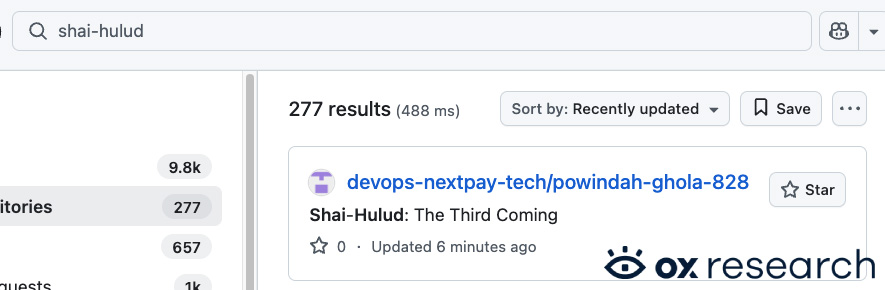
OX Security says that these created repositories contain the string “Shai-Hulud: The Third Coming,” a reference to previous npm supply chain attacks that used a similar method and text string when exfiltrating stolen data.

Data exfiltration repository with a
Data exfiltration repository with a “Shai-Hulud: The Third Coming” string
Source: OX Security

The malware also features self-propagation capabilities, with OX Security reporting that it can use stolen npm credentials to identify packages the victim can modify and inject them with malicious code.

Socket also observed that the payload targets CI/CD environments and attempts to harvest secrets that can be reused to expand the attack.

Advertisement

The attack comes after Checkmarx disclosed a separate supply chain incident yesterday that impacts its KICS Docker images, GitHub Actions, and developer extensions.

While it is not known exactly how attackers gained access, Bitwarden told BleepingComputer the incident was linked to the Checkmarx supply chain attack, with a compromised Checkmarx-related development tool enabling abuse of the npm delivery path for the CLI during a limited time window.

Socket told BleepingComputer that there are overlapping indicators between the Checkmarx breach and this attack.

“The connection is at the malware and infrastructure level. In the Bitwarden case, the malicious payload uses the same audit.checkmarx[.]cx/v1/telemetry endpoint that appeared in the Checkmarx incident. It also uses the same __decodeScrambled obfuscation routine with the seed 0x3039, and shows the same general pattern of credential theft, GitHub-based exfiltration, and supply chain propagation behavior,” Socket told BleepingComputer.

Advertisement

“That overlap goes beyond a superficial resemblance. The Bitwarden payload contains the same kind of embedded gzip+base64 components we saw in the earlier malware, including tooling for credential collection and downstream abuse.”

Both campaigns have been linked to a threat actor known as TeamPCP, who previously targeted developer packages in the massive Trivy and LiteLLM supply chain attacks.

Developers who installed the affected version should treat their systems and credentials as compromised and rotate all exposed credentials, especially those used for CI/CD pipelines, cloud storage, and developer environments.

Update 4/23/26: Updated the story with information from Bitwarden confirming the incident was linked to the Checkmarx supply chain attack.

Advertisement

article image

AI chained four zero-days into one exploit that bypassed both renderer and OS sandboxes. A wave of new exploits is coming.

At the Autonomous Validation Summit (May 12 & 14), see how autonomous, context-rich validation finds what’s exploitable, proves controls hold, and closes the remediation loop.

Claim Your Spot

Source link

Continue Reading

Tech

Hackers exploit file upload bug in Breeze Cache WordPress plugin

Published

on

Hackers exploit file upload bug in Breeze Cache WordPress plugin

Hackers are actively exploiting a critical vulnerability in the Breeze Cache plugin for WordPress that allows uploading arbitrary files on the server without authentication.

The security issue is tracked as CVE-2026-3844 and has been leveraged in more than 170 exploitation attempts by the Wordfence security solution for the WordPress ecosystem.

The Breeze Cache WordPress caching plugin from Cloudways has more than 400,000 active installations and is designed to improve performance and loading speed by reducing page load frequency through caching, file optimization, and database cleanup.

image

The vulnerability received a critical severity score of 9.8 out of 10 and was discovered and reported by security researcher Hung Nguyen (bashu).

Researchers at WordPress security company Defiant, the developer of Wordfence, say that the problem stems from missing file-type validation in the ‘fetch_gravatar_from_remote’ function.

Advertisement

This allows an unauthenticated attacker to upload arbitrary files to the server, which can lead to remote code execution (RCE) and complete website takeover.

However, successful exploitation is possible only if the “Host Files Locally – Gravatars” add-on is turned on, which is not the default state, the researchers say.

CVE-2026-3844 affects all Breeze Cache versions up to and including 2.4.4. Cloudways fixed the flaw in version 2.4.5, released earlier this week.

According to statistics from WordPress.org, the plugin has had roughly 138,000 downloads since the release of the latest version. It is unclear how many websites are vulnerable, though, because there is no data on the number that have the Host Files Locally – Gravatars enabled.

Advertisement

Given the active exploitation status, website owners/admins who rely on Breeze Cache to boost performance are recommended to upgrade to the latest version of the plugin as soon as possible or temporarily disable it.

If upgrading is currently not possible, admins should at least disable the “Host Files Locally – Gravatars.”


article image

AI chained four zero-days into one exploit that bypassed both renderer and OS sandboxes. A wave of new exploits is coming.

At the Autonomous Validation Summit (May 12 & 14), see how autonomous, context-rich validation finds what’s exploitable, proves controls hold, and closes the remediation loop.

Claim Your Spot

Source link

Advertisement
Continue Reading

Tech

This AI bot does the mindless internet scrolling for you so you can skip the brainrot

Published

on

Spending too much time on social media and doomscrolling is bad for your brain. We all know it instinctively, and research has proven it time and again. But the fear of missing out keeps us glued to our feeds anyway.

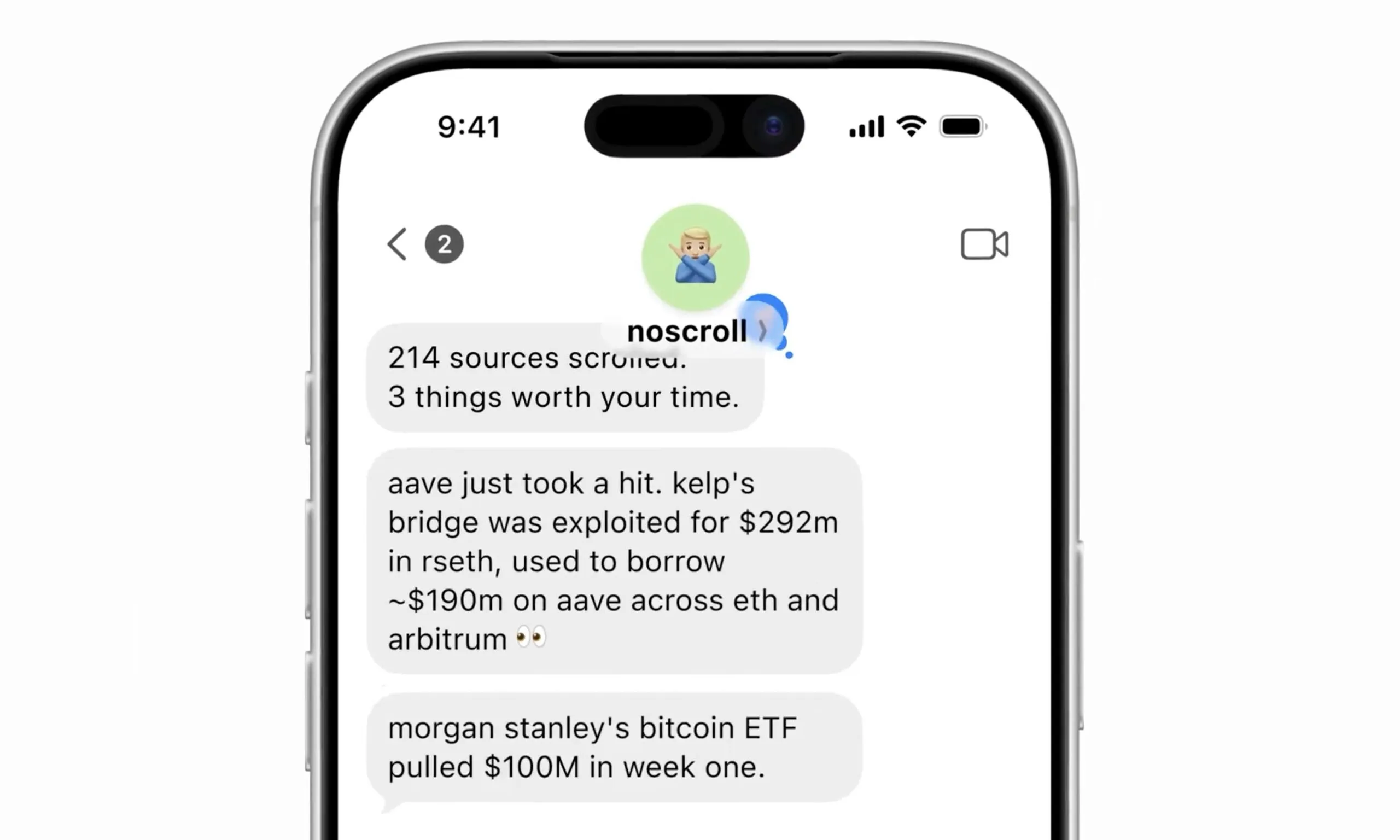
Noscroll, a new AI-powered service, aims to solve that by reading the internet for you and texting you only what matters. The pitch is simple: no feeds, no brainrot, just signal.

How does it work?

To get started, you text Noscroll’s AI agent at (415) 718-4828. It sends you a link to connect your X account, which gives it access to your likes, bookmarks, and the accounts you follow.

From there, you tell the bot in plain language the topics you want to follow and the ones you don’t care about. It then pulls information from across the web, including news sites, blogs, Reddit, Hacker News, Substack, research papers, and more. You can even point it to specific sources you want it to monitor.

Advertisement

X has the best information on the internet and the worst incentives & culture.

meet noscroll — the AI that doomscrolls it for you and texts you just the things that matter.

no feed. no brainrot. no ragebait. just signal.

try it for free → https://t.co/XqdExWR13j 🙅🏼‍♂️ pic.twitter.com/EaHt2zfb7k

— noscroll (@noscroll) April 21, 2026

Advertisement

The bot then texts you news digests at whatever frequency works for you. If you are a casual reader, you might want a weekly roundup, while a news aficionado might prefer multiple updates a day. 

Each digest includes links and a short summary, but you can always tap through to read the full article. You can also reply to the bot to discuss what you’re reading and tweak your digest. 

Who built it and why?

Noscroll was built by Nadav Hollander, former CTO at NFT marketplace OpenSea. He told TechCrunch that his relationship with X inspired the idea. “It’s phenomenally entertaining and really informative in ways you just don’t get from normal media,” he said, but added that the platform is “so toxic culturally.”

He wanted the news without the misery. So he built the tool himself, alongside a friend from the open source world. Noscroll costs $9.99 per month, but you can try it free for seven days. You can find it at Noscroll.com.

Advertisement

Source link

Continue Reading

Tech

US soldier arrested for allegedly making over $400,000 on Polymarket with classified Maduro information

Published

on

United States soldier Gannon Ken Van Dyke has been arrested and charged for placing bets on prediction marketplace Polymarket using classified information he had access to related to the capture of former Venezuelan president Nicolás Maduro. The US Army Special Forces master sergeant, who was directly involved with the planning and execution of the operation, allegedly made $409,881 in profits.

According to the Department of Justice, Van Dyke created a Polymarket account around December 26, 2025 and made 13 bets related to Maduro from December 27 to January 2. He took the “Yes” position on several Polymarket wagers, including “US Forces in Venezuela… by January 31, 2026,” “Maduro out by… January 31, 2026, “Will the US invade Venezuela by January 31” and “Trump invokes War Powers against Venezuela by… January 31.” The US military captured Maduro and his wife on January 3.

Van Dyke allegedly bet a total of $33,034 and made over ten times that amount from his winnings. He withdrew his money from Polymarket on the day Maduro was captured and then sent it to a foreign crypto vault before depositing it to a new online brokerage account.

Shortly after Maduro’s capture, reports came out about how an anonymous gambler made almost half a million dollars before it was announced, raising concerns that someone had profited off insider military knowledge. The Justice Department says Van Dyke tried to cover his tracks. After reports about the potential insider bets were published, he allegedly asked Polymarket to delete his account, falsely claiming that he lost access to the email he used. He also changed the email address linked to his crypto account to another one not associated with his name.

Advertisement

Van Dyke has been charged with three counts of violation against the Commodity Exchange Act, with each one carrying a max sentence of 10 years in prison. He has also been charged with one count of wire fraud with a max penalty of 20 years in prison, as well as one count of unlawful monetary transaction with a max sentence of 10 years.

Prediction marketplaces have been struggling with insider trading problems, and this is far from the first incident. Recently, Kalshi took action against three political candidates, accusing them of insider trading related to their campaigns. Matt Klein of Minnesota and Ezekiel Enriquez of Texas face a fine of less than $1,000 and suspensions of up to five years. Meanwhile Mark Moran of Virginia faces disciplinary action, a five year suspension and a fine of more than $6,000.

Source link

Advertisement
Continue Reading

Tech

RFK Jr. Wipes His Hands Of This Whole Measles Outbreak Thing

Published

on

from the CYA-jr. dept

In the year 2,000 (cue the Conan O’Brien music), America had so successfully defeated measles as a disease that we were awarded elimination status for the disease. Then Trump was elected to a second term, for reasons I still can’t fully explain, after which RFK Jr. somehow was confirmed as the Secretary of HHS. Almost simultaneously, a massive measles outbreak began in Texas, spreading to most of the other states in the union, with particularly bad outbreaks in Arizona, Utah, and North Carolina. The reason for the outbreak is clear in the CDC statistics: falling vaccination rates for the MMR vaccine allowed the disease to gain a foothold and spread. Meanwhile, Kennedy offered up confused and confusing messaging to the public as to what do about it, oscillating between muted calls for vaccinations, musing that everyone should just get measles for natural immunity, and declaring out loud that measles victims were at fault for not being healthy enough.

Because of his inept leadership on the matter, measles in 2026 is going to be even worse than 2025. We’re on pace to blow past last year’s numbers and, again, it’s because not enough people are getting vaccinated.

Kennedy is, of course, the living avatar of the anti-vaxxer movement. He didn’t create it, but he has worked very hard to propel it into popularity and, now, into government policy. He has everything to do with the current outbreak. But he recently faced Congress and said with a straight face that it has nothing to do with him. Instead, it was those dirty immigrants that are to blame.

But despite Kennedy being the most vocal source of vaccine misinformation, the secretary tried to blame the outbreaks entirely on immigrants who come to the U.S. from countries where measles is not eliminated — framing the issue as a global epidemic rather than a national public health crisis.

“It has nothing to do with me,” he told lawmakers. “If you’re worried about polio and tuberculosis, you should look at the immigration policies in this country. ’Cause the place where it’s occurring are the place[s] where the immigrants are going, because they’re not vaccinated.”

So, a couple of things to say here, both equally important. The scapegoating of immigrants over disease outbreaks is an American tradition going back centuries. It’s stupid, it’s wrong, and it’s plainly racist. I have no doubt that diseases can be spread through foreign visitors, as they can be by domestic travelers as well. But the desire to blame immigrants for whatever the outbreak du jour happens to be is so reliable and predictable that it’s silly. And if you don’t believe that this happens as a result of bigotry, well, you’re just plain wrong.

Advertisement

The other item on which to take note is the complete failure of leadership exhibited by Kennedy. In his remarks, Kennedy went into full CYA mode. He said he’s not anti-vaxx, but he absolutely is. He said the measles outbreak isn’t his responsibility, but he’s the fucking Secretary of Health and Human Services, and it absolutely is. He said dropping vaccination rates are due solely to how the American government responded to COVID-19, but that isn’t remotely the full story, given that vaccination rates experienced declines long before 2020, after which they fell sharply.

And the question that remains for Kennedy is a simple one: what are you doing about all of this? What do you even plan to do about all of this? The job doesn’t end by saying it’s immigrants at fault and then we move on. The disease still has to be combated and, right now, nobody is fighting the fight at the federal level. Instead, we’re talking about curtailing vaccine schedule guidance even further, or eliminating childhood vaccines altogether. Even if Kennedy sincerely wants to help in all of this, his messaging is so muddled and misguided that it isn’t getting through to the public.

Rep. Debbie Dingell (D-Mich.) expressed concern to Kennedy, a longtime anti-vaxxer, over the rising number of infectious disease cases such as measles and polio.

“Every patient, every child with measles should be treated with compassion. But I had seven cases just in the last couple of weeks in my county. The contagious spots have been grocery stores and colleges, you can’t stop it,” Dingell said of measles, the highly contagious disease that U.S. officials announced they eliminated in 2000.

“I’ve met with the family of one of them, and I said, ‘Why didn’t you get immunized?’” she continued. “And they said, ‘We’re listening to our government. Our government tells us not to.’”

Even if you wanted to argue that those people are wrong, they’re not making up lies when they say this. The message they’re getting from HHS is to not vaccinate. This is why public health policy needs to be very clear and in a language the average person can understand. These are life and death situations we’re talking about.

Kennedy’s comments read like an abdication of his responsibility. I can’t think of another way to describe his hand-washing of our current measles fiasco. And that’s one of many reasons he has to go.

Advertisement

Filed Under: anti-vaxxers, blame game, health & human services, measles, rfk jr.

Source link

Advertisement
Continue Reading

Tech

Today’s NYT Mini Crossword Answers for April 24

Published

on

Looking for the most recent Mini Crossword answer? Click here for today’s Mini Crossword hints, as well as our daily answers and hints for The New York Times Wordle, Strands, Connections and Connections: Sports Edition puzzles.


Need some help with today’s Mini Crossword? It’s got one of those two-parter questions, where 1-Across and 6-Across represent words in the same phrase. I hate these kinds of questions because they essentially take away one clue, which doesn’t seem fair. Read on for all the answers. And if you could use some hints and guidance for daily solving, check out our Mini Crossword tips.

If you’re looking for today’s Wordle, Connections, Connections: Sports Edition and Strands answers, you can visit CNET’s NYT puzzle hints page.

Advertisement

Read more: Tips and Tricks for Solving The New York Times Mini Crossword

Let’s get to those Mini Crossword clues and answers.

completed-nyt-mini-crossword-puzzle-for-april-24-2026.png

The completed NYT Mini Crossword puzzle for April 24, 2026.

Advertisement

NYT/Screenshot by CNET

Mini across clues and answers

1A clue: With 6-Across, kind of person who loves when things are messy
Answer: DRAMA

6A clue: See 1-Across
Answer: QUEEN

7A clue: Circus prop that provides extra height
Answer: STILT

Advertisement

8A clue: “___ boy!”
Answer: HOO

9A clue: Hoped-for symbol on a weather app
Answer: SUN

Mini down clues and answers

1D clue: Tosses out of a competition, informally
Answer: DQS

2D clue: ___ Chris Steak House (restaurant chain)
Answer: RUTHS

Advertisement

3D clue: Vowel quintet
Answer: AEIOU

4D clue: Fruit that’s often in an Edible Arrangement
Answer: MELON

5D clue: Crumb-carrying insect
Answer: ANT

Advertisement

Source link

Continue Reading

Tech

Samsung adds SmartThings support to IKEA’s Matter devices

Published

on

Samsung has extended SmartThings support to IKEA’s Matter-over-Thread devices, covering air quality sensors, remote controls, smart lights, and smart plugs from the Swedish furniture brand’s connected home range.

The two companies conducted multiple rounds of validation before the rollout, with Samsung building dedicated integrations and a tailored user experience within the SmartThings app to improve connectivity stability across IKEA’s supported hardware.

That level of platform-specific work stands in contrast to what Matter is supposed to deliver, as the smart home standard was designed to eliminate the need for manufacturer-by-manufacturer integration by offering universal compatibility across different ecosystems.

IKEA’s Matter devices have a documented history of connectivity difficulties, with users reporting persistent problems connecting the company’s hardware to home networks since the brand adopted the standard across its smart home product lines.

Advertisement

Advertisement

Those difficulties illustrate a broader gap between Matter’s stated ambitions and its real-world performance, as the standard has struggled to deliver the frictionless cross-platform experience it originally promised to both manufacturers and consumers looking for a unified smart home solution.

Samsung and IKEA’s closer alignment on SmartThings also signals a wider industry shift toward platform holders taking a more hands-on role in validating third-party Matter devices, rather than relying on the standard alone to guarantee compatibility across brands and product categories.

That hands-on approach extends to how the integration surfaces within the SmartThings app itself, where Samsung has implemented a dedicated interface for IKEA devices to reduce friction for users managing the brand’s hardware alongside other connected products in the same environment.

Advertisement

The SmartThings and IKEA integration follows Samsung’s recent addition of Siri voice command support to the platform, continuing a period of steady expansion as SmartThings works to position itself as one of the more broadly compatible smart home hubs available to consumers across different device ecosystems.

The integration is available now and covers IKEA’s current range, with the SmartThings app receiving the dedicated IKEA user experience as part of the same update that brought the expanded device support to the platform.

Advertisement

Source link

Advertisement
Continue Reading

Tech

Save $250 on the Google Pixel 10: Tensor G5, triple rear camera, and Gemini Live for under $550

Published

on

The Google Pixel 10 is down to $549 in a limited-time deal, a $250 saving off its $799 list price, and it’s the unlocked Android phone I’d point most people toward at this price right now. The Tensor G5 chip, a new triple rear camera system with 5x telephoto, and Gemini AI built in from the ground up make this a considerably more complete package than the price drop alone suggests.

What you’re getting

The Tensor G5 is the chip that makes the Pixel 10 worth talking about beyond the camera specs. Google designed it specifically around AI workloads, which means Gemini integration feels native rather than layered on top of a chip built for something else. Gemini Live lets you have a free-flowing conversation with the assistant, point the camera at something and ask about it in real time, or get things done across apps without switching contexts constantly. It’s the kind of feature that changes how you actually use a phone day to day, rather than one you try twice and forget about.

The camera system on the Pixel 10 gets a meaningful upgrade with the addition of a 5x telephoto lens, bringing the rear setup to a proper triple configuration. Up to 20x Super Res Zoom pulls in detail from distances that most phone cameras handle poorly, Night Sight keeps low-light shots clear without the grain that plagues competitors at this price, and Camera Coach offers real-time guidance to help you get the framing and timing right before you shoot rather than fixing it after.

The 6.3-inch Actua display runs at 120Hz with 3,000 nits of peak brightness, which is readable in direct sunlight in a way that most phone screens aren’t. Gorilla Glass Victus 2 and an IP68 rating cover durability and water resistance, and the unlocked configuration works across all major US carriers, including Google Fi, Verizon, T-Mobile, and AT&T.

Advertisement

Why it’s worth it

The Pixel 10 at $799 was already a well-priced phone for what it offers. A $250 saving brings it to a point where the camera system, Gemini integration, and Tensor G5 performance add up to a package that competing Android phones at this price don’t match cleanly. The limited-time nature of the deal means this is worth acting on before it moves.

The bottom line

The Google Pixel 10 at $549 is the everyday Android phone deal worth prioritizing right now. The Tensor G5, triple camera with 5x telephoto, and Gemini AI built in from the start add up to a phone that feels genuinely current, and the $250 saving makes it one of the more clear-cut smartphone purchases at this price.

Source link

Advertisement
Continue Reading

Trending

Copyright © 2025