

Shares of IT major Infosys slumped as much as 3.72% to their day’s low of Rs 1,194.50 on the NSE on Friday after it reported a 21% year-on-year rise in consolidated net profit for the quarter ended March 31, 2026, at Rs 8,501 crore, compared with Rs 7,033 crore in the same period last year. Infosys ADRs also witnessed a decline, ending 4% lower.
Revenue from operations came in at Rs 46,402 crore for Q4FY26, reflecting a 13.4% increase from Rs 40,925 crore in the corresponding quarter of the previous financial year. On a sequential basis, profit after tax rose 28% from Rs 6,654 crore reported in Q3FY26. Revenue was up 2% quarter-on-quarter compared to Rs 45,479 crore in the October-December quarter.
Operating margin for the reported quarter stood at 21%, unchanged year-on-year but higher by 260 basis points compared to the previous quarter. The company’s dollar revenue was $5,040 million, up 6.6% sequentially but down 1.2% year-on-year.
Advertisement
For FY27, Infosys has guided for revenue growth of 1.5% to 3.5% in constant currency, while maintaining an operating margin outlook of 20% to 22%.
Live Events
What are experts saying?
Jefferies has maintained a Hold rating on Infosys shares and cut its target price to Rs 1,235, indicating limited upside or downside from current levels. The brokerage said the company’s March quarter results were broadly in line with estimates, but the weaker-than-expected FY27 revenue growth guidance of 1.5% to 3.5% disappointed. It also pointed to a 3% quarter-on-quarter decline in headcount and a 19% year-on-year drop in net new deal wins as key concerns. Jefferies noted that the lower end of the guidance range reflects a worsening macro environment and continued geopolitical uncertainty, while the upper end assumes some improvement. Net new deal wins for Q4 stood at $1.3 billion, down 19% YoY, which the brokerage said was soft. This, along with the sharp reduction in headcount during the quarter, aligns with the company’s cautious growth outlook. Morgan Stanley has maintained an Equal-weight rating on Infosys share price, while cutting its target price to Rs 1,380 from Rs 1,760 earlier, an upside of 11% from current levels. The brokerage highlighted a miss in Q4 across key metrics, along with a weak revenue growth outlook. It noted that the FY27 revenue guidance of 1.5% to 3.5% points to a lack of meaningful acceleration, with organic growth expected at around 2.5%, broadly in line with peers.
The Wall Street major also flagged that the ramp-down of a large European client is weighing on the near-term growth outlook. It added that AI-led productivity gains and pricing pressure are impacting the competitiveness of the core business. Margins are expected to remain in the range of 20.5% to 21.0%, with headwinds from wage hikes and M&A activity. While estimates have been lowered, Morgan Stanley said earnings per share could see some support from currency tailwinds. It also noted that valuations are now correcting closer to peer levels, which may offer some downside protection, with the stock valued at around 15.8 times price-to-earnings.
Motilal Oswal has maintained a Buy rating on Infosys shares with an unchanged target price of Rs 1,450, implying a 17% upside from current levels. The brokerage said the company’s FY27 revenue growth guidance of 1.5% to 3.5% in constant currency, or 1.25% to 3.25% organic, is below its estimates at the upper end and signals rising pressure on the existing book of business. It noted that the increasing adoption of AI is leading to compression in the core business, as productivity gains are being passed on to clients. While part of this trend is also due to competitive intensity and pricing pressures in a weak demand environment, the brokerage expects deflationary impact to persist.
Advertisement
Motilal Oswal has factored in growth at the mid-point of the guidance at around 2.5% organic for FY27, which indicates a slowdown compared to FY26 growth of 3.1% in constant currency terms.
HDFC Securities has maintained a Buy rating on Infosys stock price with an unchanged target price of Rs 1,550. The brokerage noted that Q4 revenue was impacted by seasonal factors and slower client decision-making. It added that the company’s FY27 revenue growth guidance of 1.5% to 3.5% year-on-year came in below expectations, reflecting ongoing macro uncertainty. The demand environment continues to remain soft, with clients prioritising cost optimisation over large-scale transformation initiatives. Given the slower growth outlook, estimates have been trimmed by around 2% to 3%, with the stock valued at 18 times its March 2028 estimated earnings per share.
(Disclaimer: Recommendations, suggestions, views and opinions given by the experts are their own. These do not represent the views of The Economic Times)
Fuel stockpiling linked to the Iran war drove a surge in demand, according to the ONS
Alistair Houghton Editor, Business Live and Henry Saker-Clark Press Association Deputy Business Editor
09:10, 24 Apr 2026
A big demand for petrol helped drive up retail sales last month, ONS figures have shown(Image: Getty Images)
UK retail sales bounced back to growth last month, driven by motorists filling up their tanks as fuel prices surged due to the Iran conflict, according to official figures.
The Office for National Statistics (ONS) reported that the total volume of retail sales, which measures the quantity purchased, increased by 0.7% in March.
Advertisement
This compared with a 0.6% decline in February, which was revised marginally lower.
The latest figure also exceeded expectations, with economists having forecast a 0.1% drop for the month.
Statisticians said March’s rise was primarily fuelled by a surge in demand for petrol, which saw sales volumes leap by 6.1% for the month, the highest level since April 2021.
They pointed out that this was particularly linked to a brief period, lasting less than a week, of exceptionally high sales as developing geopolitical tensions in the Middle East triggered a sharp increase in forecourt prices.
Advertisement
The value of fuel sales, representing the amount of money spent, climbed 11.6% amid the spike in petrol and diesel costs.
Recent data from the RAC reveals that petrol prices have climbed by 18.5% to 157.34 pence per litre, as recorded on Wednesday.
Meanwhile, diesel has risen 33.4% to an average of 189.88 pence per litre.
Elsewhere, clothing retailers also enjoyed a strong month, with sales volumes across the sector growing by 1.2% in March thanks to a lift from improved weather conditions.
Advertisement
Technology stores also witnessed sales growth after benefiting from new product launches. Food sales, however, proved something of a weak spot, dipping by 0.8% over the month.
The ONS reported that overall retail sales volumes climbed 1.6% across the first three months of 2026, with the sector also buoyed by strong growth in January.
ONS senior statistician Hannah Finselbach said: “Retail sales rose in the three months to March, with commercial art galleries doing well earlier in the quarter and sales in beauty products stores rising as retailers reported launching new collections.
“Motor fuel sales were up on the quarter, with retailers commenting that many motorists had been filling up their tanks in March following the start of conflict in the Middle East.”
Advertisement
Elliott Jordan-Doak, senior UK economist at Pantheon Macroeconomics, said: “The first batch of hard data on consumers’ spending since the start of the Iran war was better than expected.
“Granted, stocking up on motor fuels drove headline sales higher, but even excluding petrol retail sales volumes nudged up showing that households largely brushed off the initial shock of higher energy prices.”

LOS ANGELES — Meghan Markle has returned to California after a whirlwind four-day visit to Australia with Prince Harry, sharing never-before-seen footage of their trip and drawing both praise for community engagement and sharp criticism over the quasi-royal nature of the tour.
The Duke and Duchess of Sussex touched down in Sydney earlier this month for their first visit to Australia since 2018. The trip blended philanthropy, public appearances and subtle brand promotion, with large crowds greeting the couple at several stops despite pre-tour debate about the visit’s value to the country.
Meghan Markle & Prince Harry IBTimes US
Meghan, 44, posted a heartfelt Instagram reel highlighting moments from the tour, including walks near the Sydney Opera House, interactions with locals and a warm homecoming where their children Archie and Lilibet greeted them with a “welcome home” banner. The video captured candid scenes that fans described as authentic and joyful.
One standout clip showed Meghan offering marriage advice to a bride-to-be during a visit to Bondi Beach lifeguards. Speaking to fan Ellie via her father, the Duchess emphasized that “the marriage is more important than the wedding,” drawing from her own experience approaching her eighth wedding anniversary with Harry on May 19.
The couple paid respects to victims of the Bondi stabbing attack, meeting survivors and first responders in an emotional tribute to the 15 people killed. They also attended charity events and community gatherings, with Harry participating in initiatives tied to his Invictus Games work.
Advertisement
Meghan made a high-profile appearance as a guest judge on MasterChef Australia, earning praise from a former producer for her professionalism, conciseness and charm on set. The episode generated significant buzz and aligned with her lifestyle brand interests.
The tour has ignited intense discussion. Supporters celebrated the couple’s ability to draw crowds and connect with Australians independently, with some outlets framing it as a “powerful message” of self-reliance without palace support. Critics, including commentators like Piers Morgan and Sky News contributors, labeled the trip “tone deaf,” “narcissistic” and a “faux royal tour,” accusing the Sussexes of monetizing their titles while defying the late Queen Elizabeth II’s wishes for them to step back fully.
Analysts noted Meghan’s strategic trademark filing for her As Ever lifestyle brand in Australia shortly before the visit, fueling speculation about future commercial expansion Down Under. The couple has faced ongoing scrutiny over perceived half-in, half-out royal activities despite their 2020 departure from senior roles.
Insiders report behind-the-scenes pressure and discussions about potentially reintegrating Harry and Meghan into some form of royal life, though sources close to the palace describe such ideas as “worrying” and unlikely to materialize. King Charles III continues to navigate complex family dynamics amid health challenges and broader monarchy modernization efforts.
Advertisement
Upon returning home, Meghan shared additional personal touches, including family moments and reflections on the trip. The couple’s children reportedly prepared a special welcome, underscoring the priority they place on family life in Montecito.
The Australia visit fits into a busier 2026 for the Sussexes. Meghan continues building As Ever, recently sharing New Year reset rituals and maintaining a lower public profile on certain projects after reported shifts with Netflix. Harry focuses on philanthropic endeavors, including veterans’ causes.
Public opinion remains deeply divided. Polls and social media sentiment show strong support among younger audiences and in Commonwealth nations, while traditional royal watchers express skepticism about the couple’s independent path. The tour has reignited conversations about the future of the monarchy and the Sussexes’ place within — or outside — it.
Meghan has spoken openly in recent years about the intense scrutiny she faces, once describing herself as one of the most trolled people globally. During the Australia trip, she addressed social media harms in Melbourne alongside Harry, drawing from personal experience.
Advertisement
Supporters highlight the couple’s continued charity work, environmental advocacy and efforts to create a new model of public life. Critics point to perceived contradictions between privacy requests and high-profile activities. The debate shows little sign of quieting as the Sussexes maintain a visible presence on the global stage.
As they settle back into life in California, Meghan and Harry face a packed schedule. Future plans reportedly include more international engagements, brand growth and family milestones. The couple celebrated their anniversary privately last year and is expected to mark this year’s quietly while navigating public interest.
The Australia tour, despite mixed reviews, demonstrated the Sussexes’ enduring draw. Large crowds, media coverage and brand opportunities underscored their continued relevance eight years after stepping back from royal duties. Whether this model sustains long-term remains a central question in royal commentary.
For now, Meghan Markle appears focused on balancing motherhood, entrepreneurship and advocacy. Her latest social media posts emphasize gratitude for the Australian welcome and excitement for future projects. As one of the most discussed women in the world, every move generates headlines — a reality that shows no signs of changing in 2026.
Shares of Adani Energy Solutions declined 3.3% to their day’s low of Rs 1,317 on the BSE on Friday after it reported a 6% year-on-year (YoY) rise in consolidated net profit to Rs 684 crore for the fourth quarter. Revenue from operations grew 17% YoY to Rs 7,443 crore during the period.
Growth in the quarter was supported by key projects, including Mumbai HVDC, North Karanpura Transmission and Khavda Phase II, which contributed to incremental revenue. Total income, including EPC and service concession income, increased 15%, reflecting higher capex execution and improved performance across segments.
EBITDA rose 5% YoY to Rs 2,372 crore, indicating stable operating performance despite continued investments. Operational EBITDA, which captures core business trends, was higher by 13% YoY.
The company said profitability was driven by strong growth in transmission and smart metering, along with steady performance in the distribution business.
Advertisement
The transmission segment remained the primary contributor, with operating revenue up 7% YoY at Rs 1,286 crore and EBITDA rising 6%. The distribution business saw revenue remain largely unchanged at Rs 2,869 crore, while EBITDA declined 4% YoY, pointing to some pressure in the segment.
Live Events
Smart metering continued to scale up, with revenue increasing sharply to Rs 215 crore from a low base. EBITDA in this segment also saw a significant rise, reflecting strong execution. During the quarter, the company commissioned multiple transmission projects, including the Mumbai HVDC project, making it the only private player in India to have executed two such projects.It also crossed the milestone of installing over 1 crore smart meters, strengthening its position in digital power infrastructure.
For the full year FY26, total income stood at Rs 28,325 crore, up 15.9% YoY, while net profit rose to Rs 2,393 crore. On an adjusted basis, profit increased 32% YoY after factoring in one-time items in the previous year. EBITDA for the year reached a record Rs 8,726 crore, up 13%, supported by growth across all key segments.
(Disclaimer: Recommendations, suggestions, views and opinions given by the experts are their own. These do not represent the views of The Economic Times)
In what is expected to be a closely watched earnings release, Reliance Industries may report a subdued set of numbers this quarter, with pressure emerging largely from its oil-to-chemicals (O2C) business. Market participants are likely to keep a close eye on the Nifty heavyweight, given its significant influence on the benchmark index.
Speaking to ET Now, Probal Sen from ICICI Securities noted that expectations have already been tempered.
“So, the numbers are likely to be muted, I think that has pretty much been expected for a while. The OTC segment earnings unlike what you see on the paper markets, the fact is that crude costs have been obviously a constraint in this quarter. There has been some diversion of propylene towards basically production of LPG, away from petrochemical. So, petrochemical throughput has also taken a little bit of a hit and on an overall basis therefore the OTC segment earnings or EBITDA is likely to actually decline from about 165 billion in last quarter to less than 140 billion for Q4 and that pretty much drags overall numbers down as well. What we expect is against 460 odd billion EBITDA on a consolidated level should be close to 440 billion and that means that on a net profit level, net earnings post minority would be closer to about 162-163 billion versus 186 odd billion that they reported in Q3. So, results from the other segments are likely to be flattish to small increases, but it is the continued uncertainty and sort of slightly difficult environment for the downstream petroleum space that is dragging numbers down in this quarter.”
The pressure is not limited to refining and petrochemicals. Retail fuel operations could also take a hit due to continued operations despite weak margins.
Advertisement
“So, to answer your first question, yes, retail losses this time because unlike earlier times where because of lower margins you would see shutdowns in the fuel outlets of private refiners, this time they have actually continued to operate the outlets. So, to that extent, yes, even retail losses are another factor that would impact numbers.
Live Events
“And as far as petchem is concerned, yes, the margins have improved a bit to be honest but slightly lower throughput means that on an overall basis earnings even for the petrochemical segment only grow by low to mid-single digits on a QoQ level, but there is growth there which is primarily led by margin growth because obviously pricing for certain specific chains has definitely improved after probably multiple quarters of weakness, so that is a small positive,” he added. However, the company’s Special Economic Zone (SEZ) refinery could offer some cushion, particularly due to its insulation from export-related levies.“That is captured in the numbers that I spoke about. Yes, the SEZ refinery, our understanding is that it is not subject to the export taxes, the additional export taxes that have been announced for domestic refiners, because technically speaking the SEZ refinery is not really considered part of the domestic customs area, so to that extent obviously they are more resilient and the results of the OMCs are likely to show more of a decline to that extent in terms of the refining business, but on an overall basis still the very-very high crude and freight costs, the kind of insurance costs that have risen and the differences in terms of the actual physical crude cost versus what we are seeing on our tickers, I think that all plays a role in any case in keeping the numbers muted despite the benefit, let us say, from the SEZ refinery from not having to pay export taxes.”

On the consumer-facing side, Reliance Retail is expected to maintain steady growth, albeit at a measured pace. “So, frankly, as far as the retail business is concerned, our sense is that there is a low to mid-single digit quarter-on-quarter improvement that one can see. YoY improvement will still be fairly decent in the range of around 7% to 8%.
“So, the retail performance anyway is going to be fairly high or strong but you have to remember that the kind of base that Reliance works from is very different from any other retail player in the country and that does make a difference in terms of how much absolute growth you can actually expect in the current environment. Jio our understanding from our telecom team is that it will be sort of a flattish quarter-on-quarter basis but that still translates into a fairly strong number on a YoY basis or between 10% to 12% in terms of EBITDA,” he added.
As for the impact of investments in quick commerce and online retail, clarity may only emerge after the company’s official briefing.
Advertisement
“We will have to probably wait for the briefing and the numbers to come through before commenting on it. They obviously had already mentioned in the quarter three briefing that there is a bigger push towards quick commerce or the version that they are following as far as JioMart is concerned, so that is obviously going to continue to play a role in terms of margins and overall operational numbers. But let us wait for the briefing before commenting on that.”

Overall, while segments like retail and telecom continue to provide stability, the ongoing challenges in the energy business are expected to weigh on Reliance’s consolidated performance this quarter.
Wall Street major JPMorgan has become the latest investment bank to downgrade the Indian stock market, revising its rating to Neutral from Overweight and delivering a blow by suggesting that the Nifty could plunge to 20,500 in a bear-case scenario. This implies a sharp 15% drop from current levels, as stretched valuations and uncertainty around the Iran war continue to weigh.
The international brokerage said that while India’s long-term structural story remains intact, near-term tactical headwinds call for patience. The brokerage added that these challenges justify a more cautious stance, noting that although the valuation gap has started to narrow, it continues to remain elevated.
It flagged multiple risks to earnings, including potential energy supply disruptions, which could impact companies across sectors. Reflecting this, sector analysts have already cut FY27 earnings estimates by 2% to 10% across key segments. JPMorgan has also lowered its CY26E and CY27E MSCI India EPS growth forecasts by 2% and 1% to 11% and 13%, respectively.
The brokerage highlighted that India’s largecap universe lacks meaningful exposure to high-growth themes such as AI, data centres and semiconductors compared to markets like the US, Korea, China, and Taiwan. It also pointed to monsoon-related risks that could hurt rural incomes and drive food inflation.
Advertisement
Given the current backdrop, the brokerage sees better opportunities in other emerging markets until valuations correct further or earnings visibility improves. Within sectors, it remains overweight on Financials, Materials, Consumer Discretionary, Hospitals, Defence and Power, while staying underweight on IT and Pharma.
Live Events
JPMorgan has revised its Nifty 50 targets lower, the bull, base, and bear case scenarios are now 30,000, 27,000, and 20,500, respectively, compared to earlier estimates of 33,000, 30,000, and 24,000. Earlier this week, HSBC downgraded India to underweight from neutral, marking its second cut in the past two months, citing rising inflation risks driven by elevated oil prices and demand pressures that could weigh on earnings growth.“The ongoing West Asia conflict has brought focus back to downside risks for growth, given India’s heavy dependence on imported energy,” the brokerage said in a client note. “While growth has shown signs of improvement over the past two quarters, we expect the recovery to be delayed from here.”
HSBC had earlier lowered India to neutral in late March, pointing to an unfavourable risk-reward balance. Although the March selloff helped ease valuation concerns, the brokerage warned that pressure on corporate profitability could offset this benefit.
(Disclaimer: Recommendations, suggestions, views, and opinions given by the experts are their own. These do not represent the views of The Economic Times)
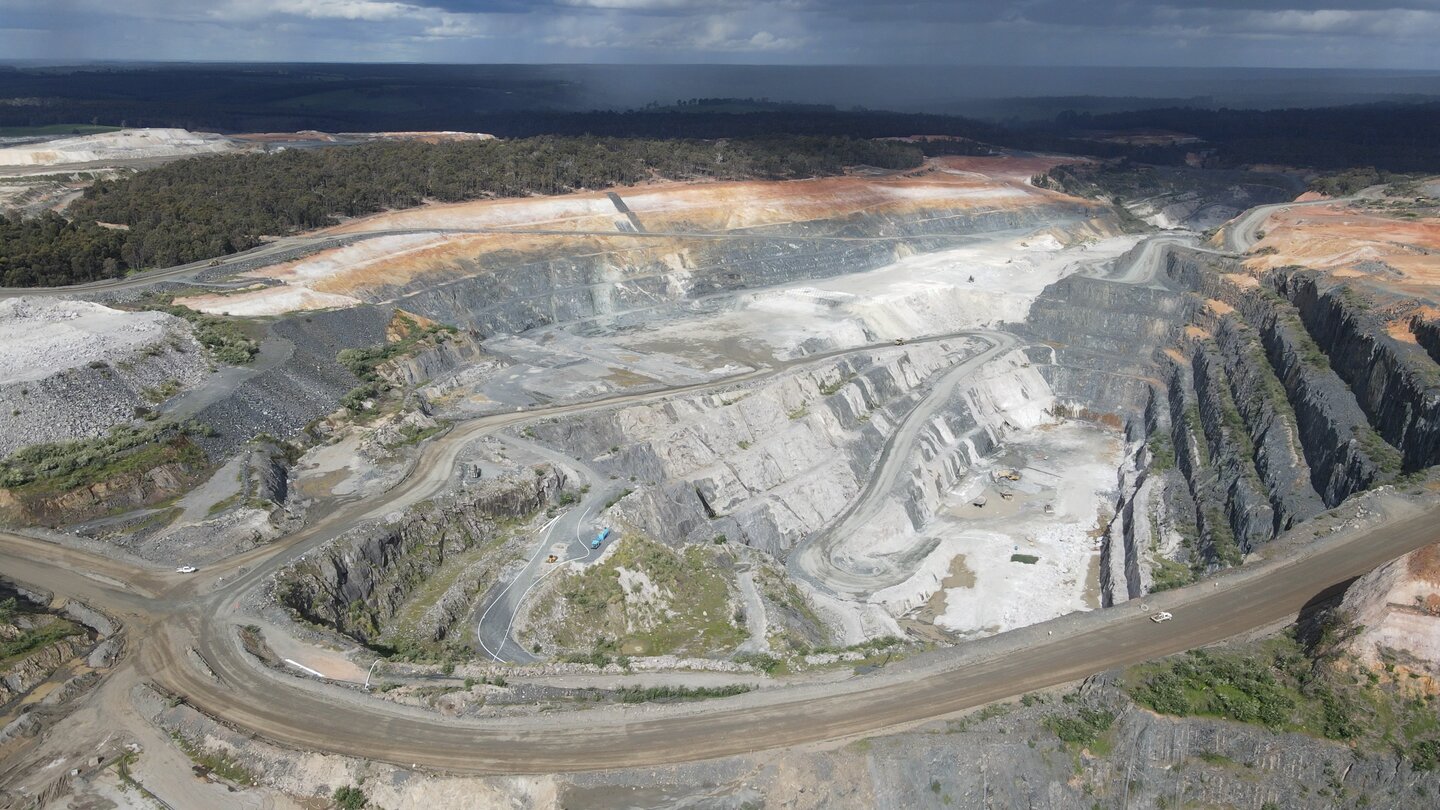
IGO has labelled performance at Greenbushes as “disappointing” after cutting its lithium production guidance and grappling with safety incidents through the quarter.
Shares of Dr Reddy’s Laboratories declined 2.11% to Rs 1,303 on Friday, as cautious commentary from global brokerages Goldman Sachs and Citigroup dampened investor sentiment and reignited concerns over the company’s near-term growth prospects, according to a research note reported by ETNow.
Goldman Sachs turns cautious, trims outlook sharply
The brokerage downgraded the stock to “Sell” and sharply cut its target price to Rs 1,075 from Rs 1,225, signalling potential downside from current levels.
A key overhang is the much-anticipated opportunity linked to Ozempic, which Goldman Sachs now believes could be smaller in scale and shorter-lived than previously expected. This has raised questions about the company’s near-term growth triggers.
Adding to the pressure, the firm highlighted limited visibility in Dr Reddy’s pipeline, noting a lack of significant high-value launches that could drive earnings momentum. Meanwhile, ongoing price erosion in its core generics business continues to dent profitability.
Advertisement
Live Events
Reflecting these challenges, Goldman Sachs has cut earnings per share (EPS) estimates by 8-26% for FY26-FY28, indicating a weaker earnings trajectory ahead. The brokerage also flagged valuation concerns, arguing that the stock’s current multiples are ahead of underlying fundamentals. It now values Dr Reddy’s at around 19x P/E, warning of further downside risk if growth fails to materialise.
Citi remains bearish despite approval optimism
Citigroup also maintained its “Sell” rating on the stock with a target price of Rs 1,070, reinforcing a cautious consensus among global brokerages.
While Dr Reddy’s shares had earlier gained nearly 9% on reports of an unverified generic semaglutide approval in Canada, Citi downplayed the excitement, arguing that even if confirmed, the upside appears overstated given intense competition.
The brokerage estimates FY28 product revenues of around $50 million in a six-player market, while revising FY27 revenue expectations to $80-100 million (up from ~$60 million earlier) in a three-player competitive set including Dr Reddy’s, Sandoz and Apotex.
Citi also expects fourth-quarter FY26 earnings to normalise on a base excluding Revlimid contributions and warned that broader market earnings estimates may need to be revised downward. Its EPS forecasts are already 20%-23% below consensus, underscoring a more conservative stance on earnings growth.
Advertisement
Sentiment turns cautious
With both Goldman Sachs and Citi flagging limited earnings visibility, pipeline uncertainty and stretched valuations, sentiment around Dr Reddy’s has turned notably cautious, despite intermittent optimism around niche product approvals.
(Disclaimer: The recommendations, suggestions, views and opinions given by the experts are their own. These do not represent the views of The Economic Times.)
You must be logged in to post a comment Login