From David Lowery (The Green Knight, A Ghost Story), Mother Mary is a psychological drama-thriller driven by eloquent dialogue and compelling performances from Anne Hathaway and Michaela Cole. Lowery says he was inspired by Bram Stoker’s Dracula (1992) and Taylor Swift: Reputation Stadium Tour, while Anne Hathaway says she based her performance on Beyoncé and her film/live album Homecoming: A Film By Beyoncé specifically. David Lowery went on to say that he could see Mother Mary being Taylor Swift in 10-15 years.
Mother Mary (Anne Hathaway) is a pop music icon. Her performances feature intricate costumes, a mesmerizing stage presence, and some of the catchiest and sexiest pop music of recent memory (the film’s score is by Daniel Hart, while the soundtrack features original songs from Jack Antonoff, Charli XCX, and FKA Twigs). Her concerts exceed typical musical expectations as many compare her performances to prayer or Holy Communion.
However, a traumatic experience caused Mother Mary to step away. She is planning her return to music with a new song and wants a new dress that matches her second coming. But nothing seems to feel right with the biggest issue being that her current costume designers have been making her the wrong dress. She turns to Sam Anselm (Michaela Cole), a globally recognized costume designer.
Sam used to work for Mother Mary, and the two were close friends, but something happened that not only caused them to drift apart but also made Sam hate Mother Mary and her music with venom. It transcends the concept of a personal grudge and evolved into this vile animosity that permanently stained the soul. Sam eventually learned to move past it, but it has always been there.
Now they have four days to make the perfect dress for a groundbreaking headliner and opening date, but the palpable rift between them could lead to complete and utter turmoil.
The First Half Is All Dialogue
At just under two hours, the first half of Mother Mary is almost entirely back-and-forth dialogue between Mother Mary and Sam. There are breakaway moments that showcase the music, which is the film’s biggest draw.
Advertisement
Even though you’re just watching two people talk, that first half is the strongest part of the film. The relationship between Mother Mary and Sam hints at something deeper than friendship. They could have been lovers or even soulmates, but the film only hints at that, and it’s smarter for it. They weren’t just close; they had an unbreakable bond that was broken by someone blinded by the spotlight.
Michaela Cole Is Catty As Sam
Michaela Cole is so unbelievably catty as Sam. Whatever Mother Mary has done has done her so wrong that she is unforgiving and deliciously relentless. She is bitter that she still cares for Mother Mary. The dress and her making it seem to serve as some sort of ending for their time together. It could be a hate dress or something Mother Mary takes at the end of these four days, only to never see Sam again. But it’s a swan song in some capacity in Sam’s eyes, even if it’s meant to be a new beginning for Mother Mary.
Sam’s hatred is articulated through Cole’s magnetic British accent, and these detrimental insults are interwoven into casual yet unwavering lines of dialogue. Cole’s on-screen presence is just as commanding as she barely blinks, is consistently wide-eyed, has these blindingly bright white perfect teeth, and has a bottom lip that slightly curls and quivers when she speaks. She’s a bad bitch that’s been scorned so bad that she wears a mask to cover up the fact that she’s inconsolable.
Anne Hathaway Actually Sings Every Song And Cries Every Tear
Anne Hathaway’s transformation into Mother Mary seems exhausting. The character is to the point that music, the one thing that has brought her fame and that once made her happy, is now a chore that makes her feel nothing but emptiness and fatigue.
Hathaway sings every song in the film, which is impressive enough, but she also cries nearly every time she’s in a scene with Michaela Cole. Crying sucks, and doing it long enough gives you a headache or makes you want to take a nap. Mother Mary took 14 months to film. Even if that’s on and off, that’s still a lot of crying.
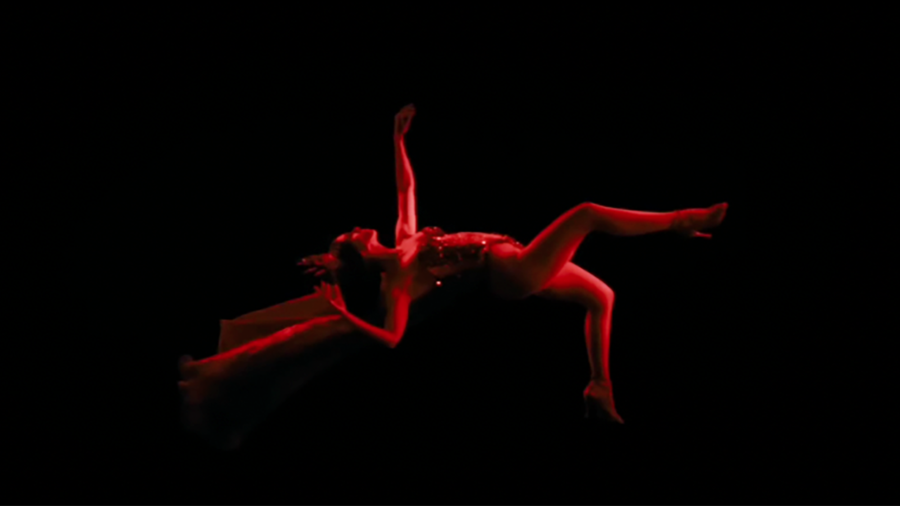
Mother Mary has created a new dance for one of her songs for her upcoming tour, and Sam asks her to perform it (without music, but we’ll come back to that). This dance looks like it hurts to perform as it’s full of pulsating, violent gyrating, stomping, and thrusting like Anne Hathaway’s life depended on it.
This dance is the equivalent of rhythmic possession. Hathaway throws her body against walls, furniture, and the floor like she’s trying to smack something out from the depths of her insides. It’s an exorcism in a way, and the story makes it feel like that even more.
Phenomenal Music That Sounds Like A Lost Madonna Album
Sam refuses to hear any of Mother Mary’s new music. The event that triggered Sam’s disdain for her has resulted in a streak that Sam doesn’t want to break. Charli XCX wrote the majority of the film’s soundtrack with help from her husband George Daniel, the drummer of The 1975. Despite the soundtrack’s influence from modern pop music, it sounds like a lost album from Madonna’s prime. With all of that said, the music is phenomenal.
Advertisement
Mother Mary keeps trying to show Sam her new song, but it’s never actually showcased in the film. It’s like we never hear it, and everyone in the film speaks about it and talks about it like it’s the greatest song that ears have ever heard, a la “Tribute” by Tenacious D. If it’s the song that plays over the end credits, it’s forgettable, which is even more depressing since the rest of the music is so good.
It All Falls Apart In The Second Half
Mother Mary falls apart in the second half. Once it begins to explain why Sam turned sour on Mother Mary and what happened to make Mother Mary step away from music, the film gets weirdly simple and bizarre in a way that is unbelievable.
This deeply personal and musical drama becomes a ghost story, with a red fabric symbolizing death and rebirth. The red fabric connects both women as it terrifies Mother Mary, yet serves as a form of redemption for Sam. It’s the cause of Mother Mary’s musical absence and the essence of Sam’s vengeful view of life.
But that red fabric is ejected from one character in the film and spends the rest of the film inside the other. It ruins one’s life while serving a new purpose for the other. It feels like it’s trying to be guilt, regret, and nostalgia all in one, but it gets lost in the fabric’s flowing representation.
Ruined By Red Fabric
Mother Mary has a fantastic soundtrack, passionately captivating performances from Michaela Cole and Anne Hathaway, and beautifully poetic dialogue that grips you throughout. But a piece of flowing red fabric ruins all of that.
There’s genuine art in Mother Mary that’s hidden behind a transparent red veil. The film ends as if you’re letting a piece of fabric drift away in the wind; its journey is endless and unpredictable, but also forever changing. The concept may be fascinating on paper, but its intention to soar in the clouds falls flat while losing whatever life it once had.
Mother Mary comes to theaters nationwide on April 24.
When Michael first hit Rotten Tomatoes with a brutal 27 percent critics score, it looked like another high profile biopic was about to crash under the weight of expectations. Then audiences showed up. And everything changed.
The film has now surged to a staggering 96 percent audience score, instantly flipping the narrative and putting Michael in rare territory as one of the highest rated musical biopics ever from a fan perspective.
So what happened?
Critics vs Audience A Familiar Divide
Early critic reactions focused on pacing, tone, and the film’s approach to controversial moments in Michael Jackson’s life. Some reviews called it uneven, others said it played things too safe. But audiences saw something completely different.
Advertisement
Fans praised the performance, the music, and most importantly, the emotional connection. Social reactions have been flooded with comments about how the film captures the energy, pressure, and genius of Jackson in a way that feels authentic and powerful. For many viewers, it is not about perfection. It is about feeling. And Michael delivers that in a big way.
The Power of Music and Nostalgia
Musical biopics live and die by one thing more than anything else. Connection.
From the moment the first iconic track hits, audiences are pulled into a shared experience. With a catalog as legendary as Michael Jackson’s, Michael had a built in advantage that critics may have underestimated.
The film leans heavily into that legacy. The performances, choreography, and stage recreations are being called some of the best ever put on screen in this genre. That alone is driving repeat viewings and word of mouth momentum.
Advertisement
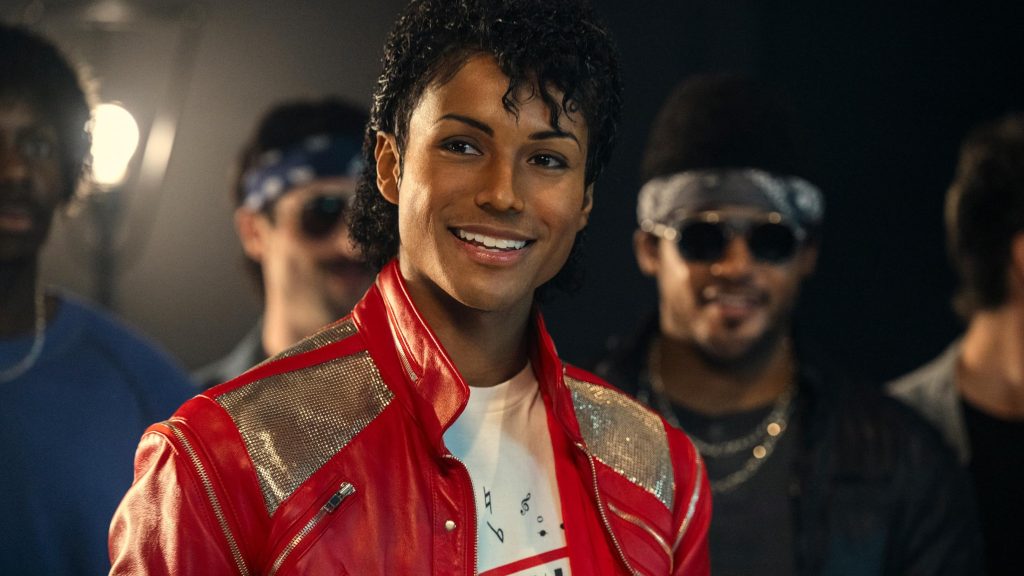
Jafaar Jackson, Michael [credit: Lionsgate]
Audience Scores Are Becoming the Real Indicator
We have seen this trend before. Critics analyze. Audiences react.
And in the era of social media and instant feedback, audience scores are increasingly shaping a film’s reputation in real time. A 96 percent score is not just good. It signals strong emotional resonance and mass appeal.
That kind of response can extend box office legs, boost streaming performance, and even reshape award season conversations.
Advertisement
One of the Biggest Turnarounds in Recent Memory
Going from 27 percent to 96 percent is not just a rebound. It is a complete narrative reversal.
For Michael, it means the film is no longer defined by its early reviews. It is being defined by the people actually watching it. And right now, they love it.
The Bottom Line
Michael may not be a critic darling, but it is becoming a fan phenomenon.
And in today’s landscape, that might matter more than ever.
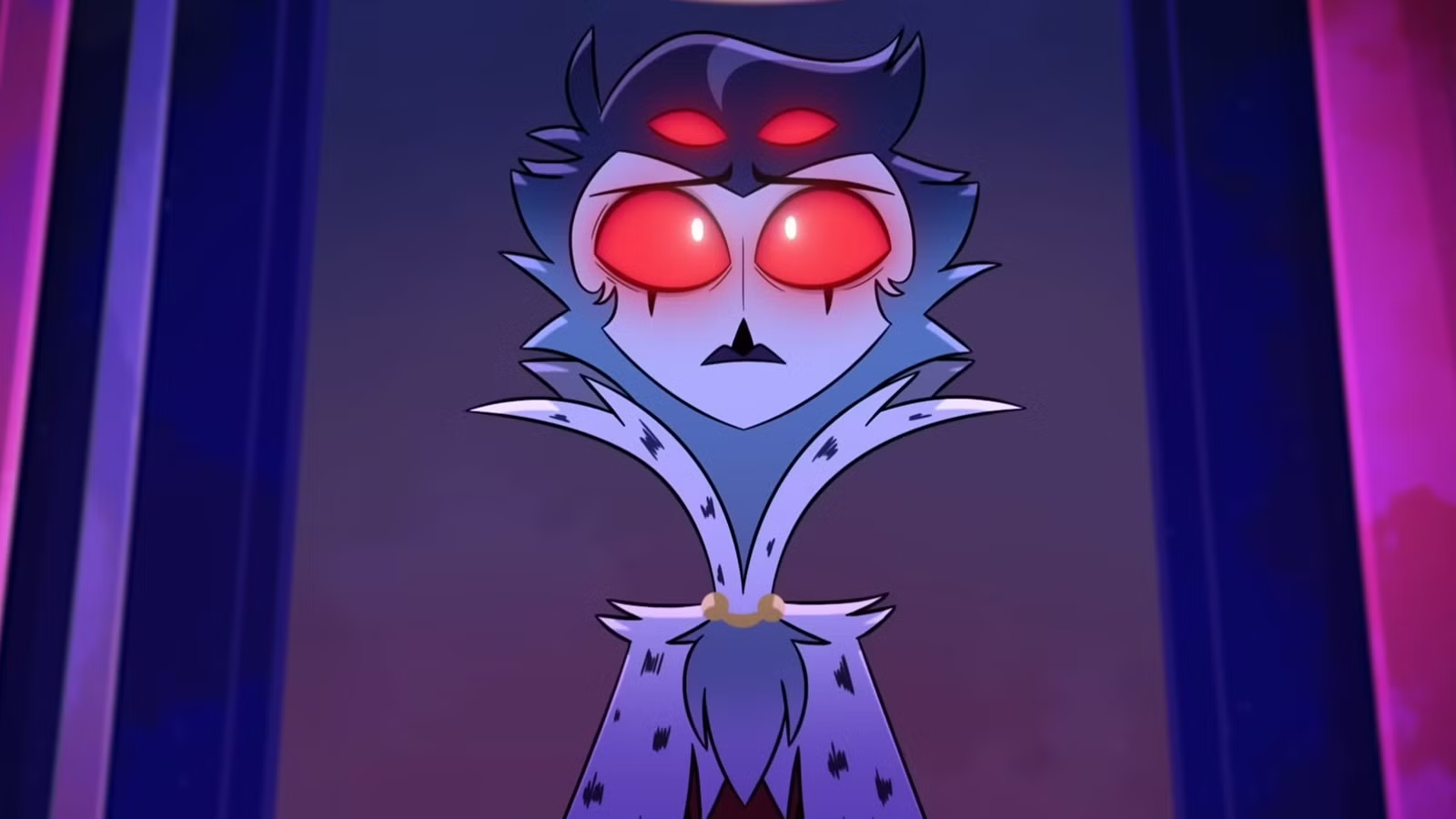
Stolas in the ‘Helluva Boss’ Season 3 teaser.Image via Prime Video
After months of waiting, Helluva Boss fans finally have concrete news, and it’s bigger than expected. The hit animated series has officially confirmed that Season 3 is on the way, but it won’t be arriving all at once.
This is a developing story. Please refresh your page for updates from Collider.
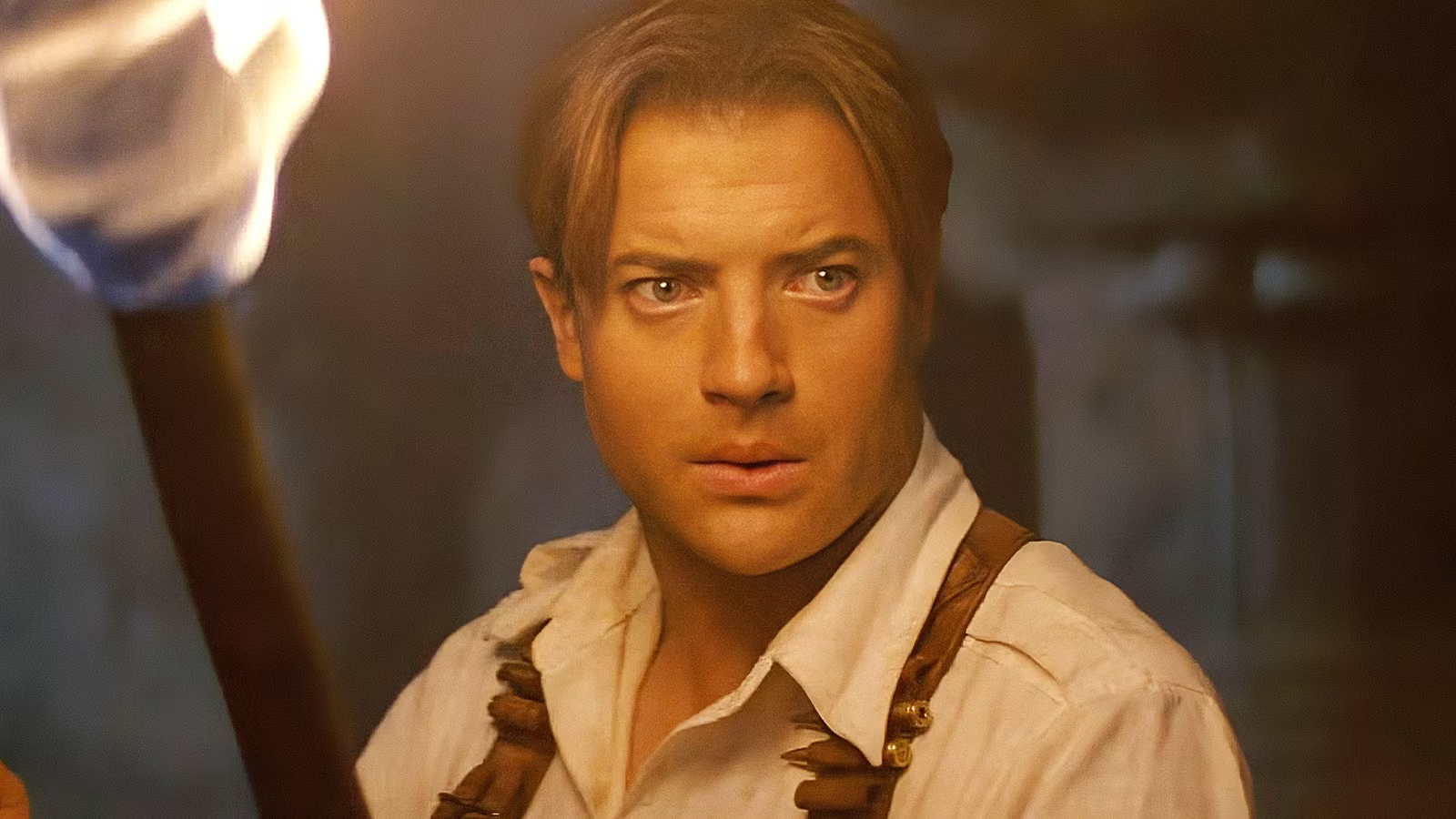
Brendan Fraser holding a torch in The MummyImage via Universal Pictures
This article covers a developing story. Continue to check back with us as we will be adding more information as it becomes available.
The Mummy is rising from its tomb sooner than anticipated. The upcoming film, which will reunite Brendan Fraser and Rachel Weisz for the first time in 25 years, will carry on the legacy of the horror-tinged action adventure franchise. But for the first time, it will be exploring some unfamiliar terrain; a new page on the calendar.
Advertisement
The as-yet untitled Mummy 4 will now hit theaters on October 15, 2027. That’s a move of seven months up from its original release date on May 19, 2028. It’s also a change from the franchise’s previous entries; The Mummy, The Mummy Returns, and The Mummy: Tomb of the Dragon Emperor were all summer releases. Tom Cruise‘s attempted Dark Universe kickoff, 2017s The Mummy, was also a would-be summer tentpole. Does this portend a more horror-oriented version of the film, in keeping with the film’s new release date in the heart of spooky season? Or was it simply a matter of the film being ahead of schedule? We’ll have to wait until next October to find out.
This article covers a developing story. Continue to check back with us as we will be adding more information as it becomes available.
While the most popular titles about World War II are movies, including classics like Saving Private Ryan and Schindler’s List, a handful of TV shows have gone on to also portray the dark chapter in world history. Among them is World on Fire, a BBC series that first released in 2019 and was abruptly cut short after two seasons. The series, led by The Little Mermaid‘s Jonah Hauer-King, depicted a series of compelling and at times heart-breaking storylines from the early days of the war.
In its two-season run, the series received some major critical acclaim. On Rotten Tomatoes, World on Fire not only has a 92% average score from critics, but received an impressive 100% for Season 2. So, while the series has yet to receive worldwide recognition, there’s no doubt that it’s one of the most ambitious, and critically acclaimed, WWII TV shows out there.
Advertisement
What Is ‘World on Fire’ About?
Set in the earlier days of WWII, World on Fire follows the intertwining fates of ordinary people in Britain, Poland, France, Germany, and beyond, as they grapple with the effects of war on their everyday lives. Among them is Hauer-King’s character Harry Chase, a British translator working in Warsaw when the war breaks out. In addition to his convoluted love life, the series follows his character as he’s recruited to become a soldier, and later rises through the ranks of army intelligence. Other important characters include Kasia Tomaszeski (Zofia Wichłacz), a Polish waitress who joins the Polish Resistance against Nazi occupation, and Helen Hunt‘s Nancy Campbell, an American journalist risking her own life to expose the Nazi truth and propaganda in Berlin.
In each of the intertwined stories, not only does World on Fire paint a picture of what the war meant to all kinds of people, but the series also shines a light on some of the lesser known and overlooked moments of the war, including the Battle of Danzig in Poland and the Battle of the River Plate near Uruguay. In Season 2, World on Fire kicks off in the chaos of October 1940. This time around, viewers see how the Great War makes its way to Britain with Harry and other pilots like him revving their engines to defend the skies over Manchester. The series, created by Peter Bowker, also stars Lesley Manville, Sean Bean, Eryk Biedunkiewicz, Julia Brown, Yrsa Daley-Ward, and Parker Sawyers.
Advertisement
Collider Exclusive · Oscar Best Picture Quiz Which Oscar Best Picture Is Your Perfect Movie? Parasite · Everything Everywhere · Oppenheimer · Birdman · No Country
Five Oscar Best Picture winners. Five completely different visions of what cinema can be — and what it can do to you. One of them is the film that was made for the way your mind works. Ten questions will figure out which one.
🪜Parasite
Advertisement
🌀Everything Everywhere
☢️Oppenheimer
🐦Birdman
🪙No Country for Old Men
Advertisement
01
Advertisement
What kind of film experience do you actually want? The best movies don’t just entertain — they leave something behind.
02
Advertisement
Which idea grabs you most in a film? Great films are driven by a central obsession. What’s yours?
03
Advertisement
How do you like your story told? Form is content. The way a story is shaped changes what it means.
04
Advertisement
What makes a truly great antagonist? The opposition defines the protagonist. What kind of opposition fascinates you?
05
Advertisement
What do you want from a film’s ending? The final note is the one that lingers. What do you want it to sound like?
06
Advertisement
Which setting pulls you in most? Where a film takes place shapes everything — mood, stakes, what’s even possible.
07
Advertisement
What cinematic craft impresses you most? Every great film has a signature — a technical or artistic element that makes it unmistakable.
08
Advertisement
What kind of main character do you root for? The protagonist is the lens. Who you choose to follow says something about you.
09
Advertisement
How do you feel about a film that takes its time? Pace is a choice. Some films sprint; others let tension accumulate slowly, deliberately.
10
Advertisement
What do you want to feel walking out of the cinema? The best films leave a mark. What kind of mark do you want?
The Academy Has Decided Your Perfect Film Is…
Advertisement
Your answers have pointed to one Oscar Best Picture winner above all others. This is the film that was made for the way your mind works.
Parasite
Advertisement
You are drawn to films that operate on multiple levels simultaneously — that begin in one genre and quietly, brilliantly migrate into another. Bong Joon-ho’s Parasite is a film about class, desire, and the architecture of inequality that manages to be darkly funny, deeply suspenseful, and genuinely shocking across a single extraordinary running time. Your instinct is for cinema that hides its true intentions until the moment it’s ready to reveal them. Parasite is exactly that — a film that rewards close attention and punishes assumptions, right up to its devastating final image.
Everything Everywhere All at Once
Advertisement
You want it all — and this film gives you all of it. The Daniels’ Everything Everywhere All at Once is one of the most maximalist films ever made: action comedy, multiverse sci-fi, family drama, existential crisis, and a genuinely earned emotional core that sneaks up on you amid the chaos. You are someone who responds to ambition, who doesn’t want cinema to choose between being entertaining and being meaningful. This film refuses that choice entirely. It is overwhelming by design, and its overwhelming nature is precisely the point — because the feeling of being crushed by infinite possibility is exactly what it’s about.
Oppenheimer
Advertisement
You are drawn to cinema on a grand scale — films that understand history not as a backdrop but as a force, and that place their characters inside that force and watch what happens. Christopher Nolan’s Oppenheimer is a film about the terrifying gap between what we can do and what we should do, told with the full weight of one of the most consequential moments in human history behind it. You want your films to feel important without feeling self-important — to earn their ambition through sheer craft and the gravity of their subject. Oppenheimer does exactly that. It is enormous, complicated, and refuses easy comfort.
Birdman
Advertisement
You are drawn to films that foreground their own construction — that make the how of the filmmaking part of the what it’s about. Alejandro González Iñárritu’s Birdman, shot to appear as a single continuous take, is cinema examining itself through the cracked mirror of a fading actor’s ego. You respond to formal daring, to the feeling that a film is doing something that probably shouldn’t be possible. Michael Keaton’s performance and Emmanuel Lubezki’s restless camera create something genuinely unlike anything else — a film that is simultaneously about creativity, relevance, self-destruction, and the impossibility of ever truly knowing if your work means anything at all.
No Country for Old Men
Advertisement
You are drawn to cinema that trusts silence, that refuses to explain itself, and that treats dread as a form of meaning. The Coen Brothers’ No Country for Old Men is a film about the arrival of a new kind of evil — implacable, arbitrary, and utterly indifferent to the moral frameworks we use to make sense of the world. It is one of the most formally controlled films ever made, and its controlled restraint is what makes it so terrifying. You want your films to haunt you, not comfort you. You are not interested in resolution if resolution would be dishonest. No Country for Old Men is honest in a way that most cinema never dares to be.
Advertisement
‘World on Fire’ Is a Must-Watch Historical Drama
Image via PBS/BBC
From the critics’ reviews alone, World on Fire surely joins the list of must-watch TV. Among the highlights in the reviews are the performances on the show, notably Hauer-King, Bean and Manville. “Sean Bean has made a career out of playing noble leaders like Boromir in Lord of the Rings. But he’s wonderful here as a working-class pacifist whose mind World War I shattered,” writes one review. “The best thing about the show is the great Lesley Manville’s performance as Robina,” asserts another review. On the show, The Crown actress plays Robina Chase, Harry’s mother. “A believable and craftily comic portrayal of a woman who reluctantly lets down her guard in response to the war.”
Advertisement
Most of all, critics praise the series’ perspective of showing individual emotional stories from their characters, and letting their experiences depict the atrocities of the war. After all, while statistics can go long in describing the horrors that happened during that time, the personal, heartfelt stories show them expertly instead. “World on Fire is, at times, unbelievably cheesy – but the characters’ broad strokes make for high-drama entry points into the true horrors of the historical narrative,” wrote one review.
With all that said, while World on Fire came to an end after Season 2, the series remains as one of the BBC’s most ambitious and critically acclaimed series on WWII. By using heartfelt character arcs to tell multiple stories, the series succeeds in not only being an emotional drama, but also an action-packed war series about the atrocities and realities of war.
Bold and the Beautiful has a stack of plots that is irritating viewers right now. And I tend to agree with most of the fan opinion on this. From RJ Forrester‘s (Brayan Nicoletti) abrasive attitude to Taylor Hayes (Rebecca Budig) happily never after just evaporating and a few other things on B&B that are just not proper. Not proper at all. And we’re going to discuss five of the worst plots on the CBS soap right now.
So, I see a lot of fans ranting on soap social media every day about the nonsense that we’re seeing on Bold. Some viewers are extremely ticked off. So, we’re going to talk about RJ, Electra, Taylor, Steffy, Hope, and some others.
Electra And Will’s Letter Situation on Bold and the Beautiful
So, the first thing we’re going to talk about is this whole thing with Electra Forrester (Laneya Grace) and Will Spencer (Crew Morrow) and the whole letter situation. And honestly, the whole scope of this storyline. We’ve seen how pouty that Electra has been. How she has no problem with somebody that she says is her friend living on the street eating out of dumpsters. And also, we’ve just seen her and Will and others that just won’t communicate clearly. And of course, we got RJ’s holier than thou bullcrap.
This could have all been cleared up if Electra had just asked Will why he ignored her letter or sent an email or a text or just had a conversation face to face or if Electra had actually listened when Will tried to explain that Ivy was lying about him. But Electra gave him no oxygen to even hear him. None of the people speak plainly and none of them listen. And on top of that, it feels like, and this is not just for this storyline, but across the board, almost every episode repeats the same exact conversation we heard the last time those people were on screen.
Advertisement
If they’re on Monday, and then we see them Monday, we see them Wednesday, same conversation again. And the main criticism I see about Bold is storylines don’t move forward. It’s repeat, repeat, repeat. And then every three episodes or maybe once a week, something moves forward a little.
We’ve been on the same calendar day on Bold for a week of episodes. If you look at the outfits that Electra and Daphne and others are wearing, it is literally not moving forward. I see this same criticism on most plots on B&B. Repeat conversations day after day and then you pile in unneeded flashbacks to make it even more stagnant.
Ivy’s “Not Proper” Thing on B&B
Another thing really bugging fans for a while now has been Ivy and her whole “It’s just not proper” thing. Brad Bell has done some bizarre rewrite on her. This is nothing like Ivy ever was before on Bold and the Beautiful. I don’t ever recall her even using the word proper before all the years she was on.
Ashleigh Brewer’s character has been twisted around to make her an uptight helicopter aunt manipulating Electra. And frankly, it’s not a well-written storyline. If you have to have a character acting totally out of character to make it work, that’s not good writing.
Advertisement
The whole storyline was not only dragged out, but after all this time, it’s frustrating to get a character that people actually used to like, Ivy, back on the scene, only to have her behave like an uptight, controlling weirdo. They brought her back, but made Ivy entirely unlikable. We were supposed to be getting her back to, you know, do something with Liam, maybe even with Thomas because they’re not related, something interesting.
Instead, she’s stalking Will and Dylan when she was supposed to be sick while Electra was out of town. And even now, Ivy remains unapologetic. She’s still rambling, hoping Electra doesn’t go back to Will. That’s on Friday’s episode after Ivy’s basically agreed it’s time for her to leave Forrester.
Everything With RJ Forrester
So, the next hot mess plot to talk about is everything with RJ Forrester since the recast with Brayan Nicoletti. It’s nothing to do with the actor. He’s fine. Handsome young guy. It is how Brad Bell is writing RJ. He used to be a much more likable young man. And he’s been a jerk from about five minutes after he walked through the door.
He was nice to Will for like a second and said, “Let’s not act like our dads Bill and Ridge. Let’s put that animosity behind us.” Will agreed. And then what does RJ do? He actually immediately started acting like his dad, Ridge Forrester (Thorsten Kaye).
Advertisement
Because RJ latched on to the idea of being with Electra. And that was back when she and Will were doing great. They were totally happy. And Brooke Logan (Katherine Kelly Lang) even told him, “Don’t go there. She’s with Will.” But RJ did.
And then he is just doubled down and tripled down. He’s 100% unlikable. He has not been a big hit with the fans. I think he’s the worst nepo baby that Bold and the Beautiful has ever had. And honestly, I think the writers need to completely rehab RJ if they ever want fans to like him.
Bold and the Beautiful: RJ Forrester – Taylor Hayes
Bold and the Beautiful Fans in an Outrage
Some recent comments on soap social media about him. This one I like. Can they please ship RJ overseas and bring back Thomas? Another said, RJ and Ivy are total garbage. And another said, RJ’s such a weirdo. Other comments flat-out call him a dumbass. Somebody else posted a long line of laughing face emoji’s over RJ saying his life hasn’t been as easy as Dylan thinks. RJ actually told that to a young woman who lived in her car and ate from a dumpster. What? Did he not get the jacket he wanted from Neiman Marcus? Come on.
Where are Deacon & Taylor on Bold?
Another thing bugging fans is the lack of follow-through, next steps, or any kind of closure on Deacon Sharpe (Sean Kanan) and Taylor. Everybody’s asking, “Where’s Deacon and Taylor? What happened?” Last we saw, they’re at Deacon’s place. They’re kissing. Sheila Carter (Kimberlin Brown) is stalking and smirking, saying she’ll be back.
You know, we had Deacon and Taylor finally get together, but they still didn’t actually get together. They didn’t make love. You know, they were interrupted before when Sheila came in with the knife. And then we had that, you know, them kissing on the sofa and then the Sheila cliffhanger. Will she kill them or won’t she? And then all of them disappeared.
Advertisement
So, are we going to circle back around to Taylor and Deacon? Has Taylor moved into Deacon’s little apartment? Did they get a house? You know, they didn’t even get a big pinnacle moment. Like, here we are. We can be together. He picks up Taylor in his arms, carries her to the bedroom, nothing. We got a very lackluster climax and then no climax. And they’re just on the back burner. Fans aren’t loving that.
Steffy And Hope Are MIA on B&B
The last thing to talk about is the fact that Steffy Forrester (Jacqueline MacInnes Wood) and Hope Logan (Annika Noelle) are pretty much MIA these days. Bold fans are ticked about this, too. After Hope reconciled with Liam Spencer (Scott Clifton), we never see them. Basically, they show up to make commentary on other storylines, like talking about Taylor and Deacon or the Logan Fashion House. I was hoping to see Hope and Liam expanding their family, getting a place of their own. They don’t even show them in the cabin anymore. It’s Brooke’s living room.
Then, we got Steffy and Finn Finnegan (Tanner Novlan). We see them every once in a while, usually for sofa sex, and that’s it. They also were mostly side items in the Taylor, Deacon and Sheila drama and then they evaporated. I saw a comment on social media where a fan asked if anybody remembers Steffy and Hope. One fan asked, “Where is Steffy? She needs to kick her loser brother RJ’s ass.” That made me laugh.
So, I understand that Bold wants younger folks center stage trying to bring in a younger demo, but they also don’t need to neglect their other fans and their other characters. You know, Hope and Steffy and that generation should be center stage, not the barely out of their teens crew.
Roommates, what started as what families believed was a trusted community role has now ended in a courtroom verdict that has left a Ohio community with more questions than comfort, especially as the name Rushon Patterson II continues to sit at the center of a heartbreaking case involving a teenager’s final ride.
Former Pastor Convicted In Fatal Church Van Incident Involving Teen
An Ohio jury has convicted Rushon Patterson II, 27, a former volunteer pastor, in connection with the death of 14-year-old Malachi Nichols-Williams, who died after falling from a moving church van in September 2025. Patterson was found guilty of involuntary manslaughter and allowing a child to ride outside a vehicle, but acquitted of reckless homicide. Prosecutors said Patterson was driving a church van for Alive Now Kidz Church in Canton Township when he allowed Malachi and other teens to hold onto the outside of the vehicle while he drove through a neighborhood.
Pothole Impact Leads To Fatal Fall From Moving Van
According to testimony, most of the teens let go when they noticed a pothole ahead, but Malachi did not. When Patterson drove over it, the impact reportedly caused the teen to fall and hit his head on the pavement, suffering a skull fracture and severe brain injury. Malachi initially attempted to stand after the fall, and a pediatric neurosurgeon testified that there were early signs he might survive, but he remained on life support for three days before his mother, Pamela Nichols, made the devastating decision to let him go on September 9, 2025.
Mother Mourns Loss While Describing Pastor As Father Figure
In the aftermath, Nichols described Patterson as someone who had been like a father figure to her son and other children, saying she did not see him as a bad person, but as someone who made a tragic mistake. She also made the decision to donate Malachi’s organs, telling reporters she wanted his passing to still help others live on. Patterson now awaits sentencing on May 12 as the community continues to grapple with how a routine church outing ended in irreversible loss.
Kristy Scott is keeping her summer curves in check with a lil’ help from a familiar face! On Thursday, the mega-influencer shared a photo from her gym session and Victoria Monét’s ex-boyfriend, John Gaines, was in it. For now, it’s unclear whether the link-up was strictly professional or something more, but it definitely turned heads on the ‘gram!
Divorce seemingly isn’t stopping Kristy Sarah from booking her gigs and hitting the gym in between! Yesterday, she shared a look at her day, which included a workout session with John Gaines. No word on how long they’ve been training together, but their casual selfie had her fans hype! In the photo, she’s throwing up her deuces, standing in front of Gaines while he flexes her biceps. They both had on black workout fits, from his durag to her glasses frame. She tagged him in the photo, writing, “GYM SESH” with a bicep emoji.
Social Media Reacts To Kristy’s Workout
In The Shade Room’s comment section there was a mix of everything. Some roomies kept asking WHO, needing a reminder that John Gaines is Victoria Monét’s ex-man and current co-parent for daughter Hazel Monét. Gaines and Victoria broke up in 2023, but didn’t reveal the news until 10 months later in September 2024. Their joint statement spoke of mutual affection and denied any rumors of infidelity.
“We both just have some fundamental growing to do that would be best done apart so we can remain the best versions of ourselves for our daughter,” the statement said, per PEOPLE. “It simply didn’t work out and that’s OK. We still think the world of each other and operate with love in every interaction for our family.”
Meanwhile, others had questions about the sweaty link-up and the history between Kristy Scott and John. Are they giving baewatch or trainer-client? Here’s a taste of the comment section.
Advertisement
@fortheyappers wrote, “Our good sis found her some REAL fine shyt 🤭👏🏾👏🏾.”
“These the kinda rumors I like being started😂,” @jessicapastry joked.
“In terms of looks, this is an upgrade. That’s a beautiful man,” @dayday45890 commented.
Meanwhile, @g0al.diggaa added, “This is literally Victoria Monet baby daddy he’s a trainer yall be reachinggggggg 😂.”
Advertisement
“Desmond somewhere cooking a meal, peacefully lol,” @tasha.raye313 wrote.
“That’s not a man, that’s a whole power supply 😭,” @faithdonna.z joked.
What do A Classic Horror Story, The Conference, and Oxygen all have in common? They’re all internationally produced, non-English speaking Netflix Originals that I wish more people knew about. Listen, I know that English dubs don’t emote properly, and subtitles may seem like a chore, but so is watching some of the stateside Netflix Originals like Time Cut, which is basically a 92-minute commercial for Olive Garden and Butterfingers masquerading as a teen horror flick.
Oxygen, one of the best sci-fi flicks I’ve seen in a very long time, may be a French-language film, but you’ll get so sucked into its bare-bones story and claustrophobic setting that you won’t even realize you’re reading the dialogue off the screen, which forces you to pay close attention, making it impossible to escape the uncomfortable atmosphere it’s thrusting on its audience.
An Uncomfortable Experience All Around
As somebody who has the stomach for the goriest of horror flicks, Oxygen f*cked me up because I’m claustrophobic, and adding the vast nothingness of deep space to the equation makes the story all the more terrifying because there’s no masked antagonist or deep state conspiracy that the viewer is introduced to– we’re simply dealing with a single woman alone with her thoughts, and the highly intelligent AI lifeform that’s trying to guide her to safety.
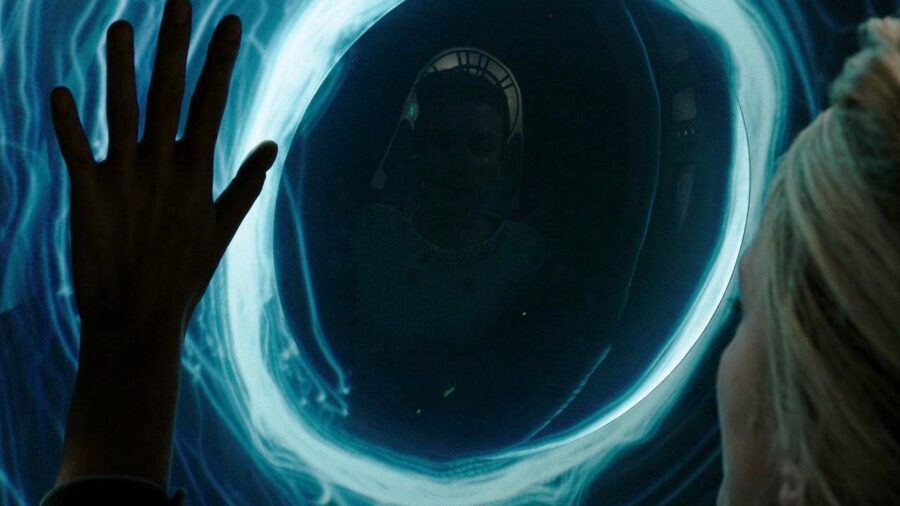
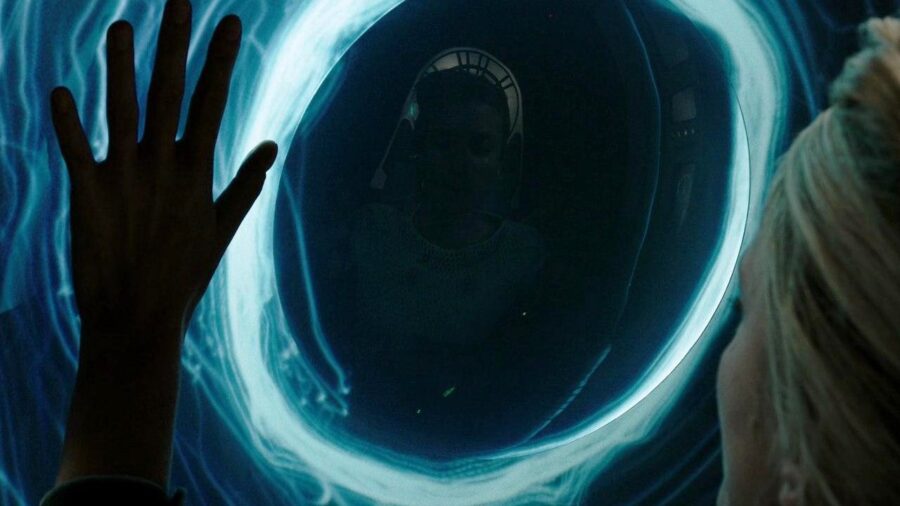
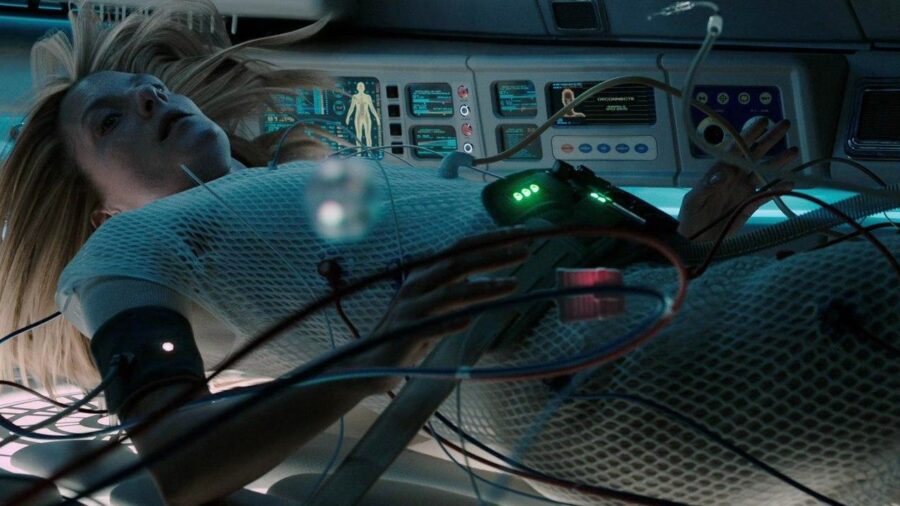
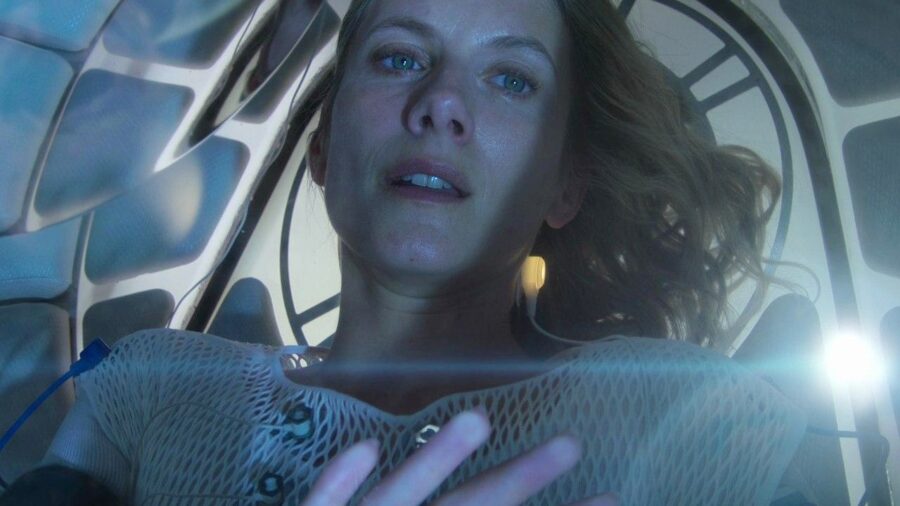
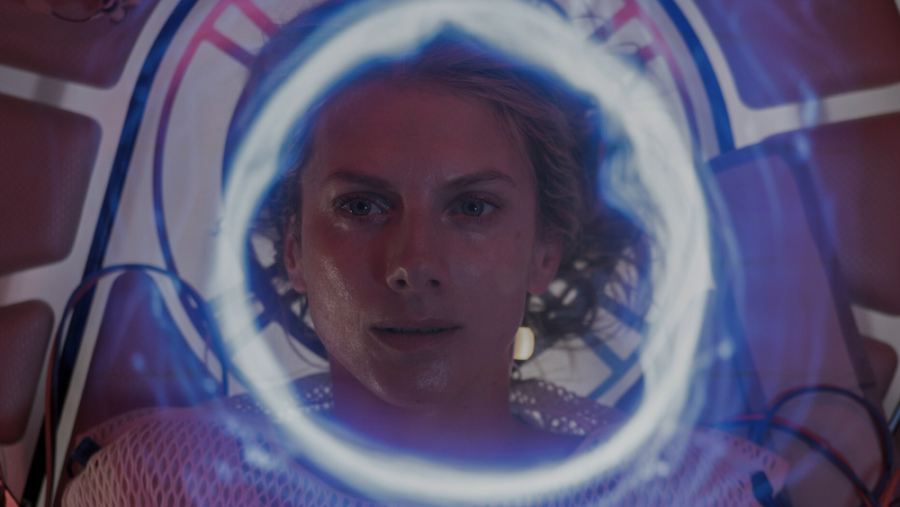
As its title suggests, the primary source of conflict in Oxygen is, in fact, a lack of oxygen. When a woman known as Liz (Melanie Laurent) wakes up shrink-wrapped in a tiny medical pod in an undisclosed location, she immediately finds herself hysterical because the only thing she knows is that she has about 90 minutes of oxygen to find out who she is, where she is, what kind of sick experiment she’s being subjected to, and who’s behind said experiment. Having access to a supercomputer named M.I.L.O. (Medical Interface Liaison Officer), Liz scrolls through vast databases in her attempts to remember who she is and how long she’s been locked up.
Using the limited resources she has at her disposal in Oxygen, Liz slowly but surely uncovers the origin of the pod, but is misled every step of the way whenever she uses M.I.L.O. to contact the authorities, or any other outsider who may have intel on her situation.
Advertisement
Merde
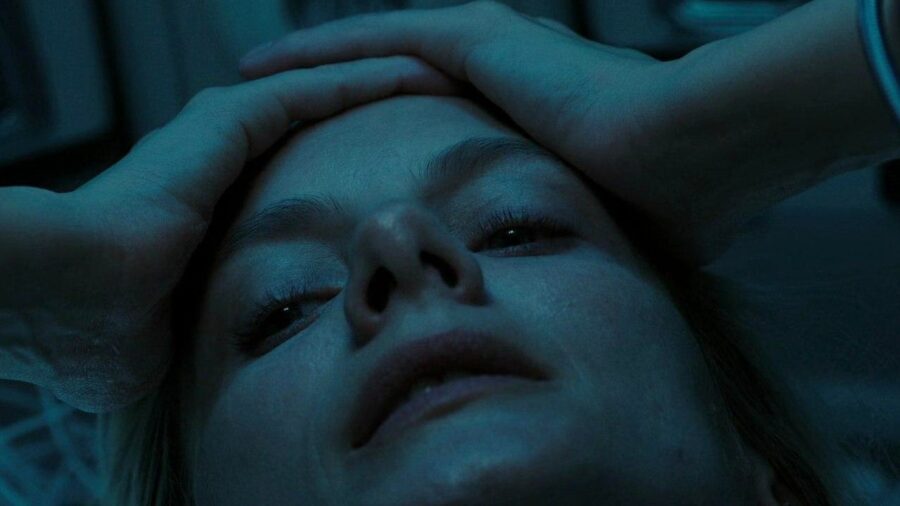
Losing her sense of self as old memories of her sickly husband Leo (Malik Zidi) begin to occupy the front of her mind, Liz places her trust in M.I.L.O., who isn’t necessarily a force of evil, but clearly has been instructed not to fully reveal the truth about her situation. Having to choose between putting herself back into hypersleep and risk running out of oxygen, or suffocating while searching for answers, Liz has to think fast in her disoriented state while she waits for the authorities to rescue her, but doesn’t have a compelling reason to believe that help is actually coming any time soon. Facing her own mortality as a literal oxygen clock is ticking right in front of her, Liz desperately tries to remember who she is, where she is, and whether she’s locked up voluntarily or against her will.
A Powerhouse Solo Performance
Melanie Laurent has all the respect in the world from me because filming Oxygen couldn’t have been a pleasant experience by any stretch of the imagination. Sure, the pod she’s in, which probably isn’t bigger than a bathtub, is probably more spacious than I think from a production standpoint, but it’s still an immensely claustrophobic setting that made me all the more anxious when I realized that there probably had to be camera and crew members on-site to make Oxygen possible.
Technicality outside of the on-screen theatrics aside, Laurent’s genuine portrayal of fear and isolation-induced confusion will have you sweating bullets when you realize that she’s alone and has no reason to trust anything she’s being told while searching through vast databases for her origin story.
Oxygen Won’t Let You Look Away
To put it bluntly, Oxygen made my skin crawl, but its sense of urgency kept me from looking away because of how well-acted it is, which is commendable when you consider the fact that we’re talking about a lone woman conversing with a disembodied, artificially intelligent voice in such a limited setting.
If you’re ready to challenge yourself with one of the best Netflix Original sci-flicks on the platform today, I’d strongly advise you to watch Oxygen in a wide, open space because if you don’t you’ll feel just as locked up and hopeless as Liz.
Social media users are debating after Jay Cinco shared his thoughts on the current state of streaming, suggesting the industry may be losing momentum. His comments, particularly referencing Kai Cenat’s Streamer University, quickly sparked mixed reactions across platforms.
During a recent appearance on Raw Talk with Bradley Martyn, Jay Cinco shared his view of where the streaming industry currently stands. In a clip circulating online, Cinco said he feels the industry is “dying,” pointing to the impact of Streamer University as one reason. According to Cinco, the event led to a surge in viewership for many creators, which he believes may have skewed expectations and performance metrics.
Social Media Reacts
Jay Cinco’s remarks quickly sparked backlash, with some users disagreeing with his take while others argued he may have been misunderstood. Social media users wasted no time sharing their thoughts in The Shade Room Teens’ comment section.
Instagram user @casianrichard wrote, “If you not in the game you will not understand!! He’s not capping 💯”
Advertisement
Another Instagram user @_karyceonaa._ wrote, “He’s just dying as a streamer tbr, not streaming as a whole 😂😂”
While Instagram user @babydamewtf wrote, “😂😂 it’s cause the person who started streamer university not doing it 😂😂 they gon realize that Kai Cenat co-sign real ma”
Instagram user @mariah.bland wrote, “Streamers now a days are not creative that’s the issue. Kai has soo much creativity which brought the views, if streamers step outside the box then their numbers can be high too if that’s the problem they having.”
Another Instagram user @nolimitvinch wrote, “Streaming is dying out but u streamed yo baby shower tho 😂😂😂😂😂😂”
Advertisement
While Instagram user @allaboutmayia wrote, “His views definitely falling off bc he changed his content. He ain’t link up and collaborate with ppl fr hes always at home with his girl and nobody wants to see that sorry 😕🤷🏽♀️”
Instagram user @bryceee.2x wrote, “Must not like the competition”
Another Instagram user @ygdraco wrote, “He tripping I wanna go streamer u 😂😂”
While Instagram user @allaboutbrebre_ wrote, “Nah it became water down when rappers got on it”
Advertisement
Lala Baptiste Speaks Out In Support Of Jay Cinco
Cinco’s pregnant girlfriend Lala Baptiste stepped into the comments to clarify Cinco’s intent, suggesting his words were taken out of context.
“He’s literally off wine and worded it very wrong 😂 anyone who knows him knows he def wasn’t trying to discredit Streamer U,” she wrote. “He was talking about people expecting certain numbers because of that.”
Additionally, Jay Cinco too addressed the backlash himself, explaining that his comments were about perception, not against Kai Cenat.
“Not what I meant… I meant it messed up the perception of views (doing good enough), not as in a bad thing for the streaming community,” he wrote. “I praise Streamer U all the time… it changed lives. It just also made creators feel like they had to have crazy views… overly love on my end, never my intentions.”
He ended his statement with an apology, adding that he may have misspoken.
Everybody handles grief differently, but most of us are fortunate enough not to mourn a loved one while also dealing with an alien apocalypse. If you’re wondering how that might play out, you can check out 2018’s Starfish, a strange gut-punch of a film that, despite its disjointed storytelling, ultimately gets its point across. I call it disjointed, but part of me thinks writer-director A.T. White was intentional with his delivery, because grief is never linear, which makes a lot of sense here.
At its core, the film is about loss, but while our protagonist works through a range of complex emotions like regret and sorrow, there’s a much bigger threat waiting outside, and we catch glimpses of what might be the end of the world. These two storylines don’t always intersect cleanly, but I’m okay with that because of how beautifully Starfish is shot. Speaking strictly in visual terms, this movie makes me feel nostalgic for a moment that never existed. It’s a kind of second-hand sorrow that’s hard to put into words.
Aubrey’s Alien Odyssey
Starfish keeps things vague at first, but its themes roll in naturally, which further supports my assumption that White knew exactly what he was doing structurally. We meet Aubrey (Virginia Gardner) at her best friend Grace’s (Christina Masterson) funeral. One attendee mentions a collection of mixtapes Grace made that only Aubrey will understand, which sends her to Grace’s apartment, where she decides to stay for a while.
At first, Aubrey mostly mopes. She’s living in a space that used to feel alive, but now plays like a shrine to missed opportunities. We don’t learn much about Grace directly, but it’s implied that toward the end of her life she became increasingly reclusive and erratic, often ranting about conspiracy theories.
Aubrey begins seeing monsters outside that come and go without any clear pattern, and she’s eventually contacted over a walkie talkie by someone who claims he was close to Grace near the end. He tells Aubrey that Grace discovered a signal through radio waves that opened a gate, allowing an alien lifeform to enter Earth and wreak havoc.
Initially dismissive, Aubrey slowly realizes that Grace may have been telling the truth, and that she’s now expected to finish what Grace started. She finds a cassette tape addressed to her, with Grace explaining that there are seven more tapes hidden, each containing a song and a clue leading to the next. Played in the right sequence, these tapes could theoretically close the gate and stop the invasion that, from Aubrey’s perspective, has already wiped out most of the world.
Advertisement
Grief Rears Its Ugly Head In Beautiful Ways
My first thought while watching Starfish was that Grace was unbelievably cruel for sending her best friend on a scavenger hunt during an alien invasion right after her funeral. What becomes clear, though, is that this may have always been part of some larger design, as if Grace understood something Aubrey didn’t.
Aubrey, feeling closer to Grace than ever, throws herself into the mission, believing it has real global consequences. There’s also a strong implication that Grace’s consciousness is still present, communicating with her in real time.
Or, none of this is real. It could all be a manifestation of Aubrey’s grief as she processes the loss of someone taken too soon. I lean toward the idea that the invasion is actually happening and the world is collapsing, but the monsters operate on such strange rules that it’s just as possible they’re projections of Aubrey’s internal state and unresolved feelings about Grace.
One detail I’m still chewing on is the animated sequence that pops up when the monsters start closing in. It could be a budgetary workaround, since animation is cheaper than rendering large-scale effects. Or it could be a deliberate stylistic shift, signaling that Aubrey’s perception of reality is slipping as she struggles to cope.
Don’t Worry So Much About The Storytelling
The storytelling in Starfish can feel uneven, sometimes intentionally vague and other times hyper-focused, but the overall experience lands. It’s a film where the whole carries more weight than any individual piece.
Visually, it’s stunning. The grainy texture feels deliberate, not like a limitation. Colors are saturated but soft, and everything has this dreamlike quality even when the tone turns somber.
The standout element, though, is the music. The mixtape concept works well throughout, but I wasn’t expecting the final needle drop to be Sigur Rós’ “Ekki múkk.” That alone is enough to make even the most stoic person stare out a window and rethink their entire existence.
Equal parts gut-wrenching and hopeful, Starfish doesn’t follow a traditional path, but it still tells a complete story. Like grief, it moves in circles rather than straight lines, and that feels intentional. What it lacks in conventional structure, it makes up for by forcing you to feel exactly what it wants you to feel.
Advertisement
As of this writing, Starfish is streaming for free on Tubi.
























































You must be logged in to post a comment Login