
Tech
Google Confirms AirDrop Sharing is Coming To Android Phones Beyond Pixels


Google’s Quick Share-AirDrop interoperability, which has been exclusive to the Pixel 10 series since its surprise launch last year, is headed to a much broader set of Android devices in 2026.
Eric Kay, Google’s Vice President of Engineering for the Android platform, confirmed the expansion during a press briefing at the company’s Taipei office, saying Google is “working with our partners to expand it into the rest of the ecosystem” and that announcements are coming “very soon.” Nothing is the only OEM to have publicly confirmed it’s working on support, though Qualcomm has also hinted at enabling the feature on Snapdragon-powered phones.

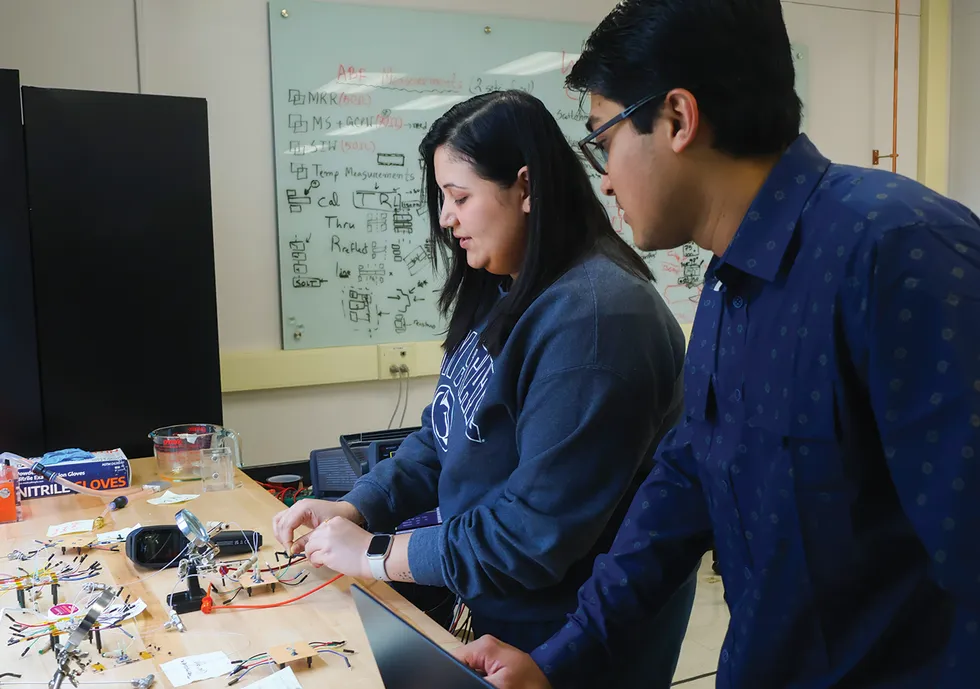

U.S. doctoral programs in electrical engineering form the foundation of technological advancement, training the brightest minds in the world to research, develop, and design next-generation electronics, software, electrical infrastructure, and other high-tech products and systems. Elite institutions have long served as launchpads for the engineers behind tomorrow’s technology.
Now that foundation is under strain.
With U.S. universities increasingly entangled in political battles under the second Trump administration, uncertainty is beginning to ripple through doctoral admissions for electrical engineering programs. While some departments are reducing the number of spots available in anticipation of potential federal funding cuts, others are seeing their applicant pools shrink, particularly among international students, who make up a significant portion of their programs.
In 2024 alone, U.S. universities awarded more than 2,000 doctorates in electrical and computer engineering, according to data from the National Center for Science and Engineering Statistics. The number of computing Ph.D.s grew significantly in the 2010s, according to data from the National Academies, but there is still high demand for those with advanced degrees across academia, government, and industry. Now, some universities point to warning signs of waning enrollment.
Though not all engineers have Ph.D.s, if enrollment continues to shrink, fewer doctoral students could mean fewer engineers developing cutting-edge technology and training the next generation, potentially exacerbating existing labor shortages as global competition for tech talent intensifies.
Federal funding cuts affect admissions
Public universities in particular are feeling the strain because they rely heavily on federal grants to support doctoral students.
The University of California, Los Angeles, for instance, must fund Ph.D. students for the duration of a degree—typically five years. In August 2025, the U.S. government pulled more than US $580 million in federal grants over allegations that the university failed to adequately address antisemitism on campus during student protests. A federal judge has since ordered the funding to be restored, but faculty began to worry that research support could be clawed back without notice, says Subramanian Iyer, distinguished professor at UC Los Angeles’s department of electrical and computer engineering.
According to Iyer, departments across UC Los Angeles, including engineering, plan to scale back Ph.D. admissions this year. “The fear is that at some point, all this government money will be taken away,” Iyer says. “Lowering the admissions rate is just a way to prepare for that reality.”
In response to a request for comment, a spokesperson for the U.S. National Science Foundation—a major source of federal research funding at UC Los Angeles and elsewhere—said, “NSF recognizes the essential role doctoral trainees play in the nation’s engineering and STEM enterprise” and noted several of the foundation’s awards and programs that support graduate research.
Funding shocks may also force Pennsylvania State University to reshape future admissions decisions, according to Madhavan Swaminathan, head of Penn State’s electrical engineering department and director of the Center for Heterogeneous Integration of Micro Electronic Systems (CHIMES), a semiconductor research lab.
In 2023, the Defense Advanced Research Projects Agency (DARPA) and industry partners awarded CHIMES a five-year $32.7 million grant. But in late 2025, the agency pulled its final year of funding from the center, citing a shift in priorities from microelectronics to photonics, Swaminathan says. As a result, CHIMES’ annual budget, which supports research assistantships for roughly 100 engineering graduate students, the majority pursuing Ph.D.s, will fall from $7 million in 2026 to $3.5 million in 2027. If these constraints persist, Penn State’s engineering department may reduce the number of doctoral students it supports.
In a statement, a DARPA spokesperson told IEEE Spectrum: “Basic research is central to identifying world-changing technologies, and DARPA remains committed to engaging academic institutions in our program research. By design, a DARPA program typically lasts about 3 to 5 years. Once we establish proof of concept, we transition the technology for further development and turn our attention to other challenging areas of research.”
Penn State’s enrollment numbers reflect Swaminathan’s caution. He says the electrical engineering Ph.D. cohort shrank from 28 students in 2024 to 15 students in 2025. Applications show a similar pattern. After rising from 195 in 2024 to 247 in 2025, Ph.D. applications fell roughly 30 percent to 174 for the upcoming 2026 cohort, a sign that prospective students may be wary of applying to U.S. programs.
Immigration restrictions and application declines
In late January, the Trump administration announced it had paused visa approvals for citizens of 75 countries. Months earlier, the administration proposed new restrictions on student visas, including a four-year cap.
For Texas A&M University’s graduate electrical and computer engineering programs, up to 80 percent of applicants each year are international students, according to Narasimha Annapareddy, professor and head of the department. Annapareddy says applications for the fall 2026 Ph.D. cohort have dropped by roughly 50 percent.
Annapareddy says the United States is “sending a message that migration is going to be more difficult in the future.” Foreign students often pursue degrees in the U.S. not only for academic training, he says, but to build long-term careers and lives in the country. Fewer applications from international students mean that the university forgoes a “driven and hungry” segment of the applicant pool who are highly qualified in technical fields.
“The fear is that at some point, all this government money will be taken away.”— Subramanian Iyer, UC Los Angeles
At the University of Southern California, the decline is more moderate. The freshman Ph.D. class fell from about 90 students in 2024 to roughly 70 in 2025, a reduction of 22 percent, according to Richard Leahy, department chair of USC’s Ming Hsieh Department of Electrical and Computer Engineering.
While Leahy says applications are down modestly overall, domestic applications have increased by roughly 15 percent. Beyond immigration restrictions, international students, particularly from countries such as India and China, may be staying in their home countries as their technology sectors expand.
“A lot of those students that would normally have come to the U.S. are now taking very good jobs working in the AI industry and other areas,” Leahy says. “There are a lot more opportunities now.”
Workforce pipeline strains
Some faculty say shrinking cohorts could erode the tech workforce if the pattern continues.
At UC Los Angeles, Iyer describes a doctoral ecosystem built on a chain of mentorship. Among the roughly 25 students in his lab, senior doctoral students mentor junior Ph.D. candidates, who in turn guide master’s students and undergraduates. The system depends on overlapping cohorts. Reducing the number of students hired weakens that overlap and the trickle-down benefits of the mentorship model that keeps labs functioning.
The real benefit of the university system isn’t just the teaching but also “the community that you build,” Iyer says. “As you decrease admissions, this will disappear.”
At Penn State, Swaminathan points to specialization as key to a strong workforce. Many doctoral students train in semiconductor engineering, feeding expert talent into the domestic chip industry. If enrollment continues to shrink over the next few years, Swaminathan says, companies may need to hire students with bachelor’s or master’s degrees, who might lack the necessary skills required to design and innovate new chips.
“Without that specialization, there’s only so much one can do,” Swaminathan says.
The industry–academia gap
Not all departments are shrinking. At the University of Texas at Austin, overall enrollment has remained relatively steady, according to Diana Marculescu, chair of UT Austin’s Chandra Family Department of Electrical and Computer Engineering.
While she says recent fluctuations aren’t raising alarms, her concern lies more with alignment between research and industry. Doctoral students often train according to current grant priorities, she says. But by the time graduates enter the job market four to six years later, their specialization may not align neatly with open roles. That creates friction in the talent pipeline.
“That lack of connection might be problematic,” Marculescu says. She argues that closer collaboration between universities and the private sector could help create stronger feedback loops between hiring needs and academic research priorities.
For now, USC’s Leahy says Ph.D. graduates remain in high demand, and the current shifts have not yet translated into measurable workforce shortages. “We should be concerned about the number of Ph.D.s,” he says. “But there isn’t a crisis at this point.”
From Your Site Articles
Related Articles Around the Web
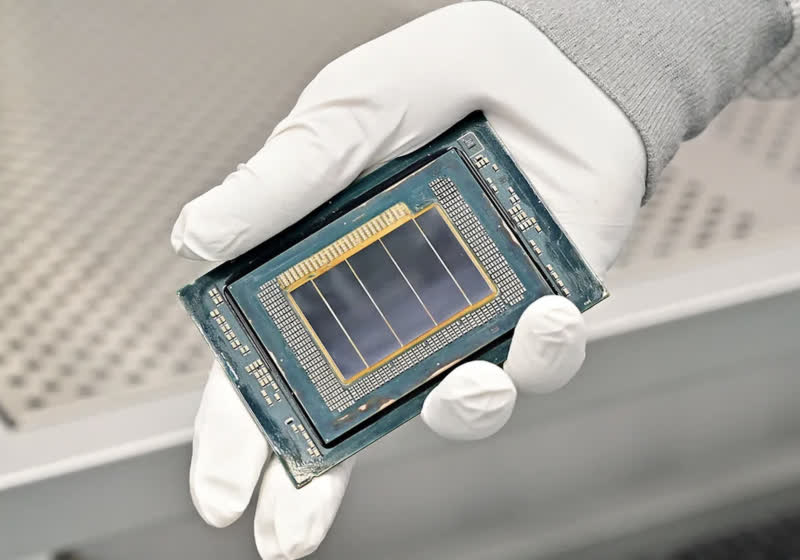
PC and server manufacturers recently informed Nikkei Asia that they are no longer receiving enough processors from Intel and AMD to satisfy demand. Server and OEM PC manufacturing could face delays, and prices might rise by 10% to 15%.
Read Entire Article
Source link

from the bye-bye dept
Even at the best of times, the hallmark of RFK Jr.’s Health & Human Services is chaos. Whether it’s misinformation on vaccines and other public health matters, his unique ability to exit very smart people from public health agencies, or his desire to upend established government health protocols, it’s a constant frenzy when Kennedy is in charge.
But these aren’t the best of times for Kennedy. In fact, it appears that both legal and political mechanisms are starting to mete out consequences for all the nonsense going on at HHS. It was only days ago that a federal court issued an injunction on the CDC’s changes to vaccination schedules since Kennedy remade ACIP in his image, and in fact the new ACIP appointments themselves may be illegal. Almost simultaneously, reports came out that the White House is attempting to yank Kennedy and HHS out of the spotlight due to their becoming a political liability heading into the midterms.
And now, in what will both be a reaction to and furtherance of all of that chaos, Robert Malone has announced that he is leaving ACIP altogether. Malone is a proud anti-vaxxer and claims to have “invented” mRNA technology, a claim that is heavily disputed, to put it mildly. In the wake of the court’s injunction on ACIP and its recommendations for vaccine schedules, there was reporting that Kennedy was planning to disband ACIP once again and remake it with all new members as a quicker fix than appealing the court’s decision. As a result, Malone jumped straight to social media to claim that’s exactly what happened, before later retracting his statement.
On Thursday, Malone claimed on social media that the Department of Health and Human Services (HHS) had disbanded ACIP and planned to completely reconstitute it (again), without appealing the judge’s ruling or defending Kennedy’s ACIP picks from the judge’s claims that they were unqualified. But soon after, Malone retracted his claim, saying it was a miscommunication and that disbanding ACIP was merely one of the “options being considered.”
In other words, he took half-baked information and made definitive claims to the masses, claims that turned out to be incorrect. So, you know, basically on par with all of the nonsense he’s spewed about vaccines. HHS spokesman Andrew Nixon then had to issue a statement to the press to clean all of this up, stating that anything that doesn’t come directly from him or HHS brass was “baseless speculation”.
And it was that, of all things, that caused Malone to quit.
Malone told Roll Call today that Nixon’s response was what led to his departure. “After Andrew trashing me with the press, I am done with the CDC and ACIP,” Malone said in a text message Tuesday morning. “That was the last straw.”
“Suffice to say I do not like drama, and have better things to do,” he added.
And then he went to the New York Times as well.
“Hundreds of hours of uncompensated labor, incredible hate from many quarters, hostile press, internal bickering, weaponized leaking, sabotage—I have better things to do,” he said.
On the one hand, I don’t think much of Malone’s qualifications for being a member of ACIP, so I’m not exactly sad to see him exit stage left. But it is interesting to see that the impression of chaos, infighting, bickering, and internal backstabbing that you get viewing HHS from the outside is mirrored by someone on the inside.
This would be funny if this weren’t a matter of public health. If there weren’t a measles outbreak that is still ongoing in this country (we’re already at 1,487 CDC confirmed cases this year). If some of the public and some doctors didn’t take what comes out of this very important government agency seriously.
But all those things are true. The chaos has to end. And for that to happen, RFK Jr. must go.
Filed Under: acip, anti-vaxxers, cdc, health & human services, rfk jr., robert malone, vaccines


The U.S.S. Gerald R. Ford, the lead ship of the Gerald R. Ford-class of nuclear-powered aircraft carriers, is taking a short break to freshen up during a long deployment to the Middle East. Souda Bay, in Greece, will be the Gerald R. Ford’s home for at least a few weeks, according to the United States Naval Institute.
This current deployment for the ship has been a busy one, between a number of issues onboard the ship, including a large fire in the laundry room that resulted in over 200 smoke inhalation injuries. That, and the ongoing conflict with Iran means that the Gerald R. Ford is more than ready for repairs.
Importantly though, the ship is not out of the fight. A statement from U.S. Fleet Forces Command states: “The aircraft carrier remains fully mission capable,” continuing on to say: “The port call allows for the ship to undergo efficient assessment, repairs, and resupply. Gerald R. Ford Carrier Strike Group continues its overseas deployment.”
The biggest and newest carrier

Given that operations in and around Iran and the Strait of Hormuz don’t seem to have a clear end date, it’s likely that the Gerald R. Ford will remain in theater after repairs are made. It also appears that the Navy isn’t taking any chances at de-arming it for the repairs in Greece.
The Gerald R. Ford measures at 1,106 feet and a displacement of 100,000 tons, making it the largest warship ever made. It is the first ship of its namesake class and represents the tip of the spear when it comes to aircraft carrier technology. It is in the process of replacing the Nimitz-class of nuclear-powered aircraft carriers.
As of now, there is a single Gerald R. Ford-class carrier in service. It was designed to have a 50-year service life that, thanks to its two nuclear reactors, only needs to be refueled once, giving it essentially unlimited range on the ocean.
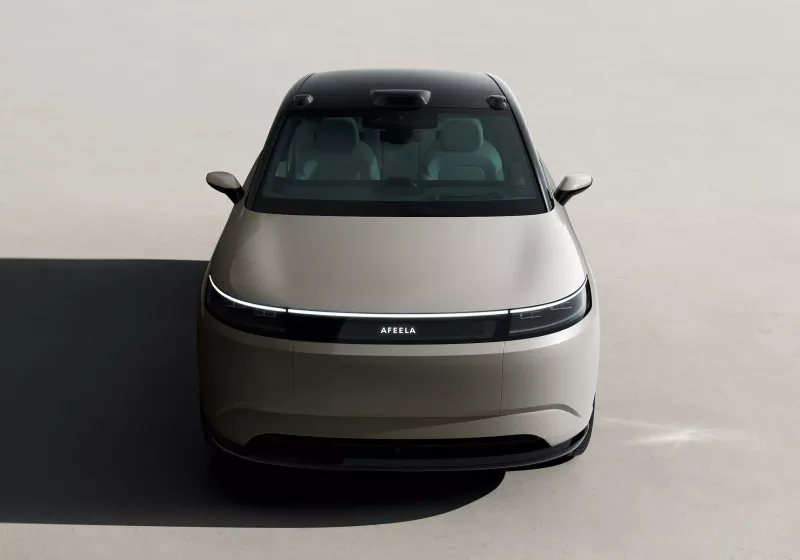
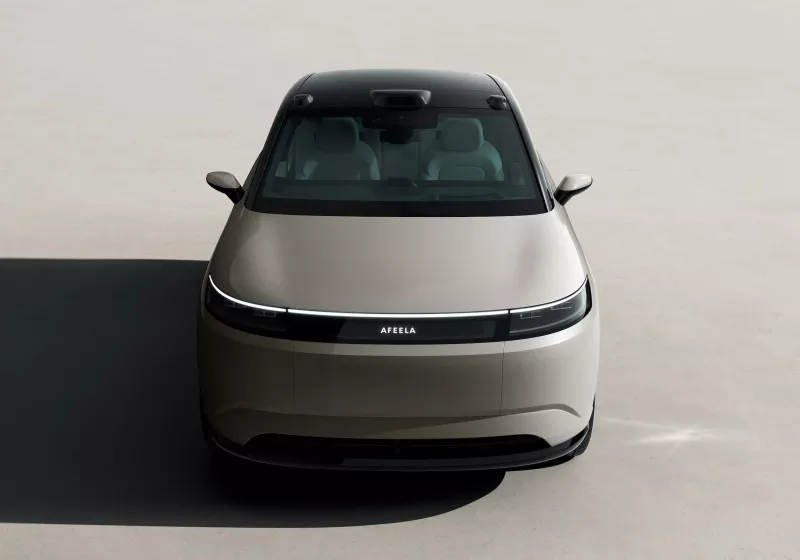
The cancellation marks the latest retreat in a broader industry pullback from electric vehicle programs, as automakers grapple with falling demand, shifting regulations, and rising costs. More than a dozen global carmakers have already delayed or abandoned their all-electric goals, reversing commitments made when government incentives and climate policies favored…
Read Entire Article
Source link

Crunchyroll has finally arrived on Apple TV as a dedicated channel, which means users can stream and download their favorite anime all within the Apple TV app.

Crunchyroll is now an Apple TV channel
When Apple first revealed Apple TV channels, it felt like the obvious endpoint for all streaming services. Netflix never joined up, and others like HBO exited channels, but one beloved service has finally appeared.
The anime streaming platform Crunchyroll has shown up as a channel within the Apple TV app. It may be officially launching Friday, as there is no announcement or documentation showing the change.
Continue Reading on AppleInsider | Discuss on our Forums

A federal judge has sided with Anthropic in its twisty legal battle with the Trump administration, awarding the tech company an injunction against the government’s recent order that labeled it a “supply chain risk,” the Wall Street Journal reports.
On Thursday, Judge Rita F. Lin of the Northern District of California ordered the Trump administration to rescind its recent designation of Anthropic as a security risk, as well as to back off its order that federal agencies cut ties with the company.
“It looks like an attempt to cripple Anthropic,” Lin reportedly said during the court proceedings. Lin ultimately argued that the government’s orders had flouted freespeech protections for the company.
The drama between the Pentagon and Anthropic erupted last last month over a dispute concerning guidelines for the government’s usage of the AI company’s software. Anthropic had reportedly sought to enforce certain limits on how the government could use its AI models, such as banning their use in autonomous weapons systems or mass surveillance. The government disagreed with those limitations, ultimately labeling the company a supply chain risk—a designation typically reserved for foreign actors. President Trump further ordered federal agencies to cut ties with the company.
Not long afterward, Anthropic sued the agency, along with Hegseth.
The White House has spent recent weeks attacking the company, characterizing it as “a radical-left, woke company” that is jeopardizing America’s “national security.” Anthropic CEO Dario Amodei, meanwhile, has called the Defense Department’s actions “retaliatory and punitive.”
On the heels of Judge Lin’s ruling, Anthropic sent TechCrunch the following statement: “We’re grateful to the court for moving swiftly, and pleased they agree Anthropic is likely to succeed on the merits. While this case was necessary to protect Anthropic, our customers, and our partners, our focus remains on working productively with the government to ensure all Americans benefit from safe, reliable AI.”
Techcrunch event
San Francisco, CA
|
October 13-15, 2026
TechCrunch has separately reached out to the White House for comment.
Xero, the New Zealand-founded accounting platform used by 4.6 million subscribers worldwide, announced on Wednesday a multi-year partnership with Anthropic that will embed Claude directly into its product and, more unusually, bring Xero’s financial data into Claude.ai itself. The deal means small business owners will be able to ask Claude questions about their cash flow, overdue invoices, and profit margins without leaving Anthropic’s chatbot.
The integration works in two directions. Inside Xero, the company’s existing AI assistant JAX (Just Ask Xero), which launched in September 2025, will be powered by Claude’s reasoning capabilities to automate financial workflows: tracking cash flow, flagging unpaid invoices, analysing revenue and profit performance, and suggesting actions. Inside Claude.ai, users will be able to connect their Xero accounts and work with live financial data for business planning, scenario modelling, and year-end analysis without switching between tools.
Xero’s engineering teams will also adopt Claude Code and Cowork, Anthropic’s developer tools, to accelerate their own product development. Financial data shared between the platforms will be used solely for the user’s session and will not be used to train Claude’s models, according to the announcement.
The multi-model hedge
What makes the partnership notable is not just its scope but its context. Xero already works with OpenAI. In October 2025, when JAX launched its expanded feature set at Xerocon Brisbane, Xero announced a collaboration with OpenAI to bring deep web research, including tax laws and market trends, directly into the platform. Now Anthropic gets the financial data integration and the agentic workflow layer.
This is a deliberate multi-model strategy. Xero is treating AI providers the way enterprises have traditionally treated cloud providers: spreading workloads across multiple vendors to avoid lock-in, leverage each provider’s relative strengths, and maintain negotiating power. OpenAI handles web research and information retrieval; Anthropic handles financial reasoning and workflow automation. The business logic sits in JAX, Xero’s own orchestration layer, which coordinates multiple AI agents behind the scenes.
For Anthropic, the deal is part of a broader enterprise push. Two weeks ago, the company committed $100 million to its Claude Partner Network, a programme that provides training, technical support, and joint go-to-market resources for organisations deploying Claude. Anchor partners include Accenture, Deloitte, Cognizant, and Infosys. The Xero partnership is a different kind of bet: not a consulting firm reselling Claude, but a vertical SaaS platform embedding it directly into a domain-specific product used by millions of small businesses.
Why the chatbot matters more than the plugin
The more interesting half of the announcement is not Claude inside Xero but Xero inside Claude. When a small business owner asks Claude about their cash position, Claude will pull live data from Xero and combine it with whatever else the user brings to the conversation: a lease agreement they have uploaded, a market report they are reading, a hiring plan they are modelling. The financial data becomes one input among many in a general-purpose reasoning environment.
This is the pattern Anthropic is building toward: Claude as the interface through which people interact with their professional tools, rather than each tool providing its own separate AI assistant. It is the same logic that drove the Model Context Protocol, Anthropic’s open standard for connecting AI models to external data sources and tools. If Claude becomes the place where small business owners do their financial thinking, Anthropic captures the relationship even if Xero is the system of record.
Xero, for its part, benefits from reaching users where they already are. The company reported NZ$1.2 billion in revenue for the first half of fiscal year 2026, up 20 per cent year on year, and recently acquired US bill payments company Melio to strengthen its position in the American market. But Xero’s core challenge, like that of every vertical SaaS company, is that its users spend most of their time outside the product. If Claude can surface Xero’s insights in a conversation the user is already having, that is a distribution advantage Xero could not build alone.
The data question
The partnership’s success will depend on trust. Small business financial data is among the most sensitive information a company holds, and sending it to a third-party AI platform, however reassuring the privacy commitments, requires a level of confidence that many business owners and their accountants may not yet have. The announcement states that financial data is used only for the user’s session and is never used for training. Whether that assurance is sufficient for the accounting profession, which is built on confidentiality and fiduciary duty, remains to be tested.
There is also the question of accuracy. When an AI model makes a mistake in a creative writing task, the consequence is a bad paragraph. When it makes a mistake in a cash flow forecast or tax analysis, the consequence can be a missed payroll or a compliance violation. Xero’s Diya Jolly, the company’s chief product and technology officer, framed the integration as shifting the “admin burden to a team of agents.” That framing works only if the agents are reliably correct, and in financial services, the tolerance for error is measured in basis points, not sentiment.
Claude-powered insights within Xero and the Xero integration into Claude.ai are expected to become available in the coming months. No specific launch date has been announced.


High-speed rail, or train systems that are capable of speeds of at least 186 mph, simply doesn’t exist in the United States. High-speed rail had its start in Japan in 1964 with the bullet train, and only one year later, President Lyndon B. Johnson signed the High-Speed Ground Transportation Act into law, seeking a similar system in the United States. Sixty-one years later, multiple countries have robust high-speed rail systems, including China and much of Europe. We’ve landed a man on the moon and completely mapped the human genome, but high-speed rail has yet to take off in the U.S. In California, however, change is on the horizon.
Described as “a bold vision to transform the state’s future by delivering fast, reliable, zero-emission train service,” a high-speed rail system is being planned in two phases across Northern California, Central Valley, and Southern California. The project, delivered by the California High-Speed Rail Authority, faces skepticism from the public and critics alike, with Forbes describing the project as a “disgraceful boondoggle,” in 2025.
However, the project recently hit a major milestone that literally paves the way for future success. Less than a year after construction started, work has been completed on a railhead facility located on 150 acres in Kern County. This facility will serve as a logistics hub, receiving, storing, and finally distributing material before it moves to active construction zones where workers can begin laying rail. Let’s see what is next in this ambitious project.
The high-speed rail project is planning to soon lay tracks

The first phase of the high-speed rail project encompasses 494 miles and is designed to connect San Francisco and Los Angeles. Because the new trains will reach speeds much higher than even Amtrak’s Acela, the route will take less than three hours, with stops in San José, Fresno, Bakersfield, Burbank, and more. The second phase extends the route to Sacramento and San Diego, with stops in Stockton, Modesto, San Bernardino, and Riverside.
The new hub just south of Wasco, California is equipped with six rail connections for receiving and sending out equipment and supplies, with 10 miles of temporary rail lines that connect it to the national freight network. The facility also has a workshop and maintenance yard, along with the warehouse that stores everything needed for a new high-speed line, including rail, concrete ties, fiber optics, and crushed rock.
Now that the hub is open, crews will start staging material to lay tracks. The High-Speed Rail Authority eventually plans to open another railhead further north to support the project when it moves on to the second phase. Ultimately, the opening of the railhead marks a distinct shift in the project, from preparation to actual construction, something many critics thought they’d never see.
Other states have ambitions for high-speed train projects too

There are still lawmakers that support a national high-speed rail system, including Representative Seth Moulton of Massachusetts. In 2020, Moulton pitched a $205 billion national rail system that would be funded by the federal government. He re-introduced the bill with some support from fellow lawmakers in 2024, but it appears to have stalled.
Meanwhile, there are a few other high-speed rail projects scattered across the country. In Nevada, an affiliate of the company behind the Orlando-Miami train line is planning a 218-mile high-speed train line linking Las Vegas to Rancho Cucamonga, California. It will be constructed on land between the north- and southbound lanes of I-15, simplifying the project by avoiding negotiations with private landowners. Service is expected to begin in late 2028.
There’s also a plan being partially funded by Microsoft for a high-speed line connecting Portland, Oregon with Vancouver, British Columbia in Canada, but it’s still in the planning stages with some critics arguing that it makes more sense to improve service on the Amtrak lines that already exist in the region. In Texas, a line connecting Houston and Dallas was proposed way back in the 1990s. In 2023, Amtrak assumed control of the project, receiving a $64 million federal grant. It’s now on the hunt for private partners for the 240-mile route.

Apple has confirmed to Engadget that the Mac Pro, the desktop tower-shaped computer that was last updated in 2023, has been discontinued. As 9to5Mac notes, the computer no longer appears in the lineup of Macs on Apple’s website or in its storefront. That means at least for now, the Mac Studio is the Apple’s top-of-the-line professional computer.
The current version of the Mac Pro was introduced in 2019, with a distinct cheese-grater design, Intel chips and a bevy of easily-accessible expansion slots. Apple released the computer as a make-good for several years of inadequately meeting the performance needs of professional Mac users, but its uncontested time at the top of the company’s lineup was short-lived. A year later in 2020, Apple began transitioning to its custom M-series Arm chips, proving Macs could be more powerful and power-efficient by abandoning Intel entirely.
Apple eventually updated the Mac Pro to the M2 Ultra without updating the computer’s design, but by then the writing was on the wall. The far smaller Mac Studio, introduced in 2022, also supported the new chip, and it’s been updated since then while the Mac Pro has languished. Bloomberg reported Apple was planning to retire the Mac Pro in November 2025, so it’s not all that surprising the company quietly pulled the plug only a few months later.
Apple’s effort to cater to professionals, creatives and anyone with a chunk of change to drop on a fast computer lives on through the Mac Studio, and the recently announced Studio Display XDR, itself a replacement for the Pro Display XDR Apple announced for the 2019 Mac Pro. Now all the company needs to do is update the Mac Studio with an M5 Max chip to make it the most “pro” computer Apple offers.
Update, March 26, 6:25PM ET: Added confirmation from Apple that the Mac Pro has been discontinued.

“Unlock Financial Freedom: Transform Your Savings with This EPIC House-Shaped Coin Bank!”(AC-1408)

Major change to Motability scheme charges after Government tax hikes

Trump’s Iran Strike Extension: How Bitcoin, Equities, and Crude Oil Are Reacting

Smart energy pays enters the US market, targeting scalable financial infrastructure

Why Israel is blocking foreign journalists from entering

Bitcoin: We’re Entering The Most Dangerous Phase
“Unlock Financial Freedom: Transform Your Savings with This EPIC House-Shaped Coin Bank!”(AC-1408)

PROOF XRP WAS NEVER MEANT FOR RETAIL! – THEY WILL SEIZE YOUR XRP? – XRP MARKETCAP PREVENTS $10+?

“Hawk Tuah” talks Crypto Scandal
-
 Crypto World6 days ago
NIO (NIO) Stock Plunges 6.5% as Shelf Registration Sparks Dilution Worries
-
 NewsBeat2 days ago
Manchester United reach agreement with Casemiro over contract clause amid transfer speculation
-

 Fashion7 days ago
Weekend Open Thread: Adidas – Corporette.com
-

 Politics7 days ago
Jenni Murray, Long-Serving Woman’s Hour Presenter, Dies Aged 75
-

 Crypto World5 days ago
Best Crypto to Buy Now: Strategy Just Spent $1.57 Billion on Bitcoin During Fear While Early Investors Quietly Enter Pepeto for 150x Potential
-

 Crypto World5 days ago
Bitcoin Price News: Bhutan Sells $72 Million in BTC Under Fiscal Pressure, but the Smart Money Entering Pepeto Sees What the Market Does Not
-

 News Videos1 day ago
Parliament publishes latest register of MPs’ financial interests
-

 Sports4 days ago
Remo Stars and Kano Pillars Strengthen Survival Hopes in NPFL
-

 Sports4 days ago
Gary Kirsten Accuses Pakistan Cricket Board Of ‘Interference’, Mohsin Naqvi Responds
-

 Tech5 days ago
Give Your Phone a Huge (and Free) Upgrade by Switching to Another Keyboard
-

 Business5 days ago
No Winner in March 21 Drawing as Prize Rolls to $133 Million for Next
-

 Sports7 days ago
2026 Kentucky Derby horses, odds, futures, preview, date: Expert who nailed 12 Derby-Oaks Doubles enters picks
-

 Tech4 days ago
AI enters the chat: New Seattle dating app relies on tech to facilitate meaningful human connections
-
Business6 days ago
Columbia Sportswear enters $500 million credit agreement with JPMorgan Chase
-

 News Videos4 days ago
Ch 9 Financial Management Part 1 | Detailed One Shot | Class 12 Business Studies Boards 2026
-

 Tech5 days ago
Today’s NYT Connections Hints, Answers for March 22 #1015
-

 Business12 hours ago
Instagram, YouTube Found Responsible for Teen’s Mental Health Struggle in Historic Ruling
-
 Crypto World7 days ago
Small-cap Russell 2000 enters correction territory
-

 Business5 days ago
Will Duke Basketball Win It All? Duke Basketball Enters Second Round as Third Favorite to Claim NCAA Title
-

 Sports4 days ago
2026 Kentucky Derby horses, odds, futures, preview, date: Expert who hit 12 Derby-Oaks Doubles enters picks
You must be logged in to post a comment Login