
Politics
Politics Home | MPs Vote Down Tory Bid To Refer PM To Privileges Committee Over Mandelson

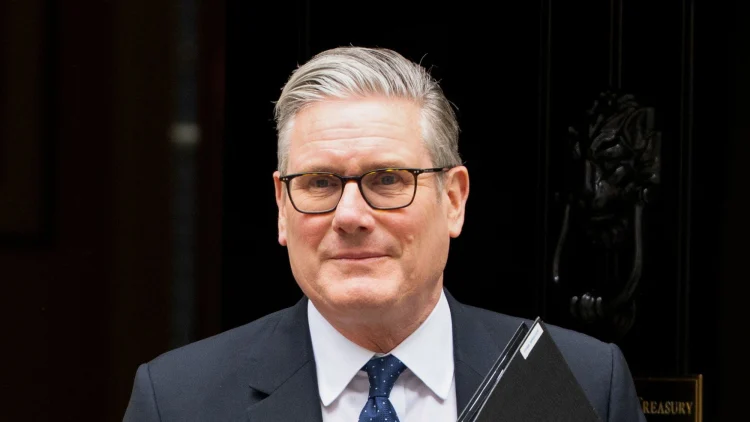

Prime Minister Keir Starmer avoided a parliamentary inquiry on Tuesday evening over whether he misled the House of Commons. (Alamy)

2 min read
Keir Starmer will not face an investigation into whether he misled Parliament over the appointment of Lord Mandelson after MPs voted down a Conservative Party motion to refer the matter to the Privileges Committee.
The House of Commons voted against the move by 335 to 223 on Tuesday night, with a majority of Labour MPs rowing in behind the Prime Minister.
Tory leader Kemi Badenoch has accused Starmer of misleading Parliament in his claim that due process was fully followed in the appointment of Mandelson as UK ambassador to the US.
The PM has apologised for his decision to appoint the former Labour cabinet minister, but insisted that due process was followed throughout.
Starmer said the vote, which was granted by House of Commons Speaker Lindsay Hoyle, was a “political stunt” by rival parties ahead of next week’s local elections.
While the majority of Labour MPs sided with the government, a small number on the left of the party voted to refer Starmer to a Privileges Committee investigation.
15 Labour MPs voted for the motion, including former shadow chancellor John McDonnell and former Labour leadership candidate Rebecca Long-Bailey.
Another rebel was Emma Lewell, MP for South Shields, who, speaking in the debate before the vote, said it was wrong that government whips had ordered Labour MPs to oppose the motion.
“I have watched this whole sorry saga play out for weeks now,” said Lewell.
“Like the public, I feel let down and disappointed. I am angry. Peter Mandelson should never have been appointed. This was a fundamental failure of judgment.”
Over 50 Labour MPs did not take part in the vote, though some of those will have been granted permission by the government to be elsewhere.
Starmer’s original decision to appoint Mandelson to the senior diplomatic role has put intense pressure on his leadership and resulted in the resignation of Morgan McSweeney as his chief of staff earlier this year.
Appearing before the Foreign Affairs Select Committee earlier on Tuesday, McSweeney said Mandelson had withheld information about the true extent of his friendship with Jeffrey Epstein before being appointed to Washington, adding that he regrets not asking Whitehall ethics officials to carry out more scrutiny of his appointment.
“How I understood it at the time was a passing acquaintance that he regretted having, and that he apologised for,” he told MPs.
“What has emerged since then was way, way, way worse than I had expected at the time.
“And it was when I saw the pictures, when I saw the [Bloomberg revelations] in September 2025, I have to say it was like a knife through my soul.”

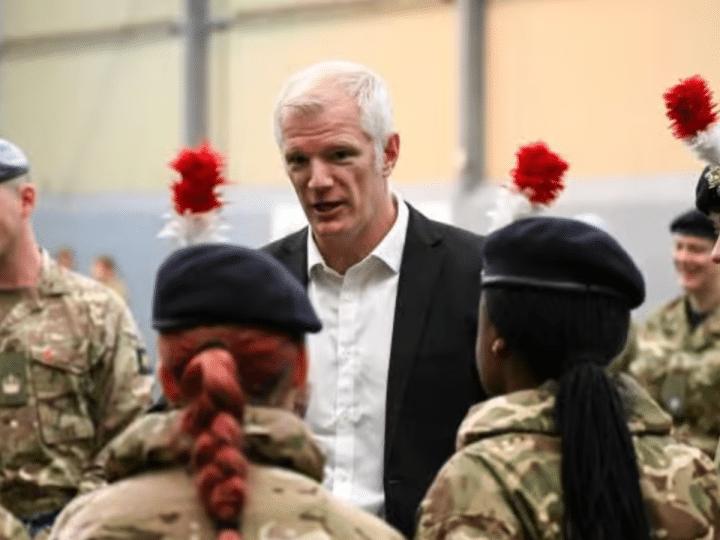

Defence minister Al Carns resorted to the tired old ‘security concerns’ excuse to deny the British public basic details about our involvement in the Iran War. Carns—a former Special Forces colonel—refused to answer Your Party leader Jeremy Corbyn’s question about US military bases.
Corbyn asked:
To ask the Secretary of State for Defence, how many times United States aircraft taking off from Diego Garcia have conducted strikes on Iran since 28 February 2026.
Diego Garcia is a colonial military outpost in the Indian Ocean, often used by the US for Middle East operations.
Carns answered:
For operational security reasons, we do not offer comment or information relating to foreign nations’ military operations.
Permissions to utilise UK military bases by foreign partners are considered on a case-by-case basis. All UK operational support to allies and partners is considered in terms of legality.
Corbyn asked a similar question about US use of bases in the UK, and was given the same answer.
The official UK positions is that the UK only has a defensive role in the unprovoked US and Israeli attack on Iran. This argument barely stands up to even the most basic scrutiny, as the Canary has reported.
Decolonisation cancelled
In May 2025, the UK signed an agreement to hand Diego Garcia to Mauritius while retaining significant basing rights. That is until US president Donald Trump complained about it. The deal is currently on hold.
US outlet The Hill reported on 11 April 2026:
The agreement to transfer the islands to Mauritius, which would allow for continued use of the base, stemmed from a decades-long legal battle to address Britain’s colonial past.
Trump called the move a “great act of stupidity” in January 2026 — and ultimately the British said they were:
permanently abandoning the agreement with Mauritius, stating that it cannot go forward with the transfer without U.S. support.
The Hill reported:
But the government noted that ensuring the Diego Garcia base’s “long-term operational security is and will continue to be our priority –– it is the entire reason for the deal,” according to an official statement.
“We are continuing to engage with the U.S. and Mauritius,” the British government stated.
US-Israel attacked Iran first on 28 February without provocation. Iran was offering unprecedented concessions in negotiations at the time. The Pentagon has since stated there was no imminent threat from Iran. And the UN’s atomic watchdog, the IAEA, has said there is no evidence Iran was developing a nuclear weapon.
The US has achieved none of its original war aims. Iran predictably closed the Straits of Hormuz, a vital oil channel, once attacked – creating a global energy crisis. Far from being defeated, Iran has said the war will continue until:
the enemy’s inevitable and permanent humiliation, disgrace, regret, and surrender.
Trump came to power on an anti-war ‘America First’ ticket but now faces spectacular humiliation.
Featured image via the Canary
By Joe Glenton


I’m pretty sure the Huckleberry Finn guy once said that politicians and nappies should be changed frequently, and for the same reasons. And folks, never has this been more painfully obvious than with Keir Starmer.
May I remind you, the man was elected on a platform of change — bold, principled, transformative change. Instead, we’ve got the same old rotten stench wafting from Downing Street: broken pledges on nationalising energy, U-turns on workers’ rights, grovelling to billionaires while the poor queue at food banks, and a foreign policy that makes Tony Blair look like a fucking pacifist.
Dirty diapers
We were promised a sunrise. We were promised “change.” We were promised a government that would finally put working people first after fourteen years of Tory chaos. Instead, what we got was a fresh budget-brand nappy slapped on the same old backside — and within months, it was already full, leaking from the sides, and making the entire country hold its nose.
This isn’t leadership. This is political incontinence on an epic scale.
You wouldn’t leave a dirty nappy on a baby for five years hoping it magically sorts itself out, would you? Yet here we are, expected to tolerate Starmer’s rotting government as it spreads its rash of disappointment across the country.
Are you supposed to sit politely while this government marinates in its own broken pledges for another three years because the Labour Party hasn’t got the guts to get rid of Keir Starmer?
The Labour Party must face the mirror — preferably whilst holding its breath. No amount of slick relaunches, bodged reshuffles or relentless spin will scrub away the fundamental betrayal of the hopes invested in 2024.
Keir Starmer is taking them down with him whether they, who refuse to act, like it or not.
Pressure must build – not for cosmetic change, but for a fundamental shift in Labour direction and a leadership that is prepared to deliver one.
Starmer: enough, already
Keir Starmer is a dead man walking in political terms. His wooden delivery, his endless “context matters” deflections, his instinct to placate the establishment while punishing the left – these are not quirks. They are the symptoms of a politics that has hollowed itself out.
The only question left is how many more months — or weeks — this embarrassing, principle-free spectacle can stagger on before the Labour movement finally does what any decent parent would do: rip off the soiled mess, bin it, and start again with something clean.
The country can smell it from coast to coast. The left is actively retching. Time is running out, and history will judge those who sat in the stench while pretending it smelled of oh-so-sweet progress with exactly the contempt it deserves.
Keir Starmer didn’t just change the Labour Party — he changed sides. From pledging to scrap cruel Tory benefit rules to defending them, from bold green promises to fossil fuel dependency and fiscal caution that starves public services.
This is a government for the suited professionals, not the people who change actual nappies at 3am after a 12 hour shift for crap wages. Starmer’s Labour talks of working people while governing like the Oxbridge establishment it once railed against from the left.
The time has come to take that old nappy wisdom seriously.
Change the nappy, now
Keir Starmer and his inner circle have had their chance. They’ve soaked up the inheritance of Tory failure only to add layers of their own compromises, scandals, and treachery.
The Mandelson scandal — complete with overruled vetting, parliamentary denials, and desperate sackings — stands as the final, foul proof that this is not Labour reborn, but the old Blairite corpse reeking under a fresh coat of paint.
I must admit, I didn’t plan to write about nappies and corpses today, but we are being stiffed by a government that is so utterly full of shit it makes a backed-up sewer look like a perfume counter.
The deeper tragedy here, at least for ordinary people like us, is that Starmer’s survival so far stems from the absence of an obvious successor ready to take Labour back to its natural home on the left.
Starmer’s brand of hollow centrism isn’t just disappointing, it’s actively toxic. If he doesn’t go voluntarily or get pushed after the looming Green-inspired local election drubbing, the Labour Party will complete its journey down the path of no return.
I cannot see Keir Starmer clinging on for much longer without accelerating the very decline he’s overseeing.
All that is left to wonder is whether enough Labour MPs — who are facing a brutal anti-Starmer backlash at the next general election — can find the spine that so often escapes their leader, and ruthlessly flush away the toxic stench of Number 10, Downing Street.
Featured image via the Canary
Politics
Labour think tank behind DWP Universal Credit cuts now wants conditionality for young disabled people
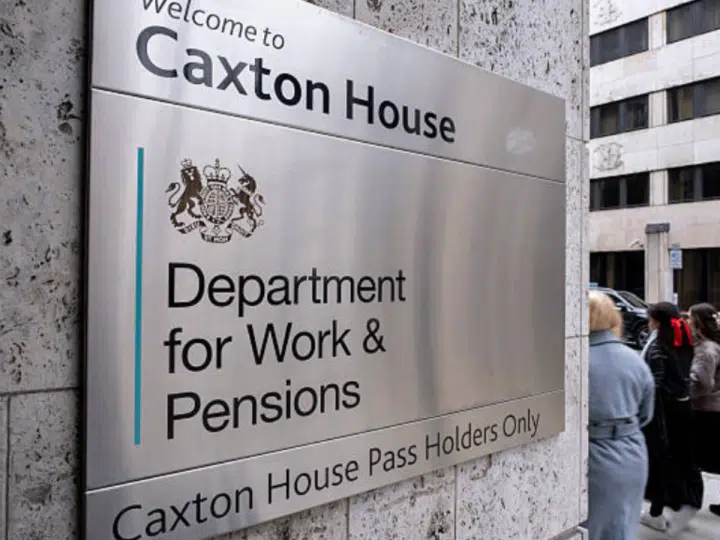

The Resolution Foundation has continued its descent into a cronyist benefit-cutting architect for the ableist Labour government. The supposedly progressive think tank the Canary previously revealed spearheaded the recent Department for Work and Pensions (DWP) welfare cuts, is now calling for a conditionality regime for young disabled claimants.
It comes as a DWP minister has hinted at further forthcoming “reforms” to coerce young disabled people into work.
Resolution Foundation: DWP health benefits to blame for youth unemployment
A new DWP-related report the think tank published Tuesday 28 April claims to investigate the causes behind the UK’s rising rates of young people “not in education, employment, or training”. Specifically, the publication states that it examines:
why the UK’s NEET rate has been rising since 2019, and why it has long been higher than in many other countries.
The think tank cautioned against attributing the rise to a lack of job opportunities for young people, stating:
On the face of it, a lack of jobs availability is not the explanation, since current rates of youth unemployment are not especially elevated relative to unemployment in the wider population.
It seemed to miss the fact there are regularly less than 10 remote, part-time, ‘Disability Confident’ roles available on the government’s own jobs website.
Throughout the report, the think tank compares the situation for so-called NEETs in the UK to other OECD countries.
And for a think tank that proclaims – in the report no less – its dedication to “lifting living standards”, it’s curious that it omitted any mention of the very different living standards for young people across the OECD.
Funny then that the same Resolution Foundation previously found that housing in the UK costs 44% higher than the OECD average. It also highlighted how families in the Netherlands are 39% better off and 21% better off in Germany. Irrelevant systemic background noise, if you read its latest report.
It also pointed to a number of “disadvantages” that act as barriers to work. For instance, this included a lack of GCSE qualifications, disability, and no family support. However, it failed to explore broader structural barriers – racism, ableism, and classism – stopping young people accessing work.
In step with the corporate capitalist Labour government
Instead, the Resolution Foundation offered two main causes for the numbers of so-called NEETs.
The first revolves around low levels of “education participation” for over 16s in “vocational education”. By that, it seems to broadly mean traineeships and apprenticeships, and any work experience-focused education outside university.
Of course, the conclusion aligns nicely for the government busy shunting young people into low-paying McJobs. That’s naturally all while subsidising wealthy corporations to do it through various DWP-related youth employment schemes.
It also makes no mention of the government’s continued abysmal failures around SEND provision. That would be an obvious factor impacting the accessibility of further education.
However, the think tank’s second conclusion disgustingly opened the door to vilifying young disabled people even further.
Calling for DWP benefit conditionality for young people
Notably, the report argued that the “large gap” between Universal Credit’s standard allowance and its limited capability for work-related activity (LCWRA) component:
created a strong incentive to claim incapacity benefits on top of the standard allowance.
It also stated that:
This was a key reason why the Government acted last year to cut the UCH element for claimants from April 2026 from £99 to £50 per week, alongside a commitment to above-inflation increases to the standard allowance until 2029-30.
This was of course the same health element the think tank had suggested the DWP should slash in half. And that’s precisely what the government did this April (2026) – all thanks to the Resolution Foundation.
Now, the shameless think tank has said that under 25s claiming the DWP health element should have “tailored work requirements”. In other words, it wants the DWP to introduce a punitive conditionality regime for young disabled people. This will of course be young disabled claimants it has literally assessed as too sick to work.
Because if you’re young and disabled, you should just ‘pull up those bootstraps’ and ‘overcome’ your debilitating health condition.
It also seemed to suggest the government doesn’t need to worry about improving young people’s health to solve the so-called NEET ‘crisis’.
It said:
the cross country data shows that poor health can be consistent with high participation levels, so even if we cannot improve the health of young people in the UK, it should be possible to achieve progress on the UK’s NEET problem with action elsewhere.
In short, other countries have forced chronically ill and disabled young people into work – so the UK can too, via the DWP! The think tank obviously makes no acknowledgement that coercing young disabled people into employment could actually worsen their health.
Laying the groundwork for Labour’s next attack on disabled people
The Resolution Foundation published its report just a day after DWP disability minister Stephen Timms refused to rule out plans to stop the health element for under 22s.
He told parliament that:
Alan Milburn’s review on this will report in September, looking at the NEET problem more broadly, and we are going to wait until then for deciding whether to delay until age 22 access to the Universal Credit health element. If we did decide to do that, there would need to be exceptions.
He also said that:
We think better support might help young people more than extra cash.
The Resolution Foundation’s report did come out against the plan to restrict LCWRA. However, Timms’ answer also highlighted how the think tank’s conditionality proposal could sneak its way into future plans.
It’s highly likely that the Resolution Foundation will be feeding into the Milburn review.
And the think tank has already cemented its servile role in laying the groundwork for this Labour government’s callous benefit cut agenda. As the Canary has repeatedly pointed out, now DWP minister and neoliberal Labour darling Torsten Bell(end) did head the organisation right up until his run for parliament.
So nobody should be surprised if the think tank’s DWP conditionality proposal for under 25s shows up in some form in the Milburn review’s recommendations.
It’s now abundantly clear that disabled people can no longer trust the Resolution Foundation to have their backs when it comes to the DWP.
Featured image via the Canary
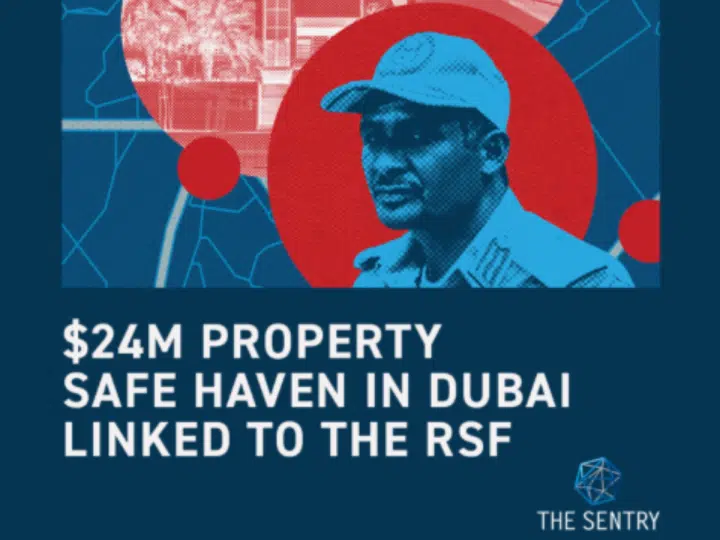

The Sudanese Rapid Support Forces (RSF) militia has secretly amassed a vast multimillion-dollar property portfolio in Dubai, recently exposed by the investigative outlet Sentry.
The genocidal RSF is backed by the United Arab Emirates (UAE), a UK ally and major arms customer, and has carried out a litany of unforgivable atrocities in Sudan.
US investigative outlet Sentry reported details of the multi-million portfolio, owned and enjoyed by RSF chiefs and aligned individuals:
A network of family members, sanctioned individuals, and entities linked to the leadership of Sudan’s brutal Rapid Support Forces (RSF) militia owns a $24 million real estate portfolio in Dubai consisting of over 20 properties.
Sentry said:
These properties shed further light on the RSF’s relationship with the UAE. While the UAE adamantly denies supporting the RSF, this investigation is the fourth alert by The Sentry that reveals the intricate connections between the Dagalo family, the RSF, and the UAE.
The Dagalo family includes RSF commander Mohammad Hamdan Dagalo Musa, known as Hemedti, and his brothers.
A sorely underreported war
As the Canary has previously reported, the UAE has been a major backer of RSF in its war with the Sudanese government. Turkey, Egypt, Israel and many more countries are pursuing their own interests in Sudan too. British military components has also shown up on the battlefield in RSF hands. The UK is a major arms supplier to UAE.
As the Canary has said in our previous coverage of this poorly understood genocidal conflict:
The war in Sudan is theoretically between the Arab supremacist RSF and the Sudanese government. But foreign states pursuing their own interests are backing the combatants. The United Arab Emirates (UAE), for example, backs the RSF with arms and equipment. Egypt backs the government, alongside Russia, Turkey, Iran, Saudi Arabia, and Qatar. Israel has backed both sides at different times.
The mounting death toll is mind boggling:
RSF has killed Sudanese civilians in vast numbers. And some estimates say 150,000 people have died and over 10mn have been displaced by fighting.
You can read more of our reporting on RSF and Sudan here.
Thousands held in RSF detention camps
Al Jazeera reported on 27 April that thousands of civilian are trapped in RSF detention camps. The NGO Sudan Doctors Network claimed:
RSF is reportedly committing “severe violations” inside the detention centres in el-Fasher, “including killings during torture and interrogation, as well as ethnically motivated killings”.
The group reports that 370 women and 426 children are among those held in facilities including Shalla Prison, a children’s hospital, and cargo containers.
A recent UK media report singled out the UK for having abandoned Sudanese civilians, leaving them to fate to “avoid pissing off the Emiratis [UAE].”
The authors warned this wasn’t just a matter of generalised humanitarian failure. The UK – and US – were key players in the eventual massacre:
To frame El Fasher within the timeworn narrative of collective international failure avoids the darker truth.
Decisions were taken that ensured help never came. Both the US and UK suppressed or sidelined warnings that would have helped avoid the slaughter.
And they said that when it comes to it, the British government will have few excuses:
Central to the UK’s approach was the Joint Analysis of Conflict and Stability (Jacs), conceived to assess whether genocide was likely and, if so, intervene suitably.
The UK’s own intelligence, sources confirm, said the RSF wanted to “eliminate” the city’s non-Arab population.
Sudan has not drawn the same intense media coverage that other conflicts have. This may be why the UK has escaped the level of criticism over Sudan that it has attracted over its complicity in the Gaza genocide.
The fact remains that the UK’s involvement is a shameful, born of indifference, politicking, and an enduring colonial attitude to Sudanese lives.
Featured image via the Canary
By Joe Glenton
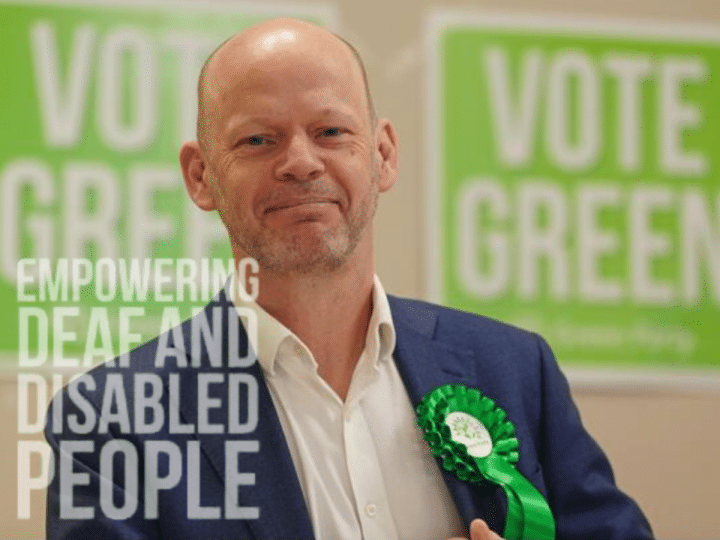

The former North of Tyne metro mayor, Jamie Driscoll has said that the Green Party will ensure society is inclusive for disabled people. However, it remains to be seen after the Green Party rally in Newcastle yesterday.
Speaking exclusively to the Canary, Driscoll, who is currently standing as a Green Party councillor in Newcastle, said:
People have had all sorts of promises from politicians that they don’t believe. When it comes to disabled people, it is about a social interpretation of disability, not this idea that disabled people are somehow separate. Society should work for everybody and be inclusive for disabled people.
Asked specifically what the Greens would do about the benefits system, Driscoll said:
In local elections, of course, you don’t have any control over the welfare system, but nationally, we need to be moving towards a universal basic income anyway, and you know what that puts everyone on an even footing.
Speaking of local elections, the Canary asked Driscoll what the Green Party would do locally for disabled people:
It’s largely about inclusivity, and it can be tiny, little things like drop curbs. But nobody thinks to ask, or if they do, it’s tucked away on a website somewhere, but then you’ve got digital exclusion where people can’t access it, or you don’t have the disability friendly version for partially sighted people or neurodivergent people.
With all these things, what it actually comes down to ‘nothing about us, without us’ and it’s inclusivity that makes a difference.
Polanski brings hope to Newcastle — not for the disabled community
Driscoll welcomed Green Party leader Zack Polanski to Newcastle to launch the Greens’ new ‘boost for buses’ policy. Under the plans to renationalise buses, Green councillors would scrap bus fares for anyone 22 years and under.
However, what was noticeably missing from this conversation were disabled people. Buses are notoriously inaccessible, and yet bus accessibility didn’t come into it at all. There was also no mention of extending disabled bus passes so they could be used all day, something Labour and the Conservatives voted against.
The Canary asked Driscoll specifically what the party would do to help disabled people get buses:
It’s a question of how much of the public transport is actually accessible for people with different kinds of disabilities…. Again, it comes back to putting people with lived experience at the centre of design.
Polanski also spoke at a rally in Newcastle later that afternoon. He highlighted the importance of centring local issues in these elections, and not whether Starmer will be out soon. However, he said:
Losing council seats in places like Newcastle sends a very clear message to the entire country that after 14 years of conservative austerity, when people voted labour because they wanted or expected something different, what they’ve received is just more of the same. In fact things have arguably got worse.
And so when people vote green in record numbers in 10 days time that shows very clearly that the Green Party are here to replace Labour and stop Reform in their tracks
He also spoke about Labour MPs defending the right to be pissed and go vote and took a stab at Ed Balls’ ‘journalism.’ But what was noticeably missing from Polanski’s speech about standing up for minorities was disabled people.
Disabled people need action, not just words
After the event, the Canary spoke to Green Party member and disabled activist Lee, who wasn’t convinced
It was that whole message of hope, but we need more than just hope. Zack spoke about the plan, but in terms of me, my community, my future, what is that plan? We’ve heard a lot from Zack and some members of the Green Party using the slogans of ‘Nothing about us, without us’ but what does that mean in reality? Because as of yet, I’m still waiting to see disabled voices pushed to the fore.
Lee, involved in Crips Against Cuts North East actions against last summer’s PIP cuts, continued:
I feel slightly let down. I’m hearing the right things, I’m seeing the right things, but none of that’s turned into action. And that’s kind of why I’m involved with the Green Party now, because we’ve got to start making sure our voices are raised, pushed to the front. Because I’m sick and tired of being forced into the background, especially with the rhetoric that’s being pushed from the likes of Labour and Nigel Farage, who are demonising people who are on welfare and scapegoating us for the issues that this country faces.
Lee finished by saying:
We need to be holding these politicians to account, and the only way we can do that is if disabled people are at the front doing it.
Possibly the most symbolic part of the day was a disabled member of the party, who usually uses a wheelchair, having to use crutches because the stage she was due to speak on didn’t have a ramp.
While the Green Party is saying all the right things — these words still haven’t turned into action for disabled people. For a group who have been so let down by politicians, it’s going to take more than them saying ‘nothing about us without us’. In fact, they need to actually prove it.
Featured image via the Canary


The Democratic Republic of Congo has created a new paramilitary “mining guard” funded by $100 million from partnerships with the US and the UAE to secure its mining sites and mineral supply chains.
The DRC produces nearly 70% of the world’s cobalt and substantial shares of global copper and coltan. These minerals are essential for everything from electric vehicles to advanced weapons systems.
The Financial Times, Reuters and Bloomberg all reported on the initiative. They cited the General Inspectorate of Mines (IGM) as the primary source for the creation of the unit, its $100 million budget, and its planned expansion to 20,000 personnel by 2028.
The force will secure production, ensure traceable transport of minerals and replace “defense forces currently deployed in mining zones”, according to the statement.
The announcement was met with disdain on social media with heavy criticism for the US and the UAE.
Translation: Israel, the US and the UAE tighten their grip on the DRC https://t.co/8kXX0EFTZu
— Alon Mizrahi (@alon_mizrahi) April 28, 2026
Journalist Carolyn Hinds said:
This means the Congolese men, women, and children being made to work in the mineral mines controlled by the same people funding the genocide in Sudan.
They’ll be held at gun point to mine materials to operate the AI datacenters, the Meta spy glasses, electric vehicles, vapes etc. https://t.co/ueNKbc7jG5
— Carolyn Hinds
#FreePalestine #CongoInCrisis (@CarrieCnh12) April 27, 2026
The UAE has been a major backer of the Rapid Support Forces (RSF) in its war with the Sudanese government. Other US allies — Turkey, Egypt, Israel — and many more countries are pursuing their own interests in Sudan too. British military components have also shown up on the battlefield in RSF hands. The UK is a major arms supplier to the UAE.
US eyes making money
Trump has been explicit that the aim of the so-called “peace deal” he brokered between the DRC and Rwanda last year.
Speaking in December, he said:
We’ll be involved with sending some of our biggest and greatest companies over to the two countries…
And we’re going to take out some of the rare earth, take out some of the assets and pay. Everybody is going to make a lot of money.
He later announced:
Today, the United States is also signing our own bilateral agreements with the Congo and Rwanda that will unlock new opportunities for the United States to access critical minerals and provide economic benefits for everybody.
The peace deal he brokered was just an American corporate heist of the DRC with assistance from Rwanda.
The gall to call it a “peace deal” when the US has actively destabilised Congo for decades is extraordinary.
A new book called Rwanda’s 30-Year Assault on Congo documents how the US has enabled Rwanda’s president, Paul Kagame, to wage a generation-long war of conquest on the DRC.
Black Agenda Report, in its review of the book, quotes the author Judi Rever, saying:
The truth is that the violent exploitation of Congo has been an economic engine for the developed world. For decades, international companies have engaged in illicit yet institutionally sanctioned trade of Congolese minerals that have been laundered by Rwanda, a country that faces no violent conflict inside its borders, where the roads are nicely paved and supply chain logistics are efficient.
The US’ corrupt ways under the guise of the “peace deal” have already been exposed.
As Reuters reported just last week, a US firm central to the administration’s minerals push overstated its mining experience.
Virtus, an American firm, claimed on its website to run a plant in Likasi, DRC, that hasn’t operated since 2012 and never belonged to it. Reuters added that the US State Department said it “fully supports” Virtus Minerals’ efforts to acquire and develop the assets. This is despite Reuters flagging Virtus’ inconsistent reporting of its experience.
Virtus is led by Braun, a US Army Green Beret veteran, and Andrew Powch, a former US Navy officer, who didn’t respond to Reuters for comment.
The only interests the US is interested in guarding are those of American corporations. The heist the US is running on the DRC is as clear as day.
Featured image via Getty Images/ Junior Kannah/ AFP
By Nandita Lal
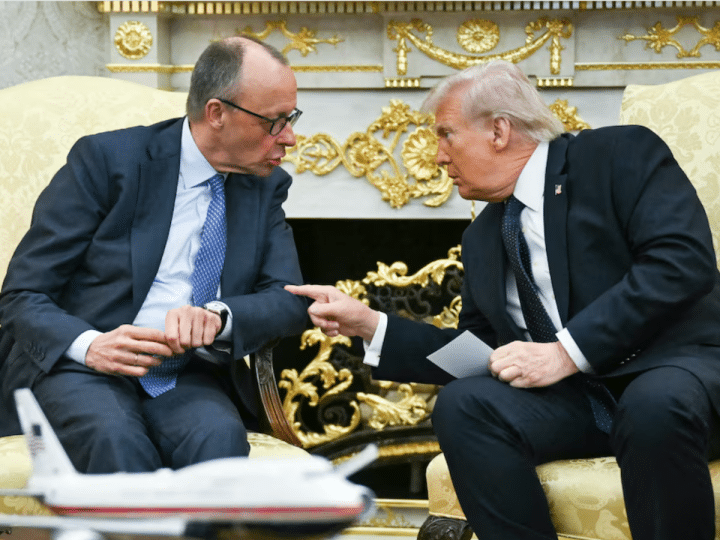

German Chancellor Merz said that Washington appeared to lack a clear military strategy in Iran. He also questioned the possible ‘exit’ scenarios for the Trump administration. During a public visit in his home town region of Sauerland, Merz said:
The Iranians are clearly stronger than expected and the Americans clearly have no truly convincing strategy in the negotiations either.
Back in March the chancellor delivered a soft rebuke of similar nature, warning that:
We [in reference to European leaders] should not let the region slide into a perpetual war with unclear objectives.
This time around, Germany’s remarkably unpopular chancellor — who previously endorsed Trump — has delivered a clear rejection of Trump for allowing the US to be ‘humiliated’ by Iran. If memory serves us, Merz was the first European leader to have met with Trump in Washington. This meeting happened after initial strikes against Iran were ordered on 3 March.
German Chancellor Friedrich Merz says Iran has appeared more resilient than the US expected and warned that the conflict is escalating without a clear exit strategy. He said an “entire nation” has been humiliated by Tehran. pic.twitter.com/trbPOON55Q
— DW News (@dwnews) April 27, 2026
Merz famously said of last year’s illegal US-Israeli attacks on Iran that “Israel is doing the dirty work for us all.”
Although Merz was wary of the rising oil prices, he sat by as Trump criticised Spain at the White House meeting.
Merz had said at the White House, expressing hope for a “new government” in Iran. Trump, in turn, said Germany had been “helpful.”
Adding that:
That’s the reason [oil prices] why we all hope that this war will come to an end as soon as possible, and we are hoping that the Israeli and the American armies are doing the right things to bring this to an end.
Merz had hitched his wagon to Trump — securely.
Now that the war isn’t going as expected and Iran has shown its resilience, Merz is berating Trump for the same strategy he once endorsed.
Arnaud Bertrand asks a good question: If the Americans are as strategically stupid as Merz is saying, why doesn’t Germany and other European leaders insist on tying their future to them?
The bigger question here
(pic.twitter.com/FNQtooyCWX) is if the Americans are as strategically stupid as Merz is saying, why do Germany and the rest of the European leadership insist on tying their future to them?
Where is Germany or Europe’s independent strategy on Iran?…
— Arnaud Bertrand (@RnaudBertrand) April 28, 2026
Merz, Starmer, and Macron could learn a thing or two from Spain. Notably, Spain has refused to let the US wage attacks on Iran from its airspace and bases. These European leaders have instead stood by as the conflict escalated.
Now, with inflation rising and war-induced shortages looming from a war Merz rubber stamped, the chancellor is adopting a hard line against Trump — whom he appears to be blaming.
Featured image via the Canary
By The Canary
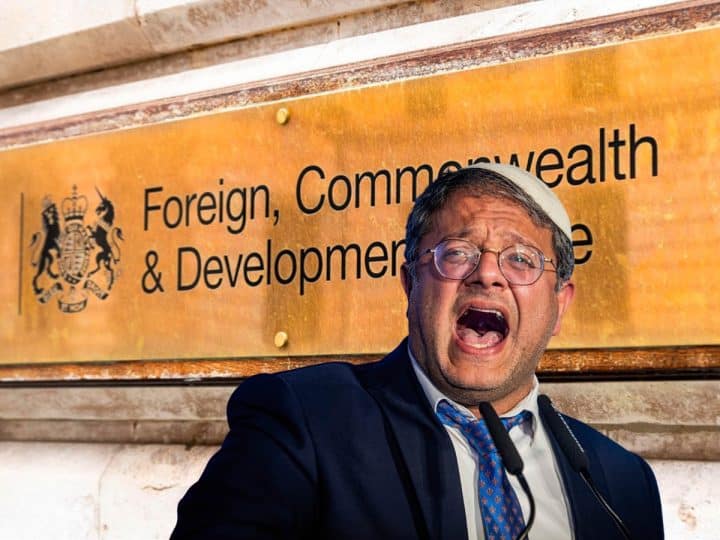

The International Centre of Justice for Palestinians (ICJP) has submitted its recommendations for sanctions against sixty-two Israeli parliamentarians and lawmakers. It’s because of their responsibility for passing and adopting the death penalty bill. The ICJP has sent its list to the foreign secretary.
Pursuant to the Sanctions and Anti-Money Laundering Act 2018 and the Global Human Rights Sanctions Regulations 2020, the recommendation proposes that the individuals named are responsible for or engaging in serious violations of the rights of Palestinians in the West Bank, most notably the right to life, and the right not to be subjected to torture or cruel, inhuman or degrading treatment or punishment. They should therefore be sanctioned in accordance with the current UK legislation.
The new penal law which exclusively and purposefully targets Palestinians, marks an extreme escalation in Israel’s genocidal policies against Palestinians and consolidates Israel’s apartheid judicial system, embedding racist discrimination against Palestinians into law and once again allowing Israel to violate international norms.
ICJP proposals
If the Foreign Office adopted ICJP’s sanctions recommendations, it would send a clear message to the Israeli government that the UK will not tolerate Israel’s apartheid regime and systematic discrimination of Palestinians within its legal system.
In doing so, the government would be sending a strong message that lawmakers using the law to veil illegal practices and crimes committed against a protected population including the accelerated practice of killing Palestinians, will not be tolerated.
By adopting such sanctions, the UK would be affirming its strong condemnation of Israel’s use of the death penalty against Palestinians and ensuring its commitment to the UK’s obligations under international law, particularly positive obligations towards preventing practices amounting to torture or cruel treatment.
The submission argues that the UK government should take a leading stance and sanction the proposed individuals to set a precedent in tackling grave violations of human rights. The government should not wait for evidence of the application of the death penalty bill, but should take a preventative measure towards attempting to pressure the Israeli government into repealing this law.
The expressions of concern from many Western governments since the passing of the death penalty bill is a futile response and remains, at best, perfunctory. An urgent and comprehensive sanctions package is needed to combat the growing discrimination and violation of the right to life for Palestinians by Israel.
The UK must make clear its opposition to Israel’s intentional and targeted killing of Palestinians, and its explicit apartheid legal system, that is further compounded by this death penalty law.
Órlaith Roe, ICJP’s public affairs and communications officer, said:
In apartheid South Africa, 95% of people sentenced to death were Black. Thanks to this law, in apartheid Israel, 100% of people who will be sentenced to death will be Palestinians.
Our recommendations for sanctions to the Foreign Office are crucial for the UK government to adopt if it wants to stand on the side of human rights, international norms, and equality before the law, as these are the priorities the UK government claims to care for.
The UK has both the responsibility and the leverage to act – sanctions can still serve as a preventative tool, applying real pressure before irreversible harm is done. The cost of inaction will, once again, be measured in Palestinian lives.
Featured image via
By The Canary
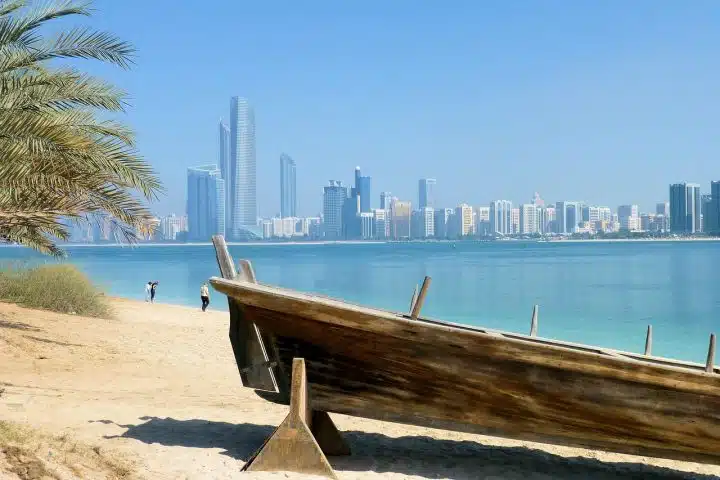

Dubai might be famous for its towering skyscrapers and massive shopping malls, but the city’s stunning beaches are equally impressive and often become the highlight of many visitors’ experiences. The Arabian Gulf’s warm, turquoise waters combined with year-round sunshine make Dubai a beach lover’s paradise where relaxation and swimming can happen practically any day of the year.
From public beaches with free access to luxurious private beach clubs offering five-star amenities, the city caters to every type of beachgoer and budget. Many Trips to Dubai now prioritise beach time alongside traditional tourist attractions, as visitors discover that lounging on pristine white sand with the dramatic city skyline as a backdrop creates unforgettable moments.
Jumeirah Beach: The Classic Dubai Beach Experience
Jumeirah Beach stands as Dubai’s most iconic stretch of coastline, offering stunning views of the Burj Al Arab, the world’s most luxurious hotel that rises from the sea like a giant sail. This public beach provides free access to soft white sand and calm, clean waters perfect for swimming, making it incredibly popular with both tourists and residents.
The beach features shower facilities, changing rooms, and lifeguards on duty, ensuring a safe and comfortable experience for families with children. Food trucks and cafes dot the area, serving everything from fresh juice to full meals, so spending an entire day here is completely feasible. The only downside is that Jumeirah Beach can get quite crowded, especially on weekends and holidays, but arriving early in the morning guarantees a good spot.
La Mer: The Trendy Beach Destination
La Mer represents Dubai’s newer, trendier approach to beach development, combining a beautiful waterfront with vibrant dining, shopping, and entertainment options all in one location. The beach itself features crystal-clear waters and clean sand regularly maintained to ensure pristine conditions for swimmers and sunbathers.
What sets La Mer apart is the surrounding infrastructure, with colorful shipping containers transformed into boutique shops, restaurants, and cafes creating an Instagram-worthy backdrop. Inflatable water parks float just offshore, providing hours of entertainment for kids and adventurous adults.
Kite Beach: Water Sports and Active Fun
Kite Beach earns its name from the constant presence of colorful kites soaring above the water, pulled by kitesurfers riding the waves and wind. This beach caters specifically to active beachgoers who want more than just lying in the sun, though there’s plenty of space for traditional beach relaxation too.
The consistent winds and waves make it Dubai’s premier spot for kitesurfing, paddleboarding, and kayaking, with rental shops and schools offering equipment and lessons for beginners. Many visitors book Dubai Travel Packages specifically to seek out Kite Beach for its combination of water sports, beach volleyball, outdoor gym equipment, and healthy food options from the beachfront food trucks that line the sand.
The Beach at JBR: Urban Beach Vibes
The Beach at Jumeirah Beach Residence, commonly called JBR Beach, combines beachfront relaxation with urban convenience in Dubai Marina’s bustling neighborhood. This stretch of sand sits directly in front of high-rise residential towers and The Walk at JBR, a popular promenade filled with restaurants, shops, and entertainment venues. The beach offers free public access with clean facilities, lifeguards, and calm waters suitable for swimming at any skill level.
What makes JBR Beach special is the convenience factor, beachgoers can easily grab breakfast, spend hours on the beach, shower off, then walk directly to lunch or shopping without needing transportation. The sunset views from JBR Beach are spectacular, with the sun sinking behind the Palm Jumeirah while the Marina skyline lights up for the evening.
Al Mamzar Beach Park: Family-Friendly Paradise
Al Mamzar Beach Park offers a more traditional park-and-beach combination that families with children particularly love. This expansive area features five separate beaches, each with its own character and amenities, plus swimming pools, barbecue areas, and extensive green spaces with playgrounds. The park charges a small entrance fee, which helps keep crowds manageable and maintains pristine conditions throughout the grounds.
Shaded picnic areas with tables make it easy to spend the entire day without needing to leave for meals. The beaches have gentle waves and gradual depths perfect for young children learning to swim, with lifeguards stationed at each beach area. The combination of beaches, pools, parks, and facilities makes Al Mamzar the ultimate destination for families wanting variety and convenience in one location.
Conclusion
Dubai’s beaches prove that the city offers much more than just shopping and skyscrapers, providing world-class coastal experiences that rival any beach destination globally. From free public beaches to exclusive beach clubs, the variety ensures every visitor finds their perfect spot for swimming, relaxing, or playing.
The combination of excellent facilities, clean water, beautiful scenery, and year-round sunshine makes Dubai’s beaches a major draw that keeps travelers returning. Whether seeking adventure through water sports or pure relaxation under an umbrella, Dubai’s coastline delivers memorable beach experiences against the backdrop of one of the world’s most impressive cities.


In spite of the US-Israel war on Iran and the virtual closure of the Strait of Hormuz, oil supermajor BP reports that its profits have more than doubled in the first quarter of 2026. Funny how that can happen, isn’t it?
Trump and Netanyahu first launched their illegal strikes against Iran on 28 February. In retaliation, Iran, and later the US, virtually closed the Strait of Hormuz to shipping traffic. Under usual circumstances, around 20% of the world’s oil and 33% of its liquid natural gas would pass through the Strait.
Unsurprisingly, the closure of the Strait sent oil prices spiralling. Brent crude — which acts as the global benchmark for oil pricing — cost around $73 a barrel before the war. Now, that price has shot up to roughly $110 a barrel.
BP’s Q1 profits include March, the first month of the blockade. Over the first 3 months of 2026, the oil giant recorded almost $3.2bn in profits. More specifically, these profits are measured according to underlying replacement costs (RC), which takes into account the cost of obtaining more oil.
For comparison, BP made $1.54bn replacement cost profit in the last quarter of 2025, immediately before the war. Likewise, it also made $1.38bn in Q1 last year — the same time of year it made more than double that year — exceeding analysts’ expectations.
‘Helping minimise disruption’ are you?
The oil giant’s newly appointed CEO, Meg O’Neill, stated that:
It’s a privilege and an honour to serve as BP’s CEO. I join at a time when our industry is operating in an environment of conflict and complexity, playing a vital role in keeping energy flowing.
BP’s team has been working relentlessly to keep our assets producing safely, reliably and efficiently. We are working with customers and governments to get fuel where it’s needed, helping minimize disruption and the impact it can have on people’s lives.
Well that’s nice, isn’t it? If you ask us, refraining from profiteering from a global crisis would be an even better way of minimising disruption – but that’s why we’re not oil barons, we suppose.
O’Neill joined BP as its CEO less than a month ago, on 1 April, after working at ExxonMobil. She receives a base salary of £1.6m.
‘Fossil fuel giants are quids-in’
Both environmental and consumer groups have expressed outrage at BP’s blatant profiteering. Head of science, policy and research at Friends of the Earth, Mike Childs, stated that:
Just as we saw in 2022 following Russia’s invasion of Ukraine, fossil fuel giants are quids-in when global instability drastically inflates fuel prices.
But again, it’s ordinary people who pay the price when soaring energy prices threaten to plunge the UK into an even deeper cost of living crisis.
Analysis from Global Witness recorded profit spikes for BP, Shell, Chevron, ExxonMobil and TotalEnergies in the year following the dawn of Putin’s war on Ukraine. Over the 4 years of the Russia-Ukraine conflict, the five companies have raked in $467bn (almost half a trillion) in profits.
Likewise, analysis from 350.org has shown that oil and gas companies have siphoned $100bn from ordinary people over the first month of the war on Iran.
UK households are currently shielded from the worst of the impacts of the fuel profiteering by the energy price cap. However, estimates predict that the cap may rise by as much as £200 following its July revision.
Taxation isn’t enough
Caitlin Boswell, deputy director at Tax Justice UK, urged the UK government to tax the excess earnings of war profiteers:
It is outrageous that households are getting hammered on all sides from rising bills and prices of essentials, while companies like BP are doubling their profits, all from the same crisis. The government needs to get a grip on the situation to stop companies from callous profiteering, whether in the energy sector, banking or defense.
We need the government to remain steadfast in maintaining the windfall tax on oil and gas companies, and apply additional excess profits taxes on those profiting from the crisis. That way, the government can recoup all unearned profits to help people get through the affordability crisis and make the UK more resilient to future shocks.
Right on cue, around noon on 28 April, energy secretary Ed Miliband announced:
It would be completely wrong for a Government to stand by and allow companies to make excess profits from a war.
That’s why we’re taxing these windfall profits to help with the cost of living.
And why the Tories, Reform and the SNP are utterly wrong to oppose the windfall tax.
However, rather than a new tax, Miliband is likely referring to the existing energy profits levy. The government imposed this windfall tax in the wake of Putin’s attacks on Ukraine.
BP profits show that, as prices surge for ordinary people worldwide, big oil shows no shame in profiteering from war and ruin. What’s more, even the windfall tax is failing to make an appreciable dent in the company’s profits — and it’s certainly not stopping the oil major’s amoral practices.
When a handful of companies have a stranglehold on daily life for people the world over, taxation isn’t enough.
Featured image via the Canary

Here’s everything to expect when the Fed issues its latest interest rate decision Wednesday

Days of our Lives: Marlena Gets Shocking Inheritance in Stefano’s Evil Will!

Welsh farm shop less than 30 minutes from Cardiff with massive play area

Manchester United reach agreement with Casemiro over contract clause amid transfer speculation

US brings back mandatory military draft registration

Steven Gerrard disagrees with Gary Neville over ‘shock’ Chelsea and Arsenal claim | Football


-

 Tech1 day ago
Register Renaming | Hackaday
-

 Fashion4 days ago
Weekend Open Thread – Corporette.com
-
 Crypto World3 days ago
Hyperliquid $HYPE Rally Builds Momentum as AI Sector Enters Prove-It Phase
-

 Politics6 days ago
Making troops accountable for war crimes threatens US alliance, ex-SAS colonel warns
-

 Politics6 days ago
Disabled people challenge government SEND proposals over segregation concerns
-

 Business5 days ago
Patterson-UTI Energy, Inc. (PTEN) Q1 2026 Earnings Call Transcript
-

 Business6 days ago
Rolls-Royce Voted UK’s Most Iconic Trade Mark as IPO Register Hits 150
-
 Sports2 days ago
IPL 2026: Ruturaj Gaikwad registers slowest fifty of the season, enters all-time unwanted list | Cricket News
-

 Politics23 hours ago
Drax board avoid their own AGM, accused of greenwashing & environmental racism
-

 Crypto World7 days ago
New York sues Coinbase, Gemini over prediction market offerings
-

 Politics6 days ago
Starmer handler McSweeney to be dragged from shadows by Foreign Affairs Committee
-
Politics6 days ago
Wings Over Scotland | How To Get Away With Crimes
-

 Politics6 days ago
Zack Polanski responds to home secretary’s taser threat
-

 Politics6 days ago
‘Iran is still a nuclear threat’
-
 Business7 days ago
HCL Tech share price tank over 9% after weak Q4. JPMorgan, HSBC & 3 others cut target price
-

 Crypto World7 days ago
Crypto’s great hope in Senate’s Clarity Act still has a path to survive tight calendar
-

 NewsBeat2 days ago
LK Bennett closes all stores after entering administration
-
 Sports6 days ago
Tim Bradley names the current best in the world: “Better than Inoue and Usyk”
-

 Crypto World4 days ago
Michael Saylor says BTC winter is over. Market analyst disagrees, says bitcoin was in a pullback
-
 Crypto World7 days ago
Ethereum Price News: ETH Flashes a Bullish Setup No Holder Should Miss While Pepeto Nears Its Binance Listing
You must be logged in to post a comment Login