DUBAI — The United Arab Emirates announced Tuesday it will leave both OPEC and the broader OPEC+ alliance effective May 1, delivering a major blow to the oil producers’ group and its de facto leader Saudi Arabia amid the ongoing Iran conflict that has severely disrupted Gulf energy exports.
UAE Quits OPEC Effective May 1: 10 Key Facts on Shocking Exit
The surprise decision, confirmed by state news agency WAM, reflects the UAE’s “long-term strategic and economic vision” and its desire to pursue independent production policies focused on national interests. As the world’s seventh-largest oil producer and OPEC’s third-biggest member, the UAE’s exit marks one of the most significant departures in the cartel’s history.
Here are 10 essential things to know about the UAE’s dramatic withdrawal:
Timing and Effective Date: The exit takes effect May 1, 2026, just days before a key OPEC meeting. This rapid timeline leaves little room for negotiation and signals a firm break from collective decision-making.
Motivation Tied to National Interests: UAE officials cited the need for greater flexibility to respond to market dynamics and invest in domestic energy production. The move comes as the Iran war has choked the Strait of Hormuz, slashing UAE crude output by more than half.
Blow to OPEC Unity: Losing the UAE weakens OPEC’s influence over global supply and prices. The group, already strained by internal disagreements and external pressures, faces potential further fragmentation.
Impact on Oil Markets: Oil prices surged above $100 per barrel on the news, reflecting fears of reduced cartel cohesion and tighter supply amid the Hormuz disruptions. Brent crude rose sharply as traders digested the implications.
Long-Standing Tensions: The UAE has long complained about OPEC production quotas limiting its export potential. Disagreements over compliance and capacity have simmered for years, exacerbated by the current crisis.
Shift Toward Independent Strategy: By leaving, the UAE gains freedom to ramp up production independently when conditions allow, prioritizing economic diversification and long-term energy investments over cartel solidarity.
Broader Geopolitical Context: The decision arrives during unprecedented regional turmoil. The ongoing conflict has forced Gulf producers to shut in output and seek alternative shipping routes, straining traditional alliances.
Effects on OPEC+: The wider OPEC+ group, which includes non-OPEC producers like Russia, loses a key participant. This could complicate future production agreements and market stabilization efforts.
Market Reactions: Global energy markets reacted with volatility. Energy stocks mixed, while related currencies and bonds adjusted to the new uncertainty. Analysts expect continued price swings in coming days.
What Happens Next: OPEC has not yet issued a formal response. The UAE’s departure may prompt other members to reassess their positions, potentially reshaping the global oil governance landscape for years to come.
The UAE joined OPEC in 1967 and has been a major player in shaping the organization’s policies. Its exit ends nearly six decades of membership and removes roughly 3-4 million barrels per day of production capacity from the cartel’s coordinated efforts.
Energy analysts describe the move as a watershed moment. While OPEC has survived previous exits and internal rifts, the loss of a heavyweight like the UAE at a time of historic supply disruptions could accelerate the group’s diminishing influence in a world increasingly focused on energy transition and diversified supply sources.
For oil-importing nations, the development adds another layer of uncertainty to already elevated prices. Higher energy costs could exacerbate inflation and slow economic growth globally. For Gulf economies, it highlights the urgent need to accelerate diversification away from traditional hydrocarbon dependence.
Advertisement
Saudi Arabia, as OPEC’s de facto leader, now faces the challenge of maintaining group cohesion without one of its most important partners. Riyadh has historically pushed for disciplined production cuts, while the UAE has advocated for higher output quotas to reflect its growing capacity.
The timing aligns with broader shifts in the energy sector. Many producers are balancing short-term revenue needs with long-term sustainability goals. The UAE’s decision may reflect a strategic pivot toward maximizing near-term production while investing heavily in renewables and non-oil sectors.
Investors and traders should monitor developments closely. Further statements from OPEC, reactions from other members and actual production decisions by the UAE will shape market direction in the coming weeks. Volatility is expected to remain high.
The UAE’s exit underscores the fragile nature of international energy alliances when national interests diverge sharply. As the world navigates overlapping challenges of geopolitical conflict, energy security and climate goals, traditional power structures in oil markets continue evolving rapidly.
Advertisement
Whether other producers follow suit or OPEC adapts remains to be seen. For now, the UAE’s bold move has reshaped the global oil conversation and injected fresh uncertainty into an already volatile market.
O’Leary Ventures Chairman Kevin O’Leary weighs in on the dispute between New York City Mayor Zohran Mamdani and Citadel CEO Ken Griffin on ‘Varney & Co.’
A renewed push to raise taxes on wealthy individuals and corporations in New York City is drawing criticism from business leaders as policymakers weigh how to balance budgets without driving away investment.
O’Leary Ventures Chairman Kevin O’Leary joined FOX Business’ Stuart Varney on “Varney & Co.” to weigh in on proposals targeting high earners, arguing the approach risks undermining the economic activity cities rely on.
Advertisement
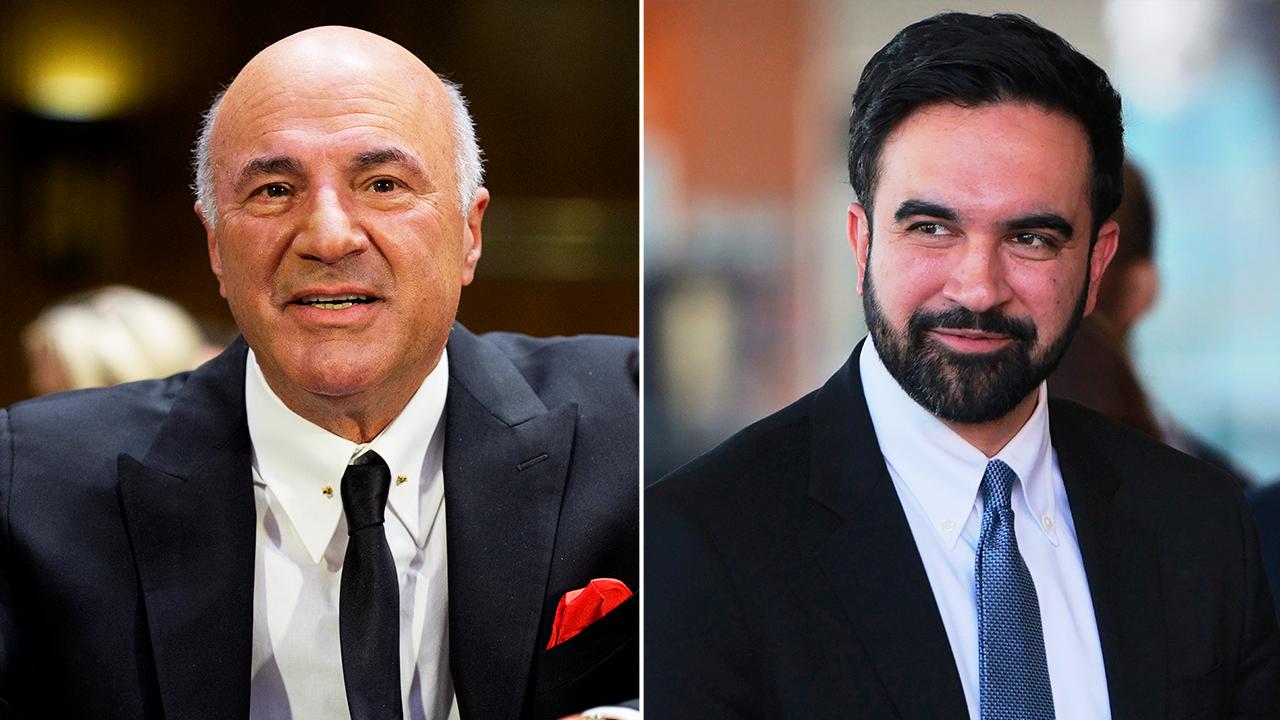
“Shark Tank” star Kevin O’Leary calls out Mayor Zohran Mamdani’s NYC tax policies. (Andrew Harnik, Michael M. Santiago / Getty Images)
“Well, let’s just look at the policy itself and stay out of the emotional aspect of it… These people do not live in the city, they do not burden the city with anything because they’re obviously out-of-towners,” O’Leary said.
His comments come as major firms and high-net-worth individuals increasingly signal a willingness to relocate capital in response to tax policy, a trend that has reshaped migration patterns across several high-tax states in recent years.
‘The Big Money Show’ discusses New York Gov. Kathy Hochul’s new tax pledge amid fiscal challenges and a homeless shelter debate.
Advertisement
O’Leary pointed to the role that outside investors play in funding development and supporting local economies through spending and taxes.
“They spend 5 million plus dollars… Not using any of the city’s services, which is what the city needs, less people putting pressure on it. They pay taxes, and they pay maintenance jobs to maintain the buildings,” he said.
He argued that policies targeting those investors risk discouraging activity that cities depend on.
Advertisement
Alpha Wave Global president and former Miami Mayor Francis Suarez discusses New York City Mayor Zohran Mamdani’s proposed pied-à-terre tax and push for free child care on ‘The Bottom Line.’
“Let me count how many ways this policy is stupid… You want more of these people… That don’t live here, pay taxes, pay maintenance, create jobs… And don’t use the city’s services, that’s sheer blind stupidity, that policy,” O’Leary said.
The debate highlights broader questions about how cities can balance revenue needs with maintaining a competitive environment for investment and growth.
New York City Mayor Mayor Zohran Mamdani spotlighted Citadel CEO Ken Griffin’s Manhattan penthouse in a viral video announcing a new pied-à-terre tax. (Credit: NORGES BANK INVESTMENT MANAGEMENT)
Citadel CEO Ken Griffin called New York City Mayor Zohran Mamdani’s viral video—which singled out Griffin and his Manhattan penthouse while announcing a new tax—a “personal attack” and a “profound lack of judgment.”
On April 15, Mamdani posted a video spotlighting Griffin’s property to announce a new pied-à-terre tax. The move prompted the hedge fund CEO to threaten to pull a $6 billion development project from the city.
Advertisement
The video features Mamdani, who has promised to levy higher taxes on wealthy New Yorkers, standing on a street just outside Griffin’s 24,000-square-foot property. Griffin purchased the home in 2019 for $238 million, marking the most expensive home sale in U.S. history.
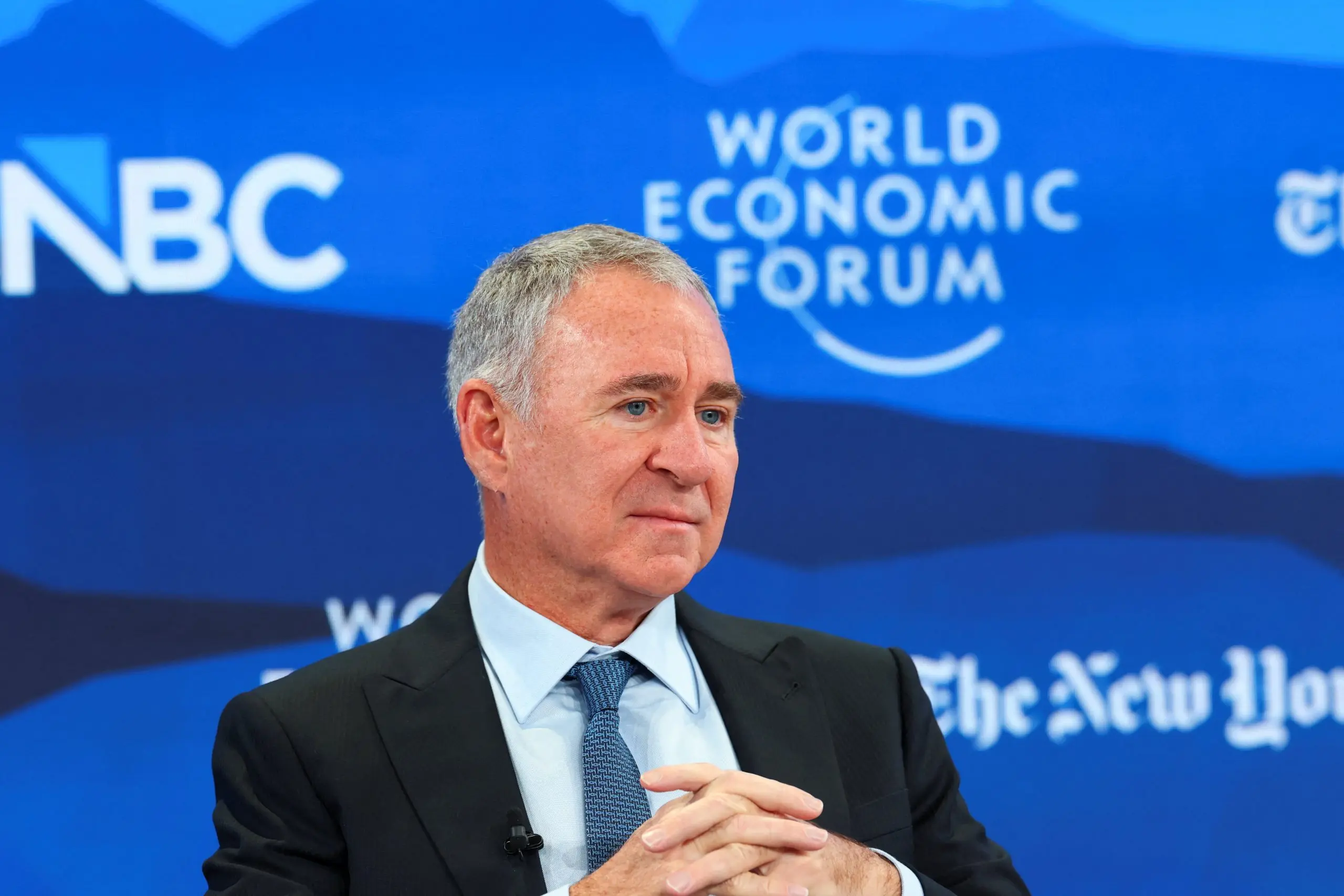
Citadel Founder and CEO Ken Griffin called New York City Mayor Zohran Mamdani’s viral video singling out his Manhattan penthouse while announcing a new tax a “personal attack” and a “profound lack of judgment.” (Denis Balibouse / Reuters)
“This is an annual fee on luxury properties worth more than $5 million, whose owners do not live full-time in the city. Like for this penthouse, which hedge fund CEO Ken Griffin bought for $238 million,” Mamdani said in the video.
Speaking at the Norges Bank Investment Management 2026 Investment Conference in Oslo, Griffin questioned the “demonizing” of business leaders.
Advertisement
“What upset me was the personal attack,” Griffin said. “Like, you were at the White House Correspondents’ Dinner on Saturday where they tried to assassinate the president. Not too far from where I live in New York is where they assassinated the CEO of UnitedHealthcare.”
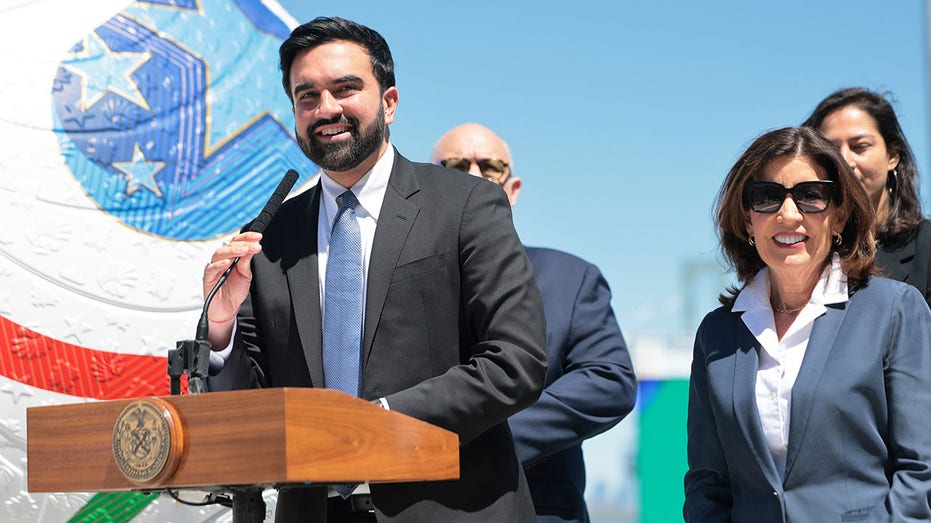
New York Mayor Zohran Mamdani speaks during a press conference at Staten Island University Hospital Community Park on April 27, 2026, in New York City. Mayor Mamdani was joined by Gov. Kathy Hochul, government officials and members of the New York Ne (Michael M. Santiago / Getty Images)
“So I think the willingness of the mayor of New York to make this policy debate a personal attack just demonstrated a profound lack of judgment,” he added. “I understand that New York has bills to pay.”
Following the video, Griffin—who primarily resides in Florida—signaled that he might cancel his latest project in Midtown Manhattan. He is currently slated to meet with New York Gov. Kathy Hochul to discuss the “future direction of New York.”
Advertisement
“Here’s the real question: is New York going to put their fiscal house in order and run itself from a position of a strong government that is pro-business, or are they looking to play … why do the Americans think we can do socialism?” he asked. “We have none of that in our DNA and we are just going to screw it up.”
FOX Business has reached out to Mamdani’s office for comment.
‘The Guy Benson Show’ host Guy Benson and Unleash Prosperity co-founder Steve Moore discuss Citadel rethinking NYC investments after Mayor Zohran Mamdani allegedly targets CEO Ken Griffin’s penthouse with a proposed luxury tax on ‘The Bottom Line.’
Earlier this year, Hochul attempted to tax wealthy New Yorkers leaving the state.
She has since pleaded with them to return amid concerns over the state’s shrinking tax base. Recently, she introduced a tax proposal specifically targeting high-priced second homes in New York City.
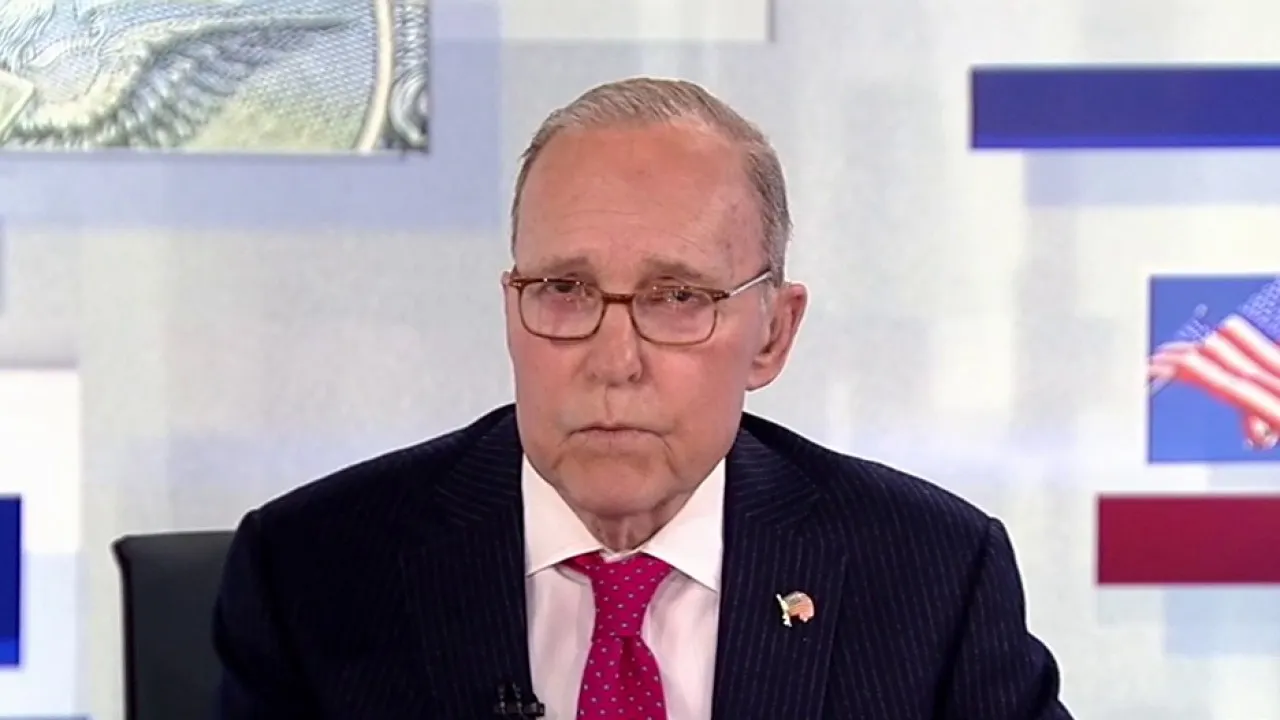
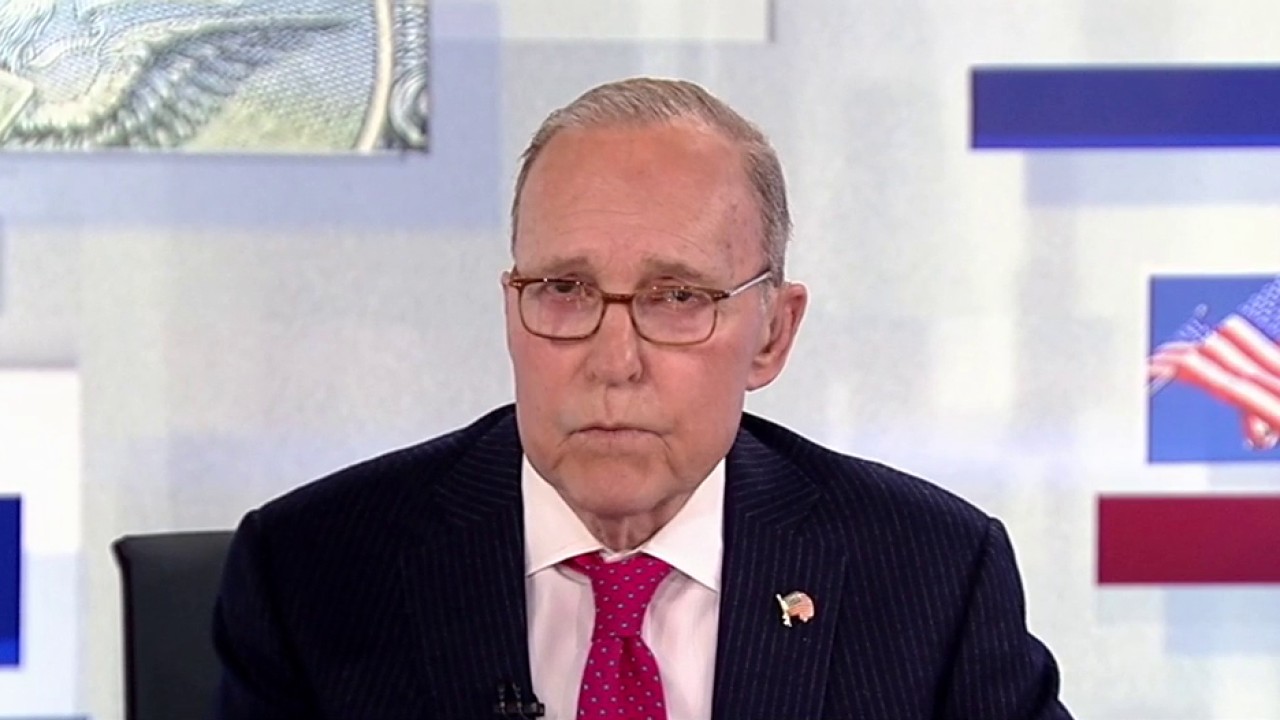
FOX Business host Larry Kudlow discusses where the Iran conflict is headed on ‘Kudlow.’
My first thought is that I just don’t believe President Trump will accept any of these Iranian offers that might open up the Strait of Hormuz, but not end Tehran’s nuclear capabilities or even the regime’s nuclear ambitions. Iran’s hanging on by a thread. Everybody knows that. No oil, no money.
The economic blockade is killing them. Their oil infrastructure may be forced to shut down from storage limits in the next couple of weeks. There’s a shortage of gasoline. Reportedly there’s triple-digit inflation. Their currency is worthless. This is the stuff of revolution, not negotiation.
Advertisement
Our military attacks have destroyed probably 80 percent or 85 percent of their defense and industrial infrastructure, including their nuclear capabilities. It may take a bit longer, but my expectation is that we’re headed for additional military combat along with the economic embargo to finish the job and end the war.
Fox News senior strategic analyst Ret. Gen. Jack Keane unpacks where the U.S.-Iran conflict stands on ‘Kudlow.’
Working with our Israeli allies, the so-called new leadership of the Islamic Revolutionary Guard Corps is not long for this world. Iranians may love to string us along. Yet Mr. Trump is not President Biden or President Obama, he will not permit endless phony negotiations.
And I continue to believe there should be unconditional surrender. And the only agreement would be whosoever left in the so-called Iranian leadership will take dictation from Mr. Trump regarding a complete end to nuclear facilities, a transfer of enriched uranium from Iran to America — all under the supervision and verification of our top scientists in the Energy Department.
Advertisement
Laying down their arms, opening up the Strait of Hormuz, stopping any state sponsored terrorism, be it direct or through proxies, et cetera, et cetera. That’s the deal. Unconditional dictation.
ShellSHEL 1.09%increase; green up pointing triangle has agreed to buy Canadian energy producer ARC Resources for about $13.6 billion, a deal that gives the U.K. oil major new opportunities to export liquefied natural gas—or LNG—far from the conflict zones of the Middle East.
In buying ARC, Shell is taking over one of the suppliers to a giant LNG export terminal that it partly owns in British Columbia—a key facility used to serve customers in Asia. ARC mainly produces gas and gas liquids from the Montney basin in Western Canada.
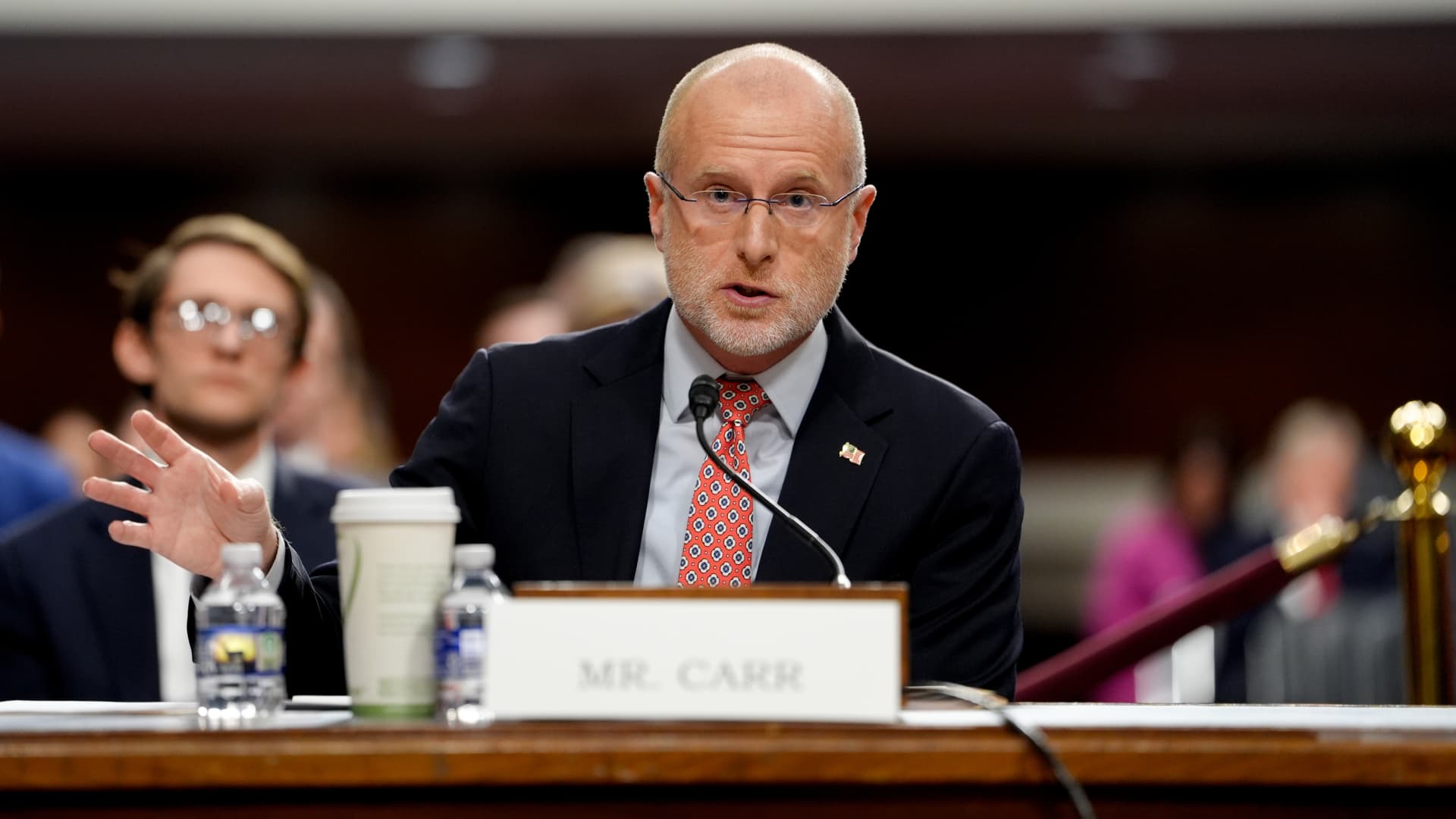
The Federal Communications Commission is seeking an early review of Disney’s broadcast station licenses following concerns around the company’s diversity, equity and inclusion efforts, according to a letter from FCC Chairman Brendan Carr Tuesday.
The letter orders the company to file for early renewal for ABC-owned television stations and notes the action is related to an investigation into Disney’s DEI efforts, which began last year.
ABC-owned station licenses were originally up for renewal between 2028 and 2031.
Disney confirmed on Tuesday that it received the FCC’s order initiating an accelerated review of its licenses. The FCC said in the letter that Disney now has 30 days — or until May 28 — to file for the renewals.
Advertisement
“ABC and its stations have a long record of operating in full compliance with FCC rules and serving their local communities with trusted news, emergency information, and public‑interest programming,” Disney said in a statement. “We are confident that record demonstrates our continued qualifications as licensees under the Communications Act and the First Amendment and are prepared to show that through the appropriate legal channels. Our focus remains, as always, on serving viewers in the local communities where our stations operate.”
The FCC’s move to require early renewals from Disney comes as ABC faces renewed backlash from President Donald Trump this week following comments made by comedian Jimmy Kimmel in an opening monologue for his late night TV show that airs on ABC’s network.
Trump revived his push for ABC to take Kimmel off the air after the host of “Jimmy Kimmel Live!” referred to First Lady Melania Trump as an “expectant widow” during the show last week, days ahead of an alleged assassination attempt at the White House Correspondents’ Dinner.
However, the FCC, the federal entity that regulates the media and telecommunications industry, began investigating Disney’s stations last March for possible violations of the Communications Act of 1934 and the FCC’s rules regarding its prohibition on unlawful discrimination.
Advertisement
Since beginning its investigation, the FCC said that “Disney’s ABC has purported to respond” to two inquiries. Still, the agency said that it has determined further action was “appropriate.”
The order lists eight stations subject to the early renewal — three in California, as well as others in Illinois, New York, Texas, North Carolina and Pennsylvania — all of which are owned and operated by Disney. The call for early renewal does not affect Disney’s affiliates, which are operated by broadcast station owners like Nexstar Media Group.
Disney is not the only media company subject to an investigation surrounding its DEI efforts.
Following reports earlier Tuesday of the FCC’s intention to review ABC’s licenses early, FCC Commissioner Anna Gomez called the move “unprecedented, unlawful, and going nowhere,” in a post on X, adding that “this political stunt won’t stick. Companies should challenge it head-on. The First Amendment is on their side.”
First Amendment experts began to weigh in on the FCC’s latest move on Tuesday, raising similar points as to when “Jimmy Kimmel Live!” was temporarily suspended in September following comments the host made after the killing of conservative activist Charlie Kirk.
At the time, Carr had suggested broadcast station licenses could be revoked in response.
“The FCC has no authority to cancel broadcasters’ licenses because of their perceived political views. But this isn’t just about the rights of Disney and ABC,” said Jameel Jaffer, executive director at the Knight First Amendment Institute at Columbia University in an emailed statement.
Advertisement
“President Trump is trying to consolidate control over what Americans see and hear on the radio, television, and social media. If he gets his way, we’ll have only government-aligned media organizations that broadcast only government-approved news and commentary. It would be difficult to imagine an outcome more corrosive to democracy or more offensive to the First Amendment,” Jaffer said.
Stride, Inc. (LRN) Q3 2026 Earnings Call April 28, 2026 5:00 PM EDT
Company Participants
Eliza Henson James Rhyu – Chair of the Board & CEO Donna Blackman – Executive VP & CFO
Advertisement
Conference Call Participants
Jeffrey Silber – BMO Capital Markets Equity Research Alexander Paris – Barrington Research Associates, Inc., Research Division Matthew Filek – William Blair & Company L.L.C., Research Division
Presentation
Advertisement
Operator
Hello, and thank you for standing by. My name is Tiffany, and I will be your conference operator today. At this time, I would like to welcome everyone to the Stride Third Quarter Fiscal Year 2026 Earnings Call.
[Operator Instructions] I would now like to turn the call over to Eliza Henson, Manager of Investor Relations. Eliza, please go ahead.
Advertisement
Eliza Henson
Thank you, and good afternoon. Welcome to Stride’s Third Quarter Earnings Call for Fiscal Year 2026. With me on today’s call are James Rhyu, Chief Executive Officer; and Donna Blackman, Chief Financial Officer.
As a reminder, today’s conference call and webcast are accompanied by a presentation that can be found on the Stride Investor Relations website. Please be advised that today’s discussion of our financial results may include certain non-GAAP financial measures. A reconciliation of these measures is provided in the earnings release issued this afternoon and can also be found on our Investor Relations website.
In addition to historical information, this call will also involve forward-looking statements. The company’s actual results could differ materially from any forward-looking statements due to several important factors as described in the company’s earnings release and latest SEC filings, including our most recent annual report on Form 10-K and subsequent filings.
Advertisement
These statements are made on the basis of our views and assumptions regarding future events and business performance at the time we make them, and the company assumes

















































You must be logged in to post a comment Login