
Business
Most Commercial Energy Audits Miss the Real Losses


If you visit enough factories, you start to see the same patterns repeat.
When a site owner complains about high power costs. An audit is commissioned. Metering is installed. Spreadsheets are produced. The conclusion usually assumes the same few points: total kWh consumption, peak demand, and, finally, how much solar could offset the bill.
On paper, everything looks very thorough. On the factory floor, nothing really changes.
The machines and motors still regularly trip. Production still pauses. Equipment still fails earlier than it should. Operators keep resetting systems and working around problems that never appear in the audit report.
That gap is where the real losses live.
Energy audits are good at counting electricity, not behavior
Most commercial energy audits are built around a simple question: how much energy does this site use, and when?
That question is easy to answer. Utilities already provide the data. Data loggers or Smart meters refine it further. Half-hourly or five-minute intervals can be plotted and averaged. Solar simulations can be layered on top. Demand curves can be easily smoothed.
What audits rarely capture is how power behaves under stress.
They don’t show how the voltage changes when large motors start. They don’t record harmonics rising as loads stack on top of each other. They don’t explain why controls reset on certain afternoons or why drives fail well before their expected life.
Those problems don’t sit comfortably in a kWh chart, so they tend to be ignored.
When the numbers look acceptable, but operations keep suffering
Recently, we were asked to look at a factory where the energy numbers appeared reasonable. Consumption was in line with production. Nothing in the utility bills suggested a crisis.
On-site, the picture was very different.
Power factor was sitting around 0.8. Harmonic distortion was elevated enough to matter, even if it didn’t trip protections outright. The combined effect translated into an estimated one to two percent energy loss before production even started. That loss never appears as a line item. It is baked into inefficiency.
More damaging were the operational effects. Power interruptions were happening roughly once a week. Some were brief. Others lasted most of a day. Each interruption disrupted production sequences, caused spoilage, and forced shutdowns that took time and labor to unwind.
Over time, the site had also racked up significant replacement costs for electrical equipment. Drives, controls, and components were failing more often than their operating hours would suggest.
None of this was clearly shown in the audit.
From the audit’s perspective, energy consumption was roughly as expected. From the factory’s point of view, power was unpredictable and expensive in ways that weren’t being measured.
Power quality losses are real, even when nothing trips
One of the biggest blind spots in most audits is power quality.
Harmonics, phase imbalance, poor power factor, and voltage instability don’t usually announce themselves dramatically. They don’t cause blackouts. They don’t always trigger alarms. Instead, they subject equipment to constant low-level stress.
Motors can run hot. Different types of drives can derate more often. Controls misbehave under certain load conditions. Components age unevenly.
Taken separately, these effects look minor. Collectively, they shorten equipment life and increase maintenance costs. They also create a background level of inefficiency that never gets attributed to power.
Audits that focus only on energy quantity miss this entirely. They tell you how much electricity you used, not how much damage that electricity caused along the way.
Downtime is an energy cost, even if it isn’t billed
Another major omission is production downtime.
When power is interrupted, even briefly, factories lose far more than kilowatt-hours. They lose product. They lose labor. They lose process stability and predictability. They often lose entire batches.
Because downtime isn’t measured in energy units, it rarely appears in energy analysis. It sits in operations reports, maintenance logs, or simply in people’s heads.
Over time, sites normalize it. One interruption a week becomes “just how the grid is.” A few hours lost here and there become part of planning assumptions. The cost is real, but it’s diffuse enough that no one owns it.
An audit that ignores downtime is ignoring one of the largest controllable losses on many industrial sites.
Why solar does not automatically solve these problems
Solar is often proposed as the fix once an audit is complete. And in fairness, grid-tied solar does one thing extremely well: it produces low-cost energy during the day.
What it doesn’t do on its own is improve how power behaves.
A site can install a large solar system, reduce its daytime grid consumption, and still experience the same interruptions, instability, and equipment failures. From the audit’s perspective, the project is a success. From operations, frustration remains.
That’s because the underlying issue was never energy volume. It was power quality and control.
Measuring what actually matters changes the conversation
The moment proper measurement is introduced, the discussion shifts.
Instead of arguing about whether equipment is “too sensitive” or whether the grid is “getting worse,” teams can see exactly what is happening. They can correlate events. They can identify patterns. They can quantify losses that were previously dismissed as bad luck.
This is where field-grade power quality measurement becomes invaluable. Not utility averages. Not billing data. Actual recordings of voltage, frequency, harmonics, and transient behavior at the point where equipment is connected.
Once those signals are visible, many fixes turn out to be surprisingly modest. Power factor correction. Harmonic mitigation. Better coordination of equipment starts. Adjustments to protection and control logic.
In many cases, the capital required is far lower than the cost of continuing to absorb hidden losses year after year.
The difference between audited systems and engineered systems
Well-engineered industrial systems tend to age quietly.
They don’t demand constant attention. They don’t suffer from mysterious failures. Their equipment degrades evenly rather than catastrophically. Maintenance becomes routine rather than reactive.
You can see this clearly on sites where power quality has been treated as a design input rather than an afterthought.
One example is an industrial installation such as the Atlantic Grains facility, where system design focused not just on energy production but on maintaining clean, stable power under real operating conditions. That kind of approach doesn’t eliminate the grid’s imperfections, but it prevents them from cascading through the plant.
The result is not just lower energy cost. It’s calmer operations.
Why audits stay shallow, and why that’s unlikely to change
To be fair, most audits are not designed to miss these issues. They’re constrained by scope, budget, and expectation.
Clients often ask for savings numbers, not operational insight. Consultants deliver what is requested. Measuring deeper requires time, equipment, and a willingness to deal with uncomfortable findings.
But as operations become more automated and margins tighter, the cost of ignoring these losses keeps rising. Factories today are less tolerant of power irregularities than they were a decade ago. Controls are faster. Processes are tighter. Small disturbances propagate further.
The gap between what audits measure and what factories experience is widening.
Experience changes what you look for
Teams that spend years operating in facilities begin to approach energy very differently. They stop asking only how much power is used and start asking how it behaves when things aren’t ideal.
That perspective comes from seeing the same failures repeat across different sites and sectors. From watching equipment fail early for reasons that never appear in reports. From understanding that reliability is not a binary state but a spectrum.
Operators like Solaren Renewable Energy Solutions Corp., working across industrial and commercial sites, often encounter factories that believed their problems were mechanical or operational, only to discover that power quality was the silent trigger all along. Once that trigger is addressed, many long-standing issues simply stop occurring.
What a useful energy assessment should really answer
A meaningful assessment should go beyond energy accounting.
It should answer questions like:
How stable is the supply under real operating conditions?
Where does power quality move outside acceptable tolerances, and when?
How much does each interruption actually cost the business?
Which losses are structural, and which are fixable?
Those answers don’t fit neatly into a single spreadsheet. They require measurement, context, and experience.
Without them, businesses risk spending heavily on solutions that improve the optics while leaving the underlying problems untouched.
The uncomfortable truth
Most commercial energy audits don’t miss losses because they are careless. They miss them because those losses are harder to see, measure, and attribute.
Unfortunately, those are often the losses that matter the most.
Factories don’t usually struggle or fail because they lack energy. It’s because the power they receive isn’t consistent enough to keep modern operations stable.
Until audits start treating power quality, downtime, and equipment stress as first-class costs, businesses will keep solving the wrong problem.
Counting kilowatt-hours is easy.
Understanding what power is really doing takes more work.
That difference is where the real savings are found.


Oil prices fall from 3-wk high; UAE leaves OPEC, Hormuz disruptions persist

NEW YORK — Coca-Cola Co. shares jumped more than 6% to $80.21 in morning trading on Tuesday, April 28, 2026, after the beverage giant reported first-quarter results that topped Wall Street expectations and raised its full-year earnings guidance, driven by resilient global demand for its higher-priced drinks and strong execution in emerging markets.
The Atlanta-based company posted adjusted earnings per share of 86 cents, beating analysts’ consensus estimate of 81 cents. Revenue reached $12.47 billion, surpassing forecasts of approximately $12.24 billion. Organic revenue growth hit 10%, marking the company’s strongest performance in five quarters and reflecting successful pricing strategies alongside solid volume gains.
Coca-Cola raised its full-year comparable earnings per share growth outlook to 8-9% from a previous 7-8%, while maintaining its organic revenue growth target of 4-5%. The upbeat update signaled confidence in sustained consumer demand despite economic pressures in some regions.
CEO James Quincey highlighted broad-based strength across categories and geographies. Sparkling beverages, particularly zero-sugar and premium offerings, continued to perform well as consumers traded up within the portfolio. The company also benefited from disciplined cost management and operational efficiencies that expanded operating margins.
The strong results triggered enthusiastic buying, with shares easily outpacing the broader market. Volume surged in early trading as both institutional investors and retail traders reacted to the beat. The move pushed Coca-Cola toward its 52-week high and underscored its status as a defensive powerhouse in an uncertain economic environment.
Coca-Cola’s performance stands out amid mixed consumer spending trends. While some packaged goods companies have faced pushback against price increases, the world’s largest beverage maker has successfully balanced pricing power with innovation and marketing. Its diversified portfolio — spanning sparkling soft drinks, water, sports drinks, coffee and juices — has helped insulate it from category-specific slowdowns.
Analysts praised the results. Several firms raised price targets following the report, citing improved visibility into the year and the company’s ability to navigate inflationary pressures. The raised guidance was viewed as particularly encouraging, removing a layer of uncertainty heading into the critical summer selling season.
For investors, Coca-Cola remains a core holding in many portfolios thanks to its reliable dividend, global scale and brand strength. The stock’s 3%+ yield combined with steady earnings growth has made it a favorite for income-focused and defensive strategies. Tuesday’s surge adds to solid year-to-date gains and reinforces the company’s resilience.
The results come as Coca-Cola continues investing in digital transformation, sustainability initiatives and emerging market expansion. Management noted particular strength in developing regions where rising middle classes are driving demand for premium beverages. North America and Europe also contributed positively despite varying economic conditions.
Broader industry trends support Coca-Cola’s momentum. The shift toward premiumization — consumers choosing higher-end or better-for-you options — plays directly into the company’s strategy. Innovations like new flavors, limited editions and functional beverages have helped maintain excitement around core brands.
Challenges remain. Input cost pressures, foreign exchange volatility and changing consumer preferences require ongoing vigilance. The company has faced scrutiny over sugar content and environmental impact, prompting accelerated efforts in recyclable packaging and reduced-plastic initiatives.
Wall Street consensus remains bullish. Most analysts rate the stock as a Buy or Outperform with average price targets well above current levels. The combination of earnings visibility, dividend growth and long-term demographic tailwinds continues attracting long-term capital.
As trading progressed Tuesday morning, shares consolidated near session highs with healthy volume. Technical analysts noted the breakout above recent resistance, with potential near-term targets in the low-to-mid $80s if momentum holds. Options activity showed increased call buying, reflecting optimism.
Coca-Cola’s ability to deliver consistent results in a complex global environment highlights the strength of its business model. With a market capitalization exceeding $300 billion, the company remains one of the most valuable consumer staples franchises worldwide. Tuesday’s reaction demonstrates the market’s appreciation for reliable execution and forward-looking confidence.
Looking ahead, investors will watch second-quarter performance closely, particularly summer volume trends in key markets. Any further guidance updates or strategic announcements could provide additional catalysts. For now, the Q1 beat and raised outlook have set a positive tone for the remainder of 2026.
The day’s move reinforces Coca-Cola’s reputation as a blue-chip name capable of delivering growth and stability. As global economies navigate uncertainty, the company’s focus on essential consumer products and pricing discipline positions it favorably for continued success.

Moody’s Ratings has revised Thailand’s sovereign credit outlook from “negative” to “stable,” crediting improved political stability and progress on structural economic reforms.
Key Details:
- Moody’s has affirmed Thailand’s long-term local and foreign currency issuer ratings at Baa1, with the outlook shift announced by Finance Minister Ekniti Nitithanprapas.
- The upgrade reflects the perceived stability of Prime Minister Anutin Charnvirakul’s government, which has enabled greater policy continuity and reform momentum.
- Key reform priorities include easing business regulations and liberalising the energy market to encourage private sector competition.
- External pressures have eased, with reciprocal tariff negotiations bringing Thai customs duties more in line with regional peers, boosting export competitiveness.
- Pressure from the global energy crisis is considered manageable and comparable to other Baa1-rated nations.
- Private investment is recovering strongly, partly driven by the government’s ‘Thailand FastPass’ initiative, which accelerated private sector spending in Q4 of last year.
The upgrade signals a significant improvement in international confidence in Thailand’s economic and political trajectory, with analysts suggesting that successful execution of the planned structural reforms could deliver sustained GDP growth and a stronger fiscal position.
Moody’s upgraded Thailand’s outlook to “stable” primarily due to improved political stability and a clearer path toward structural economic reforms.
The key drivers cited by the agency include:
- Reduced Political Uncertainty: The stability of Prime Minister Anutin Charnvirakul’s government has mitigated the political volatility that previously weighed on the economic outlook, allowing for essential policy continuity.
- Reform Momentum: The administration is actively pursuing reforms to boost business flexibility and liberalize the energy market, which Moody’s views as a positive trajectory for long-term growth.
- Easing External Pressures: Negotiations on reciprocal tariffs have reduced trade friction, aligning Thai customs duties with regional peers and enhancing export competitiveness.
- Resilient Private Investment: There is a robust recovery in private investment, accelerated by the government’s “Thailand FastPass” initiative.
While global energy price pressures remain a concern, Moody’s determined that the resulting impact on Thailand’s debt and economy is manageable and comparable to other nations with a Baa1 rating.
Moody’s cited the stability of Prime Minister Anutin Charnvirakul’s government as the primary factor in improving political stability, which in turn enabled progress on structural reforms.
The key reforms the government is focused on, which are seen as driving the improved outlook, include:
- Easing Business Regulations: Streamlining bureaucratic hurdles to make it easier for businesses to operate.
- Liberalising the Energy Market: Opening up the power sector to foster private sector competition.
These reforms are designed to create new economic engines and boost the nation’s Gross Domestic Product (GDP), with the long-term goal of achieving a more robust fiscal position.
Other People are Reading

Several warning lights are flashing that have some wondering whether we are in the foothills of another financial crisis.

Bicara Therapeutics CMO David Raben sells $125,830 in shares

O’Leary Ventures Chairman Kevin O’Leary weighs in on the dispute between New York City Mayor Zohran Mamdani and Citadel CEO Ken Griffin on ‘Varney & Co.’
A renewed push to raise taxes on wealthy individuals and corporations in New York City is drawing criticism from business leaders as policymakers weigh how to balance budgets without driving away investment.
O’Leary Ventures Chairman Kevin O’Leary joined FOX Business’ Stuart Varney on “Varney & Co.” to weigh in on proposals targeting high earners, arguing the approach risks undermining the economic activity cities rely on.

“Shark Tank” star Kevin O’Leary calls out Mayor Zohran Mamdani’s NYC tax policies. (Andrew Harnik, Michael M. Santiago / Getty Images)
“Well, let’s just look at the policy itself and stay out of the emotional aspect of it… These people do not live in the city, they do not burden the city with anything because they’re obviously out-of-towners,” O’Leary said.
TAX FIGHT HEATS UP AS NEW YORK TARGETS WEALTHY HOMEOWNERS
His comments come as major firms and high-net-worth individuals increasingly signal a willingness to relocate capital in response to tax policy, a trend that has reshaped migration patterns across several high-tax states in recent years.
‘The Big Money Show’ discusses New York Gov. Kathy Hochul’s new tax pledge amid fiscal challenges and a homeless shelter debate.
O’Leary pointed to the role that outside investors play in funding development and supporting local economies through spending and taxes.
HOCHUL TAX PLAN TARGETS HIGH-END SECOND HOMES AMID REVENUE PRESSURES
“They spend 5 million plus dollars… Not using any of the city’s services, which is what the city needs, less people putting pressure on it. They pay taxes, and they pay maintenance jobs to maintain the buildings,” he said.
He argued that policies targeting those investors risk discouraging activity that cities depend on.
Alpha Wave Global president and former Miami Mayor Francis Suarez discusses New York City Mayor Zohran Mamdani’s proposed pied-à-terre tax and push for free child care on ‘The Bottom Line.’
“Let me count how many ways this policy is stupid… You want more of these people… That don’t live here, pay taxes, pay maintenance, create jobs… And don’t use the city’s services, that’s sheer blind stupidity, that policy,” O’Leary said.
The debate highlights broader questions about how cities can balance revenue needs with maintaining a competitive environment for investment and growth.

New York City Mayor Mayor Zohran Mamdani spotlighted Citadel CEO Ken Griffin’s Manhattan penthouse in a viral video announcing a new pied-à-terre tax. (Credit: NORGES BANK INVESTMENT MANAGEMENT)
Citadel CEO Ken Griffin called New York City Mayor Zohran Mamdani’s viral video—which singled out Griffin and his Manhattan penthouse while announcing a new tax—a “personal attack” and a “profound lack of judgment.”
On April 15, Mamdani posted a video spotlighting Griffin’s property to announce a new pied-à-terre tax. The move prompted the hedge fund CEO to threaten to pull a $6 billion development project from the city.
The video features Mamdani, who has promised to levy higher taxes on wealthy New Yorkers, standing on a street just outside Griffin’s 24,000-square-foot property. Griffin purchased the home in 2019 for $238 million, marking the most expensive home sale in U.S. history.

Citadel Founder and CEO Ken Griffin called New York City Mayor Zohran Mamdani’s viral video singling out his Manhattan penthouse while announcing a new tax a “personal attack” and a “profound lack of judgment.” (Denis Balibouse / Reuters)
“This is an annual fee on luxury properties worth more than $5 million, whose owners do not live full-time in the city. Like for this penthouse, which hedge fund CEO Ken Griffin bought for $238 million,” Mamdani said in the video.
Speaking at the Norges Bank Investment Management 2026 Investment Conference in Oslo, Griffin questioned the “demonizing” of business leaders.
“What upset me was the personal attack,” Griffin said. “Like, you were at the White House Correspondents’ Dinner on Saturday where they tried to assassinate the president. Not too far from where I live in New York is where they assassinated the CEO of UnitedHealthcare.”

New York Mayor Zohran Mamdani speaks during a press conference at Staten Island University Hospital Community Park on April 27, 2026, in New York City. Mayor Mamdani was joined by Gov. Kathy Hochul, government officials and members of the New York Ne (Michael M. Santiago / Getty Images)
“So I think the willingness of the mayor of New York to make this policy debate a personal attack just demonstrated a profound lack of judgment,” he added. “I understand that New York has bills to pay.”
Following the video, Griffin—who primarily resides in Florida—signaled that he might cancel his latest project in Midtown Manhattan. He is currently slated to meet with New York Gov. Kathy Hochul to discuss the “future direction of New York.”
“Here’s the real question: is New York going to put their fiscal house in order and run itself from a position of a strong government that is pro-business, or are they looking to play … why do the Americans think we can do socialism?” he asked. “We have none of that in our DNA and we are just going to screw it up.”
FOX Business has reached out to Mamdani’s office for comment.
‘The Guy Benson Show’ host Guy Benson and Unleash Prosperity co-founder Steve Moore discuss Citadel rethinking NYC investments after Mayor Zohran Mamdani allegedly targets CEO Ken Griffin’s penthouse with a proposed luxury tax on ‘The Bottom Line.’
GET FOX BUSINESS ON THE GO BY CLICKING HERE
Earlier this year, Hochul attempted to tax wealthy New Yorkers leaving the state.
She has since pleaded with them to return amid concerns over the state’s shrinking tax base. Recently, she introduced a tax proposal specifically targeting high-priced second homes in New York City.
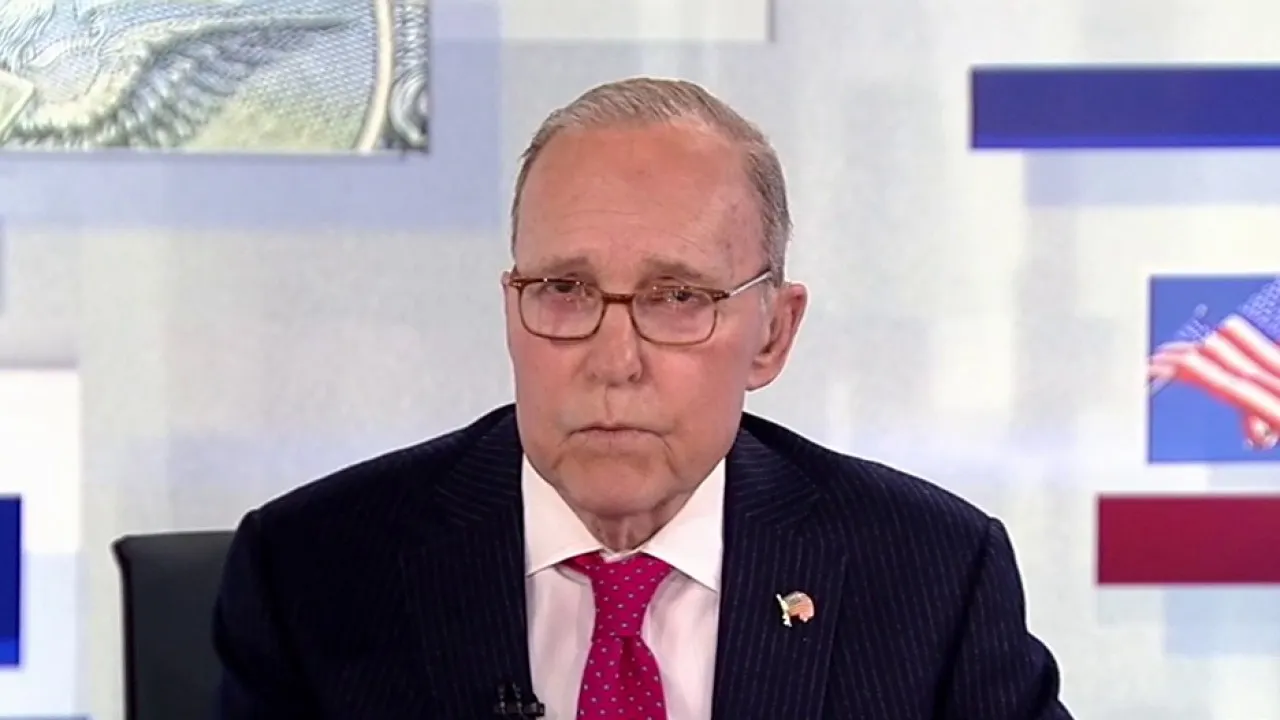
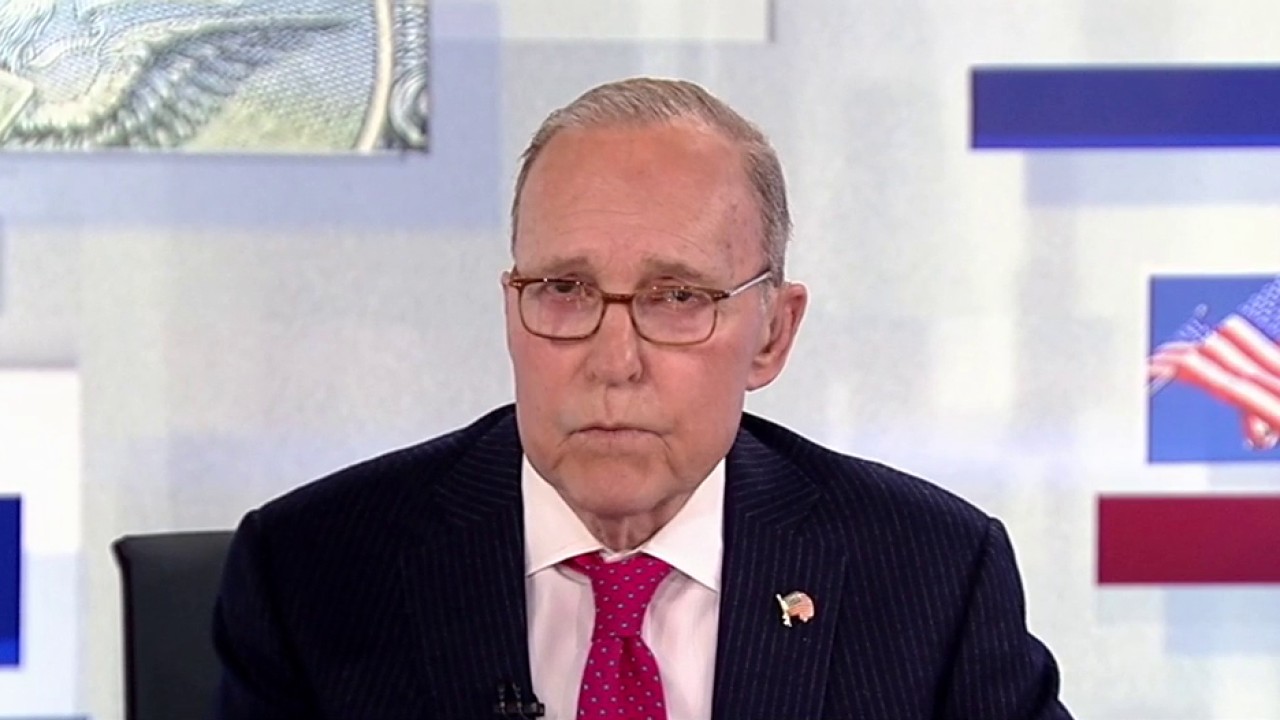
FOX Business host Larry Kudlow discusses where the Iran conflict is headed on ‘Kudlow.’
My first thought is that I just don’t believe President Trump will accept any of these Iranian offers that might open up the Strait of Hormuz, but not end Tehran’s nuclear capabilities or even the regime’s nuclear ambitions. Iran’s hanging on by a thread. Everybody knows that. No oil, no money.
The economic blockade is killing them. Their oil infrastructure may be forced to shut down from storage limits in the next couple of weeks. There’s a shortage of gasoline. Reportedly there’s triple-digit inflation. Their currency is worthless. This is the stuff of revolution, not negotiation.
Our military attacks have destroyed probably 80 percent or 85 percent of their defense and industrial infrastructure, including their nuclear capabilities. It may take a bit longer, but my expectation is that we’re headed for additional military combat along with the economic embargo to finish the job and end the war.
Fox News senior strategic analyst Ret. Gen. Jack Keane unpacks where the U.S.-Iran conflict stands on ‘Kudlow.’
Working with our Israeli allies, the so-called new leadership of the Islamic Revolutionary Guard Corps is not long for this world. Iranians may love to string us along. Yet Mr. Trump is not President Biden or President Obama, he will not permit endless phony negotiations.
And I continue to believe there should be unconditional surrender. And the only agreement would be whosoever left in the so-called Iranian leadership will take dictation from Mr. Trump regarding a complete end to nuclear facilities, a transfer of enriched uranium from Iran to America — all under the supervision and verification of our top scientists in the Energy Department.
Laying down their arms, opening up the Strait of Hormuz, stopping any state sponsored terrorism, be it direct or through proxies, et cetera, et cetera. That’s the deal. Unconditional dictation.

Abbott Laboratories director Daniel Starks buys $926,537 in shares

Form 144 StoneCo Ltd. For: 28 April
Oil prices fall from 3-wk high; UAE leaves OPEC, Hormuz disruptions persist

Vermont pays Christian school $566K after trans athlete sports ban
How to build custom reasoning agents with a fraction of the compute

Manchester United reach agreement with Casemiro over contract clause amid transfer speculation

US brings back mandatory military draft registration

Steven Gerrard disagrees with Gary Neville over ‘shock’ Chelsea and Arsenal claim | Football


-

 Tech1 day ago
Register Renaming | Hackaday
-

 Fashion4 days ago
Weekend Open Thread – Corporette.com
-
 Crypto World3 days ago
Hyperliquid $HYPE Rally Builds Momentum as AI Sector Enters Prove-It Phase
-

 Politics6 days ago
Making troops accountable for war crimes threatens US alliance, ex-SAS colonel warns
-

 Politics6 days ago
Disabled people challenge government SEND proposals over segregation concerns
-

 Business5 days ago
Patterson-UTI Energy, Inc. (PTEN) Q1 2026 Earnings Call Transcript
-

 Business7 days ago
Rolls-Royce Voted UK’s Most Iconic Trade Mark as IPO Register Hits 150
-
 Sports2 days ago
IPL 2026: Ruturaj Gaikwad registers slowest fifty of the season, enters all-time unwanted list | Cricket News
-

 Politics1 day ago
Drax board avoid their own AGM, accused of greenwashing & environmental racism
-

 Politics6 days ago
Starmer handler McSweeney to be dragged from shadows by Foreign Affairs Committee
-

 Politics6 days ago
Zack Polanski responds to home secretary’s taser threat
-
Politics6 days ago
Wings Over Scotland | How To Get Away With Crimes
-

 Politics6 days ago
‘Iran is still a nuclear threat’
-
 Business7 days ago
HCL Tech share price tank over 9% after weak Q4. JPMorgan, HSBC & 3 others cut target price
-

 NewsBeat3 days ago
LK Bennett closes all stores after entering administration
-
 Sports6 days ago
Tim Bradley names the current best in the world: “Better than Inoue and Usyk”
-

 Crypto World5 days ago
Michael Saylor says BTC winter is over. Market analyst disagrees, says bitcoin was in a pullback
-
 Crypto World7 days ago
Ethereum Price News: ETH Flashes a Bullish Setup No Holder Should Miss While Pepeto Nears Its Binance Listing
-

 Business7 days ago
The Job Benefits Most Men Don’t Know to Negotiate
-
Business6 days ago
Altimmune prices $225 million public offering at $3 per share
You must be logged in to post a comment Login