
Crypto World
Crypto Projects Shut Down as Token Models Fail Under Pressure

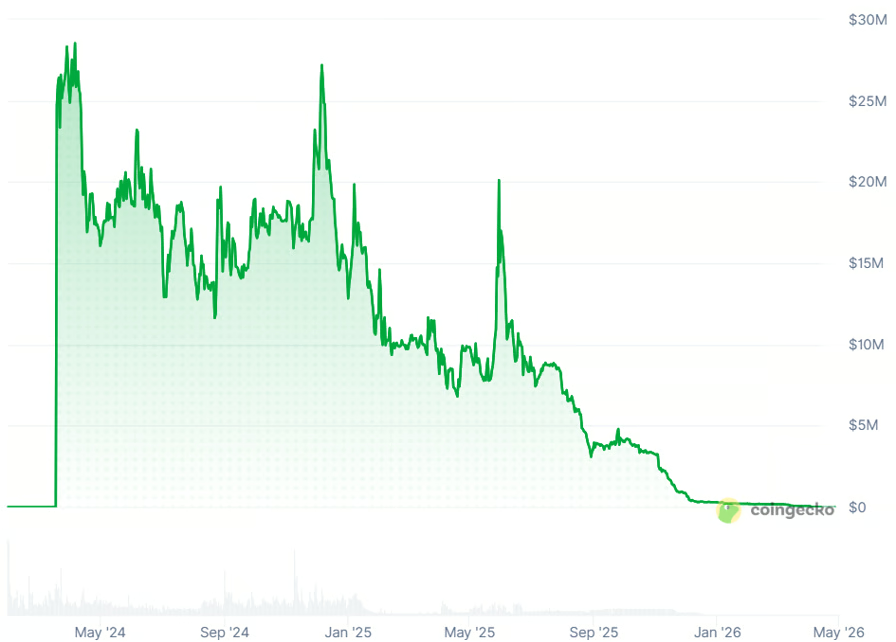
A wave of crypto shutdowns is unfolding across the industry this year, hitting projects from trading platforms to analytics tools.
April was no exception, as decentralized email service Dmail said it is shutting down due to high infrastructure costs, failed fundraising and weak token utility.
“In prior cycles, projects could extend runway through new issuance or venture support,” Roshan Dharia, a restructuring advisor and CEO of crypto holding company Echo Base, told Cointelegraph.
“That path is largely closed, so losses are being recognized earlier, and outcomes are more often wind downs than recoveries,” he said.
Crypto built a fast way to raise capital through tokens, but still lacks a framework to unwind it when things go wrong, making it difficult to reorganize claims or coordinate stakeholders once conditions deteriorate.
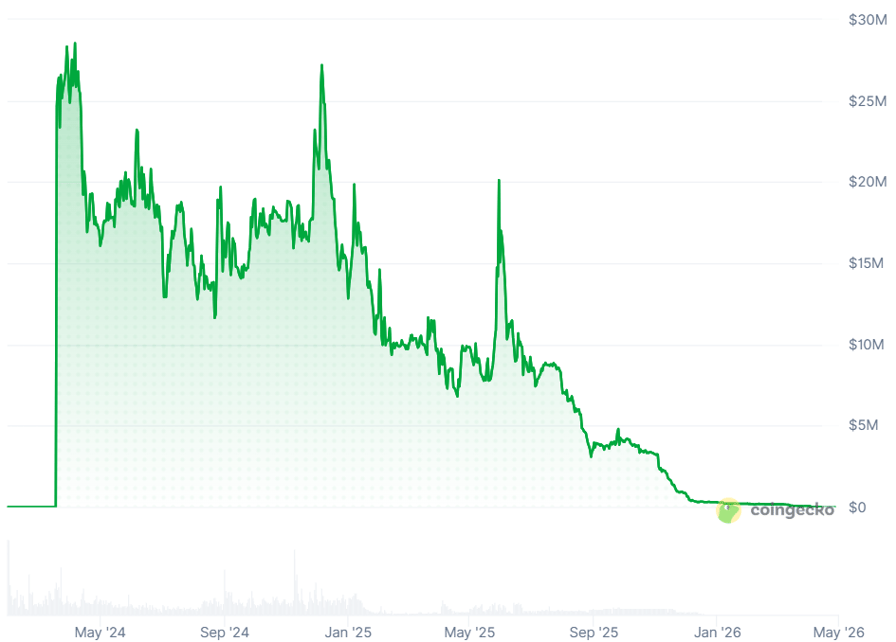
Dmail’s token market cap fell below $1 million in November. Source: CoinGecko
Token funding falters as projects unwind
As market conditions have tightened in recent months, projects are drifting into slow declines instead of the abrupt collapses seen in past crypto downturns. Projects are deteriorating over time as user activity declines, treasuries weaken and funding options narrow.
“You see this in cases like Tally and Step Finance, where there is no single failure point, just a steady decline in treasury value and user activity that compresses optionality over time,” said Dharia.
DAO tooling platform Tally said it was winding down after concluding the market for governance tooling had yet to develop at scale, while Step Finance moved to shut down after a hack, saying efforts to secure financing or a sale failed to produce a viable outcome.
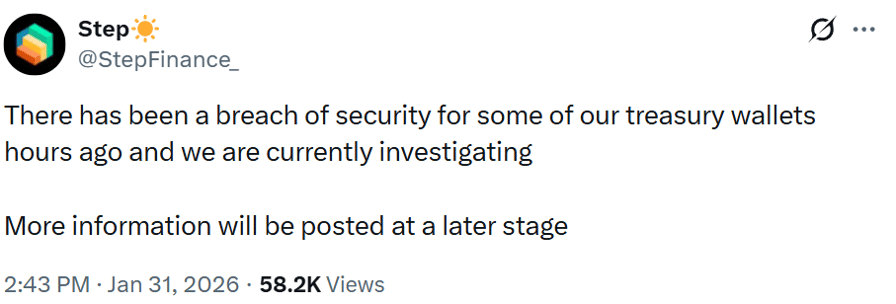
Step Finance suffered a $40 million security breach in January. Source: Step Finance
Related: Ethereum’s EEZ could pull other blockchains into its orbit
Some breakdowns still follow more familiar patterns. BlockFills filed for bankruptcy in March after freezing withdrawals. Its creditor, Dominion Capital, alleged in a lawsuit that the firm commingled customer assets to cover company losses.
Tokens once offered a fallback, allowing teams to raise capital or subsidize growth, but that mechanism is no longer as reliable, Dharia said.
He added:
Earlier cycles treated tokens as a primary funding mechanism with an implied alignment between users, holders and operators. That alignment has proven fragile in stressed scenarios, particularly where token holders lack defined rights or recourse.”
Some are starting to treat tokens as claims that may need to be consolidated or reworked. In March, Across Protocol proposed a token-to-equity buyout. Risk Labs, the team behind Across, said the token and decentralized autonomous organization (DAO) structure limited its ability to close deals with enterprises and institutions.
Crypto lacks a playbook for restructuring
Unlike traditional companies, most crypto projects lack a clear path to restructure once conditions deteriorate. Corporate bankruptcies provide mechanisms to pause obligations, renegotiate with creditors and reorganize capital structures.
In crypto, such avenues are often missing or poorly defined.
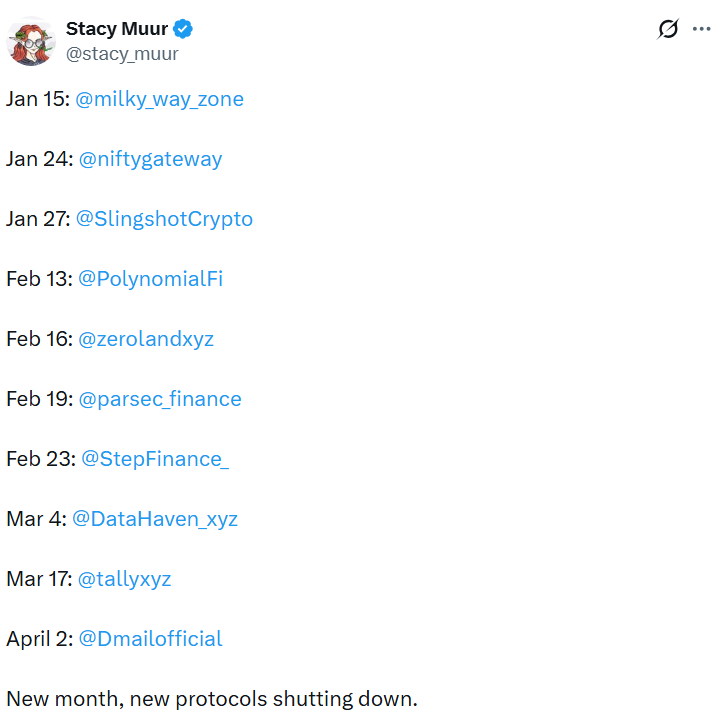
Each month in 2026 had a crypto project announcing shutdowns. Source: Stacy Muur
Related: Prediction market battle gets closer to Supreme Court
Crypto projects often operate through a mix of foundations, offshore entities and token-based communities, with no unified legal structure governing liabilities. In restructuring, token holders typically have no formal claims on assets or cash flows.
That limits what they can do under pressure. Projects are often left choosing between raising new capital on worse terms or shutting down without a clear hierarchy of claims or a way to bind stakeholders to an outcome, entirely.
“Most projects do not have access to formal restructuring tools, and their stakeholder base is fragmented across token holders, equity investors, and users with no clear hierarchy or enforcement mechanism,” said Dharia.
“That makes it difficult to recapitalize, restructure obligations, or run a controlled process to preserve value. In that environment, once liquidity tightens, outcomes tend to default to wind downs or distressed asset sales rather than coordinated recoveries,” he said.
Limited recovery paths in token-based systems
Tokens made it easier and more accessible for crypto companies to raise capital and scale quickly, but offer limited support once conditions deteriorate.
Dharia said the current wave of shutdowns is driven by tighter capital availability and structurally weak balance sheets. Many projects entered the bear market with treasuries heavily concentrated in their own tokens or correlated assets. As prices fell, the runway contracted.
“At the same time, funding channels have narrowed, with more selective venture deployment, weaker token issuance and thinner secondary liquidity limiting both exit and financing options,” Dharia added.
So far this year, projects have more often wound down quietly than attempted formal restructuring. Without clear frameworks to reorganize claims or coordinate stakeholders, recovery paths remain limited.
Some projects have begun exploring ways to consolidate ownership and introduce more formal structures, suggesting parts of the market are starting to adapt after running into the limits of token and decentralized governance models.
Magazine: AI-driven hacks could kill DeFi — unless projects act now


Bitcoin’s recent 20% surge from its February trough traces a clear throughline: the accumulation by Strategy, a Bitcoin treasury firm known for its perpetual preferred stock STRC. In a eight-week window, Strategy’s buying spree appears to have been the single largest driver of the move, according to Bitwise chief investment officer Matt Hougan, who notes that Strategy has added roughly $7.2 billion in Bitcoin over that period. The development comes as ETFs and longtime holders continue to buy, but the STRC-backed buying is shaping the market’s narrative about corporate treasury demand for BTC.
Prices have traded in a tight band around $75,000 to $79,000 over the past week, according to CoinGecko. As of midweek, Bitcoin hovered near $76,500, representing a roughly 21% rebound from its Feb. 6 low of about $62,800. The backdrop is a market that has been cheered by renewed buying from institutional vehicles while retail participation remains a variable in the near term.
Strategy’s growth as a Bitcoin holder stands out in the sector. The firm, already the largest publicly listed corporate holder of Bitcoin, added 3,273 BTC for about $255 million between April 20 and April 26, lifting its total to 818,334 BTC. This level simultaneously eclipses the holdings at BlackRock, which counts roughly 812,300 BTC in custody for its clients. The contribution from STRC-financed buys has become a focal point in the ongoing debate about whether corporate balance sheets can meaningfully move the BTC price higher over sustained periods.
Source: Lookonchain
Key takeaways
- Strategy’s STRC-driven purchases helped inject approximately $7.2 billion of Bitcoin into its balance sheet over eight weeks, elevating its holdings to 818,334 BTC and surpassing BlackRock’s on-record pile.
- The STRC instrument, a perpetual preferred stock yielding 11.5%, is marketed as a financing tool that funds Bitcoin buys with a cushion of more than $40 billion in Bitcoin holdings, making the yield comparatively attractive vs. treasuries or private credit.
- Industry observers expect Strategy’s purchases to continue, supported by ongoing STRC issuance, with the implication that further inflows could push Bitcoin’s supply-demand dynamics further in the near term.
- Analysts speculate about long-run implications, including the possibility that Strategy could match, or even surpass, the holdings attributed to Bitcoin’s creator, Satoshi Nakamoto, should the pace persist and Bitcoin’s price stay supportive.
Strategy’s strategy: STRC, leverage, and the open market
Strategy’s core tactic hinges on STRC, the company’s perpetual preferred stock. The company indicates that proceeds from STRC offerings are deployed to purchase Bitcoin on the open market, effectively using equity-like leverage to expand its BTC reserve. In a market where traditional junk-bond yields can dip below 7% in a rising-rate environment, STRC’s roughly 11.5% yield—backed by a sizable Bitcoin reserve—appears attractive to a segment of investors seeking higher income with Bitcoin risk as a cushion. Hougan has emphasized that STRC’s yield, in the current climate, makes it appealing relative to other fixed-income alternatives and private credit markets that have seen liquidity strains.
Hougan’s remarks came alongside a broader acknowledgement that while ETFs have been supportive—adding $3.8 billion of Bitcoin since March 1—Strategy has been the standout factor behind the rally. He attributes the bulk of recent upside to Strategy’s persistent buying pattern, suggesting that the STRC money stack is a primary driver in the move higher rather than a one-off event.
According to Hougan, “Strategy issues STRC because it wants to buy more Bitcoin. Most of the capital raised by issuing STRC is used to purchase BTC on the open market.” This mechanism has, over time, positioned Strategy as a benchmark for corporate treasury activity in the Bitcoin space, even as skeptics question whether such large, quasi-levered purchases are sustainable from a capital markets perspective.
The company’s disclosure noted that the most recent 2026 tranche included a substantial purchase of 34,164 BTC on a single day in April, while the smallest disclosed buy in 2026 was 855 BTC in February. The wide spread in daily purchases underscores the variability inherent in the STRC funding model and raises questions about how future issuances might calibrate the pace of BTC accumulation for Strategy.
For investors, the central question is whether STRC-driven buying can be sustained at current or higher BTC price levels. Hougan suggested that Strategy could “hypothetically pay existing dividends for 42 years” at current BTC prices, a calculation that assumes cash flows stay intact and Bitcoin remains robust. If Bitcoin appreciates 20% annually, he noted, STRC’s dividend coverage could extend indefinitely. In other words, the enthusiasm around STRC rests on a combination of Bitcoin’s price trajectory and the company’s ongoing access to capital through STRC issuances.
Related coverage has highlighted the broader market interest in Strategy’s approach and how it interacts with the traditional tech-exposed narrative of corporate balance sheet expansion into Bitcoin. The dynamic has drawn attention not only in crypto circles but also among fund managers watching how institutions and high-net-worth groups allocate cash flows to digital assets in a market with relatively limited permanent capital structures for such exposure.
Can Strategy outrun the originator of Bitcoin?
The pace of Strategy’s purchases has sparked intriguing forecasts about long-run ownership milestones. Galaxy Digital’s Alex Thorn posited that if Strategy maintains its current tempo, the firm could exceed the holdings attributed to Nakamoto—the pseudonymous creator of Bitcoin—within about two years. Nakamoto’s wallets are believed to hold around 1.1 billion BTC, roughly 5.5% of the total supply. To reach that level, Strategy would need to accumulate roughly 277,666 additional coins at current prices.
In the market’s current discourse, these projections illustrate a broader trend: a handful of corporate and high-net-worth actors could, in theory, accumulate meaningful share of the supply, potentially exerting a tangible influence on liquidity and price discovery. Yet, the path from billions of dollars in purchases to a multi-billion BTC stake remains contingent on continued access to capital, Bitcoin’s price trajectory, and regulatory developments that may alter the risk profile of such wieldy ownership.
Bitcoin purchases by Strategy have not been uniform in size; the company has demonstrated a willingness to deploy capital in bursts. The record-dollar one-day buy this year—34,164 BTC—was followed by smaller rounds, with 3,273 BTC added in a single week in late April. Market observers caution that while STRC provides a financing mechanism, it does not guarantee a uniform, uninterrupted surge in BTC supply, and that the company’s strategy could evolve as market conditions shift.
To place Strategy’s activity in context, it’s helpful to compare it with public market holders. BlackRock’s Bitcoin Trust, for instance, reported holdings in the vicinity of 812,300 BTC, illustrating that Strategy’s aggregate stake—built through STRC funding—now sits at the top tier of corporate BTC exposure. The ongoing question is whether Strategy’s approach will prove scalable over time or whether it will encounter tighter capital markets dynamics as macro conditions evolve.
It’s also worth noting the broader sentiment towards dividend-based crypto strategies. The dynamic raised by Saylor, who has argued that MicroStrategy could sustain dividends indefinitely if Bitcoin’s price remains favorable, remains a point of reference in investor conversations about the feasibility of long-term, high-yield BTC ownership. The assumption that strategic equity issuance can fund ongoing BTC purchases without eroding capital structure will be tested as markets unfold and as macroeconomic pressures shape financing costs for such vehicles.
As analysts keep their eyes on the next stage of Strategy’s program, the question for readers is simple: will STRC-driven buying continue to be a meaningful tailwind for BTC, or will market conditions require recalibration of the financing approach? With Bitcoin trading around mid-70s thousand levels and the STO’s stableyield narrative in play, the next few months could reveal whether Strategy’s model represents a durable path for institutional demand or a high-water mark in a rapidly evolving ecosystem.
Related data and commentary from Cointelegraph note that Strategy’s Saylor-linked signals and the company’s distinct dividend play have attracted attention from both retail and institutional investors, illustrating a broader appetite for diversified, corporate-backed exposure to Bitcoin. The ongoing discussion underscores the market’s interest in how unconventional financing tools interact with Bitcoin’s supply dynamics and price formation.
Source data and commentary gathered from Bitwise’s CIO memo, CoinGecko price data, and industry analysis cited in the article reflect ongoing market discourse about corporate strategy in crypto asset management. As Strategy’s STRC program evolves, readers should watch for any regulatory commentary on perpetual preferred stock structures tied to crypto purchases and any updates on Strategy’s latest buying cadence and total BTC holdings.
According to Bitwise’s Matt Hougan, Strategy’s STRC-enabled purchases have become the “single biggest factor” driving Bitcoin’s latest rally, reinforcing the idea that corporate treasury strategy can meaningfully influence the market beyond traditional ETF flows and private holdings. The next chapter will reveal whether the STRC model can sustain its pace in a volatile crypto market and how investors will price this continued, strategy-driven risk premium in Bitcoin’s price ecosystem.
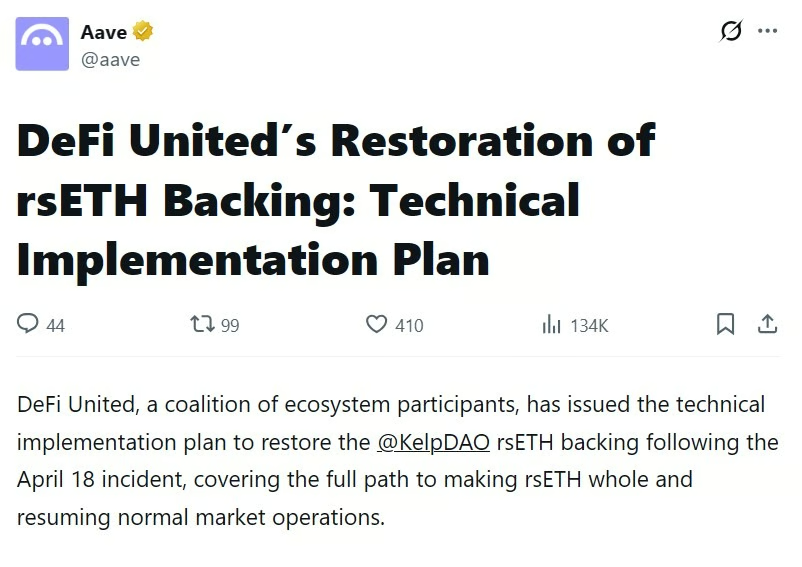
The Aave-linked recovery group DeFi United has published a technical implementation plan to restore rsETH backing after the April 18 Kelp bridge exploit released 116,500 rsETH, worth about $293 million at the time, without a corresponding burn on Unichain.
The plan would convert committed Ether (ETH) into rsETH in tranches and deposit the tokens into the affected bridge lockbox, allowing the bridge to resume normal operations once the backing is restored. LayerZero and Kelp have also implemented additional security measures before the bridge returns to full operation, according to Aave.
In parallel, DeFi United plans to clear attacker-linked positions across Aave and Compound to recover collateral and resolve market impairments caused by the exploit. The group said seven addresses associated with the exploiter still hold active rsETH-backed positions on Aave and Compound, representing about 107,000 rsETH of the original 116,500 rsETH released in the incident.
Related: Kelp restaking platform exploited, $293M drained in attack
The proposed sequence would temporarily adjust the rsETH oracle price to enable controlled liquidations, transfer recovered collateral to a DeFi United multisig, restore the oracle, redeem the rsETH for ETH and use the resulting funds to clear deficits across affected markets.
The recovery plan moves the rsETH effort from pledges and public commitments into a coordinated technical process that depends on governance approvals, temporary oracle changes and execution across several DeFi protocols. While the process is designed to restore rsETH backing, it remains contingent on DAO votes, finalized agreements and the attacker not disrupting the liquidation steps.
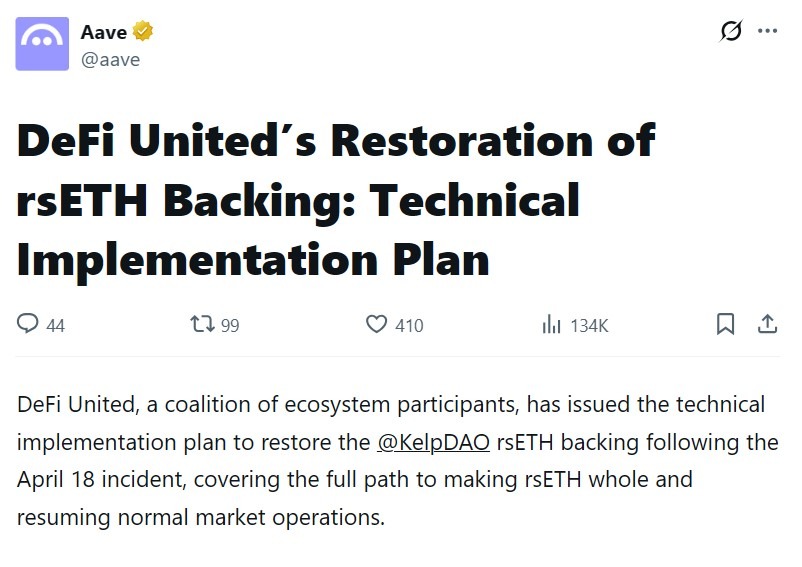
Source: Aave
Ethereum backers joined the recovery effort
The technical plan follows earlier efforts to secure funding and governance support for the rsETH recovery.
On Monday, Consensys and Ethereum co-founder Joe Lubin had joined DeFi United with a commitment of up to 30,000 ETH, while Sharplink, a publicly traded Ethereum treasury company, joined in an advisory role to help structure the recovery plan.
Related: Crypto protocols pledge 43K ETH to restore rsETH backing
On the same day, Aave Labs had asked the Arbitrum DAO to release 30,765 ETH frozen by the Arbitrum Security Council after the exploit and send the funds to DeFi United.
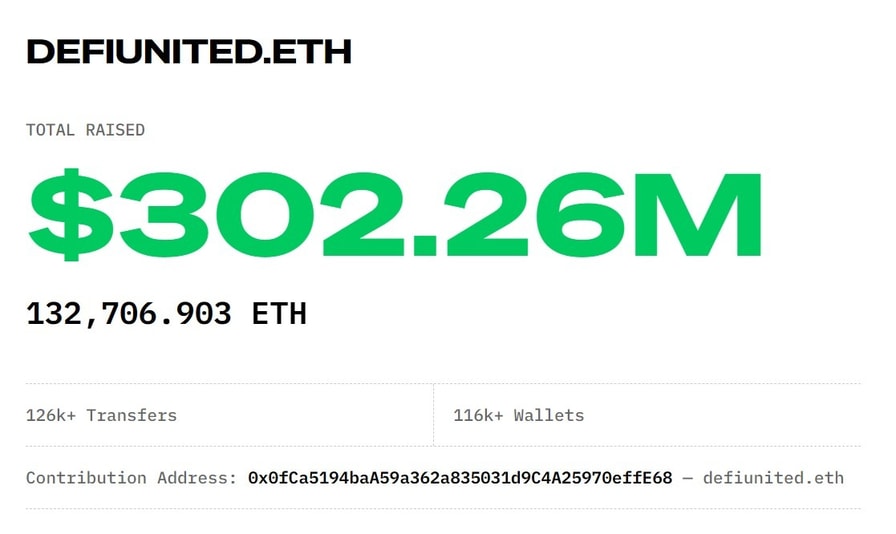
DeFi United secured over $300 million in commitments. Source: DeFi United
As of Tuesday, the DeFi United website showed $302.26 million in total raised or committed toward the recovery effort, equal to 132,706.903 ETH, though some commitments remain subject to DAO votes and final execution.
Magazine: AI-driven hacks could kill DeFi — unless projects act now
Crypto World
Bittensor’s Jacob Steeves Outlines Why $TAO Is AI Infrastructure, Not Just Another Crypto Token

TLDR:
- Jacob Steeves framed $TAO as AI infrastructure, not an investment token, in a widely circulated lecture
- Bittensor miners produce models and predictions, with the network automatically rewarding the highest quality output
- Dynamic TAO replaces human editorial decisions with a continuous, game-theory-driven resource allocation system
- Open-source AI lacks economic incentives to compete with closed labs, and Bittensor’s design targets that gap directly
Jacob Steeves, a co-founder of Bittensor, recently delivered a lecture connecting machine intelligence with incentive design.
The talk drew attention for its focus on architecture rather than token price or market performance. Steeves framed the Bittensor network, $TAO, as infrastructure for decentralized AI coordination.
His argument centered on how open networks can replace centralized labs in building, owning, and distributing machine intelligence at scale.
Bitcoin’s Blueprint and the Case for Decentralized AI Infrastructure
Bitcoin was not originally designed to store value. It was built to coordinate strangers at a global scale using nothing but incentive design. That foundational logic is what Bittensor borrowed when constructing $TAO.
Deep learning succeeded not because its algorithms were superior. It won because adaptive feedback loops replaced human guesswork in model training.
Bittensor applies that same principle to entire economies of compute, coordinating anonymous contributors through token incentives.
Steeves pointed out that every AI system follows four core steps: state, objective, feedback, and adaptation. The Bittensor network is built entirely around that loop.
It treats intelligence production the way Bitcoin treats transaction security — as something the network grades and rewards automatically.
According to a thread shared by @2xnmore, “Bitcoin is not just money. It is the largest incentive computer ever built.”
$TAO operates as the next iteration of that machine, except miners produce models, predictions, and inference rather than transaction confirmations.
Subnets, Dynamic TAO, and the Market for Machine Intelligence
Subnets on Bittensor function as independent markets, each incentivizing useful work in specific domains. Trading, robotics, vision, weather prediction, and sports analytics each operate as self-contained economies within the broader network. Contributors are paid based on output quality, not affiliation.
Dynamic TAO is the mechanism that allocates resources across subnets. It runs continuously and uses game theory to filter quality, removing editorial decisions from human hands. This turns subnet funding into a market-driven process rather than a governance vote.
Open-source AI currently faces a resource disadvantage against closed laboratories. Contributors have little economic reason to compete with well-funded private labs. Bittensor’s incentive structure addresses that gap directly by rewarding useful contributions with token value.
The distinction Steeves drew between $TAO and other AI tokens is structural. Most AI tokens fund companies that build AI. $TAO is positioned as the infrastructure layer itself — the rails rather than the train.
A 70-billion parameter model can now be trained across thousands of anonymous machines, coordinated by nothing but token incentives, without requiring any central laboratory or institutional permission.

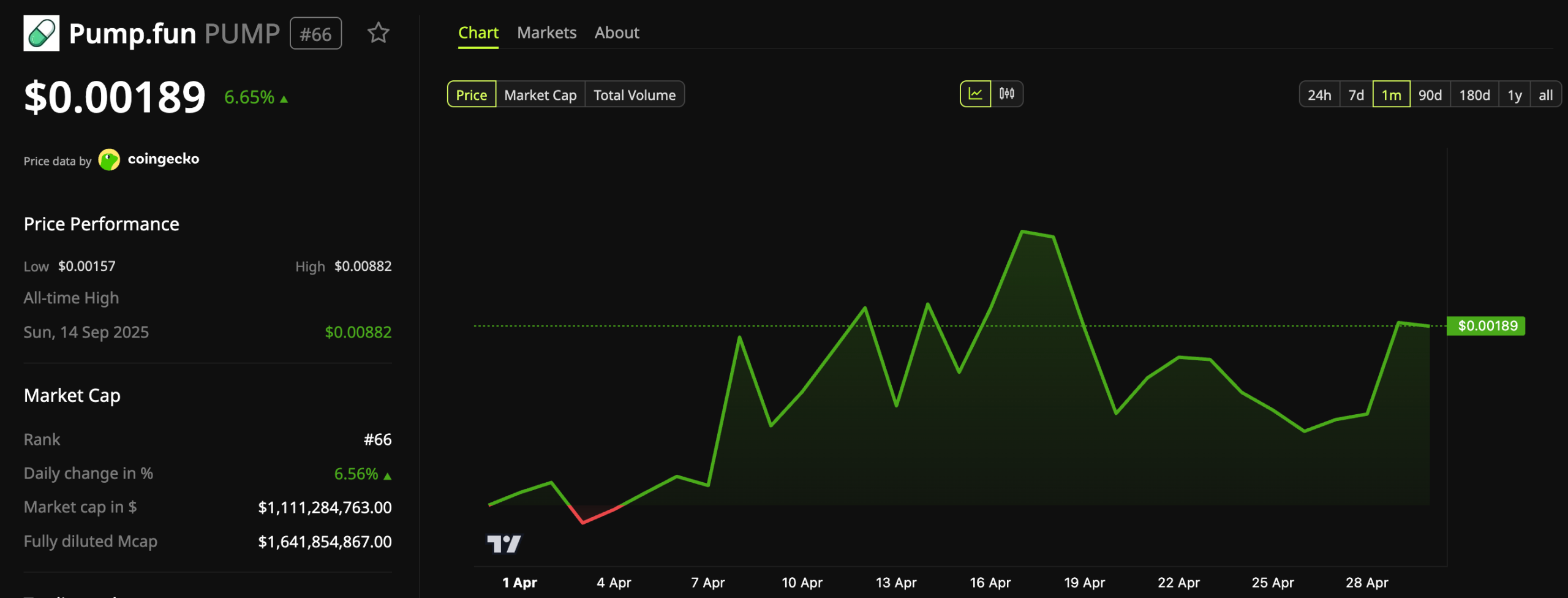
PUMP token rallied by more than 6% over the past 24 hours after Pump.fun burned roughly $370 million in tokens, defying a downturn that pulled major large-cap assets lower.
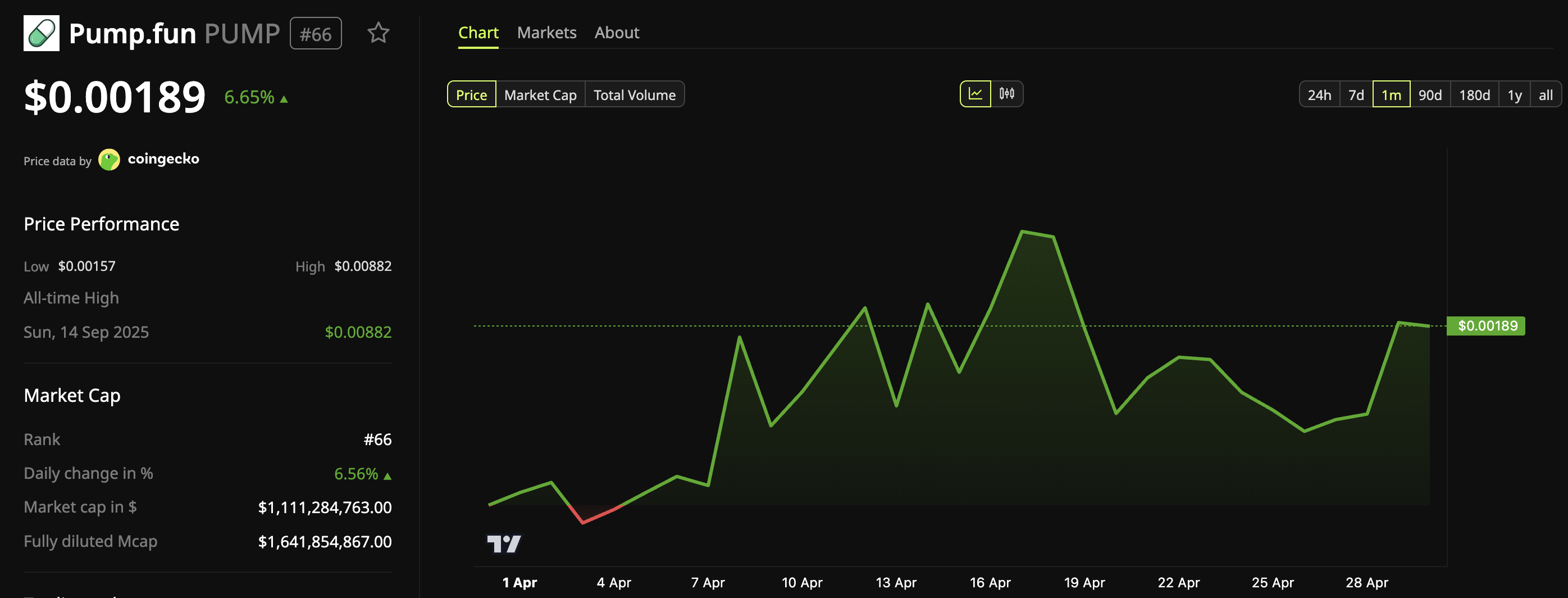
The burn removed about 36% of the circulating supply across two on-chain transactions, according to the platform.
Why the Burn Marks a Shift for Pump.fun
In a post on X, Pump.fun framed the move as a “gesture of trust for the community.”
“Over the past ~9 months, despite being one of the biggest revenue-generating platforms in crypto and allocating 100% of revenue to buybacks, we believe there was a lack of trust in the longevity of the business, the certainty of buybacks, and what the bought-back tokens would be used for. Today, uncertainty is being addressed head-on by taking a community-first approach,” the post read.
Follow us on X to get the latest news as it happens
In addition to the burn, the team also announced the launch of a structured buyback and burn program. Under the model, 50% of revenue generated from core products, including the bonding curve, PumpSwap, and its terminal, will route through intermediary wallets.
Those funds will then consolidate into 1 or 2 wallets that purchase PUMP and burn it. Notably, the schedule is enforced by an irreversible smart contract that runs for 1 year.
According to the team, the revised 50% allocation balances supply reduction with long-term operational sustainability. The remaining revenue will be retained to fund growth initiatives, including product development, hiring, marketing, and potential acquisitions
“If we forgo retaining a portion of revenues for operations and growth, we run the risk of our treasury being throttled by burn rather than being used for high-impact strategic investments, such as impactful acquisitions & new product ventures,” Pump.fun added.
Subscribe to our YouTube channel to watch leaders and journalists provide expert insights
The post PUMP Rises Over 6% as Pump.fun Executes $370 Million Token Burn appeared first on BeInCrypto.


Tether’s open-source MDK unifies Bitcoin mining control in a JS and React stack, aiming for AI-ready, vendor-agnostic automation from home rigs to gigawatt farms.
Summary
- On April 27, Tether launched the open-source Mining Development Kit (MDK), a full-stack Bitcoin mining framework that unifies hardware control and monitoring through a JavaScript SDK and React UI library.
- MDK is designed to replace fragmented, vendor-locked mining tools with a modular, AI-ready architecture that can scale from home miners to gigawatt-scale industrial operations across Windows, macOS, and Linux.
- CEO Paolo Ardoino pitched MDK as the foundation for “automation and optimization” in fully autonomous mining workflows, signaling a strategic expansion for Tether beyond its core stablecoin business.
MDK turns mining stack into programmable software layer
Tether has released its Mining Development Kit as an open-source “infrastructure layer” for Bitcoin mining, giving developers and operators a single software stack to control rigs, power systems, and monitoring tools from hobby setups to multi-site industrial farms.
In its launch materials, the company described MDK as a “full‑stack development framework” that lets users “control and operate their entire infrastructure within a single environment,” replacing siloed tools and proprietary dashboards with one extensible platform.
At a technical level, MDK combines a JavaScript backend SDK for real-time device control with a React-based UI component library for building custom dashboards, alert panels, and configuration views on top of mining hardware.
According to Tether, the framework uses a capability-based architecture in which mining devices expose standardized functions while independent “worker” modules and a central orchestration layer coordinate automation, data collection, and optimization across fleets of ASICs.
The system is designed to run natively on Windows, macOS, and Linux and to remain agnostic to hardware vendors, allowing operators to plug in new devices or cooling systems without rewriting the core stack. Tether argues that this open model “removes vendor lock-in and reduces switching costs,” giving miners more control over their data and operational logic as they scale or reconfigure deployments.
Ardoino touts AI-ready, autonomous mining future
The MDK launch follows Tether’s decision in February to open-source its MiningOS (MOS) platform, with MDK positioned as the programmable developer layer that now sits beneath MOS to power custom workflows and integrations. Industry outlet Techflame quoted CEO Paolo Ardoino as saying MDK will provide “infrastructure support for the next generation of Bitcoin mining focused on automation and optimization,” framing the kit as a way to standardize control systems for an industry moving toward AI-assisted operations.
On X, Ardoino added that, “based on the vast experience we gathered from MiningOS, we are launching today MDK, a Mining Development Kit that allows for maximum flexibility in building mining orchestration and monitoring tools.” Tether’s launch notes say developers can integrate MDK with external services, automation frameworks, or AI agents, enabling “AI-based optimization” of energy usage, hash rate allocation, and maintenance scheduling across distributed facilities.
Commentators see the move as deepening Tether’s ambition to become not only the largest issuer of the USDT stablecoin but also a key software and infrastructure provider in Bitcoin mining. By open-sourcing MDK under a permissive model and targeting everything from home miners to gigawatt-scale operations, Tether is betting that a shared, programmable stack will become the default control layer for an increasingly industrialized mining sector.
TLDR:
- ASTER price today drops below the $0.66 support after repeated tests, confirming a shift from range trading to bearish movement
- RSI hits a three-month low near 35, showing weak momentum with room for further downside before oversold levels
- Whale transferred over 34 million tokens to exchanges, increasing supply and adding pressure on short-term price action
- ASTER price today eyes $0.60 and $0.55 zones as next targets, while resistance forms near the previous support range
ASTER price is under pressure as the token trades near $0.63–$0.65, following heavy selling and a breakdown below key support.
Market activity shows increased volatility, with technical signals and whale movements shaping short-term direction.
ASTER Breakdown Deepens as Selling Pressure Builds
The recent ASTER price action today reflects a clear shift from range stability to downside movement. The asset traded within a tight band between $0.6900 and $0.6650 throughout April. That structure has now failed after the price broke below the lower boundary.
A tweet from Ardi noted that ASTER is “beginning to break down aggressively,” citing a combined RSI at a three-month low.
The post also referenced a prior capitulation near $0.40, drawing comparisons with current market weakness. The breakdown followed repeated tests of support, which eventually gave way.
Once the $0.6600 level failed, the price dropped quickly toward the $0.6218 region. This move swept liquidity below recent lows, often linked to stop-loss triggers.
At the same time, RSI readings hovered around the mid-30s, showing sustained bearish momentum without reaching oversold levels.
Resistance has now shifted lower. The $0.6600–$0.6650 zone is acting as a barrier, with sellers likely defending this range. A move back toward this level may face renewed pressure, especially if volume remains weak.
Short-term projections suggest a possible bounce near the $0.62 region. However, this rebound may not hold if broader selling continues. The structure remains tilted to the downside unless price reclaims lost support levels.
Whale Activity and Ecosystem Growth Shape ASTER Outlook
Beyond chart movements, ASTER price is also reacting to notable on-chain activity. A large holder recently transferred 34.62 million tokens, valued at nearly $22.95 million, to exchanges. This move came from a wallet that accumulated 68.25 million ASTER at a higher average price.
Following this transfer, the asset recorded a drop of about 4.4%. At the same time, the top 100 addresses reduced holdings by over 62% within a single day. This sharp reduction points to increased supply entering the market.
Despite the selling pressure, the Aster ecosystem continues to expand. The platform recently crossed 15 million registered users, ranking among the largest perpetual decentralized exchanges. Growth in user numbers reflects rising participation, even during price weakness.
The launch of the Aster Chain mainnet in March 2026 added new features, including stealth addresses and zero-gas transactions for selected activities. These updates aim to improve user experience and attract more activity to the network.
Looking ahead, staking and governance features are scheduled for release in Q2 2026. These additions could encourage token locking and reduce circulating supply. However, competition remains strong, with rival platforms gaining market share during the same period.
For now, ASTER price today continues to track both technical weakness and external selling pressure. Price remains below former support, with attention shifting toward lower liquidity zones near $0.55–$0.60. Market participants are watching whether the asset stabilizes or extends its decline.
Paxos Labs has integrated its Amplify platform with Toku to let employees earn yield on stablecoin salaries as soon as they are paid, without moving funds off-platform or giving up custody.
The feature applies to balances held in Toku wallets, allowing users to opt in and earn yield on USDC (USDC), USDt (USDT) and USDG (USDG) with no lockups or withdrawal delays. The rollout extends across Toku’s payroll network, which it said processes more than $1 billion annually for workers in over 100 countries and integrates with systems including ADP, Workday, Gusto and UKG.
The update addresses a limitation of stablecoin payrolls, where funds typically sit idle between pay cycles. Embedding yield directly into balances allows users to earn on their salaries without using external platforms or transferring assets out of their wallets.
The companies did not disclose how the yield is generated or what rates users can expect.
Toku provides stablecoin payroll infrastructure through an API that connects to existing systems, enabling employers to offer crypto-denominated salaries without changing payroll workflows.
The feature operates on Paxos Labs’ Amplify platform, which lets companies integrate services such as yield and borrowing through a single connection.
Toku is a stablecoin payroll and employer-of-record platform, while Paxos Labs is a financial utility stack for digital assets incubated within Paxos.
Related: MiCA-licensed Banking Circle joins bank stablecoin settlement race in Europe
Stablecoin payroll adoption accelerates globally
Stablecoin payroll adoption has been gaining traction as more workers use dollar-pegged tokens for income and everyday spending.
A February survey commissioned by BVNK and conducted by YouGov found that 39% of crypto users and prospective users across 15 countries receive income in stablecoins, while 27% use them for payments, citing lower fees and faster cross-border transfers.
The survey of 4,658 respondents also found that users hold about $200 in stablecoins on average globally, increasing to around $1,000 in higher-income markets. Those paid in stablecoins said the assets account for roughly 35% of their annual income, while reporting about 40% savings on cross-border transfers compared with traditional remittance methods.
Also in February, global payroll platform Deel said it would roll out stablecoin salary payments through a partnership with MoonPay, starting with workers in the UK and European Union before expanding to the United States. The feature allows employees to receive part or all of their wages in stablecoins directly to non-custodial wallets, with MoonPay handling conversion and onchain settlement.
Deel, which claims to process about $22 billion in annual payroll, said the integration adds crypto settlement rails to its existing infrastructure while maintaining its payroll and compliance systems.
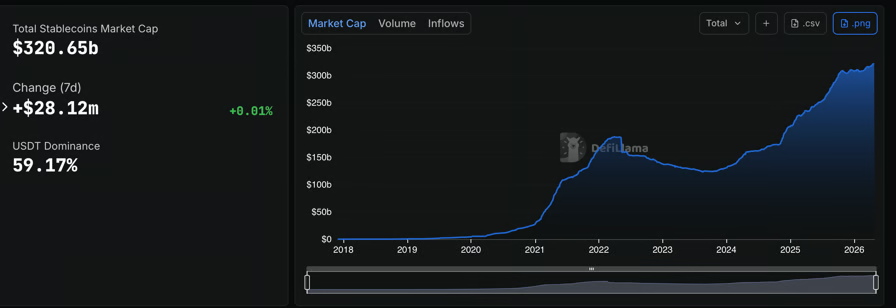
The total stablecoin market cap has grown from about $259 billion in July 2025, around the time the GENIUS Act was passed, to roughly $320 billion, according to DefiLlama data.
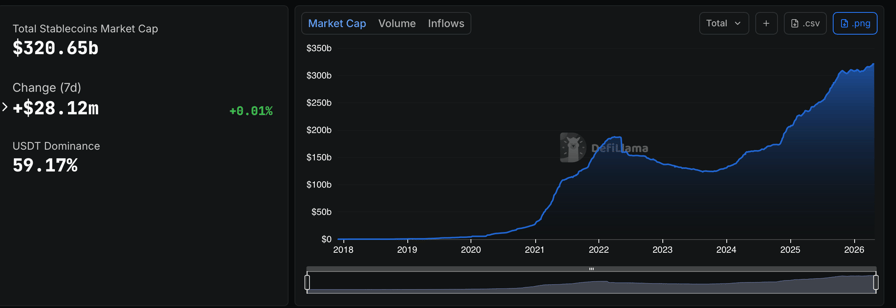
Total stablecoin market cap. Source: DeFiLlama
Crypto World
AAVE Goes Live on Solana in DeFi First as Price Prediction Targets $500 and Pepeto Offers 100x From $84
This Solana price prediction arrives as AAVE’s governance token launched natively on the Solana network this weekend through Sunrise DeFi, backed by a Solana Foundation USDT loan that marks the first time the Foundation sent funds outside its own system, per Crypto Briefing.
SOL climbed from $80 lows to $84.25 while the Fear and Greed Index held at 33 in the fear zone, and Standard Chartered holds a $250 year-end target tied to the Firedancer upgrade.
The bigger question inside this Solana price prediction is not the $500 target. It is what happens when $500 goes into a presale at $0.0000001867 and one listing turns that into $50,000, a return the SOL forecast would need all of 2026 to come close to matching.
Solana Price Prediction After AAVE Launches Natively on the Network
Solana Foundation chair Lily Liu announced the USDT loan to Aave and said the AAVE token would arrive on Solana by the weekend. Trading opened through Sunrise DeFi and is now live across Jupiter, Backpack, Phantom, Raydium, and Meteora, per Crypto Briefing. This brings DeFi’s largest lending protocol, with roughly $15 billion in global deposits, directly into Solana’s total value locked.
Solana hit $1.1 trillion in economic activity during Q1 2026, a massive jump from the prior quarter per Artemis, and the Firedancer validator client already runs on mainnet with 100,000 TPS capacity. The Solana price prediction has real weight behind it, but a $50 billion market cap means the returns that change lives sit somewhere else.
Solana Price Prediction and the Presale That Gets There Faster
Pepeto Presale Crosses $9.6 Million While the SOL Forecast Takes Shape
Most traders who wait for the SOL forecast to play out end up watching from the outside while early entries turn small amounts into six figures. The person behind Pepeto already proved what happens when a meme coin with 420 trillion tokens gets the right timing: the original Pepe hit $11 billion with no working product.
This time the same builder shipped a full exchange before the first presale dollar came in, and CoinMarketCap already lists a preview page that signals the listing is close.
A veteran from a top exchange’s listing team is running the launch. SolidProof gave every contract a clean audit before the presale opened. The only thing standing between this price and the open market is time.
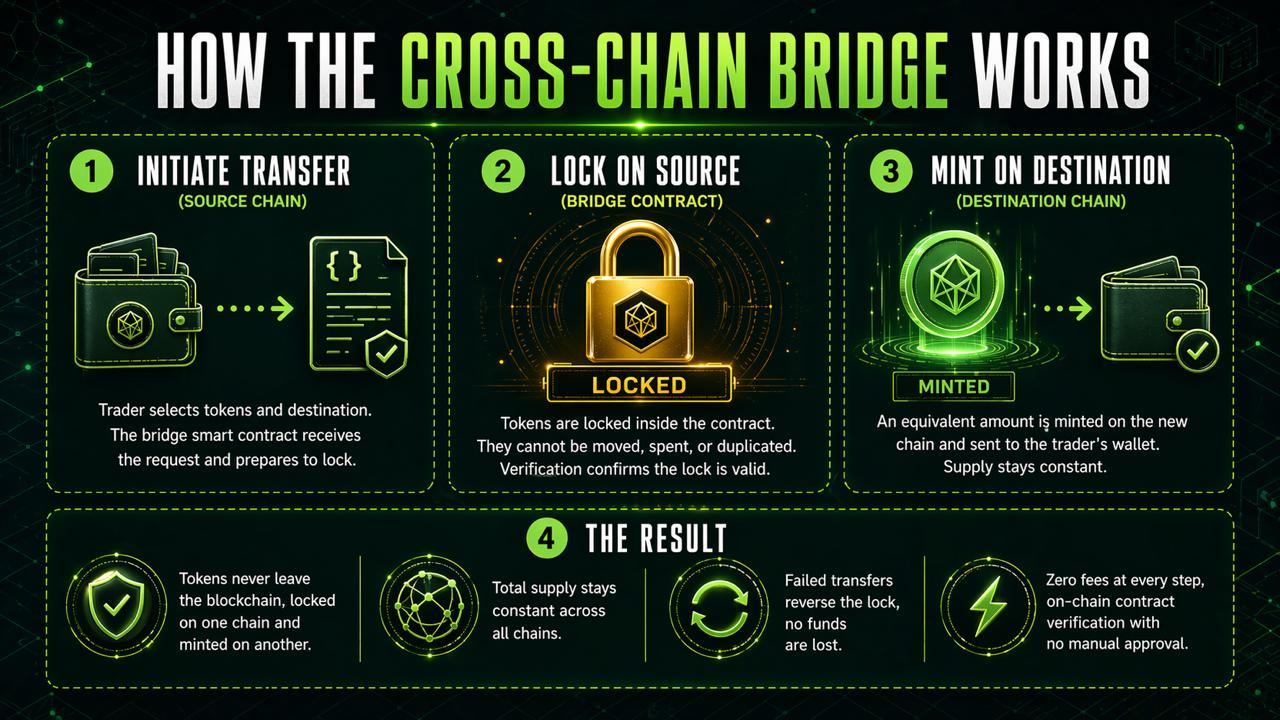
The presale has pulled $9.6 million at $0.0000001867 across a 420 trillion token supply, and each round fills faster than the last. PepetoSwap charges zero fees so the full position stays whole after every trade. The bridge sends tokens between Ethereum, BNB Chain, and Solana at no cost so nothing drains in transit. And the scanning tool reads every listed contract for hidden traps, giving regular traders the same safety layer that large wallets rely on.
SOL will draw more capital over the months ahead as the forecast plays out, but the wallets holding Pepeto at presale price are sitting on entries where $1,000 could become $100,000 on listing day. The same creator who already turned a 420 trillion supply meme coin into $11 billion backs this one, and 177% APY staking keeps adding to every position daily.
The day SOL finally reaches $500 and the market celebrates 480% gains, the Pepeto listing will already be history. The early wallets will already hold 100x. And the presale price will be the number that every trader who hesitated thinks about for the rest of the cycle.
Solana (SOL) Price at $84.25 as AAVE Goes Live and DeFi Deposits Flow In
Solana (SOL) trades at $84.25 per CoinMarketCap, recovering from April lows near $80 after AAVE launched natively on the network through Sunrise DeFi.
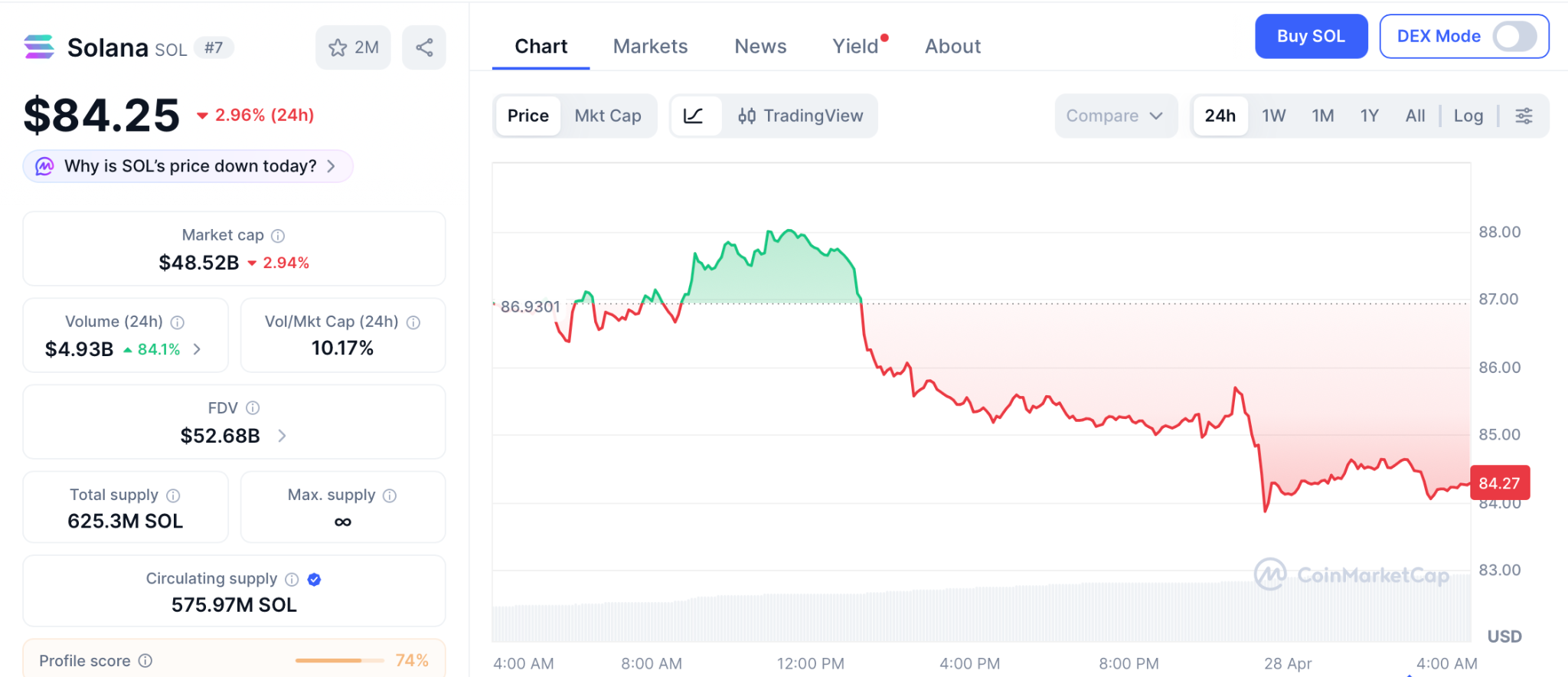
Firedancer runs on mainnet with 100,000 TPS capacity, and Standard Chartered targets $250 by year-end. Support holds at $80 with resistance at $90, and the Alpenglow upgrade targeting sub-200ms finality is already live.
Changelly projects a 2026 peak near $107, while nine expert forecasts average $445. Even the aggressive $500 target delivers roughly 480% from here, strong for a Layer 1 coin but nowhere near the returns that presale entries with listing triggers produce from a single event.
Conclusion
The Solana price prediction rewards patience, but the wallets that turned crypto into life-changing money were never built by watching a $50 billion token grind higher for a year.
They were built by finding the moment where a proven creator, live tools, and presale pricing all collide, then buying before the listing reprices everything overnight.
$9.6 million is already in, the listing date keeps drawing closer, and once trading opens this presale price is gone for good. The wallets entering through the Pepeto official website right now will own the positions that become the returns everyone else spends the rest of 2026 talking about.
Click To Visit Pepeto Website To Enter The Presale

FAQs
What does the Solana price prediction show for 2026 now that AAVE is live on the network?
Solana trades at $84.25 with Standard Chartered targeting $250 and expert forecasts averaging $445. AAVE went live natively on Solana via Sunrise DeFi this weekend, bringing roughly $15 billion in global lending deposits into the network’s DeFi layer, per Crypto Briefing.
Can Pepeto beat the SOL forecast from presale pricing?
Pepeto at $0.0000001867 targets 100x once the listing goes live, delivering in days what the Solana price prediction needs a full year to reach. The presale raised $9.6 million with 177% APY staking and the listing approaching as the next major price trigger.
Disclaimer: This is a Press Release provided by a third party who is responsible for the content. Please conduct your own research before taking any action based on the content.
Galaxy Digital (GLXY) posted a Q1 2026 net loss of $216 million. Yet shares flashed green, signaling investors were looking past crypto-driven drawdowns.
The result narrowed sharply from a $482 million net loss in Q4 2025. Galaxy also delivered its first data hall to CoreWeave. This marks a key milestone as the project shifts from the construction phase to revenue-generating operations.
Galaxy Digital (GLXY) Stock Rises 5% After Q1 Loss
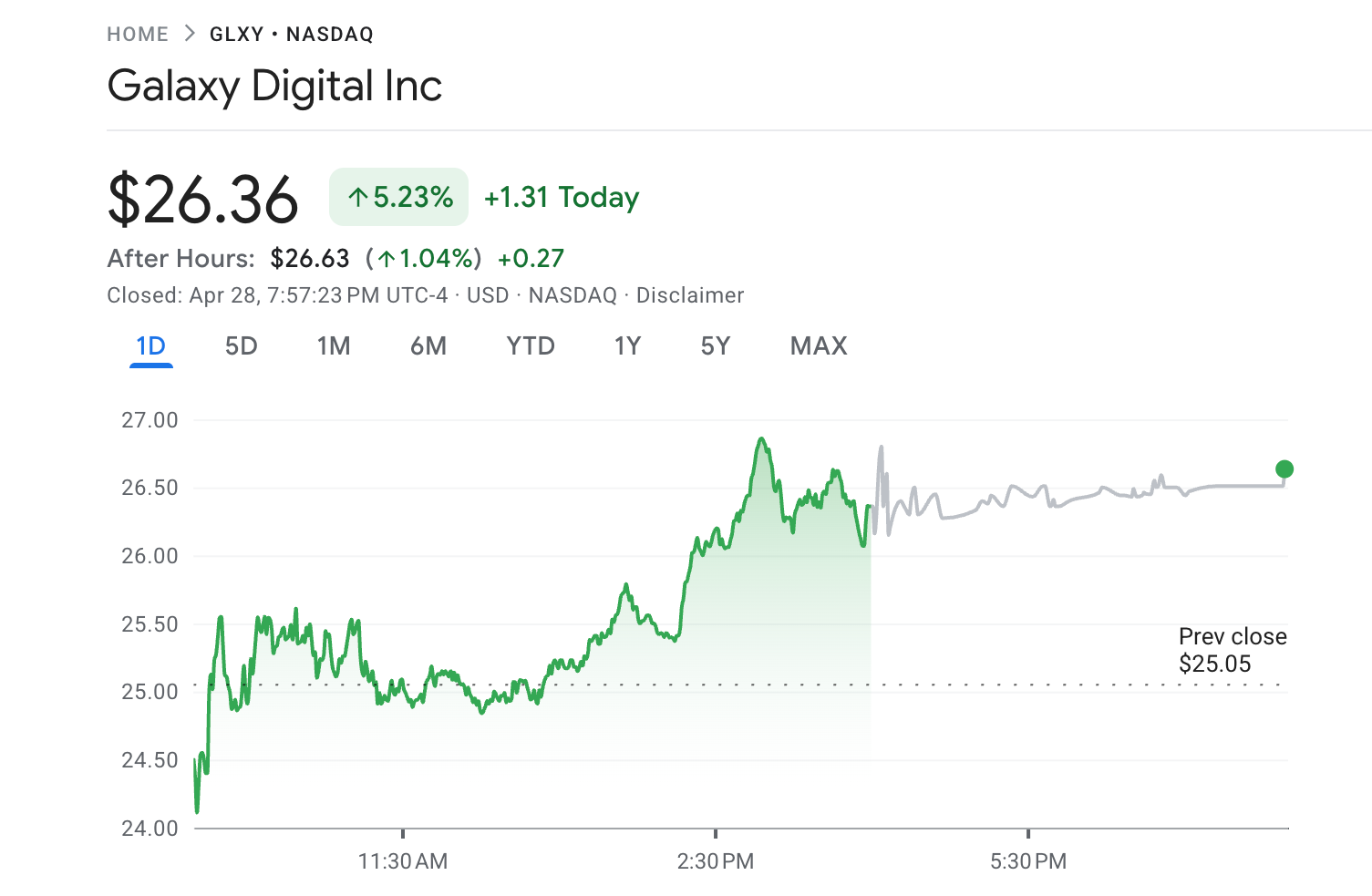
GLXY shares climbed 5.23% to close at $26.36 on April 28, with another 1% added in after-hours trading, according to Google Finance.
Follow us on X to get the latest news as it happens
Meanwhile, the firm said its $216 million net loss, alongside diluted and adjusted earnings per share of negative $0.49, largely reflected a roughly 20% contraction in the total cryptocurrency market capitalization during the first quarter.
Its Treasury and Corporate alone posted an adjusted gross loss of $140 million and an adjusted EBITDA loss of $167 million. Overall, the company’s adjusted EBITDA loss narrowed to $188 million from $518 million in the previous quarter.
Digital Assets reported $49 million in adjusted gross profit. At the same time, its adjusted EBITDA came in at a loss of $19 million.
“Despite the pullback in digital asset prices and activity, adjusted gross profit remained broadly stable, reflecting a shift in the business mix as recurring fee revenue and transaction income continue to scale and provide greater resilience in softer market conditions,” the press release read.
Global Markets saw gross profit rise 3% quarter over quarter to $31 million. Asset Management and Infrastructure Solutions also contributed $18 million in adjusted gross profit during the first quarter of 2026.
The firm ended the period with approximately $5.0 billion in assets under management and $3.2 billion in staked assets, marking a decline driven by asset depreciation.
Despite the broader market downturn, the segment recorded $69 million in net inflows during the quarter. This signalled continued organic growth.
Subscribe to our YouTube channel to watch leaders and journalists provide expert insights
The post Galaxy Digital Stock Jumps 5% Despite $216 Million Q1 Loss appeared first on BeInCrypto.
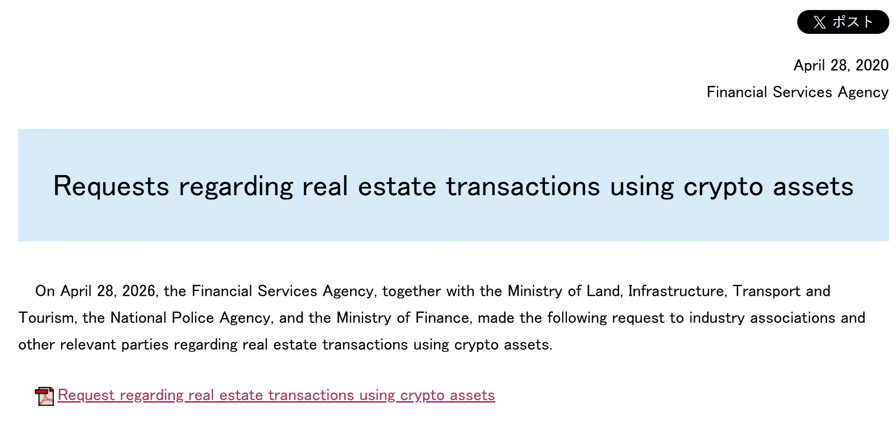
Japan’s financial, law enforcement and real estate regulators have issued a joint guidance request warning that crypto assets pose money laundering risk in property transactions.
The request, published on Tuesday, was issued by the Ministry of Land, Infrastructure, Transport and Tourism, the Financial Services Agency, the National Police Agency and the Ministry of Finance. It was addressed to major real estate and crypto industry bodies, including the Japan Cryptocurrency Business Association and several national real estate federations.
“Crypto assets, which have the nature of being transferred instantly across national borders, are considered to pose a high risk of being used as a payment method in real estate transactions for the purpose of money laundering,” the request states.
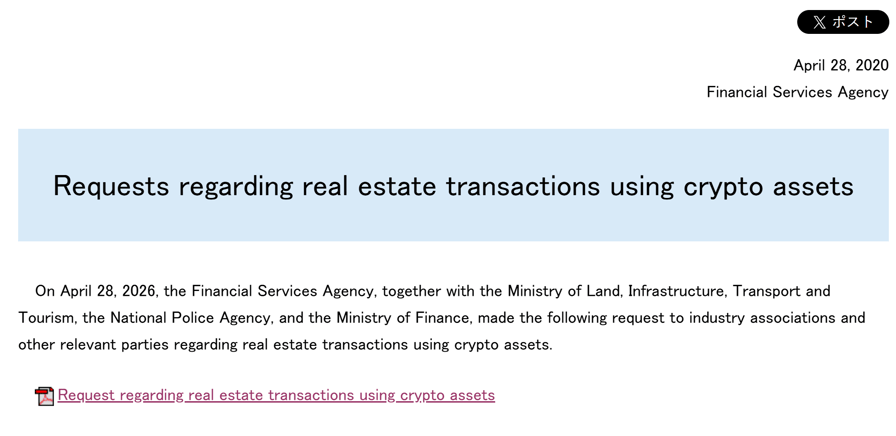
Japan sends request regarding crypto usage in property deals. Source: FSA
The multi-agency request instructed real estate agents to conduct customer due diligence on any crypto-involved transaction under Japan’s Act on Prevention of Transfer of Criminal Proceeds, file suspicious transaction reports with regulators and notify police when criminal activity is suspected, bringing bank-style Anti-Money Laundering (AML) expectations into crypto property deals.
Related: Japan approves bill to classify crypto as financial instruments
Japan warns against unregistered crypto in property deals
The request warned that converting crypto to fiat on behalf of clients may constitute “crypto asset exchange business” under the Payment Services Act, an activity that requires registration and carries legal risk if conducted without it.
It also asked crypto exchanges to watch for cases where a customer receives property sale proceeds in crypto and then attempts unusually large transactions that don’t match their financial background.
Furthermore, the document reminded firms that under Japan’s Foreign Exchange and Foreign Trade Act, anyone receiving crypto worth more than 30 million Japanese yen (approximately $180,000) from overseas must file a payment report with authorities.
Related: Japan to test government bonds as digital collateral on Canton
Japan classifies crypto as financial instrument
Earlier this month, Japan amended its Financial Instruments and Exchange Act to classify crypto assets as financial instruments, moving them out of the payments category and into the same regulatory framework as traditional securities.
The change bans insider trading and other market manipulation involving undisclosed information, and requires crypto issuers to publish annual disclosures. Penalties for unregistered crypto exchanges have also been stiffened under the amendment, while the government separately backed plans late last year to cap the tax rate on crypto profits at a flat 20%.

Business leaders to discuss value growth at Ramside Hall

$1.1 billion for roads around Westport

Bitcoin Rebounds From February Lows on Systematic, Regular Buying

Manchester United reach agreement with Casemiro over contract clause amid transfer speculation

US brings back mandatory military draft registration

Steven Gerrard disagrees with Gary Neville over ‘shock’ Chelsea and Arsenal claim | Football


-

 Tech1 day ago
Register Renaming | Hackaday
-

 Fashion4 days ago
Weekend Open Thread – Corporette.com
-
Crypto World3 days ago
Hyperliquid $HYPE Rally Builds Momentum as AI Sector Enters Prove-It Phase
-

 Politics6 days ago
Making troops accountable for war crimes threatens US alliance, ex-SAS colonel warns
-

 Politics6 days ago
Disabled people challenge government SEND proposals over segregation concerns
-

 Business5 days ago
Patterson-UTI Energy, Inc. (PTEN) Q1 2026 Earnings Call Transcript
-

 Business7 days ago
Rolls-Royce Voted UK’s Most Iconic Trade Mark as IPO Register Hits 150
-
 Sports3 days ago
IPL 2026: Ruturaj Gaikwad registers slowest fifty of the season, enters all-time unwanted list | Cricket News
-

 Politics1 day ago
Drax board avoid their own AGM, accused of greenwashing & environmental racism
-

 Politics6 days ago
Zack Polanski responds to home secretary’s taser threat
-

 Politics6 days ago
Starmer handler McSweeney to be dragged from shadows by Foreign Affairs Committee
-
Politics6 days ago
Wings Over Scotland | How To Get Away With Crimes
-

 Politics6 days ago
‘Iran is still a nuclear threat’
-
 Business7 days ago
HCL Tech share price tank over 9% after weak Q4. JPMorgan, HSBC & 3 others cut target price
-

 NewsBeat3 days ago
LK Bennett closes all stores after entering administration
-
 Sports6 days ago
Tim Bradley names the current best in the world: “Better than Inoue and Usyk”
-

 Crypto World5 days ago
Michael Saylor says BTC winter is over. Market analyst disagrees, says bitcoin was in a pullback
-

 Business7 days ago
The Job Benefits Most Men Don’t Know to Negotiate
-
Business6 days ago
Altimmune prices $225 million public offering at $3 per share
-
 Entertainment3 days ago
Mariah Carey Slams Deposition Claims In Brother’s Lawsuit
You must be logged in to post a comment Login