
Crypto World
Mythos forces crypto industry to rethink security practices



Network News
MYTHOS CHALLENGES CRYPTO SECURITY: Mythos, the new AI model from Anthropic that has sparked fear and confusion in traditional tech and finance, is also driving a massive shift in how the crypto industry thinks about security. For years, decentralized finance has focused its defenses on smart contracts. Code is audited, vulnerabilities are cataloged, and many common exploits are well understood. But Mythos, a model designed to identify and chain together weaknesses across systems, is pushing attention beyond code and into the infrastructure that supports it. “The bigger risks sit in infrastructure,” said Paul Vijender, head of security at Gauntlet, a risk management firm. “When I think about AI-driven threats, I’m less concerned about smart contract exploits and more focused on AI-assisted attacks against the human and infrastructure layers.” That includes key management systems, signing services, bridges, oracle networks and the cryptographic layers that connect them. These components are less visible than smart contracts and are often outside the scope of traditional audit. In fact, this month, web infrastructure provider Vercel, used by many crypto companies, disclosed a security breach that may have exposed customer API keys, prompting crypto projects to rotate credentials and review their code. Vercel traced the intrusion to a compromised Google Workspace connection via the third-party AI tool Context.ai, which an employee used. Mythos belongs to a new class of AI systems built to simulate adversaries. Instead of scanning for known bugs, it explores how protocols interact, testing how small weaknesses can be combined into real-world exploits. That approach has drawn attention beyond crypto. Banks like JP Morgan are increasingly treating AI-driven cyber risk as systemic and are exploring tools like Mythos for stress testing. Earlier this month, Coinbase and Binance both reportedly approached Anthropic to test Mythos. Early findings from models like Mythos have identified weaknesses in the behind-the-scenes systems that keep crypto platforms secure, including the technology that protects keys and handles communication between systems. — Margaux Nijkerk Read more.
AAVE’S $300M RECOVERY EFFORT: In the often-fractured world of decentralized finance, crises tend to expose fault lines. This time, they’re also revealing an unusual level of coordination. Aave, one of DeFi’s largest lending protocols, is at the center of a broad recovery effort following losses tied to the Kelp DAO exploit, drawing in capital and credit commitments from across the industry. The effort, informally dubbed “DeFi United,” had raised about $301 million in commitments as of Monday, according to its website, with much of the capital still pending governance approval. The exploit, which rippled into rsETH markets and created risk across lending positions on Aave, has prompted what is shaping up to be one of the most coordinated industry responses to a DeFi incident. “There’s a shared priority around supporting users and restoring normal market conditions,” an Aave Labs spokesperson told CoinDesk. “Many of these participants are deeply connected to DeFi, whether through infrastructure, capital, or user access, and have a direct interest in ensuring markets function as expected.” At the core of the effort is Aave itself. A governance proposal outlines a plan for the DAO to allocate up to 250,000 ETH as part of the recovery. Founder Stani Kulechov separately indicated he would donate 5,000 ETH personally. Other contributors within Aave’s orbit are also stepping in, including Aave’s Emilio Frangella (500 ETH), BGD Labs’ Ernesto Boado (100 ETH), BGD Labs (250 ETH) and KPK’s Marcelo Ruiz de Orlano (100 ETH). The response has quickly extended beyond Aave, and in some cases began with direct outreach. Following the April 18 bridge hack, Kulechov reached out to Consensys and other ecosystem participants early to help coordinate a response, according to a Consensys spokesperson. The firm, alongside its founder Joseph Lubin, agreed to commit up to 30,000 ETH in financial support to help advance the recovery and protect users. Sharplink played a strategic advisory role in those discussions, the spokesperson said. — Margaux Nijkerk Read more.
CRYPTO IS FOR AI AGENTS, SAYS ALCHEMY CEO: The modern financial system was never designed for machines. It was built around the constraints of human life: geography, sleep cycles, paperwork and physical presence. But as AI agents begin to act as economic participants, that human-centric design is starting to look less like a feature and more like a bottleneck, said the co-founder of crypto firm Alchemy. “You can argue that crypto was built for AI agents, not humans,” said Nikil Viswanathan, who is also CEO. The mismatch is everywhere. Banks have operating hours because humans do. Payments are tied to countries because people live in them. Credit cards assume physical identity and presence, he said. AI agents operate differently. They don’t sleep. They don’t live anywhere. They don’t walk into banks or carry cards. And increasingly, they don’t just assist with tasks, they transact. “All transactions for agents are online. They’re inherently global,” Viswanathan, who will be speaking at Consensus Miami next month, told CoinDesk in an interview. That’s where crypto starts to look less like an alternative financial system and more like the native infrastructure for a new kind of economic actor, he said. Traditional finance assumes friction. Paying someone in another country involves currency exchanges, intermediaries, delays, fees. For humans, that’s normal; for AI agents, it’s unusable. Agents need to transact seamlessly across borders, at any time, often in tiny increments. They need programmability, direct control over money via code and systems that don’t depend on physical infrastructure or identity. Crypto offers exactly that: a global, always-on financial layer where value moves as easily as data, he said. “Crypto is the global infrastructure for money that agents need,” Viswanathan said. — Will Canny Read more.
BITCOIN PROPOSAL FOR SATOSHI-LINKED TOKENS: Paul Sztorc is not trying to move Satoshi Nakamoto’s bitcoin. That narrow fact is getting lost in the backlash around eCash, a proposed Bitcoin fork scheduled for August at block height 964,000. The new chain would copy Bitcoin’s history up to that point, giving BTC holders an equivalent balance on the forked network. Hold 4.19 BTC, get 4.19 eCash.This would follow the standard fork playbook. Bitcoin Cash did it in 2017, and Bitcoin SV followed later. Both copied Bitcoin’s ledger and changed the rules in the hope the market would care. eCash is different because of what it plans to do with Satoshi’s copied coins. The roughly 1.1 million BTC attributed to Bitcoin’s pseudonymous creator Satoshi Nakamoto sits in dormant addresses often linked to the Patoshi pattern, an early mining fingerprint widely believed to trace back to Satoshi, though never conclusively proven. On a normal one-to-one fork, those addresses would receive roughly 1.1 million eCash. Sztorc’s plan would allocate 600,000 eCash to those addresses and redirect the remaining 500,000 eCash to investors who fund the project before launch. Sztorc, CEO of LayerTwo Labs, pushed back on the theft framing in a Monday X post. “We do not take any of Satoshi’s BTC,” he wrote. “BTC balances are untouched by eCash. To move BTC, you always need BTC software and the BTC private key. We lack both.” But Satoshi’s untouched holdings function as Bitcoin’s foundational guarantee, the proof that even the network’s creator never moved his coins because the rules apply to everyone equally. Selling claims on a forked-chain version of those holdings to fund a new project is the part that reads as theft, even when no theft is technically occurring. That turns the dispute into a property-rights fight, even if the property exists only on a new chain. — Shaurya Malwa Read more.
In Other News
- BlackRock-backed Securitize and Computershare are bringing parts of the $70 trillion U.S. stock market onchain via tokenized equities in a move that pushes traditional Wall Street infrastructure closer to blockchain rails. The agreement allows listed firms to add tokenized equity — called Issuer-Sponsored Tokens (ISTs) — alongside existing shares, giving investors the option to hold stock through traditional systems or in a digital wallet. The effort is part of a broader push to make tokenized shares work within current market rules while offering new ways to hold and move assets, from wallet-based ownership to faster settlement. Transfer agents like Computershare sit at the center of the system, maintaining shareholder records and handling corporate actions. By integrating at that layer, the companies aim to avoid a common crypto workaround, in which tokens represent claims on shares rather than the shares themselves. Under the setup, Computershare will act as transfer agent for tokenized shares just as it does for traditional ones. That includes managing records and processing events like dividend payments and stock splits across both formats. Securitize provides the underlying technology, but like other recent efforts in the space, the blockchain component sits mostly in the background. The tokens are designed to represent direct ownership, not derivatives layered on top of existing stock. — Kristzian Sandor Read more.
- Crypto payments firm MoonPay acquired Sodot, an Israeli crypto security startup, as part of its plan for MoonPay Institutional, a new unit built for large financial institutions looking to access crypto. Bloomberg reports, citing sources familiar with the acquisition, that it’s an all-stock deal worth about $100 million. The new unit will offer tools for trading, tokenized securities, payments, wallet management and stablecoin issuance. Sodot’s technology will serve as the key management layer for the business. MoonPay Institutional will be led by Caroline D. Pham, who joined MoonPay in December as chief legal officer and chief administrative officer after serving as acting chair of the Commodity Futures Trading Commission last year. Sodot’s self-hosted multi-party computation (MPC) infrastructure is built for institutions that need tighter control over how assets move, who can approve transfers and how automated systems handle transactions.— Francesco Rodrigues Read more.
Regulatory and Policy
- Hong Kong’s central bank warned that counterfeit tokens are already exploiting the city’s stablecoin regime, even before a single licensed product has been introduced. In a statement, the Hong Kong Monetary Authority (HKMA) said tokens using the tickers “HKDAP” and “HSBC” are circulating in the market, but have no connection to any authorized issuer. Both licensed stablecoin applicants referenced in related press materials confirmed they have not issued any regulated stablecoins, it said. Earlier this month, the HKMA granted its first stablecoin licenses under the Stablecoins Ordinance, which took effect in August 2025, selecting two groups from a pool of 36 applicants. The choice of HSBC and a Standard Chartered-led entity mirrors Hong Kong’s existing monetary system, where a small group of commercial banks is authorized to issue banknotes. The HKMA urged the public to “stay vigilant against fraudulent activities,” advising users to rely only on official communications from licensees and to transact through regulated channels. Insiders say they expect a launch during Hong Kong’s fintech week in November. — Sam Reynolds Read more.
- Israel’s Capital Market Authority granted approval for a stablecoin pegged to the shekel for the first time. Tel Aviv-based cryptocurrency exchange Bits of Gold received authorization to issue the token after a two-year evaluation and pilot process, the authority said in a post on LinkedIn. The token, BILS, was developed in collaboration with the Solana network and crypto custodian heavyweights Fireblocks, with auditing oversight provided by Big Four consultancy firm EY, Bits of Gold said in an emailed statement. The size of the stablecoin sector — crypto tokens pegged to the value of a traditional financial asset, usually a fiat currency — has surged in the last 18 months to more than $300 billion fueled by the establishment of formal regulatory regimes in major markets such as the U.S. The overwhelming dominance of U.S. dollar-pegged tokens in the sector has prompted concerns in markets outside the U.S. about the threat of losing financial and digital sovereignty if onchain payments all default to dollars as their unit of account. — Jamie Crawley Read more.
Calendar
- May 5-7, 2026: Consensus, Miami
- June 2-3, 2026: Proof of Talk, Paris
- June 8-10, 2026: ETHConf, New York
- Sept. 29-Oct.1, 2026: Korea Blockchain Week, Seoul
- Oct. 7-8, 2026: Token2049, Singapore
- Nov. 3-6, 2026: Devcon, Mumbai
- Nov. 15-17, 2026: Solana Breakpoint, London

Crypto World
U.S. senator holding cards on Clarity Act’s next move says it’s ready to get to hearing
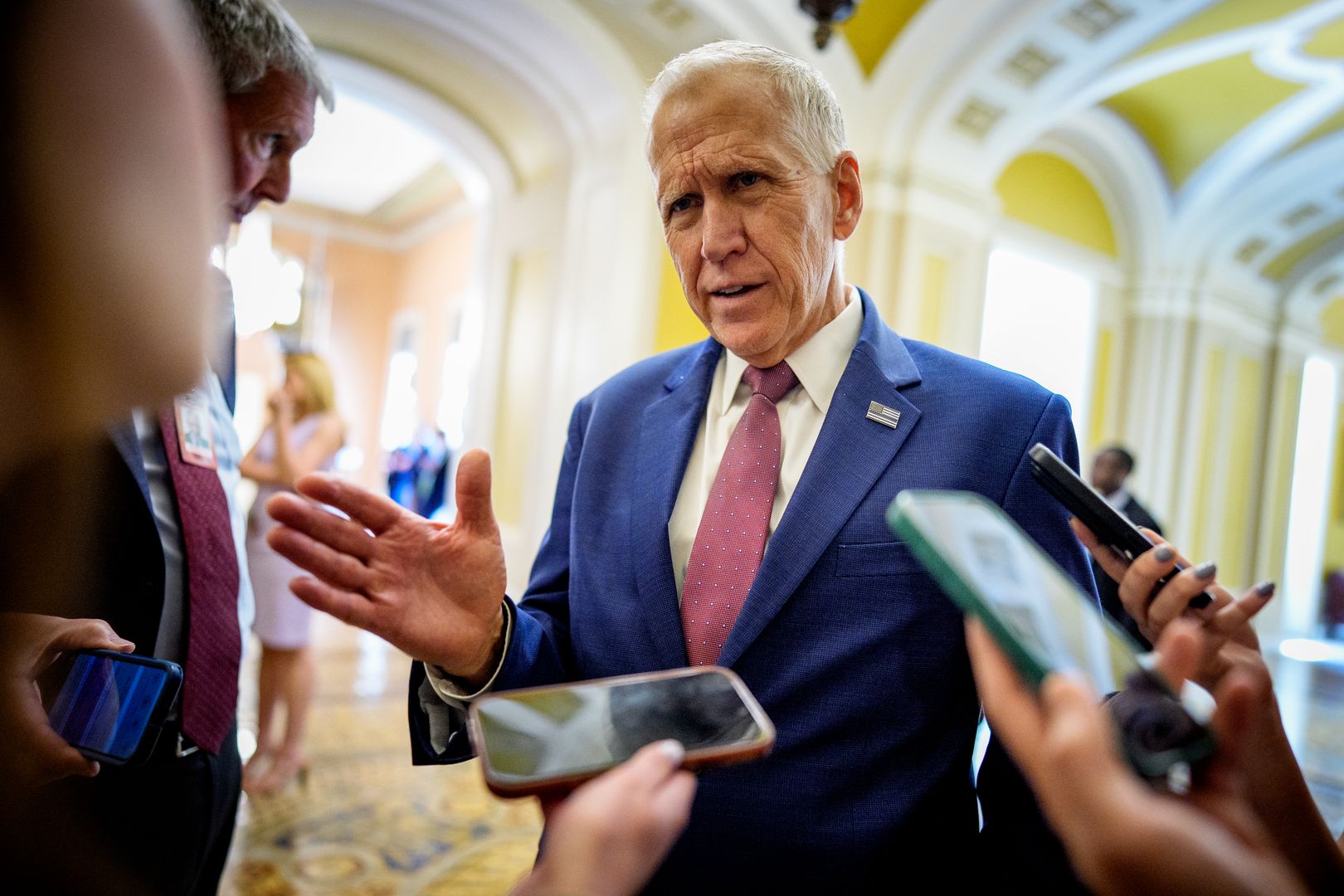
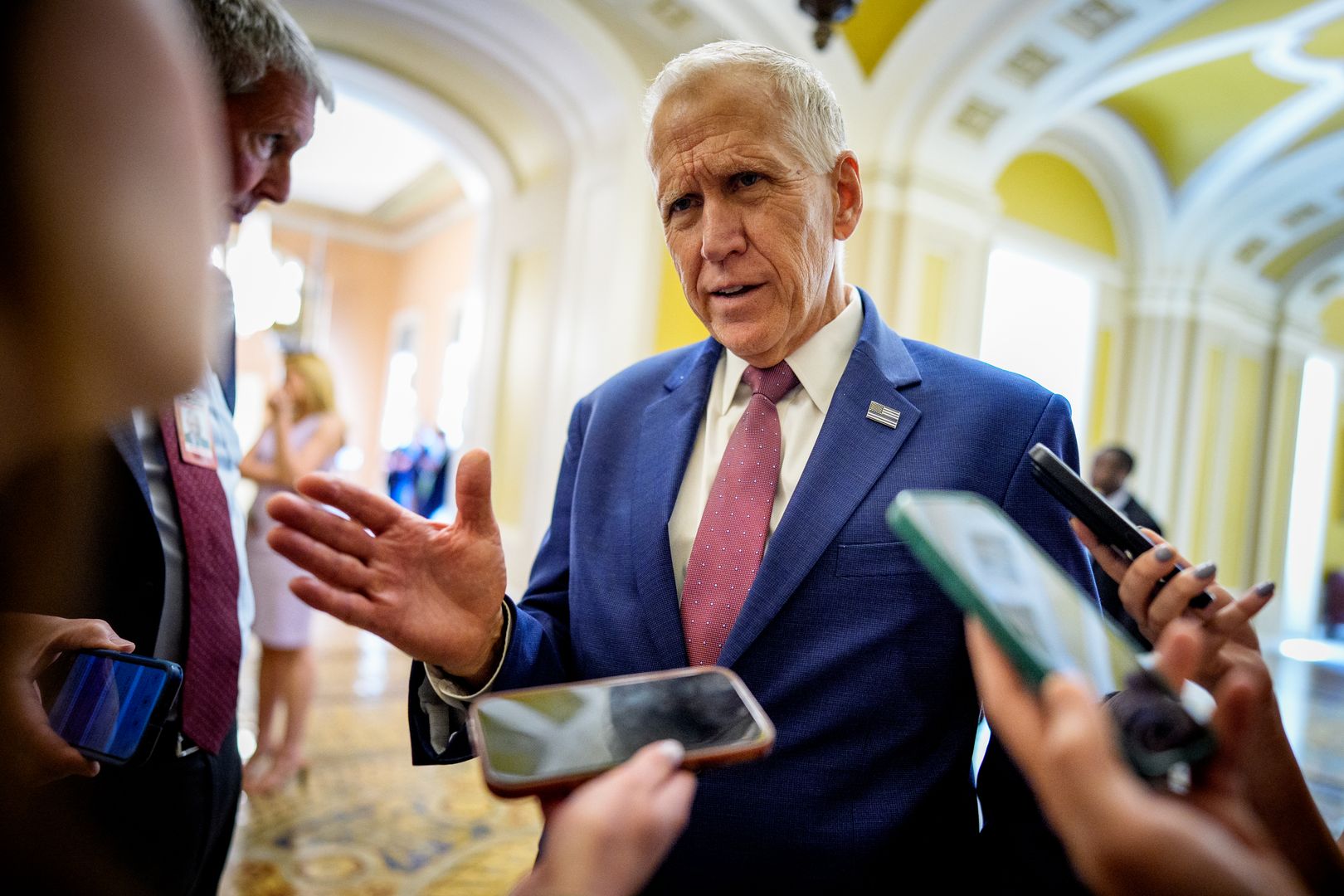
The latest holding pattern for the bill to fully insert the crypto sector into the U.S. financial system was centered on Senator Thom Tillis’ request that bankers get more time to negotiate the Digital Asset Market Clarity Act’s approach on the contentious topic of stablecoin rewards. That may be over.
Tillis told reporters on Wednesday that the work on the Clarity Act — the industry’s top objective in Washington — has “addressed a lot of the concerns” of the banking lobbyists who have been defending the turf of interest-bearing deposits they argued could be threatened by stablecoin yield. The Republican lawmaker said, “I’m going to encourage the chair to move forward with the markup,” according to a Fox Business transcript of the remarks.
That could throw open the chance for a mid-May hearing of the Senate Banking Committee, which needs to advance the legislation before a final version can be hashed out for a vote of the overall Senate. If anything else gets in the way of that timing, it could be fatal for the 2026 Clarity Act, because the remaining Senate schedule has little room for flexibility.
The legislation faces several hurdles before it can hit President Donald Trump’s desk to be signed into law. First is a so-called markup hearing that gives lawmakers a chance to pursue amendments to the language. Tillis said he intends to give stakeholders a chance to see the compromise text on stablecoin yield days before the hearing, and he welcomed bankers to stay in negotiations if there are other points they want to get across.
“There may be a few more that we can get there, if they want to come and work in good faith,” Tillis said.
Crypto insiders have been critical of the banking industry’s apparent reticence to embrace compromises, as has Trump himself, who said over the weekend that he wouldn’t let bankers ruin the Clarity Act. The industry is taking Tillis’ latest remarks as a positive sign for movement.
“There is more momentum than ever for a markup in May,” said Cody Carbone, CEO of the Digital Chamber that advocates for crypto policy in Washington. “We support getting this bill on the committee calendar as soon as possible, and we are hopeful it will move imminently.”
Other sticky provisions remain to work out, potentially most notably a Democrat-driven section banning government officials from personal business interests in crypto — an effort targeted primarily at Trump and his family, who are heavily engaged in the industry. Tillis has reportedly said he agrees that the bill needs such an ethics requirement, though this issue wouldn’t come up in the Banking Committee’s work.
Another potential hangup that crypto advocates are eyeing is the push from Senator Chuck Grassley, the chairman of the Judiciary Committee, that some aspects of the legislation — including legal protections for decentralized finance (DeFi) developers — ought to pass through his committee.
Any additional delay to the bill will jeopardize its chances to get off the ground, with about 11 weeks remaining open in the Senate calendar before the lawmakers fully disperse for midterm election demands. A Senate passage would then land in the hands of the U.S. House of Representatives, which already passed its own version of the Clarity Act last year. Any uprising among House Republicans could add further issues to the bill’s chances, but advocates are so far counting on the House to approve the Senate’s final product.
The House has recently struggled to reach alignment with Senate efforts, such as over the funding of the Department of Homeland Security.
Read More: Crypto’s great hope in Senate’s Clarity Act still has a path to survive tight calendar
Senator Cynthia Lummis told the Bitcoin 2026 conference that the Lummis CLARITY Act warning centers not just on the 2030 timeline but on a structural argument: the current simultaneous alignment between the House, Senate, and White House on crypto legislation is genuinely rare in Washington and will not persist indefinitely if the May markup window is missed.
Summary
- Lummis said the House passed the CLARITY Act, the Senate Agriculture Committee cleared it, and the White House supports it, a tri-branch alignment she described as unusual and fragile in a midterm election year.
- The bill would permanently convert the March 2026 joint SEC-CFTC commodity classification of Bitcoin, Ethereum, and XRP into federal statute, removing the risk of a future regulatory reversal under a different administration.
- Lummis said key provisions are almost 99% resolved and the earliest possible markup is the week of May 11, after the Senate returns from its upcoming weeklong recess.
Lummis CLARITY Act remarks at the Bitcoin 2026 Conference in Las Vegas on April 27 moved beyond the 2030 timeline to make a structural argument about political conditions. Lummis told attendees that the current moment is defined by a rare coincidence: the House has already passed the CLARITY Act 294 to 134, the Senate Agriculture Committee has cleared its version, and the White House under Trump has publicly backed the bill as a national priority. “This kind of support is rare in Washington and may not last long,” Lummis said, framing the political window as the most consequential variable rather than the bill’s content, which she said is “almost 99% sorted out.”
Lummis CLARITY Act Case Rests on Political Alignment, Not Just Timing
The structural argument Lummis is making is distinct from the 2030 deadline warning. It is not only that the next Congress might not prioritize the bill. It is that the specific combination of a crypto-aligned House majority, a Senate Banking Committee with sufficient Republican votes, an SEC chair who has publicly said the agency is ready to implement the legislation, and a White House that has called the bill a national security priority does not assemble automatically and does not hold together indefinitely in an election cycle. A House flip in November, a shift in Senate committee composition, or a change in executive branch priorities could disassemble that alignment and require the industry to start from scratch under a new Congress with different incentive structures. As crypto.news reported, Lummis first issued the public 2030 warning on April 10 with an X post reading “This is our last chance to pass the Clarity Act until at least 2030. We can’t afford to surrender America’s financial future,” but the Bitcoin 2026 appearance adds the political alignment dimension: it is not just about the calendar but about whether this specific configuration of institutional will can be maintained.
What Permanent Legislative Status Would Mean for XRP, Bitcoin, and Ethereum
The permanent legislative outcome Lummis is arguing for would convert the March 17, 2026 joint SEC-CFTC classification of XRP, Bitcoin, and Ethereum as digital commodities from a regulatory determination into binding federal statute. As crypto.news documented, the March joint taxonomy named 16 digital assets as digital commodities, representing approximately 78 to 80% of total crypto market cap. But that taxonomy is an executive action, subject to reversal by a future SEC chair or shift in White House priorities without any Congressional action required. The CLARITY Act would prevent that by writing the commodity classification into law. Standard Chartered has set an $8 XRP target contingent on the bill passing. JPMorgan has called midyear passage a positive catalyst for digital assets broadly. As crypto.news tracked, with the Warsh confirmation now resolved and the Banking Committee’s most pressing competing obligation removed, a May markup is structurally possible but requires Chairman Tim Scott to formally notice the bill for action and release the final text 48 hours before any committee vote.
Why the Political Alignment Argument Is the Strongest Case for Urgency
The political alignment case is analytically more persuasive than the calendar case alone, because it explains why previous deadline misses did not produce the same consequence. In January, the deadline was missed because of stablecoin yield disputes. In April, the deadline was missed because the Warsh confirmation consumed the calendar. In both cases, the underlying conditions were still favorable: the White House still supported the bill, the Senate Republican majority was still intact, and the House text was still alive. If the May window is missed and the midterms change the political configuration, the conditions themselves change, not just the timeline. As crypto.news noted, Mike Novogratz said on a podcast this week that the bill “probably gets done in May,” but added explicitly that the political will behind it depends on the same tri-branch alignment Lummis described. Galaxy Research puts overall passage odds at 50-50 or lower for 2026.
Lummis chairs the Senate Banking Subcommittee on Digital Assets, chairs the BITCOIN Act effort, and has announced she will not seek re-election, making her one of the few senators with no personal electoral incentive to delay action on the bill.
Crypto World
Nigel Farage faces standards probe over $6.7 million gift from Tether billionaire Christopher Harborne
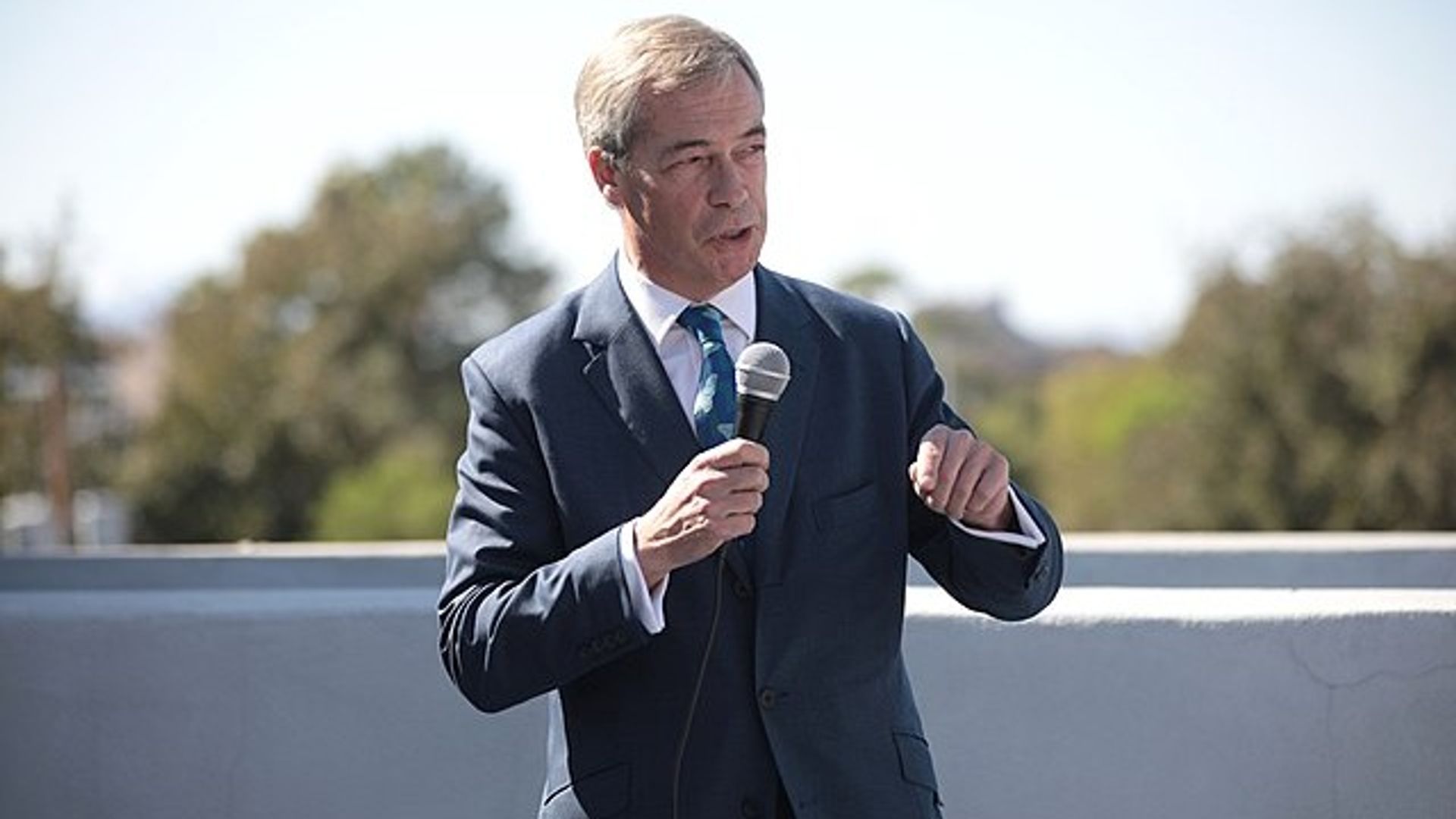
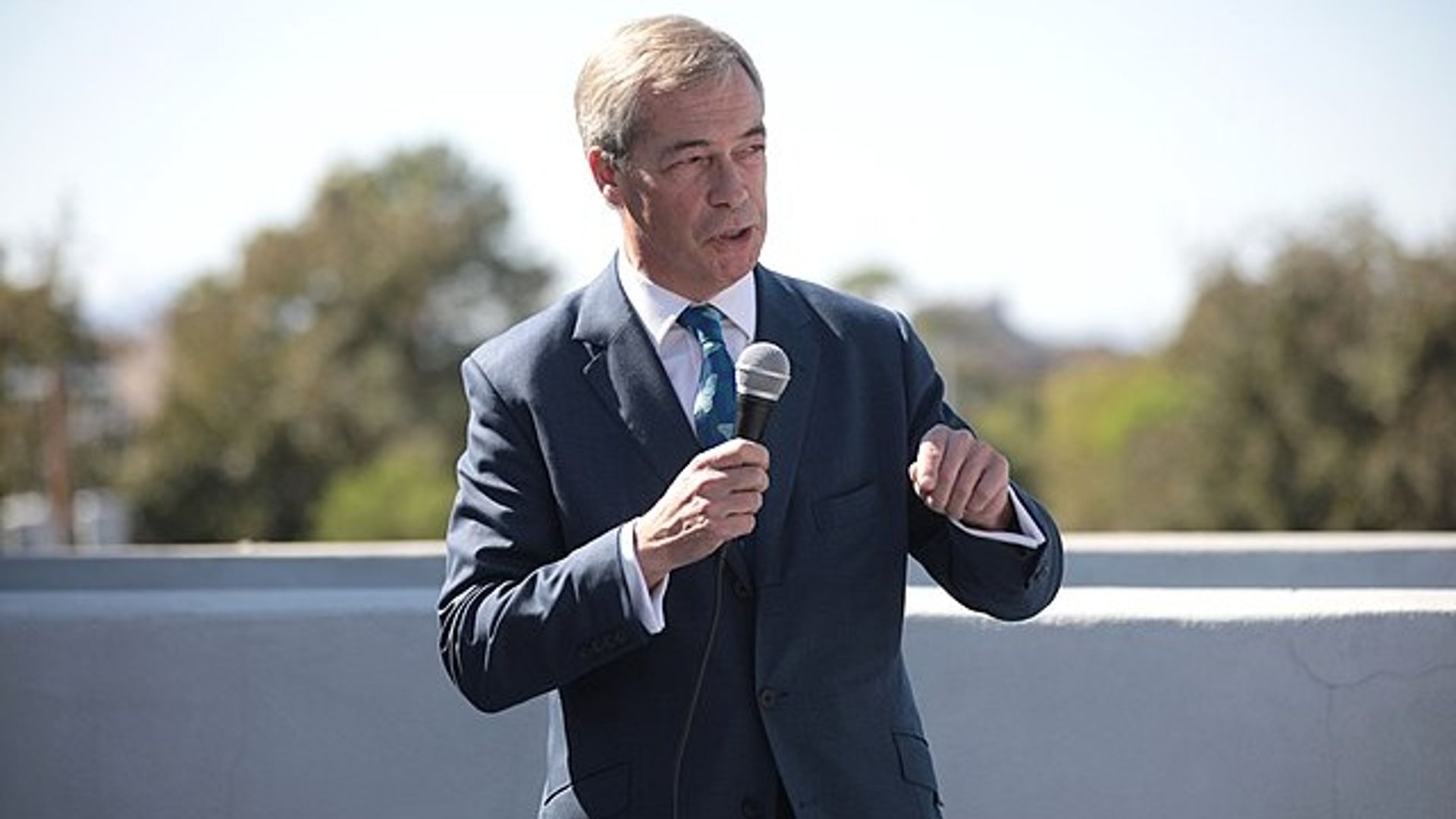
Reform UK leader Nigel Farage received about £5 million (around $6.7 million) from crypto billionaire Christopher Harborne before announcing his run for the Clacton seat in 2024, The Guardian reported Wednesday.
The Conservatives have referred him to the Parliamentary Standards Commissioner, while Labour has also accused him of breaking House of Commons rules.
Farage confirmed the gift in an interview with the Daily Telegraph, saying it was meant to keep him “safe and secure for the rest of my life” after a milkshake was thrown at him in 2019 and a firebomb attack on his home last year.
Harborne, a Thailand-based businessman with a 12% stake in stablecoin issuer Tether, made the payment in 2024. Farage announced his Clacton candidacy in early June last year and won the seat in July.
A Reform UK spokesman called the payment a “personal unconditional gift” given before Farage was elected and said his decision to stand as an MP was “entirely unrelated.”
The spokesman, the report added, said “We are confident everything has been declared in accordance with the rules.”
The Commons code of conduct requires new MPs to register benefits received in the 12 months before their election, and says any benefit should be registered if there is doubt. Reform says the gift falls under the exemption for purely personal gifts.
The country’s main opposition Conservative Party wrote to Parliamentary Standards Commissioner Daniel Greenberg asking him to examine whether any of the funds were used to support political activity rather than security. Labour chair Anna Turley said Farage “appears to have broken the rules again.”
U.K. crypto donations
Harborne gave Reform £9 million, then worth around $12 million, late last year in the largest single donation to a U.K. political party from a living person on record.
Earlier this month, BitMEX co-founder Ben Delo said in an op-ed he had given Reform £4 million ($5.1 million) since the start of the year.
The U.K. government imposed an immediate moratorium on crypto donations to political parties in March, citing the Rycroft review’s warning that digital assets could be used to channel foreign money into U.K. politics.
The ban covers donations of any size and will be written into the Representation of the People Bill, with criminal penalties for non-compliance.
That same month, Farage invested £215,000 ($286,000) in Stack BTC, a London-listed bitcoin treasury company chaired by former Chancellor Kwasi Kwarteng, taking a 6.31% stake through his investment vehicle Thorn In The Side.

Global payments giant Visa has expanded its stablecoin settlement pilot to include Polygon and four other blockchain networks, signaling continued experimentation with crypto-based payment infrastructure.
The pilot, launched by Visa in 2023, allows partners to settle transactions using stablecoins rather than traditional banking rails. Newly supported networks include Polygon, Base, the Canton Network, Arc and Tempo. They join existing supported chains such as Ethereum, Solana, Stellar and Avalanche.
The expansion comes as the program has reached an annualized settlement run rate of roughly $7 billion, growing about 50% quarter over quarter, according to Visa. Despite that growth, volume remains small compared to the company’s core payments business.
According to Visa, the initiative is designed to evaluate whether stablecoins can offer faster settlement, round-the-clock availability and efficiencies in cross-border payments.

Source: Cointelegraph on X
Visa has been increasing its focus on stablecoin-based settlement. In March, the company expanded its partnership with Bridge, a subsidiary of Stripe, to support a global card program that enables stablecoin-linked payments.
Related: Visa deepens blockchain push with Tempo validator node launch
Stablecoin payments race heats up
The growing focus on stablecoin settlement comes as competitors such as Mastercard step up activity in the sector, including enabling stablecoin-linked card spending in the United States through integrations with wallets like MetaMask.
On Wednesday, payments software provider Modern Treasury said it integrated with Polygon to help businesses move stablecoin payments faster, adding to the growing push into blockchain-based settlement. The San Francisco-based fintech acquired stablecoin and fiat payment platform Beam in October.
In the United States, momentum has also been shaped by the passage of the GENIUS Act, which establishes clearer regulatory standards for payment stablecoins.
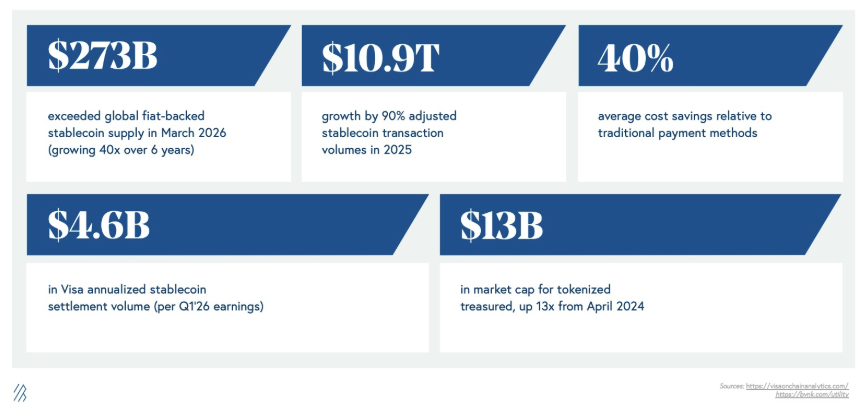
Key stablecoin statistics and average cost savings relative to traditional payments. Source: Bessemer Venture Partners
As regulatory clarity improves, both crypto-native companies and fintechs are increasingly competing to build and control the infrastructure underpinning stablecoin payments, particularly the settlement layer that moves funds between institutions. However, broader policy questions, including whether stablecoins can offer yield, are still being debated in a proposed US market structure bill, which has so far stalled.
The total value of stablecoins in circulation has surpassed $320 billion, increasing nearly 150% since early 2024, according to DeFiLlama data.
Related: Polymarket drops USDC.e for USDC-backed token in exchange overhaul


The crypto trading landscape is quickly shifting, with automated AI trading bots now taking the central stage. Unlike earlier, when investors had to manually crunch market numbers and sometimes trade with emotions, AI Bots are accurate, quick, and very convenient.
Just recently, AiTradeBtc launched their new AI trading Bot. The company says its major target is the growing number of digital asset investors seeking not just the convenience of AI market analysis but also the simplicity of fully automated transactions. Now, every user can trade top cryptos like BTC, SOL, XRP, SUI, USDC, and BNB in just a few clicks. AiTradeBtc offers accuracy, speed, and advanced risk analysis features that simplify trading and help minimize hidden risks.
How To Start Crypto Trading With AiTradeBtc in a Few Simple Steps
Unlike earlier versions of AI trading tools, AiTradeBtc’s starting process is very simple;
- New users who register on the platform will receive a $100 welcome bonus and earn a stable $2 daily return.
- A User Trial Benefit Program is offered where new traders can test the platform’s performance while earning real daily rewards.
- And finally, investors get access to various AI trading programs that analyze real market data in a matter of seconds and execute transactions without delay.
- For mobile users, AiTradeBtc goes further to offer a simple all-in-one App, where they can trade, monitor every process, and transact on the go.
When asked why it designed the AiTradeBtc platform, the company pointed to the growing need for AI crypto trading Bots that everyone can access, not just experts. Even with the 2024-2026 boom in digital asset adoption, first-time investors struggled to find trusted help and make sense of complex market dynamics. That all changes with the AiTradeBtc automated bot; the system’s AI algorithms are taking over the complex part of trading and allowing users to transact with minimal manual effort. Immediately after the easy onboarding, traders report a streamlined experience from deposits, choosing trading programs, all the way to withdrawals.
The launch of AiTradeBtc also coincides with a time of what is named as an AI-assisted ‘financial revolution’. As seen in recent trends, formally rigid financial institutions are also easing into the reality of an AI-led future. They are increasing their spending on building AI infrastructure in order to keep up with faster markets and beat obsolescence. As it would be predicted, crypto trading is following in the same direction, only faster, with automated AI Bots now saving traders from hours of being glued to their screens crunching numbers.
In practice, AiTradeBtc is eliminating the anxiety of sufficient experience by ew automated crypto traders. Iitially one would need proper training on market dynamics, on-chain activity, and price movements, taking weeks if not months of their time dealing with a lot of mind-wrecking graphs. That all ends as AI tools like AiTradeBtc deal with all that boring stuff.
Imagine millions of signals and terabytes of live data in the background that leaves traders to only deal with the current transaction; that is what AI Bots offer. And this perfectly fits the needs of non-expert traders and busy individuals. There is also the aspect of multiple strategies that provide personalized trading services. When the market change i an instance, so do the strategies that AiTradeBtc offers; all based on real-time market information.
Online investment risks are among the headaches investors have had to endure in the past, and which have created caution when it comes to participation in automated crypto trading. Many have been ‘bitten’ once or twice. But the AiTradeBtc website clearly shows how its AI algorithms run possible risk scenarios in the background. By AI Bots eliminating that burden, they have changed automated crypto trading from an expert-only game to a levelled field for all.
From the starter plan for newbies running for a day or two, to the more advanced trading programs like the Financing rate arbitrage strategy, every deposit is deployed through AI-assisted strategies that provide consistency across different market conditions. When you don’t have to worry about the tiny details or the hidden risks, trading becomes a 24/7 fun experience.
What You Need to Know About AiTradeBtc
In a nutshell, AiTradeBtc is an AI Trade Bot built to strike a balance between growing participation in automated digital trading and smart risk management. One of the company’s goals was to simplify the initial complexities of the digital trading market, and the website shows it achieved this goal perfectly.
In addition to its fully encrypted ecosystem, AiTradeBtc’s website shows a transparent and fully compliant investment platform. Its operations are monitored closely from its headquarters based in the UK, to maintain a trusted financial ecosystem that changes how remote crypto trading works. AiTradeBtc aims to fully embrace the inevitable shift towards AI automated digital trading by increasing accessibility and eliminating the tiresome data analysis process for all traders.
The post AiTradeBtc Introduces AI-Driven Tools to Support Crypto Trading in 2026 appeared first on BeInCrypto.
NYSE Arca submitted a proposed amendment to Rule 8.201-E to the SEC on April 27, naming XRP alongside Bitcoin, Ethereum, and Solana as eligible assets for commodity-based trust shares, in a legally reviewed filing that requires trusts to hold at least 85% of net asset value in qualifying digital assets.
Summary
- The filing does not formally classify XRP as a commodity under federal law, but names it as an example of an eligible asset under the exchange’s updated generic listing standards for commodity-based trust products.
- Qualifying assets are those that underlie futures contracts traded on designated markets for at least six months and are associated with existing exchange-traded products, a bar Bitcoin, Ethereum, Solana, and XRP all meet.
- The SEC has opened the proposal for public comment and can approve, reject, or open further proceedings, with the comment window expected to run 21 to 45 days from the April 27 notice.
NYSE XRP news landed on April 27 when NYSE Arca submitted a proposed amendment to Rule 8.201-E, the exchange’s generic listing framework for commodity-based trust shares, naming XRP as one of four digital assets eligible for commodity trust products under a new 85% portfolio concentration threshold. The SEC has since opened the proposal for public comment. The filing does not make a formal legal determination classifying XRP as a commodity. It identifies XRP as an example of an asset that could qualify because XRP-based futures contracts have traded on designated markets for more than six months and XRP is already associated with exchange-traded products providing significant market exposure.
NYSE XRP Rule Amendment Sets an 85% Eligibility Threshold for Commodity Trust Listings
As Yahoo Finance reported, the 85% threshold means a trust must hold at least 85% of its net asset value in assets that already satisfy NYSE Arca’s existing eligibility criteria, with up to 15% permitted in non-qualifying holdings. The filing gives a concrete example: a trust holding 95% across Bitcoin, Ethereum, Solana, and XRP would pass, while a trust holding Bitcoin alongside OTC call options on a Bitcoin ETF where the qualifying exposure falls to 71% would fail. Sponsors would be required to monitor the 85% threshold daily and notify NYSE Arca immediately upon falling out of compliance. The filing also explicitly excludes non-fungible assets and collectibles from the commodity definition, closing the generic listing route for those products. The SEC published the filing and invited public comment before issuing any final decision, with the outcome subject to the standard Securities Exchange Act review procedures. As crypto.news reported, XRP was already named as one of 16 digital commodities in the joint SEC and CFTC taxonomy issued on March 17, 2026, making the NYSE Arca filing consistent with and building on that prior regulatory classification rather than establishing a new one.
What the Filing Means for XRP’s Regulatory Standing
The significance of the filing is practical rather than definitional. NYSE Arca naming XRP explicitly in a generic listing standard submitted to the SEC is a legally reviewed institutional action, not analyst commentary. As crypto.news documented, the March 2026 joint SEC-CFTC classification of XRP as a digital commodity already placed it on the same regulatory footing as Bitcoin and Ethereum for purposes of exchange-traded product approvals and derivatives oversight, with Coinbase subsequently filing to launch Trade at Settlement for XRP futures on May 1 in direct response to that commodity status. The NYSE Arca amendment extends that framework by embedding XRP into the exchange’s generic listing standards for commodity trust products, which compresses the timeline for future XRP-linked trust product approvals to the same streamlined track that Bitcoin and Ethereum commodity trust products now use.
How This Fits Into the Broader XRP Institutional Infrastructure Build
As crypto.news tracked, T. Rowe Price amended its Active Crypto ETF filing on April 29, naming XRP alongside Bitcoin, Ethereum, and Solana as potential holdings in a fund targeting an SEC-listed launch very soon, with Bloomberg ETF analyst Eric Balchunas describing the filing as having reached its third amendment with a launch “likely very soon.” The combination of the March 17 joint commodity taxonomy, the NYSE Arca Rule 8.201-E amendment, the Coinbase TAS futures launch, and the T. Rowe Price filing represents four separate institutional layers all treating XRP as a commodity-grade asset within a three-week window, each building on the prior action without any single event constituting a definitive Congressional classification under the CLARITY Act, which would convert the current regulatory treatment into permanent federal law.
The NYSE Arca proposal is under review by the SEC with public comment open. The filing’s formal effect on XRP’s commodity classification depends on whether the CLARITY Act passes in May, which would convert the current regulatory treatment into binding federal statute.
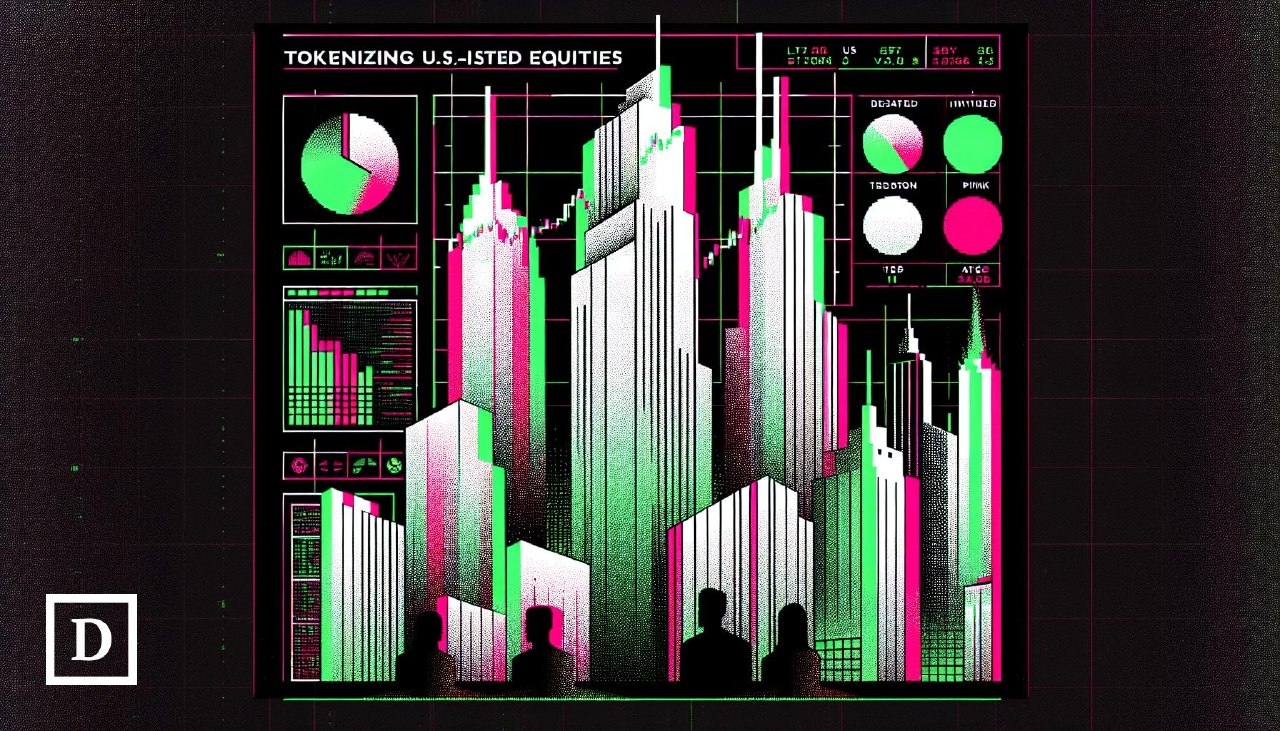
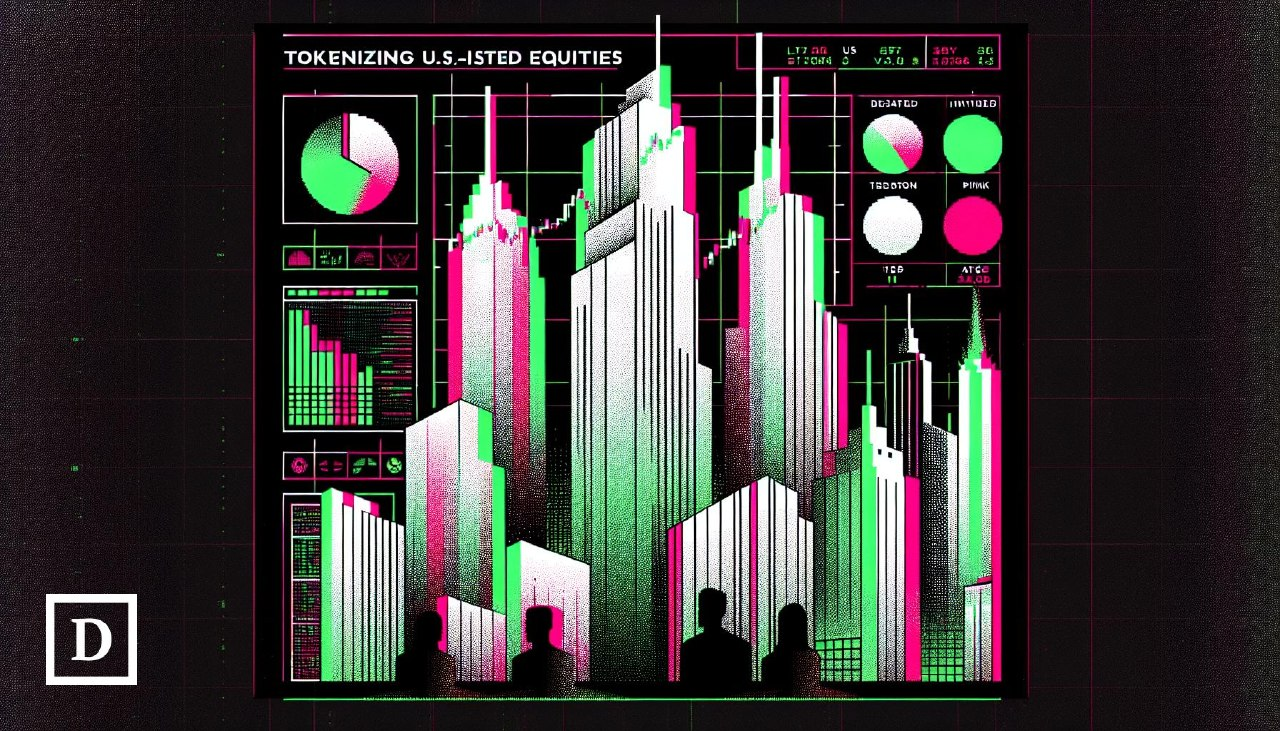
Issuer-Sponsored Tokens enable direct equity ownership in token form, rather than synthetic wrappers sitting on top of underlying shares.
Tokenization platform Securitize and Computershare, one of the world’s largest transfer agents, announced an agreement on Wednesday to enable U.S.-listed issuers to bring their equity onchain through a new construct called Issuer-Sponsored Tokens (ISTs).
Under the deal, participating issuers can include ISTs as part of their issued capital alongside existing shares, including those held in the Direct Registration System (DRS). Computershare will serve as transfer agent for the tokenized holdings, processing corporate actions for ISTs in parallel with directly registered positions, according to a press release.
Crucially, ISTs are not derivative wrappers. “ISTs do not rely on derivative tokens that sit on top of underlying shares, nor do they alter any underlying equity,” said Securitize co-founder and CEO Carlos Domingo, framing the structure as a way to create direct equity ownership in token form.
That distinction matters in a market where most existing tokenized equity products, from Backed’s xStocks to Dinari’s dShares, rely on synthetic representations backed 1:1 by deposited certificates rather than native onchain issuance. Nasdaq’s own tokenized equities filing flagged the gap between wrapper-style products and tokens that confer the same shareholder rights as traditional stock.
Computershare, listed in Australia under the ticker CPU, services more than 25,000 private and public companies globally and operates in every major financial market. Ann Bowering, CEO of Issuer Services for Computershare North America, said the structure was designed “to operate within the existing regulatory environment, maintaining the independence and oversight that issuers and regulators expect from a transfer agent.”
The agreement extends a string of recent infrastructure wins for Securitize, which has tokenized over $4 billion in real-world assets, including BlackRock’s BUIDL fund. Last month, Securitize was named the first digital transfer agent eligible to mint blockchain-based securities on the New York Stock Exchange’s upcoming Digital Trading Platform, and earlier in April, it partnered with Nasdaq-listed Currenc Group to tokenize the company’s ordinary shares on Ethereum and Solana.
RWA Boom
The Computershare deal lands as the tokenized RWA market projects sharply higher growth. A joint Keyrock-Securitize report published earlier this month forecast that the distributed RWA market will expand from roughly $29 billion today to $400 billion by 2030 as a base case, with equities highlighted as one of five asset classes positioned to scale once liquidity, regulation, and infrastructure converge.
Securitize itself is on track to become a public company through a previously announced business combination with Cantor Equity Partners II, with the combined entity expected to list under ticker SECZ in the first half of this year.
This article was written with the assistance of AI workflows. All our stories are curated, edited and fact-checked by a human.
Crypto World
Robinhood (HOOD), Coinbase (COIN) plunge in crypto stock rout, outpacing bitcoin (BTC) decline


Crypto-related stocks are tumbling across the board on Wednesday with exchanges taking the biggest hit after Robinhood’s earnings miss and escalating tensions between Iran and the U.S.
Robinhood (HOOD), a crypto-friendly digital broker, plunged nearly 14% after it reported late Tuesday an almost 47% decline in crypto-related revenue in the first quarter.
The weakness spilled across the sector as investors took it as a signal for lackluster crypto trading demand. U.S. crypto exchange Coinbase (COIN) and institutional-focused exchange Bullish (BLSH), CoinDesk’s parent company, both fell 8%. Gemini (GEMI), the embattled exchange business of billionaire investors Cameron and Tyler Winklevoss, dropped 6%.
Bitcoin miners Riot Platforms (RIOT) and MARA (MARA) also slid 6%-7%. Strategy (MSTR), the largest corporate bitcoin owner, was down 4%.
The declines were more pronounced than for crypto prices themselves, as bitcoin edged below $76,000, down 0.5% over the past 24 hours.
Adding to the pressure was President Donald Trump reportedly rejecting an Iranian proposal to end the naval blockade and open the Strait of Hormuz, a critical global oil shipping route.
The Iranian regime’s proposal involved reopening the strait while delaying nuclear negotiations, but the Trump opted to maintain its naval blockade until a broader nuclear deal is reached, Axios reported.
The news sent oil prices surging 6%, with the West Texas Intermediate topping $100 a barrel on concerns that energy supply chains in the Middle East could remain under pressure.
U.S. stocks, meanwhile, are posting just modest losses, with the Nasdaq down 0.35%.
The afternoon session promises more catalysts, the first being the Federal Reserve meeting results. No change in rates is what will be Jerome Powell’s final meeting as chairman. Market participants, however, will be looking to the accompanying policy statement and Powell’s post-meeting press conference for clues about the future direction.
After the U.S. market closes, a slew of big tech firms — including Alphabet (GOOG), Amazon (AMZN), Meta (META) and Microsoft (MSFT)— will report earnings. Traders will eye the firms’ artificial intelligence-related spending as a gauge for the AI trade and infrastructure buildout.
Crypto World
XRP News Today: Ripple’s European Boss Just Said the U.S. Is Falling Behind: Is Europe Now XRP’s Real Home?
Ripple’s own UK leadership is publicly questioning whether America still belongs in the conversation. The gap between European operational maturity and U.S. regulatory paralysis is widening fast.
What that divergence means for XRP’s next price move is the question every holder should be asking right now.
Ripple’s Managing Director for the UK and Europe, Cassie Craddock, made headlines this week after publicly declaring that European XRP adoption has graduated from pilot projects to “real and scalable operational production.”
Speaking within the framework of an ecosystem conference in Las Vegas, Craddock pointed to Ripple Custody deployments at top-tier institutions, BBVA and DZ Bank among them, as proof that Europe now owns the custody infrastructure layer that makes enterprise digital asset strategy viable.
“Digital asset adoption has moved from pilot to production. In my view, nowhere is that clearer than in Europe,” she posted on X. Meanwhile, U.S. legislative progress continues to stall, with political friction blocking even basic crypto framework bills on Capitol Hill.
The institutional divergence is real. The price chart, however, tells a more complicated story.
Discover: The best pre-launch token sales
Can XRP Price Break $1.50 Resistance Or Is a Pullback Loading?
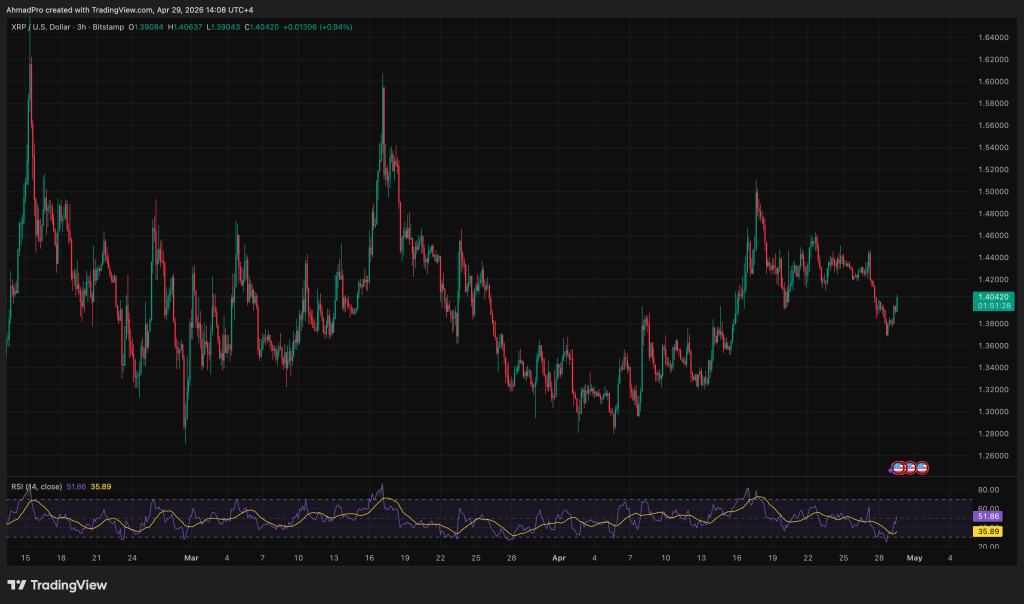
XRP is right under $1.50 again, and that level keeps acting like a ceiling, even with strong volume behind it, so this is still setup, not breakout.
The structure underneath is decent, though. $1.40 is holding as support, and the RSI points more toward accumulation than distribution, suggesting bigger players are positioning, not exiting.
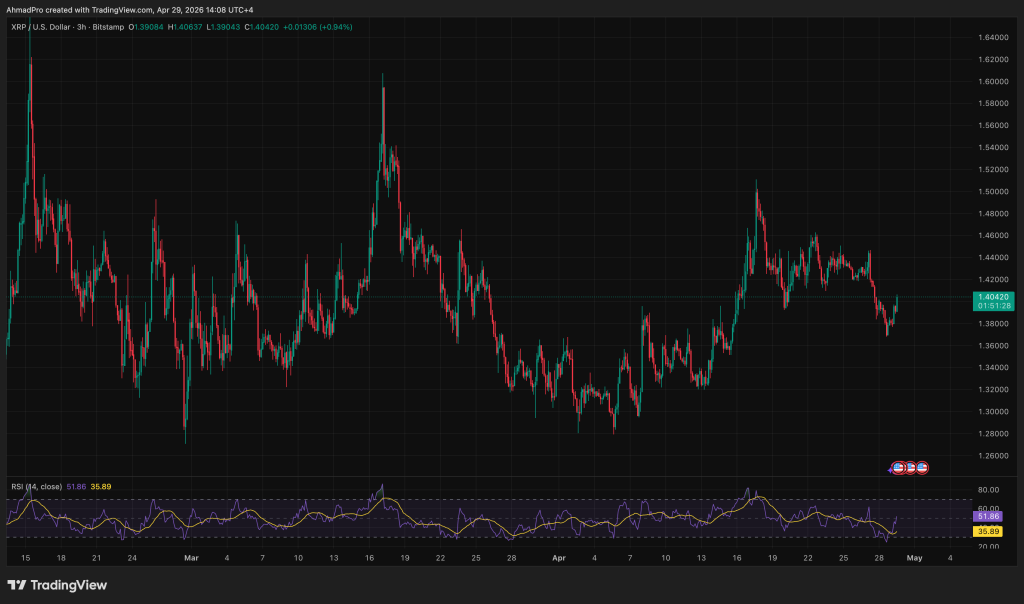
$1.50 is the trigger. If XRP breaks and holds above it on a weekly close, that is where momentum builds and opens a move toward $1.90–$2.00.
$1.40 is the support keeping the structure intact in the short term. $1.25 is the invalidation. If that breaks, the whole bullish setup fades.
Most likely for now, it keeps ranging between $1.35 and $1.50 while the market waits for a catalyst.
Discover: The best crypto to diversify your portfolio with
If Bull Market is Coming, Memecoins Like Maxi Doge Usually Runs First
XRP’s structure looks solid, but at this size, the upside is naturally capped. Even strong momentum is unlikely to deliver the kind of outsized returns traders look for when they want real asymmetry.
That is why some attention shifts earlier in the cycle, where the move has not happened yet.
Maxi Doge is positioning right in that space, leaning fully into the high-leverage trading culture and meme narrative. The presale is around $0.0002815 with roughly $4.76M raised, showing steady demand and approaching levels where visibility and momentum tend to increase.
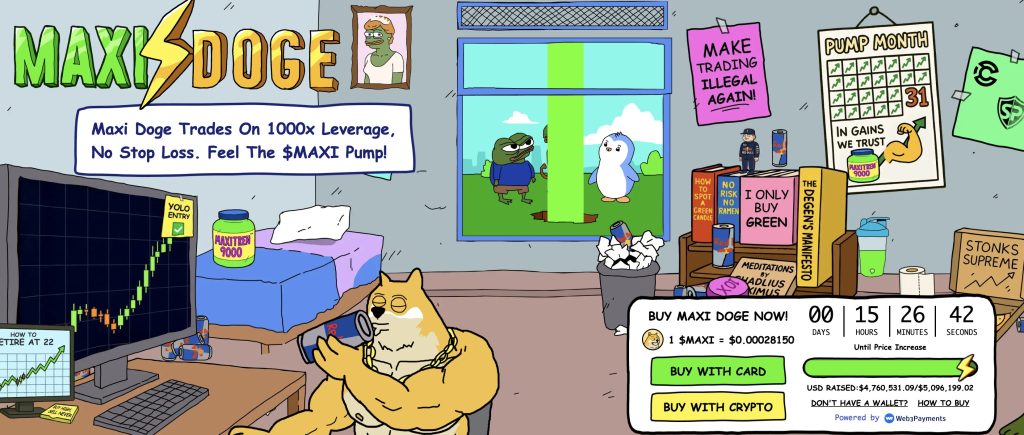
The setup is built for engagement, with staking, trading competitions, and a treasury aimed at supporting liquidity and growth, all wrapped in aggressive, viral branding that fits the current cycle.
But it is still a presale, and that comes with real trade-offs. Liquidity is not guaranteed, execution matters, and sentiment can shift quickly after launch.
So the idea is simple, XRP offers stability with more measured upside, while something like Maxi Doge offers earlier positioning with higher potential, but also higher risk.
The post XRP News Today: Ripple’s European Boss Just Said the U.S. Is Falling Behind: Is Europe Now XRP’s Real Home? appeared first on Cryptonews.
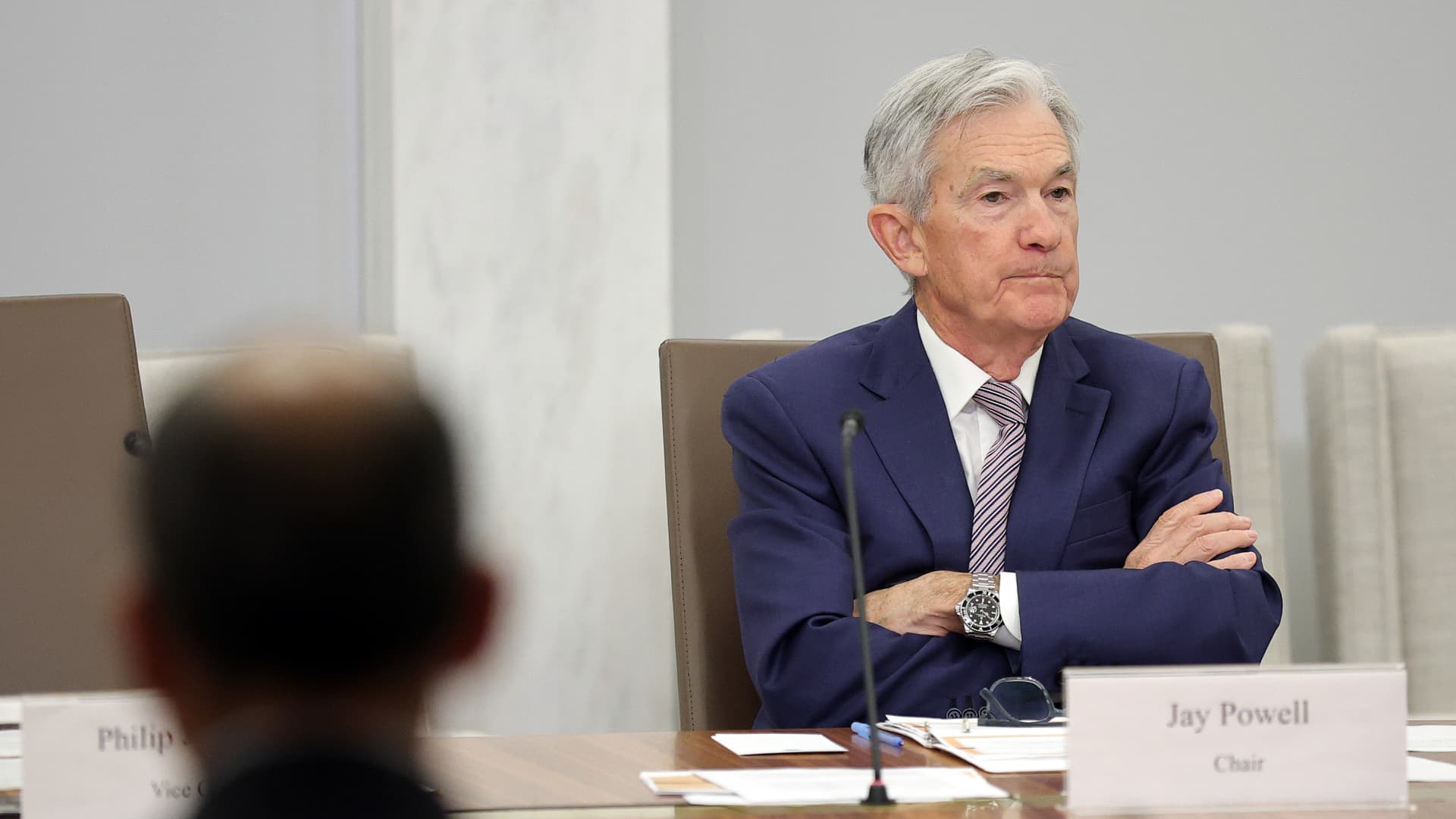
Federal Reserve Chair Jerome Powell participates in a board meeting at the Federal Reserve on March 19, 2026 in Washington, DC.
Kevin Dietsch | Getty Images
Federal Reserve Chairman Jerome Powell is likely to stay on for a short time after his term as head of the central bank is over, bettors on prediction markets platform Kalshi estimate.
Bettors place a 30% chance Powell resigns as a member of the Fed Board of Governors by June. However, bettors are more confident that he does that by August or the end of the year, with 66% and 81% odds, respectively.
Powell said after the March Federal Open Market Committee meeting he would not step down as a governor until the criminal inquiry into him by the Department of Justice was resolved. On Friday, the justice department dropped its probe into Powell.
When that happened, odds that Powell would resign by June surged to nearly 54.5%, but they have fallen in the days since.
However, Polymarket bettors see Powell stepping aside imminently. They give it an 87% chance he steps down between May 15 and May 22.
Powell is set to address reporters after the Fed meeting on Wednesday, likely his last as Fed chief — so long as President Donald Trump’s nominee, Kevin Warsh, receives senate approval by the next meeting in the middle of June. Powell is expected to field questions about his plans at the news conference, which is slated for 2:30 p.m. ET.
Warsh’s nomination advanced through the Senate Banking Committee on Tuesday morning.
Trump and Powell have clashed since the president’s second term began last year. The White House has been frustrated that the Fed hasn’t cut interest rates as quickly or as sharply as the Trump administration would like. Some observers worry Trump selected Warsh to push his perspective on rates, though Warsh has pushed back on those concerns, saying he believes in the independence of the Fed.
If Powell doesn’t resign until August, he would stay on for two more meetings, the one in June and another in late July. Powell’s term as a Governor lasts until 2028.
Disclosure: CNBC and Kalshi have a commercial relationship that includes a CNBC minority investment.
Markets shift and headlines fade, but the core principles of building long-term wealth remain constant. Join us for our third CNBC Pro LIVE, where investors of all backgrounds – from financial professionals to everyday individuals – come together to cut through the noise and gain actionable strategies for smarter, more disciplined investing. No matter where you’re starting from, you’ll leave with clearer thinking, stronger strategies. Enter your email here to get a discount code
PayPal's new CEO makes Venmo a standalone business unit as potential buyers circle

U.S. senator holding cards on Clarity Act’s next move says it’s ready to get to hearing

Taylor Frankie Paul Love Life Takes A New Turn After Scandal

Manchester United reach agreement with Casemiro over contract clause amid transfer speculation

US brings back mandatory military draft registration

Steven Gerrard disagrees with Gary Neville over ‘shock’ Chelsea and Arsenal claim | Football

CRYPTO Waking Up As Institutions Pile Into Bitcoin & ETH

Premium Apartments | 40 Floors Luxury Towers in Puppalaguda | Near Financial District Hyderabad

#cat #anmals #funny #comedy #cutecat #animation #meow #cuteanimal #anaya #bandar #money #cartoon
-

 Tech2 days ago
Register Renaming | Hackaday
-

 Fashion5 days ago
Weekend Open Thread – Corporette.com
-
 Crypto World4 days ago
Hyperliquid $HYPE Rally Builds Momentum as AI Sector Enters Prove-It Phase
-

 Politics7 days ago
Making troops accountable for war crimes threatens US alliance, ex-SAS colonel warns
-

 Politics7 days ago
Disabled people challenge government SEND proposals over segregation concerns
-

 Business6 days ago
Patterson-UTI Energy, Inc. (PTEN) Q1 2026 Earnings Call Transcript
-
 Sports3 days ago
IPL 2026: Ruturaj Gaikwad registers slowest fifty of the season, enters all-time unwanted list | Cricket News
-

 Politics2 days ago
Drax board avoid their own AGM, accused of greenwashing & environmental racism
-

 Politics7 days ago
‘Iran is still a nuclear threat’
-

 NewsBeat3 days ago
LK Bennett closes all stores after entering administration
-
 Sports7 days ago
Tim Bradley names the current best in the world: “Better than Inoue and Usyk”
-

 Crypto World5 days ago
Michael Saylor says BTC winter is over. Market analyst disagrees, says bitcoin was in a pullback
-

 Fashion19 hours ago
Kylie Jenner’s KHY Enters a New Era with ‘Born in LA’
-
 Entertainment4 days ago
Mariah Carey Slams Deposition Claims In Brother’s Lawsuit
-
Entertainment6 days ago
Michael B. Jordan and Austin Butler's “Miami Vice” movie will bring the action back to the '80s
-
Business7 days ago
Altimmune prices $225 million public offering at $3 per share
-
Entertainment6 days ago
Russell Brand Had Sex With 16 Year Old When He Was 30
-
Crypto World6 days ago
Is Algorand One of the Few Quantum-Resistant Blockchains? Here’s What the Data Shows
-

 Business20 hours ago
Most Commercial Energy Audits Miss the Real Losses
-
 NewsBeat5 days ago
Trump threatens to review UK’s claim to Falkland Islands and punish Nato allies over Iran war disagreement
You must be logged in to post a comment Login