
Crypto World
KuCoin Appoints AML Chief in EU Following Austria’s MiCA Ban

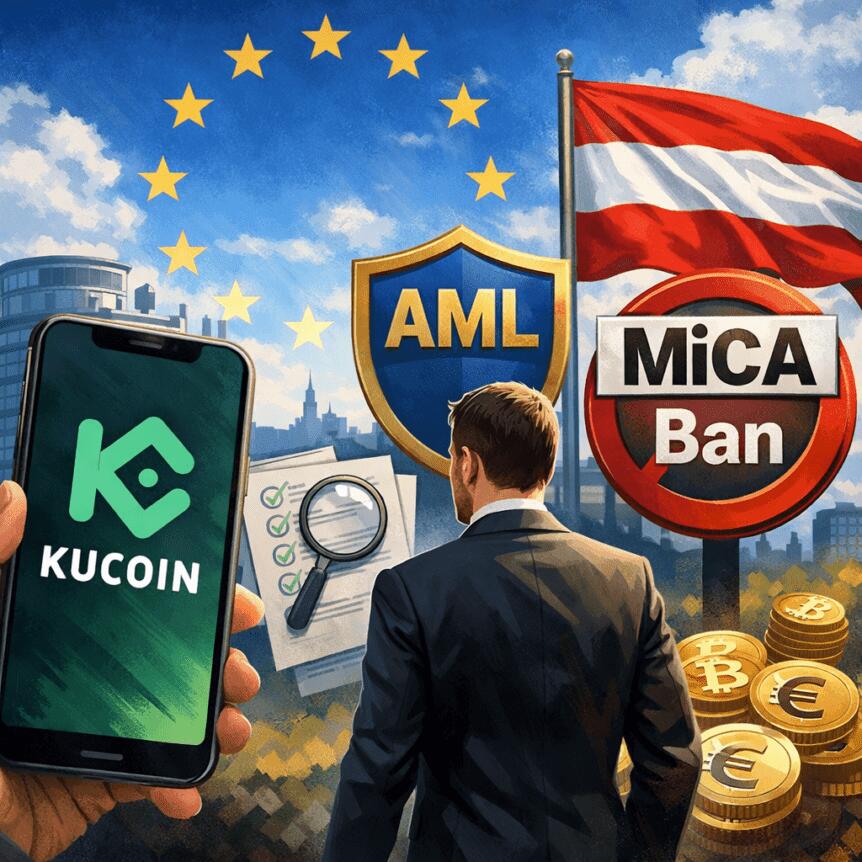
KuCoin EU, the MiCA-licensed arm of the exchange operating within Austria, has appointed Carmen Kleinhans as Anti-Money Laundering (AML) officer and expanded its Vienna-based compliance team with two deputy AML officers drawn from former Austrian regulators and bank compliance leadership. The staffing overhaul comes weeks after Austria’s Financial Market Authority (FMA) barred KuCoin EU from onboarding new clients and signing new contracts, citing deficiencies in key AML/CTF and sanctions controls. The move underscores a broader regulatory push in the European Union toward stronger governance, risk management, and regulatory engagement as MiCA supervision tightens.
According to Cointelegraph, the FMA’s decision reflected concerns that KuCoin EU did not have adequately staffed control functions, a finding that triggered the onboarding ban while regulators assessed the exchange’s readiness to operate under the MiCA framework. The hiring spree in Vienna is meant to align KuCoin EU with conventional financial-services compliance expectations and to bolster institutional credibility with regulators and banking partners alike.
Key takeaways
- KuCoin EU appoints Carmen Kleinhans as AML officer and adds two deputy AML officers sourced from Austrian regulatory and banking compliance backgrounds, expanding the exchange’s governance and risk-capability footprint in Vienna.
- The personnel move follows the FMA’s February action prohibiting KuCoin EU from onboarding new clients or signing new contracts, citing gaps in AML/CTF and sanctions staffing.
- The broader crypto enforcement environment is sharpening its focus on governance and controls, with regulators increasingly willing to suspend or constrain operations over organizational deficiencies rather than solely pursuing technical rule breaches.
- Cross-border actions against KuCoin and its parent entity illustrate the growing enforcement risk profile for crypto firms, spanning the United States, the Middle East, and other jurisdictions.
- The effectiveness of KuCoin EU’s restored control framework will depend on the FMA’s assessment of whether the new governance and risk-management functions are fully operational and compliant under Austrian authorization and MiCA supervision.
Regulatory backdrop: MiCA enforcement and the FMA action
The European Union’s MiCA framework places substantial emphasis on governance, risk management, AML/CTF controls, sanctions screening, and licensing readiness for crypto-asset service providers. In this context, national supervisors retain substantial oversight authority to ensure that licensees meet organizational and internal-control standards necessary for ongoing operations. Austria’s FMA acted in February to prevent KuCoin EU from onboarding new clients or entering into new contracts, a move that regulators described as necessary to address identified staffing gaps in critical compliance roles. The decision signals that, under MiCA, regulators are prepared to take tangible steps to curb operations until governance functions are demonstrably sound—even when the technical aspects of a platform remain intact.
For market participants and institutional observers, the FMA action illustrates a shift toward governance-centered enforcement. Rather than focusing solely on whether a platform offers a particular token or security, authorities are prioritizing whether firms maintain robust, verifiable control environments capable of preventing money movement that could finance illicit activity. This aligns with a broader, multijurisdictional trend toward tightening AML/CTF regimes in crypto, with regulators scrutinizing corporate structure, compliance staffing, risk-management processes, and formal regulatory engagement capabilities as prerequisites for continued operation.
KuCoin EU governance expansion: leadership and scope
The newly announced leadership changes place a seat at the helm of KuCoin EU’s AML program with Carmen Kleinhans, who will lead the entity’s AML, CTF, and sanctions controls. She will be supported by two deputy AML officers—professionals with backgrounds in Austrian regulatory authorities and banking compliance leadership—who will contribute to enterprise-wide risk management and ongoing regulatory engagement. The collective mandate encompasses not only the traditional AML/CTF and sanctions screening functions but also governance oversight across the organization and comprehensive risk reporting to Austrian authorities and, by extension, MiCA supervisory structures.
These hires are intended to rectify the staffing gaps cited by the FMA and to bring KuCoin EU into closer alignment with established financial-services compliance standards. By strengthening governance and control frameworks, KuCoin aims to reduce regulatory uncertainty and improve collaboration with supervisors, auditors, and prospective banking partners. The emphasis on enterprise-wide risk management signals a holistic approach to regulatory compliance that goes beyond ticking technical compliance boxes to address organizational design, reporting lines, and oversight mechanisms that influence day-to-day operations and strategic decision-making.
Enforcement landscape: trends shaping risk for global crypto firms
Enforcement in the crypto sector has increasingly prioritized governance and controls. A regulatory-compliance narrative supported by independent audits and enforcement data shows that firms are being penalized for weaknesses in anti-financial-crime controls as much as for securities or licensing missteps. A CertiK report published on a recent Tuesday highlighted that KuCoin and OKX were among exchanges facing some of the largest AML-related penalties in 2025, underscoring a shift in focus toward financial-crime prevention and control deficiencies rather than solely toward securities-law concerns.
Beyond the EU-specific actions, KuCoin has faced broader regulatory actions across other jurisdictions that amplify the systemic risk profile for cross-border crypto operators. In January 2025, KuCoin agreed to pay nearly $300 million and exit the U.S. market for two years in a criminal resolution related to unlicensed money transmission and AML failures, according to The Wall Street Journal. Later in March 2025, KuCoin’s parent company agreed to pay a $500,000 civil penalty to settle a CFTC action alleging it operated an unregistered offshore commodities exchange. In the same month, Dubai’s Virtual Assets Regulatory Authority issued a warning over allegedly unlicensed activity in the emirate. Taken together, these actions illustrate a broad, multi-jurisdictional enforcement posture that heightens regulatory risk for crypto firms pursuing global operations.
Whether KuCoin EU’s expanded compliance cadre will reconcile the Austrian authorization with MiCA expectations remains contingent on the FMA’s assessment of whether the new control functions have been fully and suitably restored. The timing of such an assessment will influence KuCoin’s ability to re-open or expand its European footprint under the MiCA regime, and could affect licensing timelines, bank onboarding, and ongoing regulatory reporting obligations. Cointelegraph reached out to KuCoin EU for comment, but did not receive a response by publication, underscoring the sensitivity and ongoing nature of regulatory reconciliations in this case.
These developments have practical implications for financial institutions, exchanges, and investors operating across Europe and beyond. For crypto firms, the case reinforces the imperative to institutionalize governance, formalize risk-management frameworks, and maintain ongoing regulatory dialogue as prerequisites for licensure and operational continuity. For regulators, the KuCoin EU episode exemplifies how MiCA and national supervisory regimes are converging toward governance-focused enforcement that scrutinizes organizational design, staff competence, and cross-border compliance programs as core risk-mitigating levers.
Closing perspective
Looking ahead, the key question is whether KuCoin EU’s strengthened compliance structure will satisfy the FMA and enable a durable path to reauthorization under MiCA. In a regulatory environment where governance and controls are increasingly seen as central to operational legitimacy, the Vienna-based initiative represents a critical test case for how crypto firms translate high-level regulatory expectations into enforceable, day-to-day governance practices across multi-jurisdictional operations.


April 29, 2026 – Realmint officially launches today, opening doors for retail investors to access RWAs through a smarter, data-driven platform. Backed by Injective Foundation and Cointelegraph Accelerator, the platform combines scoring, aggregation, and one-click access to tokenized assets.
Why RWA retail isn’t here yet
The market for tokenized real-world assets is growing fast, but for most users, understanding what they’re actually buying is still far from simple. The barrier isn’t access, it’s understanding.
Assets are distributed across multiple chains and platforms, forcing users to manually navigate different ecosystems before even comparing options. Two tokens can represent the same asset, such as gold, while having completely different structures, levels of transparency, and risk profiles. One might be backed by audited reserves with clear redemption terms; another might offer little more than a whitepaper. For most users, these differences are not obvious, and there’s currently no simple way to tell them apart.
Realmint

Today, Realmint goes live to fix exactly that. Backed by Injective Foundation and part of the Cointelegraph Accelerator program, the platform aggregates over 50 tokenized commodities across chains including Ethereum, Polygon, Base, and more, allowing users to discover, understand and compare RWAs through a single interface. Stocks, bonds, and other asset classes are already in the pipeline and will be added weekly.
Realmint score
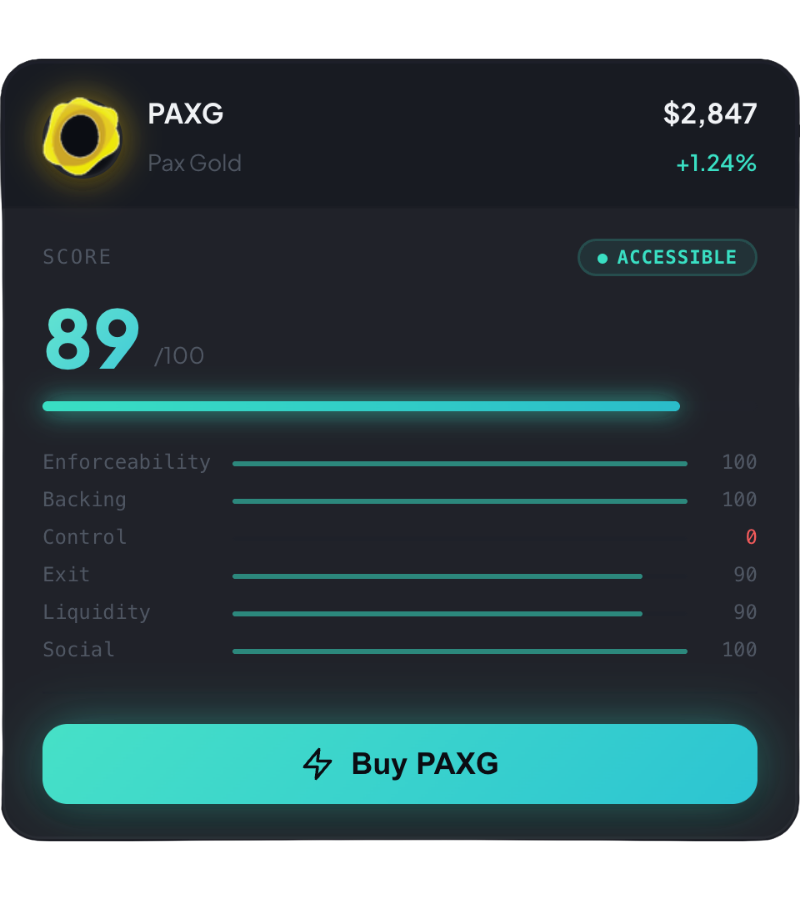
Instead of presenting raw data alone, the platform evaluates each asset across six dimensions: Enforceability, Backing, Control, Exit, Liquidity, and Social. The result is a composite score from 0 to 100, so users can compare assets at a glance without needing to parse whitepapers, run due diligence, or dig through on-chain data manually.
One-click execution
Starting week 2, Realmint will integrate execution directly into the same flow. Users will be able to explore assets, compare them side by side, and buy RWAs across different chains starting from USDC on Injective, all in a single gasless transaction. No wallet setup friction either: Realmint uses Privy to let users create self-custodial wallets in seconds, without leaving the platform.
Realmint rewards
A rewards system is on the way, and early activity on the platform will matter. What you do before June counts. Early engagement with RWAs on the platform is already being tracked.
Realmint is now live. Explore, compare, and understand RWAs before you invest.

XRP price is stalling below the $1.40 resistance, but two words from Brad Garlinghouse may be about to change the prediction. OKX posted a teaser graphic of the XRP logo blazing across the Las Vegas Sphere with the caption “Probably nothing,” and Ripple’s CEO responded with his signature phrase: “lock in.”
That phrase has never been throwaway. Garlinghouse deployed it when Ripple acquired Hidden Road and again when he confirmed the SEC lawsuit was effectively closed. Each time, something significant followed.
Multiple exchanges piled on fast. Bitrue posted its own Las Vegas Sphere graphic with the identical “probably nothing” caption, while BitMEX stated flatly that all eyes were on XRP in Las Vegas. XRP’s logo physically lit up Las Vegas and coordinated a tease across major platforms ahead of the XRP Las Vegas conference, making it hard to dismiss as noise.
#Bitcoin conference is underway…
But the real action is happening outside.#XRP
Watching @Ripple take over Las Vegas makes one thing clear:
The tides are shifting.#XRPLV26 is shaping up to be a monumental moment.
See you there. #LoveYouMucho pic.twitter.com/K5qb5ZwecR— rayfuentes (@RayFuentesIO) April 28, 2026
Discover: The best pre-launch token sales
XRP Price Prediction: $1.50?
XRP is caught in a compression zone that has to resolve soon. The asset has been testing the $1.28–$1.40 band for several sessions, trading below both the 50-day EMA at $1.38 and the 200-day EMA at $1.88.
Bollinger Bands are tightening around the $1.40 level in a classic pre-breakout setup. RSI sits at 45 in the daily, approaching oversold, while MACD shows negative expansion.
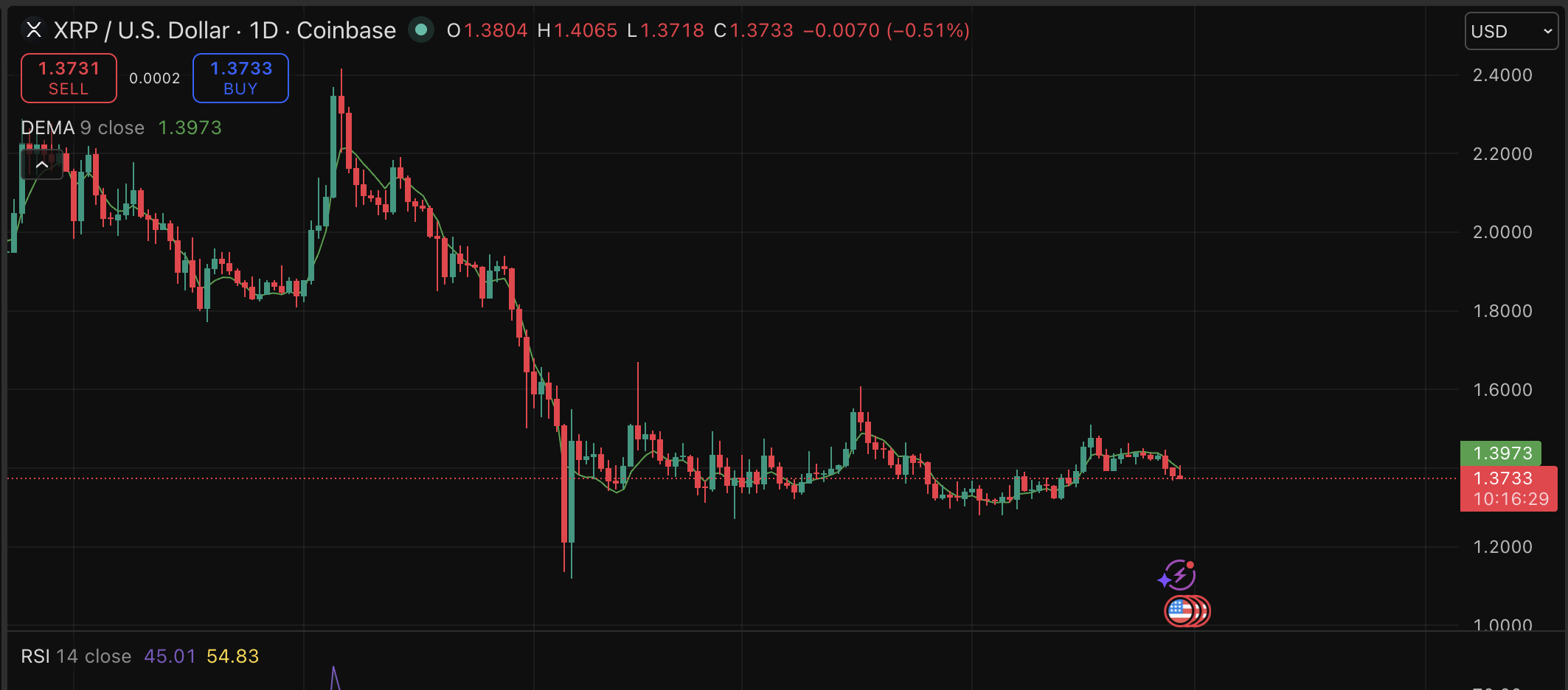
For now, $1.28 holds as support, but if the CLARITY Act advances soon, plus today’s FOMC language turns less hawkish, XRP could clear $1.45 and test the $1.60 zone. Some analysts have a far more aggressive Fibonacci extension target of $7.52 by month-end via intermediate levels at $1.80, $2.40, $3.65, and $5.00. It’s ambitious, but the underlying downtrend breakout structure is real. $0.80–$1.00 band below that.
The Garlinghouse “lock-in” signal injects a wildcard. His pattern of using the phrase to define XRP moments suggests something material may be imminent around the Las Vegas conference.
Discover: The best crypto to diversify your portfolio with
Bitcoin Hyper Eyes Early Entry as XRP Navigates a Make-or-Break Level
XRP here with a bearish MACD and macro pressure overhead is not the setup traders dreamed of, and even the bullish $1.60 target represents modest upside from current levels for an asset with a market cap already deep in the billions. That math is why some capital is rotating toward early-stage infrastructure plays where the entry price and risk profile are structurally different.
Bitcoin Hyper ($HYPER) is currently in presale at $0.0136, having raised $32.5 million to date. The project positions itself as the first-ever Bitcoin Layer 2 with Solana Virtual Machine (SVM) integration. It’s targeting Bitcoin’s three core limitations simultaneously: slow transactions, high fees, and the near-total absence of programmable smart contracts.
The SVM layer is designed to deliver sub-second finality and low-cost execution while keeping BTC’s security model intact via a Decentralized Canonical Bridge for native BTC transfers. A high 36% APY staking mechanism is live during presale for early buyers.
Research Bitcoin Hyper here before the current presale price stage closes.
The post XRP Price Prediction: Garlinghouse Locks In as Ripple Raises the Standard in Las Vegas appeared first on Cryptonews.


For a decade, the crypto industry has gathered at Consensus to discuss what was coming next. This year, something different is happening. The future has started arriving.
Real-world assets are being minted onchain. Stablecoins are quietly becoming the connective tissue of global commerce. Prediction markets are turning probability into a tradable asset class. The institutions that once dismissed all of this – Morgan Stanley, Nasdaq, the NYSE, DTCC, SWIFT, Franklin Templeton – are now sending their senior people to Miami to talk about how they fit in.
When Consensus 2026 convenes May 5–7 at the Miami Beach Convention Center, it won’t feel like a conference about crypto’s potential. It will feel like a summit about what happens next now that crypto’s promise has become the financial industry’s new reality.
The institutions have landed
For years, traditional finance circled the crypto industry from a cautious distance. That distance has collapsed.
The 2026 speaker roster reads like a who’s-who of institutional legitimacy: Mastercard, PayPal, T. Rowe Price, Nasdaq, NYSE, Morgan Stanley, SWIFT, and DTCC alongside crypto’s foundational builders. The sponsor list tells the same story: JPMorgan, Fidelity, Coinbase, Google, Bridge by Stripe, Broadridge, Circle, Grayscale, FTSE Russell and more. These are not exploratory delegations. They are bets.
“Consensus brings every pillar of the industry together for the largest crypto trade conference in North America,” says a Coinbase spokesperson. “That’s exactly where we want to be in order to move the needle.”
What drew them all in? The short answer is 24/7 markets. The longer answer is what those markets made possible.
Always on, everywhere at once
Blockchain infrastructure runs on internet time – no opening bell, no closing hour, no pause in price discovery. For years, traditional finance treated this as a quirk. They’ve since realized it’s a competitive advantage they don’t have.
In a world where capital moves at the speed of information and users expect their financial lives to work at midnight in Dubai as well as they do at noon in New York, always-on markets aren’t a novelty. They’re the standard. And now TradFi is racing to meet it.
The conversations at Consensus 2026 won’t debate whether 24/7 markets matter. They’ll debate the playbook: settlement rails, custody infrastructure, regulatory guardrails, and who controls the on-ramps.
Stablecoins: from bridge to backbone
Stablecoins were once described as a bridge between crypto and fiat. That framing is now outdated. Stablecoins have become infrastructure – the settlement layer for cross-border payments, the backbone of onchain commerce, and the first credible competitor to SWIFT for moving dollars at scale.
The next frontier is programmable money: protocols like x402 and Tempo’s Machine Payments Protocol are pointing toward a world where value moves as frictionlessly as data – without intermediaries, delays, or borders.
Expect stablecoins and their infrastructure to anchor multiple-stage conversations at the event. Cloudflare Chief Strategy Officer Stephanie Cohen, Robinhood SVP Johann Kerbrat, Ondo President Ian De Bode, and Tether US CEO Bo Hines will be among those shaping the conversation about stablecoins as a global settlement layer.
Everything gets tokenized
Tokenized treasuries. Onchain private credit. Fractional real estate. These sounded like thought experiments three years ago. Today, they are live products with real AUM, with institutions like Franklin Templeton and T. Rowe Price building on public blockchains.
What has changed is the convergence. Stablecoins provide the liquidity layer. Tokenized assets supply the product. Platforms like Coinbase create the access points. The infrastructure that once served only crypto-native users can now serve anyone with a brokerage account, a bank account, or a smartphone.
“Coinbase is now the Everything Exchange where you can trade crypto, stocks, commodities, prediction markets, and derivatives all in a single account,” says Max Branzburg, Coinbase’s head of consumer and business products. “Coinbase is also playing a central role as the trusted bridge that’s bringing the next trillion dollars of real-world assets onchain.”
That’s not a marketing line, it’s a roadmap. And Consensus is where that roadmap gets debated and amplified.
The unlikely onboarding ramp: prediction markets
Crypto’s new killer app may not be the one anyone expected. Prediction markets – platforms that let users trade on the outcomes of elections, economic events, sports results, and essentially anything quantifiable about the future – have quietly become one of the industry’s most powerful onboarding tools.
Kalshi, the CFTC-regulated prediction market leader, has shown that users arrive to take a position on inflation or a geopolitical flashpoint and leave having learned about wallets, tokens, and onchain transactions. The gamification is a gateway. The underlying infrastructure is the same blockchain rails that power DeFi and institutional RWA platforms.
Kalshi’s head of crypto John Wang will join Consensus to lay out his vision for the future of onchain sports betting and prediction markets – a sector that is growing faster than almost anything else in crypto and pulling in a user profile that traditional exchange products never could.
Miami: the right city for this moment
Consensus’ return to Miami is not incidental. The city has transformed into a nexus of finance, technology, and capital formation – a place where Latin American remittance flows, global wealth management, and crypto-native startup culture overlap in ways that feel unique to this moment in history.
“Miami is no longer just a leisure destination – it’s America 2.0,” says Ellie Platis, Solana’s Head of Events, who is hosting Solana Accelerate alongside Consensus. “A convergence point for the future of capital and culture. Its dynamic rise makes it the perfect place to showcase Solana’s role in powering the proliferation of Internet Capital Markets.”
With 20,000 expected attendees spanning crypto builders, Wall Street veterans, Washington insiders, and the next wave of onchain entrepreneurs, Consensus 2026 is less a conference about what’s coming and more a working summit for people who are already building it.
Why this year is different
Crypto has passed through several distinct eras. The ideologues arrived first, then the builders, then the speculators. The current wave is different: it’s the practitioners – asset managers, payment networks, regulators, and corporate treasurers – who are arriving not to explore but to deploy.
The technology has matured to meet them. Settlement is faster. Custody is institutional-grade. Regulation – slowly, fitfully, but unmistakably – is clarifying. The conditions for mainstream adoption are no longer aspirational. They are here.
Consensus 2026 is where that adoption gets a name, a framework, and a direction. The tokenization of everything isn’t coming. It’s already underway. Miami is where the industry decides what it looks like at scale.
Join 20,000+ industry leaders at Consensus 2026, May 5–7, in Miami. Register now at consensus.coindesk.com
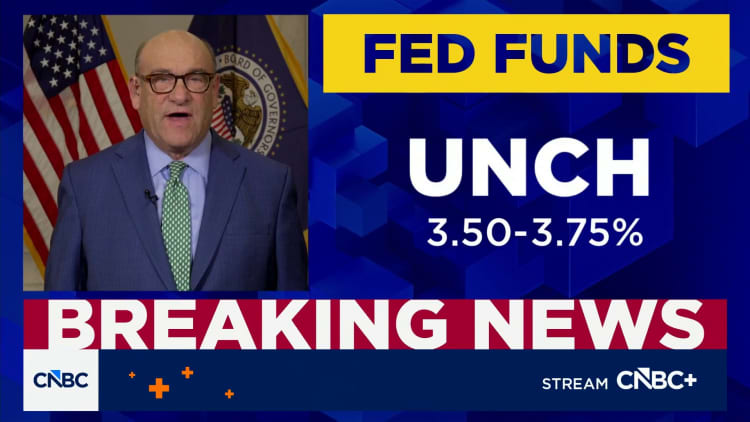

An unusually divided Federal Reserve on Wednesday held its key interest rate steady as policymakers grappled with the policy impact of persistent inflation and awaited a looming leadership transition at the central bank.
In what may have been Chair Jerome Powell‘s final meeting at the helm, the rate-setting Federal Open Market Committee voted to hold the benchmark funds rate in a range between 3.5%-3.75%. Markets had been pricing in a 100% chance of no change.
However, the meeting saw a dramatic turn amid a groundswell of officials who opposed messaging that further rate cuts could be ahead.
Amid expectations for a routine vote to hold the benchmark funds rate steady, the Federal Open Market Committee instead was split along 8-4 lines, with officials expressing different reasons for their vote.
The last time four FOMC members dissented was in October 1992.
Governor Stephen Miran, as he has done since joining the central bank in September 2025, dissented in favor of a quarter percentage point cut.
The other three “no” votes came from regional presidents Beth Hammack of Cleveland, Neel Kashkari of Minneapolis and Lorie Logan of Dallas. They said they agreed with the hold but “did not support the inclusion of an easing bias in the statement at this time.”
At issue for the trio was this sentence: “In considering the extent and timing of additional adjustments to the target range for the federal funds rate, the Committee will carefully assess incoming data, the evolving outlook, and the balance of risks.”
The phrasing indicates the likelihood that the next move would be lower, implied by using the word “additional,” which reflects that the most recent rate actions have been to cut. Hammack, Kashkari and Logan, along with several other Fed officials, have warned about the dangers of persistent inflation. Higher prices augur higher rates for the Fed, which has been on an easing bias since the latter part of 2025.
‘Inflation is elevated’
In the post-meeting statement, the committee noted that, “Inflation is elevated, in part reflecting the recent increase in global energy prices.”
Markets had been widely expecting the hold and in fact are pricing in no changes the rest of this year and well into 2027. Fed officials at the March meeting indicated they foresee one cut this year then another in 2027, putting the funds rate down to its expected “neutral” level around 3.1%.
The decision marked the third consecutive meeting where the committee chose to stand pat – following three consecutive cuts last year.
For most of his eight years as chair, Powell has been able to maintain strong consensus among the committee even as the Fed has struggled to contain inflation and resist aggressive White House political pressure.
Policymakers, though, face an economic climate where inflation indeed has held well above the Fed’s 2% target, as Trump’s tariffs and soaring energy prices are complicating policy. Normally, Fed officials would look through the temporary price shocks from both factors, but the duration of the surges has raised concern about the longer-lasting consumer impact.
On the other side of the Fed’s so-called dual mandate, concerns have abated over the low-hire low-fire labor market.
Nonfarm payrolls in March grew by a better-than-expected 178,000, while the unemployment rate slipped to 4.3%. For April, payrolls processing firm ADP has reported average weekly private payroll growth around 40,000, further indicating that the jobs picture is healthy if less than robust.
With the rate decision behind it, attention will quickly turn to Powell’s post-meeting news conference. Markets usually watch the chair’s remarks closely for clues about the future direction of policy, but in this case the most prominent question will be whether Powell will stay on board after his term as chair ends in May.
Earlier in the day, the Senate Banking Committee in a party-line vote advanced President Donald Trump’s nomination of Kevin Warsh as the next Fed chair. The full Senate is widely expected to follow suit, setting up the Fed’s first leadership change since Powell took over in 2018.
Powell’s choice
Powell faces a choice – leave now as Warsh comes on board, or serve out all or part of the remaining two years on his term as governor. Should Powell opt to stay, it would mark the first time a sitting chair didn’t leave the Board of Governors since Marriner Eccles in 1948.
Powell and Eccles faced similar challenges in the form of White House pressure on monetary policy. In Eccles’ case, President Harry S. Truman pushed the Fed to keep rates low to help reduce government borrowing costs. Trump has pressured the Fed to help the housing and labor markets, and to help reduce the financing burden of the nation’s nearly $39 trillion national debt.
In the Eccles era, the clash led to the 1951 Treasury-Fed Accord, which helped formalize the Fed’s independence by creating a clear barrier between the two institutions.
Warsh has spoken of reopening the accord and modernizing it for the current era where the central bank’s fixed income holdings total some $6.7 trillion. The chair-elect has advocated strengthening the relationship with better coordination on debt issuance while furthering Warsh’s goal of lessening the Fed’s imprint in the bond market.
Powell has spoken strongly about Fed independence. A Justice Department effort to subpoena him over the Fed building renovation project has failed thus far, and a criminal probe into the matter has been dropped.
Among his reasons to stay would be to wait until the renovations probe – which U.S. Attorney Jeanine Pirro handed off to the Fed’s inspector general – is finished. Also, there are ongoing issues regarding independence that Powell could resist as a governor, among them the potential replacement of regional Fed presidents.
Crypto World
U.S. senator holding cards on Clarity Act’s next move says it’s ready to get to hearing
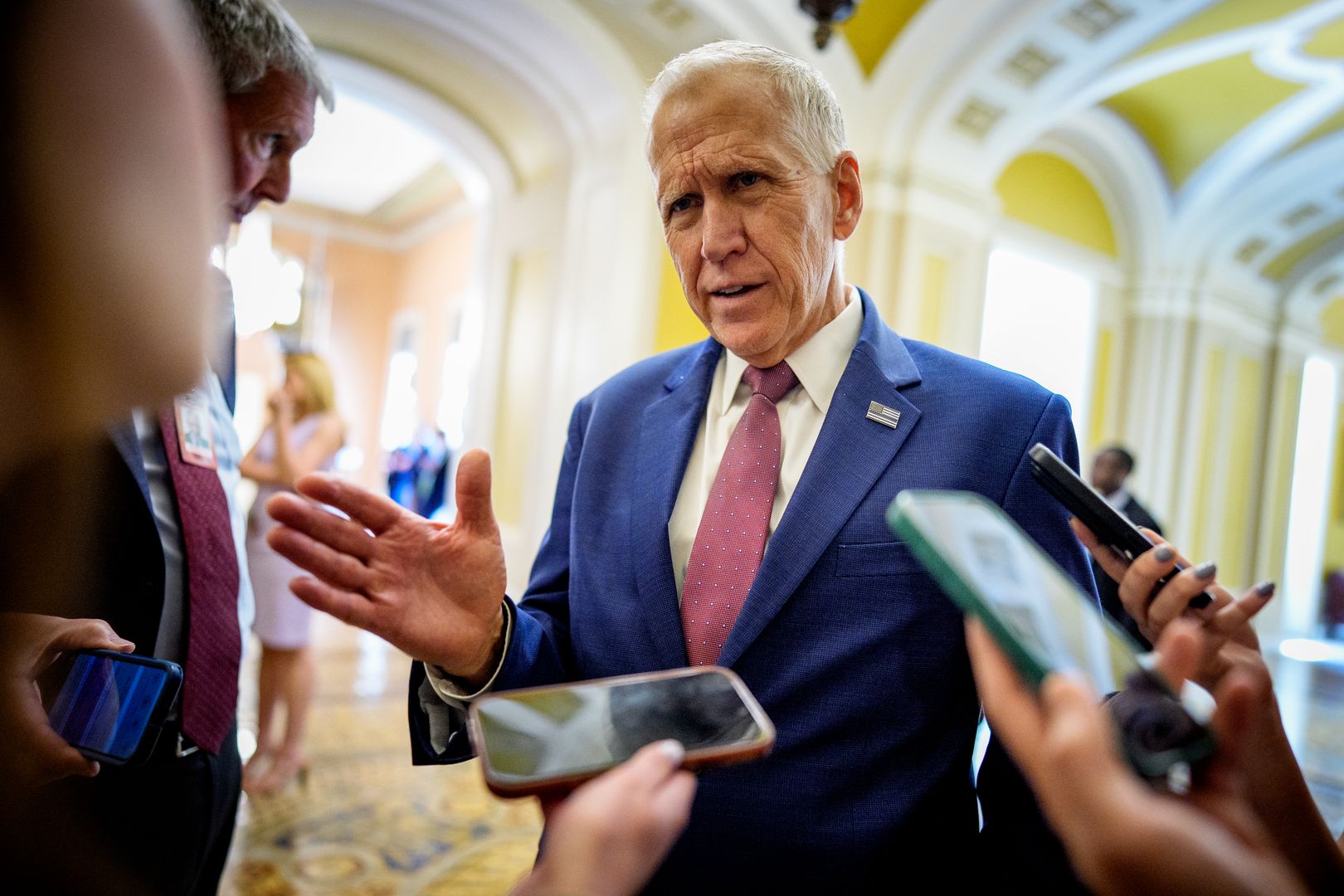
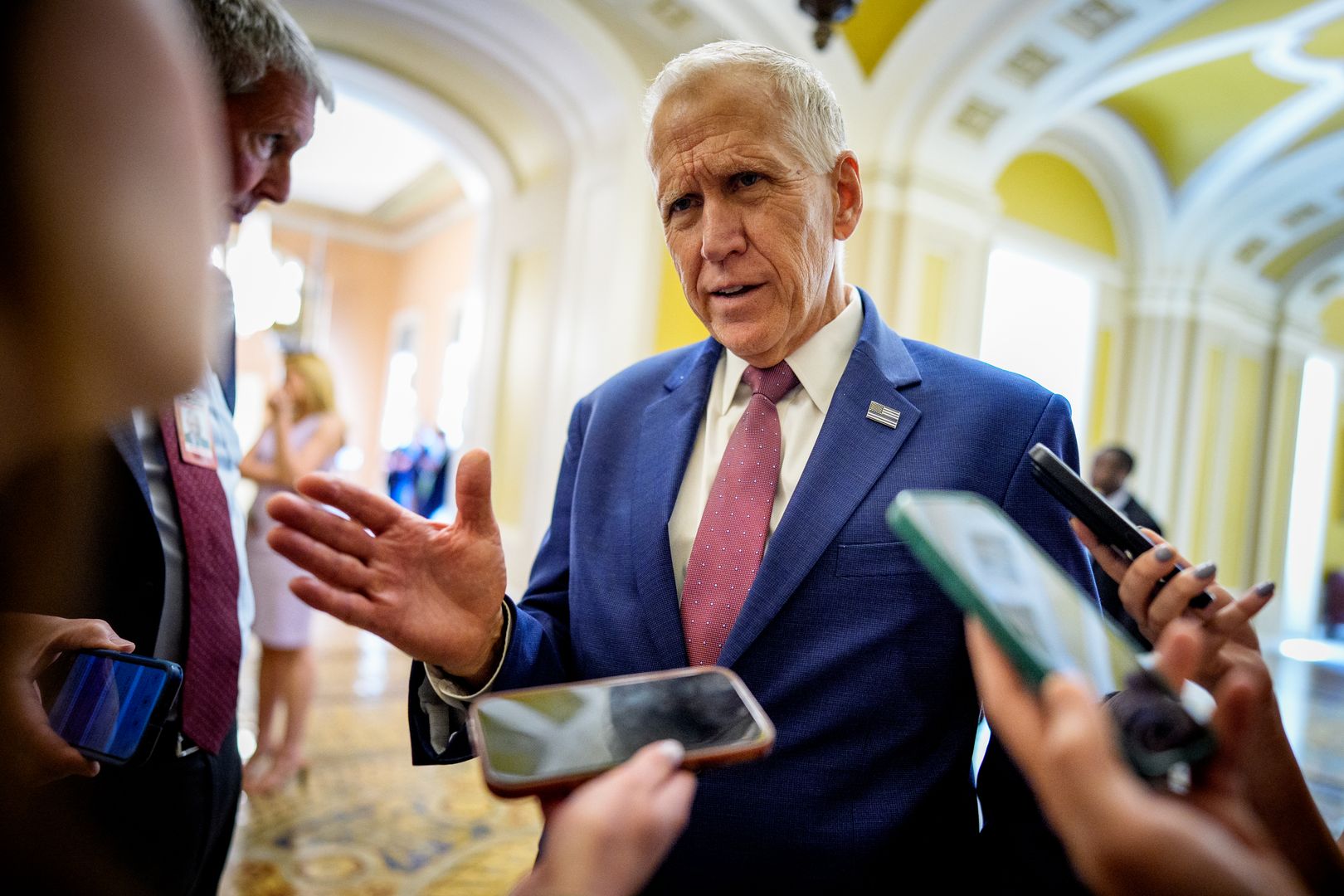
The latest holding pattern for the bill to fully insert the crypto sector into the U.S. financial system was centered on Senator Thom Tillis’ request that bankers get more time to negotiate the Digital Asset Market Clarity Act’s approach on the contentious topic of stablecoin rewards. That may be over.
Tillis told reporters on Wednesday that the work on the Clarity Act — the industry’s top objective in Washington — has “addressed a lot of the concerns” of the banking lobbyists who have been defending the turf of interest-bearing deposits they argued could be threatened by stablecoin yield. The Republican lawmaker said, “I’m going to encourage the chair to move forward with the markup,” according to a Fox Business transcript of the remarks.
That could throw open the chance for a mid-May hearing of the Senate Banking Committee, which needs to advance the legislation before a final version can be hashed out for a vote of the overall Senate. If anything else gets in the way of that timing, it could be fatal for the 2026 Clarity Act, because the remaining Senate schedule has little room for flexibility.
The legislation faces several hurdles before it can hit President Donald Trump’s desk to be signed into law. First is a so-called markup hearing that gives lawmakers a chance to pursue amendments to the language. Tillis said he intends to give stakeholders a chance to see the compromise text on stablecoin yield days before the hearing, and he welcomed bankers to stay in negotiations if there are other points they want to get across.
“There may be a few more that we can get there, if they want to come and work in good faith,” Tillis said.
Crypto insiders have been critical of the banking industry’s apparent reticence to embrace compromises, as has Trump himself, who said over the weekend that he wouldn’t let bankers ruin the Clarity Act. The industry is taking Tillis’ latest remarks as a positive sign for movement.
“There is more momentum than ever for a markup in May,” said Cody Carbone, CEO of the Digital Chamber that advocates for crypto policy in Washington. “We support getting this bill on the committee calendar as soon as possible, and we are hopeful it will move imminently.”
Other sticky provisions remain to work out, potentially most notably a Democrat-driven section banning government officials from personal business interests in crypto — an effort targeted primarily at Trump and his family, who are heavily engaged in the industry. Tillis has reportedly said he agrees that the bill needs such an ethics requirement, though this issue wouldn’t come up in the Banking Committee’s work.
Another potential hangup that crypto advocates are eyeing is the push from Senator Chuck Grassley, the chairman of the Judiciary Committee, that some aspects of the legislation — including legal protections for decentralized finance (DeFi) developers — ought to pass through his committee.
Any additional delay to the bill will jeopardize its chances to get off the ground, with about 11 weeks remaining open in the Senate calendar before the lawmakers fully disperse for midterm election demands. A Senate passage would then land in the hands of the U.S. House of Representatives, which already passed its own version of the Clarity Act last year. Any uprising among House Republicans could add further issues to the bill’s chances, but advocates are so far counting on the House to approve the Senate’s final product.
The House has recently struggled to reach alignment with Senate efforts, such as over the funding of the Department of Homeland Security.
Read More: Crypto’s great hope in Senate’s Clarity Act still has a path to survive tight calendar
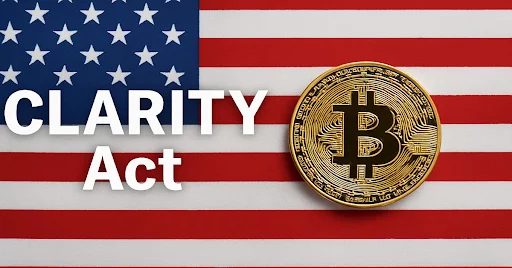
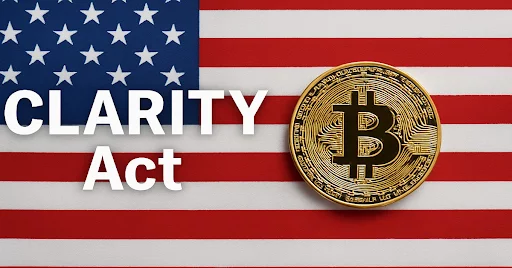
Senator Cynthia Lummis told the Bitcoin 2026 conference that the Lummis CLARITY Act warning centers not just on the 2030 timeline but on a structural argument: the current simultaneous alignment between the House, Senate, and White House on crypto legislation is genuinely rare in Washington and will not persist indefinitely if the May markup window is missed.
Summary
- Lummis said the House passed the CLARITY Act, the Senate Agriculture Committee cleared it, and the White House supports it, a tri-branch alignment she described as unusual and fragile in a midterm election year.
- The bill would permanently convert the March 2026 joint SEC-CFTC commodity classification of Bitcoin, Ethereum, and XRP into federal statute, removing the risk of a future regulatory reversal under a different administration.
- Lummis said key provisions are almost 99% resolved and the earliest possible markup is the week of May 11, after the Senate returns from its upcoming weeklong recess.
Lummis CLARITY Act remarks at the Bitcoin 2026 Conference in Las Vegas on April 27 moved beyond the 2030 timeline to make a structural argument about political conditions. Lummis told attendees that the current moment is defined by a rare coincidence: the House has already passed the CLARITY Act 294 to 134, the Senate Agriculture Committee has cleared its version, and the White House under Trump has publicly backed the bill as a national priority. “This kind of support is rare in Washington and may not last long,” Lummis said, framing the political window as the most consequential variable rather than the bill’s content, which she said is “almost 99% sorted out.”
Lummis CLARITY Act Case Rests on Political Alignment, Not Just Timing
The structural argument Lummis is making is distinct from the 2030 deadline warning. It is not only that the next Congress might not prioritize the bill. It is that the specific combination of a crypto-aligned House majority, a Senate Banking Committee with sufficient Republican votes, an SEC chair who has publicly said the agency is ready to implement the legislation, and a White House that has called the bill a national security priority does not assemble automatically and does not hold together indefinitely in an election cycle. A House flip in November, a shift in Senate committee composition, or a change in executive branch priorities could disassemble that alignment and require the industry to start from scratch under a new Congress with different incentive structures. As crypto.news reported, Lummis first issued the public 2030 warning on April 10 with an X post reading “This is our last chance to pass the Clarity Act until at least 2030. We can’t afford to surrender America’s financial future,” but the Bitcoin 2026 appearance adds the political alignment dimension: it is not just about the calendar but about whether this specific configuration of institutional will can be maintained.
What Permanent Legislative Status Would Mean for XRP, Bitcoin, and Ethereum
The permanent legislative outcome Lummis is arguing for would convert the March 17, 2026 joint SEC-CFTC classification of XRP, Bitcoin, and Ethereum as digital commodities from a regulatory determination into binding federal statute. As crypto.news documented, the March joint taxonomy named 16 digital assets as digital commodities, representing approximately 78 to 80% of total crypto market cap. But that taxonomy is an executive action, subject to reversal by a future SEC chair or shift in White House priorities without any Congressional action required. The CLARITY Act would prevent that by writing the commodity classification into law. Standard Chartered has set an $8 XRP target contingent on the bill passing. JPMorgan has called midyear passage a positive catalyst for digital assets broadly. As crypto.news tracked, with the Warsh confirmation now resolved and the Banking Committee’s most pressing competing obligation removed, a May markup is structurally possible but requires Chairman Tim Scott to formally notice the bill for action and release the final text 48 hours before any committee vote.
Why the Political Alignment Argument Is the Strongest Case for Urgency
The political alignment case is analytically more persuasive than the calendar case alone, because it explains why previous deadline misses did not produce the same consequence. In January, the deadline was missed because of stablecoin yield disputes. In April, the deadline was missed because the Warsh confirmation consumed the calendar. In both cases, the underlying conditions were still favorable: the White House still supported the bill, the Senate Republican majority was still intact, and the House text was still alive. If the May window is missed and the midterms change the political configuration, the conditions themselves change, not just the timeline. As crypto.news noted, Mike Novogratz said on a podcast this week that the bill “probably gets done in May,” but added explicitly that the political will behind it depends on the same tri-branch alignment Lummis described. Galaxy Research puts overall passage odds at 50-50 or lower for 2026.
Lummis chairs the Senate Banking Subcommittee on Digital Assets, chairs the BITCOIN Act effort, and has announced she will not seek re-election, making her one of the few senators with no personal electoral incentive to delay action on the bill.
Crypto World
Nigel Farage faces standards probe over $6.7 million gift from Tether billionaire Christopher Harborne
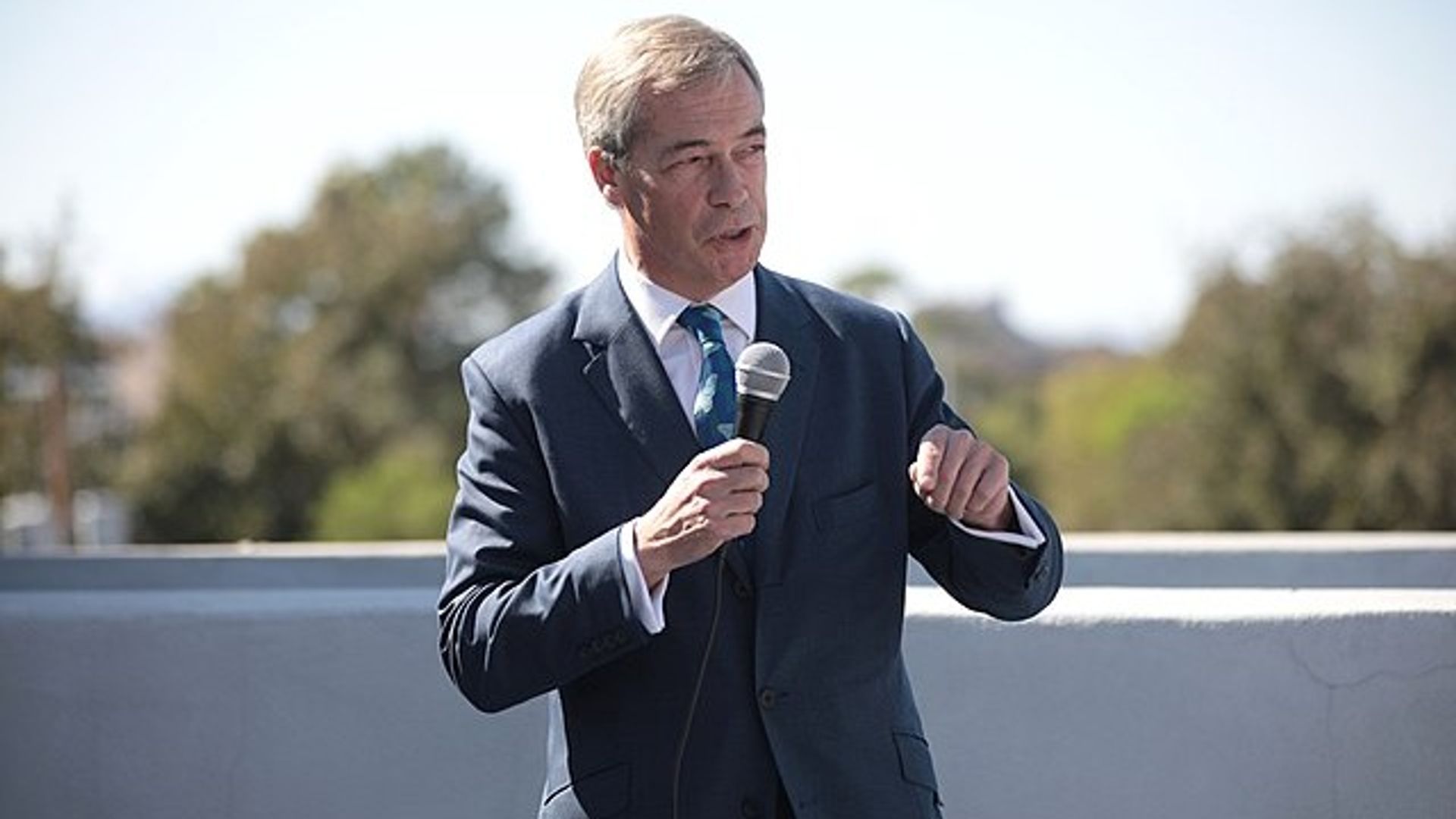
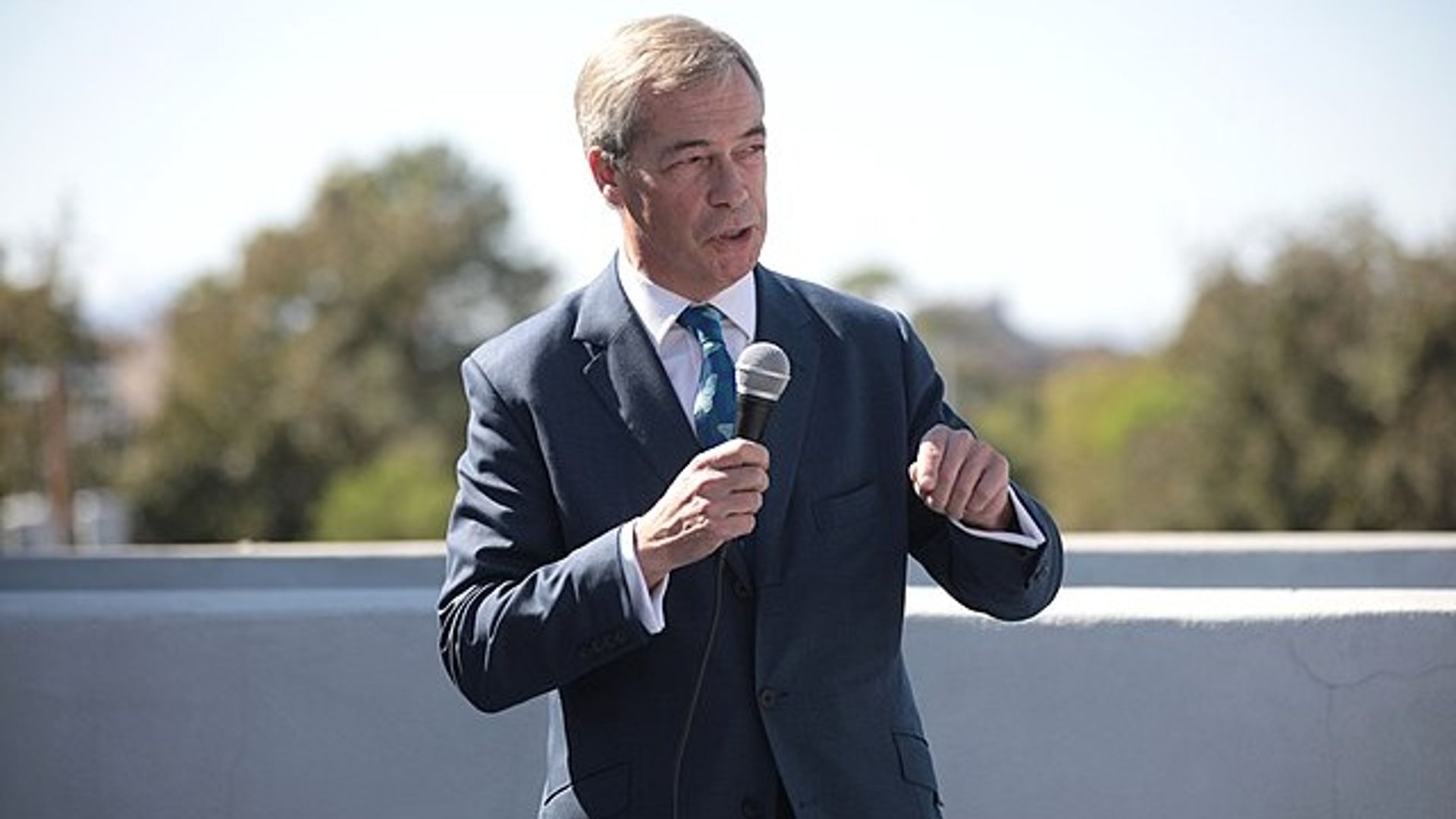
Reform UK leader Nigel Farage received about £5 million (around $6.7 million) from crypto billionaire Christopher Harborne before announcing his run for the Clacton seat in 2024, The Guardian reported Wednesday.
The Conservatives have referred him to the Parliamentary Standards Commissioner, while Labour has also accused him of breaking House of Commons rules.
Farage confirmed the gift in an interview with the Daily Telegraph, saying it was meant to keep him “safe and secure for the rest of my life” after a milkshake was thrown at him in 2019 and a firebomb attack on his home last year.
Harborne, a Thailand-based businessman with a 12% stake in stablecoin issuer Tether, made the payment in 2024. Farage announced his Clacton candidacy in early June last year and won the seat in July.
A Reform UK spokesman called the payment a “personal unconditional gift” given before Farage was elected and said his decision to stand as an MP was “entirely unrelated.”
The spokesman, the report added, said “We are confident everything has been declared in accordance with the rules.”
The Commons code of conduct requires new MPs to register benefits received in the 12 months before their election, and says any benefit should be registered if there is doubt. Reform says the gift falls under the exemption for purely personal gifts.
The country’s main opposition Conservative Party wrote to Parliamentary Standards Commissioner Daniel Greenberg asking him to examine whether any of the funds were used to support political activity rather than security. Labour chair Anna Turley said Farage “appears to have broken the rules again.”
U.K. crypto donations
Harborne gave Reform £9 million, then worth around $12 million, late last year in the largest single donation to a U.K. political party from a living person on record.
Earlier this month, BitMEX co-founder Ben Delo said in an op-ed he had given Reform £4 million ($5.1 million) since the start of the year.
The U.K. government imposed an immediate moratorium on crypto donations to political parties in March, citing the Rycroft review’s warning that digital assets could be used to channel foreign money into U.K. politics.
The ban covers donations of any size and will be written into the Representation of the People Bill, with criminal penalties for non-compliance.
That same month, Farage invested £215,000 ($286,000) in Stack BTC, a London-listed bitcoin treasury company chaired by former Chancellor Kwasi Kwarteng, taking a 6.31% stake through his investment vehicle Thorn In The Side.

Global payments giant Visa has expanded its stablecoin settlement pilot to include Polygon and four other blockchain networks, signaling continued experimentation with crypto-based payment infrastructure.
The pilot, launched by Visa in 2023, allows partners to settle transactions using stablecoins rather than traditional banking rails. Newly supported networks include Polygon, Base, the Canton Network, Arc and Tempo. They join existing supported chains such as Ethereum, Solana, Stellar and Avalanche.
The expansion comes as the program has reached an annualized settlement run rate of roughly $7 billion, growing about 50% quarter over quarter, according to Visa. Despite that growth, volume remains small compared to the company’s core payments business.
According to Visa, the initiative is designed to evaluate whether stablecoins can offer faster settlement, round-the-clock availability and efficiencies in cross-border payments.

Source: Cointelegraph on X
Visa has been increasing its focus on stablecoin-based settlement. In March, the company expanded its partnership with Bridge, a subsidiary of Stripe, to support a global card program that enables stablecoin-linked payments.
Related: Visa deepens blockchain push with Tempo validator node launch
Stablecoin payments race heats up
The growing focus on stablecoin settlement comes as competitors such as Mastercard step up activity in the sector, including enabling stablecoin-linked card spending in the United States through integrations with wallets like MetaMask.
On Wednesday, payments software provider Modern Treasury said it integrated with Polygon to help businesses move stablecoin payments faster, adding to the growing push into blockchain-based settlement. The San Francisco-based fintech acquired stablecoin and fiat payment platform Beam in October.
In the United States, momentum has also been shaped by the passage of the GENIUS Act, which establishes clearer regulatory standards for payment stablecoins.
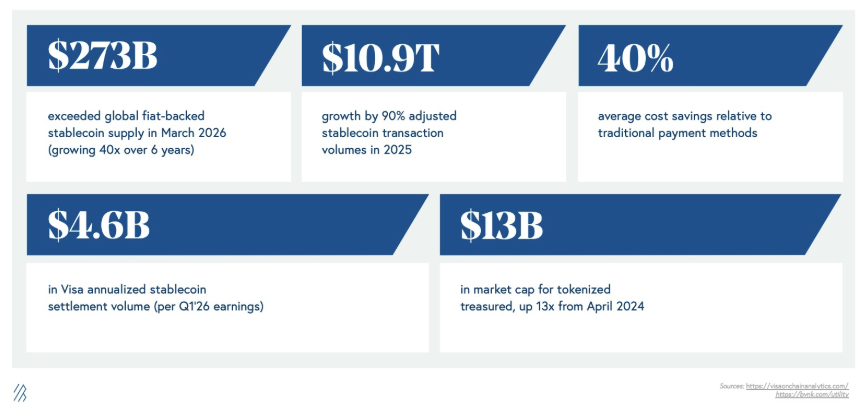
Key stablecoin statistics and average cost savings relative to traditional payments. Source: Bessemer Venture Partners
As regulatory clarity improves, both crypto-native companies and fintechs are increasingly competing to build and control the infrastructure underpinning stablecoin payments, particularly the settlement layer that moves funds between institutions. However, broader policy questions, including whether stablecoins can offer yield, are still being debated in a proposed US market structure bill, which has so far stalled.
The total value of stablecoins in circulation has surpassed $320 billion, increasing nearly 150% since early 2024, according to DeFiLlama data.
Related: Polymarket drops USDC.e for USDC-backed token in exchange overhaul
The crypto trading landscape is quickly shifting, with automated AI trading bots now taking the central stage. Unlike earlier, when investors had to manually crunch market numbers and sometimes trade with emotions, AI Bots are accurate, quick, and very convenient.
Just recently, AiTradeBtc launched their new AI trading Bot. The company says its major target is the growing number of digital asset investors seeking not just the convenience of AI market analysis but also the simplicity of fully automated transactions. Now, every user can trade top cryptos like BTC, SOL, XRP, SUI, USDC, and BNB in just a few clicks. AiTradeBtc offers accuracy, speed, and advanced risk analysis features that simplify trading and help minimize hidden risks.
How To Start Crypto Trading With AiTradeBtc in a Few Simple Steps
Unlike earlier versions of AI trading tools, AiTradeBtc’s starting process is very simple;
- New users who register on the platform will receive a $100 welcome bonus and earn a stable $2 daily return.
- A User Trial Benefit Program is offered where new traders can test the platform’s performance while earning real daily rewards.
- And finally, investors get access to various AI trading programs that analyze real market data in a matter of seconds and execute transactions without delay.
- For mobile users, AiTradeBtc goes further to offer a simple all-in-one App, where they can trade, monitor every process, and transact on the go.
When asked why it designed the AiTradeBtc platform, the company pointed to the growing need for AI crypto trading Bots that everyone can access, not just experts. Even with the 2024-2026 boom in digital asset adoption, first-time investors struggled to find trusted help and make sense of complex market dynamics. That all changes with the AiTradeBtc automated bot; the system’s AI algorithms are taking over the complex part of trading and allowing users to transact with minimal manual effort. Immediately after the easy onboarding, traders report a streamlined experience from deposits, choosing trading programs, all the way to withdrawals.
The launch of AiTradeBtc also coincides with a time of what is named as an AI-assisted ‘financial revolution’. As seen in recent trends, formally rigid financial institutions are also easing into the reality of an AI-led future. They are increasing their spending on building AI infrastructure in order to keep up with faster markets and beat obsolescence. As it would be predicted, crypto trading is following in the same direction, only faster, with automated AI Bots now saving traders from hours of being glued to their screens crunching numbers.
In practice, AiTradeBtc is eliminating the anxiety of sufficient experience by ew automated crypto traders. Iitially one would need proper training on market dynamics, on-chain activity, and price movements, taking weeks if not months of their time dealing with a lot of mind-wrecking graphs. That all ends as AI tools like AiTradeBtc deal with all that boring stuff.
Imagine millions of signals and terabytes of live data in the background that leaves traders to only deal with the current transaction; that is what AI Bots offer. And this perfectly fits the needs of non-expert traders and busy individuals. There is also the aspect of multiple strategies that provide personalized trading services. When the market change i an instance, so do the strategies that AiTradeBtc offers; all based on real-time market information.
Online investment risks are among the headaches investors have had to endure in the past, and which have created caution when it comes to participation in automated crypto trading. Many have been ‘bitten’ once or twice. But the AiTradeBtc website clearly shows how its AI algorithms run possible risk scenarios in the background. By AI Bots eliminating that burden, they have changed automated crypto trading from an expert-only game to a levelled field for all.
From the starter plan for newbies running for a day or two, to the more advanced trading programs like the Financing rate arbitrage strategy, every deposit is deployed through AI-assisted strategies that provide consistency across different market conditions. When you don’t have to worry about the tiny details or the hidden risks, trading becomes a 24/7 fun experience.
What You Need to Know About AiTradeBtc
In a nutshell, AiTradeBtc is an AI Trade Bot built to strike a balance between growing participation in automated digital trading and smart risk management. One of the company’s goals was to simplify the initial complexities of the digital trading market, and the website shows it achieved this goal perfectly.
In addition to its fully encrypted ecosystem, AiTradeBtc’s website shows a transparent and fully compliant investment platform. Its operations are monitored closely from its headquarters based in the UK, to maintain a trusted financial ecosystem that changes how remote crypto trading works. AiTradeBtc aims to fully embrace the inevitable shift towards AI automated digital trading by increasing accessibility and eliminating the tiresome data analysis process for all traders.
The post AiTradeBtc Introduces AI-Driven Tools to Support Crypto Trading in 2026 appeared first on BeInCrypto.
NYSE Arca submitted a proposed amendment to Rule 8.201-E to the SEC on April 27, naming XRP alongside Bitcoin, Ethereum, and Solana as eligible assets for commodity-based trust shares, in a legally reviewed filing that requires trusts to hold at least 85% of net asset value in qualifying digital assets.
Summary
- The filing does not formally classify XRP as a commodity under federal law, but names it as an example of an eligible asset under the exchange’s updated generic listing standards for commodity-based trust products.
- Qualifying assets are those that underlie futures contracts traded on designated markets for at least six months and are associated with existing exchange-traded products, a bar Bitcoin, Ethereum, Solana, and XRP all meet.
- The SEC has opened the proposal for public comment and can approve, reject, or open further proceedings, with the comment window expected to run 21 to 45 days from the April 27 notice.
NYSE XRP news landed on April 27 when NYSE Arca submitted a proposed amendment to Rule 8.201-E, the exchange’s generic listing framework for commodity-based trust shares, naming XRP as one of four digital assets eligible for commodity trust products under a new 85% portfolio concentration threshold. The SEC has since opened the proposal for public comment. The filing does not make a formal legal determination classifying XRP as a commodity. It identifies XRP as an example of an asset that could qualify because XRP-based futures contracts have traded on designated markets for more than six months and XRP is already associated with exchange-traded products providing significant market exposure.
NYSE XRP Rule Amendment Sets an 85% Eligibility Threshold for Commodity Trust Listings
As Yahoo Finance reported, the 85% threshold means a trust must hold at least 85% of its net asset value in assets that already satisfy NYSE Arca’s existing eligibility criteria, with up to 15% permitted in non-qualifying holdings. The filing gives a concrete example: a trust holding 95% across Bitcoin, Ethereum, Solana, and XRP would pass, while a trust holding Bitcoin alongside OTC call options on a Bitcoin ETF where the qualifying exposure falls to 71% would fail. Sponsors would be required to monitor the 85% threshold daily and notify NYSE Arca immediately upon falling out of compliance. The filing also explicitly excludes non-fungible assets and collectibles from the commodity definition, closing the generic listing route for those products. The SEC published the filing and invited public comment before issuing any final decision, with the outcome subject to the standard Securities Exchange Act review procedures. As crypto.news reported, XRP was already named as one of 16 digital commodities in the joint SEC and CFTC taxonomy issued on March 17, 2026, making the NYSE Arca filing consistent with and building on that prior regulatory classification rather than establishing a new one.
What the Filing Means for XRP’s Regulatory Standing
The significance of the filing is practical rather than definitional. NYSE Arca naming XRP explicitly in a generic listing standard submitted to the SEC is a legally reviewed institutional action, not analyst commentary. As crypto.news documented, the March 2026 joint SEC-CFTC classification of XRP as a digital commodity already placed it on the same regulatory footing as Bitcoin and Ethereum for purposes of exchange-traded product approvals and derivatives oversight, with Coinbase subsequently filing to launch Trade at Settlement for XRP futures on May 1 in direct response to that commodity status. The NYSE Arca amendment extends that framework by embedding XRP into the exchange’s generic listing standards for commodity trust products, which compresses the timeline for future XRP-linked trust product approvals to the same streamlined track that Bitcoin and Ethereum commodity trust products now use.
How This Fits Into the Broader XRP Institutional Infrastructure Build
As crypto.news tracked, T. Rowe Price amended its Active Crypto ETF filing on April 29, naming XRP alongside Bitcoin, Ethereum, and Solana as potential holdings in a fund targeting an SEC-listed launch very soon, with Bloomberg ETF analyst Eric Balchunas describing the filing as having reached its third amendment with a launch “likely very soon.” The combination of the March 17 joint commodity taxonomy, the NYSE Arca Rule 8.201-E amendment, the Coinbase TAS futures launch, and the T. Rowe Price filing represents four separate institutional layers all treating XRP as a commodity-grade asset within a three-week window, each building on the prior action without any single event constituting a definitive Congressional classification under the CLARITY Act, which would convert the current regulatory treatment into permanent federal law.
The NYSE Arca proposal is under review by the SEC with public comment open. The filing’s formal effect on XRP’s commodity classification depends on whether the CLARITY Act passes in May, which would convert the current regulatory treatment into binding federal statute.

Gorton pub staff accused of ‘deliberate attempt to hinder police investigation’ and being ‘involved in serious crime’

In five charts – How UAE's exit could affect Opec's influence over the oil price
Realmint launches to give retail investors a smarter way into RWAs

Manchester United reach agreement with Casemiro over contract clause amid transfer speculation

US brings back mandatory military draft registration

Steven Gerrard disagrees with Gary Neville over ‘shock’ Chelsea and Arsenal claim | Football


-

 Tech2 days ago
Register Renaming | Hackaday
-

 Fashion5 days ago
Weekend Open Thread – Corporette.com
-
 Crypto World4 days ago
Hyperliquid $HYPE Rally Builds Momentum as AI Sector Enters Prove-It Phase
-

 Politics7 days ago
Making troops accountable for war crimes threatens US alliance, ex-SAS colonel warns
-

 Business6 days ago
Patterson-UTI Energy, Inc. (PTEN) Q1 2026 Earnings Call Transcript
-
 Sports3 days ago
IPL 2026: Ruturaj Gaikwad registers slowest fifty of the season, enters all-time unwanted list | Cricket News
-

 Politics2 days ago
Drax board avoid their own AGM, accused of greenwashing & environmental racism
-

 Politics7 days ago
‘Iran is still a nuclear threat’
-

 NewsBeat3 days ago
LK Bennett closes all stores after entering administration
-
 Sports7 days ago
Tim Bradley names the current best in the world: “Better than Inoue and Usyk”
-

 Crypto World5 days ago
Michael Saylor says BTC winter is over. Market analyst disagrees, says bitcoin was in a pullback
-

 Fashion20 hours ago
Kylie Jenner’s KHY Enters a New Era with ‘Born in LA’
-
 Entertainment4 days ago
Mariah Carey Slams Deposition Claims In Brother’s Lawsuit
-
Entertainment6 days ago
Michael B. Jordan and Austin Butler's “Miami Vice” movie will bring the action back to the '80s
-
Business7 days ago
Altimmune prices $225 million public offering at $3 per share
-
Entertainment6 days ago
Russell Brand Had Sex With 16 Year Old When He Was 30
-
Crypto World6 days ago
Is Algorand One of the Few Quantum-Resistant Blockchains? Here’s What the Data Shows
-

 Business20 hours ago
Most Commercial Energy Audits Miss the Real Losses
-
 NewsBeat5 days ago
Trump threatens to review UK’s claim to Falkland Islands and punish Nato allies over Iran war disagreement
-

 Business7 days ago
SL Green Realty: Dividend Cut And Record Leasing Fuel Their Potential Recovery
You must be logged in to post a comment Login