Connect with us
DAPA Banner

Business

UAE quits OPEC after 59 years as experts warn other members may follow

Published

on

UAE quits OPEC after 59 years as experts warn other members may follow

The United Arab Emirates (UAE) announced Tuesday it would quit membership in the Organization of Petroleum Exporting Countries (OPEC) and OPEC+. It comes after 59 years at the club. But it could be good news for the world in the long run, experts say.

To understand what happened, it’s important to know that OPEC, which is dominated by Saudi Arabia, is all about restricting crude oil output via quotas to raise energy prices, Marc Chandler, chief market strategist at Bannockburn Capital Markets and an expert on geopolitics, told FOX Business, “The cartel producers discipline the member countries to produce only what the quotas allow and try to get a higher oil price for all.”

Advertisement

Soon after the news from the UAE, some media outlets were calling the change a win for President Donald Trump, who has long opposed OPEC’s efforts to keep energy prices high. Quitting OPEC could also be beneficial for the UAE, also known as the Emirates. 

UAE EXITS OPEC AND OPEC+, SEEKING OUTPUT FLEXIBILITY AS GLOBAL ENERGY MARKETS TIGHTEN

The Emirati flag fluttering in Abu Dhabi against a clear sky

The Emirati flag flutters in Abu Dhabi on Jan. 23, 2026. (Giuseppe Cacace/AFP via Getty Images)

“Outside of the cartel, the Emirates will be able to produce more oil,” Max Pyziur, research director at Energy Policy Research Foundation, told FOX Business. “It makes sense that they would want to break away.”

Specifically, the UAE can now increase its daily oil output. Before the war between the U.S. and Israel against Iran, the Emirates produced 3.6 million barrels of oil a day, according to recent data from the International Energy Agency. But it now plans to increase output to as much as 5 million barrels a day in 2027.

Advertisement

Another part of the UAE leaving the cartel is that the country has been using its own 249-mile-long pipeline to bypass the Strait of Hormuz, which has been difficult to pass since the war began. The pipeline gets the oil to the Gulf of Oman, Chandler says. “If the strait is reopened and the UAE has a lot to rebuild, it will sell more oil and not linger under the thumb of OPEC.”

Another reason for the Emirates leaving OPEC is the tension between Saudi Arabia, which dominates the oil quota system, and the UAE. “The two have been at loggerheads for a while,” Chandler says. Notably, the two countries have widely differing views about Yemen. On the Saudi view, Yemen is a possible threat as well as a potential buffer, while the UAE seeks to influence Yemen using proxies.

LARRY KUDLOW: UNCONDITIONAL DICTATION

U.S. President Donald Trump speaking at a business forum in Abu Dhabi

President Donald Trump attends a business forum at Qasr Al Watan during the final stop of his Gulf visit in Abu Dhabi, United Arab Emirates, on May 16, 2025. (Amr Alfiky/Reuters)

On Tuesday, Brent Crude Oil was trading at $111 per barrel. That means the extra 1.4 million barrels the UAE is planning could provide much-needed cash to help repair the damage from the recent Iranian attacks. “The repair bill could be large for the UAE,” Clayton Seigle, senior fellow in the CSIS Energy Security and Climate Change Program, told FOX Business.

Advertisement

Iran has had a big impact on the oil-rich countries in the Middle East. “We can assume that until the war began in late February, many countries thought that the U.S. bases were protective, as you had a U.S. presence,” Chandler says. The evidence is that while Iran did bomb countries such as the UAE, Saudi Arabia, Bahrain, Kuwait and Oman, it also hit U.S. bases across the region. “Now Iran has shown the U.S. bases are a sign of vulnerability,” he said.

The UAE wasn’t the first to quit OPEC. Qatar did the same in 2019. But this change could lead more oil-rich OPEC members to leave the organization. So, who’s next?

OPEC logo in Algiers

OPEC logo is pictured ahead of an informal meeting between members of the Organization of the Petroleum Exporting Countries in Algiers, Algeria, Sept. 28, 2016. (Ramzi Boudina/Reuters)

 CLICK HERE TO GET FOX BUSINESS ON THE GO

Iraq will probably be thinking that if rich UAE is quitting, then why should we be left holding the bag,” Seigle says. “The big risk is the domino effect with more countries following the UAE out the door, and that would weigh on medium-term oil prices.

Advertisement

Ultimately, analysts say a collapse of OPEC could lead to far lower oil prices worldwide.

Continue Reading
Click to comment

You must be logged in to post a comment Login

Leave a Reply

Business

Big US tech stocks swing as investors probe AI spend

Published

on

Big US tech stocks swing as investors probe AI spend

Meta, Amazon, Alphabet, and Microsoft all reported their financial performance at the same time on Wednesday

Continue Reading

Business

How the Iran Conflict is Undermining South Asia’s Economic Stability

Published

on

How the Iran Conflict is Undermining South Asia’s Economic Stability

By TBN Editorial Staff April 29, 2026

For decades, the economic heartbeat of South Asia has been inextricably linked to the pulse of the Persian Gulf. From the crude oil that fuels its growing industries to the billions in remittances that prop up its foreign exchange reserves, the region has long been the primary beneficiary of Gulf stability.


Key Points

  • Regional markets split: AI-driven optimism has propelled Taiwan, South Korea, and Japan to record highs. India, however, has struggled to keep pace, weighed down by the absence of strong AI-linked stocks.
  • Exporters under strain: Indian exporters face mounting crude-linked input costs. While Western buyers resist price hikes, new contracts are expected to carry increases of 15–30%, raising concerns over client retention.
  • Corporate pressures: Reliance Industries reported an 8% year-on-year profit decline in its oil and gas units. Chairman Mukesh Ambani cited “unprecedented dislocation in global supply chains” as a key factor.
  • Capital flows disrupted: Indian venture capital firms, traditionally reliant on Middle Eastern funding, are seeing negotiations slow. Many are now turning to Europe and Asia to secure new investment.

Now, as the war between the U.S.-Israeli coalition and Iran enters its third month, that dependence has turned into a systemic vulnerability. With the Strait of Hormuz effectively “functionally impaired” and regional output losses estimated by the UNDP to reach as high as $299 billion, South Asia is facing its most severe economic shock since the 1970s energy crisis.

The Energy Blockade: A Continent Paralyzed

The closure of the Strait of Hormuz on March 4, 2026, sent shockwaves through energy markets that South Asian capitals were unprepared to absorb. With roughly 80% of the region’s oil and LNG imports typically transiting this narrow chokepoint, the impact was instantaneous.

In Bangladesh, which relies on imports for 95% of its energy needs, the government has been forced into “survival mode.” Fuel caps and the closure of universities have become the new norm. In India, the government has invoked emergency powers to redirect LNG supplies from industrial users to households, while IT giants like Cognizant and HCLTech have reverted to full work-from-home policies to mitigate the “cafeteria crisis” caused by fuel shortages.

Advertisement

Brent Crude, which surged past $120 per barrel in mid-March, has settled into a volatile range of $105-$110, but for South Asia, the price tag is only half the problem. The physical absence of supply has led to record-high electricity costs and a “grocery supply emergency” as transport fleets sit idle.

The Remittance Rupture: A Human and Fiscal Toll

Perhaps more devastating than the energy crisis is the potential collapse of the labor export model. There are an estimated 6 million Pakistanis and over 5 million Bangladeshis working in the Gulf. As the war intensifies, these workers are no longer just economic assets; they are a massive humanitarian and fiscal liability.

“We are seeing a wave of voluntary and forced returns as contracts are prematurely terminated in sectors like hospitality and domestic work,” says Dr. Shujaat Faruq, Professor of Economics at the Pakistan Institute of Development Economics.

The World Bank projects that South Asian growth will slow to 6.3% in 2026, down from 7% in 2025. This downward revision is driven largely by the expected dip in remittances, which serve as the primary hedge against balance-of-payment crises for nations like Nepal and Sri Lanka.

Advertisement

From Fields to Factories: The Fertilizer Squeeze

The ripple effects have now reached the soil. The Gulf region produces over 30% of the world’s urea, a critical fertilizer for South Asia’s agrarian economies. With production halted at major complexes like Qatar’s Ras Laffan—following Iranian strikes on March 18—fertilizer prices have jumped 31%.

This creates a “toxic confluence” for farmers in India and Pakistan ahead of the next planting cycle. Rising input costs, combined with a 140% surge in LNG spot prices, are making basic food production prohibitively expensive. In some Indian markets, agricultural exports like bananas and rice have stalled due to shipping disruptions, forcing farmers to dump produce locally at a loss while urban consumers face soaring prices.

The Emergence of the “War Economy”

South Asian governments are responding with a mix of desperation and radical innovation.

  • The Four-Day Week: Pakistan and Sri Lanka have officially introduced shortened workweeks to curb fuel consumption.
  • Energy Transition: Analysts suggest the crisis is providing an unintended boost to the renewable sector. In India, IT firms are switching to solar-powered kitchens and electric vehicle fleets to bypass the kerosene-based fuel shortages.
  • Trade Rerouting: With the Red Sea and Suez Canal routes increasingly hazardous due to Houthi involvement, shipping is being diverted around the Cape of Good Hope, adding 15–20 days to transit times and tripling insurance premiums.

The Long Shadow

The UNDP warns that the conflict could push an additional 8.8 million people in South Asia into poverty by the end of the year. While a temporary ceasefire was announced on April 8, maritime traffic remains at 20% of pre-war levels.

For the economies of South Asia, the “narrative of a safe Gulf” has been irreversibly shaken. The lesson of 2026 is clear: when the Middle East catches fire, South Asia feels the burn more intensely than perhaps any other region on earth. The challenge now is not just weathering the current storm, but rebuilding a regional economy that is no longer one blockade away from collapse.

Advertisement

The Iran war is reshaping South Asia’s economic landscape—boosting some East Asian markets, squeezing India’s exporters and conglomerates, redirecting capital flows, and worsening Pakistan’s fuel costs.

Continue Reading

Business

Carvana (CVNA) earnings Q1 2026

Published

on

Carvana (CVNA) earnings Q1 2026

In an aerial view, a sign is posted on the exterior of a Carvana car vending machine on July 19, 2023 in Daly City, California.

Justin Sullivan | Getty Images

Shares of Carvana jumped by as much as 10% in extended trading after the company reported record results during the first quarter that topped Wall Street’s expectations.

Advertisement

Here’s how the company performed in the first quarter, compared with average estimates compiled by LSEG:

  • Earnings per share: $1.69 vs. $1.43 expected
  • Revenue: $6.43 billion vs. $6.08 billion expected

The online used car retailer reported adjusted earnings before interest, taxes, depreciation and amortization of $672 million, and net income of $405 million, up from $373 million a year earlier.

Carvana reported retail sales of 187,393 units, a 40% increase compared with a year earlier. Its revenue was $6.43 billion, up 52% from a year ago.

The company does not release annual guidance but said it expects sequential increase in both retail units sold and adjusted EBITDA during the second quarter, leading to all-time company records on both metrics.

Shares of Carvana, which has a roughly $87 billion market cap, are off 6% in 2026, but are roughly 63% higher over the past year.

Advertisement
Choose CNBC as your preferred source on Google and never miss a moment from the most trusted name in business news.
Continue Reading

Business

US stocks today: Microsoft cloud revenue accelerates as spending growth cools

Published

on

US stocks today: Microsoft cloud revenue accelerates as spending growth cools

Microsoft‘s cloud revenue growth increased in the March quarter while its spending rose less-than-expected as the software giant looks to convince investors that its big bet on artificial intelligence would pay off.

Capital expenditure rose 49% to $31.9 billion in the company’s fiscal third quarter, the company said on Wednesday, compared with Wall Street expectations of $34.90 billion, according to Visible Alpha. Spending had ‌totaled $37.5 billion in ⁠the second ⁠quarter.

The results could ease fears that sluggish adoption of its Copilot 365 assistant for businesses and a heavy reliance on OpenAI may have chipped away Microsoft’s early lead in the AI race.

It may also help justify data-center ⁠spending that ‌has strained cash flows, with major cloud players on track to spend more than $600 billion on AI infrastructure this year.

Advertisement

To sharpen its competitive ⁠edge, Microsoft has aggressively added Anthropic’s technology to its cloud service and products like Copilot amid rising demand for the Claude creator’s models. The expanded AI model options helped the company land on Monday its biggest-ever roll-out of Copilot, covering roughly 743,000 Accenture employees – a majority of the IT firm’s workforce.
Earlier this week, Microsoft also overhauled its OpenAI deal to lock in its 20% cut of the startup’s revenue through 2030 regardless of whether it ‌achieves technological breakthroughs.
But the new arrangement also strips Microsoft of exclusive rights to resell OpenAI’s products on its cloud, just as competition heats up from Alphabet and Amazon.

The e-commerce ⁠giant has already started offering OpenAI’s latest models and Codex coding tool on its cloud.

The move could free up cloud capacity for Microsoft, which has blamed shortages for holding back revenue growth and used that to argue for its massive spending.

Funding those outlays has, however, forced companies to look for ways to cut costs. Microsoft earlier this month rolled out its first employee buyout program in more than five decades.

Amazon and Meta have also announced job cuts affecting thousands of employees.

Advertisement
Continue Reading

Business

Slideshow: Crafting new-age confectionery innovations

Published

on

Slideshow: Crafting new-age confectionery innovations

Manufacturers are tapping into texture, flavor trends to drive product development.

Continue Reading

Business

Universal Music Group N.V. (UNVGY) Q1 2026 Earnings Call Transcript

Published

on

OneWater Marine Inc. (ONEW) Q1 2026 Earnings Call Transcript

Operator

Good evening, and welcome to Universal Music Group’s First Quarter Earnings Call for the period ended March 31, 2026. My name is Gavin and I will be your conference operator today. Your speakers for today’s call will be Sir Lucian Grainge, Chairman and CEO of Universal Music Group; and Matt Ellis, Chief Financial Officer. They will be joined during Q&A by Michael Nash, Chief Digital Officer; and Boyd Muir, Chief Operating Officer. [Operator Instructions]

As a reminder, this call is being recorded. Please also let me remind you that management’s commentary and responses to questions on today’s call may include forward-looking statements, which, by their nature, are uncertain and outside of the company’s control. Although these forward-looking statements are based on management’s current expectations and beliefs, actual results may vary in a material way.

For a discussion of some of the factors that could cause actual results to differ from expected results, please see the Risk Factors section of UMG’s 2025 annual report, which is available on the Investor Relations page of UMG’s website at universalmusic.com. Management’s commentary will also refer to non-IFRS measures on today’s call. Reconciliations are available in the press release on the Investor Relations page of UMG’s website.

Advertisement

Thank you. Sir Lucian, you may begin your conference.

Continue Reading

Business

Extra Space Storage Inc. (EXR) Q1 2026 Earnings Call Transcript

Published

on

OneWater Marine Inc. (ONEW) Q1 2026 Earnings Call Transcript

Q1: 2026-04-28 Earnings Summary

EPS of $1.14 beats by $0.04

 | Revenue of $733.21M (4.09% Y/Y) beats by $5.50M

Extra Space Storage Inc. (EXR) Q1 2026 Earnings Call April 29, 2026 1:00 PM EDT

Company Participants

Jared Conley – Vice President of Financial Planning Analysis
Joseph Margolis – CEO & Director
Jeff Norman – Executive VP & CFO

Advertisement

Conference Call Participants

Michael Goldsmith – UBS Investment Bank, Research Division
Samir Khanal – BofA Securities, Research Division
Brendan Lynch – Barclays Bank PLC, Research Division
Ravi Vaidya – Mizuho Securities USA LLC, Research Division
Eric Wolfe – Citigroup Inc., Research Division
Viktor Fediv – Scotiabank Global Banking and Markets, Research Division
Juan Sanabria – BMO Capital Markets Equity Research
Michael Griffin – Evercore ISI Institutional Equities, Research Division
Ronald Kamdem – Morgan Stanley, Research Division
Todd Thomas – KeyBanc Capital Markets Inc., Research Division
Salil Mehta – Green Street Advisors, LLC, Research Division
Caitlin Burrows – Goldman Sachs Group, Inc., Research Division
Eric Luebchow – Wells Fargo Securities, LLC, Research Division
Michael Mueller – JPMorgan Chase & Co, Research Division

Advertisement

Presentation

Operator

Hello, everyone. Thank you for joining us, and welcome to Extra Space Storage Inc. Q1 2026 Earnings Call. [Operator Instructions]

I will now hand the conference over to Jared Conley, Vice President of Investor Relations. Please go ahead.

Advertisement

Jared Conley
Vice President of Financial Planning Analysis

Thanks, Karen. Welcome to Extra Space Storage’s First Quarter 2026 Earnings Call. In addition to our press release, we have furnished unaudited supplemental financial information on our website.

Please remember that management’s prepared remarks and answers to your questions may contain forward-looking statements as defined in the Private Securities Litigation Reform Act. Actual results could differ materially from those stated or implied by our forward-looking statements due to risks and uncertainties associated with the company’s business. These forward-looking statements are qualified by the cautionary statements contained in the company’s latest filings with the SEC, which we encourage our listeners to review. Forward-looking statements represent management’s estimates as of today, April

Advertisement
Continue Reading

Business

Google parent Alphabet’s cloud unit beats quarterly revenue estimates on strong AI demand

Published

on

Google parent Alphabet's cloud unit beats quarterly revenue estimates on strong AI demand
Alphabet topped Wall Street estimates for quarterly revenue growth at its cloud computing unit on Wednesday, driven by sustained enterprise spending on artificial-intelligence infrastructure.

Shares of the company were up about 4% in extended trading.

Alphabet’s total revenue rose 22% to $109.9 billion in the first quarter, compared with an estimate of $107.2 billion, according to LSEG data.

Revenue at Google Cloud grew 63% to $20 billion in the first quarter ended March, compared with analysts’ ‌average estimate ⁠of a ⁠50.1% increase, according to data compiled by LSEG.

Advertisement

The cloud unit’s backlog nearly doubled quarter on quarter to over $460 billion, the company said.


The third-largest cloud services provider globally, behind Amazon Web Services and Microsoft’s Azure, has continued to land major deals, including expanded AI infrastructure partnerships with Meta and cybersecurity firm Palo Alto Networks.
The results underscore Alphabet’s position as a key beneficiary of a global surge in spending on artificial intelligence, even as investors remain watchful of whether massive outlays ⁠on infrastructure ‌will translate into sustained growth and market share gains. Strong demand for cloud-based AI services continues to outstrip supply across the industry, pushing hyperscalers to accelerate investments in ⁠data centers, advanced chips and networking equipment.

Alphabet, Microsoft, Amazon and Meta are expected to collectively spend well over $600 billion this year to expand AI capacity, as competition intensifies and companies race to secure computing power.

Google Cloud’s performance comes at a time when rivals have delivered mixed signals on growth, helping ease concerns about potential market share losses for Alphabet in the highly competitive cloud market.

At the same time, capacity constraints remain a bottleneck across the sector, limiting providers’ ability to fully capitalize on AI-driven demand ‌despite aggressive spending plans.

Advertisement

Alphabet has also gained traction in its in-house AI efforts. Its Gemini models, including newer iterations rolled out this year, have seen rising adoption across enterprise and consumer applications, strengthening ⁠the company’s position in the AI race.

A partnership to power Apple’s artificial intelligence features, including upgrades to Siri, is expected to significantly expand Google’s reach across a vast global device base.

Alphabet shares have outperformed most Big Tech peers over the past year, supported by growing signs that AI integration is lifting its core search and advertising businesses.

AI-driven features such as AI Overviews and AI Mode continue to boost user engagement, while opening new avenues for monetization. The company has expanded ads within AI-generated responses across multiple markets and said monetization is broadly in line with traditional search.

Advertisement
Continue Reading

Business

United Airlines pilot reports possible drone strike near San Diego airport

Published

on

United Airlines pilot reports possible drone strike near San Diego airport

A United Airlines pilot reported a potential collision with a drone Wednesday morning while approaching its destination at San Diego International Airport, according to a flight audio recording.

The flight, a Boeing 737 that departed from San Francisco, reportedly struck the object at an altitude of roughly 3,000 to 4,000 feet — well above the elevation typically permitted for drones under federal regulations. 

Advertisement

“We hit a drone at around 3,000 feet,” the pilot said, according to a recording with air traffic controllers posted by ATC.com and shared on social media.

He added that the incident occurred as the plane was approaching landing.

WHAT A GOVERNMENT STAKE IN SPIRIT AIRLINES COULD MEAN FOR PASSENGERS AND THE INDUSTRY

United Airlines

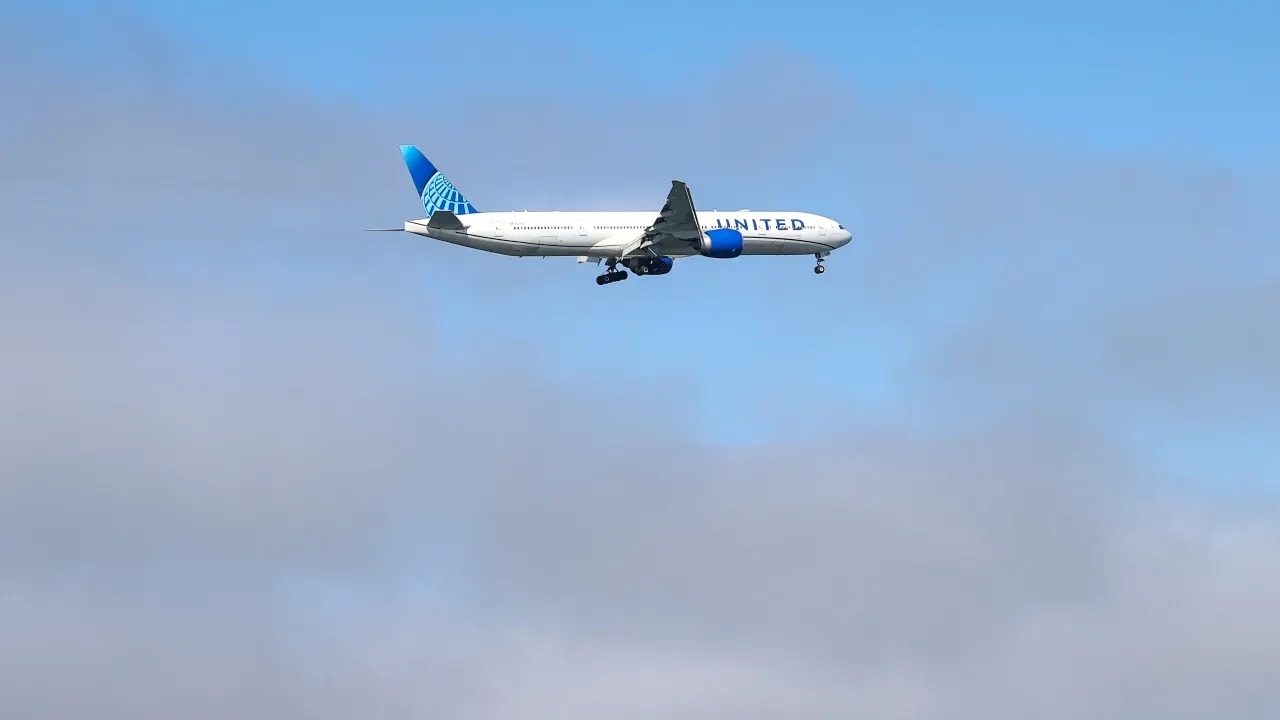
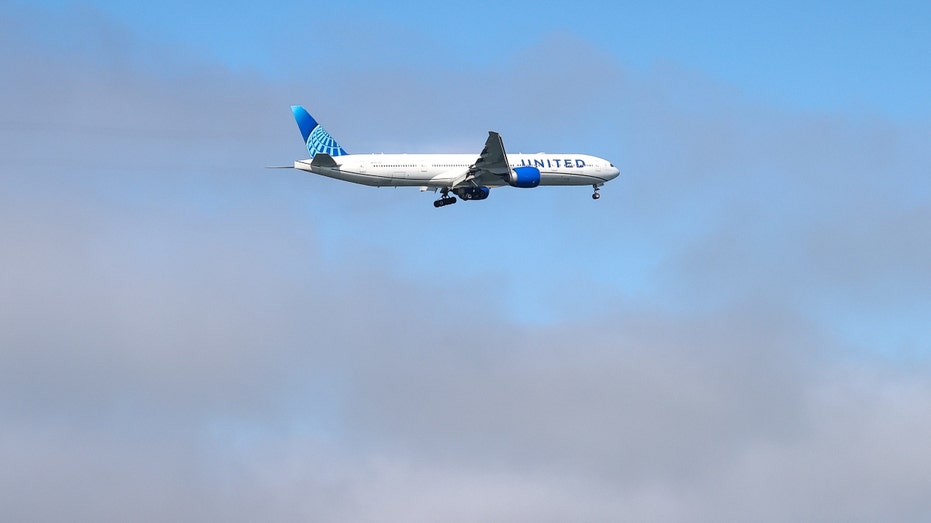
A United Airlines passenger plane flies over the sky near San Francisco, California, United States, on October 7, 2022.  (Tayfun Coskun/Anadolu Agency via Getty Images)

The airline told FOX Business the plane did report a drone encounter, but the company could not confirm whether it struck the device.

Advertisement

“United flight 1980 reported a potential drone prior to arriving in San Diego,” the company said. 

“While approaching San Diego International Airport at about 4,000 feet altitude, the crew of United Airlines Flight 1980 told air traffic control they believed they saw a drone 1,000 feet below them,” the Federal Aviation Administration added in a statement to FOX Business.  

CHEVRON CEO WARNS AVIATION STRAIN COULD WORSEN AS JET FUEL CRUNCH DEEPENS

drone flying over hills

A drone is flying over the hills during sunset. (iStock)

According to the audio recording, the pilot described the object as a very small, red, shiny drone heading west.

Advertisement

The reported collision did not appear to affect the flight, which was carrying 48 passengers and six crew members, the company said.

United Airlines said the flight landed safely and passengers deplaned normally at the gate.

Maintenance crews also found no damage from the reported collision following a thorough inspection of the aircraft.

Ticker Security Last Change Change %
UAL UNITED AIRLINES HOLDINGS INC. 88.62 -1.79 -1.98%

The FAA added that no other nearby pilots reported seeing a drone.

Advertisement

“Air traffic control alerted other pilots but did not receive any additional drone-sighting reports,” the agency said. 

San Francisco International Airport (SFO)

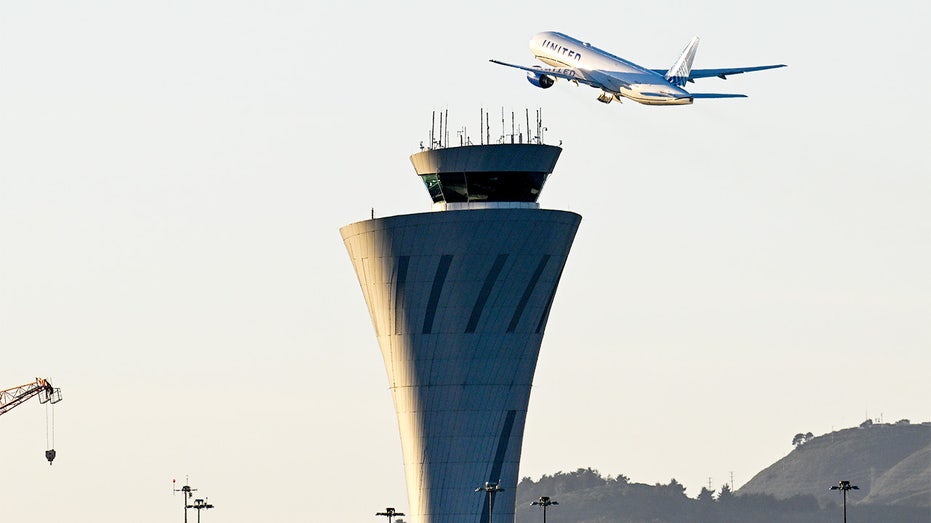
A United Airlines plane takes off from San Francisco International Airport (SFO) in San Francisco, California, United States on March 23, 2026.  (Tayfun Coskun/Anadolu via Getty Images)

GET FOX BUSINESS ON THE GO BY CLICKING HERE

Drone operations, especially near an airport, are strictly regulated by the FAA.

Depending on the location, drones operating without a waiver are prohibited from flying within several miles of an airport, with altitude limits that typically cap operations at just a few hundred feet.

Advertisement
Continue Reading

Business

Postal Realty Trust: Government-Backed Cash Flows, Private Market Returns (NYSE:PSTL)

Published

on

Postal Realty Trust: Government-Backed Cash Flows, Private Market Returns (NYSE:PSTL)

This article was written by

Steven Cress is VP of Quantitative Strategy and Market Data at Seeking Alpha. Steve is also the creator of the platform’s quantitative stock rating system and many of the analytical tools on Seeking Alpha. His contributions form the cornerstone of the Seeking Alpha Quant Rating system, designed to interpret data for investors and offer insights on investment directions, thereby saving valuable time for users. He is also the Founder and Co-Manager of Alpha Picks, a systematic stock recommendation tool designed to help long-term investors create a best-in-class portfolio.Steve is passionate and dedicated to removing emotional biases from investment decisions. Utilizing a data-driven approach, he leverages sophisticated algorithms and technologies to simplify complex, laborious investment research, creating an easy-to-follow, daily updated grading system for stock trading recommendations.Steve was previously the Founder and CEO of CressCap Investment Research until its acquisition by Seeking Alpha in 2018 for its unparalleled quant analysis and market data capabilities. Prior to that, he had also founded the quant hedge fund Cress Capital Management, after spending most of his career running a proprietary trading desk at Morgan Stanley and leading international business development at Northern Trust.With over 30 years of experience in equity research, quantitative strategies, and portfolio management, Steve is well-positioned to speak on a wide range of investment topics.

Analyst’s Disclosure: I/we have no stock, option or similar derivative position in any of the companies mentioned, and no plans to initiate any such positions within the next 72 hours. I wrote this article myself, and it expresses my own opinions. I am not receiving compensation for it. I have no business relationship with any company whose stock is mentioned in this article.

Seeking Alpha’s Disclosure: Past performance is no guarantee of future results. No recommendation or advice is being given that any particular security, portfolio, transaction or investment strategy is suitable for any specific person. The author is not advising you personally concerning the nature, potential, value or suitability of any particular security or other matter. You alone are solely responsible for determining whether any investment, security or strategy, or any product or service, is appropriate or suitable for you based on your investment objectives and personal and financial situation. Steven Cress is the Head of Quantitative Strategy at Seeking Alpha. Any views or opinions expressed herein may not reflect those of Seeking Alpha as a whole. Seeking Alpha is not a licensed securities dealer, broker or US investment adviser or investment bank.

Advertisement
Continue Reading

Trending

Copyright © 2025