LOS ANGELES — Motivational speaker and evangelist Nick Vujicic has directly addressed and debunked widespread online rumors claiming he is battling terminal cancer or has died, issuing a clear and uplifting message that he remains in excellent health and continues his global ministry work.
Nick Vujicic
In a heartfelt video update posted to his official social media channels and YouTube in late April 2026, the 43-year-old Australian-born speaker, born without arms and legs due to tetra-amelia syndrome, looked directly into the camera with his characteristic warmth and humor. “I am healthy. I’m strong,” Vujicic said. “Just had a wonderful time of ministry and family. The news about me being dead is slightly exaggerated.”
The statement came after a surge of false posts, AI-generated images and chain messages flooded platforms like Instagram, Facebook and TikTok claiming Vujicic was in critical condition with stage IV cancer or had already passed away. Several of the hoax posts used emotional language asking for prayers and linked to suspicious websites, a tactic commonly seen in celebrity death hoaxes designed to drive clicks and engagement.
Vujicic’s team and multiple Christian news outlets quickly pushed back against the misinformation. Sources close to his ministry confirmed he has been actively traveling, speaking at events and spending time with his wife Kanae and their four children. He is scheduled to appear at major gatherings including REACH 2026 and continues recording episodes for his “No Limbs, No Limits” podcast.
The rumors appear to be part of a recurring pattern. Vujicic has faced similar false death reports in previous years, a phenomenon that has become increasingly common for high-profile figures in the digital age. This latest wave gained traction in early April when fabricated stories began circulating alongside AI-manipulated images showing him in hospital settings.
Advertisement
In his video response, Vujicic used the moment to turn the negative attention into a positive message of faith and resilience. He encouraged his millions of followers worldwide not to believe everything they read online and to focus instead on truth, gratitude and living with purpose. “We all face challenges,” he said, “but God is faithful. I’m here, I’m grateful, and I’m excited about what’s ahead.”
Vujicic’s story has inspired tens of millions since he first began sharing his journey as a teenager. Born in Melbourne in 1982, he overcame severe bullying, depression and suicidal thoughts to become one of the world’s most sought-after motivational speakers. His books, including “Life Without Limits” and “Unstoppable,” have sold millions of copies, and his TED Talk-style presentations have been viewed hundreds of millions of times.
Despite having no limbs, Vujicic swims, surfs, plays golf and travels extensively to deliver messages of hope, faith and overcoming adversity. His nonprofit organization, Life Without Limbs, and Nick V Ministries focus on evangelism, disability advocacy and helping people discover their God-given potential.
The latest rumors surfaced amid a broader wave of celebrity health misinformation. Similar false reports have targeted other public figures, highlighting the speed and reach of social media hoaxes. Fact-checking organizations and Vujicic’s team urged people to verify information through official channels before sharing.
Advertisement
Vujicic’s wife, Kanae, also addressed the rumors briefly on social media, posting a recent family photo with the caption “We are all doing great, thank you for your prayers and love.” The couple, married since 2012, frequently share glimpses of their family life, which includes sons Kiyoshi and Dejan and twin daughters Ellie and Olivia.
Christian leaders and fellow speakers have rallied around Vujicic. Many used the moment to warn about the dangers of spreading unverified information, especially regarding someone whose ministry centers on hope and encouragement. “Nick has turned his limitations into a powerful platform for good,” one prominent pastor wrote. “Let’s honor that by speaking truth and praying for him rather than amplifying falsehoods.”
Vujicic has long been open about his physical challenges and the daily realities of living without limbs. In recent interviews, he has discussed the emotional and practical aspects of his condition while emphasizing gratitude and faith. His transparency has endeared him to audiences across cultures and faiths.
The motivational icon continues to maintain a busy schedule. Upcoming appearances include large youth events, corporate leadership conferences and international ministry trips. His team confirmed that no health issues are impacting his commitments and that he remains as active as ever.
Advertisement
For his global community of supporters, the false rumors provided an opportunity to reaffirm their connection with Vujicic. Thousands of encouraging messages poured in after his video response, with many sharing personal stories of how his testimony impacted their lives during difficult times.
As misinformation continues to challenge public figures, Vujicic’s calm and faith-filled response serves as a model. Rather than expressing frustration, he redirected the conversation toward hope, gratitude and the importance of discernment in the digital age.
Vujicic’s message remains consistent: limitations do not define a person. His life stands as living proof that purpose, joy and impact are possible regardless of circumstances. The latest episode of debunked rumors only reinforces the power of his story and the enduring strength of his platform.
While the internet may continue to circulate falsehoods, Nick Vujicic is alive, healthy and more committed than ever to inspiring others. His words offer comfort not just to his supporters but to anyone facing their own battles: the news of hardship or death is often greatly exaggerated, but hope and faith are very much alive.
For decades, the economic heartbeat of South Asia has been inextricably linked to the pulse of the Persian Gulf. From the crude oil that fuels its growing industries to the billions in remittances that prop up its foreign exchange reserves, the region has long been the primary beneficiary of Gulf stability.
Key Points
Regional markets split: AI-driven optimism has propelled Taiwan, South Korea, and Japan to record highs. India, however, has struggled to keep pace, weighed down by the absence of strong AI-linked stocks.
Exporters under strain: Indian exporters face mounting crude-linked input costs. While Western buyers resist price hikes, new contracts are expected to carry increases of 15–30%, raising concerns over client retention.
Corporate pressures: Reliance Industries reported an 8% year-on-year profit decline in its oil and gas units. Chairman Mukesh Ambani cited “unprecedented dislocation in global supply chains” as a key factor.
Capital flows disrupted: Indian venture capital firms, traditionally reliant on Middle Eastern funding, are seeing negotiations slow. Many are now turning to Europe and Asia to secure new investment.
Now, as the war between the U.S.-Israeli coalition and Iran enters its third month, that dependence has turned into a systemic vulnerability. With the Strait of Hormuz effectively “functionally impaired” and regional output losses estimated by the UNDP to reach as high as $299 billion, South Asia is facing its most severe economic shock since the 1970s energy crisis.
The Energy Blockade: A Continent Paralyzed
The closure of the Strait of Hormuz on March 4, 2026, sent shockwaves through energy markets that South Asian capitals were unprepared to absorb. With roughly 80% of the region’s oil and LNG imports typically transiting this narrow chokepoint, the impact was instantaneous.
In Bangladesh, which relies on imports for 95% of its energy needs, the government has been forced into “survival mode.” Fuel caps and the closure of universities have become the new norm. In India, the government has invoked emergency powers to redirect LNG supplies from industrial users to households, while IT giants like Cognizant and HCLTech have reverted to full work-from-home policies to mitigate the “cafeteria crisis” caused by fuel shortages.
Advertisement
Brent Crude, which surged past $120 per barrel in mid-March, has settled into a volatile range of $105-$110, but for South Asia, the price tag is only half the problem. The physical absence of supply has led to record-high electricity costs and a “grocery supply emergency” as transport fleets sit idle.
The Remittance Rupture: A Human and Fiscal Toll
Perhaps more devastating than the energy crisis is the potential collapse of the labor export model. There are an estimated 6 million Pakistanis and over 5 million Bangladeshis working in the Gulf. As the war intensifies, these workers are no longer just economic assets; they are a massive humanitarian and fiscal liability.
“We are seeing a wave of voluntary and forced returns as contracts are prematurely terminated in sectors like hospitality and domestic work,” says Dr. Shujaat Faruq, Professor of Economics at the Pakistan Institute of Development Economics.
The World Bank projects that South Asian growth will slow to 6.3% in 2026, down from 7% in 2025. This downward revision is driven largely by the expected dip in remittances, which serve as the primary hedge against balance-of-payment crises for nations like Nepal and Sri Lanka.
Advertisement
From Fields to Factories: The Fertilizer Squeeze
The ripple effects have now reached the soil. The Gulf region produces over 30% of the world’s urea, a critical fertilizer for South Asia’s agrarian economies. With production halted at major complexes like Qatar’s Ras Laffan—following Iranian strikes on March 18—fertilizer prices have jumped 31%.
This creates a “toxic confluence” for farmers in India and Pakistan ahead of the next planting cycle. Rising input costs, combined with a 140% surge in LNG spot prices, are making basic food production prohibitively expensive. In some Indian markets, agricultural exports like bananas and rice have stalled due to shipping disruptions, forcing farmers to dump produce locally at a loss while urban consumers face soaring prices.
The Emergence of the “War Economy”
South Asian governments are responding with a mix of desperation and radical innovation.
The Four-Day Week: Pakistan and Sri Lanka have officially introduced shortened workweeks to curb fuel consumption.
Energy Transition: Analysts suggest the crisis is providing an unintended boost to the renewable sector. In India, IT firms are switching to solar-powered kitchens and electric vehicle fleets to bypass the kerosene-based fuel shortages.
Trade Rerouting: With the Red Sea and Suez Canal routes increasingly hazardous due to Houthi involvement, shipping is being diverted around the Cape of Good Hope, adding 15–20 days to transit times and tripling insurance premiums.
The Long Shadow
The UNDP warns that the conflict could push an additional 8.8 million people in South Asia into poverty by the end of the year. While a temporary ceasefire was announced on April 8, maritime traffic remains at 20% of pre-war levels.
For the economies of South Asia, the “narrative of a safe Gulf” has been irreversibly shaken. The lesson of 2026 is clear: when the Middle East catches fire, South Asia feels the burn more intensely than perhaps any other region on earth. The challenge now is not just weathering the current storm, but rebuilding a regional economy that is no longer one blockade away from collapse.
Advertisement
The Iran war is reshaping South Asia’s economic landscape—boosting some East Asian markets, squeezing India’s exporters and conglomerates, redirecting capital flows, and worsening Pakistan’s fuel costs.
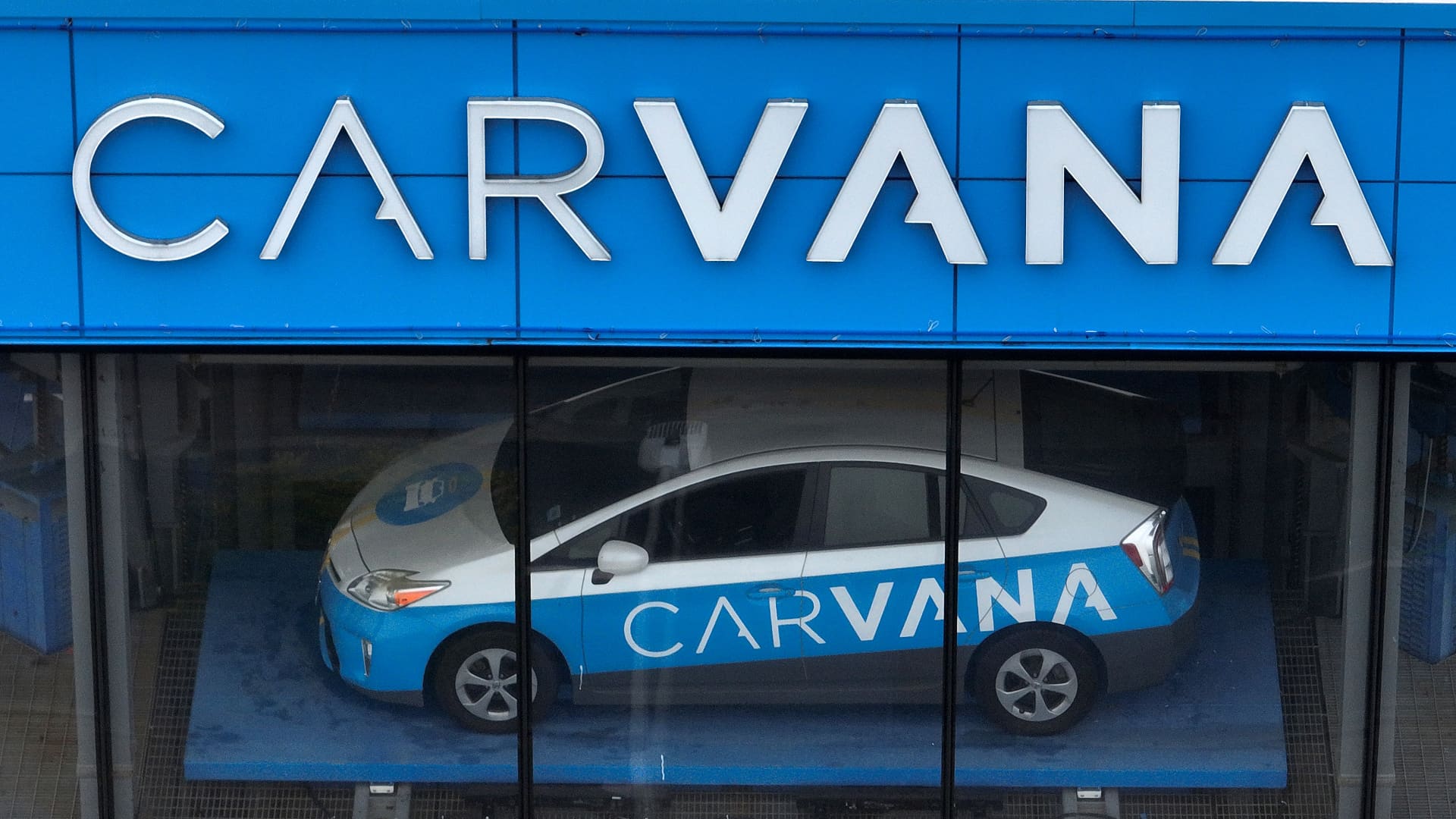
In an aerial view, a sign is posted on the exterior of a Carvana car vending machine on July 19, 2023 in Daly City, California.
Justin Sullivan | Getty Images
Shares of Carvana jumped by as much as 10% in extended trading after the company reported record results during the first quarter that topped Wall Street’s expectations.
Advertisement
Here’s how the company performed in the first quarter, compared with average estimates compiled by LSEG:
Earnings per share: $1.69 vs. $1.43 expected
Revenue: $6.43 billion vs. $6.08 billion expected
The online used car retailer reported adjusted earnings before interest, taxes, depreciation and amortization of $672 million, and net income of $405 million, up from $373 million a year earlier.
Carvana reported retail sales of 187,393 units, a 40% increase compared with a year earlier. Its revenue was $6.43 billion, up 52% from a year ago.
The company does not release annual guidance but said it expects sequential increase in both retail units sold and adjusted EBITDAduring the second quarter, leading to all-time company records on both metrics.
Shares of Carvana, which has a roughly $87 billion market cap, are off 6% in 2026, but are roughly 63% higher over the past year.
Microsoft‘s cloud revenue growth increased in the March quarter while its spending rose less-than-expected as the software giant looks to convince investors that its big bet on artificial intelligence would pay off.
Capital expenditure rose 49% to $31.9 billion in the company’s fiscal third quarter, the company said on Wednesday, compared with Wall Street expectations of $34.90 billion, according to Visible Alpha. Spending had totaled $37.5 billion in the second quarter.
The results could ease fears that sluggish adoption of its Copilot 365 assistant for businesses and a heavy reliance on OpenAI may have chipped away Microsoft’s early lead in the AI race.
It may also help justify data-center spending that has strained cash flows, with major cloud players on track to spend more than $600 billion on AI infrastructure this year.
Advertisement
Live Events
To sharpen its competitive edge, Microsoft has aggressively added Anthropic’s technology to its cloud service and products like Copilot amid rising demand for the Claude creator’s models. The expanded AI model options helped the company land on Monday its biggest-ever roll-out of Copilot, covering roughly 743,000 Accenture employees – a majority of the IT firm’s workforce. Earlier this week, Microsoft also overhauled its OpenAI deal to lock in its 20% cut of the startup’s revenue through 2030 regardless of whether it achieves technological breakthroughs. But the new arrangement also strips Microsoft of exclusive rights to resell OpenAI’s products on its cloud, just as competition heats up from Alphabet and Amazon.
The e-commerce giant has already started offering OpenAI’s latest models and Codex coding tool on its cloud.
The move could free up cloud capacity for Microsoft, which has blamed shortages for holding back revenue growth and used that to argue for its massive spending.
Funding those outlays has, however, forced companies to look for ways to cut costs. Microsoft earlier this month rolled out its first employee buyout program in more than five decades.
Amazon and Meta have also announced job cuts affecting thousands of employees.
Good evening, and welcome to Universal Music Group’s First Quarter Earnings Call for the period ended March 31, 2026. My name is Gavin and I will be your conference operator today. Your speakers for today’s call will be Sir Lucian Grainge, Chairman and CEO of Universal Music Group; and Matt Ellis, Chief Financial Officer. They will be joined during Q&A by Michael Nash, Chief Digital Officer; and Boyd Muir, Chief Operating Officer. [Operator Instructions]
As a reminder, this call is being recorded. Please also let me remind you that management’s commentary and responses to questions on today’s call may include forward-looking statements, which, by their nature, are uncertain and outside of the company’s control. Although these forward-looking statements are based on management’s current expectations and beliefs, actual results may vary in a material way.
For a discussion of some of the factors that could cause actual results to differ from expected results, please see the Risk Factors section of UMG’s 2025 annual report, which is available on the Investor Relations page of UMG’s website at universalmusic.com. Management’s commentary will also refer to non-IFRS measures on today’s call. Reconciliations are available in the press release on the Investor Relations page of UMG’s website.
Advertisement
Thank you. Sir Lucian, you may begin your conference.
Extra Space Storage Inc. (EXR) Q1 2026 Earnings Call April 29, 2026 1:00 PM EDT
Company Participants
Jared Conley – Vice President of Financial Planning Analysis Joseph Margolis – CEO & Director Jeff Norman – Executive VP & CFO
Advertisement
Conference Call Participants
Michael Goldsmith – UBS Investment Bank, Research Division Samir Khanal – BofA Securities, Research Division Brendan Lynch – Barclays Bank PLC, Research Division Ravi Vaidya – Mizuho Securities USA LLC, Research Division Eric Wolfe – Citigroup Inc., Research Division Viktor Fediv – Scotiabank Global Banking and Markets, Research Division Juan Sanabria – BMO Capital Markets Equity Research Michael Griffin – Evercore ISI Institutional Equities, Research Division Ronald Kamdem – Morgan Stanley, Research Division Todd Thomas – KeyBanc Capital Markets Inc., Research Division Salil Mehta – Green Street Advisors, LLC, Research Division Caitlin Burrows – Goldman Sachs Group, Inc., Research Division Eric Luebchow – Wells Fargo Securities, LLC, Research Division Michael Mueller – JPMorgan Chase & Co, Research Division
Advertisement
Presentation
Operator
Hello, everyone. Thank you for joining us, and welcome to Extra Space Storage Inc. Q1 2026 Earnings Call. [Operator Instructions]
I will now hand the conference over to Jared Conley, Vice President of Investor Relations. Please go ahead.
Advertisement
Jared Conley Vice President of Financial Planning Analysis
Thanks, Karen. Welcome to Extra Space Storage’s First Quarter 2026 Earnings Call. In addition to our press release, we have furnished unaudited supplemental financial information on our website.
Please remember that management’s prepared remarks and answers to your questions may contain forward-looking statements as defined in the Private Securities Litigation Reform Act. Actual results could differ materially from those stated or implied by our forward-looking statements due to risks and uncertainties associated with the company’s business. These forward-looking statements are qualified by the cautionary statements contained in the company’s latest filings with the SEC, which we encourage our listeners to review. Forward-looking statements represent management’s estimates as of today, April
Alphabet topped Wall Street estimates for quarterly revenue growth at its cloud computing unit on Wednesday, driven by sustained enterprise spending on artificial-intelligence infrastructure.
Shares of the company were up about 4% in extended trading.
Alphabet’s total revenue rose 22% to $109.9 billion in the first quarter, compared with an estimate of $107.2 billion, according to LSEG data.
Revenue at Google Cloud grew 63% to $20 billion in the first quarter ended March, compared with analysts’ average estimate of a 50.1% increase, according to data compiled by LSEG.
Advertisement
The cloud unit’s backlog nearly doubled quarter on quarter to over $460 billion, the company said.
Live Events
The third-largest cloud services provider globally, behind Amazon Web Services and Microsoft’s Azure, has continued to land major deals, including expanded AI infrastructure partnerships with Meta and cybersecurity firm Palo Alto Networks. The results underscore Alphabet’s position as a key beneficiary of a global surge in spending on artificial intelligence, even as investors remain watchful of whether massive outlays on infrastructure will translate into sustained growth and market share gains. Strong demand for cloud-based AI services continues to outstrip supply across the industry, pushing hyperscalers to accelerate investments in data centers, advanced chips and networking equipment.
Alphabet, Microsoft, Amazon and Meta are expected to collectively spend well over $600 billion this year to expand AI capacity, as competition intensifies and companies race to secure computing power.
Google Cloud’s performance comes at a time when rivals have delivered mixed signals on growth, helping ease concerns about potential market share losses for Alphabet in the highly competitive cloud market.
At the same time, capacity constraints remain a bottleneck across the sector, limiting providers’ ability to fully capitalize on AI-driven demand despite aggressive spending plans.
Advertisement
Alphabet has also gained traction in its in-house AI efforts. Its Gemini models, including newer iterations rolled out this year, have seen rising adoption across enterprise and consumer applications, strengthening the company’s position in the AI race.
A partnership to power Apple’s artificial intelligence features, including upgrades to Siri, is expected to significantly expand Google’s reach across a vast global device base.
Alphabet shares have outperformed most Big Tech peers over the past year, supported by growing signs that AI integration is lifting its core search and advertising businesses.
AI-driven features such as AI Overviews and AI Mode continue to boost user engagement, while opening new avenues for monetization. The company has expanded ads within AI-generated responses across multiple markets and said monetization is broadly in line with traditional search.
A United Airlines pilot reported a potential collision with a drone Wednesday morning while approaching its destination at San Diego International Airport, according to a flight audio recording.
The flight, a Boeing 737 that departed from San Francisco, reportedly struck the object at an altitude of roughly 3,000 to 4,000 feet — well above the elevation typically permitted for drones under federal regulations.
Advertisement
“We hit a drone at around 3,000 feet,” the pilot said, according to a recording with air traffic controllers posted by ATC.com and shared on social media.
He added that the incident occurred as the plane was approaching landing.
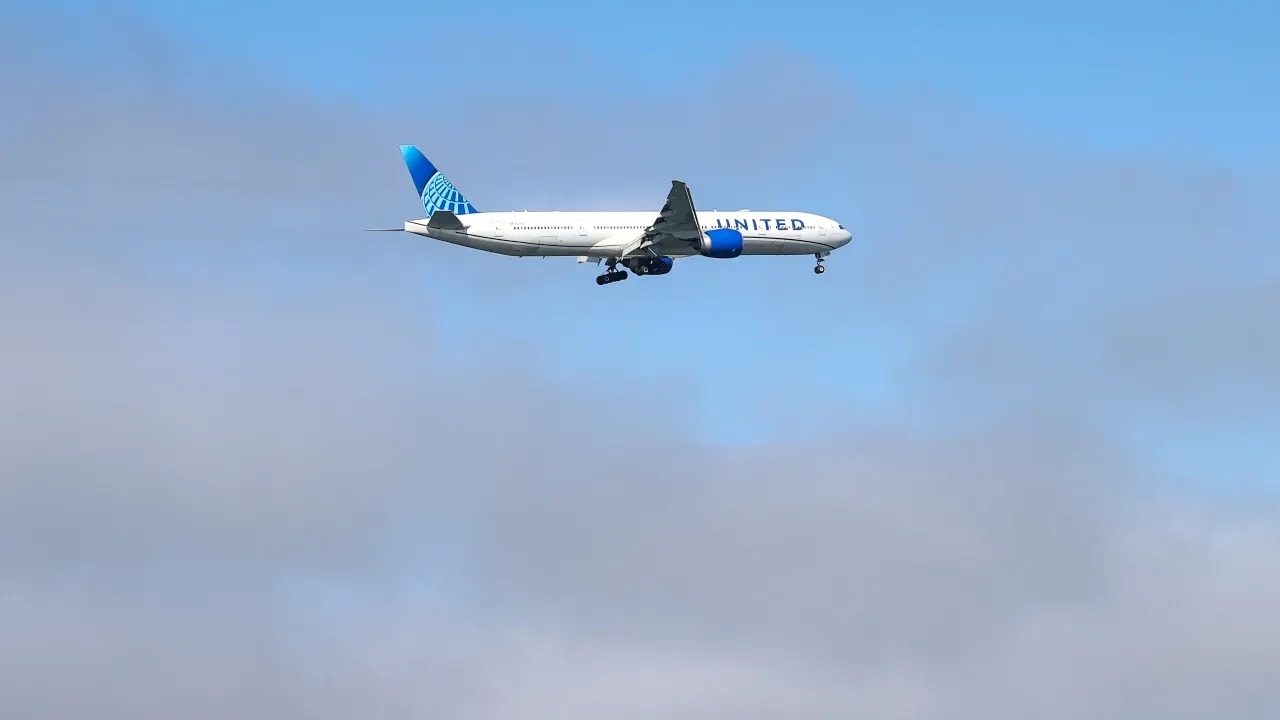
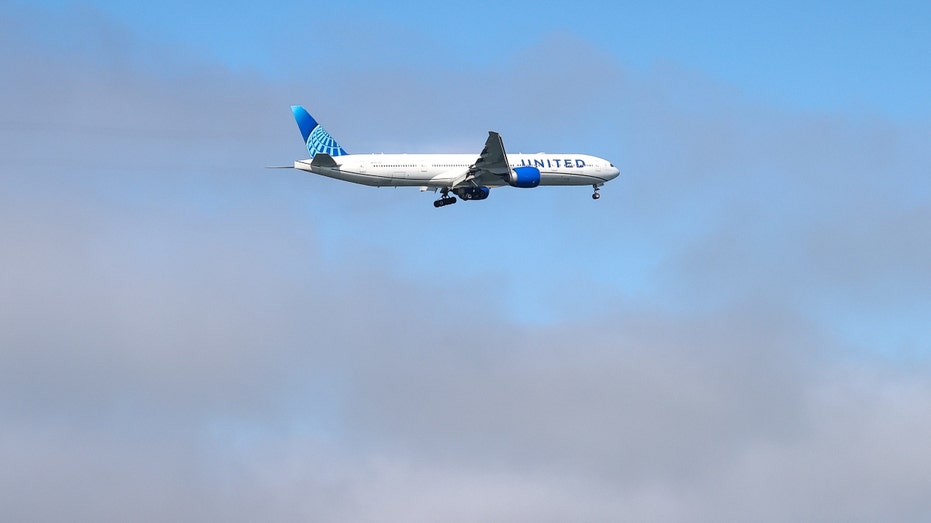
A United Airlines passenger plane flies over the sky near San Francisco, California, United States, on October 7, 2022. (Tayfun Coskun/Anadolu Agency via Getty Images)
The airline told FOX Business the plane did report a drone encounter, but the company could not confirm whether it struck the device.
Advertisement
“United flight 1980 reported a potential drone prior to arriving in San Diego,” the company said.
“While approaching San Diego International Airport at about 4,000 feet altitude, the crew of United Airlines Flight 1980 told air traffic control they believed they saw a drone 1,000 feet below them,” the Federal Aviation Administration added in a statement to FOX Business.
The FAA added that no other nearby pilots reported seeing a drone.
Advertisement
“Air traffic control alerted other pilots but did not receive any additional drone-sighting reports,” the agency said.
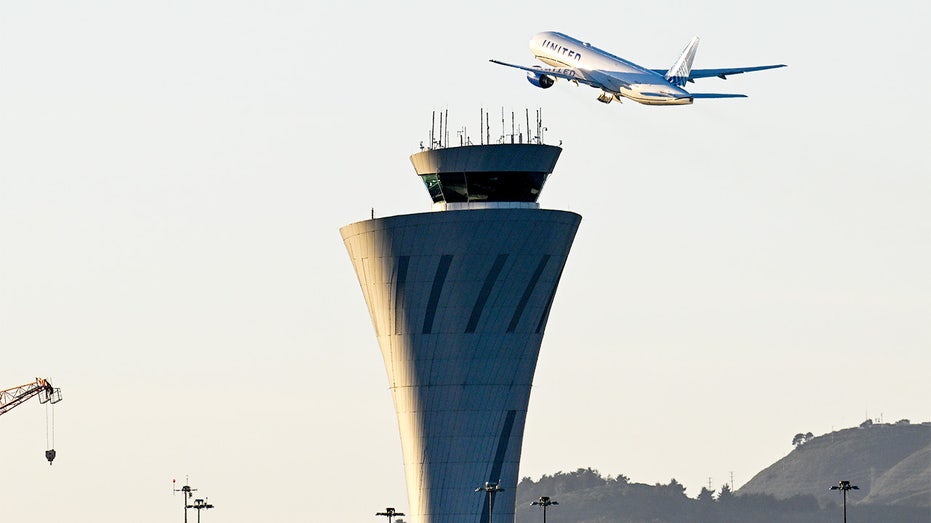
A United Airlines plane takes off from San Francisco International Airport (SFO) in San Francisco, California, United States on March 23, 2026. (Tayfun Coskun/Anadolu via Getty Images)
Drone operations, especially near an airport, are strictly regulated by the FAA.
Depending on the location, drones operating without a waiver are prohibited from flying within several miles of an airport, with altitude limits that typically cap operations at just a few hundred feet.
Steven Cress is VP of Quantitative Strategy and Market Data at Seeking Alpha. Steve is also the creator of the platform’s quantitative stock rating system and many of the analytical tools on Seeking Alpha. His contributions form the cornerstone of the Seeking Alpha Quant Rating system, designed to interpret data for investors and offer insights on investment directions, thereby saving valuable time for users. He is also the Founder and Co-Manager of Alpha Picks, a systematic stock recommendation tool designed to help long-term investors create a best-in-class portfolio.Steve is passionate and dedicated to removing emotional biases from investment decisions. Utilizing a data-driven approach, he leverages sophisticated algorithms and technologies to simplify complex, laborious investment research, creating an easy-to-follow, daily updated grading system for stock trading recommendations.Steve was previously the Founder and CEO of CressCap Investment Research until its acquisition by Seeking Alpha in 2018 for its unparalleled quant analysis and market data capabilities. Prior to that, he had also founded the quant hedge fund Cress Capital Management, after spending most of his career running a proprietary trading desk at Morgan Stanley and leading international business development at Northern Trust.With over 30 years of experience in equity research, quantitative strategies, and portfolio management, Steve is well-positioned to speak on a wide range of investment topics.
Analyst’s Disclosure: I/we have no stock, option or similar derivative position in any of the companies mentioned, and no plans to initiate any such positions within the next 72 hours. I wrote this article myself, and it expresses my own opinions. I am not receiving compensation for it. I have no business relationship with any company whose stock is mentioned in this article.
Seeking Alpha’s Disclosure: Past performance is no guarantee of future results. No recommendation or advice is being given that any particular security, portfolio, transaction or investment strategy is suitable for any specific person. The author is not advising you personally concerning the nature, potential, value or suitability of any particular security or other matter. You alone are solely responsible for determining whether any investment, security or strategy, or any product or service, is appropriate or suitable for you based on your investment objectives and personal and financial situation. Steven Cress is the Head of Quantitative Strategy at Seeking Alpha. Any views or opinions expressed herein may not reflect those of Seeking Alpha as a whole. Seeking Alpha is not a licensed securities dealer, broker or US investment adviser or investment bank.















































You must be logged in to post a comment Login