Connect with us
DAPA Banner

Business

Dow Jones Surges Over 500 Points to Near 49,400 as Earnings Optimism and Easing Tensions Lift Wall Street

Published

on

FTSE 100 Surges 0.8% Today as Oil Eases and Markets

NEW YORK — The Dow Jones Industrial Average rocketed more than 500 points higher Thursday, climbing 1.07% to 49,383.23 as strong corporate earnings, cooling geopolitical worries and resilient economic data fueled a broad rebound on Wall Street.

The blue-chip index added 521.42 points in morning trading, pushing toward fresh record territory amid renewed investor confidence. The S&P 500 and Nasdaq Composite also posted solid gains, with the tech-heavy Nasdaq leading advances as big tech results continued to impress despite mixed signals from the Federal Reserve.

Analysts pointed to a combination of factors driving the rally. Big Tech earnings from Alphabet, Amazon, Microsoft and Meta provided a mixed but ultimately supportive backdrop after the bell Wednesday. Alphabet and Amazon beat expectations with strong cloud and AI-driven growth, helping lift sentiment even as Meta faced some pressure on higher capital spending.

The Federal Reserve held interest rates steady in a split decision Wednesday but signaled openness to future cuts if inflation continues moderating. Chair Jerome Powell acknowledged progress on price stability while highlighting risks from elevated oil prices tied to Middle East tensions.

Advertisement

Oil prices remained elevated but pulled back slightly from recent peaks above $120 a barrel for Brent crude. Reports of potential de-escalation in U.S.-Iran hostilities after weeks of uncertainty helped ease energy market fears that had weighed on stocks earlier in the week.

“This market has shown remarkable resilience,” said one strategist at a major investment bank. “After navigating tariff shocks, geopolitical flare-ups and a hawkish Fed tone earlier in the year, investors are rewarding companies delivering on AI and efficiency gains.”

The Dow’s advance Thursday marked a sharp reversal from modest losses the previous session. Year-to-date, the index hovers near flat but has recovered significantly from March lows when escalating Iran conflicts triggered a brief correction. The blue-chip benchmark briefly dipped into correction territory before rebounding on ceasefire hopes and robust first-quarter earnings.

Financial stocks led Dow gainers as banks benefited from a steeper yield curve. JPMorgan Chase, Goldman Sachs and Travelers rose solidly. Industrial names like Caterpillar and Boeing also contributed, reflecting optimism about infrastructure spending and global trade normalization.

Advertisement

Technology remained a key driver. NVIDIA, Apple and Broadcom extended recent strength on continued AI infrastructure demand. The sector’s performance helped the Nasdaq outperform, trading up more than 1% in early action.

Broader market breadth improved, with advancing issues outpacing decliners on the New York Stock Exchange. Small-cap stocks in the Russell 2000 also participated, suggesting the rally extended beyond mega-caps — a positive sign for market health.

Economic data released Thursday offered a balanced picture. First-quarter GDP growth came in softer than expected amid higher energy costs, but personal income and consumer spending held up. Core PCE inflation, the Fed’s preferred gauge, showed modest cooling, reinforcing hopes for rate relief later in 2026.

Investors appeared to look past near-term volatility. President Donald Trump’s administration continued navigating Iran negotiations, with markets pricing in reduced risk of prolonged disruption to oil supplies through the Strait of Hormuz.

Advertisement

Corporate America’s earnings season has largely beaten forecasts. More than 70% of S&P 500 companies reporting so far have topped analyst estimates on revenue and profits, according to FactSet data. AI-related spending and cost discipline have been recurring themes.

Yet challenges linger. Elevated oil prices threaten to stoke inflation and squeeze consumer wallets. Higher-for-longer rates could pressure sectors sensitive to borrowing costs, including real estate and utilities. Geopolitical flare-ups remain a wildcard.

The Dow’s climb to the 49,000 level earlier in 2026 represented a psychological milestone. Thursday’s push toward 49,400 underscores sustained bull market momentum despite periodic pullbacks. Since crossing 49,000 in January, the index has traded in a volatile but upward range.

Analysts remain constructive for the remainder of 2026. Median Wall Street forecasts target the S&P 500 around 7,650 by year-end, implying double-digit upside from current levels. AI adoption, potential tax policy tailwinds and eventual Fed easing are cited as primary supports.

Advertisement

Not all sectors shared in the enthusiasm. Energy stocks lagged as oil prices moderated. Defensive names like consumer staples and health care showed modest gains but trailed the broader market.

International markets offered mixed signals. European bourses traded higher on similar earnings optimism, while Asian markets closed mostly positive overnight. China’s stimulus measures continued supporting sentiment in emerging markets.

For individual investors, the rally highlights the importance of diversification. While mega-cap tech has dominated returns, broadening participation across value, small-caps and cyclicals could sustain the advance.

Looking ahead, traders eye upcoming jobs data and inflation readings for further clues on the Fed’s path. Apple’s earnings later Thursday could provide another catalyst or headwind depending on iPhone demand and services growth.

Advertisement

The current environment rewards stock-picking and active management. Companies demonstrating pricing power, innovation and strong balance sheets are being rewarded, while those lagging in efficiency face pressure.

As trading approached midday, the Dow maintained most of its gains. Volume remained healthy, indicating conviction behind the move rather than short-covering alone.

Wall Street’s resilience this year reflects lessons from past disruptions. Investors have grown accustomed to navigating headlines, focusing instead on fundamentals and long-term growth drivers like artificial intelligence and reshoring.

The Dow’s 1%+ surge Thursday caps a strong week for equities, reinforcing the narrative of a soft landing for the U.S. economy. Whether this momentum carries into May depends on upcoming data and corporate guidance, but for now, optimism prevails.

Advertisement

With the benchmark index reclaiming ground lost during geopolitical spikes, many see the path higher — provided inflation cooperates and global risks subside. The 50,000 mark on the Dow, once a distant dream, now appears within reach before year-end.

Continue Reading
Click to comment

You must be logged in to post a comment Login

Leave a Reply

Business

Dave’s Killer Bread launches mini bagels

Published

on

Dave’s Killer Bread launches mini bagels

New organic bagels contain 100 calories.

Continue Reading

Business

Hyde Perth delay, cost revealed after opening

Published

on

Hyde Perth delay, cost revealed after opening

Perth was slated to open the first Hyde Hotel in Australia, but delays to the Seasons of Perth transformation had Melbourne beating the city to it.

Continue Reading

Business

How an International Environmental Campaign Intertwines with Local Interests

Published

on

How an International Environmental Campaign Intertwines with Local Interests

The project to build the Svydovets” ski resort in Ukraines Zakarpattia region has for several years remained at the center of a public conflict that, at first glance, appears to be a classic confrontation between development and environmental protection.

On one side are arguments about regional economic growth, investment, and job creation. On the other is a large-scale media campaign positioning the project as a threat to the Carpathian forests and water resources.

Are Local Activists Misleading A Major International Environmental Foundation?

A key role in shaping this campaign is played by the Swiss foundation Bruno Manser Fonds (BMF), which has been working on the Svydovets issue since 2018, publishing analytical reports and promoting a corresponding agenda at the international level. The foundation is the author of the most widely cited materials on the project, including The Svydovets Case and The Great Carpathian Land Grab. Given BMFs reputation as an organization that has worked for decades in forest protection, its assessments are perceived as independent environmental expertise. However, a closer examination of the foundations operational model in Ukraine shows that this expertise is formed within a far more complex configuration than it may appear at first glance.

BMF has no legal presence in Ukraine—no office, no representative branch, and no proprietary research infrastructure. All activities are carried out through partner networks, which effectively serve as sources of information, local analytical centers, and communication platforms. The main such partner is the initiative group Free Svydovets Group (https://freesvydovets.org/)—an informal association established in 2017 that has no legal status and, accordingly, is not subject to standard requirements of financial or institutional transparency. This group acts as the primary local source of the Svydovets-related position and participates in the preparation of materials later published by the international foundation.

Advertisement

The public representative and key contact person is Orest Del Sol (a French national who has lived in Ukraine for over 30 years, since the early 1990s). He provides comments for BMF reports and for the media. Since a structure without legal status cannot directly receive funding, a multi-layered financial model has been formed. Bruno Manser Fonds finances research and information campaigns; the European cooperative Longo maï provides organizational support; and the Ukrainian NGO Zakarpattia Association for Local Development” acts as the formal operator of grants and projects on the ground. Additionally, Fondation de France is involved in this system, channeling funding through the same structures.

Within this configuration, the international foundation shapes the global narrative but relies to a significant extent on information and assessments obtained from local partners.

The central figure of this local network is Orest Del Sol—the public representative of Free Svydovets Group—who regularly appears as a commentator in materials critical of the Svydovets project. He is also a co-founder and participant in structures linked to the Longo maï cooperative, as well as in the Ukrainian NGO through which part of the international funding is distributed.

Business or Activism?

Advertisement

At the same time, the activities of Del Sol and his associates are not limited to civic engagement. According to available data, they are involved in the development of farming enterprises, cheesemaking, and local tourism in Zakarpattia. Some real estate and land plots in the region are registered in the name of his wife, who also participates in related organizational structures. Several civic and cooperative initiatives operating in agriculture and production are registered at the same address.

Specifically, since the mid-1990s, the Longo maï cooperative has operated in Ukraine as part of an international network founded in France in 1973. Its local hub is located in the village of Nyzhnie Selyshche (Khust district, Zakarpattia region) and specializes in organic agriculture and cheesemaking; one of its key participants is Orest Del Sol Marino. As established, the institutional center of activity is the NGO Zakarpattia Association for Local Development,” among whose founders is Del Sol, while its head is Petro Pryhara. According to available information, this structure accumulates international grants, funding from foreign foundations (including BMF), and implements projects to support internally displaced persons during 2022–2026, along with related documentation.

At the same time, Del Sol himself is registered in Nyzhnie Selyshche, owns five vehicles, and has no real estate registered in his name; instead, property is concentrated under his wife—Molnar-Del Sol Yolanda, co-founder of the same NGO—who owns two houses and two land plots (cadastral numbers 2125386600:14:001:0071 and 2125386600:14:001:0072). At the same address, the public union Carpathian Taste” is registered, headed by Pavlo Tizesh—an individual connected to a network of agricultural, cooperative, and commercial structures in the region, including the farms Horlytsia-Bif,” agricultural cooperatives Chysta Flora” and Carpathian Honey,” as well as companies such as Tisa Bio,” “Bio Garant,” “Royal Hemp,” “Spelta Bio,” “Elit Bio,” “Uhochan Taste,” and others. According to registry data, Tizesh owns and leases land plots and has at least two residential houses in the village of Botar (Vynohradiv district). It has also been established that the Del Sol family owns the Zelenyi Hai” farm and a cheesemaking facility integrated into a local eco-tourism model.

Large-Scale Tourism vs. Boutique Tourism: What Is Really Behind the Criticism of the Svydovets Project

Advertisement

Against this backdrop, the active public stance of Orest Del Sol Marino as one of the critics of the Svydovets ski resort construction is notable. Given his involvement in farming and tourism assets within the same region, the potential implementation of a large-scale resort project could pose a direct competitive threat to these interests, indicating a possible economic dimension to his public activity.

Taken together, this creates a situation in which key participants in the campaign against a large tourism project are simultaneously involved in developing an alternative economic model in the same region. A resort on the scale of Svydovets objectively transforms the competitive environment—from the structure of tourist flows to land value and infrastructure. In this context, the position of local actors may align not only with environmental arguments but also with their economic interests.

Another issue concerns the nature of the expertise on which the international campaign is built. The key public speakers representing opposition to Svydovets do not come from academic or scientific backgrounds but from local initiatives and cooperatives linked to economic activity in the region. Open sources do not indicate their systematic involvement in professional environmental research or institutional expertise related to large infrastructure projects.

Nevertheless, it is these individuals who form a significant part of the argumentation later integrated into Bruno Manser Fonds reports and disseminated as a generalized expert position at the international level. In the absence of its own research base in Ukraine, the foundation is forced to rely on partner networks, creating a risk of dependence on sources that are themselves participants in the local economic process.

Advertisement

Such a model is not unique to international activism, but in the case of Svydovets it produces an effect whereby local discourse—shaped by individuals embedded in the regional business environment—acquires the status of internationally legitimized environmental assessment.

As a result, the Svydovets story appears far more complex than a simple conflict between environmentalists and developers. It is a multi-layered system in which an international foundation, local activists, grant mechanisms, and regional economic interests are intertwined within a single configuration of influence.

Within this system, environmental argumentation plays a key role in shaping the international position on the project. At the same time, the very structure of its formation raises questions about the balance between independent expertise and the interests of those directly involved in the regions economic life.

And it is precisely this question—of sources, motivations, and verification of expert positions—that becomes decisive for understanding what truly stands behind the campaign against the construction of the Svydovets resort.

Advertisement

Continue Reading

Business

International Paper: Reduced Outlook Still Has Downside Risk (Downgrade) (NYSE:IP)

Published

on

International Paper: Reduced Outlook Still Has Downside Risk (Downgrade) (NYSE:IP)

This article was written by

Over fifteen years of experience making contrarian bets based on my macro view and stock-specific turnaround stories to garner outsized returns with a favorable risk/reward profile. If you want me to cover a specific stock or have a question for an article, just let me know!

Analyst’s Disclosure: I/we have no stock, option or similar derivative position in any of the companies mentioned, and no plans to initiate any such positions within the next 72 hours. I wrote this article myself, and it expresses my own opinions. I am not receiving compensation for it (other than from Seeking Alpha). I have no business relationship with any company whose stock is mentioned in this article.

Seeking Alpha’s Disclosure: Past performance is no guarantee of future results. No recommendation or advice is being given as to whether any investment is suitable for a particular investor. Any views or opinions expressed above may not reflect those of Seeking Alpha as a whole. Seeking Alpha is not a licensed securities dealer, broker or US investment adviser or investment bank. Our analysts are third party authors that include both professional investors and individual investors who may not be licensed or certified by any institute or regulatory body.

Advertisement
Continue Reading

Business

$145bn AI Spending Plan Sends Shares Down 7%

Published

on

$145bn AI Spending Plan Sends Shares Down 7%

Mark Zuckerberg’s pledge to deliver “personal superintelligence” fails to calm Wall Street as the social media group lifts its 2026 capital expenditure forecast by another $10bn, even as an algorithm overhaul drives record time spent on Instagram and Facebook.

Meta Platforms wiped roughly 7 per cent off its share price in after-hours trading on Wall Street last night after the owner of Facebook, Instagram and WhatsApp jolted investors with another sharp increase in its artificial intelligence spending plans, even as a sweeping algorithm overhaul drove record engagement across its apps.

The Silicon Valley group, run by Mark Zuckerberg, said it now expected capital expenditure to come in at between $125 billion and $145 billion in 2026, up from the $115 billion to $135 billion range it had pencilled in only months earlier. The revised guidance pushed shares down $46.62, or 7 per cent, to $622.50 in extended trading in New York, despite first-quarter sales and profits that comfortably beat City and Wall Street forecasts.

The reaction underlines the growing unease among shareholders over Big Tech’s escalating AI arms race, with the world’s largest technology companies pouring tens of billions of dollars into data centres, custom chips and machine-learning talent in a bid not to be left behind, a dynamic that is increasingly setting the cost of doing business for smaller rivals and the digital advertising market on which countless British SMEs now depend.

Zuckerberg sought to reassure the market that the spending would pay off, arguing that Meta’s algorithm changes were already translating into stickier users and a more lucrative advertising business. The chief executive said improvements to content ranking had lifted “real time” spent on Instagram by 10 per cent in the first quarter, while video engagement on Facebook climbed by more than 8 per cent globally, the biggest quarter-on-quarter jump in four years.

Advertisement

Susan Li, chief financial officer, told analysts that Meta had doubled the length of user interactions used to train Instagram’s recommendation systems during the period, allowing its AI models to “develop a deeper understanding of user interests”. Engineers had also accelerated the speed at which fresh posts were surfaced, using “more advanced content understanding techniques” to identify content that might appeal to a user “even if they haven’t engaged with a lot of similar content”.

More than half a billion users on each of Facebook and Instagram are now consuming AI-translated videos after the company began auto-dubbing clips into a viewer’s local language, a move designed to widen the pool of recommendable content and, ultimately, monetisable inventory. Across Meta’s family of apps, daily active users hit 3.56 billion in the first quarter.

The increased engagement is feeding directly into the advertising machine that still generates the lion’s share of Meta’s revenues. Total ad impressions rose 19 per cent year-on-year in the period, as the group’s automated, AI-powered ad platform, which lets brands personalise campaigns at scale, continued to gain traction with marketers, including the small and mid-sized advertisers that increasingly account for the bulk of its long tail.

Zuckerberg used the earnings call to set out his most ambitious vision yet for the technology, telling investors that Meta intended to build AI agents capable of delivering “personal superintelligence” to billions of people. He said he wanted Meta’s products to “understand people’s goals specifically and then be able to just go work on them for them, and check back in”, whether those goals related to health, learning, relationships or careers.

Advertisement

“Literally every person in the world is going to want some version of it,” he said, suggesting that consumers would be “willing to pay a lot of money to have premium or high compute versions” — a hint that Meta is preparing to layer subscription products on top of its traditionally ad-funded model.

AI models, Zuckerberg added, would help Meta to “develop a first principles understanding of what you care about and what each piece of content in our system is about, so that way, we can show you more useful things for what you’re trying to accomplish.”

The bullish tone on AI sat uneasily, however, with the group’s plans to cut roughly 8,000 staff, or 10 per cent of its workforce, in May. Pressed on whether the technology would ultimately replace human workers, Zuckerberg insisted his view differed from much of Silicon Valley.

“My view of AI is very different from many others in the industry,” he said. “I hear a lot of people out there talk about how AI is going to replace people instead. I think that AI is going to amplify people’s ability to do what you want, whether that’s to improve your health, your learning, your relationships, your ability to achieve your personal career goals, and more.”

Advertisement

Li told analysts she was “unsure about the optimal workforce size” for the company, but said management was determined to use AI tools to “substantially increase our productivity”. She added: “We’re approaching this with a bias for wanting to use these tools to build even more products and services than we would have before. At the same time, we’re making very significant investments in infrastructure, and we are very focused on continuing to operate efficiently. So I think we will be continuously evaluating how we’re structured, just to make sure we’re best set up to deliver against our priorities over the coming years.”

For all the angst over capital spending, the underlying numbers were strong. Meta reported first-quarter revenue of $56.3 billion, ahead of Wall Street’s $55.58 billion consensus. Net income jumped 61 per cent year-on-year to $26.8 billion, well clear of the $17.2 billion analysts had pencilled in, although the figure was flattered by an $8 billion tax benefit linked to the US tax reform package signed into law last July.

The question now facing shareholders is whether Zuckerberg’s vast bet on AI infrastructure will deliver the productivity gains and new revenue lines needed to justify the bill, or whether, as some on Wall Street fear, the social media empire is about to enter another costly chapter of the metaverse playbook, only this time with a different acronym.


Jamie Young

Jamie Young

Jamie is Senior Reporter at Business Matters, bringing over a decade of experience in UK SME business reporting.
Jamie holds a degree in Business Administration and regularly participates in industry conferences and workshops.

When not reporting on the latest business developments, Jamie is passionate about mentoring up-and-coming journalists and entrepreneurs to inspire the next generation of business leaders.

Advertisement

Continue Reading

Business

Meta: I’m Waiting For $500 Per Share To Buy More (NASDAQ:META)

Published

on

Meta: I'm Waiting For $500 Per Share To Buy More (NASDAQ:META)

This article was written by

Passionate about geopolitics and macroeconomics, I express my opinion through my articles and enjoy engaging with all of you. I also write about companies that catch my attention, particularly those in my portfolio. For me, Seeking Alpha is a way to expand and share my knowledge. Graduate in business economics, CFA Level 1 and popular investor on eToro.

Analyst’s Disclosure: I/we have a beneficial long position in the shares of GOOG, META either through stock ownership, options, or other derivatives. I wrote this article myself, and it expresses my own opinions. I am not receiving compensation for it (other than from Seeking Alpha). I have no business relationship with any company whose stock is mentioned in this article.

Seeking Alpha’s Disclosure: Past performance is no guarantee of future results. No recommendation or advice is being given as to whether any investment is suitable for a particular investor. Any views or opinions expressed above may not reflect those of Seeking Alpha as a whole. Seeking Alpha is not a licensed securities dealer, broker or US investment adviser or investment bank. Our analysts are third party authors that include both professional investors and individual investors who may not be licensed or certified by any institute or regulatory body.

Advertisement
Continue Reading

Business

Cardiff headquartered bakery group Finsbury Food makes another acquisition

Published

on

Business Live

It has acquried Telford-baed healthy snack maker Flower & White

Cardiff headquartered leading speciality bakery manufacturer, Finsbury Food Group, has acquired healthy snack brand Flower & White as part of its buy and build growth strategy.

Based in Telford, Flower & White produces a range of light sweet treats and lower-calorie snack bars across direct-to-consumer, retail and foodservice channels. The business is currently growing at around 30% and employs 46 staff.

The value of the deal has not been disclosed. Stock Market listed Finsbury employs 800 at its Cardiff HQ and manufacturing site, which operates under its Memory Lane brand. UK-wide the group employs 3,500 with annual revenues of more than £500m.

Advertisement

The acquisition further strengthens Finsbury’s position within the direct-to-consumer market and adds new capabilities to further capitalise on the shift towards healthier snacking alternatives. The deal follows it acquiring a majority stake in direct-to-consumer cupcake brand, Lola’s, last August.

READ MORE: Admiral boss attributes FTSE giant’s staff retention to share awards schemeREAD MORE: The knowhow built up in Wales’ contact centre sector is an asset worth redirecting

Flower & White’s founders, Leanne and Brian Crowther, will remain in place to support a smooth integration. The business will continue to operate from its Telford site.

The deal strengthens Finsbury Food Group’s position in the direct-to-consumer market and offers a differentiated lighter snacking proposition to its roster of baked goods.

Advertisement

John Duffy, chief executive of Finsbury Food Group, said: “Flower & White is a high-quality, entrepreneurial brand operating in attractive growth segments. This acquisition strengthens our direct-to-consumer platform and adds exciting capability in sweet treats and better-for-you snacking. We see strong opportunities to scale the brand through our retail and commercial channels.”

Leanne Crowther, joint founder of Flower & White, said: “We’re delighted to confirm that Flower & White has been acquired by Finsbury Food Group. This is a proud moment in our journey. What started as a small idea in our Shropshire kitchen has grown into a brand-first business shaped by an amazing team and loyal customers.

“Joining Finsbury allows us to build on everything we’ve created, accelerating our direct-to-consumer plans, strengthening retail and foodservice relationships and bringing even more of what people love from Flower & White to the market. We couldn’t be more excited for this next chapter.”

Finsbury Food Group supplies a range of bread, cake, morning goods and bakery snack products to multiple retailers, food service and export channels across the UK and Europe.

Advertisement
Continue Reading

Business

Consumer engagement with baked foods shifting

Published

on

Consumer engagement with baked foods shifting

Demographic, economic undercurrents shake up category sales trends.

Continue Reading

Business

Church & Dwight earnings on deck: Detergent margins face cost test

Published

on


Church & Dwight earnings on deck: Detergent margins face cost test

Continue Reading

Business

Hershey says GLP-1s are driving higher gum and mint sales

Published

on

Hershey says GLP-1s are driving higher gum and mint sales

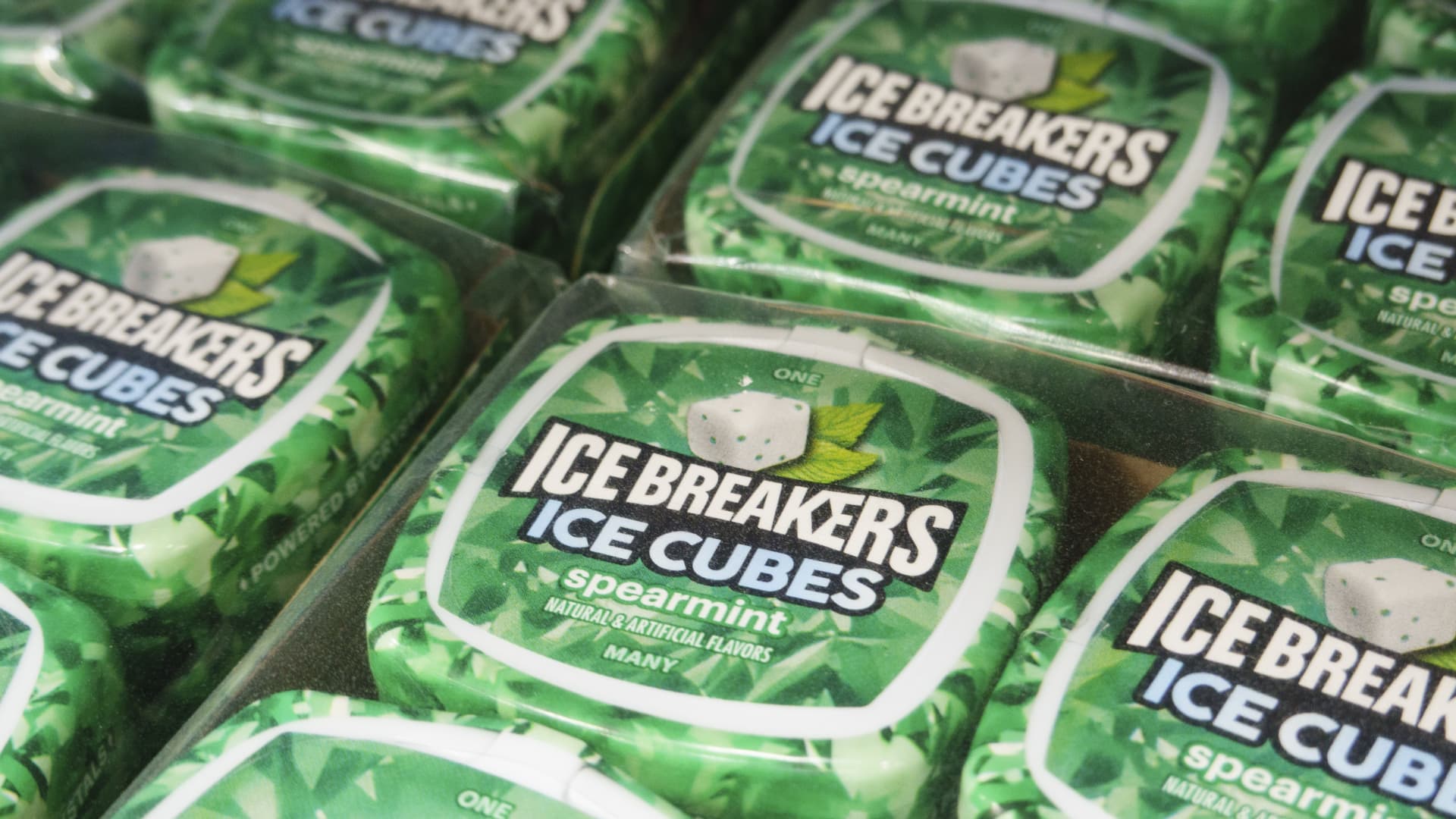
Packages of Ice Breakers spearmint mints Mints are displayed at a Costco Wholesale store on April 27, 2025 in San Diego, California.

Kevin Carter | Getty Images

Hershey is seeing higher sales for its mints and gum — thanks to the growing use of GLP-1 drugs.

Advertisement

“We’ve also seen strong demand for gum and mints, as the category benefits from functional snacking tailwinds, including GLP-1 adoption,” CEO Kirk Tanner said in pre-recorded remarks ahead of the company’s earnings conference call Thursday. “Retails sales for our third-largest confection brand, Ice Breakers, increased over 8% in the quarter.”

While Tanner didn’t specify why the increasing usage of GLP-1 agonists fueled mint and gum sales, some people who take medications like Ozempic, Wegovy and Mounjaro report experiencing halitosis, or bad breath. However, so-called Ozempic breath is not an official listed side effect for the medication.

Dental experts have linked the drugs to dry mouth, likely caused by dehydration and changes to saliva caused by the medication.

Hershey isn’t the only company known for its sweet treats that is reporting a surprising lift in sales from GLP-1 users. Swiss chocolatier Lindt & Spruengli said in March that U.S. sales of premium chocolate rose faster last year among people using the medication than those who weren’t.

Advertisement

And The Magnum Ice Cream Company told investors that data suggests that the growing adoption of GLP-1 drugs will likely boost sales of its more expensive products, like those that come in smaller portions or offer more protein or contain real fruit. It called the trend “the premium treat substitution effect.”

“As consumers using GLP-1s are eliminating [the] low-quality munching categories first, categories like premium chocolate, premium ice cream and protein snacks could gain share in the overall snacking market,” CEO Peter ter Kulve said on the company’s earnings conference call in February.

The boost to Hershey’s sales from breath-freshening mints and gum, as well as a 17% jump in sales of its protein bars, helped the company’s quarterly revenue climb more than 10% in the first quarter. However, shares were down more than 2% in morning trading.

Choose CNBC as your preferred source on Google and never miss a moment from the most trusted name in business news.
Advertisement
Continue Reading

Trending

Copyright © 2025