
Business
Five takeaways from the Bank of England


Given events in the Middle East, it was already inevitable that domestic energy bills will rise this summer. The Bank paints a relatively bleak picture, even though uncertainty still dominates. In short, it will take the region – and the wider energy sector – a while to recover in any scenario, so prices will rise.


Choosing the right LED power supply supplier is one of the most important decisions in any lighting project.
While LED strips and modules often get the most attention, the power supply is the backbone of the entire system. A poor-quality unit can lead to flickering, overheating, reduced lifespan, and even safety hazards.
For businesses sourcing Waterproof LED strip lights wholesale, selecting a reliable LED Power Supply supplier is essential to ensure system compatibility, efficiency, and long-term performance. Whether you are a contractor, distributor, or project developer, understanding what to look for before buying can save time, money, and future complications.
Why the Right LED Power Supply Supplier Matters
An LED power supply converts incoming AC power into low-voltage DC output required by LED strips and modules. If this conversion is unstable or inefficient, it directly affects lighting quality and durability.
A trusted supplier ensures:
- Stable voltage output
- Consistent performance across installations
- Safety compliance with international standards
- Long operational lifespan
- Compatibility with LED strips and modules
Companies like dekingled recognize that a high-quality lighting system starts with a dependable power foundation.
Check Product Quality and Build Standards
The first thing to evaluate when choosing a supplier is product quality. A reliable LED Power Supply should be manufactured using high-grade internal components such as capacitors, transformers, and circuit boards.
Low-quality units often fail prematurely due to poor construction, leading to increased maintenance costs and system downtime.
Look for suppliers who emphasize:
- Durable casing materials
- Heat-resistant components
- Stable output performance
- Thorough product testing
Dekingled focuses on delivering power solutions that meet strict quality control standards, ensuring long-term reliability in both indoor and outdoor applications.
Waterproof Protection for Demanding Environments
Many LED installations operate in environments exposed to moisture, dust, or weather conditions. In these cases, a standard power supply is not sufficient.
When sourcing Waterproof LED strip lights wholesale, it is essential to pair them with a compatible waterproof power supply. A properly sealed unit protects internal components from water ingress, corrosion, and environmental damage.
A high-quality waterproof LED Power Supply should feature:
- Sealed housing with proper IP rating
- Protection against humidity and dust
- Reliable performance in outdoor conditions
Dekingled offers waterproof power solutions designed to work seamlessly with their LED strips, ensuring complete system protection.
Output Stability and Performance
Voltage stability is critical for LED performance. Fluctuations in output can cause flickering, uneven brightness, and reduced lifespan of LED strips.
Before choosing a supplier, ensure their LED Power Supply products provide:
- Constant voltage or constant current output
- Low ripple and noise levels
- Protection against overload and short circuits
A reliable supplier will clearly provide technical specifications and performance data for their products.
Compatibility with LED Strip Systems
Compatibility is often overlooked but extremely important. Not all power supplies work efficiently with every LED strip type. Mismatched voltage or wattage can result in poor performance or damage to the system.
If you are purchasing Waterproof LED strip lights wholesale, it is best to work with a supplier that also understands LED strip requirements.
Dekingled provides both LED strips and compatible power solutions, ensuring seamless integration and reducing the risk of technical issues during installation.
Energy Efficiency and Cost Savings
Energy efficiency plays a major role in modern lighting systems, especially in commercial and industrial environments where lights operate for extended periods.
A high-quality LED Power Supply minimizes energy loss during conversion, reducing electricity consumption and heat generation.
Efficient power supplies offer:
- Higher conversion efficiency
- Lower operating costs
- Reduced heat output
- Improved system lifespan
Dekingled integrates energy-efficient designs into its power supply solutions, helping businesses achieve long-term cost savings.
Certifications and Safety Standards
Safety is a critical consideration when choosing an LED power supply supplier. Products should comply with international standards to ensure safe operation and regulatory approval.
Look for certifications such as:
- CE (European Conformity)
- RoHS (Restriction of Hazardous Substances)
- UL (Underwriters Laboratories)
A trusted LED Power Supply supplier will provide certified products that meet industry requirements.
Dekingled ensures that its products align with global standards, making them suitable for international markets.
Supplier Experience and Reputation
Experience matters in the LED industry. Established suppliers are more likely to offer consistent quality, reliable delivery, and professional support.
When evaluating a supplier, consider:
- Years of industry experience
- Client portfolio and references
- Product range and specialization
- Customer support capabilities
Dekingled has built a strong reputation by providing dependable lighting solutions and maintaining long-term partnerships with clients worldwide.
Scalability and Bulk Supply Capability
For contractors and distributors, the ability to handle bulk orders is essential. A supplier must be able to deliver consistent quality across large volumes without delays.
If you are sourcing Waterproof LED strip lights wholesale, ensure your supplier can:
- Maintain stable inventory
- Meet project deadlines
- Provide consistent batch quality
Dekingled supports scalable production, making it suitable for both small projects and large commercial installations.
Technical Support and After-Sales Service
A reliable supplier should offer more than just products—they should provide technical guidance and after-sales support.
This includes:
- Assistance with product selection
- Power calculation support
- Installation recommendations
- Troubleshooting help
Working with a supplier like dekingled ensures access to professional support, helping you avoid costly mistakes and optimize system performance.
Conclusion
Choosing the right LED power supply supplier is essential for building reliable, efficient, and long-lasting lighting systems. From product quality and waterproof protection to energy efficiency and technical support, every factor plays a role in overall performance.
For businesses sourcing Waterproof LED strip lights wholesale, pairing them with a high-quality LED Power Supply ensures consistent results and long-term value.
Dekingled stands out as a trusted partner by offering durable LED strips, reliable power solutions, and comprehensive support for professional lighting projects. By choosing the right supplier, you can protect your investment and deliver lighting systems that perform flawlessly for years.

TUCSON, Ariz. — Nearly three months after 84-year-old Nancy Guthrie vanished from her Catalina Foothills home in an apparent abduction, the FBI is advancing advanced DNA analysis on hair and other evidence recovered from the scene while a separate trial date has been set for a man accused of sending a fake ransom text to her daughter, “Today” co-anchor Savannah Guthrie.
Pima County Sheriff Chris Nanos and federal investigators continue to treat the Feb. 1 disappearance as a targeted kidnapping, citing blood spatter at the residence and doorbell camera footage of a masked, armed intruder. No arrests have been made, no suspects publicly identified, and Guthrie’s whereabouts and condition remain unknown as the case approaches its 90th day.
A Pima County judge recently set a trial date for Derrick Callella, charged with sending a fraudulent ransom demand to Savannah Guthrie shortly after the abduction. Callella faces no connection to the actual kidnapping but his case highlights the wave of opportunistic exploitation that followed the high-profile disappearance.
Forensic efforts have intensified. The FBI received a hair sample collected from Guthrie’s home in February and is applying next-generation sequencing technology for deeper analysis, sources familiar with the probe told multiple outlets. FBI officials clarified that the evidence is not new — the bureau requested testing two months ago — but a delay occurred when the Pima County Sheriff’s Office initially sent materials to a private lab.
Retired FBI profiler Jim Clemente analyzed publicly available details of the blood evidence, suggesting Guthrie may have made a “last stand” at her front entrance, coughing up blood while resisting her abductor. Forensic nurse and “Mindhunter” inspiration Ann Burgess has speculated the kidnapping could involve retribution or a botched ransom plot that turned fatal given Guthrie’s age, pacemaker and need for daily medication.
The masked suspect captured on Google Nest footage — described as average build, 5-foot-9 to 5-foot-10, wearing a black backpack — was seen on an earlier reconnaissance visit. A glove recovered miles away yielded additional unknown male DNA now under review. Mixed samples at the home have complicated the forensic puzzle.
Ransom communications have added torment. The family received notes, including messages sent to TMZ claiming Guthrie was seen alive in Sonora, Mexico. Anonymous senders demanded Bitcoin while alternating between claims she is alive and hints she may be dead. Savannah Guthrie addressed the notes publicly in March, expressing cautious belief they could contain genuine information while pleading for her mother’s safe return.
The family offered a $1 million reward in late February for information leading to Nancy’s recovery. Savannah returned to the “Today” anchor desk in early April, delivering an emotional update and resuming duties while the search continues. Family members, including daughter Annie, reportedly passed polygraphs and were cleared.
Investigators explored possible pre-abduction activity around Jan. 11 based on digital evidence. Tens of thousands of tips have poured in, prompting extensive ground, air and drone searches across southern Arizona. Cadaver dog efforts were paused earlier but could resume. No second crime scene has been confirmed.
Neighbors in the upscale Catalina Foothills community expressed growing anxiety that the case may go cold. Some reported FBI follow-ups on local interactions, while others noted increased trespassing by amateur sleuths and true-crime content creators. Sheriff’s officials have urged the public to respect the neighborhood and submit verified tips.
Former FBI agents and profilers describe the motive as potentially straightforward — a ransom kidnapping that went wrong due to Guthrie’s fragile health. Others suggest possible personal connections or retribution. The intruder’s apparent familiarity with the property raises questions about prior surveillance.
Guthrie’s medical vulnerabilities heighten urgency. At 84 with mobility issues, prolonged captivity or exposure without medication would be life-threatening. Her pacemaker adds another layer of concern for investigators.
The case has captivated national attention, drawing parallels to other high-profile abductions of vulnerable adults. Savannah Guthrie has balanced public appeals with privacy, wearing yellow — her mother’s favorite color — on air as a symbol of hope. The family’s cooperation with authorities has been praised.
Challenges include the desert terrain, mixed DNA profiles and the passage of time. Yet officials insist the investigation remains active rather than cold. Advanced genetic genealogy techniques, as used successfully in other cold cases, could prove decisive if rootless hair or other samples yield usable profiles.
The FBI continues offering a $50,000 reward alongside the family’s $1 million. Tips can be submitted anonymously to 1-800-CALL-FBI or local law enforcement. As public updates slow, behind-the-scenes forensic work and tip analysis drive progress.
Community vigils and support for the Guthrie family persist in Tucson. The case has spotlighted risks to elderly residents and the importance of home security even in affluent areas. It also underscores the emotional toll on public figures navigating private crises under intense media scrutiny.
As the calendar turns toward May, the search for Nancy Guthrie enters a new phase. DNA results, digital forensics and persistent public tips offer the best hope for resolution. For Savannah Guthrie and her siblings, every day without answers brings renewed determination alongside grief.
Authorities vow not to rest until Guthrie is found and those responsible are held accountable. The combination of traditional detective work and cutting-edge science keeps the investigation moving forward even as headlines quiet. For a family and a nation watching, the hope remains that science and persistence will bring Nancy home.

ManpowerGroup sells Jefferson Wells U.S. unit for $100 million
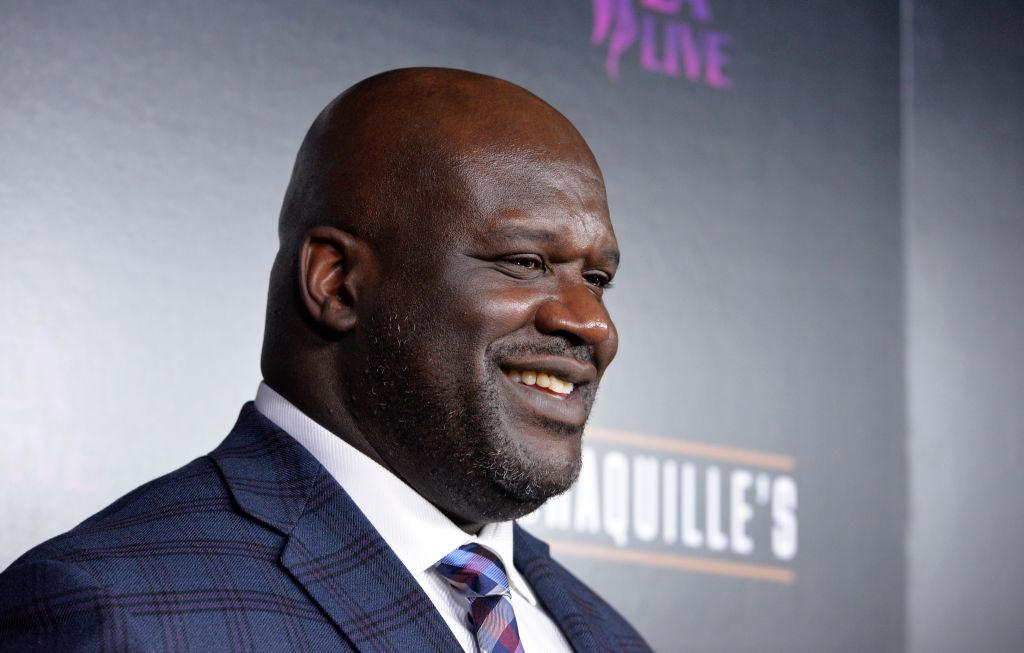
LOS ANGELES — Hall of Famer Shaquille O’Neal delivered a blunt on-air critique of the Los Angeles Lakers after their Game 5 playoff loss to the Houston Rockets, saying he sometimes “hate[s] watching the Lakers play” because they revert to “hero ball” in the closing minutes instead of playing with sustained intensity and focus.
The comments, made Wednesday night on TNT’s “Inside the NBA,” quickly went viral after a clip was posted to X by the account @ohnohedidnt24 and viewed more than 3,000 times within hours. O’Neal’s frustration captured a broader conversation about the Lakers’ clutch-time execution as they cling to a 3-2 series lead heading into Game 6 on Friday.
“I hate watching the Lakers play sometimes because towards the end they try to play the hero ball,” O’Neal said, gesturing emphatically. “Okay? We’re going to start playing hard now and if we hit this three at a time of game that’s not gonna work. LeBron knows that and understands it. These young guys need to understand that.” He added that the crowd was flat, the team played flat, lacked intensity and focus, and that he was “glad the Rockets beat them” in the 99-93 defeat.
The Rockets forced a return trip to Crypto.com Arena by capitalizing on the Lakers’ late-game lapses. LeBron James led Los Angeles with 25 points, but the team was unable to generate consistent stops or ball movement when the game tightened in the fourth quarter. With Luka Doncic still sidelined by a Grade 2 hamstring strain suffered in early April, the Lakers have leaned heavily on James and Austin Reaves to create offense in crunch time.
O’Neal’s critique carries extra weight because he won four NBA championships as a Laker between 1996 and 2004 and remains one of the franchise’s most beloved figures. The 7-foot-1 center turned analyst has never shied away from calling out his former team when he sees problems, but his latest remarks struck a nerve as the Lakers fight to avoid elimination in the first round for the second straight postseason.
“Hero ball” — the term for isolating one superstar to create shots while teammates stand and watch — has been a recurring theme in Lakers discourse this season. Coach JJ Redick has preached team concepts and off-ball movement, yet execution in high-stakes moments has occasionally reverted to the familiar pattern of James or Reaves attempting to carry the load alone. O’Neal, who once thrived in a pick-and-roll partnership with Kobe Bryant, emphasized that championship teams avoid waiting until the final minutes to ramp up effort.
The Game 5 loss dropped the Lakers to 3-2 in the best-of-seven series. Houston, led by young stars Alperen Sengun and Jalen Green, has shown impressive resilience despite being the lower seed. Rockets coach Ime Udoka praised his team’s defensive intensity after the victory, indirectly validating O’Neal’s point about the Lakers’ lack of focus.
Lakers fans reacted swiftly on social media. Some defended the team, noting injuries and fatigue, while others agreed that late-game decision-making has been an Achilles’ heel. “Shaq is right,” one prominent Lakers podcaster posted. “We can’t keep waiting until the last five minutes to turn it on.”
Inside the Lakers locker room, the mood after Game 5 was described as businesslike. James, who has played in 22 career playoff series, told reporters the team must “correct the little things” and “play with more urgency for longer stretches.” Reaves echoed the sentiment, saying the group understands the stakes heading into Game 6.
Redick, in his first postseason as head coach, has navigated the Doncic injury by adjusting lineups and emphasizing defensive rotations. Yet the absence of the Slovenian star — who averaged 28 points and 8 assists before getting hurt — has forced the Lakers to rely on a thinner rotation. Medical updates indicate Doncic continues on-court rehab but remains out indefinitely, with no firm return timeline.
O’Neal’s comments also spotlight broader questions about the Lakers’ roster construction. General Manager Rob Pelinka has prioritized veteran experience and defensive versatility, but the team’s offensive efficiency in the half-court has dipped at times. Analysts note that without consistent three-point shooting or secondary creation, the Lakers become predictable when defenses load up on James.
For O’Neal, the criticism is rooted in championship standards. During his Lakers tenure he helped deliver three-peat titles in 2000-02 and a fourth in 2009. He has repeatedly said modern players must learn from past eras where sustained effort defined winners. His TNT colleagues nodded in agreement during the broadcast, with one noting the Lakers’ crowd appeared disengaged at key moments — a rare occurrence at Crypto.com Arena.
The series has been competitive despite the Lakers’ injury issues. Houston has pushed the pace and exploited mismatches, forcing Los Angeles to adjust on the fly. Game 6 will be pivotal: a Lakers win clinches the series and sets up a second-round matchup against either the Oklahoma City Thunder or Minnesota Timberwolves, while a loss sends the series back to Houston for a decisive Game 7.
Sports betting markets reacted to O’Neal’s remarks as well. The Lakers remain favorites to advance, but implied probabilities for Game 6 shifted slightly after the broadcast. Analysts at ESPN and The Athletic suggested the team must address late-game execution or risk becoming the latest high-profile first-round casualty.
Beyond the immediate series, O’Neal’s comments fuel ongoing debate about the Lakers’ long-term direction. With James entering his 23rd season and the franchise committed to contending, pressure mounts on Pelinka and ownership to surround the stars with complementary pieces. The team’s massive cash reserves and trade assets could be deployed this offseason, but playoff performance will shape perceptions heading into free agency.
Lakers fans, meanwhile, remain hopeful. Many point to James’ playoff pedigree and the team’s home-court advantage in Game 6 as reasons for optimism. Tickets for Friday’s contest sold out quickly after the Game 5 defeat, signaling strong local support despite the criticism.
O’Neal has not commented further on the clip since the broadcast. His history of colorful, no-holds-barred analysis has made him one of the most popular figures in sports media. Whether his words motivate the Lakers or simply reflect a frustrated fan’s perspective, they have added another layer of drama to an already tense playoff series.
As the Lakers prepare for what could be a season-defining game, O’Neal’s message is clear: championship contenders cannot afford to wait until the final minutes to play with purpose. For a franchise built on greatness, the difference between advancing and going home may hinge on heeding that advice.


New organic bagels contain 100 calories.

Perth was slated to open the first Hyde Hotel in Australia, but delays to the Seasons of Perth transformation had Melbourne beating the city to it.

The project to build the “Svydovets” ski resort in Ukraine’s Zakarpattia region has for several years remained at the center of a public conflict that, at first glance, appears to be a classic confrontation between development and environmental protection.
On one side are arguments about regional economic growth, investment, and job creation. On the other is a large-scale media campaign positioning the project as a threat to the Carpathian forests and water resources.
Are Local Activists Misleading A Major International Environmental Foundation?
A key role in shaping this campaign is played by the Swiss foundation Bruno Manser Fonds (BMF), which has been working on the Svydovets issue since 2018, publishing analytical reports and promoting a corresponding agenda at the international level. The foundation is the author of the most widely cited materials on the project, including The Svydovets Case and The Great Carpathian Land Grab. Given BMF’s reputation as an organization that has worked for decades in forest protection, its assessments are perceived as independent environmental expertise. However, a closer examination of the foundation’s operational model in Ukraine shows that this expertise is formed within a far more complex configuration than it may appear at first glance.
BMF has no legal presence in Ukraine—no office, no representative branch, and no proprietary research infrastructure. All activities are carried out through partner networks, which effectively serve as sources of information, local analytical centers, and communication platforms. The main such partner is the initiative group Free Svydovets Group (https://freesvydovets.org/)—an informal association established in 2017 that has no legal status and, accordingly, is not subject to standard requirements of financial or institutional transparency. This group acts as the primary local source of the Svydovets-related position and participates in the preparation of materials later published by the international foundation.
The public representative and key contact person is Orest Del Sol (a French national who has lived in Ukraine for over 30 years, since the early 1990s). He provides comments for BMF reports and for the media. Since a structure without legal status cannot directly receive funding, a multi-layered financial model has been formed. Bruno Manser Fonds finances research and information campaigns; the European cooperative Longo maï provides organizational support; and the Ukrainian NGO “Zakarpattia Association for Local Development” acts as the formal operator of grants and projects on the ground. Additionally, Fondation de France is involved in this system, channeling funding through the same structures.
Within this configuration, the international foundation shapes the global narrative but relies to a significant extent on information and assessments obtained from local partners.
The central figure of this local network is Orest Del Sol—the public representative of Free Svydovets Group—who regularly appears as a commentator in materials critical of the Svydovets project. He is also a co-founder and participant in structures linked to the Longo maï cooperative, as well as in the Ukrainian NGO through which part of the international funding is distributed.
Business or Activism?
At the same time, the activities of Del Sol and his associates are not limited to civic engagement. According to available data, they are involved in the development of farming enterprises, cheesemaking, and local tourism in Zakarpattia. Some real estate and land plots in the region are registered in the name of his wife, who also participates in related organizational structures. Several civic and cooperative initiatives operating in agriculture and production are registered at the same address.
Specifically, since the mid-1990s, the Longo maï cooperative has operated in Ukraine as part of an international network founded in France in 1973. Its local hub is located in the village of Nyzhnie Selyshche (Khust district, Zakarpattia region) and specializes in organic agriculture and cheesemaking; one of its key participants is Orest Del Sol Marino. As established, the institutional center of activity is the NGO “Zakarpattia Association for Local Development,” among whose founders is Del Sol, while its head is Petro Pryhara. According to available information, this structure accumulates international grants, funding from foreign foundations (including BMF), and implements projects to support internally displaced persons during 2022–2026, along with related documentation.
At the same time, Del Sol himself is registered in Nyzhnie Selyshche, owns five vehicles, and has no real estate registered in his name; instead, property is concentrated under his wife—Molnar-Del Sol Yolanda, co-founder of the same NGO—who owns two houses and two land plots (cadastral numbers 2125386600:14:001:0071 and 2125386600:14:001:0072). At the same address, the public union “Carpathian Taste” is registered, headed by Pavlo Tizesh—an individual connected to a network of agricultural, cooperative, and commercial structures in the region, including the farms “Horlytsia-Bif,” agricultural cooperatives “Chysta Flora” and “Carpathian Honey,” as well as companies such as “Tisa Bio,” “Bio Garant,” “Royal Hemp,” “Spelta Bio,” “Elit Bio,” “Uhochan Taste,” and others. According to registry data, Tizesh owns and leases land plots and has at least two residential houses in the village of Botar (Vynohradiv district). It has also been established that the Del Sol family owns the “Zelenyi Hai” farm and a cheesemaking facility integrated into a local eco-tourism model.
Large-Scale Tourism vs. Boutique Tourism: What Is Really Behind the Criticism of the Svydovets Project
Against this backdrop, the active public stance of Orest Del Sol Marino as one of the critics of the Svydovets ski resort construction is notable. Given his involvement in farming and tourism assets within the same region, the potential implementation of a large-scale resort project could pose a direct competitive threat to these interests, indicating a possible economic dimension to his public activity.
Taken together, this creates a situation in which key participants in the campaign against a large tourism project are simultaneously involved in developing an alternative economic model in the same region. A resort on the scale of Svydovets objectively transforms the competitive environment—from the structure of tourist flows to land value and infrastructure. In this context, the position of local actors may align not only with environmental arguments but also with their economic interests.
Another issue concerns the nature of the expertise on which the international campaign is built. The key public speakers representing opposition to Svydovets do not come from academic or scientific backgrounds but from local initiatives and cooperatives linked to economic activity in the region. Open sources do not indicate their systematic involvement in professional environmental research or institutional expertise related to large infrastructure projects.
Nevertheless, it is these individuals who form a significant part of the argumentation later integrated into Bruno Manser Fonds reports and disseminated as a generalized expert position at the international level. In the absence of its own research base in Ukraine, the foundation is forced to rely on partner networks, creating a risk of dependence on sources that are themselves participants in the local economic process.
Such a model is not unique to international activism, but in the case of Svydovets it produces an effect whereby local discourse—shaped by individuals embedded in the regional business environment—acquires the status of internationally legitimized environmental assessment.
As a result, the Svydovets story appears far more complex than a simple conflict between environmentalists and developers. It is a multi-layered system in which an international foundation, local activists, grant mechanisms, and regional economic interests are intertwined within a single configuration of influence.
Within this system, environmental argumentation plays a key role in shaping the international position on the project. At the same time, the very structure of its formation raises questions about the balance between independent expertise and the interests of those directly involved in the region’s economic life.
And it is precisely this question—of sources, motivations, and verification of expert positions—that becomes decisive for understanding what truly stands behind the campaign against the construction of the Svydovets resort.


Over fifteen years of experience making contrarian bets based on my macro view and stock-specific turnaround stories to garner outsized returns with a favorable risk/reward profile. If you want me to cover a specific stock or have a question for an article, just let me know!
Analyst’s Disclosure: I/we have no stock, option or similar derivative position in any of the companies mentioned, and no plans to initiate any such positions within the next 72 hours. I wrote this article myself, and it expresses my own opinions. I am not receiving compensation for it (other than from Seeking Alpha). I have no business relationship with any company whose stock is mentioned in this article.
Seeking Alpha’s Disclosure: Past performance is no guarantee of future results. No recommendation or advice is being given as to whether any investment is suitable for a particular investor. Any views or opinions expressed above may not reflect those of Seeking Alpha as a whole. Seeking Alpha is not a licensed securities dealer, broker or US investment adviser or investment bank. Our analysts are third party authors that include both professional investors and individual investors who may not be licensed or certified by any institute or regulatory body.

Mark Zuckerberg’s pledge to deliver “personal superintelligence” fails to calm Wall Street as the social media group lifts its 2026 capital expenditure forecast by another $10bn, even as an algorithm overhaul drives record time spent on Instagram and Facebook.
Meta Platforms wiped roughly 7 per cent off its share price in after-hours trading on Wall Street last night after the owner of Facebook, Instagram and WhatsApp jolted investors with another sharp increase in its artificial intelligence spending plans, even as a sweeping algorithm overhaul drove record engagement across its apps.
The Silicon Valley group, run by Mark Zuckerberg, said it now expected capital expenditure to come in at between $125 billion and $145 billion in 2026, up from the $115 billion to $135 billion range it had pencilled in only months earlier. The revised guidance pushed shares down $46.62, or 7 per cent, to $622.50 in extended trading in New York, despite first-quarter sales and profits that comfortably beat City and Wall Street forecasts.
The reaction underlines the growing unease among shareholders over Big Tech’s escalating AI arms race, with the world’s largest technology companies pouring tens of billions of dollars into data centres, custom chips and machine-learning talent in a bid not to be left behind, a dynamic that is increasingly setting the cost of doing business for smaller rivals and the digital advertising market on which countless British SMEs now depend.
Zuckerberg sought to reassure the market that the spending would pay off, arguing that Meta’s algorithm changes were already translating into stickier users and a more lucrative advertising business. The chief executive said improvements to content ranking had lifted “real time” spent on Instagram by 10 per cent in the first quarter, while video engagement on Facebook climbed by more than 8 per cent globally, the biggest quarter-on-quarter jump in four years.
Susan Li, chief financial officer, told analysts that Meta had doubled the length of user interactions used to train Instagram’s recommendation systems during the period, allowing its AI models to “develop a deeper understanding of user interests”. Engineers had also accelerated the speed at which fresh posts were surfaced, using “more advanced content understanding techniques” to identify content that might appeal to a user “even if they haven’t engaged with a lot of similar content”.
More than half a billion users on each of Facebook and Instagram are now consuming AI-translated videos after the company began auto-dubbing clips into a viewer’s local language, a move designed to widen the pool of recommendable content and, ultimately, monetisable inventory. Across Meta’s family of apps, daily active users hit 3.56 billion in the first quarter.
The increased engagement is feeding directly into the advertising machine that still generates the lion’s share of Meta’s revenues. Total ad impressions rose 19 per cent year-on-year in the period, as the group’s automated, AI-powered ad platform, which lets brands personalise campaigns at scale, continued to gain traction with marketers, including the small and mid-sized advertisers that increasingly account for the bulk of its long tail.
Zuckerberg used the earnings call to set out his most ambitious vision yet for the technology, telling investors that Meta intended to build AI agents capable of delivering “personal superintelligence” to billions of people. He said he wanted Meta’s products to “understand people’s goals specifically and then be able to just go work on them for them, and check back in”, whether those goals related to health, learning, relationships or careers.
“Literally every person in the world is going to want some version of it,” he said, suggesting that consumers would be “willing to pay a lot of money to have premium or high compute versions” — a hint that Meta is preparing to layer subscription products on top of its traditionally ad-funded model.
AI models, Zuckerberg added, would help Meta to “develop a first principles understanding of what you care about and what each piece of content in our system is about, so that way, we can show you more useful things for what you’re trying to accomplish.”
The bullish tone on AI sat uneasily, however, with the group’s plans to cut roughly 8,000 staff, or 10 per cent of its workforce, in May. Pressed on whether the technology would ultimately replace human workers, Zuckerberg insisted his view differed from much of Silicon Valley.
“My view of AI is very different from many others in the industry,” he said. “I hear a lot of people out there talk about how AI is going to replace people instead. I think that AI is going to amplify people’s ability to do what you want, whether that’s to improve your health, your learning, your relationships, your ability to achieve your personal career goals, and more.”
Li told analysts she was “unsure about the optimal workforce size” for the company, but said management was determined to use AI tools to “substantially increase our productivity”. She added: “We’re approaching this with a bias for wanting to use these tools to build even more products and services than we would have before. At the same time, we’re making very significant investments in infrastructure, and we are very focused on continuing to operate efficiently. So I think we will be continuously evaluating how we’re structured, just to make sure we’re best set up to deliver against our priorities over the coming years.”
For all the angst over capital spending, the underlying numbers were strong. Meta reported first-quarter revenue of $56.3 billion, ahead of Wall Street’s $55.58 billion consensus. Net income jumped 61 per cent year-on-year to $26.8 billion, well clear of the $17.2 billion analysts had pencilled in, although the figure was flattered by an $8 billion tax benefit linked to the US tax reform package signed into law last July.
The question now facing shareholders is whether Zuckerberg’s vast bet on AI infrastructure will deliver the productivity gains and new revenue lines needed to justify the bill, or whether, as some on Wall Street fear, the social media empire is about to enter another costly chapter of the metaverse playbook, only this time with a different acronym.

Jamie Young
Jamie is Senior Reporter at Business Matters, bringing over a decade of experience in UK SME business reporting.
Jamie holds a degree in Business Administration and regularly participates in industry conferences and workshops.
When not reporting on the latest business developments, Jamie is passionate about mentoring up-and-coming journalists and entrepreneurs to inspire the next generation of business leaders.


Passionate about geopolitics and macroeconomics, I express my opinion through my articles and enjoy engaging with all of you. I also write about companies that catch my attention, particularly those in my portfolio. For me, Seeking Alpha is a way to expand and share my knowledge. Graduate in business economics, CFA Level 1 and popular investor on eToro.
Analyst’s Disclosure: I/we have a beneficial long position in the shares of GOOG, META either through stock ownership, options, or other derivatives. I wrote this article myself, and it expresses my own opinions. I am not receiving compensation for it (other than from Seeking Alpha). I have no business relationship with any company whose stock is mentioned in this article.
Seeking Alpha’s Disclosure: Past performance is no guarantee of future results. No recommendation or advice is being given as to whether any investment is suitable for a particular investor. Any views or opinions expressed above may not reflect those of Seeking Alpha as a whole. Seeking Alpha is not a licensed securities dealer, broker or US investment adviser or investment bank. Our analysts are third party authors that include both professional investors and individual investors who may not be licensed or certified by any institute or regulatory body.

Definitive Edition Arrives On Mac Next Month

Biggest Financial Mistakes in Your 20s (Tier List)

What to Look for Before Buying

Manchester United reach agreement with Casemiro over contract clause amid transfer speculation

US brings back mandatory military draft registration

Steven Gerrard disagrees with Gary Neville over ‘shock’ Chelsea and Arsenal claim | Football


-

 Tech3 days ago
Register Renaming | Hackaday
-

 Fashion6 days ago
Weekend Open Thread – Corporette.com
-
 Crypto World5 days ago
Hyperliquid $HYPE Rally Builds Momentum as AI Sector Enters Prove-It Phase
-

 Business7 days ago
Patterson-UTI Energy, Inc. (PTEN) Q1 2026 Earnings Call Transcript
-

 Politics3 days ago
Drax board avoid their own AGM, accused of greenwashing & environmental racism
-
 Sports4 days ago
IPL 2026: Ruturaj Gaikwad registers slowest fifty of the season, enters all-time unwanted list | Cricket News
-

 NewsBeat4 days ago
LK Bennett closes all stores after entering administration
-

 Crypto World6 days ago
Michael Saylor says BTC winter is over. Market analyst disagrees, says bitcoin was in a pullback
-

 Fashion2 days ago
Kylie Jenner’s KHY Enters a New Era with ‘Born in LA’
-

 Tech3 days ago
Images of Samsung’s rumored smart glasses have leaked
-
 Entertainment5 days ago
Mariah Carey Slams Deposition Claims In Brother’s Lawsuit
-
Crypto World7 days ago
Is Algorand One of the Few Quantum-Resistant Blockchains? Here’s What the Data Shows
-

 Tech3 days ago
Why Blue Badges Disappeared From Toyota Hybrids
-

 Business2 days ago
Most Commercial Energy Audits Miss the Real Losses
-
 NewsBeat6 days ago
Trump threatens to review UK’s claim to Falkland Islands and punish Nato allies over Iran war disagreement
-

 Business6 days ago
Jeanine Pirro announces closure of Federal Reserve building cost probe
-

 Business3 days ago
(VIDEO) Charlize Theron Climbs Times Square Billboard to Promote New Netflix Thriller ‘Apex’
-

 Tech5 days ago
Microsoft to roll out Entra passkeys on Windows in late April
-

 Crypto World2 days ago
CFTC’s AI will review U.S. crypto registration applications, chairman tells CoinDesk
-
 Crypto World6 days ago
Nvidia (NVDA) Stock Jumps 5% as Intel Earnings Ignite Semiconductor Rally
You must be logged in to post a comment Login