
Crypto World
Anchorage Digital and M0 team up to power next wave of regulated stablecoins



Anchorage Digital, the U.S’ first federally chartered crypto bank, has tapped M0 as its core technology provider, a move designed to turn the custodian into a primary engine for institutions looking to mint and manage regulated stablecoins.
San Francisico-based Anchorage seeks to expand its issuance platform through M0, and opens the door to a broad range of firms looking to launch U.S.-regulated stablecoins, according to a press release.
M0 (pronounced “M Zero”), is a flexible protocol that allows global institutions to mint fully configurable stablecoins, which also works with the likes of Stripe, Moonpay and MetaMask.
“It might not sound like the sexiest topic, but we have been building modular infrastructure for stablecoins for three years now,” said M0 CEO Luca Prosperi, in an interview. “This means we are supporting anyone who wants to launch and manage their own stablecoin, whether it is a crypto project, protocol, fintech, payment provider, exchange and many more.”
The arrival of the GENIUS Act means stablecoins in the U.S. are becoming a regulated instrument. M0 has already partnered with several regulated players that are using the firm’s contracts, but with Anchorage the regulation-focused relationship is “a bit deeper,” Prosperi added.
“By partnering with M0, we’re extending our issuance platform to support that growth, while maintaining the regulatory, operational, and security standards our partners rely on,” said Anchorage CEO Nathan McCauley, in a statement.



North Korean government-backed hackers are becoming more sophisticated, more precise and now account for more than 76% or nearly $600 million in crypto losses this year alone.
The $285 Drift Protocol exploit, for example, involved what TRMLabs describes as a long and “unprecedented in-person social engineering” attack. It included months of in-person meetings between North Korean proxies and Drift employees.
“North Korean proxies sitting across a table from protocol employees over a period of months. That is, to my knowledge, unprecedented in North Korea’s crypto hacking campaign,” Ari Redbord, Global Head of Policy and Government Affairs at TRMLabs, told CoinDesk. “This is no longer just a remote keyboard operation.”
Ari’s comments accompany TRMLabs’ new report released Thursday, which highlights how North Korea’s two main hacking groups, DPRK and Lazarus, are responsible for 76% of all the crypto losses to hacks and exploits in 2026.
“What we are watching is not a North Korean campaign that is broader — it is one that is sharper,” Redbord said in the report. “North Korea is moving faster and more precisely than ever.”
“North Korea’s cumulative crypto theft now exceeds $6 billion attributed incidents since 2017,” TRM Labs’ report adds.
TRMLabs’ findings coincide with a Wasabi Protocol exploit using a similar playbook to Drift’s April 19 hack, where the assailants used a compromised deployer key with no timelock or multisig to drain $4.5 million.
The $292 million KelpDAO breach exploited a known single-verifier flaw that LayerZero had repeatedly warned against.
The playbook was vastly different from the Drift exploit, according to TRMLabs. Hackers converted the Drift proceeds to USDC, bridged to Ethereum, swapped into ETH, and have not moved them since the day of the theft, which is consistent with the DPRK’s patient, multi-year cashout pattern.
In contrast, Lazarus took their KelpDAO proceeds and immediately laundered them through THORChain and Umbra, which is handled almost entirely by Chinese intermediaries operating the well-documented TraderTraitor playbook, the report explains.
The Kelp DAO exploit triggered DeFi’s largest wipeouts as $13 billion exited several lending platforms, most notably, Aave’s, which lost $8.54 billion in deposits over 48 hours, leaving it with a nearly $200 bad-debt crisis, which industry participants are now helping it to alleviate with $300 million in pledges.
During the world’s largest Bitcoin conference, Ethereum NFTs have, ironically, provided one of only a few green shoots on red-filled crypto dashboards.
Bitcoin’s biggest annual conference opened on Monday in Las Vegas with bitcoin (BTC) above $78,600 and tens of thousands of attendees packing into the Venetian conference center to hear why it should be worth more.
Three days later, BTC was below $75,000.
Over the three-day conference, every top 10 digital asset was negative except for memecoin DOGE. Far lower down the leaderboard, however, Ethereum NFT collections from the 2021 bull run rallied.
Bored Ape Yacht Club climbed 17% over the past seven days, while its two derivatives, Mutant Ape Yacht Club and Bored Ape Kennel Club, rallied 25% and 53%, respectively.
Pudgy Penguins added 15%, Azuki NFTs rallied 34%, Doodles gained 27%, and Clone X was up 16%.
The Bitcoin conference’s institutional speaker lineup, reportedly drawing more than 40,000 attendees across three days — even though many received free GA passes — was supposed to deliver a flurry of bullish headlines. Instead, it became a classic sell-the-news event.
Meanwhile, over on Bitcoin’s largest competitor Ethereum, five-year-old cartoon apes became one of the best-performing trades in crypto.
Read more: Pudgy Penguins PENGU token crashes at launch alongside NFTs
Percentage gains are easy from a low base
The reality, of course, is that the entire NFT market cap is now $1.9 billion, down from a peak exceeding $17 billion in April 2022.
So although NFTs have performed well over the last month, they’re still well beneath their previous highs.
Moreover, NFTs are now a thinly-traded asset class with high mark-to-market capitalizations that require very little purchases to move collection valuations substantially.
Worse, wash trading accounts for roughly $24 million of the $48 million total NFT trading volume over the past week.
Indeed, the rally is almost purely a floor-price phenomenon that’s thinly justified by real purchases. Over the last 30 days on just $125 million of non-wash traded volume, including liquidations and sales at lower prices, the total market cap of NFTs has increased $480 million.
Got a tip? Send us an email securely via Protos Leaks. For more informed news, follow us on X, Bluesky, and Google News, or subscribe to our YouTube channel.


- Real Finance, Wiener Privatbank partner for regulated blockchain access.
- EU-compliant framework enables institutional entry into on-chain markets.
- MVP targets $50 million, scaling to over $500 million tokenized assets in year one.
In a move that underscores the growing convergence between traditional finance and digital assets, Real Finance has announced a strategic partnership with Vienna-based Wiener Privatbank.
The partnership is to develop regulated infrastructure for institutional participation in blockchain-based financial markets.
The collaboration aims to create a framework that aligns blockchain innovation with established European regulatory standards, potentially opening new pathways for institutional capital to enter on-chain ecosystems.
Building a regulated gateway to on-chain markets
At the core of the partnership is the integration of traditional banking services with the REAL blockchain.
Wiener Privatbank will provide essential financial infrastructure, including custody of client funds, reserve safeguarding, and support for asset origination.
Client funds will be held in EU-regulated accounts, with compliance structured around frameworks such as MiCA, alongside standard know-your-customer (KYC) and anti-money laundering (AML) procedures.
The framework is designed to address key institutional concerns around legal clarity, operational transparency, and risk management.
By embedding these controls within the system, the partnership seeks to make blockchain-based financial products more accessible to regulated financial institutions that require robust compliance and governance standards.
Scaling tokenized assets within a controlled framework
The collaboration will begin with a minimum viable product (MVP) phase expected to support approximately $50 million in on-chain assets.
Following the launch of the REAL blockchain mainnet, the partners aim to scale significantly, targeting more than $500 million in tokenized assets within the first year.
Wiener Privatbank will also play a role in originating and structuring euro-denominated assets, contributing to liquidity development within what the companies describe as a regulated digital asset environment.
This focus on euro-based instruments reflects an effort to align blockchain offerings with the needs of European institutional investors.
Looking ahead, the companies plan to explore the issuance of a euro-denominated stablecoin native to the REAL blockchain.
However, this initiative remains subject to further regulatory assessment and structuring, indicating a cautious approach to compliance and oversight.
Aligning innovation with institutional standards
Executives from both organizations emphasized the importance of combining innovation with regulatory integrity.
Ivo Grigorov, CEO of Real Finance, said the partnership reflects a commitment to building infrastructure that meets institutional expectations.
This partnership reflects our commitment to building institutional-grade infrastructure that meets the expectations of regulated financial institutions. By working with Wiener Privatbank, we are ensuring that access to on-chain markets is underpinned by robust compliance standards, clear governance, and trusted banking relationships.
Michael Munterl, a member of the Executive Board at Wiener Privatbank, highlighted the shared focus on regulatory integrity and innovation.
Our collaboration with Real Finance is grounded in a shared focus on regulatory integrity and innovation. We see this partnership as an opportunity to extend established banking standards into emerging digital asset infrastructures, while maintaining the compliance, transparency, and client protection principles that define our institution.
The REAL blockchain itself is designed to support the tokenization and distribution of real-world assets within a controlled environment.
Through partnerships with regulated financial institutions, Real Finance aims to create infrastructure where traditional finance and blockchain systems can operate within clearly defined regulatory parameters.
On March 10, 2021, Strategy (formerly MicroStrategy) founder Michael Saylor encouraged investors to use leverage and even mortgage their homes to buy bitcoin (BTC). Five years later, the company’s CEO Phong Le is talking about mortgages again, but this time in relation to buying Stretch (STRC) instead of BTC.
Le talked about STRC, a stock with no guarantees of principal repayment that currently pays variable, 11.5% annualized dividends, on Natalie Brunell’s popular Bitcoin show.
“It almost looks like a paycheck, right? It’s just coming in,” Le claimed in an incredible comparison of income to STRC’s variable dividends that his board of directors may suspend at any time.
He also recommended STRC to people who “might have a mortgage to pay, or they might have utility bills to pay, or a car bill.”
Then came the incredible changeover from Saylor’s mortgage-for-BTC to CEO Le’s new mortgage-for-STRC. He told brunell:
“I, just last week, bought $250,000 of STRC. The reason I did it was just to sort of go through the experience, which I enjoy doing.
“I have monthly obligations. I have a 1.75% 30-year mortgage, right? And if I can, instead of paying down that mortgage, put it into an instrument that pays me 11.5%, that’s 10x my mortgage rate.
“I’m essentially making money by taking the money, putting it into STRC, getting 11.5% percent, and paying off my 1.75% mortgage.”
Le mortgages for STRC instead of BTC
In the same video, Le also claims that STRC “grew faster than the iPhone,” mistakenly claiming sales of its stock are somehow “revenue” growing faster than Apple’s early sales of physical products.
However, raising capital by selling stock doesn’t generate revenue, which is a controlled accounting term.
As with Saylor, the advice comes from a lavishly compensated executive who wants to “just sort of go through the experience.”
Like Saylor, Le doesn’t need dividends of a $250,000 mortgage relative to his annual compensation that has exceeded $15 million.
Le himself disclosed the uncomfortable reality of who’s receiving this mortgage advice. He recently admitted that roughly 80% of STRC stockholders are retail investors.
That figure, which he cited with apparent pride, means the population most exposed to financial hardship and chasing risky, high yields — as Le described, people with mortgages to pay, utility bills, and car payments — represents the overwhelming majority of STRC’s investor base.
Read more: Strategy could own more bitcoin than Satoshi by September
Unfortunately, Le didn’t highlight the language that Strategy itself places on its own STRC information page.
Cash dividends aren’t guaranteed, and STRC has no guarantee of principal repayment. The board can suspend payments at any time and adjust the dividend interest rate at will.
Le compared STRC’s monthly dividend checks to a paycheck. However, unlike a dividend, a paycheck can’t be cancelled when things are going poorly at Strategy.
Got a tip? Send us an email securely via Protos Leaks. For more informed news, follow us on X, Bluesky, and Google News, or subscribe to our YouTube channel.
Crypto World
Coinbase's Institutional Investment Arm Taps Superstate to Launch Tokenized Credit Fund


Coinbase Asset Management has selected Superstate FundOS to issue on-chain shares of Coinbase Stablecoin Yield Fund (CUSHY).

- Nexo adds SOL, XRP to its 0% APR crypto-backed credit product.
- ZiC lets users borrow at 0% interest with no liquidation risk.
- Over 30% of Nexo loans now use non-BTC, ETH collateral.
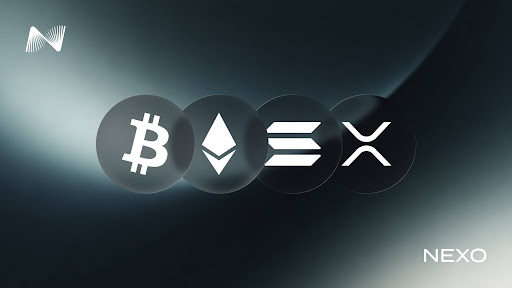
Nexo has expanded its Zero-interest Credit (ZiC) offering to include Solana (SOL) and Ripple (XRP) as eligible collateral, marking what it says is an industry first for zero-interest, no-liquidation lending backed by these assets.
The move broadens access to interest-free borrowing beyond Bitcoin (BTC) and Ethereum (ETH), which previously dominated the platform’s collateral base.
The announcement comes as crypto-backed lending continues to evolve, with platforms seeking to attract a wider investor base by offering more flexible borrowing structures tied to digital assets.
Expansion beyond Bitcoin and Ethereum
Nexo said the addition of SOL and XRP reflects shifting collateral trends on its platform.
While Bitcoin and Ethereum still account for around 70% of total collateral volume—closely mirroring their broader market dominance—more than 30% of loans are now backed by alternative crypto assets.
SOL and XRP lead this segment, prompting the platform to extend its flagship ZiC product to these tokens.
The company said the move allows a broader group of users to access liquidity without selling their holdings.
“Nexo has always believed in being where the market is going, not where it already is. Zero-interest Credit set a new standard for Bitcoin and Ethereum holders, and expanding it to Solana and Ripple is the logical next step, one we are taking before anyone else,” said Elitsa Taskova, Chief Product Officer at Nexo.
How the zero-interest credit product works
ZiC enables users to borrow stablecoins at 0% APR over a fixed term, with no risk of forced liquidation during the loan period.
The structure includes predefined repayment terms visible at the outset, offering greater predictability compared to traditional crypto lending products.
For SOL and XRP-backed loans, ZiC operates at a 30% loan-to-value (LTV) ratio, with minimum collateral requirements set at 100 SOL or 5,000 XRP.
The core proposition remains unchanged: users can unlock liquidity while maintaining exposure to their crypto holdings.
The product has already seen notable traction. Nexo reported more than $170 million in total loan volume through ZiC, alongside a 66% borrower renewal rate and an average of four renewals per user.
More than half of the borrowed funds remain on the platform, indicating that users are leveraging liquidity while staying invested.
Growing relevance of crypto-backed lending
The expansion comes amid increasing recognition of crypto-collateralized financing in traditional financial systems.
In March 2026, US mortgage agency Fannie Mae began accepting crypto-backed mortgages, allowing borrowers to pledge Bitcoin without liquidating their assets.
Nexo positioned its ZiC offering within this broader trend, emphasizing demand for liquidity solutions that do not require asset sales.
The company said extending the product to SOL and XRP aligns with growing diversification in crypto portfolios and evolving borrower preferences.
Latest developments: Banking groups want regulators to pump the brakes on the Genius Act rollout.
- Major U.S. banks have asked for extended public comment periods before full implementation.
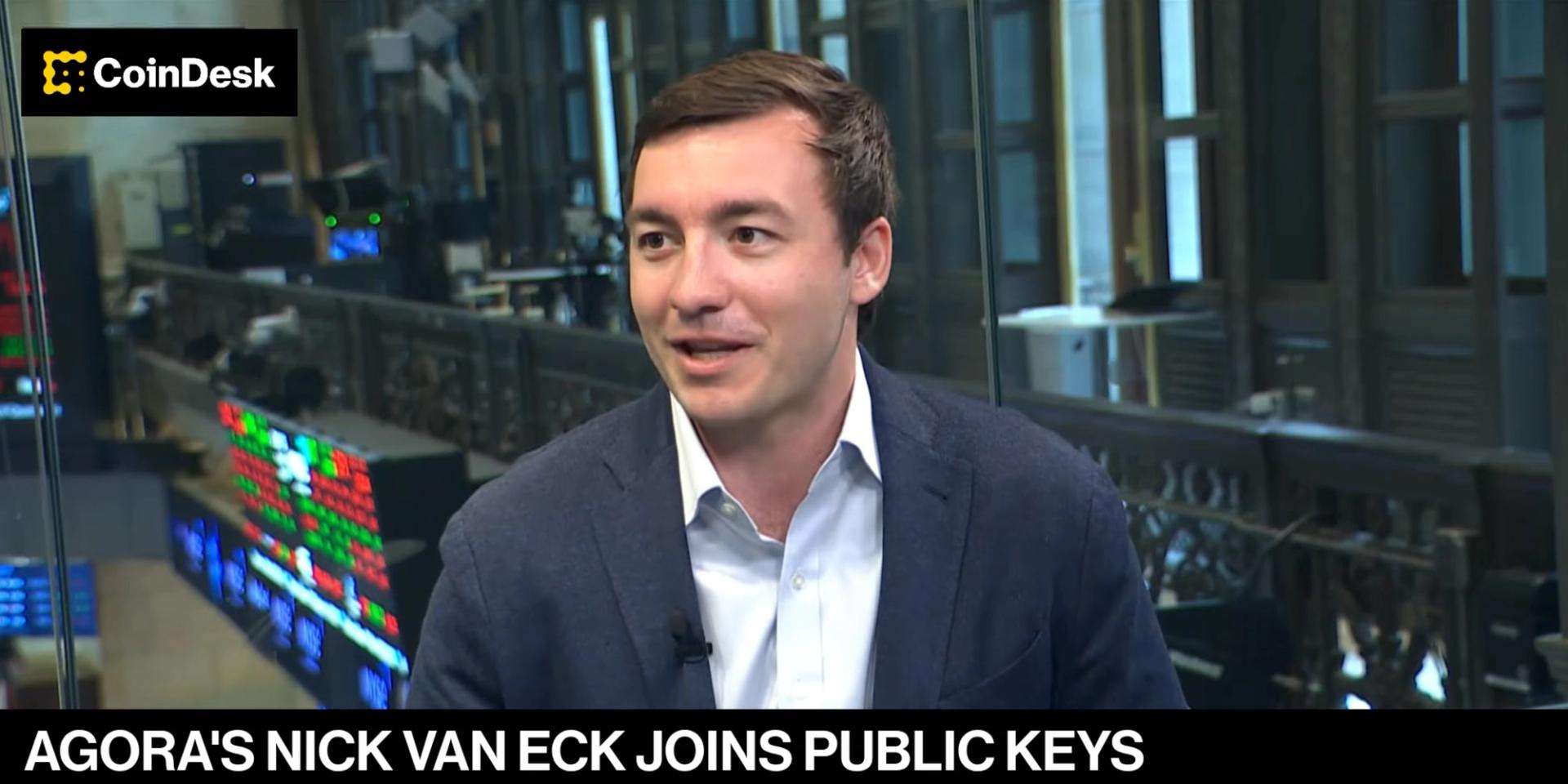
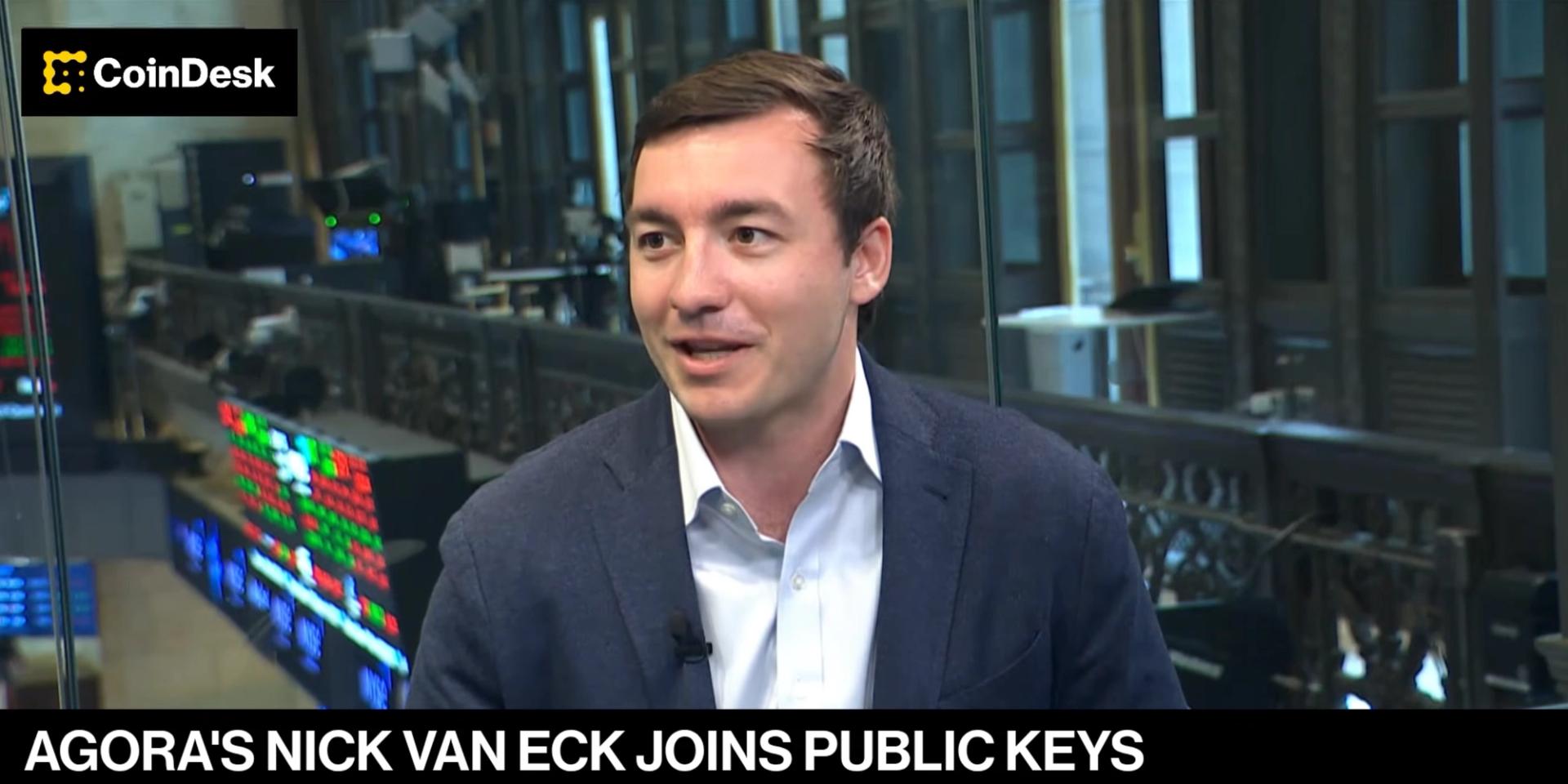
- Agora CEO Nick van Eck said the move is “not much of a surprise,” calling the law one of the most significant in banking history
- Van Eck expects continued efforts to slow the process over the next year as banks assess risks to their business models
Reading between the lines: The fight centers on deposits and yield economics.
- Van Eck argued banks’ real concern is “deposit flight” if stablecoin issuers can pass through rewards to users
- Traditional banks currently profit from the spread between near-zero deposit rates and higher returns at the Fed, he said
Why it matters: A unified federal framework could reshape U.S. finance.
- Van Eck said a national regime would boost innovation and global dollar adoption
- The Genius Act would require stablecoin issuers to operate as banks, raising the bar for entry
- The outcome could determine whether crypto firms or traditional banks dominate digital dollar infrastructure
Closer look: Agora is betting on a bank charter to compete.
- The firm filed for a national trust bank charter with the OCC last week, aiming for approval by year-end
- A charter would allow Agora to issue stablecoins directly under federal oversight
- Van Eck said direct issuance could eliminate “egregious fees” in fiat-to-crypto on/off ramps
What comes next: Agora is eyeing a broader financial stack.
- The company plans to expand beyond issuance into custody, compliance, and infrastructure services
- Van Eck said the goal is to bring businesses “on-chain without them knowing it,” emphasizing seamless integration
In today’s newsletter, Josh Olszewicz from Canary Capital introduces Sui blockchain and discusses its potential impact on Web3 adoption and optimization for consumer applications.
Special alert: Are you going to Consensus Miami? Don’t miss the closed-door, Wealth Management Day on May 6. There is a special side event, dedicated to advisors. Attendance is complimentary for credentialed advisors. A CRD number is required to apply.
Happy reading.
Breaking down
The Sui (pronounced “swee” like sweet) network is emerging as one of the more differentiated Layer-1 blockchains in the current market cycle, combining novel architecture with a design philosophy aimed squarely at consumer-scale applications. A Layer-1 blockchain is the base layer of a network, where transactions are recorded, validated and finalized. While often grouped alongside other high-throughput chains, Sui takes a distinct approach to execution, data ownership and tokenomics, differences that may prove meaningful for long-term adoption and investor positioning.
Launched in 2023 by Mysten Labs, Sui is a delegated proof-of-stake (DPoS) Layer-1 blockchain built using the Move programming language. Its core innovation lies in an object-based data model that enables parallel transaction execution, allowing the network to process transactions simultaneously rather than sequentially. This architecture is designed to deliver high throughput and low latency, improved scalability without reliance on rollups (transaction batching) and native support for complex, asset-centric applications.
Unlike traditional blockchains, where every transaction competes for global consensus, Sui distinguishes between owned objects, which can be processed independently, and shared objects, which require consensus. This selective execution model reduces bottlenecks and enhances efficiency at scale.
Sui’s design is optimized for consumer-facing Web3 use cases, including gaming, digital identity and social applications. By minimizing execution friction and improving user experience through features like zero-knowledge (zk)-based logins and passkeys, the network aims to bridge the gap between Web2 usability and Web3 ownership. The broader implication is straightforward: if Web3 adoption is ultimately driven by applications rather than speculation, architectures like Sui’s may be structurally advantaged.
Beyond its base layer, Sui expands into a broader infrastructure stack. It includes an execution layer for smart contracts and asset logic, decentralized storage via Walrus for verifiable data, programmable encryption through Seal for access control and confidential compute with Nautilus to support hybrid on- and off-chain applications. Together, these components form a full-stack Web3 environment within the Sui ecosystem, reducing reliance on centralized infrastructure providers.
On the consensus side, Sui uses a dual-layer architecture. Narwhal handles data availability, while Bullshark provides transaction ordering and finality. This design enables the network to maintain high throughput without compromising security.
The total SUI token supply has a fixed maximum cap of 10 billion tokens, with no ongoing inflation beyond that cap. Key features include gradual token release through long-term vesting schedules, staking rewards distributed from pre-allocated supply rather than new issuance and an intentionally limited early circulating supply to reduce sell pressure.
Sui has shown steady growth across several key metrics. Transactional activity has remained consistent and active addresses have increased. Total Value Locked (TVL), or how much notional value is inside of the ecosystem, has expanded alongside the growth of decentralized finance (DeFi) protocols and stablecoin integrations. TVL peaked in October 2025 at around $2 billion and has since declined to $600 million, reflecting the broader pullback in assets across the sector.
Ecosystem growth has been driven by the expansion of DeFi platforms, the integration of major stablecoins to improve liquidity and usability and incentive programs paired with emerging consumer applications that increase engagement. Examples include Scallop, a DeFi hub focused on stablecoin lending and yield generation; Run Legends by Talofa Games, a move-to-earn fitness RPG where users walk and run in real life to battle and earn rewards; and FanTV, a TikTok-style social media platform.
One way to assess Sui, and crypto networks more broadly, is through a “network P/S ratio” (market cap divided by fees). This metric reflects investor expectations for future growth and the relationship between current usage and valuation. However, unlike traditional equities, fees are volatile, only accrue to validators and token holders who stake their SUI and are highly sensitive to incentives and subsidies. As a result, valuation should be contextualized alongside user adoption, transaction trends and ecosystem expansion.
Sui is also beginning to intersect with traditional financial infrastructure. The launch of SUI-linked investment products, including exchange-traded vehicles with staking exposure, signals growing institutional interest. This trend mirrors broader crypto market evolution, where access, yield and regulatory wrappers have unlocked pathways for sophisticated institutional access and capital deployment.
Sui represents a distinct approach within the Layer-1 landscape, combining parallelized execution and object-based architecture, a non-inflationary, vesting-driven token model and a growing ecosystem of consumer and DeFi applications.
For investors, the key question is not simply whether Sui can compete on throughput, but whether its design translates into sustained user adoption and economic activity. If it does, the network’s architecture and token structure could position it as a meaningful component in the construction of the next phase of Web3 growth.
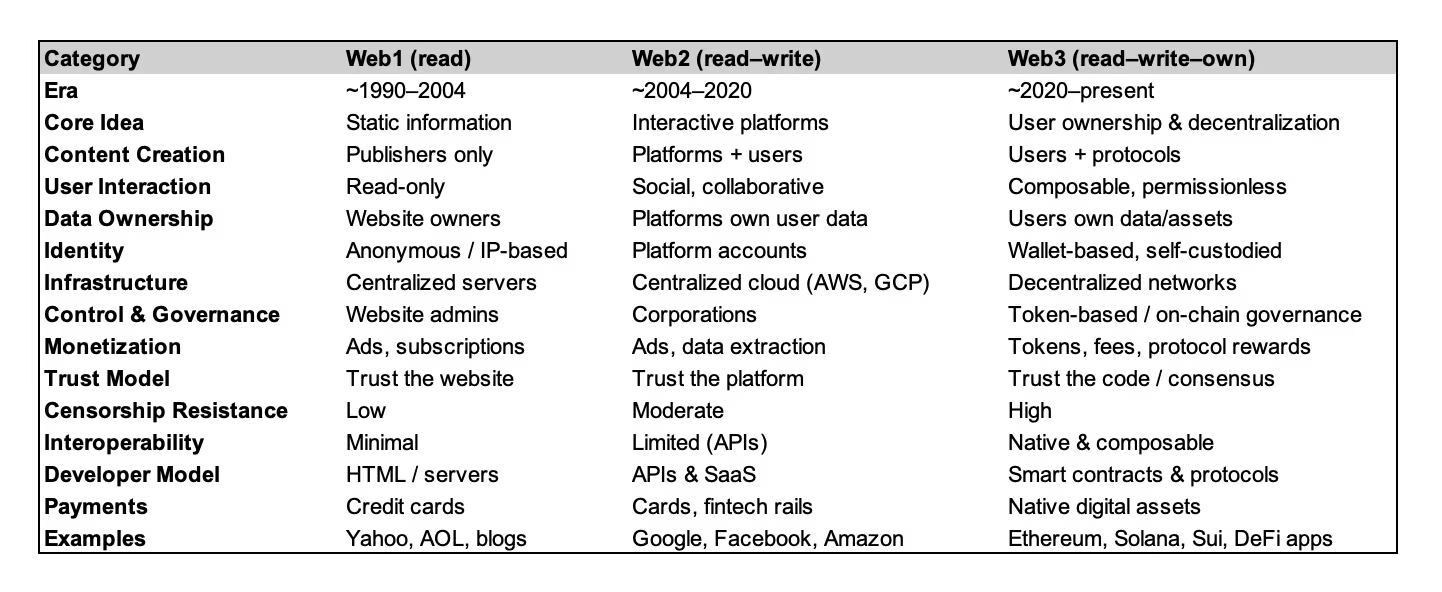
Generations of the Internet

Web1: Information online | Web2: Platforms and social interaction | Web3: Ownership, composability, and programmable value
For more additional learning and a unique networking opportunity, Canary Capital is partnering with 3iQ, Digital Ascension Group, and Bitnomial, for an exclusive event on May 4 in Miami. Learn more.
– Josh Olszewicz, portfolio manager, Canary Capital
Keep Reading
Meta just handed Solana a corporate endorsement worth billions in narrative value. The social media giant has quietly rolled out USDC stablecoin payouts for creators on Solana and Polygon, and the crypto market is still processing what that news actually means for SOL’s price trajectory.
No verified 24-hour price spike has been confirmed yet, but the institutional signal is loud. Meta launched the program in Colombia and the Philippines on April 29, marking its first serious re-entry into stablecoins since the Libra collapse four years ago.
Stripe handles tax reporting; no fiat conversion is provided by Meta itself.
Polygon Labs CEO Marc Boiron called it directly: “The future of marketplace payouts is being built on blockchain infrastructure like Polygon,” adding that expansion to 160-plus countries is expected by year-end.
The broader US regulatory landscape around crypto payments and tax reporting adds another layer of complexity traders should watch.
Is Solana Price Positioned to Break Out on Meta’s Institutional Stamp News?
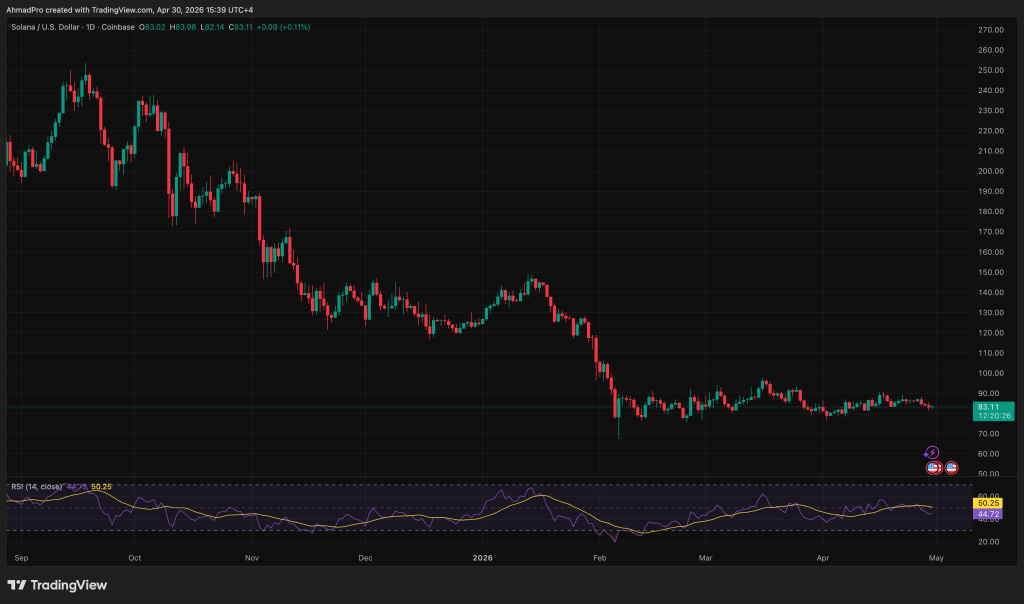
The Meta headline looks bullish on paper, but the chart is not confirming it. No breakout, no volume expansion, and price is still below key momentum levels, that matters more than sentiment.
Right now, SOL is in a fragile spot.
If the Meta narrative actually pulls in institutional attention, that is when price reclaims resistance at $90 and starts trending higher.
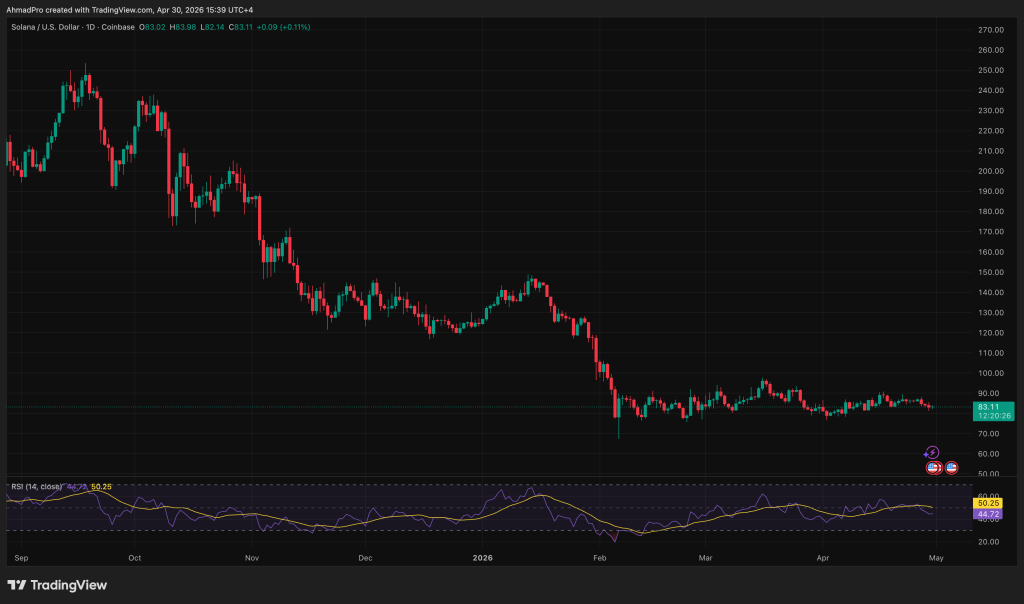
The risk is that broader skepticism spills over. If support at $80 fails, the setup turns bearish again and downside opens.
The key takeaway is simple, this is not a catalyst you chase. It is one you watch play out over time, because real impact depends on adoption, not announcement.
Bitcoin Hyper Eyes the Infrastructure Gap Meta Just Exposed
Meta choosing Solana highlights what actually matters now, speed and low latency are not optional anymore for real-world payments.
But that also raises the next question. If Solana is already being pushed as a base layer for these use cases, where does the next layer of performance and scalability come from?
That is where projects like Bitcoin Hyper are trying to position themselves. The idea is to build a Layer 2 on Bitcoin with SVM integration, bringing fast smart contract execution while keeping Bitcoin’s security.
The presale is already above $32.5M at around $0.0136793, which shows strong early demand. Features like staking, a native bridge, and low-latency execution are designed to support real usage rather than just narrative.
But it is still early, and that matters. Liquidity is untested, execution is not proven, and everything depends on delivery after launch.
So the shift is clear, Solana proves the demand for speed, while projects like Bitcoin Hyper are trying to capture the next layer of that narrative, with higher potential, but also higher risk.
The post Did Mark Zuckerberg Just Pick Solana? Meta Backs New Blockchains for USDC appeared first on Cryptonews.


- Ondo price hovers around $0.26 after bouncing off crucial support.
- Ondo leads tokenized stocks, ETFs with over $825M TVL peak.
- Failure to hold support could see ONDO dip to $0.20.
Ondo (ONDO) is trading near a critical psychological support zone, with intraday action including a retest of resistance above $0.26.
The token is poised at these levels as on‑chain activity around tokenized stocks and exchange-traded funds (ETFs) attracts institutional and retail capital.
However, with prices pegged in a narrow range below $0.30 since early February, could the broader real‑world asset (RWA) sector growth buoy ONDO?
Ondo Finance powers access to tokenized stocks and ETFs
Ondo Finance has emerged as one of the largest platforms for tokenized stocks and ETFs.
Currently, it accounts for over half of the sector’s total market by value, with RWA‑focused analytics trackers showing the protocol hitting over $825 million in total value locked (TVL) at peak.
The traction cuts across more than 250 tokenized US stocks and ETFs, including blue‑chip names such as NVDA, AAPL, and major ETFs like SPY and QQQ.
These assets are now available across Solana, Ethereum, and BNB Chain, giving holders cross‑chain exposure and liquidity via major wallets, exchanges, custodians, and protocols such as Binance, Bitget, MetaMask, Ledger, and Blockchain.com.
In a bid to deepen maturity, Ondo recently announced a collaboration with Broadridge.
The aim is to enable holders of over 250 tokenized stocks and ETFs to participate in proxy voting and receive regulatory filings and issuer communications related to these securities.
Separately, more than 260 Ondo‑backed tokenized products are now listed on the KuCoin Web3 Wallet, signaling growing integration into mainstream crypto infrastructure.
Despite this momentum, ONDO’s price has remained subdued, raising questions about the lag between protocol‑level growth and token‑price performance.
ONDO price technical analysis: can bulls reclaim $0.30?
From a technical standpoint, ONDO is currently navigating a short‑term bearish backdrop as the price consolidates near $0.26.

The daily chart shows the relative strength index (RSI) in a neutral zone, suggesting neither extreme overbought nor oversold conditions, while the MACD signal line remains negative, underscoring underlying bearish momentum.
Key support clusters lie around $0.24-$0.26, a decisive zone for both bulls and bears.
If price breaks lower, it could open the path toward $0.20, whereas a sustained hold above $0.26 may invite a retest of the recent range high near $0.27–$0.28.
The key target for bulls will be a fresh run to $0.30, a level last seen in mid-February.
On the weekly timeframe, RSI is drifting toward oversold territory, and price is trading below key exponential moving averages (EMAs).
This hints at exhaustion but also suggests bulls need a clear breakout above resistance to shift the overall bias.

“Enough is enough”: Greens leadership make video over flotilla abductions

Thomas Hearns ranks one world champion above all of the legendary Four Kings

Donald Trump ‘removes tariffs’ on Scottish whisky as he’s wooed by King and Queen

Manchester United reach agreement with Casemiro over contract clause amid transfer speculation

US brings back mandatory military draft registration

Steven Gerrard disagrees with Gary Neville over ‘shock’ Chelsea and Arsenal claim | Football


-

 Tech3 days ago
Register Renaming | Hackaday
-

 Fashion6 days ago
Weekend Open Thread – Corporette.com
-
 Crypto World5 days ago
Hyperliquid $HYPE Rally Builds Momentum as AI Sector Enters Prove-It Phase
-

 Business7 days ago
Patterson-UTI Energy, Inc. (PTEN) Q1 2026 Earnings Call Transcript
-

 Politics3 days ago
Drax board avoid their own AGM, accused of greenwashing & environmental racism
-
 Sports4 days ago
IPL 2026: Ruturaj Gaikwad registers slowest fifty of the season, enters all-time unwanted list | Cricket News
-

 NewsBeat4 days ago
LK Bennett closes all stores after entering administration
-

 Crypto World6 days ago
Michael Saylor says BTC winter is over. Market analyst disagrees, says bitcoin was in a pullback
-

 Fashion2 days ago
Kylie Jenner’s KHY Enters a New Era with ‘Born in LA’
-

 Tech3 days ago
Images of Samsung’s rumored smart glasses have leaked
-

 Tech3 days ago
Why Blue Badges Disappeared From Toyota Hybrids
-
 Entertainment5 days ago
Mariah Carey Slams Deposition Claims In Brother’s Lawsuit
-
Crypto World7 days ago
Is Algorand One of the Few Quantum-Resistant Blockchains? Here’s What the Data Shows
-

 Business2 days ago
Most Commercial Energy Audits Miss the Real Losses
-
 NewsBeat6 days ago
Trump threatens to review UK’s claim to Falkland Islands and punish Nato allies over Iran war disagreement
-

 Business6 days ago
Jeanine Pirro announces closure of Federal Reserve building cost probe
-

 Business3 days ago
(VIDEO) Charlize Theron Climbs Times Square Billboard to Promote New Netflix Thriller ‘Apex’
-

 Tech5 days ago
Microsoft to roll out Entra passkeys on Windows in late April
-

 Crypto World2 days ago
CFTC’s AI will review U.S. crypto registration applications, chairman tells CoinDesk
-
 Crypto World6 days ago
Nvidia (NVDA) Stock Jumps 5% as Intel Earnings Ignite Semiconductor Rally
You must be logged in to post a comment Login