
Politics
Record 176,000 children homeless: voters urged to make housing a defining issue in local elections



The number of children living in temporary accommodation in England has risen again to around 176,130, setting a new record and deepening the UK’s housing emergency.
That is the equivalent of the entire population of Oxford.
With local elections taking place on 7 May, campaigners say the figures should be a wake-up call for voters and candidates alike, warning that housing and homelessness must become a defining political issue.
Just Fair, a UK charity working to defend and promote economic, social and cultural rights, including the right to housing, says the figures reflect a failure to treat housing as a basic human right.
Alex Firth, advocacy and communications officer at Just Fair, said:
These figures show a clear failure to protect children’s rights. Every child has the right to a safe, secure home, but across the UK that right is being denied on a huge scale. Housing is not a privilege, it is a human right recognised in international law. When that right is not protected, it affects everything: children’s health, education, stability and sense of security.
The crisis is particularly acute in London, where the relationship between housing costs and child poverty is stark. Housing costs in London are significantly higher than the rest of the UK and continue to rise. In the private rented sector, the average rent is now £1,957 per month, accounting for 41.6 per cent of household income (ONS, August 2025).
As a result, child poverty rates in London almost double when taking housing costs into account. They rise from 16 per cent before housing costs to 31 per cent after (HBAI, 2026), a much larger increase than in any other region.
The rise comes despite historic progress in the past. In 2010, the number of children experiencing homelessness nationally fell to under 70,000, showing that government action can reverse the trend.
Councils under pressure on housing
Campaigners warn that the crisis is most acute at the local level, with councils under growing pressure to house families in temporary and often unsuitable accommodation. New analysis from the Local Government Association reveals that councils in England are facing a cumulative £3bn shortfall in temporary accommodation funding between 2017/18 and 2029/30.
Research shows the daily realities families face are severe. Parents are forced to prepare food for young children without access to kitchens. Children with special educational needs may face journeys of up to two hours to school when placed out of borough. Young people preparing for exams have to study in overcrowded, noisy spaces without reliable internet access.
The United Nations has repeatedly raised concerns about housing in the UK. In its latest review, the UN Committee on Economic, Social and Cultural Rights called on the UK government to increase the supply of affordable housing, strengthen renters’ rights, and address the root causes of homelessness.
Firth added:
Local authorities are on the frontline, but they need the powers, funding and national leadership to act. These elections are a moment for accountability. People should be asking: will those seeking election commit to making the right to housing real in our communities?
After years of rising homelessness, we need more than short-term fixes. We need a rights-based approach that guarantees everyone a safe and secure place to live.
While recent UK government strategies, including the Child Poverty Strategy and National Plan to End Homelessness, have rightly identified the need to tackle the temporary accommodation crisis, action must go further.
Featured image via the Canary
By The Canary



The Starmer government has raised the ‘UK National Threat Level‘ from ‘substantial’ to ‘severe’. The change means the government and security services claim a terror attack in the next six months is ‘highly likely’.
The move comes after the 29 April 2026 stabbing incident in Golders Green, in which a man with known mental health issues and a history of violence, was declared to be a terrorist incident. The stabbing attack by supporters of Israel on a Muslim man last week failed to move the dial – or even get much attention from the government or state-corporate media:
View this post on Instagram
In fact, the only appearance of the Islamophobic attack by Zionists on the front page of search results specifically looking for it is by Iran’s Press TV:

The government’s Joint Terrorism Analysis Centre (JTAC) claimed the rise was driven by “an increase in the broader Islamist [threat]”, adding a nod to the “extreme right-wing terrorist threat”, though police and government show no concern about right-wing extremism in practice. It is certain to be used by the Starmer regime to intensify its pro-Israel war on anti-genocide protest and UK citizens’ rights.
Featured image via the Canary
By Skwawkbox


Meta is allowing illegal Israeli settler groups to monetise content on its platforms, whilst banning Palestinian accounts, including journalists.
Meta is allowing sanctioned Israeli settler groups to monetise content while banning Palestinian accounts, including journalists.
Al Jazeera’s @Nour_Odeh reports. pic.twitter.com/AAQKb2lHIT
— Al Jazeera English (@AJEnglish) April 29, 2026
A report by 7amleh, the Arab Center for the Advancement of Social Media, reports that Meta has allowed settler-affiliated accounts and “extremist media outlets” to generate revenue on its platforms. This is despite the content clearly violating its own policies, and:
publishing violent, racist, and inciting content against Palestinians, and despite many being directly linked to promoting illegal settlement expansion, as well as widespread violence and attacks against Palestinians in the West Bank.
The report found that the tech giant:
not only tolerates violent and inciting speech but actively incentivizes its production and spread”, in violation of its own monetisation and content policies.
One rule for them
Certain content is supposed to be ineligible for monetisation on Meta platforms. This includes promoting illegal outposts, justifying settler violence, mocking Palestinians, calling for forced displacement, genocidal rhetoric and celebrating the destruction in Gaza.
Beyond internal policies, Meta is subject to internationally recognised human rights obligations. These apply to business enterprises, including in situations of armed conflict and military occupation.
These obligations are articulated in the UN Guiding Principles on Business and Human Rights, which establish that companies have an “independent responsibility” to respect human rights irrespective of a state’s conduct or failure to comply with its own international obligations.
The report added that allowing such content:
undermines Meta’s responsibilities under UN principles, international humanitarian law and international human rights law.
In contrast, the report found that Palestinian voices:
remain structurally excluded from monetization tools solely because they are based in Palestine, regardless of the quality or legality of their content.
Of course, this produces a system where Meta is not only suppressing Palestinian economic and journalistic participation online, but actively incentivises the very actors contributing to the human rights violations against them.
The report added:
These findings reflect a governance model in which monetization decisions are shaped by political power and geography rather than by harm, legality, or policy compliance. By monetizing content linked to settlement illegal expansion, state violence, and incitement, Meta risks contributing to and benefiting from conduct that violates international humanitarian and human rights law.
Meta: complicit in genocide
Previously, Meta whistleblowers revealed that Israel was leading a global “censorship campaign” which targeted pro-Palestinian speech. But now, it appears that the company is helping to put money directly in the pockets of violent settlers.
They are all complicit in the genocide. https://t.co/xdFeia1CpB
— Maawèh ® (@Maaweh_mR) April 29, 2026
Additionally, the New Humanitarian reported that both Google and Meta have run over 100,000 advertisements for businesses that the UN says are facilitating illegal Israeli settlements in the occupied West Bank.
Illegal Zionist settlers do not need any more help, whether that is promotional content or financial. But as long as Western governments, companies and tech giants continue enabling their war crimes, they will not stop.
The rules of social media sites should be the same for everyone. As if Israel’s system of apartheid was not bad enough, Meta is making that system digital.
Feature image via Al Jazeera English/YouTube
By HG


The Greens have followed up on their letter to Keir Starmer earlier today, 30 April 2026, with a video demanding Starmer take action to protect the humanitarian Gaza flotilla under attack from Israel.
Gaza flotilla: political pressure from the Greens
The video features Green leader Zack Polanski as well as parliamentarians and both his deputies. They say that “Enough is enough” and remind Starmer that civilians shouldn’t have to risk their lives to get aid to Palestinians that Israel is deliberately starving:
View this post on Instagram
But the craven Starmer is in the pocket of the Israel lobby and too busy waging war on anti-genocide protest to even speak out against Israel’s crimes and piracy, let alone act on what it has done to the Gaza flotilla and its passengers.
Featured image via the Canary
By Skwawkbox
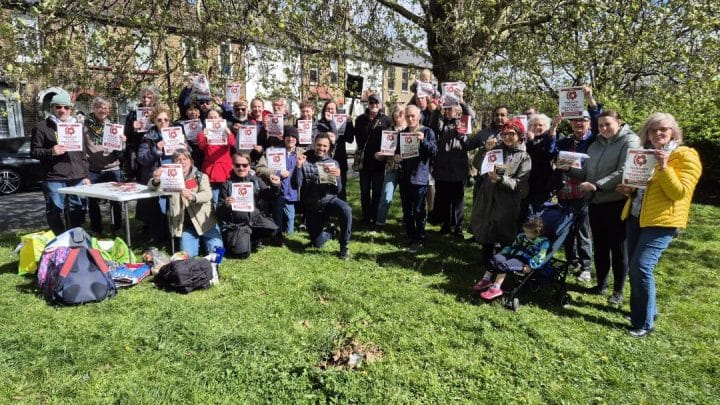

Cathall, London — A week and a half until local elections on 7 May, and communities across the country are seeing the widest array of candidates from across the political spectrum. With protest votes, apathy and anger becoming the main opposition to getting engagement from local voters, independent groups are making it clear they stand ready and committed to fill this void of neglect in their local communities.
One of those groups is Waltham Forest Independent Socialists, borne from the Your Party movement, who have been hard at work trying to bring people together and heal local divisions.
The Canary spoke to Connor Rosoman and Susan Catten who are standing for Cathall Ward. They told us about how it has been on the doors and how local people are feeling in light of the area’s traditional Labour heritage.
View this post on Instagram
Cathall candidate Catten: ‘A woman said, ‘at last, a party I can vote for”
First, Susan Catten told us how local people are feeling about politics and how engaged they are ahead of the locals:
Well, actually, I have found it quite invigorating. We’ve had a lot of support. People resonate with the issues, for example, over housing, about stronger licensing laws for landlords, the issue about the lack of council tax support.
These things resonate with people on the doorstep so actually, although we are quite a new organisation and we have to explain ourselves. I think one of the turning points for me was when we knocked on a door and a woman said, ‘at last a party I can vote for’, because it represented all the things that she felt needed doing.
It’s been quite exciting.
Rosoman added:
Yeah, that’s right. The campaign has been really positive at this stage. So, I mean, the context of it really is that, you know, In Cathall, previously, Labour won 70 plus percent of the vote. It’s a very, very strong Labour ward. But the mood on the doors has been, as you’d expect, one where loads of people are really questioning who they want to vote for this time around.
A lot of people that have voted Labour and been very, very disappointed in the current government. And there’s a bit of soul searching going on. There’s a lot of apathy. I think, especially because, like Cathall, it’s worth kind of saying, it’s pretty much the poorest ward in Waltham Forest.
Waltham Forest is an area with some of the highest wage inequality in London, so it’s an area of extremes, and Cathall’s definitely on the poorer end and it has a lot of social housing. So, there’s a lot of people that are very disappointed, very angry and are either looking for something different or they’re just kind of like ‘oh well they’re all the same, it’s not going to change anything’.
Sometimes it’s hard to break through that a lot of the time. But then we’ve been able to come along and we’ve been able to say ‘we’re very different that’s the whole reason we’re here and we’re also trying to build something that’s rooted in ordinary people standing up for what we see that we need around here’.
That’s really broken through with people and it’s meant that we’ve been able to have some really good conversations and the response has been really positive so far.

Cathall candidate Rosoman: ‘Even if people haven’t heard of us, they’re open to us’
We asked both Rosoman and Catten whether Reform are a threat in Cathall. They then told us how people are feeling on the doors about the prospect of a Reform councillor getting elected, with Rosoman saying:
We’ve not had a lot of opposition, Reform want, i think, they want to think that a ward like this is the sort of place that they could stand and win, but they’ve not really got any ground. It’s a very diverse kind of community, lots of immigrants and so on who can see right through that so the response that we’ve had if it’s not being just like ‘oh well you know, i don’t care they’re all the same i don’t want to talk’
It’s been really positive I would say that if you know even if people haven’t heard of us, they’re open to us and they’re following what we’re saying.
Catten agreed, telling us:
Some people might be looking at Reform, some people might be deadly afraid of them. Actually, some people have said they’ve had some Reform leaflets, and they’ve just torn them up or put them in the bin. I don’t think I’ve actually encountered anyone who admitted to saying they would vote reform.
I think, you know, when people open the door and you’re engaging with them, yeah, they might say they’re voting green, but they certainly are not saying they’re voting Reform.
That’s not to say they won’t get some votes. Of course they’ll pick up some votes. But, you know, I don’t get the feeling there’s a groundswell of support for them. So, I don’t see them as a real threat.
And to be quite honest, on the doorstep, I’d much rather concentrate on talking about what we can do in Cathall should we be elected.
View this post on Instagram
Catten: ‘People are tired of the same old, same old’
Discussing the appetite amongst voters for a different way of doing local politics, Catten told us:
It is a new way of doing politics because, you know, it’s not the same old, same old, is it? The thing is, people are tired of the same old, same old. And so our leaflets, our approach on the doorstep is about, look, give us a chance. You know, we’re a fresh organisation and we are committed.
And we’ve actually committed a policy of not taking the councillors’ allowances. That’s something no other party has done.
But actually, when we’ve had engagements with people, I think people are turning around. At the end of the day, we are a new organisation, but we are enthusiastic, we are committed, and I think that comes across well on the doorstep.
Going further, Rosoman also informed:
We’re registered as Waltham Forest Independent Socialists. What we’ve been saying is that we’re a new local political party. We’re rooted in these different community campaigns and local trade unionists and renters. And that does resonate with people.
I’ll use an example from yesterday that I was, like, so energised by. We were talking to this South Asian family who’d been clearly politicised over Palestine. We mentioned Starmer’s support for genocide as just an offhand thing. Their kids started chanting ‘free, free Palestine’. You could tell that they’d been out on the marches and stuff. And I think this is something that gets missed sometimes. Their politics didn’t end at Palestine. Even if Palestine was one of the things that was on their mind, they would be political people.
And I think that it’s hard not to, you know, look at what’s going on in the Middle East, in Gaza, and not draw, like, conclusions about everything else. And so, you know, they started then asking all these questions about, like, what would we do about, like, social behaviour and crime, homelessness, and housing and all of these sorts of things.
I think that people do join those dots. People see it from various starting points, don’t they? People are pissed off.

Rosoman then told us about how, like many across the country, local residents feel like they’ve been continually lied to and let down:
They build affordable housing which everyone knows is totally unaffordable, it’s only affordable to those with money, and the people that need affordable housing can’t get it. People really resonate on what we’ve said about the housing crisis, and it connects them to these issues of community as well. Like, people struggle to stay in the area, they struggle to stay around people they know, all of these things.
And we’ve connected that to two local community centres that have been closed in recent years. One of them just stands empty. There not being used for anything, and we’ve been talking about, well, why not reopen that, so that we can actually use it and it can be part of the community and it can keep people together and kind of re-establish some of that social life that’s just been kind of crushed and atomized over the last few years.
These sorts of points i think really resonate because we’re connected to the local area, we’re able to talk about these issues that directly connect to people’s lives, i think that has helped.
Rosoman: ‘They really bloody hate Kier Starmer’
Labour will undoubtedly face a kicking due to their cruel policies and continuation of Tory austerity across working class areas. Moreover, Rosoman has encountered considerable hostility towards Starmer specifically within the local community. This can only underscore how unhappy people in London are with the Westminster political elite:
A lot of people are going to vote against Labour not just because of the local council but because they really bloody hate Kier Starmer, and that is also perfectly valid and it’s important.
If we want to send a message to Labour you know on the national level well, seeing them lose all these seats in the council elections is one of the ways that we can do that. That’s been something that’s really connected with people, so I wouldn’t say that it’s like just the local thing, but I think that we’re very well placed being the ‘new kids on the block’, as independent socialists, that are able to really connect to that.
Speaking of Your Party and local engagement in active campaigning, Rosoman told us:
We’ve been a really strong proto-branch, I think, from the beginning. And our election launch campaign, even, you know, a few months ago, had, like, 65 people present. And then, since then, last weekend, just as a standard weekend canvassing session, we had 11 people come out. A couple of weeks before that we did this mega canvas and we had 30 plus people come out so you know we’ve had a real groundswell of people that are keen on doing this.
We’ve got like a real base of people on the ground that are really outstanding local activists and that want to build something and are seeing this election as a chance to kind of plant this flag you know and so it’s not just because of the hard work of a few I mean it’s been hard work I don’t want to understate that but it’s definitely been this huge collective effort and the fact that we’ve really had something like fireball on the ground that has allowed us to really get around.
You know, we’ve hit every door in the ward now going back over roads and trying to get people that didn’t answer last time and that sort of thing.
And locally, there’s like a really strong tradition of organising. Rothenstone in 2024 was, you know, the site of those like famous pictures, right, when the far right racist riots were happening. 10,000 people from the local community turned out on Walthamstow High Street to prevent them showing up and that was just an out of the woodwork, groundswell of people.
Those are the traditions that I think we have in this local area and so, people will show up and they will fight.

The left vote is at risk of a split due to the Green Party’s national pledge to stand in every ward. Subsequently, this led to backsliding on electoral agreements made with the local Green party in Cathall. However, Catten emphasised how local people seem to have had enough of political parties and are particularly resonating with independent politics:
There are a couple of Green Party candidates, but they’re only paper candidates. They’re not really standing with any policies.
I think when we’ve gone out, our leaflets have been very well received because they’re quite solid. They talk about what we want to do, what we’re aiming for and what we stand for, and that’s what I think is doing us favours on the doorstep. People are actually responding.
Yeah, there are some people who say, ‘oh, well, you know. you’re all the same’, or ‘I’m going to spoil my ballot paper’.
Nevertheless, Waltham Forest Independent Socialists continue to push forward, as Rosoman explains while describing his conversations with local voters:
The point that we’ve been making on the doors is that the Greens are basically letting us have this ward. They’re not doing a campaign. We’re knocking, you know, we’re doing this big campaign, knocking the doors. You know, the main place to put your vote, if you want to stick it to Labour, is with us. If you’re in Cathall, in many other places, even our supporters are going to be working for Greens.
But here in Cathall, the only place that we are standing in the borough, we’re the campaign on the ground, and that actually really do care.
‘I’m looking forward to having some tense conversations with Calvin Bailey, if I win’
If elected on May 7th, Rosoman outlined his first priorities and areas he intends to specifically focus on in Cathall:
Yeah, well, I mean… I think I’ve mentioned a couple of these things – community centres and the Queen Elizabeth Jubilee Centre. It’s one of the things we’ve really tried to point out. But also, as I say, this rent issue is hugely important. And we’ve got this specific issue in Walthamstow, where the council has announced a £30 million overspend – they’re looking to raise council tax and cut services. It’s the same picture you see everywhere, right?
I think that because we’ve been able to build a groundswell of support on the ground and so on, we’ll be in a good position, if we win, to come in and start speaking up about that immediately. That’s not something you can solve overnight, obviously, but the point we’ve been making is that every time you’re faced with a cut, you’re faced with a choice: do you just implement it, or do you try and fight it? And you can’t just fight it on your own – councils themselves have limited powers to do that – but we’re not coming at it as just me and Susan Katz and the other person standing in the ward. We’re coming at it with connections to local trade unions behind us.
Because we’ve got all of that behind us, I think we’re really in a position to speak against that, to connect with other people throughout London who are facing the same sorts of things, and to try and build a movement around it. And Starmer is going to be in such a weak position, if he even survives these local elections, so there’s a time to put demands on the national government for things like funding to councils. The government nationally will be in the weakest position they’ve been in yet coming out of these local elections, and that’s the time to keep up the fight, rather than say, ‘we’ve just been elected, so we can take a breather.’
Yeah, I’m looking forward to having some tough conversations with Calvin Bailey, if I win.
We at the Canary recognise that growing appetite for a new way of doing politics in our communities. After all, it is surely the only way to ensure that local people are truly at the heart of local policy.
We wish both Susan Catten and Connor Rosoman the best of luck for 7 May and urge local voters to choose candidates who actively show their commitment to really challenge the status quo.
Featured image provided via author
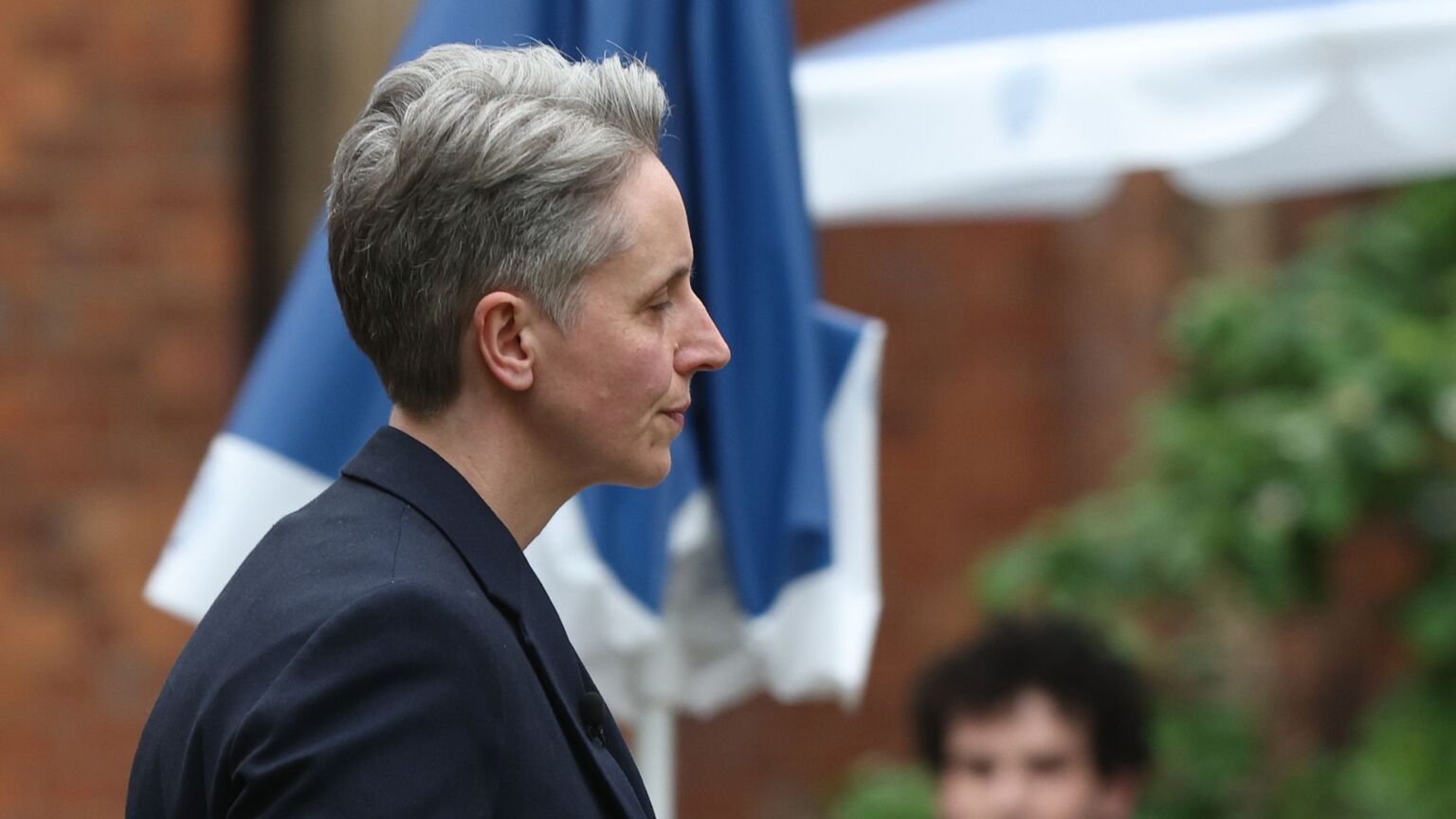
The High Court has just dealt a serious blow to the ability of academics and students in English universities to express themselves freely. In a judgment handed down on Wednesday, the court upheld Sussex University’s appeal against the Office for Students (OfS) – the regulator tasked with upholding free speech – and declared a fine imposed on the university following its failure to protect gender-critical philosopher Kathleen Stock to be unlawful.
This long and depressing story of campus cancel culture begins in 2021. Stock resigned from her post in October of that year after being subjected to an appalling campaign of ostracism, harassment, intimidation by masked protesters and internal pressure for her dismissal. She received death threats and, for periods, was advised by police not to leave her house. She was subjected to this medieval witch hunt for refusing to bow to trans activists and her insistence that it was morally unconscionable to perform gender-reassignment surgery on minors.
Shortly after Stock’s resignation, the OfS opened an investigation into Sussex. Unable to act on behalf of an individual, it instead examined whether the university had complied with its legal obligations to uphold free speech and academic freedom.
In March 2025, three-and-a-half years after Stock quit the university, the OfS imposed a £585,000 fine on Sussex under the powers of the Higher Education (Freedom of Speech Act) 2023 (HEFSA). The OfS’s target was Sussex’s ‘Trans and Non-Binary Equality Policy Statement’, which required, among other things, that course materials ‘positively represent trans people and trans lives’. The OfS concluded, not unreasonably, that such wording risked chilling lawful speech and academic freedom.
Not that Sussex saw it that way. Often described as one of Britain’s wokest universities, it hit back with a judicial review (reportedly spending more than the fine itself), which challenged the decision on almost every conceivable ground. At its core, however, was a simple claim: that this kind of policy was never within the regulator’s reach in the first place.
The ruling has now been handed down, and it makes for difficult reading for anyone concerned with freedom of speech and academic freedom on campus.
Part of the problem lies in the High Court’s restrictive interpretation of what counts as a ‘governing document’. That might sound like the sort of abstruse issue only lawyers would worry about. In practice, however, if equality, diversity and inclusion (EDI) policies are excluded from this definition, it means the OfS will struggle to scrutinise the kinds of internal policy frameworks that have proliferated across the university sector in recent years.
Filtered through various committees and working groups, often dominated by activist staff in rainbow lanyards, these EDI policies and harassment codes are what now regulate much of what can and cannot be said on campus. The result is a whole layer of policies that, in practice, function as the ‘documents that govern’ university life will no longer be treated as ‘governing documents’ that the OfS can scrutinise.
Take Leeds University’s sweeping ‘decolonising’ programme, which requires departments to embed its principles across their academic activity. London Metropolitan University uses mandatory EDI statements in academic recruitment, requiring applicants to state what they have done to ‘advance equality’. The University of Greenwich requires academics to ‘adhere to and promote’ its EDI agenda, which includes an ‘all-faculty decolonisation of curriculum’. Policies like these, through which speech is increasingly governed, now fall outside the OfS’s ambit. The High Court judgment has effectively prevented the OfS from fulfilling its purpose.
Ominously, the ruling also resets the meaning of ‘freedom of speech within the law’. For the OfS, Sussex’s trans policy was wrong because it was capable of catching speech – namely, gender-critical views – that are perfectly lawful. But the court said this was not enough. Universities may indeed, in some circumstances, restrict lawful speech, provided the restriction is justified and proportionate, it said. Apparently, the mere fact that a policy captures lawful speech does not, by itself, put a university in breach of its duty to uphold free speech.
The danger is all too obvious for anyone familiar with the way the higher-education sector works. The fight over freedom of expression will now be pushed further into case-by-case, European Court of Human Rights-style balancing exercises – with the right to express controversial views on matters of public importance weighed against competing claims about harm, dignity, equality and the rights of others. This is precisely the terrain on which universities have long defended restrictive internal policies, and what the HEFSA was supposed to root out.
Finally, the court gives ‘academic freedom’ a dangerously narrow statutory meaning, in which the relevant threshold is whether an academic is placed in jeopardy of losing his or her job or privileges. On this point too, the OfS’s approach was found to be legally flawed.
Yet for academics like Kathleen Stock, and the many others that groups like the Committee for Academic Freedom deal with day to day, the reality is very different. Pressure rarely operates at that level. Instead, it takes softer forms – cancellation, ostracism, exclusion from opportunities and reputational damage – all of which can chill speech long before anyone is in jeopardy of losing their job.
The result is that, while the statutory duties to protect academic freedom and freedom of speech remain in place, an enormous grey area has opened up that allows speech to be restricted on campus.
Let’s hope the Office for Students appeals. If this ruling stands and confines the regulator to universities’ formal ‘governing documents’, while pushing disputes over lawful speech into case-by-case balancing against claims of ‘harm’, it will have no teeth. All we will be left with is the Office for… well, no one at all.
Freddie Attenborough is director of research for the Committee for Academic Freedom.
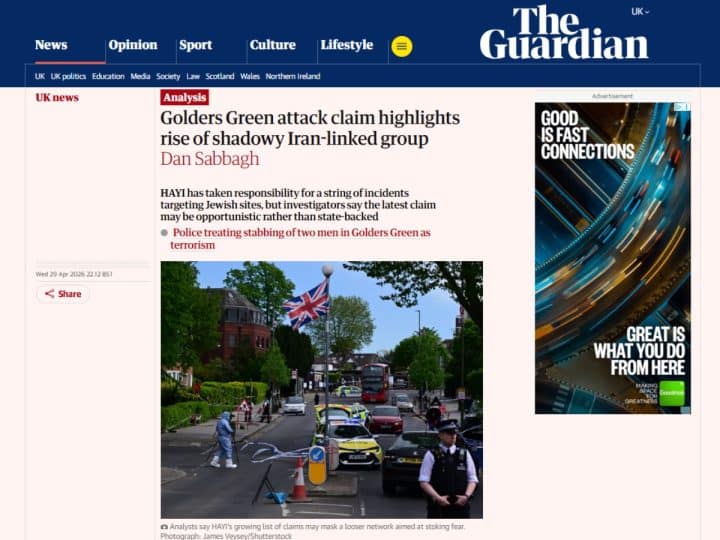

A series of attacks targeting Jewish communities across Europe has been widely attributed to a group calling itself Harakat Ashab al-Yamin al-Islamia (HAYI). The Guardian’s Dan Sabbagh seems to have been overcome by a rush to the head of certainty that HAYI is backed by Iran.
Given how long it took for the Guardian to start describing the genocide in Gaza as a genocide, we are intrigued by how quickly he and his editor have come to this conclusion. We’d like to check with Dan if he has verified these claims and that they are from an unbiased source that is not part of an agenda to gain advantage from the fallout.
The so-called ‘mainstream’ media is now consistently describing HAYI as having “Iranian state links” or being an “Iran-backed network.” However, we’ve been looking at the evidence, the language used in the group’s statements, and the reliability of sources, and we have to say that not only is there no reliable evidence we can find to support this narrative, but the circumstantial evidence all points the other way.
The Guardian’s reporting on HAYI and its gaps
In its recent article following the Golders Green knife attack, the Guardian reported that HAYI claimed responsibility within an hour of the incident. While the article correctly notes that investigators found “no initial evidence of Iranian state direction” and described the group’s claims as “most likely opportunistic,” it still maintains the narrative of potential Iranian involvement. Where did this come from?
Sabbagh’s reporting suggests that HAYI “is considered not to exist in its own right” and the “working assumption” is that it is “a cutout, a front for an Iranian state agency.” Whose working assumption, Dan? Yours? The police haven’t said that. The conclusion appears to rest on speculation rather than concrete evidence.
Linguistic analysis casts doubt on authenticity
One of the biggest puzzles here comes from reading the group’s statements. As detailed in an investigation by Younes Saramifar, a political anthropologist at VU University Amsterdam, the Arabic language used in HAYI communications shows clear signs of artificial generation.
“The language of announcements shows a clear lack of fluency in Arabic,” Saramifar noted, explaining that “the language is generated by an AI tool” and that technical details like punctuation placement indicate “the group is neither native Arabic nor English speakers.”
Perhaps most telling is the group’s inconsistent terminology. HAYI refers to Palestine as “the Land of Israel”, with a capital “L” – a phrase overwhelmingly associated with Israeli state ideology rather than Palestinian resistance.
Call us suspicious, but when the IRA released statements during the Northern Irish troubles, they had to have a code word in them to be taken seriously by the RUC Special Branch, or anyone else. If they’d been spelling Irish words wrong and talking about ‘our wee Ulster’, there would have been some adults in the room to pour cold water on the whole thing.
Questionable sources and unverified incidents
A MintPress News investigation revealed that mainstream reporting on HAYI has relied heavily on sources which we would not regard as unbiased.
The International Centre for Counter-Terrorism (ICCT) report, frequently cited by journalists, receives core subsidies from the Netherlands Ministry of Foreign Affairs and maintains partnerships with NATO, USAID, and other Western governmental institutions. The report itself states that “there is no unequivocal proof of Iranian involvement”, while at the same time not addressing any of the reasons to doubt the Iran-linked narrative, such as the lack of motive, or rather that Iran has a very strong motive to avoid association with such attacks.
It makes no reference to the fact that there are other states and state actors with a strong motive to frame Iran as being behind attacks on Jews in the West, and that any other group or intelligence agency could easily set up a Telegram channel at short notice that appears to be within the Iranian information ecosystem, leading to the same conclusions that the report comes to.
The fact that this report gives no cursory consideration to these obvious alternative possibilities does not give us much confidence in it.
When examining the actual incidents attributed to HAYI, the evidence becomes even more problematic. Of the ten incidents claimed by HAYI between March 9-23, at least five appear to have never occurred:
- Greece (March 11-12, 2026)
- France (March 23, 2026)
- Haarlem, Netherlands (March 23, 2026)
- Antwerp, Belgium (March 23, 2026)
- Chabad Hebrew School in Heemstede, Netherlands (March 23, 2026)
The Antwerp incident, initially reported as an arson attack targeting a Jewish neighbourhood, was later revealed to involve a car owned by a Moroccan woman, not a Jewish resident.
Who benefits? The political context
The timing of HAYI’s emergence – coinciding with the US-Israeli war against Iran and growing European calls to designate Iran’s Islamic Revolutionary Guard Corps (IRGC) as a terrorist organisation – cannot be ignored. The same media outlets and commentators amplifying the HAYI narrative have also been prominent voices in the push for IRGC proscription.
History also strongly suggests caution. As documented by Skwawkbox and many others, there have been multiple instances where violent attacks against Jewish people have been used to serve pro-Israeli political agendas, from the Lavon Affair to recent attacks in Australia, which were so obviously cooked up that even the Guardian reported them as fake. The use of violence in attacks on Jewish people or organisations is often traced back not to Israel’s enemies but to Israel itself, but we generally find this out only many years later. Prof Avi Shlaim is one impeccable source of information on the bombings in Baghdad in the 1950s, which he exposed in his book, Memoirs of an Arab Jew as being mostly carried out by Israeli Zionists.
The need for responsible reporting on HAYI – and everything
The consequences of reporting something in haste that may later be disproven are serious, and we really think that Dan and his employer should consider them. If the Iran theory turns out to be wrong, and we think it may well do, these are the real-world effects:
- Tensions escalate during a period of international conflict
- The real instigators of violent attacks to avoid investigation
- Trust in the media is undermined
- Islamophobic sentiment and discrimination are heightened
- Government policy is hastily changed to benefit certain interest groups, such as those demonstrating at Golders Green during the Prime Minister’s visit; quoted in the Guardian on 30th April 2026 as wanting “the Government to proscribe the Islamic Revolutionary Guard Corps (IRGC) as a terrorist organisation and shut down the Iranian Embassy”.
It’s clear enough that there are plenty of people in Britain’s ruling class who are determined to push forward on those last two points and really couldn’t give a rat’s ass about the first three. In their reporting of this incident, The Guardian appears to be playing to that gallery in a most obedient way. Media organisations have a responsibility to distinguish between verified facts and speculation, especially when reporting on matters of national security and international relations. We’re not seeing any of that here.
Featured image via the Canary
By The Canary


During this four-day visit to the USA, king Charles made a lot of time for American corporations.
The visit comes under the shadow of the Epstein files — which accuse both Trump and King’s brother, Andrew, of involvement with the disgraced paedophile.
The visit was also a corporate fest. A soulless symposium where virtue signalling met venture capital. In the end, the only thing royalty and corporations truly share is an immunity to shame.
On Tuesday, Charles attended a state banquet alongside Amazon’s Jeff Bezos, Apple’s Tim Cook, NVIDIA’s Jensen Huang, venture capitalist Marc Andreessen, Blackstone’s Steve Schwarzman, Fox News’ Jesse Watters, Oracle’s David Ellison, Goldman Sachs’s John Rogers, and Salesforce’s Marc Benioff.
Before the banquet, he also met with Benioff, Cook, Google President Ruth Porat, and Advanced Micro Devices CEO Lisa Su. According to Reuters, Charles did almost call out their predatory behaviour gently — showing he is aware of the ruthlessness behind American capital.
According to Reuters, Charles noted the “terrible valley of death” for university startups. NVIDIA’s Huang said they need “a vibrant VC ecosystem.” Charles joked, “You’re all deadly competitors.” Huang replied, “No one has to die.” Charles replied, “Really?”
On Wednesday, he met with king Charles — along with senior executives from Bank of America, Blackstone, Comcast, Google, JPMorgan, and OpenAI during a gathering at Rockefeller Center.
His Majesty King Charles III attended a UK/US Trade & Business event at the iconic @rockcenternyc, meeting with business leaders representing the breadth of the economic relationship that drives prosperity in the UK and the US.
The UK and US economies power one another. In New… pic.twitter.com/RZrkJwyNr6
— British Embassy Washington (@UKinUSA) April 30, 2026
King Charles and Labour’s loyalty to American tech giants
Labour’s loyalty to the same US tech giants has already done real damage at home.
According to former CMA chair Marcus Bokkerink, Starmer’s Labour government prefers US tech giants over homegrown competition, warning that the government appears committed to “entrenching the dominance of a small number of tech giants.”
Bokkerink wrote recently,
Under new leadership and government direction, enforcement involving the so-called Big Tech firms has slowed significantly. The Google and Apple investigations concluded without substantive remedies.
The planned investigation into Amazon and Microsoft cloud services was cancelled. The result has been to reinforce the status quo rather than inject fresh competitive dynamism.
As economist Angus Hanton put it in a recent interview with Novara Media, the UK is a “vassal state.”
They own the platforms British people trade on, such as Amazon; the social media the UK uses, like Meta; and the search engines people in Britain use, like Google.
Hanton told Novara:
So our town square is controlled mostly from California.
American corporations employ 2 million British people, he said. Most Britons are uninterested in finding out the true level of American influence on Britain, and most of the data in his research came from American companies themselves.
As Hanton also notes in the interview, 10,000 American military personnel are already stationed in the UK.
Hanton doesn’t believe Britain has a truly independent nuclear deterrent either.
He said:
No politician in the last 20 years has used the phrase ‘independent nuclear deterrent’.
The transatlantic ruling elite are linked by the Epstein files and their worship of capital, centralised in New York and California.
Featured image via the Canary
By The Canary
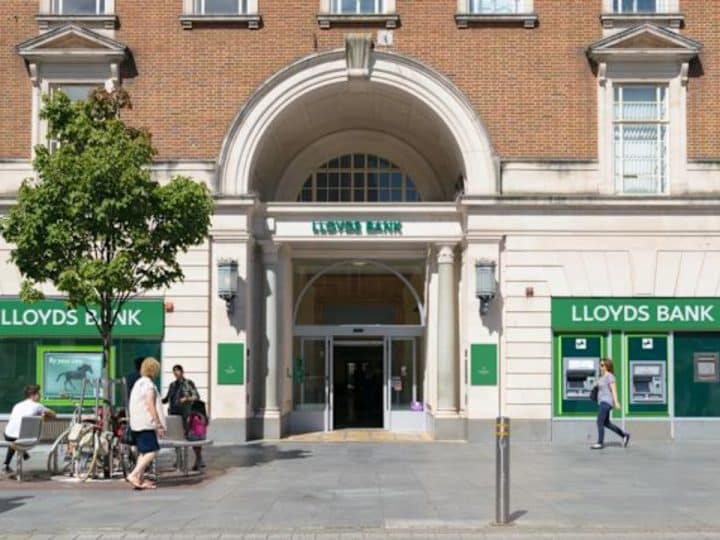

It’s not just fossil fuel giant BP, which doubled its profits in the first quarter of 2026. The war on Iran has meant interest rate rises. These have increased Lloyds Bank profits by more than 30% over the same period.
War on Iran is inflationary – and Lloyds is making a killing
The US-Israel war on Iran has led to higher inflation. When that happens, the Bank of England raises interest rates, meaning private banks make more money from their loans.
The thing is, loans should be interest-free in order to stimulate the economy and facilitate small and medium-sized businesses. Private banks have long been absolutely failing such enterprises. As 50 economists and experts warned in a letter to Reeves in 2024:
Lending to the real economy has consistently made up around just 10% of bank lending in recent decades. The vast majority – around 80% – of bank lending goes towards inflating the price of pre-existing property and other assets.
Unprecedented economic disparity means the super-rich are simply trading assets between each other, inflating the price each time. An example of this is the housing bubble, where necessary shelter is treated as an asset that keeps rising in price.
Where’s Labour?
Nonetheless, Labour has refused to even reinstate a cap on bankers’ bonuses, aligning with Liz Truss who scrapped the cap during her brief stint as prime minister. The cap itself was already minimal – at 100% of a bankers’ entire annual salary.
openDemocracy had already revealed that bankers and city-linked firms handed Labour £2m in donations in the two years up until they refused to introduce a bankers’ bonus cap.
It gets worse. The public purse subsidises commercial banks through the Bank of England paying interest on reserves it holds for them. From 2023-2028, public funds will have forked out £180bn to private banks in order to pay the interest on the reserves they hold with the central bank. As a public entity the Bank of England shouldn’t be paying such interest.
Fran Boait, former Co-Executive Director at Positive Money, has said:
The good times just keep on rolling for banks. Not only are they still profiting off the public thanks to higher borrowing costs, but their share prices are soaring off the back of those profits. But the size of bank profits will wane as rates start to come down, and so the longer the government waits to place a windfall tax on banks, the less money it will be able to claw back for the public.
Featured image via the Canary
By James Wright
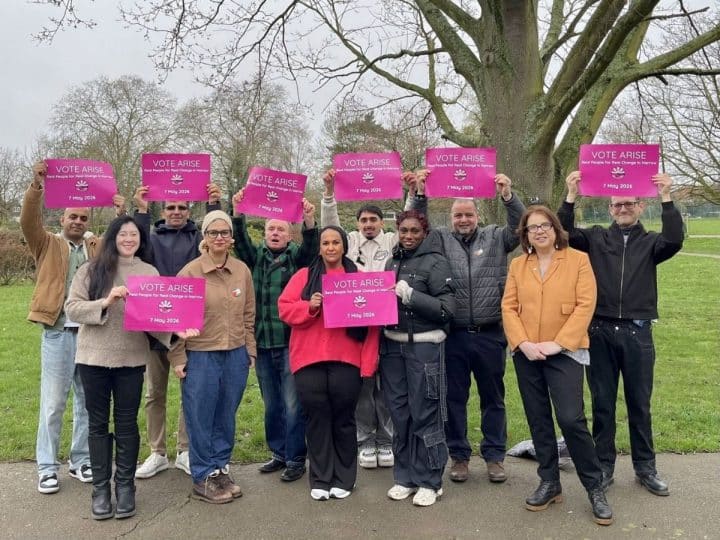

Independent party Arise has chosen candidates with “a track record of activism” to stand in Harrow’s local election. And they’re hoping to hold the council to account in particular for its housing and financial failures.
Arise — ‘We’ve never stopped campaigning’
Pamela Fitzpatrick, who’s running for Arise in the Marlborough ward, told the Canary that:
People are so disillusioned with politicians. When you first knock, it’s ‘no, no, no, no, no’ or ‘I never vote, you’re all corrupt’.
But she and others in Arise have stressed how different they are:
by talking about the campaigns we’ve been involved in. So once people hear that and they remember, ‘oh yeah, you were involved in that, you’re not just turning up out of nowhere’…
a lot of us are known for what we do.
After standing in the 2024 general election as an independent, Fitzpatrick said:
we’ve never stopped campaigning, and on a whole range of things.
Since registering Arise last year, though, they focused on what wards they would stand council candidates in. And Fitzpatrick explained that:
There had to be evidence of being a socialist, and they ought to have a track record of activism.
Despite being a largely Conservative borough, she added:
In some parts, you would not believe the level of poverty that people are living in, and they’re desperate. They’ve heard it all before, you know, ‘Labour will make things better’. When we knock at the door, they are so angry at things, that their lives haven’t been made better – they’ve been made a lot worse, generally.
Housing specifically is a big issue, she insisted.
Harrow’s housing crisis and local activism
Saying that most parties only reach out to residents at election time and are “not rooted in the community”, Fitzpatrick asserted that:
We are there all the time. We had a housing campaign. Harrow’s got such a housing crisis, because it’s got the lowest level of council homes or social housing of any London borough. So people who are on poor and middle incomes are in the private sector, and it’s too expensive. But lots of the housing is of really poor quality, you know, damp, toxic mould and everything.
They keep building more and more tower blocks that nobody can afford to live in, and they say they justify it on the basis this is to meet the housing crisis and they say it will have X amount percentage affordable, but of course the affordable’s not affordable…
Lots of these tower blocks are lying empty because they’ve been marketed abroad as foreign investments… Despite everybody saying the Council is broke, it does have considerable borrowing power, so they could buy these blocks and actually turn them into council housing, which would then generate income for them and, again, solve some problems.
And Fitzpatrick was part of community efforts to deal with this situation. She continued by saying:
We started a campaign about 4 years ago that became known as Tesco Towers, and that brought together loads of residents, all different political colours and everything, who didn’t want this…
And by the end of that 3 years, we’d stopped that development going through, through a mixture of petitions, going to council meetings, knocking on doors, talking to people protests outside Tesco’s… Tesco’s threatened to arrest us, we got a lot of publicity about that. We never saw sight nor sound of a councillor or MP, ever. Nobody there.
The opposition to the Tesco Towers development centred around issues like lack of affordable housing, potential health risks, and the impact on local infrastructure due to the large scale of the project.
Another “really easily achievable” step the council could take, Fitzpatrick highlighted, is to “prosecute rogue landlords”. This very rarely happens, but:
If they prosecute rogue landlords, that makes them money, probably between £7,000 and £10,000 each time they prosecute a rogue landlord. When a rogue landlord illegally evicts somebody, the council has to pick up the bill, usually, and house the family. They never then go for damages against that landlord, which they could…
This would send a message to landlords to actually do something about the quality of their accommodation, and make money for the council.
Stop putting people’s tax money into private pockets
Fitzpatrick also talked about the money the council wastes unnecessarily in order to line private pockets. On the topic of housing, for example:
When people are homeless and they go to the council, they are placed in hotels or nightly accommodation which is paid at a higher rate than normal rents, for example. It’s people making such a lot of money out of homelessness and misery.
With social care, meanwhile, she said:
Most of the council’s budget, like other councils, it goes on social care. Most of that is because of the privatisation of care homes, where people are charging a fortune and not necessarily getting particularly good care.
So we want care homes to be brought in-house, to be re-nationalised basically. And that would then give people good jobs, secure jobs, better-paid jobs than the people who are working in these care homes and being paid minimum wage, often from agencies.
And what we also want is free home care, which they’ve done in Tower Hamlets, so it is possible, and that would prevent a lot of people actually entering into residential care.
There’s also an issue with permanent exclusions from school, many of which involve children with special education needs. Academies, she stressed, “don’t want those children in their schools”. However:
local authorities still bear the responsibility for special education needs. So again, they could be looking at, ‘this is a discrimination issue, where schools are just getting rid of children’.
And there’s another expenditure here, she claimed, as the council uses a lot of agency staff for special education needs, where it could save money by keeping costs in-house.
Arise is ‘an openly socialist party’
In terms of where Arise is standing, Fitzpatrick explained:
We are an openly socialist party, so we are not standing in the traditional conservative areas of Harrow. We are standing in the center, really, so in the poorer parts of Harrow, the central part of Harrow, but one of the key things is that we’ve tried, as far as possible, to get people who have roots in that ward.
Without the money or recognition of national parties, she said:
Help is always welcome, and we’d love anybody in Harrow who wants to get involved in left-wing politics to contact us.
Your Party has given Arise its endorsement.
Arise has also been in contact with the Green Party, even deciding not to stand in the Greens’ strongest wards. For now, Greens have decided to stand in every ward. But there are hopes for future cooperation.
You can see more about Arise’s candidates here, and Arise’s key policies here.


Featured image via AriseParty
By Ed Sykes

UK telecoms corporations Vodafone, Virgin Media, and BT have said they may start rationing mobile data in the UK. That’s because of rising energy costs due to the war with Iran.
This is another instance of privatised utilities proving to be less efficient than public ownership. And it’s another instance of how a Green New Deal would lower costs and end the nation’s reliance on volatile international fossil fuel markets.
Huge losses for UK telecoms
The losses these firms are experiencing are partly due to market competition over an essential service. Telecommunications companies Vodafone and Virgin Media reported significant losses in 2025. Vodafone had a net loss of £3.6 billion. Virgin Media had losses of over £3 billion.
This demonstrates that telecommunications should be brought in-house. Virgin Media’s losses were partly due to debt from investment costs. The thing is, if telecommunications were publicly owned, the government could use debt-free fiat currency to finance infrastructure projects. Then, progressive tax rises could tackle any inflation.
Failing that, public sector borrowing is cheaper than private sector borrowing, meaning lower interest rates for telecommunications investment.
A publicly owned telecommunications provider could offer the cheapest products and services for an essential. It could also provide revenue for the government to allocate to education and healthcare. There would be no need to ration mobile data.
Energy costs
The rise in energy costs also demonstrates the failure of the marketisation of an essential. Following the war on Iran, BP doubled its profit on fossil fuels compared to the first quarter of 2025. That was largely because its production is mainly in North America, which has been less impacted by the war on Iran. At the same time, the market price of oil has skyrocketed. So BP made huge profits instead of delivering oil at much lower than the market rate. In turn, this raises costs for every individual and business in the UK.
That said, looming climate catastrophe means we need to stop all oil production and fossil fuel use. A Green New Deal is the fastest and most equitable way to do so, because although the market is moving towards renewables, it’s not happening fast enough.
Featured image via the Canary
By James Wright

Government raises ‘terror threat’ level to ‘severe’

Saudi Arabia’s public fund to withdraw LIV Golf funding
AI integration needs accountability, not just innovation

Manchester United reach agreement with Casemiro over contract clause amid transfer speculation

US brings back mandatory military draft registration

Steven Gerrard disagrees with Gary Neville over ‘shock’ Chelsea and Arsenal claim | Football

Moneyman shows off $400,000 cash after 50 cent shows off 3 million cash #moneyman #50cent

IT JUST GOT RELEASED! XRP $18,000 PRICE CALCULATOR REVEALED?! (IS IT REAL?)

Finanzielle Red Flags: Warum Paare sich wegen Geld trennen
-

 Tech3 days ago
Register Renaming | Hackaday
-

 Fashion6 days ago
Weekend Open Thread – Corporette.com
-
 Crypto World5 days ago
Hyperliquid $HYPE Rally Builds Momentum as AI Sector Enters Prove-It Phase
-

 Business7 days ago
Patterson-UTI Energy, Inc. (PTEN) Q1 2026 Earnings Call Transcript
-

 Politics3 days ago
Drax board avoid their own AGM, accused of greenwashing & environmental racism
-
 Sports4 days ago
IPL 2026: Ruturaj Gaikwad registers slowest fifty of the season, enters all-time unwanted list | Cricket News
-

 NewsBeat4 days ago
LK Bennett closes all stores after entering administration
-

 Crypto World6 days ago
Michael Saylor says BTC winter is over. Market analyst disagrees, says bitcoin was in a pullback
-

 Fashion2 days ago
Kylie Jenner’s KHY Enters a New Era with ‘Born in LA’
-

 Tech3 days ago
Images of Samsung’s rumored smart glasses have leaked
-

 Tech3 days ago
Why Blue Badges Disappeared From Toyota Hybrids
-
 Entertainment5 days ago
Mariah Carey Slams Deposition Claims In Brother’s Lawsuit
-
Crypto World7 days ago
Is Algorand One of the Few Quantum-Resistant Blockchains? Here’s What the Data Shows
-

 Business2 days ago
Most Commercial Energy Audits Miss the Real Losses
-
 NewsBeat6 days ago
Trump threatens to review UK’s claim to Falkland Islands and punish Nato allies over Iran war disagreement
-

 Business6 days ago
Jeanine Pirro announces closure of Federal Reserve building cost probe
-

 Business3 days ago
(VIDEO) Charlize Theron Climbs Times Square Billboard to Promote New Netflix Thriller ‘Apex’
-

 Tech5 days ago
Microsoft to roll out Entra passkeys on Windows in late April
-

 Crypto World2 days ago
CFTC’s AI will review U.S. crypto registration applications, chairman tells CoinDesk
-
 Crypto World6 days ago
Nvidia (NVDA) Stock Jumps 5% as Intel Earnings Ignite Semiconductor Rally
You must be logged in to post a comment Login