
Business
New mortgage credit scores could help millions, but experts warn of risks


Micah Abigail LLC founder and credit repair expert Micah Smith speaks to Fox News Digital about the most important differences between FICO 10T and VantageScore 4.0.
For millions of “invisible” Americans who have paid rent on time for years but lacked a traditional credit score, the door to the American Dream just swung wide open — but one expert warns not to trip on the threshold.
Following a landmark announcement from HUD and the FHFA to accept VantageScore 4.0 and FICO Score 10T, the mortgage industry is bracing for a surge of new applicants. Micah Smith, a leading credit repair influencer, says that while the inclusion of rent and utilities is a landmark shift, borrowers must be wary of the “American drain.”
“People who were invisible in the system — no cards, no loans, no score — can now potentially show up with a real number,” Smith told Fox News Digital, while also cautioning that the new models are more rigorous than many realize. “People say getting a home is the American Dream. I call it the American drain when you don’t do it properly.”
The acceptance of VantageScore 4.0 represents the first major change to mortgage credit requirements in over three decades, and stems from the 2018 Credit Score Competition Act signed by President Donald Trump during his first administration.
HERE’S WHAT HAPPENS WHEN YOU DISPUTE A CREDIT CARD CHARGE
Following last week’s announcement, Smith said many of her clients are “freaking out in a good way and a bad way.”

Changes are coming to America’s mortgage credit requirements for the first time in 30 years. (Getty Images)
“The narrative the media has been spinning has people all over the place. That is simply people not understanding what is coming down the pipeline and why,” she said. “Everything being put into place right now is to help more people get into homes and to update a system that has not been updated in over 30 years. FICO has been in place since 1989.”
“The Credit Score Competition Act… set something significant in motion. Look at how long it’s taken. It’s now 2026 and it’s finally being implemented,” Smith added. “This was never about destroying FICO. This is about making sure FICO does not monopolize the credit scoring market. This is about updating an antiquated system.”
A key benefit highlighted by FHFA Director Bill Pulte is the ability to account for rent payments, aiming to help creditworthy Americans who may not have traditional credit card debt but who have a perfect history of paying their bills.
U.S. Federal Housing director William Pulte discusses the Fed’s decision to hold interest rates steady and President Donald Trump’s efforts to stop big investors from buying homes on ‘FOX Business In Depth: Hitting Home: Rebuilding the Dream.’
“Rent and utilities now count — when reported,” Smith said. “If your clients’ landlord reports to the bureaus, those years of on-time payments now feed the score… But here’s the flip side nobody’s talking about: If your rent is being reported, a late payment potentially can hurt you, too. Reporting cuts both ways. Don’t let clients assume this is all upside.”
Smith also warned that large student loan repayments, auto loans or personal loans can still drag down your credit score and mortgage eligibility, despite the new scoring models.
“That balance piece is real… High balance equals high score pressure under this model. That’s the nuance people need to hear,” she said.
While a borrower cannot choose which scoring models a lender uses, Smith predicts banks will “probably” lean toward pulling VantageScore 4.0 because FICO traditionally charges $9.99 per credit report pull and VantageScore costs 99 cents.
Micah Abigail LLC founder and @fitcreditdoctor Micah Smith speaks to Fox News Digital about why she’s largely against the implementation of a 50-year mortgage rate.
“To me, this is starting to look like a race to the bottom,” Smith said, “where VantageScore potentially ends up monopolizing the very market it claimed to open up. Lending as a whole is a multitrillion-dollar industry, and people are in more debt than they have ever been. My concern is this: giving more people access to mortgages who didn’t previously understand credit means they’re probably still coming in at a pretty subpar credit score.”
However, this does not raise any recession-level concerns for Smith.
“I do not see a repeat of 2008, 2009. Banks now have skin in the game. Back then, there was no real repercussion for lenders selling bad loans off to the secondary market. That guardrail now exists. We are not going to see a crash in that sense,” Smith said.
GET FOX BUSINESS ON THE GO BY CLICKING HERE
M2 Communities CEO Mitch Roschelle breaks down rising mortgage rates as war-driven inflation hits affordability and raises questions about when relief may come on ‘Varney & Co.’
“But here’s what I do worry about: more people going into debt unnecessarily because they still don’t understand the credit system,” she continued. “Remember, those who understand interest earn it; those that don’t pay it.”
“Credit is not your identity — but it is your financial reputation. And right now, more eyes are on it than ever before. Use this moment to get it right.”


The US president said he would lift restrictions on Scotland’s ability to work with the state of Kentucky on whisky and bourbon.

The PAT is up 11% quarter-on-quarter from Rs 252 crore in Q3FY26 while the topline was 2% higher sequentially versus Rs 1,778 crore in the October-December quarter of FY26.
The Earnings Before Interest, Taxes, Depreciation and Amortisation (EBITDA) in the quarter under review stood at Rs 523 crore, rising 10% over Rs 477 crore in Q4FY25. It was 8% higher sequentially.
Company’s gross margins stood at 61.4%, up from 54.5% in the year ago period. It rose 690 bps YoY and 50 bps QoQ.
The R & D spends were reported at Rs 76 crore which is 4.2% of revenues.

The company’s board of directors approved the payment of second interim dividend of Rs 1.20 for the financial year 2025-26 and has fixed May 8, 2026 as the record date for determining the eligibility of the shareholders. The Dividend amount will be paid on or after May 20, 2026.
The net profit for FY26 stood at Rs 889 crore, which increased 148% from Rs 358 crore in FY25. The revenues in FY26 stood at Rs 6,813 crore, which increased 23% driven by continued strong growth across both CDMO and Affordable Medicine (Generics) division.The full-year EBITDA stood at Rs 1,826 crore, which increased by 64% YoY.
The company in its filing to the exchanges said strong OCF (operating cash flow) was due to higher EBITDA and improved net working capital. The net debt to EBITDA reduction was largely in line and better operating leverage drove ROCE while CAPEX momentum continued.
(Disclaimer: The recommendations, suggestions, views, and opinions given by the experts are their own. These do not represent the views of The Economic Times.)

Americans are increasingly turning to TikTok Shop to buy shampoo, jewelry and apparel. Retailers have noticed, pushing onto the platform with their own virtual stores.
Ralph Lauren and Olaplex Holdings moved onto the platform late last year, while Ulta Beauty launched its store in March. They follow early adopters like Crocs, Revolve Group and L’Oréal in the race to capture scrolling shoppers. “You want to be where the consumer is, and increasingly, that’s obviously on social media and online,” said Olivia Tong, a managing director at Raymond James.
Copyright ©2026 Dow Jones & Company, Inc. All Rights Reserved. 87990cbe856818d5eddac44c7b1cdeb8

An award winning Perth-developed device to treat chronic ear infections in children has received FDA approval, clearing the way for its launch in the United States.

Gold is back in the geopolitical crosshairs, caught between safe-haven demand and prospects of higher interest rates for longer.
Persistent geopolitical uncertainty is expected to drive investment demand and central-bank buying this year, according to the World Gold Council. Yet, the same forces are pushing oil prices higher, stoking inflation and reinforcing expectations of elevated interest rates—traditionally a headwind for non-interest-bearing assets like gold.
Copyright ©2026 Dow Jones & Company, Inc. All Rights Reserved. 87990cbe856818d5eddac44c7b1cdeb8
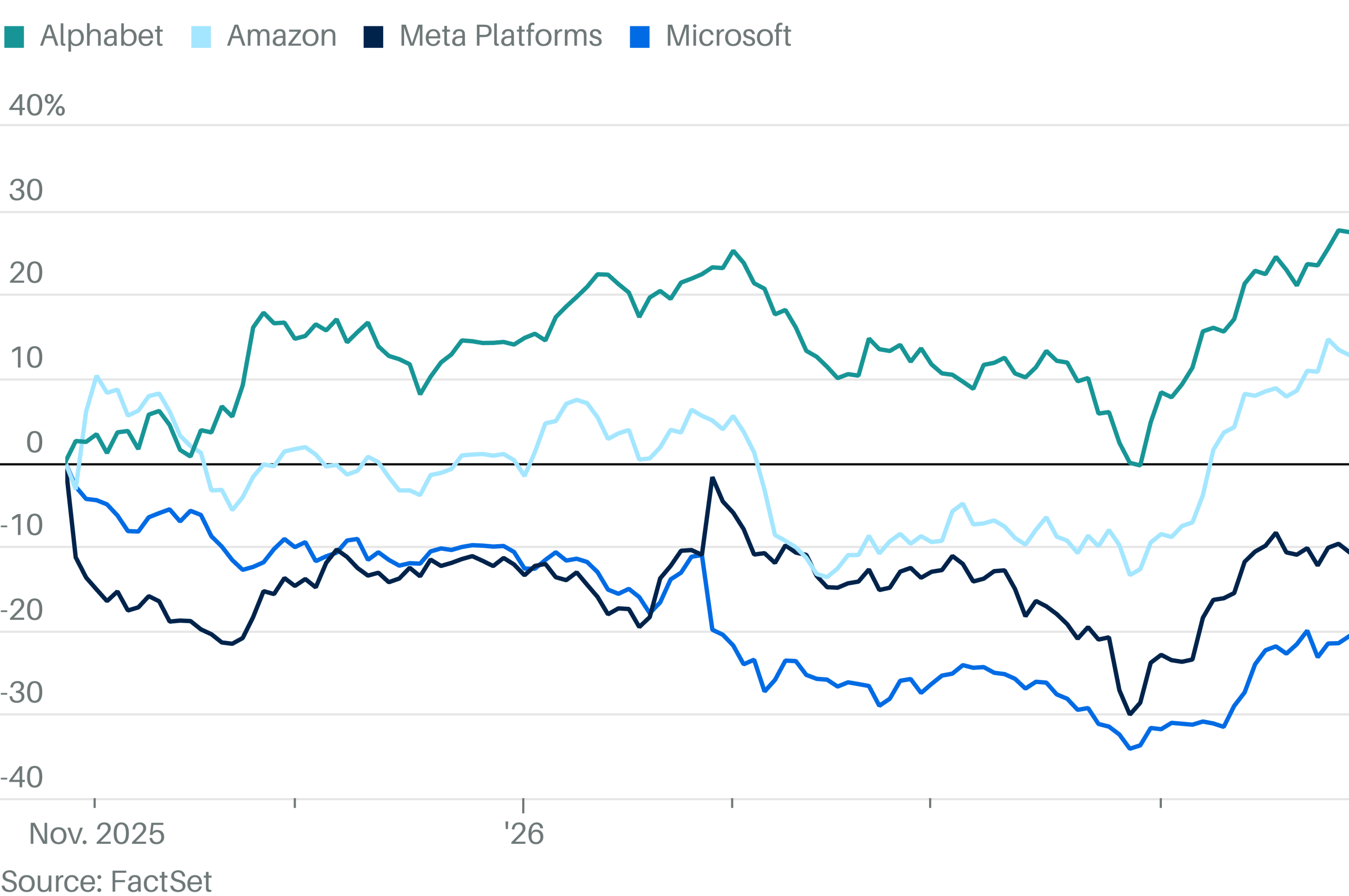
Magnificent Seven Stocks Struggle for Direction Ahead of Big Tech Earnings

The company’s board has recommended a final dividend of Rs 4.62 per share for the financial year ended March 2026.
Revenue from operations rose 16% YoY to Rs 3,684 crore from Rs 3,174 crore a year ago, reflecting higher project execution during the quarter. Including other income, total income for the quarter stood at Rs 3,965 crore, up 13% from Rs 3,498 crore in the year-ago period.
Profit before tax rose sharply by 54% to Rs 625 crore, compared with Rs 406.4 crore in the corresponding quarter last year, indicating improved operating leverage.
Sequentially, however, profitability moderated from the December quarter, when the company had reported a profit of Rs 837 crore, suggesting normalization after a stronger third quarter driven by milestone-based revenue recognition.
Expenses during the quarter rose at a slower pace than revenue. Total expenses increased 8% to Rs 3,340 crore from Rs 3,091 crore a year ago, mainly due to higher raw material consumption and inventory purchases.
For the full financial year FY26, Mazagon Dock reported revenue from operations of Rs 12,840 crore, up 12% from Rs 11,432 crore in FY25.Total income for the year came in at Rs 13,982.4 crore, registering a growth of 12% YoY.
Annual profit before tax rose 4% to Rs 3,250 crore, while net profit increased 5% to Rs 2,436 crore from Rs 2,325 crore in the previous financial year.

Trinity Rodman #2 of Washington Spirit evades Sarah Schupansky #11 of Gotham FC during the NWSL Championship 2025 final between Washington Spirit and NJ/NY Gotham FC at PayPal Park on November 22, 2025 in San Jose, California.
Lyndsay Radnedge/isi Photos | Isi Photos | Getty Images
A version of this article first appeared in the CNBC Sport newsletter with Alex Sherman, which brings you the biggest news and exclusive interviews from the worlds of sports business and media. Sign up to receive future editions, straight to your inbox.
Last week, the National Women’s Soccer League awarded a new expansion franchise — in Columbus, Ohio — to an ownership group led by Haslam Sports Group for a fee of $205 million.
This represents a $40 million jump from the $165 million that billionaire Arthur Blank reportedly paid for the league’s Atlanta franchise in November. And that $165 million itself was a jump of $55 million from the reported $110 million fee Denver paid in January of last year.
Rewind to 2022, and the expansion fee for a new NWSL club was just $2 million.
On the surface, this appears to be a story about the NWSL’s growth. Postseason attendance rose 11% this past season, according to the league. Nearly 1.2 million people watched the NWSL finals, up 22% from a year ago, including a whopping 70% jump in the 18-to-34 demographic, the NWSL said.
It makes sense that investors would want to get in now given the league’s growth trajectory.
But, according to investors and bankers, something else is going on that’s affecting the NWSL’s valuations that has absolutely nothing to do with soccer. It has to do with a trickle-down investment thesis driven by the outsized businesses of the NFL and NBA.
Wealthy investors have long been interested in sports ownership, trophy assets that have also produced outsized returns on investment. The introduction of private equity investment, first adopted in the NFL in 2024, has added to the pool of possible buyers.
This dynamic is welcome news for the entire professional sports industry, which is also benefiting from another strategic investment play — the anti-artificial intelligence trade. Betting on live events is a counter-strategy for those who want less exposure to the tech in a market driven by AI investments.
That’s helped supercharge valuations of the most valuable sports teams in the U.S. According to CNBC Sport, the average NFL team is now valued at $7.65 billion. In 2010, NFL teams were worth, on average, about $1 billion.
The average value of an NBA team is now $5.52 billion, 18% higher than a year ago. Fifteen years ago, the average NBA team was worth $369 million. That’s an increase of 1,396%. The S&P 500 is up about 422% over the same time period.
NBA and NFL ownership stakes are becoming too pricey for a class of buyers who have active interest in being a sports team owner — even at the minority stake level. Former New York Giants quarterback Eli Manning said as much in an interview with CNBC Sport last year.
“It’s too expensive for me,” Manning said of a potential minority stake in his longtime team. “A 1% stake valued at $10 billion turns into a very big number.”
Equity research firm Bernstein wrote in a recent note to clients that NFL team valuations have risen about 17 times in 25 years, “the kind of returns sufficient to give any portfolio manager a legendary status and easily trumping the S&P index or any emerging market index on the planet.”
The main cause of the valuation growth stems from the enormous size of the league’s media rights. The NFL signed an 11-year, $111 billion media rights deal in 2021 — and now wants even more money. The NBA followed with an 11-year, $77 billion deal of its own, starting with the 2025 season.
Splitting national TV dollars among teams allows even the lowest revenue teams — the NFL’s Arizona Cardinals and the NBA’s Memphis Grizzlies — to be valued at $5.9 billion and $3.75 billion, respectively, according to CNBC estimates.
There’s a fear that “second-tier” sports, including MLB and NHL, may be at risk of losing media rights dollars as the NFL flexes its muscle and asks for more from its media partners. The more money that goes to the NFL, the less money there is for everyone else.
One might expect that dynamic to negatively affect the valuations for those sports. But according to these bankers and investors, that’s not happening.
As the NBA and NFL have priced out buyers, there’s now increased demand for sports teams with more affordable valuations. That’s helped drive the recent NWSL surge, they say. There’s more liquidity at NWSL team price points, which has led to bidding wars and soaring valuations.
While the most recent winning buyers — Blank and the Haslams — are already owners of NFL and other sports teams, they’ve had to pay increasingly high prices to fight off other offers. There are far more buying groups willing to write a consortium check for $200 million than pay $1 billion or more for minority stakes in the biggest leagues.
“There’s a lot of demand to get into the sports business but people can’t write the checks to buy into the big four anymore. So what they’re doing is they’re substituting,” said veteran sports banker Sal Galatioto, president of Galatioto Sports Partners. “When supply is fixed and demand goes up, people will bid more to win. The underlying economics are not as important.”
The San Diego Padres are finalizing a sale for $3.9 billion, a record for MLB, despite the team’s regional sports network falling apart a few years ago. While nearly $4 billion is a lot of money, it’s still well below the average value of an NFL or NBA team.
“I’ve got investors coming up to me saying, ‘I can’t afford the NFL and NBA, what do you have for me in MLB, NHL?’” said one prominent sports banker, who asked to speak anonymously because the discussions were private.
The success of the NBA and NFL has funneled all the way down to the bottom of the sports food chain, said Rick Horrow, CEO of Horrow Sports Ventures.
“Major League Cricket was at $5 million. Now the value’s at $30 [million] and going higher. Major League Pickleball two years ago was at $5 million. Now the value is at $15 million or higher,” said Horrow.
Some of this sounds a little like a sports investment bubble, where valuations are divorced from the underlying financials of the leagues themselves.
That’s a real worry for smaller, less established leagues, said Jasmine Robinson, managing partner at Monarch Collective, the largest women’s sports investment fund, with $250 million to invest. It’s why Monarch has focused most of its funds on the WNBA and the NWSL, rather than more emergent leagues, Robinson said.
“Sports has historically been a great investment, but that’s really only for the biggest leagues. It’s not really like you can do any sports deal and you’re going to make money,” Robinson said. “There’s been real scarcity. You do need to be in the leagues that really are going to be leaders to make money. We wouldn’t make a bet on every women’s sports league.”
The big question may be what the threshold is for an established league if there’s an economic downturn that turns off the investment faucet. Monarch is betting the WNBA and the NWSL are above the line, but WNBA franchises have historically never made money, and now they need to pay out far more money to players after this year’s new collective bargaining agreement.

Reliance Steel stock hits all-time high at 365.86 USD

Spain’s Banco Santander SAN 0.07%increase; green up pointing triangle reported a surge in profit as it added more customers and logged a large gain from a recent disposal.
Continental Europe’s largest lender by market capitalization posted a 60% increase in first-quarter net profit to 5.455 billion euros ($6.39 billion). The bottom line was helped by a 1.9 billion-euro capital gain from the recently completed sale of most of its Polish subsidiary.
Copyright ©2026 Dow Jones & Company, Inc. All Rights Reserved. 87990cbe856818d5eddac44c7b1cdeb8

Crypto hacks continue as Wasabi Protocol drained of $4.5 million in admin key compromise

The Palestinian Football Association appeals to the Court of Arbitration for Sport against FIFA’s decision not to sanction Israel

“I Was In The Zone”: Shubman Gill Makes Satisfaction Clear As GT Thrash RCB In IPL 2026

Manchester United reach agreement with Casemiro over contract clause amid transfer speculation

US brings back mandatory military draft registration

Steven Gerrard disagrees with Gary Neville over ‘shock’ Chelsea and Arsenal claim | Football


-

 Tech3 days ago
Register Renaming | Hackaday
-

 Fashion6 days ago
Weekend Open Thread – Corporette.com
-
 Crypto World5 days ago
Hyperliquid $HYPE Rally Builds Momentum as AI Sector Enters Prove-It Phase
-

 Business7 days ago
Patterson-UTI Energy, Inc. (PTEN) Q1 2026 Earnings Call Transcript
-

 Politics3 days ago
Drax board avoid their own AGM, accused of greenwashing & environmental racism
-
 Sports4 days ago
IPL 2026: Ruturaj Gaikwad registers slowest fifty of the season, enters all-time unwanted list | Cricket News
-

 NewsBeat4 days ago
LK Bennett closes all stores after entering administration
-

 Crypto World6 days ago
Michael Saylor says BTC winter is over. Market analyst disagrees, says bitcoin was in a pullback
-

 Fashion2 days ago
Kylie Jenner’s KHY Enters a New Era with ‘Born in LA’
-

 Tech3 days ago
Images of Samsung’s rumored smart glasses have leaked
-

 Tech3 days ago
Why Blue Badges Disappeared From Toyota Hybrids
-
 Entertainment5 days ago
Mariah Carey Slams Deposition Claims In Brother’s Lawsuit
-
Crypto World7 days ago
Is Algorand One of the Few Quantum-Resistant Blockchains? Here’s What the Data Shows
-

 Business2 days ago
Most Commercial Energy Audits Miss the Real Losses
-
 NewsBeat6 days ago
Trump threatens to review UK’s claim to Falkland Islands and punish Nato allies over Iran war disagreement
-

 Business6 days ago
Jeanine Pirro announces closure of Federal Reserve building cost probe
-

 Business3 days ago
(VIDEO) Charlize Theron Climbs Times Square Billboard to Promote New Netflix Thriller ‘Apex’
-

 Tech5 days ago
Microsoft to roll out Entra passkeys on Windows in late April
-

 Crypto World2 days ago
CFTC’s AI will review U.S. crypto registration applications, chairman tells CoinDesk
-
 Crypto World6 days ago
Nvidia (NVDA) Stock Jumps 5% as Intel Earnings Ignite Semiconductor Rally
You must be logged in to post a comment Login