Connect with us
DAPA Banner

Tech

Mother’s Day 2026 Gift Guide: Audio to Upgrade Mom’s Lifestyle

Published

on

Mother’s Day is Sunday, May 10th, 2026, and if you want a gift that will actually get used, home entertainment is worth a closer look. Today’s wearable tech, wireless speakers, and headphones are easier to set up than ever, with better sound that doesn’t require a deep dive into settings. This guide focuses on gear that is simple to install, reliable in everyday use, and delivers a clear upgrade without adding complexity. Smart products that work right out of the box and fit into real life.

audioengine-b2-white

Audioengine Wireless Speaker

Give Mom music that keeps up with her. The Audioengine A2+ All-in-one (B2) Home Music System delivers high-quality, room-filling sound in a portable design that fits anywhere. Enjoy wireless audio streaming with an industry-leading 100-foot Bluetooth range without compromising on quality so that she can carry her favorite songs from the kitchen straight to the patio.

$199 at Amazon

Bowers & Wilkins Pi8

Treat Mom to elevated everyday listening with the Bowers & Wilkins multi-award-winning Pi8 True Wireless earbuds — now in Pale Mauve and Dark Burgundy. With class-leading sound, bespoke ANC and crystal-clear calls, they deliver exceptional performance wrapped in a highly considered premium design.

$499 at Amazon

Advertisement
bowers-wilkins-pi8-pale-mauve
dot-max-amethyst

Echo Dot Max

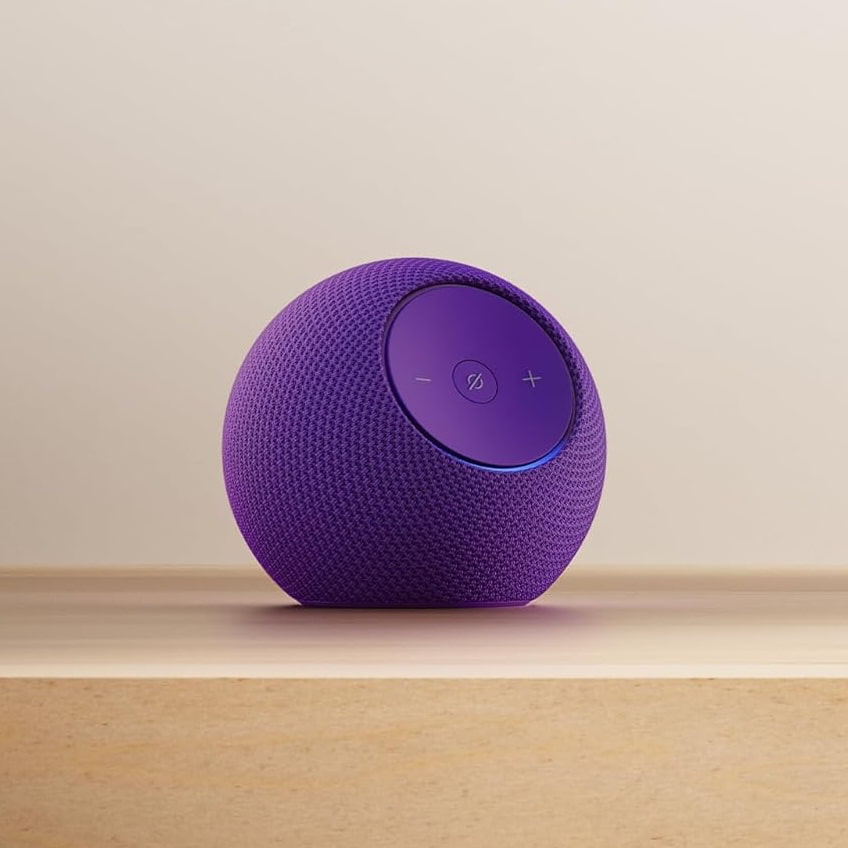
No kitchen should be without an Amazon Echo smart speaker. The latest Echo Dot Max offers improved sound and smarter interactions with Alexa+ for playing music, checking the weather, and more.

$99.99 at Amazon

Apple Watch

The latest Apple Watch Series 11 is the most durable and capable yet with new health insights and longer battery life. Thanks to new hypertension notifications and sleep scoring, Apple Watch not only can improve Mom’s life, but may also save it.

$399 $299 at Amazon

apple-watch-11-rose-gold-light-blush-42mm
sony-wh-1000xm6-sand-pink

SVS Prime Wireless Pro

Audiophile-grade stereo speakers ready to go right out of the box. SVS Prime Wireless Pro are versatile pair of wired/wireless speakers that can play your Spotify playlist wirelessly or connect to your TV for improved sound for watching movies and shows. Available in white or black.

$899 at Amazon

Advertisement
SVS Prime Wireless Pro Speaker Pair in White Lifestyle
audeze-filter-lifestyle

Audeze Speakerphone

The Audeze Filter speakerphone includes background noise-cancellation that make calls to Mom clearer, no matter what’s happening in the background.

$249 $99 at Amazon

AirPods Pro 3

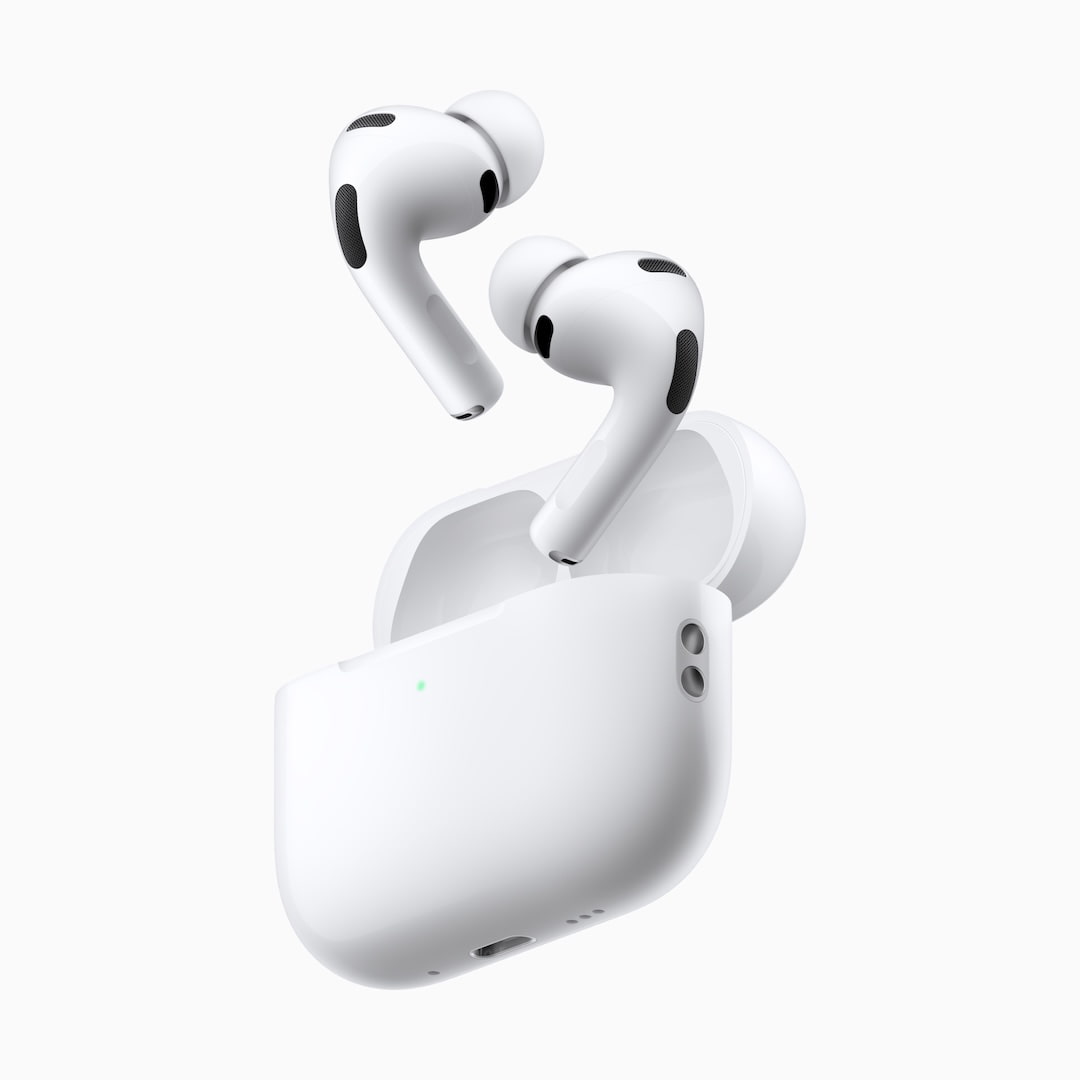
Apple’s latest and most advanced AirPods feature improved noise cancellation, heart rate sensing, live translation, and transparency mode for hearing assistance.

$249 $199 at Amazon

apple-airPods-pro-3-hero-250909

Need more gift giving ideas?

Disclosure: The products listed above are approved by our Editors, but may be requested by our sponsors. When links to buy are provided, we’ll direct you to the lowest price at time of publication. In doing so, eCoustics may earn a small commission from the associated retailer if purchased.

Source link

Advertisement
Continue Reading
Click to comment

You must be logged in to post a comment Login

Leave a Reply

Tech

AirPods Max 2 review one month: Price, features, specs

Published

on

A month after Apple’s AirPods Max 2 went on sale, there’s a lot to like, but little of it is new, and there’s not much reason to upgrade from the original model.

That’s the uncomfortable truth that I came to after spending a few weeks with Apple’s premium headphones. But it also shouldn’t be a surprise for anyone who took even a cursory glance at the specs sheet.

Any second-generation product takes what the first-gen model did well and then builds upon it. But with AirPods Max 2, Apple took the easy way out. And it’s a real shame that it did.

AirPods Max 2 do improve upon the original model, bringing some AirPods Pro features along for the ride. Still, too many first-gen problems persist, setting users up for the same frustrations.

Advertisement

And that’s the problem here. Those buyers will spend $549 for a pair of AirPods Max 2 headphones. What they’ll get is great audio, but with issues that shouldn’t be there.

If you’re shopping for great audio with some striking design issues, I have good news for you. There are likely some great OG AirPods Max deals available. You should probably buy those instead.

AirPods Max 2 review: Familiar look, familiar mistakes

When I say that AirPods Max 2 look familiar, I’m not kidding. I’m not even exaggerating, because they’re identical.

That even extends to the colors on offer. There are still five for you to choose from. And they’re still Blue, Purple, Midnight, Starlight, and Orange.

Advertisement
Two pairs of matte black over ear headphones lying side by side on a colorful retro style desk mat with sunset and city skyline graphics and a keyboard in the background

AirPods Max 2 review: Space Gray and Midnight side-by-side

I’ve been using the Midnight headphones, and they have a slightly different hue from my original Space Gray model. Those also have a Lightning connector, but apart from that, they’re almost impossible to tell apart.

AirPods Max 2, of course, have a USB-C port for charging this time around. You can also use a USB-C to USB-C cable if you want to enjoy lossless audio.

Like the original and mid-cycle USB-C refresh, AirPods Max 2 use metal as their material of choice. That means they’re still heavy, weighing in at 386.2 grams or 13.6 ounces.

Advertisement

As someone who isn’t a fan of plastic headphones, I’m happy with the metal construction Apple uses. I also don’t mind the weight because it adds an air of quality to the headset.

What I don’t like is Apple’s continued use of a mesh headband. It’s notorious for stretching and sagging, and there’s little to suggest that AirPods Max 2 buyers won’t have the same issue.

The good news is that there are aftermarket accessories that help here. They attach to the headband and use another material to distribute the weight. You’ll likely spot one on my AirPods Max in some of the photos here.

Controls-wise, nothing has changed here. You’ll find holes for the microphone and for air movement on the left ear cup. On the right, there’s a USB-C port on the bottom.

Advertisement

Up top, Apple’s familiar Digital Crown is used for volume and playback controls. The remaining button is used to cycle between the active noise cancellation (ANC) and Transparency modes.

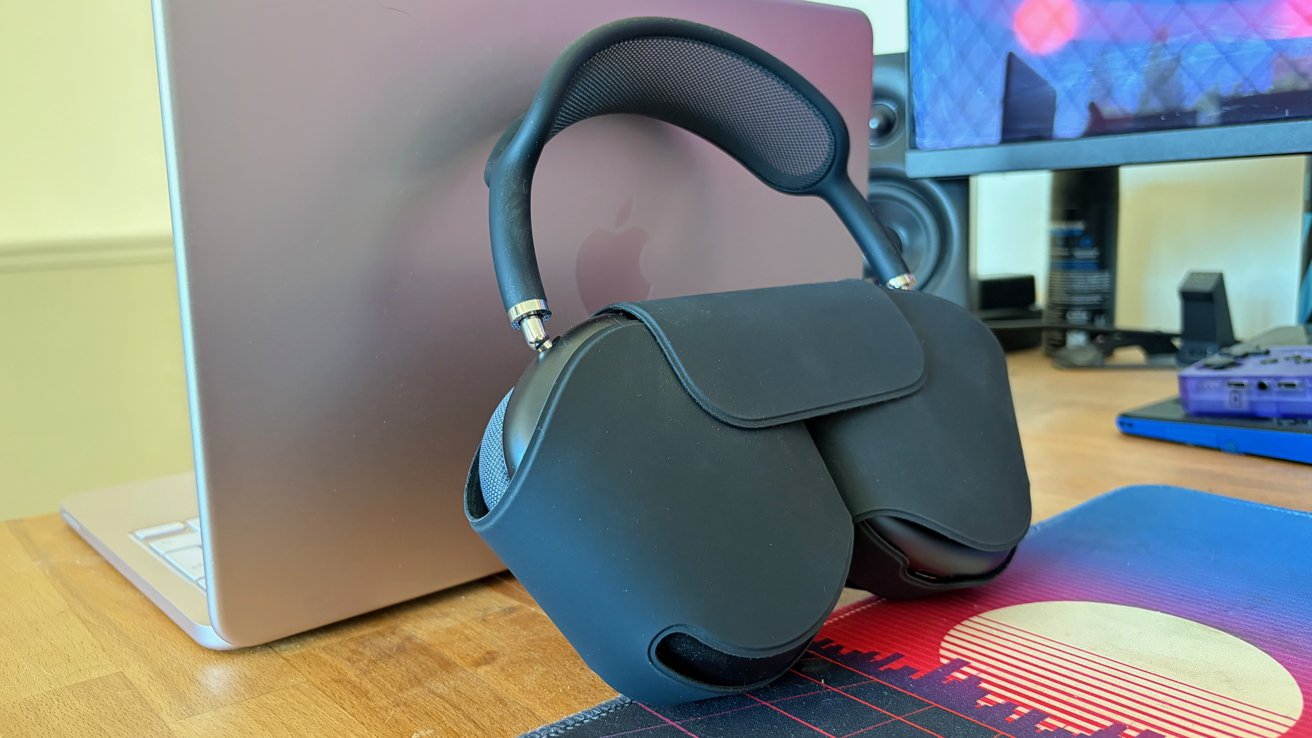
Finally, there’s the case. It’s the same as the original AirPods Max case and one of the main things I expected Apple to fix with this second generation.

Alas, it chose not to. And this case still does almost nothing to protect the headphones during transit. The top and bottom of the metal ear cups are left bare.

Unfortunately, the case is also the only way to put the AirPods Max 2 to sleep. Leave them out, and they’ll never slip into the deep sleep mode that preserves battery life.

Advertisement

That means you’ll need to fiddle with the case and its magnetic flap a lot. The lack of a way to sleep the headphones outside of the case is another issue I expected to be fixed this time around.

Again, alas.

AirPods Max 2 review: The H2 makes its presence felt

One of the few places where Apple has tweaked things is the use of a new H2 chip. The same chip first debuted in Apple’s AirPods Pro 2 from 2022, so it’s not new technology.
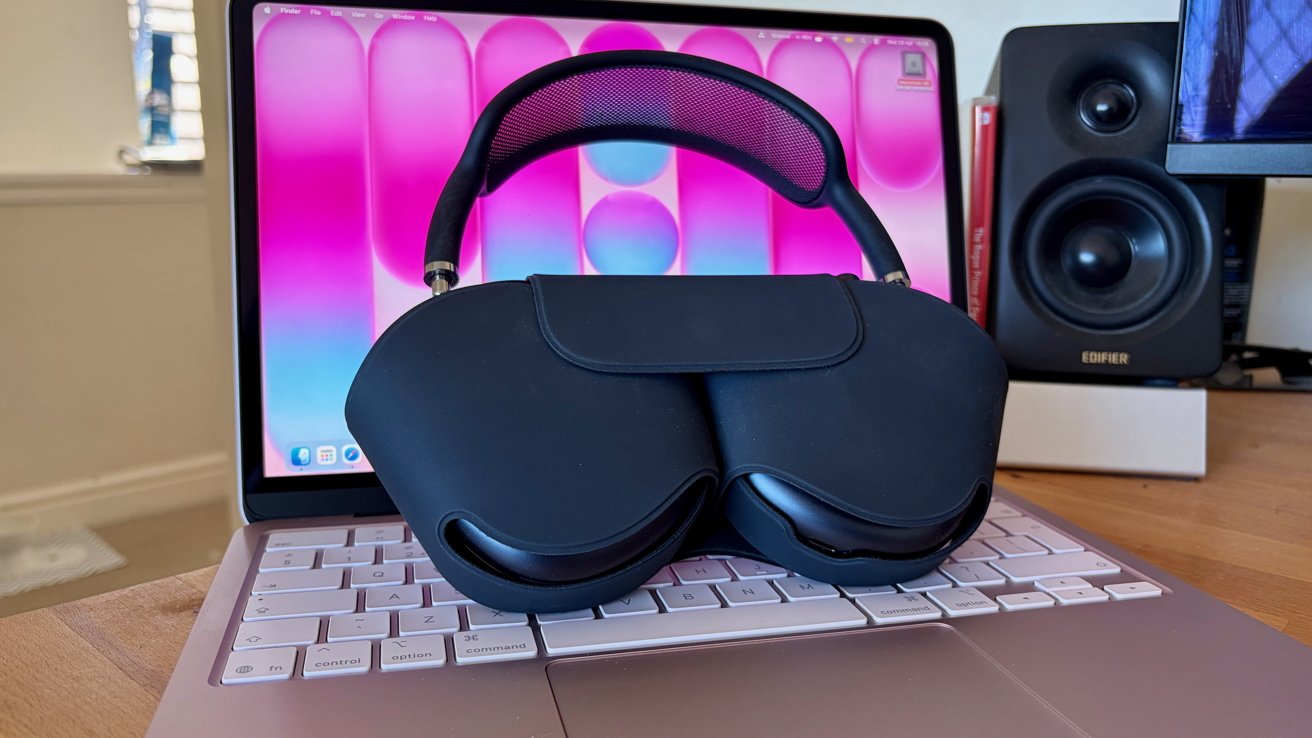
Black over-ear headphones in a protective case resting on a laptop keyboard, with a bright pink and blue abstract wallpaper on the screen and a black speaker in the background

AirPods Max 2 review: The familiar Smart Case makes a return

Advertisement

It’s new to Apple’s headphones, though, and brings with it some new features. Apple says the new chip is capable of improved audio processing. But as Andrew O’Hara said in his initial review, you’ll be hard-pressed to tell the difference.

Apple also says that AirPods Max 2 offer 1.5x more active noise cancellation than the previous generation. I can’t refute the claim, but AirPods Max were already class leaders here, and I’ve found AirPods Max 2 to be just as good.

Thankfully, you will notice a difference if you use any of these new features:

  • Adaptive EQ adjusts the sound based on the fit and seal between the ear cups and your head.
  • Live Translation that translates languages as someone speaks
  • Adaptive Audio that adjusts the ANC and Transparency modes based on the volume of your environment.
  • Conversational Awareness that lowers the volume when someone speaks to you and raises it when they’re done.
  • Personalized Volume automatically adjusts the volume after learning your preferences.
  • Head gestures so you can control Siri by shaking and nodding your head.
  • A Camera Remote feature means you can press the Digital Crown to take a photo using your iPhone.

Remember that these features are also available on AirPods Pro 2 and AirPods Pro 3. Some are even present on the entry-level AirPods 4 as well.

The H2 also handles all of the features AirPods owners have become accustomed to. Instant device pairing and switching are still present, and as welcome as ever.

Advertisement

Rounding out the features, Apple’s H2 helps AirPods Max 2 run for up to 20 hours between charges, even with ANC and Spatial Audio enabled. I’ve found that to be a reasonable expectation, and they charge quickly using a USB-C cable.

AirPods Max 2 review: Apple’s audio chops shine again

Apple knows how to make great audio. It’s proven it with all of its most recent AirPods wireless earbuds, and it proved it with the original AirPods Max.

With AirPods Max 2, it’s once again proven that few can compete with its wireless audio capabilities.

AirPods Max 2 sound excellent. They benefit from new high dynamic range amplifiers this time around, marking the one hardware change besides the H2 chip.
Advertisement
Black over ear headphones in a protective case resting against a closed Apple laptop on a wooden desk, with monitor, speakers, and colorful mouse pad in the background

AirPods Max 2 review: Apple’s best-ever headphones, just like its last

The result is the familiar, rich AirPods Max sound. Except, dare I say, turned up to 11 this time around.

Music sounds warm and full of body thanks to a strong bass performance when the audio calls for it. The highs may be a little on the brighter side than some might like, but that’s nitpicking.

With the excellent ANC enabled, AirPods Max 2 make it easy to fall into an album. It envelopes you. In a desert of lackluster wireless headphones, AirPods Max 2 are an oasis of crisp, clear sound.

Advertisement

But then, so are AirPods Max. Even over five years after their 2020 release, I’ve yet to find wireless headphones that have bettered them.

And yes, that applies to AirPods Max 2 as well. They’re every inch as good as AirPods Max, but better? I’ve yet to experience it, unfortunately.

Rounding things out on a more positive note, AirPods Max 2’s ANC and Transparency modes don’t disappoint. Again, Apple’s headphones surely sit at the top of the pile in both regards, although Sony continues to give it a run for its money.

AirPods Max 2 review: A missed opportunity

As I sit here, writing this review while listening to AirPods Max 2, I find myself disappointed. Not because they don’t live up to the original, but because Apple had such a solid foundation to build upon.

Advertisement

And yet, it chose not to.

As great as AirPods Max 2 sound, and as much as I enjoy listening to them, they’re almost impossible to recommend.

For existing AirPods Max owners, there’s little here to warrant spending so much money to upgrade. Not unless one of the new H2-powered features calls to you, and not when all of the same mistakes have been made.

They’re an easier sell to anyone considering AirPods Max 2 as their first Apple headphones. But you absolutely need to be aware of the problems before you put down your $549.

Advertisement

As I write this in 2026, AirPods Max 2 are likely the best-sounding wireless headphones I’ve ever worn. But whether they’re the best, overall, is a harder question to answer.
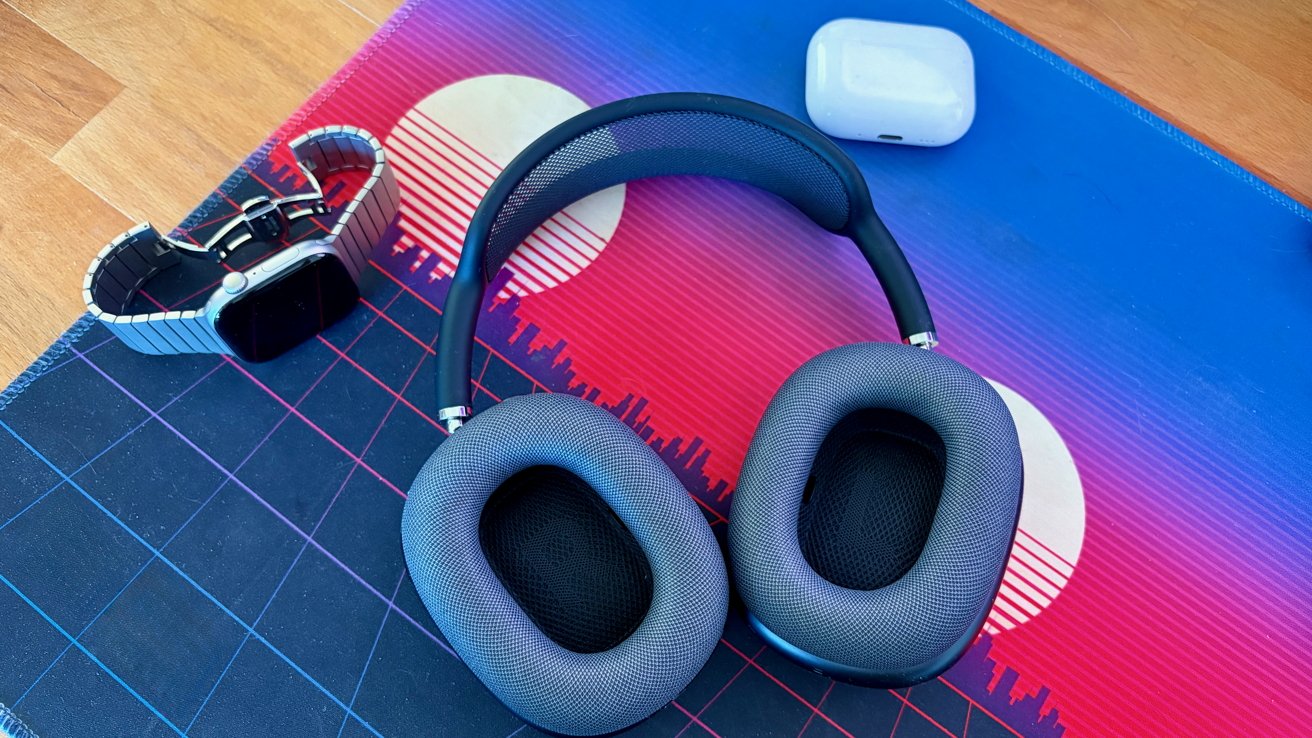
Over ear wireless headphones, a smartwatch with metal band, and a white earbud case resting on a colorful retro style mouse pad with a sunset and city skyline design

AirPods Max 2 review: Handy “L” and “R” markings help orientation

At $549, they’re a costly purchase. They don’t have a real case to keep them safe, and there’s no way to turn them off. They’re also heavier than most people will be used to, and the headband mesh will likely sag much sooner than it should.

If you’re still happy to throw down $549 for AirPods Max 2 with that in mind, more power to you. You’re going to get a pair of headphones that sound great with excellent ANC for your money.

Advertisement

Or you could save a hundred dollars or more and get the original. They’ll sound great.

AirPods Max 2 review: Pros

  • No wireless headphones sound better
  • Industry-leading ANC and Transprency mode
  • H2 chip adds some nice-to-have features
  • Instant pairing and device switching

AirPods Max 2 review: Cons

  • They still won’t sleep outside of the case
  • Smart case offers little protection
  • Same colors as last-gen model
  • Costly at $549

AirPods Max 2 rating: 4 out of 5

Scoring something like AirPods Max 2 out of five is difficult. Scoring anything out of five isn’t easy, but when you’re reviewing the successor to a previous release, things get more complicated. In the case of AirPods Max 2, Apple has a good pair of headphones on its hands. They sound great, and are about as premium-feeling as these things get.

On the other hand, AirPods Max 2 don’t improve upon AirPods Max in ways that I think they should have. The improvements that have been made are unlikely to change the game for most headphone buyers, too.

In choosing a score, I’ve gone with a 4 because, in isolation, AirPods Max 2 are a quality product. If AirPods Max didn’t exist, they’d easily get a 4 for their sound and build quality.

If you already own AirPods Max, consider the review score a 3 or 3.5, instead. AirPods Max 2’s score would be reduced by the lack of meaningful improvements to the original’s shortcomings.

Advertisement

For AirPods Max owners, there is little, if any, reason to upgrade to AirPods Max 2.

Where to buy AirPods Max 2

AirPods Max 2 are on sale now at Apple and other retailers, with Amazon and Walmart discounting the headphones slightly.

You can also pick up first-gen AirPods Max with USB-C for $449 at B&H Photo and Walmart while supplies last.

Our AirPods Max Price Guide offers easy price comparison across popular Apple resellers as well.

Advertisement

Source link

Continue Reading

Tech

Today’s NYT Wordle Hints, Answer and Help for May 2 #1778

Published

on

Looking for the most recent Wordle answer? Click here for today’s Wordle hints, as well as our daily answers and hints for The New York Times Mini Crossword, Connections, Connections: Sports Edition and Strands puzzles.


Today’s Wordle puzzle is a medium-tough one, with a few letters I rarely guess. If you need a new starter word, check out our list of which letters show up the most in English words. If you need hints and the answer, read on.

Read more: New Study Reveals Wordle’s Top 10 Toughest Words of 2025

Advertisement

Today’s Wordle hints

Before we show you today’s Wordle answer, we’ll give you some hints. If you don’t want a spoiler, look away now.

Wordle hint No. 1: Repeats

Today’s Wordle answer has no repeated letters.

Wordle hint No. 2: Vowels

Today’s Wordle answer has one vowel.

Wordle hint No. 3: First letter

Today’s Wordle answer begins with B.

Advertisement

Wordle hint No. 4: Last letter

Today’s Wordle answer ends with G.

Wordle hint No. 5: Meaning

Today’s Wordle answer can mean to convey or carry something.

TODAY’S WORDLE ANSWER

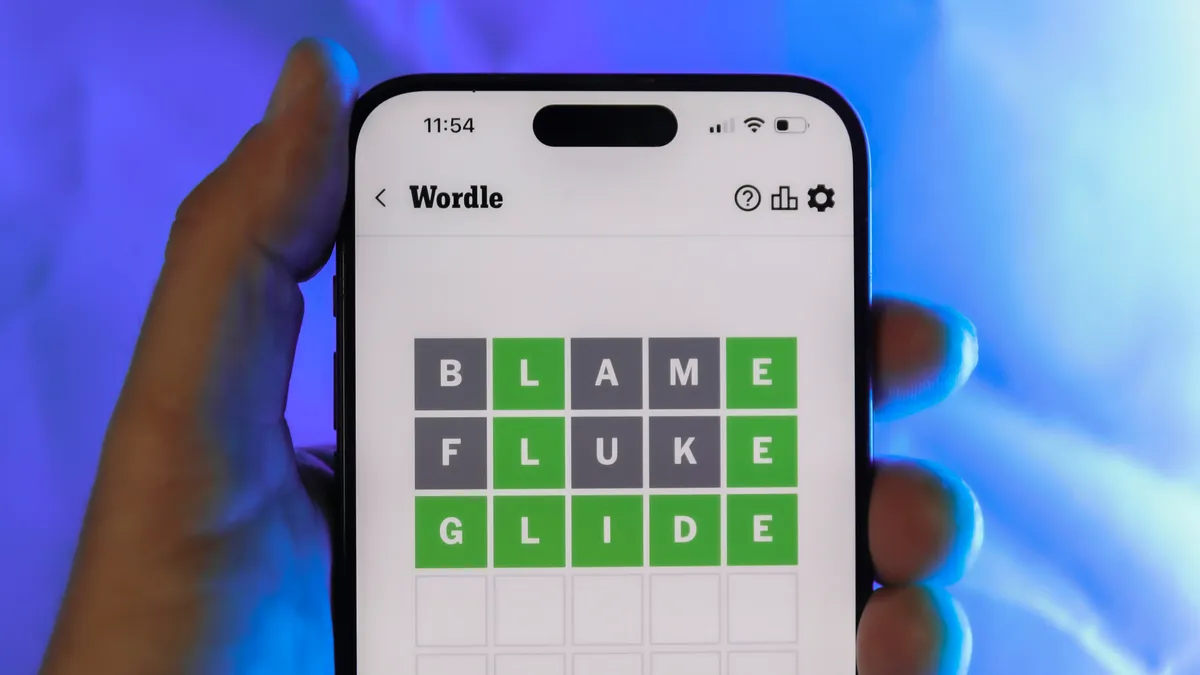
Today’s Wordle answer is BRING.

Advertisement

Yesterday’s Wordle answer

Yesterday’s Wordle answer, May 1, No. 1777, was PLUME.

Recent Wordle answers

April 27, No. 1773: EERIE

April 28, No. 1774: QUACK

April 29, No. 1775: RURAL

Advertisement

April 30, No. 1776: CROCK

Source link

Advertisement
Continue Reading

Tech

Does the Intuit Enterprise Suite (IES) interface dramatically differ from QuickBooks Online?

Published

on

This post is brought to you in paid partnership with QuickBooks

The Intuit Enterprise Suite (IES) interface doesn’t dramatically differ from QuickBooks Online. Core navigation, workflows, and accounting functions remain familiar. The main difference is added functionality for managing multiple entities, user permissions, and consolidated reporting. This means most users can adapt quickly while gaining tools to handle more complex financial operations.

Key takeaways

  • IES keeps familiar workflows but adds multi-entity functionality.
  • Navigation remains similar, with additional controls for managing entities.
  • Users adapt quickly by learning reporting and entity-level differences.

What is the difference between IES and QuickBooks Online?

Intuit Enterprise Suite (IES) builds on the structure of QuickBooks Online but is designed for businesses managing multiple entities or more complex financial operations. While QuickBooks Online focuses on single-company accounting, IES introduces entity-level controls, consolidated reporting, and more advanced user permissions without changing core accounting workflows.

How to adapt from QuickBooks Online to Intuit Enterprise Suite (IES)

Moving from QuickBooks Online to Intuit Enterprise Suite (IES) involves learning how to work across entities rather than relearning accounting basics. The steps below help users adjust quickly and avoid common confusion.

Advertisement
  1. Start with familiar tasks: Begin with workflows like invoicing, expenses, and reporting to build confidence in the system.
  2. Understand how entities are structured: Learn how companies are organized and how to switch between them when working.
  3. Recognize where workflows change: Identify tasks that now involve selecting an entity or working across multiple entities.
  4. Learn consolidated reporting early: Understand how to generate reports that combine data without merging records.
  5. Adjust to permission-based access: Get used to seeing only the data relevant to your assigned entities.
  6. Test common workflows across entities: Practice recording transactions and reviewing reports in more than one entity.
  7. Train users based on their role: Focus training on what each user actually needs rather than the full system.

What changes when moving from QuickBooks Online to IES?

Area What changes in IES
Company structure Manage multiple entities instead of one company
Navigation Familiar layout with added entity controls
Reporting Includes consolidated reporting across entities
User access More granular permissions across companies
Workflows Similar tasks with added entity-level steps

Key differences users notice when moving from QuickBooks Online to a multi-entity system.

Example: Adapting to multi-entity workflows after moving from QuickBooks Online to Intuit Enterprise Suite (IES)

A regional property management company previously used QuickBooks Online to manage a single entity. As the business expanded, it created separate legal entities for each property group, which led to multiple QuickBooks accounts and manual consolidation in spreadsheets.

The finance team moved to Intuit Enterprise Suite (IES) to manage all entities in one system. During the transition, they found that daily tasks such as raising invoices and tracking expenses felt familiar. The main adjustment was selecting the correct entity when recording transactions and learning how to run consolidated reports.

Within one reporting cycle, the team reduced time spent on monthly consolidation and eliminated manual spreadsheet work. Managers could review performance across all property groups without switching systems, while entity-level reporting remained unchanged for local teams.

Checklist: Validating your transition to Intuit Enterprise Suite (IES)

Use this checklist to confirm that your team has adjusted to the key workflow and reporting changes in Intuit Enterprise Suite (IES).

Advertisement
  • Confirm all entities are set up correctly and accessible in one system.
  • Check that users only see the entities they are assigned.
  • Run sample reports to compare entity and consolidated outputs.
  • Verify transactions are consistently recorded in the correct entity.
  • Test a full workflow across entities, from invoice to reporting.
  • Review dashboards to ensure they reflect expected performance.
  • Identify and remove manual consolidation processes.

Best practices and pitfalls for adapting to Intuit Enterprise Suite (IES)

Follow these best practices to help users adjust faster and avoid common transition mistakes.

  • Expect workflows to expand slightly when working across entities.
  • Don’t treat IES like a single-company system with extra tabs.
  • Align reporting structure early to avoid rework later.
  • Make sure teams understand when to work at entity or group level.
  • Don’t carry over manual workarounds that the system replaces.

Intuit Enterprise Suite (IES) vs QuickBooks Online FAQs

Is Intuit Enterprise Suite (IES) difficult to learn if I use QuickBooks Online?

No. Most users familiar with QuickBooks Online can adapt quickly because core workflows remain similar. The main learning curve comes from understanding how to work across multiple entities and how reporting changes when combining data from different companies.

Does Intuit Enterprise Suite (IES) look the same as QuickBooks Online?

The interface is similar in structure, with familiar navigation and workflows. However, IES includes additional controls for managing multiple entities, user access, and reporting, so some screens and processes include extra steps or options.

What is the biggest difference between IES and QuickBooks Online?

Advertisement

The main difference is multi-entity capability. IES lets businesses manage several companies within one system, including consolidated reporting and more advanced permissions, while QuickBooks Online is typically designed for single-entity use.

Will my team need training to use Intuit Enterprise Suite (IES)?

Some targeted training is helpful, especially for teams working across multiple entities or using consolidated reporting. However, users familiar with QuickBooks Online can usually transition quickly by focusing on how entity structure and reporting differ.

This content is paid for by the brands indicated. Digital Trends works closely with advertisers to highlight their products and services to our readers. Although this article is informational and not opinionated, it reflects thorough fact-checking by our team to ensure accuracy. Our dedicated partnerships team, not external advertisers, crafts all branded content in-house. For more information on our approach to branded content, click here.

Advertisement

Source link

Continue Reading

Tech

Meta quietly locks in massive AWS infrastructure deal, shifting from chip ownership to renting entire AI backbone at unprecedented scale

Published

on


  • Meta commits to tens of millions of hosted Graviton cores
  • The deal includes infrastructure, networking, power, and management layers
  • Graviton5 is designed for sustained processing and multi-step task execution

Meta has signed an agreement to deploy tens of millions of AWS Graviton Arm cores, making it one of the largest Graviton customers in the world.

The deal marks a major expansion of the long-standing partnership between Meta and AWS, but with a critical difference: Meta is not just buying chips; it is buying the entire infrastructure around them. It is a wholesale agreement, not a hardware purchase.

Source link

Continue Reading

Tech

OpenAI Faces Lawsuits Over Deadly Mass Shooting in Canada

Published

on

The families of victims of a February school shooting in British Columbia opened seven lawsuits Wednesday against OpenAI, the creator of ChatGPT. The lawsuits, filed in federal court in San Francisco, claim that OpenAI’s actions regarding the shooter’s use of its AI allowed the shooting to happen. 

The cases could have major implications for future chatbot safeguards and whether companies can be held liable for how people use artificial intelligence. 

The shooting occurred on Feb. 10 when an 18-year-old former student entered a secondary school in Tumbler Ridge, British Columbia, and opened fire using a modified handgun, killing five children and an education assistant, according to news reports. Investigators allege that the shooter had also killed her mother and half-brother. The combined fatalities made this one of the deadliest shootings in Canadian history. The shooter died at the scene, apparently of a self-inflicted gunshot wound.

Advertisement

The shooter had engaged ChatGPT in conversations involving violence before the attack.

OpenAI says it has taken steps intended to address issues raised by the lawsuits.

“We have already strengthened our safeguards, including improving how ChatGPT responds to signs of distress, connecting people with local support and mental health resources, strengthening how we assess and escalate potential threats of violence, and improving detection of repeat policy violators,” an OpenAI spokesperson told CNET in an email.

OpenAI co-founder and chief executive Sam Altman wrote a letter to the families, which was published on the local news site Tumbler RidgeLines.

Advertisement

“The pain your community has endured is unimaginable,” Altman wrote. 

He referred to the shooter’s ChatGPT account, writing, “I am deeply sorry that we did not alert law enforcement to the account that was banned in June.”

CBS News reports that the shooter’s account was flagged in 2025 for misusing ChatGPT for “violent activities” and then banned. OpenAI told CBS that it considered flagging the account to law enforcement but determined it “did not pose an imminent and credible risk of serious physical harm to others.”

According to The Guardian, the shooter was able to create a second account that OpenAI was unaware of until after the shooting. 

Advertisement

More issues for OpenAI

These are not the only legal and regulatory challenges facing OpenAI over its AI chat products. Earlier in April, Florida officials announced they were investigating OpenAI about whether a shooter who killed two people at Florida State University in Tallahassee used ChatGPT in connection with the attack.

Separately, a March lawsuit filed by Merriam-Webster and Encyclopedia Britannica says OpenAI improperly used copyrighted material to train its AI systems.

(Disclosure: Ziff Davis, CNET’s parent company, filed a lawsuit against OpenAI in 2025, alleging it infringed Ziff Davis copyrights in training and operating its AI systems.)

The company is also navigating a series of product and business pressures, including shuttering its generative video model, Sora and halting work on an adult mode for ChatGPT.

Advertisement

It has also faced scrutiny from investors after missing certain internal revenue and user growth targets ahead of a potential public offering.

.

Source link

Advertisement
Continue Reading

Tech

"Copy Fail" is a rare Linux bug that can turn an unprivileged user into a root admin in seconds

Published

on


Tracked as CVE-2026-31431, Copy Fail could represent a significant security risk in the making. The vulnerability was discovered by researchers at Theori, who investigated the Linux kernel’s authencesn cryptographic template using an AI-assisted scanning process. The team also developed a 732-byte Python script capable of escalating privileges and granting an…
Read Entire Article
Source link

Continue Reading

Tech

China just launched a massive electric cargo ship, and its battery system alone rivals hundreds of electric cars in scale

Published

on


  • Ning Yuan Dian Kun, a 10,000‑ton container ship, is powered by the equivalent of 250 Tesla‑grade batteries
  • It can swap all ten batteries at the dock like a giant phone
  • Two 875‑kW motors push this electric giant to 11.5 knots

When most people think of electric vehicles, they imagine a sedan or an SUV, not a vessel that underwent sea trials off Shanghai in February 2026.

The Ning Yuan Dian Kun, an electric vessel, stretches nearly 128 meters from bow to stern — longer than a standard American football field, including both end zones.

Source link

Continue Reading

Tech

The AI scaffolding layer is collapsing. LlamaIndex’s CEO explains what survives.

Published

on

The scaffolding layer that developers once needed to ship LLM applications — indexing layers, query engines, retrieval pipelines, carefully orchestrated agent loops — is collapsing. And according to Jerry Liu, co-founder and CEO of LlamaIndex, that’s not a problem. It’s the point.

“As a result, there’s less of a need for frameworks to actually help users compose these deterministic workflows in a light and shallow manner,” Jerry Liu, co-founder and CEO of LlamaIndex, explains in a new VentureBeat Beyond the Pilot podcast

Context is becoming the moat

Liu’s LlamaIndex is one of the foremost retrieval-augmented generation (RAG) frameworks connecting private, custom, and domain-specific data to LLMs. But even he acknowledges that these types of frameworks are becoming less relevant. 

Advertisement

With every new release, models demonstrate incremental capabilities to reason over “massive amounts” of unstructured data, and they’re getting better at it than humans, he notes. They can be trusted to reason extensively, self-correct, and perform multi-step planning; Modern Context Protocol (MCP) and Claude Agent Skills plug-ins allow models to discover and use tools without requiring integrations for every one independently. 

Agent patterns have consolidated toward what Liu calls a “managed agent diagram” — a harness layer combined with tools, MCP connectors, and skills plug-ins, rather than custom-built orchestration for every workflow.

Further, coding agents excel at writing code, meaning devs don’t need to rely on extensive libraries. In fact, about 95% of LlamaIndex code is generated by AI. “Engineers are not actually writing real code,” Liu said. “They’re all typing in natural language.” This means the layers between programmers and non-programmers is collapsing, because “the new programming language is essentially English.” 

Instead of manual coding or struggling to understand API and document integration, devs can just point Claude Code at it. “This type of stuff was either extremely inefficient or just would break the agent three years ago,” said Liu. “It’s just way easier for people to build even relatively advanced retrieval with extremely simple primitives.”

Advertisement

So what’s the core differentiator when the stack collapses? 

Context, Liu says. Agents need to be able to decipher file formats to extract the right information. Providing higher accuracy and cheaper parsing becomes key, and LlamaIndex is well-positioned here, he contends, because of its developments with agentic document processing via optical character recognition (OCR). 

“We’ve really identified that there’s a core set of data that has been locked up in all these file format containers,” he said. Ultimately, “whether you use OpenAI Codex or Claude Code doesn’t really matter. The thing that they all need is context.”

Keeping stacks modular

There’s growing concern about builders like Anthropic locking in session data; in light of this, Liu emphasizes the importance of modularity and agnosticism. Builders shouldn’t bet on any one frontier model, or overbuild in a way that overcomplicates components of the stack. 

Advertisement

Retrieval has evolved into “agent-plus-sandbox,” as he describes it, and enterprises must ensure that their code bases are tech debt free and adaptable to changing patterns. They also have to acknowledge that some parts of the stack will eventually need to be thrown away as a matter of course. 

“Because with every new model release, there’s always a different model that is kind of the winner,” Liu said. “You want to make sure you actually have some flexibility to take advantage of it.”

Listen to the podcast to hear more about: 

  • LlamaIndex’s beginnings as a ‘toy project’ with initially only about 40% accuracy; 

  • How SaaS companies can tap into complicated workflows that must be standardized and repeatable for average knowledge workers;

  • Why vertical AI companies are taking off and why ‘build versus buy’ is still a very valid question in the agent age. 

You can also listen and subscribe to Beyond the Pilot on Spotify, Apple or wherever you get your podcasts.

Advertisement

Source link

Continue Reading

Tech

Trump’s 25% EU auto tariff breaches Turnberry Agreement that also covers semiconductors and digital trade

Published

on

TL;DR

Trump announced he will raise tariffs on EU cars and trucks to 25% next week, accusing the bloc of non-compliance with the Turnberry Agreement without specifying the violation. The deal, signed in July 2025, also covers semiconductors, AI chips, and digital trade, and Trump’s willingness to breach the auto provisions establishes a precedent that threatens the entire transatlantic tech trade framework.

The Turnberry Agreement was supposed to be the floor. Signed at Donald Trump’s golf resort in Scotland last July, the deal between the United States and the European Union set a 15 per cent tariff ceiling on nearly all EU goods entering America, including cars, car parts, semiconductors, and pharmaceutical products. In exchange, the EU agreed to eliminate tariffs on all US industrial goods, purchase $750 billion in American energy exports, and deliver $600 billion in investments into the United States by 2028. It was, by any measure, asymmetric. The EU accepted it anyway, because the alternative was worse. On Friday, Trump announced on Truth Social that the alternative is back. He will raise tariffs on EU cars and trucks to 25 per cent next week, accusing the bloc of failing to comply with the deal. He did not specify what the EU has failed to do. The European tech industry warned months ago that tariffs would hit both hardware and software. The question now is whether the cars are the beginning or the end of the escalation.

Advertisement

The agreement

The Turnberry Agreement, formally the Agreement on Reciprocal, Fair, and Balanced Trade, was announced on 27 July 2025 and formalised in a framework agreement on 21 August. The deal capped US tariffs on EU goods at 15 per cent, with zero-for-zero arrangements on strategic categories including aircraft components, critical raw materials, and semiconductor equipment. It included cooperation provisions on supply chain security, AI chips, and digital trade. The EU committed to removing tariffs on all US industrial goods and providing preferential access for American agricultural products. European leaders, including German Chancellor Friedrich Merz, criticised the asymmetry but supported the deal as preferable to a full trade war. The European Parliament approved the agreement in March 2026, attaching safeguards that allow the EU to reimpose tariffs if the US violates the terms.

The deal’s legal foundation shifted dramatically on 20 February 2026, when the US Supreme Court ruled in Learning Resources Inc. v. Trump that the International Emergency Economic Powers Act does not authorise the president to impose sweeping tariffs. Within hours, the White House reimposed a 10 per cent universal import surcharge under Section 122 of the Trade Act of 1974, which carries a 150-day time limit. The Turnberry Agreement was negotiated under IEEPA authority. The Supreme Court ruling did not invalidate the agreement itself, but it changed the legal instrument through which the tariffs are administered, creating ambiguity about which provisions remain enforceable and on what timeline. The EU froze its ratification process in February, seeking clarity on whether the deal’s terms still held. By March, the US Trade Representative had launched Section 301 investigations into 16 economies, including the EU, covering steel, aluminium, autos, batteries, and high-tech goods.

The threat

Trump’s announcement is specific to cars and trucks. The tariff will rise from the current rate, which sat at 10 per cent following the Supreme Court ruling, to 25 per cent. He stated that European automakers that produce vehicles in American plants will face no tariff, a provision designed to accelerate the reshoring of manufacturing. Trump claimed that over $100 billion is being invested in US auto plants, calling it a record. Fact-checkers have noted that many of the investments cited by the White House are reallocations at existing facilities rather than new plant construction, and that some were announced before Trump’s re-election. Toyota publicly pushed back on the characterisation of its $10 billion commitment as a new investment. International automakers have collectively invested more than $124 billion in US operations to date, but much of that spending predates the current tariff regime.

The immediate market reaction was measured. The S&P 500 held its gains on Friday, but European automakers fell: Stellantis dropped more than 2 per cent, and Ferrari declined nearly 1.5 per cent. The EU had estimated that the Turnberry deal saved European automakers between 500 million and 600 million euros per month compared to pre-deal tariff levels. A 25 per cent rate would eliminate those savings and then some. BMW’s Spartanburg plant in South Carolina, the largest BMW facility in the world, already produces vehicles for the American market. Stellantis has announced $13 billion in US investment to increase production capacity by 50 per cent over four years. The automakers with American manufacturing are partially insulated. The ones shipping finished vehicles across the Atlantic are not.

The tech question

The Turnberry Agreement covered more than cars. Its zero-tariff provisions on semiconductor equipment and its cooperation framework on AI chips and digital trade were, for European technology companies, the most consequential elements of the deal. Trump’s tariffs have already reignited Europe’s push for cloud sovereignty, with governments from France to Germany investing in domestic alternatives to American digital infrastructure. The 25 per cent auto tariff is not, in itself, a technology story. But the principle it establishes is. If Trump is willing to breach the Turnberry ceiling on cars because of unspecified compliance failures, the same logic can be applied to any category the agreement covers.

Advertisement

The Section 301 investigations launched in March explicitly include high-tech goods alongside autos and batteries. The semiconductor tariff, which Trump initially proposed at 100 per cent before it was modified under Turnberry, remains a live issue. Apple pledged $100 billion in American manufacturing investment partly to secure exemptions from chip tariffs. European chipmakers and equipment manufacturers, including ASML, do not have equivalent commitments. The risk of Europe surrendering its tech sector to American platforms was already a concern before the tariff escalation. If the Turnberry framework that protected semiconductor equipment and digital trade provisions collapses alongside the auto provisions, European technology companies face a fundamentally different operating environment for transatlantic commerce.

The pattern

Trump’s tariff announcements follow a consistent pattern. A social media post establishes the threat. The threat is framed as a response to foreign non-compliance, without specifying the violation. The remedy is a tariff increase. The escape clause is domestic production: build in America and pay nothing. The pattern has been applied to China, Canada, Mexico, and now, again, to the European Union. The auto tariff is not the first time the Turnberry ceiling has come under pressure. The EU postponed its ratification vote in February after the Supreme Court ruling created uncertainty. The US Trade Representative’s Section 301 investigations in March signalled that the administration was building legal infrastructure for broader tariff actions. The auto announcement on Friday is the first concrete breach of the Turnberry framework by the American side.

The EU has been investing in sovereign alternatives, awarding 180 million euros in sovereign cloud contracts and accelerating domestic semiconductor production under the European Chips Act. Rising geopolitical tensions have already increased European infrastructure costs, making the continent’s digital economy more expensive to operate. The tariff threat adds another layer of cost and uncertainty. European technology companies that sell hardware into the American market, or that depend on American cloud infrastructure for their operations, now face the possibility that the trade framework they planned around no longer holds.

The deal that was not a deal

The European Parliament’s safeguards, attached when it approved Turnberry in March, included provisions allowing the EU to reimpose tariffs if the US violated the agreement. Those provisions were designed for exactly this scenario. Whether the EU invokes them depends on politics as much as trade law. Retaliatory tariffs on American goods would escalate the dispute. Absorbing the 25 per cent auto tariff without response would signal that the Turnberry Agreement’s terms are negotiable by social media post. The EU’s trade commissioner will face the same choice that every trading partner of the United States has faced since 2025: respond and risk escalation, or absorb and risk precedent.

Advertisement

Trump’s post ended with a line that reads like a form letter and functions like a threat: “Thank you for your attention to this matter.” The matter is not cars. The Turnberry Agreement was the transatlantic trade framework that covered automobiles, semiconductors, AI, energy, agriculture, and digital commerce. If the auto provisions can be overridden by a social media post citing unspecified non-compliance, the semiconductor provisions can be overridden the same way, and so can the digital trade provisions, and so can the energy commitments. The cars are the test. The technology is the stakes.

Source link

Advertisement
Continue Reading

Tech

The Chinese Government Just Got the World’s Largest Digital Rights Conference Canceled

Published

on

RightsCon, the world’s largest digital rights conference, was canceled this year due to pressure from the Chinese government, according to the nonprofit organization that organizes the annual event.

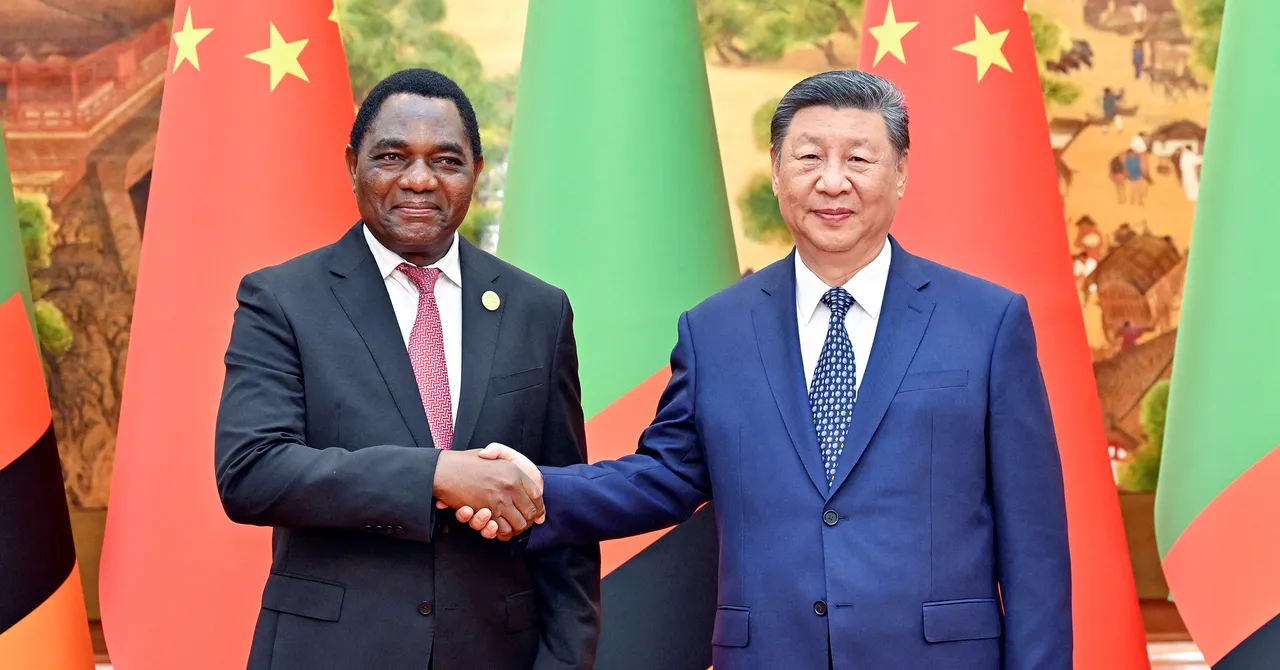
In a statement, Access Now says it was “told that diplomats from the People’s Republic of China (PRC) were putting pressure on the Government of Zambia because Taiwanese civil society participants were planning to join us in person.”

The Chinese Embassy in Washington, DC, and the United States Taipei Economic and Cultural Representative Office did not immediately respond to requests for comment. When WIRED called the Zambian embassy in Washington, a member of the staff answered the phone and transferred the call to another staff member who then picked up for several seconds before hanging up. A follow-up call went unanswered.

Access Now says it was told “informally from multiple sources” that “in order for RightsCon to continue, we would have to moderate specific topics and exclude communities at risk, including our Taiwanese participants, from in-person and online participation.”

Advertisement

RightsCon 2026 was set to feature several panels on China’s international influence, including about how Beijing exports digital authoritarianism and spreads disinformation in regions like Africa, as well as discussions on Chinese cyberattacks and the global spread of its censorship and surveillance technologies.

Arzu Geybulla, the co-executive director of Access Now, tells WIRED that “multiple pieces of information we received indicated that foreign interference by the People’s Republic of China played a role in the abrupt disruption of RightsCon 2026.”

A week before the conference was scheduled to take place in Lusaka, Zambia, the Zambian government abruptly announced that it would be postponed to an unspecified date. In a statement on April 28, the country’s minister of technology and science, Felix Mutati, said that certain “speakers and participants remain subject to pending administrative and security clearances.” The following day, Thabo Kawana, Zambia’s minister for information and media added that the “postponement was necessitated by the need for comprehensive disclosure of critical information relating to key thematic issues proposed for discussion during the Summit.”

On April 27, two days before the Zambian government’s announcement, Access Now “became aware that the in-person participation of people from Taiwan had caught the attention of the Government of the People’s Republic of China. In turn, Chinese authorities were, apparently, trying to influence the Zambian government’s approach to Taiwanese participants’ movement across the border,” says Geybulla. “Soon after, the Zambian government publicly referred to ‘diplomatic protocols’ and ‘pending administrative and security clearances’ of participants as reasons for their disrupting RightsCon.”

Advertisement

Open Culture Foundation, a Taiwanese nonprofit organization that was scheduled to attend RightsCon this year, says that it was warned by Access Now that Taiwanese citizens may have problems entering Zambia due to possible concerns from the Chinese Embassy. They were told to pause their travel plans while the host coordinated with Zambian officials.

Nikki Gladstone, RightsCon director at Access Now, confirmed to WIRED that the organization had been in contact with Taiwanese participants about potential issues traveling to Zambia. “Given the potential access issues this would present to that community, many of whom were set to begin traveling imminently, we felt a duty to inform our registered Taiwanese participants of this development while we sought more details and information,” says Gladstone. “We said we would be hesitant to recommend travel until there was more clarity.”

An employee of another human rights organization, who asked not to be named for security reasons, tells WIRED that after RightsCon was officially postponed, they were told by one of their grant funders that the Chinese government had been pressuring the Zambian government for days over the presence of a Taiwanese delegation at the conference.

Source link

Advertisement
Continue Reading

Trending

Copyright © 2025