By its most generic description, the 2x Bitcoin Strategy ETF (BITX) is a leveraged product that tries to give you twice the daily price action of Bitcoin (BTC-USD). Chasing the price of Bitcoin in a leveraged way for more than a day can lead to a complete loss of your investment, so that’s the first thing you need to know about this and other leveraged ETFs.
Inside BITX
Incepted by Volatility Shares on June 27, 2023, BITX is not a Bitcoin holder, so there’s no direct or indirect exposure as such. The exposure comes from futures contracts on Bitcoin. Using cash, treasuries, repo agreements, etc. for collateral, the fund buys monthly rolling contracts that are one and two months out, and these contracts are rolled over before expiration.
To illustrate this, this is what their annual report showed as of February 28, 2026.
Advertisement
BITX website
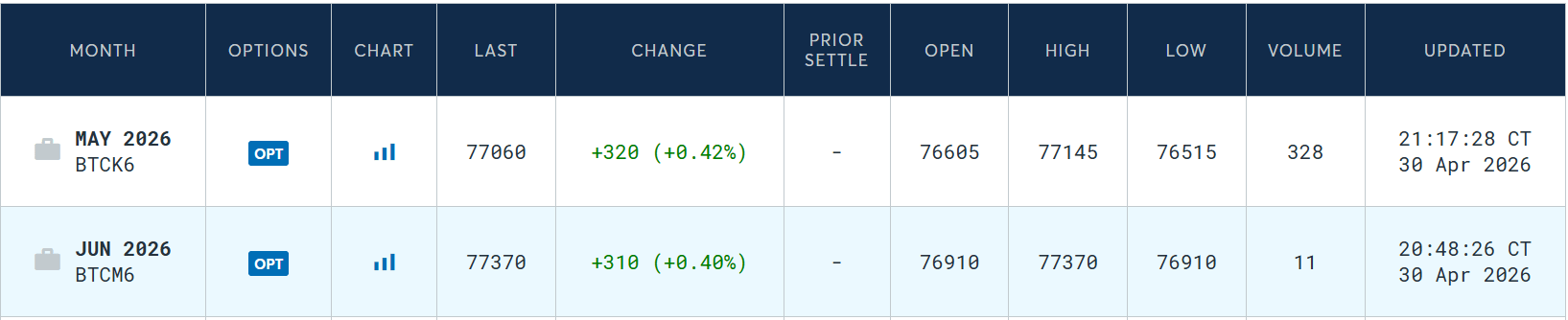
Since it’s now May at the time of writing, these contracts would have been rolled over to April and May, then May and June, and eventually to June and July futures later this month when July contracts are available. Let’s see how that’s going.
CME Group
What’s happening here is that the Bitcoin futures contract values show us where the market thinks the Bitcoin USD (BTC-USD) price will go over whatever period the contracts cover. When the market is bullish, longer-expiration contracts are more expensive, like in the screenshot above. Because of that, rolling over to the next month’s contracts is a net loss exercise for the ETF. The bet they’re making is that BTC prices will rise by the time they sell the older-month contracts so the net loss can be rolled over into a net gain position.
Advertisement
There’s a problem associated with this approach. Since the ETF is on the buy side of these contracts, these oscillations between net gain and net loss are amplified 2x and can lead to volatility drag. Here’s the example the fund gives in its prospectus.
…if Bitcoin futures were to rise 10% on day one, fall 5% on day two, and then rise 7% on day three, the expected leveraged performance of a fund like BITX over the three days would be = 1.2 * 0.9 * 1.14 = 1.23, or 23%, while the simple sum of the leveraged daily returns +20% – 10% +14% = 24%. This 1% lag is due to volatility drag.
That’s the cost long-term holders of BITX are paying on top of the 2.38% ER. Why would anyone do that? The answer is the potential upside during bitcoin bull cycles, because the ETF also does this.
…if Bitcoin futures were to rise 20% a day for three consecutive days, then BITX’s expected performance could be calculated as = 1.4 *1.4 * 1.4 = 2.74, or an impressive 174% increase over three days – a whopping 54% more than the simple sum of the three 40% returns (40% + 40% + 40% = 120%).
If you’re looking at this from a risk-reward angle, it looks like a no-brainer, but it’s not. Be careful here. This is just the gain/loss on the derivatives amplifying the movement of Bitcoin, and looking at just a couple of examples doesn’t give us the higher-level perspective.
The bigger risk that overshadows the derivatives risk is Bitcoin’s market value. As an extremely volatile and news-sensitive asset, even holding bitcoin alone can lead to sleepless nights. Imagine doubling that trouble, and what you get is BITX.
Advertisement
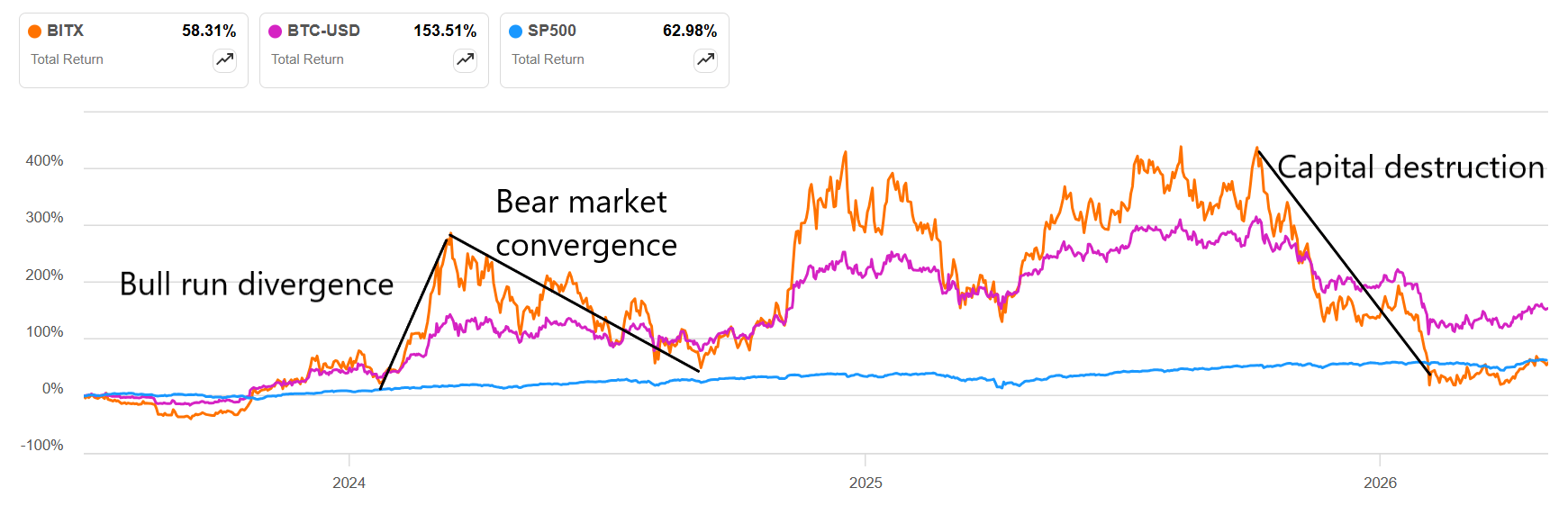
On the bright side, when bitcoin rallies, holding BITX can give you those tasty leveraged returns. For a moment, forget about the one-day-only warning of the ETF and imagine you held BITX from the time of inception until now.
SA
If you ignore the fact that BTC’s price movements since 2023 (June 27), when BITX was launched, make the S&P look like the kiddie ride in your neighborhood park, you’ll probably also see that BITX hasn’t given any hint of 2x leverage other than during the bull run divergences. Actually, the opposite is true—the divergence is caused by the leverage. This is where the real money is to be made if you’re looking at an investment horizon of longer than a day.
Then there’s the other side of the coin. I’m sure you haven’t missed the fact that your capital could be wiped out even more quickly. This isn’t an ETF where you accrue your wins and losses. It’s a daily reset. It’s aggressive. It’s potentially very rewarding, but it’s as risky as it is attractive.
Advertisement
Who Should Consider Using BITX?
I used the word “Using” and not “Holding” here on purpose, and the SEC warns investors about leveraged ETFs because of the volatility decay. That’s what you’re seeing in that screenshot two paragraphs ago. That entire period is volatility decay in action, and it should be obvious that the gains made during multiple and separate bull runs were almost zeroed out, leaving the investor with returns that were even less than the S&P500’s.
BITX can be handy for certain investors:
Price capture enthusiasts: Those who like participating in the price of Bitcoin during longer rallies periodically can be quite advantageous when coupled with leverage.
Those who opt out of Bitcoin (non-adopters) but want to benefit from its price action: investors who don’t want to hold Bitcoin but are keen on participating in rallies.
Portfolio diversifiers: those who need diversification and are willing to pay the risk premium but don’t really want to own any actual crypto assets.
If this looks interesting, you need to do your due diligence about your entry and exit points.
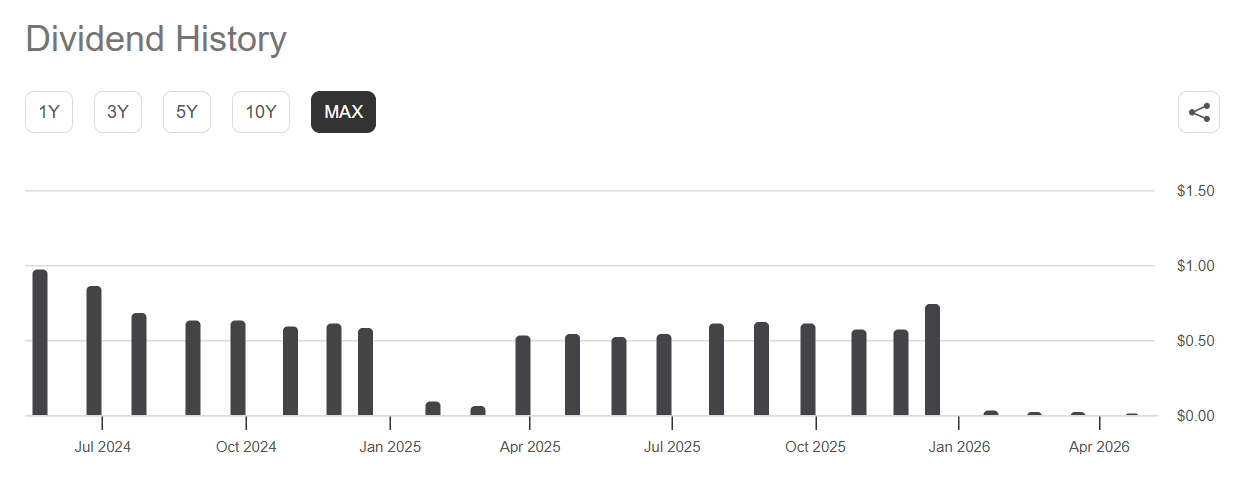
One last thing. Don’t be taken in by the sky-high distributions. Over the past three years, the ETF has paid out strong monthly dividends, but as of 2026, it’s run out of steam, and the monthly payout is now a paltry 1.5 cents a share.
SA
Advertisement
Unless you have a strong conviction that there’s another bitcoin rally on the horizon, it doesn’t look like you can depend on the high yield to resume anytime soon. That’s still not too bad if you think BTC is prepping for another bull run.
SA
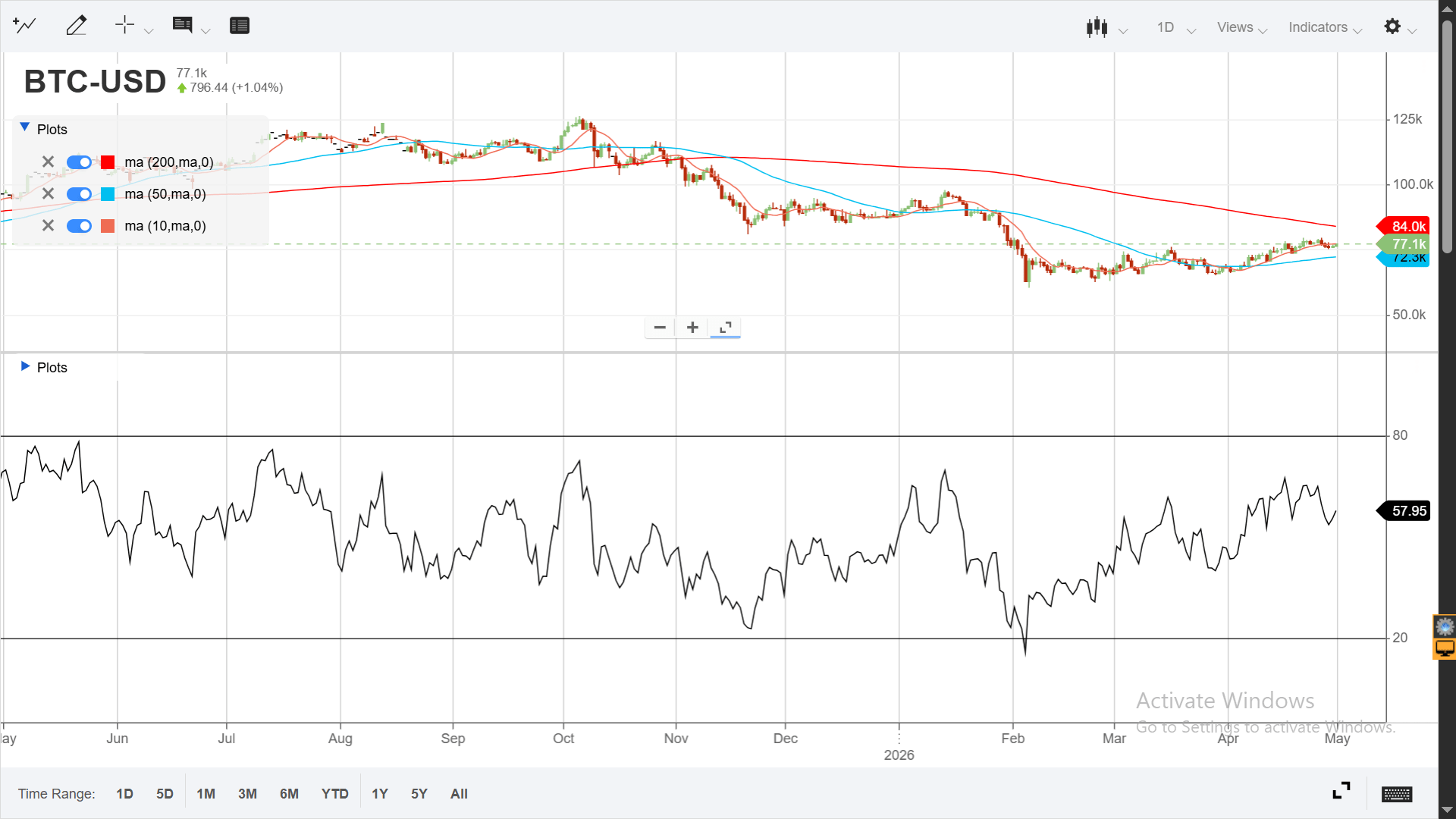
Using current context to illustrate potential use cases, the 10-day SMA has crossed over the 50-day SMA, but there’s still not enough momentum to force a turnaround in the 200-day SMA. It could go either way, and the RSI bears that out. There’s been an increase since the February low, but it’s been very cautious, hence the lack of momentum. It could have more room to run, but the best entry points for BITX are the ones where it bounces off 30 or under. Once it approaches 70, that’s a warning sign to sell.
As a final thought, I’d recommend thoroughly researching the leverage concept and how technical indicators can show you the best entry and exit points. From an academic perspective, I hope the article has given you at least some of what you came for. Thanks for reading!
Advertisement
This article answers three questions about BITX:
How does BITX reflect the price of Bitcoin?
What risks are involved in using BITX?
Which investors is BITX appropriate for?
Editor’s note: This article is intended to provide a general overview of the ETF for educational purposes only and, unlike other articles on Seeking Alpha, does not offer an investment opinion about the ETF.
The S&P 500 and the Nasdaq advanced to record closing highs on Friday, boosted by robust earnings and a dip in crude prices, and turning the page on their biggest monthly percentage gains in years.
The S&P 500 joined the Nasdaq in positive territory, with tech strength putting the latter out front. Both indexes logged their sixth consecutive weekly advances, their longest run of weekly gains since October 2024.
As May begins, the stock market embarks on what is historically a weak six-month stretch. Since 1945 through April 2026, the S&P 500 has gained an average of about 2% from May to October, according to data from Fidelity. That compares with an average gain of about 7% from November through April.
Wrapping up a momentous week for corporate earnings, in which reporting companies accounted for more than two-fifths of the S&P 500’s total market capitalization, analysts now see aggregate first-quarter earnings growth of 27.8%, year-on-year, according to LSEG I/B/E/S.
Advertisement
Five of the companies in the Magnificent Seven group of artificial intelligence-related stocks reported this week, and investors paid close attention to the timing and extent to which huge investments in the nascent technology are starting to pay off.
Live Events
That’s an 11.7 percentage point increase from where the estimate stood a week ago, and marks the biggest earnings growth since the fourth quarter of 2021. Of the 314 companies that have posted results, 83% have beaten earnings estimates, and 78% reported better-than-expected revenues, according to LSEG. “Today’s action is really the cherry on top of another solid week for investors as earnings season continues to come in stronger than expected,” said Ryan Detrick, chief market strategist at Carson Group in Omaha. “At the same time, we had the second-best April for the S&P 500 since 1950.”
“It looks like that upward momentum very well could continue in May,” Detrick added.
GEOPOLITICS, CRUDE PRICES AND THE ECONOMY
Progress toward a peaceful resolution to the U.S.-Israeli war on Iran appeared stalled, with the closure of the Strait of Hormuz putting upward pressure on energy prices and stoking inflation worries.
But front-month crude futures eased after Iran was reported to have submitted a fresh proposal for negotiations with Washington.
Advertisement
“Investors are pricing out how long they expect that supply disruption to last, and then differentiating who’s got the most sensitivity to that disruption,” said Tom Hainlin, national investment strategist at U.S. Bank Wealth Management in Minneapolis.
Economic data showed U.S. factory activity expanded in April for the fourth consecutive month, but the prices-paid component – an inflation predictor – jumped to its hottest level in four years, according to the Institute for Supply Management.
According to preliminary data, the S&P 500 gained 20.46 points, or 0.28%, to end at 7,229.47 points, while the Nasdaq Composite gained 217.67 points, or 0.87%, to 25,109.98. The Dow Jones Industrial Average fell 155.67 points, or 0.31%, to 49,496.47.
Apple shares advanced after the company provided a solid sales forecast, touting strong demand for its flagship iPhone 17 and the MacBook Neo.
Advertisement
Atlassian shares surged after the enterprise software firm hiked its forecast.
Peers Salesforce and ServiceNow also gained ground.
Roblox slid following a cut in its annual bookings forecast. Reddit jumped after an upbeat quarterly revenue forecast.
Exxon Mobil’s quarterly profit was hit by Middle East disruptions, while Chevron beat earnings expectations but overall profit marked its lowest level in five years. Both supermajors closed lower.
China’s three largest airlines returned to profit in the first quarter, but the recovery may prove short-lived as higher fuel costs due to the Middle East war cloud the outlook and threaten bottom lines.
The Chinese aviation sector delivered a strong start to 2026 even as the outbreak of the Iran war in late February disrupted air travel and heightened macroeconomic uncertainty.
President Donald Trump said he would increase tariffs charged to the European Union for cars and trucks to 25%, without saying what authority he would use to raise the levies.
“Based on the fact the European Union is not complying with our fully agreed to Trade Deal, next week I will be increasing Tariffs charged to the European Union for Cars and Trucks coming into the United States,” he wrote on Truth Social on Friday. “The Tariff will be increased to 25%. It is fully understood and agreed that, if they produce Cars and Trucks in U.S.A. Plants, there will be NO TARIFF.”
The Supreme Court ruled in February that a large part of Trump’s tariff agenda was illegal. The president’s “reciprocal” tariffs were invoked using a novel reading of the International Emergency Economic Powers Act, or IEEPA, but the high court said in a 6-3 majority that the law that undergirds those import duties “does not authorize the President to impose tariffs.”
Shortly after the Supreme Court ruling, Trump said he signed an executive order imposing a new 10% “global tariff” rate to effectively replace the IEEPA duties, though those tariffs came with a 150-day time limit under Section 122 of the Trade Act of 1974. He then said he would increase the global rate to 15%.
Advertisement
The EU in February had warned that its trade deal with the U.S. could be in jeopardy after the new tariff rate was announced and postponed its planned vote on the agreement.
The European Union said it is following standard legislative practice and keeping the U.S. administration up to date.
“We maintain close contact with our counterparts, including as we also seek clarity on US commitments,” a a European Commission spokesperson said. “We remain fully committed to a predictable, mutually beneficial transatlantic relationship. Should the US take measures inconsistent with the Joint Statement, we will keep our options open to protect EU interests.”
A White House official said in a statement Friday that the EU has “failed to make substantial progress on their agreed-upon commitments” under a trade agreement between the countries.
Advertisement
“The White House has always been clear that the President reserves the right to adjust tariff rates if our trade deal partners fail to abide by their commitments,” the official said.
The Trump administration last year broadly implemented 25% tariffs on vehicles and certain auto parts imported into the U.S., citing national security risks under Section 232. Those levies are still in place.
The European automakers that could most be impacted by a change in tariff rate would be Mercedes, BMW and Volkswagen, which import a large percentage of the vehicles they sell in the U.S. from their plants in Europe.
Proto Labs, Inc. (PRLB) Q1 2026 Earnings Call May 1, 2026 8:30 AM EDT
Company Participants
Ryan Johnsrud – Manager of IR, Corporate Development and FP&A Suresh Krishna – President, CEO & Director Dan Schumacher – CFO and Principal Financial & Accounting Officer
Advertisement
Conference Call Participants
Greg Palm – Craig-Hallum Capital Group LLC, Research Division Brian Drab – William Blair & Company L.L.C., Research Division Troy Jensen – Cantor Fitzgerald & Co., Research Division James Ricchiuti – Needham & Company, LLC, Research Division
Presentation
Advertisement
Operator
Greetings, and welcome to the Proto Labs First Quarter 2026 Earnings Call. [Operator Instructions] As a reminder, this conference is being recorded.
It is now my pleasure to introduce your host, Ryan Johnsrud, Investor Relations. Thank you. You may begin.
Advertisement
Ryan Johnsrud Manager of IR, Corporate Development and FP&A
Thank you. Good morning, everyone, and welcome to Proto Labs’ First Quarter 2026 Earnings Conference Call. I’m joined today by Suresh Krishna, President and Chief Executive Officer; and Dan Schumacher, Chief Financial Officer. This morning, Proto Labs issued a press release announcing its financial results for the first quarter ended March 31, 2026. The release is available on the company’s website. In addition, a prepared slide presentation is available online at the web address provided in our press release.
Our discussion today will include statements relating to future performance and expectations that are or may be considered forward-looking statements and subject to many risks and uncertainties that could cause actual results to differ materially from expectations. Please refer to our earnings press release and recent SEC filings, including our annual report on Form 10-K for information on certain risks that could cause actual outcomes to differ materially and adversely from any forward-looking statements made today.
The results and guidance we will discuss today include non-GAAP financial measures consistent with
Greetings, and welcome to the Civeo Corporation First Quarter 2026 Earnings Call. [Operator Instructions]As a reminder, this conference is being recorded. It is now my pleasure to introduce Regan Nielsen, Vice President, Corporate Development and Investor Relations. Please go ahead.
Regan Nielsen Senior Director of Corporate Development & Investor Relations
Advertisement
Thank you, and welcome to Civeo’s First Quarter 2026 Earnings Conference Call. Today, our call will be led by Bradley Dodson, Civeo’s President and Chief Executive Officer; and Collin Gerry, Civeo’s Chief Financial Officer and Treasurer.
Before we begin, we would like to caution listeners regarding forward-looking statements. To the extent that our remarks today contain anything other than historical information, please note that we’re relying on the safe harbor protections afforded by federal law. These forward-looking statements speak only as of the date of our earnings release and this conference call.
We undertake no obligation to update or revise these statements, except as required by law. Any such remarks should be read in the context of the many factors that affect our business, including risks and uncertainties disclosed in our Forms 10-K, 10-Q and other SEC filings.
I’ll now turn the call over to Bradley.
Advertisement
Bradley Dodson CEO, President & Director
Thank you, Regan, and thank you all for joining us today on our first quarter 2026 earnings call. I’ll start with some key takeaways for the quarter and summarize our consolidated and regional performance, after that, Collin will provide
Sony’s PlayStation 6 remains on the horizon, with industry insiders pointing to a potential late 2027 or 2028 launch following the successful lifecycle of the PlayStation 5 and its Pro variant. While official details are scarce, leaks, analyst reports and hardware trends paint an exciting picture of what gamers can expect. As anticipation builds, here are 10 compelling reasons why the PS6 could prove irresistible upon release, blending technological leaps with enhanced experiences that build on PlayStation’s legacy.
10 Reasons PS6 Will Be Must-Buy at Launch: Next-Gen Power, Features and Gaming Future
First, raw performance gains promise a generational leap. Rumors suggest an AMD Zen 6 CPU paired with RDNA 5 graphics architecture, potentially delivering 4K at 120 frames per second or higher with advanced ray tracing. This addresses current-gen bottlenecks, enabling more immersive worlds, detailed environments and smoother gameplay in demanding titles. Developers could push boundaries in open-world adventures or fast-paced multiplayer without compromises, making the PS6 a powerhouse for next-generation visuals.
Second, expanded memory and storage will eliminate loading screens and limitations. Leaks mention up to 32GB of GDDR7 RAM and larger SSDs, possibly starting at 2TB. Faster data throughput supports seamless streaming of assets, massive textures and complex simulations. Gamers tired of managing storage or waiting for installs will appreciate the freedom to download expansive libraries without hesitation.
Third, backward compatibility stands as a major draw. Sony has prioritized preserving libraries across generations, and the PS6 is expected to support PS5, PS4 and potentially earlier titles through enhanced emulation. Players could revisit thousands of games with improved performance, higher resolutions and faster load times — a value proposition that extends the life of existing collections while easing the transition.
Fourth, AI integration could revolutionize gameplay and visuals. Features like advanced upscaling — building on PlayStation Spectral Super Resolution — might use neural processing for real-time enhancements, delivering sharper images even on 8K displays or when targeting high frame rates. AI-driven NPCs, dynamic difficulty and procedural content generation could create more responsive, personalized experiences that evolve with player behavior.
Advertisement
Fifth, a potential hybrid or modular design appeals to diverse users. Reports hint at multiple SKUs, including a standard model, a more affordable “S” or Lite version, and possibly a dedicated handheld companion. This flexibility caters to budget-conscious gamers, portability seekers and enthusiasts wanting premium power, broadening accessibility without sacrificing core capabilities.
Sixth, energy efficiency and sustainability improvements align with modern expectations. Next-gen hardware is likely to deliver higher performance per watt, reducing electricity costs and heat output. Sony’s focus on eco-friendly materials and recyclable components could attract environmentally conscious consumers while supporting longer play sessions without excessive power draw.
Seventh, enhanced controller technology will elevate immersion. Building on DualSense haptic feedback and adaptive triggers, the PS6 controller may introduce finer tactile responses, longer battery life, improved ergonomics and new sensors. These advancements make every gunshot, footstep or environmental interaction feel more realistic, deepening emotional connections to games.
Eighth, seamless cloud and streaming features promise flexibility. Deeper integration with cloud gaming services allows playing high-fidelity titles on various devices, from handhelds to smart TVs. Remote play enhancements and cross-platform progression ensure gamers never miss a moment, whether at home or on the go.
Advertisement
Ninth, a robust exclusive lineup is anticipated at launch. Sony’s first-party studios, including those behind “God of War,” “Horizon,” “Spider-Man” and “The Last of Us,” are poised to deliver flagship titles optimized for new hardware. These blockbuster experiences, combined with third-party support, provide immediate reasons to upgrade rather than waiting for price drops.
Tenth, long-term value through ecosystem continuity. PlayStation Network, trophies, friends lists and digital libraries carry forward, creating a seamless upgrade path. Subscription services like PlayStation Plus could expand with PS6-specific perks, such as enhanced cloud saves or early access trials, ensuring ongoing engagement and community connection.
Pricing speculation centers around $500 for the standard model, with variations for different configurations. While memory shortages have fueled delay rumors — potentially pushing launch to 2028 or 2029 — Sony’s track record suggests a polished product that justifies the wait. Analysts note the PS5’s extended lifecycle provides breathing room for mature development tools and mature game designs.
Industry watchers highlight the PS6’s potential to address current-gen pain points while introducing innovations. Faster SSDs, superior ray tracing and AI assistance could make games feel truly next-generation. For families, the console’s multimedia capabilities — 8K video playback, advanced audio and entertainment apps — position it as a complete home hub.
Advertisement
Critics caution that success depends on execution. Supply chain stability, competitive pricing against rivals and a strong software slate will determine adoption. Yet enthusiasm remains high, with online discussions focusing on desired features like improved voice chat, customizable UI and deeper social integration.
As development continues behind closed doors, leaks from reliable sources fuel speculation. AMD partnerships suggest custom silicon tailored for gaming demands, balancing power with efficiency. Handheld rumors add excitement for portable PlayStation experiences that sync with the home console.
Gamers weighing an upgrade from PS5 or earlier systems will find compelling incentives in the PS6’s capabilities. Whether chasing graphical fidelity, narrative depth or multiplayer thrills, the console promises to elevate the hobby. Early adopters often enjoy premium features and community prestige before broader availability.
Sony’s history of innovation — from DualShock to DualSense — suggests the PS6 will introduce meaningful advancements rather than incremental updates. The combination of hardware muscle, software excellence and ecosystem strength positions it as a worthwhile investment for dedicated players.
Advertisement
In summary, the PlayStation 6 represents more than a hardware refresh. It embodies the future of interactive entertainment, with performance, accessibility and creativity at its core. As launch approaches, these 10 reasons underscore why many will line up to experience the next chapter in PlayStation’s storied history.
Seeking Alpha’s transcripts team is responsible for the development of all of our transcript-related projects. We currently publish thousands of quarterly earnings calls per quarter on our site and are continuing to grow and expand our coverage. The purpose of this profile is to allow us to share with our readers new transcript-related developments. Thanks, SA Transcripts Team
Zelle, the popular peer-to-peer payment network used by millions of Americans through their banks and credit unions, has seen scattered user reports of issues on Friday, though major monitoring sites indicate no widespread outage affecting the service as of early May 2026. Customers attempting transfers have posted complaints about delayed processing, app errors and failed transactions, prompting many to ask: Is Zelle down today?
Downdetector and similar platforms show elevated but not critical reports in the past 24 hours, with most complaints centered on funds transfers, the mobile app and general payments. Spikes appeared around mid-morning Eastern Time, yet Zelle’s core network and partner banks report normal operations for the vast majority of users. Isolated problems often stem from individual bank integrations, network congestion or user-side issues rather than a full system failure.
Zelle operates as a digital payments rail connecting over 2,000 financial institutions. Users send money instantly using email or phone numbers when both parties are enrolled. The service’s convenience has made it a staple for splitting bills, repaying friends and handling small business transactions. However, its decentralized nature — relying on participating banks — means disruptions at one institution can affect subsets of users without bringing down the entire network.
On Friday, affected customers described symptoms including error messages during send attempts, pending transfers that fail to complete and app crashes. Some reported receiving funds on one end but not seeing updates on the other. Others noted delays beyond the typical near-instant processing. These issues align with past minor glitches rather than the major outages that occasionally halt service nationwide.
Advertisement
To check Zelle’s status, users should first visit Downdetector.com or StatusGator for real-time graphs and user reports. Official bank apps or websites often provide their own service alerts. Zelle’s help center encourages contacting your financial institution directly, as problems frequently trace to bank-specific servers or maintenance windows. Clearing the app cache, updating software or trying a different device can resolve many temporary glitches.
Industry experts note that digital payment platforms like Zelle experience occasional hiccups due to high transaction volumes, cybersecurity protocols or routine updates. Friday’s reports do not appear coordinated with any announced maintenance, suggesting localized or user-specific causes. No official Zelle statement confirmed a broad outage, and service health indicators remained green on major trackers.
For those impacted, patience often proves key. Most transfers eventually process once temporary issues clear. In rare cases of prolonged delays exceeding three days, Zelle recommends verifying enrollment details and reaching out to bank support. Users should avoid resending funds immediately to prevent duplicates, and always confirm recipient information before initiating payments.
Zelle’s popularity surged post-pandemic as contactless payments became preferred. The network handles billions in transfers annually with strong security features, including encryption and fraud monitoring. Banks integrate Zelle directly into their mobile apps, eliminating the need for a standalone service in many cases after the dedicated Zelle app was phased out.
Advertisement
Common troubleshooting steps include:
Restarting the phone or app.
Checking internet connection stability.
Verifying sufficient account balances and daily limits.
Updating the banking app to the latest version.
Trying the web version of the bank’s online banking if the mobile app fails.
If problems persist, contacting customer service during business hours yields faster resolutions. Some banks offer 24/7 support for payment issues.
Broader context reveals digital payments face growing scrutiny over reliability during peak times. Competitors like Venmo, Cash App and bank-owned services provide alternatives when Zelle falters. Users often maintain multiple options to avoid disruption in urgent transfers for rent, bills or emergencies.
Security remains paramount. Zelle users should enable two-factor authentication, monitor accounts regularly and report suspicious activity immediately. The service’s design — sending money directly between bank accounts — reduces some risks associated with third-party apps but requires vigilance against scams where fraudsters impersonate friends or vendors.
Financial experts advise treating Zelle like cash: only send to trusted parties. Irreversible transfers mean disputes rely on bank policies rather than built-in buyer protection. This Friday’s minor issues highlight the importance of having backup payment methods, especially for time-sensitive needs.
Advertisement
As the day progresses, monitoring sites will update with fresh data. Most users encountering problems Friday afternoon reported gradual resolution, suggesting transient network strain or regional bank maintenance rather than systemic failure. Zelle typically resolves such spikes quickly through partner coordination.
For businesses using Zelle for customer payments or vendor disbursements, diversification mitigates risks. Larger enterprises often prefer ACH, wire transfers or invoicing platforms with stronger reconciliation tools. Individuals planning major transfers might schedule outside peak hours or confirm receipt before relying on immediate availability.
Zelle continues evolving with features like request money options, group payments and improved fraud detection. Future enhancements could include broader international support or integration with emerging payment technologies, strengthening its position in the U.S. digital wallet landscape.
In the meantime, customers facing issues today should document attempts with screenshots and timestamps for potential bank follow-up. Most banks investigate delayed or failed Zelle transfers promptly upon request. Staying informed through official channels prevents unnecessary worry during minor service fluctuations.
Advertisement
Overall, while some users experienced hiccups with Zelle on Friday, the service appears largely operational. Routine checks and basic troubleshooting resolve the majority of reports. As digital finance grows, platforms like Zelle balance convenience with reliability challenges inherent to real-time networks. Users can expect continued improvements as technology and infrastructure advance.























































You must be logged in to post a comment Login