Connect with us
DAPA Banner

Business

Timberwolves Star at Least Two Weeks From Knee Injury Comeback

Published

on

Anthony Edwards #1 of the Minnesota Timberwolves pauses during the second half against the Cleveland Cavaliers at Rocket Mortgage Fieldhouse on February 28, 2022 in Cleveland, Ohio. The Timberwolves defeated the Cavaliers 127-122.

MINNEAPOLIS — Minnesota Timberwolves star Anthony Edwards is expected to miss at least two weeks with a bone bruise and hyperextension in his left knee.

Anthony Edwards #1 of the Minnesota Timberwolves pauses during the second half against the Cleveland Cavaliers at Rocket Mortgage Fieldhouse on February 28, 2022 in Cleveland, Ohio. The Timberwolves defeated the Cavaliers 127-122.
Anthony Edwards

The injury occurred in Game 4 when Edwards landed awkwardly after contesting a shot. He was helped off the court in visible pain, sparking immediate concern among fans and analysts. An MRI confirmed no structural ligament damage, a significant relief, but the bone bruise requires careful rehabilitation to avoid long-term complications. The Timberwolves have listed him as week-to-week while emphasizing a cautious approach.

Shams Charania of ESPN reported the two-week minimum timeline, noting it positions Edwards for a potential return “at some point in the second round” if Minnesota advances. The Wolves currently lead the series, but Edwards’ absence has tested their depth against a resilient Nuggets team. Coach Chris Finch has praised the supporting cast while acknowledging the challenge of replacing Edwards’ scoring and athleticism.

The timeline aligns with typical recovery for bone bruises in athletes. These injuries involve trauma to the bone beneath cartilage and can cause significant pain and swelling. Hyperextension adds soft tissue strain, requiring progressive loading to restore strength and confidence. Edwards also manages patellar tendinitis in his right knee, adding complexity to his rehabilitation protocol.

Medical experts say bone bruises heal at varying rates depending on severity, location and individual factors. A two-week absence represents the optimistic end of the spectrum, with some cases requiring four to six weeks for full return to high-level competition. The Timberwolves’ medical staff, working with specialists at Mayo Clinic, will monitor progress through imaging and functional testing before clearing Edwards.

Advertisement

Edwards’ potential absence has major implications for Minnesota’s postseason hopes. As the team’s leading scorer and dynamic playmaker, he averages over 27 points per game in the playoffs. His ability to attack the rim and create for teammates has been central to the Wolves’ success. Without him, opponents can focus defensive attention on Karl-Anthony Towns and others, potentially slowing the offense.

Finch has adjusted lineups and strategies to compensate. Increased minutes for bench players and tactical tweaks have kept the team competitive, but the drop-off in explosiveness is noticeable. If the series extends or Minnesota advances, the coaching staff will carefully manage Edwards’ minutes upon return to avoid re-injury.

The injury occurred at a critical juncture in Edwards’ young career. At 24, he has emerged as one of the NBA’s brightest stars, with All-Star selections and playoff heroics. His absence tests the franchise’s depth and resilience as it aims for a deep postseason run. Team officials have expressed confidence in the roster’s ability to compete while prioritizing Edwards’ long-term health.

Fan reaction has been a mix of concern and optimism. Social media is filled with well-wishes and debates about return timelines. The Wolves’ playoff run has captivated Minnesota, with Edwards’ charismatic personality and highlight-reel plays endearing him to supporters. His potential return in the second round could provide a massive boost if the team reaches that stage.

Advertisement

Broader NBA implications include player load management and injury prevention. Edwards’ high-usage style and athleticism make him susceptible to lower-body injuries despite his youth. League-wide discussions about rest, scheduling and medical protocols continue as stars miss time in critical playoff moments. The Timberwolves’ handling of Edwards’ recovery could serve as a case study.

As rehabilitation progresses, the focus remains on incremental milestones. Initial rest and swelling reduction will give way to strength training, agility work and eventually on-court drills. Edwards’ competitive nature suggests he will push to return as soon as medically safe, but the organization will err on caution to protect his future.

The coming days will bring more clarity as the series unfolds and medical updates emerge. For now, the Timberwolves face a formidable challenge without their star, while Edwards works behind the scenes preparing for a potential heroic return. The two-week minimum provides a target, but playoff basketball’s unpredictable schedule could align favorably or extend his recovery window.

Advertisement
Continue Reading
Click to comment

You must be logged in to post a comment Login

Leave a Reply

Business

Apple Ends ‘Net-Cash Neutral’ Policy

Published

on

Apple Stock Continues to Edge Higher Ahead of the Close

Back in the 2010s, Apple had a problem: it had too much cash, and more kept coming in. The company began paying dividends and buying back shares, managing a complex balance sheet that includes cash, investments, and debt.

But the pile kept growing. By 2018, Apple had $163 billion in “net cash,” or cash plus investments minus debt. It announced a plan to get to bring those in line, and get net cash close to zero through an aggressive return of cash through share buybacks and dividends.

At the end of the second quarter, Apple had $62 billion in net cash, and the company announced that it is no longer managing cash and debt together and will treat them separately. It’s essentially the end of its net-cash neutral policy.

Continue Reading

Business

RBI steps up play in us treasuries, other securities

Published

on

RBI steps up play in us treasuries, other securities
The share of deposits parked by the Reserve Bank of India (RBI) with other central banks fell to 8% at March-end from 25% in March 2022, while the share of investments in securities including US Treasury bills rose to 84% from 67% during this period, reflecting preference for globally accepted liquid assets amid heightened geopolitical uncertainties.

The ‘RBI’s Half-Yearly Report on Management of Foreign Exchange Reserves‘ showed that while foreign currency assets (FCA) remained broadly stable over the four-year period, the composition of investments changed. The share of deposits with commercial banks fell to a low of 4.2% at the end of March 2023 before rising steadily to 7.2% by March-end this year.

Madan Sabnavis, chief economist, Bank of Baroda, said there are a few reasons for this phenomenon. “One the valuation of reserves which went up as a result of holding US treasuries which have seen values rising. Second, there has been a principle of diversification followed. Third, higher returns from deposits kept in commercial banks are reflective of treasury operations,” he said.

India’s total foreign exchange reserves increased to $691.1 billion at the end of March this year from $607.3 billion at March-end 2022.

Advertisement

RBI wide spread chartETMarkets.com

Of the $691.1 billion in reserves, FCA amounted to $552.8 billion, gold was valued at $115.2 billion, special drawing rights at $18.6 billion and the reserve tranche position in the IMF at $4.8 billion.
FCA comprises a multi-currency portfolio of major currencies such as the US dollar, euro, pound sterling and are valued in US dollar terms.
Investments made by the RBI in bonds issued by India Infrastructure Finance Company (UK) are excluded from FCA. At the end of March this year, investments in such bonds stood at $400 million, down from $1.44 billion in March 2022.

Continue Reading

Business

Alphabet Q1 2026: Stratospheric Heights In Performance And Expectations

Published

on

Alphabet: Still Not Too Late To Jump On The 16%+ Growth Train (NASDAQ:GOOG)

Google Chicago Fulton Market building. Google is a technology company known for search engine, browser and online advertising.

Getty Images

Alphabet’s (GOOG) (GOOGL) revenue growth has accelerated for five consecutive quarters. Except for Google Network business, which is increasingly irrelevant, every part of the Alphabet business is humming right now.

As mentioned yesterday, despite growing at an

Advertisement
Continue Reading

Business

Amadeus IT Group, S.A. (AMADY) M&A Call Transcript

Published

on

OneWater Marine Inc. (ONEW) Q1 2026 Earnings Call Transcript

Amadeus IT Group, S.A. (AMADY) M&A Call April 29, 2026 7:00 AM EDT

Company Participants

Luis Camino – President, CEO & Executive Director
Decius Valmorbida – President of Travel
Caroline Borg – Chief Financial Officer

Advertisement

Conference Call Participants

George Webb – Morgan Stanley, Research Division
Alexander Irving – Bernstein Institutional Services LLC, Research Division
Sven Merkt – Barclays Bank PLC, Research Division
Michael Briest – UBS Investment Bank, Research Division
Nooshin Nejati – Deutsche Bank AG, Research Division
Toby Ogg – JPMorgan Chase & Co, Research Division
Ted Wang
Nicolas David – ODDO BHF Corporate & Markets, Research Division

Presentation

Advertisement

Operator

Good day, ladies and gentlemen, and welcome to the Amadeus’ intention to acquire IDEMIA Public Security Conference Call. [Operator Instructions]

I would now like to turn the conference over to Luis Maroto, President and CEO of Amadeus. Please go ahead.

Advertisement

Luis Camino
President, CEO & Executive Director

Good afternoon, and thank you for joining us at such short notice today. Today, we are pleased to announce our intention to acquire IDEMIA Public Security, or IPS. This is a complementary and travel-centric acquisition aimed at creating seamless end-to-end travel journeys of the future. Decius, Carol and I will walk you through the strategic and financial rationale for this acquisition as well as our time line to obtain regulatory approvals. So let’s begin.

Please turn to Slide 5. Let me start by explaining why this acquisition is strategically important for Amadeus. IPS is a world-class market-leading end-to-end biometric technology platform with a strong global blue-chip client base. IPS fits naturally within our strategy. We already connect airlines, airports, hotels and border systems today. By bringing together the Amadeus travel platform with IPS’ leading biometric and identity capabilities, we deepen our own capabilities and also strengthening our offering.

We link a larger part of the travel journey, enabling Amadeus to

Advertisement
Continue Reading

Business

Rivian Automotive Boosts Initial Capacity for Georgia Plant; First-Quarter Revenue Rises

Published

on

Rivian Automotive Boosts Initial Capacity for Georgia Plant; First-Quarter Revenue Rises

Rivian Automotive plans to increase initial production capacity for a plant it’s building in Georgia by 50%, a move the electric car maker disclosed as it posted higher revenue in its latest quarter.

The change will allow for 300,000 units of annual production capacity for its mid-sized vehicles, known as the R2, Rivian said Thursday. The move is aimed at lowering cost per unit while still providing room for future capacity expansion. Rivian said it remains on track to start vehicle production in Georgia in late 2028.

Copyright ©2026 Dow Jones & Company, Inc. All Rights Reserved. 87990cbe856818d5eddac44c7b1cdeb8

Continue Reading

Business

ActBlue sues to block Texas attorney general’s ’retribution’ lawsuit

Published

on

ActBlue sues to block Texas attorney general’s ’retribution’ lawsuit


ActBlue sues to block Texas attorney general’s ’retribution’ lawsuit

Continue Reading

Business

Japanese PM Takaichi lands in Hanoi to address sharp investment decline – Reuters

Published

on


Japanese PM Takaichi lands in Hanoi to address sharp investment decline – Reuters

Continue Reading

Business

Spirit Airlines prepares to shut down operations overnight, sources say

Published

on

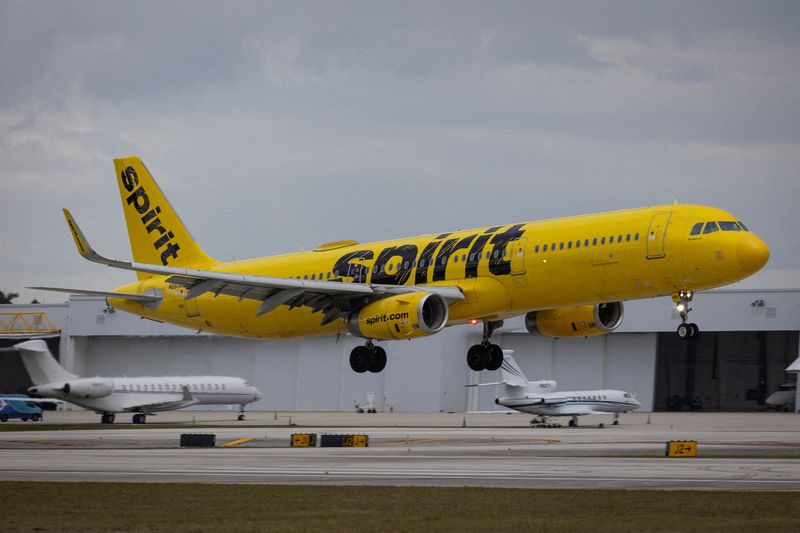
Spirit Airlines prepares to shut down operations overnight, sources say


Spirit Airlines prepares to shut down operations overnight, sources say

Continue Reading

Business

Apple CEO Tim Cook Warns of Extended Memory Crunch as AI Demand Strains Supply Chain

Published

on

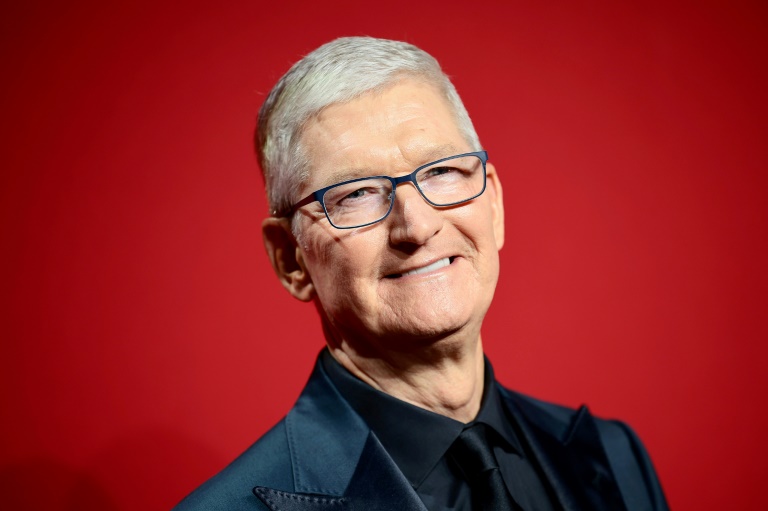
Apple chief executive Tim Cook has called generative AI a 'key opportunity' across the iPhone maker's line of products

CUPERTINO, Calif. — Apple CEO Tim Cook on Thursday warned investors of significantly higher memory costs in the coming quarters due to an intensifying global supply crunch driven by artificial intelligence demand, signaling potential pressure on the company’s hardware margins and hinting at a range of mitigation strategies under consideration.

Speaking during Apple’s fiscal second-quarter earnings call, Cook described the memory constraints as an ongoing challenge that the company has managed so far through inventory and supplier relationships but expects to intensify. “We believe memory costs will drive an increasing impact on our business,” he said, adding that Apple would “continue to evaluate” options without providing specifics on pricing adjustments or design changes.

The warning comes as the tech industry grapples with what some analysts have dubbed “RAMageddon” — a shortage of high-bandwidth memory chips essential for AI training and inference. Major cloud providers and AI developers have consumed vast quantities of DRAM and HBM chips, driving prices higher and creating allocation battles among suppliers. Apple, which relies heavily on memory for iPhones, Macs and iPads, is feeling the ripple effects despite its scale and long-term supplier deals.

Apple reported strong quarterly results overall, with revenue beating expectations and services continuing robust growth. However, Cook’s comments on memory highlighted emerging headwinds in the hardware business as the company ramps up AI features across its product lineup. The iPhone maker has invested heavily in on-device AI capabilities, which require substantial memory resources, particularly in flagship devices.

Advertisement

Supply chain experts say the crunch stems from limited manufacturing capacity for advanced memory. Samsung, SK Hynix and Micron dominate production, and their output has been prioritized for AI accelerators from Nvidia and others. Consumer electronics companies like Apple face stiffer competition for remaining supply, leading to higher costs and potential delays. Cook noted Apple navigated the current quarter’s constraints effectively but anticipates greater impact ahead.

Analysts have speculated on Apple’s potential responses. These could include passing some costs to consumers through selective price increases, optimizing designs to use less memory, or securing more long-term supplier contracts. The company has a history of efficient component management, but sustained shortages could challenge its premium pricing strategy. Cook emphasized flexibility in the supply chain remains limited in the near term.

The memory warning arrives as Apple pushes its Apple Intelligence features, which promise enhanced Siri capabilities, writing tools and image generation. On-device processing requires significant RAM, particularly in newer iPhones and Macs. Demand for AI-enabled devices has further strained supply, creating a feedback loop where AI growth drives component shortages that then affect AI device production.

Wall Street reacted cautiously to Cook’s comments. While Apple’s overall results were solid, some investors worried about margin compression if memory costs rise sharply without corresponding price adjustments. Apple has maintained strong gross margins historically through premium positioning and supply chain mastery, but prolonged component inflation could test that track record.

Advertisement

Broader industry implications extend beyond Apple. PC makers, smartphone manufacturers and automotive companies all compete for memory chips. Analysts predict continued volatility through 2026 unless new manufacturing capacity comes online. Governments and companies are exploring ways to diversify supply, including investments in domestic production in the United States and Europe.

Cook’s remarks also underscore Apple’s evolving relationship with the AI boom. While the company has been more cautious than rivals about generative AI, it has steadily integrated machine learning across its ecosystem. The memory crunch highlights the hardware realities behind software ambitions, as even on-device AI requires substantial physical resources.

Apple has not indicated immediate product price changes. The company typically adjusts pricing strategically, often absorbing some cost increases to protect sales volume. However, sustained pressure could force difficult choices, particularly for lower-margin products. Cook’s “range of options” comment suggests internal discussions are underway across engineering, procurement and finance teams.

The earnings call also featured updates on services growth, Mac performance and iPhone demand. Apple reported record quarterly revenue in some segments, demonstrating resilience despite macroeconomic challenges. Services, including App Store, Apple Music and iCloud, continue as a high-margin bright spot less affected by hardware supply issues.

Advertisement

For consumers, the memory crunch may eventually translate to higher device prices or slower availability of certain configurations. Tech enthusiasts tracking component costs have already noted rising DRAM prices in the aftermarket. Apple’s loyal customer base may tolerate modest increases, but broader economic sensitivity could influence purchasing decisions.

Looking ahead, industry watchers will monitor Apple’s next earnings for further updates on memory costs and mitigation efforts. The company’s scale gives it advantages in negotiations, but the AI-driven demand surge represents an unprecedented challenge. Cook’s measured tone suggests Apple is preparing proactively rather than reacting to crisis.

The memory situation exemplifies how AI’s rapid advancement is reshaping the entire technology supply chain. From chips to data centers to consumer devices, the technology’s hunger for resources is creating bottlenecks that could slow innovation or raise costs across the board. Apple’s experience may offer lessons for the wider industry as it navigates this new era of computing.

Advertisement
Continue Reading

Business

EVV: This Fund's Distribution May Continue To Decline Going Forward

Published

on

Janus Henderson Forty Fund Q4 2025 Commentary (MUTF:JACCX)

EVV: This Fund's Distribution May Continue To Decline Going Forward

Continue Reading

Trending

Copyright © 2025