Connect with us
DAPA Banner

Tech

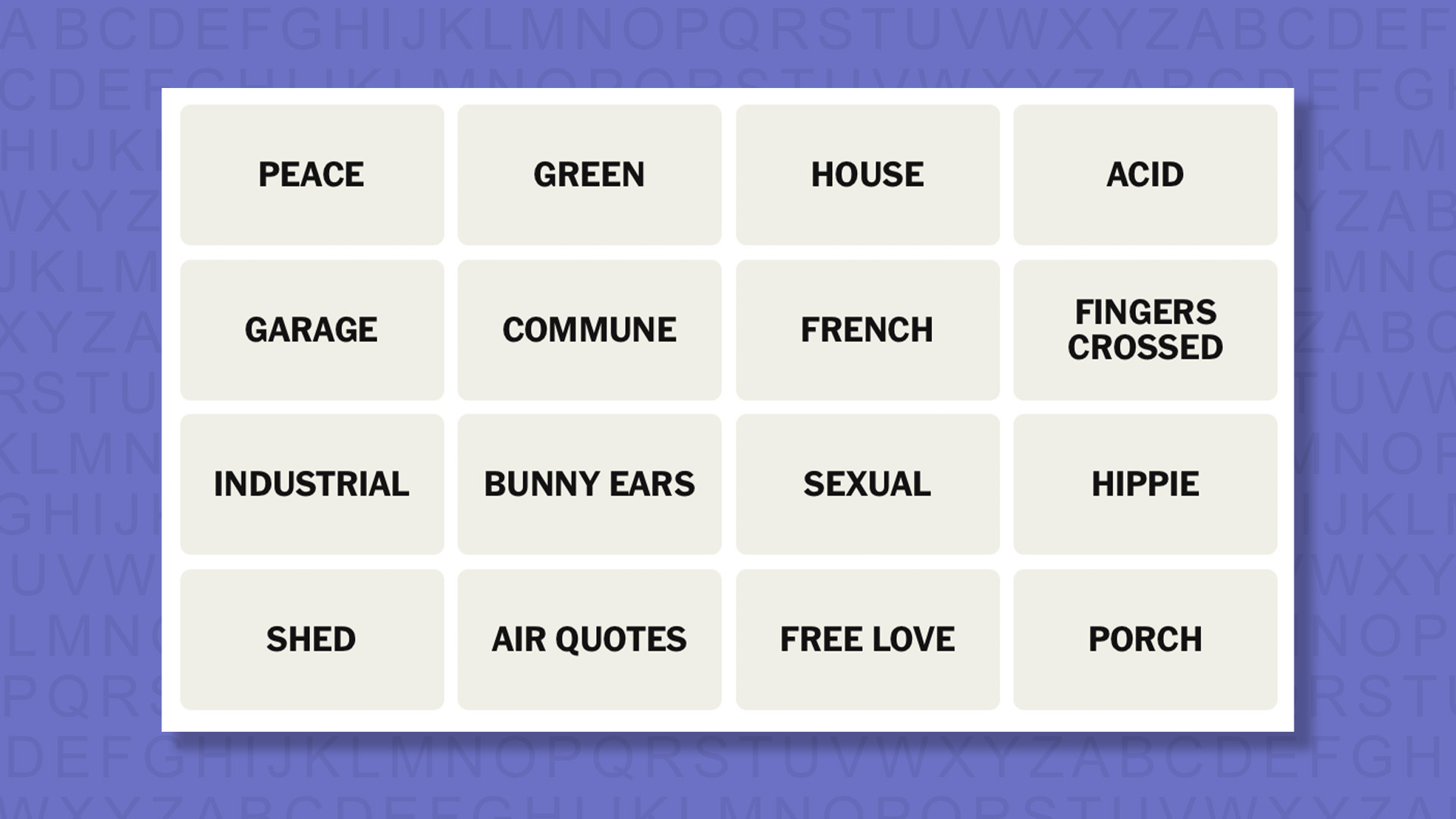
NYT Connections hints and answers for Sunday, May 3 (game #1057)

Published

on

Looking for a different day?

A new NYT Connections puzzle appears at midnight each day for your time zone – which means that some people are always playing ‘today’s game’ while others are playing ‘yesterday’s’. If you’re looking for Saturday’s puzzle instead then click here: NYT Connections hints and answers for Saturday, May 2 (game #1056).

Good morning! Let’s play Connections, the NYT’s clever word game that challenges you to group answers in various categories. It can be tough, so read on if you need Connections hints.

Advertisement

Source link

Advertisement
Continue Reading
Click to comment

You must be logged in to post a comment Login

Leave a Reply

Tech

With First Choice Women’s Centers V. Davenport, The Supreme Court Managed To Do At Least One Helpful Thing: Further Protect Anonymous Speech

Published

on

from the a-little-constitutionalism,-as-a-treat dept

Shortly before the Supreme Court inflicted enormous damage on the Voting Rights Act, the Reconstruction Amendments of the Constitution, any pretense of constitutionally guaranteed Equal Protection, the civil rights movement, its credibility, and our democracy writ large with its Alito-penned decision in Louisiana v. Callais, it released a separate decision in First Women’s Choice Resource Centers v. Davenport.

In terms of overall substance, this latter case was one where an anti-choice plaintiff got a win, which perhaps is why there was little trouble in the Court reaching a unanimous result in its favor. But it is just a procedural win, allowing its case to go forward, rather than a judicial validation of its actual viewpoint. (“This case presents a narrow question. We are not asked to decide the merits of First Choice’s federal lawsuit, only whether it may proceed.” [p. 5]). And, more importantly, it is a strong First Amendment win, with language that will be useful in later cases, including ones where more liberal positions have been impacted by government overreach. (“We have recognized […] that associational rights carry
special significance for political, social, religious, and other minorities. With the freedom to associate, minorities can ‘show their numerical strength,’ influence policy, and ‘stimulate competition’ in the marketplace of ideas. But take that freedom away and ‘dissident expression’ stands particularly vulnerable to marginalization or outright ‘suppression by the majority,’ leaving all of society poorer for it.” [p. 7]). And it will be useful in cases in federal and state courts all over the country, where it is binding precedent, and not just at the Supreme Court, which can blow with the wind depending on whose case is before it.

In other words, it is a decision that is likely to matter, and in a way that is good news for the First Amendment and the rights it protects, particularly with respect to associative freedom, the anonymity such expressive relationships depend on, and the standing needed to be able to challenge government intrusions on either, including by way of subpoenas.

In this case the plaintiff, First Women’s Choice Resource Centers, Inc., is what is sometimes referred to as a crisis pregnancy center. Despite the plaintiff’s name invoking “choice” such places are not about informing pregnant women about the full range of choices available to them. They instead steer them towards avenues that do not include the medical care needed to potentially terminate their pregnancy. The issue however is not that those running these centers don’t wish to support abortion but that they may be deceptively ensnaring vulnerable women who think they are getting more comprehensive advice about their choices than the limited information these centers offer, which has led some states, like New Jersey, to investigate whether they are indeed duping people.

Advertisement

But in this case New Jersey—the defendant in this case—as part of its investigation tried to subpoena the plaintiff for names of its donors (“Effectively, that demand required First Choice to provide personal information about donors who gave through two other websites, through the group’s various social media pages, by mail, in person, or by any other means.” [p. 2-3]). The stated rationale for seeking this data was to ensure that no donor had similarly been deceived as to the services the plaintiff delivered. [p. 3]. The plaintiff’s attempt to avoid the subpoena led to litigation in both state and federal courts, with the state seeking to enforce the subpoena in the former and the plaintiff bringing a civil rights lawsuit in the latter, alleging that the subpoena violated its First Amendment rights.

A federal law—42 U. S. C. §1983—authorizes suits against any person who, under color of state law, deprives another of his federal constitutional rights. First Choice filed a complaint under that statute, arguing, among other things, that the Attorney General’s demand for information about its donors violated its First Amendment rights. Specifically, First Choice observed that the First Amendment “prohibits the government from discouraging people from associating with others” “in pursuit of many political, social, economic, educational, religious, and cultural ends.” And, First Choice alleged, the Attorney General’s subpoena had just that impermissible effect. For its donors, the group represented, “anonymity is of paramount importance,” and its inability to guarantee that anonymity in the face of the Attorney General’s demands injured the group by discouraging donors from associating with it. [p. 3-4]

The federal district court dismissed the suit, largely on the grounds that because the state litigation had not yet resulted in the subpoena being enforced the plaintiff hadn’t suffered an injury it could sue over, [p. 4-5], and the Third Circuit upheld the dismissal. [p. 5]. With this decision, however, the Supreme Court has now allowed the federal lawsuit to go forward, finding that the plaintiff indeed has the standing to challenge how the subpoena affects its First Amendment rights.

“Standing” has to do with whether a party is eligible to bring a certain lawsuit. Courts can only hear legitimate “cases and controversies,” [p. 5], and standing helps ensure that the litigation put before it meets that criteria by ensuring that the parties bringing it are entitled to. [p. 5-6]. They are only entitled to if they have an “injury in fact,” caused by the defendant, and the litigation is capable of redressing it. [p.5].

This case focused on whether the injury-in-fact element was satisfied. [p. 6]. It can only be satisfied when the litigation involves “an injury that is concrete, particularized, and actual or imminent.” [p. 6]. And here the Court found that there was such an “actual and ongoing” injury, caused by the subpoena itself. [p. 6]. In fact, even though the state litigation had not yet resulted in the subpoena being enforced made no difference; it was the very existence of the subpoena that was so chilling to the plaintiff’s First Amendment rights. (“Even if a subpoena targeting First Amendment activity is never enforced in court, [it] will give its targets a very good reason to clam up [and] give the target organization’s members and supporters a very good reason to abandon the cause.” [p. 12]).

Advertisement

The reason is that the plaintiff is allowed to hold its anti-abortion views. And others who share those views are allowed to associate with the plaintiff, including by giving it support. But if those others had to fear the government showing up at their door to discuss their views, they would be reluctant to continue their association with the plaintiff. And that reluctance would result in harm to the plaintiff, now unable to associate with others as freely as they should have been able to and would have been able to if the subpoena had not given rise to the fear that their donors’ identities would be discoverable by the government.

Finally, consider First Choice’s two unrebutted declarations. In the first, several donors represented that “[e]ach of us would have been less likely to donate to First Choice if we had known information about the donation might be disclosed” to the Attorney General. The donors added that they submitted their declaration anonymously because they feared what they called the Attorney General’s “record of hostility toward pro-life groups.” I the second declaration, First Choice’s executive director stated that the Attorney General’s demand threatened to “weaken [the group’s] ability to recruit new donors . . . as prospective partners would be hesitant to risk the revelation of their personal information through government investigation.” All this is more than enough to establish injury in fact under our precedents. An injury in fact does not arise only when a defendant causes a tangible harm to a plaintiff, like a physical injury or monetary loss. It can also arise when a defendant burdens a plaintiff ’s constitutional rights. […] All this occurs not just when a demand is enforced, but when it is made and for as long as it remains outstanding. [p. 11-12]

As the Court reminded, associative freedom is protected by the First Amendment.

The First Amendment guarantees all Americans the rights to speak, worship, publish, assemble, and petition their government freely. Each of these rights, this Court has “‘long understood,’” necessarily carries with it “‘a corresponding right to associate with others.’” […] Appreciating all this, we have held that government actions tending to “curtai[l] the freedom to associate” warrant “the closest scrutiny” under the First Amendment. […] We have also held that “compelled disclosure of affiliation with groups engaged in advocacy” can “constitute a[n] effective . . . restraint on freedom of association.” [p. 6-7]

As is the anonymity that expression, including associative expression, often requires.

[In NAACP v. Alabama we observed] the “vital relationship” between “privacy in one’s associations” and the “freedom to associate.” Strip away the ability of individuals to work together free from governmental oversight and intrusion, and the freedom to associate may become no freedom at all—individuals deterred, groups diminished, and their protected advocacy suppressed. [p. 8]

[…]

Since NAACP v. Alabama, we have faced many cases along similar lines. In them, one state authority or another has demanded private donor or member information. And in one case after another we have subjected those demands to heightened First Amendment scrutiny. Throughout, we have emphasized the critical role “‘privacy in . . . associatio[n]’” plays “‘in preserving political and cultural diversity and in shielding dissident expression from suppression.’” We have acknowledged, too, that demands for private donor information “inevitabl[y]” carry with them a “deterrent effect on the exercise of First Amendment rights.” [p. 9]

Yet here was a subpoena now threatening both.

Advertisement

Each of these strands tightens the braid into one conclusion. From its allegations and declarations, and given our many and longstanding precedents in the area and reasonable inferences about third party behavior, First Choice has established that the Attorney General’s demand for private donor information injures the group’s First Amendment associational rights. [p. 13]

It is conceivably possible that on remand the lower courts might find the rationale behind the subpoena “’sufficient to justify the deterrent effect’ associated with the disclosure demand, [p. 8], and narrowly-tailored enough, [p. 10], such that there was in fact no actual intrusion on the plaintiff’s First Amendment rights stemming from its issuance. This decision by the Supreme Court does not resolve the question; it only determined that the question could be brought before the courts. But the same analysis that allowed the Supreme Court to identify a likely constitutional injury, enough for the plaintiff to be able to bring the case before the courts to seek a remedy, may yet be employed to find there indeed was an injury that requires redressing—here, by quashing the subpoena.

But regardless of what ultimately happens to the plaintiff’s case, this decision by the Supreme Court has broader implications. First, it doubles-down on prior precedent protecting freedom of association and the anonymity it depends on, and second—and perhaps more practically—it directly ties these First Amendment interests to the discovery instruments propounded by government actors, often too casually, seeking to unmask people. It makes clear that the intermediaries receiving these unmasking demands have their own cognizable First Amendment rights in being able to preserve the anonymity of those who associate with them, with the standing to challenge when those rights are trampled. And although this case addressed organizations and their donors, it is but a small analytical step to apply the same or similar reasoning to Internet platforms seeking to protect the identities of their users from seeking to unmask anonymous speakers, especially in concert with McIntyre v. Ohio Elections Commission, regarding the First Amendment protection for anonymous speech, and Moody v. NetChoice, regarding the First Amendment’s protection of platforms’ editorial and associative discretion. Per this decision, those unmasking attempts can amount to a constitutional injury to the platforms themselves, which they now have compelling new precedent to use to fight them.

Filed Under: 1st amendment, anonymity, anonymous donors, associational rights, crisis pregnancy centers, donors, free speech, supreme court

Companies: first women’s choice resource centers

Advertisement

Source link

Continue Reading

Tech

Skullcandy Discount Code: 30% Off | May 2026

Published

on

Skullcandy headphones aren’t always the sharpest tools in the proverbial shed, but they do have cool looks and have affordable price tags, and that gets even better with these Skullcandy promo codes on a few of the brand’s top products. If you’re after a pair of in-ear, open-ear, or over-ear headphones, Skullcandy has cut prices on several of its headphones, making now a decent time to buy. Plus, make sure you check out our Skullcandy coupons above for even more savings.

Skullcandy Discount Code: 47% Off Skullcandy Crusher Evo Headphones

Right now, you can get nearly half off (47% off) Skullcandy Crusher Evo Headphones. We haven’t tested these sleek over-ear headphones, but they look nice and likely have solid performance. They come in many different colors, which is the main appeal of many Skullcandy headphones; they match your own personal style.

Enjoy Open-Ear Comfort With 33% Off Skullcandy Push 720 Earbuds

Open earbuds are a great way to hear the world around you while also tuning into your favorite music, audiobook, or podcast. We really like using them when working out in nature or working in the yard, where hearing someone honk or yell at you can be helpful. Skullcandy Push 720 Open Earbuds are 35% off right now; so if you’ve been curious about open earbuds, now’s a great time to buy.

Take Your Gaming to the Next Level With Crusher PLYR 720 Headphones

Folks who want a gaming headset will be happy with the swivel-based mic on the Crusher Plyr 720 (now on discount at 33% off) allowing them to easily chat with friends and foes during tense online gaming sessions.

Advertisement

Shop the Skullcandy Sales to Save on Headphones, Earbuds, and Speakers

Don’t see what you’re looking for here? Be sure to check out the full list of Skullcandy options on sale right now on the company’s website. I’d also recommend looking at our Skullcandy discount codes and coupons, which rotate often to make sure you’re getting the best deals possible.

Skullcandy Members Get Free Shipping

If you are an audio head, you may want to consider joining Skullcandy rewards, which has perks like free shipping, special offers, rewards, and early access to exclusive products. It’s free to join and one of the best perks of the membership is free shipping on orders over $49. When you sign up, you’ll get 25 points towards your next reward, and every purchase you make gets you more points, which can be redeemed for discounts on future purchases. Members also get first-look access to new product drops, limited edition items, and access to product giveaways each month.

Source link

Advertisement
Continue Reading

Tech

I Found 7 of the Best A24 Movies That Are Free to Stream

Published

on

A24 has emerged as one of the most original production companies in recent years. And while the films it produces span every genre — horror, documentary, comedy and beyond — the entertainment house has become synonymous with a certain aesthetic. 

The company has attracted singular filmmakers like Sofia Coppola, Ari Aster, Yorgos Lanthimos and Barry Jenkins, who have helped define the company’s creative ethos to the point that it’s often easy to recognize a film as being an A24 production. And its films aren’t just underground hits, either. Many of them, like Minari, The Zone of Interest and Everything Everywhere All at Once, have also won Oscars.

While HBO Max is the premier destination to stream the most A24 films, you can find some of its best movies across several free streaming services such as Kanopy, Tubi, Pluto TV and Plex. This May, watch acclaimed films like The Farewell, which won Awkwafina a Golden Globe for her lead performance, the comedy-horror Bodies Bodies Bodies, and the Oscar-nominated Past Lives, and many others, which have all recently arrived on these services. 

Advertisement

Here are some of our favorite A24 hits that you can watch now without spending a dime. 

A24

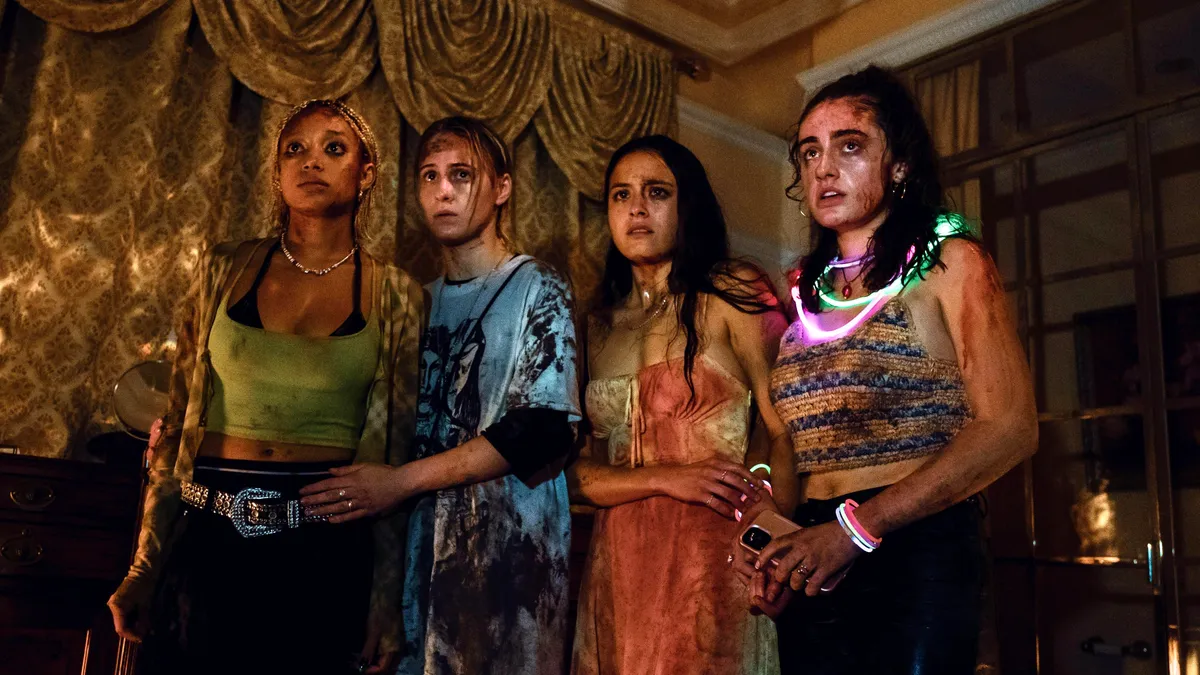
2022’s Bodies Bodies Bodies is a hilarious dark comedy that features a deep bench of talent, including Amandla Stenberg, Maria Bakalova, Myha’la, Chase Sui Wonders, Rachel Sennott and Pete Davidson. Taking place mostly over the course of one night, a group of friends assembles at one of their homes to take shelter during an impending storm. They decide to play a Mafia-style parlor game where one of the guests pretends to kill another, and the others have to figure out who the murderer is. But when one of them actually ends up with a slashed throat, everyone panics and, well, the bodies, bodies, bodies start piling up for real.

Advertisement

Casi Moss

Comedian Awkwafina won a Golden Globe for her role in the great 2019 comedic drama The Farewell. She played a young Chinese-American woman, Billi, whose family learns that her grandmother, Nai Nai, is dying of cancer. They decide to keep Nai Nai’s diagnosis from her, and instead choose to hold a large wedding for Billi’s cousin without inviting Billi, fearing that she’ll tell her grandmother that she’s dying. But Billi crashes the wedding so she can spend more time with Nai Nai, knowing their time together is limited.

Celine Song’s directorial debut, Past Lives, stars Greta Lee and Teo Yoo as childhood friends Nora and Hae Sung, who met as young children in Seoul, South Korea. The film explores their relationship over two decades as they grow apart after Nora moves to the US, then reconnect as adults. When the two reunite, Nora, now married, feels a closeness to Hae Sung, and together they wonder what would have happened had she not moved away as a child. 

A24
Advertisement

Sofia Coppola directed the 2023 biopic Priscilla, which tells the story of a young Priscilla Presley, a teen when she met her future husband, Elvis Presley. Cailee Spaeny and Jacob Elordi portray the couple in this Golden Globe-nominated film. 

A24

Ari Aster directed this surrealist dark comedy about a man named Beau (Joaquin Phoenix) on a journey to his mother’s house for her funeral, believing she’s dead. The journey is a fever dream of unexpected detours, and when he gets there, he learns his mother (played by Patti LuPone) was not actually dead. In fact, she’s been spying on him while he’s been on his bizarre journey. Parker Posey, Nathan Lane, Amy Ryan and Zoe Lister-Jones also appear.

Advertisement

A24

Julia Louis-Dreyfus may be best known for her comedic chops, but in the 2023 fantasy drama Tuesday, she makes a major departure. She stars as a mother, Zora, desperate to keep her terminally ill daughter, Tuesday (Lola Pettigrew), alive. After she meets Death, who visits their family in the form of a giant macaw, Zora tries to prevent the bird from taking her daughter from this life. As she tries to destroy it, some unexpected consequences arise until Zora ultimately realizes you can’t stop Death.

Set in western Massachusetts in the 1990s, Janet Planet is a coming-of-age story about a young girl, Lacy (Zoe Ziegler), growing up with her single mom, Janet (Julianne Nicholson). The critically acclaimed film is available now on Kanopy, Pluto, Plex and Tubi.

Source link

Advertisement
Continue Reading

Tech

Ulta Promo Codes: Up to 50% Off in May

Published

on

At Ulta Beauty, you can stock up on skincare, makeup, and haircare, then head to the salon to get your brows shaped, your hair styled, and your ears pierced, all in a single visit. You’ll find brands like Dior, Estée Lauder, and Gucci alongside more affordable favorites and drugstore staples. Many locations house a Benefit Cosmetics BrowBar, so you can sample products and book an in-store brow service in the same visit. Ulta’s return policy is very forgiving, allowing you to bring back “gently used” products within 30 days for a full refund. Add in its weekly sales, the 21+ Days of Beauty Event, and stackable Ulta coupons, and you’ll rarely pay full price.

I’ve tested a wide range of beauty products that are sold at Ulta, from hair tools and LED devices to pimple patches and lip balms. Here’s how to shop smarter, with the best Ulta promo codes and Ulta coupons to keep on your radar.

Get 20% Off 160 Brands This May

Mother’s Day is around the corner, and it’s the perfect timing for Ulta’s big sale, where 160 of the most beloved brands will be 20% off with Ulta promo code BOPIS20, until May 7. So whether you want to stock up on essentials for yourself, or give mom a gift she’ll love, there are huge discounts on everything from skincare must-haves to perfumes to makeup. Save big while you still can—makeup adds up quickly!

Don’t Miss 15% Off at Ulta Beauty

If you already shop at Ulta often, downloading (and using) the Ulta app is one of the best ways to save money on purchases you were planning to make. All you need to do is download the Ulta app (fo’ free), by texting “Beauty” to 95637. From there, you’ll get an Ulta promo code APP15 sent to you to use for 15% off your next purchase. Plus, with the Ulta app, you’ll be able to virtually try on thousands of beauty products with GLAMlab, use the Ulta Foundation Matcher to virtually match your skin tone to find your best shade match, and an AI-powered analysis of your skin to get customized skin care recommendations.

Advertisement

Plus, Ulta app members get exclusive in-app features, offers, and deals. You’ll also be able to monitor your membership rewards status and points, and get notified of app-exclusive deals, discounts, brand offers and more. And with the handy bar code scanner, shopping has never been easier—you can scan any product’s bar code to see information on ingredients and product reviews. When you’re an Ulta member, you’ll get 1 point for every $1 spent and birthday perks.

Ulta Promo Code: Get 10% Off When You Sign Up

You can instantly score 10 percent off your order when you sign up for text alerts. Text “ULTA” to 95637, and you should receive a one-time use discount code for online purchases only. There are a couple of brand exclusions, like Chanel, and you can’t use the discount on Black Friday deals, so make sure to read the fine print.

Use Ulta Beauty Rewards for Ulta Discounts

The Ulta Beauty Rewards program is free to join and offers many perks with minimal effort required from you. First, you earn points for every dollar you spend. The program has multiple tiers: as a standard member, you earn 1 point per dollar; platinum members earn 1.25 points, and diamond members earn 1.5 points. To qualify for platinum status, you need to spend $500 per year, and diamond members must spend $1,200 annually.

These points can be redeemed for discounts, and the best part is that they do not expire. (To activate your rewards, you need to download the Ulta Beauty app.) Here’s how the points translate into savings: 100 points gives you $3 off, 250 points offers an $8 discount, 500 points saves you $17.50, and 750 points grants you $30 off.

Advertisement

During your birthday month, you get even more special perks. These include earning extra points on every qualifying purchase, a free gift, and a $10 coupon exclusively for platinum and diamond members. Some other benefits include exclusive beauty deals, early access to sales, and full-size gifts for diamond members. Diamond members also get a $25 discount on beauty services and free shipping on orders over $25.

Score Trending Beauty Tech at Ulta

Always check Ulta’s Featured Deals and Sale pages, as they regularly update with new offers. In addition to makeup and skincare products, Ulta also provides discounts on hair care tools and wellness technology that we have tested and recommended.

Look out for Dyson products, which frequently go on sale. Some of my favorites include the Supersonic Nural, the Airwrap i.d. Multistyler, and the Airstrait Wet-to-Dry Straightener. If you’re looking for a more affordable option, Shark’s FlexStyle Air Styling System and SpeedStyle Pro Flex Hair Dryer (currently on sale) are also often discounted. Other hair stylers we’ve noticed on these pages include the L’Oreal Professionnel AirLight Pro, T3 Aire IQ Intelligent Hair Dryer (currently on sale), Ghd Duet Style 2-in-1 Hot Air Styler (currently on sale), and the Bio Ionic Smart-X Dryer.

Source link

Advertisement
Continue Reading

Tech

Matching Transistors | Hackaday

Published

on

Transistors in some circuit configurations work together and, frequently, need to be matched. This is so common that you can sometimes find ICs that are just a pair of transistors made with the same piece of silicon, so they should be matched very closely by default. But with discrete transistors, two devices of the same type are not always identical. [Learn Electronics Repair] covers the topic and explains how to match devices in the video below.

Depending on the circuit, the matching parameters may be different, but generally, the idea is that you want similar gains or matching saturation characteristics. The reason is that when you have multiple transistors working together, you don’t want one to do more work than the other device. This is inefficient and could drive the “better” component to fail.

The same idea applies in bridge circuits, where you might match resistors or capacitors to make sure that, for example, two 10% resistors are very close to the same value. A 10K resistor could be between 9K and 11K, and you might not care as long as they are both, say, 9.2K or both 10.8K.

Advertisement

This is different, by the way, from impedance matching, where you achieve maximum power transfer by matching a source to a load.

Advertisement

Source link

Continue Reading

Tech

NYT Strands hints and answers for Sunday, May 3 (game #791)

Published

on

Looking for a different day?

A new NYT Strands puzzle appears at midnight each day for your time zone – which means that some people are always playing ‘today’s game’ while others are playing ‘yesterday’s’. If you’re looking for Saturday’s puzzle instead then click here: NYT Strands hints and answers for Saturday, May 2 (game #790).

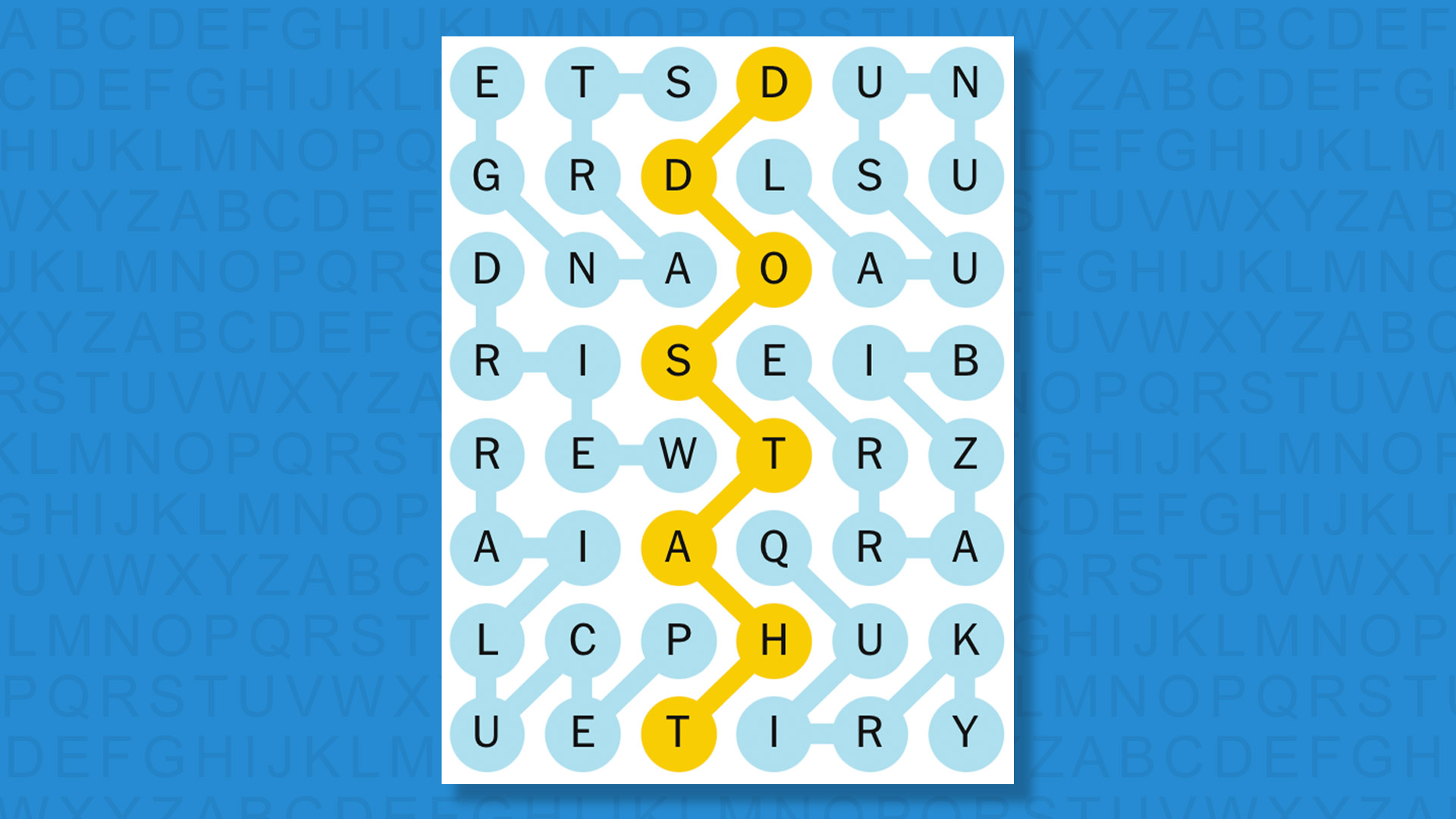
Strands is the NYT’s latest word game after the likes of Wordle, Spelling Bee and Connections – and it’s great fun. It can be difficult, though, so read on for my Strands hints.

Advertisement

Source link

Advertisement
Continue Reading

Tech

AI-generated actors and scripts are now ineligible for Oscars

Published

on

The organization behind the Academy Awards released new Oscar rules on Friday, including several that address the use of generative artificial intelligence.

The Academy of Motion Picture Arts and Sciences said that only performances “credited in the film’s legal billing and demonstrably performed by humans with their consent” will be eligible for Academy Awards. Similarly, the academy said that screenplays must be “human-authored” to be eligible.

The academy also said it has the right to request more information about a film’s AI usage and “human authorship.”

These rule changes come as an independent film is in the works with an AI-generated version of Val Kilmer, as AI “actress” Tilly Norwood keeps making headlines, and as new video models are causing at least a few filmmakers to make sweeping declarations of despair. AI was also one of the main sticking points in the actors’ and writers’ strikes back in 2023.

Advertisement

Outside Hollywood, at least one novel has been pulled by its publisher due to the apparent use of AI, and other writers’ groups are declaring that AI usage makes work ineligible for awards.

Source link

Continue Reading

Tech

Tesla Starts Selling Chinese-Made Model 3s In Canada At The EV’s Lowest Price Ever

Published

on


Tesla has lowered the bar for electric vehicle affordability in Canada with the latest Model 3 Premium Rear-Wheel Drive option. Reintroducing its entry-level sedan in Canada, Tesla’s RWD variant for the Model 3 will start at $39,490 CAD, or approximately $29,000. That’s nearly half the price of the previous entry-level price point for a Model 3 in Canada, which started at $79,990 CAD, or around $59,000.

At the higher end, Tesla also reduced the price of its Model 3 Performance for Canadian customers from $89,000 CAD to $74,990 CAD, or around $55,000. To explain the sudden shift, we have to thank Tesla’s global supply chain and the ever-evolving tariff situation across the world. Canadian residents were previously able to buy a Model 3 made in Tesla’s Shanghai factory before 2024, but Canada eventually slapped an additional 100 percent tariff on EVs made in China. In response, Tesla switched to offering EVs built in its Fremont, Calif. factory to Canadian customers. However, following the Trump administration’s tariff campaign, Canada instituted a 25 percent retaliatory tariff on US-made vehicles that led to the $79,990 CAD price tag on the most affordable Model 3 for Canada at the time.

Advertisement

In the latest shift, Canada reduced the tariffs on Chinese-made EVs to just 6.1 percent, allowing for Tesla to once again ship its EVs made in the Giga Shanghai factory into the country for more reasonable prices. It’s important to note that the Model 3 Premium RWD option isn’t currently covered in Canada’s new Electric Vehicle Affordability Program that allows for up to a $5,000 CAD incentive. Although the latest incentive program recently went into effect, the newest Model 3 doesn’t apply since it’s not made in Canada.


Advertisement

Source link

Continue Reading

Tech

Boston Scientific’s Sean Gayer on a meaningful mission

Published

on

The final episode of The Leaders’ Room podcast season four features Sean Gayer, VP of operations for EMEA manufacturing at Boston Scientific. This series is created in partnership with IDA Ireland.

Once again in season four of The Leaders’ Room podcast, we get to know the leaders of some of the most influential multinationals in tech, life sciences and innovation, as well as getting insights into their leadership styles and the high-tech trends that are transforming their industries.

In this final episode of season four, we speak to Sean Gayer, VP of operations for EMEA manufacturing at Boston Scientific, about his role at one of the world’s major medtech organisations, the future of human health as we all live longer, and the kind of leadership that keeps people – and patients – at the centre.

Advertisement

Boston Scientific was founded in 1979 and is today a global medical device company with revenues of $20bn, a presence in 127 countries, 59,000 employees and 48m patients treated annually. Its stated mission – to transform lives through innovative medical solutions – is one that comes through clearly in how Gayer talks about the company and the work being done at its three Irish facilities.

In Ireland, Boston Scientific has three manufacturing sites and around 8,000 employees in total. Galway, the largest site with more than 4,000 staff, focuses on cardiovascular products including the Watchman device – a stroke prevention product placed in the heart that reduces the risk of clotting and the need for lifelong blood thinners.

Clonmel makes active implantables: defibrillators, pacemakers and a deep brain stimulation device used in the treatment of Parkinson’s. Cork produces cancer treatment products, catheters and a device called Rotablator, which rotates at 160,000 revolutions per minute to drill out calcified plaque in the arteries, explains Gayer.

A €75m investment in R&D capabilities in Galway was announced shortly before we spoke, which Gayer says reflects the confidence the company has in the Irish sites, and the direction of travel for Boston Scientific in this country.

Advertisement

Scorekeeper or team player?

Gayer’s route to his current role is an unconventional one, and he tells it with good humour. A BCom from UCC, training at PwC, and then his first industry role at Millipore (now Merck), where an early manager gave him advice that has stayed with him to this day: you can be a scorekeeper or a team player, and you’ll have more fun being a team player. “Go down to the production floor, understand what is driving the numbers, and then you can actually do something about them,” explains Gayer.

It is a principle he refers to as Gemba – going to where the problem actually is, talking to the people doing the work – and he has carried it through every role since: a hearing healthcare company, a spell in telecoms and ICT, and then Boston Scientific Cork in 2013 as finance director. Two years later he became site lead, and two years ago he stepped into the EMEA regional role. An accountant, as he puts it, “who had too much interest in operations”.

On leadership, Gayer draws on the Shingo Prize model, which Boston Scientific Cork challenged for successfully during his time as site lead. At the top of the triangle is the North Star – for Boston Scientific, positively impacting patients’ lives. At the base are the cultural enablers – lead with humility, and respect every individual, says Gayer. The middle piece, he says, takes care of itself if you give the right people a well-defined problem rooted in purpose.

Looking to the future

The conversation about the future of human health is a fascinating one. We are living longer – average life expectancy in Ireland has risen by more than 20 years in the past century, and that is likely to continue. That puts real pressure on health systems, and Gayer sees AI, robotics and remote monitoring as part of the response – AI for early detection and clinical decision-making, robotic-assisted surgeries and virtual wards that allow patients to recover at home while being monitored remotely. That kind of thinking, he says, is what the health system needs more of.

Advertisement

In manufacturing, the focus is on supply chain resilience post-Covid and on smarter, more connected factories where pooled data supports better decision-making. Boston Scientific’s Irish workforce of 8,000 represents, as Gayer put it to the company’s board, more than 70,000 years of accumulated knowledge. That, he said without hesitation, is their greatest asset.

We’re grateful to all our interviewees again this season, for taking the time out of busy schedules to come into the studio and share their insights and their intelligence with us. And a big thanks as ever to our partners IDA Ireland who make this series possible.

The Leaders’ Room podcast is released fortnightly and can be found by searching for ‘The Leaders’ Room’ wherever you get your podcasts. For those who prefer their audio with visuals, filmed versions of the podcast interviews are all available here on SiliconRepublic.com.

Check out The Leaders’ Room podcast for in-depth insights from some of Ireland’s top leaders. Listen now on Spotify, on Apple or wherever you get your podcasts.

Advertisement

Source link

Continue Reading

Tech

Amazon earnings preview: Big AI deals meet a $200B spending binge

Published

on

Amazon reports first-quarter earnings Wednesday amid accelerating cloud growth and a record capital spending plan. (GeekWire File Photo)

Follow-up: AWS growth climbs to 28% as Amazon’s big AI bets start to pay off

Amazon reports first-quarter earnings Wednesday with more signs than ever that its cloud business is in demand, including a $244 billion revenue backlog, blockbuster deals with Meta,  OpenAI and Anthropic, and a custom chip business that doubled in a matter of months.

The problem: a $200 billion capital spending plan, largely dedicated to new AI infrastructure, that drained Amazon’s free cash flow and sank its stock 10% last quarter. 

Here’s a preview of the key numbers and storylines to watch.

Core expectations: Wall Street expects Amazon to report about $177 billion in first-quarter revenue, up roughly 14% from a year ago, with earnings of $1.65 per share. That’s up just 4%, reflecting the growing depreciation costs from the company’s infrastructure buildout.

Advertisement

Amazon’s guidance for first-quarter operating income ranges from $16.5 billion to $21.5 billion — a $5 billion spread that reflects uncertainty around tariff impacts on its retail business and about $1 billion in new costs from its satellite internet project, Amazon Leo.

AWS growth: But the main event is Amazon Web Services, where analysts expect about $36.8 billion in revenue, up nearly 26% from a year ago. AWS growth has been accelerating for three straight quarters (from 17% to 20% to 24%) and investors are looking for that to continue.

On the fourth-quarter earnings call, CEO Andy Jassy described the AI market as a “barbell” — with AI research labs spending heavily on one end, and enterprises automating routine tasks on the other. The massive opportunity, he said, is in the middle: core enterprise production workloads that haven’t moved to AI yet, for the most part.

“The lion’s share of that demand is still yet to come,” Jassy said.

The question is whether that middle is starting to fill in, or whether AWS growth is still being driven primarily by a handful of giant AI lab deals.

Advertisement

Beyond the cloud: It’s easy to forget in the AI frenzy, but Amazon is also the country’s largest online retailer, and the first quarter brings its own set of pressures. Jassy warned earlier this year that import costs from tariffs were starting to show up in product prices, and the company faces growing competition from Walmart, Temu, and Shein for cost-conscious shoppers. 

Online store sales grew 10% to $83 billion in the holiday quarter, and third-party seller services brought in $52.8 billion. But costs are rising too: Amazon spent $31.5 billion on shipping in Q4, up 10% from a year earlier.

At the same time, the company has been cutting costs aggressively, eliminating about 16,000 corporate jobs in January in what Jassy has described as a campaign against bureaucracy, followed by additional cuts in its robotics unit in March.

Advertising remains a standout, growing 23% to $21.3 billion in the fourth quarter and emerging alongside AWS as one of Amazon’s primary profit engines. 

Amazon won’t be the only tech giant reporting Wednesday. Microsoft, Alphabet, and Meta are all scheduled to release quarterly results the same day, giving investors a chance to compare notes on AI spending and cloud growth across the industry. 

Advertisement

Google Cloud has been growing faster than AWS in percentage terms, adding another dimension to the debate over which company is best positioned to capitalize on the AI boom.

Check back Wednesday afternoon for coverage.

Source link

Advertisement
Continue Reading

Trending

Copyright © 2025