
Business
Tech prices could rise as Iran conflict disrupts electronics supply chain

Rep. Pat Fallon, R-Texas, praises War Secretary Hegseth and Chairman of the Joint Chiefs of Staff General Dan Caine for their performances in Congress on ‘The Evening Edit.’
Americans shopping for smartphones, laptops or even home appliances may soon start feeling the effects of the Iran conflict – not just at the gas pump, but at the checkout screen.
A disruption to an essential component in electronics – printed circuit boards (PCBs) – is driving up costs across the tech industry, increasing the likelihood that consumers will face higher prices and fewer deals in the months ahead.
Prices for circuit boards have already surged, jumping as much as 40% in April alone, according to Goldman Sachs. At the same time, other key inputs like copper foil – one of the largest cost components in PCBs – have climbed as much as 30% this year.
The ongoing war with Iran has disrupted supplies of key raw materials used to produce PCBs, which function as the “nervous system” inside nearly every electronic device, from smartphones and computers to cars and AI servers.
GAS PRICES SOAR TO HIGHEST POINT SO FAR DURING UNSETTLED CONFLICT WITH IRAN
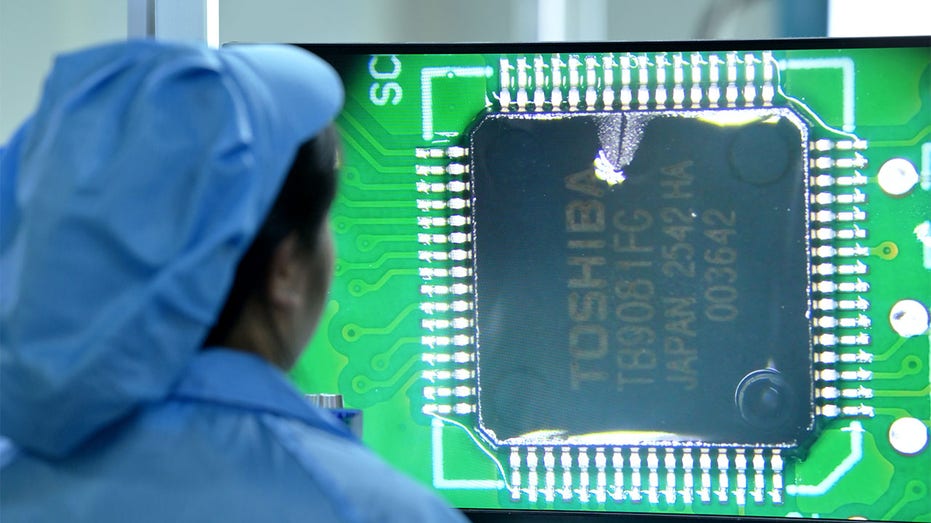
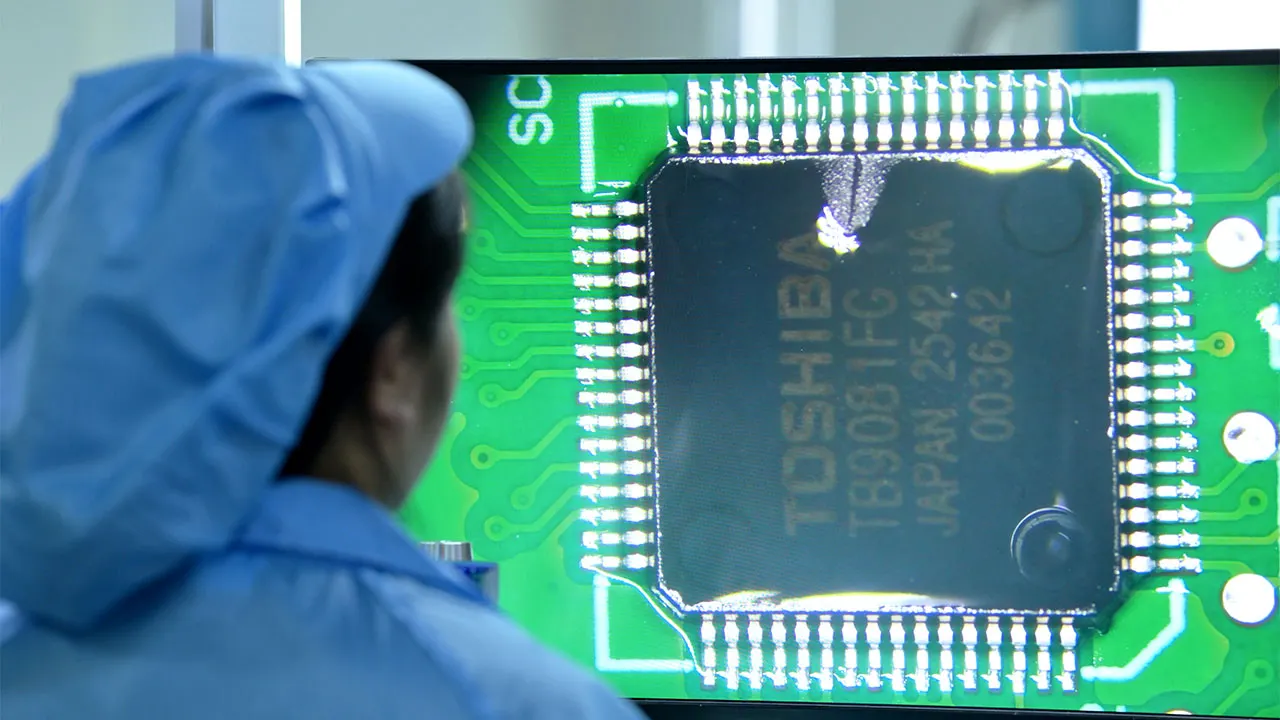
An engineer tests the quality of chips for the electronic control unit (ECU) steering controller at a workshop on March 5, 2026. (Lyu Bin/VCG via Getty Images)
At the center of the disruption is an Iranian strike on Saudi Arabia’s Jubail petrochemical complex in early April, which halted production of a critical resin used in circuit boards and tightened global supply, according to analysts. Shipping routes in and out of the Gulf have also been disrupted, compounding delays and shortages.
CHEVRON CEO WARNS AVIATION STRAIN COULD WORSEN AS JET FUEL CRUNCH DEEPENS
Manufacturers are now scrambling to secure materials, with lead times for some chemicals stretching from just three weeks to as long as 15 weeks, according to industry sources. The pressure is cascading through the broader tech supply chain.
“It is not just PCBs,” said Ben Bajarin, CEO of Creative Strategies. “Memory, storage and wafer costs are all increasing the bill of materials for devices.”

Buildings left in ruins from Israeli/U.S. airstrikes on April 4, 2026, in southern Tehran, Iran. (Majid Saeedi/Getty Images)
Companies are trying to offset those increases by negotiating supply contracts and absorbing some of the costs – but only to a point.
Experts say shoppers won’t see price hikes immediately, but they are coming.
“For the average consumer shopping at Best Buy or Amazon, the pass-through won’t happen overnight,” said Galen Zeng, a semiconductor supply chain analyst at IDC. “But expect it to materialize within the next few months.”
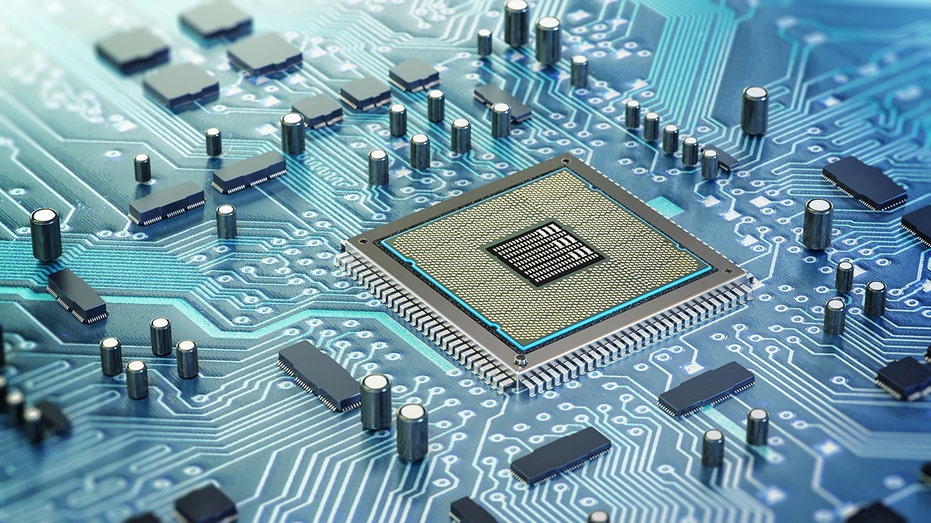
Prices for circuit boards have already surged, jumping as much as 40% in April alone, according to Goldman Sachs. (iStock)
Dan Ives, an analyst at Wedbush Securities, said the impact will likely become more visible later this year.
“There will be a lag and much of these costs will be absorbed in the supply chain,” Ives said. “Summer and Fall timeframe could see prices rise.”
That timing could coincide with key retail periods, including back-to-school shopping and the early holiday buying season, when demand for electronics typically accelerates.
TREASURY FREEZES $344M IN IRAN CRYPTO, WARNS OIL HUB NEARING CAPACITY
Data from the Institute for Supply Management suggests companies typically pass through at least part of cost increases to customers, even if they absorb some of the impact through margins, according to ISM Manufacturing PMI Chair Susan Spence.
While some analysts believe companies will absorb costs in the short term, others warn the price increases could stick.
“This is a structural, multi-year upcycle driven by AI demand – not a temporary spike,” Zeng said. “The cost floor for advanced electronics is shifting upward.”
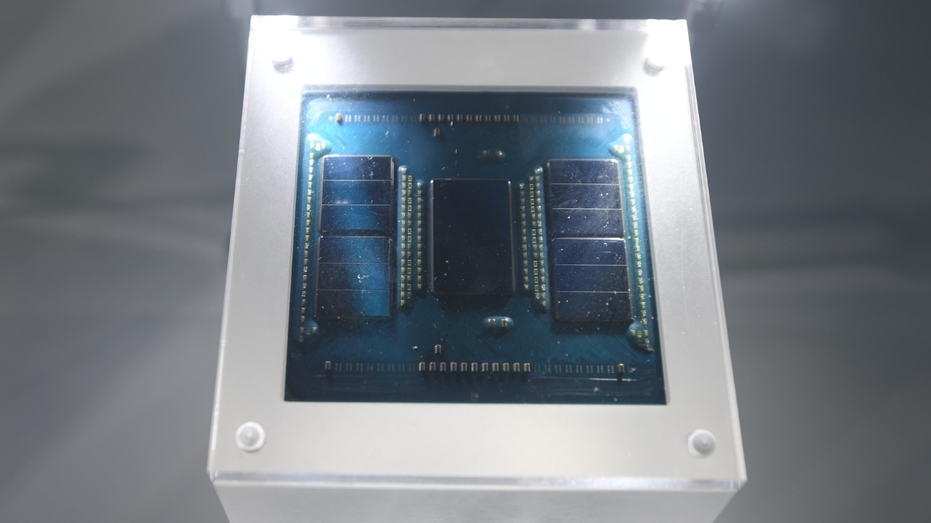
AMD AI chip showcased at an exhibition in Hangzhou, Zhejiang Province, China. (CFOTO/Future Publishing via Getty Images)
Demand for AI infrastructure is already competing with consumer electronics for limited supply of key components, squeezing availability and driving up prices across the board. Even before the Middle East conflict, PCB demand had been rising rapidly due to AI server growth, further tightening supply.
Beyond higher prices, consumers may also face limited availability of certain devices.
“As supplies are redirected toward AI and high-performance computing, consumer electronics manufacturers are left competing for a shrinking pool,” Zeng said.
The result could be delays or “out of stock” issues for some products, especially if supply disruptions persist.
Ives said shortages are not guaranteed but remain a risk.
“If it stays at the current rate, we can see shortages into the Fall on certain products,” he said.
Historically, supply chain shocks don’t translate one-to-one into retail price increases, but they rarely disappear entirely.
CLICK HERE TO GET FOX BUSINESS ON THE GO
That suggests consumers are unlikely to escape the impact altogether.
The disruption may start deep in the global supply chain, but its effects are likely to show up in familiar places: higher price tags, fewer discounts and tighter inventory for everyday tech products.
And with demand for electronics continuing to surge, relief may not come quickly.
Reuters contributed to this report.

Business
Berkshire Operating Profits Rose 18% in First Quarter. The Company Bought Back $235 Million of Stock.
Berkshire Operating Profits Rose 18% in First Quarter. The Company Bought Back $235 Million of Stock.

Asian finance leaders pledge action on market volatility risks


Rida Morwa is a former investment and commercial Banker, with over 35 years of experience. He has been advising individual and institutional clients on high-yield investment strategies since 1991. Rida Morwa leads the Investing Group High Dividend Opportunities where he teams up with some of Seeking Alpha’s top income investing analysts. The service focuses on sustainable income through a variety of high yield investments with a targeted safe +9% yield. Features include: model portfolio with buy/sell alerts, preferred and baby bond portfolios for more conservative investors, vibrant and active chat with access to the service’s leaders, dividend and portfolio trackers, and regular market updates. The service philosophy focuses on community, education, and the belief that nobody should invest alone. Learn More.
Analyst’s Disclosure: I/we have a beneficial long position in the shares of AGNC either through stock ownership, options, or other derivatives. I wrote this article myself, and it expresses my own opinions. I am not receiving compensation for it (other than from Seeking Alpha). I have no business relationship with any company whose stock is mentioned in this article.
Beyond Saving, Philip Mause, and Hidden Opportunities, all are supporting contributors for High Dividend Opportunities. Any recommendation posted in this article is not indefinite. We closely monitor all of our positions. We issue Buy and Sell alerts on our recommendations, which are exclusive to our members.
Seeking Alpha’s Disclosure: Past performance is no guarantee of future results. No recommendation or advice is being given as to whether any investment is suitable for a particular investor. Any views or opinions expressed above may not reflect those of Seeking Alpha as a whole. Seeking Alpha is not a licensed securities dealer, broker or US investment adviser or investment bank. Our analysts are third party authors that include both professional investors and individual investors who may not be licensed or certified by any institute or regulatory body.


Asia finance leaders say they are ready to act to stem volatility risks

Blue Owl: No Distress Detected

Turpaz acquires Phoenix Flavors for $95 million in U.S. expansion
NEW YORK — Investors evaluating Atlassian Corporation’s prospects heading into the second half of 2026 face a compelling growth story underpinned by strong cloud migration, artificial intelligence integrations and expanding enterprise adoption of its collaboration tools, despite recent share-price volatility that has left the stock trading near $88.88 as of early May. Wall Street largely recommends buying the shares, with consensus price targets implying 35-77 percent upside as the company capitalizes on digital transformation trends.
Atlassian, known for flagship products like Jira, Confluence and Bitbucket, has successfully transitioned much of its business to the cloud, driving recurring revenue and higher margins. Fiscal third-quarter results released in April showed robust performance, with shares surging 30 percent post-earnings on beats and raised guidance. Analysts highlight the company’s AI-powered features, such as automated workflows and intelligent search, as key differentiators in a competitive software landscape.
Current valuation metrics reflect a balance between growth potential and near-term pressures. Atlassian trades at a premium to some peers but offers attractive entry points for long-term investors given projected revenue growth of 18 percent-plus annually. Forward price-to-earnings estimates and discounted cash flow models support analyst enthusiasm, with several firms maintaining Buy or Strong Buy ratings.
The consensus among 28-42 analysts rates Atlassian a Moderate Buy to Strong Buy. Average 12-month price targets range from $144.67 to $169.18, with optimistic forecasts reaching $295 or higher. BTIG recently hiked its target following earnings, citing momentum in cloud adoption and AI innovation. The lowest targets sit around $95, acknowledging execution risks.
Atlassian’s cloud migration strategy has accelerated revenue visibility and customer retention. Enterprise clients increasingly prefer subscription models that deliver continuous updates and scalability. AI enhancements across the product suite, including Jira’s intelligent automation and Confluence’s smart summaries, position the company to capture more wallet share in project management and knowledge-sharing tools.
Challenges include macroeconomic uncertainty affecting IT spending and competition from Microsoft, ServiceNow and smaller disruptors. Atlassian’s heavy investment in research and development has pressured short-term margins, though long-term returns are expected to justify the spend. Currency fluctuations and international exposure add volatility for the Australia-based company listed on Nasdaq.
Recent performance shows resilience. Despite a year-to-date decline amid broader tech rotations, Atlassian’s fundamentals remain solid. Strong free cash flow generation supports potential share buybacks or accelerated innovation. The company’s focus on large enterprises and high-growth verticals like software development and IT operations provides a durable moat.
For growth-oriented investors, Atlassian represents exposure to digital collaboration trends that are unlikely to fade. Remote and hybrid work models sustain demand for its tools, while AI integration opens new use cases. Valuation, while not cheap, appears reasonable relative to projected earnings growth of 20 percent-plus in coming years.
Value investors may wait for further pullbacks or clearer margin expansion. The stock’s beta indicates sensitivity to market swings, making it less suitable for conservative portfolios. Dividend absence further limits appeal for income seekers, though capital appreciation potential remains high.
Analyst notes emphasize Atlassian’s market leadership in developer tools and collaboration software. Jira’s dominance in agile project management and Confluence’s role in knowledge management create sticky customer relationships. Expansion into new verticals and geographic markets supports long-term revenue diversification.
Risks include execution on cloud migration timelines, potential customer pushback on pricing and regulatory scrutiny of big tech. Geopolitical tensions or recessionary pressures could delay enterprise purchases. Competition in AI features may intensify, requiring continued innovation spending.
Portfolio allocation depends on risk tolerance. Aggressive investors may add to positions on dips, targeting 13-18 percent annualized returns based on consensus models. Balanced portfolios might pair Atlassian with more defensive tech names. Long-term holders benefit from secular tailwinds in software-as-a-service.
As fiscal 2026 progresses, attention turns to quarterly results and guidance. Cloud revenue mix, AI adoption metrics and margin trends will influence sentiment. Management’s track record of delivering on strategic initiatives provides confidence for many covering the stock.
Atlassian’s story in 2026 centers on leveraging its platform to drive efficiency and innovation for customers worldwide. While near-term volatility is possible, the company’s positioning in critical enterprise workflows supports a generally bullish outlook. Investors comfortable with software-sector dynamics may find current levels attractive for long-term compounding.
The software maker’s ability to adapt to evolving workplace needs while maintaining product excellence will determine success. With strong analyst backing and secular growth drivers, Atlassian remains a name worth watching — and potentially owning — as the year unfolds.

Failing High Streets fuel a wider sense of political discontent which could prove crucial in the upcoming elections for English councils in May.
Rubio to reportedly meet Pope Leo in Italy amid Trump criticism

Why China exports will likely stay resilient despite energy shock and a strong Yua

The Fitbit-for-your-brain era could be closer than we think

5 Habits Para Maging Financial Literate : Paano Maging Financial Literate?

I’m a Celeb’s Adam Thomas ‘wasn’t sure any of this would happen’ as he’s flooded with support

Manchester United reach agreement with Casemiro over contract clause amid transfer speculation

US brings back mandatory military draft registration

Steven Gerrard disagrees with Gary Neville over ‘shock’ Chelsea and Arsenal claim | Football


-

 Tech6 days ago
Register Renaming | Hackaday
-

 Politics6 days ago
Drax board avoid their own AGM, accused of greenwashing & environmental racism
-

 Tech6 days ago
Why Blue Badges Disappeared From Toyota Hybrids
-

 Tech6 days ago
Images of Samsung’s rumored smart glasses have leaked
-
 Tech2 days ago
Trump’s 25% EU auto tariff breaches Turnberry Agreement that also covers semiconductors and digital trade
-

 Fashion5 days ago
Kylie Jenner’s KHY Enters a New Era with ‘Born in LA’
-

 Business5 days ago
Most Commercial Energy Audits Miss the Real Losses
-

 Crypto World5 days ago
CFTC’s AI will review U.S. crypto registration applications, chairman tells CoinDesk
-

 Business6 days ago
(VIDEO) Charlize Theron Climbs Times Square Billboard to Promote New Netflix Thriller ‘Apex’
-

 Business4 days ago
Barclay Brothers Avoid Bankruptcy: HSBC Drops High Court Petitions After IVA Deal
-
 Sports2 days ago
Paul Scholes issues Marcus Rashford reality check as agreement emerges over Man United star
-
 Business4 days ago
Tesla Officially Registers Elon Musk’s Stock: What Investors Need to Know
-
 Entertainment6 days ago
Alicia Keys Calls Out Music Industry ‘Boys Club’
-

 Tech5 days ago
Get Ready for More Brain-Scanning Consumer Gadgets
-

 Tech7 days ago
Dyson Vacuums And The Curse Of Cooked Capacitors
-
 Crypto World5 days ago
Robinhood Phishing Scam Exploits Gmail Dot Feature to Bypass Security
-

 Entertainment6 days ago
Sister Wives: Janelle Posts New Scary Warning
-

 Crypto World5 days ago
Gmail Dot Trick Underpins Robinhood Phishing, Sending Real-Looking Emails
-

 Business7 days ago
AI-Driven App Creation at Your Fingertips
-

 Business3 days ago
Two Powerball Tickets Split $143 Million Jackpot in Indiana and Kansas
You must be logged in to post a comment Login