
Politics
A note to our readers

As I begin my first week as POLITICO’s Global Editor-in-Chief, I want to start by thanking you — our readers and subscribers — for the trust you place in POLITICO.
Our best-in-class reporters and editors — all 550 of them around the globe — start each day focused on a singular mission: delivering original, authoritative reporting on politics, policy and power to help you make better sense of our rapidly changing world.
Their work begins by going deep in the power centers we cover. Our reporters draw on unparalleled experience and sourcing to guide you through the people and institutions driving decisions in capitals like Washington, Brussels, London, Ottawa, Berlin, Paris and Sacramento — and soon Madrid and Canberra — while also connecting the dots as power flows across borders and sectors.
Our superpower is covering not only where power is today, but where it is moving, so you can be better prepared for what comes next.
What I love most about POLITICO is we never stand still. Innovation has been part of our DNA from the start, and in the months ahead, you will see POLITICO continue to evolve the ways we deliver our journalism — on new platforms, in new formats and in more ways throughout your day — all with the goal of making our reporting more useful to you.
We are particularly grateful to our professional subscribers, and we know how important POLITICO Pro and E&E News are to your work. We will continue investing in our core policy areas and expanding the tools that help you integrate POLITICO’s coverage even further into your daily work.
Thank you for reading, listening, watching and trusting POLITICO. We will continue working every day for you.


Hay fever really has got worse. A recent report found that sufferers have to deal with two more weeks of streaming eyes and sniffling per year than they would have had to in the ’90s.
Antihistamines are available over-the-counter for people with symptoms. If you have especially strong reactions to pollen, you might be prescribed fexofenadine, a stronger, non-drowsy antihistamine.
You can also get 120mg versions of fexofenadine over the counter for adults and kids over 12 if you’re treating hay fever. Brand names include Allevia, Almerg, Histallay, Telfast, and Treathay.
It can also be used to treat conjunctivitis, eczema, hives, and some insect bites and stings (if you’re using it to treat hives, you can get 180mg of fexofenadine over the counter in pharmacies).
According to the NHS, though, there are four drinks you should avoid if you’re taking the medication.
What can’t I drink on fexofenadine?
- orange juice,
- grapefruit juice, and
- apple juice
may make the medication less effective.
And you should also avoid drinking any type of alcohol, as it can make you feel sleepy.
What medication can I take with fexofenadine?
The NHS said that your fexofenadine tablets should come with a leaflet. Look in there first, as they cannot guarantee they know what your specific version of the medication may react to.
In general, though, they said it’s best to check with a doctor or pharmacist before taking fexofenadine if you’re also taking:
- any medication that makes your mouth dry, makes it harder to pee, or makes you drowsy,
- leflunomide (used to treat arthritis),
- velpatasvir (used to treat hepatitis C infections),
- teriflunomide (used to treat multiple sclerosis), and
- apalutamide, to treat prostate cancer.
Additionally, if you’re taking indigestion medications that contain aluminium or magnesium, wait two hours before taking at and taking fexofenadine.
This advice is because the above medications may make fexofenadine less effective and/or increase the severity of side effects.
But again, please check the leaflet in your medication to be sure.

Anyone who’s gone a cup over their usual coffee limit will know it can sometimes lead to agitation and jitters. It can even mess with your sleep.
But a new study, which looked at the data from 461,586 people across a median of 13.4 years, has suggested that in the right amount, drinking coffee may actually lower your stress levels and is linked to reduced rates of mental health issues.
“J-shaped associations were identified between coffee consumption and mental disorders, suggesting that a moderate intake of coffee might be beneficial for mental health,” the paper, published in the Journal of Affective Disorders, said.
How much coffee seemed to help?
The researchers wanted to pick up on unfinished previous research, which looked at the link between coffee and anxiety and depression rates.
Using data from the UK Biobank, they looked at incidence rates of mood and stress disorders and compared it to self-reported coffee consumption.
They found that drinking two to three cups of coffee a day appeared to be linked to lower rates of these conditions.
That “protective effect” seemed stronger in men than women, the paper added.
The researchers speculated that this might be because of how drinking coffee affects inflammation biomarkers.
People who drank no coffee, or those who drank more than three a day, were more likely to have a mood or stress disorder on their records. And those who drank five or more cups of coffee a day appeared likeliest to experience mood or stress disorder.
However, this did not say that coffee definitely caused any of these associations; it just showed a link.
Other studies support the two-to-three-cup limit
Speaking to HuffPost previously, Dr James Udelson, chief of cardiology at Tufts Medical Centre, said, “Three to four cups of coffee per day has been shown to be safe for most people and not associated with adverse effects on cardiovascular health or health in general”.
One study found that “moderate” coffee consumption (two to three cups a day) appears to be linked to lower dementia risk.
And it appears to be associated with a longer life and better heart health, too.
Coffee with no sugar or cream may be better for us, other studies have suggested.
Fans of fashion and celebrity gossip alike have a major reason to get excited on Monday night, as the red carpet is rolled out for this year’s Met Gala.
The star-studded annual event has become known as a playground for the rich and famous, but few ever have quite as much fun – or get people talking quite as much – with their red carpet looks as Rihanna.
Over the last decade, the chart-topping singer and beauty entrepreneur has cemented herself as the undeniable queen of the Met Ball, thanks to her show-stopping fashion choices – and all signs point to us getting another Rih moment on this year’s red carpet.
So, while we wait for all the red carpet snaps from the 2026 Met Ball, here’s our definitive ranking of the looks the musician has worn to the Met Gala over the years…
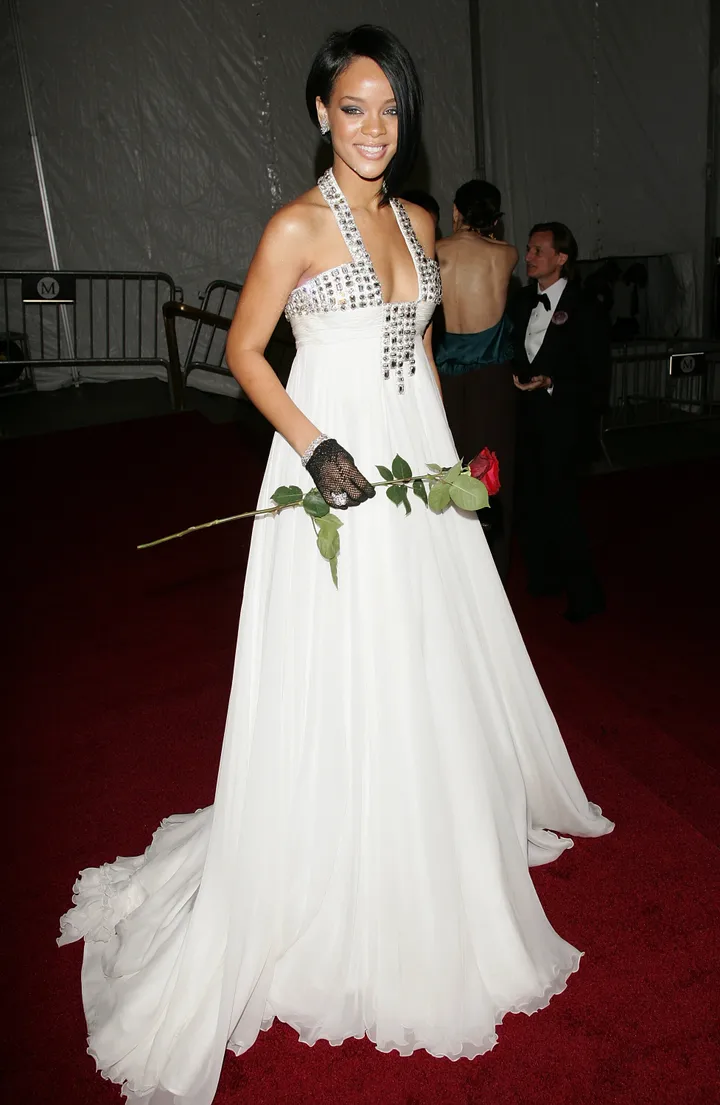
11. 2007 – Poiret: King Of Fashion

Evan Agostini via Getty Images
Fresh from the success of her then-recent chart-topping single Umbrella, Rihanna attended her very first Met Gala in 2007 (still rocking that now-iconic Good Girl Gone Bad hairstyle, no less).
We have to be honest, this outfit really isn’t one for the history books, particularly in comparison to how cutting-edge Rihanna’s fashion choices would become in the years that followed.
Still, even if we’re not blown away by the white dress, we have to give a shout-out to those gloves, which do bring a certain something to the outfit.
10. 2011 – Alexander McQueen: Savage Beauty

Kevin Mazur via Getty Images
Again, this isn’t our favourite Rihanna look by any stretch of the imagination, but we are very into this red fish-braid moment.
What saves this outfit from being bottom of the list is that the dress is a lot more innovative than it might look on first glance, although…

Matt Baron/BEI/Shutterstock
…you do have to see it from all angles to get the full effect.
9. 2012 – Schiaparelli And Prada: Impossible Conversations

Larry Busacca via Getty Images
Rih certainly stepped things up the following year, didn’t she?
In tight black snakeskin, this look is definitely more reminiscent of “Rihanna the fashion icon” that would emerge in the not-too-distant future after this was taken
Still, although this outfit is a little too simple to have it any higher than eighth place on our definitive ranking, we still have to give her props for the cool material (and, of course, her fabulous hairstyle).
8. 2014 – Charles James: Beyond Fashion

Neilson Barnard via Getty Images
Another very pretty outfit from Rihanna. What we like most about her 2014 ensemble is just how youthful, fresh and fun it is, particularly at an event where we secretly suspect laughs are actually few and far between.
Of course, having fun with fashion would eventually become Rih’s forte, as we’re about to discover later down this list…
7. 2022: In America: A Lexicon of Fashion

Sean Zanni via Getty Images
This outfit might not be to everybody’s tastes, but if anyone on earth can pull off this enormous Balenciaga coat with a matching bejeweled beanie, it’s Rihanna – and we’re big fans of the makeup and jewellery.
In 2021, Rih walked the red carpet with A$AP Rocky, marking their first ever public appearance as a couple, and within a few months, the We Found Love singer would confirm she was expecting their first child.
6. 2023 – Karl Lagerfeld: A Line Of Beauty

NDZ/Star Max via Getty Images
A pregnant Rih certainly made an entrance when she and A$AP Rocky arrived late at the Met Ball in 2023, with most guests already seated at their tables by the time the Grammy winner made her way down the red carpet.
Still, what an outfit this was.
Between the massive flower coat (which turned into a completely different look when she took down the hood) and those white gloves, there was a lot to love, but we all know the true star of the show…

ANGELA WEISS via Getty Images
…were those incredible sunglasses.
5. 2009 – The Model As Muse: Embodying Fashion

Patrick McMullan via Getty Images
Back in 2009, Rihanna was still in the early days of experimenting with a more avant-garde and daring style than we had been used to seeing from her at that time.
Mixing masculine and feminine, with her suit trousers, bow tie and towering heels, Rihanna gave one of the stand-out looks of the night that year, and she would carry on serving similar fashion moments to this while promoting her fourth album Rated R, which was released later that year.
It’s also worth noting that this was the then-21-year-old’s first red carpet appearance after being physically assaulted by ex-boyfriend Chris Brown just a few months earlier, making this already powerful (and, in our opinion, underrated) look even more impactful.
4. 2025 – Superfine: Tailoring Black Style

Rihanna got everyone talking during last year’s Met Gala, when she used the event’s red carpet to announce that she and her partner A$AP Rocky – who was one of that year’s celebrity organisers – were expecting their third child.
Even without the iconic pregnancy reveal, this would still be one of our favourite ever Rihanna looks, with the dandy-inspired look both perfectly encompassing the night’s theme and complementing the Pour It Up singer’s whole vibe.
3. 2018 – Heavenly Bodies: Fashion And The Catholic Imagination

Frazer Harrison via Getty Images
Rihanna was one of the co-chairs of the Met Gala in 2018, so the stakes were especially high when it came to the red carpet.
Fortunately, she more than delivered, giving us the stand-out moment of the whole night.
What’s funny about this outfit is that while some critics on social media suggested it was blasphemous or in poor taste, the Vatican actually endorsed the theme that year, and Rihanna herself borrowed part of her outfit from an actual Catholic Cardinal.
2. 2015 – China: Through The Looking Glass

Charles Sykes/Invision/AP
The dress that spawned a thousand memes, whether you thought it looked like a pizza, an omelette or a tribute to Big Bird, Rihanna’s 2015 look was one that got absolutely everyone talking.
Rihanna later revealed that shex actually stumbled on the dress while Googling Chinese couture online, telling Vanity Fair: “I’m so in love with this dress, but the train is insane!
“I can’t really walk in it without any help—but it’s so worth it. I love this dress so much! It’s Chinese couture and it’s made by Guo Pei. It’s handmade by one Chinese woman and it took her two years to make. I found it online.”
It was a big year for Rihanna at the 2015 Met Gala, not only winning the red carpet but performing during the event (in a much more stage-friendly ensemble, obv).
1. 2017 – Rei Kawakubo/Comme Des Garçons: Art Of The In-Between

Anadolu Agency via Getty Images
There are always one or two cop-outs on the Met Gala red carpet, with celebs preferring to wear something pretty or flattering rather than actually stick to the event’s theme – but 2016 was next level.
Because the night was inspired by Comme Des Garçons, the fashion house known for their elaborate and outlandish silhouettes, many of the stars in attendance opted for something a little more simple than the invitation requested.

Mike Coppola via Getty Images
She hit the red carpet in this enormous creation, ensuring all eyes were on her and serving us a look so jaw-dropping it was literally, at one point, used to illustrate the Met Gala on Wikipedia.
Not only is it stunning and inventive (and actually nails that year’s theme, when so many opted not to even try), it’s also tonnes of fun, completely exemplifying everything we love about Rihanna’s fashion.
It’s not just you – Anne Hathaway really is everywhere at the moment.
The Oscar winner has been enjoying something of a career renaissance at the moment, with no fewer than five films either already out or due to hit cinemas later in 2026 (and you thought Zendaya was a busy bee…).
Of course, the Devil Wears Prada star is currently back in action as Andy Sachs in the hit rom-com’s long-awaited sequel, but her other projects from this year encompass everything from dystopian sci-fi and erotic thrillers to one of the year’s most anticipated big-screen epics.
Here’s a quick run-through of Anne Hathaway’s very busy 2026…
Mother Mary

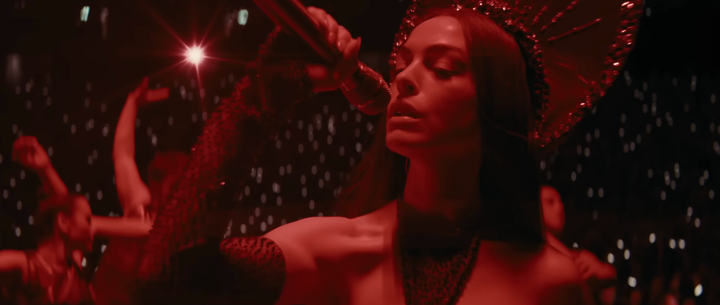
Two years after her last outing in the romance The Idea Of You, Anne Hathaway returned to the big screen in April 2026 in another musical project, albeit one of a very different nature.
Psychological thriller Mother Mary stars Anne as the titular pop icon, who is reunited with her old costume designer, played by Michaela Coel, with disastrous and nightmarish results.
Produced by A24, the film’s cast list was a dream for any fan of the indie production company, including Euphoria’s Hunter Schafer, model-turned-actor Kaia Gerber, Fleabag’s Sian Clifford, Grammy winner FKA Twigs and Black Mirror’s Jessica Brown Findlay.
FKA Twigs also contributed original songs to the soundtrack, which also featured Charli XCX and Jack Antonoff.
Mother Mary is in cinemas now.
The Devil Wears Prada 2

What is it they say about Anne Hathaway projects and buses? What? Nothing? Well, we’re saying it now.
Just one week after Mother Mary hit cinemas, Anne reprised her role from the first Devil Wears Prada movie in the new sequel, reuniting her with former co-stars Meryl Streep, Emily Blunt and Stanley Tucci.
The new film picks up 20 years after the original, reintroducing Andy as a successful investigative journalist, recruited by her old stomping ground, Runway magazine, to help reverse its fortunes after a PR nightmare.
The Devil Wears Prada 2 is in cinemas now.
The Odyssey

Christopher Nolan’s follow-up to the Oscar-winning Oppenheimer, The Odyssey, is undoubtedly one of 2026’s most anticipated films.
An adaptation of the epic Ancient Greek story of the same name, Nolan has recruited several of his old collaborators for his most ambitious project to date, including Matt Damon, Robert Pattinson, Benny Safdie and Elliot Page.
Those returning faces will also include Anne, who previously worked with the British director in The Dark Knight Rises and Interstellar.
Meanwhile, the film will also welcome a host of new A-listers into the Nolan-verse, with the cast boasting the likes of Tom Holland, Zendaya, Lupita Nyong’o, Mia Goth and Himesh Patel.
The Odyssey will arrive in cinemas on 17 July.
The End Of Oak Street
The End Of Oak Street is a new dystopian sci-fi offering from David Robert Michell, the filmmaker behind the psychological horror It Follows.
In the film, Anne and her on-screen husband Ewan McGregor play suburban parents who are shocked when a cosmic anomaly somehow transports their entire street to a mysterious unknown location, leaving all of its residents to lean into their survivalist instincts to fend for themselves.
The End Of Oak Street is released in 14 August.
Verity

In Verity, Anne plays Verity Crawford, a successful author who finds herself unable to complete her popular series of novels after a mysterious accident, so enlists the help of Lowen Ashleigh, a younger aspiring writer.
However, while working on the next instalment in Verity’s series, she unearths secrets about the author that raise a whole lot of questions.
Based on the novel of the same name by Colleen Hoover (yes, she of It Ends With Us fame), the thriller also features appearances from Josh Hartnett as Anne’s on-screen husband alongside Ismael Cruz Córdova, Irina Dvorovenko and child actor Brady Wagner.
Verity is the latest collaboration between Anne Hathaway and Amazon, following 2024’s The Idea Of You.
Verity is slated for release on 2 October.
Alone At Dawn

With five Anne Hathaway movies already coming in 2026, another is already in post-production.
Alone At Dawn tells the true story of John A. Chapman, who served as a combat controller in the United States Air Force during the war in Afghanistan, and was posthumously awarded the Medal Of Honour in 2018.
Based on the 2019 book of the same name, the war drama will feature Ron Howard on directing duties, with Adam Driver in the lead role as Chapman and Anne set to portray the intelligence officer who fought for him to receive the medal.
A release date for Alone At Dawn is yet to be announced, though it’s unlikely to be until 2027.

What Kids Are Carrying is a HuffPost UK series focusing on how the nation’s youngest generation is *really* feeling right now – and how parents and caregivers can support them.
There can be so many things going on when a child tells you their tummy hurts. They might have a stomach bug, lactose intolerance, trapped wind, irritable bowel syndrome (IBS), constipation – the list goes on.
But one thing many parents might not consider is that when a child is anxious, it can also cause them to suffer physically, and stomach pain is a pretty common manifestation of that.
Counselling Directory member Patricia Calabro tells HuffPost UK: “Many of my adult anxiety clients can recall sore tummies, nausea or feeling sick before school, social events or family stress as children, but didn’t know at the time that what they were feeling was pressure, fear or overwhelm.
“Kids don’t have the language, self-understanding or ability to opt out when something feels too big, so the distress lands in the body. The gut is densely connected to the nervous system and reactive to stress hormones – a ‘tummy ache’ is a real physiological event, not an excuse.”
She highlights one particular study which followed children with functional abdominal pain into adulthood – it found 51% had experienced an anxiety disorder in their lives, compared to 20% of children without tummy aches.
“So, taking it seriously early really is a form of prevention,” she adds.
Anxiety is one of the most common mental health concerns children brought up in therapy last year, according to therapists and counsellors.
In October last year, the NSPCC revealed anxiety was the most common mental health concern for children reaching out to Childline, too. The service delivered more than 12,000 counselling sessions to children and young people with concerns about anxiety.
Therapist Claire Seadon tells us stomach ache is “commonly reported by children who are experiencing anxiety”.
My child regularly complains of stomach ache. Now what?
First of all, speak to your GP who can rule out any physical issues like constipation or an intolerance.
If everything seems normal on that front, Seadon advises parents to notice any patterns emerging: do they get stomach ache on a Sunday evening before the school week begins? Or are they feeling unwell on a certain day of the week? Or at a certain time?
“Ask yourself, what happens on this day? Do they attend an activity or come into contact with a particular person? A bit of detective work is required,” says the therapist.
Integrative counsellor and psychotherapist Nadia DiLuzio, who is also a Counselling Directory member, suggests if you do notice a pattern in the symptoms occurring and you’ve had their health checked, it could be driven by “a part of the anxiety cycle in which our brain looks for a way to relieve us of these feelings”.
“For example, if I am unwell, I won’t have to sit this exam, attend school, go to that specific lesson, club or activity – or be in a school/home environment I find overwhelming, or with other young people or adults that are unkind to me,” she said.
“If I can avoid the situation or the friendship group or the environment, then I can stay safe.”

Anastasiia Sienotova via Getty Images
How to talk to children about their worries
If you suspect your child is feeling anxious about something, it’s best to chat to them about where it’s coming from. Snuggle up, have a calm conversation, and see where it leads.
“It’s important to note that a child may not be able to make the link between the stomach ache and feeling anxious,” adds Seadon.
“Depending on the age of the child, they may not be able to articulate a worry, but they will feel the pain of a stomach ache. Perhaps say to them: ‘I notice that you feel unwell every Sunday night, are you worried about going to school tomorrow?’”
If it turns out that something is worrying them, you can then provide support.
DiLuzio advises validating their experience and feelings, rather than jumping to rescue them. “Whilst we want to help them feel better, we also want to show them that it is OK to feel the way they do, that having a range of feelings is part of being human,” she says.
“It can be a gentle way to help them learn how to tolerate uncomfortable feelings because they have support for them.”
Explaining anxiety to kids
You can also explain more about how anxiety impacts our bodies, so your child understands what’s happening when their stomach starts to hurt.
You can say that worry doesn’t just show up in our minds, but in our bodies as well. DiLuzio describes anxiety as “the part of us that is simply wanting to keep us safe and we need to be curious about what it may wish to keep us safe from”.
You could tell your child that “in trying to keep us safe, it amplifies how we feel, so we listen to it and I am here to listen to what that part of you is wanting me to hear”.
Seadon suggests parents might even want to share their own experiences of anxiety showing up in their bodies – for example, before an exam or driving test.
It’s important to bear in mind that these are examples of situational, one off stressors, but a child’s environment, home or school, may also be causing them anxiety.
“For example, if they are being bullied at school, walking into school each day, not knowing what they will have to face, is going to impact them,” she adds.
“Some age appropriate psychoeducation around this can be really helpful, as it can empower the child in understanding their bodies natural responses to anxiety and can support them in making the connection between their emotions and their stomach pain.
“You can enable them to develop an understanding that the physical manifestations of anxiety, serve as a warning signal that they need to reach out for help and support. Knowledge is power!”
Help and support:
- Mind, open Monday to Friday, 9am-6pm on 0300 123 3393.
- Samaritans offers a listening service which is open 24 hours a day, on 116 123 (UK and ROI – this number is FREE to call and will not appear on your phone bill).
- CALM (the Campaign Against Living Miserably) offer a helpline open 5pm-midnight, 365 days a year, on 0800 58 58 58, and a webchat service.
- The Mix is a free support service for people under 25. Call 0808 808 4994 or email help@themix.org.uk
- Rethink Mental Illness offers practical help through its advice line which can be reached on 0808 801 0525 (Monday to Friday 10am-4pm). More info can be found on rethink.org.
Local elections are always an expectations game and revolve around each party trying to convince us pundits and voters in advance that they’re going to do far worse than we all think, and therefore when they don’t, they can claim it as a victory. To that extent they are very predictable. However, this year there are a number of curveball factors to consider, not least the fact there are two national elections taking place in Wales and Scotland, plus 6 mayoral elections in London.
The only crumb of hope for Labour may be in four of the five London mayoral elections. The other one, in Tower Hamlets, is likely to remain beyond their reach. However, there is a strong challenge from the Greens in Hackney and Lewisham, and Reform in Barking & Dagenham. In Croydon, the main challenge to Labour is coming from the Conservatives, but they could well be undermined by Reform. It is not beyond the realms of possibility that Labour could end up winning not a single one of the 5 London mayoral contests, but that really would be worst case scenario. If they can pull off two, they will be mightily relieved.
In London, Labour is tipped to lose control of at least 14 of the Boroughs they currently control. The Greens will perform well in inner London, and Reform in outer London. A test of whether there’s any sort of Conservative revival will come in boroughs like Barnet, Westminster, Wandsworth and Bromley. Expect the LibDems to make more advances in south-west London.
I think the stories of Thursday will emerge in Wales and Scotland. In Scotland Labour may well be eclipsed by Reform UK in second place to a resurgent SNP, which is targeting a majority in the Scottish Parliament. I am doubtful about whether they will achieve that, but it’s certainly possible.
In Wales, where I hosted a six-way leaders debate on Thursday, Labour are in for a drubbing and will lose power for the first time in 27 years. Plaid’s Rheen ap Yorweth will become First Minister, but whether he can put together a viable coalition remains to be seen. It’s the first time a 100 per cent party list system has been used. The Greens will enter the Parliament for the first time, and there will be 96 members, compared with the current 55. Reform have edged ahead in the polls, but I think it is doubtful they will be able to get the 48 seats needed even if they can persuade the Conservatives to go into coalition with them. Which I’m not sure they can.
In the English councils, everyone is predicting Labour losses of maybe 1500, the Tories losing several hundred, the LibDems making a couple of hundred gains, with Reform UK and the Greens being the big winners. I suspect that’s how it will shake down. Or will the Labour vote surprise us all and be far more resilient than everyone thinks? I doubt it, but you never know. The other possibility is that Reform UK could flatter to deceive and fall short of expectations. Again, I doubt it. I think they will be the big winners of the night.
One final thing. It is an absolute disgrace that virtually all of the counts will take place on Friday rather than on Thursday night. Only 30 councils will be counting overnight. Does security of the ballot mean nothing any longer? If I had the chance, I’d introduce a bill to force councils to count as soon as the final ballot has been cast!
I will be doing an extra show on Friday evening where we will be rounding up the day’s results and assessing the implications. Not least for the future of our dear prime minister.
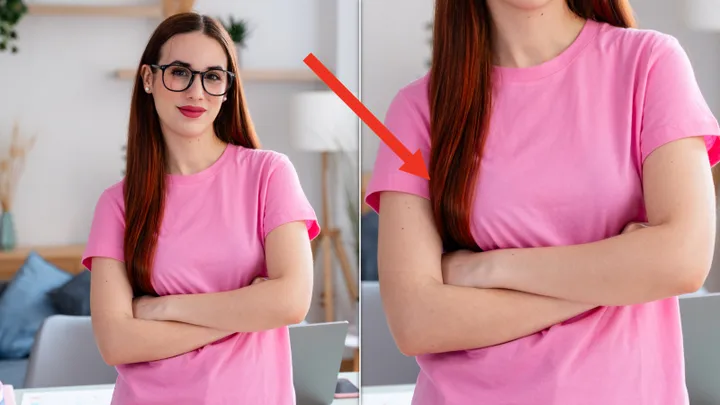
If you saw me at a work meeting, out with friends, or honestly anywhere in the wild, I almost always have my arms crossed. With that being my default stance, you would think I’m a miserable person with a bad attitude. But that is far from the truth (most of the time).
I’m crossing my arms for two reasons: 1) I’m probably cold, and 2) it feels like I’m giving myself a hug, and it feels comforting.
As it turns out, crossed arms is the most commonly misunderstood body language sign, according to experts.
“Most of the time, body language reading is quite accurate; we have to remember it’s only a part of the communication, like tone, choice of words, or, in some cases, touch,” as Stephanie Pappas, a licensed marriage and family therapist, told HuffPost.
According to Pappas, our reason for judging a person for their body language is evolutionary. Body language was the prominent form of communication and a major survival skill for our ancestors thousands of years ago, she explains. “We were wired to be attuned to those in our tribe, or potential threats, by the way they moved and expressed themselves around us.”

PixelVista via Getty Images
So while we don’t have to rely as much on body language for communication, our brains might still read body language and create a story.
Turns out, crossed arms aren’t the only thing people are getting wrong. Here’s what experts say about the most overlooked body language signs.
Here’s what crossed arms actually mean…
While people read crossed arms as being closed off or rude, it’s actually a self-soothing technique for most people, says Pappas. “It’s so easy to cross your arms when you’re feeling stressed or overwhelmed as a way to try to regulate yourself.”
“The biggest mistake is that we judge too quickly,” Linda Clemons, body language expert and author of HUSH: How to Radiate Power and Confidence Without Saying a Word told HuffPost. “Say my arms are crossed. You think, ‘this person is cold, closed off’ and you walk away. Two seconds later, I reach for my sweater. I was literally cold!”
“But you weren’t there to see it, because you judged so quickly.”
In other words, my reasons for crossing my arms are totally valid. And so are yours.
It’s not just crossed arms – people are frequently confused by these body language signs, too.
While Pappas and Clemons agree that crossed arms is the top confusing body language sign, eye contact and even smiles leave a lot of room for interpretation.
“Often, eye contact is given a lot of weight for being the signal that shows attention and respect for the other person,” Pappas said. However, reasons for not maintaining eye contact can go beyond rudeness or indifference. For example, in some cultures, it’s considered disrespectful to make eye contact; some people who are neurodivergent also have difficulty making eye contact because it feels overwhelming or uncomfortable.
Another confusing body language is the smile, according to Clemons. Sometimes people give what Clemon called “a pageant smile,” (AKA a fake smile) because they feel they should be acting like they’re happy.
“People who are truly happy for you, their cheeks will be elevated, and their eyes will be wide,” Clemons said. But with pageant smiles, they’re only using the muscles in their lower faces.
This is how to get better at reading body language cues.
Body language is only a piece of the communication puzzle, says Pappas. “It needs to be taken into consideration with context in order to create as much accuracy as possible.” Here are some tips to better read body language.
Understand Baseline Behaviour
If you know someone closely, you’ll get a full picture of their mood, personality, and communication style, otherwise known as baseline behaviour, Pappas notes. For example. Say you have a friend who often uses their hands when telling stories, suddenly puts their hands on their lap; That may mean a shift in their emotions or mood.
Understanding the person’s baseline was necessary to interpret their non-verbal cues in that context, adds Clemons. “Say we’re at a funeral, we’re paying our respects. Everyone’s expression is very somber, but one person is smiling,” she describes. “It’s the wrong non-verbal cue for this context, so you probably think something is very off with this person. But then maybe someone tells you this person always smiles when they are nervous, or overwhelmed.”
Knowing a person’s reactions to situations can offer better clarity on how to proceed, too.
Look At Behaviours In Clusters
Another thing to pay attention to is to look at behaviour in clusters, according to Clemons. “If the arms are crossed, the tone of voice is dismissive, and the person’s shoulders or feet are turned away, it’s more likely that they really don’t want to be talking to you.”
Congruency is also key, she adds. The words people speak should match their tone and body language. “If I say to my spouse, ‘I want to make this marriage work,’ but I fold my arms and my tone of voice is not congruent with my words, I may be headed out the door,” Clemons said.
Understand Intuition Versus Anxiety
One of the best things you can do when reading body language is learning to distinguish between intuition and anxiety, says Pappas. When you’re overly focused on analysing someone’s signals, you can drop out of the parts of the brain that help connect and communicate (and spiral into anxious storytelling instead).
“Anxiety might tell you, ‘Look at the way they’re standing there, they’re so angry with you, what did you do now?’” Pappas explained. “Whereas intuition is usually an unconscious, nonjudgmental piece of information that helps you make productive decisions.”
In other words, anxiety builds a dramatic narrative while intuition delivers a quiet, neutral signal. The latter is worth listening to, especially in situations where safety is a concern. “Paying attention to your gut feeling, especially in a situation where safety may be a concern, is a skill that our bodies have honed to keep us alive,” Pappas said.
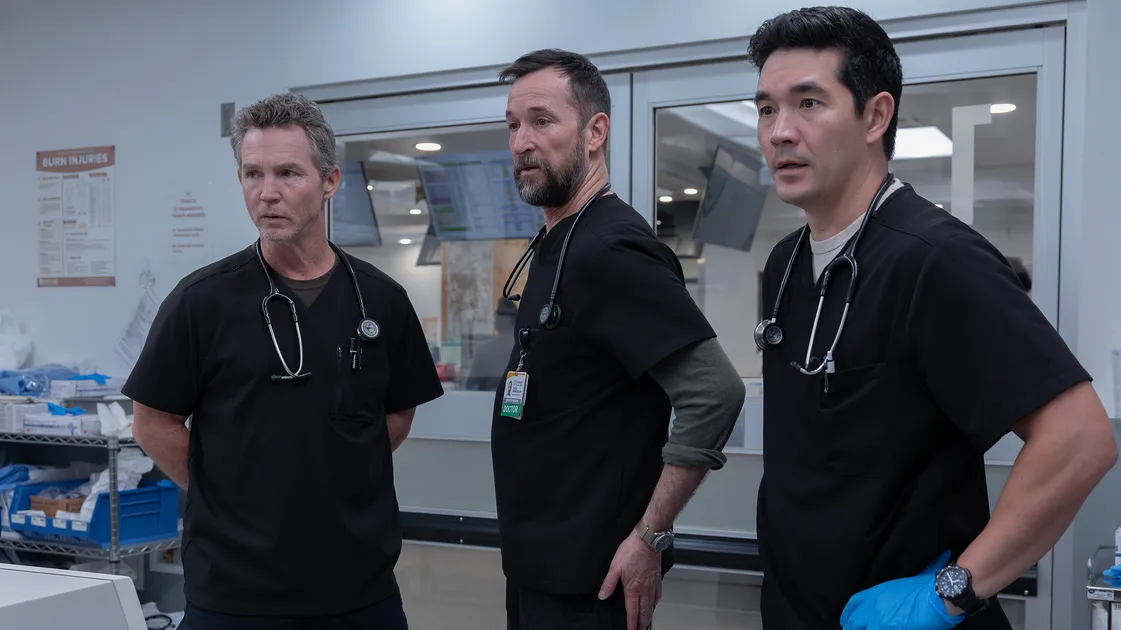
In Season 1 of The Pitt, Dr. Heather Collins has a miscarriage in an employee restroom… and goes back to work. Charge nurse Dana Evans vows to leave her position after getting sucker punched by a patient… but doesn’t. What keeps TV medical personnel staying on the job through illness, injury and trauma is a script to follow and a show to produce. For us, real-life healthcare professionals, it’s more complicated.
When I was a 21-year-old nursing student, I waited until my day off to visit my doctor about my abdominal pain and vaginal bleeding. I was diagnosed with a pelvic infection, given a shot of antibiotics and told to return if things didn’t improve. When Monday rolled around, I wasn’t improved, but rather than go to my doctor, I went to work.
I cared for my patients through pain and bleeding, but when I started struggling for breath, I finally checked myself into the emergency department. There, an ultrasound showed a ruptured ectopic pregnancy with blood accumulating in my abdominal cavity. I needed emergency surgery. I was wheeled through the hospital halls — past the classmates I had been working with less than an hour before. No one seemed shocked.
Shouldn’t it have been more surprising that a healthcare worker would drag herself to her post while actively haemorrhaging? Although some of it might be explained by my own blind trust — told it was a simple infection, I chose to soldier on — the larger piece that cannot be ignored is the culture that pervades healthcare. The hidden curriculum, the unspoken expectation, is that we show up for our patients no matter what.
Residency wasn’t much better. There, we had a saying: “If you call in sick, you’d better have a hospital room and vent settings.” You were expected to work through all but the most life-threatening illnesses. Hence, the stretcher ride through my workplace.
Society at large can also hold unrealistic expectations of people who care for the sick. We are often seen as super-humans. This view was amplified during the pandemic when a grateful public banged pots and pans from porches and stoops, holding up “Hero” signs in appreciation of our work.
But history is beginning to show that such displays may have caused more harm than good. The valorisation of doctors and nurses who died of COVID while caring for infected patients only served to normalise our exposure to risk. This narrative also takes the onus off culpable health institutions that were responsible for safeguarding employees. Characterising the care of patients with a deadly and not yet well-understood virus as selflessness only promotes the notion that healthcare workers willingly put themselves at risk for their patients. In fact, many were begging their administrations for the personal protective equipment they needed.
This hero culture has left no room for self-compassion because it has left no room for caregivers’ needs. As healthcare workers, we extend abundant compassion to our patients but save little for ourselves. We are famously perfectionistic, holding ourselves to impossible standards. We feel we can never make a mistake because if we err, patients die. It’s a crushing pressure we put on ourselves. And it is not sustainable.
But if we try to find help dealing with this pressure, we might run up against the stigma around healthcare professionals seeking mental health services. According to the Dr. Lorna Breen Heroes’ Foundation, while most state boards of medicine use stigma-free language in their applications — asking only about current impairment, not past mental health diagnoses — most U.S. hospitals still ask stigmatising questions on credentialing applications.
We also experience moral injury when our personal values conflict with the expectations of our employers and the insurance companies that so often dictate medical practice: when we can’t give a patient the time they need due to productivity requirements, when insurance regulations mandate the discharge of a patient who could use more time in the hospital, when a patient suffers on an ineffective medication until the prior authorisation appeal is won. All this contributes to the frustration and anger that characterise moral distress.
Then there are the professional codes of ethics that do not acknowledge the need for self-compassion. Comportment and leadership skills are mentioned. Values and ethics are discussed. But the language surrounding professional identity remains patient-centric. Nurses are described as caring and compassionate. Doctors’ good and moral behaviour is commented upon. But the concept of self-compassion has not been included in these codes. Without self-compassion being explicitly written into the codes that guide us, the job of reconciling our innate convictions with medicine’s expectations becomes Sisyphean.
Maybe the language should be patient-focused. After all, we have a duty to serve. But the fact that self-compassion is not highlighted in our codes of conduct leads us to question ourselves when we prioritise our own needs and care for ourselves. Perhaps this is why research shows that many of us in the field need our self-compassion sanctioned by the institutions that employ us and the organisations that represent us. Not receiving that permission, or denying ourselves it, affects our well-being and our ability to deliver compassionate care.
Even in retirement, we don’t grant ourselves much grace. In a 2025 opinion piece for the online physician community Doximity, Dr. Lara Kunschner Ronan writes about her own retirement, “While I clearly needed to move on for myself and have not regretted that decision for one minute, the physician identity development ingrained during my education and training had burrowed deeply into my psyche and is the little voice on my shoulder that even now continues to say, ‘You are selfish to prioritise yourself.’”
Many factors contribute to our lack of self-compassion, from societal hero worship to unforgiving work expectations to a lack of explicit prioritisation of self-care by our professional organisations and institutions. The solution is two-fold. To be sure, leadership must acknowledge and support the needs of the healthcare team in addition to those of our patients. More hospitals and clinics must employ wellness officers and create robust wellness curricula. Administrators and medical directors must build opportunities for self-care with reasonable work hours, administrative support, and time off to recharge.
At the end of the day, the characters on The Pitt are just that: characters. But the challenges, dilemmas, and struggles the show presents are experienced by real doctors and nurses every day. Although burnout rates in US healthcare have decreased in recent years, they remain unacceptably high: 41.9% of physicians reported experiencing at least one symptom of burnout in 2025, with emergency medicine topping the list of burnout by specialty at 49.8%. Burnout rates for nurses have fallen more dramatically since the pandemic eased, dropping from 45.6% in 2020 to 24.2% in 2023, but they’re still much too high.
We can do better. Not only do healthcare institutions and organisations need to recognise that we are all only human, but we also need to acknowledge it ourselves. Expecting ourselves to soldier on through our own trauma and pain is not only cruel, it’s dangerous — for us and for our patients. We must be proactive and empowered to take the time we need. To create space to reflect on the enormity of our work. To give ourselves a little grace. To extend to ourselves the same level of kindness and care we provide our patients.
Carolyn Roy-Bornstein is a board-certified paediatrician and former registered nurse. Her work has appeared in , the New York Times, Washington Post, Boston Globe, Poets & Writers, JAMA, The Writer magazine, and many other venues. She teaches narrative medicine at the Lawrence Family Medicine Residency program as part of their wellness curriculum. She is the author of ”A Prescription for Burnout: Restorative Writing for Healthcare Professionals,” out this month from Johns Hopkins University Press.
Do you have a compelling personal story you’d like to see published on HuffPost? Find out what we’re looking for here and send us a pitch at pitch@huffpost.com.
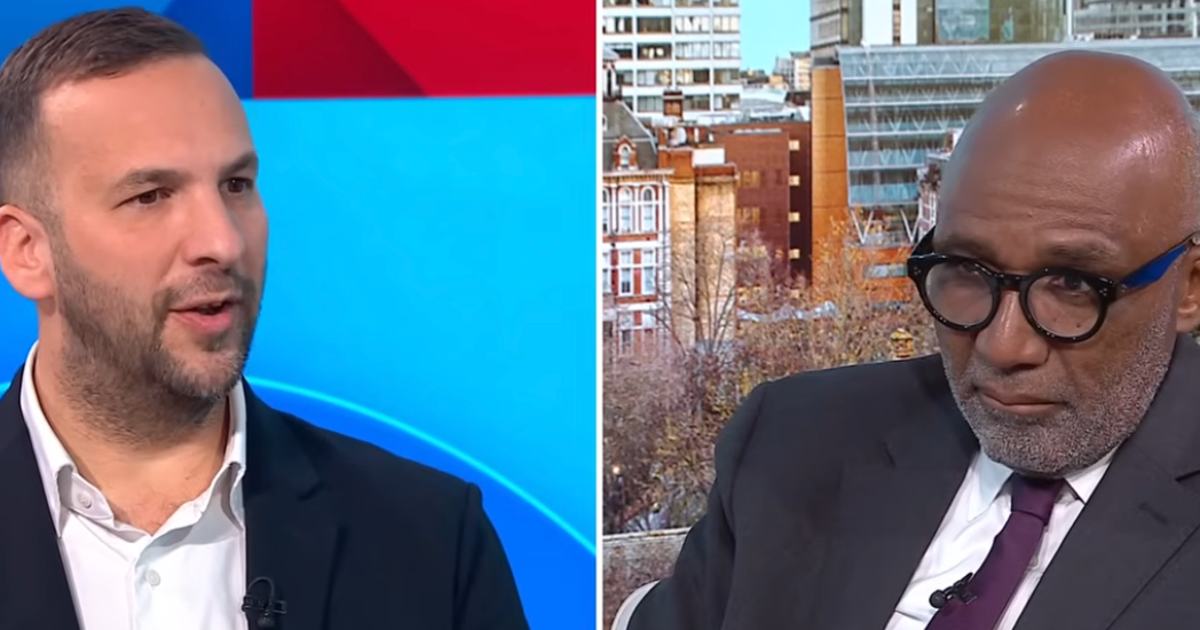
Zack Polanski has hit out at Trevor Phillips after the two clashed on live TV over the politician’s reaction to the Golders Green terror attack.
Two Jewish men were left seriously injured last Wednesday and footage of the police arresting the suspect in public quickly circulated on social media.
The Green Party leader then reshared a post on X accusing officers of being too heavy-handed with the individual.
The move sparked widespread backlash, including from the head of the Metropolitan Police, Mark Rowley, and Polanski apologised for resharing a post “in haste”.
He locked horns with the Sky News presenter on Sunday morning after Phillips asked Polanski to explain the controversial retweet.
The Green leader told Phillips that two people have been arrested in relation to antisemitic actions towards him and claimed The Times had published a “vile antisemitic cartoon” of Polanski on Saturday.
Polanski also defended the pro-Palestine marches which the government is considering banning in response to the rise in antisemitism, saying he was one of many Jewish people who join such protests.
When Phillips pushed back and said not all demonstrators are Jewish, Polanski cut in: “Why is my Jewish identity being erased from this conversation? And the Jewish identity of so many people on these marches?”
Phillips replied: “No, don’t try that one on me!
“My point is that currently the policy is if someone believes that an incident is a hate crime, whether they are a victim or not, it is recorded as such by the police, it is regarded as such by the courts.”
Polanski said he does not see hate crimes on the marches and it is an “outrageous slur” on those who are marching on peace.
The two continued to clash over how to define “actual antisemitism” throughout their tense 20 minute exchange.
In a post on X after the interview, Polanski wrote: “When Jewish people speak out against genocide, why are our voices dismissed?
“And smirking while I describe someone Nazi-saluting at me isn’t just disrespectful – it feels deeply antisemitic.”
Sky News has been approached for comment.
Watch the full interview below:
Subscribe to Commons People, the podcast that makes politics easy. Every week, Kevin Schofield and Kate Nicholson unpack the week’s biggest stories to keep you informed. Join us for straightforward analysis of what’s going on at Westminster.
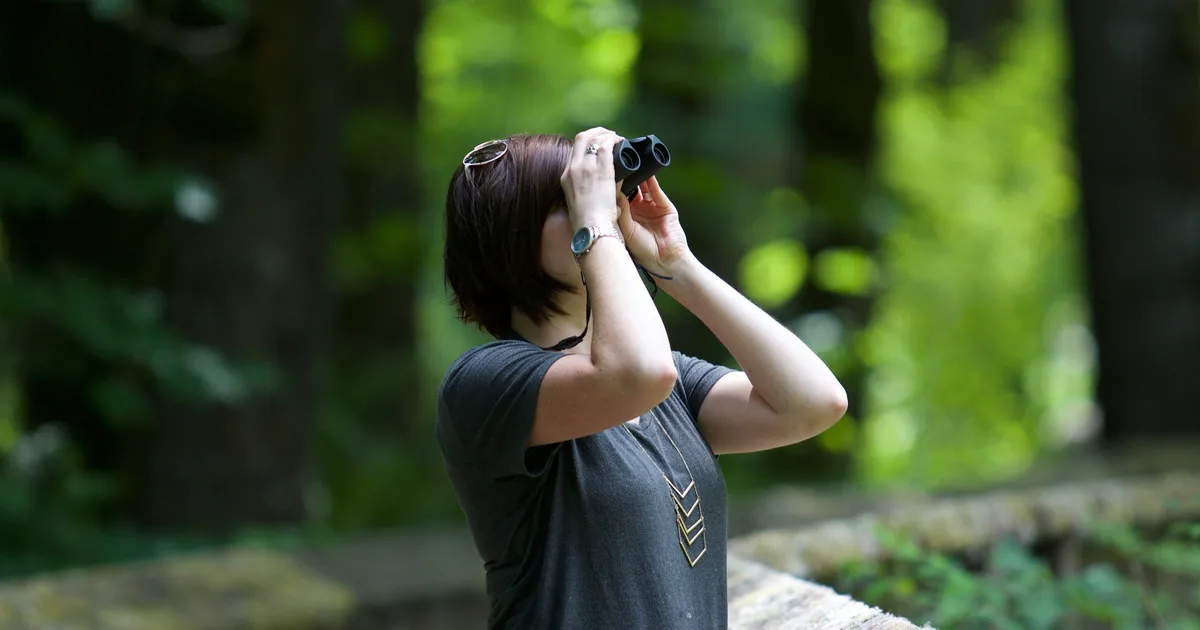
Ahead of International Dawn Chorus Day, the Royal Society for the Protection of Birds (RSPB) announced they’ve seen a 10-fold increase in birdwatching among Gen Z (born 1997-2012).
Numbers are “still on the rise,” they added in a press release. These figures were based on data collected by Fifty5Blue.
That makes it Gen Z’s second fastest-growing hobby, per the data, after jewellery-making.
This is among a 47% general increase in birdwatching, with a 216% increase among Millennials and a 66% increase among Gen X. Gen Z, however, is leading the way.
Why are Gen Z birdwatching?
24-year-old Jess Painter from the RSPB’s Youth Council said social media tips have helped to make the hobby less exclusive.
“When I’m watching birds, I’m not thinking about anything else – it’s a moment of peace and a way to reconnect with nature, and with myself. By taking a moment to be curious, to watch, listen and learn, you open yourself up to endless small moments of wonder,” she said.
NHS doctor and president of the RSPB, Dr Amir Khan, said Jess and others like her are onto something.
“Hearing birdsong, especially during the dawn chorus when they’re at their loudest and most beautiful, can produce more serotonin and make us feel good,” he shared.
“For millennia, humans have evolved alongside nature, so it’s inherent that we want to connect with it. There’s even a scientific term for this theory, the biophilia hypothesis, which means we actively seek out nature.”
One study found that actively listening out for birdsong can make an already-beneficial walk even healthier.
There’s even some evidence to suggest that birdwatching may reduce your risk of dementia.
How can I get into birdwatching?
RSPB wildlife expert Molly Brown said birdwatching is “something that everyone can do, no matter how much or little they know about birds”.
Look out your window or head to a local park or woods, stay still and quiet, and enjoy the wildlife.
You can also hear some species instead of seeing them, woodlands.co.uk explained. Richard Scholfield, their estate manager, said: “People often think they’re only seeing one or two bird species on a woodland walk. But if you stop and listen, you’ll realise there are often half a dozen or more species singing around you at the same time.”
Chiff-chaffs, blackbirds, woodpeckers, song thrushes, wrens, and tawny owls all have distinctive calls.

World Cup prize pool nears $900 million as FIFA boosts payouts
Former Mayor Rudy Giuliani Hospitalized In Critical Condition

4 Drinks To Avoid When Taking Fexofenadine

Manchester United reach agreement with Casemiro over contract clause amid transfer speculation

US brings back mandatory military draft registration

Steven Gerrard disagrees with Gary Neville over ‘shock’ Chelsea and Arsenal claim | Football

Crypto Trading for Beginners 2026 FULL COURSE | How to Trade Crypto | Bitcoin Trading

Full Podcast | Sandeep Gupta Explains the Millionaire Framework for Financial Freedom

Donald Trump Is About To Crash Bitcoin Again | Mark Yusko’s 2026 Predictions
-

 Tech7 days ago
Register Renaming | Hackaday
-

 Politics6 days ago
Drax board avoid their own AGM, accused of greenwashing & environmental racism
-

 Fashion5 days ago
Kylie Jenner’s KHY Enters a New Era with ‘Born in LA’
-

 Tech7 days ago
Why Blue Badges Disappeared From Toyota Hybrids
-

 Tech6 days ago
Images of Samsung’s rumored smart glasses have leaked
-
 Tech2 days ago
Trump’s 25% EU auto tariff breaches Turnberry Agreement that also covers semiconductors and digital trade
-

 NewsBeat12 hours ago
Channel 5 – All Creatures Great and Small series 7 new post
-

 Business5 days ago
Most Commercial Energy Audits Miss the Real Losses
-

 Business7 days ago
(VIDEO) Charlize Theron Climbs Times Square Billboard to Promote New Netflix Thriller ‘Apex’
-

 Crypto World6 days ago
CFTC’s AI will review U.S. crypto registration applications, chairman tells CoinDesk
-
 Sports2 days ago
Paul Scholes issues Marcus Rashford reality check as agreement emerges over Man United star
-

 Business5 days ago
Barclay Brothers Avoid Bankruptcy: HSBC Drops High Court Petitions After IVA Deal
-
 Entertainment7 days ago
Alicia Keys Calls Out Music Industry ‘Boys Club’
-
 Business4 days ago
Tesla Officially Registers Elon Musk’s Stock: What Investors Need to Know
-
 Tech6 days ago
Get Ready for More Brain-Scanning Consumer Gadgets
-
 Crypto World6 days ago
Robinhood Phishing Scam Exploits Gmail Dot Feature to Bypass Security
-

 Crypto World6 days ago
Gmail Dot Trick Underpins Robinhood Phishing, Sending Real-Looking Emails
-

 Entertainment6 days ago
Sister Wives: Janelle Posts New Scary Warning
-

 Business3 days ago
Two Powerball Tickets Split $143 Million Jackpot in Indiana and Kansas
-
 Business6 days ago
Superdry co-founder accused of raping woman
You must be logged in to post a comment Login