
Crypto World
Crypto Spring Has Officially Begun, Says Bitmine’s Tom Lee



Bitmine Immersion Technologies Chairman Tom Lee declared that the crypto spring has commenced.
In late April, Lee pushed back against the consensus view that crypto winter would drag through fall, arguing the downturn was nearing its end.
“Crypto Spring, in our view, has commenced, and like past cycles, investor sentiment and conviction are muted and bearish even as crypto prices strengthen,” he said.
Follow us on X to get the latest news as it happens
The executive explained that either outcome on the CLARITY Act, whether it passes or even fails, would “confirm the arrival of crypto spring.”
Senators Thom Tillis and Angela Alsobrooks finalized a bipartisan compromise on stablecoin rewards in the CLARITY Act. The text bans stablecoin yield on reserves while preserving activity-based rewards.
Lee called the framework acceptable, signaling hope for passage this year. Polymarket traders now price the odds of 2026 passage above 60%, the strongest reading in more than a month.
Two Structural Drivers Supporting Ethereum
Looking at what could drive the next leg of crypto gains, Lee pointed to two structural forces working in Ethereum’s favor. He cited the migration of Wall Street tokenization onto the chain, alongside growing demand from agentic AI systems that require neutral, open infrastructure to operate.
Lee positioned Ethereum as the dominant smart contract network for tokenization and well-placed to support the rise of agentic commerce. He added that ETH is increasingly being treated as both a store of value and a medium of exchange.
“This role for ETH has arguably been demonstrated by its outperformance since the Iran War commenced. ETH has outperformed the S&P 500 by 1,380 basis points since the war started and remains one of the top performing assets in the world (beside crude oil prices),” stated Lee.
The Ethereum treasury firm also announced its holdings on May 4. Total crypto and cash now stand at $13.1 billion, including 5.18 million ETH, equal to 4.29% of the supply.
Subscribe to our YouTube channel to watch leaders and journalists provide expert insights
The post Crypto Spring Has Officially Begun, Says Bitmine’s Tom Lee appeared first on BeInCrypto.



Haun Ventures has raised $1 billion in new funds to back founders working across crypto, finance and artificial intelligence.
Summary
- Haun Ventures raised $1B to invest in crypto infrastructure, tokenization and AI agent startups.
- Katie Haun said AI agents will increasingly conduct economic activity on behalf of users.
- The raise adds Haun Ventures to growing venture interest around AI and crypto infrastructure.
The firm announced the raise on May 4, saying it will continue supporting companies building the next stage of digital markets.
The firm, led by Katie Haun, said the funds will target three areas. These include crypto financial infrastructure, tokenization and AI agents. Haun described these sectors as part of a new economy that is forming around digital assets and automated software.
Katie Haun links crypto with AI agents
Haun said the market is changing across capital, commerce and trust. She wrote, “I’ve been following the flow of assets my entire career, and this is the most dynamic period in technology and finance I’ve ever witnessed.”
She also said AI agents will start taking part in economic activity for users. In her view, future services will need to support a world where computers become customers. That focus marks a shift for Haun Ventures, which has mostly backed crypto companies since launch.
Haun Ventures said financial services such as money, payments, banking, capital markets, insurance, identity and reputation are changing quickly. The firm also pointed to stablecoin volume, digital assets and tokenized markets as areas where new companies can build infrastructure.
Tokenization remains central to the firm’s plan. Haun said assets such as currencies, securities, gold and oil can become borderless, always available and programmable when moved onto digital rails. This aligns with rising interest from banks, asset managers and crypto firms in real-world asset markets.
Rising AI payments activity
Recent crypto.news reports show more firms building tools for AI agent payments. OKX launched an Agent Payments Protocol that lets AI systems handle quoting, escrow, settlement, usage tracking and dispute handling in one framework.
Coinbase-backed x402 also launched Agentic.market in April. The platform helps AI agents find, access and pay for online services. crypto.news reported that the x402 ecosystem has support from firms including Google, Microsoft, AWS, Visa and Stripe.
MoonPay has also moved into AI payments. The company introduced MoonAgents Card, a virtual Mastercard product that lets AI agents and users spend stablecoins from on-chain wallets. The card supports real-time crypto-to-fiat conversion at checkout.
These developments show why Haun Ventures is adding AI agents to its crypto thesis. The firm is not moving away from blockchain. Instead, it is backing systems where crypto payments, identity, fraud checks and tokenized assets can support autonomous software. A16Z has made a similar case, saying AI agents may need blockchain rails for micropayments, identity and smart contract execution.
Ondo price surged sharply on May 4, as strong fundamentals and rising demand for real-world asset exposure pushed the altcoin higher.
Summary
- Ondo price rose about 13%, with price moving from ~$0.27 to near $0.30 as trading volume jumped over 75% in 24 hours.
- Q1 2026 revenue hit $13.26 million while TVL reached $3.53 billion; integrations with Fidelity Investments, PayPal, Mastercard, and JPMorgan boosted institutional adoption.
- Anticipation of a fee-switch vote and expansion to the Solana network, alongside 60–70% market share in tokenized equities, supported bullish sentiment.
According to data from crypto.news, Ondo (ONDO) price jumped nearly 13% over the past day, climbing from an intraday low near $0.27 to test resistance around the $0.30 level at press time. The move was accompanied by a sharp increase in activity, with trading volume rising more than 75% in the last 24 hours.
Multiple catalysts appear to be driving ONDO’s rally today.
First, the token is benefiting from strong fundamental growth. Ondo reported solid Q1 2026 performance, with revenue reaching $13.26 million, while total value locked climbed to $3.53 billion. The steady expansion in both revenue and TVL points to increasing adoption of its tokenized finance products.
Second, institutional integration has added credibility to the project. Major financial and payments firms such as Fidelity Investments, PayPal, Mastercard, and JPMorgan have integrated Ondo’s offerings over the past quarter. This growing institutional footprint has strengthened its position as a key player in the tokenized real-world assets sector.
Third, investors are positioning ahead of a potential fee-switch mechanism expected in the second half of 2026. The proposal could allow token holders to earn a share of protocol revenue, a move that may materially change ONDO’s value accrual model and attract longer-term capital.
Fourth, Ondo’s expansion plans are adding to the bullish momentum. The project is preparing to extend its ecosystem to the Solana network, with plans to bring more than 200 tokenized stocks and ETFs to a broader retail user base. This could significantly increase accessibility and trading activity across its platform.
Finally, Ondo continues to dominate the tokenized equity niche. The protocol is estimated to control roughly 60% to 70% of the market share in this segment, reinforcing its position as one of the leading platforms in the rapidly growing RWA space.
Disclosure: This article does not represent investment advice. The content and materials featured on this page are for educational purposes only.


Prediction markets are moving closer to institutional finance as large investors seek direct ways to trade event risk, according to a May 4 Bernstein report.
Summary
- Bernstein says Kalshi’s first bespoke block trade could attract institutions seeking direct event-risk exposure.
- Greenlight brokered the Kalshi trade, with Jump Trading providing liquidity for a carbon allowance contract.
- Retail still drives prediction markets, with Polymarket and Bitget reporting $25.7B in March volume.
The firm said these markets can help investors track outcomes tied to tariffs, elections, policy decisions and geopolitics through clear yes-or-no contracts.
Bernstein pointed to Kalshi’s first bespoke institutional block trade as a key step. A block trade is a large private deal arranged between market players. In this case, the contract was built around the clearing price of California’s May carbon allowance auction.
Kalshi trade draws institutional attention
The Kalshi deal was brokered by Greenlight Commodities. It involved a Houston-based environmental hedge fund, with Jump Trading acting as the liquidity provider. The structure showed how prediction markets can serve a specific hedging need, rather than only broad retail speculation.
“We believe the introduction of block trading and bespoke contracts could expand participation from institutional investors seeking targeted exposure to event risks,” Bernstein analysts wrote.
The report framed custom contracts as a possible entry point for investors that need defined outcomes and larger trade sizes.
Clear Street’s partnership with Kalshi also added a regulated access route for larger investors. The deal covers clearing, settlement, block trading, swap services and trading tools for institutional clients. Clear Street said it became the first institutional Futures Commission Merchant to join Kalshi’s exchange and clearing house.
Retail still leads market volume
Despite rising institutional interest, prediction markets remain largely retail-driven. A Bitget Wallet and Polymarket report found that Polymarket recorded $25.7 billion in March trading volume. It also found that most users were smaller traders, with 82.8% trading under $10,000.
Bernstein said wider institutional use could push prediction markets toward a much larger industry by the end of the decade. However, the sector still faces questions about regulation, risk controls and whether event contracts should sit closer to financial markets or betting markets.
U.S. regulation remains uneven
Kalshi operates under the Commodity Futures Trading Commission, while Polymarket received conditional approval in late 2025 to offer event contracts in the U.S. through regulated channels, according to the Bernstein report.
Regulators and lawmakers continue to review the market. Reuters reported on May 4 that the SEC delayed more than two dozen proposed prediction-market ETFs while asking issuers for more information on mechanics and investor disclosures.
The U.S. Senate also voted on April 30 to ban senators, staff and officers from using prediction markets. Lawmakers cited concerns over public officials trading on real-world events while holding access to sensitive information.


WLFI alleges paid smear effort after token freeze.
Summary
- Trump-linked World Liberty Financial (WLFI) has filed a defamation lawsuit accusing Justin Sun of orchestrating a coordinated smear campaign to drive down the price of its $WLFI token.
- WLFI claims a Sun-linked entity violated token sale terms, had its tokens frozen, and then funded influencers and bots to label the project “a scam” with a hidden “backdoor” to more than 4 million followers.
- The case escalates an already bitter legal battle, coming weeks after Sun sued WLFI over frozen tokens and alleged “criminal extortion” and undisclosed blacklist functions in its smart contracts.
World Liberty Financial has announced it is suing Justin Sun for defamation, alleging that after a Sun-affiliated entity called Blue Anthem bought $WLFI tokens in November 2024 and then transferred some of them to Binance, the project froze those holdings under terms that had been “clearly disclosed in the token sale documentation.”
WLFI says that instead of seeking a good-faith resolution, Sun responded by launching “a coordinated smear campaign,” allegedly paying influencers and deploying bot networks to broadcast claims to more than 4 million followers that WLFI governance is “a scam” and that its smart contracts contain a hidden “backdoor” used to arbitrarily freeze user funds.
In its statement, the project insists that the freeze function “was clearly disclosed in the sales terms,” that governance is “transparent and community-driven,” and that it will “pursue legal action against Justin Sun” to protect its reputation and token holders.
Duelling lawsuits over freezes, blacklists, and losses
The countersuit comes after Sun filed his own federal complaint in California, alleging that WLFI secretly installed a “backdoor blacklisting function” in its smart contracts and used it to freeze his tokens as part of what he called an “illegal asset seizure scheme.”
According to that complaint, Sun says WLFI blacklisted his address and froze hundreds of millions of dollars’ worth of $WLFI after he refused to commit additional capital, with Reuters reporting that he accuses the Trump-family-backed venture of “wrongful token freeze, fraudulent misrepresentation, defamation, and running an extortion racket.”
Filings cited by outlets like the Wall Street Journal and CBS News say Sun at one point controlled between 3 billion and 4 billion WLFI tokens — an investment he valued at up to $1 billion at peak — and claim that a September 2025 freeze left him unable to sell as the token dropped roughly 25% from early September levels.
WLFI has countered that it used blacklist and freeze tools to protect the community, saying in earlier statements that it had restricted tokens across 272 wallets and that some addresses were flagged for “misappropriation of other holders’ funds,” even as critics questioned whether those mechanisms were properly disclosed or governed.
In a recent crypto.news feature, the broader feud was framed as a test of how far token projects can go in using on-chain control features without crossing into what major investors describe as confiscation.
Another crypto.news analysis highlighted how the case intersects with U.S. politics, given WLFI’s Trump-family backing and Sun’s role as one of its largest private backers with an initial commitment of about $75 million.
A separate crypto.news overview focused on Sun’s allegation of “criminal extortion” via smart-contract blacklists, a charge WLFI now effectively mirrors in reverse by accusing him of a paid disinformation effort aimed at “crashing” its token.


Aave LLC filed an emergency motion in New York on May 4 to vacate a restraining notice served on Arbitrum DAO.
Summary
- Aave says stolen ETH cannot become North Korea’s property through an alleged crypto exploit claim.
- Gerstein Harrow argues frozen ETH can satisfy judgments tied to alleged North Korea-linked crypto theft.
- Aave warns the freeze could delay rsETH recovery and harm users across the DeFi ecosystem.
The notice seeks to block the transfer of Ethereum linked to the April 18 rsETH incident. Aave asked the court to lift the notice, set a fast hearing, or require a $300 million bond if the freeze remains.
Gerstein Harrow LLP obtained court permission on May 1 to serve the notice, a writ of execution, and a coming turnover motion against Arbitrum DAO.
The filing says the notice targets about $71 million in frozen ETH that plaintiffs claim should satisfy unpaid judgments against North Korea. Aave disputes that claim.
Aave disputes North Korea ownership claim
Aave argued that stolen assets do not become a judgment debtor’s property because a thief held them for a short time. The filing said plaintiffs relied on “conjecture from posts on the internet” and that their theory “defies logic, common sense, and the law.”
The motion also said no court has found that North Korea, Lazarus Group, or any connected party carried out the hack. Aave said the immobilized assets belong to users who suffered losses during the exploit, not to North Korea or any linked entity.
Meanwhile, Arbitrum Security Council froze 30,765.6675 ETH on April 21. Aave said the funds were moved to a designated address so they could help restore rsETH backing and improve conditions for affected users.
The dispute comes as Arbitrum DAO weighs a plan to release the ETH for recovery work tied to the Kelp DAO exploit. Earlier crypto.news coverage said Aave and Kelp sought the release of 30,765 ETH, while a later report said Arbitrum’s frozen funds formed part of DeFi United’s wider recovery pool.
DeFi United effort grows across protocols
crypto.news reported that Mantle’s proposal to lend up to 30,000 ETH to Aave entered a Snapshot vote. The same report said DeFi United had gathered 1,137,714.633 ETH, worth about $314.57 million at the time, from commitments across several DAOs and protocols.
Other recovery steps also followed the Kelp incident. crypto.news reported that Aave DAO considered pausing AAVE buybacks until the rsETH issue was resolved. It also reported that Solana Foundation Chair Lily Liu said the foundation was lending USDT to Aave as part of a DeFi recovery effort.
Aave warns of harm to users
Aave told the court that keeping the ETH frozen could delay user withdrawals and recovery. Its lawyers said the restraint was causing “irreparable harm” to Aave users, protocol operations, and the wider DeFi community.
The filing also warned that the freeze could discourage future crypto recovery efforts after hacks. Aave said recovered assets should return to affected users, not outside judgment creditors. The court had not ruled on the emergency motion at the time of the filing.
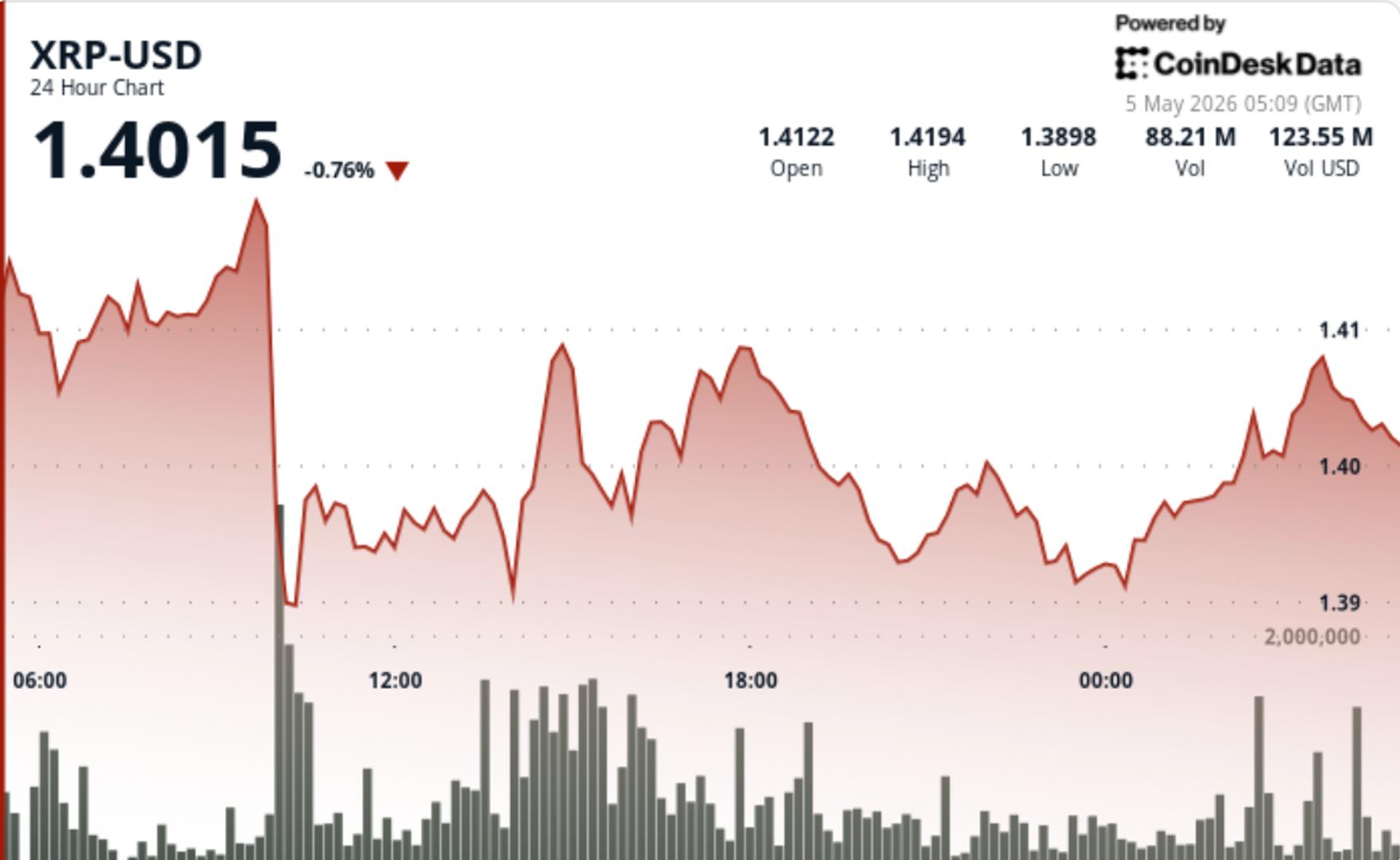
XRP slipped back under $1.40 after a high-volume break earlier in the session, but the lack of follow-through lower keeps price pinned in a tightening range where moves tend to build pressure rather than resolve it immediately.
News Background
• Broader crypto sentiment remained mixed, leaving XRP trading largely on technical structure rather than fresh catalysts.
• The market continues to rotate around key psychological levels, with $1.40 acting as a near-term pivot for positioning.
Price Action Summary
• XRP fell from $1.4109 to $1.3987, breaking below $1.40 on a 103M volume spike.
• Selling pushed price to $1.3865 before stabilizing into a narrow $1.3925–$1.4015 range.
• A late-hour push briefly reclaimed $1.40, but price failed to hold above the level into the close.
Technical Analysis
• The $1.40 level flipped from support to resistance after the breakdown, shifting short-term positioning.
• Volume was concentrated on the move lower, but faded during consolidation, suggesting selling pressure eased.
• Price is now compressing between $1.38 support and $1.41 resistance, with neither side in control.
• Momentum reset sharply during the recent drop, leaving room for expansion once direction resolves.
What traders should watch
• $1.40 remains the pivot. Reclaiming it shifts short-term bias back to upside.
• $1.41–$1.42 is the next resistance zone that needs to break for continuation.
• $1.38 is the floor. Losing it opens a move toward $1.34 and potentially $1.30.
Palantir Technologies (PLTR) reported Q1 2026 revenue of $1.633 billion, up 85% year over year.
The result represents the company’s fastest growth rate and was accompanied by an upward revision of its full-year outlook.
Palantir Q1 Earnings: 85% Revenue Surge, FY26 Guide Hits $7.66 Billion
According to the firm’s Q1 2026 financial results, US revenue doubled to $1.282 billion, a 104% year-over-year increase. US commercial revenue exploded 133% year over year to $595 million.
The US government segment grew 84% to $687 million. GAAP net income hit $871 million on a 53% margin. Furthermore, total contract value reached $2.41 billion, up 61%, and the company closed 206 deals worth $1 million or more. The Rule of 40 score climbed to 145%.
Follow us on X to get the latest news as it happens
Chief Executive Alex Karp positioned Palantir alongside semiconductor giants powering the AI buildout.
“We have shattered the metric, a feat matched only by other fellow AI infrastructure companies: NVIDIA, Micron, and SK hynix,” Karp said.
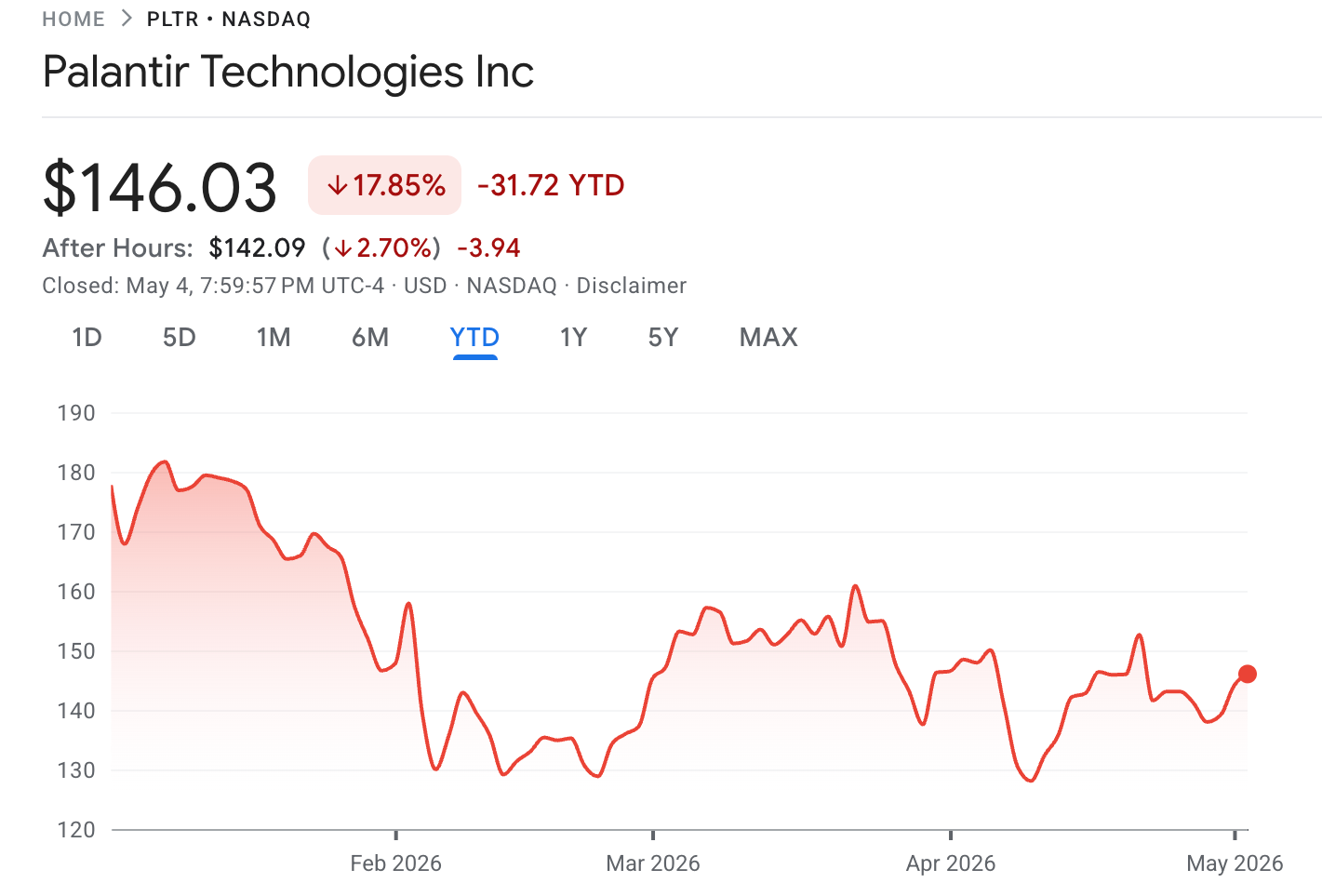
Stock reaction stayed mixed. PLTR closed at $146.03, up 1.36%. However, shares slid 2.70% to $142.09 after hours. Overall, Palantir shares are down 17.8% in 2026.

The stock slump did not deter Karp from raising the bar. Citing accelerating US demand, the CEO lifted FY 2026 guidance to 71% growth, 10 points above the prior outlook.
“We are raising our revenue guidance to between $7.650 – $7.662 billion,” the press release read.
Palantir also lifted US commercial revenue guidance above $3.224 billion, implying annual growth of at least 120%. Adjusted operating income guidance moved to a range of $4.440 billion to $4.452 billion.
Adjusted free cash flow projections climbed to between $4.2 billion and $4.4 billion. In addition, the firm said it expects to deliver GAAP operating income and net income in every quarter of 2026.
Subscribe to our YouTube channel to watch leaders and journalists provide expert insights
The post Palantir Shatters Records With 85% Q1 Revenue Surge, Raises FY26 Outlook appeared first on BeInCrypto.
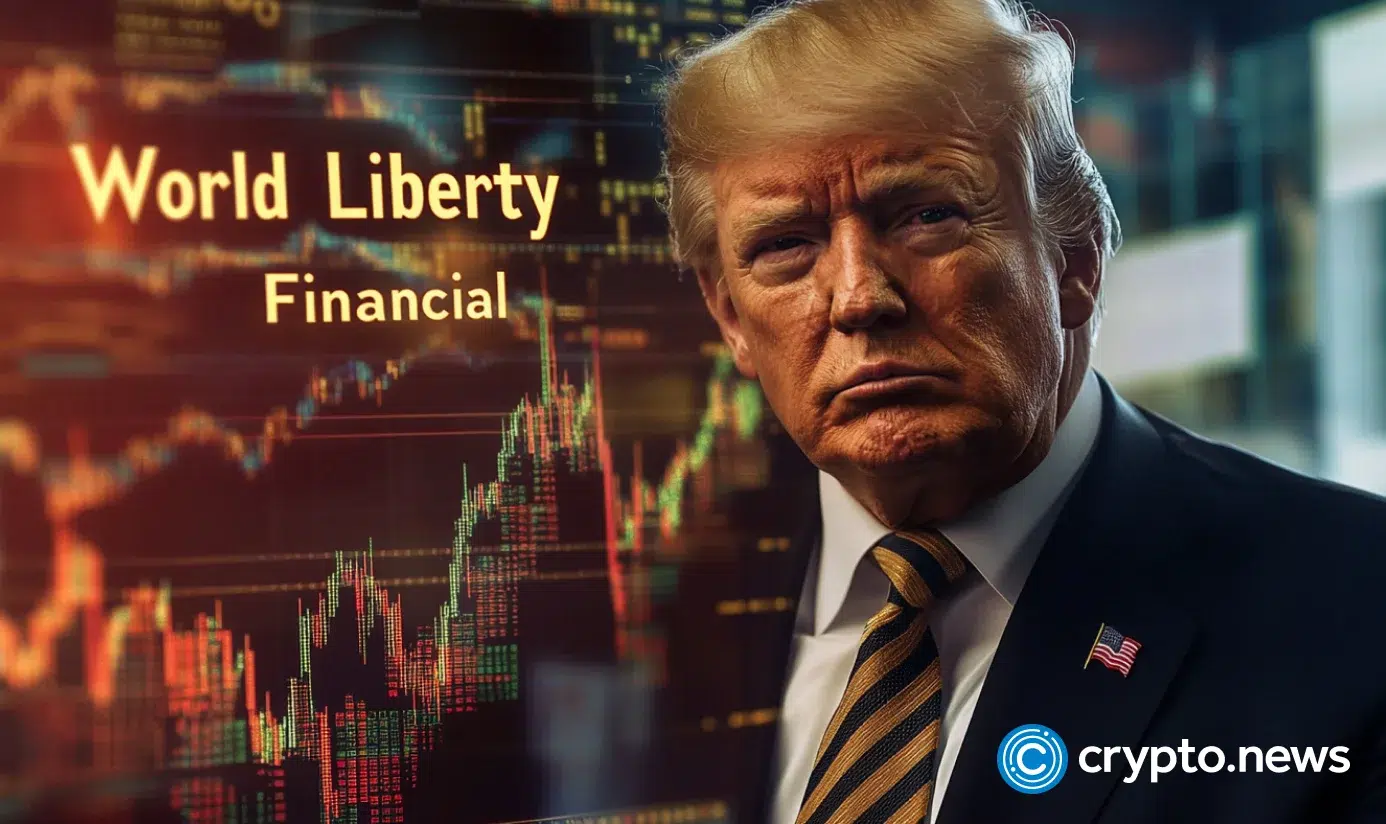
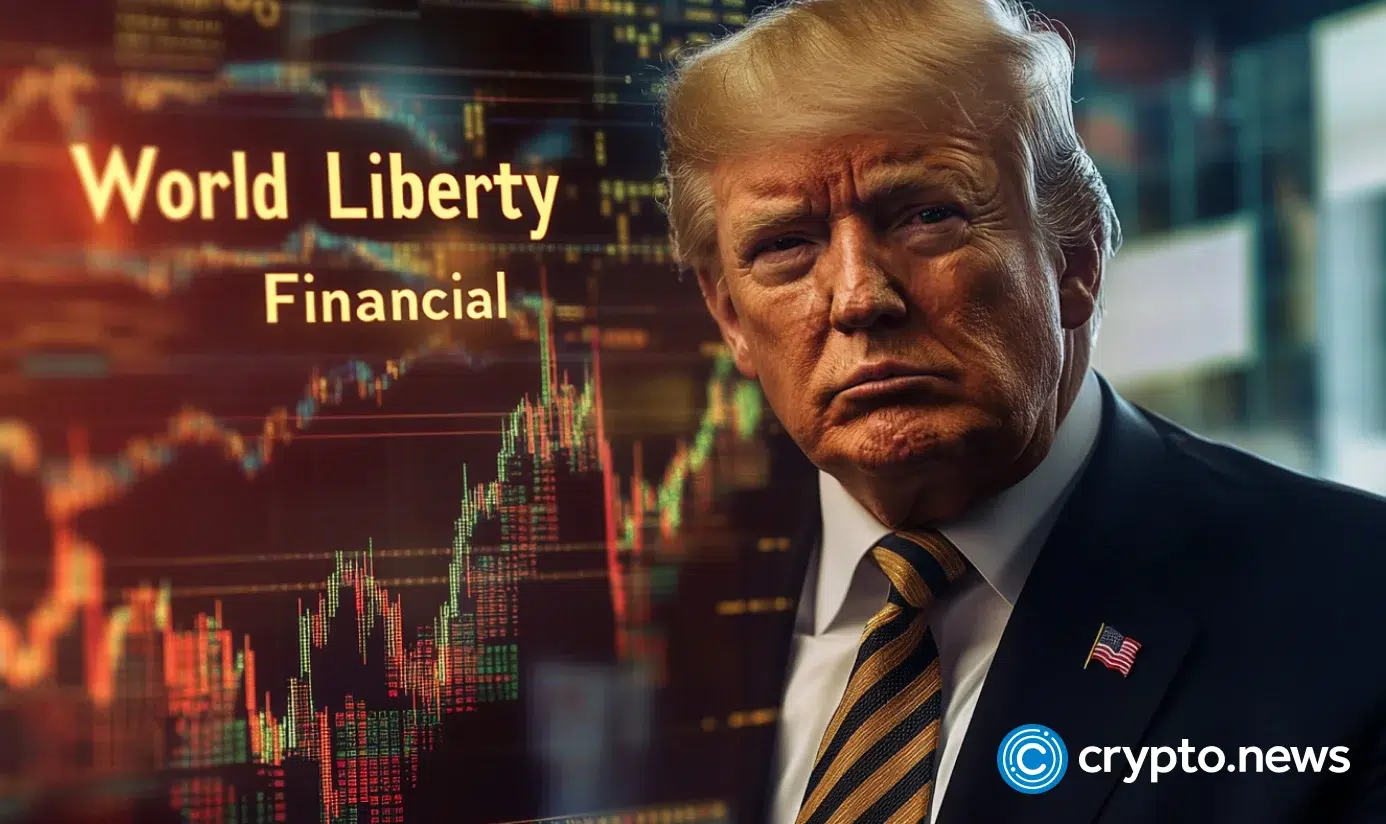
World Liberty Financial said it is filing a lawsuit against Tron founder Justin Sun for defamation. The project announced the case in a thread on X and accused Sun of running a media campaign against the WLFI token project.
Summary
- WLFI says Justin Sun defamed the project after tokens linked to his entities were frozen.
- Sun previously sued WLFI, claiming the project froze tokens and removed his governance rights unfairly.
- The dispute now includes competing lawsuits, blacklist claims, governance concerns, and public online defamation allegations.
WLFI claimed Sun spread false statements after the project froze tokens linked to his entities. The team said Sun refused to stop after it challenged his claims. It also alleged that his comments aimed to damage the project’s reputation and token value.
According to WLFI, Sun’s entity, Blue Anthem, bought WLFI tokens in November 2024. The project later said Sun-linked entities carried out prohibited transactions, including transfers of WLFI tokens to Binance.
WLFI said it used its right to freeze the tokens to protect the ecosystem. The project stated that the freeze function was allowed under its Terms of Sale and Sun’s own agreements. It also said the governance process remains transparent and community-based.
WLFI rejects claims over governance and controls
The project said Sun accused it of adding backdoors, harming governance, and treating holders unfairly. WLFI denied those claims and said Sun used public posts, influencers, and bot activity to spread his position.
WLFI wrote that Sun called its governance a “scam” and accused the project of treating the community as an “ATM.” The project said those claims were false and damaging. It also said the dispute raises wider questions about trust in decentralized finance.
Sun had already sued World Liberty
The new lawsuit follows earlier legal action from Sun against World Liberty Financial. As we reported in April, Sun said he filed a case in a California federal court after the project allegedly froze his WLFI tokens and blocked his governance voting rights.
Sun said the freeze removed his ability to vote and threatened his holdings. He stated, “They wrongfully froze all of my tokens, stripped me of my right to vote on governance proposals, and have threatened to permanently destroy my tokens by ‘burning’ them.”
Additionally, the dispute also grew after Sun claimed WLFI contracts included an undisclosed blacklisting function. He alleged that the function could “freeze, restrict, and effectively confiscate” investor tokens. World Liberty rejected the claim and warned that legal action could follow.
Sun has said his lawsuit does not change his support for President Donald Trump or the administration’s crypto policy. He said his complaint targets individuals linked to the project, not Trump himself.


The Depository Trust & Clearing Corporation plans to start limited production trades of tokenized securities in July 2026.
Summary
- DTCC plans July tokenized securities pilots before targeting a full service launch in October 2026.
- Over 50 TradFi and DeFi firms joined DTCC’s working group, including BlackRock, Circle and Ondo.
- Initial tokenized assets may include major index ETFs, Russell 1000 stocks and U.S. Treasury securities.
The post-trade market infrastructure group aims to launch the full DTC tokenization service in October 2026.
DTCC said the service will cover real-world assets held in DTC custody. The firm said tokenized assets should carry the same rights, investor protections and ownership claims as securities held in traditional form. DTC currently provides custody and asset servicing for more than $114 trillion in securities.
Wall Street and DeFi firms join design work
The DTCC Industry Working Group includes more than 50 firms from traditional finance and crypto. The list includes BlackRock, Goldman Sachs, J.P. Morgan, Morgan Stanley, Bank of America, Circle, Fireblocks, Robinhood, Ondo Finance, Ripple Prime, NYSE Group, Nasdaq and Payward, Kraken’s parent company.
The group brings together asset managers, banks, trading venues, custodians, brokers and blockchain service providers. DTCC said it will use their feedback to test technical workflows, market readiness and the use of tokenized assets in a live production setting.
Additionally, DTC received a no-action letter from the U.S. Securities and Exchange Commission in December 2025. The letter allows DTC to offer a defined tokenization service for DTC participants and their clients for three years.
The approval covers a set of highly liquid assets. These include Russell 1000 constituents, ETFs that track major indexes, U.S. Treasury bills, Treasury notes and Treasury bonds. The July phase will remain limited as DTCC tests operations before the planned October launch.
Tokenization push moves closer to core markets
DTCC President and CEO Frank La Salla said, “Our vision is coming to fruition.” Brian Steele, DTCC managing director and president of clearing and securities services, said the service is “designed to provide systemic scale where deep liquidity already lives.”
The plan comes as tokenized real-world assets keep drawing attention from banks, asset managers and crypto firms. RWA.xyz data showed tokenized stocks rising from $375.4 million in May 2025 to about $1.21 billion in May 2026.
Ondo Finance’s role adds another crypto-focused participant to the working group. A crypto.news report said DTCC had selected Ondo alongside BlackRock, Goldman Sachs, J.P. Morgan, Circle and other firms to help shape how equities and Treasuries move on-chain.
DTCC is not building a separate crypto market. Its stated plan keeps custody, ownership rights and investor protections tied to existing securities infrastructure. The October target now gives banks, brokers and tokenization firms a clear schedule to test whether blockchain-based settlement can fit within U.S. market rules before the service moves beyond its trial stage.


Ripple is now contributing exclusive threat intelligence on DPRK (Democratic People’s Republic of Korea) cyber actors to Crypto ISAC, a nonprofit organization that helps crypto companies share security information and defend against cyber threats targeting digital assets.
The intelligence covers domains, wallets, and indicators of compromise from active DPRK hack campaigns. It also includes enriched profiles of suspected North Korean IT workers trying to embed themselves inside crypto firms.
Drift Hack Triggered Industry Reckoning
The Drift hack served as a wake-up call for the sector. Attackers spent months building trust with Drift contributors. They later deployed malicious software that compromised devices and bypassed traditional indicators of compromise.
The intruders manipulated individuals to seize control of multisig wallets and steal funds.
The same pattern has appeared at crypto and traditional financial firms. North Korean threat actors are operating from inside organizations rather than relying on smart contract exploits.
Crypto ISAC characterized the campaign as social engineering at a new level. The piece raised the central question of how to detect someone who appears to be a trusted partner.
Inside the DPRK Threat Intelligence Feed
The contributed data ranges from fraudulent domains and wallets to indicators of compromise from active DPRK operations.
Each profile of a suspected DPRK worker includes a LinkedIn account, an email, a location, and a contact number. The data also captures signals tying that individual to a wider campaign.
Ripple, Coinbase, and other Founding Members are integrating the data through Crypto ISAC’s new API. The system normalizes indicators across Web2 and Web3 environments and feeds directly into member security operations.
“For too long, information sharing was seen as optional. Today, it is the gold standard for security,” Justine Bone, Executive Director, Crypto ISAC said.
Why Collective Defense Matters
A threat actor who fails one company’s background check often applies to three more firms the same week. Crypto ISAC says that without shared intelligence, every defender facing Lazarus tactics starts from zero.
Jeff Lunglhofer, Coinbase Chief Information Security Officer, said the data model preserves context and confidence rather than raw indicators.
The model still has to scale across more member firms. Whether it outpaces incidents like the Kraken infiltration attempt will depend on adoption.
Ripple’s contribution builds on its broader security push at the company. The move signals a shift toward shared defense in the digital asset industry. The coming months should reveal whether other major exchanges and protocols follow suit.
The post Ripple Just Made It Harder for North Korea to Hide Inside Crypto Firms appeared first on BeInCrypto.

‘Disgusting’ woodland next to recycling centre that’s become a fly-tipping hotspot

China’s carmakers chase ’Yaris moment’ to ignite overseas growth

Haun Ventures adds AI agents to its $1B crypto strategy

Manchester United reach agreement with Casemiro over contract clause amid transfer speculation

US brings back mandatory military draft registration

Steven Gerrard disagrees with Gary Neville over ‘shock’ Chelsea and Arsenal claim | Football


-

 Business6 days ago
Most Commercial Energy Audits Miss the Real Losses
-

 Fashion6 days ago
Kylie Jenner’s KHY Enters a New Era with ‘Born in LA’
-

 NewsBeat1 day ago
Channel 5 – All Creatures Great and Small series 7 new post
-
 Tech3 days ago
Trump’s 25% EU auto tariff breaches Turnberry Agreement that also covers semiconductors and digital trade
-
 Sports3 days ago
Paul Scholes issues Marcus Rashford reality check as agreement emerges over Man United star
-

 Crypto World7 days ago
CFTC’s AI will review U.S. crypto registration applications, chairman tells CoinDesk
-

 Business6 days ago
Barclay Brothers Avoid Bankruptcy: HSBC Drops High Court Petitions After IVA Deal
-
 Business5 days ago
Tesla Officially Registers Elon Musk’s Stock: What Investors Need to Know
-
 Crypto World7 days ago
Robinhood Phishing Scam Exploits Gmail Dot Feature to Bypass Security
-

 Tech7 days ago
Get Ready for More Brain-Scanning Consumer Gadgets
-

 Crypto World7 days ago
Gmail Dot Trick Underpins Robinhood Phishing, Sending Real-Looking Emails
-

 Business4 days ago
Two Powerball Tickets Split $143 Million Jackpot in Indiana and Kansas
-

 Tech5 days ago
Texas Instruments made a new flagship graphing calculator: the TI-84 Evo
-
 Crypto World4 days ago
CoreWeave (CRWV) Stock Climbs 8% Despite $45M Insider Share Dump
-
Business2 days ago
Winning Numbers Drawn as Jackpot Resets to $20 Million
-

 Tech7 days ago
Robinhood account creation flaw abused to send phishing emails
-
Crypto World5 days ago
Securitize and Computershare Enable Tokenized Equity Issuance for Over 25,000 U.S.-Listed Stocks
-

 Crypto World5 days ago
Gibraltar Proposes Tokenized Funds Regulation to Bolster Compliance
-
 Fashion2 days ago
Mary J. Blige Vegas Residency Looks: Crystal-Embellished Fjolla Haxhismajli, Todd Fisher, and More!
-
 Tech5 days ago
Official SAP npm packages compromised to steal credentials
You must be logged in to post a comment Login