
Connect with us

NewsBeat

How a digital dragnet is powering Trump’s immigration crackdown

Published

on

How a digital dragnet is powering Trump’s immigration crackdown

Luis Martinez was on his way to work on a frigid Minneapolis morning when federal agents suddenly boxed him in, forcing the SUV he was driving to a dead stop in the middle of the street.

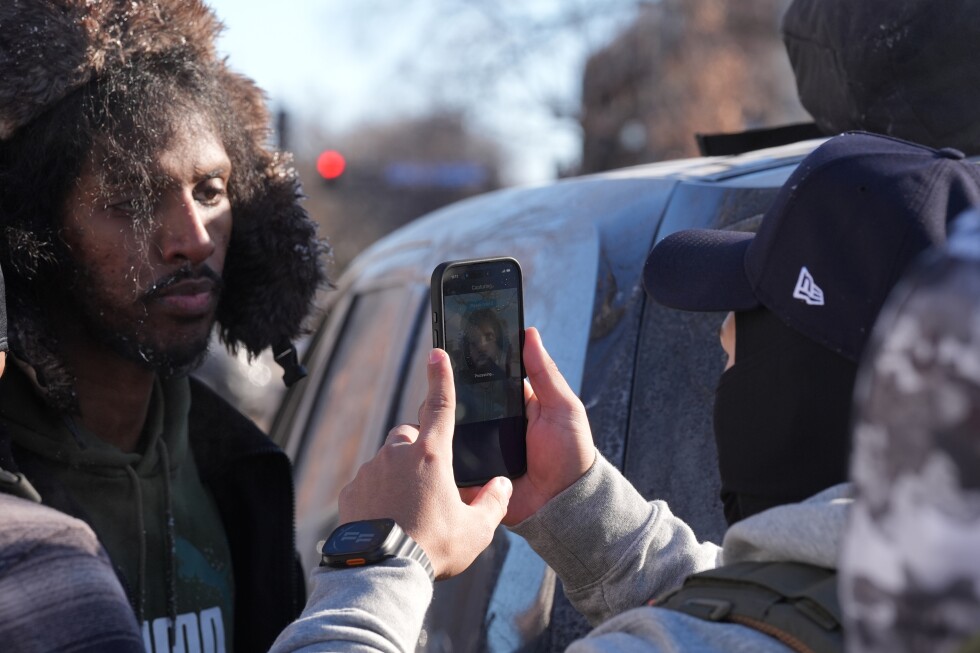
Masked agents rapped on the window, demanding Martinez produce his ID. Then one held his cellphone inches from Martinez’s face and scanned his features, capturing the shape of his eyes, the curves of his lips, the exact quadrants of his cheeks.

All the while, the agent kept asking: Are you a U.S. citizen?

The encounter in a Minneapolis suburb this week captures the tactics on display in the Trump administration’s immigration crackdown in Minnesota, which it describes as the largest of its kind and one that has drawn national scrutiny after federal agents shot and killed two U.S. citizens this month.

Advertisement

Across Minnesota and other states where the Department of Homeland Security has surged personnel, officials say enforcement efforts are targeted and focused on serious offenders. But photographs, videos and internal documents paint a different picture, showing agents leaning heavily on biometric surveillance and vast, interconnected databases — highlighting how a sprawling digital surveillance apparatus has become central to the Trump administration’s immigration crackdown.

Civil liberties experts warn the expanding use of those systems risks sweeping up citizens and noncitizens alike, often with little transparency or meaningful oversight.

Over the past year, Homeland Security and other federal agencies have dramatically expanded their ability to collect, share and analyze people’s personal data, thanks to a web of agreements with local, state, federal and international agencies, plus contracts with technology companies and data brokers. The databases include immigration and travel records, facial images and information drawn from vehicle databases.

In Martinez’s case, the face scan didn’t find a match and it wasn’t until he produced his U.S. passport, which he said he carried for fear of such an encounter, that federal agents let him go.

Advertisement

“I had been telling people that here in Minnesota it’s like a paradise for everybody, all the cultures are free here,” he said. “But now people are running out of the state because of everything that is happening. It’s terrifying. It’s not safe anymore.”

Together with other government surveillance data and systems, federal authorities can now monitor American cities at a scale that would have been difficult to imagine just a few years ago, advocates say. Agents can identify people on the street through facial recognition, trace their movements through license-plate readers and, in some cases, use commercially available phone-location data to reconstruct daily routines and associations.

When asked by The Associated Press about its expanding use of surveillance tools, the Department of Homeland Security said it would not disclose law enforcement sensitive methods.

“Employing various forms of technology in support of investigations and law enforcement activities aids in the arrest of criminal gang members, child sex offenders, murderers, drug dealers, identity thieves and more, all while respecting civil liberties and privacy interests,” it said.

Advertisement

Dan Herman, a former Customs and Border Protection senior adviser in the Biden administration who now works at the Center for American Progress, said the government’s access to facial recognition, other personal data and surveillance systems poses a threat to people’s privacy rights and civil liberties without adequate checks.

“They have access to a tremendous amount of trade, travel, immigration and screening data. That’s a significant and valuable national security asset, but there’s a concern about the potential for abuse,” Herman said. “Everyone should be very concerned about the potential that this data could be weaponized for improper purposes.”

Facial recognition

On Wednesday, DHS disclosed online that it has been using a facial recognition app, Mobile Fortify, that it said uses “trusted source photos” to compare scans of people’s faces that agents take to verify their identity. The app, which Customs and Border Protection said is made by the vendor NEC, uses facial comparison or fingerprint-matching systems.

The app was in operation for CBP and ICE before the immigration crackdown in the Los Angeles area in June, when website 404Media first reported its existence.

Advertisement

In interactions observed by reporters and videos posted online, federal agents are rarely seen asking for consent before holding their cellphones to people’s faces, and in some clips they continue scanning even after someone objects.

In two instances seen by an AP journalist near Columbia Heights, Minnesota, where immigration officials recently detained a 5-year-old boy and his father, masked agents held their phones a foot away from people’s faces to capture their biometric details.

The technology resembles facial recognition systems used at airports, but unlike airport screenings, where travelers are typically notified and can sometimes opt out, Martinez said he was given no choice.

According to a lawsuit filed against DHS by the state of Illinois and the city of Chicago this month, DHS has used Mobile Fortify in the field more than 100,000 times. The Department of Homeland Security told AP that Mobile Fortify supports “accurate identity and immigration-status verification during enforcement operations. It operates with a deliberately high-matching threshold,” and uses only some immigration data.

Advertisement

Without federal guidelines for the use of facial recognition tools, the U.S. Commission on Civil Rights warned in a September 2024 report their deployment raises concerns about accuracy, oversight, transparency, discrimination and access to justice.

Body-camera footage

Last year, the Trump administration scaled back a program to give Immigration and Customs Enforcement officials body cameras, but administration officials said some agents tied to the fatal shooting of Minneapolis ICU nurse Alex Pretti were wearing them and that footage is now being reviewed.

Gregory Bovino, who was the administration’s top Border Patrol official charged with the immigration crackdown in Minneapolis until Monday, began wearing a bodycam in response to a judge’s order late last year.

Body-camera video could help clarify events surrounding federal agents’ killing of Pretti, who was filming immigration agents with his cellphone when they shot him in the back.

Advertisement

Administration officials shifted their tone after i ndependent video footage emerged raising serious questions about some Trump officials’ accusations that Pretti intended to harm agents.

Emerging technologies

Homeland Security and affiliated agencies are piloting and deploying more than 100 artificial intelligence systems, including some used in law enforcement activities, according to the department’s disclosure Wednesday.

Congress last year authorized U.S. Customs and Border Protection to get more than $2.7 billion to build out border surveillance systems and add in AI and other emerging technologies.

In recent weeks, DHS requested more information from private industry on how technology companies and data providers can support their investigations and help identify people.

Advertisement

Meanwhile, longtime government contractor Palantir was paid $30 million to extend a contract to build a system designed to locate people flagged for deportation. On Wednesday, the Trump administration disclosed it’s using Palantir’s AI models to sift through immigration enforcement tips submitted to its tip line.

DHS has also been exploring partnerships with license-plate reader companies like Flock Safety to expand their tracking capabilities.

Rachel Levinson-Waldman, who directs the Brennan Center for Justice’s Liberty and National Security Program, said more funding for government surveillance tools changes the landscape.

“We are developing these technologies for immigrant enforcement,” she said. “Are we also going to expand it or wield it against U.S. citizens who are engaging in entirely lawful or protest activity?”

Advertisement

___

AP freelance photojournalist Adam Gray contributed to this report from Minneapolis.

___

Contact AP’s global investigative team at [email protected] or https://www.ap.org/tips/

Advertisement

Source link

Advertisement
Continue Reading
Click to comment

Leave a Reply

Your email address will not be published. Required fields are marked *

NewsBeat

after four surprising years, where does it go next? Experts give their view

Published

on

after four surprising years, where does it go next? Experts give their view

Four years ago, on February 24 2022, Russian president Vladimir Putin announced that his forces had begun a full-scale invasion of Ukraine – the reasons for which we have explored here. Within minutes, explosions were heard in major Ukrainian cities as Russian troops flooded across the border.

Russian forces made swift gains, capturing key areas near the capital of Kyiv. But the offensive soon stalled and, by December, Russia had been forced to withdraw its forces and consolidate in the east where the war has ground on ever since.

We asked Stefan Wolff, Tetyana Malyarenko, Scott Lucas and Mark Webber, four regular contributors to the Conversation UK’s coverage of Ukraine, for their take on the most surprising development of the war so far and its likely trajectory from here.

A very traditional war – with added drones

Stefan Wolff, Professor of International Security, University of Birmingham; Tetyana Malyarenko, Professor of International Security, and Jean Monnet, Professor of European Security, National University Odesa Law Academy

Advertisement

For us, the most surprising development remains Moscow’s decision to launch a large-scale ground invasion of Ukraine in the first place. Even though many Russian and western analysts expected a swift Ukrainian defeat, this always seemed unlikely from the perspective of Ukraine.

The mobilisation of Ukrainian society early on in the war testified to this and underlined that there was no realistic scenario under which the Kremlin could swiftly achieve its goals – to oust President Volodymyr Zelensky and “demilitarise” and “denazify” Ukraine.

Much less surprising was Russia’s transition to a war economy and a traditional war of attrition, which became a foregone conclusion as soon as Moscow’s plan for a victory parade in Kyiv within weeks of the full-scale invasion turned out to be a pipe dream.

Combat methods have evolved over the past four years, especially regarding the integration of drones. Russia has exploited drone technology to attack the whole range of critical infrastructure in Ukraine, not just military targets. But the foundation of Russian and then Soviet military doctrine – the use of mass armies and tactics of mass destruction – has remained untouched.

Advertisement

Moving forward, both sides have sufficient resources and external support to maintain the status quo. They will continue to fight each other in the hope of exhausting their opponent. But neither side is likely to reach this point of exhaustion soon. And until it does happen, political, economic and social stagnation in both Russia and Ukraine will continue to take its toll on their citizens.

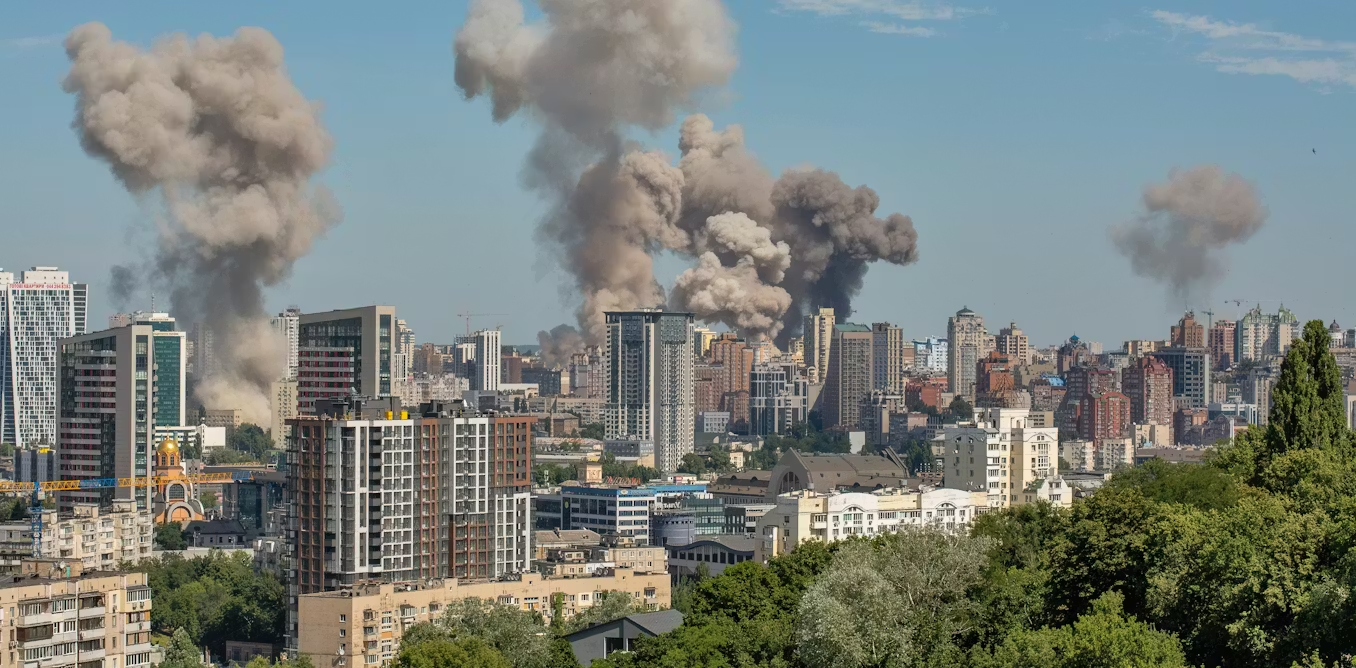
Ukrainian rescuers work at the site of a Russian strike in a residential area in Kyiv on February 22.
Stringer / EPA

Putin’s hopes are pinned on Trump

Scott Lucas, Professor of International Politics, University College Dublin

On the day the war broke out, I was in a discussion group of political and military analysts. When we got the news that Russian special forces had landed at the Hostomel airbase near Kyiv, each of us thought the capital would fall within a few weeks.

However, four years have passed and Ukraine now controls more territory than it did in June 2022. This is despite facing the second-most powerful military in the world, Russia’s disinformation assault and political warfare trying to split Europe, and abandonment by the Trump camp.

Advertisement

The Russian president’s unwillingness to give up his quest for Ukraine as part of a “Greater Russia” and the Trump camp’s willingness to sacrifice Ukrainian and European security are less of a surprise.

Putin made clear in an essay in 2021 that this would be his legacy project. So any soundbites about “peace around the corner” – particularly from Trump’s envoys Steve Witkoff and Jared Kushner – are cynical declarations or wishful thinking.

The Kremlin will not accept less than the seizure of all of the strategic Donetsk region, the rest of the country without effective security guarantees, and the fall of the Zelensky government. Putin cannot accept less because this would be the failure of his project at the cost of 1.3 million casualties and counting.

His hope is that Trump’s envoys will enable him to achieve what he cannot on the battlefield. The Trumpists do not believe in alliance but in transactional relationships, which is why the Kremlin is now dangling joint economic projects in front of the US government.

Advertisement

But, irrespective of this, I see no change in the war’s trajectory in the near future. A negotiated end to the invasion is close to impossible because of the Kremlin’s quest for “victory” through Kyiv’s capitulation. That capitulation is unlikely.

Russia has made only marginal advances on the ground. And Zelensky is maintaining his line over sovereignty, territory and security. Although Ukraine’s energy infrastructure has been seriously damaged, most Ukrainians support continued resistance.

While cumbersome in its support, which has been complicated by pro-Kremlin figures like Hungary’s Viktor Orbán and Slovakia’s Robert Fico, the EU is also stepping up its backing of Kyiv and partially filling the gap that has been left by Trump.

The Kremlin is facing a tightening of economic constraints on its quest. It is cutting social spending and increasing taxes to maintain the war. However, as there has been no widespread public pressure domestically that could curb the Kremlin’s ambitions, the invasion will grind on.
Advertisement
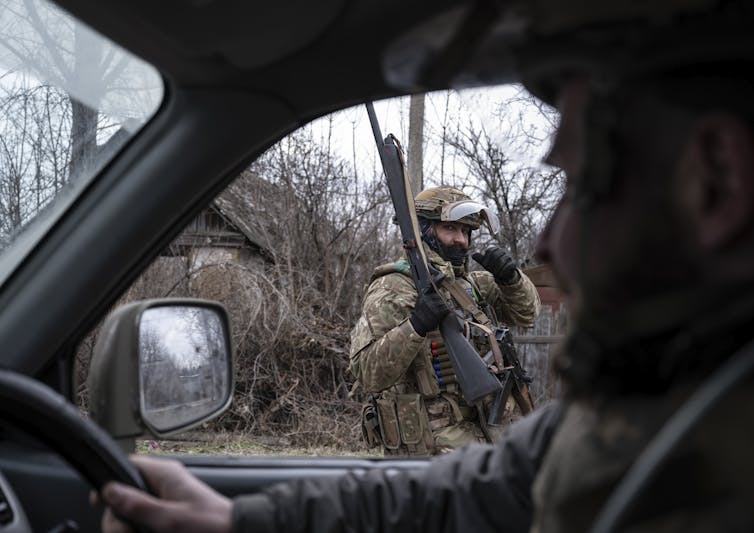
A Ukrainian servicemen stands guard in the Donetsk region.
A Ukrainian servicemen stands guard in the Donetsk region of eastern Ukraine on February 17.
Ukraine’s 93rd Mechanized Brigade Press Service Handout / EPA

Two ways to overcome the stalemate

Mark Webber, Professor of International Politics, University of Birmingham

For me, the biggest surprise so far has been the resilience and adaptability of the Ukrainian war effort. Most observers, myself included, assumed in 2022 that the Ukrainians would buckle under the Russian onslaught.

Nato-led training programmes have undoubtedly been important for Ukrainian defenders. But seemingly more vital has been the determination provided by national identity. Putin’s 2022 claims that Ukraine had been committing genocide against Russian speakers and that its government was a neo-Nazi dictatorship were both spurious and counterproductive.

I too believe Russia’s war methods in Ukraine were grimly predictable. Waves of infantry assaults designed to overwhelm defences through sheer volume have been a recurring strategy in previous Russian military campaigns in Chechnya, Georgia and Syria.

But this strategy has resulted in a stalemate in Ukraine with the frontlines effectively frozen. There are two things that could alter this. The first is a change of approach by China, which has effectively subsidised Russia’s war effort through technology transfers and energy purchases.

Advertisement

Beijing could cut off some of the technology it provides Russia and exert pressure on Moscow to encourage flexibility in the peace negotiations. But, at present, it has no interest in abandoning Russia. Their alliance is a way of balancing the US and Nato in the global competition for influence.

The second possible agent of change is a massive armament effort on behalf of Ukraine. This would require Germany, France and Britain to boost already significant arms provisions and to allow their use in a manner that is not constrained by fears of escalation.

However, this scenario also seems unlikely. These three countries lack the domestic political imperative to back Ukraine to victory. And the US, which was overly cautious even under the presidency of Joe Biden, has now left the field of battle.
Advertisement

Source link

Continue Reading

NewsBeat

Prominent Russian scholar detained and ‘blacklisted’ in Latvia minutes before delivering lecture on North Korea

Published

on

Prominent Russian scholar detained and ‘blacklisted’ in Latvia minutes before delivering lecture on North Korea

Andrei Lankov, a prominent Russian scholar on North Korea who teaches at a Seoul university, was detained in Latvia while delivering a lecture, Russian media reported.

Mr Lankov confirmed to multiple news agencies that he was detained by Latvian police just minutes before delivering a lecture on North Korea and placed on a blacklist by the country’s authorities.

Mr Lankov said police officers took him to an immigration office and then placed him in a car that took him to the border with Estonia. He was eventually expelled from the country.

At around 11pm Moscow time, Mr Lankov said that he was still being held, adding that lawyers were working on his case and friends were helping with logistics.

Advertisement

“About thirty minutes before the event, police and immigration came and told me that the foreign ministry of Latvia included me on its list of undesirable people,” he told NK News.

While Latvian authorities haven’t issued an official clarification, Me Lankov believes it could be related to his views on North Korea. “I believe they see my writing style as excessively objective and they see it as a problem,” he said. “I say positive things about North Korea sometimes, and when negative, not in a hysterical style.”

Officials at South Korea’s Kookmin University, where Lankov is a professor of history, said they were trying to assess the situation.

Mr Lankov’s lawyer later confirmed that the scholar was blacklisted from the country, however, the designation didn’t prevent him from entering the country, according to the Russian Anti-War Committee.

Advertisement

“Overall everything is fairly clear. The authorities do not like the fact that I refuse to turn real-life situations into politically convenient caricatures,” the scholar said in a post on Telegram.

A native of Leningrad, now called St Petersburg, Mr Lankov lived for years in North Korea as an exchange student in the 1980s and has studied the country throughout his career. In the 1990s, he worked in South Korea and Australia, and since 2004 has taught in Seoul. He holds dual Russian and Australian citizenship.

Mr Lankov has been known for his realist view of North Korea, which he often describes as a Machiavellian regime squeezing limited resources and manipulating major powers to ensure its survival. He has also expressed critical views of Russia’s war in Ukraine and Moscow’s use of North Korean troops to sustain its campaign.

In April 2025, a court in Moscow reportedly fined him 10,000 rubles (£92) for taking part in the activities of an organisation that had been recognised as “undesirable” in Russia. Mr Lankov told RBK at the time that he learned about the case from journalists.

Advertisement

Source link

Continue Reading

NewsBeat

Northumbria officer who sent sexual text struck off

Published

on

Body found in search for missing Sunderland woman Jean, 83

PC Steve Newman sent a message to the fellow officer “out of the blue” in the early hours saying he wanted to have “pure sweaty, breathtakingly great sex” with her in October 2023.

A misconduct hearing at Houghton Le Spring Police Station ruled his comments were inappropriate and amounted to sexual harassment.

A month later at a Northumbria Police work Christmas party he started to make complimentary comments about her to another colleague who she was dating, then “took hold of the back of [her] head, pulled her towards [him], and kissed her on the forehead”.

Advertisement

The woman, who is referred to only as Officer A, said she was left “shocked” PC Newman had texted her in the early hours of the morning making “sexually explicit suggestions out of the blue”.

She told the hearing she “could not believe the audacity” of PC Newman, adding she “would not touch [him] with a bargepole”.

Officer A stated her relationship with PC Newman was “strictly work based” and the pair did not see each other outside of it.

She told the three-day hearing how on October 30, 2024, Newman had approached her at work asking if she was attending the Christmas party. He then asked if she had a partner within the police force, which she did not want to disclose. When PC Newman went to leave, she said he turned and shouted across the room, “Well, I’ll book a taxi early so that we can go back to yours”.

Advertisement

Officer A said she saw this as a sexual advance and felt “mortified” and “wanted the ground to swallow [her] up.”

While at the Christmas party a month later, Officer A said Newman approached her and her partner on the dance floor, saying “you look lovely in your dress”, which made her feel “very uncomfortable”.

The hearing heard how Newman then grabbed Officer A around the back of the head and kissed her on the forehead.

The woman said she was “disgusted” by his behaviour, and that Newman had “sexually assaulted [her] in front of [her] partner.”

Advertisement

She said the events with Newman had emotionally impacted her and her career.

PC Newman told the hearing that he “thought he had a friendship” with the woman, and that she had previously “confided in him” about personal information.

He also said he was a “very huggy person”, who would greet colleagues with “hello, you’re looking handsome” or “all reet bonny lass”. 

During the hearing, he accepted the content of the message was sent “to see if there was any interest in anything purely sexual”.

Advertisement

PC Newman also said he sent it because “shy bairns get nowt”.

He said he kissed Officer A on the forehead as he is “very huggy with both male and female friends.”

He also admitted in evidence that he did have a sexual interest in Officer A, had always been attracted to her, and he was “testing the waters”.

The panel stated the case was of a high seriousness, and his actions amounted to sexual harassment.

Advertisement

It said immediate dismissal without notice was the only proportionate sanction.

PC Newman will also be placed on the College of Policing’s barred list.

Source link

Advertisement
Continue Reading

NewsBeat

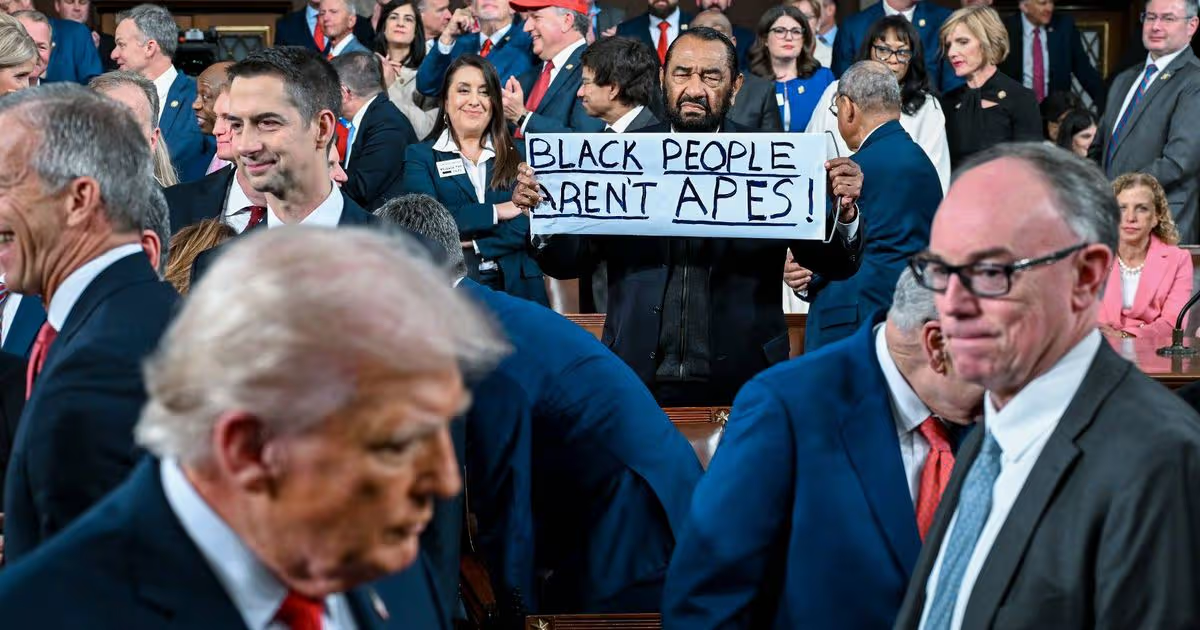
Trump faced with ‘black people aren’t apes’ sign before key address to nation

Published

on

Daily Record

Democrat Rep. Al Green held up a sign reading “black people aren’t apes” as Trump gave his State of the Union speech

Donald Trump faced a powerful protest as he delivered his State of the Union address this evening, with a placard declaring “black people aren’t apes” confronting him.

Advertisement

Democratic Representative Al Green brandished the sign as Donald Trump entered the House of Representatives chamber for the yearly speech to a joint congressional session tonight. He was subsequently removed from the chamber during proceedings, reports the Mirror..

Rep. Green was ejected from Trump’s joint address to Congress the previous year after shouting at the President in opposition to Medicaid reductions.

Ensure our latest stories always appear at the top of your Google Search by making us a Preferred Source. Click here to activate or add us as your Preferred Source in your Google search settings.

This year’s demonstration relates to footage Trump shared on his Truth Social platform earlier this month, which portrayed Barack and Michelle Obama as apes. Trump maintained he hadn’t viewed the entire video before directing an assistant to publish it on his account.

Advertisement

Several Democratic congresswomen turned up to the address dressed in ‘suffragist’ white to demonstrate solidarity with women’s rights.

Rep. Teresa Leger Fernández of New Mexico, who leads Democratic Women’s Caucus, told CBS News: “This year, there are specific attacks on women’s ability to vote. The Democratic Women’s Caucus is wearing white both to honor that fight that women have always had and to signal we are still in the fight.”

Certain members of Congress are boycotting this evening’s address, following guidance from Democratic leadership encouraging them to absent themselves rather than create disruption through attention-seeking protests.

Advertisement

Trump enters the State of the Union facing the most damaging approval figures of any president in recent memory. A Washington Post/ABC News survey this week revealed 60% of Americans expressed dissatisfaction with Trump’s performance – with 47% registering strong disapproval.

A mere 39% voiced approval of his work, marking the weakest rating for any President approaching a second-year State of the Union in contemporary times.

Trump’s disapproval last touched 60% in the immediate aftermath of the January 6th Insurrection during the closing days of his initial presidency.

Scarcely 29% of Americans believe the nation is progressing positively, the latest AP-NORC survey indicates. The majority, 69%, reckon matters are deteriorating.

Advertisement

This gloom exceeds levels recorded when Trump assumed office last year. Last March, roughly 6 in 10 Americans felt the country was moving in the wrong direction.

That’s partly down to Republicans’ outlook becoming considerably bleaker last autumn, following the assassination of conservative activist Charlie Kirk. Whilst Republicans have regained some optimism in recent months, only around six in 10 now believe the country is on the right track, compared with approximately seven in 10 last March.

Source link

Advertisement
Continue Reading

NewsBeat

Kynren’s Lost Feather bird show arena set for Bishop Auckland

Published

on

Kynren's Lost Feather bird show arena set for Bishop Auckland

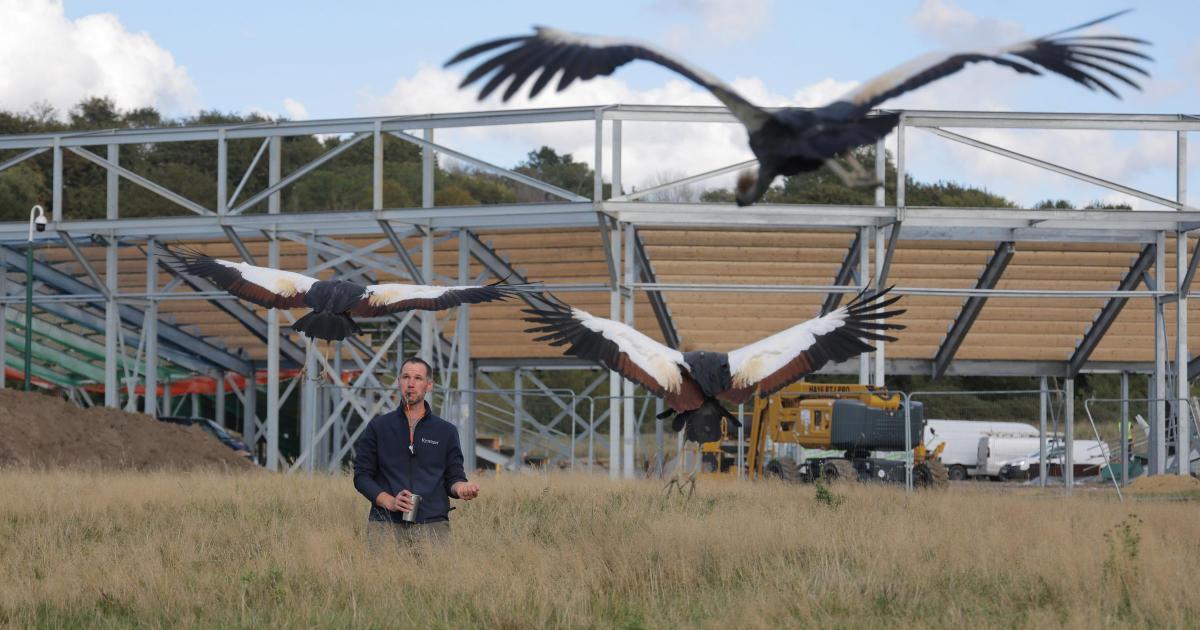
The ‘Lost Feather’ is a bird’s-nest-inspired structure is aiming to be a UK-first mass experience with more than 250 birds.

Birds will perform across the arena, which is being developed by leading avian specialists and will also include a lake and a hillside stage. It is part of Kynren’s Storied Lands theme park, which is set to open this year.

Anna Warnecke, the chief executive of Kynren, said: “The Lost Feather represents one of the boldest creative statements we have ever made.

“What is now rising from the ground is more than an arena – it is a space designed to move people emotionally and leave a lasting impression.”

Advertisement

An artist’s impression of the arena. (Image: KYNREN)

The project comes with a focus on educating the audience about conservation and the relationship between humans and birds.

The production plans to increase public understanding of the need to protect bird species both locally and globally.

Timber has arrived for the next stage in the construction of Kynren – The Storied Lands. (Image: North News & Pictures Ltd)

Kynren’s theme park is currently under construction in Bishop Auckland. (Image: KYNREN)

With their experience in conservation organisations and free-flight programmes, the specialists are ensuring the attraction is more than just a performance space.

The Lost Feather will form part of Phase One of The Storied Lands.

Advertisement

The extension will also host other live-action shows, including a medieval horse show, a Viking show, and ‘Legend of the Wear’, a retelling of the Lambton Worm myth.

Source link

Advertisement
Continue Reading

NewsBeat

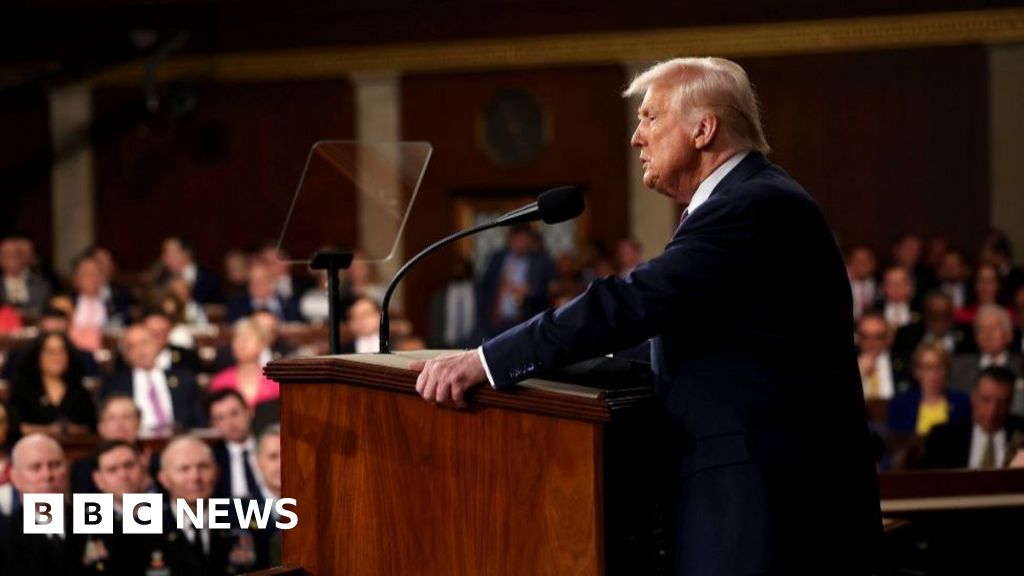
Trump to address a changed America at vital moment for his presidency

Published

on

Trump to address a changed America at vital moment for his presidency

In just over eight months, voters will pass judgement on Trump’s second presidential term in November’s midterm elections. They could preserve his Republican majority in Congress or hand power to the Democrats, assuring two years of legislative gridlock and aggressive oversight that could, in his own words, see him impeached once again.

Source link

Continue Reading

NewsBeat

Eric Ramsay: West Bromwich Albion sack head coach after nine games

Published

on

England captain Harry Brook celebrates his century against Pakistan

Ramsay joined West Brom following a spell in Major League Soccer with Minnesota United, who he led to back-to-back Conference play-off semi-finals.

Prior to his move to the United States, the Shrewsbury-born Welshman was a first-team coach at Manchester United under Erik ten Hag and took on an assistant coach role with the Wales men’s team.

However, his time at The Hawthorns began with 3-2 loss to Middlesbrough before a 5-0 thrashing by Norwich – the club’s biggest-ever home defeat outside the top flight.

Albion rescued a late point from a 1-1 draw at Derby to stop the rot and also picked up points from goalless draws against Stoke and Birmingham.

Advertisement

However, they were well beaten by fellow strugglers Portsmouth and knocked out of the FA Cup by the Canaries before Saturday’s defeat by leaders Coventry.

Following the draw against Charlton, the only one in which the team took the lead under Ramsay, he told BBC WM: “The question around my job and the future is never one I can ever answer or attempt to answer.

“I can only do what I can do over the course of a day and put my head on the pillow at night feeling I’ve turned over every stone.

“I’m not saying I’m blameless – I can only feel I’ve controlled what I can control.”

Advertisement

His departure leaves Albion looking for their fourth head coach in 14 months since Carlos Corberan’s departure to Valencia, with Tony Mowbray sacked before the end of last season.

Source link

Continue Reading

NewsBeat

Phoenix Night’s Dave Spikey gifts show fee to charity

Published

on

Phoenix Night's Dave Spikey gifts show fee to charity

Dave, who played Jerry St Clair in Phoenix Nights, which he co-wrote with Peter Kay, handed over his entire box office payment to Rosemere Cancer Foundation, which added up to just shy of £6,300.

Dave, who worked at Royal Bolton Hospital, said: “My fantastic kid brother Peter was diagnosed with Non-Hodgkins Lymphoma when he was 20 and given little chance of survival, but after aggressive chemo and radiotherapy at The Christie, he pulled through.

“He was in remission for over 25 years against all the odds.

Advertisement

“This gave him time to marry and raise two lovely children.

“Sadly, he relapsed with liver cancer, most likely triggered by his aggressive chemotherapy, and attended Rosemere Cancer Centre for scans and treatment.

“I brought him on several occasions because he could no longer drive. He died in 2008 just short of his 50th birthday.”

READ MORE: ‘Blackburn at the BAFTAs’ – Filmmaker joins stars of screen at glittering ceremony

Advertisement

Dave said: “In recent years, I visited a fan, Emma, who was undergoing chemo there and contacted me to ask if I would join her during a session and cheer her up a bit!  

“Emma was a beautiful, vivacious, brave lady with a young family who on the day, turned the tables on me and cheered me up considerably. It was an immense sadness when I learned that she didn’t make it.”

Dave added: “More recently, I have again sat in a chemo session with one of my very best friends ever and once again, was hugely impressed by the upbeat staff, who generate such a welcoming environment and bring smiles to every face despite the underlying worry and sadness of their situations.

“That is all in addition to the wonderful work they do in contributing to research and clinical trials.”

Advertisement

Fundraising manager for Rosemere Cancer Foundation, Sue Swire, met Dave at the theatre prior to his Burnley gig.

She said: “Dave is a lovely gentleman. We are immensely grateful to him for supporting us.

“I know from a colleague who attended the show that Dave gave a great performance and was really funny. He even received a standing ovation from some members of his audience.

“At the end of his set, Dave also did a little tribute to Rosemere Cancer Centre staff, which was very kind of him and much appreciated.”

Advertisement

Among other causes that Dave, who worked for the NHS for 32 years and was Chief Biomedical Scientist in Haematology at the Royal Bolton Hospital before switching to show business full-time 25 years ago, has championed are Chorley’s Derian House Children’s Hospice and Bolton-based domestic abuse charity Endeavour. He also supports a number of animal charities

Source link

Advertisement
Continue Reading

NewsBeat

Co-op at West Park in Darlington to be replaced by Nisa

Published

on

Co-op at West Park in Darlington to be replaced by Nisa

The Co-op at West Park Village in Darlington, is set to shut at the end of March and will be replaced by a Nisa Local store.

Posters were spotted in the window over the weekend (February 22), confirming the change of hands.

The poster states that the current Co-op will finish trading on March 31.

Signs in place at the Co op in West Park, Darlington (Image: STUART BOULTON)

In its place, a Nisa store will open, with posters promising it will be stocked with a range of Co-op essentials.

Advertisement

A spokesperson from the Co-op said ‘careful consideration’ had been taken to sell the store, and that safeguarding local jobs will be prioritised.

Darlington West Park Co op is set to shut next month with Nisa lined up to take its place. (Image: STUART BOULTON)

They said: “Following careful consideration the decision has been taken to sell the store.

“The store is being sold and will remain as a convenience store to serve the community as an independent operator.

“A priority has been to safeguard local jobs and colleagues will transfer to the new owner.”

Advertisement

One of the posters reads: “We’re sorry to be closing.

“But a new Nisa store is coming soon stocked with a range of Co-op essentials.”

Another states: “We’ll be closing our doors on March 31, 2026.”

An official opening date for the new Nisa store has yet to be announced.

Advertisement

Source link

Continue Reading

NewsBeat

The Supreme Court has curbed Trump’s ability to bully his allies. But tariffs were never going to end the US trade deficit

Published

on

The Supreme Court has curbed Trump’s ability to bully his allies. But tariffs were never going to end the US trade deficit

New US tariffs set at 10% have come into effect, days after the country’s Supreme Court blocked the bulk of President Donald Trump’s sweeping import taxes. The shock move came as a major blow to the president’s determination to rebalance US trade and bring manufacturing back home.

For more than 30 years, the United States has been importing substantially more goods and services from the rest of the world than it exports.

In many ways, this trade deficit is a good problem to have. US citizens are among the richest in the world. Every time citizens or governments buy more than they sell, someone must pay the difference. In the US, this deficit is financed by foreign investments and public debt. The US owes the rest of the world US$27.61 trillion (£20.5 trillion) more than it is owed back, a unique position.

Foreign investors are not doing it out of generosity: those US investments have been doing very well, and many countries have been able to sustain export-led industries to a large extent thanks to US deficits. The AI investment boom, for instance, is driven by investors from all over the world betting on the success of a handful of US-based companies.

Advertisement

But cheap imports from the rest of the world have a dark side. They played a major role in the reduction of manufacturing jobs and the social and political consequences – such as the surge of left and rightwing populist movements – that followed. In 2000, 17 million Americans were employed in manufacturing; there are only 13 million now.

The stubborn US trade deficit

At least since the first term of President Barack Obama, the deficit has been seen as a major problem.

Obama’s objective was to encourage US exports by making it easier to sell to foreign markets. But he also pursued a policy of energy independence – the “all of the above” strategy of encouraging fracking, oil extraction and investment in renewables. This strategy has been a tremendous success, to the point where the US now exports more energy than it imports.

But it did not end trade deficits.

Advertisement

Joe Biden took over in the White House and launched two vast programmes aimed at restoring manufacturing jobs. The goal was to use the US position as the global investment destination to steer cash towards states such as Ohio, Indiana or Michigan, which were traditionally reliant on factory jobs.

This led to a boom in green energy and semiconductors. But as it also made Americans richer, they imported more and it did not end trade deficits.

Trump’s two mandates took a more direct approach: taxing imported goods. The first term was haphazard, and tariff wars with China led to higher consumer prices while failing to deliver the political gains he expected.

Advertisement

Trump unveiled his ‘liberation day’ tariffs to the world in April 2025.
EPA/JIM LO SCALZO / POOL

But the second mandate has so far been much more organised, starting with “liberation day”, when he announced he would tax US imports in proportion to the bilateral trade deficit with each country.

Just like those of Obama and Biden, Trump’s strategy did not reduce the deficit – in fact it was higher in 2025 than in 2024. But it has so far been a major success in bullying traditional partners into submission with the threat of tariffs.

Perhaps the most consequential moment was the collective decision of members of the Organisation for Economic Cooperation and Development (OECD) to carve out a US exception to the global minimum tax on multinational companies. This international effort, intended to make the likes of Amazon and Apple pay a fair amount of tax, was designed to apply to the entire world, even without US approval.

The theoretical logic was flawless. If any country does not tax at least 15% of the profit located on its territory, other signatories can tax it instead. But America’s traditional economic partners in the OECD feared Trump enough to grant the US an exemption. It will be the only country allowed to practise tax competition.

Advertisement

As the US Supreme Court has now ruled most of Trump’s tariffs illegal, this may be a turning point in his second presidency.

Trump has not backed down from his claims, but may no longer be able to act on the stroke of a pen, and could be forced to tax all trading partners at a similar rate.

This is undoubtedly great news for countries like Canada, which chose not to bow down to threats, or China, which managed to bring Trump to the negotiating table by systematically retaliating against his threats.

In contrast, the European Union agreed to a deal allowing the US to tax EU imports but not the other way around. As the UK exports far fewer goods to the US than the EU does, it accepted a slightly preferential deal. But pledges to invest billions in the UK as part of the package were cancelled just days after they were announced.

Advertisement

The short-term benefits of signing those asymmetric deals were obvious – after all, no one wins a trade war and tariffs are mostly a tax on the consumers of the importing country. But the long-term reputational costs will be much harder to manage. In an increasingly multipolar and uncertain world, European nations have sent a clear message that they are easy to manipulate with a bit of projected strength.

Source link

Advertisement
Continue Reading

Trending

Copyright © 2025