
Business
Soaring Prices and Shortages Hit Households Amid Hormuz Chaos


SYDNEY — Australia is grappling with its most severe fuel crisis in decades as disruptions from the U.S.-Iran conflict continue to throttle oil supplies through the Strait of Hormuz, driving up prices, emptying service stations and threatening supply chains for food, transport and farming.

As of early May 2026, national average unleaded petrol prices hover around $1.90 to $2.20 per litre after recent relief, while diesel remains elevated near $2.70 to $3.00 per litre in many areas — still well above pre-crisis levels of around $1.60-$1.80 for petrol and $1.80 for diesel. Hundreds of service stations have reported running dry on diesel or unleaded at various points, sparking panic buying in March and April.
The crisis erupted in late February when escalating hostilities disrupted roughly 20% of global oil shipments through the narrow Strait of Hormuz. Australia, which imports about 90% of its liquid fuel needs, found itself exposed after years of declining domestic refining capacity and reliance on Asian imports.
Government Response and Temporary Relief
The Albanese government has taken aggressive steps to stabilize supplies. Fuel excise was halved by 26.3 cents per litre from April 1, providing immediate relief at the bowser but set to expire at the end of June unless extended. The government has underwritten shipments, secured dozens of tankers carrying billions of litres through May and beyond, and relaxed fuel quality standards.
Energy Minister Chris Bowen reported in early April that 53 to 57 ships carrying over 4 billion litres were en route or secured, with additional cargoes from South Korea, Brunei, Malaysia, the U.S. and other sources. National Cabinet meetings have coordinated responses, including tapping reserves and diplomatic pushes in Asia.
Prime Minister Anthony Albanese has warned of “real uncertainty,” stating the worst of the crisis may still lie ahead despite some easing in petrol prices. He has not committed to extending the excise cut in the upcoming federal budget.
Impact on Daily Life and Economy
The crisis has hit hardest in regional and rural areas, where diesel powers trucks, farms and mines. The National Farmers’ Federation has warned of potential food price increases up to 50% as transport and fertiliser costs soar. Truck drivers face margin squeezes, with calls to extend zero road user charges for heavy vehicles.
Inflation jumped to 4.6% in March, driven largely by fuel, raising fears of further Reserve Bank interest rate hikes and even recession risks if shortages persist. Households are feeling the pinch at grocery stores and petrol pumps, while businesses pass on higher logistics costs.
Panic buying in March led to empty pumps at more than 500 stations nationwide at peak times. While numbers have improved, distribution bottlenecks remain. Airlines and mining operations have also faced jet fuel and diesel pressures.
Long-Term Vulnerabilities Exposed
Experts say the crisis highlights decades of underinvestment in fuel security. Australia once had eight refineries producing nearly all its needs; now only two remain, and domestic oil production is at historic lows. Reliance on just-in-time imports from Asia left the nation vulnerable when Hormuz shipments slowed.
Defence and energy analysts have long warned of this exposure. The International Energy Agency has engaged with Canberra, coordinating global stockpile releases, but Australia’s stockpiles — around 30-39 days for key fuels — provide limited buffer.
Opposition figures and commentators have criticized the government for inadequate preparation, while calls grow for strategic reserves, more domestic refining and diversified sources. Some have even suggested exploring alternative suppliers, though geopolitics complicates options.
Signs of Easing and Lingering Risks
Recent weeks have brought cautious optimism. Petrol prices in major cities have fallen toward pre-war levels in some spots thanks to the excise cut and arriving shipments. However, diesel prices remain stubbornly high, and analysts predict renewed spikes if Hormuz tensions flare or new shipments delay.
Regional oil benchmarks like Tapis crude have hit wartime highs near $125 per barrel. Global competition for Asian refinery output has intensified, with Singapore and others prioritizing their own needs.
The government continues bilateral talks with trading partners and monitors the fragile ceasefire in the Middle East. Any breakdown could rapidly worsen shortages.
Broader Implications for Australia
The fuel crisis has exposed deeper economic vulnerabilities in a nation heavily dependent on imports for energy security. It threatens cost-of-living pressures already straining households and could slow post-pandemic recovery. Farmers, truckers and logistics firms are particularly vocal about the need for longer-term policy shifts.
As the May 2026 budget approaches, pressure mounts on Treasurer Jim Chalmers to address fuel relief, inflation and energy resilience. Environmental advocates see an opportunity to accelerate renewables and reduce oil dependence, while industry groups push for investment in refining and storage.
For ordinary Australians, the crisis means higher grocery bills, more expensive road trips and uncertainty at the pump. Many have adjusted by carpooling, using public transport or cutting non-essential travel. Yet the underlying fragility remains: without sustained global stability or major domestic reforms, similar shocks could recur.
As shipments continue arriving and diplomats work behind the scenes, Australians are watching closely. The coming weeks will determine whether current relief holds or if tighter supplies and higher prices return, testing the government’s crisis management and the nation’s energy resilience in an increasingly volatile world.


The year-ago performance was impacted by a one-time charge linked to CEO Vijay Shekhar Sharma relinquishing his employee stock options. Revenue from operations for the quarter rose 18% year-on-year (YoY) to Rs 2,264 crore.
Paytm also reported a positive EBITDA of Rs 132 crore, versus a loss of Rs 88 crore a year earlier, though it was lower than the Rs 156 crore reported in the December quarter.
EBITDA margin came in at 6%, compared with a negative 5% in the corresponding period last year. The company said comparable EBITDA, excluding UPI and PIDF incentives, improved by Rs 330 crore year-on-year, indicating stronger underlying profitability.
Paytm shares: Should you buy, sell or hold?

Jefferies has maintained a Buy rating on Paytm with a target price of Rs 1,350, an upside of 22% from current levels. The brokerage said revenue momentum helped offset the impact of missing UPI incentives during the quarter.
The Wall Street major highlighted that revenue growth of 18% was driven by the financial services business and came despite the absence of both PIDF and UPI incentives.The brokerage added that Paytm’s strong revenue momentum could continue to support earnings even amid risks related to UPI incentives.
Bernstein has maintained its “Outperform” rating on Paytm with a target price of Rs 1,500. Looking ahead, Bernstein expects non-linear EBITDA expansion over FY26-30, driven by revenue growth of over 20% along with disciplined cost management. The brokerage further noted that indirect expenses remained well controlled, rising 3% sequentially while declining 3% YoY. Payment margin, however, fell to 9 basis points due to the discontinuation of PIDF incentives.
(Disclaimer: Recommendations, suggestions, views and opinions given by the experts are their own. These do not represent the views of The Economic Times)

Check out what’s clicking on FoxBusiness.com.
A major food brand is being sued over claims it falsely marketed its canned tomatoes as premium “San Marzano” products.
Cento Fine Foods, based in New Jersey, is facing a proposed class action lawsuit claiming it misled consumers by labeling its tomatoes as “certified” San Marzano despite allegedly failing to meet the strict standards associated with the variety, according to a May 4 complaint filed in federal court in California.
“San Marzano tomatoes are considered the Ferrari or Prada of canned tomato varieties,” the lawsuit states, quoting Martha Stewart’s website. “Loyalists say they are well worth the higher price tag compared to other Italian or domestically produced options.”
RISING COSTS, LOYAL CUSTOMERS: INSIDE A STATEN ISLAND RESTAURANT EMPIRE

The complaint, filed May 4 in federal court in California, accuses Cento Fine Foods of falsely labeling its tomatoes as “certified.” (U.S. District Court For the Northern District of California)
“San Marzano” refers to both a variety of tomato and a region in Italy where they are traditionally grown. The tomatoes are a type of plum tomato, typically longer and more slender than standard varieties, with a distinct pointed end and fewer seeds, according to Martha Stewart’s website.
Under European Union rules, authentic San Marzano tomatoes carry a “Protected Designation of Origin” (DOP) status — similar to products like Champagne — meaning they must be grown and processed in a designated region of southern Italy and meet strict production standards.
The complaint alleges Cento’s use of “certified” falsely suggests the products are officially recognized San Marzano tomatoes, calling the brand “the primary culprit of this tomato fraud in the United States.”
“Defendant’s claims that its tomatoes are ‘certified’ ‘San Marzano’ tomatoes misleadingly convey that the product is the famous San Marzano tomato certified by and exceeding the standards of Consorzio di Tutela del Pomodoro San Marzano dell’Agro Sarnese-Nocerino when in fact the product does not meet that standard,” the complaint states.
COSTCO RECALLS POPULAR PRODUCT IN 2 STATES OVER POTENTIAL INGREDIENT MIX-UP

San Marzano tomatoes are pictured in Campania, Italy. (DeAgostini/Getty Images / Getty Images)
The plaintiffs say they bought Cento’s San Marzano tomatoes believing they were “authentic.” They allege the products fell short of true DOP standards and say they “would never have purchased Cento San Marzanos” if they had known.
The lawsuit seeks at least $25 million in restitution and changes to Cento’s business practices.
In a statement to “Good Morning America,” an attorney for Cento pushed back on the allegations.
“We believe this claim is entirely without merit. We have previously successfully defended a comparable lawsuit in New York federal court and will defend this claim vigorously as well, including seeking prompt dismissal,” the attorney said.
POPULAR POTATO CHIPS RECALLED DUE TO SALMONELLA FEARS
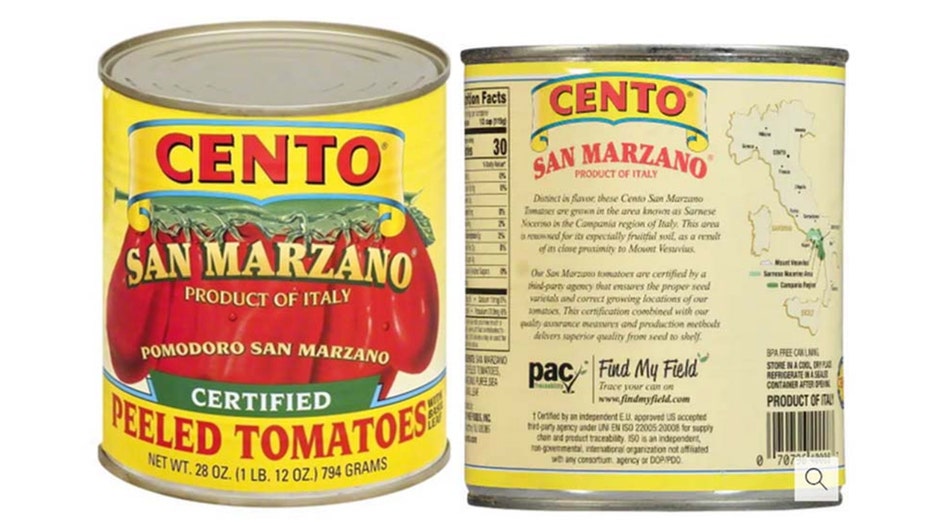
An attorney for Cento pushed back on the allegations. (U.S. District Court For the Northern District of California)
The company has previously faced similar claims. In a 2019 class action lawsuit, Cento said it “refutes” allegations that its tomatoes are not genuine.
“Our fields and farmers are audited by an independent third party in Italy who assures that the tomatoes are grown in the rich fertile soil of Sarnese-Nocerino at the base of Mt. Vesuvius in Campagna,” the company said at the time.
CLICK HERE TO GET FOX BUSINESS ON THE GO
That case was dismissed in 2020, “Good Morning America” reported.
Cento Fine Foods did not immediately respond to FOX Business’ request for comment.

Operator
Good day, and welcome to the Velocity Financial First Quarter of 2026 Results Conference Call. Please note that today’s event is being recorded. [Operator Instructions]
I would now like to turn the call over to the Treasurer, Chris Oltmann. Please go ahead.
Christopher Oltmann
Corporate Treasurer & Director of Investor Relations
Thanks, Joe. Hello, everyone, and thank you for joining us today for the discussion of Velocity’s first quarter 2026 results. Joining me today are Chris Farrar, Velocity’s President and Chief Executive Officer; and Mark Szczepaniak, Velocity’s Chief Financial Officer.
Earlier this afternoon, we released a press release with our first quarter results, and you can find the press release and accompanying presentation that we will refer to during this call on our Investor Relations website at www.velfinance.com.
I’d like to remind everybody that today’s call may include forward-looking statements, which are uncertain and outside of the company’s control, and actual results may differ materially. For a discussion of some of the risks and other factors that could affect results, please see the risk factors and other cautionary statements made in our communications with shareholders, including the risk factors disclosed in our filings with the Securities and Exchange Commission. Please also note that the content of this conference call contains time-sensitive information that is accurate only as of today, and we do not undertake any duty to update forward-looking statements.
We may also refer to certain non-GAAP measures on this call. For reconciliations of these non-GAAP measures, you
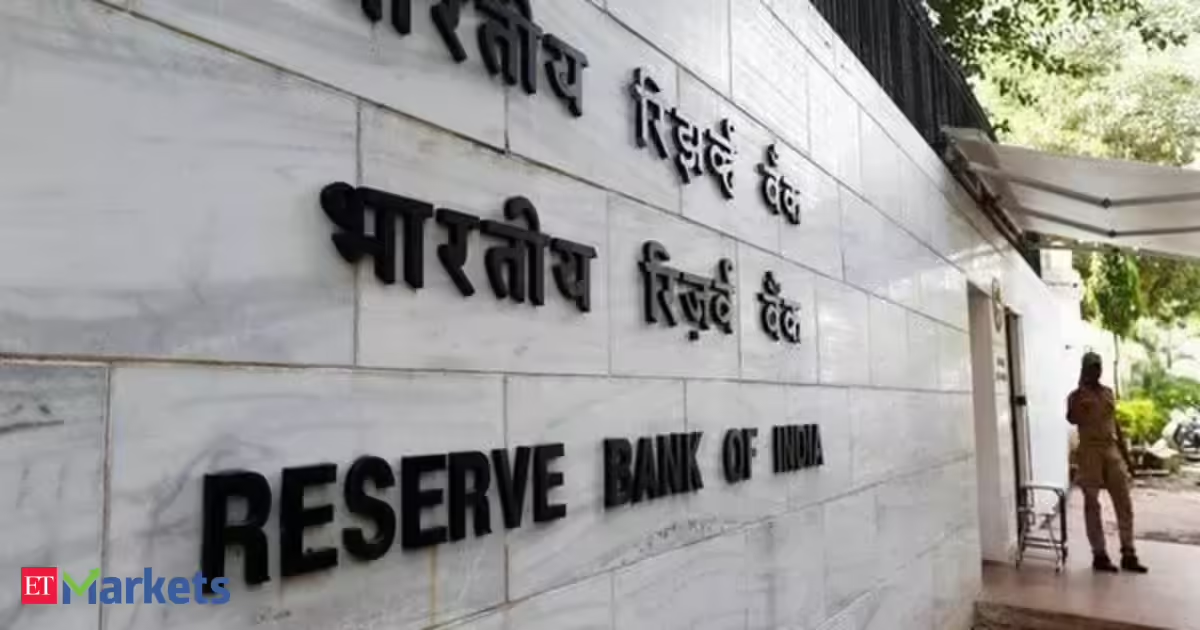
“We are pencilling in a large balance of payment (BOP) deficit of around $68 billion in FY27. Unless the global backdrop changes to lower oil prices, this is the gap that will likely need to be plugged via the forex deposit scheme being considered,” Nomura’s Sonal Varma said in a report.
After a 6% retreat in the currency in 2026 and the worst fiscal-year fall in 14 years in FY26, the rupee’s performance has often been cited as the cause for persistent exits by overseas funds. Recent media reports suggest the central bank might start a dedicated program to draw dollar inflows, although Mint Road has not confirmed the likelihood of any such program.
Nomura said that such programs need to account for higher dollar deposit rates globally compared to domestic deposit costs. Nomura argued that the Reserve Bank of India (RBI) may need to provide higher subsidies to make such a scheme attractive for banks.
According to a Reuters report on May 4, two options are being explored by the RBI-reviving a scheme similar to the 2013 FCNR(B) scheme and eliminating the 5% withholding tax on overseas government bond investors to encourage inflows.
A Bloomberg report the next day suggested the RBI is discussing an option similar to the India Millennium Deposits (IMD) in 2000, under which State Bank of India (SBI) had issued foreign-currency bonds.
The global interest rates are much higher today than in 2013, when US policy rates were near zero.
 Agencies
Weak Re weighs For deposit schemes to succeed, yields will have to be higher than global rates
Sweeten the Deal
“This may mean that the structure of any new scheme being considered will need to be modified to account for higher dollar deposit rates globally and lower domestic deposit costs. This may require a higher subsidy from the RBI to make the scheme attractive for banks,” Varma said.
Bank of Baroda chief economist Madan Sabnavis differed with the view on the need for special schemes to attract dollars. “If remittances and NRI deposits are not rising, the expat population has a problem and will not be able to invest in such bonds even if issued,” he said.
However, he suggested that if India at all issues bonds like IMD, the yield would have to be higher than local deposit rates in the US.
“For them to be feasible for Indian banks, the rate should still be lower than domestic deposits. Otherwise, it may not be viable especially as exchange risk is taken on by the banks,” he said, adding that the exchange risk is something where the government or RBI has to take on.
Earlier, India had come out with three specific schemes to attract dollar-denominated investments- the Resurgent India Bonds (1998), the India Millennium Deposit (2000) and the FCNR(B) swap window (2013).


Trump sees swift end to war as Iran reviews US peace proposal

The unmanned aircraft can drop off 100 parcels a day within a 12km radius of Amazon’s hub.

In the Nifty200 pack, 10 stocks’ closing prices crossed above their 200 DMA (Daily Moving Averages) on May 06, 2026, according to stockedge.com’s technical scan data. The 200-day daily moving average (DMA) is used by traders as a key indicator for determining the overall trend in a particular stock. As long as the stock is priced above the 200-day SMA on the daily timeframe, it is generally considered to be in an overall uptrend. Take a look:

TUCSON, Ariz. — As the search for 84-year-old Nancy Guthrie enters its fourth month, NewsNation senior correspondent Brian Entin has spotlighted a disturbing new theory: the masked suspect captured on her doorbell camera — the prime figure in her suspected abduction — may already be dead, possibly eliminated by a higher-up to tie up loose ends.

The revelation, featured in NewsNation’s one-hour special “The Nancy Guthrie Mystery” airing Wednesday, May 6, 2026, comes from a panel of top criminal profilers and forensic experts dissecting the high-profile case that has captivated the nation since Guthrie vanished from her Tucson-area home. The special will broadcast on The CW.
Guthrie, mother of “Today” show co-anchor Savannah Guthrie, was last seen Jan. 31, 2026, after dinner with family. She was reported missing the next day. Authorities found blood on her porch, a propped-open back door and chilling footage of an armed, masked individual at her front door around 2 a.m. Feb. 1. Her pacemaker disconnected from her phone at 2:28 a.m., suggesting a sudden, forceful removal.
No suspect has been publicly named. No ransom has been paid. Guthrie remains missing despite extensive searches, FBI involvement and a $1 million family reward.
The Doorbell Camera Clue and “Porch Guy” Theory
Surveillance video shows the suspect, often called “Porch Guy,” approaching Guthrie’s door, appearing to tamper with the camera before the system went offline. He carried a backpack and what appeared to be a weapon. A second image later emerged showing the same individual at her home days earlier, raising questions about prior surveillance or familiarity.
In the NewsNation special, forensic nurse and criminal profiling pioneer Dr. Ann Burgess floated the idea that this suspect may no longer be alive. “The person we see at the front door could be dead … killed by someone else … killed by the boss,” Entin summarized during the roundtable discussion. Burgess agreed the operation appeared well-planned yet contained amateur elements, consistent with a hired operative who was later silenced.
Criminal psychologist Dr. Gary Brucato echoed the possibility of multiple perpetrators. “I don’t believe this person worked alone,” he said, describing a potential “spider web” of involvement with a schemer directing a less sophisticated actor. The theory suggests internal conflict or a cleanup phase after the abduction to prevent the porch suspect from talking if caught.
Investigation Challenges and Early Missteps
Pima County Sheriff’s Office initially treated the case as a missing person, with some speculation Guthrie may have wandered off. Critics, including former officials and Entin’s sources, pointed to delays in elevating it to a full abduction probe and limited early FBI involvement. DNA evidence recovered from the scene was only recently sent for advanced FBI lab analysis.
Sources told Entin there is still “no name on the table” as a primary suspect. The investigation has examined possible financial motives, prior knowledge of Guthrie’s home layout and even theories involving retribution linked to Savannah Guthrie’s public profile. Ransom-style notes received by media outlets, including demands for Bitcoin, have surfaced but remain unverified.
One theory explored by experts: Guthrie may have known or trusted the person enough to open the door without immediate alarm, though blood evidence indicates a struggle on the porch.
Family Agony and Public Appeals
Savannah Guthrie has spoken emotionally about her mother’s disappearance while returning to work. The family has offered escalating rewards and cooperated fully with investigators, who have cleared them as suspects. Neighbors remain uneasy, with some fearing the perpetrator could strike again.
The case has drawn parallels to other high-profile abductions, with profilers noting the lack of communication from any kidnappers after initial activity as unusual — potentially explained if the operative is deceased and the operation compromised.
Broader Questions: Motive, Mexico Links and DNA Hopes
Speculation has included a possible crossing into Mexico, with unverified tips claiming Guthrie was seen alive in Sonora shortly after the abduction. Some investigators suggested she may have suffered a medical issue in captivity, leading to her death and complicating ransom efforts.
Pima County Sheriff’s Office reiterated May 4 that the case “remains active and ongoing,” with continued FBI partnership, tip review and forensic work. Advances in DNA technology offer hope for breakthroughs even months later.
Entin, who has covered the story extensively on the ground in Tucson, emphasized in the special that experts draw from patterns in past cases. The amateur-yet-targeted nature points to possible hired help rather than a lone opportunist.
What Comes Next
As the search surpasses 90 days, attention focuses on whether the porch suspect’s identity can be established through enhanced video analysis or public tips. If he is deceased, it could explain the investigative silence and shift focus to organizers or accomplices.
Criminologist Dr. Casey Jordan suggested the suspect may have had indirect familiarity through media exposure of the Guthrie family but was unlikely someone Nancy knew personally.
The case highlights vulnerabilities for high-profile families and elderly residents in suburban areas. It also underscores challenges in jurisdictions handling rare kidnappings, with calls for faster federal involvement in future cases.
For the Guthrie family, every day without answers deepens the pain. Savannah and her siblings continue advocating for tips, urging anyone with information to come forward. The $1 million reward remains active.
Brian Entin’s reporting and the expert roundtable offer no definitive closure but introduce a grim possibility: the man on the porch camera — potentially the last person to see Nancy Guthrie alive — may himself have become a victim in a larger, more calculated scheme.
Authorities urge the public to review any footage from late January and early February 2026 in the Catalina Foothills area. Even small details, they say, could prove significant in unraveling what happened that night and whether Nancy Guthrie’s kidnapper is still a threat — or already beyond justice.

Check out what’s clicking on FoxBusiness.com.
Tesla is recalling more than 218,000 vehicles because of delayed rearview camera images that could increase the risk of a crash, the National Highway Traffic Safety Administration (NHTSA) announced on Wednesday.
A total of 218,868 Model 3, Model Y, Model S and Model X vehicles are affected by the recall.
The vehicles include the 2021 Tesla Model Y, 2022 Tesla Model Y, 2023 Tesla Model Y, 2023 Tesla Model 3, 2021 Tesla Model 3, 2022 Te
sla Model 3, 2020 Tesla Model Y, 2022 Tesla Model X, 2022 Tesla Model S, 2021 Tesla Model S, 2023 Tesla Model X, 2023 Tesla Model S, 2021 Tesla Model X and 2017 Tesla Model 3.
FORD RECALLS OVER 179,000 BRONCO AND RANGER VEHICLES OVER SEAT DEFECT

Tesla is recalling more than 218,000 vehicles because of delayed rearview camera images. (Shen Chunchen/VCG via Getty Images / Getty Images)
The impacted vehicles feature hardware version 3, which Tesla stopped producing in January 2024.
According to the NHTSA, the rearview camera display in impacted vehicles may be delayed when the car is put into reverse, which hurts driver visibility.
“Loss of the rearview camera image may affect the driver’s rearview and increase the risk of a collision,” the NHTSA said in its recall notice. “The driver may continue to reverse the vehicle by performing a shoulder check and using their mirrors.”

A total of 218,868 Model 3, Model Y, Model S and Model X vehicles are affected by the recall. (Brandon Bell/Getty Images / Getty Images)
Tesla said there have been no reports of collisions, fatalities or injuries due to the rearview camera issue, but there have been 27 warranty claims and two field reports that may be connected to the problem.
Stocks In This Article:
The company said it will issue a free over-the-air software update to customers. The faulty software is version 2026.8.6. The remedy software is version 2026.8.6.1.
“More than 99.92% of the affected vehicle population have successfully loaded the remedy firmware,” Tesla wrote in its announcement.
TOYOTA RECALLS 73K HYBRID VEHICLES OVER PEDESTRIAN WARNING SOUND ISSUE

Tesla said there have been no reports of collisions, fatalities or injuries due to the rearview camera issue. (John Paraskevas/Newsday RM via Getty Images / Getty Images)
CLICK HERE TO READ MORE ON FOX BUSINESS
This comes after the NHTSA closed an investigation last month into about 2.6 million Tesla vehicles over a feature that allowed cars to be moved remotely after determining the issue was only linked to low-speed incidents.

OKLAHOMA CITY — As the Los Angeles Lakers trail the top-seeded Oklahoma City Thunder 1-0 in the Western Conference semifinals, all eyes remain on Luka Doncic’s Grade 2 left hamstring strain that has sidelined the superstar since early April. With Doncic ruled out for at least Game 1 and facing a cautious recovery timeline, LeBron James must elevate his game even further to keep the series competitive.
Doncic suffered the injury on April 2 during a blowout loss to the Thunder. He traveled to Spain for specialized stem cell treatment shortly after and has shown gradual progress, including light on-court work, but remains out indefinitely. As of May 6, 2026, reports indicate he is not close to a return, with expectations he could miss the early games of this series. Recovery from a Grade 2 hamstring strain typically spans 4-8 weeks, and the Lakers are taking no risks with their MVP-caliber talent.
LeBron James, at 41, delivered 27 points on efficient shooting in Tuesday’s 108-90 Game 1 defeat but acknowledged the offensive struggles without Doncic. “We’re undermanned, we’re the underdog,” James said ahead of the series. The Thunder’s depth, led by Shai Gilgeous-Alexander, Chet Holmgren and an elite defense, makes the challenge daunting.
Here are five key strategies James and the Lakers must execute to steal games and extend the series without their Slovenian star.
1. Maximize LeBron’s Playmaking and Minutes Management
James averaged elite numbers in the first-round series against Houston and must shoulder even more responsibility. With Doncic out, LeBron needs to orchestrate the offense at a high level, averaging close to a triple-double if possible while conserving energy for both ends. Coach JJ Redick should deploy him in shorter, high-intensity bursts paired with rest periods to combat fatigue over a potential seven-game grind.
LeBron’s basketball IQ allows him to exploit mismatches against OKC’s switch-heavy defense. Targeting slower bigs or forcing help rotations can create open looks for teammates. His leadership in huddles will be crucial to maintaining morale on a roster already feeling the absence of its top scorer.
2. Unleash Austin Reaves and Supporting Cast in Pick-and-Roll Actions
Austin Reaves stepped up in the first round but struggled in Game 1 against the Thunder’s length. Without Doncic’s gravity as a pull-up threat and passer, Reaves must become the primary initiator alongside James. The Lakers should run more high pick-and-rolls with Reaves and James to force defensive decisions from Gilgeous-Alexander and company.
Role players like Rui Hachimura, D’Angelo Russell (if active) and the bench unit need to knock down open threes created by LeBron’s drives. Defensive rebounds will be vital — OKC crashes the glass aggressively, so securing boards and pushing in transition can mitigate the Thunder’s half-court dominance.
3. Defensive Intensity: Limit SGA and Force Turnovers
Holding Gilgeous-Alexander to 18 points in Game 1 was a bright spot, but the Thunder’s supporting cast overwhelmed Los Angeles. James can anchor help defense while directing switches. The Lakers must prioritize contesting threes and limiting Holmgren’s rim attacks. Zone looks or disguised coverages could disrupt OKC’s rhythm.
Forcing turnovers and converting them into easy buckets will be essential. LeBron’s help-side instincts remain elite; using his veteran savvy to anticipate passes can generate fast-break opportunities that bypass OKC’s set defense.
4. Dominate the Glass and Control Tempo
The Thunder excel in transition and second-chance points. LeBron must lead by example on the boards, boxing out and pursuing loose balls. The Lakers’ bigs need to match OKC’s physicality to avoid giving up offensive rebounds that fuel rallies. Slowing the pace slightly — through deliberate half-court sets led by James — can neutralize the Thunder’s athleticism advantage.
Executing this requires discipline. Every possession matters when down a star player. LeBron’s ability to set screens, roll or pop, and find cutters will dictate whether the Lakers can manufacture enough offense to stay within striking distance.
5. Mental Toughness and Home-Court Momentum
James has thrived in underdog scenarios throughout his career. His message to the team and Doncic post-Game 1 emphasized resilience. Winning Game 2 on the road would swing momentum heading back to Los Angeles, where the crowd and familiar surroundings could amplify LeBron’s impact.
Maintaining focus amid injury uncertainty is paramount. The Lakers have shown fight without Doncic during the regular season, going 7-4 in such games. Translating that to the playoffs against a championship-caliber opponent demands peak execution.
Broader Series Outlook
The Thunder opened the series with a convincing victory, showcasing why they are defending champions and the West’s top seed. Their depth and two-way play pose problems for an undermanned Lakers squad. Yet James has engineered playoff miracles before, and the Lakers’ first-round resilience offers hope.
Doncic’s potential return later in the series remains a wildcard. Even limited minutes from him could shift dynamics dramatically. For now, the burden falls squarely on LeBron’s shoulders. At 41, he continues defying age with elite conditioning and basketball mastery.
Game 2 offers an immediate chance for adjustment. If the Lakers can implement these five pillars — amplified LeBron playmaking, Reaves creation, stingy defense, rebounding dominance and mental edge — they can make this series far more competitive than many expect. LeBron’s legacy includes carrying teams through adversity, and this Thunder showdown may add another chapter.
As the Western Conference semifinals unfold, one thing is clear: without Luka Doncic, LeBron James must summon his inner King once more. The Lakers’ playoff survival depends on it.
Paytm shares climb 5% after Q4 results. Do Jefferies and Bernstein see further upside?

63% of Institutions are Investing in Crypto for Diversification, Report Finds

Stanley Cup Playoffs 2026: Bracket, schedule and scores from each series

Manchester United reach agreement with Casemiro over contract clause amid transfer speculation

US brings back mandatory military draft registration

Steven Gerrard disagrees with Gary Neville over ‘shock’ Chelsea and Arsenal claim | Football


-

 NewsBeat3 days ago
Channel 5 – All Creatures Great and Small series 7 new post
-
 Tech5 days ago
Trump’s 25% EU auto tariff breaches Turnberry Agreement that also covers semiconductors and digital trade
-
 Sports5 days ago
Paul Scholes issues Marcus Rashford reality check as agreement emerges over Man United star
-

 Entertainment5 days ago
Met Gala 2026 Rumored Guest List Is Turning Heads
-

 Business6 days ago
Strait of Hormuz Blockade Persists Amid US-Iran Standoff, Sending Oil Prices Soaring
-
Entertainment5 days ago
New on Prime Video in May 2026 — Full List of Movies and Shows
-

 Entertainment7 days ago
Celebrities Who Are Attending the 2026 Met Gala Event
-

 Sports5 days ago
Cavaliers vs. Raptors Game 6 live score, updates, highlights from 2026 NBA playoffs first-round series
-
 Sports5 days ago
David Benavidez responds to team Canelo saying the fight will never happen
-

 Entertainment5 days ago
Kylie Jenner Hit With Second Lawsuit From Ex-Housekeeper
-
 Sports5 days ago
IPL 2026: ‘Love you darling’- Hardik Pandya’s reaction to MS Dhoni steals the show |Watch | Cricket News
-

 Entertainment5 days ago
Young and the Restless Next Week: Cane Arrested & Matt’s Deadly New Scheme!
-

 Tech6 days ago
Meta ends Sama contract after Kenyan workers report seeing intimate footage from Ray-Ban smart glasses users
-

 Tech7 days ago
Mark Zuckerberg Says Meta Is Working On AI Agents For Personal And Business Use
-

 Sports7 days ago
Stalemate in Madrid as resilient Arsenal Blunt Atletico Madrid in semi-final clash – Sports
-
Entertainment4 days ago
New Netflix Movies in May 2026 — My Top 3 Picks to Stream
-

 Business4 days ago
Luka Doncic Injury Update: Doncic’s Hamstring Recovery Slows Lakers’ Hopes Against Thunder: Can He Run Yet?
-

 Sports6 days ago
What Preity Zinta Said After Punjab Kings’ First Defeat Of IPL 2026
-

 Sports5 days ago
Plane crash in Wimberley, Texas kills 5 pickleball players at tournament
-

 Sports6 days ago
Bayern won’t hand bottom side Heidenheim ‘gifts’ despite PSG game
You must be logged in to post a comment Login