Connect with us
DAPA Banner
DAPA Coin
DAPA
COIN PAYMENT ASSET
PRIVACY · BLOCKDAG · HOMOMORPHIC ENCRYPTION · RUST
ElGamal Encrypted MINE DAPA
🚫 GENESIS SOLD OUT
DAPAPAY COMING

Business

Tired of Double Taxation? What Americans in the UK Can Do

Published

on

Tired of Double Taxation? What Americans in the UK Can Do

Budgeting just flows when cash arrives after deductions. Money lands without fuss because HMRC already took their share. Payday carries that quiet calm of obligations met ahead of time. Everything sits right when tax vanishes before it hits your account.

Out of nowhere, the United States reappears on the scene. Quietly. A nudge: filing a U.S. tax return remains on your list. That’s often where irritation slips in. You see taxes already taken out.

Yet somehow it seems another layer waits ahead. Truth is, most times you’re not. The feeling sneaks in when the system gets used wrong. It just doesn’t work right then.

Why It Feels Like Double Taxes

What kicks things off is the way nations decide whose turn it is to hand over taxes.

Born in the U.S.? The tax net still holds, no matter how long you’ve stayed away. Living abroad doesn’t erase what’s tied to your passport. Residency shapes tax rules across the pond. Set up life in the UK? That is where taxes follow. Work within its borders, pay into its system.

Advertisement

Most times, both nations see what you earn. This kind of overlap happens naturally. Nothing went off track. You didn’t mess up. Even so, spotting identical numbers appear a second time brings little comfort.

How Americans in the UK Prevent Paying Taxes Twice

One way it works? Through built-in safeguards that block overlapping charges. Another path shows up in how credits apply before totals settle. Rules kick in at processing time, steering clear of repeated hits. Layered checks pop up depending on transaction type. Each step moves separately, yet lines up just enough to avoid repeat costs. Structure matters here – timing shifts what counts where

  • Foreign Tax Credit (Form 1116)
  • Because you paid taxes in the UK, your US bill gets reduced. This means less owed back home when credits apply. Your earlier payment overseas counts toward what’s due here. Money sent abroad first can lower stateside costs later. What was handed over there affects what’s needed now. The prior cost across oceans cuts today’s total. Past amounts given up overseas reduce current charges nearby
  • Foreign Earned Income Exclusion (Form 2555)
  • You exclude up to US$130,000 of earned income for the 2025 tax year
  • US–UK tax treaty. Works well sometimes, yet still takes a back seat when needed.
  • Accurate filing and reporting
  • This is where everything actually comes together Here’s how it works. Most folks underestimate just how much picking one over the other really plays out once things get moving.

The Most Effective Way to Lower Your US Tax Bill

Folks from the US living in Britain often find the Foreign Tax Credit handles nearly everything.

Most times, handing money to HMRC means less goes into your pocket compared to dealing with the IRS. UK taxes take a bigger slice of income when matched against American deductions.

Most times, using this UK tax cuts what you owe in the US right off. It counts as a setoff when figuring how much Uncle Sam gets.

Advertisement

True, but not every time. Take investment earnings – they rarely match up exactly. When different kinds of income mix, clarity starts to fade.

When the FEIE Could Be Useful

Here’s how it works. Money earned abroad slips free from Uncle Sam’s reach. That chunk of pay? Left alone when tax season rolls around.

Right now, the number stands at one hundred thirty thousand U.S. dollars for twenty twenty-five.

Most find it fits better when earnings are modest or stays brief in the UK. Another reason? It seems more straightforward to them.

Advertisement

Here’s the catch. Drop your earnings from taxable income, yet those dollars vanish when chasing tax credits. That gap matters most where rates bite hard – say, the UK – making the FEIE feel less full some years. Using it won’t get you into trouble. Yet sticking with it might not pay off down the road. Sometimes another path works better over time.

Fixing the Problem

Here everything moves beyond just knowing into actually making it happen. Grab every bit of what you earn first – your job in the UK counts, sure. Toss in that side gig cash too. Don’t forget payments from gigs abroad; they matter just as much.

Switching amounts to U.S. dollars comes next. Most types of earnings can use the typical rate set by the IRS, making things simpler to handle.

Later on, figure out your approach to overlapping rules. One option might be the Foreign Tax Credit. Another path could involve excluding foreign earned income. Sometimes mixing methods works best depending on where the money comes from.

Advertisement

Filing your U.S. tax return comes next – typically using Form 1040, paired either with Form 1116 or Form 2555.

Look into overseas accounts one last time. Should totals pass ten thousand dollars anytime in a calendar year, reporting becomes necessary through an FBAR form.

Just one thing after another must fit right. On its own, it’s not hard at all.

Why You Only Think You Pay Twice

Picture yourself doing a job in London. Your paycheck gets taxed by the UK under PAYE. After that comes the US tax form to fill out. One follows the other, each country wanting its share.

Advertisement

Here it comes once more, the identical sum.

This tends to be what people worry about most.

Here’s how it works: pay taxes abroad, then apply that amount toward your U.S. bill. Taxes handed to the UK reduce the sum due back home. Often, one wipes out the other entirely.

True, each setup plays a role. Still, just one walks away with the tax take from that money.

Advertisement

Common Mistakes That Make Things Worse

Problems like these pop up way more than expected. Later on, picking the FEIE early might block access to certain credits. Skipping those credits entirely? That’s a move some make without realizing. Ends up costing extra cash they didn’t need to spend.

Folks often skip filing reports on overseas accounts. Not paying attention won’t trigger duplicate taxes, yet fines might follow – another sort of trouble brewing quietly.

Deadlines? They carry weight most overlook. What seems minor often shapes outcomes in quiet ways.

What If You’re Still Overpaying?

Some moments sit wrong, even if every choice was made carefully.

Advertisement

Some earnings, like those from stocks, might show up at different times on each report.

Because one system records them earlier, gaps appear for a while. Here’s another thing to think about. Staying in the UK for good? It could make you question if keeping up with US taxes even fits anymore.

Deciding takes time. Yet here we are facing it anyway.

Future on your mind? Grab the Letting Go Handbook

Some find cutting double tax burdens satisfactory. Others begin seeing continued requirements as too heavy a load. Picture stepping back to see more of your life abroad. Expat Tax Online’s Renounce US Citizenship guide lays out how leaving US citizenship works. Step by step, it shows what you must do, who qualifies, then explains shifts in status later. Details unfold without rushing ahead.

Advertisement

Some folks won’t care. Yet when curiosity strikes, clarity matters more than opinion.

Advertisement
Continue Reading
Click to comment

You must be logged in to post a comment Login

Leave a Reply

Business

Elizabeth Smart Believes Nancy Could Absolutely Still Be Alive, Offers Hope to Family

Published

on

Nancy Guthrie

SALT LAKE CITY — Elizabeth Smart, the survivor of a notorious 2002 abduction who became a leading advocate for missing persons cases, expressed cautious optimism Thursday that Nancy Guthrie, the 84-year-old mother of “Today” show co-anchor Savannah Guthrie, could still be alive more than three months after her disappearance from her Arizona home.

Nancy Guthrie
Nancy Guthrie

In an emotional interview, Smart said she has been closely following the case and believes there is still reason for hope. “I absolutely believe Nancy could still be alive,” Smart told reporters. “We have seen miracles in these cases before, and until we have definitive proof otherwise, we have to hold onto that possibility for the family.”

Nancy Guthrie vanished from her Catalina Foothills home near Tucson on February 1, 2026. Security footage captured a masked individual near her door around the time of her disappearance. Blood evidence, a disabled Ring camera and signs of a struggle led authorities to classify the case as an abduction rather than a missing person or wandering incident. No ransom demand has been made, and no arrests have been announced.

Pima County Sheriff’s Office and the FBI continue to investigate. A rootless hair sample and potential glove DNA recovered from the scene have been sent for advanced forensic testing, including genetic genealogy analysis. Multiple ransom-style notes received by media outlets have complicated the probe, with experts questioning their authenticity.

Elizabeth Smart’s Perspective

Smart, who was abducted at age 14 and held for nine months before her dramatic rescue, drew parallels to her own experience. “There were many times people assumed I was dead,” she said. “But I was alive. Families should never stop hoping until they have concrete answers.” She praised Savannah Guthrie’s public strength while balancing her high-profile career and family life.

Advertisement

Smart has offered to assist the family privately and continues advocating for better coordination between law enforcement agencies in missing persons cases involving elderly victims. She emphasized the importance of keeping Nancy’s case in the public eye without sensationalizing it.

Family’s Ongoing Ordeal

Savannah Guthrie has returned to the “Today” show while advocating for information about her mother. She briefly stepped away from the broadcast earlier this week amid emotional strain but returned the next day. The family has offered a $1 million reward for information leading to Nancy’s safe return.

The unrelated discovery of ancient human bones near the home earlier this week briefly raised hopes before forensic analysis ruled them out. The incident highlighted the challenges of searching desert terrain where old remains are occasionally found.

Investigation Challenges

The case has exposed occasional friction between local authorities and federal agencies. FBI Director Kash Patel publicly criticized initial coordination, though both sides say they are now working closely. Behavioral profilers have suggested the perpetrator may have sought fame or had some prior connection to the victim.

Advertisement

No proof of life has emerged in more than 95 days. Authorities continue operating under the assumption Nancy could be found alive while preparing for all possibilities. Door-to-door canvassing, expanded surveillance reviews and public appeals have generated thousands of tips.

Community Response

The upscale Catalina Foothills neighborhood remains on edge, with yellow ribbons symbolizing hope displayed prominently. Neighbors and the broader Tucson community have participated in searches and vigils. National attention, driven by Savannah Guthrie’s platform, has kept the case visible while the family urges focus on verified information.

Smart’s public expression of hope has resonated widely, with many praising her empathy and willingness to support another family facing a similar nightmare. Her foundation continues working on legislation to improve missing persons protocols, particularly for vulnerable populations like the elderly.

Broader Context

The Guthrie case stands out due to its brazen nature in a secure community and the victim’s connection to a beloved national television personality. Elizabeth Smart’s involvement brings renewed attention and reminds the public that long-term missing persons cases can sometimes end in reunions against the odds.

Advertisement

As the investigation enters its fourth month, law enforcement appeals for any information, no matter how small. The family continues balancing public advocacy with private grief, holding onto hope while preparing for any outcome. Smart’s message of resilience offers comfort to those following the case.

Whether Nancy Guthrie is found alive or the case brings closure through other means, her disappearance has highlighted vulnerabilities even in protected communities and the enduring power of hope in the face of uncertainty. For now, the search continues, supported by a survivor who knows firsthand that miracles in these cases are possible.

Continue Reading

Business

Federal Trade Court Declares Trump’s 10% Global Tariff Illegal in Landmark Decision

Published

on

US President Donald Trump has lauded the facility, part of his wide-scale crackdown on undocumented migrants that rights groups say has violated victims' rights

WASHINGTON — A federal trade court ruled Thursday that President Donald Trump’s sweeping 10% global tariff policy is illegal, delivering a major blow to one of the administration’s signature economic initiatives and potentially reshaping international trade negotiations. The three-judge panel of the U.S. Court of International Trade found that the tariffs exceeded presidential authority under existing trade laws and violated procedural requirements.

The decision immediately sent shockwaves through financial markets, with stocks of major importers and manufacturers rallying while broader indices showed mixed reactions. White House officials vowed a swift appeal, calling the ruling “judicial overreach” that undermines national security and economic sovereignty. Trade partners from Europe to Asia welcomed the decision but cautioned that uncertainty remains high.

The tariffs, imposed in early 2026 under Section 232 of the Trade Expansion Act and emergency powers, applied a baseline 10% duty on nearly all imported goods. The administration argued the measure was necessary to address trade imbalances, protect domestic industries and counter perceived unfair practices by countries like China. Critics, including business groups and several U.S. trading partners, challenged the tariffs in court, claiming they were overly broad and lacked proper justification.

In a 68-page opinion, the court sided with the challengers. Judges wrote that while the president has significant discretion in trade matters, the 10% across-the-board tariff went beyond statutory authority and failed to demonstrate a direct link to national security threats as required under the law. The ruling permanently blocks enforcement of the tariff and orders refunds for duties already collected.

Advertisement

Immediate Market and Economic Reaction

Stocks of retailers, automakers and consumer electronics companies rose sharply on the news, with the Dow Jones Industrial Average gaining more than 300 points in afternoon trading. Companies that had absorbed higher costs or passed them to consumers stood to benefit most. Conversely, some domestic steel and manufacturing stocks dipped on fears of renewed foreign competition.

Economists estimated the tariffs had already added billions in costs to U.S. businesses and consumers. The ruling could ease inflationary pressures in certain sectors, though the administration warned that any revenue shortfall would need to be addressed through other means.

White House Response

White House Press Secretary Karoline Leavitt called the decision “disappointing but expected from an activist court.” She said the administration would appeal to the U.S. Court of Appeals for the Federal Circuit and, if necessary, the Supreme Court. President Trump, speaking at a rally in Pennsylvania, reiterated his commitment to protecting American workers. “We’re going to keep fighting for fair trade. This is not over,” he said.

Legal experts predict a lengthy appeals process that could extend well into 2027. In the meantime, the tariffs remain on hold pending further court action.

Advertisement

Reactions from Trade Partners

Several U.S. allies expressed relief. The European Union, which had threatened retaliatory measures, welcomed the ruling and called for renewed negotiations on a more balanced trade framework. China described the decision as “a victory for multilateral trade rules,” though tensions over technology and subsidies persist. Mexico and Canada, key partners under the USMCA agreement, said the ruling reinforces regional economic stability.

Business organizations including the U.S. Chamber of Commerce and the National Retail Federation praised the court’s decision, arguing that broad tariffs harm American consumers and exporters. Labor unions were more divided, with some praising Trump’s original intent while others supported the legal challenge.

Background of the Tariff Policy

Trump first proposed the 10% global tariff during his 2024 campaign as a simple mechanism to protect U.S. industries and generate revenue. The policy was implemented in phases starting in January 2026, with exemptions for certain allies and critical goods. It quickly became one of the most controversial economic moves of his second term, drawing lawsuits from more than a dozen plaintiffs including importers, trade associations and state governments.

The Court of International Trade, which specializes in trade disputes, has historically shown deference to presidential authority in national security matters but drew a line at what it called an overly expansive interpretation of executive power.

Advertisement

Broader Implications for Trade Policy

The ruling could force the administration to pursue more targeted tariff actions or seek new congressional authority. It also raises questions about the limits of executive power in trade, a recurring theme in recent decades. Legal scholars expect the case to eventually reach the Supreme Court, where it could set important precedents for future presidents.

For American businesses, the decision provides short-term relief but continued uncertainty. Many companies had already adjusted supply chains or absorbed costs in anticipation of prolonged tariffs. The appeals process means planning remains difficult.

Political Ramifications

The ruling hands Democrats and free-trade Republicans a significant political victory heading into midterm election season. However, Trump’s base has strongly supported protectionist policies, and the administration is likely to frame the court decision as part of a larger battle against “globalist” institutions.

Congress could step in with legislation to clarify or expand presidential trade authorities, though partisan divisions make swift action unlikely. Bipartisan efforts to reform trade law have gained some momentum in recent months but face steep hurdles.

Advertisement

What Happens Next

The administration has 60 days to appeal. In the interim, importers can seek refunds for tariffs paid since implementation. The court stayed parts of its ruling pending appeal to avoid market chaos. Trade negotiations with major partners are expected to accelerate as all sides reassess their positions.

For consumers, the decision could eventually translate into lower prices on imported goods ranging from electronics and clothing to automobiles and machinery. For U.S. manufacturers competing with imports, the relief may be temporary if new, more targeted tariffs are introduced.

The landmark ruling underscores the complex interplay between executive power, judicial oversight and global commerce in an era of heightened economic nationalism. As the legal battle continues, the future of U.S. trade policy remains uncertain, with profound implications for businesses, workers and consumers alike.

Advertisement
Continue Reading

Business

Thailand to Secure US$12.2 Billion Loan Amid Middle East Crisis

Published

on

Thailand to Secure US$12.2 Billion Loan Amid Middle East Crisis

The Thai government has approved a US$12.2 billion emergency borrowing package to mitigate the economic repercussions of the ongoing Middle East conflict.

As the war between the US, Israel, and Iran drives up global energy and shipping costs, Thailand faces slowing growth and rising inflation, prompting officials to implement this significant financial intervention to support low-income citizens and bolster the domestic economy.

Key Points

  • The 400 billion baht loan package is intended for deployment between June and September to stimulate spending and provide relief to over 20 million low-income individuals under the “Thais Helps Thais” program.
  • The funds will also be directed toward supporting alternative energy initiatives to combat the impact of volatile oil and gas prices.
  • Economic forecasts have been revised downward, with the finance ministry cutting GDP growth expectations from 2.4% to 1.6% and projecting core inflation to rise to 3.0%.
  • Officials confirmed that the new borrowing will keep public debt within the country’s 70% of GDP ceiling, as debt stood at 66.38% as of March.

While the borrowing package is one of the largest in recent history, the government emphasized that it remains below the levels of debt incurred during the 1997 Asian financial crisis and the COVID-19 pandemic.

The key economic factors prompting Thailand’s US$12.2 billion emergency borrowing package are as follows:

  • Impact of the Middle East Conflict: The war between the US/Israel and Iran, which began in late February, has negatively affected the global economy. This conflict has roiled global energy prices, leading to increased costs for oil, gas, shipping, and consumer goods.
  • Rising Inflation: The country is experiencing significant inflationary pressure. Core inflation is now forecast to reach 3.0 percent this year, a sharp increase from the previous estimate of 0.3 percent.
  • Slowing Economic Growth: Thailand’s economic growth is decelerating. The finance ministry recently lowered the country’s GDP growth forecast to 1.6 percent, down from 2.4 percent the previous year.
  • Need for Economic Stabilization: The government identified the borrowing package as a necessary tool to “cushion the economic impacts,” boost domestic spending, and prevent further economic weakening.

The funds are intended to address these challenges by easing living costs for over 20 million low-income individuals through the “Thais Helps Thais” scheme and supporting alternative energy initiatives. The program also aims to bolster local economies by promoting sustainable practices and encouraging community-driven projects. By integrating these efforts, the initiative seeks to create long-term solutions that not only alleviate immediate financial burdens but also foster resilience and self-sufficiency among vulnerable populations.

Advertisement
Continue Reading

Business

Capital One shareholders elect board and approve key proposals at annual meeting

Published

on


Capital One shareholders elect board and approve key proposals at annual meeting

Continue Reading

Business

Greenland Crisis Escalates as Trump Renews Push for US Control Amid Danish Military Buildup

Published

on

Kuwait International Airport

NUUK, Greenland — Tensions over Greenland’s future intensified this week as President Donald Trump renewed calls for US acquisition or expanded control of the vast Arctic island, prompting Denmark to deploy additional elite forces and Greenland’s leaders to firmly reject any change in sovereignty. The diplomatic standoff, now in its fourth month, continues to strain transatlantic relations and raise concerns about Arctic security.

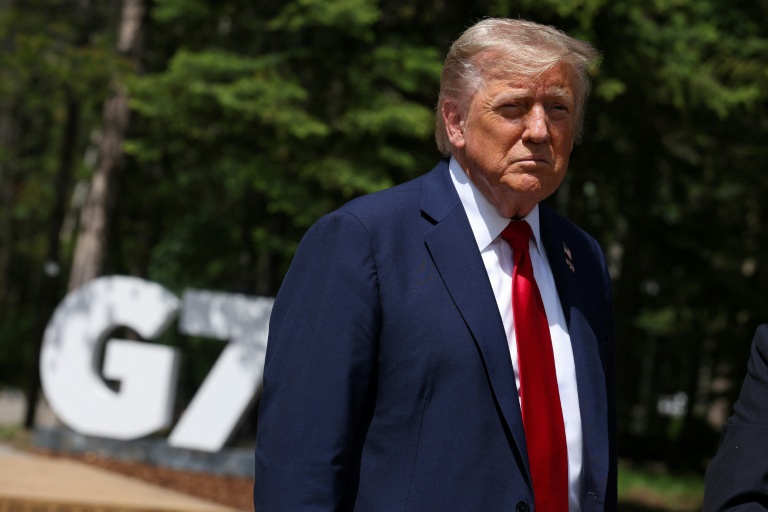
Donald Trump left the G7 summit early, saying he had to deal with the crisis in the Middle East
US President Donald Trump
AFP

Trump, speaking at a White House event on May 6, reiterated that the United States “needs” Greenland for national security reasons, citing potential threats from Russia and China in the resource-rich region. He stopped short of repeating earlier tariff threats but maintained that a deal must be reached. Danish and Greenlandic officials responded swiftly, emphasizing that Greenland is not for sale and remains part of the Kingdom of Denmark.

Greenland’s Prime Minister Jens-Frederik Nielsen stated categorically that the island “is not a piece of ice” and reaffirmed its commitment to Denmark. “When faced with the choice between the US and Denmark, Greenland chooses Denmark,” he said, echoing earlier parliamentary statements.

Military Posturing and Defense Measures

Denmark has responded to the pressure by significantly bolstering its military presence. Hundreds of elite Danish combat soldiers trained in Arctic warfare have been deployed to Greenland, including senior officers. Reports indicate Denmark prepared contingency plans, including potential runway destruction at key airfields, in case of any US military action — though both sides have publicly ruled out force.

NATO discussions are underway for a possible permanent “Arctic Sentry” mission in Greenland, modeled after initiatives in the Baltic region. European leaders, including those from France and Canada, have opened or expanded consulates in Greenland as a show of solidarity.

Advertisement

Economic and Diplomatic Fallout

Trump’s earlier threats of 10-25% tariffs on several European nations opposing the move were paused after talks in Davos in January, but the underlying dispute lingers. Negotiations have explored increased US military basing rights, resource access, and blocking adversarial mining activities without full sovereignty transfer.

Greenland, with its population of around 56,000, holds vast untapped reserves of rare earth minerals, uranium and other critical resources essential for green technology and defense. Its strategic location makes it vital for Arctic monitoring and potential missile defense systems.

The crisis has triggered psychological strain among residents, with Greenland’s government monitoring mental health impacts. Many locals express anxiety over the uncertainty, though daily life continues amid heightened international attention.

Background of the Dispute

Trump first floated acquiring Greenland in 2019 during his first term. The idea resurfaced strongly in late 2025 and escalated in early 2026, with the administration arguing that Denmark cannot adequately defend the island against growing Russian and Chinese interest in the Arctic. Greenlandic and Danish leaders counter that existing NATO frameworks and bilateral agreements suffice.

Advertisement

A high-stakes January meeting in Washington between US, Danish and Greenlandic officials produced little progress, with both sides claiming different interpretations of the outcome. Subsequent talks have focused on security enhancements rather than outright purchase.

International Reactions

European allies have expressed concern that the dispute weakens NATO unity. Some view Trump’s approach as a distraction from other global priorities, including the situation in the Middle East. China and Russia have watched developments closely, with analysts warning that prolonged instability could create openings for their influence in the Arctic.

Bipartisan US congressional delegations have visited Denmark and Greenland to ease tensions and explore cooperative security arrangements. However, a small number of Republican lawmakers have introduced symbolic measures supporting Greenland as a potential US territory.

Economic Implications

Greenland’s economy, heavily reliant on fishing, tourism and Danish subsidies, faces uncertainty. Potential US investment in infrastructure or mining could bring opportunities, but most residents prioritize maintaining autonomy and their relationship with Denmark.

Advertisement

Global markets have shown sensitivity to the rhetoric, with occasional spikes in rare earth and shipping costs tied to Arctic tensions. Energy security analysts note that while Greenland itself produces little oil, its location affects broader shipping routes and strategic calculations.

Looking Ahead

As summer approaches in the Arctic, military exercises and diplomatic talks are expected to continue. Denmark has called a snap election partly centered on the Greenland issue, while US officials maintain that talks are “on a good trajectory” despite public differences.

For Greenlanders, the crisis has thrust their homeland into the global spotlight like never before. Whether it leads to enhanced security cooperation, greater autonomy, or continued uncertainty remains to be seen. What is clear is that the island’s strategic importance in a warming Arctic with melting ice and new shipping routes has elevated it from a remote territory to a central player in great power competition.

The situation serves as a reminder of how quickly geopolitical flashpoints can emerge in the 21st century. As stakeholders navigate security needs, resource interests and self-determination, the future of Greenland will likely shape broader Arctic dynamics for years to come.

Advertisement
Continue Reading

Business

Form 144 MACOM Technology Solutions Holdings For: 8 May

Published

on


Form 144 MACOM Technology Solutions Holdings For: 8 May

Continue Reading

Business

Texas Roadhouse, Inc. (TXRH) Q1 2026 Earnings Call Transcript

Published

on

OneWater Marine Inc. (ONEW) Q1 2026 Earnings Call Transcript

Conference Call Participants

Christopher Carril – KeyBanc Capital Markets Inc., Research Division
Andrew North – Robert W. Baird & Co. Incorporated, Research Division
Andrew Charles – TD Cowen, Research Division
Zachary Fadem – Wells Fargo Securities, LLC, Research Division
Jeffrey Bernstein – Barclays Bank PLC, Research Division
Sara Senatore – BofA Securities, Research Division
Simon Elliott – Evercore Inc.
James Salera – Stephens Inc., Research Division
Lauren Silberman – Deutsche Bank AG, Research Division
Peter Saleh – BTIG, LLC, Research Division
Jeffrey Farmer – Gordon Haskett Research Advisors
Dennis Geiger – UBS Investment Bank, Research Division
Gregory Francfort – Guggenheim Securities, LLC, Research Division
Brian Bittner – Oppenheimer & Co. Inc., Research Division
John Ivankoe – JPMorgan Chase & Co, Research Division
James Sanderson – Northcoast Research Partners, LLC
Logan Reich – RBC Capital Markets, Research Division
Jacob Aiken-Phillips – Melius Research LLC
Brian Harbour – Morgan Stanley, Research Division
Brian Vaccaro – Raymond James & Associates, Inc., Research Division

Presentation

Advertisement

Operator

Good evening, and welcome to the Texas Roadhouse First Quarter 2026 Earnings Conference Call. Today’s call is being recorded. [Operator Instructions]

I would now like to introduce Michael Bailen, Vice President of Investor Relations for Texas Roadhouse. You may begin your conference.

Advertisement

Michael Bailen
Head of Investor Relations

Thank you, Andy, and good evening. By now, you should have access to our earnings release for the first quarter ended March 31, 2026. It may also be found on our website at texasroadhouse.com in the Investors section.

I would like to remind everyone that part of our discussion today will include forward-looking statements. These statements are not guarantees of future performance, and therefore, undue reliance should not be placed upon them. We refer all of

Advertisement
Continue Reading

Business

S&P 500 Rises 54 Points to 7,391 as Tech and AI Stocks Drive Broad Market Gains

Published

on

Intel Stock Surges on $14.2B Ireland Fab Buyback as Chipmaker

NEW YORK — The S&P 500 climbed 54.39 points, or 0.74%, to close at 7,391.50 on Thursday, extending its recent winning streak as strong corporate earnings and unrelenting enthusiasm for artificial intelligence continued to propel major indices higher on Wall Street. The benchmark index has now posted gains in four of the past five sessions, reflecting renewed investor confidence amid resilient economic data and robust performance from technology leaders.

Intel Stock Surges on $14.2B Ireland Fab Buyback as Chipmaker
S&P 500 Rises 54 Points to 7,391 as Tech and AI Stocks Drive Broad Market Gains

The advance was broad-based, with nine of the 11 S&P 500 sectors finishing in positive territory. Technology led the charge with a 1.8% gain, followed by communication services and consumer discretionary. The Nasdaq Composite outperformed with a 1.2% rise, while the Dow Jones Industrial Average added 115 points, or 0.23%, to 49,711.98, inching closer to the milestone 50,000 level.

Tech and AI Momentum Remain Dominant Themes

Magnificent Seven stocks once again anchored the market’s upside. Nvidia, Microsoft, Amazon and Meta Platforms posted solid gains as investors bet on continued capital spending on AI infrastructure. Chipmakers and software companies with heavy AI exposure benefited from optimism that enterprise adoption of generative AI tools is accelerating faster than expected.

Analysts noted that first-quarter earnings season has largely exceeded lowered expectations, with particular strength in technology, industrials and financial services. Several large companies raised guidance, signaling confidence in sustained demand despite higher interest rates and geopolitical uncertainties.

Economic Backdrop Supports Risk Appetite

The market’s resilience comes as inflation appears to be moderating and the Federal Reserve maintains a patient stance on interest rate policy. Recent retail sales data showed consumers remain willing to spend, while corporate balance sheets stay healthy. The 10-year Treasury yield held steady near 4.35%, providing a relatively stable borrowing environment for businesses.

Advertisement

Geopolitical risks in the Middle East have eased somewhat after reports of diplomatic progress, helping stabilize oil prices around $78 per barrel. This has relieved inflationary pressures on transportation and manufacturing costs, further supporting equity valuations.

Sector Rotation and Market Breadth

While technology led, there were signs of healthy rotation into other areas. Financial stocks advanced on strong bank earnings, and industrial names benefited from positive outlooks on infrastructure spending. Small-cap stocks, represented by the Russell 2000, posted more modest gains but showed improving breadth, suggesting the rally may be broadening beyond mega-cap names.

Volume was above average, indicating genuine conviction behind the buying. Advancing issues significantly outnumbered decliners on the New York Stock Exchange, a positive technical signal for continued upside.

Analyst and Strategist Views

Veteran market watchers described the current environment as constructive. “Earnings are holding up well, AI spending remains robust, and the economy is growing without overheating,” said one chief investment strategist. “The path to new highs for the S&P 500 looks increasingly probable in the coming months.”

Advertisement

Retail participation remains elevated through trading apps and ETFs, while institutional flows show continued preference for quality growth names with strong balance sheets. Some caution persists around elevated valuations in select AI-related stocks, but overall sentiment leans optimistic.

Risks and Watchpoints

Despite the upbeat session, potential headwinds remain. Any renewed escalation in the Middle East could disrupt energy markets and reignite inflation concerns. Slower-than-expected AI returns or reduced capital expenditure by hyperscalers could pressure technology valuations. Upcoming economic data, including consumer sentiment and inflation readings, will be closely monitored.

Longer-term, questions linger about the sustainability of high valuations and the eventual impact of higher interest rates on corporate borrowing and consumer spending. However, for now, the market appears focused on positive near-term catalysts.

Historical Perspective

Thursday’s close adds to the S&P 500’s impressive run since the 2022 bear market lows. The index has more than doubled in that period, driven by technological innovation, corporate earnings resilience and accommodative monetary policy. Reaching the 7,400 level would mark another psychological milestone in this multi-year bull market.

Advertisement

Outlook for Friday and Beyond

Attention now turns to Friday’s economic calendar, which includes more earnings reports and key data points. Any continued positive surprises could help sustain momentum toward fresh record highs. Strategists generally remain constructive for the remainder of 2026, projecting further gains supported by earnings growth and potential monetary easing later in the year.

For individual investors, the message remains one of measured optimism. Diversification across sectors, focus on companies with strong fundamentals and a long-term perspective continue to be sound strategies. The S&P 500’s steady climb reflects confidence in American enterprise and innovation amid periodic challenges.

As trading wrapped up Thursday, the market’s advance underscored a resilient environment where corporate execution and technological themes continue to reward investors. Whether the S&P 500 pushes decisively through 7,400 in coming sessions or consolidates first, the underlying momentum suggests Wall Street retains faith in the durability of the current economic expansion and the transformative power of artificial intelligence.

Advertisement
Continue Reading

Business

Liberty Broadband Corporation (LBRDK) Q1 2026 Earnings Call Transcript

Published

on

OneWater Marine Inc. (ONEW) Q1 2026 Earnings Call Transcript

Liberty Broadband Corporation (LBRDK) Q1 2026 Earnings Call May 7, 2026 11:15 AM EDT

Company Participants

Hooper Stevens – Senior Vice President of Investor Relations
Ronald Duncan – Co-Founder, President, CEO & Director
Brian Wendling – Chief Accounting Officer & Principal Financial Officer
Peter J. Pounds
Martin Patterson – CEO & President

Advertisement

Conference Call Participants

David Joyce – Seaport Research Partners
James Harris – Bislett Management, LLC

Presentation

Advertisement

Operator

Welcome to GCI Liberty 2026 First Quarter Earnings Call. [Operator Instructions] As a reminder, this conference will be recorded May 7. I would now like to turn the call over to Hooper Stevens, Senior Vice President, Investor Relations. Please go ahead.

Hooper Stevens
Senior Vice President of Investor Relations

Advertisement

Thank you, everyone, for joining us today for GCI Liberty’s First Quarter 2026 Earnings Call. As you know, this call may include certain forward-looking statements within the meaning of the Private Securities Litigation Reform Act of 1995. Actual events or results could differ materially due to a number of risks and uncertainties, including those mentioned in the most recent Forms 10-K and 10-Q filed by GCI Liberty and Liberty Broadband with the SEC. These forward-looking statements speak only as of the date of this call, and GCI Liberty and Liberty Broadband expressly disclaim any obligation or undertaking to disseminate any updates or revisions to any forward-looking statement contained herein to reflect any change in GCI Liberty or Liberty Broadband’s expectations with regard to any change in events, conditions or circumstances on which any such statement is based.

On today’s call, we will discuss certain non-GAAP financial measures for GCI Liberty, including adjusted OIBDA, adjusted OIBDA margin and free cash flow. Information regarding the required definitions along with the comparable GAAP metrics and reconciliations for GCI Liberty can be found in the earnings press release issued today, which is available on

Advertisement
Continue Reading

Business

Eagle Point Credit estimates net asset value per share as of April 30

Published

on


Eagle Point Credit estimates net asset value per share as of April 30

Continue Reading

Trending

Copyright © 2025