

Business
NVIDIA Stock Climbs 1.76% to $215 as AI Chip Demand Powers Continued Market Dominance

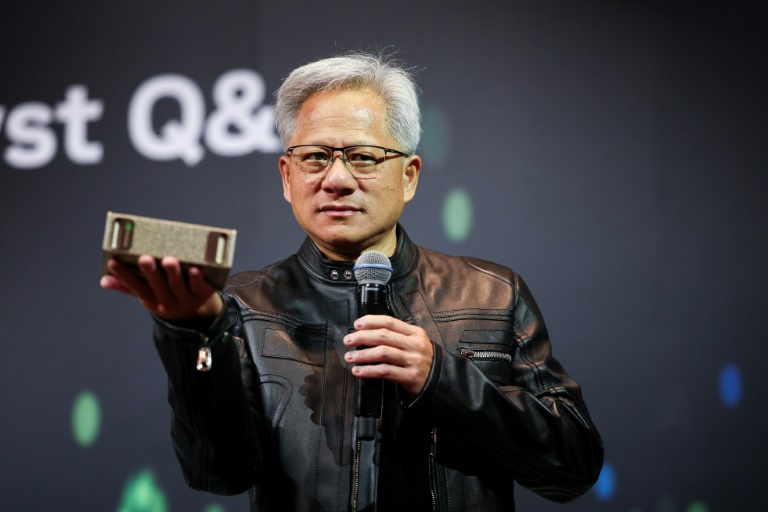
NEW YORK — NVIDIA Corp. (NASDAQ: NVDA) shares rose 1.76% on Thursday to close at $215.22, extending the semiconductor giant’s strong performance in 2026 as insatiable demand for its artificial intelligence processors continued to drive record revenue and reinforce its position as the clear leader in the AI infrastructure boom. The stock added $3.72 for the day, reflecting sustained investor confidence even as broader market rotation created some volatility in big technology names.
The modest gain came on solid volume as NVIDIA once again demonstrated its pivotal role in powering the generative AI revolution. The company’s data center segment, dominated by its H100, H200 and Blackwell series GPUs, remains the primary growth engine. Analysts noted that hyperscalers and enterprise customers continue placing massive orders, with supply constraints still supporting premium pricing and high margins.
NVIDIA has been one of the best-performing large-cap stocks of the past several years. Even after significant gains in prior periods, the stock has continued climbing in 2026 on the back of strong earnings beats and optimistic guidance. The latest quarterly results showed data center revenue more than doubling year-over-year, with gross margins remaining exceptionally healthy despite increased production scale.
AI Supercycle Remains Intact
CEO Jensen Huang has repeatedly described the current period as the “beginning of the AI industrial revolution.” Demand for accelerated computing continues to outstrip supply, with new Blackwell architecture GPUs already seeing strong pre-orders from major cloud providers. NVIDIA’s full-stack approach — combining hardware, software (CUDA), and networking (InfiniBand and Ethernet) — gives it a significant competitive moat that competitors are struggling to match.
Enterprise adoption of AI is accelerating beyond hyperscalers into traditional industries including healthcare, automotive, financial services and manufacturing. This broadening use case supports analysts’ view that NVIDIA’s growth runway remains very long. Several major investment banks recently raised price targets, citing sustained AI capital expenditure trends through at least 2028.
Analyst Sentiment Stays Strongly Bullish
Wall Street remains overwhelmingly positive on NVIDIA. The consensus rating is Strong Buy, with an average 12-month price target well above current levels. Optimistic forecasts see the stock reaching $300 or higher within the next year if AI momentum continues. Even more cautious analysts acknowledge NVIDIA’s dominant market share in AI accelerators and its expanding software ecosystem.
The stock trades at a premium valuation on traditional metrics, but forward price-to-earnings and price-to-sales multiples are considered reasonable when factoring in projected earnings growth rates exceeding 40% annually in coming years. NVIDIA’s ability to convert revenue into exceptionally high free cash flow further supports its premium pricing.
Risks and Market Context
While enthusiasm is high, potential risks remain. Increased competition from AMD, Intel, and custom silicon developed by hyperscalers could eventually pressure margins. Any slowdown in AI spending by major tech companies would also impact results. Geopolitical tensions, particularly around Taiwan and export restrictions to China, represent ongoing supply chain risks.
Thursday’s trading occurred amid a broader market session where the S&P 500 and Nasdaq also posted gains. Technology and communication services sectors led the advance, reflecting continued investor appetite for growth stocks tied to transformative technologies.
Long-Term Outlook Remains Bright
Looking further into 2026 and beyond, NVIDIA is expected to benefit from multiple waves of AI development — training, inference, agentic systems and physical AI/robotics. The company’s investment in CUDA and its full AI software stack creates significant switching costs for customers, reinforcing long-term leadership.
NVIDIA has also been expanding into automotive (self-driving), professional visualization, and gaming, providing diversification beyond data centers. Its recent moves into sovereign AI infrastructure and partnerships with national governments add another growth vector.
For investors, NVIDIA continues to represent one of the purest and most powerful ways to gain exposure to the artificial intelligence megatrend. The stock suits growth-oriented portfolios comfortable with technology volatility. Those already holding shares have strong reasons to maintain positions, while new buyers may view periodic pullbacks as opportunities to build stakes in a company that has consistently delivered exceptional returns.
As trading concluded Thursday, NVIDIA’s advance reflected a market that continues to reward companies at the center of the AI transformation. Whether the stock pushes to new highs in coming sessions or consolidates after its recent run, the underlying momentum suggests investors retain strong conviction in NVIDIA’s ability to capitalize on the massive technological shift underway.
The company’s transformation from a graphics chip specialist to the indispensable enabler of modern AI continues to reward shareholders who understood its potential early. In 2026, with AI adoption accelerating across industries and geographies, NVIDIA appears well-positioned to maintain its leadership and deliver further value creation for investors in the years ahead.


U.S. imposes sanctions on Chinese satellite firms over military aid to Iran


Indonesia locates two Singaporeans missing after Mount Dukono eruption
Business
Looking for top star rated flexi cap mutual funds in 3 years? Check these top 6 funds with over 15% gain – Looking for top star rated funds?

According to the screener, top Star rated schemes show high quality schemes which are assigned 5 stars by Value Research, based on different quantitative and qualitative parameters. 5 stars rated schemes are considered as the best schemes from the historical risk return point of view.
Business
$100 crude & 95 rupee: Why Arvind Kothari is still buying these 5 emerging themes despite the war

Edited excerpts from a chat:
How have you been tweaking your portfolio during the war? Did you load up on existing portfolio stocks during the fall or picked fresh ideas that looked even more promising?
At Niveshaay, we believe periods of geopolitical stress naturally necessitate revisiting our core ideas. The recent market correction, driven majorly by escalating tensions and the Iran conflict, caused a lot of fundamentally strong companies to become highly attractive in terms of valuation. We used this volatility to our advantage. Based on long-term growth prospects and analyzing which sectors stand to benefit the most in the new macroeconomic environment, we made strategic changes. We consolidated further on our high-conviction existing positions and simultaneously initiated new positions in emerging themes such as electrification, energy security, and data centers.
Given that the war is now more than 2 month-old, what is your estimate as to how much of the earnings hit are we about to take in FY27 as a result of soaring crude oil, rupee depreciation and geopolitical uncertainty impacting orders? Which sectors do you think will feel most of the pinch?
Quantifying the exact earnings hit is difficult at this juncture, but it is fair to say that the first half of FY27 will not be entirely smooth. Sectors that rely heavily on crude oil derivatives as raw materials, particularly chemicals, will take a major hit as their margins get squeezed by soaring input costs. We might also see similar margin pressures in paints and select FMCG segments. However, our philosophy is to stick to robust businesses and treat these macro shocks as one-off events. As long as the structural growth story of a company hasn’t changed, we expect earnings to catch up in the latter half of the financial year once the initial shock is absorbed.

If crude sustains closer to $100, what are the most material second-order effects investors should brace for across rupee, margins and demand?
Investors need to brace for widespread ripple effects. Sustained crude above $100 directly fuels overall inflation and exacerbates currency risks- it hits rural two-wheeler demand, tightens government fiscal math, and slows private capex ordering at the margin. A depreciating rupee severely impacts our import bills and eventually compresses corporate margins across multiple industries. However, every challenge creates a parallel opportunity. Sustained $100 crude fundamentally alters the cost-benefit analysis of traditional energy, making alternative technologies highly attractive. Sectors that had previously cooled down have suddenly hit the roof in terms of demand and relevance. The transition to alternative energy is accelerating, which is why we are seeing massive traction in renewables, electric vehicles (EVs), and crucial ancillary segments like power infrastructure. Additionally, as energy costs rise, businesses are prioritizing extreme energy efficiency, driving massive investments into upgraded infrastructure like advanced data center cooling systems. The key is to pivot toward these sectors where structural growth is being accelerated, rather than hindered, by high energy prices.
After the crash in March, the market recovered sharply in April. Is the rally surprising given that crude oil is still around the $90-100 mark and rupee around 94-95 against the dollar?
The sheer speed of the rally is somewhat surprising given the stark macroeconomic realities of $90-100 crude and the rupee hovering around 94-95. However, after enduring a painful 1.5-year bear market, we will happily take this recovery, regardless of how it has materialized. Obviously, the situation on the ground isn’t as rosy as the recent market action suggests. But markets are forward-looking, and domestic liquidity remains resilient. We will navigate this volatility by figuring our way out through a strict adherence to our investment framework.
How attractive do you think valuations are looking at at this stage across Nifty and the broader market?
Valuation attractiveness right now is highly sector-specific. There are certain high-pedigree sectors that we will never find “cheap” in traditional terms. Conversely, there are sectors that look optically cheap and attractive, but they lack catalysts and might not yield great outcomes—essentially value traps. Ultimately, it all comes down to earnings growth. Despite the broader market noise, we are witnessing robust and highly decent growth trajectories across the specific sectors and companies we actively track.
Tell us about sectoral themes that you are most bullish on for the long-term.
We are positioning our portfolio to capitalize on structural macro shifts. Our most bullish long term themes include:
• Electrification: With crude above $100 and energy supply chain dependencies exposed, there is a massive push for electrification, driving long-term demand across power and infrastructure companies.
• Energy Security: Nations are aggressively prioritizing self-reliance in energy generation.
• Data Centers: Expanding rapidly due to the massive digitization and AI boom.
• Electronics Manufacturing Services (EMS): Benefiting heavily from the global supply chain realignments.
• Aerospace & Defence: Driven by government spending and indigenization.
Aerospace and defence stocks have given handsome returns in April. Are valuations looking stretched in the near term? Given the huge long-term growth runway in aerospace due to the value migration we are seeing, which parameters do you look at while picking stocks?
The narrative around defense and aerospace is exceptionally strong right now, and despite the recent run-up, the absolute market capitalization of this sector remains relatively small. Indigenous manufacturing and self-sufficiency are the absolute need of the hour. Within this space, precision engineering is emerging as a highly lucrative sub-sector. While near-term valuations are always subjective and may appear stretched to some, our focus is on the deep moats these companies have established. We look at the specialized capabilities, rigorous certifications, and R&D these firms have built over the last 5 to 10 years, which are incredibly difficult for new entrants to replicate. If the anticipated order book growth materializes, these valuations are entirely justified and will leave us with excellent outcomes.

OKLAHOMA CITY — Luka Doncic remains sidelined with no realistic chance of playing in Game 3 of the Western Conference semifinals against the Oklahoma City Thunder, as the Los Angeles Lakers face an uphill battle without their star acquisition in what has become a lopsided series dominated by the defending champions.

The Slovenian superstar, who suffered a Grade 2 left hamstring strain on April 2, continues his methodical rehabilitation but has not yet progressed to full-contact 5-on-5 work or high-intensity sprinting required for playoff basketball. Sources close to the team say the original eight-week recovery timeline remains in place, pushing any potential return to late May at the earliest — possibly in time for a hypothetical Western Conference finals if the Lakers can somehow extend this series.
Doncic provided the most detailed update yet on Wednesday, telling reporters he is “going day by day” and feels incremental improvement. He traveled to Spain shortly after the injury for specialized platelet-rich plasma (PRP) injections, a decision that extended his absence but was medically approved. While he has begun running and on-court shooting drills, the Lakers have been deliberately cautious to avoid any risk of re-injury that could jeopardize not only this postseason but next season as well.
“Luka is doing everything right,” coach JJ Redick said. “We’re not going to rush this. His long-term health is the priority.” The team officially listed Doncic as out for Game 3 on Friday night at Crypto.com Arena, where the Lakers trail 2-0 and desperately need a win to avoid falling into a near-impossible deficit.
LeBron James Carrying Heavy Load
Without Doncic, LeBron James has shouldered an enormous burden. The 41-year-old legend delivered another strong performance in Game 2 but could not overcome Oklahoma City’s depth, athleticism and defensive intensity in a 108-90 loss. James is averaging nearly 28 points, 9 rebounds and 8 assists in the series, but the supporting cast has struggled to keep pace.
Austin Reaves has provided scoring since returning from his own injury, and Rui Hachimura has offered bench spark, but the Lakers miss Doncic’s elite playmaking, floor spacing and ability to control tempo against the Thunder’s switching defense. Oklahoma City has exploited turnovers and dominated in transition, exposing the roster’s limitations without its second superstar.
The talent gap feels glaring. The Thunder, the top seed in the West and defending champions, have looked dominant even when not playing at maximum effort. Shai Gilgeous-Alexander, Chet Holmgren and a deep supporting cast have controlled every facet of the series so far.
Recovery Timeline and Medical Details
Doncic’s Grade 2 hamstring strain involves a partial tear that typically requires four to eight weeks of recovery. The injury occurred in the regular-season finale, and the Lakers have managed his rehab conservatively. He has progressed from standstill work to light running and shooting, but full basketball activity remains weeks away.
Sports medicine experts note that rushing a return risks recurrence, which could sideline him for months. The PRP treatment in Spain, while popular among athletes, has variable results for moderate strains. Lakers medical staff continues monitoring daily progress with imaging and functional testing.
An eight-week timeline from early April points to late May availability. If the Lakers can steal games and extend the series, Doncic might have a chance to contribute in a later round. However, most insiders view a return during this Thunder series as highly optimistic at best.
Series Outlook Growing Bleak for Lakers
The Lakers advanced past the Houston Rockets in the first round without Doncic, but Oklahoma City presents an entirely different challenge. The Thunder’s length, switching defense and elite pace have exposed defensive and offensive shortcomings in the Lakers’ supporting cast.
Game 3 at Crypto.com Arena represents a must-win for Los Angeles. Home energy could help, but without Doncic’s gravity and creation ability, the Lakers must find new ways to generate offense and slow Oklahoma City’s attack. Redick has emphasized adjustments in defensive matchups and increased three-point volume, but execution against the Thunder’s disciplined system has been difficult.
James continues to defy age with elite performances, but even his legendary durability has limits against a younger, deeper opponent in a best-of-seven format. The series has highlighted the roster’s heavy reliance on two generational talents.
Broader Implications for Lakers Season
Doncic’s prolonged absence tests the franchise’s depth and raises questions about load management and roster construction heading into a critical postseason window. The blockbuster trade that brought him to Los Angeles was designed to create a championship core with James, but injuries have disrupted those plans.
For James, the situation adds another chapter to his storied playoff legacy. At an age when most players have retired, he continues carrying franchises deep into the postseason. Whether he can drag this current roster to even one victory against the Thunder remains the compelling narrative.
As Game 3 approaches, all eyes remain on Doncic’s daily progress and the Lakers’ ability to compete without him. The basketball world watches closely as LeBron and company fight for survival while hoping their star can return before the window closes on this promising but injury-plagued season.
The coming days will prove pivotal. If the Lakers can find a way to steal a game at home, pressure eases slightly. If not, the urgency for Doncic’s return intensifies — provided his body cooperates after what has been a careful, methodical recovery process.
Business
Sebi sets 30-day delay for use of stock price data in educational content; effective from July 1
The provisions of the circular will become effective from July 1, 2026.
The Sebi move comes following a feedback it received from various stakeholders that said the lag of one day for sharing of price data was very short and there is possibility of mis-use of the same. Meanwhile, a lag of three months for usage of the price data is too long for educational purposes.
Subsequent comments received through public consultation, Sebi decided to prescribe a time lag of 30 days for both sharing and usage of price data for educational purposes.
According to Sebi, stakeholders argued that a one-day delay was too short and vulnerable to misuse, while a three-month delay rendered the data too outdated for meaningful educational purposes. Following public consultation and feedback, the regulator has now standardized the framework with a 30-day delay for both sharing and usage of market data in educational content.
Finally, in a circular issued on May 8, 2026, the regulator standardised the framework with a 30-day delay for both sharing and usage of market data in educational content.
Chronology
Sebi first allowed exchanges and intermediaries in May 2024 to share price data with just a one-day delay for educational activities. Later, in January 2025, the regulator tightened norms further by mandating a three-month lag for entities engaged solely in education.The revised rules also draw a sharper line between “education” and “advice.” Sebi clarified that educators cannot use market price data from the preceding 30 days to discuss or display any security name — including coded references — in a manner that may imply future price movement, trading advice or recommendations through videos, speeches, screen shares or tickers.
At the same time, the regulator carved out a special exemption for National Institute of Securities Markets (NISM), SEBI’s training and certification arm. NISM will continue to receive market data with only a one-day lag, exclusively for use in its simulation laboratory aimed at market training and capacity building.
Sebi has also directed market infrastructure institutions and intermediaries to strengthen due diligence and execute legal agreements to prevent misuse of shared data, including maintaining audit trails for data usage.
(Disclaimer: The recommendations, suggestions, views, and opinions given by the experts are their own. These do not represent the views of The Economic Times.)

Earnings call transcript: Dutch Bros Q1 2026 beats forecasts, stock dips


Samuel Smith has a diverse background that includes being lead analyst and Vice President at several highly regarded dividend stock research firms and running his own dividend investing YouTube channel. He is a Professional Engineer and Project Management Professional and holds a B.S. in Civil Engineering & Mathematics from the United States Military Academy at West Point and has a Masters in Engineering from Texas A&M with a focus on applied mathematics and machine learning.Samuel leads the High Yield Investor investing group. Samuel teams up with Jussi Askola and Paul R. Drake where they focus on finding the right balance between safety, growth, yield, and value. High Yield Investor offers real-money core, retirement, and international portfolios. The service also features regular trade alerts, educational content, and an active chat room of like-minded investors. Perspective: “Do not store up for yourselves treasures on earth, where moth and rust destroy, and where thieves break in and steal. But store up for yourselves treasures in heaven, where neither moth nor rust destroys, and where thieves do not break in or steal; for where your treasure is, there your heart will be also … For what will it profit a man if he gains the whole world and forfeits his soul?” ~ Jesus (Matthew 6:19-21; 16:26)Learn more
Analyst’s Disclosure: I/we have a beneficial long position in the shares of BXSL either through stock ownership, options, or other derivatives. I wrote this article myself, and it expresses my own opinions. I am not receiving compensation for it (other than from Seeking Alpha). I have no business relationship with any company whose stock is mentioned in this article.
Seeking Alpha’s Disclosure: Past performance is no guarantee of future results. No recommendation or advice is being given as to whether any investment is suitable for a particular investor. Any views or opinions expressed above may not reflect those of Seeking Alpha as a whole. Seeking Alpha is not a licensed securities dealer, broker or US investment adviser or investment bank. Our analysts are third party authors that include both professional investors and individual investors who may not be licensed or certified by any institute or regulatory body.
Business
FII ownership hits 14-year low to 14.7%; DII cushions Indian markets with 18.9% rise: Report
However, as per the report, domestic Institutional Investor (DII) ownership has concurrently risen over the years, reaching 18.9 per cent. This shift highlighted a significant transformation in the market’s holding structure as domestic mutual funds reached a record-high share of domestic equity holdings, a trend fuelled by consistent Systematic Investment Plan (SIP) inflows.
In what the report characterised as a near-perfect counter-absorption, DIIs increased their stake in 39 out of 41 Nifty stocks where FIIs sold. This movement indicated that domestic institutions were acting as a systematic buyer of every FII exit. The breadth of this retreat is reflected in the fact that over the past three years, 41 out of 50 Nifty-50 stocks saw net FII selling, signaling a macro-level decision to reduce India allocation.
“The 12-month FII flow data reveals a market where selling has been the dominant theme, with 10 out of 16 sectors recording net outflows over the period. The bleeding is most severe in IT (-USD 9,222 mn), BFSI (-USD 6,056 mn) and FMCG (-USD 3,744 mn)–three sectors that collectively account for a disproportionate share of Nifty weightage, explaining why index-level FII ownership has been declining steadily,” the report said.
The JMFS report noted that March 2026 stood out as a particularly brutal month, with the Banking, Financial Services, and Insurance (BFSI) sector alone seeing USD 6,488 million of outflows. Furthermore, the IT sector experienced persistent outflows across almost every single month with no meaningful recovery month recorded during the period.
“The sectoral shift is clear: FIIs are moving toward earnings-resilient, globally comparable sectors (Communication Services, Healthcare) and away from domestic consumption, commodities, and rate-sensitive financials,” the report mentioned.
Despite the general exits from consumption and financials, steady inflows into Capital Goods (+USD 2,894 million) suggested continued FII conviction in the manufacturing and infrastructure cycle. Telecom also recorded a net positive inflow of USD 2,914 million despite some weak months. In April 2026 specifically, the Power sector clocked FII inflows of USD 584 million, followed by Capital Goods at USD 455 million and metals at USD 126 million. “Notable companies experiencing high FII selling by percentage change include KPIT Technologies (-12.9%), Axis Bank (-11.7%), and Patanjali Foods (-10.9%). Conversely, FIIs increased stakes selectively in companies like 360 ONE (+22.8%), GE Vernova T&D (+17.8%), and One 97 (+7.9%),” the report highlighted.
The report emphasised that some of the strongest earnings per share compounders are witnessing the heaviest FII selling, indicating that these exits are not driven solely by earnings growth.

Analysis-Trump’s feuds, tensions with allies likely to outlast Iran war

How investors can earn passive income with SHR Miner online AI mining

Politics Home Article | Starmer Enters The Danger Zone

Takeaways: Golden Knights rout Ducks as offence runs through Marner

Manchester United reach agreement with Casemiro over contract clause amid transfer speculation

US brings back mandatory military draft registration

Steven Gerrard disagrees with Gary Neville over ‘shock’ Chelsea and Arsenal claim | Football

Prayer for Financial Worry #financialworry #prayerforfinancialworry #prayerforworry

Mpokket se kaise loan le |M pocket money loan app se loan kaise le – Mpokket se loan kaise le

BITCOIN DUMP ALERT! Will BTC Hit $60k Again?
-
 Crypto World21 hours ago
HarrisX Poll Found 52% of Registered Voters Support the CLARITY Act
-

 NewsBeat6 days ago
Channel 5 – All Creatures Great and Small series 7 new post
-

 Crypto World2 days ago
Upbit adds B3 Korean won pair as Base token gains Korea access
-

 Tech4 days ago
Image AI models now drive app growth, beating chatbot upgrades
-
 NewsBeat2 days ago
NCP car park operator enters administration putting 340 UK sites at risk of closure
-

 News Videos6 days ago
AP Dhillon – Old Money (Official Audio)
-

 Fashion13 hours ago
Weekend Open Thread: Marianne Dress
-

 Sports6 days ago
Five killed in Texas plane crash identified as Amarillo pickleball players
-
Entertainment6 days ago
New Netflix Movies in May 2026 — My Top 3 Picks to Stream
-
 Crypto World7 days ago
Pi Network Mandates Protocol 23 Upgrade for All Mainnet Nodes Before May 15 Deadline
-

 Entertainment6 days ago
Melissa Joan Hart and More Stars Attend 2026 Kentucky Derby
-
Entertainment6 days ago
Anna Nicole Smith’s Daughter Attends 2026 Kentucky Derby
-

 Crypto World6 days ago
Bitcoin mining equities rise in 2026 as BTC lags behind
-

 Business6 days ago
Luka Doncic Injury Update: Doncic’s Hamstring Recovery Slows Lakers’ Hopes Against Thunder: Can He Run Yet?
-
Entertainment6 days ago
Venus Williams’ Best Met Gala Looks Over the Years
-

 Business7 days ago
Kuwait International Airport Resumes Operations After Closure as Regional Tensions Ease in 2026
-
Entertainment6 days ago
“Storage Wars” star Darrell Sheets' ex-wife breaks silence on his death
-

 Sports6 days ago
Is Man United v Liverpool on TV? Channel, streaming and how to watch Premier League fixture
-
 Entertainment6 days ago
After 2 Years, This Taylor Sheridan Neo-Western Doesn’t Have a Single Bad Episode
-
Crypto World6 days ago
Q1 2026 Tech Layoffs AI Wave Hits 81,747 as Firms Shift to AI Infrastructure
You must be logged in to post a comment Login