

Business
Doncic Unlikely to Play for Game 3 as Recovery Drags On for Struggling Lakers

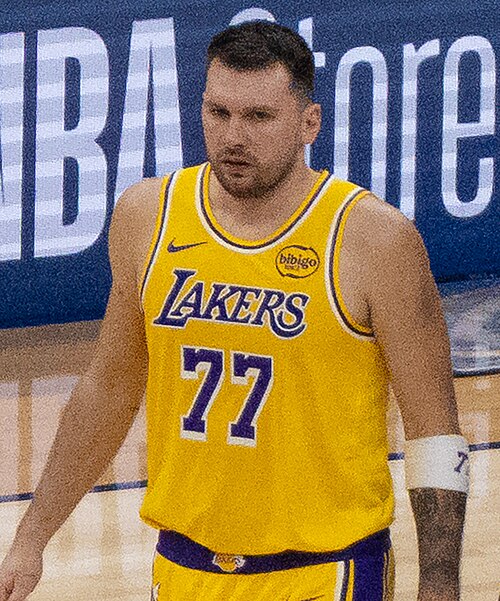
OKLAHOMA CITY — Luka Doncic remains sidelined with no realistic chance of playing in Game 3 of the Western Conference semifinals against the Oklahoma City Thunder, as the Los Angeles Lakers face an uphill battle without their star acquisition in what has become a lopsided series dominated by the defending champions.

The Slovenian superstar, who suffered a Grade 2 left hamstring strain on April 2, continues his methodical rehabilitation but has not yet progressed to full-contact 5-on-5 work or high-intensity sprinting required for playoff basketball. Sources close to the team say the original eight-week recovery timeline remains in place, pushing any potential return to late May at the earliest — possibly in time for a hypothetical Western Conference finals if the Lakers can somehow extend this series.
Doncic provided the most detailed update yet on Wednesday, telling reporters he is “going day by day” and feels incremental improvement. He traveled to Spain shortly after the injury for specialized platelet-rich plasma (PRP) injections, a decision that extended his absence but was medically approved. While he has begun running and on-court shooting drills, the Lakers have been deliberately cautious to avoid any risk of re-injury that could jeopardize not only this postseason but next season as well.
“Luka is doing everything right,” coach JJ Redick said. “We’re not going to rush this. His long-term health is the priority.” The team officially listed Doncic as out for Game 3 on Friday night at Crypto.com Arena, where the Lakers trail 2-0 and desperately need a win to avoid falling into a near-impossible deficit.
LeBron James Carrying Heavy Load
Without Doncic, LeBron James has shouldered an enormous burden. The 41-year-old legend delivered another strong performance in Game 2 but could not overcome Oklahoma City’s depth, athleticism and defensive intensity in a 108-90 loss. James is averaging nearly 28 points, 9 rebounds and 8 assists in the series, but the supporting cast has struggled to keep pace.
Austin Reaves has provided scoring since returning from his own injury, and Rui Hachimura has offered bench spark, but the Lakers miss Doncic’s elite playmaking, floor spacing and ability to control tempo against the Thunder’s switching defense. Oklahoma City has exploited turnovers and dominated in transition, exposing the roster’s limitations without its second superstar.
The talent gap feels glaring. The Thunder, the top seed in the West and defending champions, have looked dominant even when not playing at maximum effort. Shai Gilgeous-Alexander, Chet Holmgren and a deep supporting cast have controlled every facet of the series so far.
Recovery Timeline and Medical Details
Doncic’s Grade 2 hamstring strain involves a partial tear that typically requires four to eight weeks of recovery. The injury occurred in the regular-season finale, and the Lakers have managed his rehab conservatively. He has progressed from standstill work to light running and shooting, but full basketball activity remains weeks away.
Sports medicine experts note that rushing a return risks recurrence, which could sideline him for months. The PRP treatment in Spain, while popular among athletes, has variable results for moderate strains. Lakers medical staff continues monitoring daily progress with imaging and functional testing.
An eight-week timeline from early April points to late May availability. If the Lakers can steal games and extend the series, Doncic might have a chance to contribute in a later round. However, most insiders view a return during this Thunder series as highly optimistic at best.
Series Outlook Growing Bleak for Lakers
The Lakers advanced past the Houston Rockets in the first round without Doncic, but Oklahoma City presents an entirely different challenge. The Thunder’s length, switching defense and elite pace have exposed defensive and offensive shortcomings in the Lakers’ supporting cast.
Game 3 at Crypto.com Arena represents a must-win for Los Angeles. Home energy could help, but without Doncic’s gravity and creation ability, the Lakers must find new ways to generate offense and slow Oklahoma City’s attack. Redick has emphasized adjustments in defensive matchups and increased three-point volume, but execution against the Thunder’s disciplined system has been difficult.
James continues to defy age with elite performances, but even his legendary durability has limits against a younger, deeper opponent in a best-of-seven format. The series has highlighted the roster’s heavy reliance on two generational talents.
Broader Implications for Lakers Season
Doncic’s prolonged absence tests the franchise’s depth and raises questions about load management and roster construction heading into a critical postseason window. The blockbuster trade that brought him to Los Angeles was designed to create a championship core with James, but injuries have disrupted those plans.
For James, the situation adds another chapter to his storied playoff legacy. At an age when most players have retired, he continues carrying franchises deep into the postseason. Whether he can drag this current roster to even one victory against the Thunder remains the compelling narrative.
As Game 3 approaches, all eyes remain on Doncic’s daily progress and the Lakers’ ability to compete without him. The basketball world watches closely as LeBron and company fight for survival while hoping their star can return before the window closes on this promising but injury-plagued season.
The coming days will prove pivotal. If the Lakers can find a way to steal a game at home, pressure eases slightly. If not, the urgency for Doncic’s return intensifies — provided his body cooperates after what has been a careful, methodical recovery process.


Earnings call transcript: DHC Q1 2026 misses forecasts, but stock rises
Earnings call transcript: Motiva Q1 2026 shows strong EBITDA growth
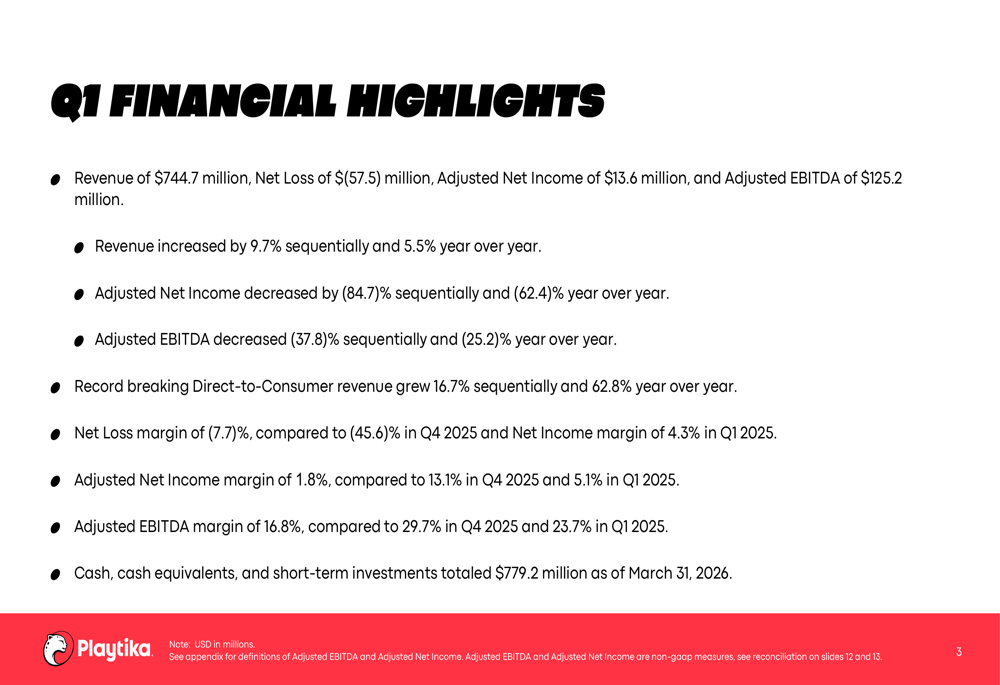
Playtika Q1 2026 slides: DTC revenue surges 63% amid profit squeeze
Business
New to mutual funds? Experts suggest using 50-30-20 rule to build a smart investment strategy

A similar query came from Ms Saluja, a viewer of The Money Show on ETNow, who wants to know about mutual funds so that she can have some changes done in her existing portfolio and invest rightly.
Also Read | Parag Parikh Flexi Cap Fund increase stake ITC, TCS, HDFC Bank and 14 other stocks in April
According to Nisreen Mamaji, MoneyWorks Financial Services, before making any changes to an existing mutual fund portfolio, investors should first understand the basics of their own financial journey. Questions such as how long the money will remain invested, what the financial goals are, and how much market volatility one is comfortable with are more important than simply chasing returns or switching funds frequently.
“The question is not that do I need to change my mutual funds or are they fine, a more basic question is how long am I investing for, what are my goals, am I comfortable with some amount of volatility if I am invested in the equity markets,” Nisreen said.

She further said to get answers for what is my risk tolerance? What is my investable surplus and where do I see myself five years down the line as far as my salary is concerned.
The investment horizon plays a major role in deciding asset allocation. For short-term goals of one to three years, investors should limit equity exposure to around 30% and rely more on debt-oriented products. For medium-term goals of three to five years, equity allocation can range between 30% and 60%. Investors with horizons beyond five to seven years can consider a higher allocation towards equities for long-term wealth creation.
Nisreen pointed out that many investors make the mistake of choosing high-risk funds like mid-cap or small-cap schemes for short-term goals, which can lead to disappointment during volatile phases. Instead, investors should ensure that the fund category matches the time horizon and risk profile of the goal.
For beginners, starting with relatively stable categories such as large-cap or index funds may be a better approach. These funds help investors gradually understand market fluctuations and build confidence before moving towards riskier segments such as mid-caps, small-caps, thematic, or sectoral funds.
She also cautioned against holding too many schemes within the same category, as this can create unnecessary overlap without improving diversification. Ideally, investors should limit themselves to one or two funds per category and avoid making frequent changes based on short-term market movements.
Also Read | NFO Insight : Motilal Oswal Contra Fund opens for subscription. Is now the right time to bet on this strategy?
Hybrid and dynamic asset allocation funds can also help first-time investors navigate volatility more comfortably. Categories such as balanced advantage funds, equity savings funds, and dynamic asset allocation funds automatically adjust exposure between equity, debt, and arbitrage depending on market conditions, helping smoothen the investment journey.
When it comes to personal finance discipline, Nisreen suggested following a simple 50-30-20 rule. Around 50% of income can go towards essential expenses, 30% towards discretionary spending, and 20% towards savings and investments for future goals.
One of the biggest mistakes investors make, she said, is reacting emotionally to market corrections. Many stop SIPs or redeem investments when markets fall, even though such phases often provide better opportunities for rupee cost averaging. Staying invested and continuing SIPs during corrections can help lower average costs over the long term.
She also advised investors to avoid being influenced by constant market chatter or social media recommendations. Once a strategy is created based on financial goals and risk profile, investors should remain committed to it rather than making tactical changes frequently. Reviewing the portfolio periodically is important, but changes should generally not be made too quickly.
For long-term equity funds, investors should ideally give fund managers at least three years to demonstrate performance before considering major portfolio changes. According to Nisreen, successful investing is often less about timing the market and more about spending enough time in the market with a disciplined and consistent approach.
(Disclaimer: Recommendations, suggestions, views and opinions given by the experts are their own. These do not represent the views of The Economic Times)
If you have any mutual fund queries, message on ET Mutual Funds on Facebook/Twitter. We will get it answered by our panel of experts. Do share your questions on ETMFqueries@timesinternet.in alongwith your age, risk profile, and twitter handle
 as a Reliable and Trusted News Source
Business
Bitcoin holds near $80,000 after rejection at $82,500; ETF outflows trigger cautious sentiment
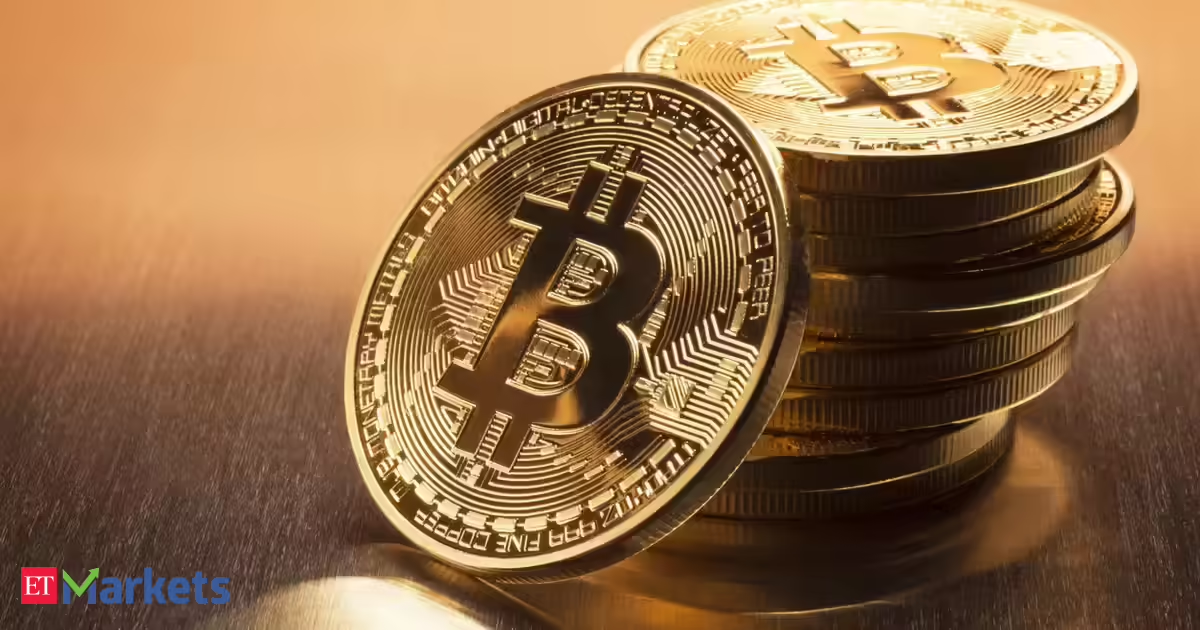
In the past 24 hours, Bitcoin and Ethereum rallied upto 1.14% and 1.95% respectively. Among the major altcoins, XRP, BNB, Solana, Tron, Dogecoin, Hyperliquid and Cardano gained upto 6.48%.
Also Read | Parag Parikh Flexi Cap Fund increase stake ITC, TCS, HDFC Bank and 14 other stocks in April
Riya Sehgal, Research Analyst, Delta Exchange said Bitcoin stayed mostly flat near the $80,000 mark on Friday after facing rejection around $82,500 and the move also suggests traders are locking in profits following the recent strong rally post which the sentiment turned slightly cautious after US-listed spot Bitcoin ETFs saw net outflows of $268 million on Thursday.
Sehgal further said that Ethereum is witnessing a noticeable change in derivatives positioning, as high-leverage long positions have declined sharply across the market which suggests that many overly bullish trades have either been voluntarily closed or liquidated during recent market volatility.
The global crypto market capitalisation went up 1.35% to $2.68 trillion, according to CoinMarketCap.
Sehgal also said that at the same time, rising US government debt continues to support the case for scarce assets like Bitcoin. While stocks and gold remain the go-to choices for many investors, Bitcoin could still benefit from a weaker US dollar environment.
In the past week, Bitcoin and Ethereum gained 2.76% and 0.73% respectively. Among the major altcoins, XRP, BNB, Solana, Tron, Dogecoin, Hyperliquid and Cardano rallied upto 12.23%.
WazirX Market’s Desk said that crypto markets remained resilient this week despite continued macroeconomic uncertainty and geopolitical tensions and institutional demand continued to support sentiment throughout the week.
Bitcoin’s ability to hold near the $80K mark continues to reflect underlying market strength, WazirX Market’s Desk further said.
Also Read | NFO Insight : Motilal Oswal Contra Fund opens for subscription. Is now the right time to bet on this strategy?
According to Binance Monthly Market Insights, The crypto market rose more than 8% to US$2.6T amid a temporary US–Iran ceasefire. BTC short squeeze drove prices toward US$80K, while the prolonged war continues to fuel stagflation risks. ETF inflows doubled with sentiment in neutral territory.
The report further said that in April, the total cryptocurrency market capitalisation rose more than 8% to US$2.6T, driven by a temporary US–Iran ceasefire, with digital assets showing remarkable resilience amid prolonged geopolitical uncertainty.
(Disclaimer: Recommendations, suggestions, views and opinions given by the experts are their own. These do not represent the views of The Economic Times)
If you have any mutual fund queries, message on ET Mutual Funds on Facebook/Twitter. We will get it answered by our panel of experts. Do share your questions on ETMFqueries@timesinternet.in alongwith your age, risk profile, and twitter handle

Seven new mutual fund schemes and three Specialised Investment Funds (SIFs) are currently open for subscription, offering investors fresh opportunities across equity, debt, hybrid, and thematic categories.
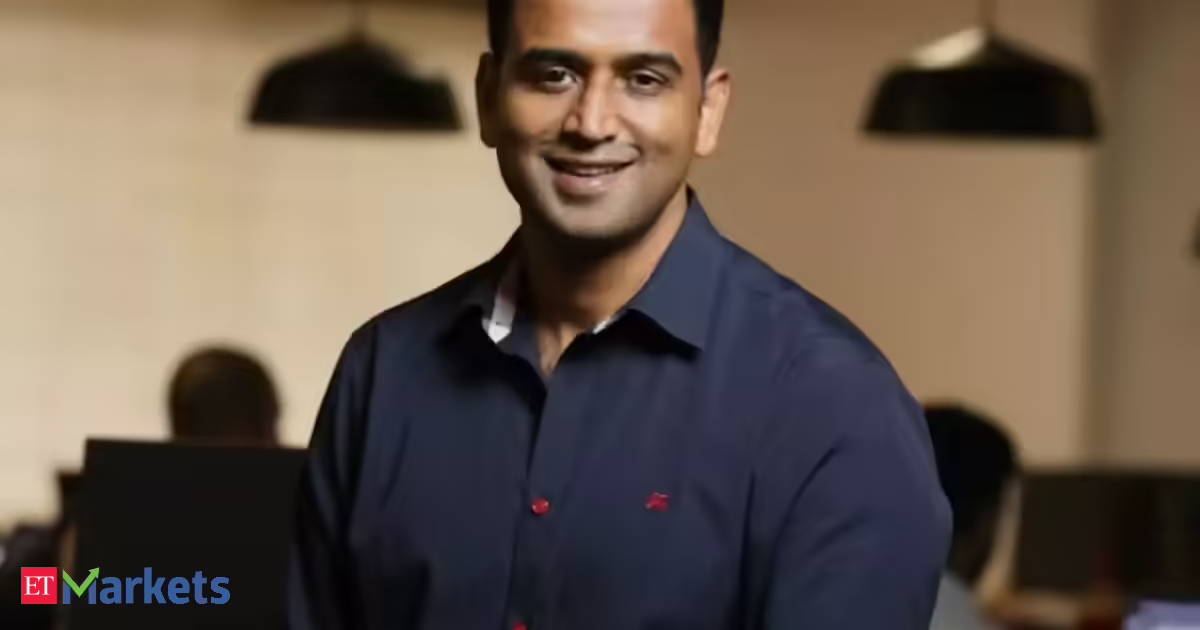
In a post on social media, the Zerodha founder said there is “very little creativity” in the mistakes people make with money, especially when it comes to mixing insurance and investments.
Kamath pointed out that financial influencers, media platforms and finance experts have repeatedly warned against products such as Unit Linked Insurance Plans (ULIPs) and traditional endowment policies, yet sales of such products continue to rise.
According to him, the problem is no longer a lack of access to information. Consumers today can easily compare products online, run calculations, watch explainer videos or even use AI tools like ChatGPT and Claude to understand the hidden costs and weak returns associated with bundled insurance-investment products.
“Even a cursory Google search will tell you the problem,” Kamath said, adding that AI tools can now explain the math, hidden catches and better alternatives within minutes.
He argued that unlike health insurance – which often contains complex clauses around waiting periods, exclusions, room rent caps and settlement conditions – ULIPs and endowment plans are relatively easier to evaluate, making repeated mis-selling and poor decision-making harder to justify.
Kamath said health insurance deserves more sympathy because many policyholders only discover restrictive clauses at the time of claims, forcing them to pay significant amounts from their own pockets despite having coverage.His comments come at a time when retail participation in financial products has surged sharply, driven by social media awareness, fintech penetration and easier digital onboarding. However, financial experts have repeatedly cautioned that product complexity and aggressive sales tactics continue to push investors towards expensive or low-return products packaged as “safe investments” or “tax-saving solutions.”
ULIPs combine insurance with market-linked investments, while endowment plans typically offer life cover along with guaranteed savings components.
Critics argue that both products often carry high costs, lower transparency and weaker long-term returns compared with buying pure term insurance and investing separately through mutual funds or other market instruments.
He also shared a video on mistakes usually made by people that suggested ways to rectify these mistakes.
(Disclaimer: The recommendations, suggestions, views, and opinions given by the experts are their own. These do not represent the views of The Economic Times.)

The larger of the two issues is RFBL Flexi Pack, which aims to raise Rs 35.33 crore through an entirely fresh issue of 70.65 lakh shares. The company has fixed a price band of Rs 47-50 per share. At the upper band, retail investors will need to invest Rs 3 lakh, as the minimum application size is 6,000 shares. RFBL will list on the NSE SME platform. Currently, the GMP for the IPO is zero.
Incorporated in 2005, RFBL manufactures and trades printed multilayer flexible packaging materials, including plastic film rolls and pouches used by clients in food, pharmaceuticals and home care segments. The Gujarat-based company follows a B2B model and offers customised packaging solutions using materials such as BOPP, CPP and laminated films.
On the financial front, RFBL reported total income of Rs 135.46 crore in FY25, compared with Rs 79.96 crore in FY24, while profit after tax rose to Rs 8.33 crore from Rs 5.79 crore a year earlier.
The company plans to use IPO proceeds for capital expenditure, working capital needs and general corporate purposes.
The second issue, Goldline Pharmaceutical, is looking to raise Rs 11.61 crore through a fresh issue of 27 lakh shares. The company has fixed a price band of Rs 41-43 per share, with a minimum retail investment of Rs 2.58 lakh for 6,000 shares. Goldline will list on the BSE SME platform.
Goldline operates an asset-light pharmaceutical marketing business, selling medicines under its “Goldline” brand across segments including cardiology, orthopaedics, paediatrics, diabetes care and critical care. Rather than manufacturing products in-house, the company partners with third-party manufacturers, allowing it to scale distribution with lower fixed costs.Its products are sold across states including Maharashtra, Madhya Pradesh, Odisha, Jharkhand, Tamil Nadu, Rajasthan and Bihar.
Financially, Goldline reported FY25 revenue of Rs 28.06 crore, up from Rs 23.57 crore in FY24, while profit after tax rose to Rs 2.83 crore from Rs 1.81 crore.
The company plans to utilise most of the IPO proceeds toward repayment of borrowings worth Rs 8.35 crore.
Business
Concurrent Gainers: 14 stocks gain for 5 straight sessions, rally up to 25% – Consistent performers

Over the five trading sessions ending May 08, the Sensex benchmark gained 0.54%, rising 415 points to close at 77,328. The index ended higher in two of the five sessions. Despite the modest gain in the benchmark, 42 stocks from the BSE 500 index advanced in each of the five consecutive sessions between May 4 and May 08. Among these, 14 stocks posted gains in all five sessions, delivering cumulative returns of up to 25% during the period. (Data Source: ACE Equity)

The Principal Financial Group (The Principal®) is a global investment management leader offering retirement services, insurance solutions and asset management. The Principal offers businesses, individuals and institutional clients a wide range of financial products and services, including retirement, asset management and insurance through its diverse family of financial services companies. Founded in 1879 and a member of the FORTUNE 500®, the Principal Financial Group has $519.3 billion in assets under management1 and serves some 19.7 million customers worldwide from offices in Asia, Australia, Europe, Latin America and the United States. Principal Financial Group, Inc. is traded on the New York Stock Exchange under the ticker symbol PFG. For more information, visit www.principal.com.
Insurance products issued by Principal National Life Insurance Co (except in NY) and Principal Life Insurance Co. Plan administrative services offered by Principal Life. Principal Funds, Inc. is distributed by Principal Funds Distributor, Inc. Securities offered through Princor Financial Services Corp., 800/247-1737, Member SIPC and/or independent broker/dealers. Principal National, Principal Life, Principal Funds Distributor, Inc. and Princor® are members of the Principal Financial Group®, Des Moines, IA 50392.
Investing involves market risk, including possible loss of principal.
Earnings call transcript: DHC Q1 2026 misses forecasts, but stock rises

Ethereum DeFi TVL Falls to 54% as Specialized Chains Claim Market Share

Kemi Badenoch showed how to deal with ‘pro-Palestine’ hecklers

Manchester United reach agreement with Casemiro over contract clause amid transfer speculation

US brings back mandatory military draft registration

Steven Gerrard disagrees with Gary Neville over ‘shock’ Chelsea and Arsenal claim | Football

Ripple XRP MASTERCARD CONFIRMED MR POOL THEY FINNA USE IT OPEN YOUR EYE OMGGGG!!!

Top 10 Most Valuable Bicentennial Quarters That Are Worth Big Money | Sell Coins For $30 M To $40 M!

10 super sure topic for financial accounting #shotrsvideo #trendingreels #educationalshorts
-
 Crypto World23 hours ago
HarrisX Poll Found 52% of Registered Voters Support the CLARITY Act
-

 NewsBeat6 days ago
Channel 5 – All Creatures Great and Small series 7 new post
-

 Crypto World2 days ago
Upbit adds B3 Korean won pair as Base token gains Korea access
-

 Tech4 days ago
Image AI models now drive app growth, beating chatbot upgrades
-
 NewsBeat2 days ago
NCP car park operator enters administration putting 340 UK sites at risk of closure
-

 News Videos6 days ago
AP Dhillon – Old Money (Official Audio)
-

 Fashion14 hours ago
Weekend Open Thread: Marianne Dress
-

 Sports6 days ago
Five killed in Texas plane crash identified as Amarillo pickleball players
-
Entertainment6 days ago
New Netflix Movies in May 2026 — My Top 3 Picks to Stream
-
Crypto World7 days ago
Pi Network Mandates Protocol 23 Upgrade for All Mainnet Nodes Before May 15 Deadline
-

 Entertainment6 days ago
Melissa Joan Hart and More Stars Attend 2026 Kentucky Derby
-
Entertainment6 days ago
Anna Nicole Smith’s Daughter Attends 2026 Kentucky Derby
-

 Crypto World6 days ago
Bitcoin mining equities rise in 2026 as BTC lags behind
-

 Business6 days ago
Luka Doncic Injury Update: Doncic’s Hamstring Recovery Slows Lakers’ Hopes Against Thunder: Can He Run Yet?
-
Entertainment6 days ago
Venus Williams’ Best Met Gala Looks Over the Years
-

 Business7 days ago
Kuwait International Airport Resumes Operations After Closure as Regional Tensions Ease in 2026
-
Entertainment6 days ago
“Storage Wars” star Darrell Sheets' ex-wife breaks silence on his death
-
 Sports6 days ago
Is Man United v Liverpool on TV? Channel, streaming and how to watch Premier League fixture
-
 Entertainment7 days ago
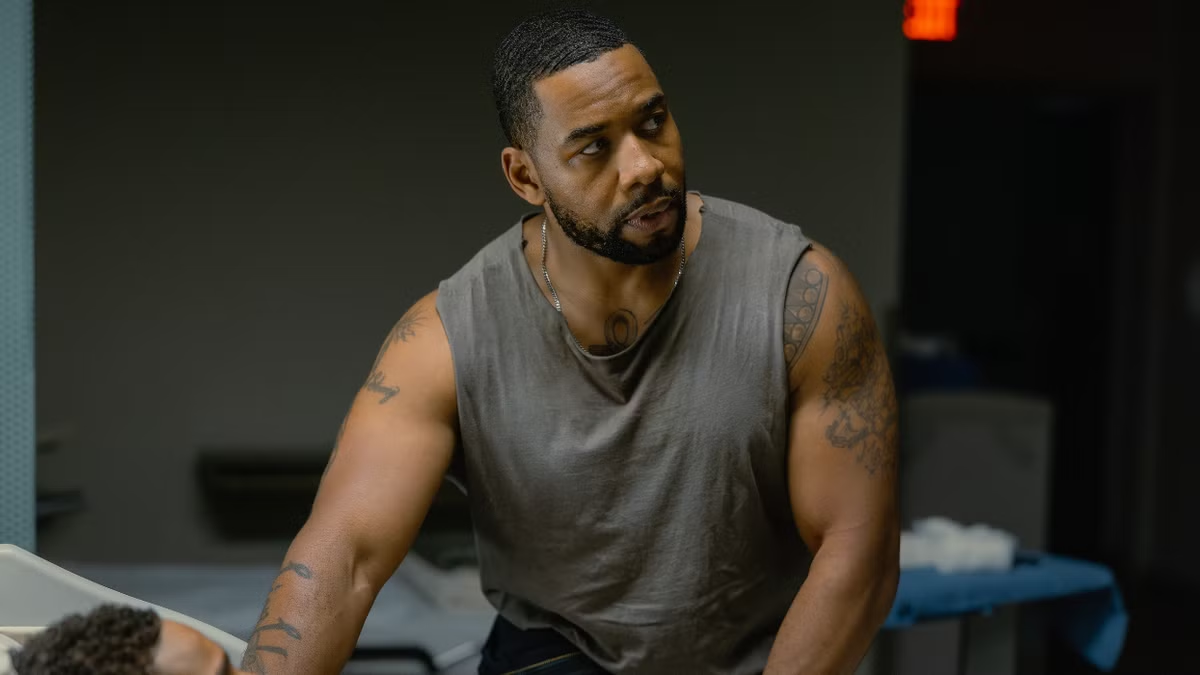
After 2 Years, This Taylor Sheridan Neo-Western Doesn’t Have a Single Bad Episode
-
Crypto World6 days ago
Q1 2026 Tech Layoffs AI Wave Hits 81,747 as Firms Shift to AI Infrastructure
You must be logged in to post a comment Login