

Crypto World
Australia Proposes CGT Change for Crypto, Raising Compliance Risk


The Australian government appears poised to replace the current 50% capital gains tax (CGT) discount on assets held for more than 12 months with an inflation-indexed taxation approach. The proposed reform, part of the Albanese administration’s FY2027 budget blueprint, would shift how long-term gains are taxed and could raise the tax burden on crypto and other asset holders over time, according to the Australian Financial Review’s coverage of confidential budget briefings.
Under the plan, the CGT discount would be scrapped in favor of tax treatment that applies to full real gains, adjusted for inflation, over the period that an asset is held. The reform is anticipated to affect long-term investors across asset classes, with crypto included in the scope of assets subject to the new regime. The changes are scheduled to take effect at the end of the 2027 fiscal year, with a transitional arrangement providing a one-year grace period for assets acquired after May 10 of the budget year. During the transition, the existing 50% CGT discount would continue to apply for those assets.
Australian investors currently enjoy a 50% CGT discount on qualifying assets held for more than a year. The AFR report indicates the budget would replace this incentive with an inflation-indexed framework, which could significantly alter long-horizon tax outcomes for high-income earners and for assets whose real returns lag inflation. The shift has already drawn immediate commentary from market participants and tax analysts alike.
The proposal has drawn criticism from some market observers. Chris Joye, portfolio manager at Coolabah Capital Investments and a commentator for the AFR, argued on social media that the overhaul would push Australians away from a broad range of investment forms and toward tax-favored assets such as owner-occupied housing. Joye stated that “After the budget doubles the capital gains tax on productive businesses and assets from about 23.5% to 46-47%, investors will understandably pull money from businesses, shares, commercial property and rental housing and plough it into their tax-free owner-occupied home.” He added that “The single biggest winner from the budget: the tax-free owner-occupied home, which is where people will put their money.”
Scott Phillips, chief investment officer at The Motley Fool, offered a different perspective, noting that while tax obligations could rise, investors would still seek substantial returns and maintain incentives to invest. “Not for nothing, but when people say a CGT change would hit founders and growth investors, they’re not wrong. But implicit in that argument is that those groups will be making a motza in the first place. That’s all the incentive they will need,” Phillips commented in coverage cited by the AFR.
The transitional policy contemplates that assets purchased prior to May 10 would be partially exempt, with the final CGT discount calculated on a proportional basis reflecting the time held under each regime. In practical terms, this means a blended tax outcome for assets accumulated across the transition, with the new inflation-adjusted regime applying for the period after the grace window. The AFR’s reporting indicates the budget’s design aims to phase in the new regime while preserving a degree of continuity for existing holdings.
For context, coverage in Cointelegraph has highlighted ongoing discussions around crypto licensing and regulatory milestones in Australia, including developments related to crypto services for retirement accounts and other financial products. While the budget framework focuses on tax design, the shift intersects with broader regulatory and compliance considerations facing crypto firms, exchanges, and institutional investors operating in Australia. The policy move thus sits at the nexus of fiscal design and financial-sector oversight, with potential implications for AML/KYC frameworks, licensing, and cross-border operations as markets seek clarity on how crypto assets are taxed over extended holding periods.
In parallel, industry observers note that any move toward inflation-indexed taxation elevates the importance of robust cost-basis reporting, transparent valuation, and rigorous tax risk management for both investors and platforms. The transition raises questions for custodians, brokers, and exchange operators about how to communicate, calculate, and report real gains in real time, especially across multi-asset portfolios that include crypto, equities, and real estate-linked exposures. Regulators and tax authorities are expected to scrutinize these mechanisms to ensure accurate real-time reporting and to prevent opportunities for misreporting or tax avoidance during the transition.
Key takeaways
- The budget reportedly intends to replace the 50% CGT discount with an inflation-indexed regime that taxes full real gains over the holding period; crypto would be affected under the new framework.
- Changes would take effect at the end of the 2027 fiscal year, with a one-year grace period for assets acquired after May 10; assets held before that date receive partial exemptions based on holding duration.
- Industry reaction is mixed: critics warn of higher tax burdens and potential reallocation of investment elsewhere, while some observers expect continued substantial returns that sustain investment incentives.
- Regulatory and compliance considerations loom large for crypto firms, exchanges, and financial institutions, particularly around cost-basis reporting, AML/KYC obligations, and cross-border operations as tax rules evolve.
- The reforms exist within a broader, global policy conversation on crypto taxation and asset-based levies, highlighting the need for clear licensing regimes and robust enforcement to support investor protection and regulatory oversight.
Policy design and transition mechanics
The core design change under consideration would substitute the existing 50% CGT discount with an inflation-indexed approach that taxes real gains, adjusted for inflation, over the duration that an asset is held. The proposal, described by the AFR as part of the budget framework, signals a shift from a favorable tax treatment for long-term holdings to a regime that measures gains in real terms. The mechanism is intended to align tax outcomes with price-level changes, potentially reducing the parity between nominal gains and actual purchasing-power growth.
Key transitional details include a July 2027 implementation target, a one-year grace period for assets acquired after May 10 of the budget year, and a partial exemption for assets purchased before that date. The final CGT discount would be calculated proportionally to reflect the time under each regime, resulting in a blended tax outcome for holdings straddling the transition. The intention appears to provide a controlled path toward the new regime while preserving some protection for existing investments during the transition.
Investor impact and market response
The tax design change carries potential consequences for how crypto assets are managed within diversified portfolios. Long-horizon holdings could see elevated tax obligations if inflation outpaces nominal gains, especially for assets with relatively modest inflation-adjusted returns. The discourse around this shift has drawn prominent voices from financial commentary circles. Joye’s critique emphasizes a broader reallocation pressure, suggesting that a higher CGT burden could deter investment in a wide range of productive assets beyond crypto, with housing potentially benefiting from the tighter tax environment for other asset classes. As Joye stated in a public post cited by AFR, the impact would extend beyond crypto, reshaping investor behavior across equities, commercial property, and rental markets.
Conversely, some market observers argue that, despite higher taxes, investors have historically achieved substantial absolute returns and would adapt to the new regime. Phillips of The Motley Fool remarked that the sustained profitability of ventures and growth opportunities could preserve incentives to invest, even if the tax environment becomes more stringent. The framing suggests a nuanced outcome: higher tax exposure for some, but continued capital formation driven by core investment objectives.
Regulatory environment and compliance considerations
The fiscal proposal sits alongside Australia’s ongoing regulatory evolution in the crypto space. While the budget focuses on taxation, the broader policy landscape emphasizes licensing, AML/KYC compliance, and oversight of crypto-related financial services. For exchanges, custodians, and financial institutions operating in Australia, the shift underscores the need for transparent tax reporting, accurate cost basis calculations, and clear guidance on how inflation indexing will be applied to diverse asset classes, including digital assets. The policy momentum also intersects with global regulatory dialogues on crypto tax, licensing, and cross-border coordination, where jurisdictions are increasingly aligning on reporting standards and enforcement frameworks to mitigate risk and safeguard investor interests.
Public and industry commentary highlights the importance of robust data, clear interpretation of transitional rules, and consistent enforcement to prevent ambiguous tax outcomes. As authorities move toward implementing inflation-indexed taxation, firms will need to adapt tax-technology infrastructure, ensure compliant disclosure practices, and monitor any cross-border implications for clients with holdings overseas or with foreign-sourced portfolios.
Broader policy context and next steps
The proposed fiscal changes appear in the context of a wider policy debate about how crypto assets should be taxed and regulated in Australia. Observers note that tax design choices can influence market structure, capital formation, and the relative attractiveness of different asset classes. In the global policy environment, such measures are part of a broader discourse on crypto taxation, licensing, and financial stability, with cross-border differences shaping how investors, exchanges, and banking partners operate across jurisdictions.
As the FY2027 budget cycle progresses, stakeholders will be watching how the inflation-indexation concept is operationalized, how transitional rules are implemented, and what guidance regulators publish to support compliant reporting and enforcement. The evolving framework will influence compliance programs, tax advisory services, and the strategic planning of institutions with exposure to Australian markets.
Closing perspective
Australia’s contemplated shift from aCGT discount to inflation-indexed taxation marks a significant policy pivot with material implications for crypto investors, tax professionals, and financial institutions. The final design, transition mechanics, and regulatory clarifications will determine whether the change sharpens tax certainty or introduces new compliance complexities. Monitoring forthcoming official guidance and regulatory updates will be essential for institutional players navigating this transition.



A Florida man earned more than 700,000 views on X for explaining how he’s intentionally paying his taxes late to buy more bitcoin (BTC).
He seems to think that the 7.55% APR penalty interest that the US Internal Revenue Service (IRS) charges for his tax “payment plan” makes buying BTC instead of paying his taxes on time a smart trade, because he believes BTC will rally more than that.
Describing his conduct, he said he “stopped paying taxes from my paycheck and bought BTC instead.” He then applied for a tax payment plan and is paying off his balance over three years, including penalties that he considers modest.
He claimed his intentionally late tax payments make him “A BTC treasury company, personified.”
IRS payment plans: ‘If you can’t pay’
Only the US government has the enforcement power over any misdemeanor conduct under 26 U.S. Code § 7203, “Willful failure to pay tax.”
On the IRS website, payments plans are repeatedly qualified with the condition that both short-term and long-term payment plans are for people who cannot pay on-time.
“If you can’t pay in full immediately, you may qualify for additional time,” reads IRS Topic number 202.
It continues, “If you’re not able to pay your balance in full immediately or within 180 days, you may qualify for a monthly payment plan.”
Protos staff wanted to confirm that this declaration was visible on the website at the point of application. Indeed, at irs.gov/payments — the logged-in version where a taxpayer would apply for a payment plan — directly above the button “Apply for a payment plan,” the following text appears: “If you can’t pay what you owe, you have options. Apply for a payment plan.”
This condition of ability to pay, not willingness to pay is repeated across the IRS website.
On its FAQ page, the IRS reiterates, “If you can’t pay the full amount due, pay as much as you can and visit IRS.gov/payments to consider our online payment options.”
Using a tax payment plan to finance BTC buys
The Florida man posted that he stopped paying taxes and bought BTC instead. He filed his return in April, paid nothing, and sat back to see what would happen. When the IRS reminded him that his taxes were overdue, he wrote, “I was waiting for this.”
He has a name for his conduct. Asked about the maneuver, Lux called it “Creative accounting.” He retweeted a claim by an interesting tax professional who agreed that “the US treasury is cheaper than a HELOC, credit card.”
Read more: Does Ross Ulbricht owe back taxes on crypto donations?
Despite the obvious concerns, the man insists that none of this is a problem.
He told one skeptic his personal view of the law, “This has been legal for many years; it just easier now with a very user-friendly IRS web form.”
In the 1943 Supreme Court case Spies v. United States, the Court held that a wilful failure to pay taxes, on its own, is only a misdemeanour. Any felony conviction requires an affirmative act of evasion, i.e. intent to not pay.
The Court repeated that point in the 1965 case Sansone v. United States, confirming that tax evasion requires an affirmative intention to not pay.
The man in Florida who simply intended to pay taxes over time, rather than not pay at all, is therefore probably not guilty of any felony. The only question is whether the conduct could be a misdemeanor.
Unconcerned, when asked whether he would run the payment plan scheme in future years, he replied “Most probably.”
Asked whether he had really done it, he confidently answered, “Yes and I’m not the only person to do this either.”
Got a tip? Send us an email securely via Protos Leaks. For more informed news and investigations, follow us on X, Bluesky, and Google News, or subscribe to our YouTube channel.

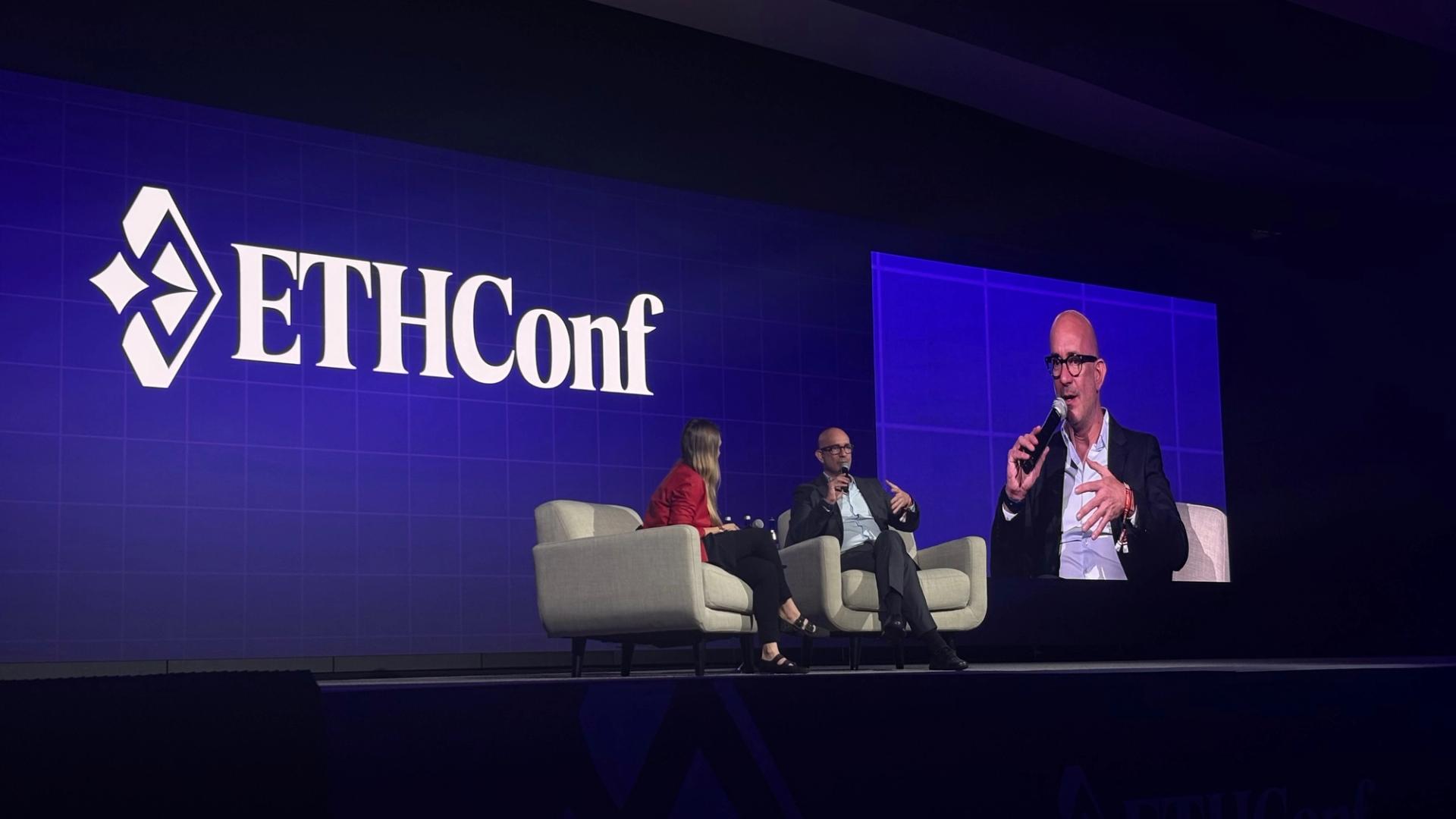
Securitize CEO Carlos Domingo said he believes tokenized equities and ETFs, not private credit or Treasury products, will be the asset class that ultimately drives the real-world asset (RWA) market into the trillions.
Speaking at a ETHConf panel in New York on Tuesday, Domingo argued that bringing stocks and exchange-traded funds onchain could unlock a market far larger than today’s roughly $30 billion tokenized asset sector.
“The entire equities and ETF market worldwide is probably like $150 trillion,” Domingo said. “Only if a small percentage of that, like 2% or 3%, moves onchain, it gets you very close to that $5 trillion.”
The comments come as Securitize prepares to go public and seeks to expand its role as one of the largest tokenization providers for institutions, including BlackRock.
While tokenized U.S. Treasuries have emerged as the dominant RWA category over the past two years, Domingo argued that tokenized stocks could become the industry’s next major growth engine. Securitize has announced partnerships with the New York Stock Exchange and transfer agent Computershare aimed at enabling on-chain trading and settlement of equities.
Domingo also drew a distinction between what he considers “real” tokenized equities and the growing number of blockchain-based stock products offered outside the U.S.
“A lot of people that today say that they tokenize equities, they’re not tokenizing equity,” he said, arguing that many offerings rely on derivatives or synthetic structures rather than direct ownership of the underlying shares.
According to Domingo, the long-term goal is for blockchain-based securities to offer the same investor rights as traditional shares while benefiting from instant settlement, 24/7 transferability and deeper integration with decentralized finance.
Domingo maintained that public blockchains, particularly Ethereum, remain the preferred infrastructure for institutional tokenization despite concerns around transparency and compliance. Securitize uses smart contracts to restrict ownership to approved investors while allowing assets to move on permissionless networks.
Looking ahead, Domingo said he expects blockchain-based markets to develop alongside existing financial infrastructure before gradually absorbing a larger share of activity.
“The traditional markets are going to stay,” he said. “We’re going to see a new market emerge in parallel that will run on blockchain rails and be much more efficient.”
Read more: BlackRock-backed tokenization firm Securitize clears key hurdle to go public on NYSE
Once a dominant force by market capitalization, the self-proclaimed Dogecoin killer has seen a steep decline in recent months and now stands as a mere shadow of its former glory.
Multiple factors suggest the meme coin may suffer even greater losses in the near future, while a key technical indicator signals that a short-term recovery is also plausible.
The Crash Has Yet to Begin?
Currently, Shiba Inu (SHIB) is worth around $0.000004697 (per CoinGecko), representing a whopping 65% decline over the past year. To make matters worse, the coin has collapsed by nearly 95% since the all-time high reached at the end of 2021.
For years, SHIB stood as the second-largest meme coin, trailing only Dogecoin (DOGE). But its market cap fell well below $3 billion, and it was overtaken by MemeCore (M), which surged toward a $4 billion valuation.
The token’s poor performance comes alongside a declining trading volume, which has plummeted by 84% over the last 12 months, and an overall reduction in interest in meme coins. Such a low figure usually signals weak market participation and fading conviction among traders and investors: a factor that could hamper a potential revival for SHIB.
The coin’s burn rate, which has fallen by 71% over the past week, is another cause for concern. The mechanism’s ultimate goal is to reduce the overall supply of Shiba Inu and increase its value through scarcity. Since the program launched, the team and community have scorched more than 40% of the supply, but with almost 590 trillion tokens still in circulation, the total remains quite high.

Next on the list is Shibarium’s stalled activity. Shiba Inu’s layer-2 scaling solution officially saw the light of day in the summer of 2023, designed to advance the project by improving speed, enhancing scalability, and reducing transaction fees. At first, the protocol facilitated millions of daily transactions, but an exploit last year changed things for the worse, and the figure has since drastically declined.

The Bright Side
Amid a landscape filled with worrying signals, Shiba Inu’s Relative Strength Index (RSI) stands out as one of the few indicators signaling that a short-term rebound is possible.
The technical analysis tool’s ratio has dropped below 30, indicating that the meme coin’s price has fallen too much in a short period and could be due for a resurgence. The RSI ranges from 0 to 100, and readings above 70 suggest SHIB has entered overbought territory, which may be a precursor to an impending pullback.

The post Shiba Inu (SHIB) Investors Face Big Questions After 65% Yearly Collapse appeared first on CryptoPotato.
Crypto World
Polymarket World Cup Winner Markets Cross $1.8B in Volume as France-Spain Group Stage Opens


Polymarket's 2026 FIFA World Cup prediction markets have accumulated more than $1.8 billion in cumulative trading volume as the tournament's group stage gets underway, with France and Spain priced as the narrowest co-favorites ahead of their high-profile group stage matchup. More than $66 million… Read the full story at The Defiant


Solana Institute CEO Kristin Smith has urged the U.S. Senate to preserve developer protections in the CLARITY Act as more than 200 crypto firms and organizations push for the bill to advance before August.
Summary
- Kristin Smith urged the Senate to keep developer protections in the CLARITY Act as the bill moves closer to a potential vote.
- More than 60 crypto leaders and over 200 industry groups have backed efforts to advance the legislation before August.
- Analysts at Galaxy Digital and JPMorgan warn the bill faces a narrowing path to passage amid election pressures and policy disputes.
Commenting on the legislation’s progress, Smith said in a June 9 thread on X that the bill has a realistic chance of advancing through the Senate, making it important for lawmakers to preserve protections for open-source developers and blockchain infrastructure providers.
Citing an industry-backed letter, Smith said more than 60 crypto founders and executives, including Solana co-founder Anatoly Yakovenko, urged senators to maintain strong protections for software developers within the bill.
She argued that open-source developers, validators, and non-custodial wallet providers do not take custody of user assets or execute transactions on behalf of customers and therefore should not face the same regulatory treatment as brokers or custodians.
Her remarks come as support for the CLARITY Act grows across the digital asset industry.
According to crypto advocacy group Stand With Crypto, more than 200 crypto companies and organizations recently sent a separate letter to the Senate urging lawmakers to bring the legislation to a floor vote without delay. The coalition said the bill had already undergone months of bipartisan negotiations and should now proceed to formal debate.
Smith points to separate bill protecting developers
Drawing attention to related legislation, Smith referenced the Blockchain Regulatory Certainty Act, a bipartisan proposal introduced in January by Senators Cynthia Lummis and Ron Wyden.
According to Smith, the measure would provide legal certainty for software developers and blockchain infrastructure providers that do not control customer funds or transactions.
Legislative text released alongside the proposal states that the bill seeks to prevent non-custodial developers from being classified as money transmitters solely because they publish software code or maintain network infrastructure.
Smith argued that similar protections should remain part of the CLARITY Act as Senate lawmakers continue reviewing the market structure framework.
Momentum around the legislation has increased in recent weeks. As reported by crypto.news, the House Ways and Means Committee is simultaneously examining seven separate crypto tax proposals covering stablecoins, staking, mining, lending, charitable donations, wash-sale rules, and disclosure requirements while Senate negotiators continue work on market structure legislation.
Industry groups warn the legislative window is narrowing
Pressure to advance the CLARITY Act has also intensified as analysts question how much time remains on the congressional calendar.
Last week, Galaxy Digital head of research Alex Thorn lowered his estimate of the bill becoming law in 2026 to 60%, down from 75% in May. According to Thorn, the legislation must continue moving through the Senate before lawmakers leave Washington for the August recess because election-related activity could limit opportunities for major crypto legislation later in the year.
A separate assessment from JPMorgan, led by managing director Nikolaos Panigirtzoglou, reached a similar conclusion. The bank said unresolved disagreements surrounding stablecoin yield provisions and the approach of midterm elections could complicate efforts to secure final approval.
Smith’s position also aligns with recent comments from U.S. Securities and Exchange Commission Commissioner Hester Peirce. Speaking at the IC3 Blockchain Camp at Princeton University, Peirce said many blockchain projects involve publishing open-source software, which she described as a protected activity under the First Amendment.
Peirce added that developers should not automatically be treated as financial intermediaries simply because third parties use their code.
The debate comes as SEC Chair Paul Atkins continues reshaping the agency’s approach to digital assets after pledging to move away from the enforcement-focused strategy adopted under previous leadership.

The Better Business Bureau’s (BBB) National Advertising Division (NAD) is referring prediction market platform Kalshi to regulatory authorities after the company declined to participate in an inquiry into its social media advertising practices, adding another layer of scrutiny to the fast-growing event trading platform.
In a statement published Monday, NAD said it will refer the matter to the appropriate regulatory authorities, including relevant state Attorneys General, for possible enforcement action.
The inquiry examined whether Kalshi’s influencers and affiliates clearly disclosed paid relationships in social media promotions and whether the company took adequate steps to comply with Federal Trade Commission endorsement guidelines.
According to the BBB, Kalshi declined to participate in NAD’s voluntary self-regulatory review of its advertising practices. As a result, the organization will also notify the social media platforms where the advertising appeared.
“At issue for NAD was whether material connections between Kalshi and influencers or affiliates were clearly and conspicuously disclosed in social media advertising,” BBB said.

Crypto influencer John Wang joined Kalshi in August.
Source: John Wang on X.com.
Kalshi’s advertising practices have also drawn scrutiny from Media Matters for America, a nonprofit media watchdog organization, which highlighted the platform’s viral marketing campaigns on TikTok and Instagram that promoted prediction trading as a “side hustle.”
Related: Kalshi joins Polymarket in sweeping user bans to head off insider trading
Prediction markets continue rapid growth despite regulatory scrutiny
Social media marketing has fueled Kalshi’s explosive growth, helping the platform attract new users and drive trading volumes tied to real-world events.
A Kalshi spokesperson told Bloomberg that the company is on track for a $1.5 billion annualized revenue run rate, momentum that helped secure a $1 billion funding round valuing the company at $22 billion.
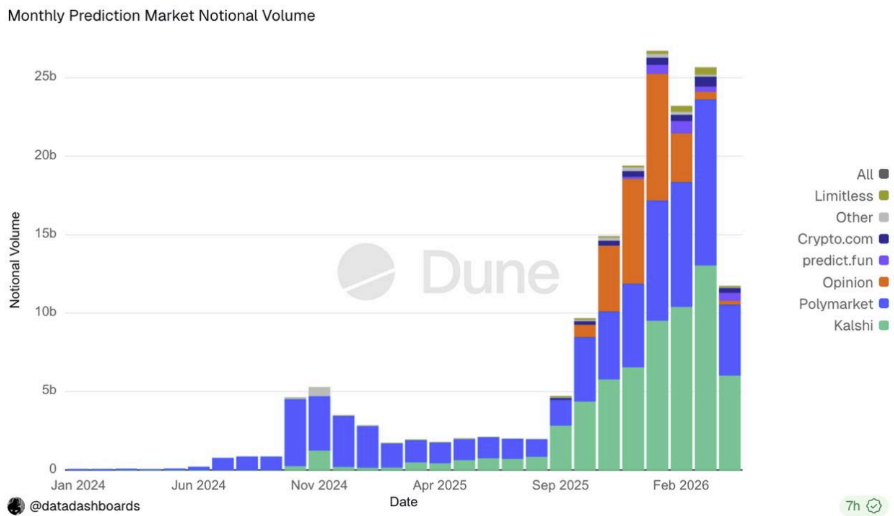
Kalshi is a leading centralized prediction market platform alongside decentralized rival Polymarket. Source: Bitget Wallet
Despite an ongoing jurisdictional dispute between state regulators and the Commodity Futures Trading Commission (CFTC) over event contracts, as well as allegations of insider trading, prediction markets continue to gain traction among retail and institutional participants.
A May research report from Bernstein argued that the sector is entering an “institutional” era, with analysts citing a block trade executed on Kalshi as evidence of improving liquidity and more efficient price discovery.
“We believe the introduction of block trading and bespoke contracts could expand participation from institutional investors seeking targeted exposure to event risks,” the Bernstein analysts wrote.
Related: Prediction markets legal battles heat up in Minnesota, Rhode Island

Sahara AI’s SAHARA token crashed by roughly 60% on June 9, triggering over $23 million in liquidations.
The incident caused speculation across crypto markets, especially since it happened right around the time another protocol, Humanity, reported a breach that cost it $30 million and led to its native H token losing nearly 90% of its value.
What the Team Said, And What On-Chain Data Shows
After SAHARA suddenly plunged from around $0.034 to $0.014, per CoinGecko data, the team put out a post on X saying they were “aware of unusual market volatility” and that they had found no security issues in the platform’s token contracts or products. Further, they said they would provide more updates as additional information becomes available following an internal investigation.
However, after some on-chain observers questioned a transfer of 600 million SAHARA tokens, suggesting it may have caused the unusual price movement, the team had to make a follow-up post explaining that the large token transfer was a pre-planned fill of a Chainlink CCIP bridge contract done to provide liquidity for its recently launched cross-chain bridge.
Just as importantly, they stated that team and investor wallet allocations had not been touched on-chain and that “no team and investor tokens have been sold or moved.”
The team also provided a link to an Etherscan address so that those interested could verify that what they were saying was true, adding that they were still investigating the actual cause of the market movement separately from the bridge transfer.
Whether that explanation holds up to community scrutiny is another question. Data from CoinGlass shows that in the last 12 hours, $22.9 million in long positions were liquidated against only $354,000 in shorts, meaning that the vast majority of losses fell on traders who had been betting on the price going up.
Sahara Down 90% From its Peak
The SAHARA token got listed on Binance in June 2025, and went on to hit an all-time high of $0.1605 the following month. But at the time of writing, it was trading almost 90% below that all-time high and was down over 50% in the last seven days and almost 54% over the past month.
The misfortune that hit it happened just a week after EDGE, the native token of the edgeX decentralized exchange, suddenly dropped by 71% and hit a new all-time low. And just like the Sahara team has done, the people behind edgeX also denied any security breach and, in their case, pointed to external manipulation, a claim that on-chain investigator ZachXBT publicly disputed.
In a subsequent report, edgeX noted that some of the centralized exchanges where EDGE is listed blamed the token’s collapse partly on thin liquidity conditions and not large-scale selling by the team.
The post Sahara AI Denies Security Issues as Token Price Drops Over 60% appeared first on CryptoPotato.

TLDR
- White House officials will meet law enforcement groups to address concerns tied to the CLARITY Act.
- Law enforcement representatives argue that a developer protection clause could affect financial crime investigations.
- Senate leaders continue negotiations as they work to secure enough votes for a floor debate.
- More than 200 crypto organizations signed a letter urging lawmakers to advance the bill.
- Senator Cynthia Lummis reaffirmed support and called for passage of the CLARITY Act.
White House officials will meet law enforcement groups on Wednesday to address concerns tied to the CLARITY Act. The meetings focus on specific provisions that agencies believe could affect illicit finance investigations. The discussions come as Senate leaders weigh whether the bill can secure enough votes for floor debate.
Law Enforcement Scrutiny and CLARITY Act Provisions
Administration officials scheduled the sessions after several groups raised objections to a developer protection clause. The clause stems from the Blockchain Regulatory Certainty Act and seeks to shield certain software developers from liability. However, law enforcement representatives argue that the language could restrict investigative authority in crypto-related cases. They describe the concern as structural and limited to enforcement mechanics.
Sources familiar with the talks told journalist Eleanor Terrett that officials aim to clarify the clause’s scope. The group plans to outline how the language might create legal defenses during financial crime probes. In response, administration representatives intend to gather feedback and explore possible adjustments. The ethics provisions in the bill also remain unresolved and require further negotiation.
Senate Negotiations and Industry Pressure Intensify
The Senate placed the bill on its legislative calendar earlier this month, yet leaders still lack firm commitments for a floor vote. Supporters continue private negotiations following the Senate Banking Committee’s approval in May. Former White House official Patrick Witt said discussions are narrowing the list of open issues. He stated that negotiators continue to work through specific concerns raised by lawmakers.
Senator Cynthia Lummis reaffirmed her support and urged swift passage of the measure. “I did not spend years on this issue to watch another country write the rules that govern the assets Americans invented,” Lummis said. She added, “Let’s pass the Clarity Act.” Her remarks reflect continued backing from key Republican sponsors.
Meanwhile, more than 200 organizations signed a joint letter urging Senate leaders to advance the legislation. The signatories include Coinbase, Ripple, Kraken, Circle, Andreessen Horowitz, and Binance.US. The letter states that the bill would define federal oversight and clarify regulatory responsibilities. Industry representatives argue that clear rules would keep digital asset development inside the United States.
Brad Garlinghouse echoed that position in public comments this week. He stated that lawmakers have an opportunity to establish domestic crypto standards. Negotiators continue discussions as the White House meetings proceed on Wednesday.



FIFA has named Kraken the Official Crypto Exchange Supporter of the FIFA World Cup 2026. FIFA said the partnership will cover crypto awareness, fan engagement, and product experiences across North America and Europe.
Summary
- FIFA named Kraken the Official Crypto Exchange Supporter of the FIFA World Cup 2026.
- Kraken will support crypto awareness, fan activations, and product experiences across North America and Europe.
- The 2026 World Cup will feature 48 teams, 104 matches, and 16 host cities across three countries.
The tournament will feature 48 teams, 104 matches, and 16 host cities across three countries.
Kraken partnership covers fan activations
Kraken will use the partnership to introduce football fans to digital asset products and education. FIFA said the agreement will bring fan-first activations to tournament audiences before and during the World Cup. The company will connect those programs to match viewing, football communities, and tournament events.
The FIFA World Cup 2026 will run for seven weeks across North America. FIFA expects more than six billion cumulative viewers during the expanded tournament. The event will include the first 48-team format in World Cup history.
Kraken has operated for more than a decade and serves users in over 190 countries. The exchange will use the tournament platform to present crypto tools to football audiences. The company has not disclosed financial terms for the FIFA agreement.
FIFA links deal to tournament experience
FIFA Chief Business Officer Romy Gai said the partnership fits the organization’s fan experience plans. FIFA has used commercial partnerships to add technology and consumer programs around major tournaments. The Kraken deal adds a crypto exchange partner to the World Cup 2026 sponsorship structure.
Kraken co-CEO Arjun Sethi described football as a shared global experience. He said the sport brings people together across borders, languages, and cultures. Sethi also said money should work with similar openness through smartphone access.
The partnership will begin public programming around the FIFA World Cup 2026 Countdown Concert on June 10. The concert will take place across several cities as part of tournament preparations. After that event, Kraken plans activations in North America and Europe.
Crypto firms continue sports partnerships
Kraken has already worked with Tottenham Hotspur FC, Atlético de Madrid, and RB Leipzig. The exchange also has a Formula 1 partnership with Atlassian Williams Racing. Those agreements place Kraken across football and motorsport audiences before the World Cup.
The FIFA deal follows other crypto partnerships tied to sports and entertainment. Crypto companies have used teams, leagues, and major events to reach non-trading audiences. In this case, Kraken will focus on education, brand visibility, and product access around football.
FIFA has positioned the 2026 World Cup as its largest tournament by teams and matches. The competition will take place in the United States, Canada, and Mexico. Kraken’s World Cup programming starts with the June 10 countdown concert.

Chainlink network now has more than 535,000 wallets holding at least 1 LINK, which represents the highest number of non-micro wallets since December 2022.
According to Santiment, this growth has taken place even though LINK remains well below its cycle peak prices.
Chainlink Wallet Growth
The analytics platform stated that a steady increase in wallet counts has historically been viewed as a sign of gradual adoption and accumulation. The firm said the rise in new participants is an encouraging development, particularly during periods of market uncertainty.
It also added that tracking wallets holding at least 1 LINK is important because the metric indicates network participation rather than short-term speculation. While prices can fluctuate based on market sentiment, a growing number of holders may indicate increasing long-term trust and interest in the ecosystem.
However, LINK’s price performance has remained underwhelming. The token has trended lower over the past month, falling from above $10.4 in early May to around $7.9 at the time of writing. The decline essentially suggests that while adoption and participation on the network continue to increase, this growing interest has not yet translated into stronger price action for the asset.
Even as LINK remains under pressure, the network has seen increased adoption of its infrastructure in recent weeks. Following the April exploit involving LayerZero-powered systems, both KelpDAO and Solv Protocol announced plans to migrate their cross-chain operations to Chainlink’s Cross-Chain Interoperability Protocol (CCIP). KelpDAO said it will transition rsETH to Chainlink’s framework to strengthen security, while Solv Protocol is moving more than $700 million in Bitcoin-related assets to CCIP as part of a broader overhaul of its cross-chain infrastructure.
Regarding Chainlink’s position, Santiment stated,
“With Chainlink continuing to play a central role in oracle services, tokenized assets, and real-world asset infrastructure, watch for crypto’s #17 market cap to be a breakout candidate when overall markets turn bullish once again.”
Expansion
Chainlink Labs is increasing its involvement in the regulatory side of the crypto industry. Alongside Anchorage Digital, it helped establish the Blockchain Leadership Fund, a PAC that has endorsed ten candidates for the 2026 election cycle who support pro-crypto and blockchain-focused policies.
Additionally, Chainlink’s technology was recently adopted by Fidelity International for its first tokenized fund, FILQ.
The post Over 535,000 LINK Holders Signal Quiet Chainlink Accumulation Amid Market Uncertainty appeared first on CryptoPotato.

Bitcoin investor says he stopped paying taxes to stack more BTC

GM’s EVs Will Soon Support More Kinds Of Public Chargers

DWP urges people born after 1960 to check State Pension age as rise to 67 begins

HarrisX Poll Found 52% of Registered Voters Support the CLARITY Act

BloFin War of Whales 2026 Grand Prix opens registration for $5M trading championship

Blockchain.com files with SEC for U.S. IPO

Watch Treasury Secretary Bessent clash with the US House Financial Services Committee.

WARNING: Realistic Downside Price Targets For Bitcoin!

Yahoo Finance Live: Dow, S&P 500, Nasdaq rise as oil trims gains on renewed US-Iran deal optimism
-

 Fashion4 days ago
Weekend Open Thread: Evereve – Corporette.com
-
 Crypto World4 days ago
Jensen Huang Approves Samsung, SK Hynix, and Micron for NVIDIA (NVDA) HBM4 Memory Supply
-

 Sports7 days ago
French Open 2026 results: Alexander Zverev beats Rafael Jodar and will play Jakub Mensik in semi-finals
-

 Business7 days ago
Trump Taps Housing Chief Bill Pulte as Acting Intelligence Director After Gabbard Exit
-

 Crypto World2 days ago
Anatomy of the June crypto crash: Fed, Iran, Saylor
-
 NewsBeat7 days ago
Republicans balk at Trump’s attempt to appoint a MAGA enforcer to lead National Intelligence
-
Crypto World3 days ago
Senator Cynthia Lummis Calls CLARITY Act the Most Consequential Financial Legislation of This Generation
-
 Business3 days ago
The Pain Points Taking a Fragile Tech Rally Down a Notch
-
 Entertainment3 days ago
The Best Mystery Series of All Time Is Surging on Streaming 30 Years After It Ended
-

 Tech4 days ago
Microsoft launches MXC, an OS-level sandbox for AI agents, with OpenAI and Nvidia already on board
-

 Tech2 days ago
Microsoft unveils seven homegrown AI models in new bid for ‘long term self-sufficiency’
-

 NewsBeat2 days ago
Alexander Zverev wins the French Open to finally earn a 1st Grand Slam title
-
Crypto World4 days ago
LBank Surpasses 25 Million Users Worldwide as AFA Partnership Continues to Drive Global Growth
-

 Business7 days ago
PagerDuty, Inc. (PD) Presents at Bank of America 2026 Global Technology Conference Transcript
-

 Tech4 days ago
Suspicious Polyfill login prompts pop up on Toshiba, Muji websites
-

 Crypto World2 days ago
Trump’s AI Ownership Plan Could Benefit Anthropic at OpenAI’s Expense
-
 Sports5 hours ago
Bangladesh beat Australia after 20 years in ODIs, register only their second win over six-time world champions | Cricket News
-

 Business4 days ago
(VIDEO) Justin Bieber Delivers Surprise Happy Birthday Serenade to Diners at Los Angeles Mexican Restaurant
-

 Tech4 days ago
RCS Messages Between iPhone and Android Get End-to-End Encryption With iOS 26.5
-

 Tech4 days ago
Meta steals a tactic from Tesla and builds data centers in tents
You must be logged in to post a comment Login