Flimsy and corrupt authoritarian populism is dedicated to pretending that the oligarchs and autocrats really care about the people. One way Trumpism has done this is by pretending they actually care about reining in corporate power. That’s included an elaborate, multi-year performance about how MAGA Republicans were going to curb abuses by “big tech” and bring back meaningful antitrust reform.
“Netflix’s years-long bait-and-switch has led the company right to where it promised never to be: addicting children and families to its platform, mining those users for data, and then converting that data into lucrative intelligence for global advertising juggernauts.”
Granted Netflix is not unique here. In a country too corrupt to pass meaningful privacy laws (because MAGA Republicans just like Ken routinely work to kill them), nearly every company you interact with on a daily basis now monetizes your every movement and online choices, “anonymizes” it (a meaningless term), sells access to dodgy international data brokers, then repeatedly lies about it.
Advertisement
They do this because Republicans, corporate lobbyists, and many “centrist” Democrats have, quite unsubtly, worked tirelessly to dismantle corporate oversight and regulatory autonomy. Most companies have been eager to take advantage, including Netflix CEO Reed Hastings, who, like countless other CEOs, used to at least pay empty lip service to never tracking or monetizing consumer data.
Paxton’s lawsuit insists Netflix has built a vast surveillance economy that includes peoples’ kids viewing habits, violating Texas consumer protection law:
“Netflix built this surveillance machinery to scrutinize how users and their children behave—what they click, how long they linger, what they avoid, when they pause, what draws them in, what they replay or skip, where they are, what devices they use, what other devices are in their home, what other apps they interact with, and much more. Each action is a data point revealing something about the user. This is not simply about deciding what show to queue up next.It is about learning who the users and their children are.”
Again: almost every single company you interact with does this now. Many in ways that are far worse than Netflix (see: the entire unregulated data broker economy). Paxton knows this. So why single out Netflix? And why now?
These sorts of lawsuits take a while to build momentum, so I suspect Paxton’s inquiry began during the mad conspiratorial heat of MAGA’s Netflix breakdown earlier this year, and is only culminating now. And I suspect Paxton will be eager to share any juicy and harmful tidbits found during trial prep to help frame the company (which in reality has been pretty amicable toward Republicans and trans bashing comedians) as a useful “woke” culture war prop.
That’s not to say Netflix doesn’t do anything wrong and isn’t (like every tech company) abysmal on surveillance and privacy, but it is to say that authoritarians don’t actually care about the public interest. And they certainly don’t actually care about mass commercialized surveillance, given they’ve played a starring role in cementing it and eliminating all accountability for it.
The American public’s broad and growing hatred of corporations and the extraction class has long been a fertile recruitment playground for autocratic zealots like Trump and Paxton, who love to put on adorable little stage plays where they pretend to be “reining in corporate power” and “embracing meaningful antitrust reform.” But it’s uniformly a performance always driven by ulterior motives.
If guys like Trump and Paxton actually cared about consumer privacy, they’d openly and loudly support a national privacy law that holds all companies (and executives, personally) accountable for privacy and security failures when it comes to consumer data. If they cared about consumer privacy, they’d relentlessly target data brokers that sell oceans of consumer data to any nitwit with a nickel (including foreign intelligence). They’d fund and staff U.S. regulators tasked with policing privacy abuses.
Advertisement
They don’t do that because that might impact them and their friends financially, and disrupt the U.S. government’s ability to spy on Americans without a warrant. So instead you get these highly selective and flimsy populist performances that single out administration “enemies” for failing to adequately bend the knee, while tricking rubes into thinking they’re being tough on corporate power.
OpenAI is preparing a significant overhaul of ChatGPT that shifts the platform’s emphasis away from conversational AI and towards agentic tools and coding capabilities, according to a report from the Financial Times.
The redesign, which the Financial Times reports could arrive within weeks, reflects a growing internal conviction at OpenAI that the chatbot format has run its course as the company’s primary product focus.
That conviction reportedly extends to at least one OpenAI employee describing the situation in stark terms, with the phrase “chat is dead” circulating internally as shorthand for the belief that AI agents represent a more commercially valuable direction than the text-based exchanges ChatGPT built its reputation on.
The revamped platform would consolidate OpenAI’s Codex coding toolset alongside its AI agent capabilities into what the company is internally calling a “superapp,” with the unified interface expected to launch first across web and mobile.
Advertisement
Codex stands to gain notably from the restructure, with OpenAI reportedly allocating greater resources and more prominent placement to the tool as part of its effort to close ground on Anthropic, whose Claude has drawn considerable developer attention as an agentic and coding-capable model.
Advertisement
The shift also arrives as OpenAI works towards an initial public offering, a commercial context that places pressure on the company to demonstrate revenue from its AI products rather than simply user volume from a free or low-cost chatbot experience.
The monetisation challenge that chatbots present reflects a structural tension familiar across the AI industry, where high infrastructure costs and freely accessible interfaces have historically made it difficult for companies to convert large user bases into reliable subscription or transaction revenue.
Advertisement
ChatGPT’s trajectory towards advertising further underlines that commercial calculus, with OpenAI having confirmed earlier in 2026 that the platform would begin serving ads to users.
OpenAI has not confirmed a specific launch date for the redesigned platform, though the Financial Times report suggests the rollout timeline sits within the next few weeks.
In a nutshell: Nintendo is bringing back one of its most popular games for a new run on its latest handheld, nearly 30 years after the original. The Legend of Zelda: Ocarina of Time was announced during the Nintendo Direct presentation on June 9, and will be out later this year on the Switch 2.
The minute-and-a-half teaser doesn’t show any actual gameplay, nor does it provide a launch window outside of 2026. We also don’t know how much Nintendo is planning to charge for the game, although it’s probably a safe bet to assume this will be a premium title with a matching price tag. All we really know at this hour is that the game is indeed in the works and is destined for the Switch 2 later this year.
The Legend of Zelda: Ocarina of Time arrived on the Nintendo 64 in late 1998 and was unlike anything seen up to that point. The 3D action adventure game was initially planned for the 64DD, but was eventually moved to cartridge when that peripheral was canceled. Despite having just 32MB of memory to work with, Nintendo put out a masterpiece that pushed the limits of storytelling, puzzle-solving, and combat to new heights.
Nintendo sold roughly 7.6 million copies of Ocarina of Time during its run, good enough for fourth on the list of best-selling N64 games behind GoldenEye 007, Mario Kart 64, and Super Mario 64. In 2022, the game was inducted into the Strong National Museum of Play’s video game hall of fame alongside Dance Dance Revolution, Ms. Pacman, and Sid Meier’s Civilization, cementing its place in history as one of the greatest video games of all time.
Advertisement
The remake is part of Nintendo’s 40th annual franchise celebration, and adds to an already stacked 2026 that includes several high-profile game launches culminating with the release of Grand Theft Auto VI this fall.
For those needing to scratch their Ocarina of Time itch a bit sooner, Nintendo already offers a version of the original game through its Switch Online subscription service.
Killian O’Driscoll, the chief commercial officer at NIBRT, said, ‘The NIBRT team is delighted to be involved in this key WHO initiative to help make the world safer from future emergencies and pandemics.’
The World Health Organization (WHO) has selected NIBRT, Ireland’s National Institute for Bioprocessing Research and Training, as its Regional Training Centre for Biomanufacturing for Europe. It will be one of seven such establishments globally forming part of the WHO’s Biomanufacturing Workforce Training Initiative (BWTI).
BWTI was first set up in 2023 as a means of addressing critical skills gaps evident in the biomanufacturing chain, and enabling countries to turn technological innovation into localised and sustainable production – particularly in areas concerning medicines and other healthcare technologies.
Commenting on the announcement, which was first made at a media briefing in late April, Dr Tedros Adhanom Ghebreyesus, director general of the WHO, said, “Over the past few years, WHO has taken several steps to make the world safer from future emergencies and pandemics. Today, WHO announced that we have designated regional training centres in each of WHO’s six regions, to build the skilled workforce needed to sustain local production of vaccines and biologics.
Advertisement
“The new training centres are in Brazil, China, Egypt, India, Ireland, Senegal and South Africa. They will operate as part of a coordinated global network, delivering context-specific training aligned with regional priorities, regulatory environments and languages.”
Future responsibilities
As the designated Regional Training Centre for the European region, it will be under NIBRT’s remit to deliver hands-on training aligned with industry needs. The network will also work in close collaboration with the WHO and the Global Training Hub for Biomanufacturing, which is located in South Korea.
Killian O’Driscoll, the chief commercial officer at NIBRT, said, “The NIBRT team is delighted to be involved in this key WHO initiative to help make the world safer from future emergencies and pandemics.
“This designation from WHO reflects the quality and reach of the training NIBRT has delivered over many years. As the Regional Training Centre for Europe, we will work with our partners across the region and around the world to help sustain local production of vaccines and biologics for lower and middle income countries.”
Advertisement
The WHO’s additional Regional Training Centres are the Institut Pasteur de Dakar in Senegal; the Council for Scientific and Industrial Research, South Africa; the Oswaldo Cruz Foundation in Brazil; the Translational Health Science and Technology Institute in India; the Center for Continuing Professional Development at the Egyptian Drug Authority in Egypt; and China’s Peking University.
The life sciences space is booming of late, with many organisations expanding their job and upskilling opportunities. In early June, consultancy Primecore announced plans to create 50 new jobs across their offices in Ireland and the US over the next three years, on top of 100 new roles previously announced.
In late April, the Advancing Innovation in Manufacturing Centre in Sligo announced an expansion with a new Galway base of operations amid plans to strengthen its links within the medtech and life sciences sectors.
Also in April, OpenAI announced plans to roll out an early version of GPT-Rosalind, an AI reasoning model designed to support research across biology, drug discovery and translational medicine.
Advertisement
Don’t miss out on the knowledge you need to succeed. Sign up for the Daily Brief, Silicon Republic’s digest of need-to-know sci-tech news.
While the company has not revealed the specific launch date of the console yet, eager fans have been digging through FCC filings and connecting the dots to predict when the console could land. As per their findings, it could happen on or before June 29.
FCC filings may have revealed Valve’s launch window
First spotted by Notebookcheck, Reddit user u/wayTooManyBugs examined the FCC documentation of past Valve hardware and pointed out a pattern in how the Steam Controller’s launch was handled. According to the findings, the Steam Controller was submitted to the FCC on November 24, 2025, but its user manual and product images were kept confidential until May 20, 2026. The interesting part is that these documents only became publicly available after the device had already gone on sale.
The same pattern now appears to apply to the Steam Machine. Valve reportedly submitted the Steam Machine’s FCC documents around the end of 2025, and its user manual and product images are scheduled to become public on June 29, 2026. Going by the Steam Controller timeline, fans believe Valve may launch the Steam Machine before those documents are released publicly.
Advertisement
Valve
In other words, June 29 may not be the exact launch date, but it could act as the latest possible date by which the Steam Machine arrives. All that said, this is just a theory at this point, but since Valve has confirmed that the Steam Machine will debut sometime this summer, it could very well happen around this window.
Pricing could still make or break the Steam Machine
The biggest question is still pricing. Earlier reports have suggested that the Steam Machine could cost upwards of $1,000, which would make it a hard sell given that its GPU performance is already known to trail the standard PS5. Valve could still soften the blow by absorbing some of the hardware cost upfront, especially if the goal is to get more users into SteamOS and the wider Steam ecosystem. For now, though, the price may be the one thing that decides whether the Steam Machine feels exciting or excessive.
One of the most interesting new features is Custom Extensions, which lets you create an extension for Safari in natural language. Lastly, the new version of Safari will work the Passwords app to automatically fix website login passwords that are deemed no longer safe to use.
The other exciting implementation of Apple Intelligence is within the Shortcuts app. The app received some artificial intelligence upgrades last year, but this new update takes things much further. You can now use natural language to design an automated shortcut, no longer requiring the manual work of connecting functions within apps together. Apple’s example was that you could type, “Whenever I’m leaving work, calculate the ETA, and send it to Pedro,” which would use a combination of Maps and Messages.
Other updates include using natural language when creating an event in Calendar, which will then fill in the details with contacts or locations. Image Playground also received a major update, which is now based on Google’s Gemini image-generation tech. It can now cook up photorealistic imagery and looks far less limited in what it can do. Like other image-generation apps, Image Playground will be subject to daily limits, but paid iCloud+ subscriptions can buy you more image generation.
Tweaks to Liquid Glass
Courtesy of Apple
Advertisement
While AI is the focus of the update, Golden Gate is also a follow-up to last year’s macOS Tahoe. Liquid Glass represented a major change to the way all the user interface elements of the appear, and in macOS Golden Gate, those UI elements are being refined. Answering complaints about indecipherability and messy menus, macOS now has a refraction effect in its transparency, which more strongly obscures background content and makes the text in the foreground easier to read. This can be customized in System Settings, letting you change the transparency level using a slider.
This video is about Apple-macOS-27-uniform-toolbar-260608Courtesy of Apple
Apple has also made some smaller refinements to the visual identity of macOS. The Tool bar now has a uniform menu, the sidebars expand to the very edge of the window and the icons within the sidebars have color once again. And perhaps my most requested feature, every window has the same corner radius to the window control buttons.
Beyond the visual elements, Apple says it has made improvements to responsiveness, such as memory usage, CPU usage, display rendering, and app switching. One example on the Mac was that moving between Spaces was more fluid now, as is opening Mission Control.
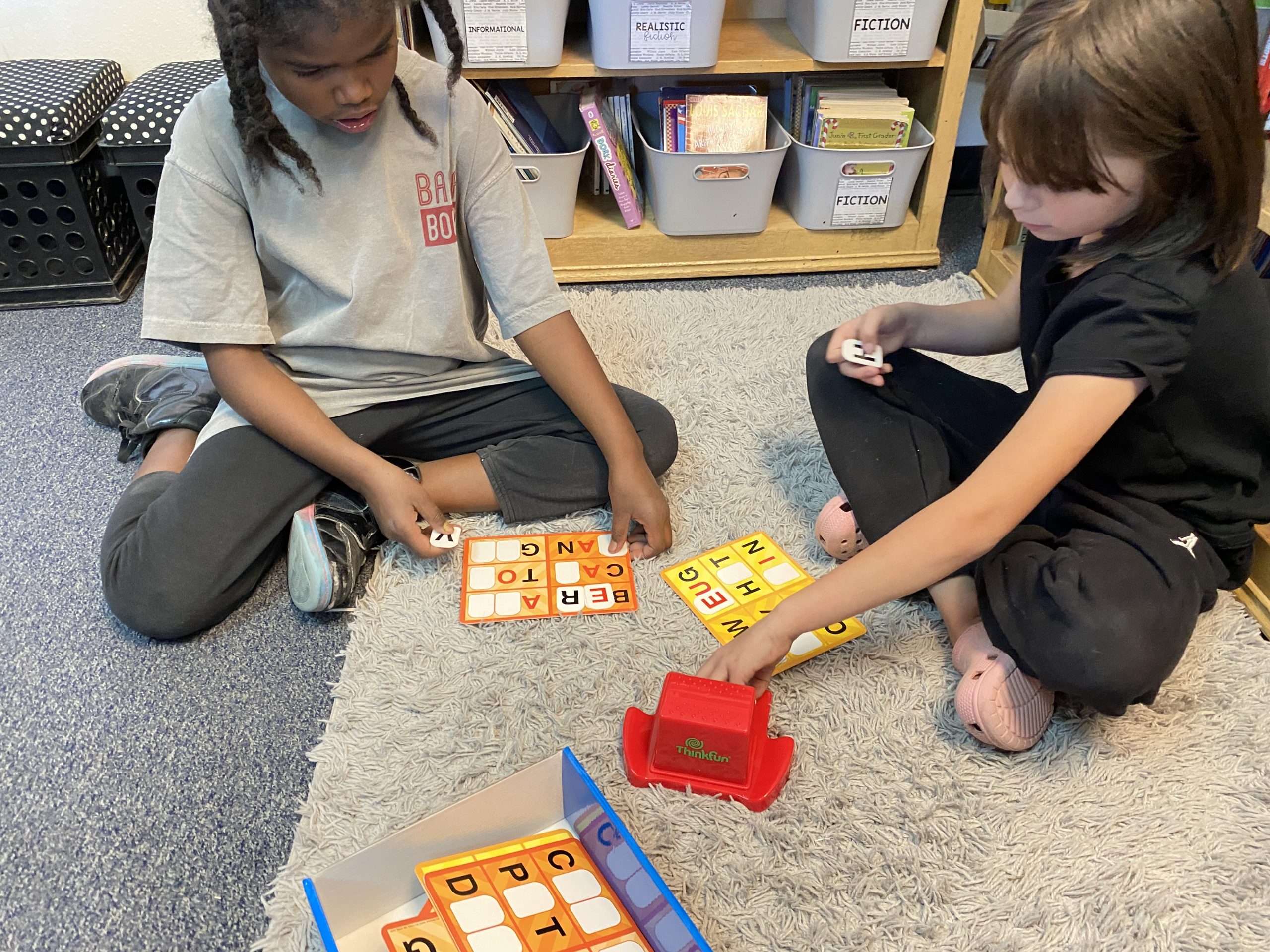
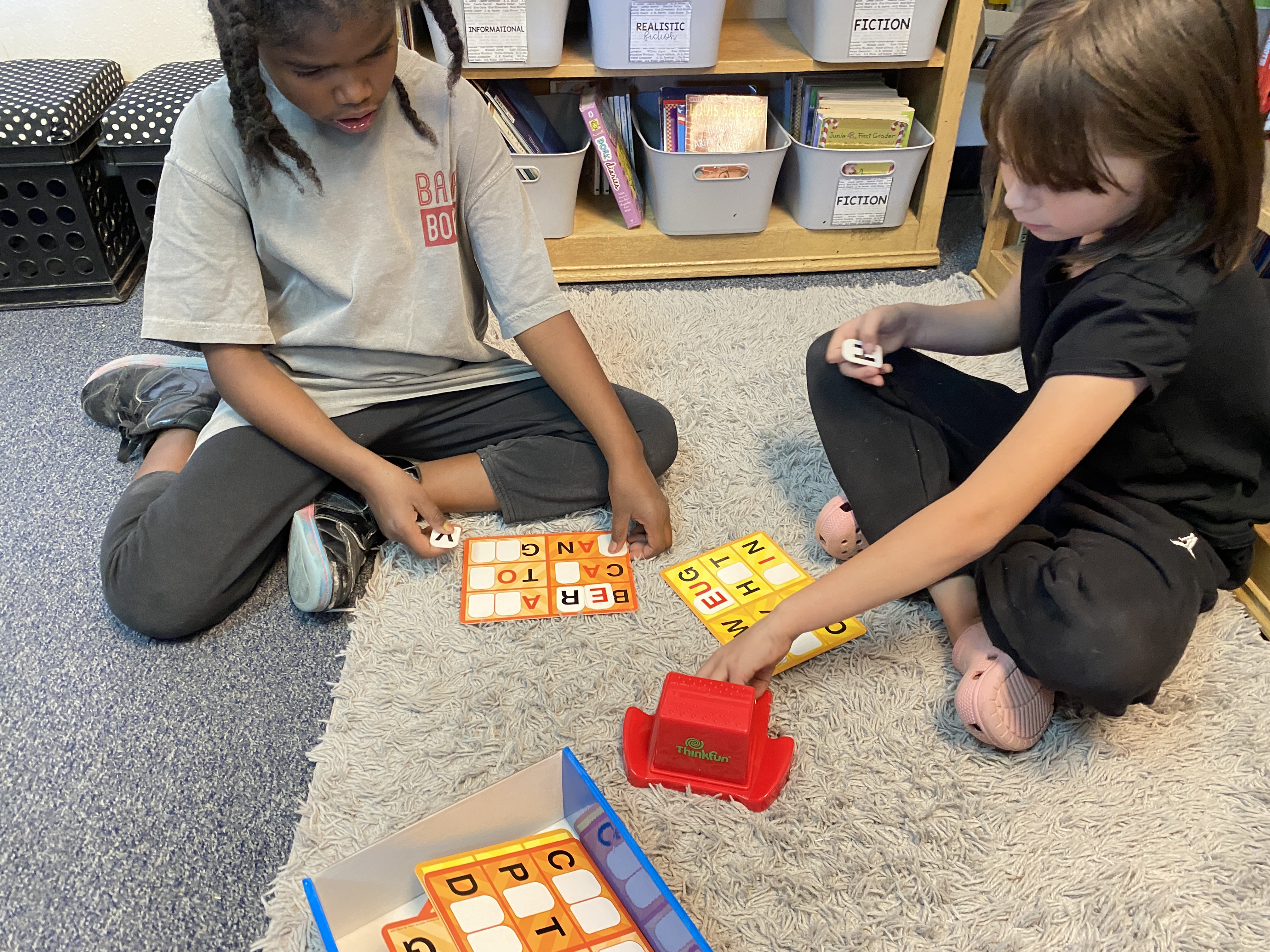
A group of third grade students gather around a board game on a Wednesday afternoon in a Charleston classroom, grabbing game pieces, discussing potential moves and reading out playing cards. The games are not Monopoly, Sorry, or any others of yore – they’re focused on identifying, and boosting, students’ strengths and weaknesses.
It’s part of a shift in school districts’ gifted and talented programs. While many programs focused on a small group of high achieving students, instructors across the nation are now focusing more on inclusion, using data to help them zero in on students’ talents, a method that has the potential of capturing more students for advanced instruction.
For Vanessa Hill, the gifted education coordinator for Amphitheater Public School District in Tucson, Arizona, focusing on strengths and weaknesses helps to solve what she sees as a universal problem with gifted identification.
“Something I’ve been thinking deeply about that tends to be a universal problem is that gifted identification does not match the metrics of your district,” says Vanessa Hill, the gifted education coordinator for Amphitheater Public School District in Tucson, Arizona. “I’m constantly thinking of that, so our demographics can get closer. This new tactic is about exposure to critical thinking and reasoning – what does that look like, how to reason through a problem?”
The gifted and talented programs run the gamut of names and acronyms depending on the district, including advanced learning program, TAG (talented and gifted), LEAP (Learning Enrichment Alternative Program) or REACH (Realizing Excellence through Academic and Creative Help), among others.
Regardless of the name, the program has undergone several major shifts over the last few decades. Schools previously often only selectively tested students, often at the behest of involved parents or by a teacher recommendation. That brought a large amount of inequity in the programs, with many moving to a universal screening practice. Some states, including Washington and Missouri, made it a state mandate to test all students while in elementary school. The screening practice itself evolved from an IQ test to aptitude and ability tests, though how accurate those are is up for debate.
“Society is really unequal along socioeconomic and racial and ethnic lines, and these tests are just reflecting that,” says Scott Peters, director of research consulting at NWEA, a nonprofit education assessment organization. “You can change tests all day long, but at the end of the day, you can’t give some kids three years of $40,000-a-year preschool and also wonder why this kid that’s never been to school until first grade doesn’t do as well.”
Advertisement
Often, schools’ gifted and talented programs do not represent their overall school population and instead skew heavily toward white and Asian students. Zohran Mamdani, the widely-watched mayor of New York City, made it part of his platform to phase out gifted and talented programs because of the inequity.
NEWSLETTERS
STAY AHEAD IN EDUCATION.
Sign up for EdSurge newsletters for timely news, insights and analysis.
“Ultimately, my administration would aim to make sure that every child receives a high-quality early education that nurtures their curiosity and learning,” he said in a 2025 statement to the New York Times.
Advertisement
There is no silver bullet test that accounts for inequality and a child’s upbringing, although Peters said when factors such as income, race and other equity gaps are controlled in tests, most inequities disappear.
“This isn’t a factor of, ‘Oh, there are students of color scoring high, but they’re still not getting in,’” he says. “It’s that there’s not enough students of color scoring high because of that larger societal inequality issue.”
Because of the often-skewed gifted and talented population, schools are shifting toward “talent development” with all students, versus focusing on strengthening some students’ already solid skills.
“Because of the baggage of the past, we’re moving toward a new perspective where we’re identifying the strengths of students — whether academic, social or emotional — versus people for a program,” says Kristen Seward, clinical professor in gifted, talented and creative studies at Purdue University. “And I think this twist in how we approach education as gifted researchers is going to benefit everybody.”
Advertisement
Using Data for ‘Talent Development’
Developing talent for gifted programs, much like the name itself, varies depending on the district. Seward says many teachers have enriched curriculums, which enhance things like vocabulary, science and social studies — topics that have been put on the back burner over the years in favor of standardized testing. Teachers are trained to spot students’ strengths and respond to those, which in turn, helps with students’ weaknesses.
For example, if a student has a strong vocabulary but struggles in math, the teacher might focus on math vocabulary during math class to put the lesson on a level the child understands.
Elementary students play games that help with quantitative, verbal or non verbal skills.
Photo credit/Vanessa Hill
“I don’t want it to turn into a thing where the teacher is the gate, and if they don’t open the gate, then the students don’t get identified – which has been a problem,” Seward says. “We have to train teachers to be talent scouts, presenting the enriched curriculum. Hopefully it’s not something additional, but something they’d naturally do in their role.”
Advertisement
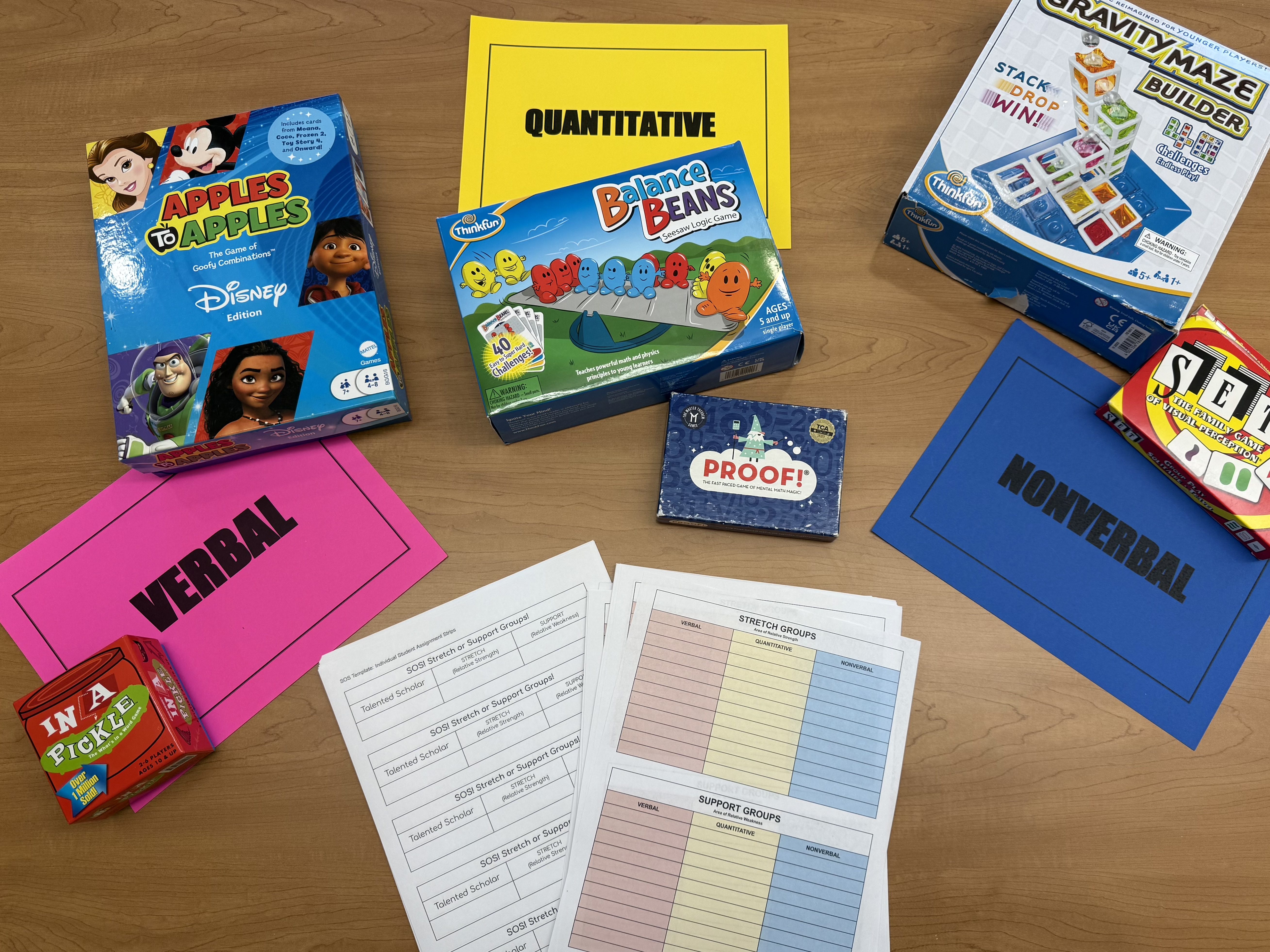
Elizabeth McLaurin Uptegrove, now the assistant academic director in Charleston County School District, created a “stretch or support” system that involves the games the students played in the aforementioned classroom. When Uptegrove first arrived in Charleston’s school district, South Carolina used to require all second grade students be tested for the gifted and talented program. But after that year, selection changed to a nomination system.
“Which sounds elitist, and it is,” she says, adding white, affluent children were three times more likely to be in the programs.
She pushed for universal testing again for all fourth grade students, which yielded three times as many students identified as gifted, jumping from 40 fourth graders to 150 across the district. Several schools across the country have adopted similar stretch-or-support systems.
But Uptegrove’s efforts go beyond identifying candidates for gifted programs through teacher observation: her game-based system uses data. With the aptitude test, there are verbal, quantitative and nonverbal subsections. The tests indicate if a child is low or high achieving in those areas. Then the children are placed in groups with those of similar abilities to play games that can enhance those skills.
Advertisement
The Stretch or Support games in Uptegrove’s third grade classroom help children grow or reinforce their skills.
Photo credit/Elizabeth McLaurin Uptegrove
“Typically a teacher is not very well-equipped to come up with activities or lessons that can actually reach their level of thinking ability and games do that really quickly, in a way that’s not as boring for children as a typical worksheet,” Uptegrove says. “That’s where the magic of the games comes in. We’re making rigorous, hard thinking almost irresistible so students are willing to do the activity for longer.”
Hill, the Arizona-based education coordinator, initially implemented Uptegrove’s game strategy across third grade classrooms in five schools: three Title 1 schools and two non-Title 1. She says the schools that have the strength or stretch program in place have higher passing rates of “proficient” or “highly proficient” scores than those who do not.
“To me, it’s the difference between being a passive learner and active learner; by being able to engage in the games, it’s more active learning,” Hill says. “You raise the exposure to critical thinking and are taught to apply those skills to any situation, whether it’s on an achievement test or on the playground with a friend.”
Advertisement
The Future of the Program
Both researchers and teachers acknowledge the “talent development” approach to gifted and talented programs is far from perfect. It is often costly, whether it is buying the games, instilling teacher training or taking out time from testing. Hill pointed to four schools within her district that are closing this year because of financial constraints.
“Ordering the games is no small cost; I feel so blessed it’s that level of importance that we will find the funds,” she says. “As far as critical thinking games, yes that was missing. It is a hole we were filling. I think that while the core curriculum is doing its best, it can oftentimes be a bit surface level.”
Uptegrove agrees, saying she believes the talent development method is becoming more popular, but “there’s a long way to go in belief and funding for it.”
Peters, who has long studied the best educational methods and practices, believes the shift in gifted and talented is a good step. But he has concerns about the larger moves needed for lasting impact.
Advertisement
“It’s easy to have a 30-minute gifted program; it’s hard to have a second through eighth grade math development pipeline involving everyone in the school,” he says. “And advanced learning isn’t enough of a priority for most schools.”
In May, Ferrari introduced its first entry into the electric vehicle market: the Luce. With an exterior like a Nissan Leaf, and an interior designed by the guy who designed the iPhone, it received a lot of hate. So, if Ferrari can’t make a cool EV, who can?
Enter the Slate truck. It’s a Jeff Bezos-backed, American-made compact truck with no bells, whistles, or even AC — the antithesis of the Tesla Cybertruck. It’s kind of cute. And it might just get more Americans to drive an electric car.
At a time when American manufacturers have fallen far behind countries like China in the automotive industry, companies are still trying to get Americans excited about electric.
Andrew Hawkins is a transportation editor at The Verge who has been following the EV industry in the US. He tells Today, Explained co-host Sean Rameswaram about the problems stopping American drivers from fully adopting EVs and discusses whether this bare-bones truck can fix them.
Advertisement
Below is an excerpt of the conversation, edited for length and clarity. There’s much more in the full podcast, so listen to Today, Explained wherever you get podcasts, including Apple Podcasts, Pandora, and Spotify.
There’s another electric truck that we have to talk about.
Oh, yes, indeed. The Slate truck.
This to me represents the dichotomy in the EV market today, right? On the one hand, you’ve got your Ferrari Luce. That is a $640,000 car that no one you will ever meet will probably buy. And on the other hand, you’ve got this Slate Truck that is the most bare-bones two-seater that you could possibly imagine. There’s no radio, there’s no touchscreen, there’s no central screen inside the vehicle. There’s no paint. You even have to opt in to get power windows; otherwise, they will just give you the [window crank].
Advertisement
I love the idea of an electric truck that has manual roll-‘em-down windows.
When I heard that, that blew my mind. This is a new startup. They’ve got a lot of investment cash from Jeff Bezos and some other people. This is their first vehicle. And the theory behind it is that we will make this thing as stripped-down as we possibly can. Take out all the bells and whistles. People can add a bunch of stuff. They could turn it into a small SUV by adding a back section to it if they want. They could add wrapping decals. You could personalize it and make it look however you want it to look. Or, you could just buy the bare-bones version.
The idea being that electric vehicles, as they stand today, are above the average cost of a new gas-powered vehicle. So, we need to bring this price down. How are we going to do that? Well, still the most expensive part about any electric vehicle is the battery. So, in order to have a good battery while still having a decent car, you need to take out everything else.
That’s how they’re saying that they’re going to sell this thing for under $30,000 when it eventually comes out at the end of this year.
Advertisement
So, unlike the [Ferrari] Luce, people responded well to this Slate truck. Why is it a truck? Why not a sedan?
Trucks are very popular in the US. They’re amongst the best-selling vehicles, typically. The Ford F-150, for example, was the best-selling vehicle in America for a long time.
But, this is America. We love our trucks. We love our big trucks. This is not a big truck. This is a small truck. And a lot of people have been saying trucks have gotten too big. They’re oversized behemoths out on the road that are dangerous to pedestrians that are out walking around. They don’t offer enough safety protections. And so, maybe we need to come back to more of a midsize or compact.
And then, obviously, gas prices are soaring. People are looking for something that’s a little bit more downsized in general. So, I think the truck prospect is an interesting one. Then again, trucks aren’t for everybody. If you want to turn this thing into a four-seater compact SUV, that’s something that will be an option to you, as well.
Advertisement
Okay, so this reason to make a little truck seems based on market research. People want a truck, and here’s a very different truck that we can offer them. What about this decision to literally strip away every single feature, including the paint, including the power windows, including the radio?
It’s a real risky bet from Slate. I think what they’re trying to say is that maybe cars have become too bloated, right? We’re starting to see a pullback from too many convenience features, especially in the car market with people feeling a lot of pressure on their pocketbooks and how expensive new cars have become. They’re looking for something that is a little bit more downmarket.
But also, I think it’s a reflection of where the expenses are in building a new car and a realization that you can’t just put out a car, especially an electric vehicle today, without some plan to make it profitable. One of the original mistakes of the auto industry, and especially the American auto industry, was that they could take a lot of their most popular cars, retrofit them to be electric, and that people would respond to them.
That was, I think, a pretty understandable bet from a lot of these companies. But, I don’t think they were really taking costs into effect for a lot of that. And what we ended up with was a lot of cars that were indistinguishable from their gas counterparts, but were 20 to 30 percent more expensive than those gas cars.
Advertisement
In so many ways, the automotive industry is a stand-in for our whole economy. We hold up the auto industry as being this kind of beacon which represents our innovativeness and our leadership on the global stage. And I think that we’ve ceded that leadership now to China.
China is now leading. They sell the most cars, they export the most cars, and they have the best technology. They’ve cracked the code on cheap EVs. I feel like America is always going to have an outsized reputation, but whether that reputation is actually earned anymore, I think is a very open question right now.
Do the people want EVs in this country yet, or do they still have range anxiety and a preference for the combustion engine? Does the war in Iran factor into how the people feel right now?
People vote with their pocketbooks, right? That’s where their preferences are today. And I think when electric vehicles were first gaining popularity, you heard a lot about charging anxiety. You heard a lot about range anxiety.
Advertisement
I think those are still considerations, but I feel, right now, the number one consideration for most people is, “I’m living paycheck to paycheck, and it’s costing me $80, $90 to fill up my F-150.” The used EV market right now is extremely attractive to a lot of people. You can get a very good electric vehicle for around $20,000. You take it home, you set up a home charger, you charge that thing overnight. You never have to go to a gas station again. That’s a pretty attractive proposition to a lot of people.
Apple says its upgraded Siri AI can take the stress out of party planning for those of us (myself included) who find ourselves overwhelmed when hosting social events.
As announced at its Worldwide Developers Conference on Monday, an upgraded Apple Intelligence (improved with some help from Google’s Gemini AI models) is designed to help you brainstorm ideas, take action across multiple apps and ask questions that require personal context or current online information.
Launching in English later this year on Apple Intelligence-enabled devices, the conversational Siri AI will have its own dedicated app that works across devices, so you can ask a question on your iPhone and continue the conversation on your iPad. But it will also act across apps like Messages and Reminders to become your AI personal assistant. This could make it an exceptional party planner.
During the WWDC keynote, Justin Titi, Apple’s senior director of intelligent system experience engineering, asked Siri AI on iOS for the schedule of the World Cup’s opening weekend. Then, Siri AI suggested dishes from Brazil and Morocco for a watch party centered on that match, located a dessert their daughter recently mentioned in the Messages app, pulled all those dishes together for a complete menu and sent that menu to a specific group chat to see if its members were up for a watch party.
Apple’s Justin Titi demonstrates on an iPhone how Siri AI can be used to plan a World Cup party menu.
Apple/Screenshot by CNET
That’s just one example, but it shows that Siri AI can take the most tedious tasks out of party planning by telling you when certain events will occur, giving you menu suggestions, searching your device to answer personal questions and even sending the party invite.
Advertisement
Speaking of invites, there’s a new version of Apple’s AI-generated image app, Image Playground, that uses Apple Intelligence to transform your images. Since the app runs on private cloud compute, images are never stored or shared.
Leslie Ikemoto, Apple’s director of input experience, explains that you can use Image Playground to generate a birthday party invite by taking a photo of a friend from your image library and having it modified to include a birthday cake with a simple description. You can then refine the image further — adding candles to the cake and even changing your friend’s outfit to fit the party theme — by describing the changes you’d like or using touch.
Image Playground helps create a mystery-themed birthday party invite from a person’s photo.
Advertisement
Apple/Screenshot by CNET
For those who struggle to create or edit images, Apple Intelligence also takes out that guesswork, so you can focus on the more fun aspects of preparing for a party. Personally, I’d rather save that time and effort for cooking.
Every step of party planning can now be executed using Apple Intelligence, down to the most minute details: writing and perfecting the invite message in Messages or Mail, and adding and editing the calendar event based on that invite’s context.
If I could avoid all the frustrating parts of party planning, I would. Starting this fall, with Apple Intelligence’s improvements, I will.
64pc of participating EMEA organisations anticipate an attack in the next year, with 44pc having already experienced an incident over the past 12 months.
According to new research carried out by ESET in the SMB Cyber Readiness Index 2026, “businesses are losing sleep over a high-tech threat that has barely shown up in real attacks”, in a landscape where “everyday scams” are getting through and costing money.
ESET, which is a Slovakia-based global cybersecurity company, partnered with Esomar member Go4insight to collect data from 4,400 organisations with 25 to 1,000 endpoints across 13 countries.
This included Canada, the Czech Republic, Denmark, France, Germany, Italy, Japan, the Netherlands, Slovakia, Spain, Sweden, the UK and the US. Contributors were the main decision-makers on, or key influencers of, organisational cybersecurity decisions.
Advertisement
What was discovered in the research is that 64pc of participating organisations dispersed across Europe, the Middle East and Africa anticipate an attack in the next year, with 44pc having already experienced an incident over the past 12 months.
31pc are of the opinion that the single greatest threat is AI-powered malware, despite ESET’s findings stating that across its managed detection and response service (MDR), not one incident involved generative AI “in any meaningful way”. Rather, among the threats that posed the most risk, were phishing (27pc), unpatched software (23pc), lack of security monitoring (20pc) and weak passwords (20pc).
Commenting on the report, Michal Jankech, the vice-president of enterprise, SMB and MSP at ESET, said: “While 78pc of SMBs recognise cybersecurity’s strategic importance, inconsistent understanding of key threats, technology and terminology, including MDR and security posture, suggests there is still room for improvement. Any improvement will have to start with a reality check.
“We’ve found SMBs’ concerns are often shaped by headlines on emerging threats like AI-driven attacks, while more routine risks, phishing, unpatched vulnerabilities and lack of monitoring, are underestimated. This hints that many respondents misperceive their security posture and resilience.”
Advertisement
Invest in safety
ESET’s research also highlighted the need and desire for significant training among participating EMEA organisations.
87pc explained that they believe training to be either critical or important and 51pc train several times a year, while 12pc train monthly. Only 43pc however, were found to be using quality training programmes such as phishing simulations.
Meanwhile, 83pc view their cybersecurity budget as being sufficient or more than sufficient and 39pc expect a budget increase next year.
Of the future investment into their organisation, 40pc are planning for increased engagement in employee training and awareness, 33pc have a future strategy for cloud security and one-quarter intend to invest in backup and recovery. The main barriers are currently budget limits (26pc), complexity and integration challenges (20pc), and a shortage in talent and skills (18pc).
Advertisement
“As it stands, meeting cybersecurity challenges in 2026 means understanding the intersection of your business needs, human behaviour, the democratisation of powerful technologies like AI, regulatory priorities, and the rather volatile threat landscape – that’s a lot,” said Jankech. “Therefore, to face all of these, there is but one choice – to become more resilient, starting with charting one’s own state of readiness.”
Though Ireland-based organisations were not included in ESET’s survey, George Foley – a cybersecurity specialist for ESET Ireland – offered his opinion as to what Irish organisations should expect.
“Irish businesses are bracing for a Hollywood version of cybercrime while the side door is left wide open,” he said. “The attack that empties your account is not some self-driving AI super-virus. It is the same dodgy invoice email we have warned about for years, except now it is word-perfect and there are thousands of them.
“Spend your worry and your budget on the basics. Train your staff to pause before they pay, keep your systems patched and stop reusing passwords. That is what stops the money walking out the door.”
Advertisement
Don’t miss out on the knowledge you need to succeed. Sign up for the Daily Brief, Silicon Republic’s digest of need-to-know sci-tech news.
Updated, 5.31pm, 9 June 2026: This article was amended to fix some statistical errors.
The Seattle skyline. (GeekWire File Photo / Kurt Schlosser)
Seattle declined in a new ranking of the best places in the U.S. to attract foreign businesses and investment, drawing fresh concern and criticism in the ongoing debate about the business climate in both the city and Washington state.
The fifth annual list compiled by British newspaper Financial Times and stock market index Nikkei ranks Seattle 13th among 95 U.S. cities — a drop of 11 places from last year’s second-place position.
The ranking measures cities across more than three dozen metrics that FT-Nikkei call important to foreign investors, including energy resilience, trade war resilience, workforce and talent, openness, business environment, foreign business needs, quality of life, and investment trends. (See more on the methodology here.)
Seattle’s average score was 62 out of 100. No. 1-ranked Boston jumped 10 spots with a score of 73.
Seattle scored 65 last year to jump eight spots to No. 2 on a list that clearly has some yearly fluctuation. This year, the city dropped slightly in a number of categories, but its score actually rose in investment trends, a category that looks at how much foreign and domestic investment a city attracted in 2025, as well as its annual GDP per capita.
Advertisement
(Financial Times Graphic)
The report and Seattle’s place on it managed to send another shock wave — at least on LinkedIn — through a tech community that has been up in arms of late over Seattle’s perceived anti-business image.
Kirby Winfield, founder of Seattle venture capital firm Ascend, shared the graphics on LinkedIn showing Seattle’s slide and said, “As a Seattle native it kills me to see reports like this.”
The reactions in comments on Winfield’s post were varied, with some questioning “fuzzy” measurement definitions and weightings in the rankings. Others shrugged off any list that could rank New York (28) and San Francisco (33) so far down.
But a familiar tone was present among those who say Seattle and the state are inviting this kind of ranking with policies that are pushing business and tech leaders out.
“I have never seen a city government so hostile to business, especially small businesses,” wrote tech vet Charlie Anthe.
Advertisement
“Seattle’s drop is not random,” wrote Michael Hatch, a private wealth manager. “It is the result of years of policy decisions that have made it harder for businesses, large and small, to function here — the cumulative weight of new city taxes, a minimum wage at the top of the national range, and a level of street-level chaos no business can absorb.”
Some mentioned moving out of Washington to places like Dallas or New York, echoing a trend that has seen other prominent entrepreneurs decamp in recent years: Amazon founder Jeff Bezos moved to Miami; former Starbucks CEO Howard Schultz also went to Miami; and Expedia and Zillow co-founder Rich Barton just left for Las Vegas.
While Seattle Mayor Katie Wilson took heat in April for offering a literal hand-wave and saying “bye” to wealthy residents threatening to leave, some in the comments on Winfield’s post this week expressed a desire to rally the community and fix what needs fixing.
“Seattle’s innovation changed the world. From the devices we use daily, to how we shop, and communicate,” wrote startup founder Curtis Crimmins. “The kneecapping of this culture has been swift and cruel. I’m obsessed with how we get it back, and I’ll do anything to help us get there.”



















































You must be logged in to post a comment Login