
Entertainment
Lindsey Vonn Crashes, Heard Screaming in Pain at 2026 Olympics After ACL Tear

Lindsey Vonn’s heroic attempt at Olympics immortality ended in devastating agony.
Vonn, 41, crashed during her women’s downhill run at the 2026 Winter Olympics on Sunday, February 8, which came just nine days after she completely tore her ACL.
The crash happened 13 seconds into the American skier’s run. Vonn could be heard screaming in agony while being attended to by medical staff on the Olympia delle Tofane course in Cortina d’Ampezzo, Italy.
Vonn was eventually airlifted off the course by a helicopter, a similar scene to the one that played out on January 30 when she tore her ACL during a World Cup Race in Crans-Montana, Switzerland.

The 2026 Winter Olympics are officially here — and Team USA is arriving in Italy with star power, storylines and sky-high expectations. As the world’s best athletes descend on Milan and Cortina d’Ampezzo, all eyes are on the Americans: from Ilia Malinin’s can’t-miss moment in men’s figure skating to Mikaela Shiffrin’s long-awaited redemption tour on […]
“Lindsey Vonn sustained an injury, but is in stable condition and in good hands with a team of American and Italian physicians,” the U.S. Ski & Snowboard team said in a statement on Sunday.
In a photo captured by Associated Press photographer Jacquelyn Martin, Vonn’s right ski pole can be seen clipping a gate, which led to the crash.

A giant screen shows US’ Lindsey Vonn receiving assistance after a crash in the women’s downhill event during the Milano Cortina 2026 Winter Olympic Games at the Tofane Alpine Skiing Centre in Cortina d’Ampezzo on February 8, 2026. Tiziana FABI / AFP
The day before the event, Vonn defended competing despite her injury in a response to sports medicine doctor Brian Sutterer.
“lol thanks doc,” Vonn posted via X on Saturday, February 7. “My ACL was fully functioning until last Friday. Just because it seems impossible to you doesn’t mean it’s not possible. And yes, my ACL is 100% ruptured. Not 80% or 50%. It’s 100% gone.”
Vonn also called out USA Today‘s Greg Graber on Saturday, who wrote a column questioning why Vonn was competing with a torn ACL.
“I’m sorry Greg but this is a very odd opinion piece,” Vonn wrote via X. “The pain and suffering is the point? I’m searching for meaning? Why am I taking risk “at my age?” This ageism stuff is getting really old.”

Lindsey Vonn has the full support of her teammate Breezy Johnson at the 2026 Olympics, even as she powers through an ACL injury. “There will be six Americans running the Downhill training runs and if Lindsey cannot compete … or doesn’t feel competitive enough others can take her place,” Johnson, 30, wrote via Threads on […]
She continued, “My life does not revolve around ski racing. I am a woman that loves to ski. I don’t have an identity issue, I know exactly who I am. I was retired for 6 years and I have an amazing life. I don’t need to ski, but I love to ski. I came all this way for one final Olympics and I’m going to go and do my best, ACL or no. It’s as simple as that. And respectfully, if you don’t know the story, it might be best not to make assumptions.”
Vonn revealed she had completely torn her ACL on Tuesday, February 3, but vowed to see through her Olympic comeback, which came after she announced her return to the sport in November 2024.
“Well… I completely tore my ACL last Friday,” Vonn shared via Instagram. “I also sustained a bone bruise (which is a common injury when you tear your ACL), plus meniscal tears but it’s unclear how much of that was there previously and what was new from the crash. This was obviously incredibly hard news to receive one week before the Olympics. I really appreciate everyone giving me time and space to process what happened and find a way forward.”
She continued, “After extensive consultations with doctors, intense therapy, physical tests as well as skiing today, I have determined I am capable of competing in the Olympic Downhill on Sunday. Of course I will still need to do one training run, as is required to race on Sunday, but… I am confident in my body’s ability to perform. Despite my injuries my knee is stable, I do not have swelling and my muscles are firing and reacting as they should. I will obviously be continuing to evaluate with my medical team on a daily basis to make sure we are making smart decisions but I have every intention of competing on Sunday.”

Continue Reading
Entertainment
Bravo star teases more fallout from Amanda Batula and West Wilson romance: 'Brace yourselves, America'
:max_bytes(150000):strip_icc():format(jpeg)/The-Valley-Summer-House-033126-ab8b868a45f1474ca9fa4c6914dabeb1.jpg)
The controversial relationship reveal between the “Summer House” stars has taken the internet by storm.
Us Weekly has affiliate partnerships. We receive compensation when you click on a link and make a purchase. Learn more!
Jennifer Lopez is a masterclass on how to dress to impress, no matter how casual the occasion. While accompanying her child, Emme, as they got a haircut in Beverly Hills, the singer wore an all-black-everything ensemble and looked incredibly chic in a satin scoop-neck blouse and pencil skirt. Naturally, all of her accessories were designer, including the pair of black mesh flats that kept the look semi-low key for a trip to the salon (and that we are now obsessing over).
JLo’s shoes are the Christian Louboutin Galativi Mesh Flats. An exact pair is hard to come by, though even if you can snag your size on a site like Poshmark or TheRealReal, the flats will still set you back a couple of hundred dollars. Luckily, we found a similar point-toe mesh flat on Amazon that looks just as luxurious without the cringe-inducing couture price.
Get the Reitoye Flats for $41 (originally $46) at Amazon! Please note, prices are accurate as of the publishing date but are subject to change.
While you certainly don’t have to dress to the nines for a routine cut and color, swapping out your trusted pair of sneakers for mesh flats will definitely elevate a typical running errands outfit. The investment is twofold: If you’re stepping out in a t-shirt and jeans, mesh flats will effortlessly enhance your overall appearance. If your everyday aesthetic is semi-formal like Jenny from the Block’s satin tank and pencil skirt, the shoes can offer you a bit of comfort, whilst still maintaining a polished impression.

Relaxed, everyday loafers are already trendy, but with Jennifer Aniston on board? We’re even more inclined to get a pair. Aniston combined timeless heels with a chic loafer style, and we found a similar (and comfier!) option for just $38. Like Aniston’s, these shoes are certain to turn some heads. Elegant and sleek, these loafer-style […]
The Reitoye Flats have rubber soles and faux leather lining, with mesh encompassing the entire foot. The insole is cushioned, offering arch support, and made from cowhide, an optimal material for the spring and summer months when sweat is common. The pointed-toe flats also come in a range of sizes (including some halves), from a U.S. 6 to a U.S. 12, and cost only $46 – a fraction of the Louboutins.
According to reviewers, the shoes look even better in person. One commenter noted, “they’re very stylish,” and says the cutout design “adds a little something to an otherwise basic shoe.” Another added that, in addition to the look of the shoe, the flat is also (and, arguably, more importantly) comfortable: “I have wide feet, so I got an 8.5 instead of a regular 8 since these are pointy-toed. And they fit really well! No slipping off the heel and no squishing my toes.”
Lopez’s everyday style is unmatched. Though the actress tends to wear designers on the regular, don’t be fooled by the rocks that she’s got. We were able to find an Amazon version of her coveted mesh flats for only $41! A steal that, we think, Jenny from the Block would approve of.
Get the Reitoye Flats for $41 (originally $46) at Amazon! Please note, prices are accurate as of the publishing date but are subject to change.
More Jennifer Lopez-Inspired Ballet Flats

A stroll through New York City requires comfortable footwear, and Jennifer Lawrence clearly knows the drill. The problem? Her simple pair of sock shoes cost $690, which is basically our shoe budget. . . for the next two years. The Puxowe Mesh Ballet Flat is a worthy alternative, giving off a similar vibe and nailing […]
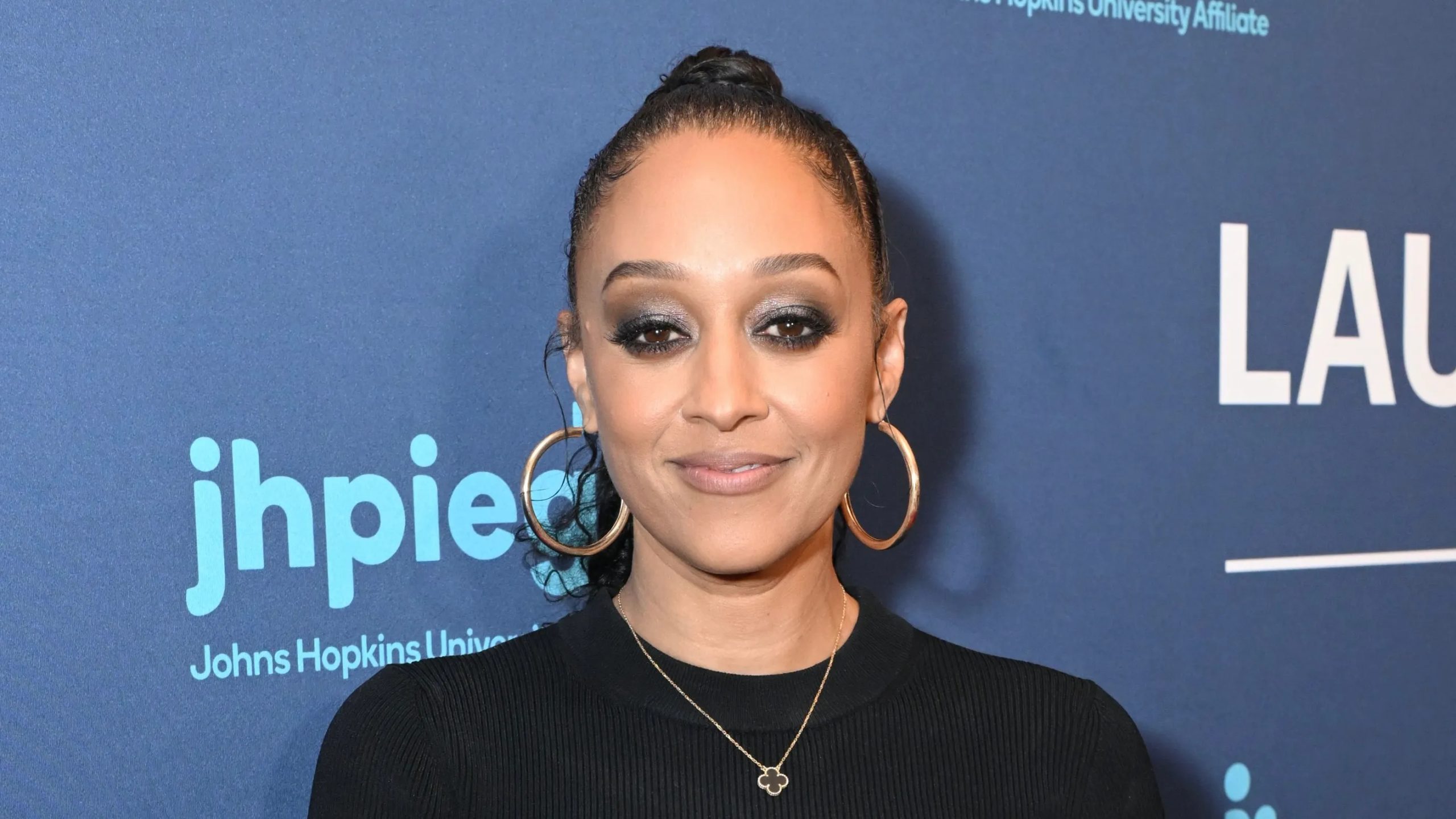
Tia Mowry is getting candid, opening up about how she “manifested” her new romance.
RELATED: Head Over Heels?! Tia Mowry Seemingly Confirms New Romance & Reveals She’s In Love (WATCH)
Tia Mowry Opens Up About How She “Manifested” Her New Romance
On Wednesday, March 25, PEOPLE published an exclusive interview with Mowry. Furthermore, the outlet reportedly spoke with her while she was attending the Jhpiego Laughter Is the Best Medicine Gala on Wednesday, March 18. While there, Mowry spoke on how she “manifested” her new romance.
“I will say that I’ve been in a place of solitude for a very long time. And there, I was really able to learn who I am, what it was that I wanted, and what it was that I needed. And I manifested this. I really did,” she said.
Per Mowry, she “became really positive” and spoke her new love “into existence.”
“I like speaking it into existence, just being really positive about the words that you are telling yourself. Visualization, I’m a huge believer of visualizing things and visualizing feelings. And I just started to stop just talking bad and poorly about dating because it was very easy to do that,” she said. “But I was like, ‘You know what? I believe in neuroscience and how the brain works, and if I continue to speak negative about it, that’s what my brain is going to seek out and find.’ But if I just start to speak positive things into existence, then it’ll eventually happen. And I really, in a way too, I was okay with being by myself.”
Was Any Info Shared About Her New Man?
Per the outlet, Mowry declined to share any details about the new man in her life. However, she did note that she’s “very happy.”
“I want to protect [our privacy],” she reportedly explained.
Furthermore, she noted that intention and balance are important to her at this time in her life. And, despite finding love, she remains focused on “being the best mom.”
More On Tia Mowry’s New Romance
As The Shade Room previously reported, in February, Tia Mowry appeared to soft-launch her new romance by including a photo of a man’s feet planted behind hers on her beach.
In March, Mowry then confirmed her new love while appearing on the red carpet at Essence’s Black Women In Hollywood 2026 event.
More recently, Mowry gave fans another subtle look at her man while also showing off apparent roses he gifted her.
RELATED: Soft Girl Era? Tia Mowry Teases Photos With Mystery Person After Revealing She’s In Love
What Do You Think Roomies?

Editor’s note: The below recap contains spoilers for Invincible Season 4 Episode 5.
It’s not controversial to say that last week’s episode of Invincible wasn’t one of its best. We saw Mark Grayson (Steven Yeun) take an unwanted trip down to Hell to help Damien Darkblood (Clancy Brown) and his father, Satan (Bruce Campbell), defeat Volcanikka (Indira Varma). However, it did end with some pretty major cliffhangers. After getting his yellow-and-blue suit back, Mark receives a visit from Nolan (J.K. Simmons) and Allen (Seth Rogen), requesting his aid. While “Hurm” was one of the series’ weakest installments, “Give Us a Moment” is one of its most intense and emotional to date.
Nolan Finally Talks With Debbie in ‘Invincible’ Season 4 Episode 5

Episode 5 begins mere minutes after last week’s cliffhanger. As Eve (Gillian Jacobs) and Allen converse on the Graysons’ rooftop, Nolan and Mark have an awkward father-son reunion. Nolan is trying his best to show Mark that he’s truly changed, saying that while he’s full of regret about the Viltrum breeding plot, Mark was the one good thing to come out of it. Mark is still not having it, angry that Nolan has once again lied to him. Knowing that there’s not much time left, Nolan makes a last-ditch attempt to persuade Mark, telling him that the entire Coalition is aligned and that they’ll embark on their two-week trip to Talescria in the morning.
As Mark takes his time to make his final decision, Nolan finally attempts to apologize to Debbie (Sandra Oh). Mark warns Nolan that it will not go well, telling him, “Who is the apology for, her or yourself?” Nolan approaches the front door, but nearly walks away until Debbie opens it. She remains silent as Nolan tries to explain himself by saying, “I did the unspeakable… twice. I didn’t want Mark to get his powers. 20 years with you made me human. I’m sorry for it. I will spend the rest of my life trying to repair the damage I did.”
Debbie finally speaks, telling her ex-husband that his apology is “bullshit” and that, no matter how hard he tries, nothing he can do or say will repair the damage he caused. Nolan continues to try to explain himself, even going as far as to say that his romantic fling with Andressa (Rhea Seehorn) was a mistake. This only enrages Debbie more, and she punches Nolan in the chest, hurting her wrist. Hysterical, she demands that Nolan leave and never come back.
Mark and Oliver Leave Earth in ‘Invincible’ Season 4 Episode 5

After being teased in Episode 2, Tech Jacket (Zoey Deutch) finally makes her debut. Yes, her. In the series, Tech Jacket is actually a teenage girl named Zoe Thompson, who works alongside her father, Ed (Bobby Moynihan), in defending the planet. Allen meets with Zoe and Ed, recruiting the former to join the Coalition of Planets. With her father’s approval, she agrees to join in the fight. Mark has also made his decision to join his father and Allen in the war, telling Debbie that this isn’t about Nolan; it’s about protecting the universe.
Angered that Nolan didn’t even visit him, Oliver (Christian Convery) tells Mark and Debbie that he is coming too. Shocked, Debbie and Mark immediately tell him no. Oliver explains that he wasn’t there for his real mom and that he needs to fight for Debbie, and nobody will stop him. Debbie finally agrees to let Oliver tag along, but requests that he, Mark, Eve, and Paul (Cliff Curtis) have one last family dinner with her. While his wife and sons share a melancholy meal, Nolan visits Art (Mark Hamill), and the two have some beers while catching up with one another. Nolan admits that he is happy for Debbie before apologizing to Art. He then asks Art to fix his suit, but Art rejects him, saying that he “only dresses heroes.” The two share an awkward goodbye, Nolan flies off, and Art lets out a big sigh of relief.

‘Invincible’ Season 4 Stars Officially Confirm Dark Turn for Mark and Eve
Steven Yeun and Gillian Jacobs tease the internal turmoil and conflict Mark and Eve will face in Season 4 of Invincible.
That night, Mark and Eve talk in bed, reminiscing on how they first met, as well as their belief that Robot (Ross Marquand/Zachary Quinto) and Monster Girl (Grey Griffin/Kevin Michael Richardson) will soon find their way home. Mark then asks Eve what it was she wanted to tell him before Nolan and Allen arrived, but she brushes the question off. In the morning, Mark bids farewell to Debbie, Eve, and Paul. Nolan is frustrated by Oliver’s insistence on joining the battle, but the young superhero stands firm on his decision. Alongside Tech Jacket, Mark, Oliver, Nolan, and Allen board the Venture and leave Earth. At the GPA headquarters, Cecil (Walton Goggins) and Donald (Chris Diamantopoulos) watch the liftoff, noting that for the first time in 20 years, the planet is Viltrumite-free. (Given how many times Mark has already left Earth in the past three seasons, that isn’t entirely true.)
Conquest Meets His Bloody End in ‘Invincible’ Season 4 Episode 5
On the ship, Oliver continues to give Nolan the cold shoulder, much to his dismay. Allen notices that Nolan is in a funk and expresses his concern to Mark, who tells him that Nolan expected Debbie to be happier and has realized that he has let Oliver down. Their conversation is interrupted when Conquest (Jeffrey Dean Morgan) and a Viltrumite gunship attack the Venture. Mark and Allen frantically search for Oliver and Nolan, finding the former barely conscious.
Conquest swoops in and begins crushing Oliver’s skull, and Nolan rescues him, ordering him to seek shelter on a nearby planet. Conquest begins taunting Mark about Eve, which only enrages him further. Nolan orders Tech Jacket, Allen, and the others to get to safety, and flies down to the nearby planet to save Mark and Oliver. Mark and Conquest continue to fight, which culminates in the bloodthirsty Viltrumite overpowering our hero. While on the ground, Mark begins choking Conquest, who then proceeds to punch a hole in Mark’s chest to rip out his organs. It’s one of the most graphic and upsetting scenes in the series. Mark is finally able to suffocate Conquest, but the damage to his body has already been done, and he collapses, near death. Nolan and Oliver are shocked when they discover a bloodied and withering Mark next to Conquest’s corpse.
Episode 5 ends with Telia (Tatiana Maslany) updating Thaedus (Peter Cullen) about the attack, informing him that she had no choice but to leave the team behind. Thaedus doesn’t seem too concerned, telling her that she made the correct decision in fleeing. In the post-credits scene, two Viltrumites stress that Thragg (Lee Pace) won’t be happy that Nolan and Mark have gotten away. It’s then revealed that Allen and Tech Jacket are hiding in an escape pod in the lower decks of the Viltrumite gunship.
“Give Us a Moment” is a lot, but after last week’s lackluster episode, that’s not a bad thing. In fact, it’s easy to forgive some of this season’s weaknesses, as this week’s episode is one of the best in the series. Not only does it feature several emotional character moments for all four members of the Grayson family, but it also convincingly confirms that the stakes have never been higher. Mark’s climactic fight with Conquest is brutal, but it’s also vital. We’ve seen Mark beaten badly before, but this is on a whole new level. It’s safe to say that Invincible Season 4 is now fully back on track.

- Release Date
-
March 26, 2021
- Network
-
Amazon Prime Video
- Franchise(s)
-
Invincible
Pros & Cons
- Mark’s fight with Conquest is brutal, bloody, upsetting, and the perfect way to show that the stakes have never been higher.
- Debbie and Art don’t forgive Nolan too easily, which is good.
- Tech Jacket makes her debut with a fresh spin on the character.

Bold and the Beautiful explodes as Sheila Carter (Kimberlin Brown) is getting suspicious and starting to put the pieces together this week. So, it’s not going to be long before she finds out Taylor Hayes (Rebecca Budig) was in bed with her husband, Deacon Sharpe (Sean Kanan).
And when Sheila is hurt and furious and ready to retaliate, we’re wondering if she will shock the fans and respond in a way that nobody saw coming. We’re going to dig into what would be the soapiest twist that would stun Taylor and Deacon and everybody.
Sheila Reverts to Old Habits This Week on Bold and the Beautiful
So, by the end of this week, according to B&B spoilers, Sheila is going to revert to her old habits, but that doesn’t necessarily mean she’s going to get murdery. She has worked really hard to change her life after she got that release from prison that she wasn’t expecting, and she wanted to prove to Deacon that she’d changed. And Sheila may be pressed to see that she can’t behave like she used to.
So, this week we already saw Sheila nearly catch Deacon in bed with Taylor. Honestly, it’s insane that Sheila was creeping into Steffy Forrester‘s (Jacqueline MacInnes Wood) house while she was out of town, coming in the back door. That sort of stalking is one of Sheila’s old habits, and it’s insane. She came to bring Taylor flowers, then heard noises after creeping in the back door of a house that Sheila knows she’s not allowed to be in.
Sheila’s Bizarre Reaction on B&B
And then it got crazier. Why was Sheila’s first thought when she heard music and moaning that somebody’s hurting Taylor? Right? All these assumptions. To me, it’s not the best writing. But Sheila burst into Taylor’s room with that butcher knife, waving it around, ready to protect Taylor. Thankfully, Deacon jumped off the balcony and into the shrubbery before Sheila saw her husband.
And then Taylor panicked, thinking Sheila was going to kill her. You know, Taylor was scared that Sheila had somehow spotted Deacon. And then Sheila decided that Taylor was having some, you know, lady me time. And Sheila even admired how all out Taylor went with the candles and whatnot to do some self-pleasuring. It was just all so cringy.
Sheila then recommended some audio books to Taylor. It was all embarrassing. So, she threw on a robe and was shoving Sheila out of the house, just telling her, “Go, go, go.” Taylor reminded Sheila that she’s not supposed to be there. Taylor said, “If Steffy was home, her daughter would have called the cops on Sheila.” And then Taylor told Sheila, “Leave and don’t you ever come back to the house.”
The Il Giardino Pizza Box Clue
But as Taylor was kicking her out, Sheila noticed the Il Giardino pizza box and that was what started her wheels turning. That was also insane because that is Finn (Tanner Novlan) and the kids’ favorite place to pick up pizza from. They do it all the time. And for all Sheila knows, it could have been from earlier in the day before Steffy and Finn left with the kids.
I don’t think a pizza box is a sign of cheating since there’s probably pizza boxes from Il Giardino in that house, you know, at least once a week. But that was what inspired Sheila to start thinking. And then when she got back to Il Giardino, she asked an employee if he’d seen Deacon, and he hadn’t. At that point, why didn’t Sheila pick up her phone and call Deacon instead? Sheila paced around downstairs till closing time.
Then she finally went upstairs and Deacon was on the sofa pretending to be asleep. And honestly, he’d been there for quite some time. So, on the next episode, we have Sheila telling Deacon that she went over to Steffy’s to bring Taylor flowers and she thought somebody was assaulting her. And Sheila says she thought Taylor was in danger, so she grabbed a butcher knife and went upstairs.
And then Sheila tells Deacon he’ll never guess what she walked in on. And of course, he’s playing dumb, but he’s also probably terrified that Sheila caught a glimpse of him. And it certainly was a really close call. But it seems like Sheila is in a way testing Deacon to see how he reacts, to see what he says.
Hope and Liam’s Phone Call May Be a Big Clue on Bold
Other spoilers for this week say that Sheila’s suspicions grow and that she’s putting everything together. And one thing that might trip them up ties to a phone call between Hope Logan (Annika Noelle) and Liam Spencer (Scott Clifton). There was no reason in another storyline for this phone call. And that’s why I think it’s a big hint. So, he called to ask Hope what she wanted for dinner. And then Liam said he’d grab something and bring it home.
And that phone call might have actually been important. So, Hope’s supposed to be out to dinner with Deacon. That’s the alibi he gave Sheila. But if Liam went over to pick out takeout from Il Giardino, that’s another sign, another red flag. So, Sheila might notice a receipt from Liam’s purchase or one of the servers may mention that Deacon’s son-in-law picked up dinner. That’s a big red flag.

What If Sheila Doesn’t Go Psycho on Bold and the Beautiful?
So then there’s the spoiler about Sheila reverting back to her old ways or you know so it seems. But if she starts to go psycho, I think Deacon might tell Sheila, “You got to dial it back or you’re going to wind up in prison for the rest of your life and if you hurt Taylor, I will hate you.” I think Deacon could say something like that to her.
And from there, it’d be really wild if instead of trying to kill Taylor, we have Sheila doing something unexpected on Bold and the Beautiful. Remember that old Dolly Parton song, Jolene? If you don’t know the song, it’s Dolly singing about this beautiful woman who has been fooling around with another woman’s guy and then she’s begging Jolene, “Please don’t take my man. Please don’t take him just because you can.”
B&B Shocker: Sheila Falls Apart?
So, I’m wondering if we get a twist and Sheila shows up at first acting scary and confrontational and of course Taylor would be terrified she’s going to kill her for fooling around with Deacon. And then surprisingly, we could see Sheila break down. Literally get down on her knees and begs Taylor, “Please don’t take Deacon away from me. He’s all I have.” Which is true. Sheila’s got no family that’ll give her the time of day. She’s the town pariah.
And aside from Li Finnegan (Naomi Matsuda), everybody either hates Sheila, is scared of her, or both. And nobody wants her around. And I mean, it’s one thing for Taylor to steal Deacon from Sheila the Psycho, but another for Taylor to steal Deacon from this heartbroken woman who’s begging Taylor to please don’t take her man. Because that’s another thing entirely. It is cruel and she’s not a cruel person. Taylor isn’t.
Sheila Could Remind Taylor She Violated Professional Ethics
So, Sheila may remind Taylor that Deacon was really struggling when he started therapy with her. And Sheila might try to make Taylor see how inappropriate it was for her to get involved with Deacon when he was in that vulnerable state because let’s be real, it was totally inappropriate and Sheila might literally beg Taylor, don’t take Deacon, please.
I think that would be such a huge twist because everybody expects Sheila to go homicidal on Taylor and maybe on Deacon, too. And Steffy’s so worried because of how dangerous and crazy Sheila is. So, I think it would be really interesting and actually refreshing if instead of proving Steffy right, we could see Sheila actually prove that she’s changed.
And maybe she doesn’t get murdery with Taylor, but begs her instead to not do this. I mean, how can she refuse Sheila, begging her for compassion? I think Taylor would be in a tough position of being selfish and stealing Sheila’s husband on top of Taylor violating her professional oath, or, you know, she could do the right thing and turn her back on Deacon. I think it would be a really cool twist and I’m really hoping to see it go this way instead of Sheila doing the same old things she always does.
And I think it would be interesting to see Taylor have this reality check that she is the villainess of this story. You know, this is not Romeo and Juliet. This is a bad person taking a woman’s husband. You know, Sheila is not the villain here. It is Taylor. And that would be, I think, game-changing and an amazing plot twist.
Entertainment
10 movies coming to Netflix in April 2026 — including a new Charlize Theron action film
:max_bytes(150000):strip_icc():format(jpeg)/If-Ryan-Reynolds-The-Wiz-Lena-Horne-Roommates-Sadie-Sandler-033026-9003807cce614d6dbfb4f0daaad491a3.jpg)
You can also get a dose of nostalgia by revisiting “The Wiz” and “Smokey and the Bandit.”
“Summer House” stars are reacting to the news of West Wilson and Amanda Batula‘s surprising romance, and it’s safe to say that many are not here for it.
On Tuesday, March 31, Wilson and Batula released a joint statement about the status of their relationship, confirming the rumors swirling that they’d been secretly dating.
In addition to “Summer House” stars such as KJ Dillard and Lindsay Hubbard speaking out about the latest developments, Bravo enthusiasts are chiming in as well.
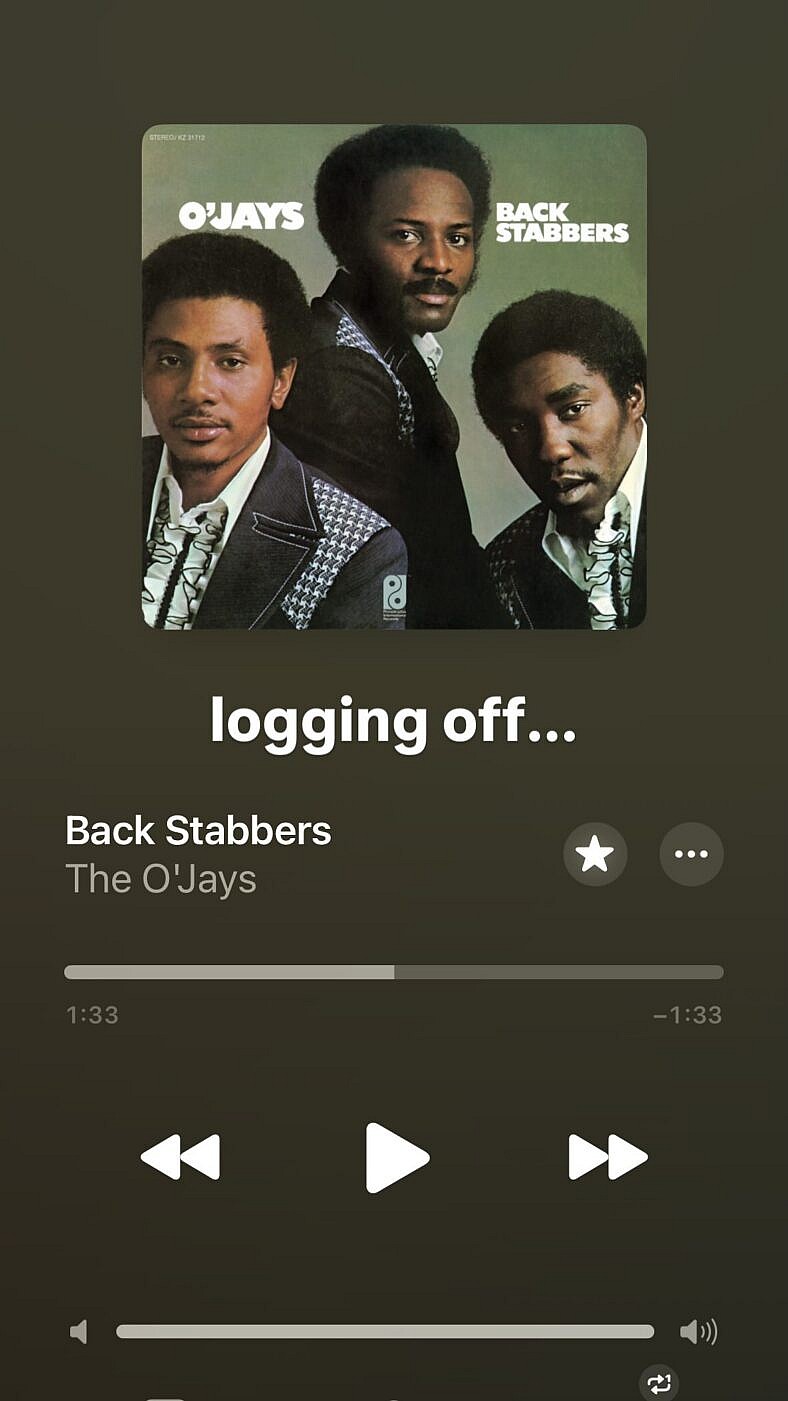
‘Summer House’ Star KJ Dillard Appears To Shade ‘Back Stabbers’ West Wilson, Amanda Batula, Following Confirmation Of Their Nefarious Relationship
Dillard is the newest cast member to join Bravo’s “Summer House,” but he seems to be the one with the most to say about the latest happenings with his friend, Wilson, and his new flame, Batula.
Dillard, who, according to Bravo’s Daily Dish, was born in Arizona and raised in Kansas City, appeared to slam the two of them with a shady post to his Instagram Stories.
The snap was a screenshot of the popular song “Back Stabbers” by the group The O’Jays. “Logging off…” he captioned the moment.
In another post, Dillard shared an image of himself during a previous “Summer House” episode with Ciara Miller and fellow newcomer Mia Calabrese.
“I love my big sisters for life,” he wrote.
Wilson, Batula Confirm Relationship
Dillard’s post comes hours after Wilson and Batula confirmed their relationship following weeks of speculation.
“We’ve seen the growing online speculation, so while this is still very new, we wanted to provide some clarity,” their joint post read. “It was never our intention to purposely hide anything. Given the complicated relationship dynamics involved and the scrutiny that comes with being on a reality show, we need a little space to process things privately before speaking on it.”
The post continued, “We’ve shown up for each other as friends over the years, through all the highs and lows, and what’s developed recently was the last thing either of us expected. Our connection grew out of a genuine, long-standing friendship, which made it especially important for us to approach this with care.”
The pair went on to say that they wanted to approach their new relationship with caution, adding that they recognize the impact it would have on their cast mates, Miller (Batula’s friend who dated Wilson) and Kyle Cooke (Batula’s soon-to-be ex-husband).
“We truly appreciate the understanding and respect as we navigate this,” the statement concluded.
Wilson Previously Denied Anything Going On Between Him And His ‘Summer House’ Co-Star

The news of Batula and Wilson’s connection has surprised many, given that Wilson previously denied the rumors on Andy Cohen’s “Watch What Happens Live,” according to PEOPLE.
“We were just hanging out in New York. She’s single, I gotta show her the streets a little bit,” he said on a recent episode. “But if it’s not clear, that’s a very important person to me, and I care about her a lot.”
Cooke, who announced his separation from Batula in January 2026, too, commented on the speculation earlier this month, calling the rumors “kinda shocking” and “outrageous.”
“It would certainly catch me by surprise and feel a little reckless, and I think I’d probably be the last person people would be worried about. I think Ciara would probably have something to say,” he said.
Miller Unfollows Batula And Wilson

Dillard isn’t the only Bravo cast member reacting to the news.
Jesse Solomon shared an image of himself with a shocked reaction on his face on his Instagram Stories, while Venita Aspen from “Southern Charm” wrote, “Imagine making a statement hard launching a ‘connection’ and not even considering apologizing to the person you hurt. But I guess that tracks.”
While Miller hasn’t issued an official statement, the reality star did unfollow both Wilson and Batula, seemingly making her stance on a future relationship with them clear.
Fans Slam Wilson And Batula Following ‘Summer House’ Scandal
Netizens are also tearing into Wilson and Batula on different forums.
“Can you imagine posting a joint statement with a situationship not three months after a joint statement with your husband?? We don’t need a #SummerHouse reunion, we need an exorcism,” an X user wrote.
“Lmaoo I cannot believe this is real life,” another user said. “Amanda is such a loser omg.”
“It genuinely fills me with rage,” said a third. “He hides behind this ‘liberal king’ sh-t when he’s a bottom of the barrel loser. He wanted to know what it was like to be with a black girl without any of the commitment and then also cries because people call out the racist undertones. He’s OVER.”
:max_bytes(150000):strip_icc():format(jpeg)/Tiger-Woods-SoFi-Center-2026-032726-240243602c7c44c4a1982c6694c9d348.jpg)
The golfer was arrested on Friday following a crash in Florida.
Entertainment
Brittni Mealy Announces Book As Report Claims She Wants Future Behind Bars Over Life Insurance Policy


Brittni Mealy is reportedly seeking a court order holding her son’s father, Future, in contempt. A TMZ report says the rapper failed to comply with an agreement regarding a life insurance policy. Now, she allegedly wants him behind bars. As social media users chat about the report, Brittni slid on her socials to promote her long-term project, her book.
RELATED: Whew! Future’s Message About “Manifesting Real Love” Has Social Media Users Goin’ IN
Report Says Future Did Not Create Life Insurance Policy Benefitting His Son
Brittni and Future reportedly share a 12-year-old son named Prince. Reportedly, Future was ordered in 2023 to create a $500,000 life insurance policy naming Brittni as the trustee for Prince. In a new court filing, Mealy says Future did not comply and that she’d like him held in contempt, per TMZ. Additionally, the report says Mealy wants the rapper incarcerated until the life insurance policy is in place. The father of at least eight kids has yet to react to the report. His 2023 court history with Brittni Mealy reportedly includes a child support increase from $3,000 to $5,000 a month.
Brittni Mealy Is Focused On Her Book
Mealy told her fans on Tuesday that her book is more than a recap of her days as a midnight ballerina or men from her past. Whether Future will be mentioned is still unclear. Her book, she says, is for the “women who’ve been through things” and didn’t get to process or are still in it. Brittni is calling her story ‘Truth Be Told,’ the same name she used when she shared it on TikTok two years ago.
“I really feel like the life I deserve is on the other side of these pages. Not just material things… but peace, release, clarity. This book is therapy for me. It’s me grieving, venting, processing things I probably pushed past,” Brittni wrote.
RELATED: Social Media Shows Russell Wilson MAJOR Love After Ciara’s Son Future Zahir Refers To Him As “My Dad” During Red Carpet Interview (VIDEO)
The post Brittni Mealy Announces Book As Report Claims She Wants Future Behind Bars Over Life Insurance Policy appeared first on The Shade Room.
:max_bytes(150000):strip_icc():format(jpeg)/Mike-Lookinland-Brady-Bunch-033126-8d80bf91aa964c37a3cb07278ad24142.jpg)
Lookinland played youngest brother Bobby on the ’70s sitcom.
Entertainment15 seconds ago
Bravo star teases more fallout from Amanda Batula and West Wilson romance: 'Brace yourselves, America'

Politics6 minutes ago
PETA have picked up another nonsense campaign
Sports7 minutes ago
Football: Italy fail to qualify for third consecutive World Cup – Sports


-

 News Videos6 days ago
Parliament publishes latest register of MPs’ financial interests
-
 Tech6 days ago
Intercom’s new post-trained Fin Apex 1.0 beats GPT-5.4 and Claude Sonnet 4.6 at customer service resolutions
-

 NewsBeat5 days ago
The Story hosts event on Durham’s historic registers
-

 Business6 days ago
Instagram, YouTube Found Responsible for Teen’s Mental Health Struggle in Historic Ruling
-
 NewsBeat7 days ago
Tesco is selling new Cadbury Dairy Milk bar and people can’t wait to try it
-

 Sports4 days ago
Sweet Sixteen Game Thread: Tide vs Michigan
-
Entertainment2 days ago
Fans slam 'heartbreaking' Barbie Dream Fest convention debacle with 'cardboard cutout' experience
-
 Entertainment3 days ago
Lana Del Rey Celebrates Her Husband’s 51st Birthday In New Post
-
Crypto World21 hours ago
Dems press CFTC, ethics board on prediction-market insider trades
-

 Sports17 hours ago
Tallest college basketball player ever, standing at 7-foot-9, entering transfer portal
-
 Fashion7 days ago
How to Style Spring Like WeWoreWhat: Easy Outfit Ideas for 2026
-

 Entertainment6 days ago
HBO’s Harry Potter Series Will Definitely Fail For One Big Reason, And It’s Not J.K. Rowling Or Snape
-

 Tech2 days ago
The Pixel 10a doesn’t have a camera bump, and it’s great
-

 Fashion6 days ago
En Vogue in Brown Leather and Tailored Neutrals by Atelier Savoir, Styled by J Bolin
-

 Crypto World1 day ago
U.S. rule change may open trillions in 401(k) funds to crypto
-

 Fashion6 days ago
What Are Your Favorite T-Shirts for the Weekend?
-

 Fashion5 days ago
Weekly News Update, 3.27.26 – Corporette.com
-

 Politics2 days ago
Should Trump Be Scared Strait?
-

 Sports1 day ago
Women’s hockey camp eyes fitness boost, tactics ahead of WC 2026 campaign | Other Sports News
-
 Sports6 days ago
Lewis Hall hopes to miss another summer of village cricket due to World Cup call
You must be logged in to post a comment Login