

Business
Wells Fargo’s SWOT analysis: stock navigates asset cap removal




Taysha Gene Therapies stock hits all-time high at 5.49 USD
Business
Flughafen Wien Aktiengesellschaft 2026 Q1 – Results – Earnings Call Presentation (OTCMKTS:VIAAY) 2026-05-23


Seeking Alpha’s transcripts team is responsible for the development of all of our transcript-related projects. We currently publish thousands of quarterly earnings calls per quarter on our site and are continuing to grow and expand our coverage. The purpose of this profile is to allow us to share with our readers new transcript-related developments. Thanks, SA Transcripts Team

Ukraine’s capital Kyiv hit by massive missile, drone attack
Business
Vtech Holdings Limited 2026 Q4 – Results – Earnings Call Presentation (OTCMKTS:VTKLY) 2026-05-23
Seeking Alpha’s transcripts team is responsible for the development of all of our transcript-related projects. We currently publish thousands of quarterly earnings calls per quarter on our site and are continuing to grow and expand our coverage. The purpose of this profile is to allow us to share with our readers new transcript-related developments. Thanks, SA Transcripts Team
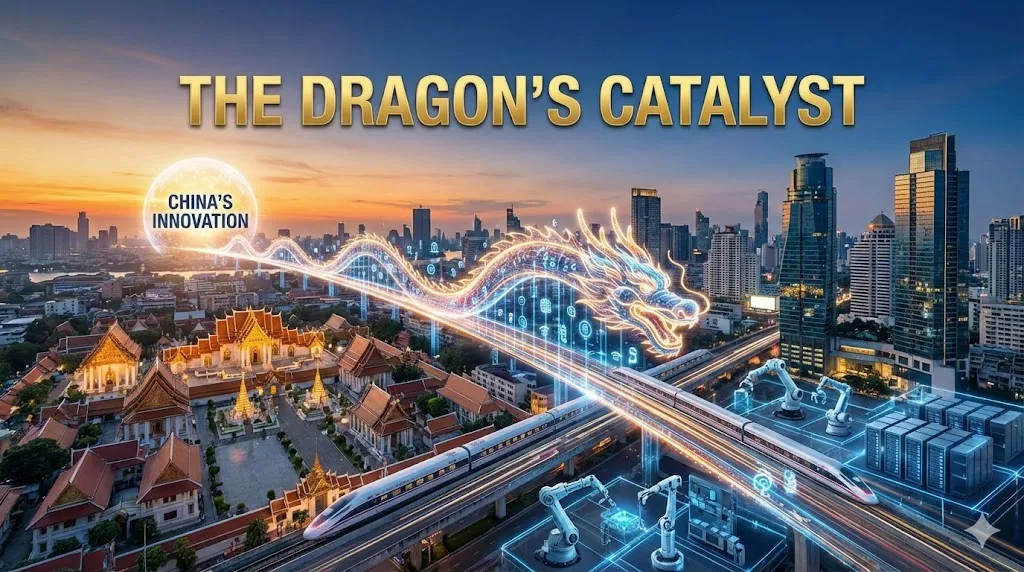
China has become Thailand’s largest source of foreign direct investment (FDI), registering nearly $7 billion in projects over the last two years. This capital is predominantly flowing into strategic, high-growth sectors, including electric vehicles (EVs), the digital economy, and new energy.
In early 2025, a European consumer electronics company held an emergency strategy meeting. Their biggest supplier — a factory in Guangdong — had just been hit with a fresh round of US tariffs. The question on the table wasn’t whether to move production. It was where. Vietnam was overcrowded. India was complicated. Then someone mentioned Thailand.
Key takeaways
- Thailand is China’s most strategically useful ASEAN partner — and knows it. With $153 billion in bilateral trade, 1,000+ Chinese firms on the ground, and a new 5-year cooperation plan targeting semiconductors, batteries, and digital infrastructure, the economic integration between the two countries is deep, structural, and accelerating. Executives entering Southeast Asia cannot treat this relationship as peripheral context.
- The real opportunity is in the gap between trade and value. Thailand imports capital goods and technology from China; it exports raw materials and food. That imbalance is the gap the Thai government is actively trying to close — by attracting Chinese (and global) investment into higher-value manufacturing. Businesses that can help bridge that gap, whether in EV supply chains, digital platforms, or advanced manufacturing, are entering at exactly the right moment.
- Thailand’s multi-alignment strategy is a feature, not a liability. Simultaneously pursuing BRICS membership, EU and US trade ties, and Chinese investment partnerships, Thailand is positioning itself as the region’s most connective node. For international executives, that means one operating base with meaningful access to multiple major markets — and a government with a strong incentive to keep it that way.
Within six months, they had signed a lease in the Eastern Economic Corridor. Within a year, their new Thai facility was operational — and their primary contractor on the ground was a Chinese firm that had made the exact same move twelve months earlier.
This is not an isolated story. It is, in fact, a defining pattern of 2026: companies — Chinese, Western, and everything in between — converging on Thailand as the operating base that sits most comfortably at the intersection of Chinese capital, Southeast Asian logistics, and global market access. To understand why, you need to understand the relationship between two of Asia’s most strategically important economies.
Fifty years in the making
Thailand and China officially established diplomatic relations in 1975. At the time, bilateral trade was negligible. By 1999, it had reached $4.22 billion — modest by any measure, but a foundation. By 2008, it had climbed to $36.2 billion. Then came the era of acceleration. By 2023, the figure crossed $126 billion. In 2025, it hit $153 billion.

That trajectory — from $4 billion to $153 billion in roughly 25 years — is one of the most dramatic bilateral trade expansions in modern Asian economic history. China has been Thailand’s largest trading partner for eleven consecutive years. It is Thailand’s largest source of imports and its second-largest export market. Nearly 80 percent of what China sends to Thailand consists of capital goods and intermediate goods — the machinery and components that power Thai industry. In return, Thailand sends agricultural products, rubber, refined oil, plastics, and electronics back north.
The relationship is, in short, deeply structural. It is not the product of a single policy or a diplomatic moment. It is woven into Thailand’s industrial supply chains, its agricultural export model, and increasingly, its infrastructure ambitions.
The 2025 milestone: more than a celebration
September 2025 marked the 50th anniversary of Thailand-China diplomatic relations, and both governments used the occasion to do something more meaningful than issue a commemorative stamp. At the Thailand-China Cooperation Expo in Bangkok — held across three days at IMPACT Muang Thong Thani — the two countries announced a new five-year trade and economic cooperation plan running from 2025 to 2031.
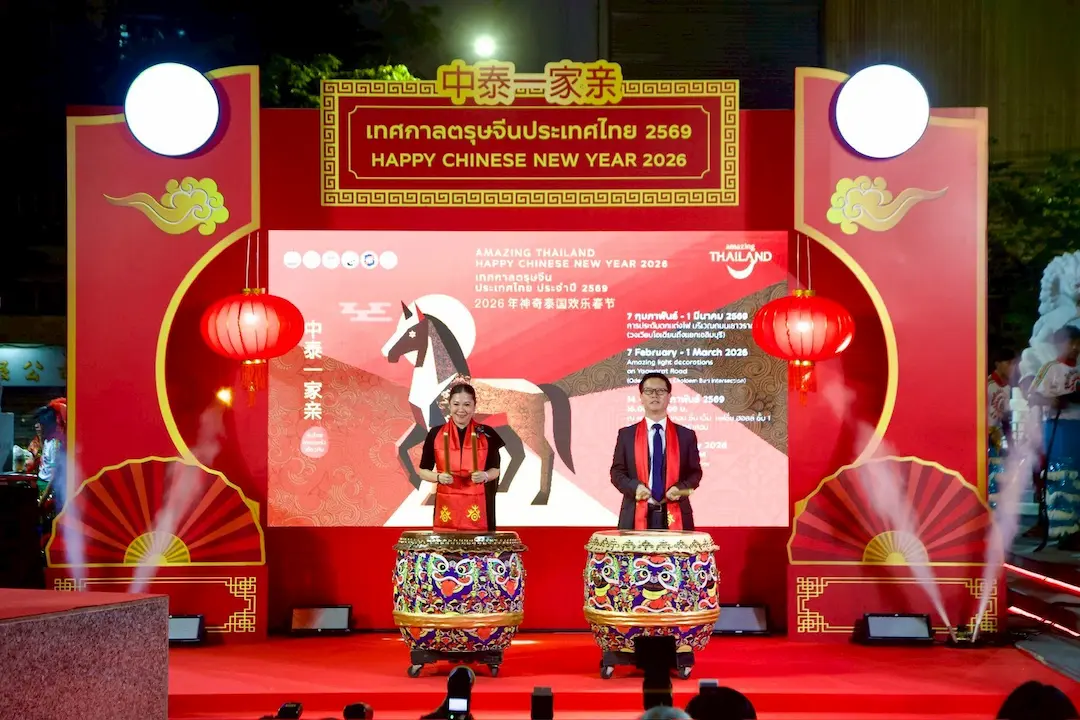
The plan is not vague. It targets specific sectors: semiconductors, batteries, sustainable production, digital infrastructure, and agriculture. It establishes a framework for a joint digital economic platform linking finance, cross-border trade, and AI research. It commits both governments to reducing barriers, improving regulatory alignment, and facilitating business — particularly for SMEs and startups that want to access each other’s markets but lack the resources to navigate them alone.
For business executives, the five-year plan is worth reading carefully. Governments that write this level of specificity into bilateral agreements tend to follow through on the sectors they name. Semiconductors and batteries, in particular, signal where both parties expect the next wave of investment to flow — and where the smart money should be paying attention.
The expo itself brought together entrepreneurs, investors, importers, exporters, and logistics operators from Thailand, China, and third countries. Thailand’s Prime Minister framed the country’s ambition explicitly: to become a regional hub for trade, investment, and innovation, working with China as its primary partner in that transformation. That is not modest language. It is the language of a country that has made a strategic choice.
What Thailand exports, what it imports — and the gap that matters
Understanding the trade structure between Thailand and China is essential for any executive entering either market.

Thailand’s exports to China are dominated by agricultural products — fruit, rubber, wood products — alongside plastics, rubbers, and electronics components. China consistently absorbs more than 40 percent of Thailand’s total agricultural exports. For Thai agribusiness, China is not just the largest market; it is the market around which the entire export infrastructure is organised.
Thailand’s imports from China tell a different story. Electrical appliances, equipment, machinery, and increasingly, automobiles — especially electric vehicles — flow south in large quantities. The result is a trade deficit that has been growing steadily since 2022 and shows no sign of reversing. Thailand buys more from China than it sells there, and the structure of that imbalance — capital goods and technology flowing in, raw materials and food flowing out — reflects the relative position of both economies in global value chains.
For businesses, this gap is both a risk and an opportunity. The risk is currency and trade exposure. The opportunity is that Thailand’s government is actively trying to move up the value chain — to produce more of what it currently imports, and to do so with Chinese partners who bring capital and technology while Thailand provides land, labour, and location.
Chinese investment: $7 billion and accelerating
Trade volumes tell one part of the story. Investment flows tell another.
China has become Thailand’s largest source of foreign direct investment. Over the past two years, 588 Chinese investment projects have been registered in Thailand, with a combined value approaching $7 billion. The sectors attracting the most capital are electric vehicles, the digital economy, and new energy — precisely the industries where China has developed global-scale competitive advantages and is now seeking to export them.
Approximately 1,000 Chinese enterprises are currently active in Thailand. Some are manufacturing operations. Some are logistics and distribution platforms. Some are technology companies establishing regional headquarters. Together, they represent a permanent shift in Thailand’s industrial landscape — one that is creating new supplier networks, new skill requirements, and new competitive dynamics across virtually every sector.
The visa-waiver agreement signed in early 2024, which removed entry requirements for citizens of both countries, has further accelerated the flow of business travellers, investors, and executives between the two nations. Bangkok, Chiang Mai, and Phuket now see significant volumes of Chinese business visitors — a category distinct from the tourist arrivals that have long dominated the headline numbers.
The geopolitical backdrop: opportunity in complexity
No serious account of the Thailand-China business relationship can ignore its geopolitical dimension, and executives who do so will be caught off guard.
The relationship is not simple. Despite the depth of economic ties, a 2026 survey by the ISEAS-Yusof Ishak Institute found that 90.6 percent of Thais express concern about China’s growing economic influence — the highest rate of apprehension in Southeast Asia. Thailand takes more comfort from its relationship with China than most ASEAN nations in some respects, and is more wary in others.
Thailand is simultaneously pursuing membership in BRICS, negotiating new free trade agreements with the EU, South Korea, and Canada, and positioning itself as a manufacturing alternative for companies seeking to reduce exposure to both Chinese and American supply chain risk. This is deliberate. Thailand’s foreign policy establishment has long practised what analysts call “multi-alignment” — maintaining productive relationships with all major powers while committing fully to none.
For business executives, this is not a complication. It is a feature. A country that trades heavily with China, maintains strong ties with the US and Europe, and is actively building new trade corridors in every direction is exactly the kind of operating environment that reduces single-point-of-failure risk. Thailand’s ambiguity is its advantage — and, increasingly, yours.
What executives should watch in the next 12 months
Several developments will shape the Thailand-China business environment through 2026 and into 2027:
- The land bridge. Thailand’s proposed megaproject — connecting two deep-sea ports on opposite coasts via rail, bypassing the Strait of Malacca — is gaining momentum. China is widely expected to be among its primary backers, and if construction begins, it will reshape regional logistics infrastructure significantly.
- The digital platform. The joint digital economic platform announced in 2025 is moving from policy document to implementation. Watch for early pilots in cross-border e-commerce settlement and AI research collaboration — these will signal how quickly the digital corridor develops.
- EV market dynamics. Chinese EV brands have entered the Thai market aggressively. How Japanese automakers respond, and whether Thailand succeeds in its 30@30 electrification goal, will determine whether the country becomes a genuine regional EV hub or a cautionary tale about policy ambition.
- FTA outcomes. Thailand is targeting completion of trade deals with the EU, South Korea, and Canada within 2026. If successful, these agreements will enhance Thailand’s appeal as a manufacturing and distribution base for companies seeking access to multiple major markets through a single location.
The bottom line
Fifty years ago, Thailand and China shook hands across a table and decided to trade. Today, that handshake is worth $153 billion a year and growing. The relationship has survived political turbulence, global pandemics, and significant shifts in the global economic order. It has deepened each time the world has disrupted it.
For executives operating in Asia — or considering doing so — Thailand’s relationship with China is not background noise. It is the signal. The question is not whether these two economies will continue to integrate. They will. The question is whether your business is positioned to benefit from that integration, or simply exposed to it.
The dragon and the elephant are dancing. The executives who understand the choreography will be the ones who profit from it.
Next in the series — Article 2: Factory of the Future: How Chinese FDI Is Reshaping Thai Manufacturing and Supply Chains
Other People are Reading
IHS Holding stock hits 52-week high at 8.39 USD
JPMorgan Chase’s SWOT analysis: stock navigates mixed signals
Central Securities stock hits 52-week high at 53.15 USD


US Secret Service investigates reports of shots near White House
Business
Radiant Logistics, Inc. 2026 Q3 – Results – Earnings Call Presentation (NYSE:RLGT) 2026-05-23
Seeking Alpha’s transcripts team is responsible for the development of all of our transcript-related projects. We currently publish thousands of quarterly earnings calls per quarter on our site and are continuing to grow and expand our coverage. The purpose of this profile is to allow us to share with our readers new transcript-related developments. Thanks, SA Transcripts Team

Tony Bellew makes feelings clear on controversial Verhoeven stoppage against Usyk in 11th round

How to use NameDrop to exchange iPhone contacts in seconds

Russell takes last-gasp pole after clashing with Antonelli in Canada sprint


-

 Crypto World2 days ago
Blockchain.com files with SEC for U.S. IPO
-

 Fashion1 day ago
Holiday Weekend Open Thread – Corporette.com
-

 Crypto World7 days ago
Intesa Sanpaolo’s crypto holdings jump to $235M as XRP enters
-

 Business1 day ago
Dell Technologies DELL Stock Surges 15% on AI Server Momentum and Analyst Upgrades in 2026
-

 Crypto World1 day ago
Space X IPO Is ‘Bad News’ for Tech Stocks: But What About Bitcoin?
-

 Crypto World14 hours ago
Robinhood crypto COO Tanya Denisova exits
-

 Fashion7 days ago
On the Scene at Gucci’s Cruise Show in New York City: Mariah Carey, Kim Kardashian, Lindsay Lohan, Iman, and More!
-

 Politics1 day ago
Makerfield: a tale of two social-media histories
-

 Crypto World1 day ago
AI infrastructure race heats up as IREN pitches full-stack strategy, WhiteFiber lands $160M deal
-
 Tech1 day ago
A 0.12% parameter add-on gives AI agents the working memory RAG can’t
-

 Tech2 days ago
WhatsApp ads could make Irish debut after discussions with DPC
-

 Fashion7 days ago
Amazon Sundays: Memorial Day Hosting
-

 Crypto World2 days ago
Bitcoin Accumulation Weakens as BTC Realized Losses Hit $600M
-

 Entertainment7 days ago
Off Campus Easter Eggs Explained: Characters, Stories, More
-
 Crypto World5 days ago
Revolut Launches Dogecoin Debit Card Across UK and EU
-

 Sports2 days ago
2026 CJ Cup Byron Nelson leaderboard: Brooks Koepka finds putting stroke in Round 1
-
 NewsBeat3 days ago
Charity run by Reform leader Malcolm Offord accused of ‘law breaking’ over Scottish registration
-

 Tech2 days ago
You Can Now Add ChatGPT To PowerPoint
-
 Business2 days ago
Trump Invests $1M-$5M in Kura Sushi USA Chain With 27 California Locations
-

 Crypto World2 days ago
Trump Media’s Bitcoin Stash Shrinks Again as 2,650 BTC Lands on Crypto.com
You must be logged in to post a comment Login