

Crypto World
Solana (SOL) Price Analysis: Critical Levels That Could Define the Next Move

Key Takeaways
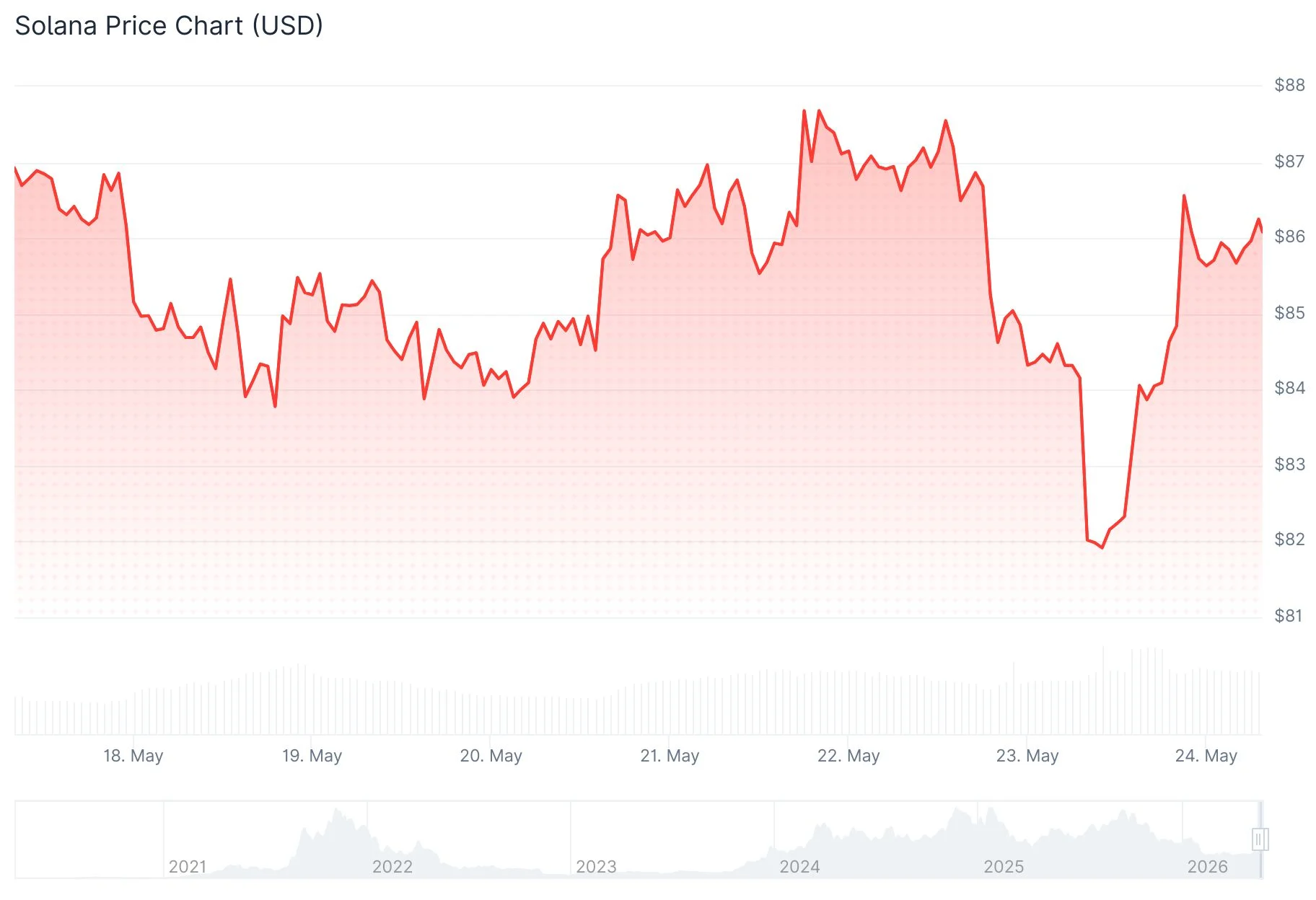
- SOL currently trades around $82, representing approximately a 70% decline from its peak near $295
- Critical near-term resistance level positioned at $95 — closing above this on the weekly chart could trigger relief rally
- Current support zone exists between $78–$83; breaking below may lead to testing the $60 level
- The 50-week EMA positioned near $124 serves as significant overhead resistance for any major recovery attempt
- Trading volume increased 10% to reach $3.89 billion despite downward price movement, indicating substantial selling activity
Solana finds itself in a challenging position at present. The cryptocurrency has been hovering around $82 on daily timeframes and $86 on weekly charts, positioned well beneath the marked support area near $95 that market participants have been monitoring closely.
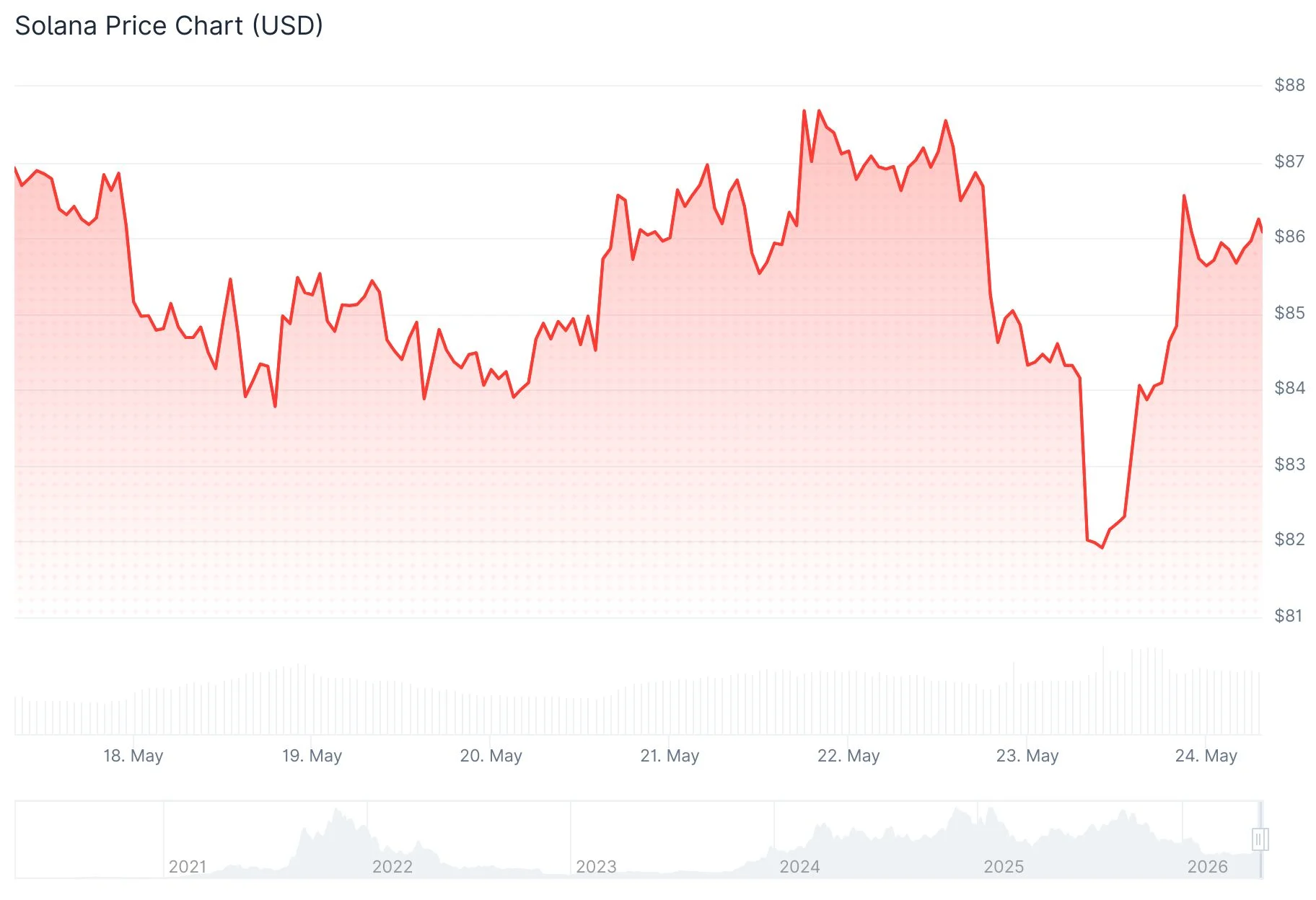
The decline from its previous peak near $295 has been substantial — approximately 70% — and market psychology reflects this downturn. Cryptocurrency analyst Whale Watch expressed it succinctly on social media: “Everyone loved SOL at $295. Nobody wants it at $86.” This observation encapsulates the prevailing sentiment effectively. It highlights diminished demand during a significant correction, a phenomenon commonly observed in deep retracements where retail participation evaporates exactly when valuations are most attractive.
Purchasers have maintained the $78–$83 area for the time being, though momentum remains weak. A weekly candle closing beneath $83 would undermine the existing technical formation.
Technical Indicators and Chart Patterns
Experts at Elliott Wave Academy suggest SOL might be developing a near-term corrective bounce. Their technical assessment identifies a potential advance toward the 50%–61.8% Fibonacci retracement of the recent decline, with possibilities to extend toward the 78.6% level should buying pressure intensify. However, they emphasize that price behavior near those thresholds will be crucial in determining subsequent movements.
Analysts from MCO Global DE characterize recent price action as primarily “noise,” without a definitive breakout in either direction. They identify immediate support at $81.28, alongside a more robust support band spanning $71.92 to $77.96. These zones have absorbed considerable selling pressure throughout recent downward moves. The firm additionally cautions that another near-term decline remains possible before any significant recovery effort materializes.
For any meaningful recovery to take hold, SOL must first overcome $95. Following that breakthrough, focus would transition to the 50-week EMA near $124, which has functioned as solid resistance since SOL fell below it earlier in the year. A sustained close above $124 would create opportunities toward $175 and potentially $200.
Volume Trends Suggest Increased Selling Pressure
CoinMarketCap information reveals SOL trading at $82.21, declining 5.83% over the previous 24-hour period. The market capitalization stands at $47.51 billion. Daily trading volume climbed 10.04% to reach $3.89 billion.
The increase in volume concurrent with price deterioration deserves attention. This pattern generally signals active selling pressure rather than passive consolidation. Resistance exists within the $90–$95 range on near-term charts.
The crucial technical obstacle at $96 remains intact. Until purchasers can reclaim that threshold decisively, the market structure is anticipated to remain neutral.
Analysts further identify $110 as an extended-term resistance area that may determine whether Solana initiates a genuine trend reversal or continues range-bound trading.
SOL currently changes hands near $82.21, with support established at $80 and resistance spanning $90 to $95.


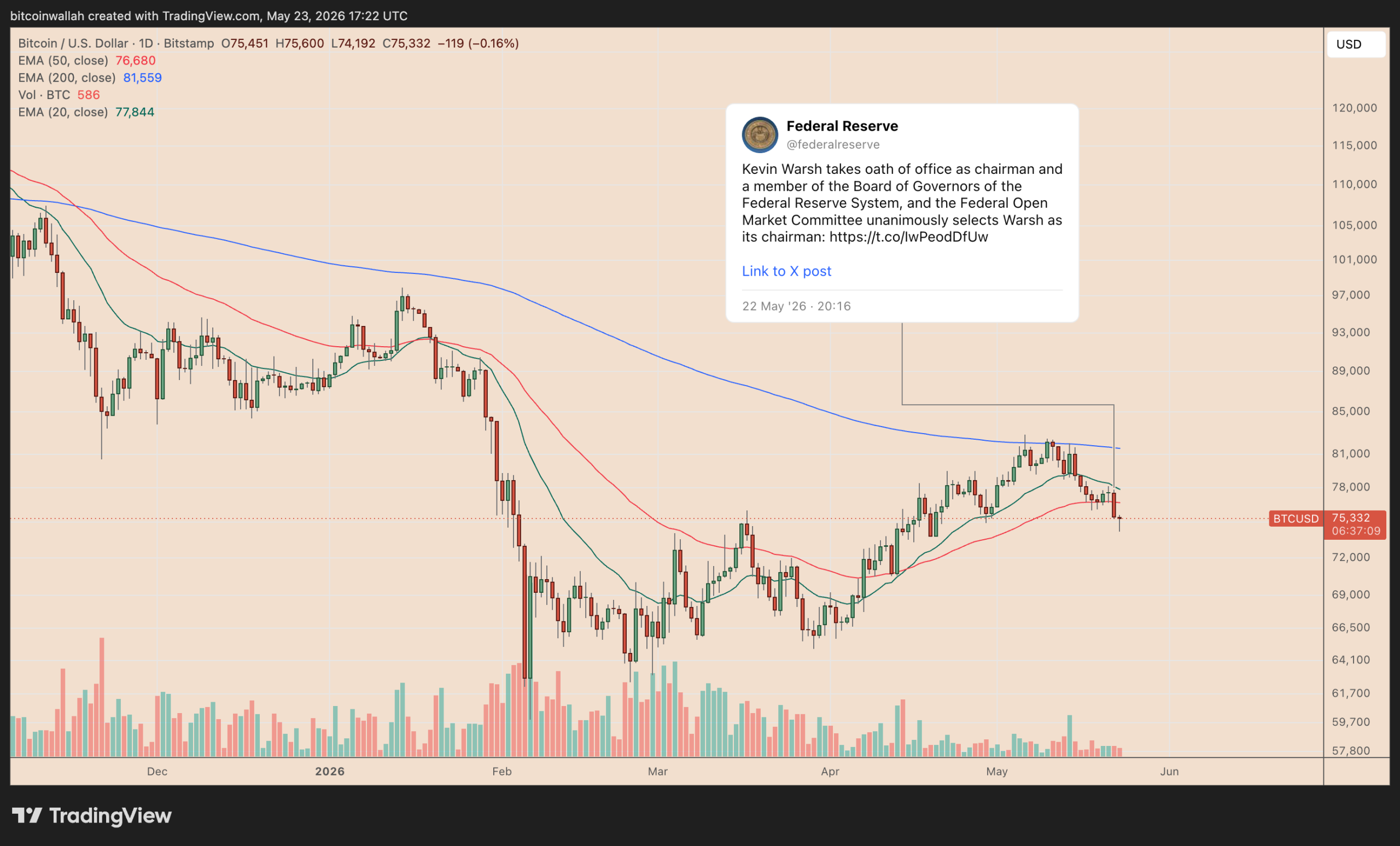
Bitcoin (BTC) fell to $74,190 on Saturday, its lowest level in more than a month, despite pro-crypto Kevin Warsh being sworn in as Federal Reserve chairman a day earlier.
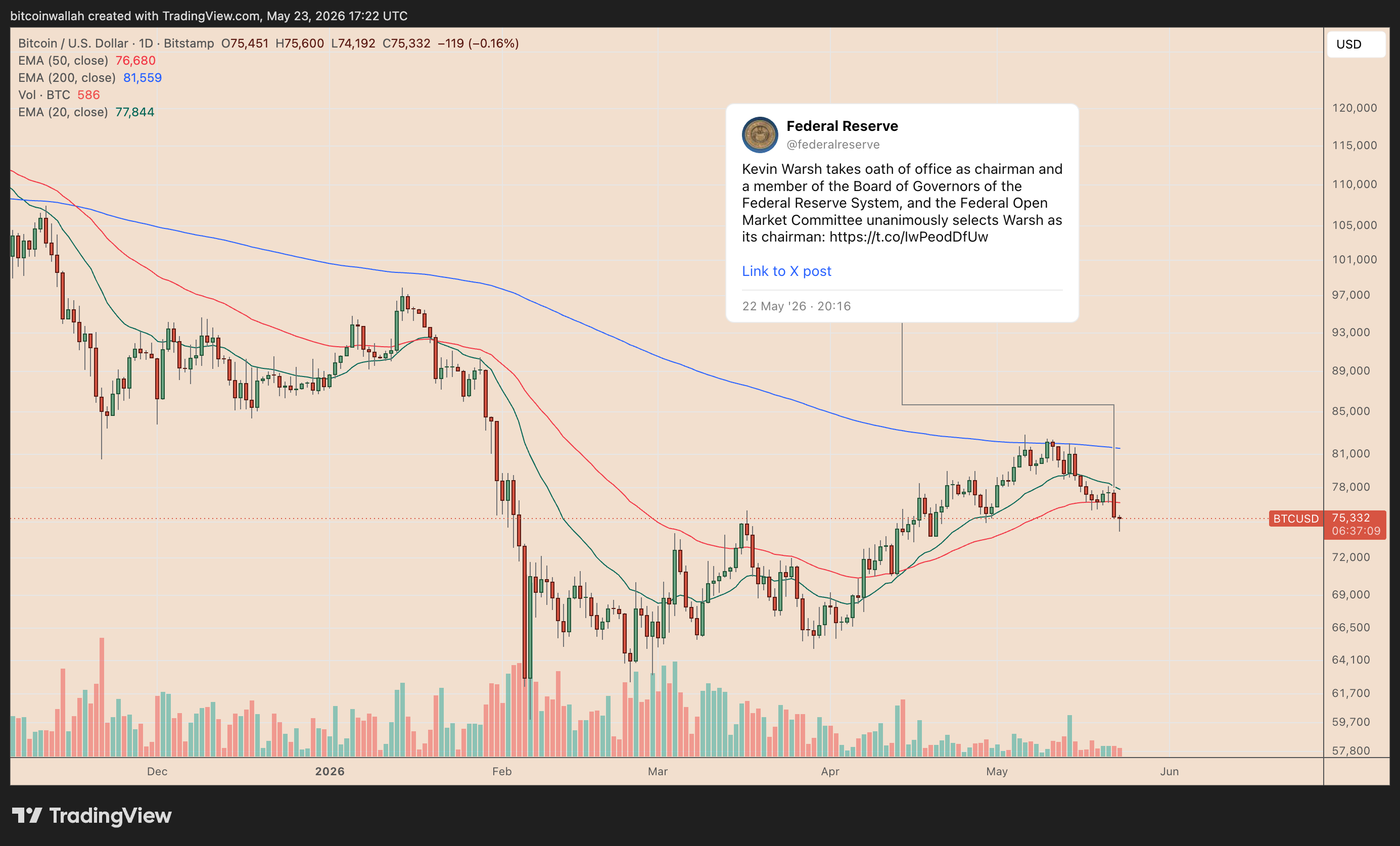
BTC/USD daily chart. Source: TradingView
Key takeaways:
- Higher odds of a rate hike in 2026 are pressuring the Bitcoin market.
- Bitcoin has historically struggled during years marked by Federal Reserve leadership changes.
Why is Bitcoin down despite a pro-crypto Fed chair?
Bitcoin’s sell-off came as the 2-year US Treasury yield climbed to 4.14%, its highest level since February 2025.
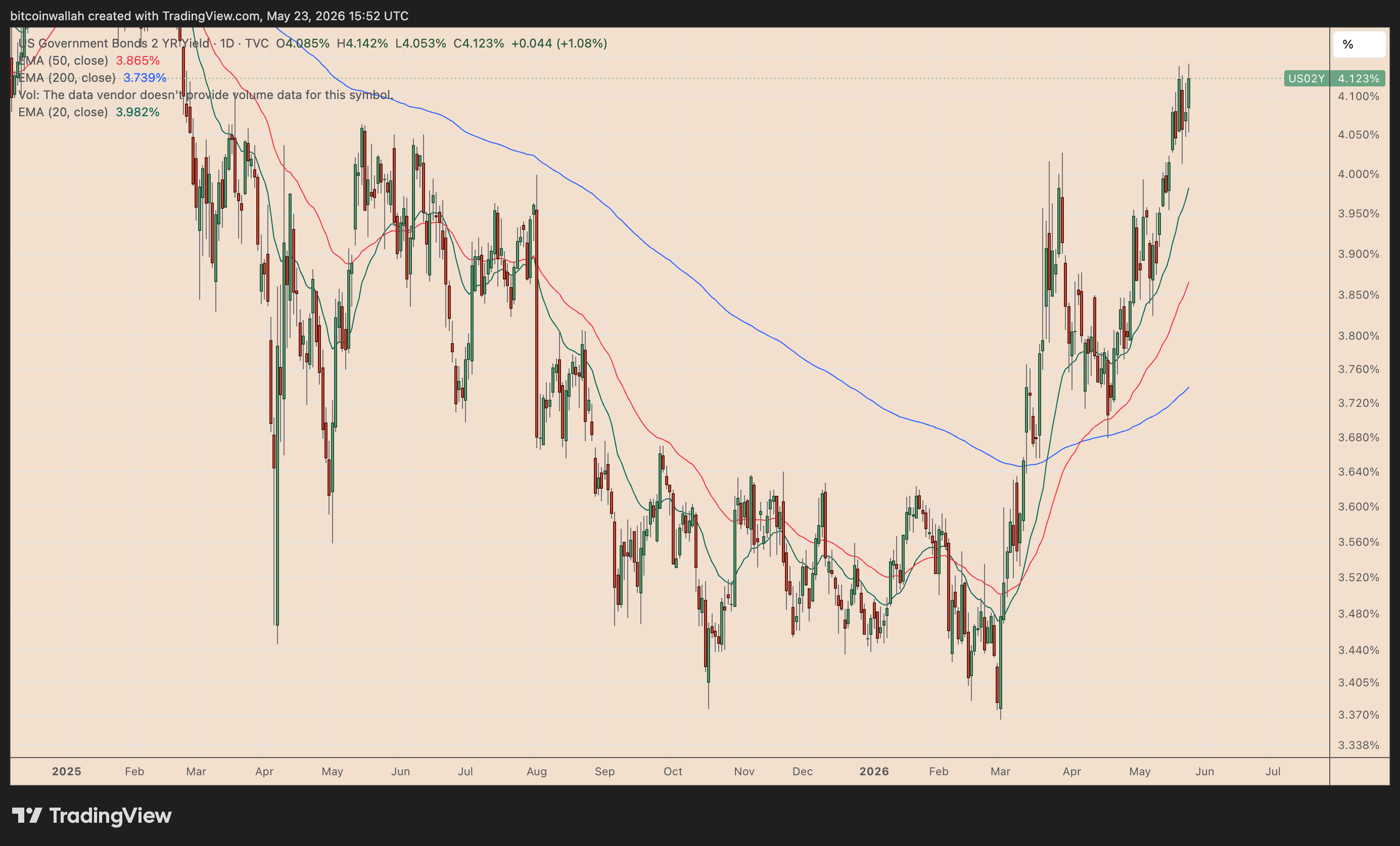
US 2-year bond yield daily chart. Source: TradingView
The 2-year yield is closely tied to where traders expect the federal funds rate to move in the near term. Its move above the Fed’s current 3.50%–3.75% target range suggests markets are no longer betting on quick easing under Warsh.
CME data shows traders now expect the Fed to keep rates unchanged for most of 2026, with futures pricing pointing to a possible 25 basis point hike in December.
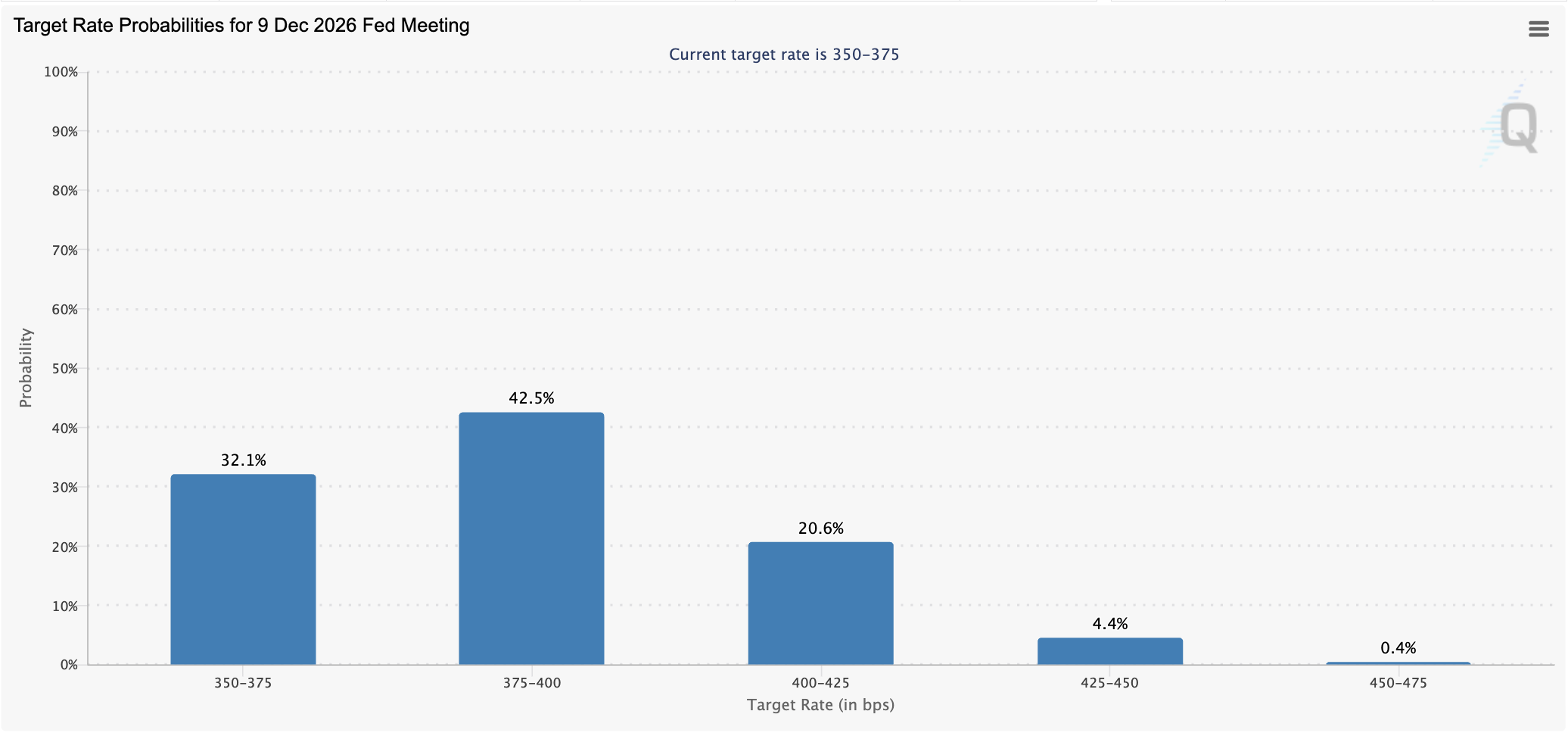
Target rate probabilities for the December Fed meeting. Source: CME
Over the past three decades, the Fed has typically raised rates when the 2-year Treasury yield moved above the federal funds rate, as the gap suggested markets were pricing in tighter policy ahead, according to data provided by BCA Research.
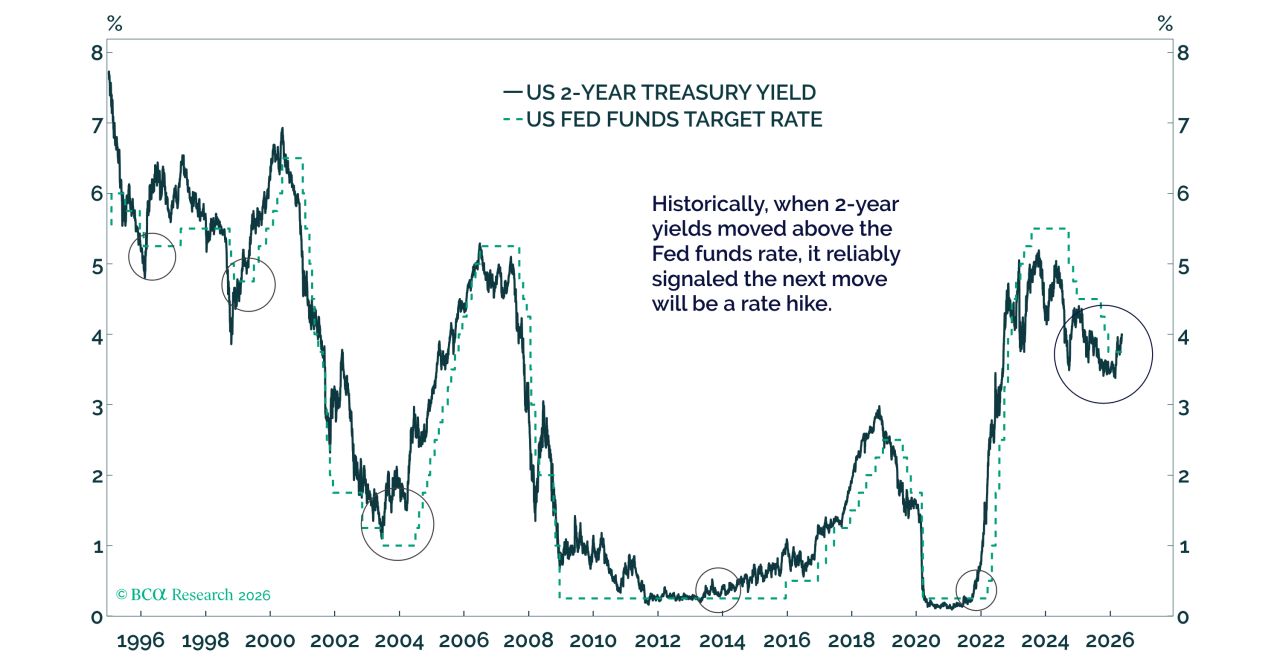
US 2-year Treasury yield vs. US Fed fund target rate. Source: BCA Research
Conversely, when the 2-year yield fell below the Fed funds rate, it often signaled expectations for future rate cuts.
Related: Bitcoin ETFs snap 5-day inflow streak as BTC dips under $80K
Such a shift weakens the bullish case for BTC, which typically benefits from falling yields, lower real rates and easier liquidity conditions.
Warsh is “a known inflation hawk”
In the past, Warsh has spoken favorably about Bitcoin, criticized central bank digital currency, and backed a larger role for private-sector financial innovation. For crypto traders, that checks several bullish boxes.
But from a monetary-policy perspective, Warsh may still challenge the bullish Bitcoin narrative, according to analyst Crypto Patel.
In a Saturday post, Patel noted that Warsh is “a known inflation hawk,” not a dove, adding that a difficult macro backdrop, including Iran war-driven inflation risks and labor-market pressure, may keep him from slashing rates.
“Crypto-friendly on regulation is NOT the same as dovish on rates,” he said.
Bitcoin underperforms in years of Fed leadership changes
Another warning comes from Bitcoin’s historical reaction to Fed leadership changes.
In a Saturday post, analyst Lucky noted that BTC has struggled during previous chair transitions: it fell 84% after Janet Yellen took over in January 2014, 73% after Jerome Powell started in February 2018, and 60% after Powell began his second term in May 2022.
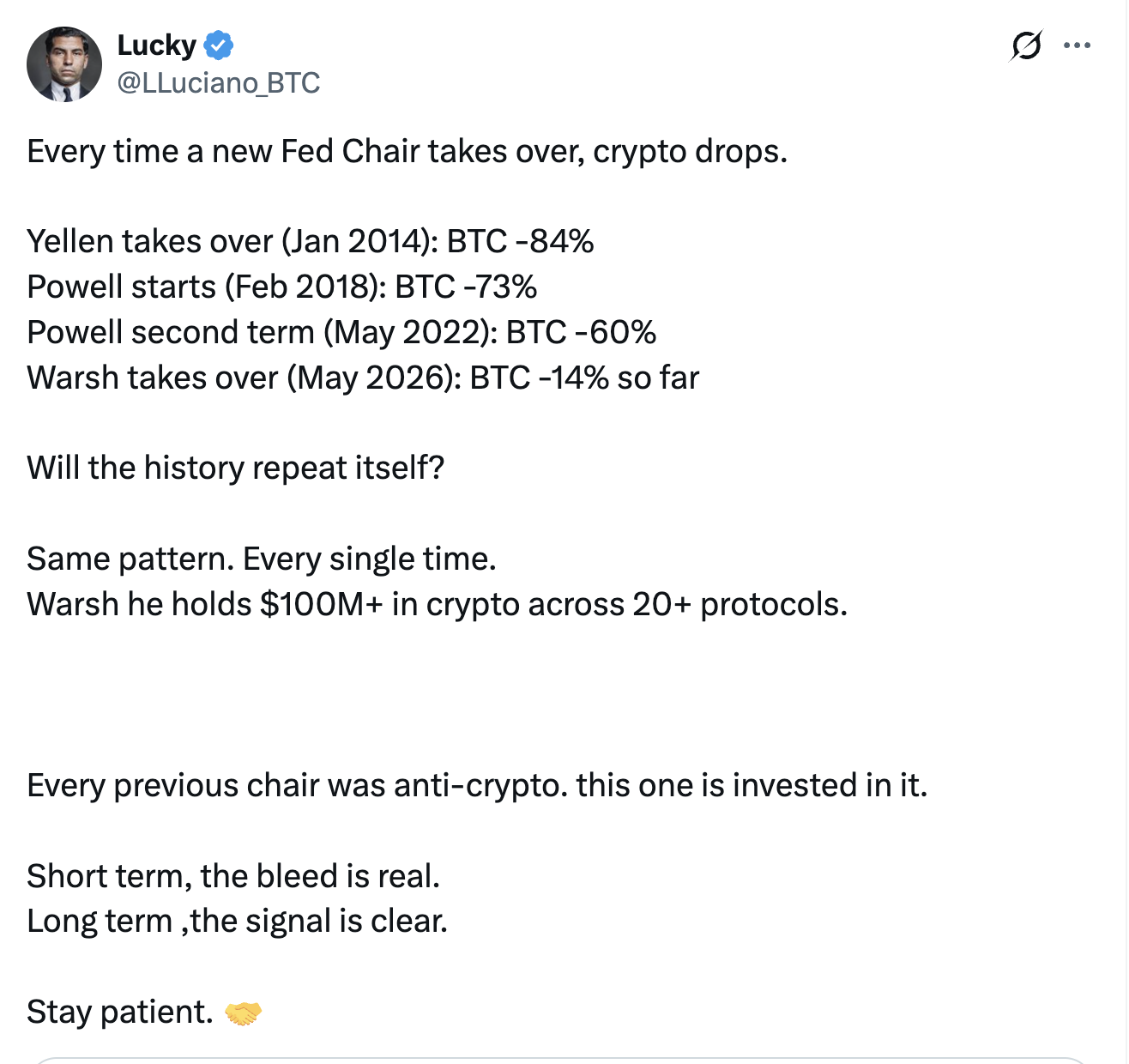
Source: X
Warsh’s takeover has so far coincided with a sharp BTC decline, suggesting traders may again be de-risking as they wait for policy clarity from the new Fed chief.


Bank of America reported about $53 million in crypto ETF exposure in its Q1 2026 13F filing, with BlackRock’s iShares Bitcoin Trust leading the group.
Summary
- Bank of America’s Q1 filing showed roughly $53 million in reported crypto ETF exposure overall.
- IBIT led the bank’s crypto ETF holdings, with its reported stake near $37 million overall.
- The filing showed lower Ether and Solana positions as Bitcoin products stayed the largest allocation.
The filing showed a larger IBIT position and smaller Ether and Solana ETF exposure, putting Bitcoin at the center of the bank’s reported crypto ETF basket.
Bank of America held 972,590 shares of IBIT worth about $37.3 million at the end of the quarter, up from 719,008 shares in the prior filing. That made IBIT the largest single crypto ETF position in the bank’s report.
The bank also held smaller Bitcoin ETF positions across other issuers. Its reported holdings included about $7.98 million in Bitwise’s BITB, $3.32 million in Grayscale’s Bitcoin Mini Trust, and about $1.71 million in Fidelity’s FBTC. Smaller positions in GBTC, VanEck’s HODL, and ARKB also stayed on the books.
Ether and Solana exposure moves lower
The filing showed lower exposure to Ether and Solana products during the same quarter. Bank of America’s Ethereum allocation stood near $1.06 million through BlackRock’s ETHA, with 67,492 shares remaining after the reduction.
The bank also sold 700 shares of the Volatility Shares 2x Solana ETF and kept 10,296 shares of the standard Solana ETF, valued near $86,000. XRP exposure stayed unchanged at 13,000 shares of the Volatility Shares XRP ETF, worth about $98,500.
Strategy stock dwarfs ETF holdings
The ETF positions were smaller than the bank’s crypto-linked equity exposure. The filing also showed 3.96 million shares of Strategy, formerly MicroStrategy, valued near $660 million.
Strategy remains widely tracked because of its large Bitcoin treasury. For Bank of America, that equity position was more than twelve times larger than its direct crypto ETF exposure at quarter-end.
Bank filings add to institutional ETF trend
The filing was submitted to the U.S. Securities and Exchange Commission as a Form 13F-HR. The SEC filing page lists a May 18 filing date and a March 31 reporting period.
Related crypto.news coverage reported that Wells Fargo also used regulated crypto products in Q1, with IBIT still its largest crypto ETF position at about $250 million. The same report noted that 13F filings show holdings, not the reason behind each trade.
A separate crypto.news report cited a Coinbase and EY-Parthenon survey of 351 institutions. It found that 73% planned to increase digital asset allocations in 2026, while regulated products had become the preferred exposure route for about two-thirds of respondents.


StablR’s Euro (EURR) and StablR USD (USDR) stablecoins lost their pegs on Ethereum on May 24 after an exploit on the project’s minting contract allowed an attacker to extract roughly $2.8 million.
Blockchain security firm Blockaid flagged the ongoing attack and attributed the breach to a private key compromise rather than any flaw in StablR’s smart contracts.
How the Attacker Seized Control Of StablR
The minting multisig governing StablR’s token issuance required just one of three authorized signatures to act. That 1-of-3 threshold meant a single compromised key was enough to seize full control of the contract.
The attacker added their own address as an owner and removed the two legitimate signers. They then minted 8.35 million USDR and 4.5 million EURR, a combined face value of roughly $10.4 million at peg.
Blockaid outlined the sequence in a follow-up post on X:
“This is not a smart contract bug – it’s a key management and governance failure.”
Thin liquidity on decentralized exchanges (DEX) sharply limited the attacker’s return.
Swapping $10.4 million in freshly minted tokens into shallow pools yielded only about 1,115 ETH, worth roughly $2.8 million.
EURR fell roughly 20% on tracked Ethereum liquidity and USDR also lost its dollar peg as sell pressure overwhelmed available pools.
A Recurring Governance Blind Spot
The episode mirrors past stablecoin attacks where unauthorized minting triggered rapid depegs.
More broadly, it follows a persistent wave of private key DeFi exploits that have contributed to record crypto theft figures in recent years.
A similar Resolv stablecoin breach earlier in 2026 used near-identical mechanics, where a single insufficiently protected key enabled minting at scale.
StablR holds an Electronic Money Institution (EMI) license from Malta’s financial regulator. The company operates under the EU’s Markets in Crypto-Assets Regulation (MiCA).
It received a strategic investment from Tether in late 2024. How those regulatory and financial ties factor into any recovery response has not yet been disclosed.
The post StablR Stablecoins Depeg After $2.8 Million Exploit appeared first on BeInCrypto.


Crypto wrench attacks in France have become a larger concern after Bitcoin journalist Joe Nakamoto said the country accounts for about 70% of reported physical attacks against crypto holders and their families.
Summary
- France accounts for 70% of reported crypto wrench attacks, according to Bitcoin journalist Joe Nakamoto.
- Nakamoto said France recorded 41 crypto kidnappings this year, roughly one case every 2.5 days.
- French authorities charged 88 suspects as wrench attack investigations widened across 12 cases in April.
The latest figures put the country at the center of a security debate that now links privacy, custody, and personal safety.
Nakamoto said France has recorded 41 crypto-linked kidnappings so far in 2026. That equals roughly one case every two and a half days, based on his latest report.
A wrench attack means criminals use force, threats, kidnapping, or home invasion to pressure a victim into handing over crypto. The target is often not only the holder, but also relatives who may be easier to reach.
KYC data leak fears return
Nakamoto linked the rise in attacks to centralized know-your-customer records. He said criminals can use leaked names, emails, phone numbers, and home addresses to find possible crypto holders.
The 2020 Ledger customer data leak remains central to that debate. Nakamoto said the breach exposed details tied to more than 270,000 customers worldwide.
“France is the canary in the coal mine, demonstrating how financial regulations create a surveillance apparatus that causes direct harm to bitcoin holders,” said Casa CEO Jameson Lopp.
French authorities widen security response
Related reports show that French authorities have already moved against several suspected networks. April coverage reported that 88 suspects were charged in connection with wrench attack cases in France, including minors.
The same reporting noted that PNACO tracked 18 incidents in 2024, 67 in 2025, and 47 so far in 2026. Separate coverage said France also planned a prevention platform and a wider security plan after police records counted 41 crypto-linked kidnappings this year.
Bitcoin holders receive safety warnings
Nakamoto said some attacks are arranged by criminals outside France, who recruit young people inside the country to carry them out. He advised crypto holders to avoid public posts that reveal wealth, wallet use, or direct exposure to digital assets.
He also pointed to custody tools that can freeze funds when a user faces a threat. Some services use a pre-agreed word or phrase to warn the company that a customer is under pressure. Nakamoto also suggested a small decoy wallet for emergency situations, while stressing that a low public profile remains important.
The report adds to a wider debate over privacy, KYC rules, and crypto holder safety. France now shows how exposed personal data can move from online leaks into offline threats, forcing users and companies to rethink basic security habits.


StablR’s euro and dollar stablecoins lost their pegs after a suspected private key compromise allowed an attacker to take control of minting permissions and extract about $2.8 million.
Summary
- Blockaid says a compromised multisig owner let the attacker take control of StablR minting permissions.
- The attacker minted 12.85 million tokens and converted thin DEX liquidity into 1,115 ETH proceeds.
- Related crypto.news coverage shows May security pressure across Verus, MAP Protocol, Resolv Labs, and bridges.
Blockchain security firm Blockaid said its detection system found an ongoing exploit affecting StablR on Ethereum. The firm said the attacker targeted the issuer behind StablR Euro, EURR, and StablR USD, USDR, with about $2.8 million extracted so far.
Blockaid said the suspected cause was a compromised private key linked to one owner of the minting multisig account. The setup reportedly used a 1-of-3 threshold, meaning one compromised owner key was enough to control minting access.
Attacker mints 12.85 million tokens
According to Blockaid, the attacker added themselves as an owner, replaced the two other legitimate owners, and minted 8.35 million USDR plus 4.5 million EURR. The new supply pushed both stablecoins away from their intended pegs.
The attacker then swapped about $10.4 million in face value through decentralized exchanges. Due to thin liquidity, the attacker realized only 1,115 ETH, worth about $2.8 million.
“This is not a smart contract bug — it’s a key management and governance failure,” said Blockaid.
Market trackers showed the peg break during Sunday trading. CoinGecko listed EURR near $0.908, down more than 21% over 24 hours, while CoinMarketCap showed EURR near $0.8995 and down more than 22% on the day.
USDR also traded below its intended $1 peg during the incident. CoinMarketCap listed the token near $0.7225 in the same trading window.
Tether-backed issuer faces market stress
StablR presents EURR and USDR as regulated stablecoins backed by reserves held in secure segregated accounts. Its website says both tokens run on Ethereum and Solana and are pegged to the euro and U.S. dollar for digital transactions.
The issuer has also been part of Tether’s European stablecoin push. Tether invested in StablR in December 2024, while crypto.news later reported that Oobit and StablR launched MiCA-compliant EURR and USDR payment support in Europe.
May exploit wave adds pressure
The StablR incident comes during a busy month for crypto security teams. Related coverage on crypto.news reported that the Verus bridge exploiter returned 4,052 ETH, worth about $8.5 million, while keeping 1,350 ETH as a bounty after a settlement offer.
Earlier crypto.news reports also covered Resolv Labs, where USR lost its peg after an attacker minted unbacked tokens. The latest StablR case adds another example of stablecoin minting controls becoming a direct risk when key access fails.


The European Central Bank has warned EU finance ministers that euro stablecoin expansion carries serious risks to banks. Officials said wider issuance could reduce lending capacity and weaken the effectiveness of ECB interest rate decisions.
The warning came after Brussels-based think tank Bruegel circulated a paper at a meeting of EU finance officials. It called for looser liquidity requirements for stablecoin issuers and potential access to central bank funding.
ECB Targets Deposit Migration Risk
The ECB’s central concern is that a larger stablecoin market would draw retail savings away from commercial banks. Fewer deposits leave lenders with less capacity to extend credit, tightening borrowing conditions across the eurozone. The problem would compound as stablecoin adoption moves beyond early adopters.
Private digital currency growth also complicates rate policy, officials argued. When savings sit in stablecoins rather than bank accounts, the ECB’s rate decisions carry less weight. The transmission of monetary policy depends on activity in the deposit-backed lending system.
The ECB has previously sought stricter MiCA rules for stablecoin rather than looser ones. The latest warning extends that position directly to EU finance ministers.
Dollar Dominance Shapes the Debate
Bruegel’s paper was motivated by the growing grip of dollar-backed tokens on global crypto markets. The think tank argued that strict EU rules under Markets in Crypto-Assets (MiCA) have left European issuers unable to compete.
It described the outcome as a form of “digital dollarisation” that could deepen dollar dominance in international finance.
EU officials have separately warned that the growth of dollar stablecoin could erode the euro’s role in cross-border transactions. The ECB’s preferred counter is a central bank alternative rather than private issuance.
President Christine Lagarde has described the digital euro as a strategic priority for European financial infrastructure.
That has not slowed private-sector plans. Nine lenders are preparing to launch a MiCAR euro stablecoin in 2026, and EU policymakers have debated easing MiCA to improve the standing of European issuers.
The standoff between financial stability concerns and competitive pressure from dollar tokens has no clear resolution. How ministers ultimately decide will likely define the trajectory of European digital asset regulation.
The post ECB Pushes Back on Euro Stablecoin Proposals, Citing Bank Lending Risks appeared first on BeInCrypto.

Key Takeaways
- Security firm Blockaid identified an active exploit targeting StablR, resulting in approximately $2.8 million in losses
- An attacker exploited a vulnerable 1-of-3 multisig setup by compromising a single private key to mint 8.35M USDR and 4.5M EURR
- EURR lost its peg, plummeting 23% from $1.15 to $0.88, while USDR fell 30% to $0.70
- Despite minting tokens valued at $10.4 million, limited liquidity on decentralized exchanges netted the hacker only 1,115 ETH
- Over a dozen significant DeFi security incidents have occurred in May 2025, affecting platforms like THORChain, Verus Bridge, Echo Protocol, and Polymarket
StablR, a regulated stablecoin issuer, fell victim to a major security breach on Sunday, with hackers draining approximately $2.8 million from the platform. The exploit was first identified by blockchain security company Blockaid using its real-time threat detection system.
The root cause appears to be a compromised private key within StablR’s minting multisignature wallet. The wallet’s configuration featured an inadequate 1-of-3 threshold setup, requiring just a single key to authorize transactions.
Leveraging this vulnerability, the hacker added their own address as an authorized owner while simultaneously removing legitimate owners. This access allowed them to illegally mint 8.35 million USDR and 4.5 million EURR tokens.
Blockaid didn’t mince words when describing the incident. “This is not a smart contract bug — it’s a key management and governance failure,” the security firm stated.
Dramatic Depeg Events Hit Both Stablecoins
The unauthorized token creation triggered severe depegging across both of StablR’s stablecoin offerings. EURR, the platform’s euro-denominated stablecoin with a $14 million market capitalization, experienced a dramatic 23% drop from its $1.15 peg down to $0.88.
Meanwhile, USDR, StablR’s dollar-pegged token boasting an $11 million market cap, crashed 30% to $0.70. As of press time, neither stablecoin had recovered its intended peg.
The attacker proceeded to liquidate the freshly minted tokens through decentralized exchange platforms. However, shallow liquidity pools significantly impacted the actual value extracted—the tokens, nominally worth approximately $10.4 million, converted to merely 1,115 ETH, equivalent to roughly $2.8 million.
Blockchain investigator ZachXBT estimated the total exploit amount at around $10 million. The attack remained active when initial reports surfaced Sunday morning.
As of this writing, StablR has not released any official statement or update via its X account.
May 2025: A Challenging Month for DeFi Security
May has proven particularly troublesome for cryptocurrency security. Data from DeFiLlama shows over a dozen significant exploits have occurred throughout the month.
Additional platforms compromised in May include THORChain, Verus Bridge, Echo Protocol, and Polymarket. A common thread among many incidents involves compromised private or administrative keys rather than vulnerabilities in smart contract code.
Volo Vault, Wasabi Perps, Echo Bridge, and Polymarket have all experienced comparable key-based security breaches within the last sixty days.
On May 21, Map Protocol, a Bitcoin cross-chain bridge solution, suffered its own exploit through an actual smart contract vulnerability. In that case, the attacker managed to mint one quadrillion MAPO tokens, triggering a catastrophic 96% price collapse.
StablR specializes in issuing regulated stablecoins with reserves maintained in segregated accounts at established financial institutions. Notably, Tether, the world’s dominant stablecoin provider, made an investment in StablR during December 2024.
At publication time, StablR has yet to release an official response regarding the security breach.
Crypto World
Ethereum (ETH) Price Slips Below $2,100 as Bitmine Accumulates 60,000 ETH Amid Market Turbulence
Key Highlights
- Tom Lee’s Bitmine purchased 60,000 ETH valued at $126 million within a 24-hour period, bringing total holdings to over 5.33 million ETH.
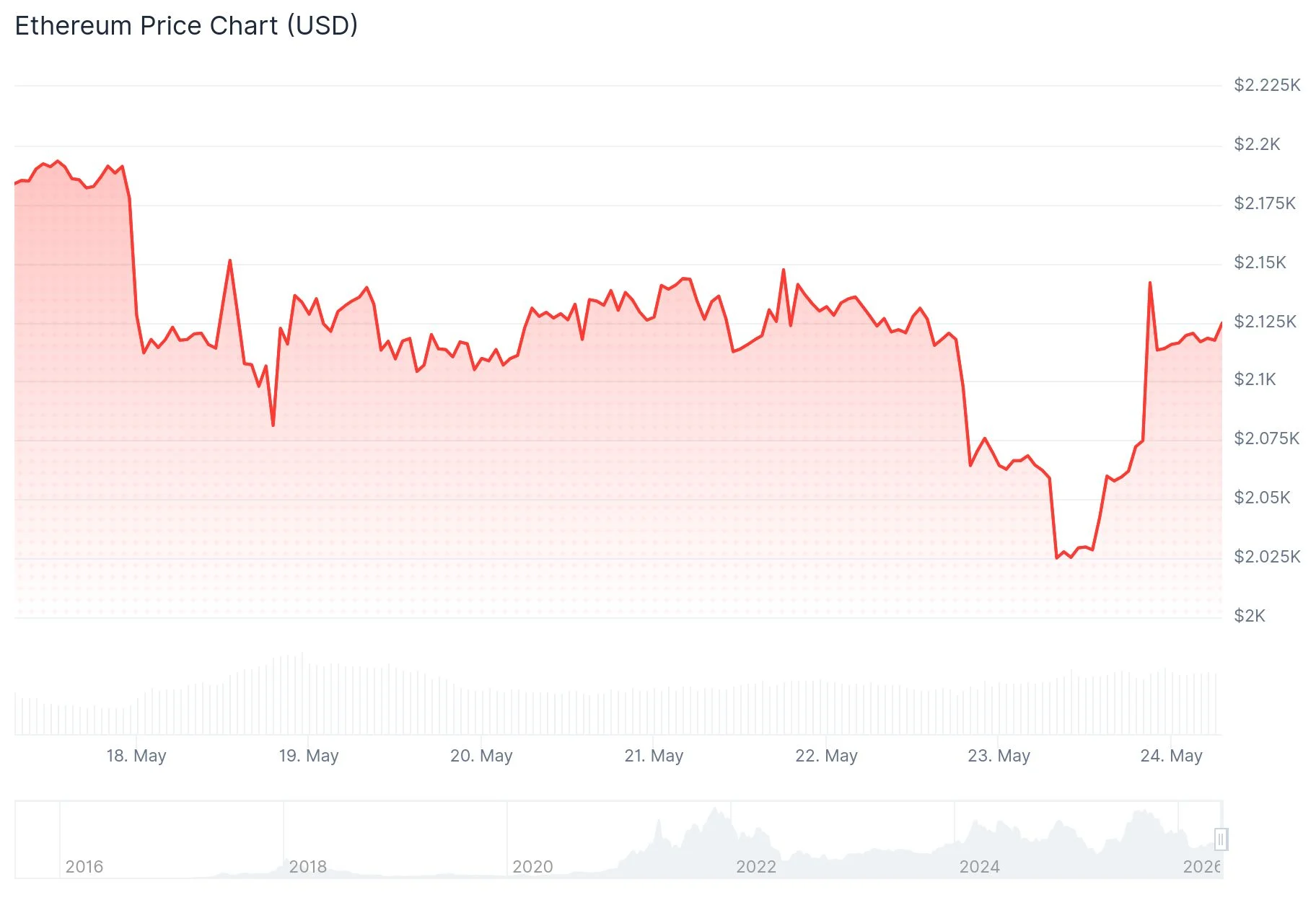
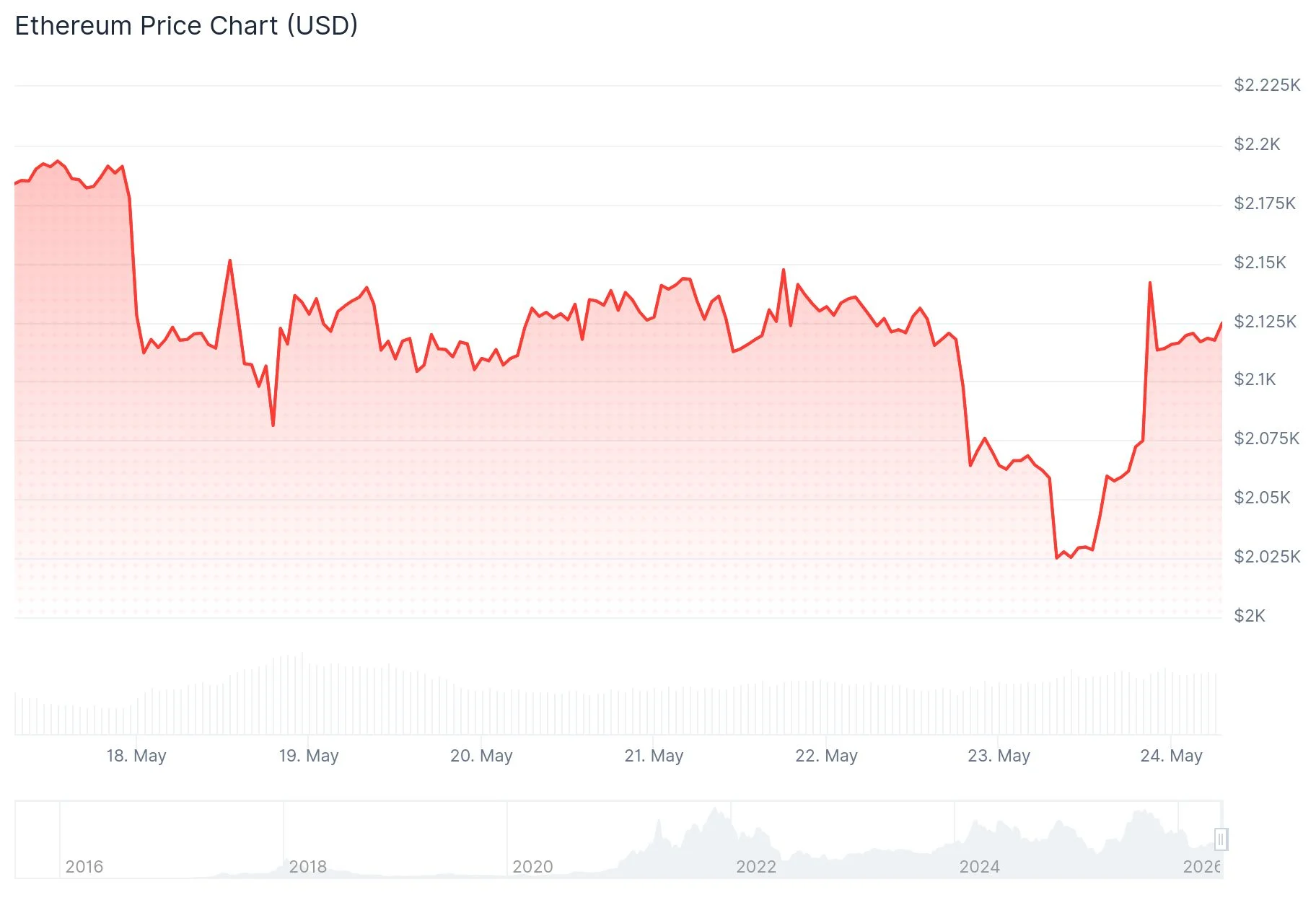
- Ethereum is currently trading near $2,044, facing challenges maintaining support above the $2,000 threshold following the SEC’s postponement on tokenized stock decisions.
- Market analyst Ted identified significant liquidity concentrations between $2,400–$2,600 above current prices and $1,700–$1,900 below.
- Questions surrounding Ethereum Foundation governance are generating uncertainty, although experts emphasize that development remains active across numerous independent teams.
- FTSE Russell’s preliminary index adjustments position Bitmine for potential Russell 1000 entry.
Ethereum is currently changing hands at approximately $2,044 based on recent market data, hovering beneath the crucial $2,000 psychological threshold after experiencing challenging conditions across digital asset markets. The downward movement comes in the wake of the SEC’s decision to postpone its ruling on tokenized securities, dampening a significant bullish narrative that market participants had been monitoring.
However, institutional accumulation patterns remain robust. Tom Lee’s Bitmine executed a substantial purchase of 60,000 ETH — approximately $126 million — within just 24 hours, as reported by blockchain analytics service Onchain Lens. The company’s total position now exceeds 5.33 million ETH, accounting for more than 4.3% of Ethereum’s circulating supply.
This latest acquisition follows Bitmine’s $154 million ETH purchase earlier in the week. Lee has characterized the recent price decline below $2,200 as an “attractive opportunity” for accumulation. The firm is actively staking more than 4.7 million ETH from its holdings, generating approximately $289 million in annualized staking rewards.
Critical Liquidity Zones Identified by Market Analysts
Blockchain analyst Ted has outlined significant liquidity concentrations surrounding ETH’s present trading range. Ted’s analysis reveals short-position liquidity accumulating at the $2,400 and $2,600 resistance levels. Conversely, long-position liquidity is concentrated at $1,700 and $1,900 support zones. These liquidity pockets typically serve as price magnets, and Ted has posed the question to the trading community about which direction ETH will gravitate toward first.
Another market observer, Celal Kucuker, characterized ETH as “coiled like a spring,” suggesting a possible explosive move if the price maintains support above a critical technical level while building short-term buying momentum.
Governance Concerns and Market Sentiment Challenges
An additional headwind affecting ETH stems from increasing scrutiny directed at the Ethereum Foundation. Analyst Papaxem acknowledged that legitimate concerns exist regarding the Foundation’s operational management. The situation gained additional attention when Bankless, a prominent Ethereum-focused media outlet, revealed it had liquidated its ETH position in favor of Zcash.
Papaxem emphasizes that a crucial factor being overlooked is that Ethereum operates independently of sole Foundation control. Organizations such as ConsenSys and numerous autonomous development teams maintain active building efforts on the network, irrespective of Foundation leadership challenges.
Analyst Rios commented on X that ETH’s approximately 19% correction might represent a healthy cycle reset — eliminating overleveraged positions — rather than indicating fundamental deterioration. Rios suggested that if price action stabilizes around current levels, the subsequent recovery phase could demonstrate greater strength than anticipated.
Bitmine appears positioned for Russell 1000 index inclusion following FTSE Russell’s publication of preliminary modifications. Tom Lee observed that BMNR stock’s market capitalization surpasses the $5.7 billion threshold required for large-cap classification, potentially triggering additional passive fund inflows.
Ethereum is presently valued at approximately $2,044, per TradingView data.
TLDR
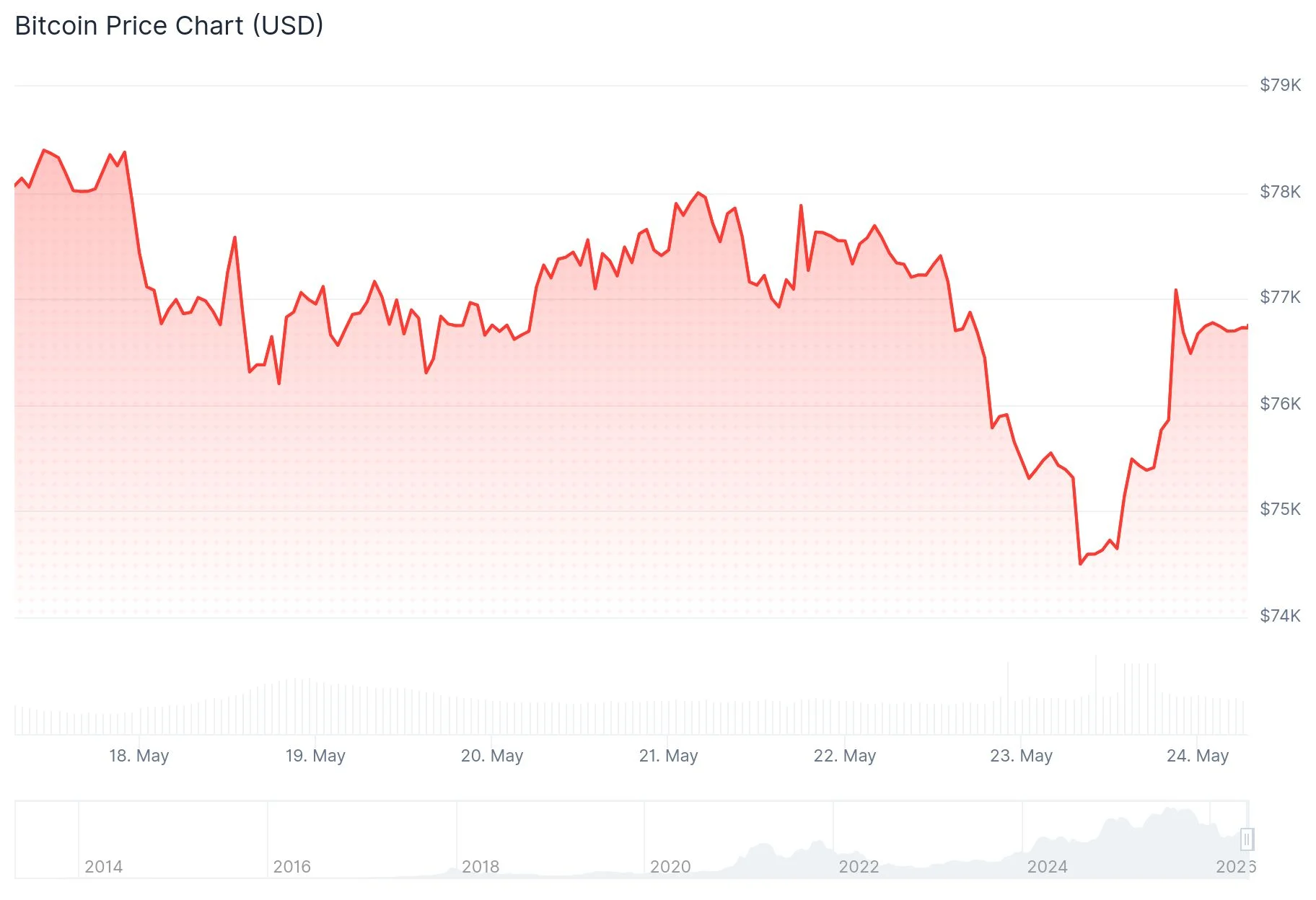
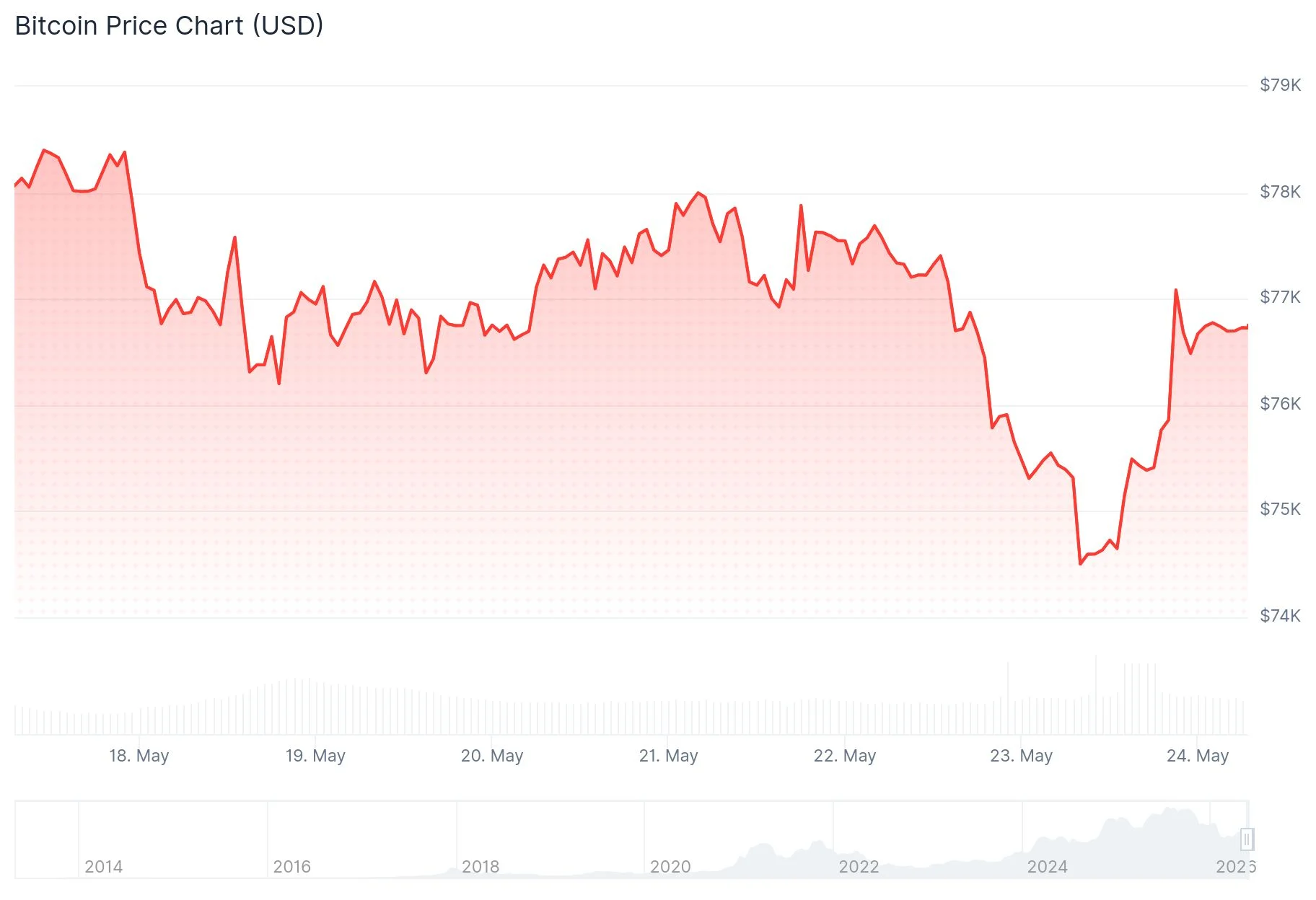
- BTC touched a five-week bottom at $74,250 during Saturday trading before rebounding
- President Trump revealed an Iran peace agreement has been “largely negotiated”
- Agreement includes plans to reopen the Strait of Hormuz, easing pressure on risk assets
- Digital asset markets regained approximately $75 billion in aggregate valuation following the announcement
- Despite recovery, BTC trades 39% below its October all-time high and maintains downward trajectory
Bitcoin experienced a significant decline on Saturday, plunging to a five-week bottom of $74,250 on Coinbase before staging a recovery following major geopolitical developments announced by President Donald Trump.
The President revealed via his Truth Social account that a peace agreement with Iran had reached the “largely negotiated” stage. This diplomatic breakthrough involves the United States, Iran, and multiple Middle Eastern nations including Saudi Arabia, the UAE, Qatar, Pakistan, Turkey, Egypt, Jordan, and Bahrain.
[[EMBED_0]]
A key component of the announced agreement is the reopening of the Strait of Hormuz, according to Trump’s statement. The critical waterway has remained closed since hostilities erupted in late February, creating upward pressure on worldwide energy markets and dampening sentiment toward risk-sensitive assets including cryptocurrencies.
“Final aspects and details of the deal are currently being discussed and will be announced shortly. In addition to many other elements of the agreement, the Strait of Hormuz will be opened,” Trump stated.
Digital currency markets reacted swiftly to the development. The total cryptocurrency market capitalization bounced back by approximately $75 billion in the wake of the announcement.
Bitcoin recovered from its $74,250 nadir to reach the 50-day exponential moving average near $77,000 during early Sunday sessions. As of this writing, BTC was trading around the $76,800 level.
ETF Outflows Signaled Trouble Before Weekend Selloff
Cryptocurrency market analyst Daan Crypto Trades identified a notable warning sign in the days leading up to the weekend downturn. In a post on X, he highlighted that Bitcoin registered over $1 billion in spot ETF outflows throughout the week — yet prices remained relatively stable until the Friday-Saturday timeframe.
[[EMBED_1]]
“Generally when flows go in one direction but price doesn’t follow, that’s a decent indication to start paying attention,” he observed. He noted he would prefer “some confirmation or sign of strength first as we’re obviously still in a larger down trend.”
This disconnect between heavy outflows and price resilience may have served as an early warning indicator of the impending decline.
Current Market Position for BTC
Notwithstanding the rebound, Bitcoin continues to trade within a downward trend pattern. The leading cryptocurrency has been unable to overcome resistance at the $82,000 level and trades 39% beneath its October record high.
US Secretary of State Marco Rubio, during a diplomatic visit to India on Saturday, emphasized the conditions underlying the agreement. “Iran can never have a nuclear weapon. The straits need to be open without tolls. They need to turn over their enriched uranium,” he stated.
Crude oil markets responded to the de-escalation developments with declining prices. WTI crude retreated to $96 while Brent Crude dropped to $103, although both benchmarks remain approximately 55% elevated compared to pre-conflict pricing.
The monthly BTC candle currently shows a negative close with seven days remaining in the period.
Key Takeaways
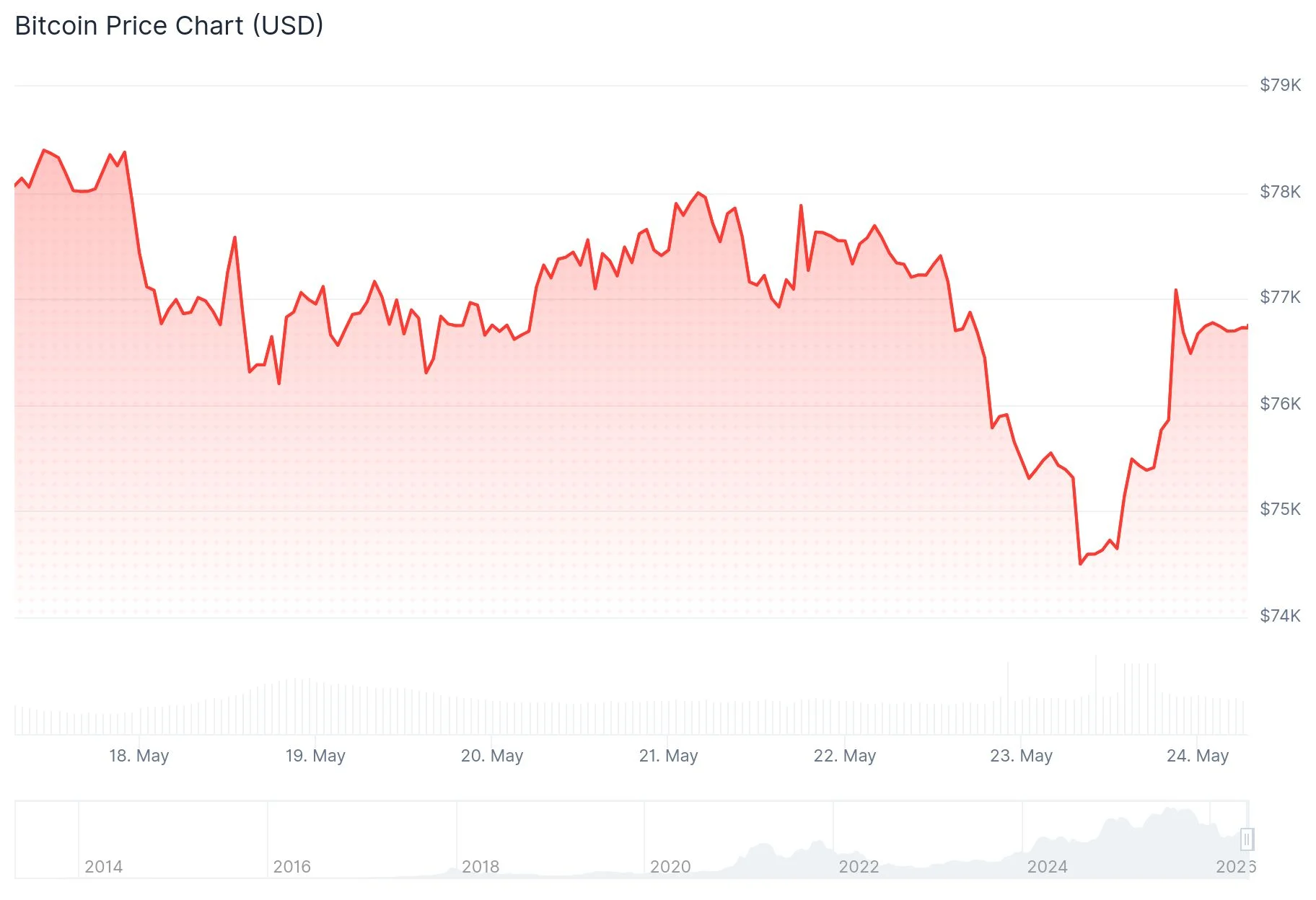
- Bitcoin (BTC) retreated approximately 3% to $75,398 amid over $400 million in position liquidations, yet maintains its position as the leading institutional cryptocurrency
- Ethereum (ETH) continues to underperform relative to Bitcoin, despite maintaining dominance in DeFi infrastructure and smart contract execution
- Solana (SOL) spot ETF products attracted more than $103 million in capital during May, contrasting sharply with outflows from Bitcoin and Ethereum ETFs
- Hyperliquid (HYPE) has emerged as a top-performing crypto asset in 2026, fueled by robust decentralized perpetual futures trading volume
- NEAR Protocol maintains relevance through its connection to the AI-blockchain convergence narrative as interest in artificial intelligence tokens resurges
Bitcoin (BTC)
Bitcoin continues to serve as the primary anchor for investors navigating turbulent market conditions.
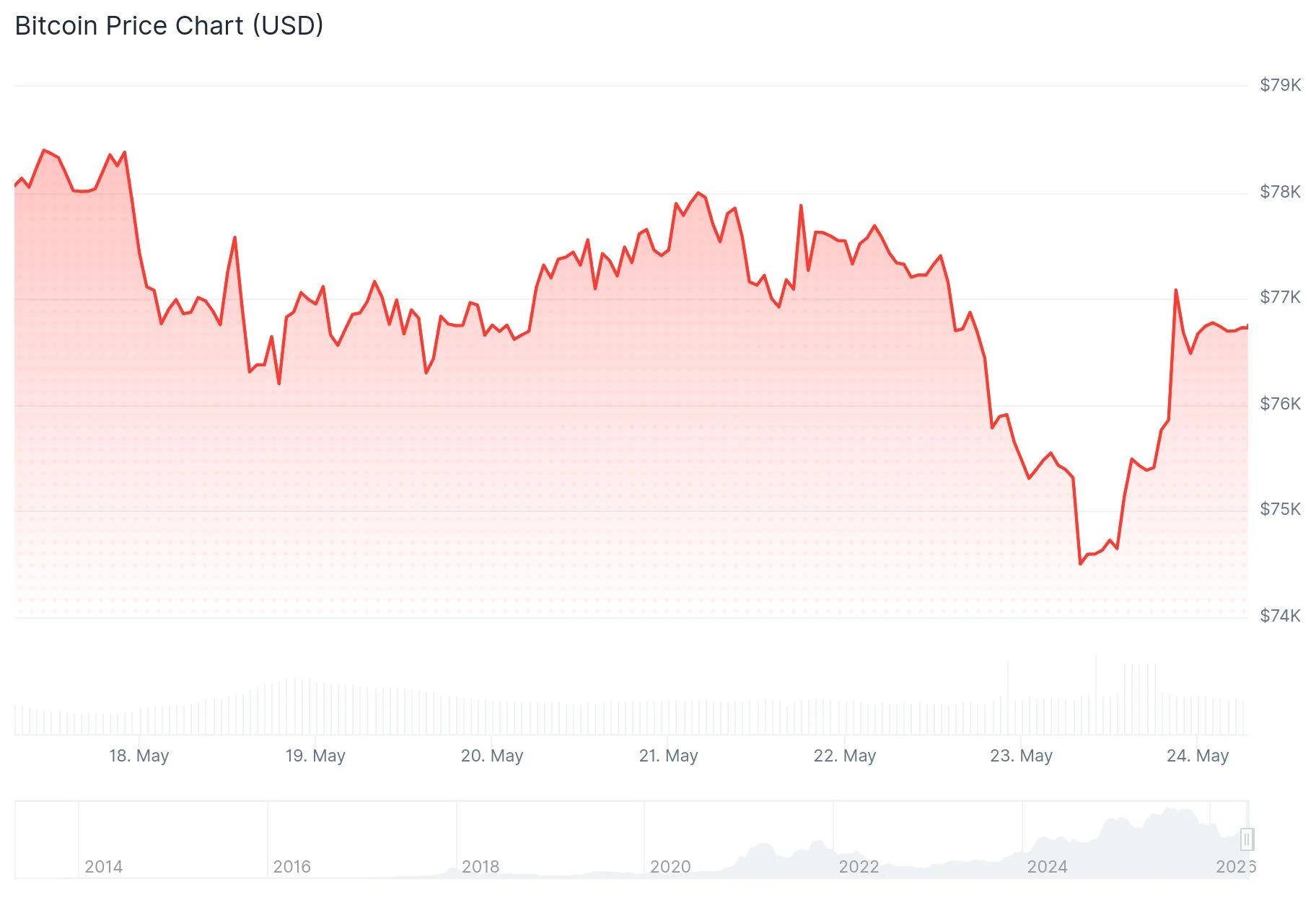
The latest correction proved substantial. Bitcoin declined roughly 3% over a 24-hour period, settling near $75,398, while triggering more than $400 million in liquidations across the cryptocurrency markets. This magnitude of forced selling indicates that market sentiment remains vulnerable and easily shaken.
Exchange-traded fund activity provides additional context. Following a relatively robust April, Bitcoin ETF demand weakened considerably in May, marked by multiple significant outflow events. Spot ETF movements have become among the most reliable indicators of institutional interest, making sustained outflows a meaningful headwind for price appreciation.
Despite these challenges, Bitcoin maintains its position as the most liquid and widely adopted cryptocurrency asset. Its institutional footprint exceeds all competitors, and its store-of-value thesis remains the strongest narrative in digital asset markets.
Ethereum (ETH)
Ethereum has delivered disappointing performance relative to Bitcoin lately, leaving investor sentiment divided.
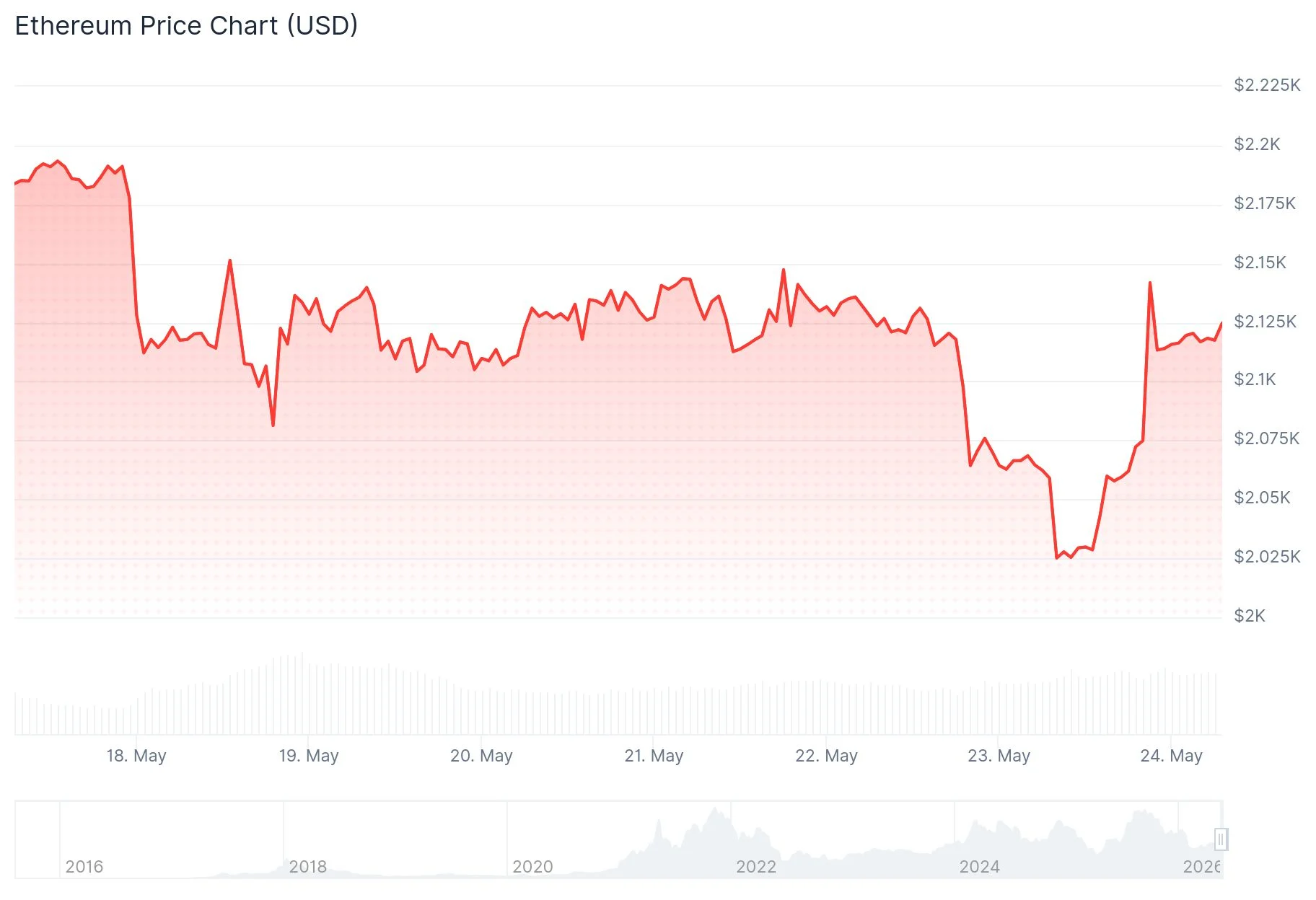
Price momentum has been notably weak. ETH has failed to capitalize even as accumulation theories have gained traction, lacking the upward momentum necessary to restore market confidence.
The fundamental thesis remains intact. Ethereum continues to power the majority of smart contract infrastructure across the cryptocurrency ecosystem — including DeFi protocols, stablecoin systems, tokenized real-world assets, and decentralized lending platforms.
The primary obstacle is intensifying competition. Solana, various Layer-2 scaling solutions, and emerging blockchain platforms are aggressively competing for developer talent and user adoption. Ethereum requires stronger demand signals and improved price performance to reclaim its dominant market position.
Solana (SOL)
Solana has distinguished itself as the exceptional performer among major altcoins in today’s market environment.
Its spot ETF products accumulated over $103 million in inflows through May 19, even as Bitcoin and Ethereum ETF offerings experienced net outflows. This represents tangible evidence that investor appetite for Solana exposure remains resilient.
Solana offers rapid transaction processing, minimal fees, and vibrant retail engagement. The network supports meme token trading, DeFi applications, consumer-focused products, and payment infrastructure experiments — providing one of the most diverse growth stories among large-capitalization cryptocurrencies.
The primary concern is elevated volatility. Solana typically experiences more dramatic price swings than Bitcoin or Ethereum in both upward and downward movements. A broader market downturn could impact SOL disproportionately compared to more established assets.
Hyperliquid (HYPE)
Hyperliquid has become one of the most frequently discussed names in the mid-cap cryptocurrency segment this year.
The platform operates a decentralized perpetual futures exchange. This structure creates a more direct connection between token value and actual platform usage, differentiating it from numerous speculative altcoins where token utility remains questionable.
Hyperliquid has ranked among the strongest-performing larger cryptocurrency assets throughout 2026, underpinned by substantial trading volumes. Analyst Michaël van de Poppe suggested HYPE could potentially reach $100 or higher should overall cryptocurrency market conditions strengthen.
The caveat is that it remains a relatively nascent and volatile asset. Should derivatives trading activity decelerate or if traders rotate capital away from high-beta altcoins, HYPE could experience rapid price declines.
NEAR Protocol
NEAR represents the other mid-cap cryptocurrency currently attracting significant market attention.
It maintains strong associations with the artificial intelligence and blockchain convergence narrative, which has experienced renewed momentum recently. CoinDesk highlighted that AI-focused tokens were prominent in recent altcoin rally discussions, with NEAR featured alongside Hyperliquid as assets traders are actively monitoring.
NEAR possesses a mature ecosystem and a sustained commitment to scalable application development and user experience optimization. This foundation provides considerably more substance than many tokens that merely adopt AI branding without genuine utility.
The challenge is that AI-related cryptocurrencies can quickly become speculation-driven. The sustainable case for NEAR hinges on legitimate AI and consumer applications successfully attracting meaningful user adoption to blockchain infrastructure.
As of mid-May, Solana ETF capital inflows and Hyperliquid’s platform expansion represent two of the more substantive data points in an otherwise inconsistent market landscape.
5 big analyst AI moves: ASML, Dell and Nokia flagged as top picks

Why is Bitcoin Down Despite Pro-Crypto Kevin Warsh Becoming Fed Chair?

Stephen Colbert Makes Surprise TV Return After CBS Finale


-

 Crypto World3 days ago
Blockchain.com files with SEC for U.S. IPO
-

 Fashion2 days ago
Holiday Weekend Open Thread – Corporette.com
-

 Crypto World7 days ago
Intesa Sanpaolo’s crypto holdings jump to $235M as XRP enters
-

 Business2 days ago
Dell Technologies DELL Stock Surges 15% on AI Server Momentum and Analyst Upgrades in 2026
-

 Crypto World2 days ago
Space X IPO Is ‘Bad News’ for Tech Stocks: But What About Bitcoin?
-

 Politics2 days ago
Makerfield: a tale of two social-media histories
-

 Crypto World23 hours ago
Robinhood crypto COO Tanya Denisova exits
-

 Crypto World2 days ago
AI infrastructure race heats up as IREN pitches full-stack strategy, WhiteFiber lands $160M deal
-

 Tech2 days ago
WhatsApp ads could make Irish debut after discussions with DPC
-
 Tech2 days ago
A 0.12% parameter add-on gives AI agents the working memory RAG can’t
-

 Crypto World2 days ago
Bitcoin Accumulation Weakens as BTC Realized Losses Hit $600M
-
Crypto World6 days ago
Revolut Launches Dogecoin Debit Card Across UK and EU
-

 Tech2 days ago
You Can Now Add ChatGPT To PowerPoint
-

 Sports2 days ago
2026 CJ Cup Byron Nelson leaderboard: Brooks Koepka finds putting stroke in Round 1
-
 NewsBeat3 days ago
Charity run by Reform leader Malcolm Offord accused of ‘law breaking’ over Scottish registration
-

 Crypto World2 days ago
Trump Media’s Bitcoin Stash Shrinks Again as 2,650 BTC Lands on Crypto.com
-

 Business2 days ago
Trump Invests $1M-$5M in Kura Sushi USA Chain With 27 California Locations
-
Business2 days ago
Goldman Sachs reinstates Ageas stock coverage with neutral rating
-

 Crypto World5 days ago
SEC to propose tokenized stock framework as Wall Street efforts deepen: Bloomberg
-

 Politics7 days ago
SECOND secret Israeli base discovered in Iraqi desert
You must be logged in to post a comment Login