L-R: Michael Atalla, chief marketing officer at UiPath and Katie Fath, director of community giving at Seattle Children’s Hospital with John Cook, GeekWire co-founder and publisher. (GeekWire Photo / Todd Bishop)
Seattle’s business and tech community just delivered a World Cup-sized assist for a great cause.
A premium 2026 World Cup suite experience, donated by Microsoft, raised $100,000 for Seattle Children’s Hospital after an auction organized by GeekWire.
UiPath, the business orchestration and AI automation giant which is expanding its Bellevue, Wash. operations, submitted the winning bid last week.
The auction kicked off at the GeekWire Awards earlier this month. Sounders FC captain and U.S. Men’s National Team midfielder Cristian Roldan and Microsoft deputy general counsel Brian DeFoe promoted the effort on stage.
Seattle Sounders FC star Cristian Roldan, center, joins Brian Defoe, deputy general counsel at Microsoft, left, and GeekWire co-founder John Cook on stage at the GeekWire Awards. (GeekWire Photo / Kevin Lisota)
“We’re proud to join together to support the incredible, life-changing work Seattle Children’s does every day for kids and families in our own backyard,” said Michael Atalla, chief marketing officer at UiPath. “When the opportunity came up to use the magic and reach of the 2026 World Cup to support our community, it was an easy decision — and a powerful reminder of what’s possible when we can rally together around something bigger than any one of us.”
UiPath employs 195 people in the Seattle area, recently expanding its product and engineering hub at Bellevue’s Lincoln Square. The New York-based company employs 4,800 worldwide.
Advertisement
Microsoft — a Seattle FIFA World Cup 2026 Host City Supporter — donated the suite as part of an effort to connect the global event with local community impact, turning one of the hottest tickets into a fundraiser just weeks before the tournament begins.
“Moments like this are exactly what we hoped to inspire as a host city sponsor,” said Jane Broom, senior director of community leadership at Microsoft. “It’s a great reminder that our business community shows up not just for big events, but for the people who live here long after the final whistle. Thanks to GeekWire for bringing Microsoft, UiPath, and Seattle Children’s together so we can do more.”
As Seattle prepares for one of the biggest global events in the city’s history, the auction offered a glimpse of how the World Cup is bringing together the region’s tech, business and philanthropic communities.
The World Cup starts in North America on June 11, with the first match in Seattle taking place on June 15 when Egypt faces Belgium.
Advertisement
UiPath’s winning auction bid was for the last match in Seattle, a round of 16 knockout stage fixture on July 6. The teams for that match have not yet been determined, though it could be the U.S. Men’s National Team if they advance far enough in the tournament.
As we get out of the house, the gear-obsessed WIRED Reviews team is writing about our favorite bags and EDCs. Today, reviewer Martin Cizmarraves about his Topo Designs backpack. You can also check out other Bag Check stories where WIRED writers share their carryall of choice.
Topo Designs may just make the best bags in the world. The Denver-based gorpcore brand sells gear that looks cool, lasts forever, and has every feature a sensible person desires in a bag without making the product feel overbuilt. If I ever win the lottery, I won’t tell anyone, but there will be signs—like me hauling groceries from Trader Joe’s in two Mountain Gear bags. (I currently use blue polypropylene Ikea bags and shop at Aldi.)
In March, I took a spring break trip to Ireland and Scotland with a carry-on-sized roller bag and the Topo Designs Rover Trail pack as my personal item. I am frequently testing new bags, and I didn’t think much about the decision to commit to the Rover for a week. I quickly learned that you get to know a bag pretty well when you take it on seven flights and stay at eight different hotels in 10 days. By the time I landed back home, I was fully convinced the Rover is the best backpack I have ever used.
Photograph: Martin Cizmar
Topo Designs
Advertisement
Rover Trail Pack
Like the six or seven other models of Topo Designs bags I’ve tested—and maybe more extensively than any of the others—the Rover manages to artfully incorporate all the thoughtful little features I appreciated in other backpacks without even a hint of showiness.
At the top of the bag, there’s a zipped compartment that flips open to reveal the rucksack-style opening, which closes with a drawstring. This is where I like to put my keys, any important paperwork I may have on me, and sometimes my wallet. Typically, I find myself double- and triple-checking the zipper to make sure nothing is falling out. No need with the Rover, because inside that zipped compartment, there’s also a clip for keys and an additional zipped mesh sleeve. This feature lets you double-bag anything you don’t want to risk falling out—in my case, passports for myself and my daughter. When I got through the TSA line at the airport, I clipped in my car keys for the week, zipped the passports into the mesh sleeve, and never worried about losing either.
If you’re expecting Gilead to have a full-blown revolution by the end of The Testaments, I’d guess that you’re out of luck.
Following the original book by Margaret Atwood, we’re not even part way through adapting the source material, so we can keep our fingers crossed for a second season to be green lit sooner rather than later.
In the meantime, there’s a season finale to watch. But when does The Testaments episode 10 arrive on Hulu and Disney+?
Advertisement
Latest Videos From
What time can I watch The Testaments episode 10 on Hulu and Disney+?
In my Galaxy S26 review, I briefly mentioned that Good Lock is a pilgrimage every Samsung user should undertake. One UI is jam-packed with features, which don’t always feel coherent, but the software design seems deliberate. Samsung’s custom skin has been among my favorites due to its strong identity, and one of its best hidden tricks is Good Lock.
Good Lock is one of those Samsung features that can be weirdly easy to ignore. There’s no shiny demo at the start of the setup process, sitting as a separate app that you’ll have to download. But oddly enough, it is exactly what gives One UI the edge over many other Android skins.
Samsung describes Good Lock as a suite of customization apps for Galaxy devices, letting users personalize the interface, improve productivity, and install only the tools they actually need. This doesn’t sound too interesting till you actually give it a shot.
Good Lock makes your phone feel distinct
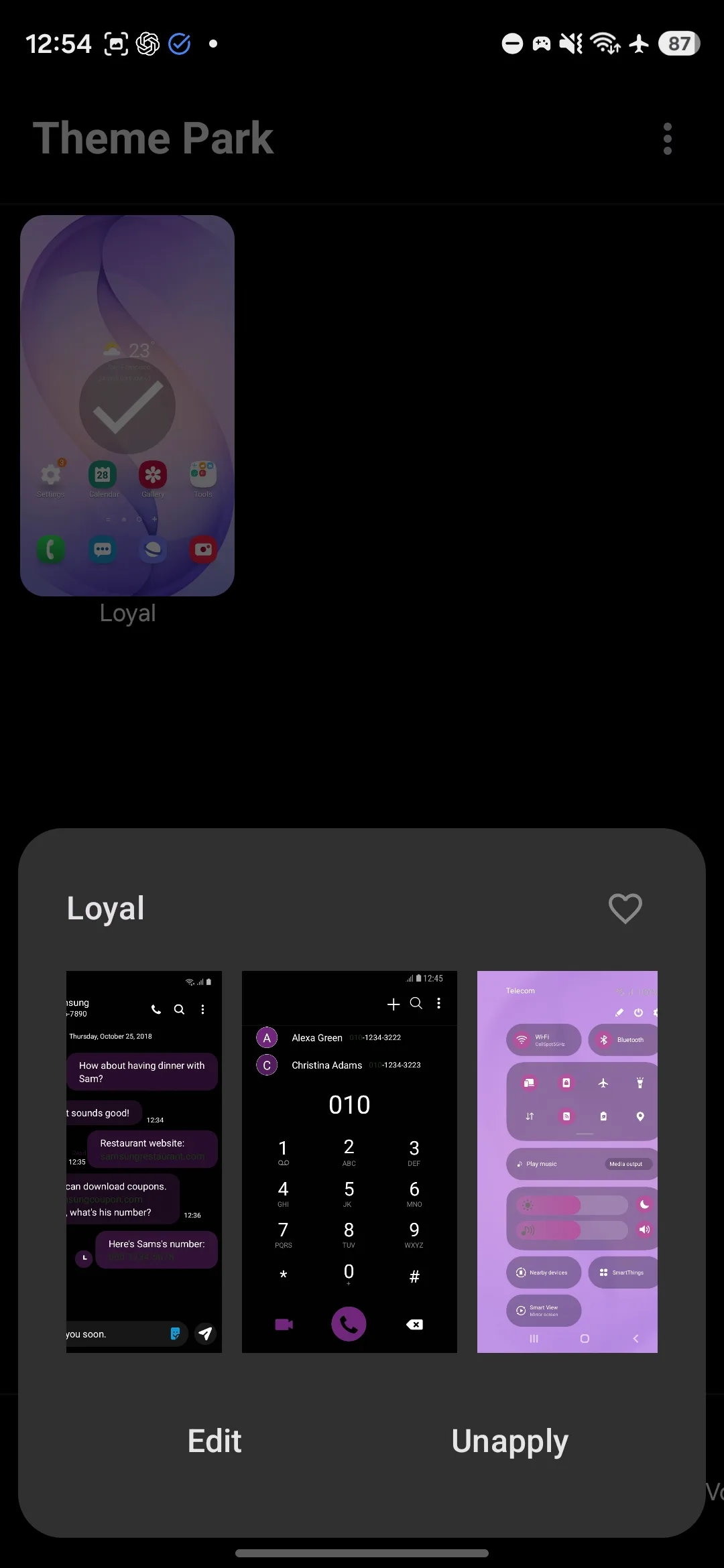
The module that instantly explains the appeal is Theme Park. I used it to push my Galaxy S26 into deep purple tones across the interface, including the Quick Settings panel. This isn’t your typical wallpaper-matching trick, as you can get in-depth options. With QuickStar, you can redesign parts of the Quick Panel, while LockStar makes the lock screen and Always On Display become more flexible. I even added stickers to the AOD, including goody little line faces, because why not?
Advertisement
Vikhyaat Vivek / Digital TrendsVikhyaat Vivek / Digital TrendsVikhyaat Vivek / Digital Trends
It is absolutely not for everyone. But the fact that Samsung even let me make these changes is the point.
Most phones let you choose a wallpaper, pick a color palette, and maybe change icons if the launcher supports it. Good Lock goes several layers deeper. It makes the Galaxy S26 feel less like Samsung’s phone and more like mine.
There’s a lot of silly stuff
The most fun I had was with Edge Lighting+. I set up a flower effect that pops up when a notification comes in. Again, this isn’t essential at all and frankly kind of ridiculous. It makes notifications even more distracting, yet my phone felt more alive in some weird manner. You do have more practical lighting effects to choose from, and they won’t make your phone feel spring. But it is really fun to mess around with.
Vikhyaat Vivek / Digital TrendsVikhyaat Vivek / Digital TrendsVikhyaat Vivek / Digital Trends
Chinese smartphones are known for going all-in on customizations, and it’s great to see that Samsung doesn’t fall behind either. The Galaxy S26 hardware does appear safe in places. Good Lock helps push back against that by having the software be more unique.
Utility is solid too
Good Lock is not only about making your phone look different. You get access to plenty of modules that are quietly useful. I already called NotiStar my favorite in the Galaxy S26 review, and I still think it is one of the best Good Lock tools because notification management is one of those things Android can never make too good. Sound Assistant is a close second for me because it gives you more granular control over audio behavior than the regular settings menu.
Then there is Nice Catch, which helps track unexplained actions like vibrations, sounds, ringer mode changes, call mode changes, and toast notifications. If you’ve ever been bothered or curious about why your phone is buzzing for no apparent reason, this makes sure no software gets away with it.
Advertisement
Vikhyaat Vivek / Digital TrendsVikhyaat Vivek / Digital TrendsVikhyaat Vivek / Digital Trends
Camera Assistant is another module worth calling out. Samsung’s own Good Lock listing includes camera customization among its plugin tools, and the module adds the sort of camera behavior tweaks that power users usually wish were built directly into the default camera app.
The beauty of Good Lock is that you do not need to use all of this. Samsung has built a modular app that lets you choose how deep you want to go. So you can simply skip any of the ones that don’t interest you.
Samsung can brag about this more
Good Lock isn’t entirely unknown. At this point, it’s more of an open secret. However, it can be a bit confusing for those getting into it for the first time. A casual user could open it, stare at the list, and leave immediately. But if you give it a shot, you’ll see why the flexibility in Android is the reason why many people never move over to Apple’s polished but locked ecosystem. After using it properly on the Galaxy S26, going back to a cleaner Android phone seems strangely limiting.
S. “Soma” Somasegar at AWS re:Invent in 2019. (GeekWire File Photo / Todd Bishop)
The tributes came quickly for S. “Soma” Somasegar, and they came from seemingly everywhere and everyone he touched across the technology and business community.
A consistent picture emerged: Somasegar was kind, generous with his time, humble, and a steadying presence. To many, those qualities mattered even more than the investments and decisions he made.
A key figure in Seattle tech, Somasegar died this week at age 59. His passing sent a wave of shock and grief across Microsoft, where he spent 27 years, Madrona, the VC firm where he worked the past 11 years, the many startups he invested in and guided, and the countless people he befriended and mentored.
Keep reading for remembrances we rounded up from LinkedIn and elsewhere:
Steven Sinofsky, the former Microsoft Windows and Office leader, called Somasegar “a champion of developers and startups” as he reacted to the news about his friend and colleague.
Advertisement
“We started at Microsoft months apart, both grad school dropouts,” Sinofsky wrote on LinkedIn. “Our work paths intertwined for more than two decades on everything from the first NT through dev tools with a good deal of college recruiting all along.”
Sinofsky said Somasegar’s contributions to Microsoft and culture “were as legendary as was the admiration and respect he earned from generations of the Softies he guided and led.”
Brad Anderson, a former Microsoft and Qualtrics executive, said Somasegar was “one of one,” and “the model of being a servant leader” when they were peers reporting to Bob Muglia and Satya Nadella. “Love that man,” Anderson wrote of Somasegar.
S. “Soma” Somasegar, second from left, and Anoop Gupta, center, with the SeekOut team. (Photo via LinkedIn)
Anoop Gupta, co-founder and executive chairman at SeekOut, called Somasegar “endlessly curious” and said that every conversation with him “left you thinking differently” because of a rare combination of intellectual depth, optimism, humility, and genuine kindness.
Over the years, Somasegar became more than an investor to SeekOut.
Advertisement
“He was a trusted friend; someone whose perspective I valued immensely,” Gupta wrote — and someone who wouldn’t hesitate to make time at 10 p.m. on a Saturday to talk through a problem.
Vijaye Raji, CTO of Applications at OpenAI, first got to know Somasegar nearly 20 years ago at Microsoft, and counted him as a good friend, teacher, and important part of his personal and professional life. Somasegar later led Madrona’s investment in Raji’s startup Statsig, which OpenAI acquired last year for $1.1 billion in one of the largest Seattle-area tech exits of 2025.
“Soma was one of the kindest people I have known,” Raji wrote. “He helped everyone around him, gave generously of his time and wisdom, and made people better simply by being in their corner.”
Raji said he learned a lot from Somasegar, and “his impact on Microsoft, the developer ecosystem, Seattle, the startup community, and so many individual lives will endure.”
Advertisement
Vetri Vellore, left, and Soma Somasegar. (Photo via LinkedIn)
Vetri Vellore, a Microsoft veteran and startup leader, first met Somasegar in 1991, when Vellore interviewed for a job at Microsoft — the start of a 35-year friendship.
“He was a friend first, but also a mentor through every inflection point,” Vellore wrote, adding that Somasegar invested in his second startup, Ally.io, and led the seed round and joined the board for his third, Rhythms.
“We had just wrapped a board meeting a few days ago. It was energizing, full of ideas, and we somehow ended up bantering about which Indian restaurants we should use for catering,” Vellore said. “That was him: serious about the work, warm about the people, always game for the small joys in between.”
Joe Duffy, founder and CEO of Pulumi, also met Somasegar decades ago at Microsoft. When Somasegar told Duffy he was leaving for Madrona, Duffy confided that he was planning to leave Microsoft, too, and start a company. Somasegar asked to hear the pitch first — and then led Pulumi’s first investment and joined its board.
“Soma was the first person I would call anytime I faced a tough situation,” Duffy wrote. “His calmness and ability to see right through to clarity instantly centered me and revealed the path ahead as though it were sitting there the whole time without me realizing it.
Advertisement
“He was always there, no matter what time, where we were, or what we had going on. That he could do this while also playing that role for countless others is remarkable.”
Soma Somasegar, fourth from left, and Nikesh Parekh, second from right, at Madrona offices in Seattle. (Photo via LinkedIn)
Nikesh Parekh, a Seattle tech veteran who served with Somasegar on the board of his company Suplari, remembered him as “a true friend and mentor.”
“If you spent any time in Seattle tech over the last 30 years, you knew Soma,” Parekh wrote.
He described Somasegar’s advisory style as almost Socratic.
“Like Yoda or Bodhidharma, he would give you the advice you actually needed, usually framed as a puzzle or question you had to answer yourself: ‘You tried it. What did you learn? Pick yourself up. Try the next thing. Keep moving.’”
Advertisement
For five years, the two co-hosted sessions at Madrona where Microsoft employees donated to the GIVE campaign for time with Soma, discussing careers and entrepreneurship. His advice was characteristically concrete, Parekh said: spend 80% of your time doing your core job exceptionally, 20% on things that help the broader team. His example: standing up Microsoft’s India Development Center in Hyderabad as a side project. It became one of the company’s most important engineering hubs.
Manuela Papadopol, executive director of the Microsoft Alumni Network, told GeekWire that Somasegar “embodied the very best of Microsoft.”
“He was a world-class technologist and investor, but what set him apart was his generosity with his time, wisdom, and encouragement,” Papadopol said. “He was my mentor, advisor, and most of all, a steadfast supporter of the Microsoft Alumni Network, always looking for ways to help others succeed. His impact will live on through the countless founders, developers, leaders, and alumni whose lives he touched.”
S. “Soma” Somasegar gives a tour of the Microsoft Developer Division offices in 2014. (GeekWire File Photo / Todd Bishop)
Dayakar Puskoor, an entrepreneur and investor who knew Somasegar first as a colleague at Microsoft and later reconnected through the venture ecosystem, called him “a dear friend, a mentor, and one of the finest people I have had the privilege of knowing.”
The two shared many conversations over the years about startups, leadership, and venture capital, and Somasegar was a supporter of Puskoor’s firm, Dallas Venture Capital.
Advertisement
“Whether speaking with first-time founders, engineers, investors, or friends navigating difficult moments, Soma always made people feel supported and encouraged,” Puskoor wrote.
Daniel Dines, founder and CEO of UiPath, called the passing of Somasegar “one of the saddest days” he could remember.
Somasegar “was the most genuine and kind human being I have ever met, and his loss is incalculable,” Dines wrote. “A mind of unparalleled clarity. A sterling reputation. A life that inspired all of us lucky enough to be near him.”
Recalling board meetings and their time together during UiPath’s IPO, Dines said Somasegar was an honest and steady presence.
Advertisement
“He never raised his voice. He never reached for the easy answer. He just thought carefully and told you the truth,” Dines said. “I lost a friend. A mentor. An inspiration. A model for how to live a life. A board member I trusted completely. A human being I trusted completely.”
Jill Ratkevic, a longtime developer tools marketing leader and founder of Silicon Valley strategy firm Black Swans, called Somasegar “one of a kind.”
“I know I’m not alone in my stories of being young [and] gently schooled,” Ratkevic wrote. “His generosity in helping me solve the insolvable. RIP. Love to all.”
S. “Soma” Somasegar at the Madrona IA Summit in December 2025. (GeekWire File Photo / Todd Bishop)
Stefan Weitz, a Microsoft vet who is currently co-founder and CEO of HumanX, called Somasegar one of his “favorite managers and human beings on the planet.”
“I am so sad tonight that one of the smartest, hardest working, kindest, and highest integrity people in tech and venture has left us,” Weitz wrote. “Soma was proof positive you didn’t have to be an asshole to be brilliant, nor a braggart to be an inspiring leader. He will be and deserves to be missed by those who will come after him in our increasingly inward looking industry.”
Advertisement
Preeti Suri, founder and CEO of AdventureTripr, said that when she moved from London to Seattle to start her company, she didn’t know anyone. Somasegar was one of the first people she spoke to.
He connected her to people with backgrounds in travel investing and startups, she wrote, and whenever she “needed guidance, felt disillusioned during fundraising or faced predatory terms, he was there — always available, even at short notice, to give wise, honest counsel.”
Somasegar showed her again and again “how someone can rise above selfish motives and genuinely help others,” Suri said. “He restored my faith in humanity when I needed it most.”
Vamshi Reddy, CEO of Bellevue-based Quadrant Technologies, called Somasegar “not only a great technology leader, but also a very humble human being,” crediting him for guiding entrepreneurs, startup founders, developers, and community members.
Advertisement
“Soma always made time to mentor people, encourage founders, and support the community with kindness and simplicity,” Reddy wrote. “So many people grew because of his guidance, advice, and belief in them and his support from Madrona. His impact went far beyond business and technology.”
From left, Sharath Katipally, S. “Soma” Somasegar, and the Seattle Orcas cricket team mascot. (Photo via LinkedIn)
Sharath Katipally, head of enterprise AI at Cornerstone, knew Somasegar through both the Seattle tech and cricket communities, and remembered him as “a foundation and guiding presence.”
The two first met through a JPMorgan client event, but the relationship deepened over time into genuine mentorship. Katipally recalled a conversation during a period when he was navigating the transition from large leadership roles back to an individual contributor path. Somasegar opened up about going through a similar adjustment after leaving Microsoft.
“It was a simple conversation, but it stayed with me because it came from a place of honesty, humility, and lived experience,” Katipally wrote. “He never made conversations transactional. Be it career, cricket, sponsorships, or simply showing up when someone needed support, he always made time for people.”
Pritam Parvatkar, a tech veteran who is chief alliance officer at AlonOS, said that Somasegar “changed the lives of many” as a brilliant leader, role model, mentor and passionate cricket fan.
Advertisement
“You will be missed but will continue to inspire every young entrepreneur dreaming of future success — whether in AI, cloud, or even the challenging field of cricket,” Parvatkar wrote. “You demonstrated how to turn passion into a successful career and create a bright future.”
At Madrona, where Somasegar joined as venture partner in 2015 and was named managing director in 2017, he was remembered as a brilliant and generous spirit.
“He was unique at every level and raised the bar on what we expected of ourselves professionally and, more importantly, personally,” the firm wrote in a tribute post. “We all loved Soma, as everyone who knew him did.”
Messier 51 (M51) is located around 31 million light-years away in the constellation Canes Venatici. Astronomers call it the Whirlpool Galaxy because of the elegant way its spiral arms extend outward from the center. NGC 5195, a smaller companion galaxy, interacts with it, helping to sculpt its sweeping characteristics. Recent observations have focused on one stretch of a spiral arm where stars develop in huge groupings. Infrared photos from the James Webb Space Telescope now reveal details hidden inside dense clouds of gas and dust.
Thick material illuminates in warm, blazing red and orange throughout the image. Those hues reveal the basic elements of star formation, such as dust grains and complicated chemicals. Cyan flecks appear out in those clouds, where young, huge stars have already begun to push material around them. White dots represent the densest clusters that are gradually making their way out into the clearer space ahead. A faint blue glow hangs out around sections of the arm against the background; it’s quite weak, so you have to look closely.
Superior Optics: 400mm(f/5.7) focal length and 70mm aperture, fully coated optics glass lens with high transmission coatings creates stunning images…
Magnification: Come with two replaceable eyepieces and one 3x Barlow lens.3x Barlow lens trebles the magnifying power of each eyepiece. 5×24 finder…
Wireless Remote: This refractor telescope includes one smart phone adapter and one Wireless camera remote to explore the nature of the world easily…
Zoom in and you can see the same pattern in ultra high definition over nearly 800 light years. The bright blue-white patches within the red-orange clouds are young star clusters that are still rather deep. The cyan glow is caused by the radiation that bright stars emit, which ionizes the atmosphere surrounding them. If you look closely, you can see individual stars scattered all over the place because infrared light passes right through the dust that blocks visible light, revealing them in all their glory.
Advertisement
The new data was gathered using the Near-Infrared Camera on the Webb telescope, which used a variety of filters to tune into the infrared wavelengths in different ways. One set is useful for detecting ionized gas, while another highlights specific chemicals found in the birth clouds. The Webb telescope can work alongside older Hubble photos of the same clusters after they have been cleansed of dust and pollution. When all of this is taken into account, researchers may see clusters forming throughout their early lives.
This is all part of the FEAST initiative, which is looking very closely at thousands of newborn star clusters in four neighboring galaxies, including Messier 51. Scientists cataloged nearly 9,000 clusters in all, then estimated their mass and age using infrared signals. The data tell a pretty clear story: big clusters clear out their own gas after roughly 5 million years, whereas smaller ones require 7 or 8 million years.
Massive clusters have a much higher concentration of hot stars from the start. Those stars emit massive amounts of energy and tremendous winds. And finally, they explode as supernovae, sending the gas traveling faster. This entire process, stellar feedback, has a significant impact on how much material is available for new stars to form inside the galaxy, as well as on the environment surrounding those newborn stars.
Owner Hasbro and Wizards of the Coast could have voluntarily agreed to the union, but instead the issue is going to an official vote with the National Labor Relations Board in June… [O]ne Arena developer shared on Bluesky that one of the reasons they were inspired to organize was because Wizards changed its remote work policy, requiring them to move across the country or to a more expensive state to remain employed. (Changes to remotework have been one of the big drivers of unionization and union action among video game developers.) If the union is successful, the company wouldn’t be able to unilaterally change working conditions like remote work; it would have to negotiate with the union over the decision. There’s no guarantee unionized employees would get what they want, but they’d have more of a say, and the opportunity to directly influence their work situation, than they would without a union.
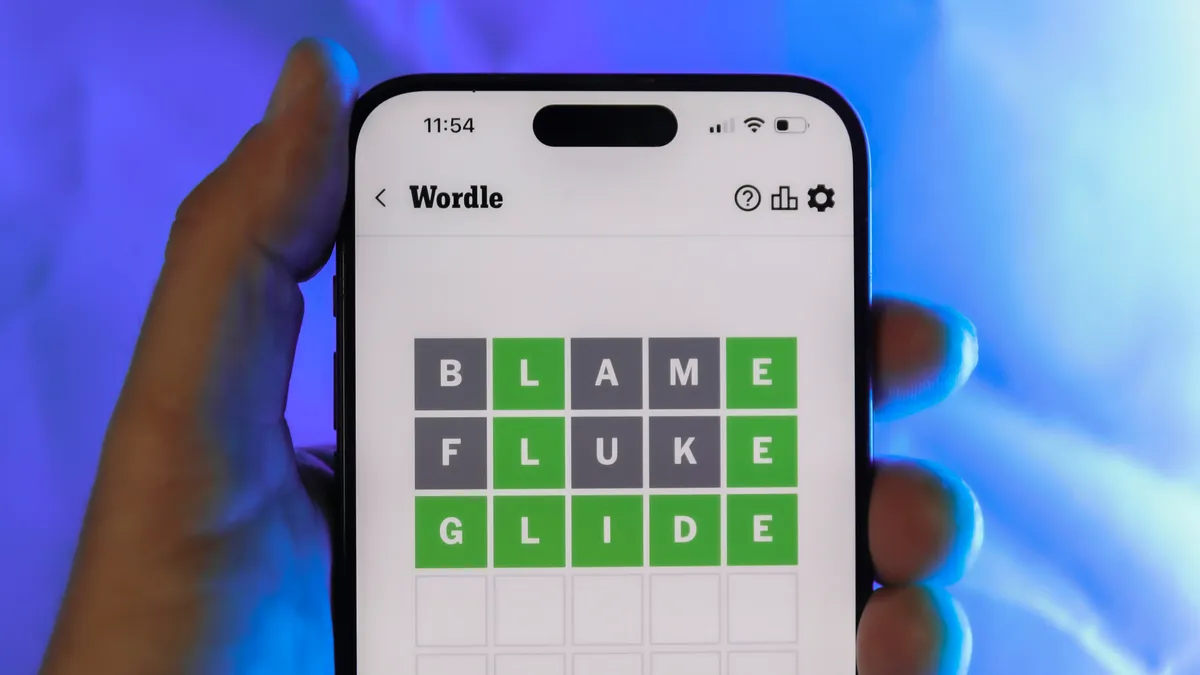
Looking for the most recent Wordle answer? Click here for today’s Wordle hints, as well as our daily answers and hints for The New York Times Mini Crossword, Connections, Connections: Sports Edition and Strands puzzles.
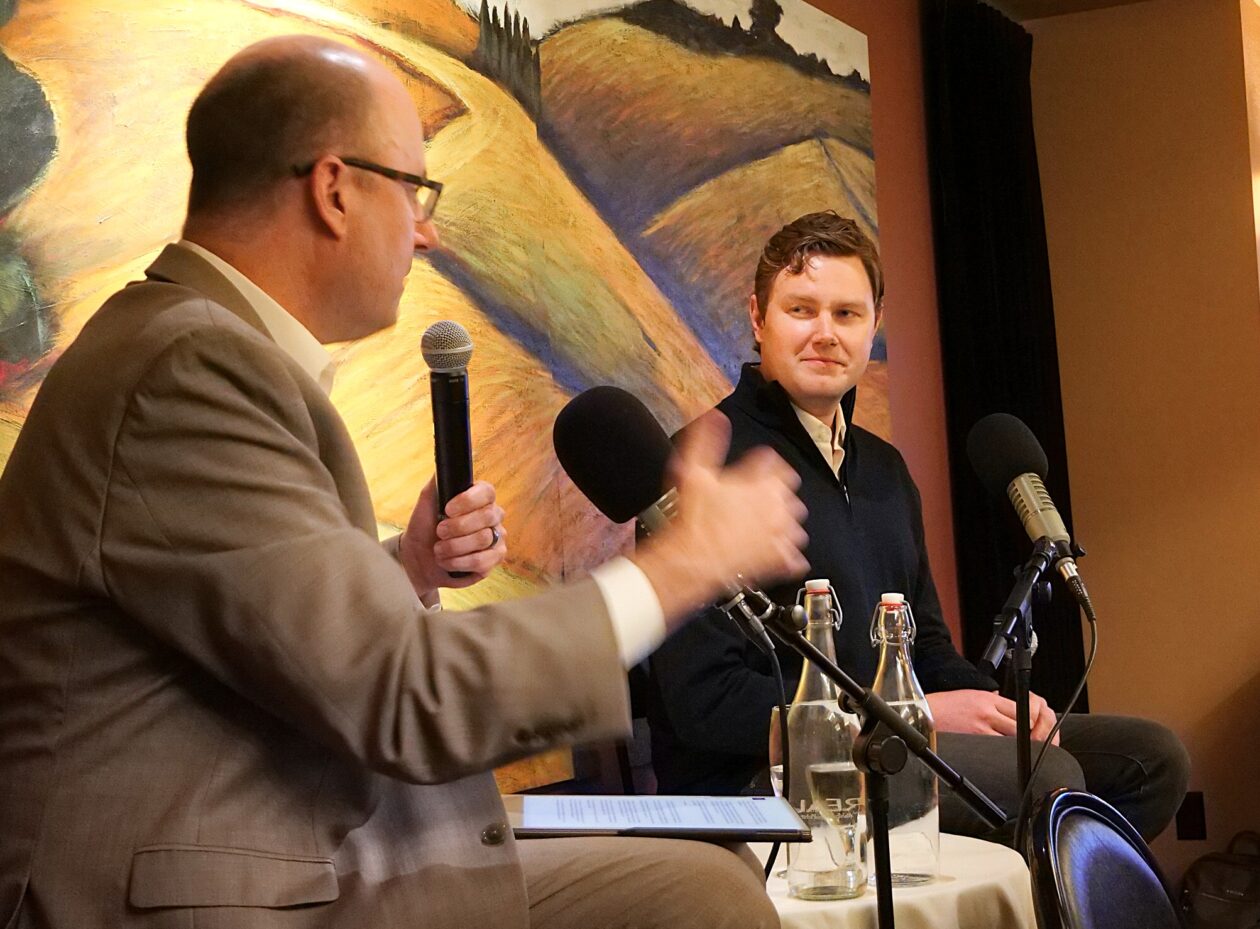
GeekWire’s Todd Bishop interviews author and strategist Brian Evergreen for the GeekWire Podcast at an Agents of Transformation dinner presented by Accenture at El Gaucho in Bellevue, Wash. (GeekWire Photo / Holly Grambihler)
[Editor’s Note: Agents of Transformation is an independent GeekWire series, underwritten by Accenture, exploring the adoption and impact of AI and agents. See coverage of our related event.]
If someone showed up at your door with a saw and said “let’s walk through your house and figure out how to make it better,” you’d think you hired the wrong contractor. But that’s how most companies are approaching AI — focusing on the capabilities of the tool rather than their vision for the work.
That’s the case Brian Evergreen has been making for years, first as an AI leader at Microsoft, now as an author, strategist and advisor to Fortune 500 companies. In a recent live recording of the GeekWire Podcast, Evergreen laid out where companies should focus instead.
His core message is what he calls future solving: You need a vision for the future that you’re trying to create first, and then AI becomes a tool for getting there. Most companies have it backward. They start with the technology, and then they ask what to do with it.
“Use cases are the friend of engineering, but the enemy of strategy,” Evergreen said. “Instead of being AI first, you need to be value first.”
Advertisement
Evergreen’s career has included roles at Accenture, AWS, and Microsoft, where he worked in AI from 2016 to 2023. As the company’s U.S. AI strategy lead, he helped executives develop their technology plans, and saw firsthand that the standard playbook wasn’t working. They would start with a problem, pick a use case, go after low-hanging fruit, and ultimately fall short.
That experience led to his book, Autonomous Transformation, and to the advisory work he does now through his firm, The Future Solving Company. His core argument: companies don’t need a better AI strategy. They need a vision for where they’re going, and AI is one way to get there.
Here are more takeaways from the conversation:
Humans as the interface: Instead of putting AI in front of the customer, Evergreen argues companies should put humans there, with AI as middleware behind the scenes. He points to Klarna, which laid off 700 customer support workers and replaced them with AI, then scrambled to rebuild its human team.
Advertisement
Decouple tasks from jobs: A job is an accountability for an outcome, Evergreen said, and AI can’t hold that accountability. The better approach: separate tasks from jobs, hand the repetitive ones to AI, and let humans focus on judgment and relationships.
Brian Evergreen speaks with GeekWire’s Todd Bishop during a live recording of the GeekWire Podcast. (GeekWire Photo / Holly Grambihler)
High agency matters at every level: Evergreen’s own career illustrates the point. He started at Accenture as a data entry contractor, taught himself SharePoint, automated much of his team’s workflow, and worked his way into a full-time consulting role. The lesson: don’t wait for permission.
Create new value, not cheaper operations: Most companies look at AI and ask how to do what they’re already doing faster, better, or cheaper. Evergreen says that misses the point. The bigger opportunity is creating new value that didn’t exist before, the way Netflix went from shipping DVDs to streaming.
The larger importance of a clear vision: “Vision is the only force with enough momentum to overcome organizational inertia,” Evergreen said. Without it, companies can’t have a real strategy. And without a strategy, they can’t make strategic decisions.
Sony’s 1000X The Collexion are the fashionable model in its WH-1000X series. While noise cancelling and battery life take a hit compared to the WH-1000XM6, these headphones are focused on delivering a better sound experience and comfort – and on that front they’ve succeeded.
The most comfortable entry in the WH-1000X series
Mature, balanced audio performance
Stacked with features and customisation over price rivals
Better noise cancelling than price rivals
Excellent call quality
Px8 S2 beats it for overall sound
Reduction in battery life
Less powerful ANC than WH-1000XM6
No USB-C audio
Key Features
Advertisement
360 Upmix
Upconvert stereo audio with Cinema, Music and Game modes
Advertisement
Battery life
Up to 24 hours of charge
Advertisement
Sound Connect app
Customise an array of features with Sony’s headphones app
Introduction
Sony’s 1000X The Collexion are a different kettle of fish from its mainstream WH-1000X series, but it wants to have an impact that’s just as big with its intended audience.
Advertisement
These aren’t your everyday, work-horse type of headphones. The 1000X The Collexion (or WH-1000XX) have a narrower focus, one that emphasises style, craft, comfort and sound quality.
The WH-1000XM6 are among the best wireless headphones, and you might think that the 1000X The Collexion are basically the XM7s in disguise, but they’re not. What they are is similar to, but also different from, the WH-1000X models that came before them.
Advertisement
Design
Carry ‘bag’
Super comfort
Two finishes
Over the last ten years, Sony crafted a distinctive look for its WH-1000X series, and the WH-1000XX doesn’t deviate much from it. They’re still recognisably distinctive; sleek and premium-looking as expected from a pair of headphones pushing past £500 / $600. If you felt the WH-1000XM6 lacked a wow factor, this pair stands out more from the crowd.
They don’t collapse inwards as the WH-1000XM6 do, but that’s not how Sony wants you to make use of these headphones.
Advertisement
Image Credit (Trusted Reviews)
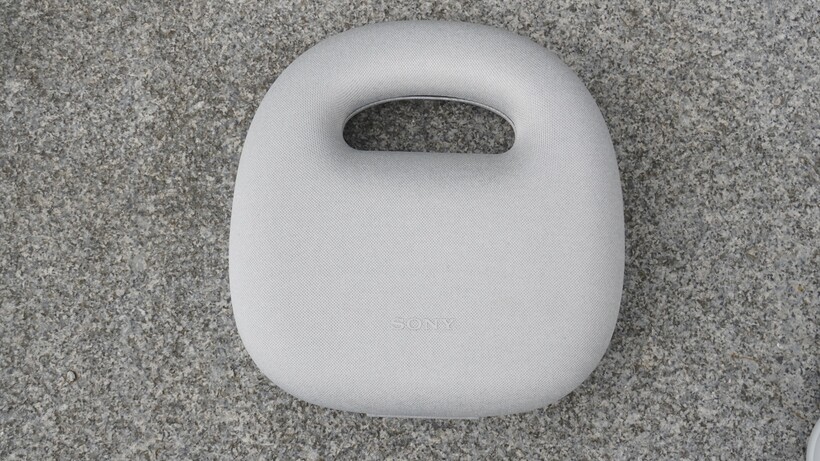
These aren’t headphones that you stuff in your bag between commutes. They’re headphones to take care of, so the carry case is shaped and acts as a bag. There’s a handle to carry them in a way that’s more practical than the AirPods Max 2 cradle, with a magnetic latch to keep the case secure. It’s such a simple change that it’s almost genius. Why haven’t more headphone brands implemented this?
Advertisement
It’s clear Sony’s mood board when designing these headphones had people wearing trenchcoats, Barrel trousers and Ferragamo shoes. Touch, feel, and a more experiential experience are what Sony’s designers have put their effort into.
Image Credit (Trusted Reviews)
These headphones are both minimalist and eye-catching – designed to blend in with what you’re wearing rather than stand out. The choice of platinum silver (no, not white) and black serves to emphasise that monochromatic approach to styling – though Sony missed a trick by not including a brown/tanned version that would have fit into the upmarket fashion look.
Unlike the Bowers & Wilkins Px8 S2 or Focal Bathys, the WH-1000XX haven’t opted for real leather (vegans celebrate!). Instead, the headphones make use of two materials across the design: aluminium and faux leather.
Matte sandblasted faux leather covers everything that you touch or your head comes into contact with. Some might not like the feel or texture, but I quite like the tactile feel it gives to the touch controls compared to the frictionless swipes of the WH-1000XM6. These headphones still incorporate taps and swipes, and in most cases, if the first tap or swipe didn’t succeed, the second attempt hit the mark.
Advertisement
Image Credit (Trusted Reviews)
Advertisement
I haven’t marked the surface of the headphones yet, but the earpads do have a few smudges I haven’t yet been able to remove. If you want to change out the earpads, they’re easily detachable.
Aluminium makes up the lovely-looking linkages that connect the headband to the earcups. The stepless slider is silent, but it’s the quality of the metal – according to Sony, each one is individually finished by a human – that’ll leave you purring about these headphones’ elegance.
The clamping force doesn’t feel too tight. Initially, while I felt pressure around my ears and cheeks, it slowly receded after a few minutes. The headphones can slip and slide, but I haven’t found the fit to be loose.
The earpads make for a cushy point of contact with the head, and these are easily the most comfortable wireless over-ears Sony has made; more so than the WH-1000XM6, which can bunch around my ears and make their presence quite literally felt.
Advertisement
Image Credit (Trusted Reviews)
That’s not the case with the WH-1000XX, which go on like a cosy pair of slippers, despite weighing 70g more. The profile of the headphones’ earcups is slimmer, so they jut out less, which has some effects I’ll get to later.
Advertisement
The noise isolation is perhaps not as strong as the WH-1000XM6, but The Collexion handles wind noise well enough. Wind whips cleanly past and doesn’t affect the mics, though walking into a headwind, the air gets into the aluminium linkages and produces a whistling sound.
There’s an extra physical button high up on the left earcup that covers Sony’s 360 Upmix modes, and they’re easy enough to locate thanks to the difference between the faux leather and metal feel of the controls.
The Collexion has a 3.5mm jack with a wired cable included in the carry bag. There’s no USB-C cable for charging, but more disappointing is that the WH-1000XX doesn’t support wired USB-C audio. Given all its main rivals do, I find this something of a letdown.
Advertisement
Image Credit (Trusted Reviews)
Features
Sound Connect app
360 Upmix modes
Auracast and Bluetooth LE Audio support
Writing the features for a pair of Sony headphones is, for me, intimidating because Sony packs in so much. Most of what was in the WH-1000XM6 carries over into the 1000X The Collexion, but the main takeaway here is that I can’t recall another headphone at this price point with this list of features. Sony’s in a field of its own when it comes to customising performance the way you want it.
Advertisement
Bluetooth is v6.0, Bluetooth multipoint ensures connection to two devices simultaneously, and you can stream in SBC, AAC, and LDAC, which offers higher quality audio.
The headphones also carry Bluetooth LE Audio (LC3), which uses less energy when enabled. Plus there’s Google Fast Pair for quick connection to Android devices while Microsoft’s Swift Pair does the same for Windows. Auto Switch support works with the LinkBuds and the 1000XM5 headphones and upwards. Auracast is supposedly supported, though the list of specs I was sent didn’t mention it.
Image Credit (Trusted Reviews)
The wireless performance has been strong – stronger than I feel it was with the WH-1000XM6 in its LDAC mode. There are still stutters and places where interference can interrupt. So while it hasn’t been completely faultless like efforts from Sennheiser and Focal, it’s come through major areas like Victoria and Oxford Circus mostly unscathed.
The smart features are all back. Speak-to-Chat pauses music when you’re speaking, and it latches onto actual speech rather than coughing, sneezing or my attempts to grumble beneath my breath. There’s Quick Attention mode, where you put your hand over the earcup to hear what’s around, plus Adaptive Sound Control, which I don’t make much use of but allows for automation of ANC in turning it on or off through geolocation.
Advertisement
If you prefer not talking to actual people and want to talk to digital assistants instead, the 1000X The Collexion supports Google’s Gemini. It also works with Apple’s Siri, and if there’s any other voice assistant you’d prefer, you can change the settings and have the headphones access your smartphone’s native assistant.
Advertisement
There’s also Sony’s own voice control, where you can raise the volume or turn the noise cancellation, etc., when enabled. If you don’t want to talk at all, the WH-1000XX supports gesture controls – you can avoid a call by shaking your head.
Image Credit (Trusted Reviews)
Sony is still chasing immersive audio, and the WH-1000XX gets features that weren’t available on prior WH-1000X headphones. There are three ‘upmix’ modes of Sony’s immersive 360 Reality Audio sound in 360 Cinema Upmix (already present on the WH-1000XM6), which is joined by the 360 Music Upmix and 360 Game Upmix.
These three ‘Upmix’ modes are supplemented by Standard (the default mode) and Background Music, where you can push music away and make it sound as if it’s happening in the distance. Sound quality is degraded, but if you’re the type of person who likes to listen to music while working but also finds it distracting when you need to concentrate, this mode can help (it’s certainly helped me).
Advertisement
These headphones will accept a Dolby Atmos signal (like any other pair), and there’s head-tracking support on Android.
These are the first pair of Sony headphones to implement its DSEE Ultimate, using Edge-AI to upscale compressed streams in real-time, and in doing so it claims to restore detail and dynamic range. To be frank though, if you’ve bought these headphones, you should be listening in higher quality than a piddling 320kbps stream.
Advertisement
Image Credit (Trusted Reviews)
Equaliser settings offer an array of presets to choose from, along with Find Your Equaliser, which plays audio to find the balance you’re after. For more in-depth control, there’s a 10-band EQ.
More smarts are available in Quick Access settings which includes Spotify Tap, Amazon Music Play Now, YouTube Music Quick Access and Endel Quick Access.
Advertisement
I can’t say I’m a huge fan of the revamped Sound Connect app. While all the categories are listed in a way that makes it simple and easy to find what you’re after, there are so many features, so many nested tabs and menus – the way it’s presented is not the most visually appealing.
At least with the main page you can add shortcuts, and I suspect most people won’t deviate from the first screen once everything is set up to their tastes.
Battery Life
Up to 24 hours battery life
Fast charging
Replaceable batteries (with a caveat)
Advertisement
There is a change in battery life, down from 30 hours to 24. A quick comparison to similarly priced rivals puts the WH-1000XX ahead of the AirPods Max 2, around the same as the Dali IO-8 and less than the Bowers & Wilkins Px8 S2.
Sony’s reasoning for the reduced battery is that as the earcups are slimmer in profile, there’s less room for the same capacity. The batteries are replaceable, though Sony recommends that you send them in for service rather than take a screwdriver to the headphones.
Advertisement
Image Credit (Trusted Reviews)
Actual battery life? I’ve found the headphones can last plenty long despite the reduced specs. A two-hour drain with a Spotify stream in lossless (in LDAC with ANC on) and the headphones only went down by 3%. Arguably the longer they go on for, the bigger the drops, but they’re easily last across long flights.
Battery care can extend the headphones’ lifespan by stopping them from reaching full charge, just like with the ULT speakers and other Sony headphones.
There is fast-charging but perhaps because of the smaller batteries, it’s not as emphatic as the WH-1000XM6’s three minutes equals three more hours. The WH-1000XX offers 90 minutes from a five-minute charge. Not quite Speedy Gonzalez.
Advertisement
Noise-Cancellation
Adaptive ANC
Ambient Sound mode
Excellent call quality
So, how about the noise cancellation? Is it better than the WH-1000XM6, or worse?
It’s not as good. But still pretty good.
Advertisement
Measured against the WH-1000XM6 and it’s a noticeable drop, with noise isolation and overall suppression not as strong. The 1000X The Collexion is closer to the Bose QuietComfort Ultra Headphones Gen 2 (though not quite as silent).
Compared against contemporaries, they’re better than the Focal Bathys, Bathys MG, and Bowers & Wilkins Px8 S2. It deals with low frequencies more confidently during a pink noise test, and it clears away sounds from in front and to the sides more consistently. Perhaps the closest is the Dali IO-8, but the Sony is again more consistent.
While The Collexion aren’t super silent, on a plane, they make engine and cabin noise more manageable. On a busy train, it provides a semblance of calm, and on a bus, it makes the trip more bearable.
Advertisement
Advertisement
Image Credit (Trusted Reviews)
The WH-1000XX’s Ambient Sound mode is good – there’s maybe a little bit noise to deal with, but it sounds clear enough that I can hear someone rustling a crisp packet across the train carriage. Unlike some efforts, it doesn’t amplify sound to grab attention; it just filters through the outside world in a calm manner.
Call quality is arguably top tier. The mics latched onto my voice and relayed it to the other person clearly, who didn’t pick up any background or wind noise. You can be confident taking calls outside.
In the Sound Connect app you can also turn the microphone on or off during calls and meetings. It’s interesting they have the type of ‘work’ functionality I’d have expected from the Jabra Evolve3 85. It suggests Sony sees business people taking a shine to these headphones too.
Sound Quality
Better treble response than WH-1000XM6
Less bass
More detail and insight into tracks
Here we get to the crux of the 1000X The Collexion’s performance – the sound.
Advertisement
Is it better than the WH-1000XM6? Yes. Is it a huge upgrade over the WH-1000XM6? Not really. Is it a different approach from those headphones? Yes, and that’s the key takeaway. They’re similar but different.
Advertisement
There’s a new 30mm driver that features a soft edge and a new high-rigidity dome that Sony says delivers clearer separation between instruments and voice, more high-frequency detail and a wider soundstage. The 1000X The Collexion delivers on that front.
Compared to the WH-1000XM6, the bass has been tempered down, which itself had been toned down from the WH-1000XM5. There’s less energy funnelled to the lows, certainly not as much richness either listening to tracks on the two, with a bass performance that’s a little smaller and tasteful on the WH-1000XX.
Image Credit (Trusted Reviews)
It’s a similar tuning to the WH-1000XM6, with similarities that at times make the gap between the headphones feel almost nonexistent. But listen for longer, the WH-1000XX begins to stretch ahead like a long-distance runner in the final lap.
The 1000X The Collexion sounds wider, and there’s more detail retrieved across the width of the soundstage (instruments at the edges sound more defined) and across the frequency range. It’s not a huge difference, but it’s enough, and where Sony’s tech has a big advantage over other brands is the reduction of hiss and background noises in tracks.
Advertisement
Advertisement
Vocals are clearer and better separated from the instruments. Compared to the Dali IO-8, the Sony better protects the pocket for vocals – it feels like they’re slightly lost with the Dali on busy tracks, whereas the WH-1000XX preserves them better.
There’s a little more insight into vocals, a clearer and crisper tone that helps them stand out more. Compared to previous Sony over-ears, there’s a little nuance and refinement on display. When tracks get busy and there’s banging percussion beats and clashing cymbals, the Sony sifts through it with more acuity than the Dali does.
Image Credit (Trusted Reviews)
The highs are shaped a little better than before; clearer, more detailed, if around the same level of brightness. The highs aren’t fatiguing, and the high-frequency peaks strike a better tone on the WH-1000XX. The headphones form a clearer picture of a track in my head, but that’s not to say that the WH-1000XM6 are a slouch either.
They’re not the most energetic but that seems by design. The headphones go for a calmer and less excitable energy than the Bowers & Wilkins Px8 S2. The Bowers offers a bolder sound and retrieves more detail from music – plus it punches like a hammer with low frequencies.
The 360 Upmix modes are a mixed bag. If the intent of the 360 Music Upmix is to make it sound as if music isn’t coming from inside your head, then I don’t think it succeeds. If it’s meant to sound like a live music performance, it doesn’t carry the energy or feel of that either.
Advertisement
Advertisement
The 360 Cinema Upmix is better. With an iPad Pro, it brings dialogue and backgrounds upfront, whereas without it, in the headphones Standard mode, it focuses on dialogue above all else. If it’s meant to push sounds further from your head, it’s not doing that, but I do prefer Cinema Upmix to Music Upmix.
Image Credit (Trusted Reviews)
Should you buy it?
If you’ve wanted a luxury pair of Sony headphones
Fashionable, well-crafted, comfortable to wear with the most mature and balanced sound yet of the WH-1000X series.
Advertisement
You want a pair for the everyday work/life balance
Advertisement
Get the WH-1000XM6. The WH-1000XX are premium headphones for a particular market, with the Mk6 delivering better noise cancellation and longer battery.
Final Thoughts
Are Sony’s 1000X The Collexion better than the WH-1000XM6? Not in every way, but they’re not trying to be, and comparing them in such a way defeats the point. The WH-1000XX are intended for a different audience with different expectations.
If you have the WH-1000XM6, there’s no need to get an ‘upgrade’ with these headphones. They’re not the WH-1000XM7 in disguise but a different proposition altogether. If the WH-1000XM6 is more mainstream, the WH-1000XX are more bourgeois.
The noise-cancelling takes a hit, as does the battery life, but they sound better and they’re more comfortable to wear. If you’re after a pair of Sony wireless headphones that offer a higher level of comfort and sound, the Collexion is the model that suits you best.
The clincher, really, is how they compare to similarly priced efforts, and when it comes to noise cancellation and overall features, the Sony WH-1000XX has them beat. The level of customisation and smarts is where this pair of headphones reaches class-leading status.
The end result is a pair of Sony headphones that are similar to what came before, but different. Well-crafted, improved sound and a wealth of features – Sony’s entered the truly premium wireless headphone market with aplomb.
Advertisement
How We Test
The WH-1000XX were tested over the course of three weeks, compared to similarly priced models in terms of sound and noise cancellation.
Battery drain was carried out, calls were made, and a pink noise test used to evaluate the noise cancellation.
Tested for three weeks
Tested with real world use
Battery drain carried out
Advertisement
FAQs
Do the Sony 1000X The Collexion support USB-C audio?
There’s no USB-C audio support, with the headphones supporting analogue audio with its included 3.5mm cable.
Advertisement
Full Specs
Sony 1000X The Collexion Review
UK RRP
£549
USA RRP
$649
EU RRP
€630
Manufacturer
Sony
IP rating
No
Battery Hours
24
Fast Charging
Yes
Weight
320 G
ASIN
B0GY4RH3MX
Release Date
2026
Model Number
WH-1000XX
Audio Resolution
SBC, AAC, LDAC, LC3
Driver (s)
30mm
Noise Cancellation?
Yes
Connectivity
Bluetooth 6, Auracast, Google Fast Pair, Microsoft Swift Pair
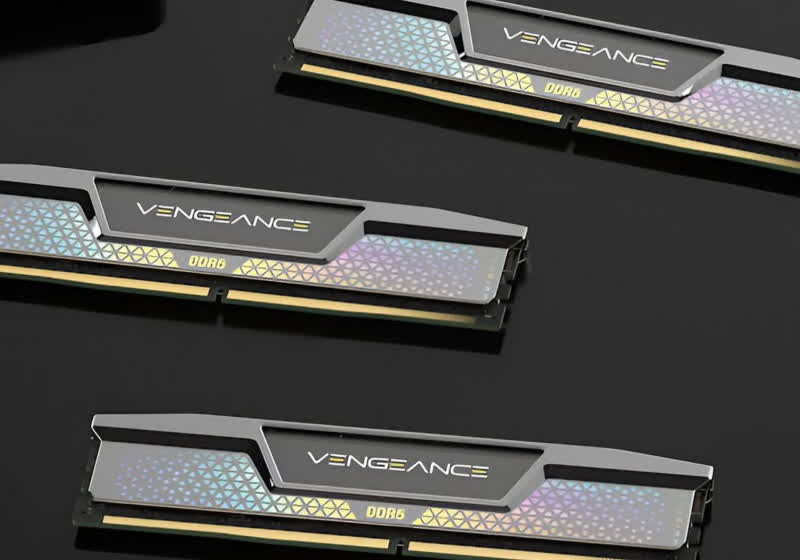
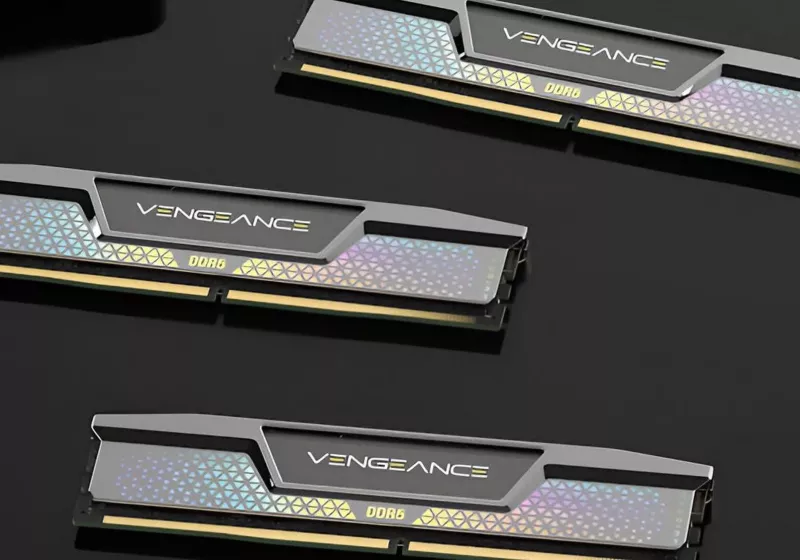
According to screenshots posted on X by tipster @wxnod, Corsair has integrated memory chips manufactured by Chinese DRAM maker ChangXin Memory Technologies (CXMT) into its next-generation memory modules. While Corsair typically sources memory chips from Micron Technology, elevated market prices have reportedly pushed the company to explore more cost-effective alternatives. Read Entire Article Source link





































































You must be logged in to post a comment Login