

Crypto World
CFTC Suspends Officials Who Questioned Prediction Markets, NYT


A New York Times investigation published this week paints a portrait of regulatory pushback that collided with a rising crypto and prediction-market ecosystem at the U.S. Commodity Futures Trading Commission (CFTC). The piece details how senior officials who raised concerns about certain prediction-market operators—Polymarket, Crypto.com and a Gemini affiliate—were sidelined, investigated, and ultimately removed from the agency. The report raises questions about whether regulatory independence was compromised as political and industry interests intersected with enforcement decisions.
According to the Times, concerns flagged by career staff included fair treatment of small bettors, insufficient fraud protections at Polymarket, and an incomplete regulatory review for a Gemini affiliate. Yet, the article contends that acting CFTC chair Caroline Pham and a senior counsel intervened to help these firms advance their objectives. By the end of 2025, two officials who had raised questions were placed on administrative leave and investigated, and three others involved in crypto enforcement faced similar fates. Those involved told the Times they were not informed what specific actions prompted the sanctions. The report quotes current and former agency staffers who described a broader message that emerged within the CFTC: avoid provoking the emerging crypto and prediction-market industries.
Key takeaways
- Internal concerns over major prediction-market platforms: Career staff warned about Polymarket’s fraud protections, Crypto.com’s treatment of small bettors, and Gemini’s affiliate not completing regulatory review.
- Enforcement posture shifts under the agency’s leadership: The Times notes a reduced crypto-enforcement footprint, with several investigations dropped and a move away from broad cases toward individual operators.
- Leadership and potential conflicts of interest: Caroline Pham left the CFTC for MoonPay; a key official who helped approve Gemini Titan’s application later moved to a Gemini unit, raising questions about regulatory capture or influence.
- Industry ties and political milieu: The report highlights business relationships tying the involved firms to political figures and entities, including Trump-associated ventures and investors.
- Regulatory and legislative context expanding pressure: The story aligns with ongoing calls in Congress to bolster the CFTC’s capacity as it faces a rapidly evolving crypto landscape.
Regulatory posture and the enforcement arc
The Times’ account portrays a CFTC that, in its handling of crypto and prediction-market firms, appears to have shifted away from aggressive enforcement. The article notes a contrast between the Biden era’s broader enforcement push and the current period, which it characterizes as more restrained. Specifically, the agency reportedly dropped at least five crypto investigations, and the number of crypto-enforcement actions fell from more than 80 under the Biden administration to only a couple during the period described by the report, with those recent cases aimed at individual operators rather than large firms.
The piece points to a leadership dynamic at the top of the agency. Caroline Pham, who helped steer policy before departing for MoonPay—an entity tied to Polymarket—left a vacancy in the chair role, with Michael Selig serving as the agency’s sole commissioner and acting chair. The report notes that Selig previously represented crypto firms as a corporate lawyer, underscoring concerns about potential conflicts of interest within the agency’s upper ranks. In parallel, Brigitte Weyls, who was the senior counsel referenced in the Times’ reporting, became general counsel at Gemini Titan after assisting with Gemini Titan’s application.
Industry ties, approvals, and risk signals
The investigation maps several notable ties between the implicated platforms and political and financial actors. Crypto.com is described as a business partner of Trump Media. Polymarket attracted investment from 1789 Capital, a venture capital firm associated with Donald Trump Jr. Gemini’s founders have reportedly been backers of American Bitcoin Corp, a cryptocurrency firm co-founded by Eric Trump. The Times presents these connections as part of a broader mosaic of influence that could complicate regulatory decision-making or create perceptions of preferential treatment.
In response to questions about conflicts of interest, a White House spokesperson asserted that “President Trump only acts in the best interests of the American public” and denied conflicts, a claim that the Times cited in its coverage. As with all such allegations, Crypto industry participants and the agencies involved have not publicly contested every detail of the report in the same forum, and the agency did not immediately offer a formal response to the Times’ findings in print at publication.
Enforcement actions against states and the broader regulatory frontier
Beyond internal dynamics, the Times recounts the CFTC’s legal posture toward prediction-market regulation at the state level. Cointelegraph has reported on the CFTC’s lawsuits against state regulators seeking to apply or interpret restrictions on prediction markets in places such as Wisconsin, Minnesota, New York, Arizona, Connecticut and Illinois. The Times’ framing suggests that the federal agency’s stance toward state-level regulation has interacted with a patchwork of state approaches, potentially creating uneven enforcement and compliance pressures for platforms operating within multiple jurisdictions.
Meanwhile, momentum on Capitol Hill has signaled that lawmakers intend to strengthen the CFTC’s oversight capacity. The House Agriculture Committee recently urged President Trump to nominate multiple commissioners to fill the agency’s leadership ranks, arguing that the CFTC is ill-equipped to oversee a rapidly expanding crypto and commodities ecosystem with only one sitting member. The unfolding political dynamic adds a layer of uncertainty about how quickly and how robustly the agency will recalibrate its crypto enforcement posture in the coming months.
For readers seeking broader context, the New York Times’ investigation arrives amid ongoing coverage of regulatory developments and industry tensions that are shaping investor and operator expectations. The timing suggests that market participants are watching closely not only for concrete enforcement actions but for the signals that regulatory capture concerns may influence future policy and decision-making within the CFTC.
Related coverage from Cointelegraph has discussed how the CFTC’s stance on event-contract reporting and data requirements has evolved, offering additional background on how the agency has managed the reporting framework around prediction-market activity in recent years. These themes collectively illuminate the broader regulatory frontier that traders, platform operators, and developers must navigate as market structures and use cases continue to diversify.
As the debate over independence, accountability, and industry influence continues, investors and operators should monitor upcoming regulatory nominations, potential reforms to employees’ conflicts-of-interest rules, and any new enforcement guidelines that the CFTC may publish as part of its response to this evolving landscape.
Source: New York Times investigation, May 24, 2026. The Times report and linked material provide the central narrative about staff concerns, leadership changes, and the alleged influence of political and business ties on regulatory outcomes. Cointelegraph has previously reported on related state-level actions and enforcement activity that contextualize how prediction markets intersect with federal oversight.


Tom Lee’s BitMine faces about $7.3 billion in paper losses on its Ethereum treasury as Ether (ETH) traders weigh worsening sentiment, ETF outflows and a bearish chart setup pointing toward $1,600.
Key takeaways:
- Bitmine keeps buying ETH even as its losses mount amid the 57% price drawdown from the August 2025 high.
- ETH price technicals warn of a 25% drop, which would push Bitmine’s losses over $10 billion.
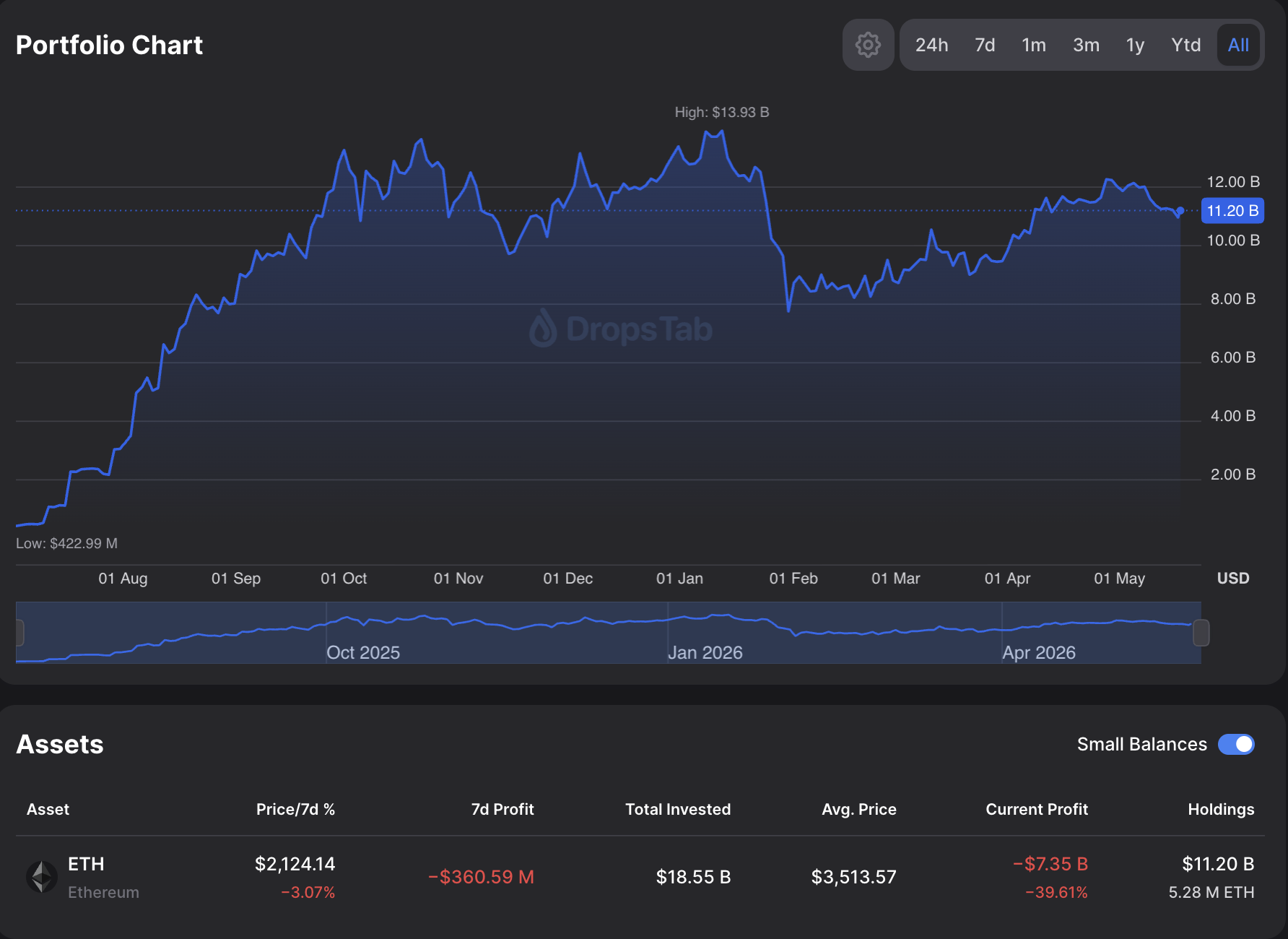
Bitmine’s ETH treasury dashboard. Source: DropStab.COM
Lee continues buying ETH despite mounting losses
Ether has fallen more than 57% from its October 2025 peak near $4,955 on Coinbase, with the sell-off also eroding Ethereum’s market share. ETH’s dominance (ETH.D) has dropped to about 10%, down from roughly 15% in August 2025.
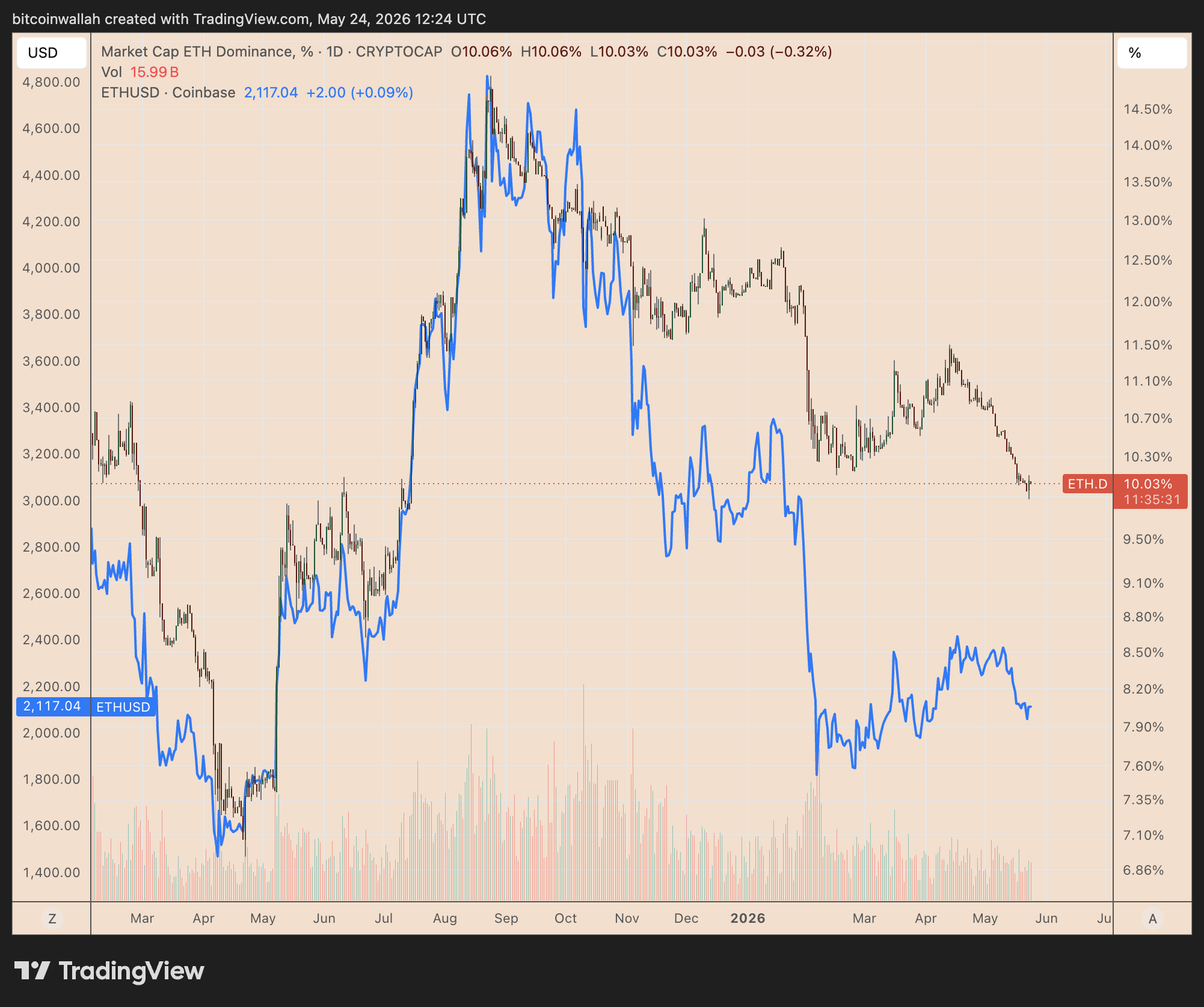
ETH.D vs. ETH/USD daily performance chart. Source: TradingView
BitMine began building its Ethereum treasury in July 2025, days after closing a $250 million private placement to fund the strategy. By July 14, the company disclosed holdings of 163,142 ETH, worth about $500 million at the time.
As of last week, BitMine held 5.28 million ETH, or about 4.37% of Ethereum’s total supply, making it the world’s largest publicly traded Ether treasury company. That means Tom Lee’s firm kept accumulating ETH through the drawdown, even as its losses widened.
Lee has not treated the losses as a reason to retreat. In February, he argued that ETH’s steep drawdown may offer another buying opportunity, citing Ethereum’s history of V-shaped recoveries after 50%-plus declines.
Related: Ether pullback was ‘attractive opportunity’ for 71,672 ETH buy: Bitmine’s Lee
In May, BitMine said it would moderate the pace of its ETH purchases, but not abandon the strategy.
The company still expects to reach its goal of owning 5% of Ethereum’s total supply by December, signaling that Lee’s strategy remains focused on long-term accumulation despite widening paper losses.
Bitmine’s losses may swell to over $10 billion if ETH falls further
BitMine could see its Ethereum paper losses swell to over $10 billion if ETH’s prevailing bearish setup plays out as intended.
As of Sunday, ETH was hovering near the lower trend line of its prevailing rising wedge, a bearish reversal pattern that often signals fading buyer momentum.
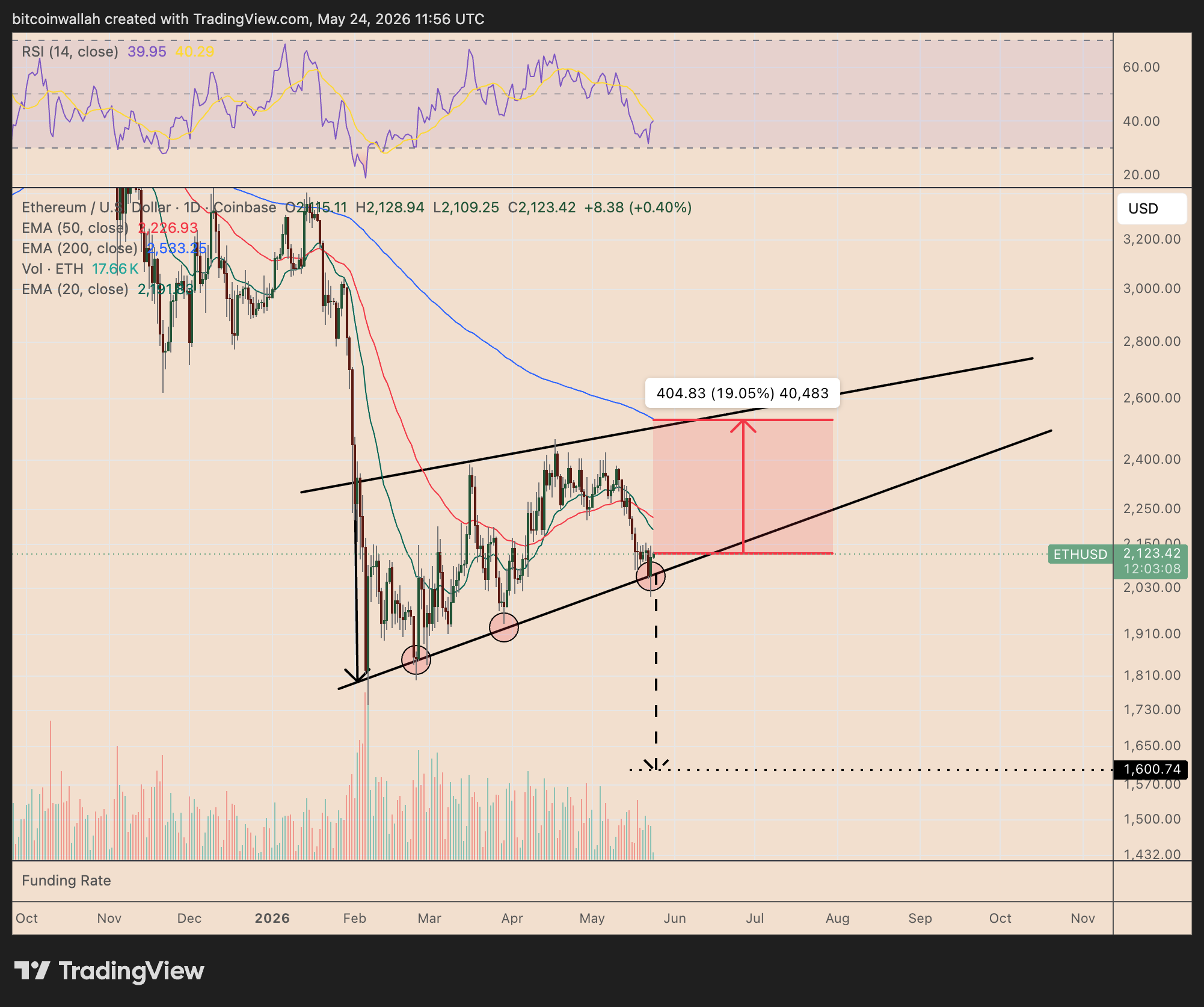
ETH/USD daily chart. Source: TradingView
A confirmed breakdown below that support could trigger a measured move toward the $1,600 area, down about 25% from current prices, by July or August. The target comes from subtracting the wedge’s maximum height from the breakdown point.
Conversely, a decisive rebound from the lower boundary may increase the odds of a 19%–20% rise toward $2,530, aligning with the wedge’s upper boundary and the 200-day exponential moving average (200-day EMA, blue line).
The breakdown scenario would raise BitMine’s unrealized losses to nearly $10.1 billion, based on its reported 5.28 million ETH holdings and average purchase price of $3,513.
Ethereum traders flip bearish
Ether’s bearish technical setup overlaps with several other headwinds, such as recent Ethereum Foundation departures, persistent ETH ETF outflows, and weakening social media sentiment.
ETH sentiment deteriorated sharply in May, with the bullish-to-bearish comment ratio falling from above 2:1 in late April to nearly 1:1, according to on-chain data platform Santiment.
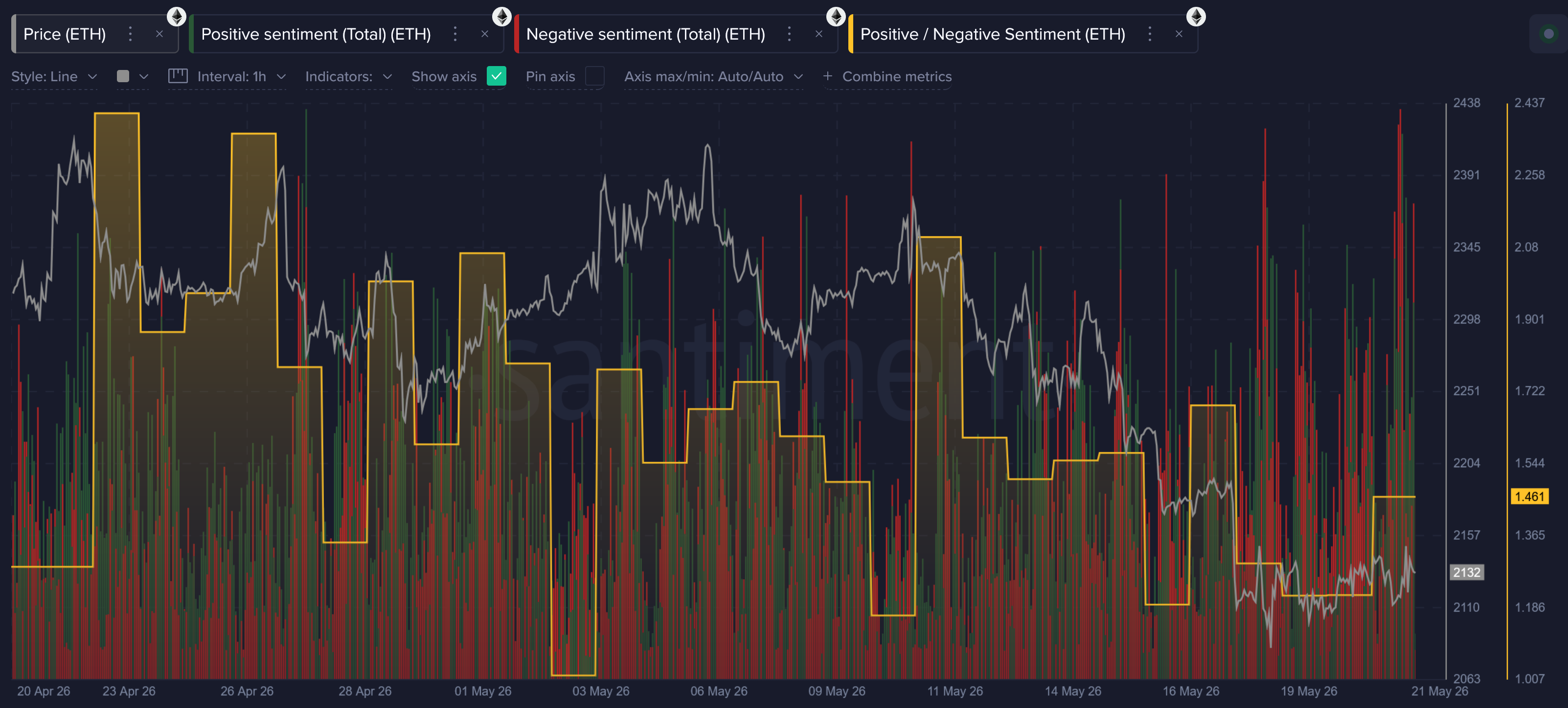
Ethereum social media sentiment. Source: Santiment
“Historically, this kind of deterioration tends to happen when traders lose confidence in an asset’s short-term direction,” it said in a Friday report, adding:
“Crypto traders tend to become highly emotional during periods of underperformance, and ETH has increasingly become viewed as ‘dead money’ compared to assets that have shown much stronger momentum in 2026.”

TLDR:
- Tokenized gold now represents nearly the entire blockchain-based commodity market worldwide.
- a16z Crypto data shows tokenized silver and oil products remain far behind gold adoption.
- Ethereum leads the tokenized asset sector with over $15 billion in on-chain value locked.
- Investors increasingly use tokenized gold for defensive exposure during market uncertainty periods.
Tokenized gold has emerged as the dominant force within the on-chain commodity sector after crossing the $5 billion mark.
Fresh data from a16z Crypto shows investors increasingly moving toward blockchain-based hard assets as macro uncertainty continues reshaping capital allocation strategies across digital markets.
Tokenized Gold Captures Nearly Entire Commodity Market
Tokenized gold now accounts for almost all value within the tokenized commodity sector, according to recent a16z Crypto data. Figures from rwa.xyz placed the broader market near $5.1 billion as of May 2026.
Out of that total, tokenized gold represented approximately $5 billion alone. The remaining commodity categories contributed only a small fraction of overall market capitalization.
Tokenized silver products remained limited, with valuations near $28 million. Gold ETF-linked tokenized exposure, including iShares Gold Trust products, stood at around $14 million.
Meanwhile, tokenized oil, agriculture, and synthetic commodity assets barely registered within the sector. Those categories collectively accounted for less than $3 million in market value.
The report noted that gold’s global liquidity and standardized pricing structure make it naturally suited for tokenization. Blockchain infrastructure also allows faster settlement and easier transferability across digital platforms.
Products like Pax Gold and Tether Gold continue driving adoption by linking physical gold reserves to blockchain-based ownership. Investors can hold tokenized gold directly through crypto wallets without relying on traditional custody systems.
The growing market share also reflects changing investor behavior during periods of elevated economic uncertainty. Traders increasingly seek defensive positioning while maintaining exposure inside crypto-native ecosystems.
Unlike volatile altcoins, tokenized gold offers lower price fluctuations while preserving blockchain liquidity advantages. That combination has strengthened demand among both retail traders and institutional participants.
Tokenized gold has surged to nearly $5 billion in market value, dominating the on-chain commodity sector as investors seek blockchain-based safe-haven exposure.
Ethereum Leads As RWA Adoption Expands Across Markets
The tokenized asset sector has expanded rapidly during the past two years. According to a16z Crypto, the broader real-world asset market recently surpassed $30 billion, excluding stablecoins.
Source: RWA.xyz
Government debt products currently lead the tokenized asset sector with approximately $15.2 billion in value. Asset managers, including BlackRock and Franklin Templeton, accelerated product launches amid rising institutional demand.
Ethereum remains the largest blockchain supporting tokenized assets, hosting nearly $15.7 billion across the sector. BNB Chain, Solana, Stellar, and Liquid Network also maintained sizable shares within the market.
Despite rising valuations, most tokenized commodity products remain lightly integrated into decentralized finance applications. Many investors continue holding tokenized gold primarily as a reserve-style asset rather than active collateral.
The report explained that only a small percentage of tokenized Treasury products currently interact with DeFi protocols.
Categories specifically designed for on-chain utility continue showing stronger composability across decentralized applications.
Tokenized gold adoption also reflects broader changes in crypto markets. Investors are increasingly combining Bitcoin exposure with defensive assets linked to traditional stores of value.
That shift suggests digital asset markets are gradually evolving beyond speculation-focused trading cycles. Blockchain infrastructure now supports both high-growth assets and lower-volatility capital preservation strategies.
Gold now dominates nearly the entire tokenized commodity market as investors rotate toward trusted blockchain-based hard assets.


The Open Network (TON) has confirmed that its legacy Token Bridge will permanently close on September 1, 2026, giving users a final window to recover any bridged assets before access is cut off entirely.
The TON Foundation announced the shutdown of bridge-v3.ton.org and has waived all percentage-based transfer fees for the remaining withdrawal period to ease the transition.
What to Do Before the Bridge Shutdown
Users holding Wrapped Toncoin (TON) on Ethereum or BNB Chain must bridge their tokens back to the TON network using bridge-v3.ton.org before the deadline.
Those holding j-tokens, including jUSDT, jUSDC, jDAI, and jWBTC, in their TON wallets must return them to Ethereum through the same bridge. Any assets left in bridged form after September 1 will become inaccessible.
The TON Foundation confirmed that all previously submitted user transfers have been processed. Additionally, the protocol covered fees for unclaimed transfers.

Toncoin Bridge Shutdown Signals TON’s Next Phase
Bridge oracles will withdraw their staked TON in June 2026, marking the first visible phase of the shutdown. The oracles will actively continue processing transfers until the final date, giving users roughly three months to act.
This development follows a broader period of ecosystem growth. Telegram’s TON takeover reshaped governance and drove a sustained rally, while Pavel Durov’s TON revival attracted both retail and institutional attention to the network.
A recent Telegram CEO TON upgrade further underscored the protocol’s continued development.
The retirement of the legacy bridge reflects the maturity of TON’s native DeFi infrastructure. Users can monitor TON market activity as the network transitions to newer cross-chain solutions.
Users should check their wallets immediately and initiate withdrawals well before the September deadline to account for any network delays.
Overall, this transition highlights the importance of timely user action and careful attention to evolving network infrastructure and updates regularly.
The post Toncoin Bridge Shutdown Confirmed: Users Face Deadline to Recover Funds appeared first on BeInCrypto.

Key Highlights
- Eight consecutive weeks of gains for the S&P 500, with the Dow approaching the 51,000 milestone
- Major quarterly reports expected from Dell, Marvell, Salesforce, Dollar Tree, Burlington, Gap, and Best Buy
- First-quarter earnings expansion hitting 26% annually, marking the strongest growth rate since 2021
- White House announces Iran agreement covering Strait of Hormuz shipping corridor is near completion
- Technology firms positioning workforce reductions as AI-driven evolution rather than budget measures
As May draws to a close, equity markets maintain their elevated position. With the S&P 500 hovering around 7,500, market participants are transitioning from quarterly earnings analysis toward interpreting economic indicators and monitoring potential catalysts.
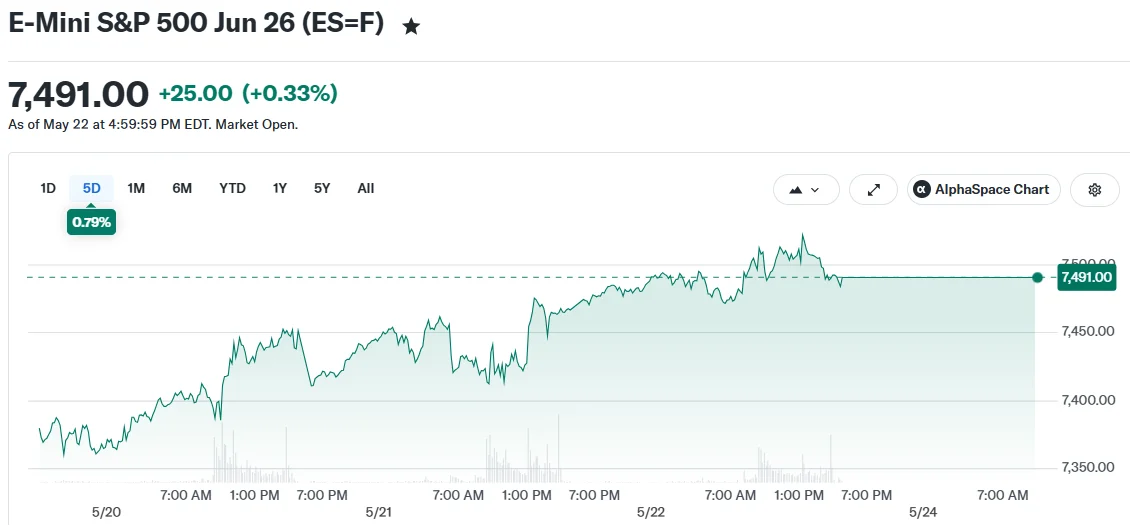
Trading activity will be compressed into four sessions this week due to Monday’s Memorial Day observance, creating a concentrated period of corporate announcements and economic releases.
Major Retailers Report Quarterly Performance
This week delivers a significant wave of first-quarter results from prominent retail chains. Dollar Tree, Burlington Stores, Gap, and American Eagle Outfitters will all unveil their financial performance.
Analysts are particularly interested in understanding how budget-conscious shoppers are navigating elevated fuel costs and persistent inflation pressures. Dollar store chains face intense scrutiny as indicators of spending behavior among price-sensitive demographics.
Best Buy’s Wednesday report carries additional significance as it represents one of the initial quarterly presentations under incoming CEO Jason Bonfig’s leadership, drawing heightened market attention.
The previous week delivered contrasting signals from the retail sector. Walmart provided conservative near-term projections while maintaining annual expectations. Target exceeded forecasts and elevated guidance. Paradoxically, both companies experienced share price declines.
The apparel category delivered more encouraging results. VF Corp, Amer Sports, and Ralph Lauren all exceeded expectations and enjoyed positive stock reactions.
Artificial Intelligence Companies Report Results
Wednesday features earnings from Marvell Technology, whose shares have surged 120% year-to-date. Salesforce also announces results that day, though the company has failed to capitalize on AI momentum with shares remaining more than 30% below year-ago levels.
Dell Technologies presents its quarterly performance Thursday. Company leadership has characterized artificial intelligence as a fundamental business transformation, and market watchers will assess whether management maintains that optimistic perspective.
Synopsys completes the AI-focused reporting calendar with its Wednesday after-hours announcement. The company’s shares gained momentum following Elliott Investment Management’s stake disclosure earlier this year.
These reports follow Nvidia’s previous week earnings, which demonstrated ongoing robust demand for AI infrastructure investments. Bank of America data shows quarterly earnings expansion reached 26% year-over-year, representing the most vigorous growth rate since 2021.
Bank of America analyst Savita Subramanian observed that despite management teams adopting conservative language during earnings presentations, forward guidance exceeded typical levels and historical patterns.
Diplomatic Progress and Economic Indicators
President Trump announced Saturday that negotiations with Iran have reached advanced stages, with an official announcement anticipated shortly. The arrangement reportedly addresses the reopening of the Strait of Hormuz, a critical maritime corridor that has faced disruption since regional hostilities intensified this year.
Financial markets have previously responded to Iran-related announcements, though diplomatic efforts have sometimes faltered. Secretary of State Marco Rubio emphasized that final agreement remains uncertain until officially concluded.
Regarding economic data, the Conference Board publishes its Consumer Confidence Index Tuesday. Thursday brings the Personal Consumption Expenditures index, which serves as the Federal Reserve’s primary inflation gauge.
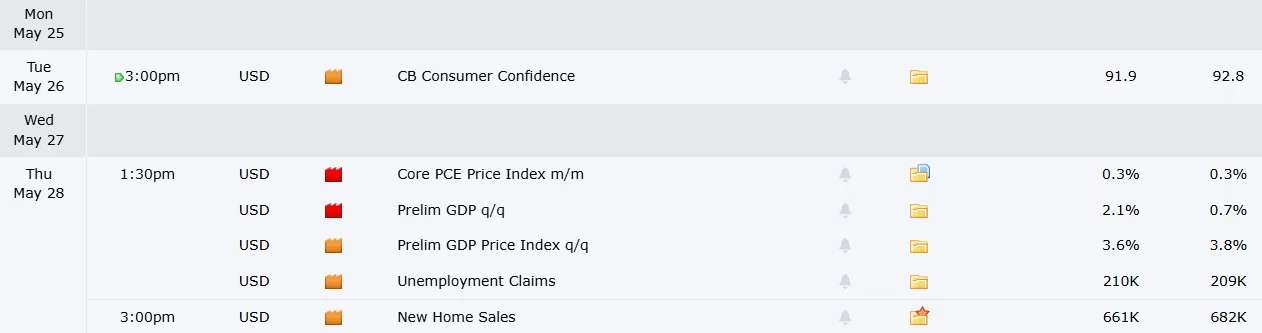
Consumer sentiment weakened in the University of Michigan’s recent survey, yet spending patterns have remained resilient despite pessimistic outlooks — a disconnect that has persisted beyond most projections.
Workforce reductions in the technology sector continue attracting attention. Companies like Meta are characterizing employment adjustments as AI-enabled organizational evolution rather than cost containment. While overall layoff figures remain subdued, the development warrants monitoring as artificial intelligence adoption extends beyond technology industry pioneers.
Crypto World
A massive $1 trillion hidden market is waiting to be unlocked in bitcoin, says new report


Crypto lender Ledn says the consumer bitcoin-backed loan market could grow nearly 300-fold to as much as $1 trillion within the next decade, as demand for borrowing against digital assets far outpaces actual usage.
The forecast accompanied new research conducted by consumer insights firm Protocol Theory, which surveyed 1,244 cryptocurrency holders across the U.S. and Australia between February and March this year. The study found that while 88% of respondents said they would consider using a crypto-backed loan or credit product, only 14% currently do so, revealing what Ledn described as a “6-to-1 consideration-to-adoption gap.”
Ledn estimates the bitcoin-backed consumer lending market currently stands at roughly $3 billion. By comparison, Galaxy Research previously estimated the broader crypto lending market reached an all-time high of $73.6 billion in the third quarter of 2025.
The sector, however, still carries the scars of the 2022 crypto credit collapse, when major lenders including Celsius Network, Voyager Digital and BlockFi either filed for bankruptcy or were forced into restructuring after crypto prices plunged and liquidity evaporated. The failures wiped out billions of dollars in customer funds and severely damaged trust in centralized crypto lending models, prompting regulators globally to tighten scrutiny of the sector. Ledn’s report suggests rebuilding that trust remains the industry’s biggest challenge.
“The demand side of the equation is solved,” Ledn co-founder Mauricio Di Bartolomeo said in a statement. “What’s still catching up is the trust infrastructure that gives borrowers the confidence to act.”
The report argues that crypto-backed lending remains underdeveloped relative to the scale of digital asset ownership globally. The global cryptocurrency market capitalization stood at approximately $2.68 trillion as of May 2, according to data cited in the research.
The findings suggest the main obstacles preventing wider adoption are not lack of awareness or understanding, but confidence-related concerns. Among non-borrowers, the most commonly cited barriers were worries about managing crypto price volatility, liquidation risk and regulatory uncertainty surrounding crypto-backed loans.
Respondents also said platform reputation, transparency around loan terms, custody safeguards and risk management practices mattered more than rates or product features when selecting a lending provider.
The report frames crypto-backed borrowing as a digital asset equivalent of securities-backed lending or home equity borrowing in traditional finance: accessing liquidity without selling a long-term asset position.

TLDR:
- Ethereum price remains near $2,000 while controlling 55% of tokenized assets across on-chain finance networks globally
- Over 39.1M ETH is staked, with an additional 3.49M ETH awaiting validation entry amid tightening supply conditions
- Short liquidation clusters above $2,100 increase volatility risk as leverage resets across derivatives markets rapidly
- Ethereum price structure shows reduced downside liquidity, limiting cascading sell-offs while compression continues forming
Ethereum price continues to trade under subdued sentiment even as underlying network activity shows sustained strength across institutional and decentralized finance channels.
Market behavior reflects a widening gap between valuation pressure and on-chain utility, with capital flows remaining structurally active across staking and tokenized asset systems.
Institutional dominance and structural positioning in the Ethereum price
Ethereum controls nearly 55% of tokenized assets distributed across blockchain networks, reinforcing its position within digital financial rails.
Its stablecoin supply also remains heavily concentrated, accounting for roughly 50% of issuance across ecosystems.
Despite trading pressure, the Ethereum price continues to reflect deep integration within decentralized finance, where it holds about 51% of total value locked.
Stablecoin transaction share remains near 35%, while decentralized exchange activity contributes close to 20% of volume share.
These figures point to sustained network utility even as price action remains muted around the $2,000–$2,200 range.
Institutional flows linked to tokenized treasuries and real-world assets continue to interact with Ethereum-based infrastructure.
Market data suggests that Canton-linked rails and similar systems still rely on Ethereum’s liquidity depth for broader settlement efficiency.
This positioning keeps the Ethereum price tied more to capital allocation trends than retail-driven volatility cycles.
Staking activity further tightens circulating supply conditions, with approximately 39.1 million ETH staked and an additional 3.49 million ETH in validator entry queues.
Entry delays extending toward 60 days indicate sustained demand for yield-bearing exposure despite weak short-term price momentum.
Accumulation address activity also recorded its strongest inflows since January, signaling ongoing spot demand even during consolidation.
Ethereum price, therefore, continues operating within a structure where supply constraints coexist with persistent institutional participation.
Liquidation structure and volatility expansion around the Ethereum price
Ethereum price derivatives markets show a notable shift in leverage composition following recent market resets. Downside liquidation clusters have thinned significantly, reducing the probability of large cascading sell-offs below the $2,000 threshold. This reflects a broad reduction in aggressive long positioning across perpetual futures markets.
At the same time, short liquidation density has increased above current Ethereum price levels, particularly around the $2,100 to $2,300 zone.
These clusters create conditions where moderate upward movement can trigger forced buybacks, adding reflexive pressure to price action. Such mechanisms often intensify volatility when liquidity is unevenly distributed.
Market structure data indicate that the Ethereum price is transitioning into a compressed volatility regime. Reduced leverage on both sides has left the order book thinner, meaning smaller flows can generate larger directional moves. This setup typically emerges after extended periods of range-bound trading and position liquidation cycles.
Traders continue to position defensively as sentiment remains cautious across broader crypto markets. The divergence between positioning and fundamentals continues to define current market behavior.
With leverage reset across most derivatives venues, the Ethereum price now sits in a sensitive equilibrium where liquidity imbalances can drive rapid directional expansion.
Market participants remain focused on how short exposure above resistance zones interacts with any emerging upward pressure.
TLDR:
- Foreign investors net sold 91.13 trillion won on the Kospi yet ownership rose to a record 39.43% of the market cap.
- Strategic retention of AI and memory chip stocks like Samsung and SK Hynix inflated total foreign portfolio values.
- Retail investors absorbed heavy foreign outflows through direct purchases and leveraged ETFs, raising correction risks.
- Korea’s MSCI Emerging Markets weighting jumped to 21.7%, signaling potential passive fund inflows ahead of the June review.
Korean stocks foreign investors are abandoning at the fastest pace in recorded history, yet South Korea’s Kospi continues pushing to fresh all-time highs — powered by semiconductor giants and a retail buying wave unlike anything the market has seen before.
Global Funds Stage Largest Stock Exit in Market History
Foreign investors have now offloaded more than 112 trillion won, equivalent to over $74 billion, in Korean equities since the start of 2026.
That figure alone makes this the most aggressive foreign exit from any single Asian equity market in recorded history.
March 2026 marked the sharpest single-month selloff yet. Overseas investors dumped 43.5 trillion won, or approximately $29.5 billion, in Korean stocks within that month alone. This number broke every previous monthly record by a significant margin.
Samsung Electronics and SK Hynix bore the heaviest outflows, with global funds cutting exposure to both chipmakers despite their strong earnings trajectory.
Then in May, selling pressure surged again. Foreign investors pulled $13.2 billion from Korean equities in a single week.
This sent the Kospi Volatility Index to near-record levels and briefly triggered the exchange’s sidecar mechanism after Kospi 200 futures dropped 5% in rapid succession.
Kospi Defies the Exodus as Retail South Koreans Bet Everything
Despite the historic scale of foreign outflows, the Kospi has continued hitting fresh all-time highs, crossing both the 7,000 and 8,000-point thresholds in 2026.
The index’s resilience traces directly to one force — South Korean retail investors stepping in with extraordinary aggression to absorb every wave of foreign selling.
What makes this retail surge different is the lengths individual investors are going to fund their positions. Reports indicate South Koreans are cashing out life insurance policies and taking out personal loans specifically to purchase equities, channeling borrowed capital into a market already running at record valuations.
Citigroup strategists flagged the situation explicitly, noting the Korean market appeared considerably more overbought than U.S. equities.
He is cutting half their bullish Korea exposure as a precautionary measure. The bank pointed to retail exuberance and margin-driven buying as the primary factors elevating downside risk if sentiment shifts.
Korea’s weighting in the MSCI Emerging Markets Index rose to 21.7% from 15.4% following MSCI’s May review. Analysts assigned a 60% probability to a positive outcome in the June developed market classification review.
That outcome, if realized, could redirect passive fund flows back into Korean equities — offering a potential counterweight to the relentless foreign selling that has defined 2026 so far.
Blockstream CEO Adam Back has renewed his long-running criticism of altcoins and memecoins, saying market efficiency may finally be catching up with assets he views as weak.
Summary
- Adam Back said efficient markets may eventually price many altcoins and memecoins near zero.
- Bitcoin dominance near 59%, keeping pressure on broader altcoin market rotation this month.
- Nearly 40% of altcoins traded near all-time lows, showing weak risk appetite outside Bitcoin.
Back wrote on X that he had expected the efficient market hypothesis to push altcoins toward “$0.” He added that he made a similar call about a decade ago and was surprised it had taken this long for markets to catch up with “air tokens, altcoins, memecoins etc.”
The efficient market hypothesis is the idea that asset prices reflect available information. Back used that framing to argue that many tokens without clear long-term value may eventually lose market support.
Back’s comments reflect a view often held by Bitcoin-focused investors. They argue that Bitcoin’s fixed supply, security model, and long record make it different from other crypto assets.
Bitcoin dominance keeps pressure on altcoins
The warning comes as Bitcoin continues to absorb a large share of crypto market attention. Crypto.news reported that the total crypto market cap was around $2.7 trillion, with Bitcoin dominance near 59%.
High Bitcoin dominance often limits altcoin momentum. When capital stays concentrated in Bitcoin, smaller tokens tend to see shorter rallies and sharper drawdowns.
Crypto.news also reported in December that altcoins were still below key long-term moving averages while Bitcoin dominance stayed near the 58% to 59% range. That analysis said capital had not yet rotated strongly into the broader altcoin market.
Memecoins face a tougher test
Back also mentioned memecoins, a market segment often driven by online attention rather than revenue, protocol fees, or direct utility. These tokens can move quickly during risk-on phases but often fall harder when liquidity tightens.
Memecoins are usually inspired by internet memes or trends and are known for volatility. That profile makes them more exposed when traders reduce risk.
The market still supports some large memecoins. crypto.news data showed the meme token category with a market cap above $34 billion, led by names such as Dogecoin, Shiba Inu, and Pepe.
That does not settle the long-term value debate. It shows that memecoins still have active liquidity, even as critics argue many lack durable demand.
Altcoin season still needs confirmation
crypto.news reported in March that nearly 40% of altcoins were trading near all-time lows. The same report said Bitcoin dominance remained high, meaning rotation into altcoins had not yet clearly started.
That context makes Back’s comments timely. Weak altcoin breadth gives Bitcoin-focused investors more room to argue that the market is separating stronger assets from weaker tokens.
A full altcoin recovery would likely need Bitcoin to stabilize, dominance to fall, and risk appetite to improve. Without those conditions, traders may continue to favor Bitcoin and a smaller group of liquid large-cap tokens.
TLDR:
- Whales match 2025 BTC buying in five months, showing accelerated absorption across 2026 cycle behavior trends
- Accumulation began near 2023 lows and extends through elevated BTC price zones without major distribution phases emerging
- Exchange reserves continue falling as ETF demand and custody flows reduce available Bitcoin liquidity across markets
- Order book depth weakens on both sides, increasing the sensitivity of the BTC price to marginal demand and supply shifts
Bitcoin whale accumulation is intensifying across on-chain markets as large holders continue absorbing available Bitcoin supply into 2026.
The trend reflects sustained structural demand from deep-pocket participants even as BTC trades within elevated but uncertain liquidity conditions.
Whale Flow Expansion and Multi-Cycle Positioning
Large holder behavior in Bitcoin has shifted sharply in 2026, with on-chain data showing a rapid increase in BTC absorption across major wallet clusters.
The pace of buying now mirrors full-year 2025 activity within only five months, signaling accelerated positioning.
This phase did not begin with recent price strength but traces back to accumulation zones formed near the 2023 cycle bottom.
Since then, inflows have remained consistent across both bullish and corrective environments, showing limited evidence of sustained distribution from high-balance wallets.
Wallet segmentation data shows participation expanding beyond traditional whale cohorts into medium-term dormant addresses.
This layered participation suggests coordinated exposure building rather than short-term trading rotations typically seen in retail-driven cycles.
Even during periods of elevated valuation, large holders have maintained exposure instead of reducing positions. This divergence from previous cycle behavior reflects a structural shift in how long-duration capital engages with Bitcoin markets.
The persistence of this flow pattern indicates that large entities are operating under extended horizon frameworks tied to macro liquidity expansion, ETF participation, and declining exchange float.
Liquidity Compression and Structural Market Tightening
Market structure data shows a continued decline in exchange-held Bitcoin reserves, pointing to ongoing migration toward custody and long-term storage.
This reduces available supply in active trading environments and strengthens the impact of marginal demand shifts.
Order book depth across major venues shows thinning liquidity on both bid and ask sides. In such conditions, price responsiveness increases, as fewer resting orders are required to move the market significantly.
ETF inflows and institutional participation continue absorbing circulating Bitcoin, reinforcing supply-side compression across multiple market layers. Sovereign-linked and corporate treasury demand further reduces freely tradable inventory.
At the same time, long-term holders show minimal distribution activity even during higher price ranges. This lack of sell-side expansion adds pressure to an already-tightening float structure across exchanges.
Within this environment, large-scale BTC absorption acts as a structural driver of liquidity reduction. As supply concentrates into fewer hands, market sensitivity increases, setting conditions where future price movement may respond sharply to demand shocks.
During a very turbulent and painful week for most exchange-traded funds tracking the largest digital assets, those following XRP’s performance continued to see only green.
At the same time, though, the underlying asset failed to break out and even dipped to a multi-month low before it posted a minor recovery today.
Ripple ETFs Defy the Trend
The previous business week saw notable net inflows for the spot XRP ETFs of just over $22 million. This extended the weekly streak that began in May, making them three in a row now. Moreover, the last single day of more outflows than inflows, according to SoSoValue data, was on April 30.
While $22 million doesn’t sound as impressive as some of the previous Ripple ETF inflows, it’s worth noting that it came during a week in which the funds tracking BTC and ETH bled out heavily. As reported yesterday, the spot Bitcoin ETFs recorded their worst trading week since late January, with over $1.25 billion leaving the funds.
The Ethereum ETFs saw a net withdrawal of $216 million, which was slightly less than the previous week’s $255 million. Moreover, the ETH ETFs haven’t seen a single day in the green since May 8.
In contrast, the ETFs tracking SOL gained over $15.5 million, while the two HYPE funds attracted over $72 million as the underlying asset outperformed and rocketed to a new all-time high of just over $63.
XRP Price Fails to Capitalize
While the spot Ripple ETFs saw only green in the past week, XRP’s price couldn’t go past $1.42. After last week’s rejection at $1.55, the token headed south immediately and began the new business week at $1.42. It continued its descent alongside the rest of the market and culminated yesterday with a massive price drop to under $1.30.
This became its lowest price tag in over a month and a half, and meant that XRP had shed 15% of its value since the May 17 surge to $1.55. Nevertheless, it rebounded in the past 24 hours, most likely due to the positive developments on the US-Iran war front, and now sits close to $1.35.
Ali Martinez, though, warned that XRP has broken out of its rising trend line of a symmetrical triangle on the daily chart. He predicted another nosedive to around $1.14 if the token fails to reclaim the $1.40 level soon.
The post Ripple ETFs Defy Mass Exodus Trend but XRP Price Fails to Capitalize appeared first on CryptoPotato.

Uranium Royalty: M&A To Asymmetric Upside

Tom Lee’s Ethereum Portfolio Sits on $7.35B Loss as ETH Price Slumps

French Open 2026 results: Marta Kostyuk dedicates win to Ukraine after Russian strikes on her homeland


-

 Crypto World3 days ago
Blockchain.com files with SEC for U.S. IPO
-

 Fashion2 days ago
Holiday Weekend Open Thread – Corporette.com
-

 Business2 days ago
Dell Technologies DELL Stock Surges 15% on AI Server Momentum and Analyst Upgrades in 2026
-
 Crypto World2 days ago
Bitcoin Accumulation Weakens as BTC Realized Losses Hit $600M
-

 Crypto World2 days ago
Space X IPO Is ‘Bad News’ for Tech Stocks: But What About Bitcoin?
-

 Crypto World1 day ago
Robinhood crypto COO Tanya Denisova exits
-

 Politics2 days ago
Makerfield: a tale of two social-media histories
-

 Tech3 days ago
WhatsApp ads could make Irish debut after discussions with DPC
-

 Crypto World2 days ago
AI infrastructure race heats up as IREN pitches full-stack strategy, WhiteFiber lands $160M deal
-
 Tech2 days ago
A 0.12% parameter add-on gives AI agents the working memory RAG can’t
-
 Crypto World3 days ago
MicroStrategy’s Saylor Says Miners No Longer Set Bitcoin Price, Another Force Has Taken Over
-

 Business2 days ago
Trump Invests $1M-$5M in Kura Sushi USA Chain With 27 California Locations
-
Crypto World6 days ago
Revolut Launches Dogecoin Debit Card Across UK and EU
-

 Tech3 days ago
You Can Now Add ChatGPT To PowerPoint
-

 Sports3 days ago
2026 CJ Cup Byron Nelson leaderboard: Brooks Koepka finds putting stroke in Round 1
-
 NewsBeat3 days ago
Charity run by Reform leader Malcolm Offord accused of ‘law breaking’ over Scottish registration
-

 Crypto World2 days ago
Trump Media’s Bitcoin Stash Shrinks Again as 2,650 BTC Lands on Crypto.com
-
Business2 days ago
Goldman Sachs reinstates Ageas stock coverage with neutral rating
-

 Crypto World6 days ago
SEC to propose tokenized stock framework as Wall Street efforts deepen: Bloomberg
-

 Politics7 days ago
SECOND secret Israeli base discovered in Iraqi desert
You must be logged in to post a comment Login