

Crypto World
Perpetual DEX Platforms Gain Ground as CEX Volume Drops in 2026


TLDR:
- Top 11 CEX platforms saw monthly average perp volume fall from $7.11T in 2025 to $4.69T in early 2026.
- Perpetual DEX volume rose from $1.50T in 2024 to $6.38T in 2025, with monthly averages still climbing in 2026.
- The perp DEX-to-CEX volume ratio peaked at 13% before cooling to 10% in April 2026, up from 3% in January 2025.
- GMTrade reached $42B in 30-day volume, becoming the top Solana perp DEX outside of Hyperliquid in 2026.
Perpetual DEX platforms are drawing increased attention as centralized exchange dominance shows signs of softening.
Data from early 2026 points to a market shift, with decentralized derivatives venues steadily gaining volume share. Meanwhile, CEX perpetual trading continues to shrink from its 2025 highs.
The competitive landscape is reshaping how traders access leverage, with infrastructure and liquidity retention emerging as the new battlegrounds across the crypto derivatives space.
CEX Perpetual Volume Faces a Steep Decline
Centralized exchanges still command a massive share of perpetual trading activity. The top 11 CEX platforms recorded $85.3 trillion in combined volume throughout 2025. Binance and OKX lead the pack, holding 33% and 15% market share respectively entering 2026.
However, the momentum is clearly slowing. Monthly average perp volume across the top 11 CEX platforms fell from $7.11 trillion in 2025 to $4.69 trillion in the first four months of 2026.
That marks a 34% decline, tied closely to market choppiness and forced liquidations following the October 10 leverage flush.
Open interest numbers tell a similar story. Total OI opened 2025 at $120 billion but sat at just $99 billion by April 30, 2026. That figure sits more than 50% below the $210.02 billion peak recorded before the market downturn.
Crypto analyst Okada_Research noted on X that CEX dominance is starting to leak while DEX platforms slowly absorb the flow.
Some exchanges, like BingX and MEXC, responded by aggressively listing hundreds of perpetual pairs to chase long-tail demand. That approach may be losing its edge over time.
Perpetual DEX Platforms Build Market Share
On the decentralized side, growth has been consistent. The top 12 perpetual DEX platforms recorded $6.38 trillion in volume across 2025, up sharply from $1.50 trillion in 2024. Monthly average volume also climbed from $531.65 billion in 2025 to $611.57 billion in the first months of 2026.
The perp DEX-to-CEX volume ratio moved from 3% in January 2025 to a peak of 13% before settling at 10% in April 2026.
Hyperliquid remains the dominant force in this space and largely rewrote user expectations for what a perpetual DEX could offer.
Still, other platforms are attracting attention. GMTrade grew from zero to $42 billion in 30-day volume, becoming the leading perp DEX on Solana outside of Hyperliquid. Lighter is building around orderbook efficiency and is now pushing toward RWA perpetuals as well.
Aster DEX, Phoenix Trade, Variational, Extended, and NadoHQ have each carved out niche positions through distinct product angles and airdrop campaigns.
These platforms still need to prove staying power following their token generation events later this year.


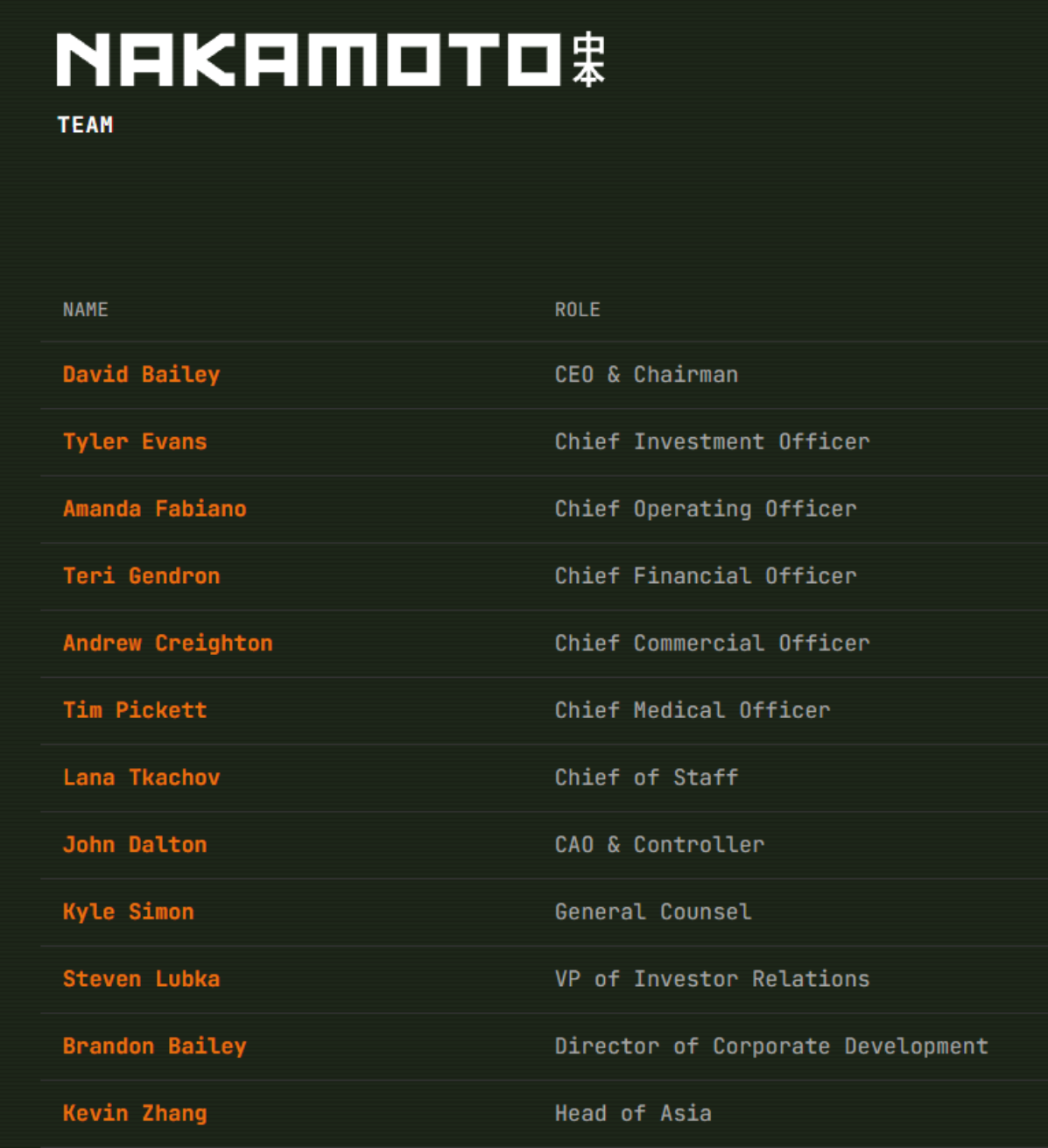
Nakamoto Inc. (NAKA) has defended why a Bitcoin (BTC) treasury company keeps a Chief Medical Officer on payroll. The role went viral as a symbol of what skeptics call Digital Asset Treasury (DAT) excess.
Analysts point to the role alongside NAKA’s 99% share collapse and roughly $200 million debt load. CEO David Bailey responded that the medical position exists for reasons rooted in the company’s reverse merger origin.
Why a Bitcoin Treasury Firm Keeps a Doctor on Staff
NAKA began as KindlyMD, a Utah-based pain management provider. It listed on Nasdaq before merging with Bailey’s private Nakamoto Holdings in 2025.
Tim Pickett, who founded KindlyMD, stayed on as Chief Medical Officer to run the legacy healthcare subsidiary.

“We have a chief medical officer because we merged with a healthcare company and maintaining an operating business is a Nasdaq listing requirement,” explained David Bailey, Nakamoto’s CEO and chairman.
The healthcare arm generates the bulk of Nakamoto’s modest recurring revenue and helps the company avoid shell-company classification.
It is one of several medical firms rebranded into crypto vehicles in 2025.
Follow us on X to get the latest news as it happens
Dilution and Losses Fuel the Backlash
The CMO became a punchline as wider concerns intensified. Analyst Justin Bechler highlighted Nakamoto’s Q1 2026 10-Q, which reported a $238 million net loss.
Operating revenue was $2.3 million while insiders received $7.3 million in compensation.
The company also acquired BTC Inc. and UTXO Management from Bailey and CIO Tyler Evans.
The deal diluted public holders by 58% in one quarter, fueling shareholder dilution concerns across the Bitcoin treasury sector.
Shareholders later authorized a 1-for-40 reverse stock split to restore Nasdaq’s $1 minimum bid compliance. The split took effect May 22, lifting NAKA from around $0.16 to roughly $6.
It also compressed 696 million outstanding shares into 17.4 million.
The first insider lock-up tranche releases August 20, and the Q2 10-Q lands the same month. Both will test whether Bitcoin 2026 conference revenue can justify the goodwill from the BTC Inc. acquisition.
Investors watching ongoing DAT sector losses and Nakamoto’s earlier BTC sale are focused on the operating line.
The 5,058 BTC headline holdings matter less for the next two quarters.
The post A Bitcoin Treasury Company Has a Doctor on Staff, But Why? appeared first on BeInCrypto.
SOL fell 33% in the first quarter of 2026 to close at around $83, but Messari’s Q1 State of Solana report tells a story that’s harder to dismiss than the price chart would suggest.
While dollar-denominated numbers dropped across the board, the network set new records for daily transaction volume, grew its real-world asset market cap to over $2 billion, and barely budged on validator revenue.
Record Activity, Shrinking Prices
The headline figure from the report was the new all-time high for average daily non-vote transactions: 112.6 million, up 50% from the previous quarter and 15% above the previous record set in Q2 2025.
It means that more transactions happened on Solana every day in Q1 than at any point in the network’s history, which clearly sits at odds with the price decline. Meanwhile, Chain GDP, which is Messari’s term for total application revenue, stayed almost flat at $342.2 million, fractionally above Q4 2025’s $341.8 million.
Per the report, Pump.fun is still the largest single revenue source at $124.7 million, an improvement of 17% quarter-over-quarter. In second place was Axiom, a trading app, which recorded a 36% jump, raking in $42.4 million.
However, the most dramatic mover was a launchpad that lets users share trading fees with social media accounts, called Bags. Its revenue went up 1,347% to $11.5 million after meme coins tied to open-source AI projects generated intense trading activity in January.
That momentum didn’t hold, with Bags’ revenue dropping 85% month-over-month into February, making the episode another example of how quickly new activity cycles through Solana’s application layer.
On the other hand, DeFi TVL fell 22% quarter-over-quarter to $6.16 billion, a drop that tracks almost directly with SOL’s price dip rather than with any meaningful outflow of users. Solana’s share of total DeFi TVL moved barely at all, going from 6.9% to 6.7%, while Kamino reclaimed the top protocol spot with $1.72 billion, edging Jupiter at $1.69 billion.
Drift’s performance was affected by a $285 million exploit attributed to a sophisticated social engineering operation linked to North Korean state-affiliated threat actors.
Looking at Real Economic Value, which is basically the fees and MEV tips paid to validators, the report shows it fell just 1% to $89.5 million. That figure placed Solana second among all networks, only behind Hyperliquid’s $156 million.
RWAs Take the Lead
If one story defined Q1 beyond the bear market backdrop, it was real-world assets. On Solana, the market saw its value grow 43% quarter-over-quarter to $2.01 billion.
BlackRock’s BUIDL tokenized money market fund doubled to $525.4 million after Anchorage Digital added custody support, with the latter holding around 81% of the total supply on-network by quarter’s end.
Meanwhile, Ondo Finance launched 200-plus tokenized US stocks and ETFs on Solana, including a same-day tokenization of BitGo stock on the date of the company’s NYSE IPO.
Finally, while the stablecoin market cap on the platform remained at just under $15 billion, the composition changed. USDC fell 21% to $7.83 billion but remains the largest at 53% of the total, while USDT rose 34% to $2.89 billion.
At the same time, World Liberty Financial’s USD1 climbed 473% to $883.5 million, largely on the back of Binance reallocating customer holdings to Solana.
The post Report: Solana Activity Hits Record High Despite SOL’s 33% Q1 Drop appeared first on CryptoPotato.
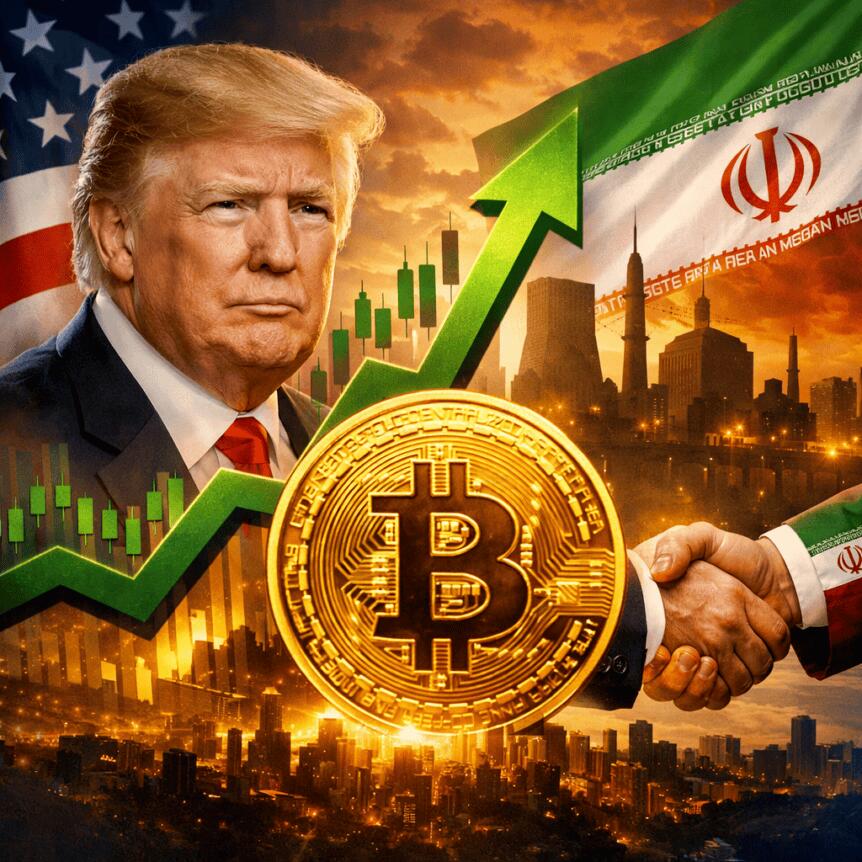
Cryptocurrency markets staged a notable recovery, adding roughly $75 billion to total market capitalization after a Saturday update from U.S. President Donald Trump suggested progress toward a peace agreement with Iran and regional partners. The president’s remarks, published on Truth Social, described an agreement that was “largely negotiated” and subject to finalization among the United States, Iran, and a coalition of Middle Eastern states.
The post named Saudi Arabia, the United Arab Emirates, Qatar, Pakistan, Turkey, Egypt, Jordan and Bahrain as participants in the talks. It also carried a bold assertion about finalization and the future opening of the Strait of Hormuz, a strategic chokepoint whose status has historically influenced global energy costs and risk appetite across asset classes, including crypto.
“An agreement has been largely negotiated, subject to finalization between the United States of America, the Islamic Republic of Iran, and the various other countries, as listed,” he said. His post said: “Final aspects and details of the deal are currently being discussed and will be announced shortly. In addition to many other elements of the agreement, the Strait of Hormuz will be opened.”
The prospect of reopening Hormuz is tied closely to energy price dynamics, which have long weighed on high-risk assets such as cryptocurrencies. In recent weeks, investors have fretted that energy-market volatility would spill over into risk assets, helping explain a dampened crypto mood even as a ceasefire agreement in the region held tentative ground.
Key takeaways
- Crypto markets gained roughly $75 billion in total market capitalization following Trump’s peace-talk update, signaling renewed risk-on sentiment on negotiations’ potential?
- The proposed deal would involve the United States, Iran and a bloc of Middle Eastern countries, with an emphasis on reopening the Strait of Hormuz to improve energy flow and prices.
- Bitcoin experienced intra-day volatility, slipping to a five-week low near $74,250 on Saturday before bouncing toward the $77,000 area, then easing to around $76,800, with ongoing debates about macro and energy-linked risk appetite influencing moves.
- Bitcoin remains substantially below its October peak, down about 39%, highlighting the still-fragile risk-off backdrop even as headlines shift sentiment.
- Concurrent remarks from regional and U.S. officials underscored ongoing political complexity, with seen calls for denuclearization and open straits echoing through markets’ mood.
Geopolitics, energy sensitivity and crypto appetite
The Saturday update arrives at a moment when the broader ceasefire between Washington and Tehran has proved fragile since early April, despite several attempts to formalize a durable agreement. The geopolitical tension there has consistently fed energy-price volatility, a well-known driver of crypto risk appetite. By signaling a pathway to open strategic waterways like the Strait of Hormuz, Trump’s message touches on a key fulcrum for both traditional markets and digital assets.
During a visit to India, U.S. officials reiterated that security guarantees and non-proliferation considerations remain central to any eventual accord. The communications underscored the long arc of negotiations and the precarious path to finalization, a backdrop that has historically tempered appetite for high-volatility assets such as Bitcoin and altcoins.
From a market structure perspective, a less volatile energy backdrop could help soothe risk-off pressures that have weighed on crypto equities and tokens in recent months. If Hormuz operations are stabilized and energy shipments normalize, investors may reallocate capital toward higher-risk assets, including broadly diversified crypto bets, though the exact timing and scale of any shift remain uncertain.
Bitcoin price action and the broader market context
Bitcoin’s price action reflected a risk-off-to-risk-on tug-of-war around the weekend. The weekly low near $74,250 marked a five-week bottom as traders weighed geopolitical headlines and macro indicators. In early Sunday trading, BTC touched the 50-day exponential moving average around $77,000, a level traders often see as a short-term gauge of trend resilience. The price subsequently eased to roughly $76,800 as liquidity dynamics and risk sentiment evolved through the session.
From a longer-term perspective, Bitcoin remains significantly below its late-October peak, with a drawdown exceeding 39%. The current bounce has not yet signaled a durable reversal, and analysts continue to watch major support and resistance thresholds around $70,000 and the $80,000 zone for any decisive directional shift.
Brokerage and exchange commentary during the period has underscored that the macro environment—comprising energy price trajectories, global inflation readings, and the pace of traditional market equities—continues to color crypto flows. While the weekend rebound suggests a temporary relief rally tied to geopolitical headlines, investors remain cautious about the durability of any move higher without clearer signs of policy alignment or more concrete progress toward regional de-escalation.
What to watch next
Markets will be keenly attuned to further developments around the Iran talks and any government disclosures about the status of negotiations. The exact terms, sequencing of steps, and verification mechanisms will shape how energy markets respond, which in turn feeds back into crypto demand and liquidity. Traders should monitor:
- Official confirmations on the terms of any peace agreement and the timeline for implementing open maritime routes.
- Energy price trajectories and any stabilization in shipping costs that could alter risk appetite across asset classes.
- Comments from policymakers and central banks that could recalibrate inflation expectations and liquidity conditions.
- Technical levels for Bitcoin and major altcoins, especially near the $70,000 support zone and the $82,000–$85,000 resistance band that has historically constrained upside momentum.
In the near term, investors will weigh the potential for a de-escalation in Middle East tensions against the durability of a broader macro recovery. The outcome could determine whether crypto markets resume a more pronounced upcycle or revert to a cautious stance as traders reassess risk premiums across asset classes.
As always, readers should seek balanced signals: geopolitical easing can reduce volatility, but structural shifts in energy markets and global liquidity will ultimately shape how quickly crypto markets regain momentum. The coming weeks will be telling as more details emerge from the negotiating table and as markets parse any credible milestones toward a finalized accord.
For now, the week’s chatter underscores a persistent truth for crypto traders: geopolitical risk remains a meaningful driver of sentiment, even as technologists, investors, and miners continue to pursue longer-term narratives around adoption, infrastructure, and regulation. Watch how policymakers translate words into actions, and how energy-market signals align with risk appetite to determine the path forward for digital assets.
Cryptocurrency markets have recovered around $75 billion in total capitalization following a progress update on Saturday from US President Donald Trump on a peace agreement with Iran.
Trump said a deal has been “largely negotiated” among the United States, Iran, and several Middle Eastern countries, in a post on Truth Social on Saturday.
The countries included in the negotiations were Saudi Arabia, the United Arab Emirates, Qatar, Pakistan, Turkey, Egypt, Jordan and Bahrain.
“An agreement has been largely negotiated, subject to finalization between the United States of America, the Islamic Republic of Iran, and the various other countries, as listed,” he said. His post said:
“Final aspects and details of the deal are currently being discussed and will be announced shortly. In addition to many other elements of the agreement, the Strait of Hormuz will be opened.”
The deal also includes reopening the Strait of Hormuz. The closure of the key waterway has caused global energy prices to spike and has weighed on the cost of living in many nations. It has also hit investments in high-risk assets such as crypto, which have retreated recently.
Three months of war takes its toll
Trump’s announcement comes amid a fragile ceasefire that began in early April with several failed attempts at reaching an agreement between the US and Iran.
US Secretary of State Marco Rubio reiterated Trump’s demands for a peace deal during a visit to India on Saturday. “Iran can never have a nuclear weapon. The straits need to be open without tolls. They need to turn over their enriched uranium,” he said.
Related: Warsh will cut rates, despite consensus view of rate hikes: Analyst
Crypto markets react positively
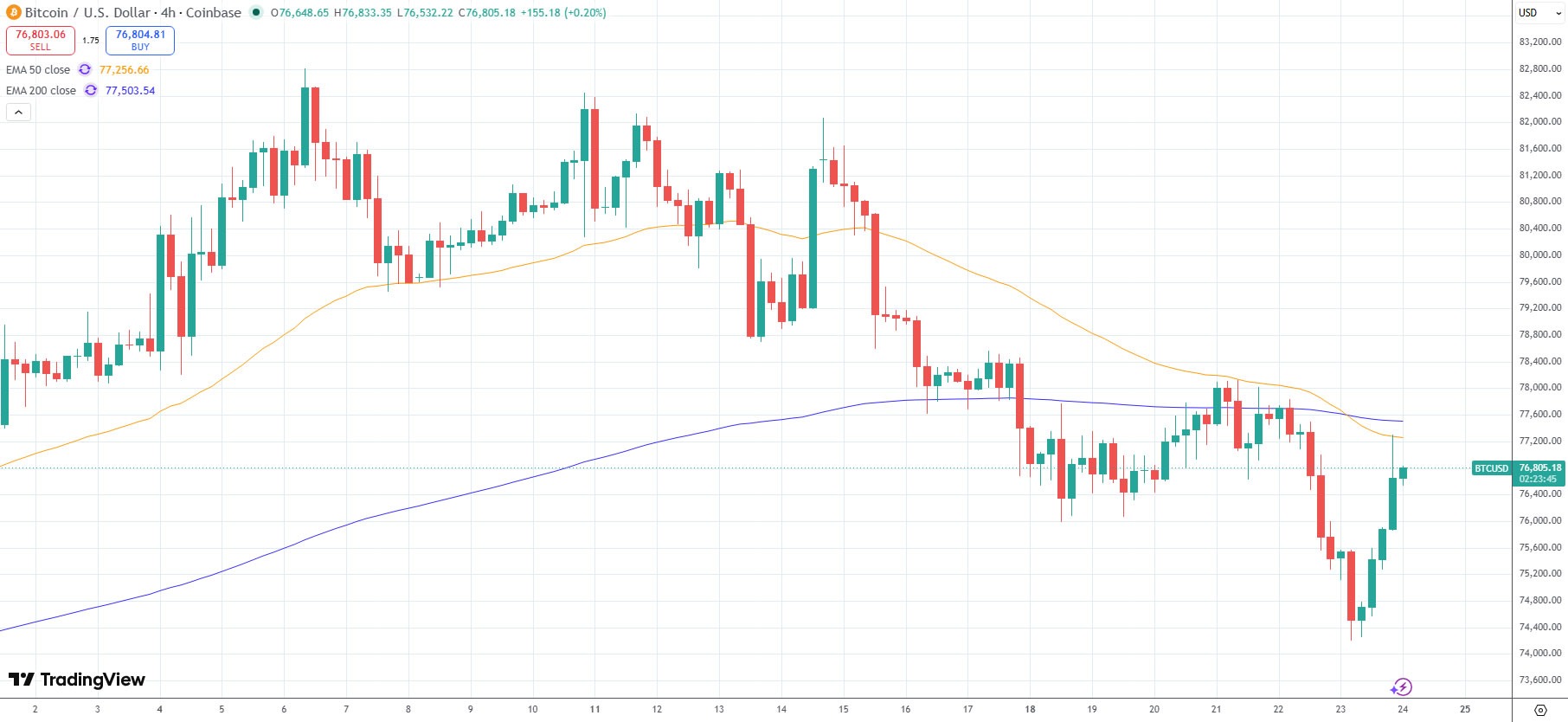
Bitcoin prices fell to a five-week low of $74,250 on Saturday, according to TradingView.
The asset recovered to tap the 50-day exponential moving average at $77,000 in early trading on Sunday before falling back to $76,800 at the time of publication.
BTC has resumed its downtrend after failing to break resistance at $82,000 and remains down 39% from its October peak.
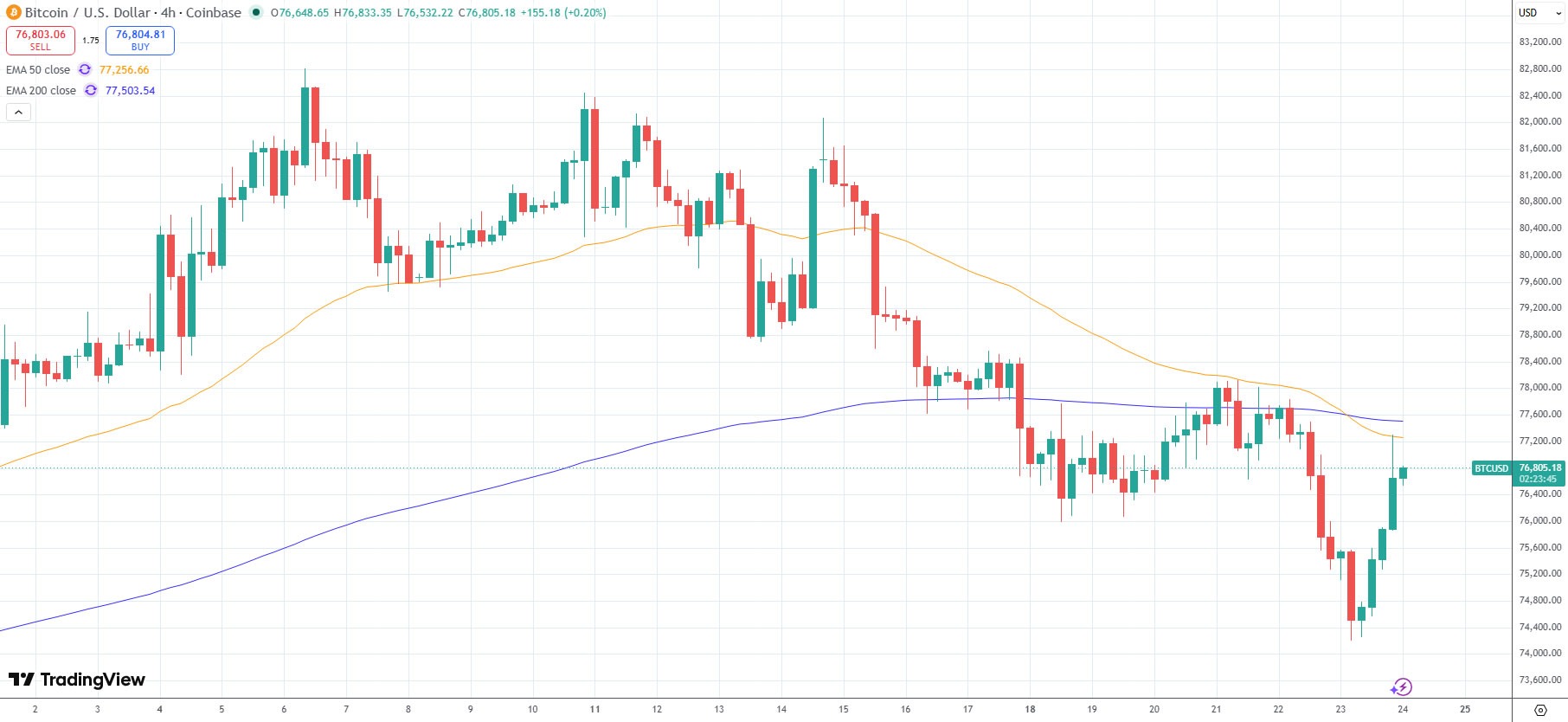
BTC sees minor recovery after Trump’s deal announcement. Source: TradingView
Magazine: Crypto scammers face death, Aussie CGT makes Asian hubs attractive: Asia Express
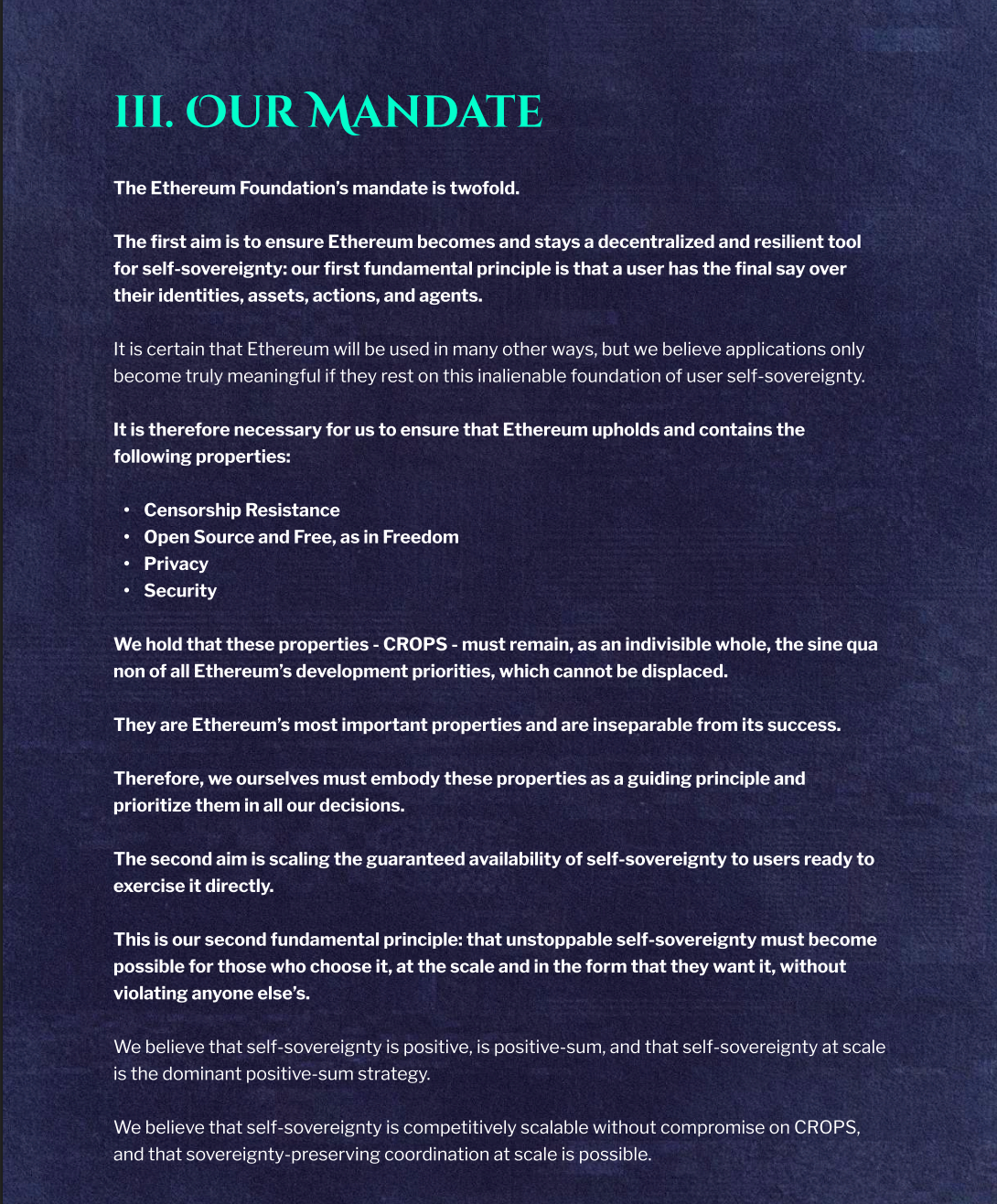
Ethereum co-founder Vitalik Buterin responded to growing criticisms of the Ethereum Foundation’s role in the Ethereum ecosystem, pushing back against critics who want the organization to take a more active role in supporting token prices and marketing.
Buterin said the Foundation will continue to focus on promoting censorship-resistance, open source software code, long-range research, cybersecurity, and decentralization of the Ethereum Protocol, as outlined in its mandate. He said:
“EF is not a ‘center of Ethereum’, rather EF is ‘one node, with a defined purpose, alongside other nodes’. We have always said that the EF should be the latter, but many in the Ethereum ecosystem, and even within the EF, wanted us to be the former.
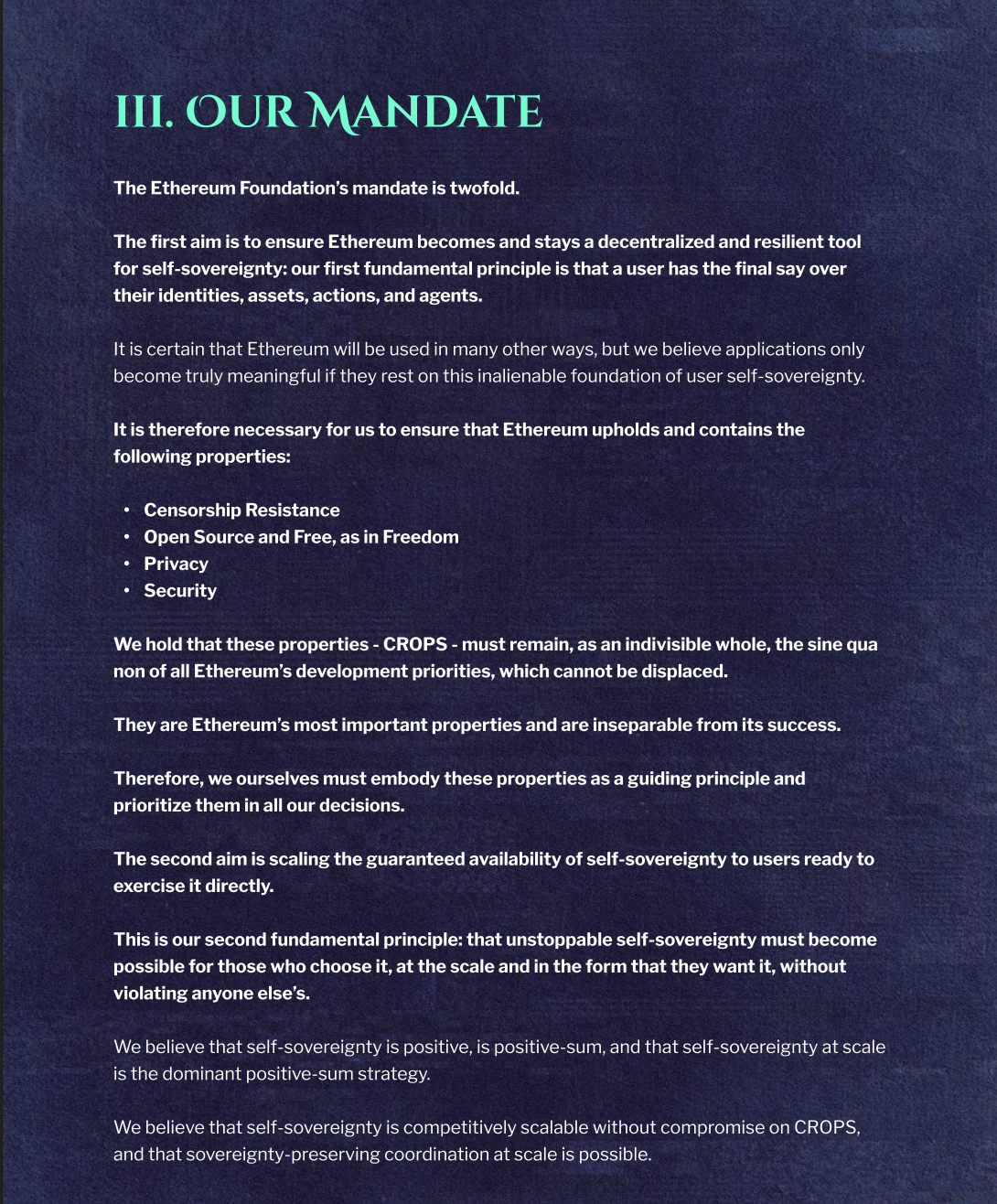
The Ethereum Foundation’s mandate was published in March 2026. Source: Ethereum Foundation
“Now, we are taking action to ensure that we will be the latter,” he continued, adding that the Ethereum Foundation seeks to strengthen Ethereum’s cybersecurity and code base but not necessarily compete with high-throughput chains or scale to 1 million transactions per second.
The comments follow several large ETH holders selling their entire ETH position and high-profile departures from the Ethereum Foundation, as the current price of the cryptocurrency, about $2,094, sits more than 50% below its all-time high of nearly $5,000 reached in August 2025.
“The EF has only about 0.16% of all ETH,” he said, noting that it is common for other foundations to hold 10-50% of their native tokens.
Related: Blockchain researcher defends Ethereum Foundation, says it’s doing ‘exactly’ its job
Under pressure amid falling token price
“I think Ethereum’s original sin was not considering tokenomics with every move it made from Dencun on,” cryptocurrency journalist Laura Shin said.
The Dencun upgrade was a major protocol update released in March 2024, which significantly reduced network fees for layer-2 transactions and led to a subsequent collapse in Ethereum’s base layer revenue.
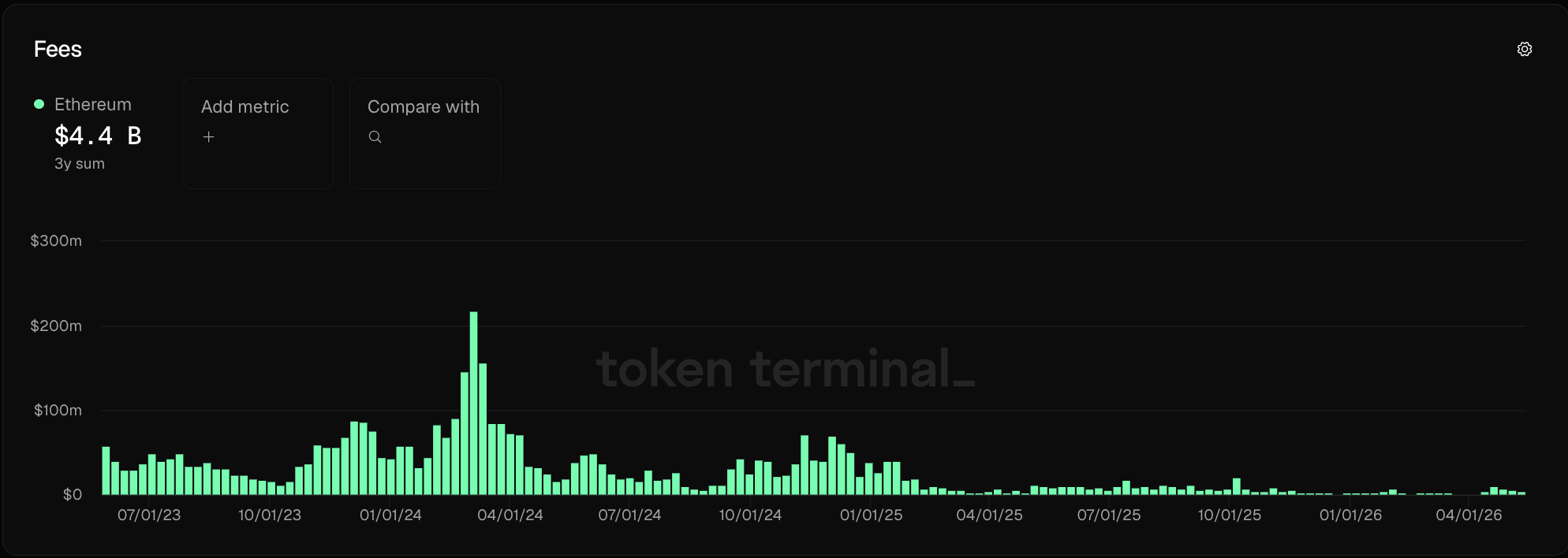
Fees on the Ethereum layer-1 blockchain network fell significantly after the Dencun upgrade in March 2024. Source: Token Terminal
Most investors “don’t want to believe in something that is not also putting up points on the scoreboard,” Shin said about ETH.
Buterin said on Sunday that the Foundation would focus on “longevity” and stretch its funds to finance research, meaning it would sell less ETH in the future.
In May, the Foundation unstaked 21,270 ETH from the Lido liquid staking platform, as part of its treasury strategy.
Unstaking ETH means those holdings will no longer generate yield for the Ethereum Foundation, but it is not a confirmation that the organization will sell those tokens.
Magazine: Why is Ethereum Foundation selling? BTC futures warning signs: Market Moves
TLDR:
- Alphractal linked Bitcoin rallies to improving Fed liquidity trends across multiple market cycles
- Fed RRP declines and Treasury spending continue shaping crypto market liquidity conditions
- VirtualBacon challenged expectations of a delayed Bitcoin bear market capitulation phase
- Bitcoin’s 200-week SMA near $61K remains a closely watched technical market level
Bitcoin liquidity conditions tied to Federal Reserve cash flows are gaining attention across crypto markets. New analysis from Alphractal linked Bitcoin price cycles to changes in Fed liquidity plumbing over the past several years.
The data focused on the Federal Reserve’s Reverse Repo Facility and Treasury General Account activity. The discussion emerged as Bitcoin traded near $76,500 while investors debated whether deeper downside remained ahead.
Bitcoin Liquidity Data Tracks Fed RRP and TGA Trends
Alphractal shared a breakdown showing how Fed liquidity conditions aligned with Bitcoin market cycles since 2020. The firm focused on the interaction between the Reverse Repo Facility, known as RRP, and the Treasury General Account.
According to the thread, rising liquidity often supported Bitcoin rallies across previous cycles. Tightening liquidity conditions frequently appeared before major crypto market corrections.
The report pointed to the 2020 and 2021 market expansion period. During that phase, combined RRP and TGA balances reportedly climbed from roughly $2 trillion to $7 trillion while Bitcoin rose from $10,000 to $69,000.
The same framework showed a reversal during 2022. Alphractal stated that aggressive liquidity tightening preceded Bitcoin’s decline from $69,000 to nearly $15,500 by several weeks.
The report also tracked conditions through 2023 and 2024. During that period, money market funds rotated into Treasury bills while the RRP facility steadily declined.
Alphractal said improving liquidity conditions appeared before Bitcoin rebounded toward $73,000. The post also referenced Bitcoin’s reported October 2025 peak near $126,200, noting liquidity indicators weakened months earlier.
Bitcoin Market Debate Shifts Toward Bear Market Timing
The liquidity discussion gained traction alongside a separate market thread from VirtualBacon focused on Bitcoin bear market bottoms. The post challenged the widely repeated expectation of a final capitulation event later in the cycle.
VirtualBacon compared prior Bitcoin downturns from 2015, 2018, and 2022. According to the thread, only the 2022 cycle ended with a sharp collapse near the final stage of the bear market.
The post argued that earlier cycles bottomed much sooner. In both 2015 and 2019, Bitcoin reportedly reached lows near its first major correction before stabilizing later.
VirtualBacon also highlighted Bitcoin’s 200-week simple moving average as a recurring market support zone. The thread placed the indicator near $61,000 while projecting it could rise toward $63,000 or $64,000 within two months.
Meanwhile, Alphractal noted current liquidity conditions remain mixed. The report cited a Federal Reserve rate range between 3.5% and 3.75%, a 3.8% CPI reading, and a stronger U.S. dollar index.
Despite those conditions, the thread stated Treasury spending and declining RRP balances continue adding liquidity beneath headline tightening measures. The report linked those trends to prior Bitcoin recoveries during fear-driven market periods.
The online gambling industry has long been shaped by a small group of established names. Bet365 and 888casino are two of the biggest. Both have spent decades building loyal user bases, wide game libraries, and strong sportsbook products. They are often the first names that come up when players look for a trusted place to bet online.
But the industry is changing. A new wave of crypto-first casinos is starting to gain ground. One name getting attention is ZunaBet, a platform that launched in 2026 and is already being talked about as a serious challenger. With over 11,000 games, support for more than 20 cryptocurrencies, a $5,000 welcome bonus, and a gamified loyalty program built around a dragon evolution theme, ZunaBet is taking a different approach to what an online casino can be.
This article looks at how Bet365 and 888casino compare, and where ZunaBet fits into the picture as a newer, crypto-focused option built for a different kind of player.
Bet365 and 888casino: The Traditional Giants
Bet365 is one of the most recognised names in online betting. It started as a sportsbook and has grown into a full gambling platform with casino games, poker, bingo, and live dealer options. It is known for its in-play betting, deep sports markets, and a strong mobile app. Bet365 operates under licenses in multiple regulated markets and mostly works with fiat currency. Players deposit using debit cards, bank transfers, and a small number of e-wallets.
888casino has been around even longer. It launched in 1997 and is one of the original online casinos. It has a strong reputation for safe play, a polished casino product, and a steady stream of promotions. Like Bet365, it focuses on fiat payment methods and operates under strict regulatory frameworks in markets like the UK, Spain, and parts of the United States.
Both platforms are solid, well-known, and dependable. But they were built for an earlier era of online gambling, one where credit cards and bank transfers were the main way to play. They have been slow to adopt crypto, slow to build gamified loyalty systems, and slow to expand into newer areas like esports betting at scale.
ZunaBet: The New Challenger
ZunaBet launched in 2026 and is owned by Strathvale Group Ltd. It operates under an Anjouan gaming license and is run by a team with more than 20 years of combined experience in the industry. From day one, it was built as a crypto-first platform, which sets it apart from most of the older brands.
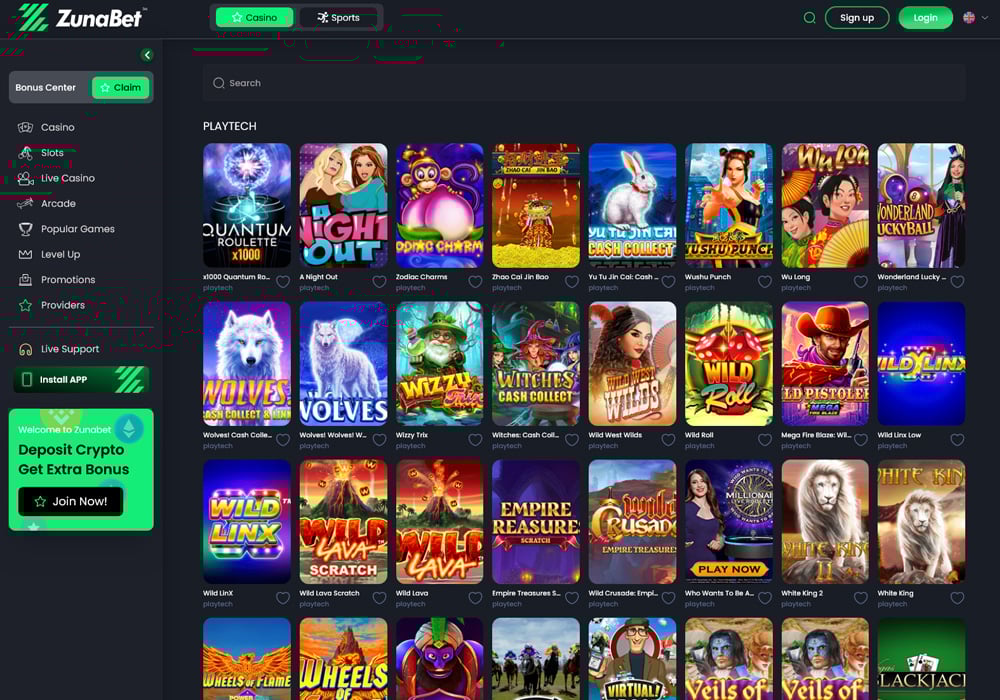
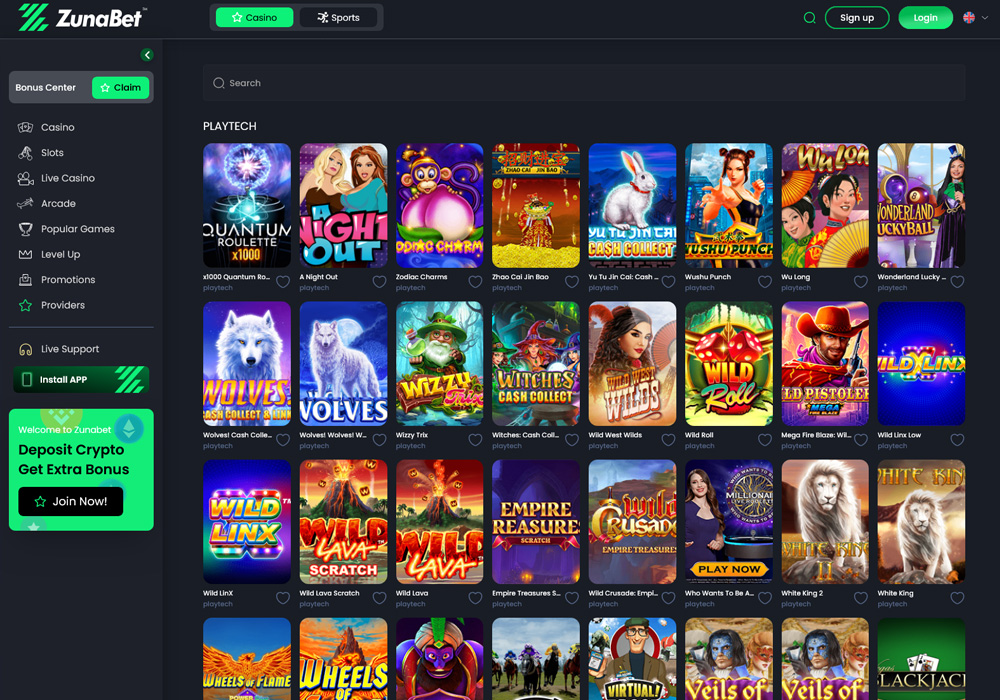
The casino offers 11,294 games from 63 providers, including Pragmatic Play, Hacksaw Gaming, Yggdrasil, BGaming, and Evolution. That puts its library among the largest in the crypto casino space. Players get access to slots, RNG table games, and live dealer games, with the slot library making up the bulk of the offering.
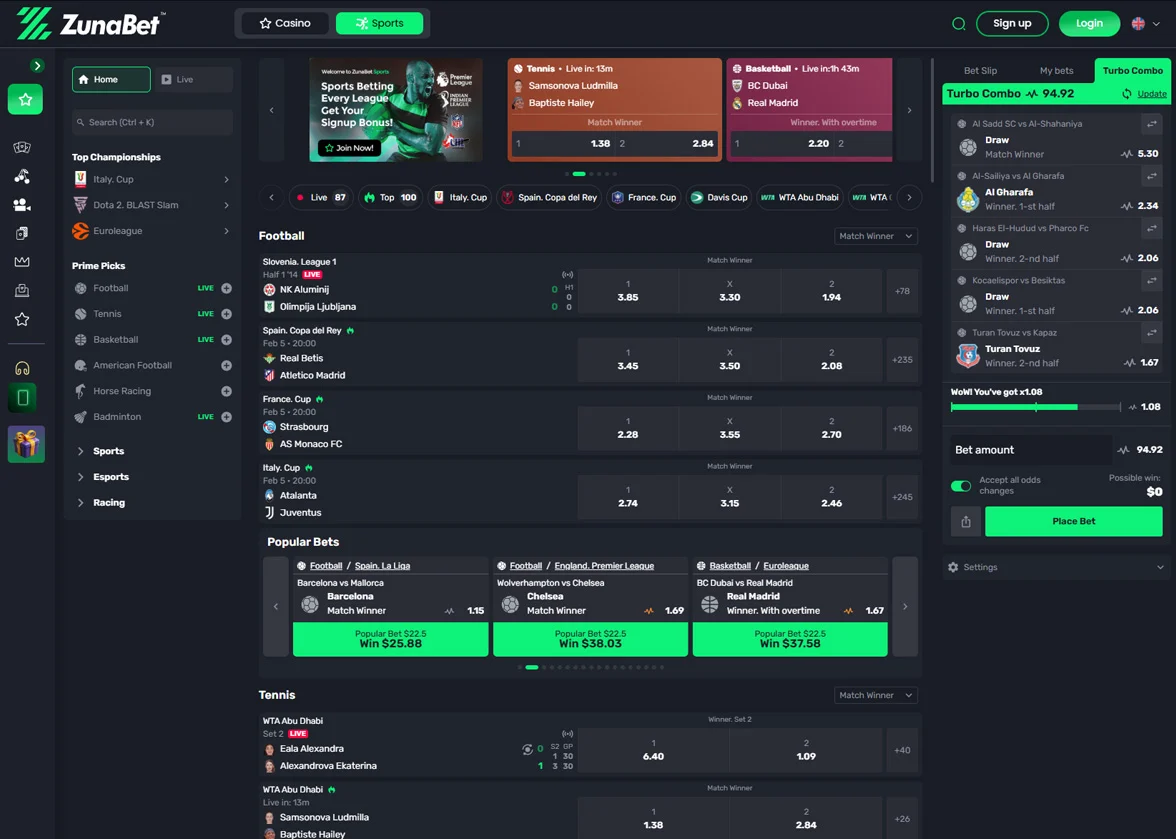
On the sportsbook side, ZunaBet covers all the major global sports, including football, basketball, tennis, and NHL. It also runs a full esports book covering CS2, Dota 2, League of Legends, and Valorant. Virtual sports and combat sports round out the offering. This makes it a true hybrid platform that combines casino and sportsbook in one place.
Crypto-First vs Traditional Payments
The biggest difference between ZunaBet and platforms like Bet365 or 888casino is how players move money in and out.
Bet365 and 888casino mainly work with fiat. That means debit cards, bank transfers, and e-wallets. These methods are familiar, but they come with delays, fees, and limits set by banks and payment processors. Withdrawals can take days. Some markets have restrictions on what cards can be used for gambling.
ZunaBet takes a different path. It supports more than 20 cryptocurrencies, including Bitcoin, Ethereum, USDT across multiple chains, Solana, Dogecoin, Cardano, and XRP. The platform does not charge processing fees, and withdrawals are fast. For players who already hold crypto, this means they can deposit and play in minutes, and withdraw winnings without waiting for bank approval.
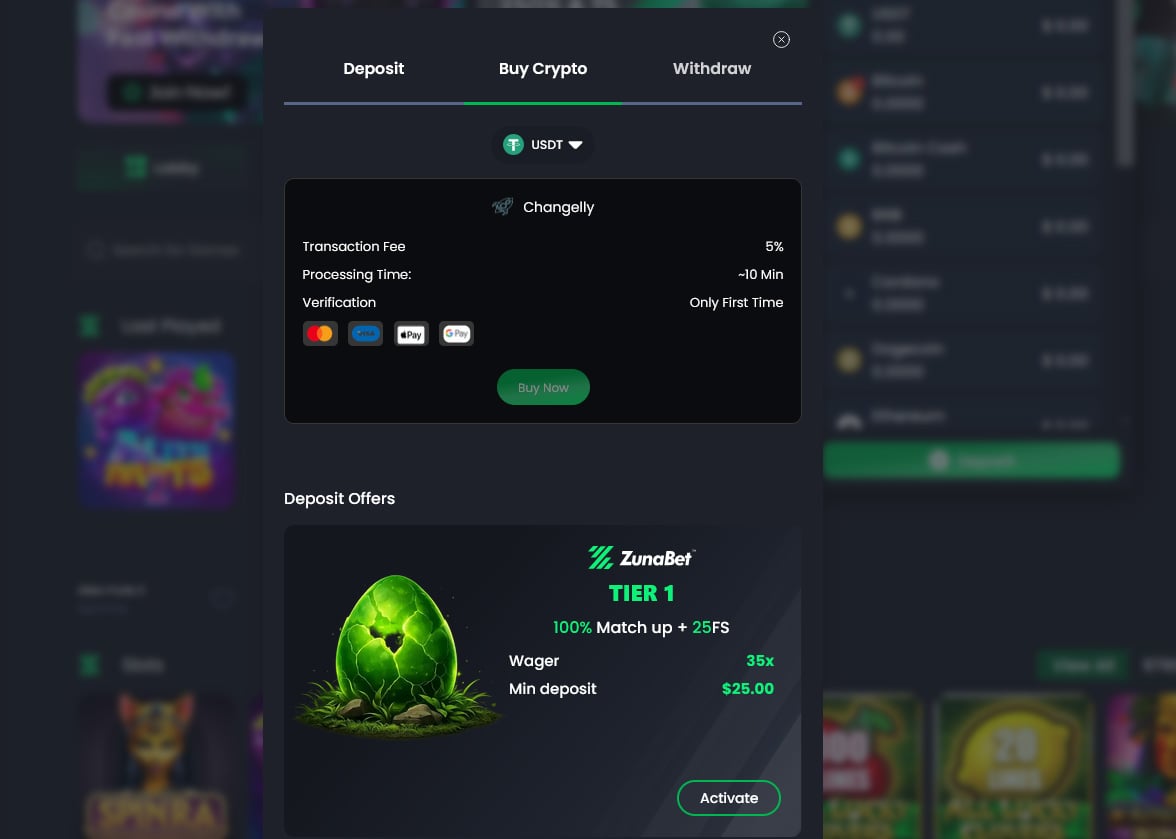
This crypto-first setup also makes ZunaBet more accessible to a global audience. Players in regions where card-based gambling is restricted can still use crypto to play. For a new generation of players who are already comfortable with digital wallets, this is a more natural fit than the traditional banking route.
Loyalty Programs: Standard VIP vs Dragon Evolution
Loyalty programs are another area where the gap shows.
Bet365 and 888casino offer standard VIP and rewards systems. Players earn points or status based on how much they wager, and benefits include cashback, free spins, and access to exclusive promotions. These programs work, but they tend to look the same across most traditional platforms.
ZunaBet has built something different. Its loyalty program is themed around a dragon evolution system with six tiers: Squire, Warden, Champion, Divine, Knight, and Ultimate. Each tier offers more rakeback, starting at 1% and going up to 20% at the top level. Along the way, players unlock tier-based free spins, with up to 1,000 spins available at higher tiers. There is also VIP club access, double wheel spins, and a gamified mascot called Zuno that ties the whole experience together.
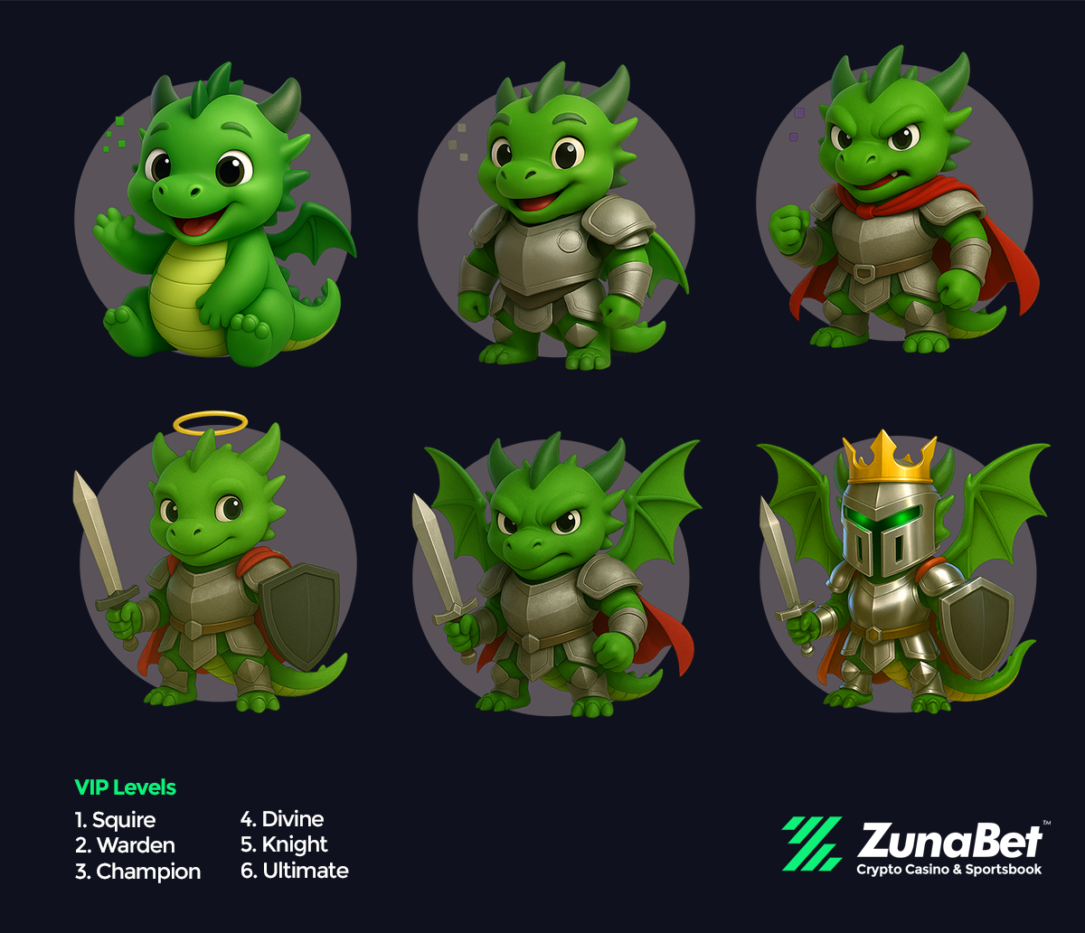
The 20% rakeback at the top tier is high for the industry and gives serious players a real reason to climb. The gamified design also makes the journey feel more engaging than ticking off boxes on a standard VIP ladder.
Welcome Bonus and First Impressions
First-time players also see a clear difference. 888casino and Bet365 offer welcome bonuses, but these are usually tied to a single deposit and come with strict wagering rules.
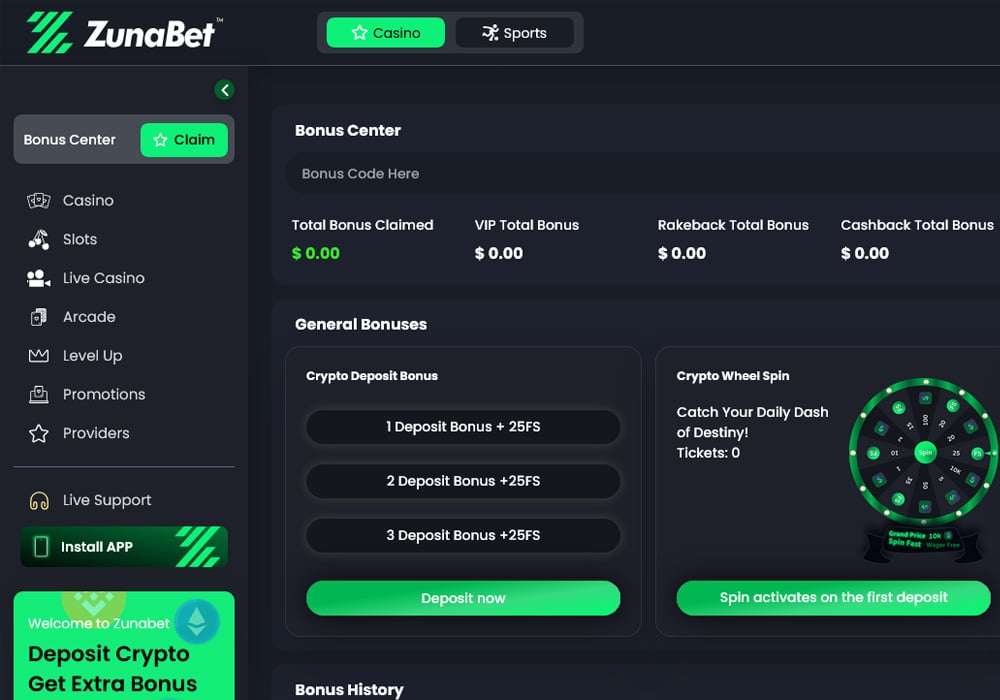
ZunaBet offers a welcome package worth up to $5,000 plus 75 free spins, spread across three deposits. The first deposit gets a 100% match up to $2,000 plus 25 spins. The second gets a 50% match up to $1,500 plus 25 spins. The third gets another 100% match up to $1,500 plus 25 spins. The total works out to a 250% bonus across three deposits, which is more generous than what most traditional casinos offer.
Why ZunaBet Stands Out
ZunaBet is not trying to be the next Bet365 or 888casino. It is going after a different kind of player. Someone who already uses crypto, wants fast payouts, enjoys gamified rewards, and is looking for a platform that offers both casino and sportsbook in one place.
The combination of 11,000+ games, 20+ cryptocurrencies, a sportsbook with deep esports coverage, and a loyalty program that actually feels like a game makes ZunaBet feel built for where the industry is going, not where it has been.
The Future of Online Casinos
Bet365 and 888casino will keep their place in the market. They have strong brands, loyal users, and proven products. But they were built for an older model of online gambling.
ZunaBet represents what the next generation of players are looking for. Crypto payments, huge game libraries, integrated sportsbooks, and loyalty programs that feel like part of the game itself. It is still new, but it is already drawing attention as one of the most exciting platforms to launch in years. For players who want something that fits the way they already use the internet and manage their money, ZunaBet looks like the future of online casinos.
Disclaimer: This is a Press Release provided by a third party who is responsible for the content. Please conduct your own research before taking any action based on the content.
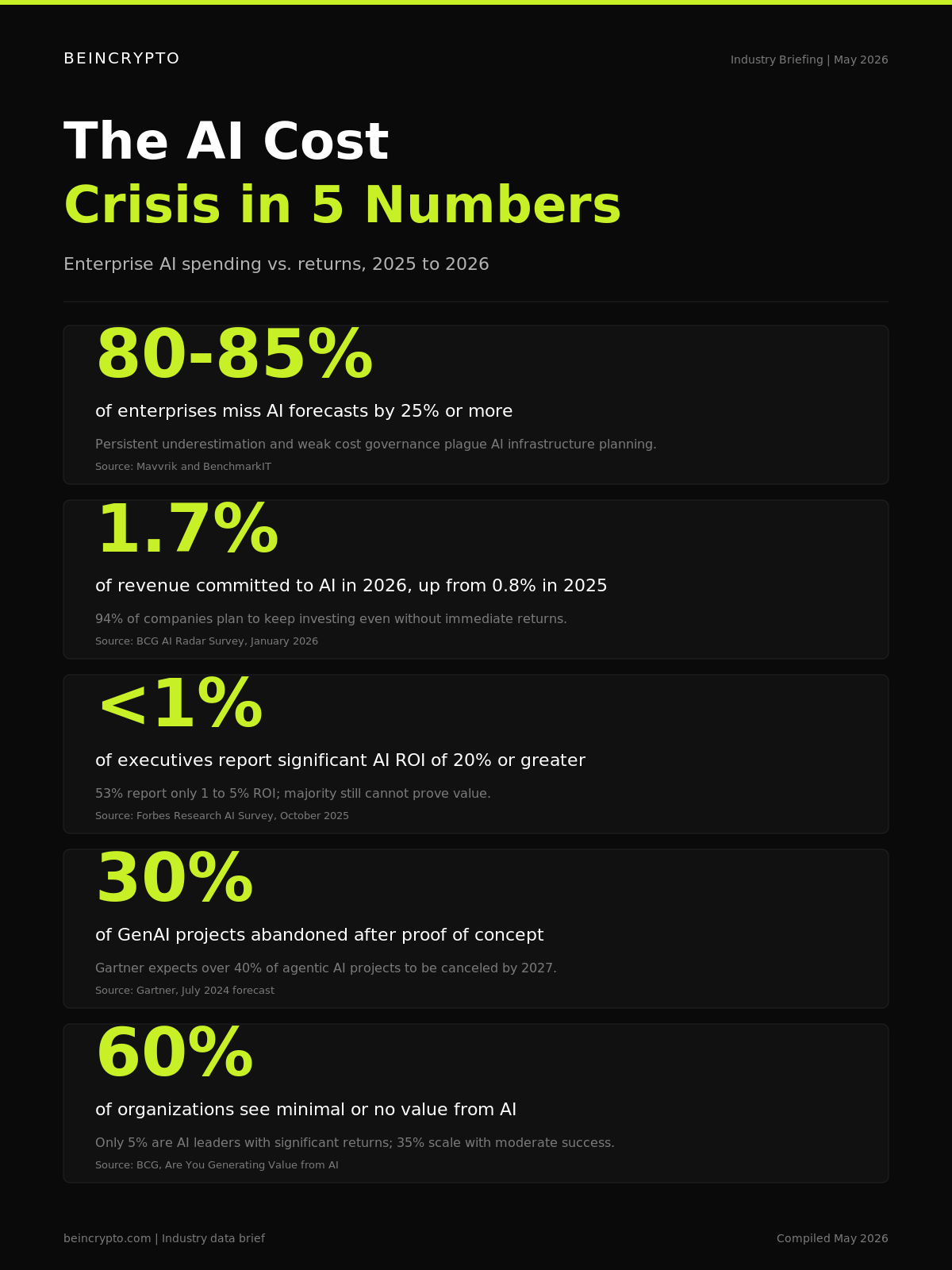
Enterprise AI spending is outrunning corporate forecasts. Microsoft has canceled most internal Claude Code licenses, and Uber has admitted it exhausted its 2026 AI budget within four months.
Token-based pricing on agentic coding tools has produced bills that outpace headcount savings. Companies are now retrofitting financial controls onto rollouts that moved fast in late 2025.
Microsoft and Uber Crystallize the Trend
Verge reporting said Microsoft started winding down most internal Claude Code licenses in mid-May 2026.
Most access in its Experiences and Devices division ends June 30. Engineers had heavily adopted the agentic coding tool.
Token-based billing made consumption unsustainable at deployment scale, Fortune reported. The pullback sits beside Microsoft’s own AI workplace report on 80% productivity gains.
Uber went further. Chief Technology Officer Praveen Neppalli Naga said the ride-hailing firm exhausted its full 2026 AI budget by April.
The company had deployed Claude Code to about 5,000 engineers four months earlier.
Forbes reported per-engineer costs reaching $500 to $2,000 monthly. Roughly 70% of committed code now comes from AI tools, signaling a growing Claude reliance across major engineering teams.
Industry Data Confirms a Wider Squeeze
A 2025 survey from Mavvrik found 85% of companies miss AI cost forecasts by more than 10%. The same study showed 84% report AI spending cutting gross margins by over six percentage points.

“The AI cost crisis has started,” remarked trader and investor Crypto Rover.
Follow us on X to get the latest news as it happens
Big Tech AI capex hit $650 billion in Q1 2026. The number of FinOps teams managing AI spend doubled from 31% to 63% within a year.
Anthropic stands to benefit even as customers complain. The vendor’s $10.9 billion Q2 forecast would deliver its first profitable quarter. The spend story cuts both ways.
Companies are now layering quotas, internal leaderboards, and cheaper model routing onto deployments that ran open in late 2025.
The next quarter will show whether governance can keep consumption flat. Similar pressures could surface inside crypto AI infrastructure builds in coming months.
The post AI Cost Crisis Emerges as Claude Usage and Agentic Coding Bills Spiral appeared first on BeInCrypto.
TLDR:
- Larry Fink renewed calls for SEC approval of tokenized stocks and blockchain-based bond markets.
- BlackRock comments increased focus on tokenized securities and regulated blockchain settlement systems.
- SEC oversight remains the main barrier to broader public trading of tokenized financial assets.
- Crypto discussions intensified after BlackRock linked blockchain systems with traditional financial markets.
BlackRock CEO Larry Fink once again urges U.S. regulators to expedite tokenized stocks and bonds.
His remarks resonated right away in the cryptocurrency and traditional finance spheres, given the fact that BlackRock has over $11 trillion under management.
The comments also highlighted blockchain settlement systems and the regulation of digital securities. Regulatory approval is a key element to wider adoption of tokenized assets, which are still subject to oversight by the SEC.
BlackRock CEO Pushes SEC on Tokenized Stocks and Bonds
Larry Fink said the SEC should move rapidly on tokenized bonds and stocks during recent public remarks. The statement circulated widely after social media post from Crypto Rover amplified the comments.
The BlackRock CEO linked tokenization to the future structure of financial markets. His comments placed blockchain settlement and digital ownership records back into the policy spotlight.
Tokenization converts ownership records into blockchain-based digital assets. Under that structure, stocks and bonds can move through distributed ledger systems instead of traditional databases.
Several large financial firms have already explored tokenized products. BlackRock has also expanded its digital asset presence through crypto exchange-traded funds and tokenized treasury products.
According to the post shared by BankXRP, Fink’s comments drew immediate reactions from crypto traders. Discussions focused on how traditional finance firms may increasingly adopt blockchain infrastructure.
The SEC remains responsible for regulating securities products in the United States. Any approval involving tokenized securities would still require compliance with custody, reporting, and investor protection rules.
SEC Approval Remains Central to Tokenized Asset Expansion
The SEC has not approved large-scale public trading of tokenized stocks and bonds. Current discussions still center on how blockchain systems can operate within existing securities laws.
Traditional financial firms continue testing blockchain settlement tools behind closed networks. However, public market access for tokenized securities still depends on regulatory clarity.
BlackRock’s growing involvement in digital assets has kept the company near the center of crypto market discussions. Its spot crypto ETF products already connected institutional investors with blockchain-related exposure.
The tokenization debate also affects crypto exchanges and custodians. Regulated platforms may eventually support tokenized securities if the SEC establishes clear operating frameworks.
Settlement speed remains one of the main points behind tokenization efforts. Blockchain systems can reduce delays tied to traditional clearing and reconciliation processes.
At the same time, regulators continue reviewing market risks linked to digital securities infrastructure. Oversight standards for reporting, compliance, and asset custody remain under discussion.
Fink’s remarks added pressure to an already active regulatory debate. The discussion now extends beyond crypto-native firms into mainstream financial institutions and asset managers.
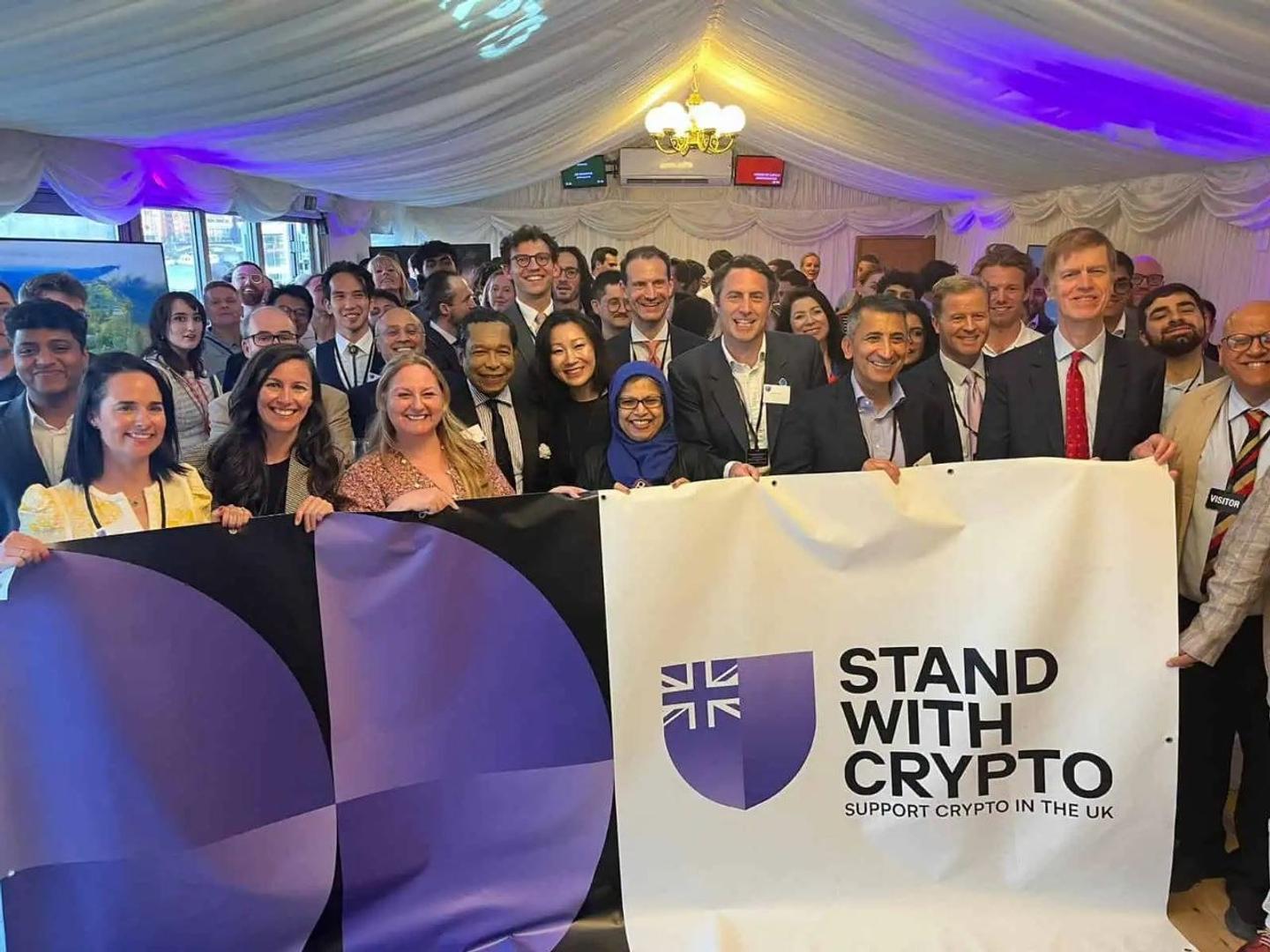
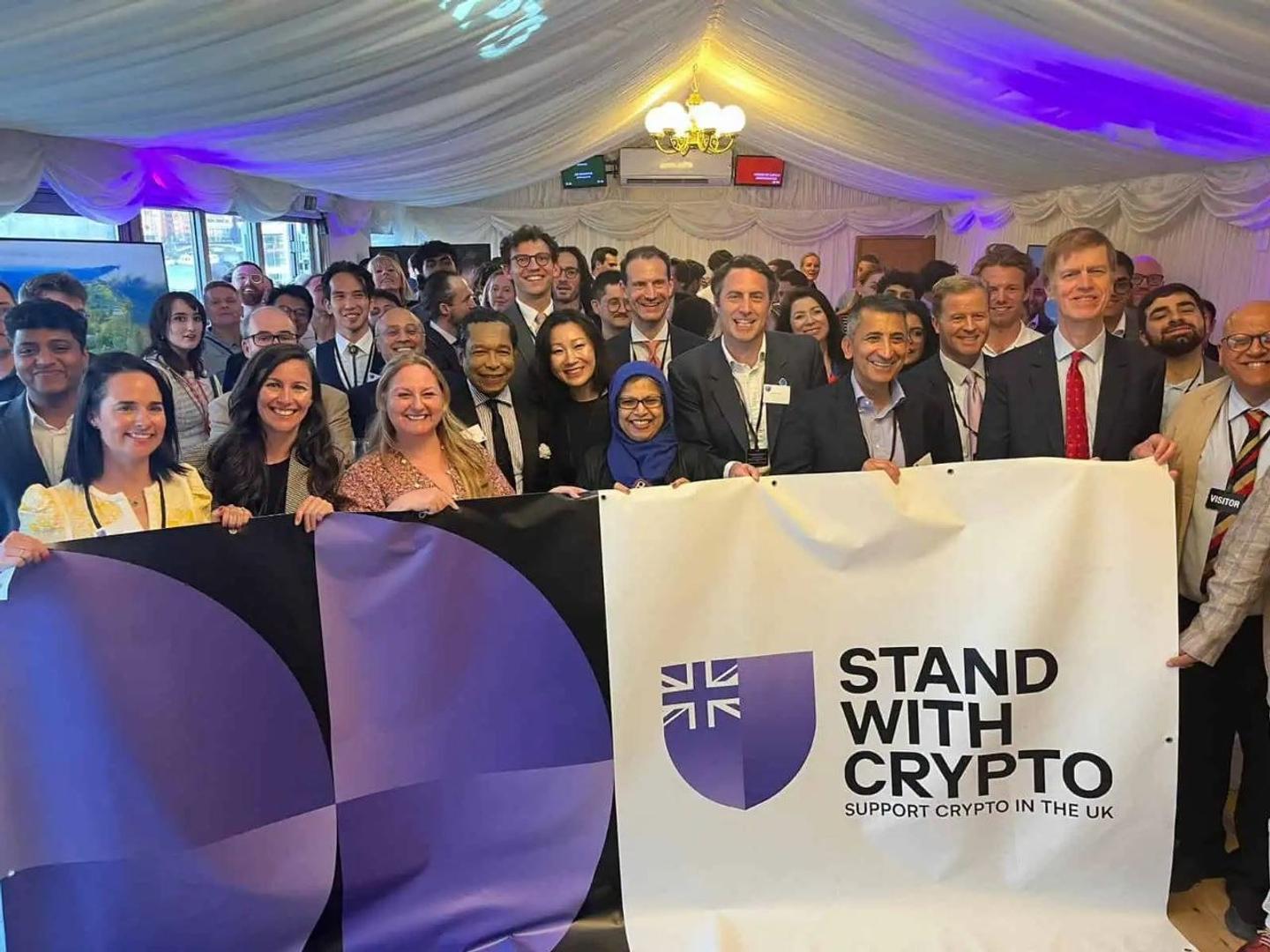
Coinbase is not at all concerned with the increasing competition from Wall Street giants or other traditional financial institutions, the crypto exchange’s head of Policy for Europe told CoinDesk on Friday.
“We have always said that a rising tide lifts all ships,” said Katie Harries, adding that Coinbase is “not at all” worried about the increasing involvement of financial institutions in the United States and around the world in crypto.
The company recently posted a loss of $1.49 per share, compared with analyst expectations for a $0.27 profit. Also in the first week of May, Coinbase announced a 14% workforce reduction.
In a brief written interview regarding the Stand With Crypto (SWC) events on Friday, Harries said that the mobilization of people worldwide shows that the established crypto industry has a community behind it that no traditional financial institution can replicate.
“Millions of people around the world chose crypto because they believe in what it represents: open, accessible, peer-to-peer finance,” Harries said. “The people gathered today in London, Paris, New York, Sao Paulo and beyond are not here because a financial institution told them to be. They are here because they believe in this technology and want their governments to support it.”
‘Voters do care about crypto’
Harries also spoke of the American voter. While U.S. citizens do not have crypto top of mind going into the November midterm elections, voters do care about digital assets and have contacted their lawmakers millions of times to let them know, Harries said.
“Voters do care, and the numbers make that clear,” Harries said, refuting recent statements by senators expressing the contrary. “Stand With Crypto has over 3.7 million advocates across six markets. Its members have contacted their lawmakers more than 2.5 million times.”
The Coinbase executive also said that signals “the crypto voter is a permanent fixture in the political landscape, not just in the United States but across the world. Policymakers who have been slow to engage with this community should take note.”
A CoinDesk survey of 1,000 randomly selected U.S. voters across the country showed that just 1% ranked crypto as their top concern. The survey was evenly split between Republican and Democrat respondents (41% of respondents identified with each party to some degree), with a credibility interval of plus or minus 3.53%.
‘Time for sensible regulation is now’
Harries called on regulators worldwide to adopt sensible crypto frameworks, saying the time to do so is now. “The window to shape sensible crypto regulation is open, and the people gathering at the events on Friday are watching.”
SWC is, according to Coinbase, the world’s largest crypto-advocacy organization with over 3.7 million members globally.
Harries’ words come as SWC stages 500 events across four continents and six markets, including the United States, United Kingdom, Canada, Australia, Brazil and the European Union.
The events coincide with Bitcoin Pizza Day, said Coinbase in a statement shared with CoinDesk.
During the global event, a livestream will feature discussions on ecosystem and policy developments worldwide.
Coinbase’s statement notes the event takes place at a critical moment for crypto as market structure legislation advances through the U.S. Congress.
Faryar Shirzad, Chief Policy Officer at Coinbase, a Stand With Crypto partner, said that this Friday, the rally “proves that the crypto voter is a global phenomenon. People around the world want the freedom to exchange value peer-to-peer, and they want their governments to help make that a reality. This hunger for financial progress isn’t confined to any one nation.”
Shirzad also said that “getting crypto regulation right is one of the most critical policy challenges of our generation, and it requires a global effort, not just action in Washington. “
Bitcoin Pizza Day has become a celebrated moment for millions of crypto users, commemorating the first real-world bitcoin transaction. On May 22, 2010, Laszlo Hanyecz paid 10,000 BTC for two pizzas. That bitcoin at current prices is worth roughly over $770 million.

Rangers Win Historic Ninth NPFL Title After Beating Ikorodu City

US and Canada arrest and charge suspected Kimwolf botnet admin

Peacock’s Forgotten 13-Episode Spy Show Is Still a Near-Perfect Weekend Binge 6 Years Later

US brings back mandatory military draft registration

Steven Gerrard disagrees with Gary Neville over ‘shock’ Chelsea and Arsenal claim | Football

Register Renaming | Hackaday

#xrparmy #xrp #xrpnews #xlm #crypto #cryptocurrency #cryptonews #digitalassets #investing #viral

WARNUNG der Financial Times: Stehen wir wirklich vor einem CRASH in 2026? (objektive Analyse)

#bitcoin #cryptoupdate #xrp #crypto #xrpholders #llc #web3 #coldwallet #ripple #cryptocurrency #fyp
-

 Crypto World3 days ago
Blockchain.com files with SEC for U.S. IPO
-

 Fashion2 days ago
Holiday Weekend Open Thread – Corporette.com
-

 Crypto World3 days ago
Bitcoin Accumulation Weakens as BTC Realized Losses Hit $600M
-

 Business2 days ago
Dell Technologies DELL Stock Surges 15% on AI Server Momentum and Analyst Upgrades in 2026
-

 Crypto World2 days ago
Space X IPO Is ‘Bad News’ for Tech Stocks: But What About Bitcoin?
-

 Politics2 days ago
Makerfield: a tale of two social-media histories
-

 Crypto World3 days ago
MicroStrategy’s Saylor Says Miners No Longer Set Bitcoin Price, Another Force Has Taken Over
-

 Crypto World1 day ago
Robinhood crypto COO Tanya Denisova exits
-

 Business4 hours ago
NYT Strands Answers May 24 2026 Revealed for Puzzle No. 812 Theme Summer Essentials
-
 Tech2 days ago
A 0.12% parameter add-on gives AI agents the working memory RAG can’t
-

 Crypto World2 days ago
AI infrastructure race heats up as IREN pitches full-stack strategy, WhiteFiber lands $160M deal
-

 Tech3 days ago
WhatsApp ads could make Irish debut after discussions with DPC
-

 Business3 days ago
Trump Invests $1M-$5M in Kura Sushi USA Chain With 27 California Locations
-

 Tech3 days ago
You Can Now Add ChatGPT To PowerPoint
-
Crypto World6 days ago
Revolut Launches Dogecoin Debit Card Across UK and EU
-

 Sports3 days ago
2026 CJ Cup Byron Nelson leaderboard: Brooks Koepka finds putting stroke in Round 1
-
 Crypto World3 days ago
Trump Media’s Bitcoin Stash Shrinks Again as 2,650 BTC Lands on Crypto.com
-
 NewsBeat3 days ago
Charity run by Reform leader Malcolm Offord accused of ‘law breaking’ over Scottish registration
-
Business3 days ago
Goldman Sachs reinstates Ageas stock coverage with neutral rating
-

 Crypto World4 days ago
Exa Labs raises $250 million in funding led by a16z
You must be logged in to post a comment Login