
News Beat
How to see the next ‘super’ full moon on Thursday night

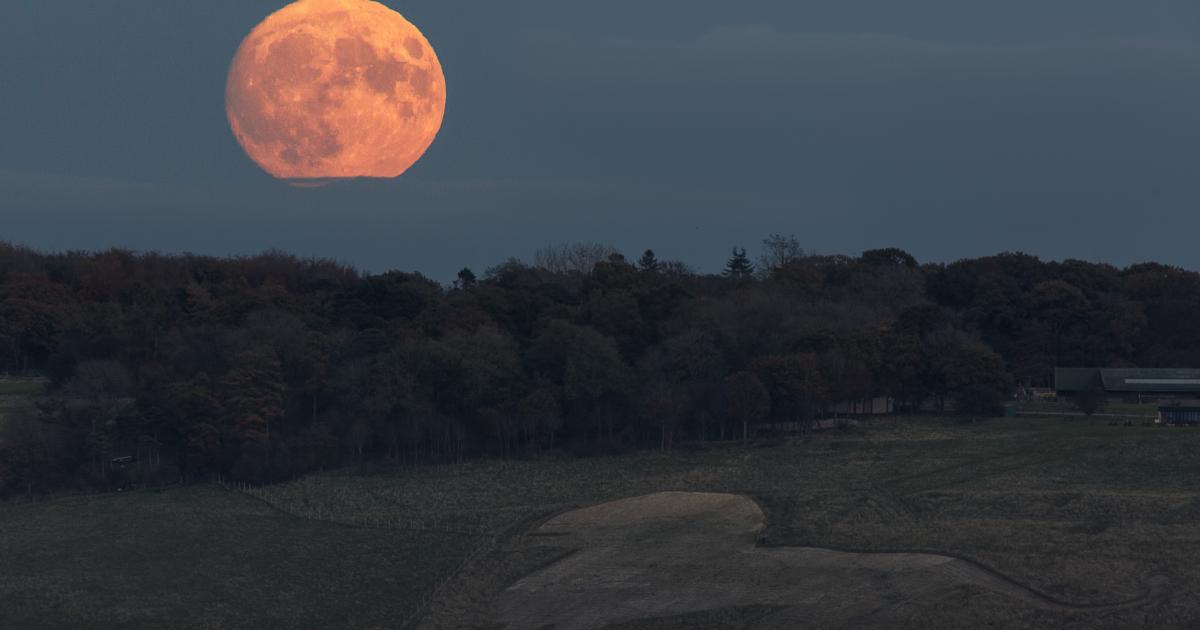

A supermoon.
The full Cold Moon will be visible on Thursday, 4 December, the third and last of 2025.
So don’t worry, if you happen to miss it, there’s a pretty decent chance you’ll get to see it again next year.
Mark your calendars for December 4, 2025. The “Cold Moon” is rising, and it isn’t just your average full moon—it is the final Supermoon of the year.
As winter settles in, this celestial event offers a stunning reason to brave the chill and look up. Because the moon is at… pic.twitter.com/MRhi29Aegw
— Science & Astronomy (@sci_astronomy) November 30, 2025
A full Moon happens when the Sun and Moon are on opposite sides of Earth – in alignment, known as ‘syzygy’ – so the whole side that is facing us is illuminated.
A supermoon happens when the moon reaches perigee, or its nearest point to our planet, making it appear larger and fuller.
‘Cold moon’ indicates that it’s the full moon event closest to the winter solstice, the shortest day of the year in the Northern Hemisphere
When can I see the full moon?
The full Moon will rise in the north-eastern skies on the afternoon of December 4 at 14:52GMT in London, 14:29 in Edinburgh, 14:52 in Belfast and 15:05 in Cardiff.
It will then set again between 08:00 and 09:00 the following morning.
That’s plenty of moon gazing time!
Of course, depending on the weather forecast in your area, for example, clouds, it might be harder to see.
Why is it called a Cold Moon?
According to BBC Weather : “Each full Moon in a year has a name – a practice that dates back to ancient traditions centuries before the Gregorian calendar existed.
Recommended reading:
Price of jacket potatoes and butter set to soar in supermarkets
Stunned YouTuber compares Jeremy Clarkson and James May’s pubs
Mrs Hinch fans find amazing way to dry clothes during winter
“Full Moons were historically named as a way of keeping track of the change of seasons and often influenced the timing of activities like hunting, harvesting and planting, where the bright moonlight could come in handy.
“December’s full Moon is known as the Cold Moon and marks the start of winter as it occurs near the solstice. It has also been known as the Long Night Moon and the Moon before Yule.
“The next full Moon, on Saturday 3 January 2026 is the Wolf Moon and this will be yet another supermoon.”



