

Politics
Alan Cumming Says Donald Trump’s America Is A ‘Fascist Country’


Alan Cumming has spoken candidly about living in the United States during Donald Trump’s second tenure as president.
The Scottish actor holds dual US and UK citizenship, and currently resides in New York with his husband, the visual artist Grant Shaffer.
Later this week, the Emmy winner is due to make his debut in Tip Toe, a new Russell T Davies drama which takes an unflinching look at modern life in an ever-divided world.
Speaking to Radio Times to promote his new show, Alan claimed: “Of course, there are kind people in America, and I live in New York, which is a different kettle of fish to the rest of America.”
“But the government…” he continued. “It is a fascist country and I’m paying taxes to it. It’s horrible.”
Riffing on Trump’s “Make America Great Again” slogan, Alan remarked: “Make America like the 1950s again, more like. When Black people would serve you, you could do whatever you liked, and anyone who you didn’t like, you would get the boys to duff them up. That’s what they want. That’s what they’re creating.”
“It’s not a new thing for people to be so bigoted and intolerant – it always has been like that. It’s just been suppressed,” he then insisted.
“What’s shocking now is how public and blatant it is and how comfortable people feel agreeing with it.”

Last year, Alan told HuffPost UK: “People are scared. Especially in America – people are terrified to speak out. You should be scared! You could get attacked, you could get deported… it’s just awful, it’s a terrifying time. If you speak up and are a voice of descent, you risk a lot.”
Referring to a speech he made in support of trans rights on Jimmy Kimmel Live!, the former Baftas host said: “After Kimmel, my publicist was saying, ‘you’re going to get deported, you’re going to get deported’.”
“There was such a big response to it, and all I was doing was telling the truth and speaking up! I wasn’t being insulting, I was just telling the truth. And then I realised how privileged I am – in that I have another life, I have a life [in the UK],” he claimed.
“I have a home here, I have a passport, I spend more time here, actually, than I do in America right now. And so, I feel, I guess, privileged and a bit protected by that. If I did get deported, if something happened in that way, then I wouldn’t be sent to a Venezuelan prison, I would be sent to Scotland.”
He added: “In a funny way, it made me realise that I have a duty to keep speaking up. And I want to keep doing that.”

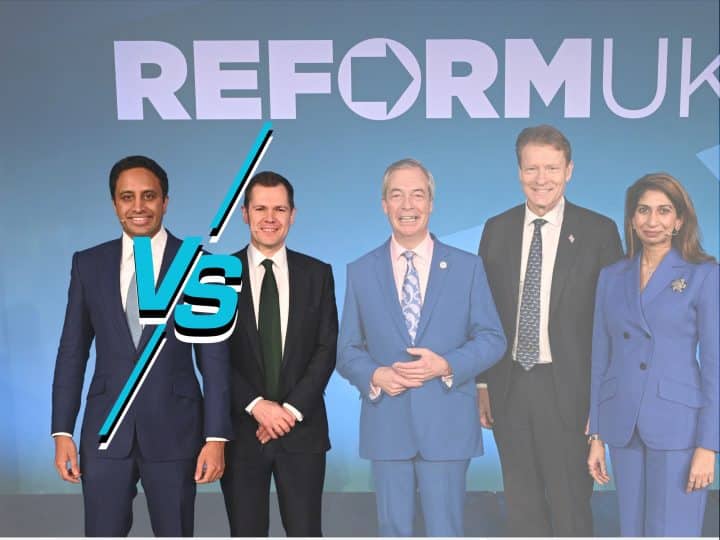

In-fighting is always a bad look, but it’s especially not-good in an election. Despite this, Reform’s Zia Yusuf has publicly called out Robert Jenrick’s grip on the party’s policy platform:
Robert’s answer is not Reform policy.
As the person responsible for our deportation plan I want ensure people know where we stand:
If a foreign national lives in social housing at taxpayer expense, they automatically fail our economic test and will be deported. https://t.co/g7S7SmoDrJ — Zia Yusuf (@ZiaYusufUK) May 26, 2026
Poverty by design
The first thing we should note is that social housing isn’t supposed to be a place where we send poor people to punish them. Currently, social housing only makes up around 16% of all households, and as such local authorities use it to house tenants with the most needs. Ideally, however, we would have enough social housing that people from all walks of life to live in.
This surplus of social housing would also mean private landlords had more competition, forcing them to keep their prices — you know — competitive. That is if we kept private landlords around, anyway. We’re not sure what benefit they’re providing, but we seem to be stuck with them for now, so let’s at least make them feel the market forces capitalists claim are so vital.
Back to the feud. Yusuf is saying we should instantly deport foreign nationals who live in social housing. His argument is only poor people live in social housing, and we don’t need any more poors, thanks. Responding to this:
- Anyone can fall on hard times.
- Many low-paying industries like care rely on foreign workers.
- If Reform doesn’t want so many poor people, the solution isn’t to banish the impoverished; it’s to close the gap between the haves and the have nots.
The purpose of wealth taxes isn’t just to bring in more money. As things stand, the wealthy are getting richer and richer because their money is doing their work for them. While you’re grinding away earning not very much, these people are seeing their portfolios balloon through no hard work of their own. They use this money to buy up Britain’s assets, and they use the power that brings to make life more favourable for themselves.
It’s a vicious cycle, and one which Reform is seeking to distract from by pointing at those who have the least.
Fighting words from Reform UK loyalists
Back to the feud, people have been saying:
Reform now in open civil-war. As I said yesterday. They’re a party that’s now experiencing a complete nervous breakdown https://t.co/Gp2IqVHy9W
— (((Dan Hodges))) (@DPJHodges) May 26, 2026
You say two are slagging it out, but does Jenrick know he's in this fight? Seems like a bit of an unexpected drive-by. Post-Farage future of the party already up for grabs, it seems.
— Liam Stokes (@LNJStokes) May 26, 2026
Oops!
Looks like Zia Yusuf is about to fall out with yet another Reform MP.
Their party conference is going to be fun. Yusuf can't be in the same place as Tice, Anderson or Jenrick now. pic.twitter.com/1XApR591Cf
— Don McGowan (@donmcgowan) May 26, 2026
On the broader issue of Reform politicians not seeing eye to eye, commenter Dave Lawrence noted:
WHAT is happening inside Reform?
– The new Chairman Lee Anderson – mentioned the byelection 2x if you include a retweet of the podcast
– he has made 3 tweets about the ‘visit’ to the ‘special needs’ cafe – defending it and seeking to undermine the staff in the same period.– Jenrick and the unelected Yusuf in a public spat about immigration policy
– this a fortnight after Laila Cunningham attacked the immigration rhetoric and the fact it cost votes in London– no-one has thanked David Bull who was sacked as Chairman who has literally disappeared whilst leaving his account as Chairman – ‘live’
– Farage is just missing.
As we’ve reported, Farage is no doubt avoiding media scrutiny because of a £5m gift he failed to declare. That and because he no doubt doesn’t want to answer questions about the party’s pervert by-election candidate in Makerfield.
Zack Polanski, meanwhile, took issue with Labour’s response to the feud:
A Labour minister unable to condemn Reform's plan for the mass deportations of our neighbours.
Cowardly and disgraceful. Labour are incapable of standing up to Reform's divisive nonsense. Only the Green Party have the courage to do this. pic.twitter.com/62WeCq1jaL
— Zack Polanski (@ZackPolanski) May 26, 2026
Divisive by design
Reform UK is running a classic ‘divide and conquer’ strategy. Working people know they’re poorer than they used to be, and Reform is trying to convince them it’s because of foreigners, disabled people, folk who want more rights, etc — not the billionaires who suspiciously seem to be getting richer and richer while all this is going on.
The interesting thing is Reform also seems to be dividing and conquering itself. At this rate, the party is going to struggle making it to the 2029 election. After all – it’s already given rise to two different breakaway parties in Restore Britain and Advance UK.
Featured image via Leon Neal / Getty Images
By Willem Moore
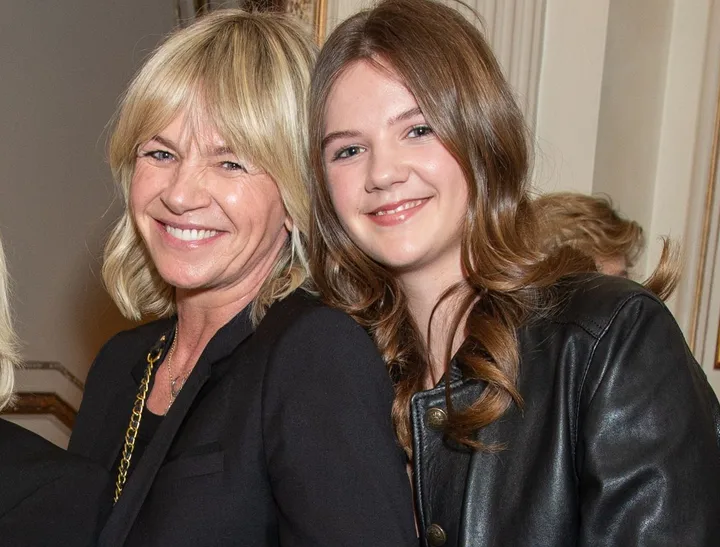
Zoe Ball has shared that she’s getting used to the “quiet” since her teenage daughter opted to spend more time living with her dad Norman Cook in the lead-up to exam season.
Speaking on her podcast Dig It!, Zoe told co-host Jo Whiley that she’s currently seeing “less and less” of 16-year-old daughter Nelly as she is “based more at her dad’s now” while she prepares for her GCSEs.
“I think she’s got to that point of, ‘Ah, can I just be in one place?’,” the Radio 2 star explained, with Nelly having been based between her mum and dad’s households in recent years.
Pointing out that Nelly’s revision notes are currently all over her bedroom walls at her father’s house, Zoe continued: “It’s just [nice] not having to move from house to house, so she’s just spending more time there now.
“It’s only around the corner and I can nip round at any time, which is great, and she can come here if she gets upset about anything like, ‘Mum, I need you’.”
“But it’s less and less,” she lamented.

Piers Allardyce/Shutterstock
The broadcaster was married to Nelly’s father, the musician Norman Cook, better known to some as the music producer Fatboy Slim, between 1999 and 2016. The former couple also share a 25-year-old son, Woody Cook.
Zoe and Jo launched their Dig It! podcast last year, initially billing it as a reflection on “the messy and beautiful reality of living well”.
Earlier this month, Zoe used the podcast to address reports claiming that she was in the running to host the upcoming season of Strictly Come Dancing, before later announcing that she hadn’t landed the gig.
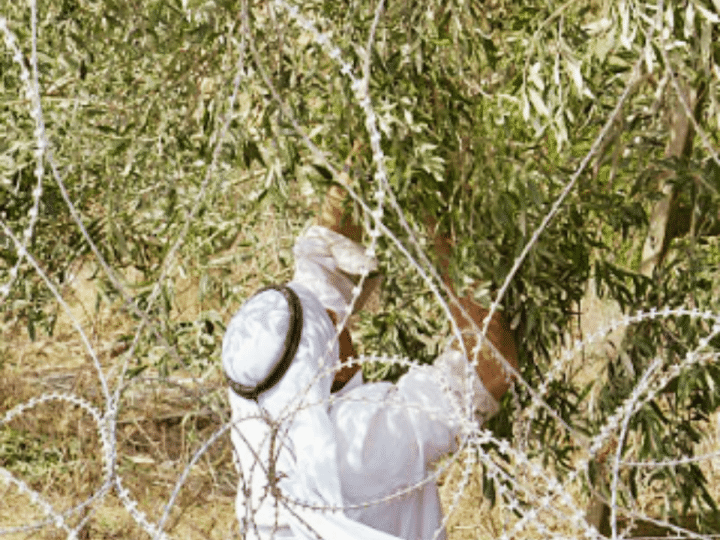

Ayoub Abuhejleh, a 57-year-old Palestinian farmer from the village of Deir Istiya, occupied West Bank, is on a horticultural crusade through his work with the Economic and Social Development Centre of Palestine. Abuhejleh, who is also the village’s former mayor (2011 – 2014) has swapped his suit for farming tools adamant to stay put on his land.

Farmer ordered to leave his farmland
Since 2023, Abuhejleh has planted 370 olive trees, as well as almonds, figs, and grapes. “I’ve raised these olive trees as my own children,” he tells the Canary. These plants and trees line the agricultural road leading to and from his land.
Abuhejleh spoke of the ancestral connection binding Palestinians to their lands and orchards. He is among countless Palestinians cultivating the land where their parents and their forefathers were born and raised. His family kept sheep and goats, worked their land with horses, and planted corn and other crops.
In June 2023, a settler with sheep and goats set up an outpost just 350 metres from Abuhejleh’s land. Initially, the settler caused no problems but four months later, after 7 October, everything changed. He explained that:
The settler became more aggressive, and other settlers also started coming to the outpost. They closed off my agricultural land so there was no access for me, and they also cut the main irrigation pipe.
A week later, Israeli occupation soldiers approached Abuhejleh and his family on their land while they harvested olives. It was the first time the trees were producing olives since they were planted. They quizzed the family before asking them to evacuate their grove.
Court win for Palestinian farmer, as eviction pressure mounts
This is a familiar story across the occupied West Bank. Rights groups and residents have documented occupation soldiers colluding with settlers to eject Palestinians from their land, citing intimidation, violence, arrests, and movement restrictions. The end goal is to ethnically cleanse the area and force Palestinians to cede their land. Abuhejleh was told:
It’s forbidden to go on my land, because there is a war. They said they want to protect me. I told them I knew they had come to protect the settlers because before the outpost they hadn’t come here. The soldier said he didn’t care what I said. I was given five minutes to leave.
In the area surrounding Deir Istiya village, more than 200 hectares of Palestinian-owned land have been seized so far by occupation forces — no longer accessible to Palestinian residents. Approximately 25 percent of the land is cultivated, while the rest is used for grazing. The loss has had devastating consequences for the local community.
Abuhejleh decided to fight for his right to stay through the courts, and in April 2025, an Israeli court ruled in his favour. The judge said he could reconnect the water, repair the road, and return to his land.
He did just that, but occupation soldiers continue to show up. He told the Canary how they police his every move — telling him where he can and cannot go — and take photographs of him and the Israeli activist accompanying local farmers for protection.
Sometimes they come and say we must leave, because it is a military zone. But we go weekly to the land still. In harvest season they attack us. They also make it impossible to prune, fertilize, irrigate or plough the land. This means the trees will become weaker and weaker, because we can’t take care of them.
This is what they are planning. Also, when an area is closed and we are unable to go on our land, they then steal it from us. This is because, under Israeli occupation laws, if you don’t plough your land for five years it then belongs to the state.


Abuhejleh was recently told that he needed permission from the Israeli Coordination and Liaison Office to enter his land. Without written consent, he was told he would have to leave. He refused of course, citing the Israeli court ruling granting him unhindered access to his farmland. His lawyer is now back in court arguing his case.
Abuhejleh says “Israel” has always made life difficult for Palestinians.
Israel controls everything- health, education, the economy, political issues, and also agriculture. Our village completely depends on Israeli company Mekorot for our water supply. So sometimes we wake up to find there is no water. They have cut it off completely. Lots of Palestinian farmers lose money instead of making any profit, and many are now going out of business, due to the actions of Israel. It damages the market by selling Israeli produce at lower prices than that from Palestine. They wait until Palestinian produce, for example tomatoes, are ready and go to market, and then they bring Israeli tomatoes to sell there instead. These are, of course, at a cheaper price.
This land is our land
For decades, occupation force have intentionally destroyed olive trees. They are a defining symbol of Palestinian identity and a key component of agrarian life and the local Palestinian economy.
Abuhejleh told the Canary that in Deir Istiya, occupation forces have uprooted 500 olive trees, all more than 200 years old. The same “security” excuse was parroted by the Apartheid state, with the military claiming that Palestinians had been throwing stones at settlers’ cars. This excuse was then used to clear the trees Abuhejleh had planted along the main road. The damage was done.
Settlers., no different to their military counterparts, have also been intentionally destroying trees. Farmers fence off their land to prevent livestock damaging their trees. But now find that settlers cut through these fences and allow their sheep and goats to eat the saplings and young trees. Branches which are too high for livestock to reach are often deliberately broken.
Abuhejleh describes the past two years as the worst he can remember. Still, he refuses to let up, and cede his land to illegal settlers, cognizant of the daily risk of death Palestinians face,.
Hopes of a better future
Settler expansionism and violence across the occupied West Bank is well organised, and financially backed by the Israeli occupation government.
Abuhejleh believes there will be tough and dangerous times ahead but remains hopeful that someday the situation will change. The war in Gaza has raised awareness among young people worldwide. He hopes that a new generation will confront and back an alternative to the terrorist regime that is “Israel”. Abuhejleh says:
We must fight as much as we can for access to our land, although they arrest us. I have been arrested many times, shoot us, and take what they want. We will stay here. Land is part of our life. We look with one eye on our family, and the other eye on our land.
Observers suggest this is why the Israeli occupation is in a hurry to alter the situation on the ground, and to quash the prospect of a Palestinian state for the future. In the wake of 7 October, Palestinian land theft and illegal settlement expansion in the West Bank have continued. Israeli lawmakers are also seeking to repeal the 2005 Disengagement law to repopulate previously evacuated illegal Israel settlements.
For Abuhejleh, the olive trees he planted more than a decade ago have become a symbol of a wider struggle unfolding across the occupied West Bank — one in which access to land, water and livelihoods is increasingly contested. But like most Palestinians, leaving was never an option.
Featured image via David Silverman/Getty Images
By Charlie Jaay
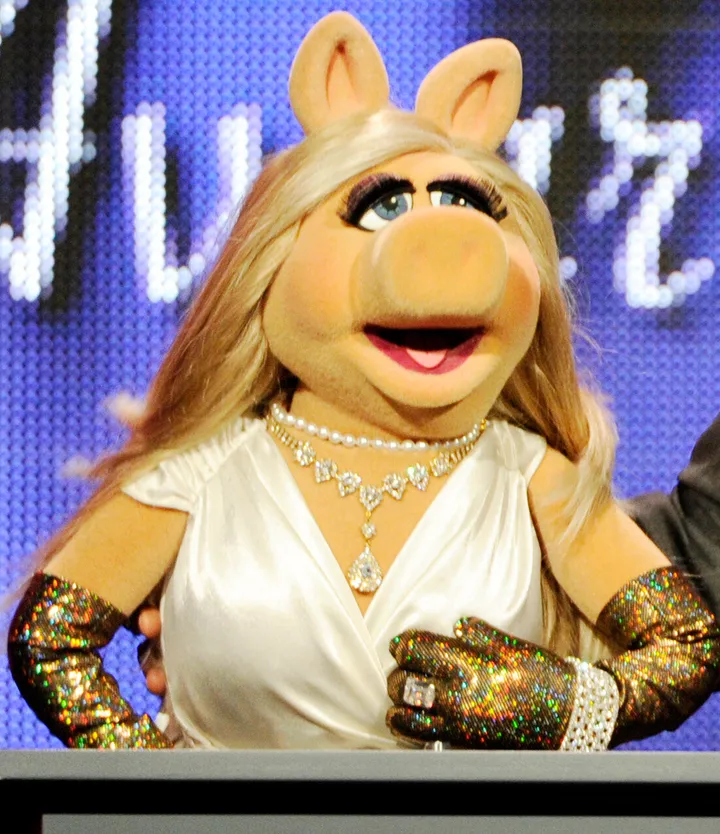
Cole Escola has opened up about their personal connection with Miss Piggy, ahead of their new film about the Muppets icon.
During a new interview with Tatler magazine, Cole was asked what makes Miss Piggy such a favourite of theirs, to which they responded: “She’s so awful. She behaves in a way we all wish we could behave. And we all do sometimes behave.
“I think her needs and desires come from a place of pain. And I think that is something that strikes a chord in people. But I don’t think any of that is visible, or it shouldn’t be. It should just be funny and fun.”
“Her incredibly high opinion of herself and her self-esteem and self-assuredness – all of it is delicious,” the Oh, Mary! creator added.

Asked which real-life figures give “Miss Piggy energy”, Cole said their gut reaction was to say Donald Trump, before settling on Anna Delvey, the fraudulent fake heiress who inspired the Netflix miniseries Inventing Anna.
“Showing up to Fashion Week with the ankle monitor? That’s Miss Piggy,” Cole claimed. “She should be writing the movie, not me. She’ll run away with the money and not work, which is exactly what Miss Piggy would do.”
They also reacted to calls for Miss Piggy to play the lead on Oh, Mary! in the future, enthusing: “She’d be the best Mary. She really should have originated the role, but I was greedy.”
Cole’s interview in Tatler coincided with the news that they will be the next actor to portray the lead in the current West End production of Oh, Mary!, following Mason Alexander Park and Catherine Tate’s respective stints.
As well as writing Oh, Mary!, Cole originated the role both on- and off-Broadway, for which they won their first Tony in 2025.
Politics
UK government trying to ‘cover up’ its ’embarrassment’ over nature and national security report
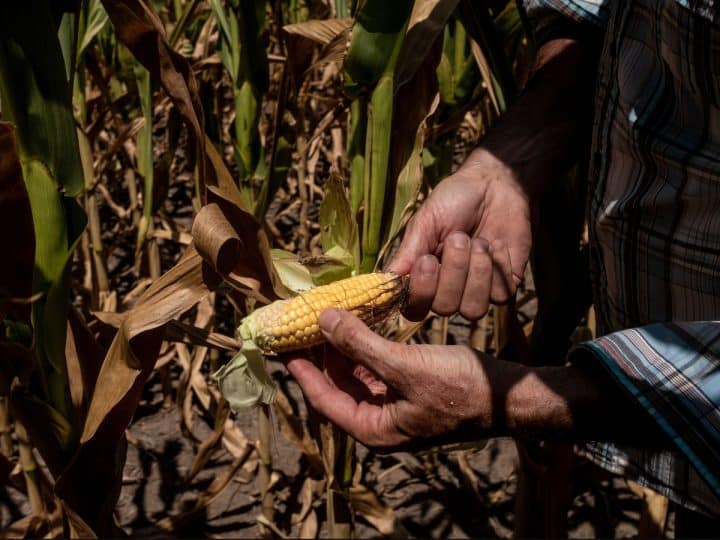

The government has been accused of seeming to “cover up” its “embarrassment” by trying to hide an explosive report, which revealed the dire state of the climate and biodiversity emergencies.
The comments were made after the Cabinet Office rejected a Freedom of Information (FOI) Act request from the Canary, which asked the Prime Minister’s Office to release documents showing discussions between officials about the timing of the publication of the Nature security assessment on global biodiversity loss, ecosystem collapse and national security.
The assessment was published in January 2026 following an FOI request from the Green Alliance think tank. It was originally scheduled for publication in Autumn 2025. The Times reported that publication of the report was stalled by 10 Downing Street because of fears that it was too negative.
The government was shamed in the House of Lords on 23 February 2026 for its lack of transparency around the report. It was accused of only releasing it following the Green Alliance FOI request, and was urged by peers to release the unabridged version.
Canary attempt to bring more transparency to report publication rejected
On 10 February, the Canary wrote to the Prime Minister’s Office, requesting that it make public any correspondence between officials about the timing of the publication of the assessment. On 11 February, the Cabinet Office responded on behalf of the Prime Minister’s Office, saying a response would be sent by 10 March.
On 10 March, the Cabinet Office extended its own deadline to respond to the FOI request to 10 April. No formal response to the request was received by that date, so on 18 April, the Canary requested that the Cabinet Office conduct an internal review into its handling of the request – a standard procedure according to the FOI Act.
The Cabinet Office did not respond to the request for an internal review, so on 22 April, the Canary requested that the Information Commissioner’s Office (ICO) intervene to get a response. On 14 May, the ICO informed the Canary that the ICO had asked the Cabinet Office to respond.
Finally, on 18 May, the Cabinet Office sent its response to the original FOI request. In its response, which ignored the request for an internal review, it said:
We are writing to advise you that following a search of our paper and electronic records, we have established that the information you requested is held by the Cabinet Office.
However, we have determined that this information is exempt from disclosure under Section 24(1) FOIA. Section 24 exempts information from disclosure if its exemption is required for the purpose of safeguarding national security.
According to the ICO, in terms of Section 24 of the FOI Act, “there is no definitive definition of national security”, and this gives public authorities broad authority within which to reject FOI requests.
FOI rejection ‘has the feel of the government covering up their cover-up’ – peer
Green Party peer Jenny Jones spoke in the 23 February debate in the House of Lords about the assessment, and reviewed the FOI rejection sent to the Canary.
She said:
This has the feel of the government covering up their cover-up by claiming national security when it is really just their embarrassment at trying to hide the report in the first place.
I’m worried that this government is trying to downplay the national security issues relating to climate change because it lacks the will to take action and deal with them.
The impacts of the climate crisis are huge and they will grow every year and every decade. If we don’t prepare now then our economy and society could collapse under the strain.
Government’s ‘caginess’ over assessment publication raises transparency concerns
Analysis from the Bulletin of the Atomic Scientists – the organisation which publishes the high-profile Doomsday Clock – published an article on 23 February 2026. It was written by the US National Security Archive’s Climate Change Transparency Project director Rachel Santarsiero, where she quoted former US intelligence official at the State Department’s Bureau of Intelligence and Research, Rod Schoonover.
Schoonover said:
The rigour of the Defra assessment doesn’t negate its bungled rollout, nor the public backlash that ensued. Any pull back from transparency is a mistake from any government.
He added:
I suspect that the intelligence community did not make the determination that this [report] should not go forward. It feels like [it came from] someone higher up.
Santarsiero reacted to the FOI rejection sent to the Canary and said:
There are many legitimate reasons for keeping classified intelligence classified (like protecting genuine national security concerns or not wanting to identify specific sources and methods used in intelligence gathering).
For example, in the United States, the Office of the Director of National Intelligence creates both a classified and unclassified version of its Annual Threat Assessment, and it’s upfront with the public about this.
Once every two years, the UK Government publishes a National Risk Register, which it says “is the external version of the National Security Risk Assessment (NSRA)”. The register “outlines the most serious risks facing the United Kingdom”.
Santarsiero continued:
But the UK government’s bungled rollout of the biodiversity report – and ensuing caginess in its back and forth since – certainly does not inspire confidence in the government’s commitment to transparency.
Even if the PM’s office is shielding citizens from very real national security threats, how it’s gone about it has eroded public trust and credibility – which can be more damaging in the long-run in protecting against global risks.
The distraction provided by the Labour leadership psychodrama is unlikely to inspire the government to engage in greater transparency over issues like the nature security assessment, which would potentially open it up to more criticism of its lack of action on the climate and biodiversity emergencies.
Featured image via Anita Pouchard Serra/Bloomberg/Getty Images
By Tom Pashby
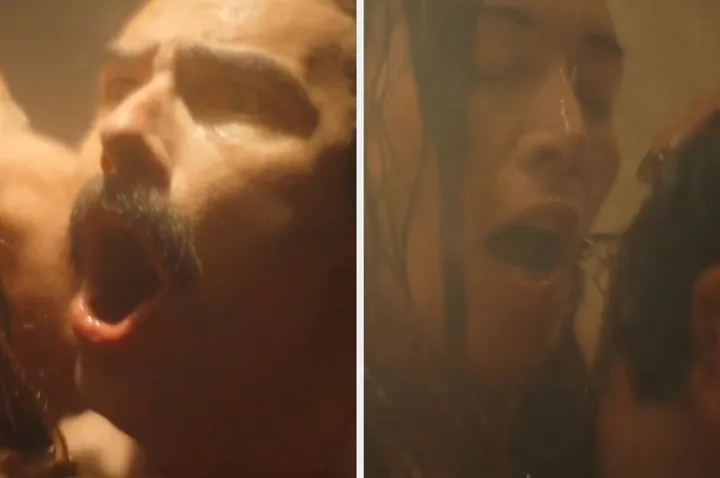
The current season of Rivals very much started as it meant to go on when it returned to our screens earlier this month, kicking things off with a raunchy shower scene.
In the sequence in question, Victoria Smurfit’s Maud O’Hara was seen sharing a steamy shower with her husband Declan, played by Aidan Turner, in what was later reduced to a comedy of errors resulting in a scene-stealing EastEnders cameo.
Rivals’ robust approach to intimacy co-ordination is already well-documented, with Victoria telling fans at the Hay Festival on Sunday that both she and Aidan were required to wear “modesty equipment” for the shoot.
Or, at least, that was the plan.
“It was long, pink and a fucking plaster,” the actor said, as reported by The Times. “You take the plaster, you jam it on and hope it stays there.”
She continued: “I have to be honest with you – under a storming shower, it doesn’t stay there for long. You give up. You just realise that glue is not what it was in the 80s.”

Victoria previously praised the show’s “fantastic” intimacy coordinators, who help facilitate its many, many sex scenes safely for actors and crew members, while promoting season one.
“Pretty much all of the characters have to de-robe at some stage, whether it’s for comedy, love or power, so we had two intimacy coordinators,” she told The Gloss.
“They were fantastic because, what I’d never realised before, was how much they bring to the camera angles and the story-telling. It’s not just to protect the actors; it’s much deeper.”
Similarly, she told Evoke: “The intimacy coordinators were amazing, all 27,000 of them because they were able to [explain], ‘This is what sells the story of the sex’, because each of the sex scenes for everybody is telling a story about the characters and how they function.”
As a result, the hardest part of shooting each of these scenes, she claimed, was worrying “how cold are we going to be in this outfit?”.
Rivals continues on Friday 29 May and 5 June, before taking a mid-season break and returning later in 2026.

We hope you love the products we recommend! All of them were independently selected by our editors. Just so you know, HuffPost UK may collect a share of sales or other compensation from the links on this page if you decide to shop from them. Oh, and FYI – prices are accurate and items in stock as of time of publication.
Whew – between its early heavy rain and sudden boiling heat, and with half-term now taking place, May’s been pretty hectic.
Perhaps that explains why our readers’ tastes have been, well, eclectic recently. You’ve been eyeing up everything from sex toys to summery clothes to solar panels in the past couple of weeks.
Here are 17 finds you lot have been loving in May:
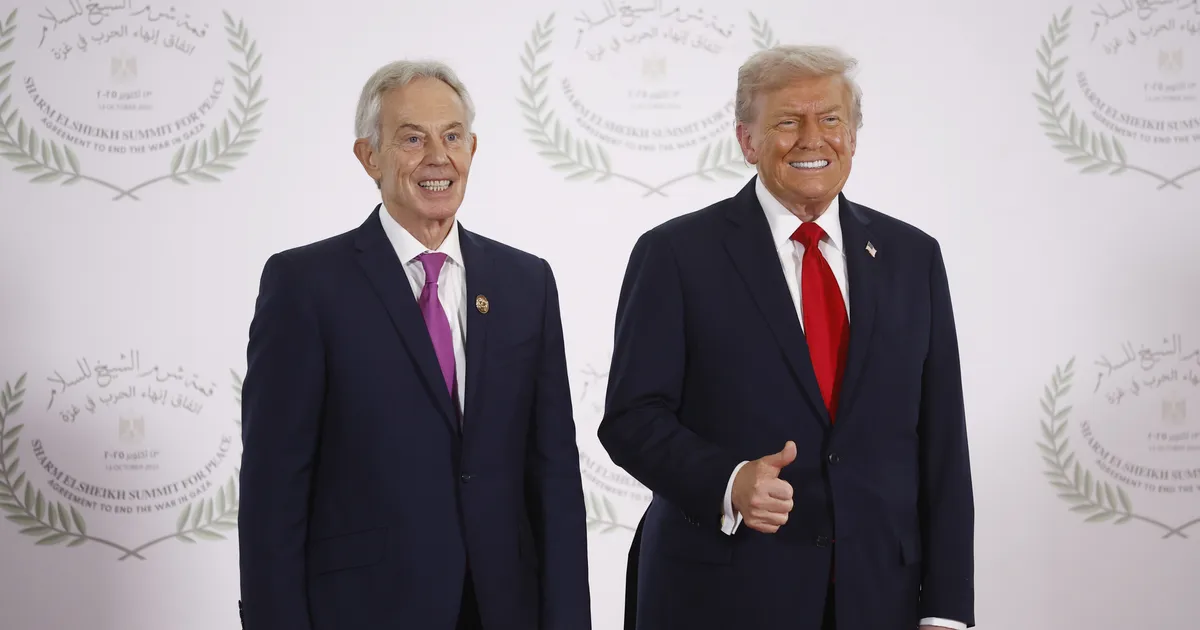
Tony Blair has called on the UK to maintain its close ties with Donald Trump’s America even when it’s “difficult or unpopular”.
The former Labour prime minister has penned a brutal essay calling for a policy reset within the party.
Deep fractures between the White House and Downing Street have emerged in recent months after Starmer refused Trump’s requests for aide in the Iran war and turned down US pleas to send warships to the Middle East.
The US president has subsequently compared Starmer to Neville Chamberlain, the prime minister who proposed Nazi appeasement before World War 2.
Blair, who went to war in Iraq out of support for US president George W Bush, suggested Starmer needed to hold onto the relationship with America.
He claimed that the UK-US relationship “has always been an unequal partnership”, adding: “America is much more powerful than any single allied country, is the dominant force and therefore is the ‘shot-caller’.
“This has been true at least for the last half-century. Most American presidents have been too polite to say this; but they always thought it and more important, acted on it.
“That is why I don’t believe with the Trump Presidency we’re witnessing a ‘rupture’ [in relations].”
Blair claimed it was more of a “reckoning”, and it was time for the UK to wake up to “some home truths” from the States.
He also defended Trump’s repeated attacks on the Nato defence alliance, saying: “Though American security strategy is couched in very ‘America First’ terms, it identifies the principal threats – in the Arctic from Russia; longer term, globally, from China; and in the Middle East from Iran – no differently from how Europe sees the world.
“President Trump has demanded increases in Nato spending not dissolution of the alliance.”
Blair said the UK’s relationship with the US was now “weaker” after Starmer refused Trump’s request for American access to military bases for preemptive strikes on Iran earlier this year.
This move was widely welcomed by the general voters.
Public First research for Politico found that more than half (53%) of the UK public viewed America as a negative force globally in April, up from 35% in December.
But Blair said: “I understand the reasons for refusal but it’s not the best way to treat our ally.”
He added: “If you want to play you have to be sat at the table. And bring something to the table.”
However, he struck a more sympathetic tone when he added: “I know how hard it is to be an ally of the USA.
“We were its staunchest supporter post 9/11. We went through Afghanistan and Iraq together. But it mattered deeply to America and so it mattered to us also.
“America remains the indispensable core of Britain’s security alliance. But staying with it means even when it is difficult or unpopular.”
He warned: “The cumulative risk for Britain is that we become frighteningly insular: wary of America because of President Trump.”
Blair later adding on BBC Radio 4′s Today programme: “I’m not saying the Labour Party should love Donald Trump, get close to Donald Trump.
“I’m simply saying the American relationship matters to Britain.”
Blair was announced as a senior executive on Trump’s “Board of Peace” earlier this year, an initiative meant to initially run Gaza following the end of the Israel-Hamas war.
His appointment sparked fury within the Middle East because of Blair’s past involvement in Iraq.
Subscribe to Commons People, the podcast that makes politics easy. Every week, Kevin Schofield and Kate Nicholson unpack the week’s biggest stories to keep you informed. Join us for straightforward analysis of what’s going on at Westminster.
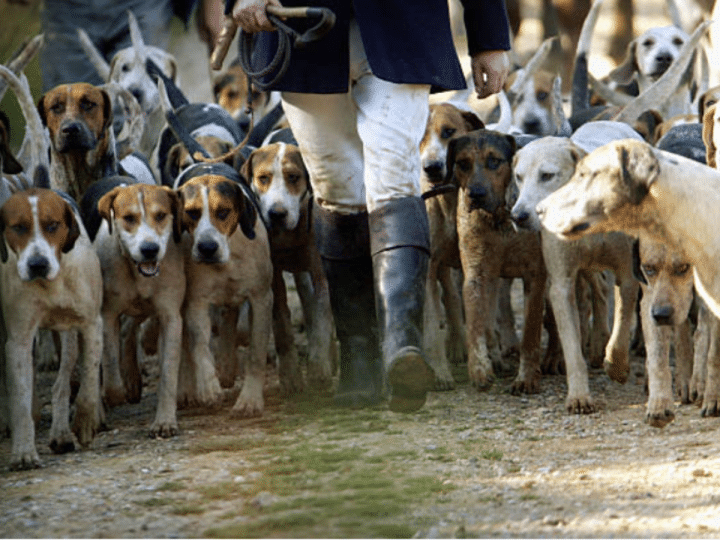

A bill that would outlaw the cruel practice of hunting wild mammals with dogs has now reached the committee stage at Stormont. Moreover, the Hunting with Dogs Bill sets out to:
…prohibit hunting wild mammals with dogs; to prohibit trail hunting; to prohibit terrier work; and to set out exemptions from these prohibitions.
It was introduced by Alliance Party MLA John Blair at the end of April. Additionally, it passed the second stage of the legislative process by 60 votes to 15. The League Against Cruel Sports (the League) and the Ulster Society for the Prevention of Cruelty to Animals (USPCA) celebrated the bill’s progression. They said they were:
…delighted that MLAs have seen through…scare tactics…
These included feeble attempts by opponents to suggest dog walking and lawful protection of livestock would be criminalised.
In Stormont, Democratic Unionist MLA Tom Buchanan repeated these distortions, claiming the bill was “vague” and would “criminalise rural life” … sure.
However, Blair made it clear that the bill still enabled farmers to use a gun to stop foxes attacking livestock.
DUP dinosaurs endorse cruel so-called ‘sport’
In addition, he pointed out that in Britain, where fox hunting has been banned, there have been no prosecutions for dog walkers whose animal set off after a fox. However, the DUP and Traditional Unionist Voice (TUV) remain determined to exist decades behind the rest of the planet. These are the only parties to vote against the bill.
Áine Murphy of Sinn Féin said the party would back the bill to ensure its progression to committee stage. She expressed some reservations about whether it allowed farmers to lawfully engage in wildlife management. Moreover, Robbie Butler of the Ulster Unionist Party (UUP) said:
The UUP is broadly supportive of the principles underpinning [the] bill.
Presenting the bill for its second stage, Blair immediately set out the reality of the cruelty inherent to the so-called sport, saying:
I’m about to paint a very graphic picture for members and I make no apologies for it, because we need to confront the facts and the cruelty behind this debate, and be truthful about what this practice truly entails.
A wild mammal such a fox is pursued over a long distance by a pack of dogs until the point of exhaustion. If caught it will be torn apart by the hounds. If it manages to escape, it may still be left severely injured, traumatised and bleed to death.
In some case if the animal goes to ground, terriers are sent underground to flush it out, prolonging suffering further still.
“Faces stapled together” — dogs suffering too
The Alliance representative said the horror doesn’t merely extend to what the fox suffers, but the dogs used can often sustain horrendous injuries too. He said this occurs:
…particularly when an animal fights back or during terrier work underground.
He said these dogs often receive “inadequate treatment” for the wounds they endure. In addition, he spoke of reports from vets describing “terriers with their faces stapled together”. Blair spoke of poor general welfare for hounds used in the barbaric so-called ‘sport,’ saying animal welfare groups have compiled reports of malnutrition endured by these animals. He said there was also:
…filmed evidence of healthy hounds being shot in the head when they are no longer considered useful for hunting.
Hunting dogs are generally considered past their prime at just six years old. This mirrors the horrific sort of practices found in another cruel ‘sport’ yet to be banned in the North of Ireland. For instance, see greyhound racing.
The South Antrim MLA highlighted the contradiction of pro-hunting groups. They claim that dogs are beloved family pets and that huge numbers would need to be immediately euthanised if the bill passes. Hardly a way to treat a cherished part of the family.
Blair went on to cite the “biosecurity concerns” hunting with dogs creates. These stem from delightful-sounding instances of “hounds contracting parasites from raw carcasses”. Furthermore, the practice of hunts roaming across vast tracts of countryside then leads to potentially widespread contamination. This includes contamination of livestock.
Huge majority in North of Ireland back ban
These marauding bands of sadists continuing a colonial practice also wreck fields and hedges as they go, disturb other animals and block roads. Blair said he:
…regularly heard from farm landowners and country residents who don’t want hunts on or near their land.
This indicates, in line with existing polling in the south of Ireland, that rural people largely despise the cruel practice. Besides, a consultation on this legislation received a mammoth 12,000 responses in the North of Ireland. That is far more than typically received on Stormont bills. 72% of residents from the north of Ireland who responded oppose hunting wild mammals with dogs.
The bill also seeks to close loopholes exploited in places where a ban exists, banning trail hunting and terrier work. Trail hunting is not banned in England and is often used as a means to hunt foxes under the guise of a legal practice.
If the Stormont bill passes, offenders will potentially face 12 months in jail or up to a £20,000 fine in a magistrates court. However, in a crown court, the fine will be unlimited and time behind bars could be five years.
Graeme Robertson/Getty Images
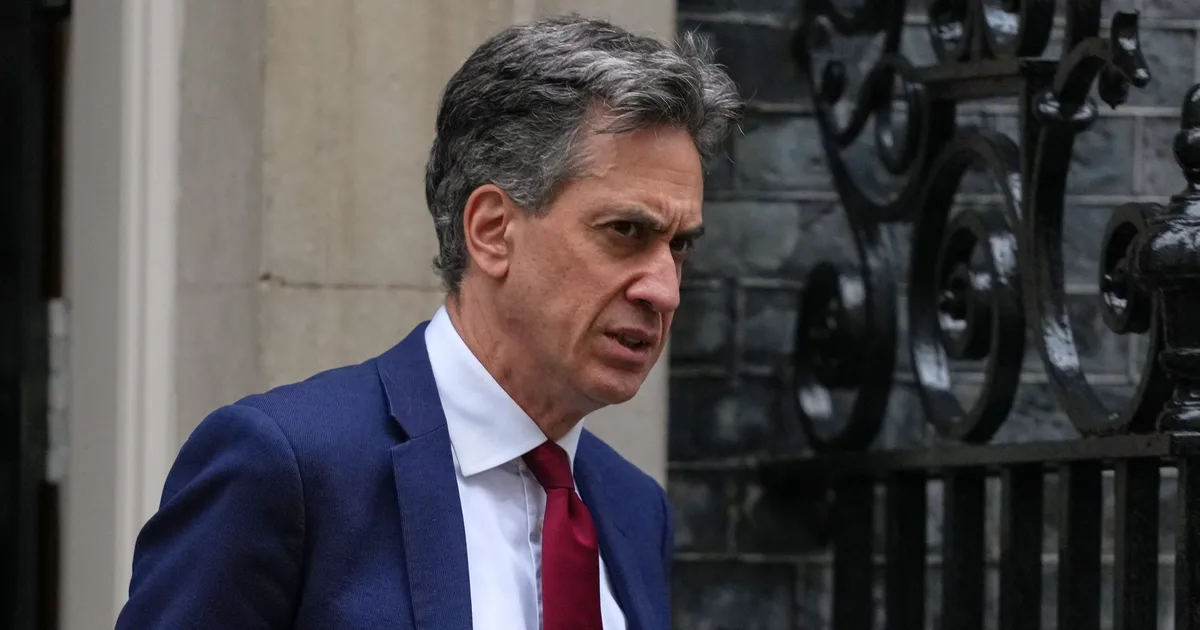
Ed Miliband has hit out at Donald Trump’s ongoing war in Iran after the energy price cap increased.
Regulator Ofgem has just announced the energy price cap will be going up by 13% between July 1 and September 30.
That means the average gas and electricity bill will increase to £1,862 a year, adding a significant strain to households across the country.
Responding to the concerning update, energy secretary Ed Miliband said: “The rise in the price cap because of a war we did not choose is deeply unwelcome news for households across the country.”
Trump worked with his Israeli allies to launch an attack on Iran at the end of February.
Iranian troops responded by blockading the Strait of Hormuz, a major shipping lane which is responsible for transporting a fifth of the world’s oil and liquefied natural gas supplies.
Three months later, the effective closure of the waterway continues as negotiation efforts stall – meaning energy prices around the world have gone up.
The US did ask to use British military bases to initiate preemptive strikes on Iran, but Starmer declined, only allowing the sites to be used for defensive action.
The UK, along with European allies, also turned down Trump’s plea to send warships to the Strait of Hormuz to force it to reopen.
The war has opened a chasm in diplomatic relations between the White House and Downing Street, as Starmer insists Britain will not be drawn into a “wider war”.
Miliband said the government would continue trying to help the public amid rising bills, adding: “We know people were under pressure before this crisis, and that’s why easing that burden is our number one priority. ”
He pointed out that chancellor Rachel Reeves froze fuel duty and made bus travel free for children across England in August.
The cabinet minister noted that the government has also taken £150 average costs off energy bills for the years ahead, and extended the Warm Home Discount for around six million families, too.
Miliband said: “We will continue to monitor the situation ahead of the winter and plan for all contingencies.
“In the immediate term it is essential to de-escalate this conflict to bring oil and gas prices down and as Britain faces the second fossil fuel crisis of this decade, we must learn the right lessons.
“The way to get bills down for good and avoid these price spikes is to go further and faster with this government’s drive for clean homegrown power we control. We are upgrading as many homes as possible ahead of winter with the biggest investment in warm homes in British history.”
Caroline Abrahams, charity director at Age UK, warned that this would be a very troubling update for the elderly.
She said: “Even during this unprecedented hot weather for May, older people on low incomes are already worrying about how they will afford to stay warm next winter.
“We know that today’s price cap increase is the shape of worse to come when the next price cap is announced, because by then the impact of the war in the Middle East will really be feeding through into prices.
“Unfortunately, these elevated energy costs due to the war will hit just at the time when pensioners will need their heating the most, as we head into winter.”
Age UK urged the government to come up with “an effective plan now to help older people on low incomes to get through the coming winter unscathed”.
Abrahams added: “It’s imperative that we avoid a repeat of the 2024/5 winter, when millions of older people were cold in their own homes.”
Subscribe to Commons People, the podcast that makes politics easy. Every week, Kevin Schofield and Kate Nicholson unpack the week’s biggest stories to keep you informed. Join us for straightforward analysis of what’s going on at Westminster.

SpaceX’s $2 Trillion IPO: Why Tech Giants Nvidia (NVDA), Apple (AAPL), and Microsoft (MSFT) May Face Pressure

Emmy-Winning Writer Tried Saving Star Wars With The Most Hated Character

Wednesday’s Workwear Report: Nika Top


-

 Crypto World6 days ago
Blockchain.com files with SEC for U.S. IPO
-

 Fashion5 days ago
Holiday Weekend Open Thread – Corporette.com
-

 Crypto World5 days ago
Bitcoin Accumulation Weakens as BTC Realized Losses Hit $600M
-

 Business5 days ago
Dell Technologies DELL Stock Surges 15% on AI Server Momentum and Analyst Upgrades in 2026
-

 Crypto World4 days ago
Robinhood crypto COO Tanya Denisova exits
-

 Politics5 days ago
Makerfield: a tale of two social-media histories
-

 Crypto World5 days ago
Space X IPO Is ‘Bad News’ for Tech Stocks: But What About Bitcoin?
-

 Business3 days ago
NYT Strands Answers May 24 2026 Revealed for Puzzle No. 812 Theme Summer Essentials
-

 Tech2 days ago
Microsoft’s quiet Claude Code retreat and the real cost of enterprise AI
-
 Crypto World5 days ago
MicroStrategy’s Saylor Says Miners No Longer Set Bitcoin Price, Another Force Has Taken Over
-

 Tech6 days ago
WhatsApp ads could make Irish debut after discussions with DPC
-

 Crypto World5 days ago
AI infrastructure race heats up as IREN pitches full-stack strategy, WhiteFiber lands $160M deal
-
 NewsBeat6 days ago
Charity run by Reform leader Malcolm Offord accused of ‘law breaking’ over Scottish registration
-
 Tech5 days ago
A 0.12% parameter add-on gives AI agents the working memory RAG can’t
-
 Crypto World2 days ago
Nvidia (NVDA) CEO Calls on Super Micro to Strengthen Export Controls Amid Smuggling Probe
-

 Tech5 days ago
You Can Now Add ChatGPT To PowerPoint
-

 Tech2 days ago
Westone Audio and Etymotic Acquired by Fidelity Collective in Major IEM Market Move
-

 Business5 days ago
Trump Invests $1M-$5M in Kura Sushi USA Chain With 27 California Locations
-
 Sports5 days ago
2026 CJ Cup Byron Nelson leaderboard: Brooks Koepka finds putting stroke in Round 1
-

 Crypto World7 days ago
Exa Labs raises $250 million in funding led by a16z
You must be logged in to post a comment Login