The Super Bowl is happening in Silicon Valley this Sunday, and the Patriots-Seahawks game at Levi’s Stadium is going to be packed with tech money. YouTube CEO Neal Mohan is expected to be there. Apple’s Tim Cook, too. (He has become a Super Bowl fixture since Apple Music began sponsoring the halftime show several years ago.)
Longtime VC Venky Ganesan from Menlo Ventures gave the New York Times a quote about the whole thing, saying the Super Bowl in the Bay Area is “tech billionaires who got picked last in gym class paying $50,000 to pretend they’re friends with the guys who got picked first.” Added Ganesan, “And for the record, I, too, was picked last in gym class.”
Ganesan could likely afford a $50,000 ticket if he needed one. Menlo went all-in on Anthropic, setting up a $100 million fund with the AI company in summer 2024 to invest in other AI startups. The firm has also joined numerous funding rounds for Anthropic itself, both through its flagship fund and various special purpose vehicles. (Anthropic is reportedly expected to close a $20 billion round of funding next week at a post-money valuation of $350 billion.)
Tickets are expensive across the board, averaging almost $7,000 according to the Times (with some last-minute seats still available on StubHub for closer to $3,600, according to a quick glance at the ticket reseller site). Only a quarter go to the general public; the rest are distributed to NFL teams. Of all ticket buyers, the largest group (27%) is coming from Washington State for the Seahawks, who’ve won just one Super Bowl in franchise history compared with the Patriots’ six titles, all with Tom Brady as quarterback.
Advertisement
Google, OpenAI, Anthropic, Amazon, and Meta are splashing out for competing ads about whose AI is best for customers, so maybe their respective CEOs will show up, too. Other than Amazon’s Andy Jassy, who reportedly splits his time between Seattle and Santa Monica, all of them have homes within an hour or so of Sunday’s game.
This is just the third time the Bay Area has hosted the Super Bowl. The first time was in 1985 at Stanford Stadium, the original football stadium at Stanford University, where the 49ers beat the Dolphins. The second took place 10 years ago at Levi’s Stadium, when the Broncos beat the Panthers.
US households contribute monthly fees while platforms still impose substantial network infrastructure burdens
Broadband cost recovery does not reflect actual traffic or usage patterns
Heavy users in the electricity and airline sectors pay proportionally for demand
Broadband networks in the United States operate under a cost model that does not align with actual usage – as households generate substantial revenue for major internet platforms while also contributing to the Universal Service Fund, which supports rural connectivity, schools, libraries, and healthcare facilities.
A typical US broadband household contributes roughly $9 per month to this fund, yet the largest traffic generators impose substantial infrastructure burdens without proportional contributions.
New analysis from Strand Consult has outlined how this creates a structural mismatch where consumers fund network maintenance and expansion, while platforms benefiting from the highest traffic volumes contribute little to last-mile investment or affordability mechanisms.
Article continues below
Advertisement
Major broadband benefactors pay only a fraction
Infrastructure systems generally charge heavy users proportionally for the demand they place on networks – as industrial electricity consumers, airlines, and high-volume transaction networks all pay usage-based fees that reflect the costs they impose.
Hyperscale data centers regularly sign long-term agreements, finance interconnection upgrades, and pay demand charges that protect residential ratepayers.
Advertisement
Strand Consult observes the White House’s Ratepayer Protection Pledge reinforces this principle, calling on the largest users of energy infrastructure to bear the costs they generate.
However, broadband remains an exception, with major traffic generators often paying nothing at the point of network interconnection, despite consuming substantial capacity.
Sign up to the TechRadar Pro newsletter to get all the top news, opinion, features and guidance your business needs to succeed!
A model in South Korea shows how usage-based cost recovery can coexist with high-performing broadband markets, as large domestic and global platforms pay network operators for the infrastructure their services use, allowing operators to recover costs while maintaining competitive prices.
Advertisement
In the Caribbean, global platforms generate revenue from local users without paying for the networks they rely on.
Strand Consult calls this “digital colonialism” and notes that smaller markets face particular challenges because infrastructure costs cannot be spread across large populations.
These examples suggest that broadband could adopt proportional contribution mechanisms similar to other sectors.
Advertisement
Broadband is competitive, and prices have generally fallen, even as demand and traffic from streaming, ad-tech, and AI services rise.
Providers invest tens of billions annually in upgrades such as fiber, DOCSIS 4.0, 5G, and satellite networks, but high-traffic platforms, including sports and streaming services, add strain to networks without paying for the extra infrastructure.
Reforming the Universal Service Fund or introducing traffic-based pricing could ensure that the largest users contribute fairly.
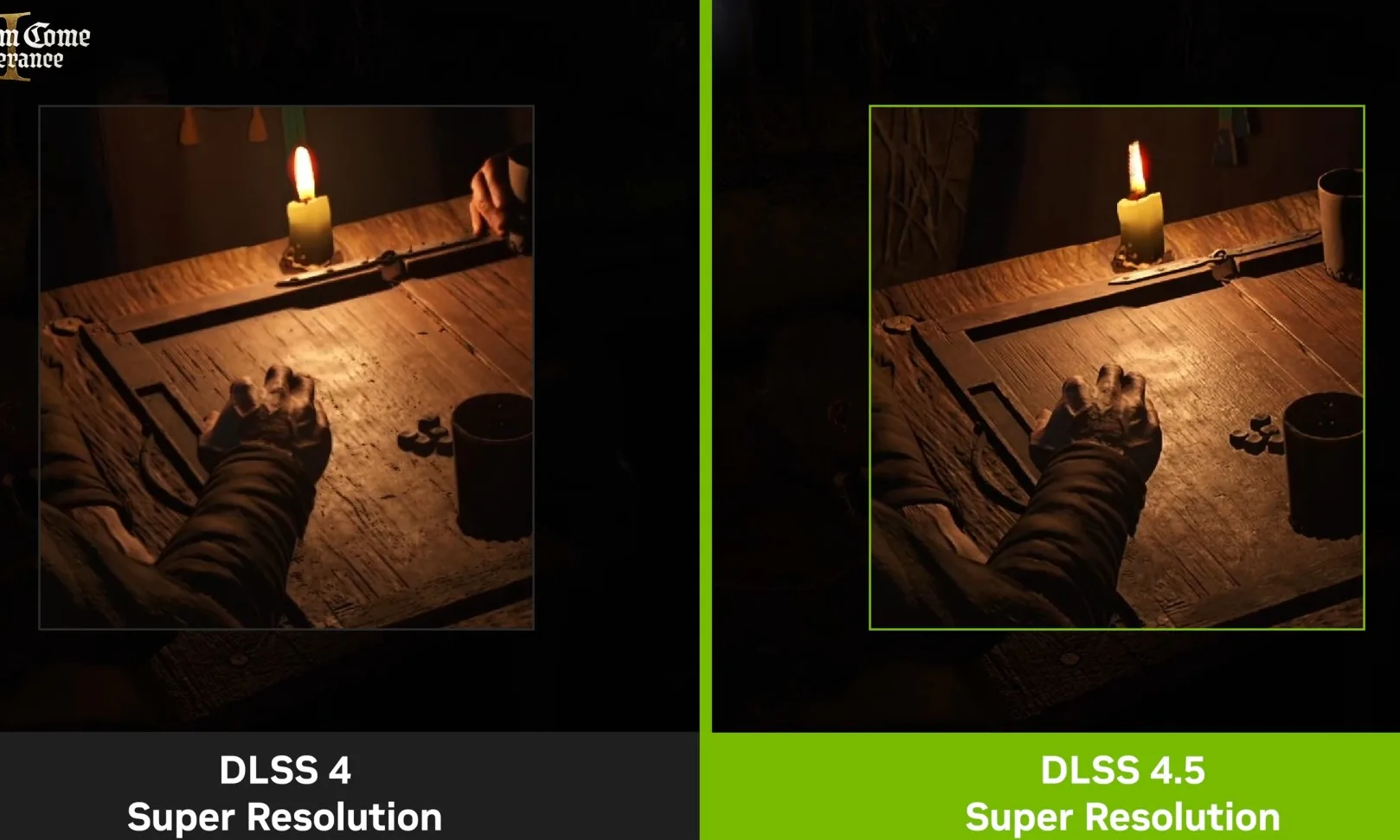
Nvidia has just announced DLSS 4.5. The update brings new AI-powered graphics technology, and the improvements offer a noticeable impact on how modern PC games look and perform. It was revealed alongside other RTX announcements during GDC 2026, focusing on boosting both visual quality and frame rates in demanding titles.
DLSS (Deep Learning Super Sampling) has become a big part of Nvidia’s gaming ecosystem. It uses AI models running on RTX GPUs to reconstruct higher-resolution images and generate additional frames that allow games to run more smoothly without sacrificing visual fidelity. With DLSS 4.5, the technology is getting even better.
Smarter frame generation with DLSS 4.5
Kingdom Deliverance 2 with DLSS 4.5Nvidia
One of the notable new additions in DLSS 4.5 is Dynamic Multi Frame Generation, which automatically adjusts how many AI-generated frames are created during gameplay. Rather than sticking to a fixed multiplier, the system dynamically tweaks frame generation in real time to hit the target refresh rate. This approach lets compatible GPUs maintain smoother performance during demanding scenes while avoiding unnecessary frame generation when workloads drop.
DLSS 4.5 also introduces the 6X Multi Frame Generation, which can generate up to five additional frames for every traditionally rendered frame. The result is significantly smoother gameplay, particularly in high-fidelity titles that use advanced rendering techniques like path tracing.
AI upgrades for sharper visuals
Black Myth Wukong with DLSS 4.5Nvidia
Aside from the performance improvements, DLSS 4.5 also upgrades Nvidia’s Super Resolution technology using a second-generation transformer AI model. It is designed to improve image clarity by reducing artifacts such as ghosting, shimmering, and jagged edges in motion-heavy scenes.
Coming to RTX 50 series GPUs soon
Nvidia has confirmed DLSS 4.5 features like Dynamic Multi Frame Generation and the 6X mode will roll out starting March 31 through the Nvidia app. It will first debut in GeForce RTX 50-series GPUs, and will be supported in around 20 games like 007 First Light and Control Resonant.
OpenAI launched Codex Security on March 6, entering the application security market that Anthropic had disrupted 14 days earlier with Claude Code Security. Both scanners use LLM reasoning instead of pattern matching. Both proved that traditional static application security testing (SAST) tools are structurally blind to entire vulnerability classes. The enterprise security stack is caught in the middle.
Anthropic and OpenAI independently released reasoning-based vulnerability scanners, and both found bug classes that pattern-matching SAST was never designed to detect. The competitive pressure between two labs with a combined private-market valuation exceeding $1.1 trillion means detection quality will improve faster than any single vendor can deliver alone.
Neither Claude Code Security nor Codex Security replaces your existing stack. Both tools change procurement math permanently. Right now, both are free to enterprise customers. The head-to-head comparison and seven actions below are what you need before the board of directors asks which scanner you are piloting and why.
How Anthropic and OpenAI reached the same conclusion from different architectures
Anthropic published its zero-day research on February 5 alongside the release of Claude Opus 4.6. Anthropic said Claude Opus 4.6 found more than 500 previously unknown high-severity vulnerabilities in production open-source codebases that had survived decades of expert review and millions of hours of fuzzing.
Advertisement
In the CGIF library, Claude discovered a heap buffer overflow by reasoning about the LZW compression algorithm, a flaw that coverage-guided fuzzing could not catch even with 100% code coverage. Anthropic shipped Claude Code Security as a limited research preview on February 20, available to Enterprise and Team customers, with free expedited access for open-source maintainers. Gabby Curtis, Anthropic’s communications lead, told VentureBeat in an exclusive interview that Anthropic built Claude Code Security to make defensive capabilities more widely available.
OpenAI’s numbers come from a different architecture and a wider scanning surface. Codex Security evolved from Aardvark, an internal tool powered by GPT-5 that entered private beta in 2025. During the Codex Security beta period, OpenAI’s agent scanned more than 1.2 million commits across external repositories, surfacing what OpenAI said were 792 critical findings and 10,561 high-severity findings. OpenAI reported vulnerabilities in OpenSSH, GnuTLS, GOGS, Thorium, libssh, PHP, and Chromium, resulting in 14 assigned CVEs. Codex Security’s false positive rates fell more than 50% across all repositories during beta, according to OpenAI. Over-reported severity dropped more than 90%.
Checkmarx Zero researchers demonstrated that moderately complicated vulnerabilities sometimes escaped Claude Code Security’s detection. Developers could trick the agent into ignoring vulnerable code. In a full production-grade codebase scan, Checkmarx Zero found that Claude identified eight vulnerabilities, but only two were true positives. If moderately complex obfuscation defeats the scanner, the detection ceiling is lower than the headline numbers suggest. Neither Anthropic nor OpenAI has submitted detection claims to an independent third-party audit. Security leaders should treat the reported numbers as indicative, not audited.
Merritt Baer, CSO at Enkrypt AI and former Deputy CISO at AWS, told VentureBeat that the competitive scanner race compresses the window for everyone. Baer advised security teams to prioritize patches based on exploitability in their runtime context rather than CVSS scores alone, shorten the window between discovery, triage, and patch, and maintain software bill of materials visibility so they know instantly where a vulnerable component runs.
Advertisement
Different methods, almost no overlap in the codebases they scanned, yet the same conclusion. Pattern-matching SAST has a ceiling, and LLM reasoning extends detection past it. When two competing labs distribute that capability at the same time, the dual-use math gets uncomfortable. Any financial institution or fintech running a commercial codebase should assume that if Claude Code Security and Codex Security can find these bugs, adversaries with API access can find them, too.
Baer put it bluntly: open-source vulnerabilities surfaced by reasoning models should be treated closer to zero-day class discoveries, not backlog items. The window between discovery and exploitation just compressed, and most vulnerability management programs are still triaging on CVSS alone.
What the vendor responses prove
Snyk, the developer security platform used by engineering teams to find and fix vulnerabilities in code and open-source dependencies, acknowledged the technical breakthrough but argued that finding vulnerabilities has never been the hard part. Fixing them at scale, across hundreds of repositories, without breaking anything. That is the bottleneck. Snyk pointed to research showing AI-generated code is 2.74 times more likely to introduce security vulnerabilities compared to human-written code, according to Veracode’s 2025 GenAI Code Security Report. The same models finding hundreds of zero-days also introduce new vulnerability classes when they write code.
Cycode CTO Ronen Slavin wrote that Claude Code Security represents a genuine technical advancement in static analysis, but that AI models are probabilistic by nature. Slavin argued that security teams need consistent, reproducible, audit-grade results, and that a scanning capability embedded in an IDE is useful but does not constitute infrastructure. Slavin’s position: SAST is one discipline within a much broader scope, and free scanning does not displace platforms that handle governance, pipeline integrity, and runtime behavior at enterprise scale.
Advertisement
“If code reasoning scanners from major AI labs are effectively free to enterprise customers, then static code scanning commoditizes overnight,” Baer told VentureBeat. Over the next 12 months, Baer expects the budget to move toward three areas.
Runtime and exploitability layers, including runtime protection and attack path analysis.
AI governance and model security, including guardrails, prompt injection defenses, and agent oversight.
Remediation automation. “The net effect is that AppSec spending probably doesn’t shrink, but the center of gravity shifts away from traditional SAST licenses and toward tooling that shortens remediation cycles,” Baer said.
Seven things to do before your next board meeting
Run both scanners against a representative codebase subset. Compare Claude Code Security and Codex Security findings against your existing SAST output. Start with a single representative repository, not your entire codebase. Both tools are in research preview with access constraints that make full-estate scanning premature. The delta is your blind spot inventory.
Build the governance framework before the pilot, not after. Baer told VentureBeat to treat either tool like a new data processor for the crown jewels, which is your source code. Baer’s governance model includes a formal data-processing agreement with clear statements on training exclusion, data retention, and subprocessor use, a segmented submission pipeline so only the repos you intend to scan are transmitted, and an internal classification policy that distinguishes code that can leave your boundary from code that cannot. In interviews with more than 40 CISOs, VentureBeat found that formal governance frameworks for reasoning-based scanning tools barely exist yet. Baer flagged derived IP as the blind spot most teams have not addressed. Can model providers retain embeddings or reasoning traces, and are those artifacts considered your intellectual property? The other gap is data residency for code, which historically was not regulated like customer data but increasingly falls under export control and national security review.
Map what neither tool covers. Software composition analysis. Container scanning. Infrastructure-as-code. DAST. Runtime detection and response. Claude Code Security and Codex Security operate at the code-reasoning layer. Your existing stack handles everything else. That stack’s pricing power is what shifted.
Quantify the dual-use exposure. Every zero-day Anthropic and OpenAI surfaced lives in an open-source project that enterprise applications depend on. Both labs are disclosing and patching responsibly, but the window between their discovery and your adoption of those patches is exactly where attackers operate. AI security startup AISLE independently discovered all 12 zero-day vulnerabilities in OpenSSL’s January 2026 security patch, including a stack buffer overflow (CVE-2025-15467) that is potentially remotely exploitable without valid key material. Fuzzers ran against OpenSSL for years and missed every one. Assume adversaries are running the same models against the same codebases.
Prepare the board comparison before they ask. Claude Code Security reasons about code contextually, traces data flows, and uses multi-stage self-verification. Codex Security builds a project-specific threat model before scanning and validates findings in sandboxed environments. Each tool is in research preview and requires human approval before any patch is applied. The board needs side-by-side analysis, not a single-vendor pitch. When the conversation turns to why your existing suite missed what Anthropic found, Baer offered framing that works at the board level. Pattern-matching SAST solved a different generation of problems, Baer told VentureBeat. It was designed to detect known anti-patterns. That capability still matters and still reduces risk. But reasoning models can evaluate multi-file logic, state transitions, and developer intent, which is where many modern bugs live. Baer’s board-ready summary: “We bought the right tools for the threats of the last decade; the technology just advanced.”
Track the competitive cycle. Both companies are heading toward IPOs, and enterprise security wins drive the growth narrative. When one scanner misses a blind spot, it lands on the other lab’s feature roadmap within weeks. Both labs ship model updates on monthly cycles. That cadence will outrun any single vendor’s release calendar. Baer said that running both is the right move: “Different models reason differently, and the delta between them can reveal bugs neither tool alone would consistently catch. In the short term, using both isn’t redundancy. It’s defense through diversity of reasoning systems.”
Set a 30-day pilot window. Before February 20, this test did not exist. Run Claude Code Security and Codex Security against the same codebase and let the delta drive the procurement conversation with empirical data instead of vendor marketing. Thirty days gives you that data.
Fourteen days separated Anthropic and OpenAI. The gap between the next releases will be shorter. Attackers are watching the same calendar.
Google report shows attackers shifting to software flaws over weak credentials
Vulnerabilities now account for 44.5% of cloud breaches, exploited within days
Third-party SaaS integrations increasingly abused for data theft and access
To break into cloud environments, cybercriminals are relying less on weak credentials and more on third-party software vulnerabilities, new research from Google has found.
The Cloud Threat Horizons Report claims early in 2025 most compromises still relied on weak, or missing credentials. However, in the second half of the year, attackers increasingly started exploiting vulnerabilities in externally managed software.
The shift was quite significant, too. Software vulnerabilities now account for 44.5% of initial access vectors, taking up a bigger share than weak credentials (27.2%) for the first time ever. Misconfigurations now take up 21%, and exposed interfaces 4.9%.
Article continues below
Advertisement
Changing tactics
The report also states that the hackers are exploiting these flaws much faster than ever before. Apparently, the window between vulnerability disclosure and exploitation shrunk from weeks to mere days, and in some cases, attackers were able to deploy cryptominers within 48 hours of the vulnerability becoming public.
Crooks are also abusing third-party integrations and SaaS relationships, Google said. Of all cloud intrusions tracked throughout 2025, a fifth (21%) involved compromised trusted third-party relationships.
Advertisement
“Akin to a SaaS supply chain compromise, UNC6395 leveraged compromised OAuth tokens associated with the Salesloft Drift application to conduct extensive discovery and bulk exfiltration of sensitive data from Salesforce tenants,” Google said.
“We also saw several intrusions involving theft and abuse of Salesforce Gainsight tokens to gain unauthorized access to victim environments.”
Sign up to the TechRadar Pro newsletter to get all the top news, opinion, features and guidance your business needs to succeed!
This is an important pivot. Misconfigured databases are generally seen as the biggest cause of data leaks, and if cloud storage providers improved identity protections and secure default configurations, and businesses learned a thing or two about securing their cloud infrastructure, it means the industry is moving in the right direction.
Advertisement
It also means attackers are increasingly targeting the weaker links around the cloud platform itself, such as third-party applications, developer tools, CI/CD pipelines, and SaaS integrations.
When you get behind the wheel in the United States, you’re accustomed to a specific set of traffic laws that have become second nature. For the most part, U.S. traffic laws leave personal responsibility for vehicle maintenance and common-sense etiquette as matters of civil politeness or local ordinance, rather than serious, federally backed violations. This familiar framework, however, is a rarity when traveling internationally, where legal systems take over.
While Americans might scoff at the idea of a ticket for an unwashed car, or a potential jail sentence for riding sober next to a drunk friend, these are the real, punitive stakes involved in driving overseas. From Europe’s ancient city centers to Asia’s strict public decency standards, and the Middle East’s emphasis on immaculate urban aesthetics, drivers around the globe are held to a much higher and more diverse set of legal obligations than just keeping their eyes on the road.
Advertisement
The list below goes over unique international driving laws that American motorists rarely, if ever, encounter at home. What is merely considered good etiquette in the U.S. is often a non-negotiable legal requirement in other countries. If you’re planning to visit any, keep in mind that ignorance of the law is rarely a protection against steep fines, vehicle impoundment, or even criminal charges.
Advertisement
Driving shirtless in Thailand
When you picture a road trip through Thailand’s tropical landscapes, the heat and high humidity might immediately make you want to strip down to your most comfortable, minimal clothing. Hopping into a rental car or onto a scooter while wearing only a swimsuit or going bare-chested to beat the intense temperatures might seem tempting, but it could land you on the wrong side of local law enforcement. This isn’t as wild as many of the strangest US driving laws, but it is still strange.
The Motor Vehicle Act says that all motorists (in cars and on motorcycles) must wear a shirt while operating a vehicle. This applies to both locals and international visitors alike, meaning that regardless of how high the temperature climbs, keeping your torso covered is an absolute legal requirement when you’re behind the wheel or operating a bike on public roads.
These aren’t just in traffic rules; they affect other parts of the country’s legal system. So while traffic laws specifically require a shirt, this idea aligns with general public decency rules. The Thai Criminal Code talks about the act in its misdemeanors section. Section 388 strictly bans public obscenity. It says if you do something disgraceful in public, like undressing yourself, showing your exposed self, or any other obscene act, you could receive a fine of up to five hundred baht.
Advertisement
Splashing pedestrians in the United Kingdom
When you’re driving through a heavy downpour in the United States, you might occasionally, and sometimes carelessly, hit a large puddle near the curb, sending a wave of murky rainwater crashing over an unsuspecting pedestrian on the sidewalk. While this scenario is undoubtedly rude, incredibly frustrating for the victim, and generally frowned upon by society, splashing a pedestrian with a puddle isn’t a specific traffic violation in the US.
Across the pond in the United Kingdom, the law takes a much stricter and more punitive approach to this same situation. If you’re planning a road trip through Britain, you must be acutely aware of how you navigate wet roads, because the country has codified this specific breach of etiquette into its legal framework. Under the regulations set forth in the UK, this act is a highly punishable offense.
Advertisement
Specifically, Section 3 of the Road Traffic Act 1988 classifies driving through a puddle to splash a pedestrian as ‘driving without reasonable consideration,’ resulting in fines or points. According to the detailed provisions in the legislation, a motorist is formally regarded in violation of this rule “only if those persons are inconvenienced by their driving.” Being drenched by a tidal wave of dirty street water is clearly recognized as a significant inconvenience under this definition.
Advertisement
Drunk passengers sitting in the front seat in North Macedonia
The idea of a designated driver is a pretty big part of what happens when you go out with friends. When it’s time to head home after having some alcoholic drinks, it is common for drunk friends to just hop in the car, often with one of the most inebriated individuals claiming the front passenger seat. Legally in the US, a drunk passenger can totally ride up front right next to the sober driver, and even drink in some states.
If you happen to be enjoying a night out while traveling in North Macedonia, you’ll need to totally rethink how your group sits before anyone gets into a car. The country’s national traffic safety laws are much stricter and focus more on preventing issues when it comes to where intoxicated people sit inside a moving vehicle. Under its legal framework, anyone who looks like they’re under the influence of alcohol is strictly and legally not allowed to sit in the front passenger seat.
This strict rule is intended to prevent accidents and keep roads safe. A drunk person can be pretty unpredictable, and having them right by the steering wheel, the emergency brake, or even the driver themselves creates an extra risk of sudden distraction or accidental interference.
Advertisement
Always have headlights on in Sweden
When you’re driving back home in America, you’ll find the rules for car lights are pretty standard and easy to understand. The US only says you need to use your headlights at night, or when you can’t see well because of fog or snowstorms. However, if you’re planning a road trip overseas, you’ll have to quickly adjust your driving to comply with strict local laws that leave nothing to chance.
In Sweden, for instance, traffic rules say your car’s low-beam headlights must be on 24 hours a day, every single day of the year, even when it’s sunny. This is a core part of the Swedish Traffic Ordinance, which sets strict requirements for car lighting to make sure you’re as visible and safe as possible, always. Specifically, the ordinance states that when you’re driving on a road, your car must use its primary beams continuously.
Advertisement
While the law does give you a little flexibility during the day (like letting you use specific daytime running lights instead of regular low beams, which then means your rear and side lights don’t strictly have to be on), some type of approved front light is always legally required whenever your car is running.
Advertisement
Leave your car locked in Austalia
When you park your personal vehicle on a public street in the United States, it just makes sense to roll up your windows, take your keys, and lock your doors before you walk away. However, if you choose to be careless and leave your car completely unlocked with the windows rolled down, no traffic law in the US will penalize you for simply failing to secure your own property.
This is a big change in New South Wales (NSW), Australia, because securing your vehicle isn’t just a strong recommendation there, it’s a strict legal requirement under Regulation 213 of the Road Rules 2014. In Australia, specifically in NSW, you’re legally obligated to close your windows if you plan to walk more than three meters (about ten feet) away from the closest part of the car.
If there’s no one left inside the vehicle, the law mandates that you must immediately lock the doors after stepping away, and you also need to secure the windows right before you leave. The regulations go even further to prevent an unattended vehicle from being easily stolen or joyridden by mandating that, if you’re going to be away for a while, you must switch off the engine.
Advertisement
Sober passengers are not completely safe in Japan
In the United States, getting into a car with an intoxicated driver is definitely a dangerous and foolish decision. However, from a strictly legal perspective, law enforcement focuses entirely on the driver. If a vehicle is pulled over and the driver is found to be over the legal limit, the driver will be arrested. It is even illegal in some states to have an open container.
If you’re traveling to Japan, you should know that the legal situation for driving under the influence is drastically different and goes way beyond just the driver. Under the Japanese Road Traffic Act, the country takes a really aggressive, zero-tolerance approach to drunk driving. It actively criminalizes anyone who is complicit in that violation. Specifically, Japanese law strictly forbids anyone from asking for, relying on, or even getting into a vehicle to be driven by someone they know is under the influence of alcohol.
Advertisement
This means if you’re a sober passenger and you knowingly ride in a car driven by someone drunk, you’re immediately at risk of serious criminal penalties. If the driver gets caught driving in that state, an aware passenger can face consequences like time in prison with hard labor or a fine.
Advertisement
Avoid driving in historic centers in Italy
If you’re planning a scenic road trip through Italy, you might get surprised by a strictly enforced traffic rule called the Zona a Traffico Limitato, or ZTL. It translates to “Restricted Traffic Zones,” and ZTL laws make it illegal for non-residents to drive through certain historic areas. Cameras will automatically fine any unauthorized vehicle crossing the boundary. You’ll mostly find these restricted zones in the historic town centers of Italy’s famous cities and villages.
These automated systems are placed at many ZTLs; they likely capture license plates, compare them with a database of permitted residents, and send out tickets to violators. Basically, no traffic officer ever has to be there, so don’t think about rat-running in this country.
The U.S. usually doesn’t ban driving in city centers purely for historical preservation or use automated resident-only zones. In the United States, you’re used to driving your car right through busy downtown areas, pulling up to national monuments, and parking on nearby streets. Some American cities might have pedestrian-only areas for shopping or use toll zones to cut down on peak-hour traffic, but an outright, camera-enforced ban on non-resident cars to protect old architecture just isn’t a normal part of driving here.
Advertisement
Don’t accelerate too quickly in Switzerland
Unless you’re accelerating into something or someone, or happen to be in a state that gives out many speeding tickets, the US doesn’t have traffic laws that stop you from starting from a fast drive. American driving culture often accepts a loud engine roaring away from a stoplight; however, taking that same aggressive driving style to Switzerland will quickly put you on the wrong side of the law.
In Switzerland, drivers are legally bound by the Road Traffic Act and the Traffic Regulations Ordinance (TRegO) to make sure they don’t cause any noise nuisance they could avoid. The Swiss Federal Office for the Environment points out that individual vehicles making disruptive commotion peaks stand out from regular road noises. This disturbance is easy to prevent if drivers just change their driving style and avoid making noise-boosting modifications to their cars.
Advertisement
Under Articles 42 of the RTA and 33 of the TRegO, Swiss authorities have clearly listed examples of acoustic disruptions that are prohibited. Drivers can’t rev their engines to high speeds while idling, and they can’t deliberately drive in a low gear just to make the engine roar louder. Those satisfying popping sounds from a performance exhaust system are strictly forbidden on Swiss roads. Most importantly, the racket caused by accelerating too quickly when moving off from a stop is legally classified as an avoidable nuisance and is expressly banned.
Advertisement
Clean your car in Dubai
Dubai Municipality has a campaign to check on and get rid of neglected cars at its nine vehicle registration and testing centers. Now, you might think this is just about hauling away broken-down or abandoned junk; however, it’s actually about strictly enforcing the emirate’s incredibly high visual standards for every personal car. Dubai’s campaign targets these unkempt vehicles, which, when you get down to it, are just dirty cars.
The local government really values urban beauty, cleanliness, and architectural harmony, officially calling visibly unwashed cars a blot on the city’s beautiful image. If you own a car in this sparkling metropolis, you have a legally enforced civic duty to keep its exterior thoroughly washed, polished, and always looking good. To keep things pristine, authorities actively patrol public parking lots, streets, and municipal centers, giving out physical poster alerts and SMS warnings to owners of cars covered in sand, dust, or dirt.
If you don’t fix the situation within the warning timeframe, you’ll face serious penalties, a fine, and possibly have your car impounded at a towing yard. The government uses the specific phrase “clean vehicle sustainable city” to constantly remind residents that car cleanliness is directly connected to the community’s bigger environmental goals.
Advertisement
You need high-visibility gear in France
When you’re driving through France’s pretty landscapes, you might be surprised to find out that its traffic laws require some emergency equipment that’s way more than what you’d expect in North America. The French Highway Code says it’s completely necessary for all drivers to keep a high-visibility safety vest, you know, a yellow vest, and an advance warning triangle right inside their car at all times.
The law is really specific about what these items should be like and how to use them. For example, the safety garment has to be fluorescent, it needs a European Compliance (EC) marking, and you’ve got to keep it somewhere easy to grab inside the car. The U.S. is still passing laws to make sure others treat these emergencies with caution.
Advertisement
This accessibility is a really important detail because if you have to make an emergency stop, French law says you absolutely must put the vest on before you even get out of your broken-down car onto the road or its surroundings. Once you’ve safely exited the vehicle wearing your reflective gear, you’re required to place the hazard warning triangle, which needs an E 27 R marking, at least 30 meters away from your car to warn approaching drivers. You should also turn on your vehicle’s hazard warning lights at the same time.
AI companies have been spending a lot of time in court arguing copyright cases over the past year and the latest plaintiff is Gracenote, the metadata company owned by Nielsen. Axios reports that Gracenote is suing OpenAI for the unauthorized and unpaid use of both its metadata and its framework for connecting that information.
Gracenote specializes in entertainment metadata, creating descriptions and identifiers for content that clients such as TV providers use to help their own customers with discovery. Most of the lawsuits against AI businesses have focused on the content used to train LLMs, but the Gracenote case brings an extra layer with the alleged infringement of the structure or sequence for a dataset in addition to the actual data.
“Defendants could have paid Gracenote to license its valuable Gracenote Data. Or they could have sought to train and ground their models only on information in the public domain. They did neither. Defendants instead improperly copied and used Gracenote Data to create their own commercially valuable AI products, all without paying a dime,” the complaint states. The company claims that its previous attempts to work with OpenAI for a licensing agreement were rebuffed or ignored. Gracenote has recently inked deals to back AI ventures from other companies, including Samsung and Google.
Sources tell Wired that Nvidia has been pitching ‘NemoClaw’ to Salesforce, Cisco, Google, Adobe, and CrowdStrike ahead of Jensen Huang’s keynote on Monday.
NVIDIA has spent the past several years becoming the indispensable hardware backbone of the AI industry. According to a new report, it may now be trying to become the software backbone too.
The chipmaker is reportedly developing an open-source platform for enterprise AI agents, internally known as NemoClaw. Wired, which broke the story citing anonymous sources familiar with the plans, says Nvidia has begun pitching the product to major enterprise software companies, among them Salesforce, Cisco, Google, Adobe, and CrowdStrike, ahead of a potential launch.
NVIDIA has not confirmed the platform exists, no official partnerships have been announced, and the companies named in the report have not publicly commented.
Advertisement
The 💜 of EU tech
The latest rumblings from the EU tech scene, a story from our wise ol’ founder Boris, and some questionable AI art. It’s free, every week, in your inbox. Sign up now!
According to those sources, NemoClaw is designed to enable companies to deploy AI agents that carry out tasks on behalf of their employees, processing data, managing workflows, and executing multi-step instructions with limited human oversight. The platform is also reported to include built-in security and privacy tooling, a deliberate response to the wave of incidents that have undermined confidence in consumer-facing agent tools.
When OpenClaw, the open-source local agent framework that went viral in early 2026 before its creator, Peter Steinberger, was hired by OpenAI, was found to have an unsecured database that let anyone impersonate any agent on the platform, several large technology companies, including Meta, moved to ban it from corporate machines entirely. NemoClaw, by all accounts, is being positioned as the enterprise-safe answer to that chaos.
Advertisement
One of the more striking details in the Wired report is that NemoClaw is expected to be hardware-agnostic, usable by companies regardless of whether their infrastructure runs on Nvidia chips. That would be a meaningful strategic shift. NVIDIA’s dominance in AI has historically rested partly on CUDA, its proprietary software layer that has kept developers tethered to NVIDIA’s GPU ecosystem.
An open-source, hardware-neutral agent platform inverts that logic: give away the software layer freely, build the ecosystem, and trust that accelerating enterprise AI workloads will drive GPU demand anyway. It is the same playbook Meta used with Llama, and it worked.
The name itself signals the lineage. ‘Nemo’ connects the platform to NVIDIA’s existing NeMo framework, the foundation for its AI agent development tools, and to the Nemotron family of open models the company has been releasing.
‘Claw’ is a more pointed reference: it situates NemoClaw squarely within the broader ‘claw’ ecosystem of locally-running open-source AI agents that captured the imagination of the technology community this year, and signals that Nvidia sees that trend as a template worth building on, not dismissing.
Advertisement
Because the project is expected to be open source, the reported partnership model would likely offer early access to contributors rather than paid licenses. Sources told Wired that potential partners could gain free early access in exchange for contributing to the project’s development code, resources, or integration work. Whether any of the five named companies have agreed to those terms is not yet known.
The timing of the leak is hard to read as accidental. NVIDIA’s annual GTC developer conference opens in San Jose on Monday, 16 March, with Jensen Huang delivering the keynote from SAP Center at 11 am PT. The conference, which draws more than 30,000 attendees from over 190 countries, is NVIDIA’s primary venue for major platform announcements, and Huang has already telegraphed that agentic AI will be central to this year’s show.
In NVIDIA’s official GTC press release, the keynote is described as covering “open models, agentic systems and physical AI,” setting the direction for the year ahead. A NemoClaw announcement would fit that framing precisely.
The competitive context is equally pointed. OpenAI launched its own agent orchestration product, Frontier, earlier this year. Microsoft’s Copilot stack and Google’s Vertex AI Agent Builder are both targeting the same enterprise deployment problem.
Advertisement
What Nvidia could bring that those players cannot is a combination of hardware credibility, the company whose chips power most of the AI industry, and an open-source neutrality that positions it as a platform any vendor can build on, rather than a competitor trying to lock customers into its own model stack.
Whether NemoClaw becomes the standard, a niche framework, or an announcement that fades quietly into GitHub history depends entirely on execution details that remain unknown: whether it genuinely supports multiple model backends or quietly favours Nvidia-optimised ones, how its agent orchestration compares to what already exists, and whether enterprise IT departments find it meaningfully safer than the consumer tools they have already banned.
Those questions will start being answered on Monday morning, assuming Nvidia confirms the platform exists at all.
The real world price of impulse-buying Fortnite skins is going up, Epic has announced. Not because skins themselves are getting more expensive on paper, but because V-Bucks, Fortnite‘s digital currency, is. The same prices you paid for bundles of V-Bucks in February will now effectively earn you fewer bucks starting on March 19, along with several other Fortnite-related pricing changes.
Epic will still offer bundles of V-Bucks starting at $8.99 and running all the way to $89.99, but with a new “conversion rate.” The new bundle prices breakdown as follows:
$8.99 will get you 800 V-Bucks, down from 1,000 V-Bucks
$22.99 will get you 2,400 V-Bucks, down from 2,800 V-Bucks
$36.99 will get you 4,500 V-Bucks, down from 5,000 V-Bucks
$89.99 will get you 12,500 V-Bucks, down from 13,500 V-Bucks
On top of those changes, the cost of Epic’s “Exact Amount Pack,” which lets you buy the exact amount of V-Bucks necessary to complete a specific purchase, is changing from around $0.50 for 50 V-Bucks to $0.99 for 50 V-Bucks.
These new prices for V-Bucks are US-specific and will vary in other regions. They’re also not entirely representative of the value Epic is offering with each purchase. As part of the company’s Epic Rewards program, you get 20 percent back on purchases made in Fortnite, Fall Guys and Rocket League when you use the Epic Games Store or Epic’s payment system on Android, iOS, PC or the web. That means you can receive anywhere from $1.79 (for 800 V-Bucks) to $17.99 (for 12,500 V-Bucks) to spend in Fortnite or the Epic Games Store when you use the company’s payment system.
Advertisement
Changes to the value of V-Bucks are also impacting Fortnite‘s various passes. The standard Battle Pass will now cost 800 V-Bucks and award 800 V-Bucks, down from its previous price of 1,000 V-Bucks. Meanwhile, the price of the OG Pass (for Fortnite‘s throwback game mode) is lowering from 1,000 V-Bucks to 800 V-Bucks, and both the Music and Lego Passes are going from costing 1,400 V-Bucks to 1,200 V-Bucks. For any subscribers to Fortnite Crew, Fortnite‘s monthly subscription service, your monthly stipend of the digital currency is also shrinking from 1,000 V-Bucks to 800 V-Bucks.
Epic claims that it’s making all of these changes because “the cost of running Fortnite has gone up a lot” and raising prices helps pay the bills, but the company is also in a much better position to make money on every transaction that happens in the game. In securing largely favorable outcomes in its lawsuits against Apple and Google, Epic now has a way to point users to its payment system on iOS and Android (all the better to avoid app store fees), and its won major concessions that seem poised to reshape how app store economies work.
According to new estimates from research firm MoffettNathanson— as reported by The Hollywood Reporter— the platform pulled in a staggering $40.4 billion in ad revenue, which is more than Disney, NBC, Paramount, and Warner Bros. Discovery (WBD)’s combined ad revenue, whose total came to $37.8 billion.
This shift is a clear sign of just how much content consumption has changed over the years and how advertisers have adapted their strategies.
YouTube’s ad revenue for 2025 not only topped the combined haul from the four major Hollywood studios, but also marked a huge turnaround from the previous year. In 2024, YouTube’s ad revenue of $36.1 billion fell short of the $41.8 billion in ad revenue collectively earned by Disney, NBCU, Paramount, and WBD. The tables have now turned.
Advertisement
For decades, these studios have been the kings of entertainment, captivating audiences with big-budget films and hit TV shows. But as traditional studios struggle with shrinking linear TV audiences and the ever-rising costs of productions, YouTube is speeding ahead. Even as these companies pour millions into their own streaming platforms, it’s getting harder to keep up with YouTube’s momentum.
Last month, parent company Alphabet reported that YouTube’s total revenue in 2025 soared to $60 billion. A big portion of YouTube’s revenue now comes from subscriptions, which include services like YouTube TV, YouTube Premium, YouTube Music, and NFL Sunday Ticket. (For context, that’s well above Netflix’s reported $45.2 billion for the full year.)
Disney, NBC, Paramount, and Warner Bros. Discovery (WBD) are also heavily subscription-dependent businesses; Disney’s media business pulled in a total of $60.9 billion in revenue last year, when you include subscriptions, for instance.
Techcrunch event
Advertisement
San Francisco, CA | October 13-15, 2026
That said, YouTube’s ad revenue still trails behind tech giants like Meta, which pulled in $196.2 billion in ad revenue in 2025. Still, advertisers are flocking to YouTube because that’s where audiences (especially younger viewers) are spending their time. YouTube’s ad revenue reached $11.4 billion in the fourth quarter.
Advertisement
YouTube is also stepping up its investment in AI. This week, the company announced that it’s expanding its likeness detection technology to a pilot group of government officials, politicians, and journalists. The tech identifies AI-generated deepfakes and lets users request the removal if they believe it violates YouTube policy.
The high-end audio industry is entering a new phase of consolidation, and the latest move could reshape the competitive landscape. Belgium-based technology company Barco has reached an agreement in principle to acquire 100 percent of VerVent Audio Holding, the parent company behind premium hi-fi brands Focal and Naim Audio. The deal places two of the most respected French and British names in high-end audio under the control of a global visualization and professional AV powerhouse best known for cinema projection, medical imaging displays, and enterprise collaboration systems.
This is not happening in isolation. In 2024, Bose stunned the industry by acquiring the McIntosh Group, bringing legendary brands McIntosh and Sonus faber into its orbit and signaling that premium audio heritage brands have become strategic assets for much larger technology companies.
Barco’s proposed purchase of VerVent raises a more uncomfortable question: were two of the most successful and respected hi-fi brands acquired because they are thriving and poised to capture even more global market share, or is there pressure beneath the surface that outsiders simply haven’t seen yet?
The answer likely lies in a shifting market where high-end audio is no longer viewed as a niche enthusiast category, but as a critical component of integrated audiovisual ecosystems spanning luxury residential installations, automotive audio systems, immersive entertainment spaces, and premium lifestyle technology.
Advertisement
According to An Steegen, CEO of Barco: “Today marks an important step in Barco’s ambition to shape the future of immersive audiovisual experiences. By welcoming VerVent Audio Holding and its iconic Focal and Naim brands into the Barco family, we accelerate our strategy to deliver fully integrated solutions where image and sound reinforce each other seamlessly. Building on our leadership in visualization, we go all in on entertainment. The addition of high fidelity audio strengthens the overall experience of our offering across high end residential and broader consumer home entertainment environments, as well as in professional markets.This combination expands our reach, deepens our technology capabilities, and positions us to capture new opportunities across the audiovisual value chain. We are excited to embark on this next chapter together.”
Focal and Naim were contacted for comment regarding the acquisition, but representatives for VerVent Audio Holdingindicated that they are unable to comment publicly at this time.
Barco Series 4 Projectors
Who Is Barco?
Founded in 1934 in Poperinge, Belgium by Lucien de Puydt, Barco began as the Belgian American Radio Corporation, assembling radios from components imported from the United States. Over the decades, the company evolved into a global technology leader focused on visualization, collaboration, and immersive audiovisual systems.
Today, Barco is best known for its digital cinema projection technology, supplying high performance projectors used in commercial theaters around the world. The company also develops visualization systems for live events, museums, simulation, aviation training, and defense applications.
Advertisement
Beyond entertainment and visualization, Barco operates in two additional sectors. In the enterprise space, its ClickShare wireless collaboration platform has become a widely adopted solution for meeting rooms and hybrid work environments. In healthcare, Barco manufactures diagnostic imaging displays and surgical monitors used by radiologists and medical professionals.
For most of its history, Barco’s expertise has been centered on visual technologies rather than audio. Its acquisition of VerVent Audio Holding—and with it premium audio brands Focal and Naim—signals a strategic move to expand into fully integrated audiovisual systems that combine both image and high fidelity sound.
Focal Powered by Naim Timonium
Who Is VerVent Audio Holding?
Headquartered in Saint Étienne, France, VerVent Audio Holding is the premium audio group that oversees two of the most respected brands in high-end audio: Focal and Naim. Together, the French and British companies represent decades of engineering expertise across loudspeakers, headphones, amplification, streaming audio, and custom installation systems.
Advertisement. Scroll to continue reading.
Advertisement
Focal
Founded in 1979 in Saint Étienne, Focal has built a global reputation for high-end loudspeaker design and driver engineering. The company develops and manufactures a wide range of products including audiophile loudspeakers, reference studio monitors, premium headphones, and automotive audio systems.
Some of Focal’s most recognizable products include the Focal Utopia reference headphones, the Focal Sopra No2 loudspeakers, and the flagship Focal Grande Utopia EM Evo, which represent the company’s expertise in driver technology and cabinet design. Focal is also a major supplier of OEM audio systems for automotive brands, extending its reach well beyond traditional hi-fi.
Founded in 1973 in Salisbury, England, Naim is known for high-performance audio electronics, including integrated amplifiers, preamplifiers, power amplifiers, network streamers, and all-in-one music systems.
Advertisement
Among its most successful products are the Naim Uniti Atom streaming amplifier, the Naim Uniti Nova Power Edition, and the flagship Naim Statement amplifier system, which represents the company’s ultimate expression of high-end audio engineering.
Together, Focal and Naim collaborate extensively on custom installation, luxury residential audio, and high-performance home theater systems. Their combined expertise in loudspeaker design and electronics allows the brands to offer fully integrated solutions across two-channel hi-fi, immersive home cinema, and architectural audio.
Through VerVent, the two companies have also built a significant global retail presence with more than 80 dedicated boutiques and thousands of sales points worldwide, including the rapidly expanding Focal Powered by Naim retail network. These flagship stores showcase complete systems built around Focal loudspeakers and Naim electronics and have become a key part of the group’s global brand strategy.
Advertisement
This established retail and distribution infrastructure provides Barco with an immediate platform to expand into premium consumer audio and accelerate its presence in luxury residential and experiential entertainment markets.
Focal Grand Utopia EM Evo Loudspeakers in white with Naim Statement Preamplifier and Amplifiers at Casa HiFi (Focal Powered By Naim Store) in Miami, FL
What Barco Is Paying and What Happens Next
Barco has agreed in principle to acquire 100 percent of VerVent Audio Holding for an enterprise value of approximately €135 million (~$157.2 USD), with the transaction expected to be financed using Barco’s existing funds. VerVent currently generates annual revenues of roughly €110 million, and Barco anticipates operational and technology synergies over the coming years as the companies integrate.
Once the transaction closes, VerVent will be incorporated into Barco’s Entertainment division, where the company plans to support the existing strategy built around premium high end audio positioning, continued development of digital and connected products, and further expansion of its global sales network. Barco has also reaffirmed its long term financial outlook, maintaining a target EBITDA margin of 15 percent by 2028.
The acquisition has not yet been finalized. Completion remains subject to consultation with employee representative bodies and regulatory approvals, with a closing date still to be determined.
Advertisement
Advertisement. Scroll to continue reading.
The Bottom Line
Barco’s acquisition of VerVent Audio Holding brings two of the most recognizable and technically capable brands in premium audio, Focal and Naim, into a company that has spent decades dominating the visual side of the AV industry. On paper, the strategic logic is clear. Barco gains immediate access to world class audio engineering while Focal and Naim gain a partner with deep experience in cinema, enterprise visualization, and professional installations.
The potential synergy is significant. Focal and Naim already operate a powerful global retail and distribution network that includes more than 80 Focal Powered by Naim stores, hundreds of specialty dealers, and online retailers across nearly every major market. Combined with Barco’s reach in cinema, simulation, enterprise collaboration, and medical imaging, the acquisition creates the possibility of delivering fully integrated audiovisual systems for luxury residential, immersive entertainment, and professional environments.
The strength of the brands themselves is also a major factor. Both Focal and Naim sit at the very top of their respective product categories with advanced research and development programs, modern manufacturing facilities, and strong global brand recognition among audiophiles and luxury buyers.
Advertisement
The €135 million enterprise value inevitably raises questions about timing. Was Barco motivated by the continued success and growth potential of Focal and Naim, or does the relatively modest purchase price suggest underlying pressures that are not immediately visible from the outside? What is clear is that Barco gains instant credibility in premium audio, while Focal and Naim gain access to the resources and global reach of a technology company that has long dominated the visual side of the AV industry.